4.3 arguments for and against trade protection
 Call Kai
 Learn
Learn Practice Test
 Spaced Repetition
 Match
Match Flashcards
 Knowt Play
1/3

There's no tags or description
Looks like no tags are added yet.
Name | Mastery | Learn | Test | Matching | Spaced | Call with Kai |
|---|
No analytics yet
Send a link to your students to track their progress
4 Terms
list arguments for trade protection
protection of infant/sunrise industries
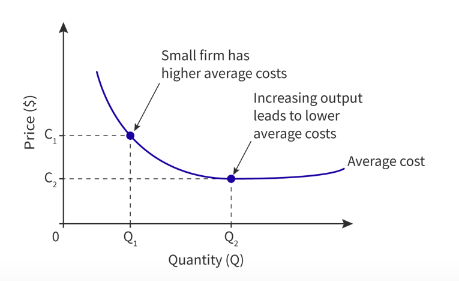
Infant industries: new industries that have the ability to gain comparative advantage, but are not developed enough, or do not have enough resources to compete with foreign firms
For instance, they cannot achieve economics of scale, currently, under free trade
Therefore: the government might implement trade protection to help domestic firms achieve efficiency in the long run
National security
CASE STUDY:
From 2018, India imposed safeguard duties on imported solar cells, coming mainly from China, to encourage domestic firms to produce solar equipment.
Health and safety
To maintain the wellbeing of domestic consumers and ensure that all products consumed meet with local health standards
Case study:
Since 1989, the EU had banned imports on hormone treated beef, which can have developmental risks and carcinogens. This disrupted trade from the US and Canada. This allowed the WTO to authorize US and Canada to impose trade sanctions against the EU.
Anti-dumping
In the economic context, dumping refers to when foreign firms sell goods or services at a price that is lower than the costs of production (or what is charged in the domestic market)
While this might seem beneficial for local consumers, this challenges the survival of domestic firms.
Let's look at an example of how dumping occurs.
Case study:
For instance, from 2012-2018, the US imposed anti-dumping duties on imports from China, saying that they sold solar panels at a much cheaper price due to government subsidies.
In this case, this example was challenged at the WTO.
Anti-dumping
In the economic context, dumping refers to when foreign firms sell goods or services at a price that is lower than the costs of production (or what is charged in the domestic market)
While this might seem beneficial for local consumers, this challenges the survival of domestic firms.
Let's look at an example of how dumping occurs.
Case study:
For instance, from 2012-2018, the US imposed anti-dumping duties on imports from China, saying that they sold solar panels at a much cheaper price due to government subsidies.
In this case, this example was challenged at the WTO.
Balance of payments correction
Balance of payments correction refers to the financial documentation of a country's transactions with foreign countries, usually in a year. For instance, it records the country's trading.
Through restricting imports, a country can improve their balance of payments by decreasing the size of its trade deficit
generating government revenue
proteciton of jobs
ELDC diversification
ELDC refers to "Economically Least Developed Country", which is a generally low income country with serious structural barriers that inhibit economic development.
Oftentimes, this means: small workforce, reliant on primary sector
Trade protection is critical to help diversify the production of goods and moving to the manufacturing industry. For instance, instead of overspecializing in only producing cocoa, which can be economically vulnerable and effected by environmental shocks, they can expand other industries.
what is ELDC
ELDC refers to "Economically Least Developed Country", which is a generally low income country with serious structural barriers that inhibit economic development.
Oftentimes, this means: small workforce, reliant on primary sector
Trade protection is critical to help diversify the production of goods and moving to the manufacturing industry. For instance, instead of overspecializing in only producing cocoa, which can be economically vulnerable and effected by environmental shocks, they can expand other industries.
what are arguments against trade protection
Misallocation of resources
Let's first review the idea of comparative advantage, which explains that a firm can produce a good or service at a lower opportunity cost than foreign firms.
Trade protection would go against this idea, meaning that resources are inefficiently allocated, reducing economic efficiency.
Graphically, this means a loss in social surplus and deadweight loss to society.
Risk of retaliation
Retaliation is refers to the trade barriers a country establishes as a result of another country imposing it on them. This is closely linked to trade wars, which show extreme measures of trade protection.
Unilateral retaliation is when one economy creates these trade barriers
Multilateral retaliation is when groups of economies retaliate at the same time, such as those that have joined in trading blocs
Increased costs of production
Reduced export competitiveness
Export competitiveness is the extent to which domestic firms can export products to foreign markets, caused by their competitiveness in world markets.
Usually, the foreign demand for a firm's products is often greater than the domestic demand. Any gains in revenue due to trade protection are likely outweighed.
Domestic firms lack incentive to be efficient
When trade protection is introduced, domestic firms often grow in the local market. However, this is artificial, and in the long term, less competition means to lower productivity.
X-inefficiency explains this, the difference between the behaviour of firms in competitive markets and firms without competition.
Less choice
Domestic consumers often face a lower standard of living due to having less choice, relying only on domestic goods.
evaluate free trade vs. protectionism
Trade protection prioritizes domestic producers instead of consumers. Consumers often always have a decrease in surplus and higher prices, affecting affordability for low income households and standards of living
How much consumers are impacted depends. For example, on which goods are targeted (merit vs. demerit)
It's also important to consumer how the benefits producers experience can also be linked to consumer positive outcomes
If a domestic firm is expanding, this ensures stable employment and helps create jobs
The law of comparative advantage and how that may support or contradict arguments for and against protection
Requires assumptions and models
Overall, it can be seen that trade protection is often harmful for long-term economic growth and development, although having benefits in the short-term. Due to the law of comparative advantage, free trade will help firms become more efficient.