Class 19: Organizational Culture 2
 Call Kai
 Learn
Learn Practice Test
 Spaced Repetition
 Match
Match Flashcards
 Knowt Play
1/14

There's no tags or description
Looks like no tags are added yet.
Name | Mastery | Learn | Test | Matching | Spaced | Call with Kai |
|---|
No analytics yet
Send a link to your students to track their progress
15 Terms
Where does culture come from
often reflects a founder’s values and vision
History of organization
Shared experiences and success
Also reflects the industry, national and societal culture
The “promise” of a strong culture
is that it lets a firm relax the trade-off between ensuring coordination and reducing people’s motivation. Ideally, people do what you want them to do because they want to do it
Maintaining an Organizational Culture
Attraction-Selection-Socialization-Attrition
Attraction
Some potential job applicants won’t apply due to a perceived lack of fit. Think of a place where you wouldn’t want to work?
Selection
Organizations horse people who already share the values and beliefs they want to encourage, further weeding out potential “misfits“ Think of a time where you voted against someone to join your club because of a perceived misfit?
Socialization
Workers are socialized into values and beliefs of the organization in two ways:
from above: the actions of leadership
From around: the action’s of one’s peers
Attrition
Those people who still don’t fit will either be unhappy or ineffective when working in the organization. Have you ever quit an organization, team, or club?
Social influence and conformance
Culture is sustained through mechanisms of conformance with social influence
Compliance
Most clearly tied to incentives, people follow rules because of external pressure (to get rewards or punishment)
Identification
Is about understanding there is a certain way to behave and doing so because you want to belong or be accepted by the group
Internalization
Is about overtime people adopt the group’s values as their own beliefs, acting that way even without external pressure
Peer socialization is good and bad
Is most organizations, peer socialization is the most powerful lever
The good and the bad of peer socialization
It generates a feedback loop
people who agree with the future are more let to stay
People whop do not agree are more likely to leave
Organizational design
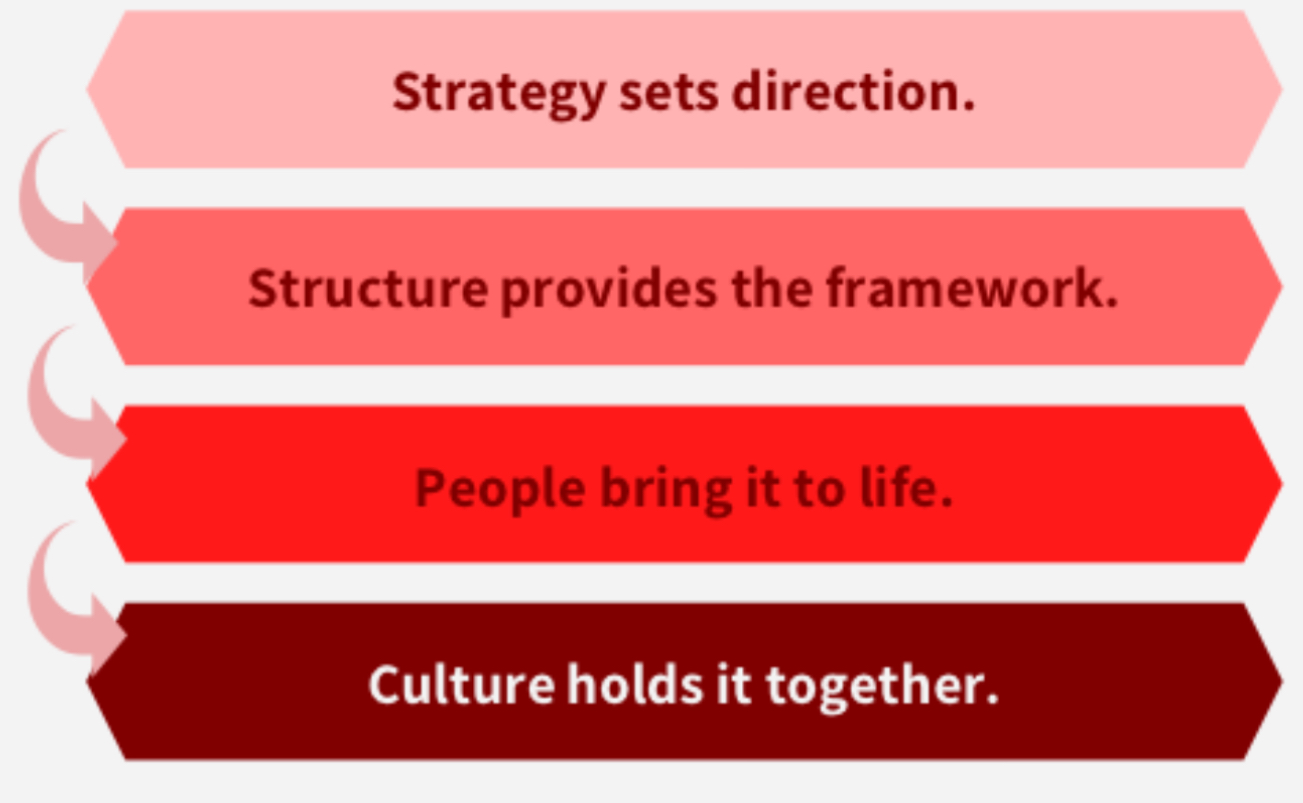
Plays a central role in supporting people, structure, and culture by aligning the internal workings of an organization with its strategic goals
Culture shapes
Behavior, supports, structure, and drives engagement