Lecture 2: Arbitrage & Financial Decision Making
 Call Kai
 Learn
Learn Practice Test
 Spaced Repetition
 Match
Match Flashcards
 Knowt Play
1/18

There's no tags or description
Looks like no tags are added yet.
Name | Mastery | Learn | Test | Matching | Spaced | Call with Kai |
|---|
No analytics yet
Send a link to your students to track their progress
19 Terms
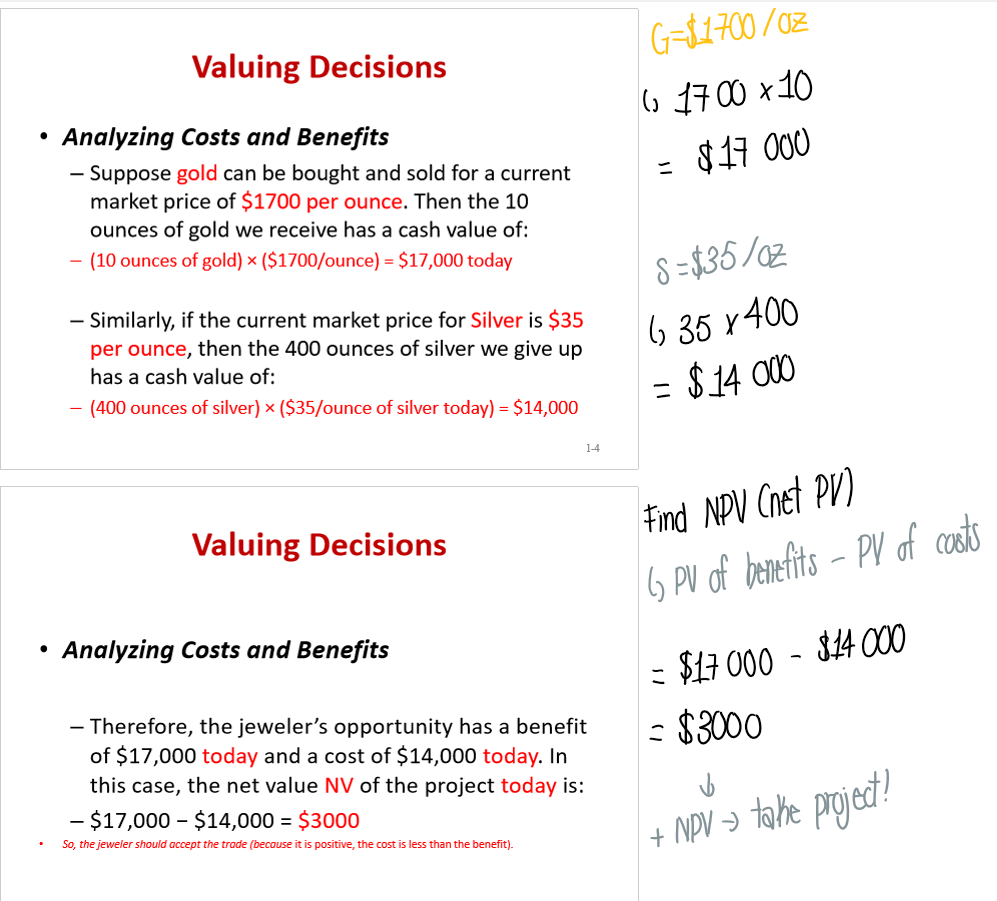
How do you analyze costs & benefits?
Find NPV (net present value) to see if an opportunity is profitable
Suppose a jeweler can trade 400 ounces of silver for 10 ounces of gold today
preferences don’t matter in competitive market where you can make a profit!
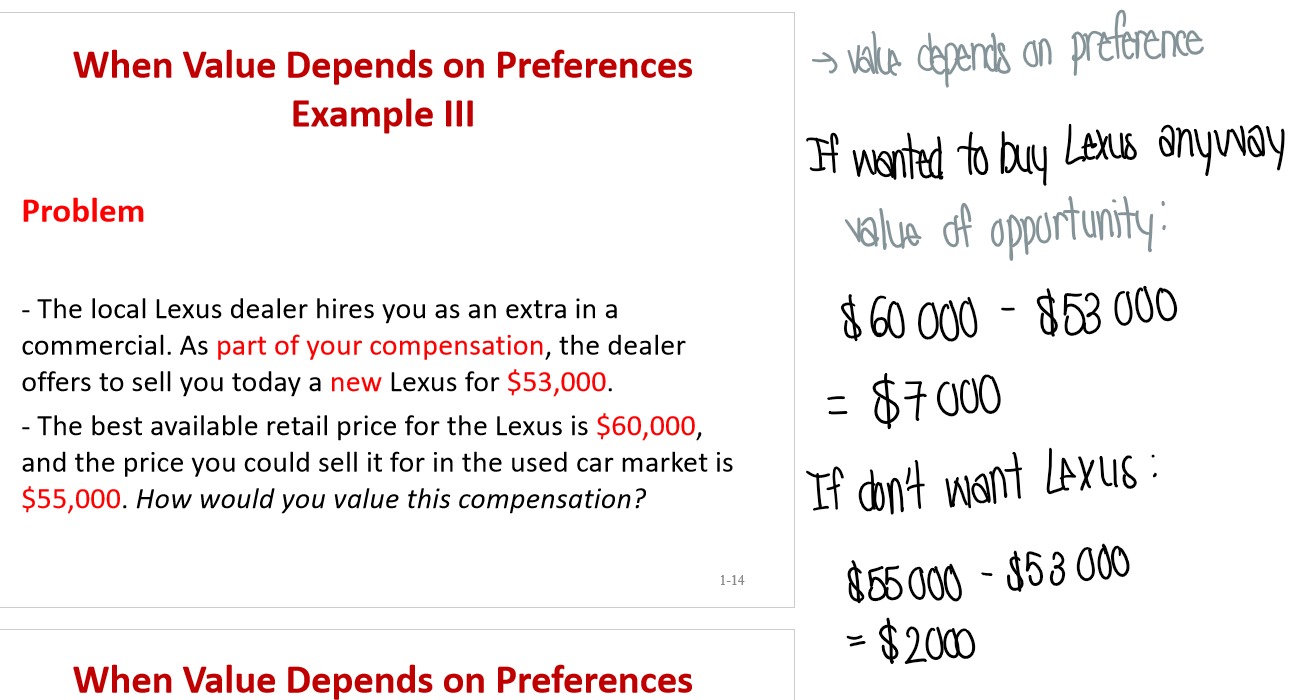
What happens when competitive market prices are not available?
If unsure can buy/sell at same price → prices may be one sided
preferences matter!
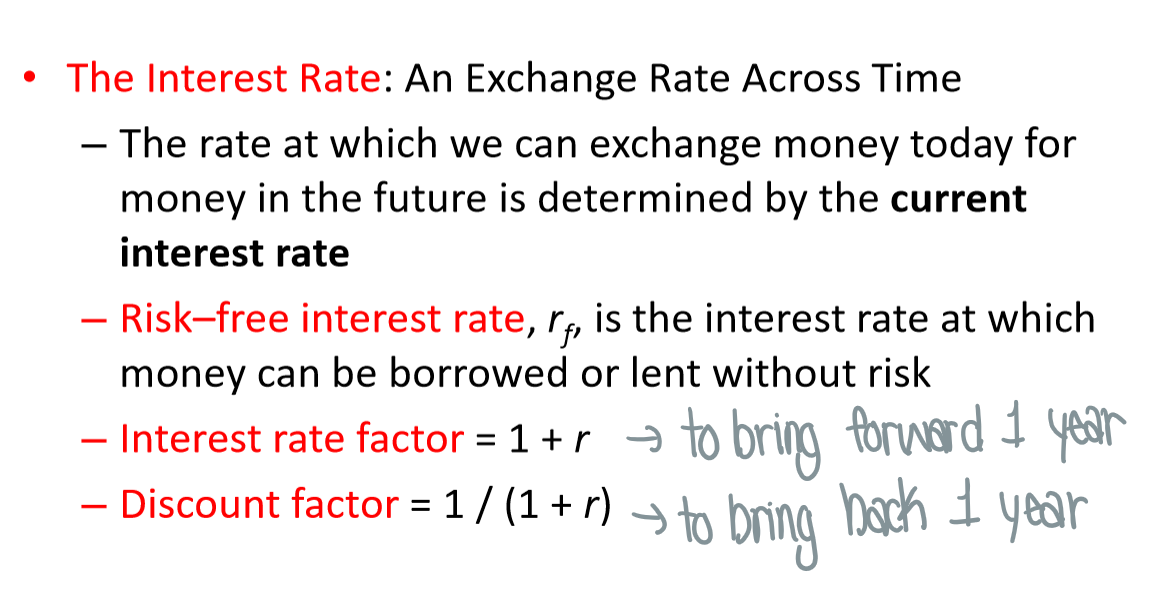
What is the time value of money?
The difference in value between money today & money in the future due to time value of money
How do you compare costs at different points in time?
Must adjust by discounting in order to compare between time
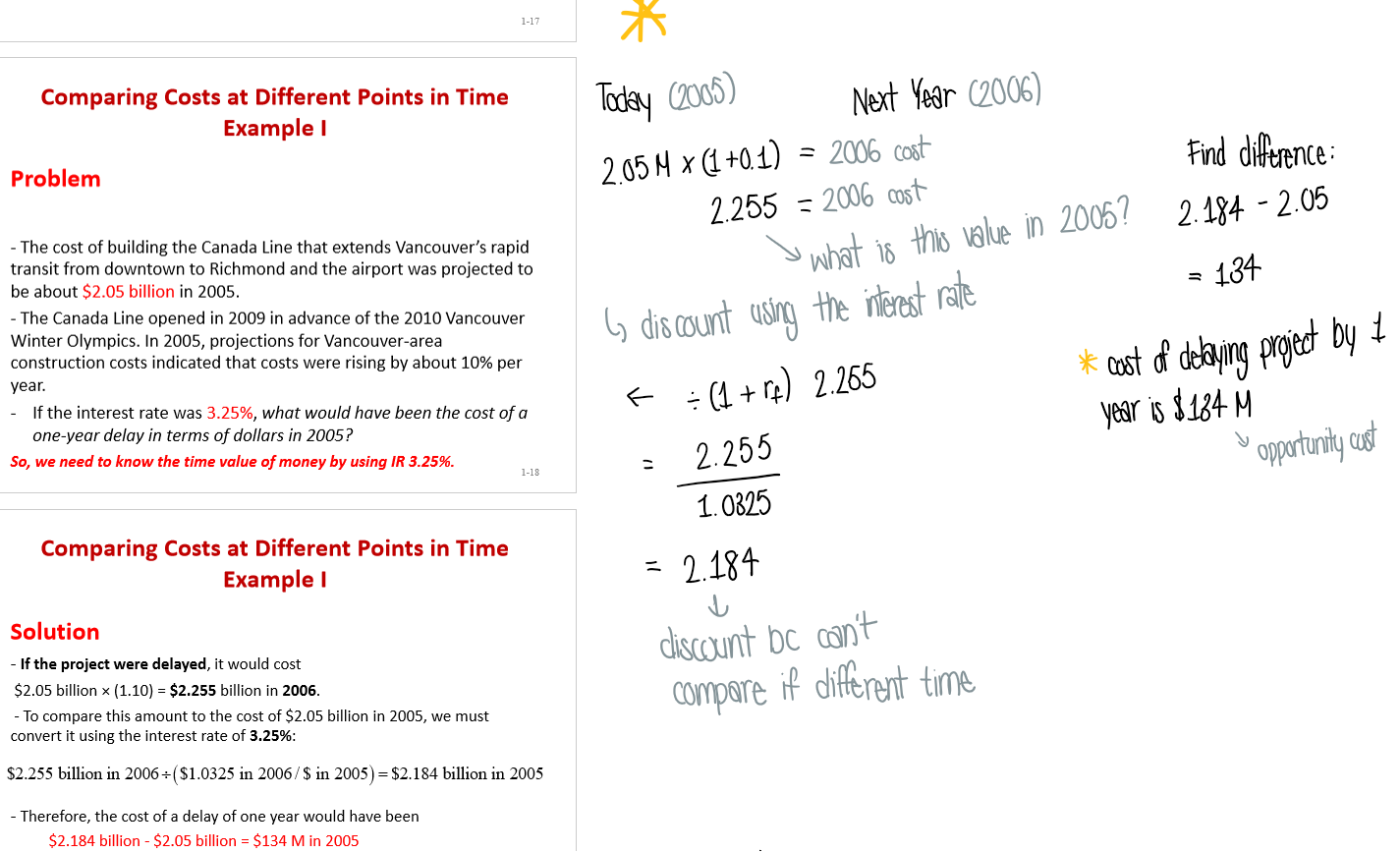
*How do you covert between dollars today, gold, euros, or dollars in the future?
Dollars today / gold price = ounces of gold today
Ounces of gold today x gold price = dollars today
Dollars today x exchange rate = euros today
Euros today / exchange rate = dollars today
Dollars today x (1+rf) = dollars in 1 year
Dollars in 1 year / (1+rf) = dollars today
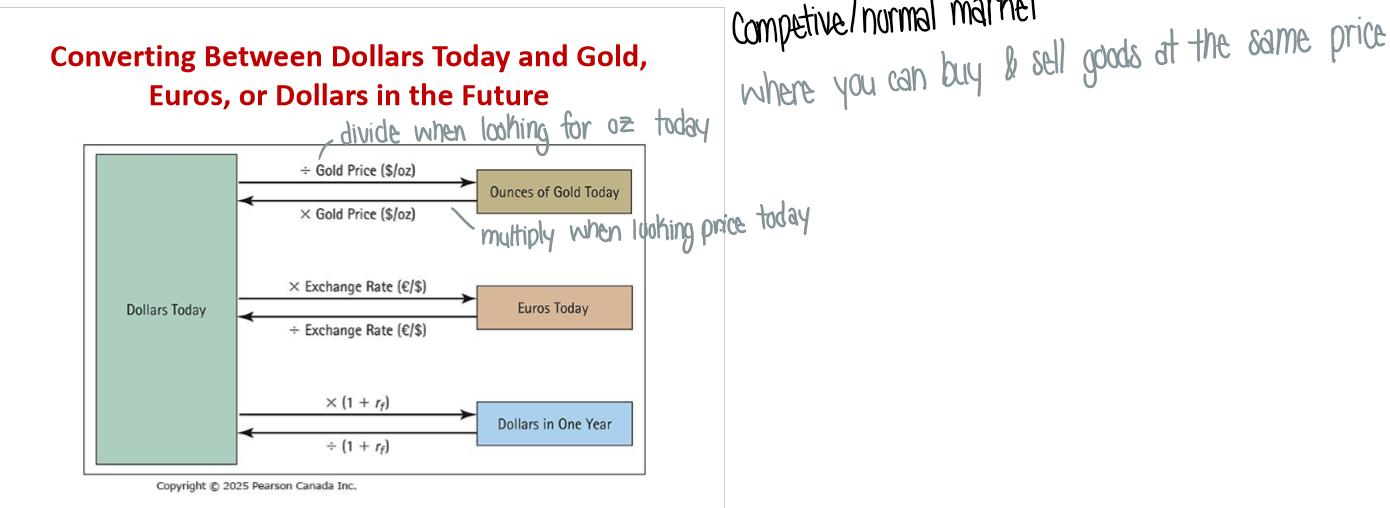
What is NPV & NPV decision rule?
NPV = PV(benefits) - PV(costs)
NPV = PV(All project cash flows)
Choose the alternative with the highest NPV
Accept projects with + NPV
Reject projects with - NPV
* The NPV of buying & selling securities in a competitive market is 0!
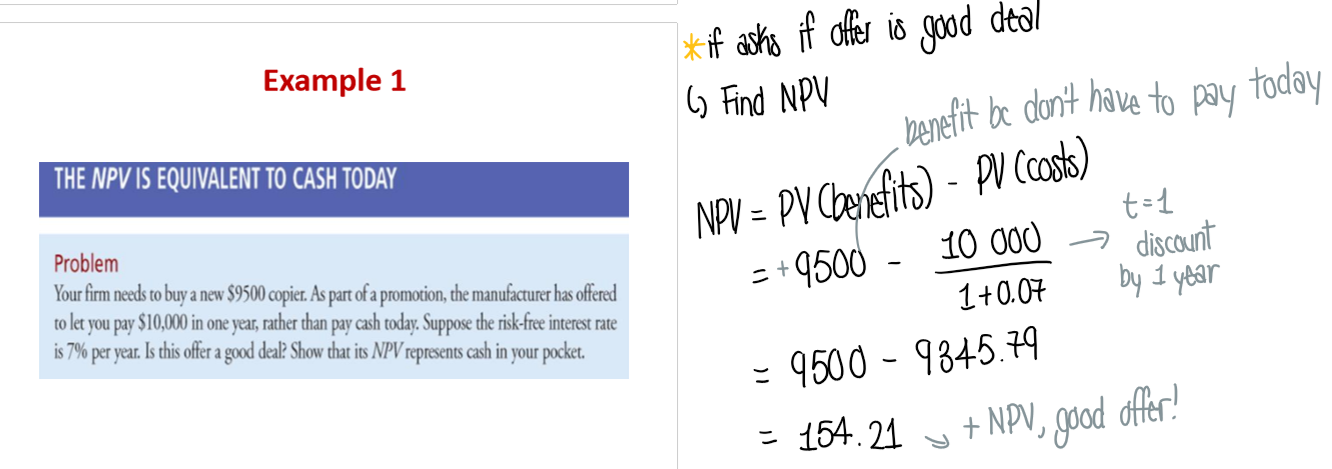
When should you max NPV and when should you not?
In a competitive market → should always maximize NPV regardless of preferences
If not in a competitive market → don’t always max NPV preferences matter! Because can’t buy/sell at the same price
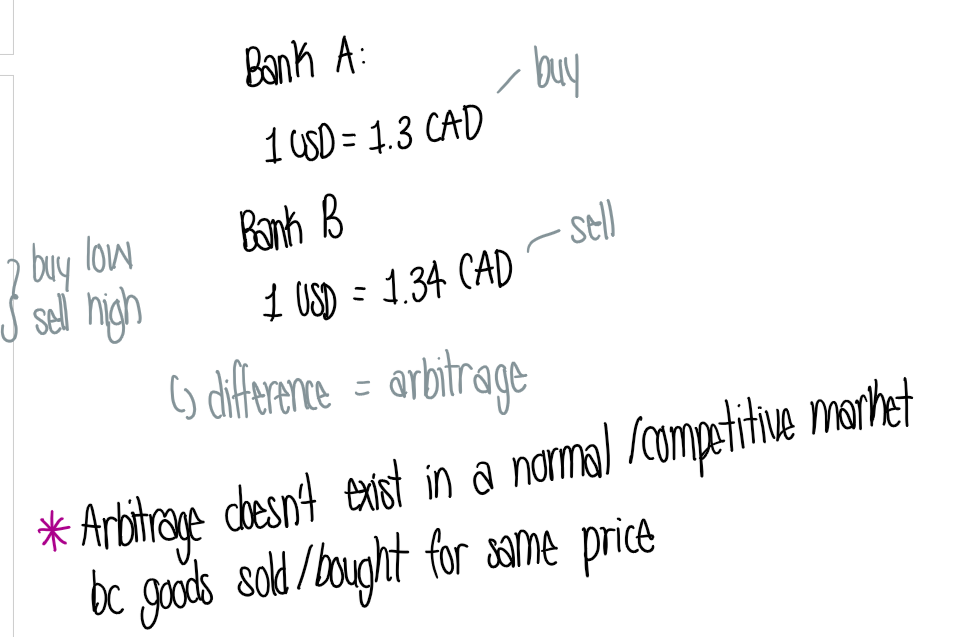
What is arbitrage, arbitrage opportunity, & normal market?
Arbitrage - buying & selling equivalent goods in different markets to take advantage of price difference (buy low, sell high)
Arbitrage opportunity - when possible to make profit without taking risk or making investment
Normal market - competitive market with NO arbitrage opportunities
arbitrage doesn’t exist in normal/compettiive market bc goods sold/bought for same price!
What is law of one price?
If there are equivalent investment opportunities trading at the same time in different competitive markets, they must trade for same price in both markets!
in efficient markets, arbitrage opportunites adjust according to supply & demand
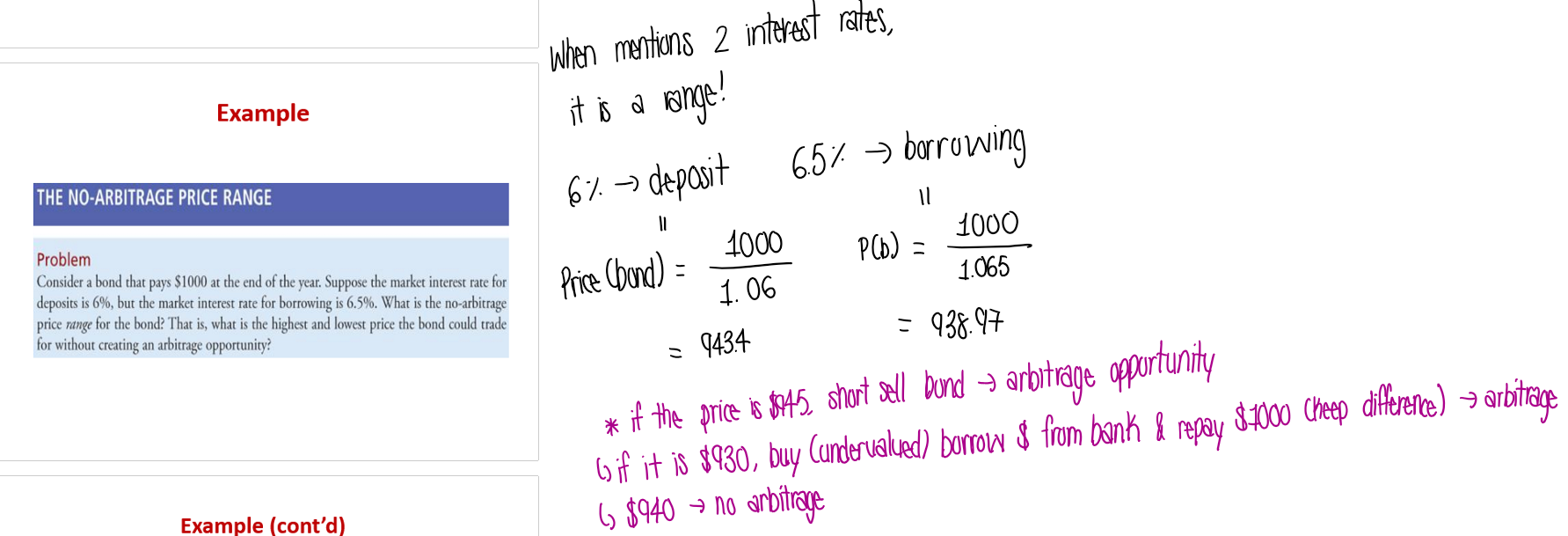
* find the cost of bond with no arbitrage!
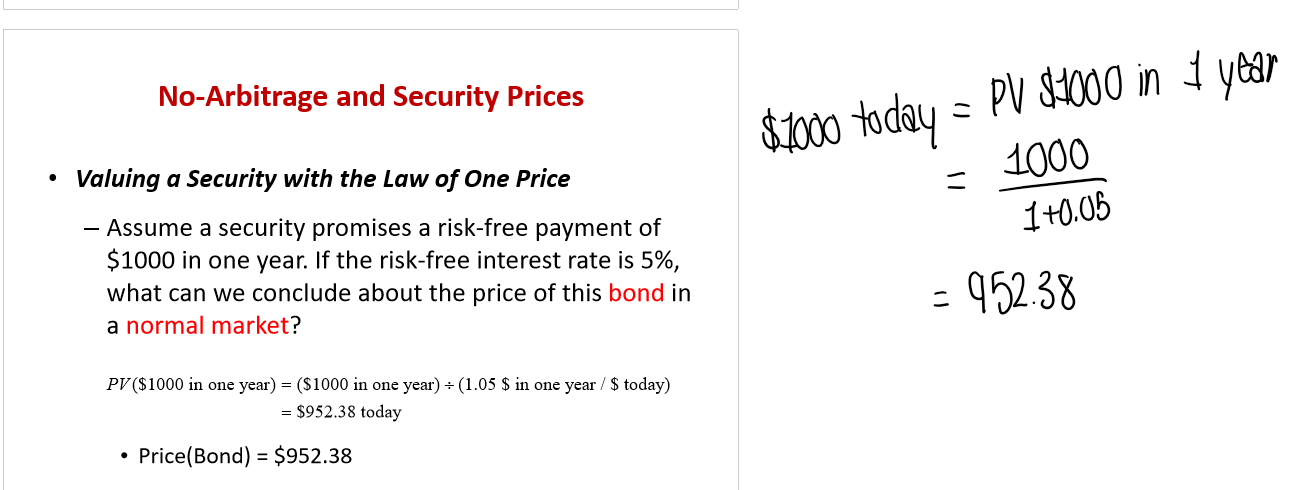
What is an undervalued arbitrage opportunity?
If the bond is priced less than the actual value, there is an arbitrage opportunity to buy low!
compare with cost of bond with no arbitrage in order to tell if under or over valued!
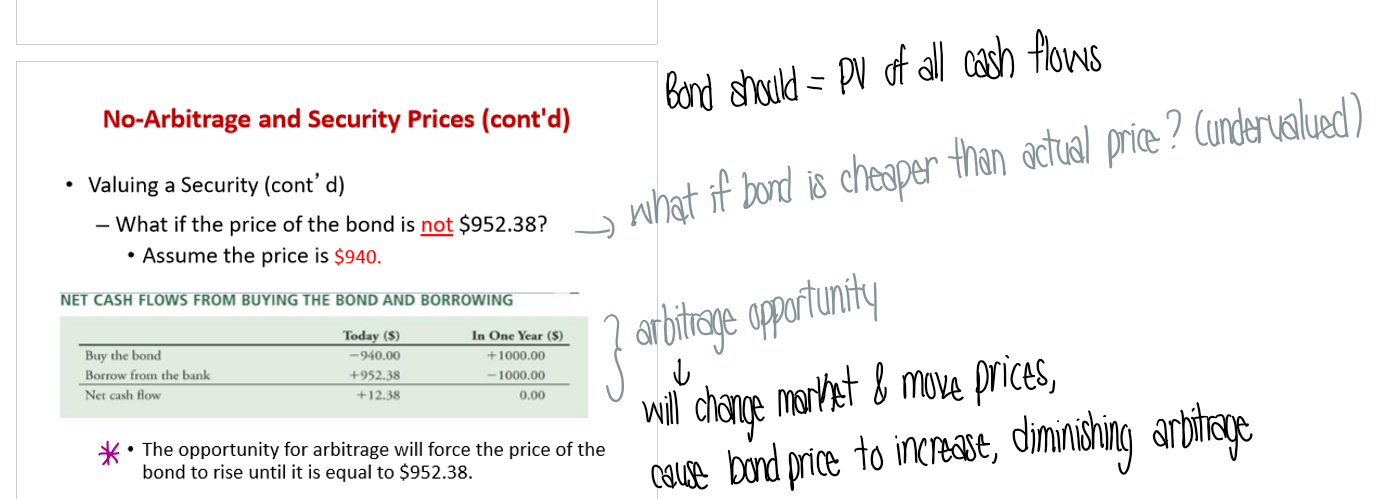
What is an overvalued arbitrage opportunity?
When the bond price is priced higher than actual value, there is an arbitrage opportunity to sell high!
short sell (borrow bond & sell) → used when want to sell but don’t own bond
compare with cost of bond with no arbitrage in order to tell if under or over valued!
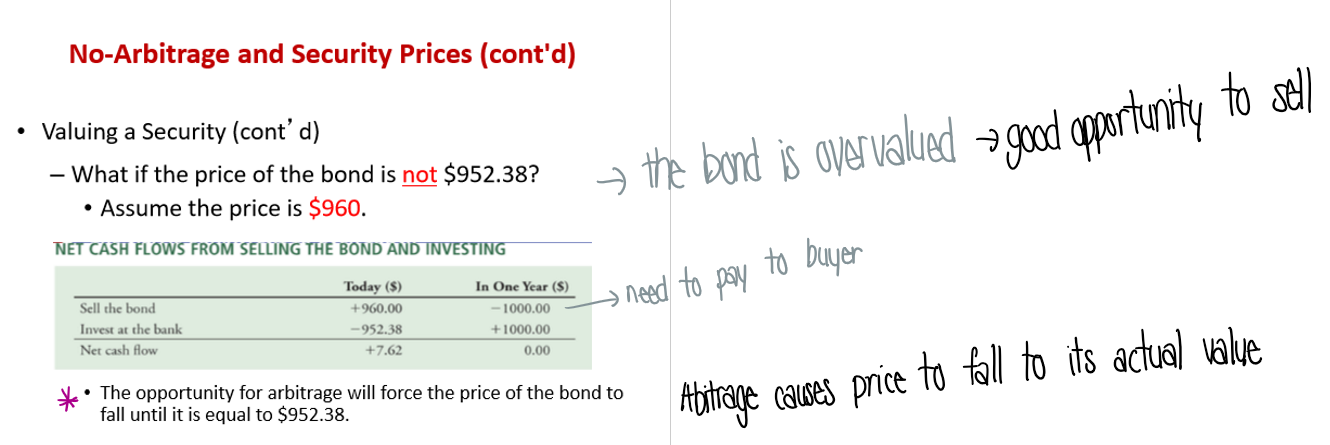
How do you find the interest rate from bond prices?
If know the price of a risk-free bond, can use
Price(security) = PV(all cash flows paid by security)
solve for interest rate by using formula, including bond & security prices
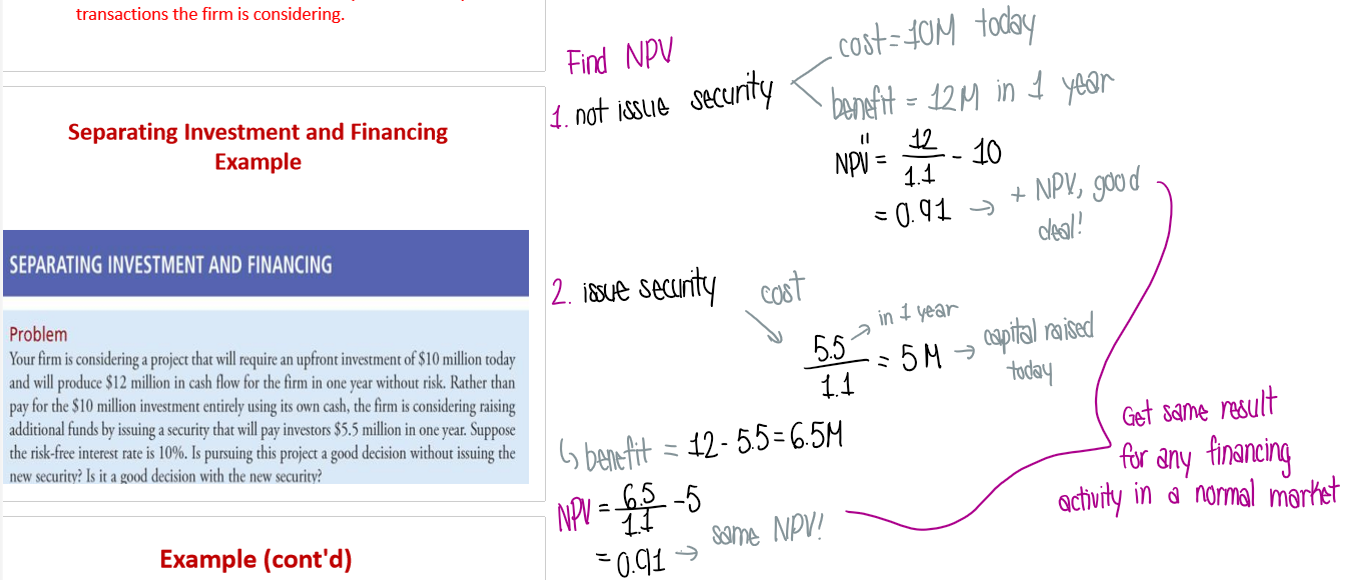
What is the result for any financing activity in a normal market?
The results are the same & their NPV’s are the same!
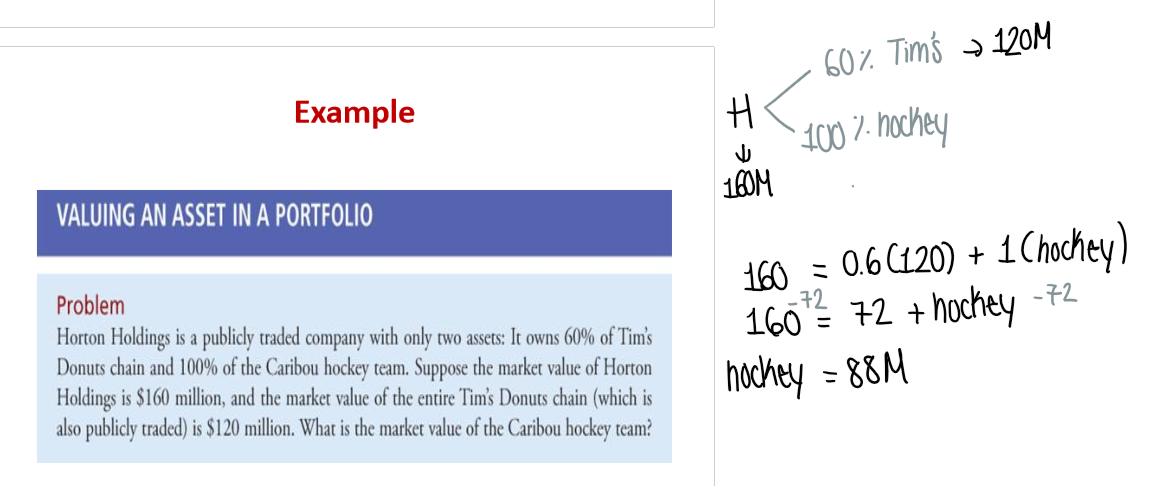
What is value additivity?
To max the value of entire firm, managers should make decisions that maximize NPV
Price(C) = Price(A + B) = Price(A) + Price(B)
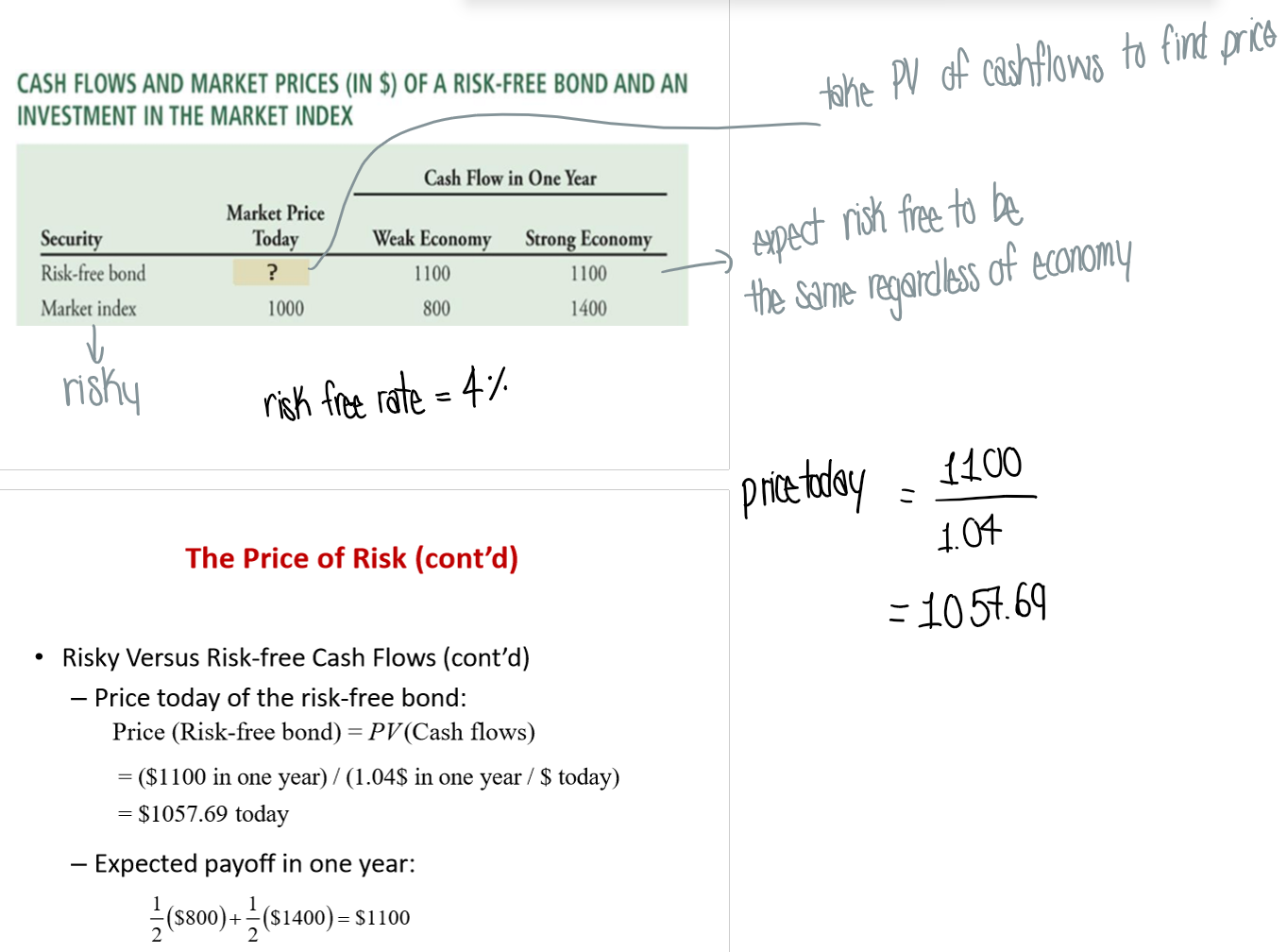
What is the price of risk?
Risk - when the actual outcome may differ from expected outcome
when investment payments depend on strong or weak economic conditions
→ the market price of risk-free bond is higher than risky bond as we are willing to pay more for no risk
What is risk aversion & risk premium?
Risk aversion - personal cost of losing a dollar in bad times is greater than benefit of extra dollar in good times
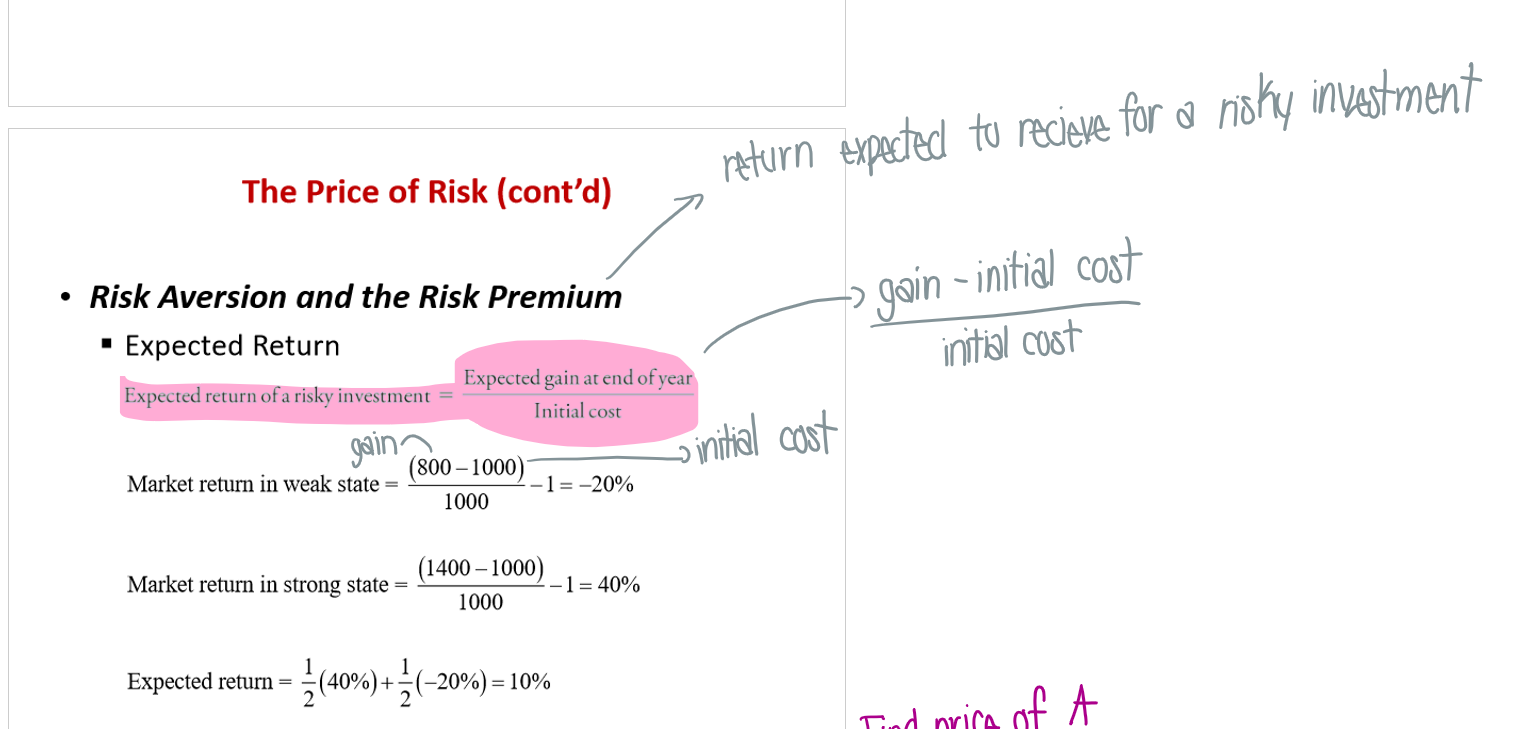
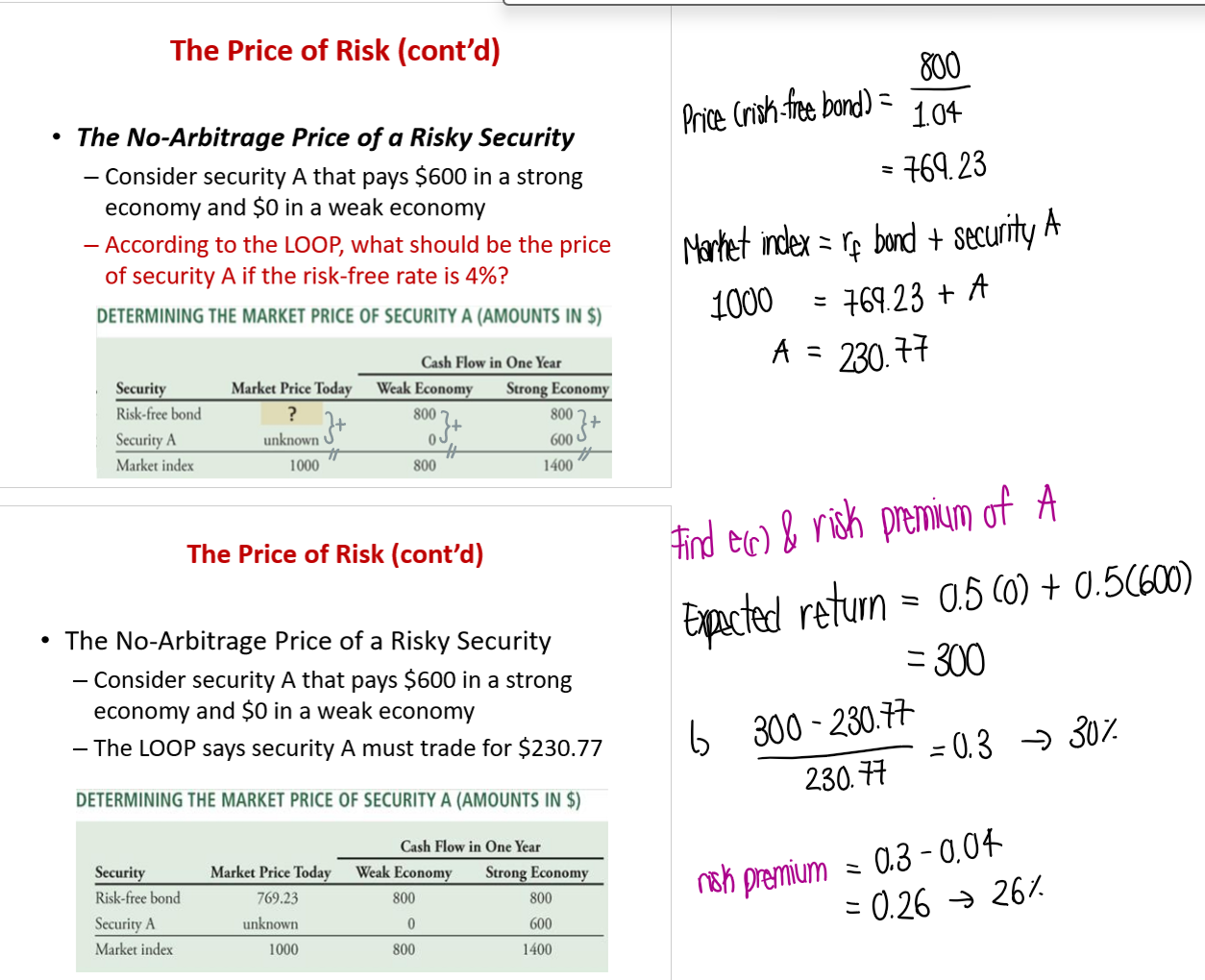
How do you find the price, expected return, & risk premium of risky security A?
Risk premium is a percentage = expected return - risk free interest rate
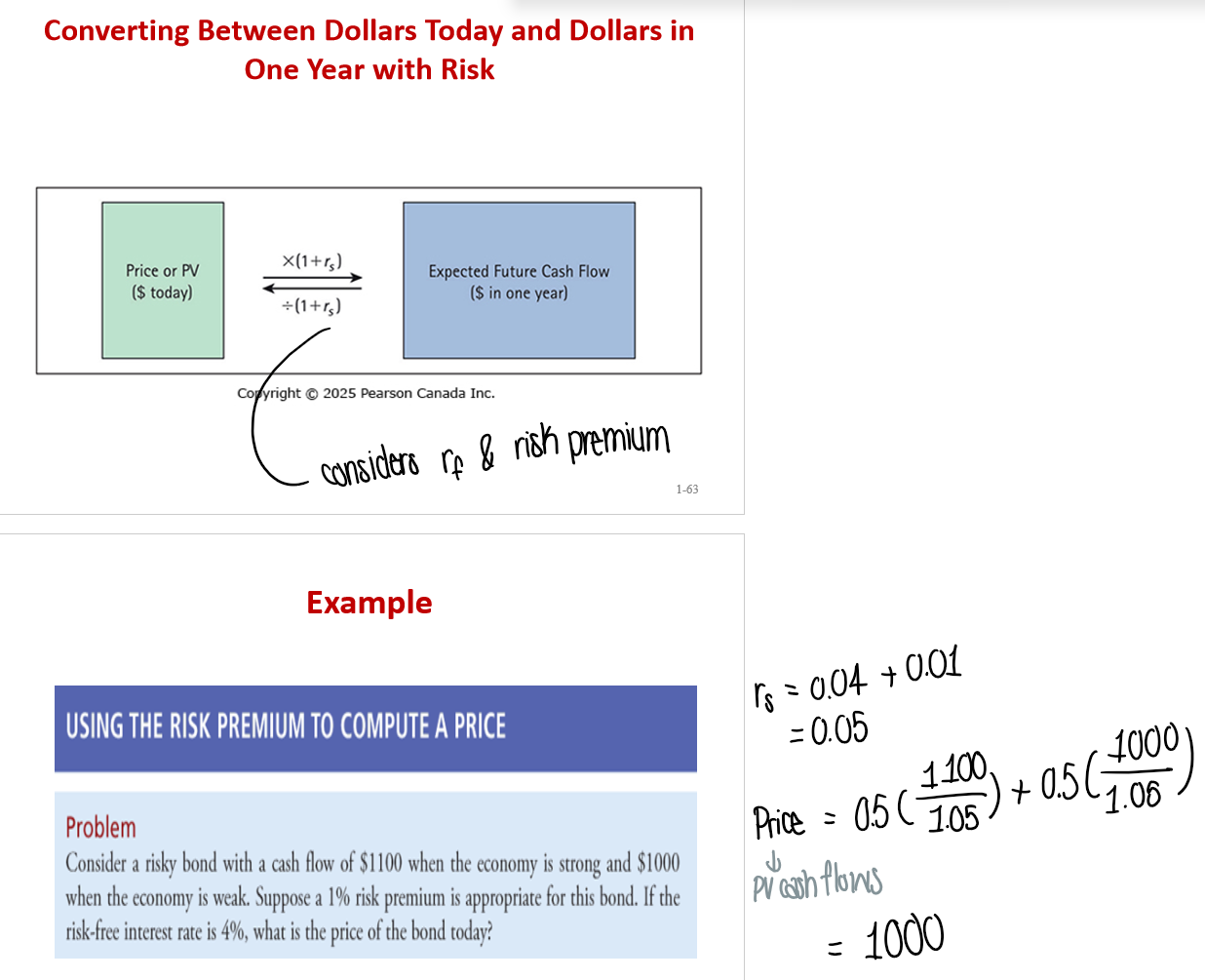
How do you convert dollars today & dollars in one year with risk?
What is arbitrage with transaction costs?
Commissions paid to broker
Bid-ask spread: difference of price you receive when you sell (bid price) and when you buy (ask price) a security
small cost for most financial markets