MGEC32 Lecture 3A
 Call Kai
 Learn
Learn Practice Test
 Spaced Repetition
 Match
Match Flashcards
 Knowt Play
1/20

Earn XP
Description and Tags
Social Insurance
Name | Mastery | Learn | Test | Matching | Spaced | Call with Kai |
|---|
No analytics yet
Send a link to your students to track their progress
21 Terms
What is the biggest driver of growth in governments? How much does the Canadian government spend on it?
Social Insurance; ~15-17%
What drove growth in the government in the 20th century?
Social Insurance Programs
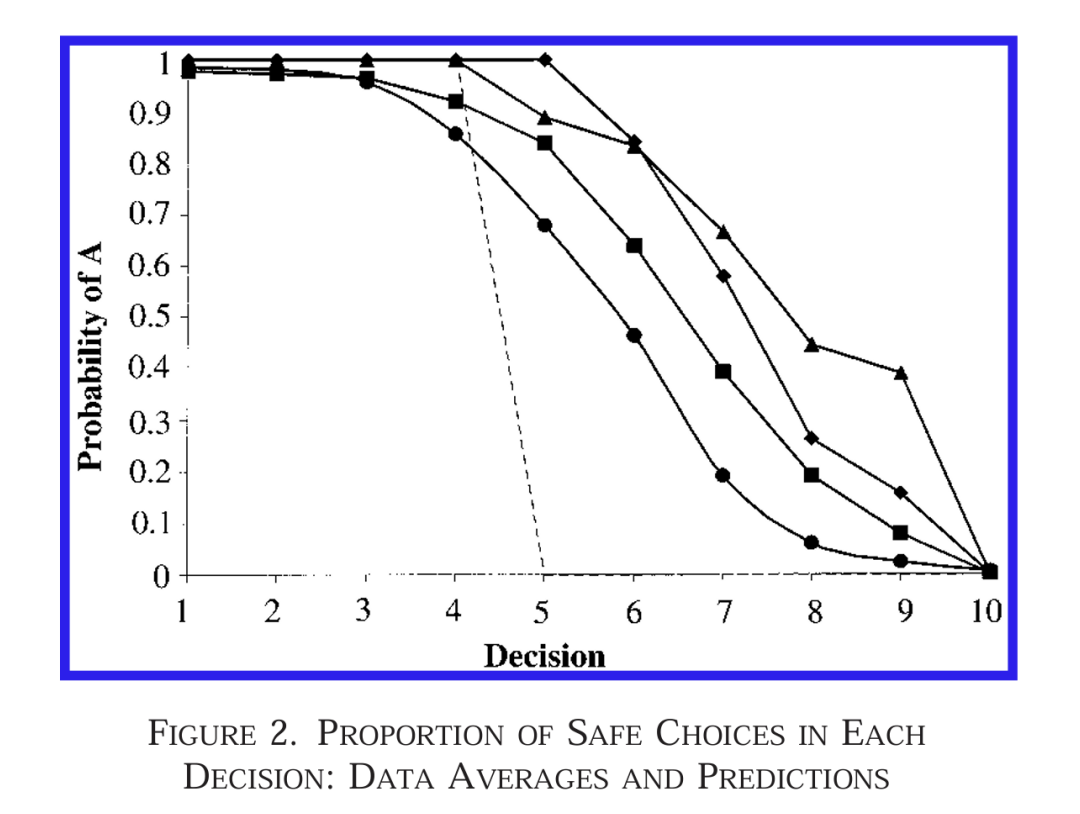
What happens to risk aversion as stakes are higher?
The higher the stakes, the more risk averse people are
What are examples of incomplete insurance?
Deductibles
Copays
Caps on Coverage
Tight Rules
What are examples of insurances that don’t exist?
Long term care insurance
Job Obsoletion Prevention
Recession Risks
Self-employed Entrepreneur Insurance
What are 3 main reasons why insurance markets fail?
Adverse Selection: When people know more about their risk level than the insurer
Correlated Risk
Moral Hazard
Which two market failures can governments prevent in insurance market failures?
Adverse Selection
Correlated Risk
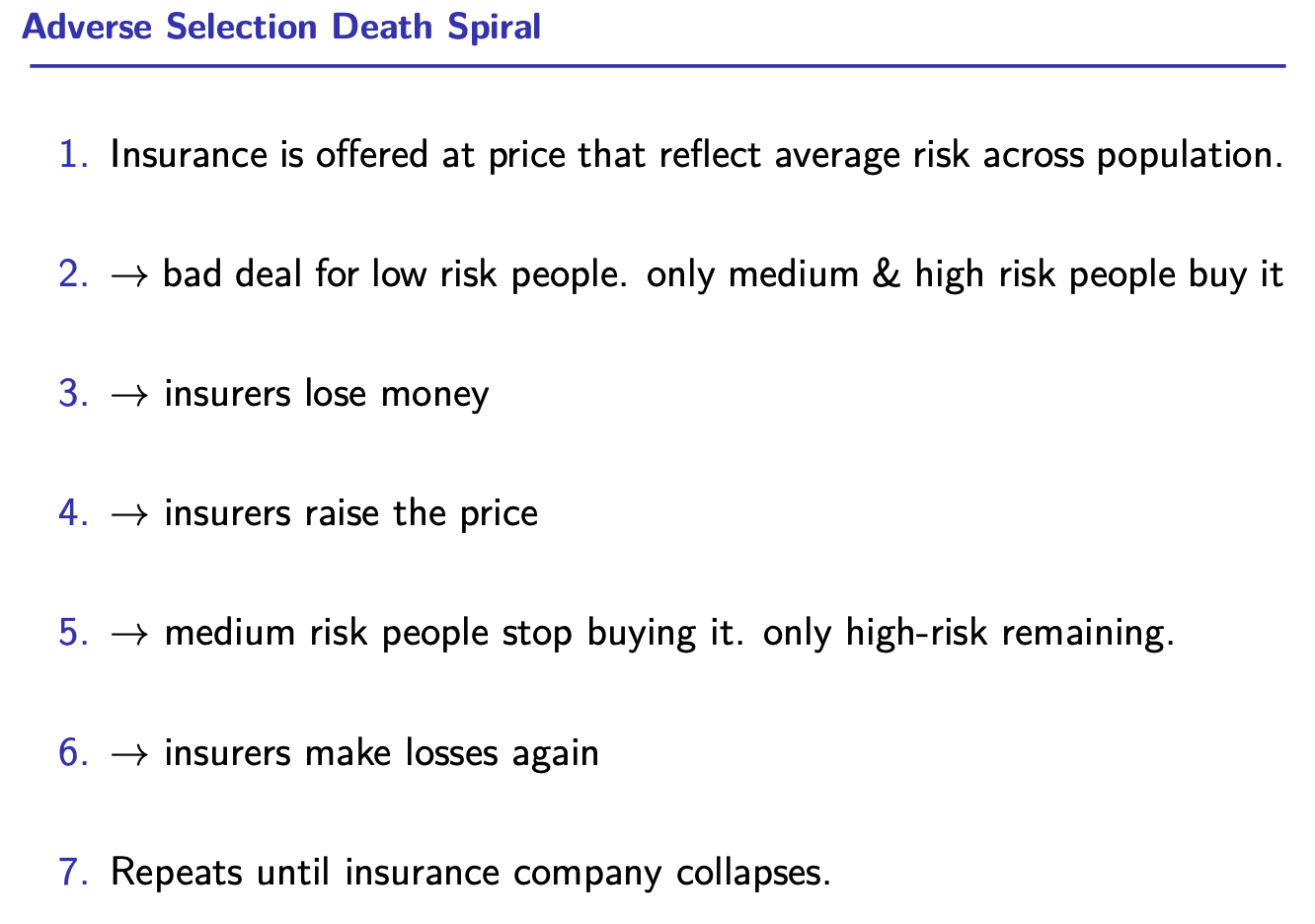
Explain the Adverse Selection death spiral?
Lack of risk pooling, as lower risk people exit the market
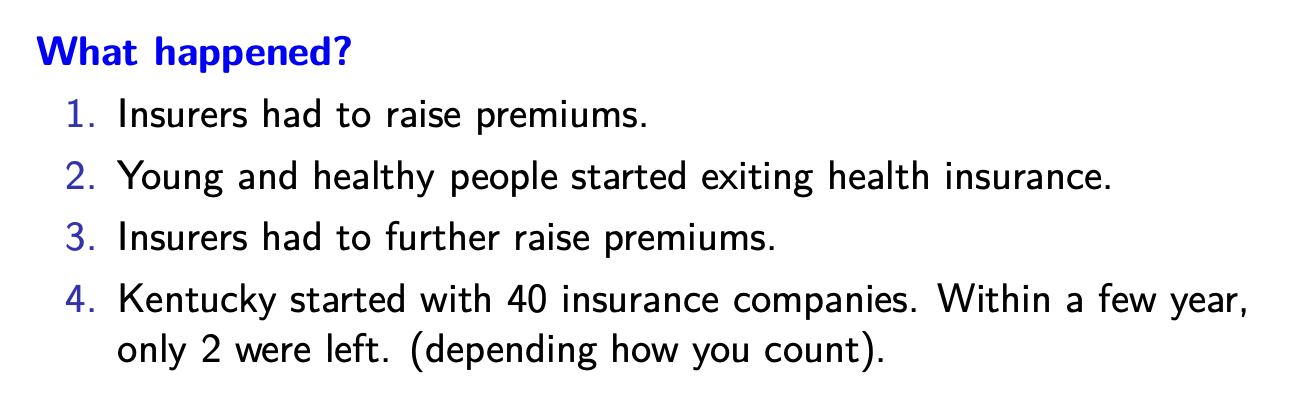
What happened in the Kentucky Insurance case study?
Insurance market collapsed due to a death spiral:
1. Private health insurance companies had to offer an insurance plan to anyone that applied for one.
2. Insurers were mostly not allowed to vary the premiums or coverage based on individual characteristics
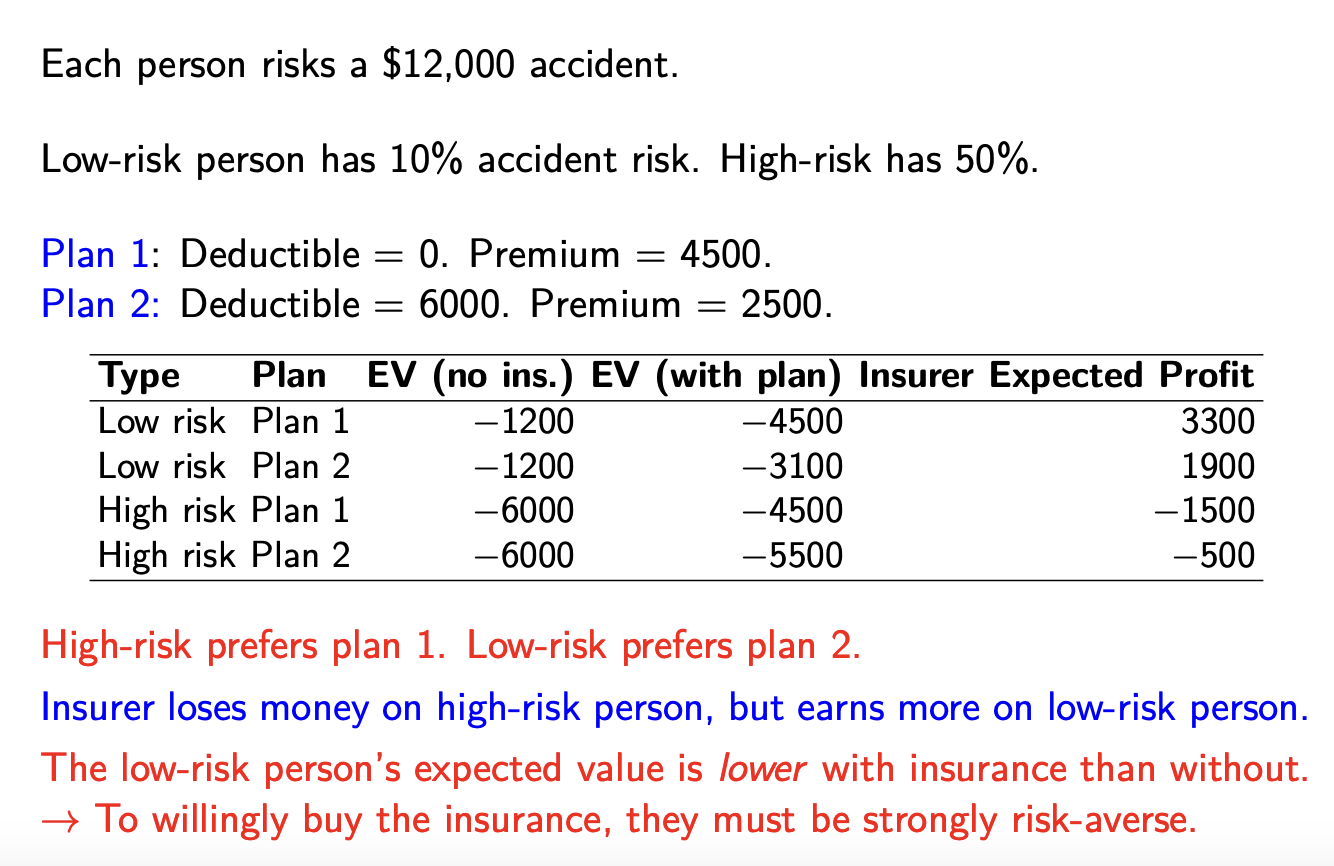
What are the 2 Private Market solutions to Adverse Selection?
Acquire Risk Information: Estimate risk for different groups, charge differently
Offer Incomplete Insurance
Offer low risk → low premium + high deductible
Offer high risk → high premium + low deductible
What is the industry for estimating risk?
Actuary Sciences
How do insurance companies make money through incomplete insurances?
Insurers lose money on high risk people, but earn money through low risk clients
Which two properties do private insurance markets need for them to succeed? What could wipe them out?
Predictable Risk & Diversified Risk; Correlated Risk could wipe out a private insurance company
What are the two justifications for government involvement in insurance programs?
Solves the Adverse Selection & Correlated Risk market failures
How does universal government insurance affect low & high risk people?
Low risk are minorly worse off, but high risk people are MUCH better off
How does Canada fund medical care insurance? What about the US?
Canada uses tax revenue to fund medical care
Mandated everyone to purchase insurance or face financial penalty
Who oversees health insurance in Canada?
Provincial Government. 25% Federal Funding & 75% Provincial
What are the features of Canadian healthcare?
All residents are elgible
All medically necessary care is provided
Though 65% of pharmaceuticals drugs aren’t
Most outpatient cares provided by for profit entities; government then reimburses them
Hospitals are non-profits
What are the challenges of the Canadian healthcare system?
More and more older population in Canada
Health Spending per Capita has gone up dramatically (2.5x)
Healthcare share of GDP keeps increasing (13.2%)
How can the Canadian government deal with its medical challenges?
1. Expand supply of medical care:
Raise taxes or increase government debt (deferred taxes) to pay for it
Remove barriers on the supply: i.e. Canadian provinces currently:
(i) restrict medical school spots
(ii) restrict residency spots
(iii) cap the quantity of medical care a physician can provide
(iv) make it hard for foreign-trained doctors to work here.
2. Reduce medical care per person
Much longer wait time to get treatment
Maritime provinces have DRASTICALLY increased wait time for medical care
What are two reasons Canada’s healthcare system is re-distributive?
Universal healthcare makes everyone buy insurance, causing costs to go down
The poorest household receive the most amount of medical care, but the wealthiest household receive less, but pay for the most