Eduqas Music GCSE - Bach - Badinerie
 Call Kai
 Learn
Learn Practice Test
 Spaced Repetition
 Match
Match Flashcards
 Knowt Play
1/50

There's no tags or description
Looks like no tags are added yet.
Name | Mastery | Learn | Test | Matching | Spaced | Call with Kai | Chat |
|---|
No analytics yet
Send a link to your students to track their progress
51 Terms
Who composed Badinerie?
Johann Sebastian Bach
What country did J. S. Bach come from?
Germany
Which era of music was this piece written in?
Baroque (1600-1750)
What is the name of the suite?
Orchestral suite No.2 in B minor
What movement is the badinerie?
The seventh
Name other movements
1. Overture
2. Rondeau
3. Sarabande
4. Bourrée I and II
5. Polonaise
6. Menuet
(Then the Badinerie)
What instrument mostly plays the melody?
Flute (transverse)
Though it is also heard in the cello and on occasion, first violin
What type of ensemble accompanies this piece?
String orchestra
What instrument plays the basso continuo?
Harpsichord (and cello)
What does basso continuo mean?
Continuous, improvised bass line and chord
Describe the tempo of this piece
Allegro (fast)
Describe the dynamics in Badinerie
Mostly forte, including use of terraced dynamics.
What are terraced dynamics?
Abrupt changes of dynamic level
What is the metre of the piece?
2/4
What is the overall form of Badinerie?
Binary
How many bars long is the A section?
16
How many bars long is the B section?
24
What is the home key of this piece?
B minor
What key does Badinerie modulate to?
F# minor
What are all the keys presented in section A?
B minor - A major - F# minor
What are all the keys presented in section B?
F# minor - E minor - D major - G major- D major - B minor
How is F# minor related to B minor?
The dominant minor
Describe the X motif in Badinerie (3)
• Descending B minor arpeggio
• Quaver/ semiquaver rhythmic pattern
• Played by the flute
Describe the Y motif in Badinerie (4)
• Almost entirely semiquavers
• Combines arpeggio and conjunct movement
• Ends with perfect cadence
• Also played by flute, answers motif X
What is the texture of Badinerie?
Homophonic (melody and accompaniment)
What is a sequence?
repetition of a melodic pattern at a higher or lower pitch
What are the 2 types of cadence used in Badinerie?
Perfect and imperfect
What is an appoggiatura?
a grace note which delays the next note of the melody, taking half of it's value
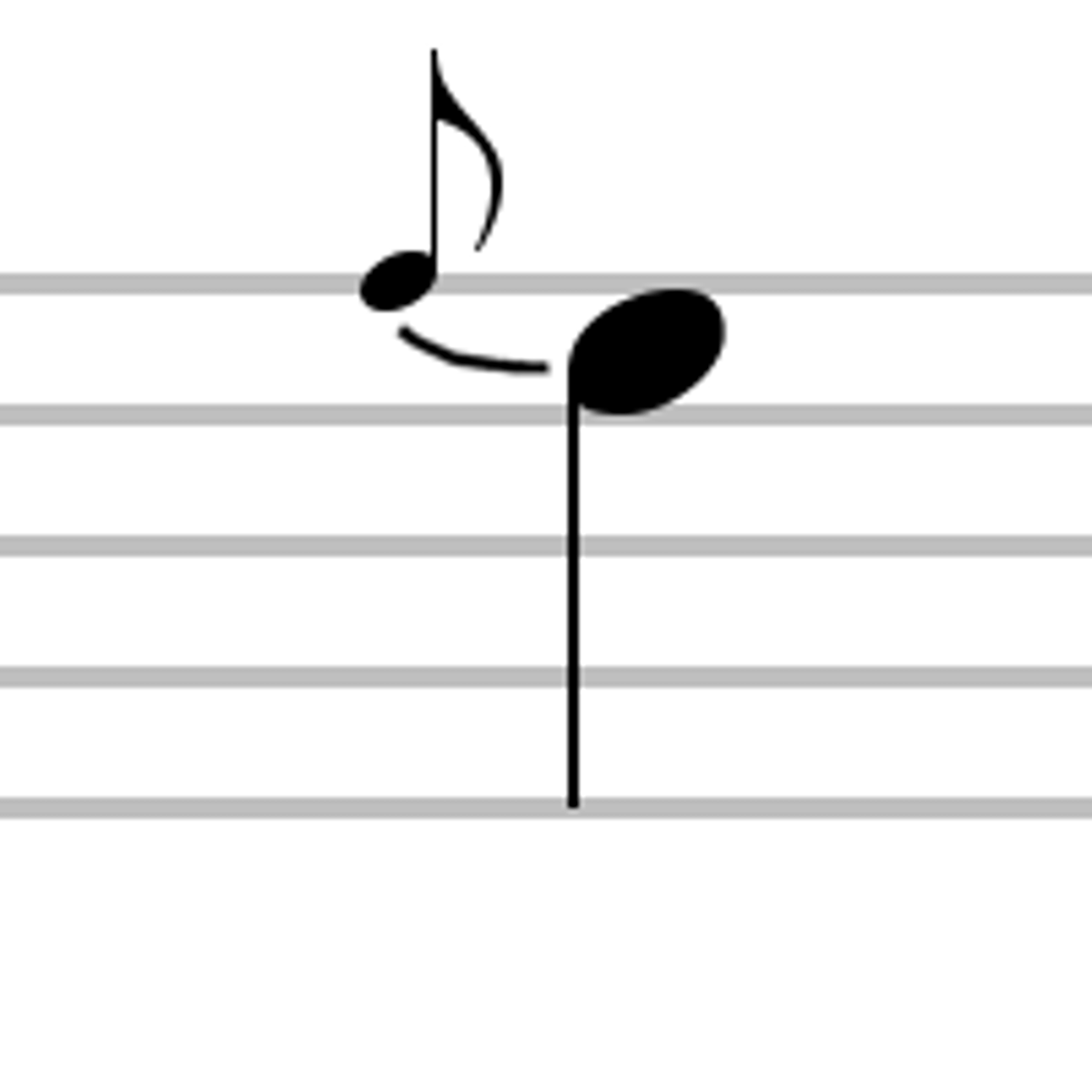
What clef does the viola use?
alto clef
What chords form a perfect cadence?
V-I
What chords form an imperfect cadence?
Any-V
What rhythmic device does Badinerie begin with?
Anacrusis
What is an anacrusis?
an upbeat
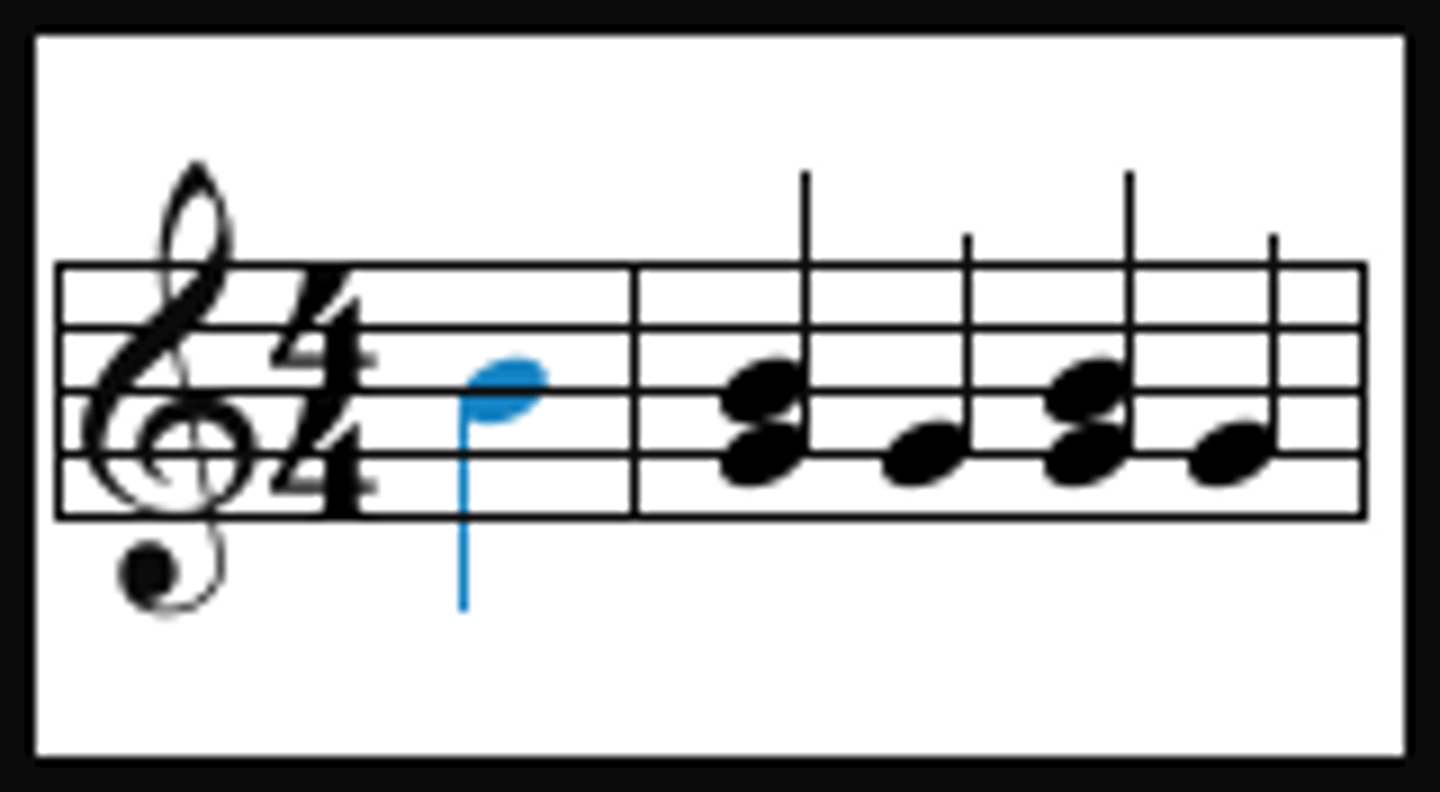
What is a pedal note?
a tone, usually in the bass range, that is sustained through several changes of harmonies
What is modulation?
a change of key within a piece of music
Describe the rhythm in the piece (2)
• Simple ostinato rhythms are used throughout, seen in motif X and Y.
• Note values are mainly quavers and semiquavers.
Describe the general texture
• Homophonic (melody and accompaniment)
• Melody is played by the flute, although also heard in the cello and on occasion, the 1st violin
• Violin 2 and viola generally provide the supporting harmony
Describe the melody in section A
• Begins with an anacrusis
• Motif X starts, answered by motif Y
• Arpeggio/ broken chords
• Disjunct movement
• Ornaments - trills
• Devices - sequences
• Lower auxiliary notes (violin 1 b 6^1 and 8^2)
- Flute has a two octave pitch range
- Has modified and extended y motif that includes climbing scale
Describe melody in section B
• Some modifications to the rhythm
• Ornaments - appoggiaturas and trills
• Devices - sequence (flute), inversion
• Lower auxiliary notes
• Development of motif X
- bar 33 flute and 1st violin in dialogue
- bar 36-38 cellos and flute in dialogue
The harmony throughout the piece is...
Diatonic
Describe the harmony in section A
• Modulates from the tonic (B minor) to the dominant minor (F# minor)
• Also modulates to A major
• Rate of chord change varies
• Mix of root position, first and second inversion chords
• V7 chords in root position and inversion
• Perfect cadences (b4-5, 7-8, 11-12 and 15-16)
• Imperfect cadences (b 9-10)
Describe the harmony in section B
• Modulates from the dominant minor back to the tonic key (b30)
• Other modulations include E minor (b19), D major (b21 and 26) and G major (b24)
• Harmonies change quickly, with an active bass line changing chord positions.
• Includes root positions, first and second inversion chords.
• V7 chords in root and inversions (b21-22^2)
• Diminished chord (b18^2)
• Suspensions (b32^1)
• Neapolitan 6th chord (b35)
• Perfect cadences (b19-20, 20-21, 23-24, 27-28, 31-32, 37-38, 39-40)
• Imperfect cadences (b21-22, 29-30, 35-36)
What bars the suspensions?
bar 8^1, bar 10^1, bar32^1
Where is the Neapolitan 6th?
bar 35
Section B rhythm
- bar 33 and bar 38 has rapid demisemiquaver movement in flute
- bar 38-40 has less active rhythm in cello
Section A rhythm
- modifications in x and y motif have different endings of note values
What is the dominant minor of the piece?
F# minor
What is the subdominant minor of the piece?
E minor
What is the relative major of the piece?
D major
Differences between section A and B
- Section A moves from tonic to the dominant minor but section moves from the dominant minor to the tonic key
- Section B has a Neapolitan 6th chord but section A doesn't
- Section A does not has any appoggiaturas but section B does
- Section A is 16 bars but section B is 24 bars
- Section B has rapid demisemiquaver movement but section A does not
- Section A modulates to less keys
- Section B modulates to subdominant minor and relative major but section does not
- Section B does not modulate to A major but section A does
- Section A does not contain any inversions but section B does
Function of the strings (other than the cello)
- To provide harmony
- Thicken texture/ make homophonic texture
- To provide the chords