CLAS242 - The Augustan Period
 Call Kai
 Learn
Learn Practice Test
 Spaced Repetition
 Match
Match Flashcards
 Knowt Play
1/25

Earn XP
Description and Tags
Name | Mastery | Learn | Test | Matching | Spaced | Call with Kai | Chat |
|---|
No analytics yet
Send a link to your students to track their progress
26 Terms
Identify and Analyze
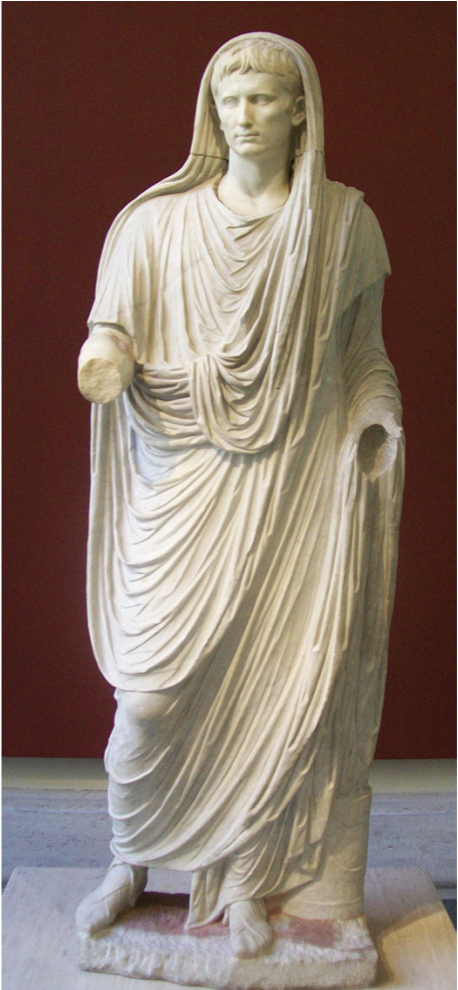
Augustus as Pontifex Maximus, from the Via Labicana, Rome
The Age of Augustus
31 BCE - 14 CE
one of Augustus’ favourites
Augustus as Pontifex Maximus
Chief Priest of Rome
Him realizing how much power the position held
Julian Calendar + dedicating which days to celebrate which holidays/Gods
Controlling Time - Controlling People/Religion
knowing where people would be gathered at certain times throughout the year
Propaganda
“look how pious/traditional I am because of how I worship the Gods”
Capite Velato
head covering evoking a religious context in a sculpture/painting
possibly making a sacrifice/participating in a ritual
Broken Hand
possibly holding paterra
giving a sacrifice
Role Portrait - Pious Man
“oh look at this family man. hey this new empire thing might be alright”
Greek Additions:
Greek Idealism
hard switch from verism to this
no showing of his true age ~49 years old
start of Augustan Classicism
a style to portray the new agenda/regime
still recognizable by large forehead, long nose, thin lips, and narrow chin + lobster claw curl
Marble
Head, neck, and veiled portion Greek marble
Bottom is Italian
Proportions
7 and a half heads tall
something advocated for by scultor Polykleitos
Variation of Greek contrapposto
Identify and Analyze
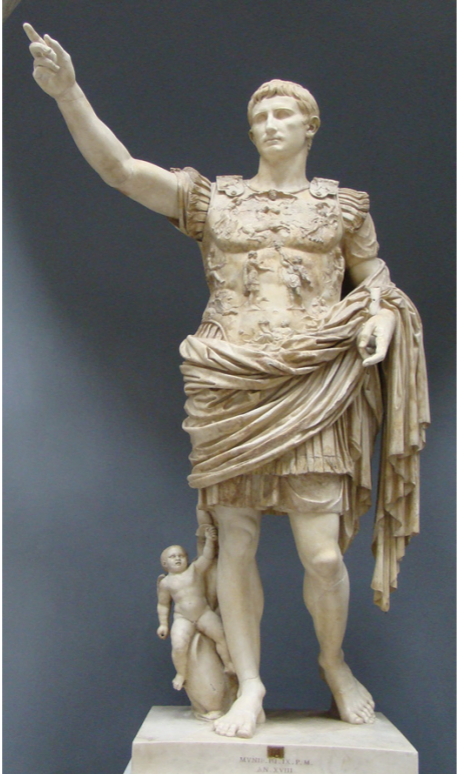
Prima Porta Augustus, from the villa of Livia at Prima Porta north of Rome
The Age of Augustus
31 BCE - 14 CE
Famous Statue
copy of original made ~20 BCE
possibly Livia wanting to commemorate her husband in her home
Painted Terracotta
red hair
no idea if he was actually a red hair
access to primary colours simply to highlight certain things on the statue
Prima Porta
villa owned by his wife, Livia
Augustan Classicism
Greek style with his own touches for new messages
not one for one with Greek idealism
New Politics = New Messages
Adlocutio
the raising of your hand by a speaker to let the crowd you are about to speak to know that you are going to begin
“hey, look at me”
Projections/Messages
Adlocutio - projecting himself as important
Staff of Office - power as a ruler
Cherub/Little Cupid - son of Venus, Venus Genetrix
Julio-Claudians as descendants of Aeneas, son of Venus
hints of Augustus portraying he is related to a God/he is divine
Bare Feet - tends to portray a deity
deified after his death - scholarly theory as to why they are bare
would not have been done in any of his statues before his death
The Spear Bearer
Greek Statue by Polykleitos, possibly what made him write his book on mathematics on making sculptures based on this exact statue
later became embodiment of Greek classicism
many copies made, but the original was bronze
Similarity in contrapposto legs with Prima Porta statue
exact measurements of distance between feet, raising of heels, scale, etc.
determined with laser measurements too
“I am the Roman Spear Bearer”
Armour
Greek idealized form
abs visible through the armour, like Apollo of Veii
Decorative
not for battle but for triumph/victory parades
Visual Elements/Iconography
Mythical + Historical Aspects
Sphinxes
representing him subduing Egypt
Caelus, sky + Tellus, earth
Augustus rules over all
Events of armour imagery happening below the sky and above the Earth
knowing it’s Tellus, personification of the physical land of Rome because she’s holding two babies - Romulus and Remus
Chariot of Sun - Sol/Apollo + Goddess Nyx/Artemis
Augustus rules for all time
seasons + him adding July and August to the calendar
Middle Section - debated to be myth/hisorical
Myth
representation of Roman’s might
dog with Mars(?), one of his sacred animals
Historical
Barbarian (Parthian) on right, holding Roman military standard
debate - if Mars, why would he be holding it?
History of Germans stealing the standard after massacring the Roman army in Tutenberg Forest
Representation of Germans giving it back after Augustus sent many troops to get it back
Identify and Analyze
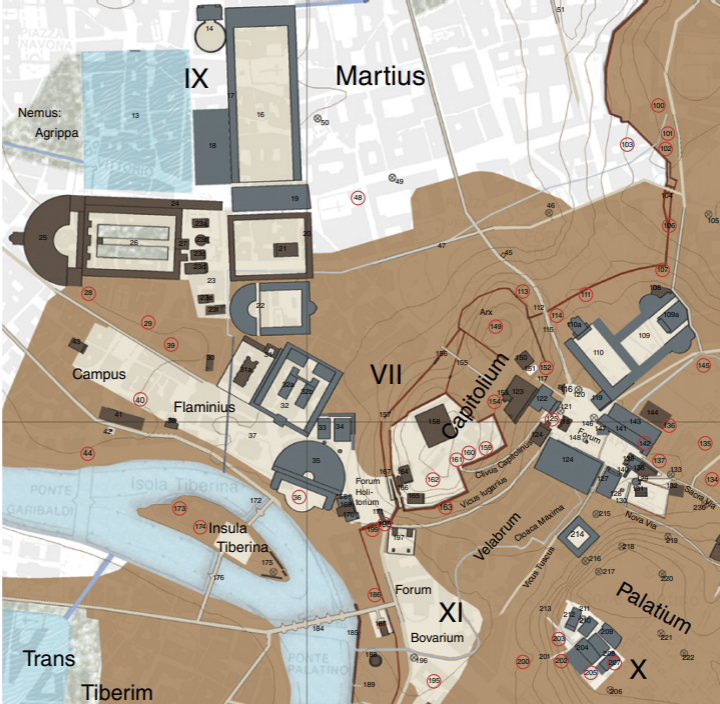
Augustan building program in Rome
The Age of Augustus
31 BCE - 14 CE
Augustus’ Building Program
spending tons of money “for the people”
destructing/reconstructing old buildings
“I found Rome a city of brick and left it a city of marble” - Augustus
incorporating marble to copy Eastern Greek fashion
Grey on Plan
everything Augustus built
lots on Palatine Hill
including his own personal residence for him and his immediate family
where the word “palace” comes from - so intricate/expansive
Campus Martius - Field of Mars
swampy area used for Roman army practice
Marcus Agrippa
architect who drained it with a series of built drain works
then built:
Baths of Agrippa
model for later imperial baths
new voting enclosures
Original Pantheon of Agrippa
front porch of round temple faced Horologium and Ara Pacis
Identify and Analyze
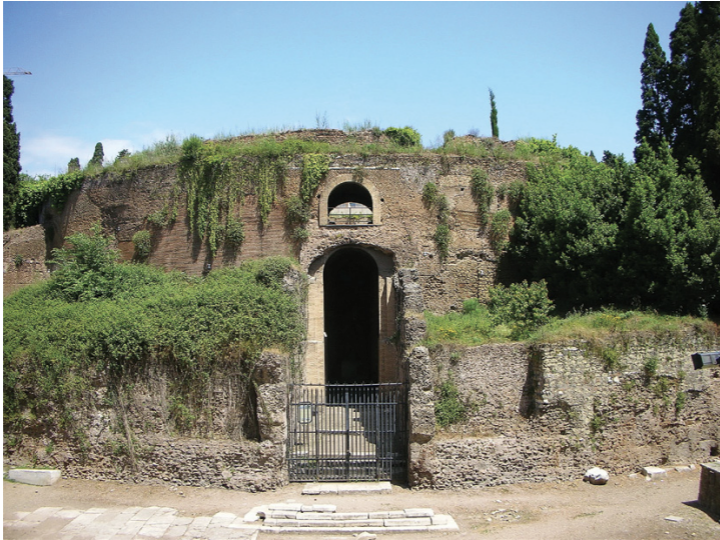
Mausoleum of Augustus, exterior view
The Age of Augustus
31 BCE - 14 CE
in Campus Martius
after becoming emperor, created his own family crypt right away - planning for dynasty
meant for his own burial and for members of his family
first ashes inside - Marcellus, his nephew, his original heir
last emperor inside was Nerva
south entrance aligned with Pantheon of Agrippa
connection between divine and members of Augustus’ family
Tumulus resemblance
soil and plants on top
meant to resemble mound Tomb of Aeneas at Lavinium
evoking his ancestor/ the hero of Rome - never truly confirmed if it was his tomb (don’t even know if Aeneas was real)
Huge dimensions to ensure it stayed the major landmark along the Tiber
Mausoleum at Halicarnassus
named after Mausolus - Asian king who built a massive tomb called the Mausoleum
one of 7 wonders of the ancient world
Augustus’ mausoleum named that to evoke that majorly impressive building
Decor
sheer amount copying Mausoleum at Halicarnassus
Public Park - for citizens to picnic
Aspects of Greek temple - implying he’s a god
Augustus Chariot Staute - copying of Mausolus’ own statue on his Mausoleum
Egyptian Obelisks - triumph over Egypt
Res Gestae Divi Augusti
“Things done by divine Augustus”
obituary written by himself put up all over the empire after his death
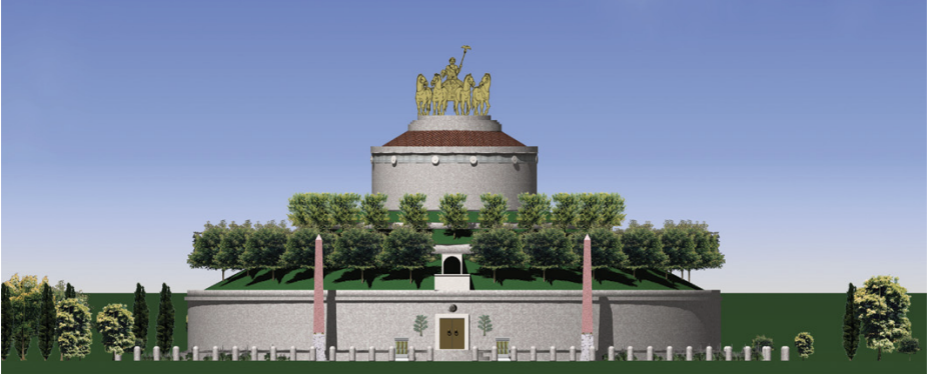
Identify and Analyze
Mausoleum of Augustus, reconstruction
The Age of Augustus
in Campus Martius
after becoming emperor, created his own family crypt right away - planning for dynasty
meant for his own burial and for members of his family
first ashes inside - Marcellus, his nephew, his original heir
last emperor inside was Nerva
south entrance aligned with Pantheon of Agrippa
connection between divine and members of Augustus’ family
Tumulus resemblance
soil and plants on top
meant to resemble mound Tomb of Aeneas at Lavinium
evoking his ancestor/ the hero of Rome - never truly confirmed if it was his tomb (don’t even know if Aeneas was real)
Huge dimensions to ensure it stayed the major landmark along the Tiber
Mausoleum at Halicarnassus
named after Mausolus - Asian king who built a massive tomb called the Mausoleum
one of 7 wonders of the ancient world
Augustus’ mausoleum named that to evoke that majorly impressive building
Decor
sheer amount copying Mausoleum at Halicarnassus
Public Park - for citizens to picnic
Aspects of Greek temple - implying he’s a god
Augustus Chariot Staute - copying of Mausolus’ own statue on his Mausoleum
Egyptian Obelisks - triumph over Egypt
Res Gestae Divi Augusti
“Things done by divine Augustus”
obituary written by himself put up all over the empire after his death
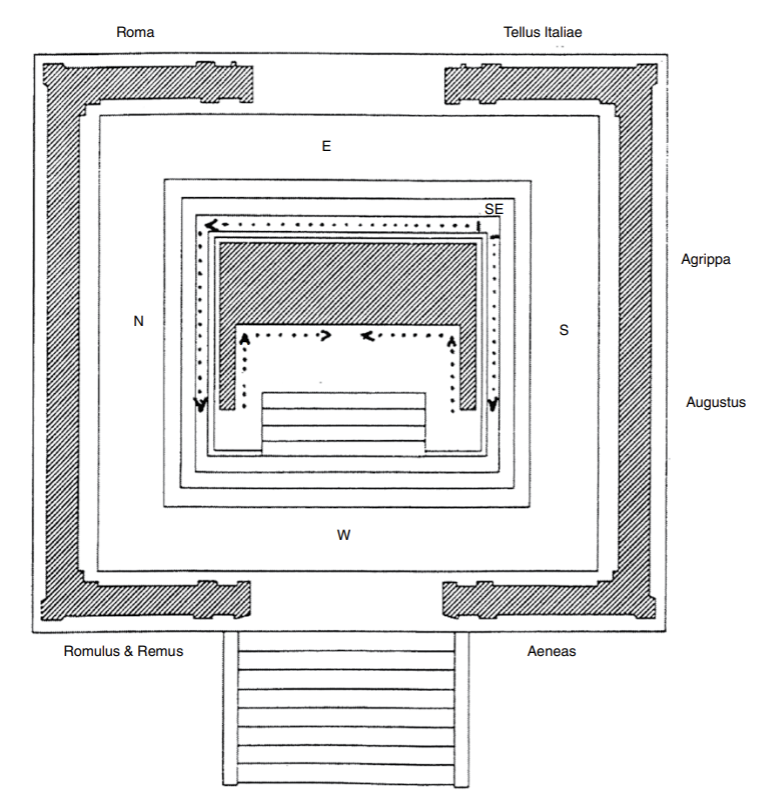
Identify and Analyze
Plan, Ara Pacis Augustae, Rome
The Age of Augustus
31 BCE - 14 CE
“Altar of Augustan Peace”
dedicated to the peace that Augustus brought to Italy
stopped all civil wars
Temples of Janus
when Rome was at war, the doors of the temple would be open
during Augustus’ reign, the doors were closed two times, meaning there was no war anywhere in Rome
Heavily restored
buried 36 feet underground, under an renaissance building
slowly excavated in pieces and brought elsewhere
Two Doorways
East/West
Pi-Shaped Altar
Greek letter Pi
Augustus mimicking Greek culture
Outside Shell
2 Registers/Zones
Bottom
vegetation and animals
meant to evoke the idea of abundance that Augustus had brought
Middle
Greek meander patterns
Corinthian pillasters
further Greek copying
Top
Figural patterns both mythological and historical
Western Face
Romulus + Remus
Prophecy of Aeneas
Eastern Face
Roma
personification of Rome
Tellus
physical land of Rome
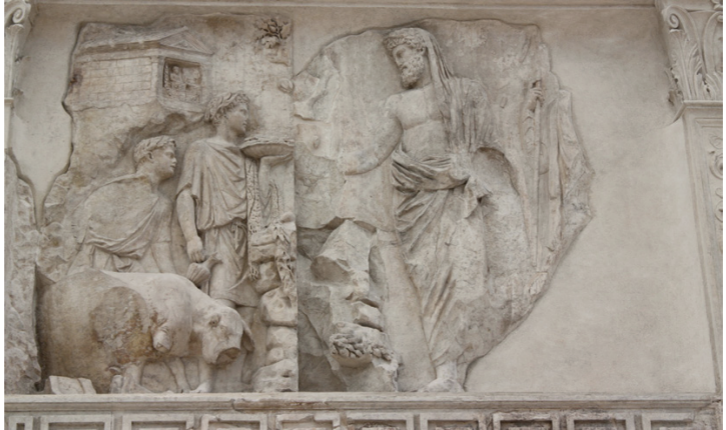
Identify and Analyze
Aeneas sacrificing panel, Ara Pacis Augustae, Rome
The Age of Augustus
31 BCE - 14 CE
Aeneid by Virgil, book 8 of the poem
Prophecy for Aeneas
told in a dream that he would find a white sow (mature female pig) and after killing her and her litter, he would ensure the founding of Rome
Capitae Velato
religious head covering
reason we know he’s sacrificing the pig
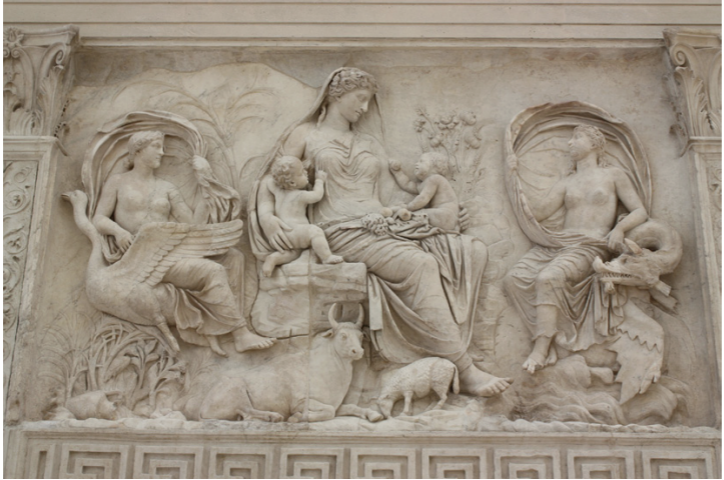
Identify and Analyze
Tellus/Italia panel, Ara Pacis Augustae, Rome
The Age of Augustus
31 BCE - 14 CE
Tellus/Italia
personnification of the land of Rome
Romulus + Remus
in the lap of Tellus
2 Goddesses
one on a swan, the other on a season monster
could possibly be specific representations of two different goddesses
more so representing all of the sky + all of the land/sea
like Prima Porta armour
Ox + Sheep for classic sacrifice * find name from last slide deck
Pig on other side with Aeneas to tie both panels together even more
Beside Aeneas Panel
places the viewer between the two founders of Rome
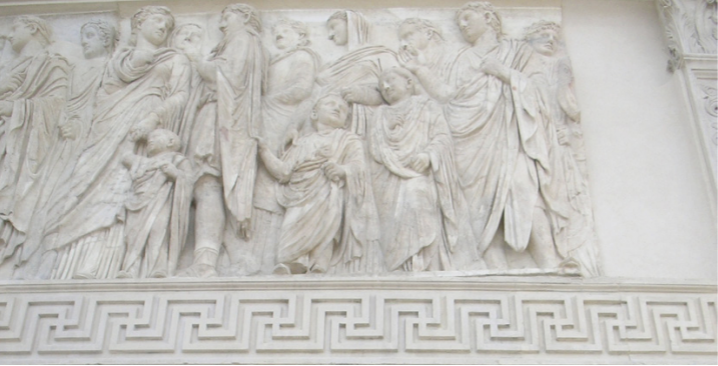
Identify and Analyze
South procession relief, Ara Pacis Augustae, Rome
The Age of Augustus
31 BCE - 14 CE
Greek Classicism
idealism of faces + bodies
though children look like mini adults
Isocapitalism
all heads at the same height
Depth
Front Figures - High detail
Back figures - lower detail
Augustus’ Family in Procession
Propaganda
“I’m a good man. I honour my family at my core. Here is all of my family.”
“Also, hey guess what I’m starting a dynasty. Here’s some art for you to get used to it. Don’t elect another Emperor. It will all be in my family.”
Child
Barbarian representation by Romans
long curly hair, no Roman tunic, and a torque - a type of necklace
later becomes Roman standard of representing non-Romans
Agrippa + child
when conquering new places with established monarchies/reigning figures, the Romans would let them stay in “power”, but they would take one of their princes
the princes would be raised as princes, but were there to be killed with those rulers ever stepped out of line
Agrippa would take care of these foreign princes
taught to read/write in Latin and their home language if it was known to the Romans
taught Roman culture/societal standards as well as homeland’s if known to Romans
Projections
at night, modern projections show what the panels would’ve looked like when they were originally painted in antiquity.
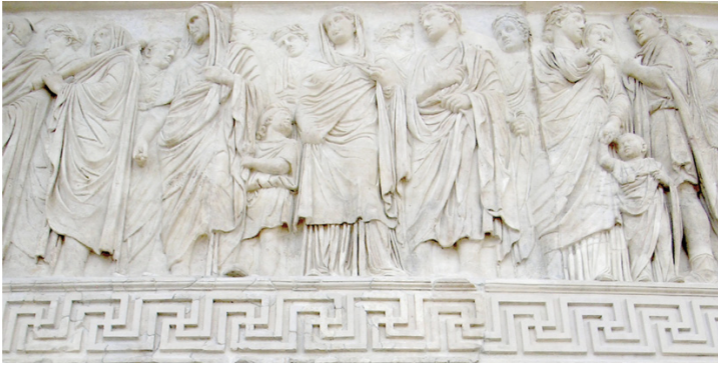
Identify and Analyze
Children on south procession panel detail, Ara Pacis Augustae, Rome
The Age of Augustus
31 BCE - 14 CE
Child
Barbarian representation by Romans
long curly hair, no Roman tunic, and a torque - a type of necklace
later becomes Roman standard of representing non-Romans
Agrippa + child
when conquering new places with established monarchies/reigning figures, the Romans would let them stay in “power”, but they would take one of their princes
the princes would be raised as princes, but were there to be killed with those rulers ever stepped out of line
Agrippa would take care of these foreign princes
taught to read/write in Latin and their home language if it was known to the Romans
taught Roman culture/societal standards as well as homeland’s if known to Romans
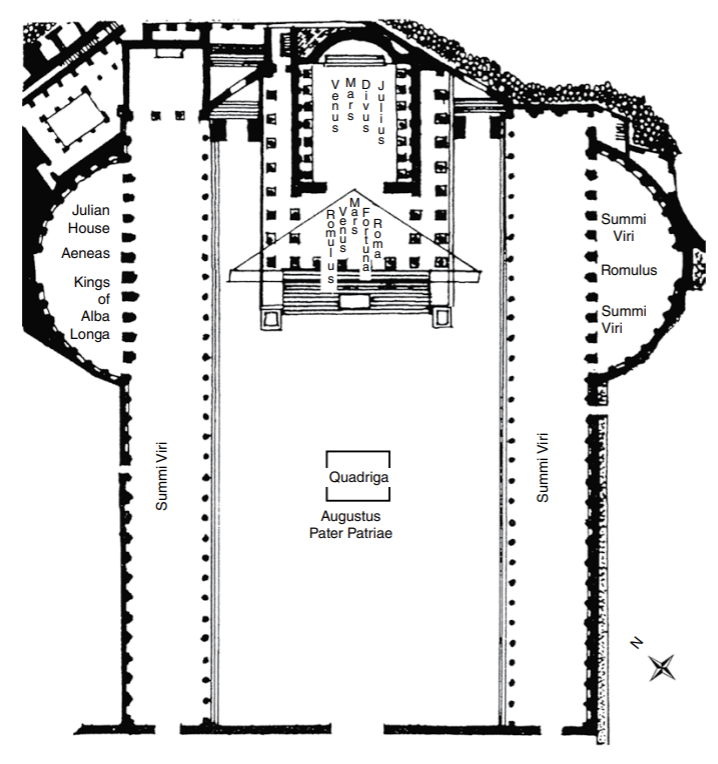
Identify and Analyze
Plan of Forum Augustum
The Age of Augustus
31 BCE - 14 CE
Addition to the Forum Romanum
not as large as those constructed in the Campus Martius
use of richly coloured marbles from the edges of Roman territory
symbol of Roman control over the expanse of the world
Like Forum Julian
based on its form
Temple to Mars Ultor
“Mars the Avenger”
avenged the death of Julius Caesar
reinforcing Augustus' personal virtues of piety and him being the heir of Caesar
Not just a hall of fame but also a museum to Roman military might/ Roman standards recovered from the Parthians
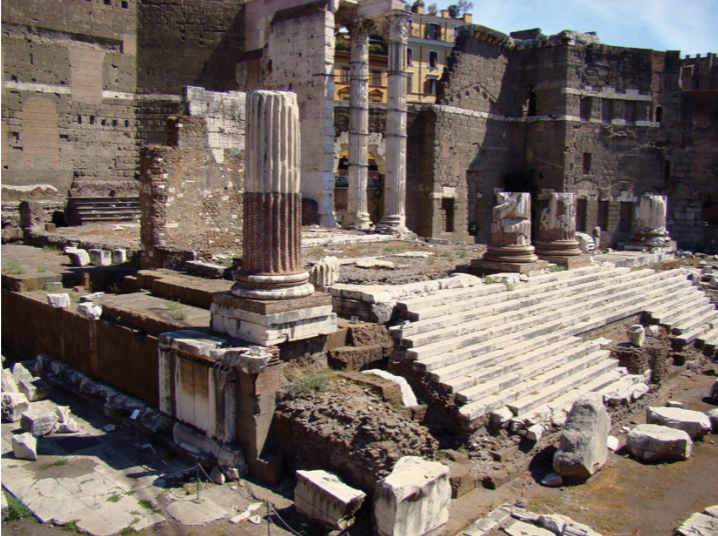
Identify and Analyze
Forum Augustum, Temple of Mars Ultor
The Age of Augustus
31 BCE - 14 CE
“Mars the Avenger”
avenged the death of Julius Caesar
reinforcing Augustus' personal virtues of piety and him being the heir of Caesar
Reliefs
reinforcing relation to Caesar +the Gods
Statues
Mars, deified Julius Caesar, Venus Genetrix
Augustus’ double divine descent from Venus + deified Julius
Hall of Fame
Exedrae
semi-circular niches roofed with a half dome
Summi viri
“highest men” or “best men”
statues of them were in the exedrae on display
many famous Roman generals presented
Marcus Claudis Marcellus
Aemilius Paullus
no statues survive but the plaques with their names and accomplishments do
Romulus + Aeneas Statues
founders of Rome
Julio-Claudian descendants flanking Aeneas
mythical kings of Alba Longa flanking Romulus
entire set up visual propaganda
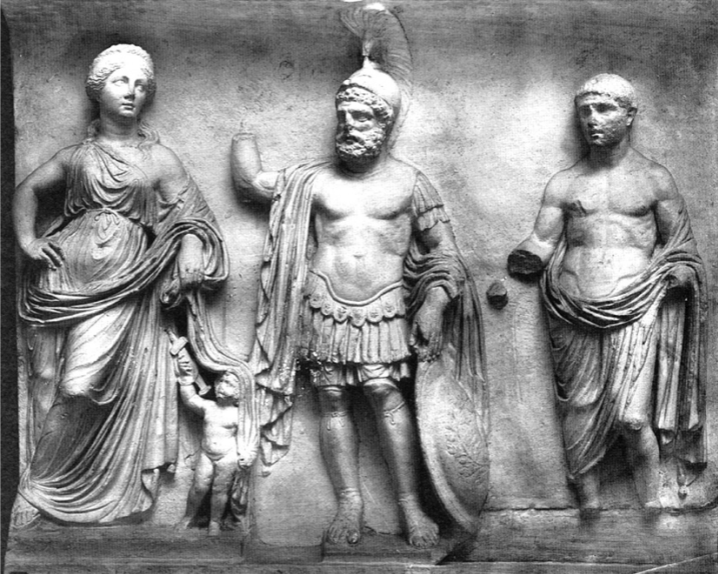
Identify and Analyze
Algiers relief of Mars Ultor, Venus Genetrix, and Caesar
The Age of Augustus
31 BCE - 14 CE
Venus Genetrix
little cupid at her side
Founder of the Julio-Claudian line
Mars Ultor
avenger of Julius Caesar’s death
Julius Caesar
deified
How do we know? A little star in his hair
the comet that passed overhead during his funeral - his soul ascending to be with the gods
also bare feet
Augustus reminding people that now that Julius Caesar was deified, he is descended from two gods - Venus Genetrix + Julius Caesar
hinting very strongly at his own divinity
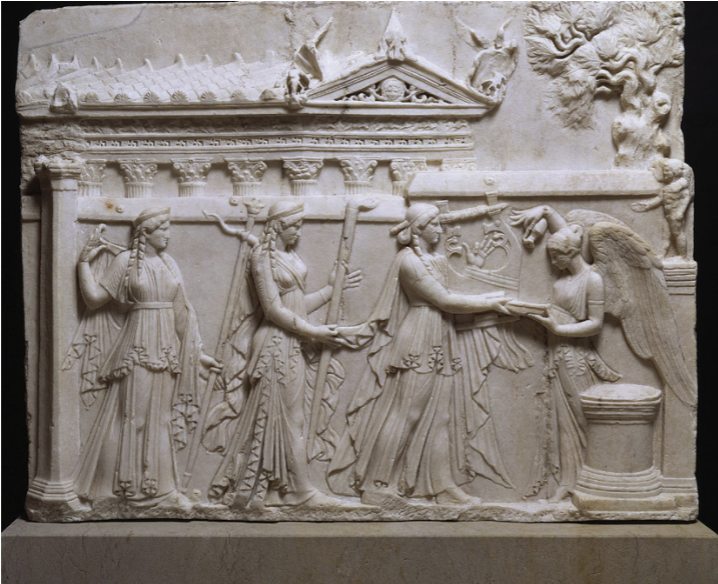
Identify and Analyze
Archaistic relief of Apollo, Diana, and Leto, Temple of Apollo Palatinus, Rome
The Age of Augustus
31 BCE - 14 CE
First temple in Rome constructed completely out of marble
Apollo, Diana, and Leto accepting a sacrifice
Apollo: Lyre
Diana: Bow
Leto: Staff
Archaistic Style - 6 cent BCE
meant to look like an Archaic Greek style, but with some “modern” touches
Roman Art Movement that adopted this style
massive industry to copy old Greek art and sell it to Rome
sense of tradition/dignity to the sanctuary
once a style exists, it never ceases to exist
Stiff, no contrapposto
Drapery Folds
Winged Figure
Victory/Messenger
Sacrificing Oil
pouring into a patera
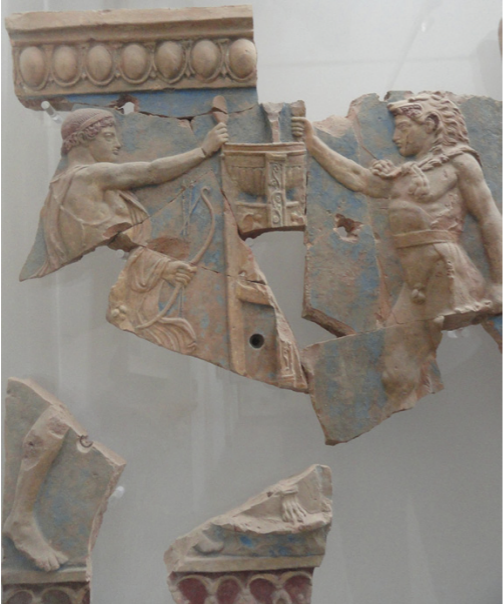
Identify and Analyze
Terracotta plaque of Apollo and Hercules, Temple of Apollo Palatinus, Rome
The Age of Augustus
31 BCE - 14 CE
Interior of Temple
lined with a number of "old-fashioned” terracotta plaques
protected the wooden components of old archaic temples from the weather
Augustus’ Victory over Marc Antony
presented in the plaques
shown through allegory by mythological means
victory of a Roman over another Roman never shown
would’ve been promoting civil conflicts/wars
Apollo + Hercules Fight Over the Tripod
Augustus = Apollo
associated himself with the God/ his patron deity
Marc Antony = Hercules
associated himself with the God/ his deity
Myth of Hercules + Oracle of Delphi
Hercules wanted an Oracle, so he went to Delphi to try and steal the Tripod (which belonged to Apollo’s Oracle)
Zeus came down and broke it up
Somewhat-Archaistic Style
more fluid in motion
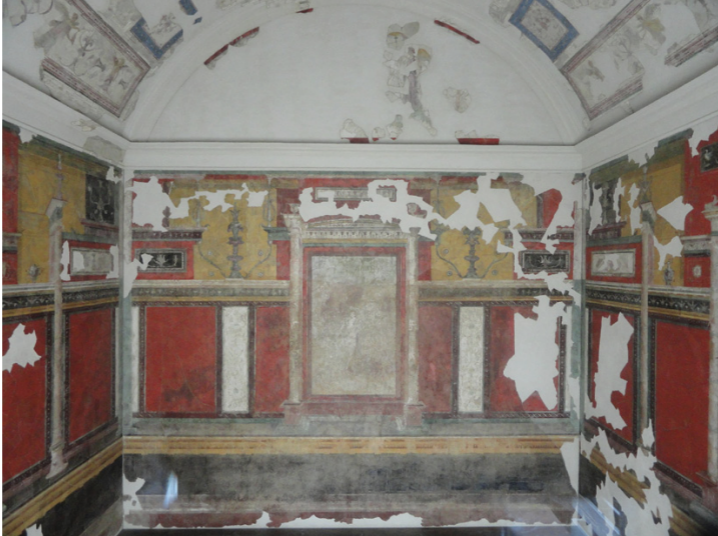
Identify and Analyze
Wall painting, “House of Augustus,” Palatine Hill, Rome
The Age of Augustus
31 BCE - 14 CE
"House of Augustus” - misnomer
such fine wall painting in a house on Palatine Hill led archaeologists who discovered it to believe it was Augustus’
Augustus’ original house probably destroyed mid-century
Third Wall Painting Style
Panel Paintings
inspired by Greek paintings/decorative ornament
though no Greek paintings survive because they were done on wood
but thought to be similar, just not able to directly compare
emphasis on various landscape scenes
with/without figures
villas, porticos
gardens,woods, groves, hills, fishponds, canals, rivers and seashores
Often mythological
Some architectural elements of Second Stylel
pillars, acroterion, whatever
but only added as framing elements to the main panel
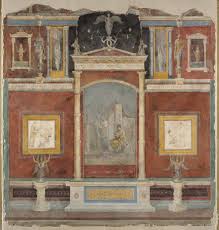
Identify and Analyze
Wall painting from Villa Farnesina, Rome
The Age of Augustus
31 BCE - 14 CE
Third Wall Painting Style
Panel Paintings
inspired by Greek paintings/decorative ornament
though no Greek paintings survive because they were done on wood
but thought to be similar, just not able to directly compare
emphasis on various landscape scenes
with/without figures
villas, porticos
gardens,woods, groves, hills, fishponds, canals, rivers and seashores
Often mythological
Some architectural elements of Second Stylel
pillars, acroterion, whatever
but only added as framing elements to the main panel
Thought to be no relation between these paintings here
sometimes in these things there is cohesiveness
Identify and Analyze
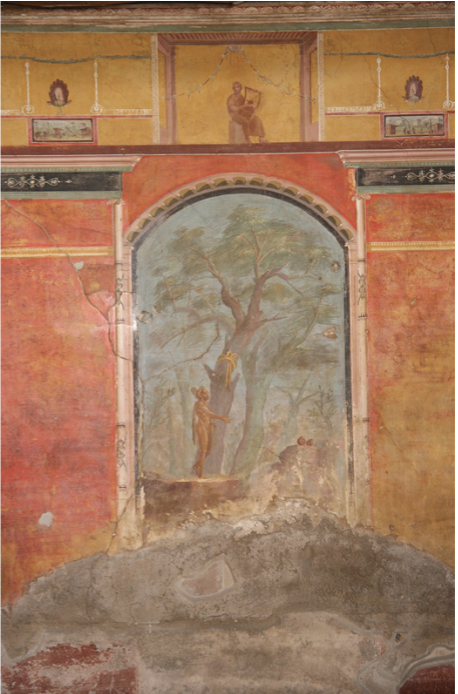
Third Style painting, Villa at Oplontis
The Age of Augustus
31 BCE - 14 CE
Spread of 3rd Style Wall Painting beyond Rome + Augustus’ family
Caladrium
hot room in a Roman bath complex
usually had heated pool + radiant heat from walls/floor
Upper Zone/Attic
fine architecture, peacocks, horizontal panel paintings of sacred landscapes, figure - maybe poet? playing a lyre
relations between images unknown
figure - statue, deity, or person? are the panel paintings + peacocks related?
Centre Panel
Aedicular Niche
a structural framing device in architecture
creates a space designed like a shrine - usually with a frame to surround and roof structure above
Hellenistic Style
Atmospheric Perspective
artistic device to create a sense of depth
shifting background colours to the blue side of the spectrum and painting distant object paler
Hercules in the Garden of Hesperides
one of his final labours - retrieving the golden apple
full of conflict and struggle - none of which is seen here
no action, but evokes the garden scene + narrative without overwhelming the landscape
Large vertical Tree
standard in 3rd Style landscapes
Identify and Analyze
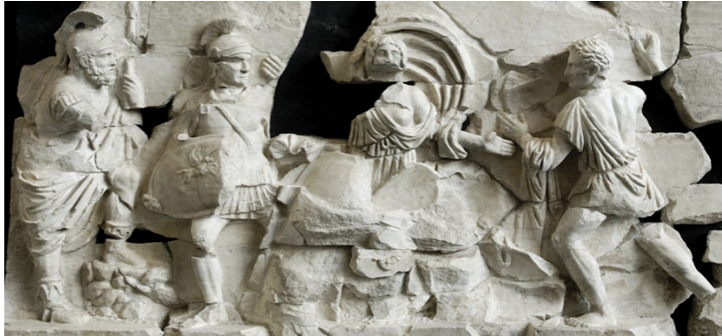
Marble frieze of Tarpeia from the Basilica Aemilia, Forum Romanum, Rome
The Age of Augustus
31 BCE - 14 CE
Classical Style with Italic Representations
Classical - 5th cent Greece
high relief, dramatic poses, and landscape elements
Italic Representations:
Tarpeia
story published by historian Livy in “Since the City’s Founding”
Etiological Story
an origin story
a myth to show dangers of being a traitor
Princess of an Etruscan/Roman King
Sabines vs Etruscans to gain control of area around Rome
Sabines told Tarpeia “if you open the gates for us then we’ll give you everything on our left arms” meaning their jewelry and bracelets, making her think she’ll be rich
Tarpeia lets them in in the middle of the night and they bash her to death with their shields - which were on their left arms
to Romans, she deserved it, because she was a traitor
Tarpeia’s Rock
said that she was buried on this rock where eventually the Forum was built
public executions of criminals would take place here
Etiological - “Why do we do executions here?” “oh cause it goes back to Tarpeia”
Augustus + Glorification of Rome
he was also all about mythology/time
Identify and Analyze
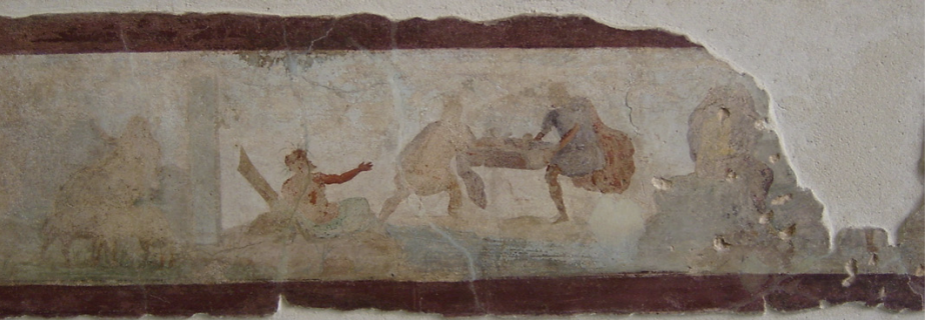
Roman history painting, Tomb of Statilius Taurus, Rome
The Age of Augustus
31 BCE - 14 BCE
Statilius Taurus
one of the most prominent Roman politicians of the age
served as consul multiple times under Augustus
celebrated a triumph
held the city during Augustus’ absences
built first stone Amphitheatre in Rome
Frieze
Hellenistic technique
Rome’s early history + mythological founders
Romulus + Remus being put in a basket and sent down the Tiber
Augustus’ art that he’s trying to promote present even in private settings
used/copied by elites for way of expression Roman patriotism
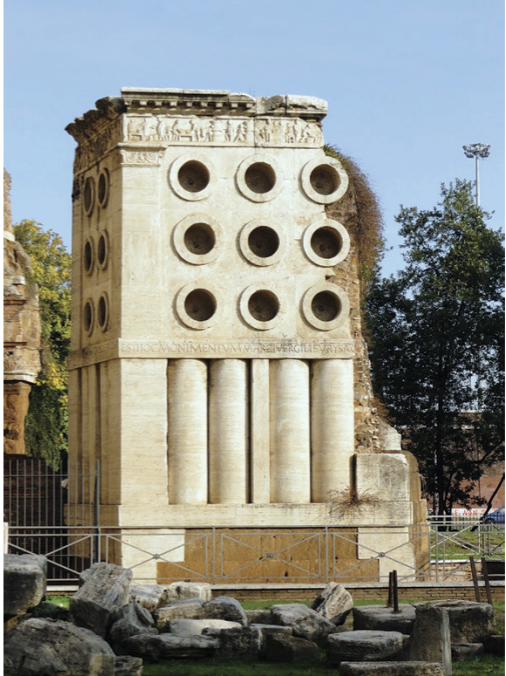
Identify and Analyze
Tomb of Eurysaces, Rome
The Augustan Period
31 BCE - 14 CE
belonged to Marcus Vergilius Eurysaces
Right outside old Rome city walls
Local Italic style
Bodies not a classical style
More italic style, more squat
Like Etruscan, proportions/depth doesn't really matter
Not following the capital Hellenistic art trend of the time
From wealthy elites but not necessarily nobles
one of largest sub-elite tombs
Tomb about Eurysaces and his family
wealthy bakers who supplied bread to Roman army
Pillars and Holes
thought to be representation of dough-making machines
Upper Frieze
Bakers
Kneading, into the oven, etc.
represents all the different stages of the bread making process
Hierarchy of Scale
show which breadmakers are the important ones
Tunics instead of Togas
representation of slave workers
idea that Eurysaces was so succesful as a baker he could buy slaves for the work
Identify and Analyze
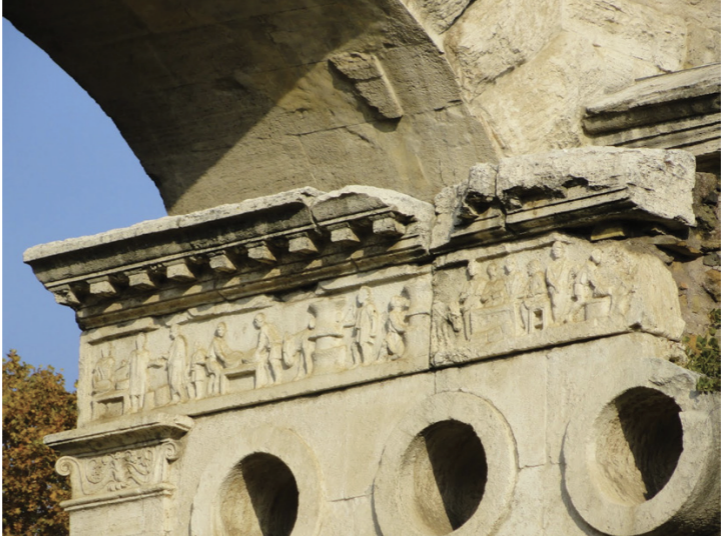
Detail of baking frieze, Tomb of Eurysaces, Rome
The Augustan Period
31 BCE - 14 CE
Upper Frieze
Bakers
Kneading, into the oven, etc.
represents all the different stages of the bread making process
Hierarchy of Scale
show which breadmakers are the important ones
Tunics instead of Togas
representation of slave workers
idea that Eurysaces was so successful as a baker he could buy slaves for the work
Local Italic style
Bodies not a classical style
More italic style, more squat
Like Etruscan, proportions/depth doesn't really matter
Identify and Analyze
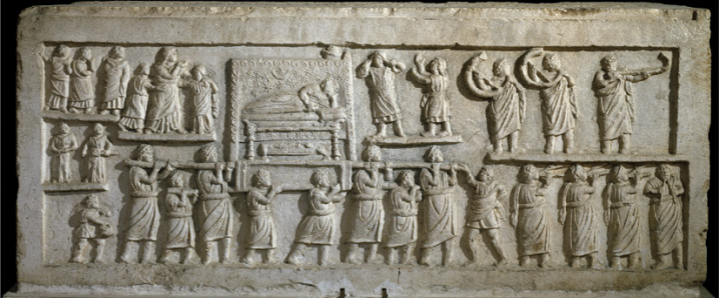
Tomb of funeral procession, Amiternum
The Augustan Period
31 BCE - 14 CE
Augustan Period yet not Augustan Classicism at all
Traditional Italic Style
Bodies more squat/square, no contrapposto, scale doesn't matter
figures made in the same way a historical piece would be made
All the bearers for the deceased
Shorter just means he's in the background, behind the other polebearers
Ground Lines
You can't fit them in, but there's space above them? Just a way of letting viewer know what's going on
Identify and Analyze
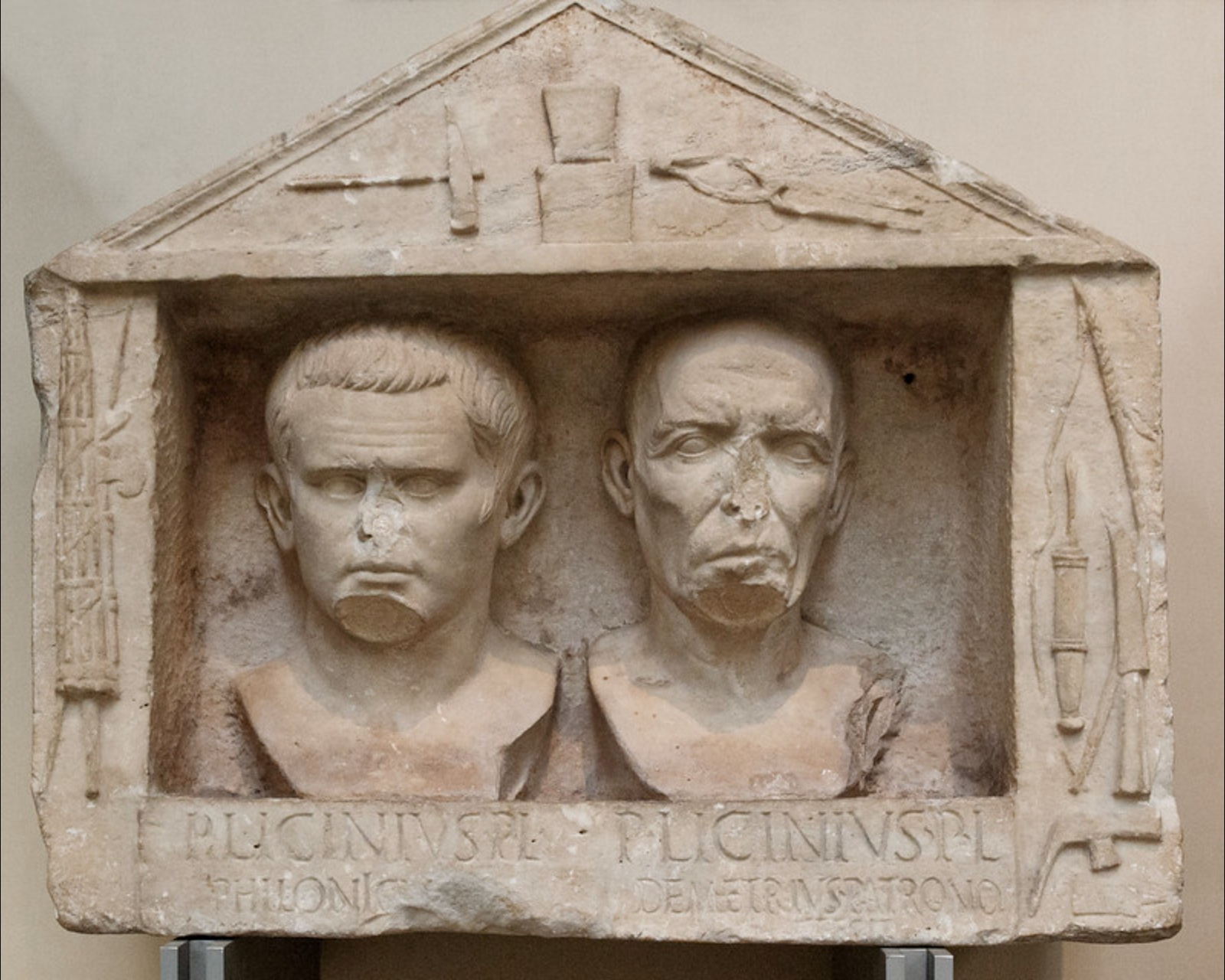
Tomb of Publius Licinius Philonicus and Publius Licinius Demetrius, Amiternum
The Augustan Period
31 BCE - 14 CE
Two Men
Freed slaves
Similarity in names: Would have taken the same name from their owner after being freed
Objects around them
Sticks with axe
Presenting roman power
Would've been present during ceremony of freeing the slaves
reason as to why we know they’re freed
Carpenter Tools
Skilled carpenters who later bought their freedom
Idealism on left
Some details of verism to show personality and who he was
forehead wrinkles, square head, nasal labial lines
Hair – like augustus lobster claw
Verism on the other
Sagging cheeks, wrinkles, etc
Art styles change, but doesn't mean that verism goes away
Just not major fashion
But still seen in certain instances
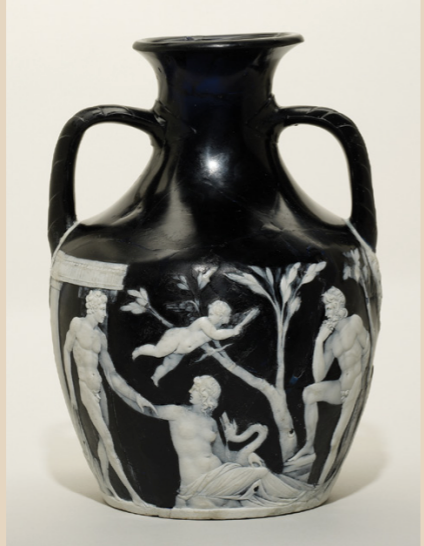
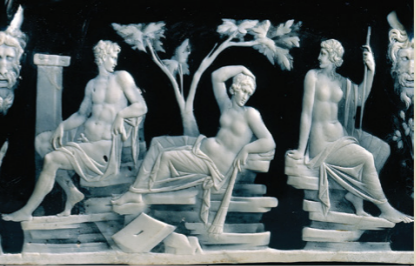
Identify and Analyze (two images)
Portland Vase, from Rome
The Augustan Period
31 BCE - 14 CE
Glasswork
Canio glass – check spelled
What's going on here?
Fairly certain its augustan and date
Heavily mythological/very classical in style
Many people arguing who figures are and what myth is being represented.
Piece that started major neoclassicism movement in Britain
A lot of british pottery and glasswork looks exactly like this because when it was brought to the museum it was all the rage
Wedgewood – early pieces look a lot like this
Big british pottery people/company
Carved glass
Essay in context
We have none for this
From rome but don't know where
Educated guesswork
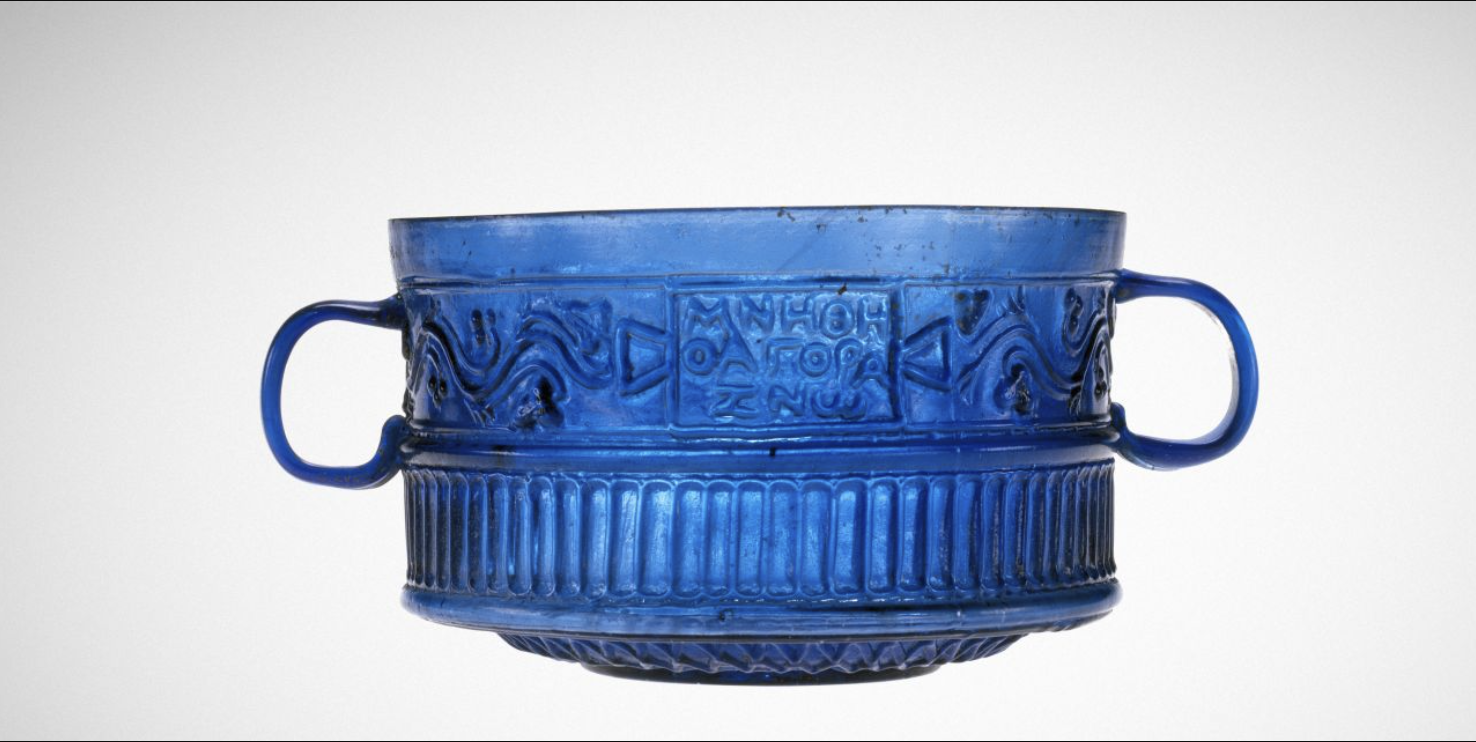
Identify and Analyze
Blue glass mold‐blown handled cup by Ennion
The Augustan Period
31 BCE - 14 CE
Guy signed his name on back
Probably a mark of where glasswork is as a medium
Signed by artist for the first time
Glasswork being as good as scultpture
Blue means original sand hand a lot of cobalt in it
Mould work and etching
Hitting it's stride and becoming major material production when it wasn't at this artistic style before
Originally more functions