AP Psychology - Biological Bases of Behavior
 Call Kai
 Learn
Learn Practice Test
 Spaced Repetition
 Match
Match Flashcards
 Knowt Play
1/92

There's no tags or description
Looks like no tags are added yet.
Name | Mastery | Learn | Test | Matching | Spaced | Call with Kai |
|---|
No analytics yet
Send a link to your students to track their progress
93 Terms
biological psychology
study links b/w biological activity and psychological events
Neuron
Nerve cell specialized for communication
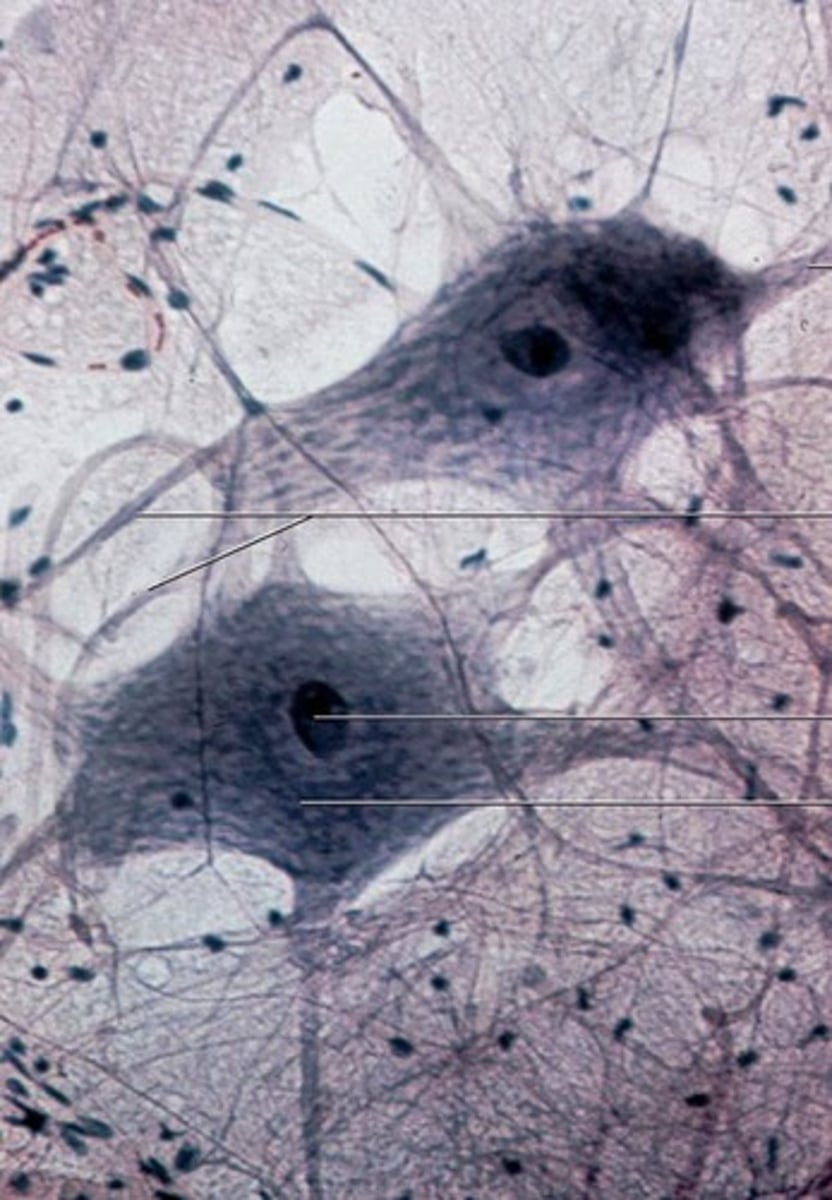
Dendrite
Branchlike parts of a neuron that are specialized to receive information.
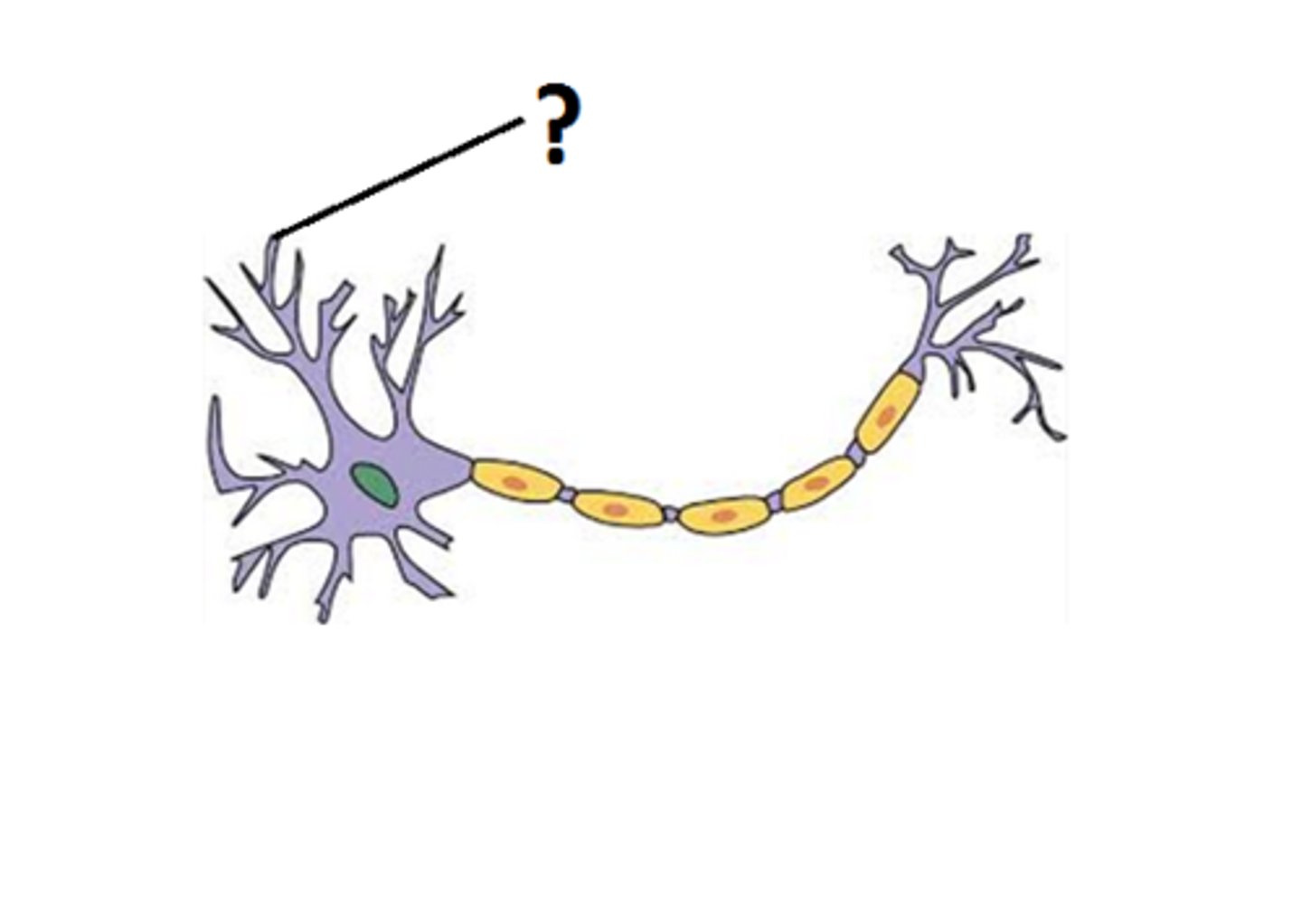
Axon
A threadlike extension of a neuron that carries nerve impulses away from the cell body.
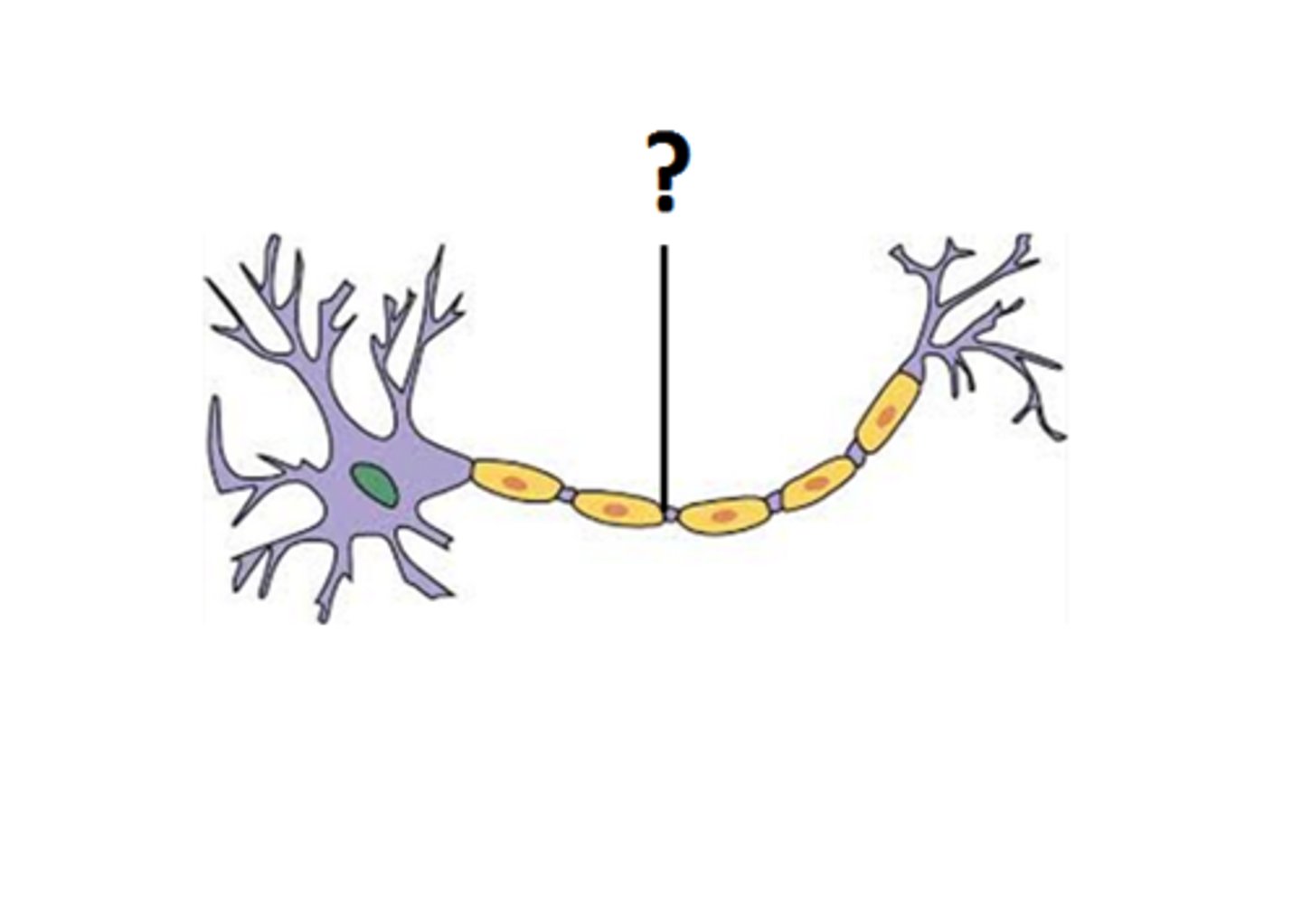
Myelin Sheath
a fatty tissue layer segmentally encasing the axons of some neurons; enables vastly greater transmission speed as neural impulses hop from one node to the next
Action potential
A neural impulse; a brief electrical charge that travels down an axon.
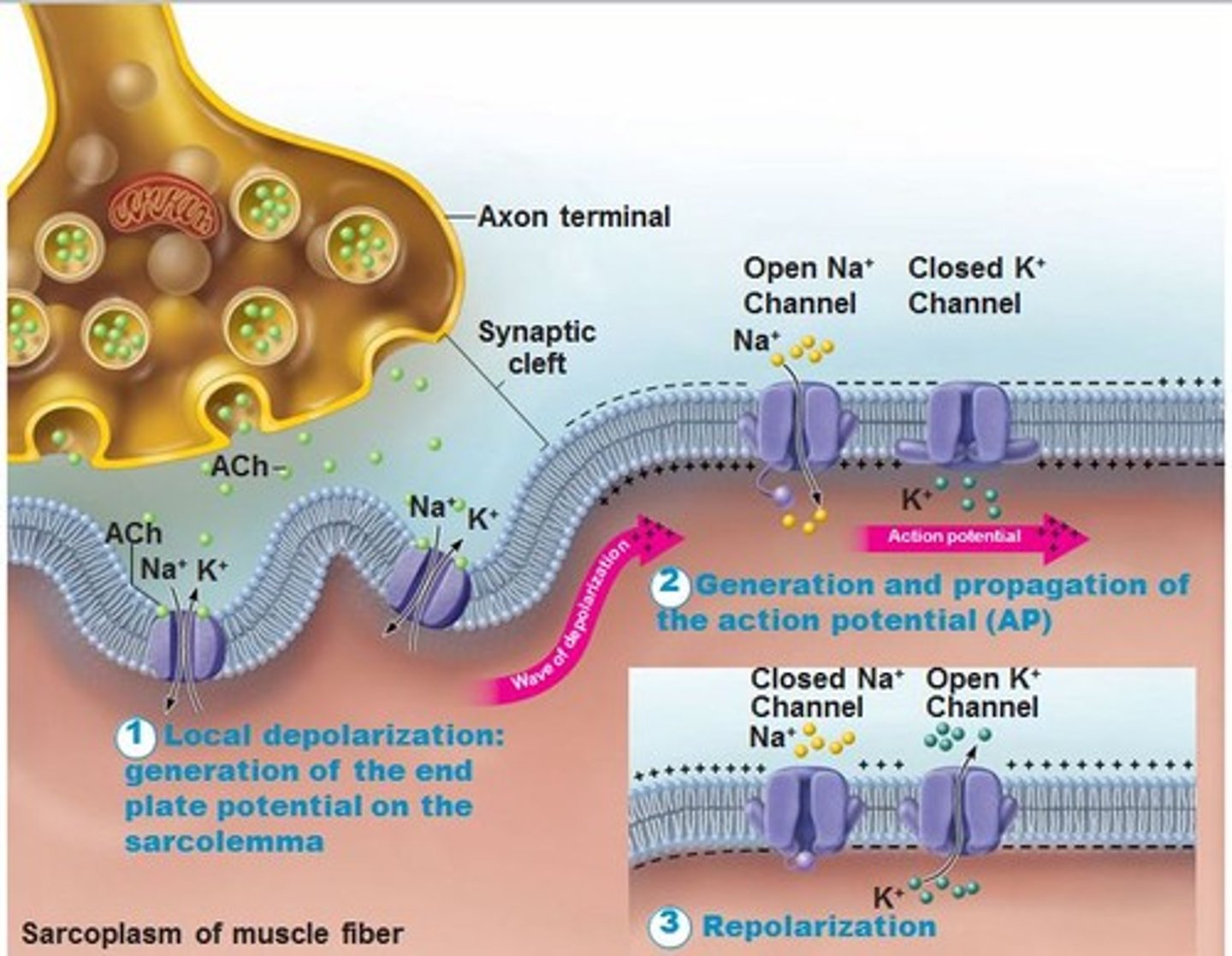
Refractory period
period of inactivity after neuron has fired
Threshold
Membrane potential necessary to trigger an action potential.
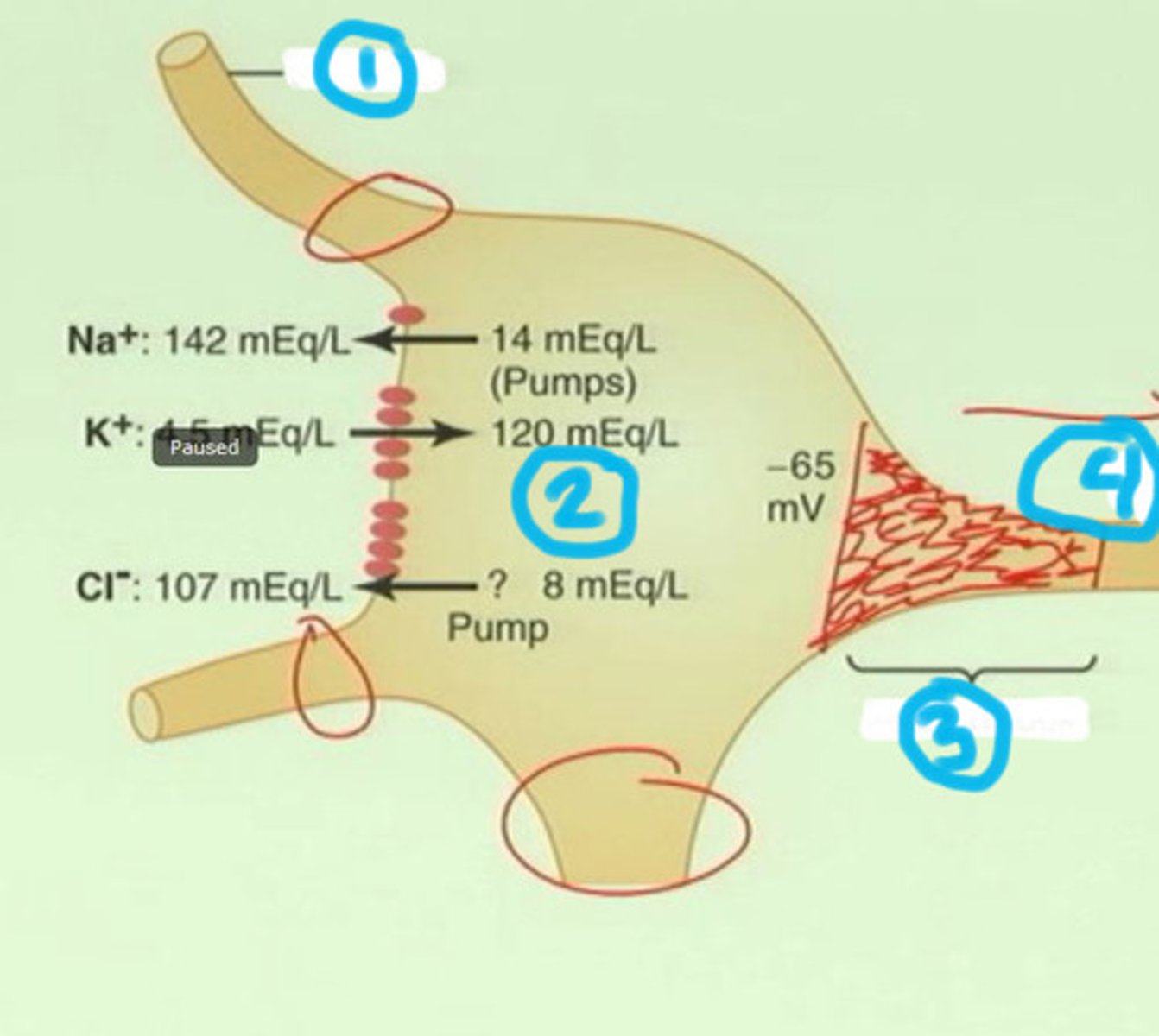
All-or-Nothing Response
a neuron can release all of its neurotransmitters or none

Synapse
Space between two connecting neurons through which messages are transmitted chemically
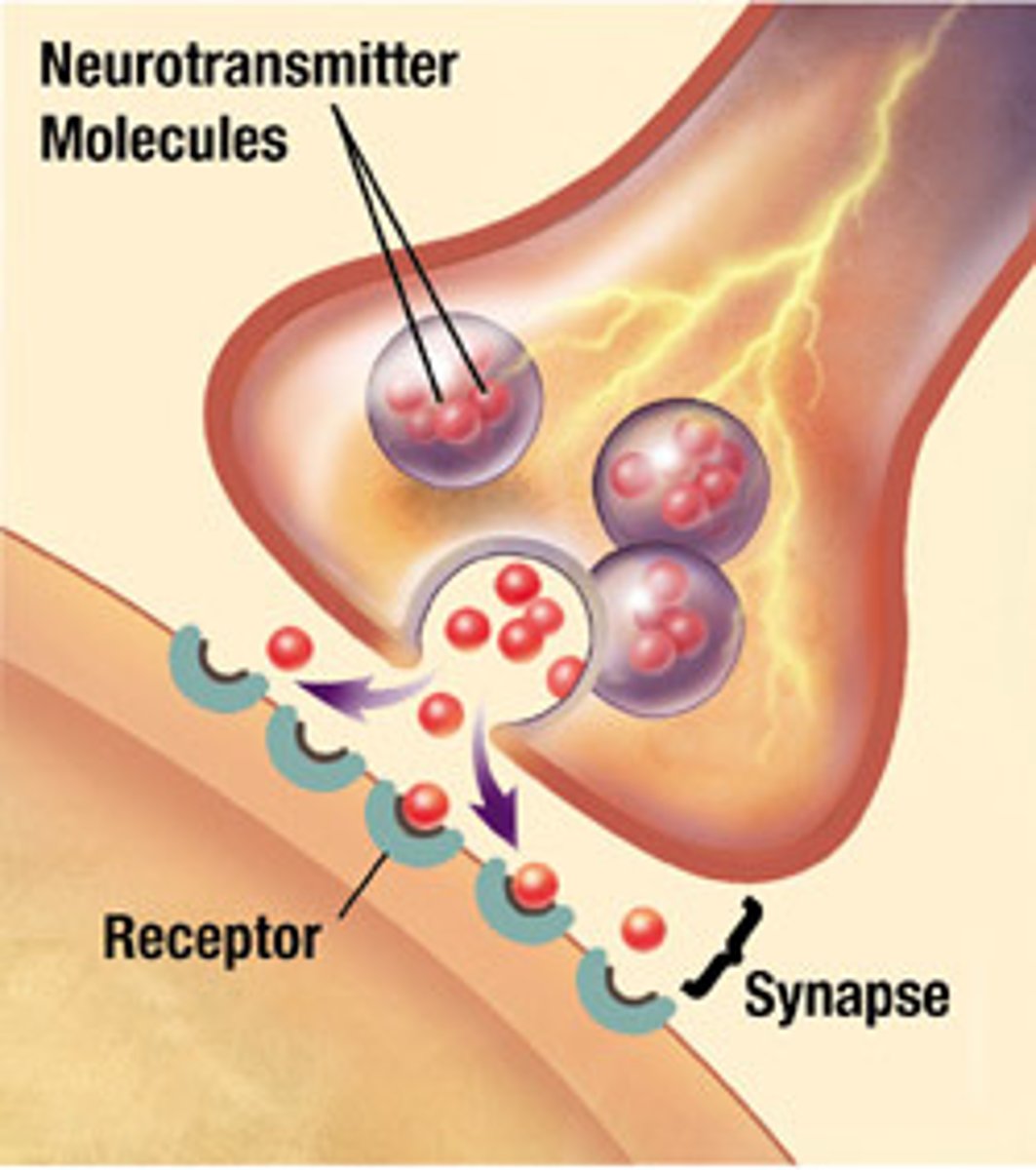
Neurotransmitter
Chemical messenger specialized for communication from neuron to neuron
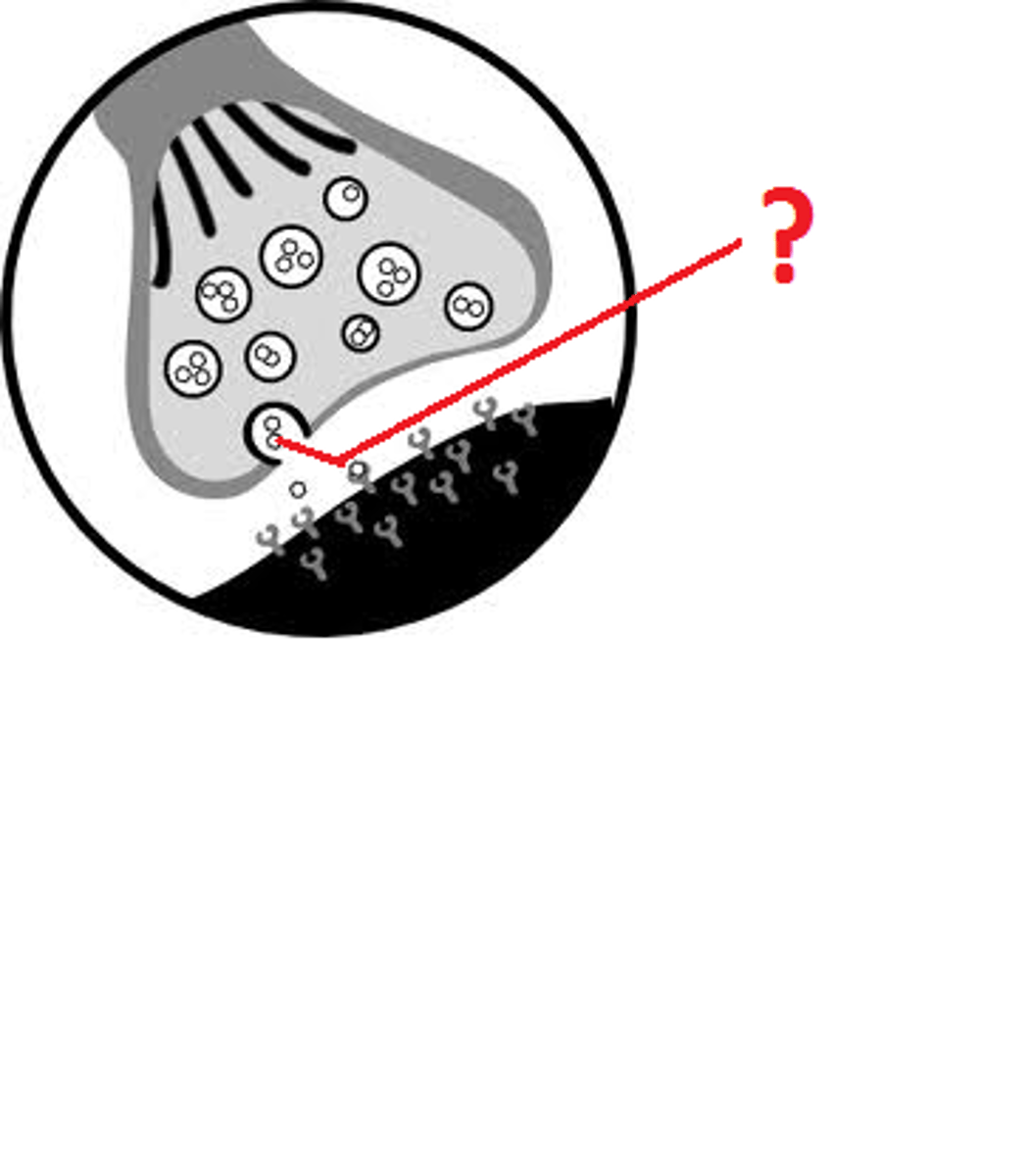
Reuptake
A neurotransmitter's reabsorption by the sending neuron
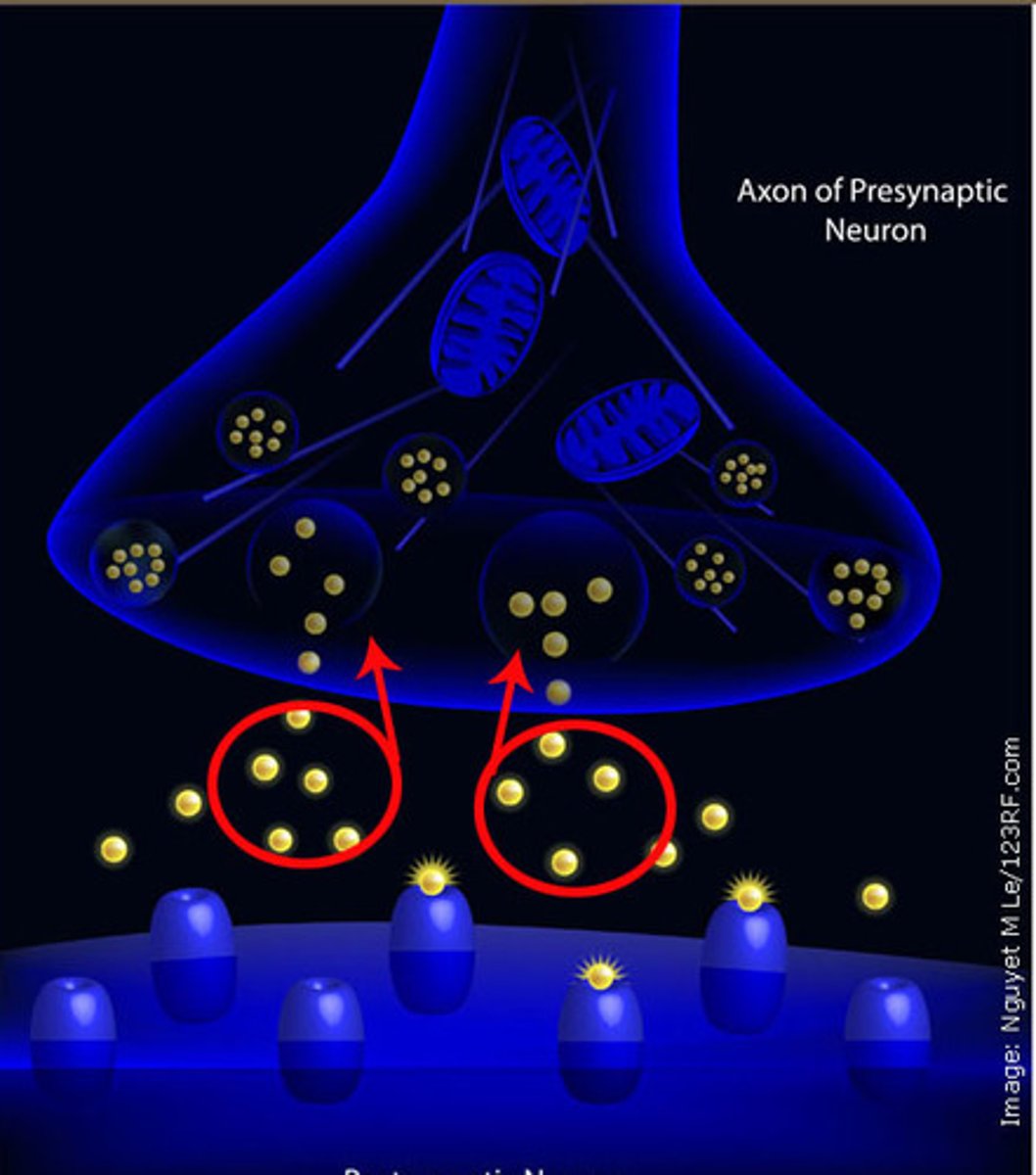
Acetylcholine (ACh)
Muscle contraction (PNS) Cortical arousal (CNS)
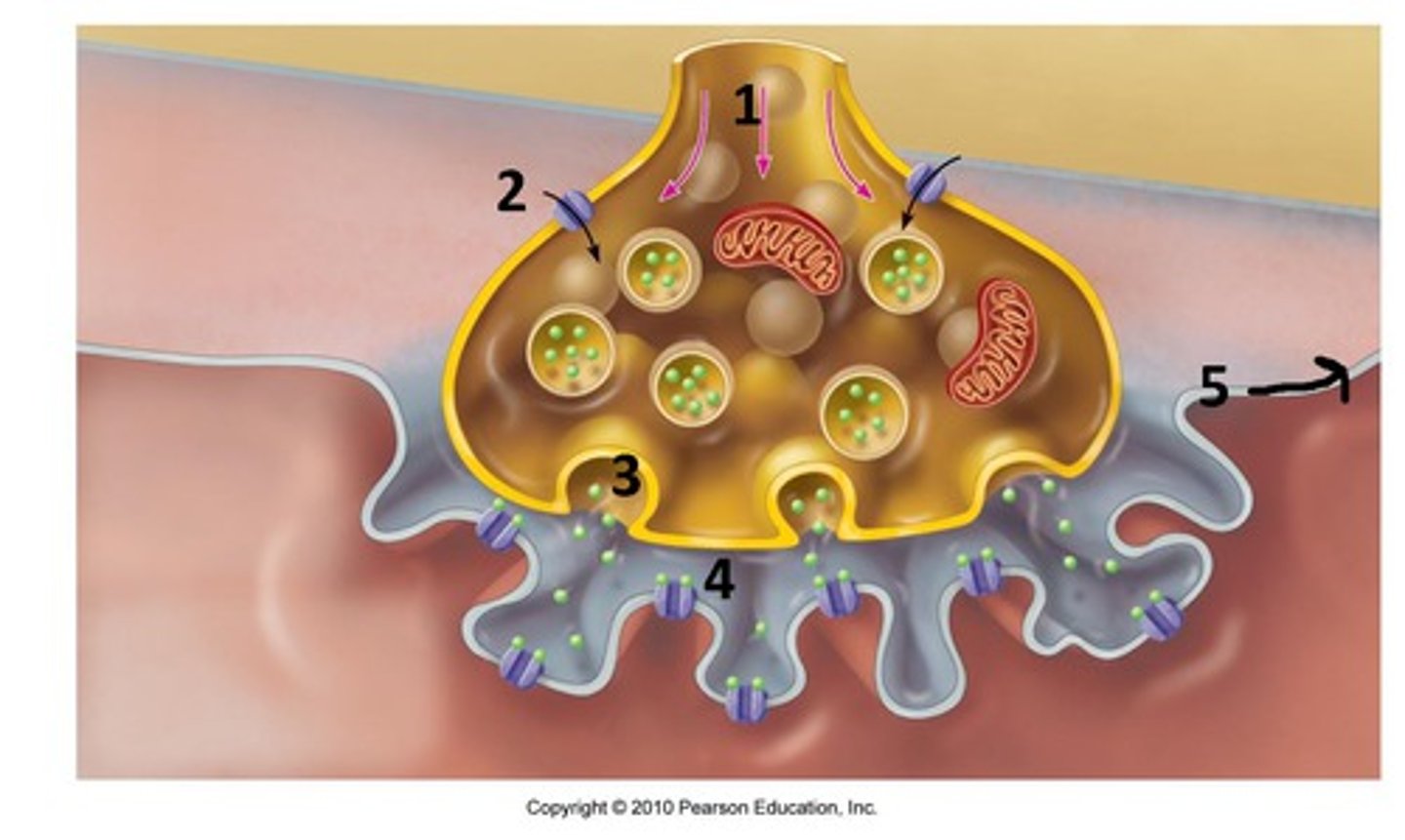
Dopamine
Motor function and pleasure reward
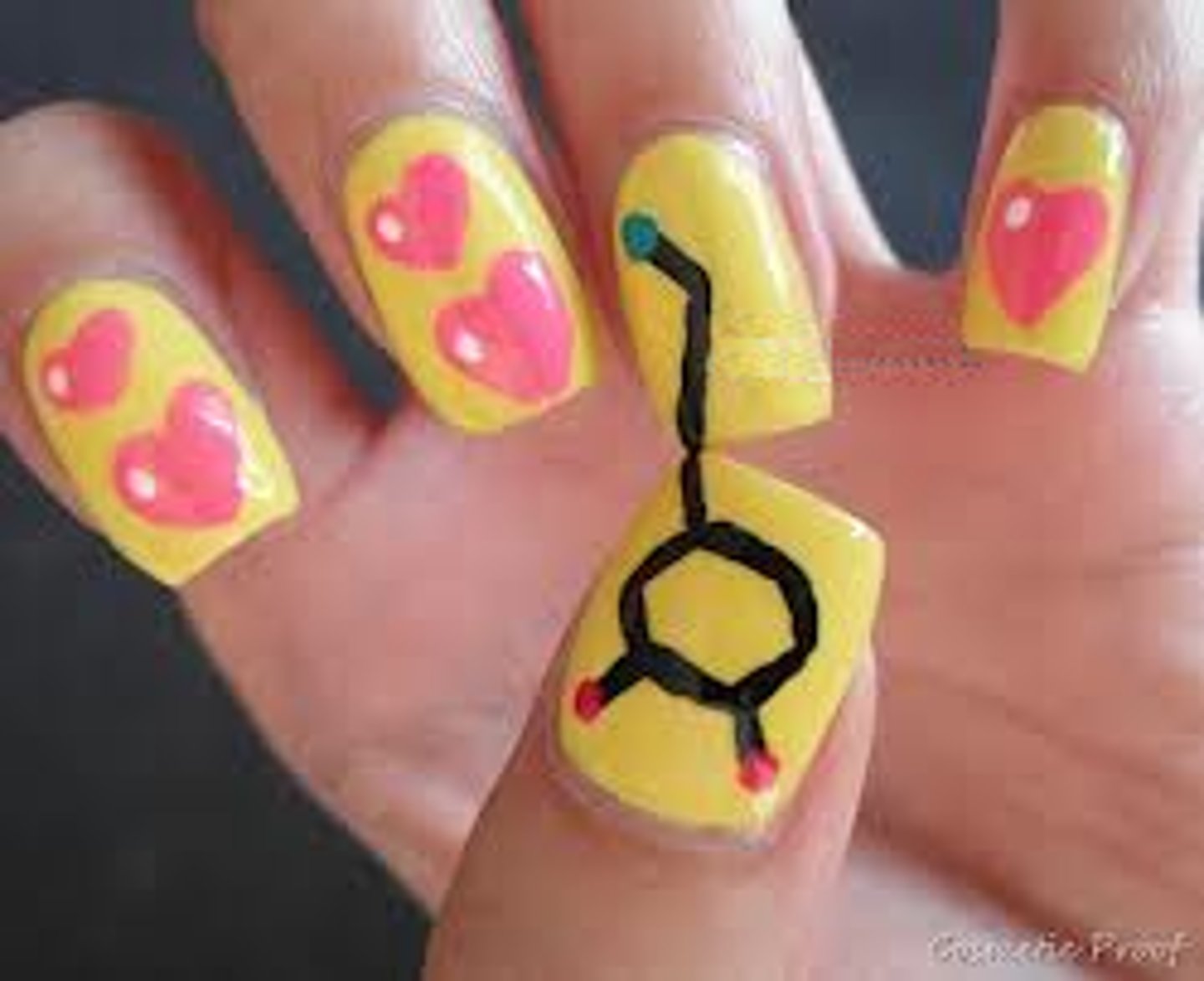
Serotonin
Mood and temperature regulation, happiness
Norepinephrine (NE)
Brain arousal and other functions like mood, hunger, and sleep

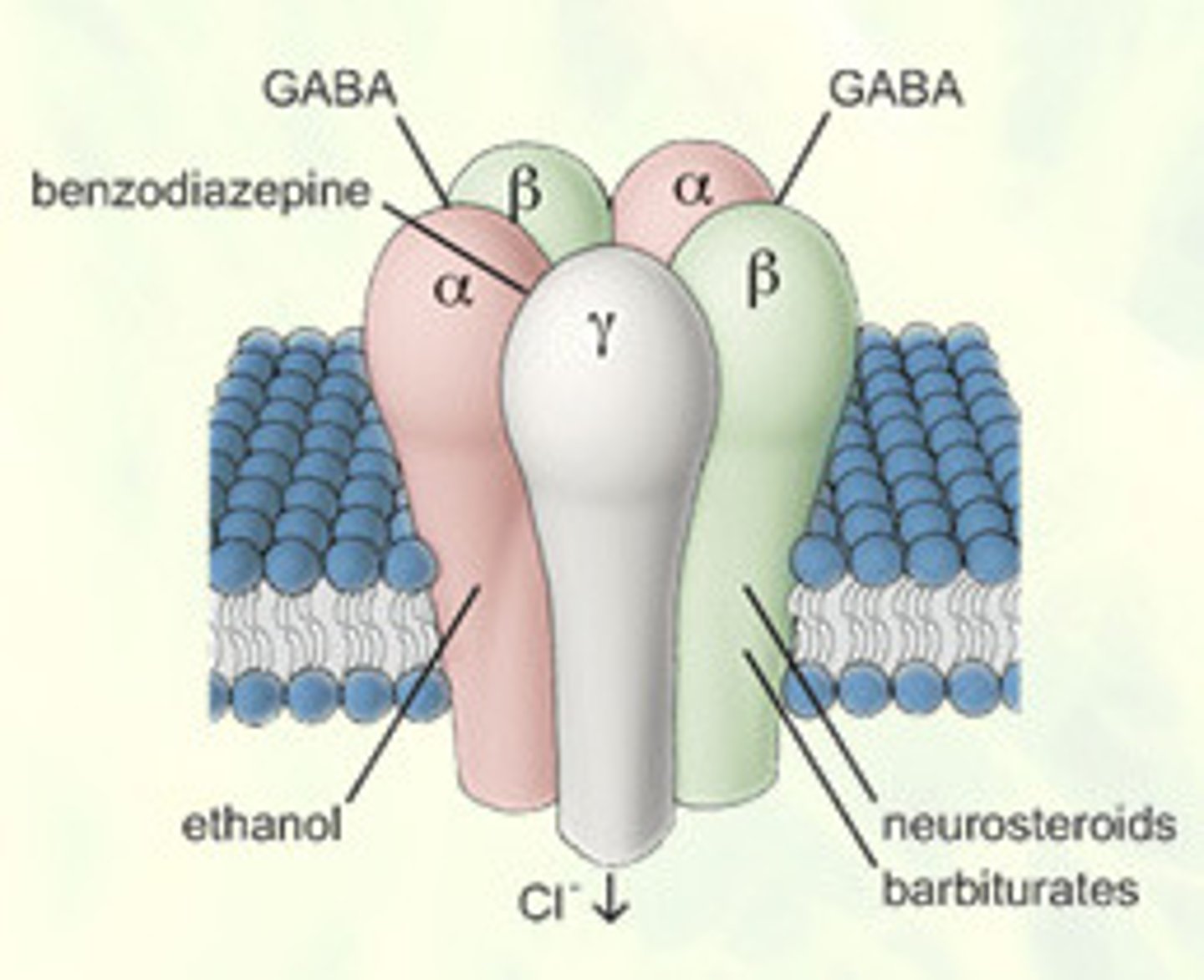
Gamma-aminobutyricvcacidc(GABA)
Main inhibitory neurotransmitter in the nervous system
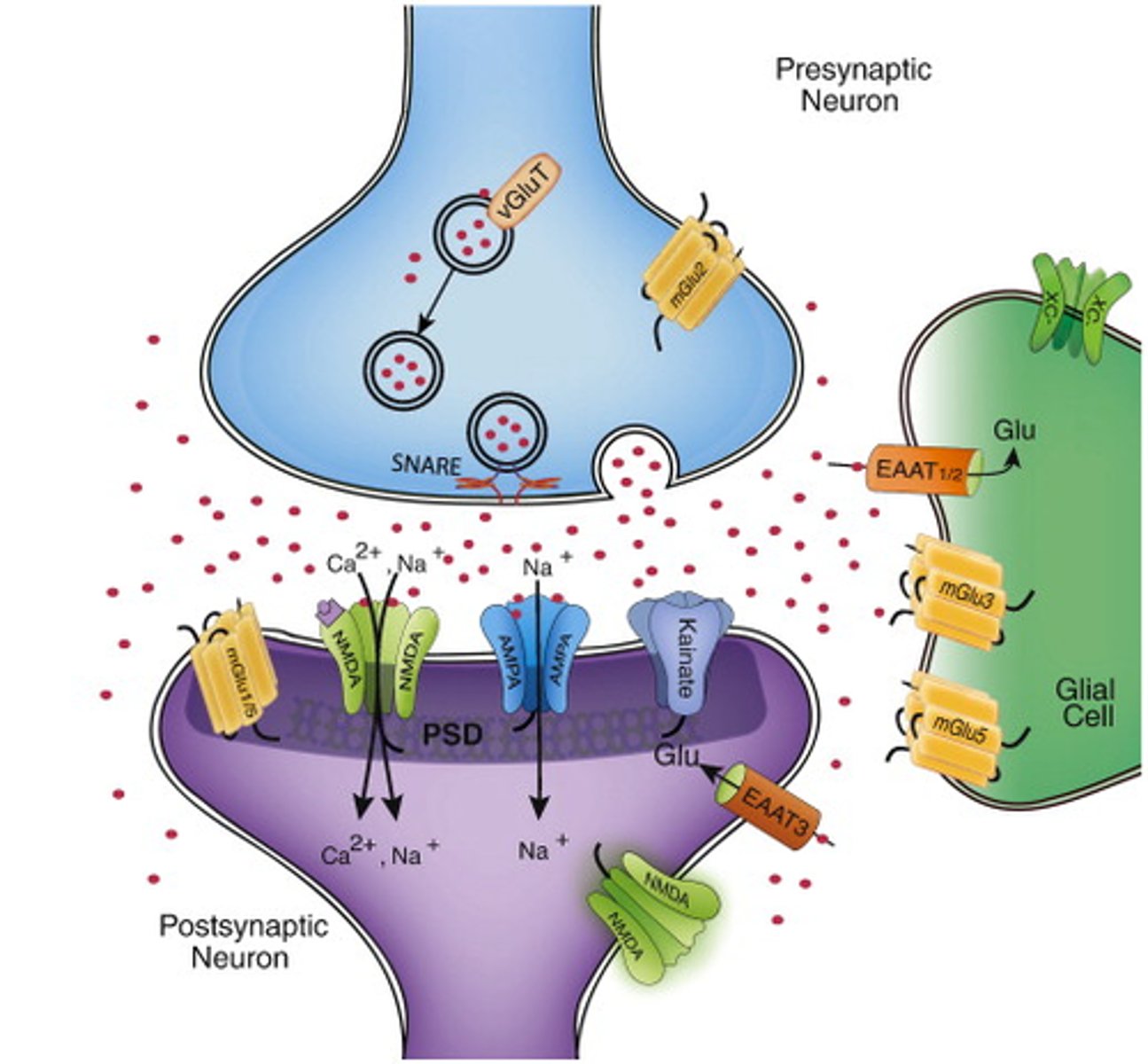
Glutamate
Main excitatory neurotransmitter in the nervous system; participates in relay of sensory information and learning
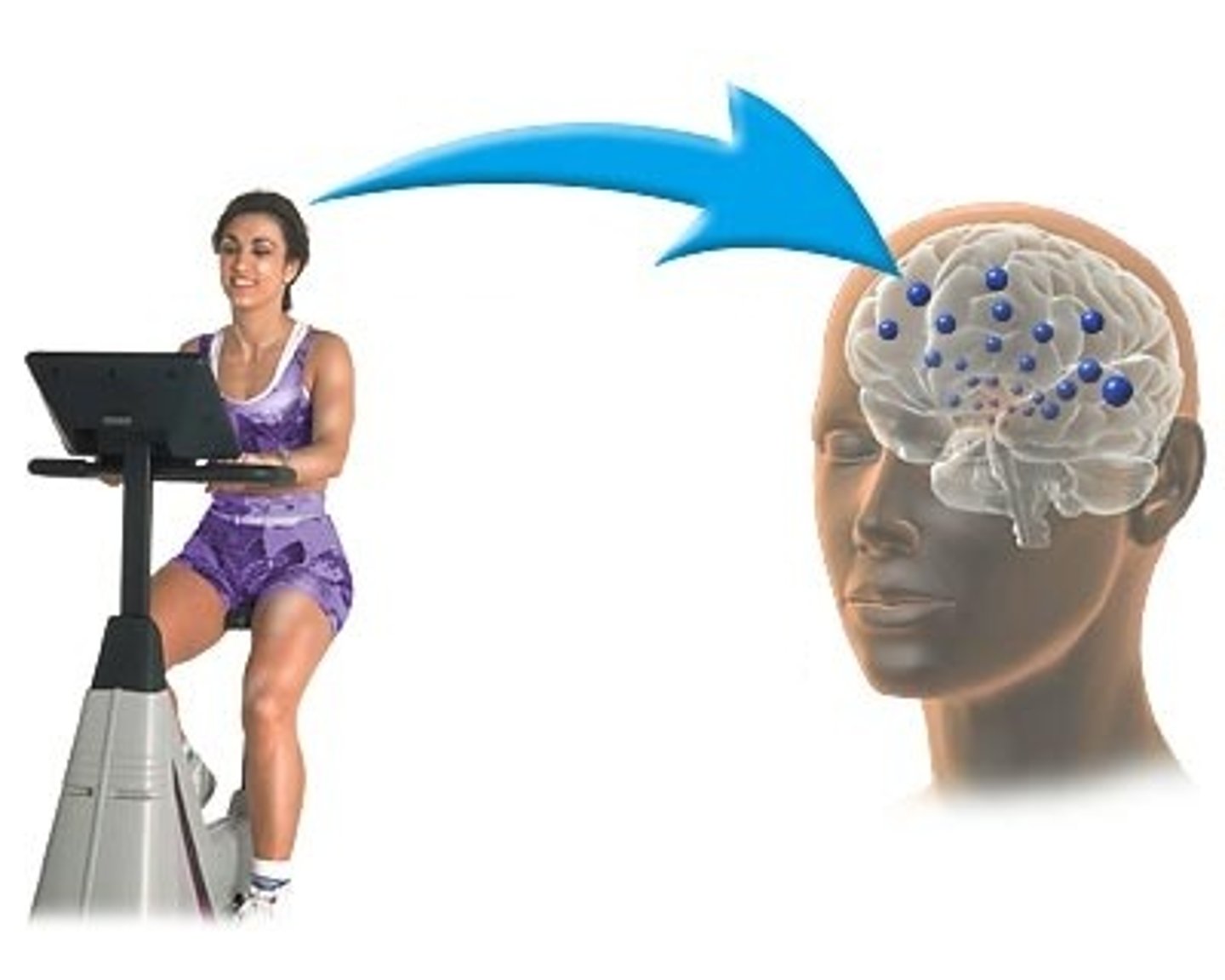
Endorphin
"Morphine within" - natural, opiate-like neurotransmitters linked to pain control and to pleasure.
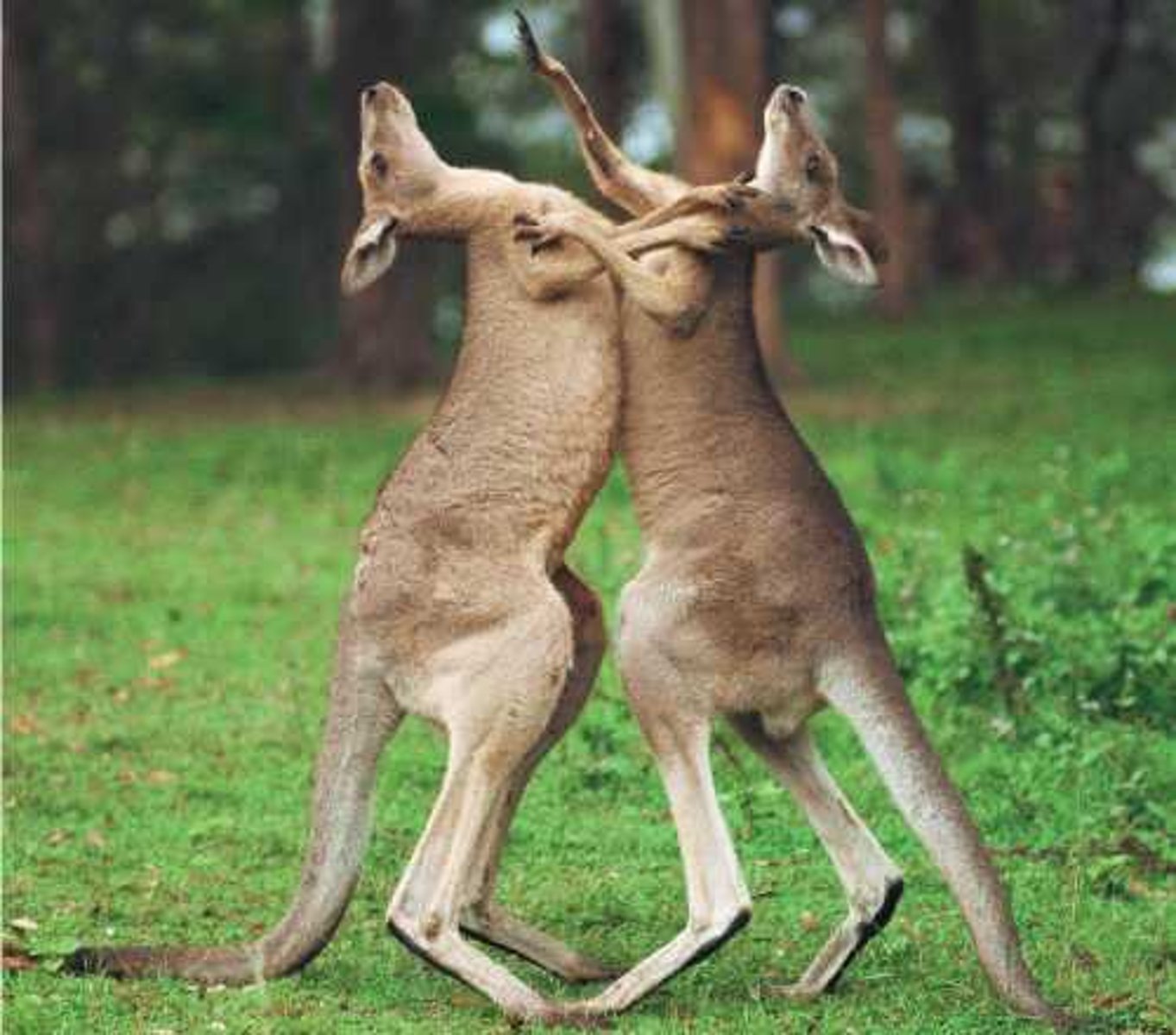
Agonist
acts like neurotransmitters and stimulates the same reaction
nervous system
the body's speedy, electrochemical communication network, consisting of all the nerve cells of the peripheral and central nervous systems
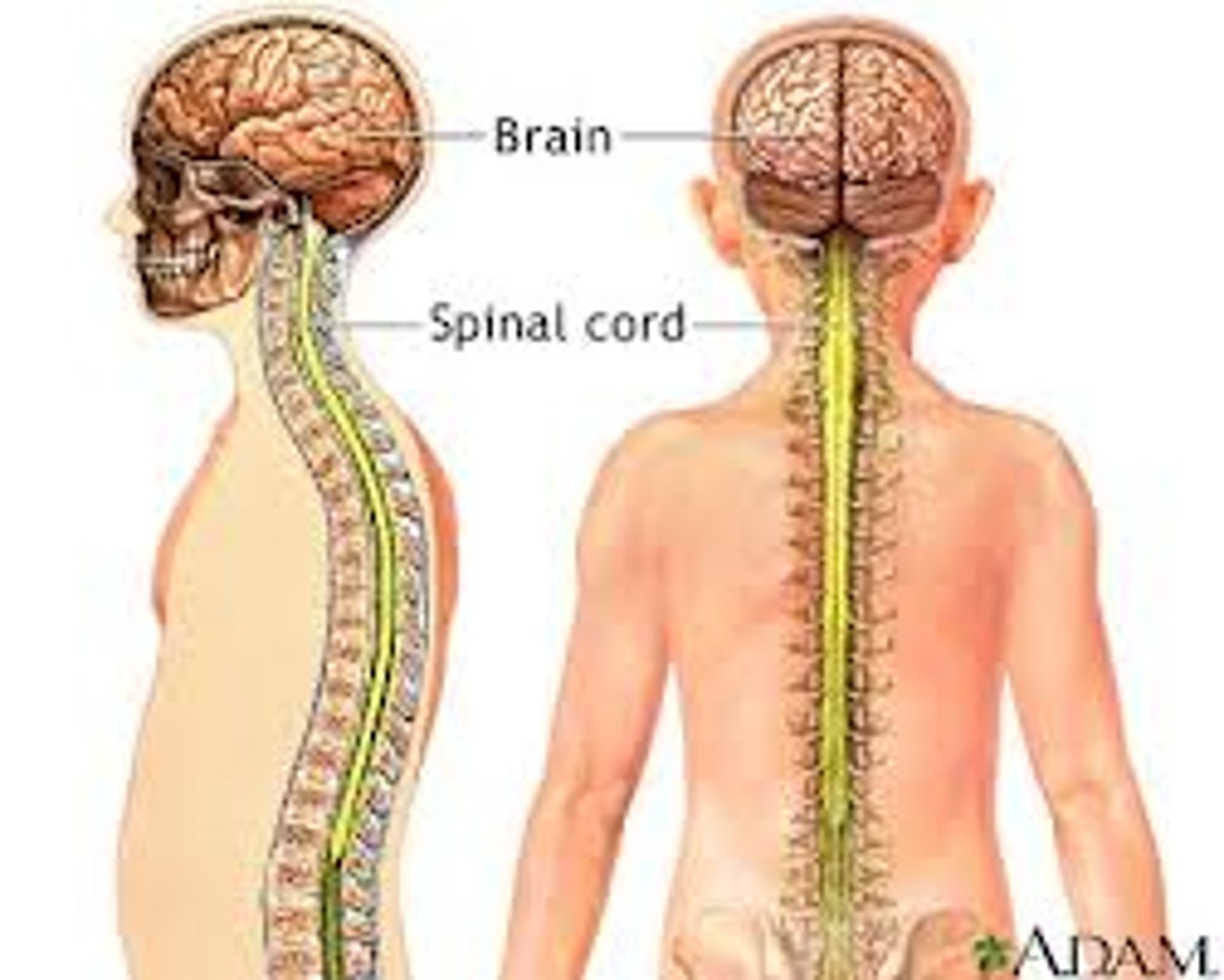
Central nervous system (CNS)
A system that includes the brain and spinal cord, controlling voluntary and involuntary acts
Peripheral Nervous System
nerves that lie outside the brain and spinal cord.
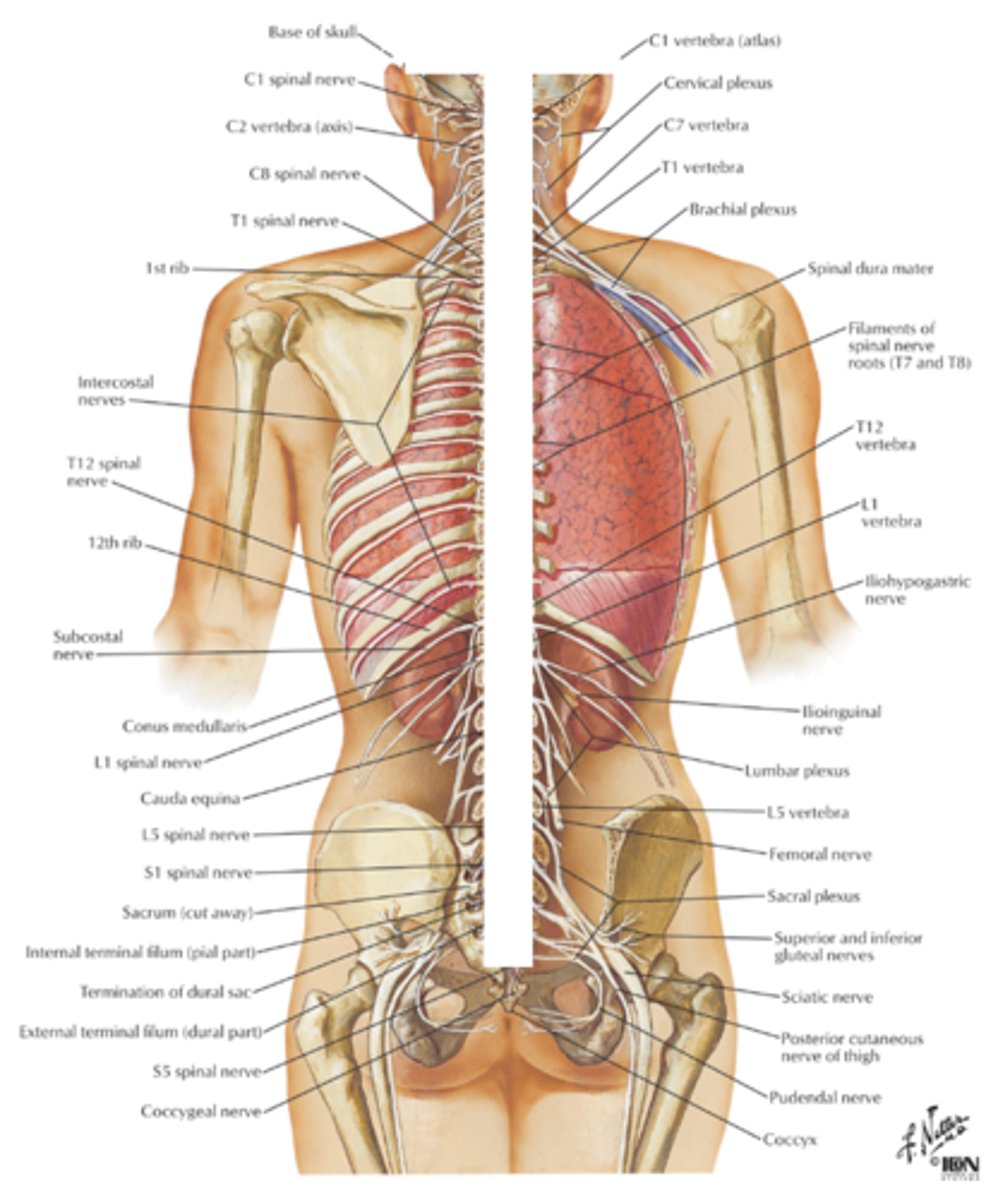
Nerves
bundled axons that form neural "cables" connecting the central nervous system with muscles, glands, and sense organs
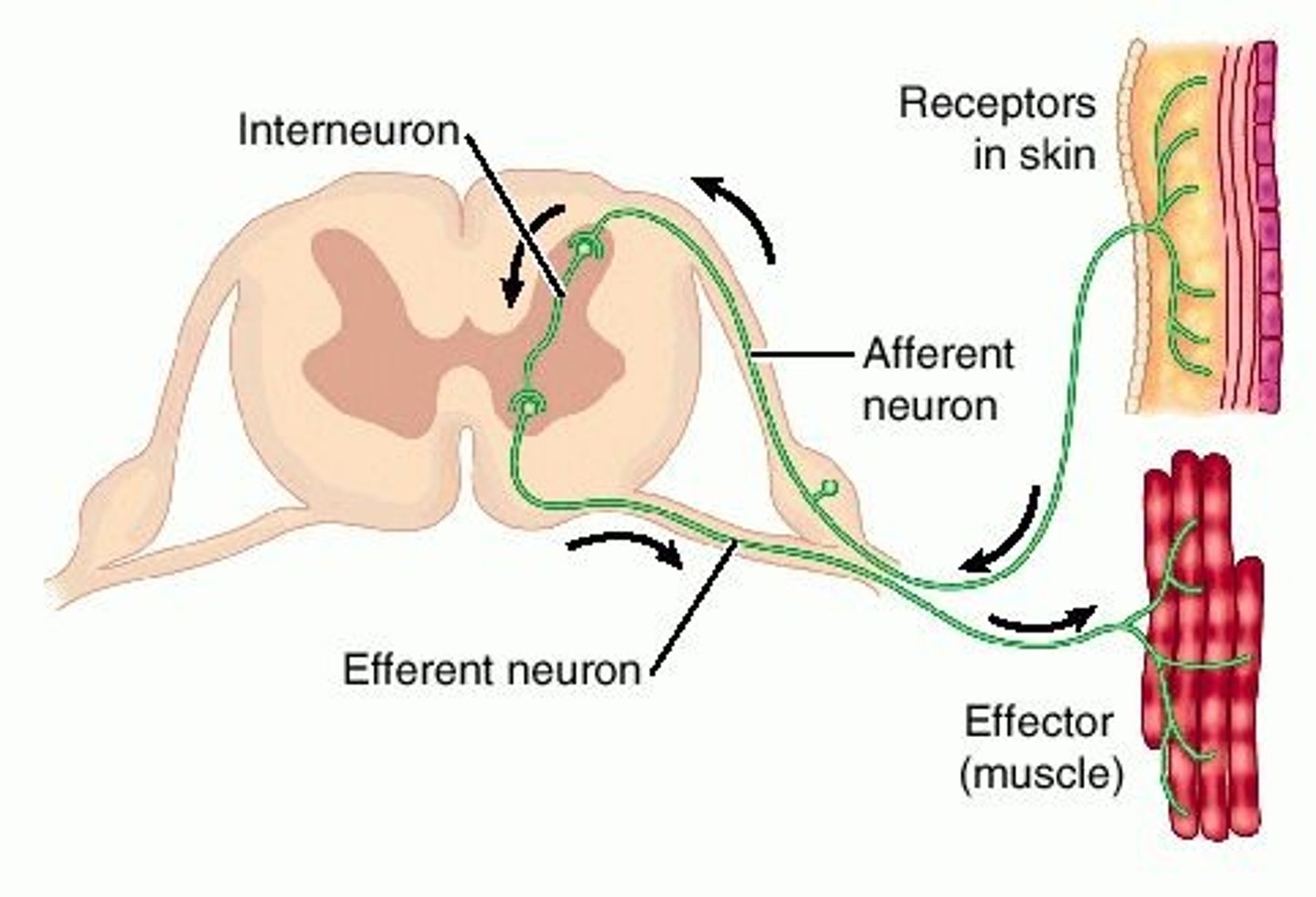
Sensory neurons
neurons that carry incoming information from the sensory receptors to the brain and spinal cord; afferent neurons
Motor neurons
neurons that carry outgoing information from the brain and spinal cord to the muscles and glands; efferent neurons
Interneuron
neuron that sends messages to other neurons nearby
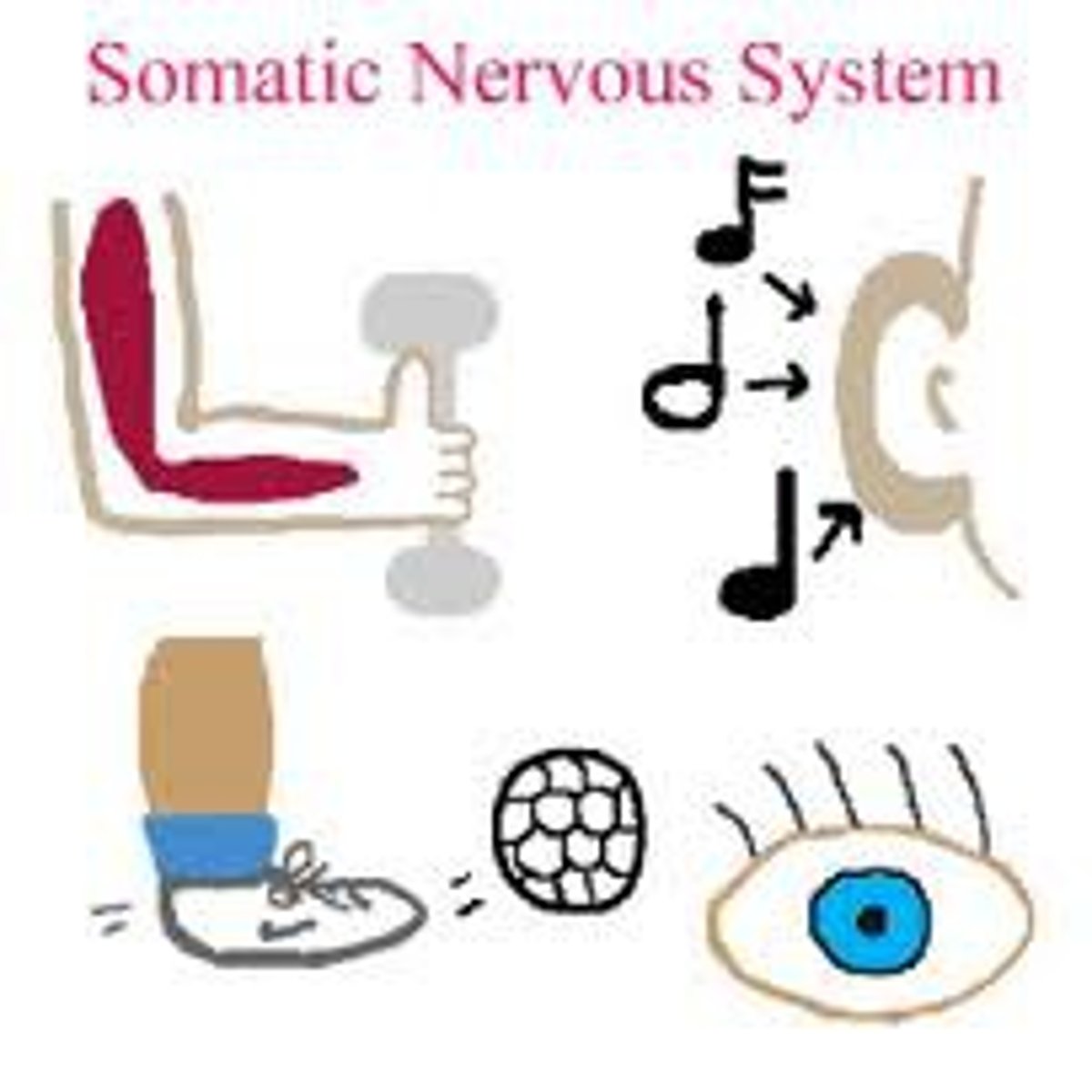
somatic nervous system
part of the nervous system that conveys
information between the CNS and the
body, controlling and coordinating voluntary
movement
autonomic nervous system
part of the nervous system controlling the
involuntary actions of our internal organs and glands, which (along with the limbic system) participates in emotion regulation
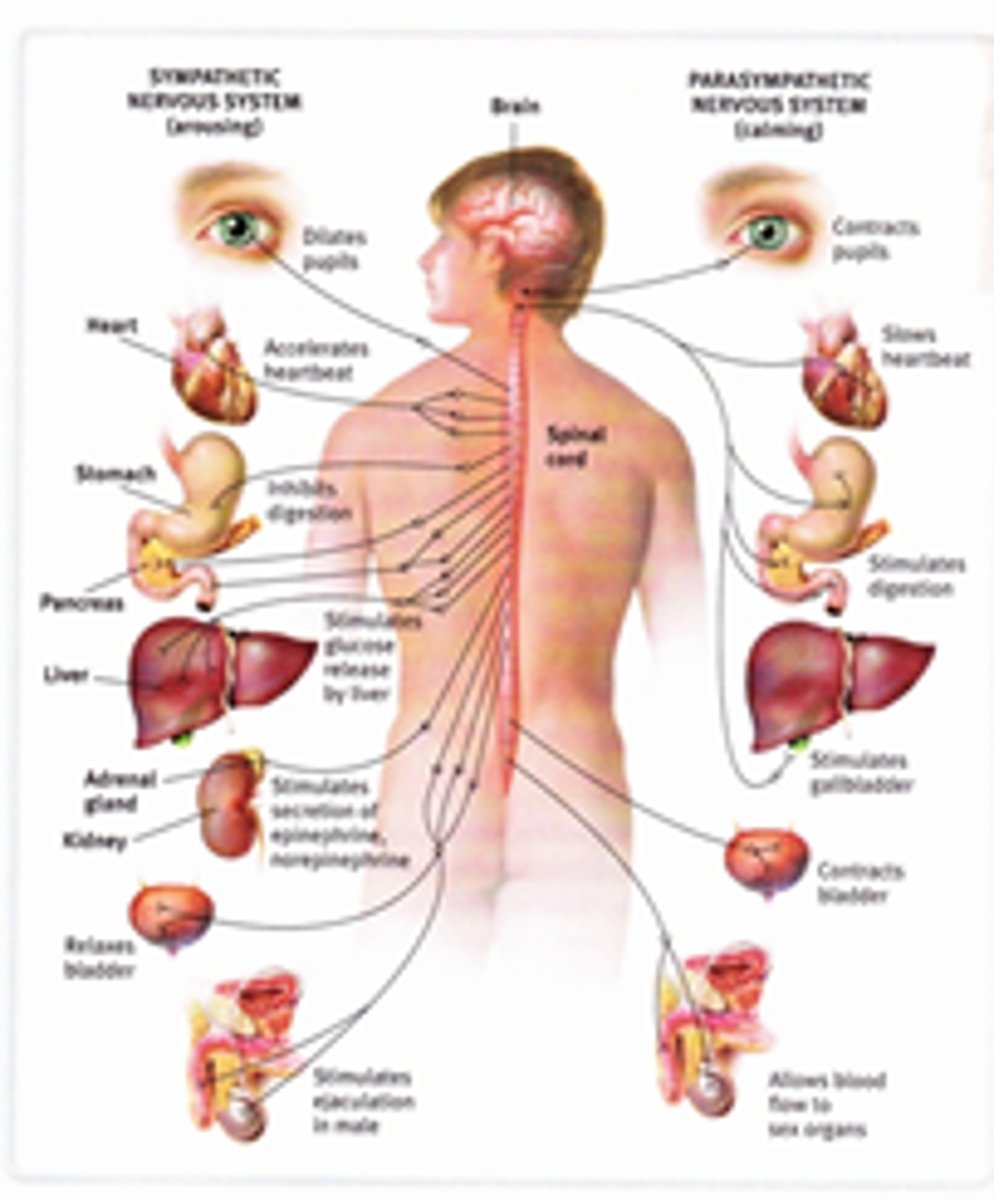
sympathetic nervous system
division of the autonomic nervous system
engaged during a crisis or after actions
requiring fight or flight
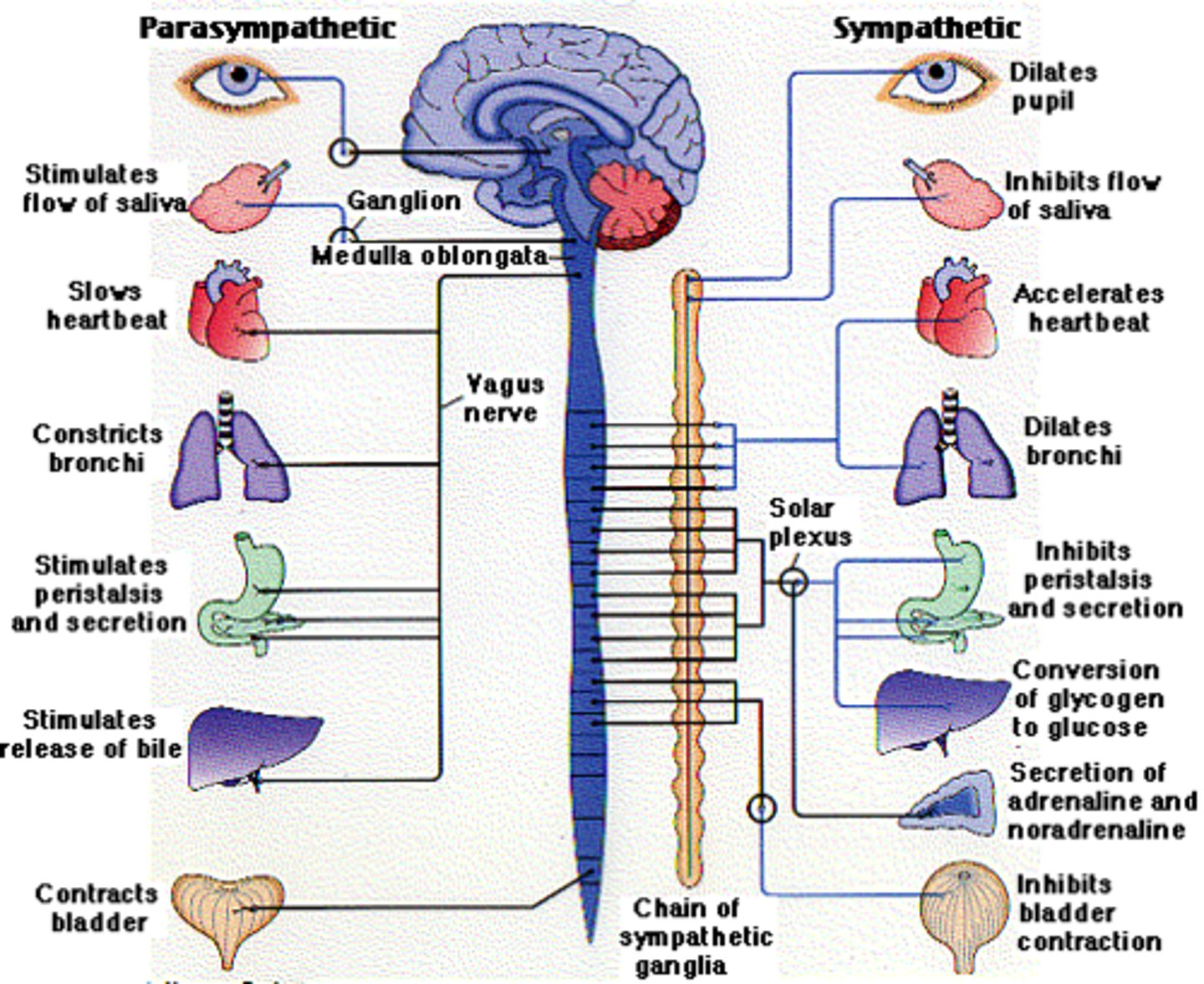
parasympathetic nervous system
division of autonomic nervous system that
controls rest and digestion

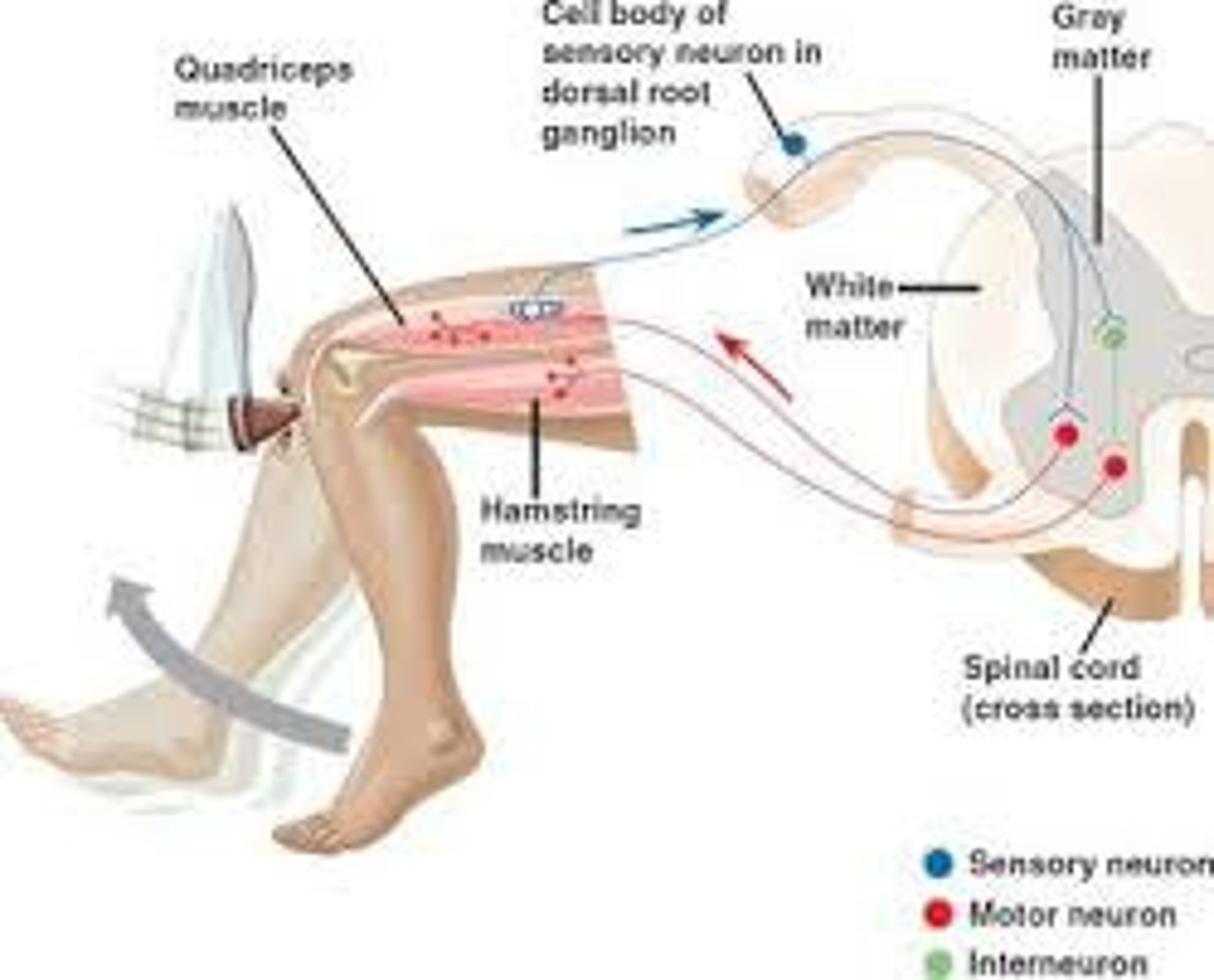
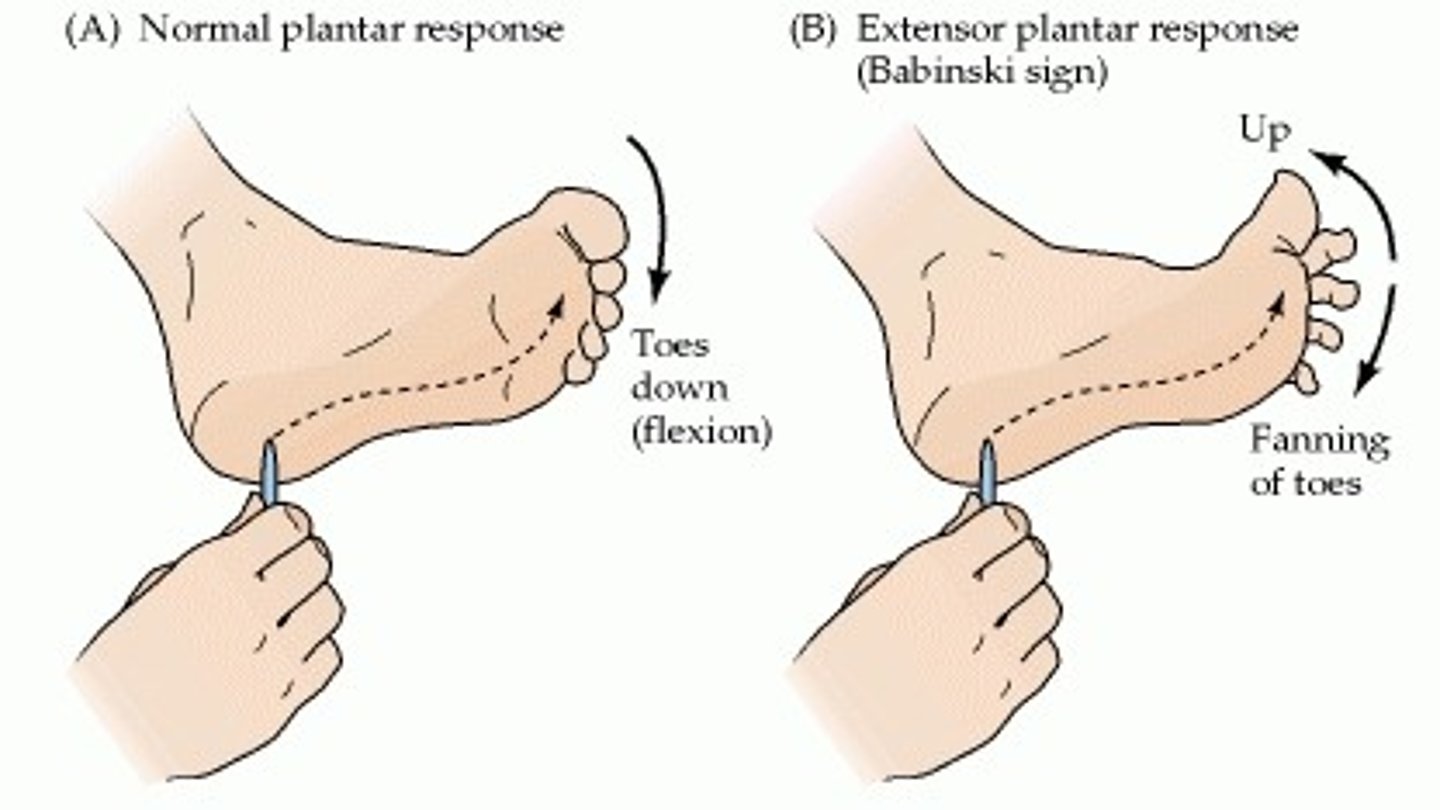
Reflex
an automatic motor response to a sensory
stimulus
endocrine system
system of glands and hormones that
controls secretion of blood-borne chemical
messengers
Hormone
chemical released into the bloodstream that
influences particular organs and glands
adrenal gland
tissue located on top of the kidneys that
releases adrenaline and cortisol during states of emotional arousal
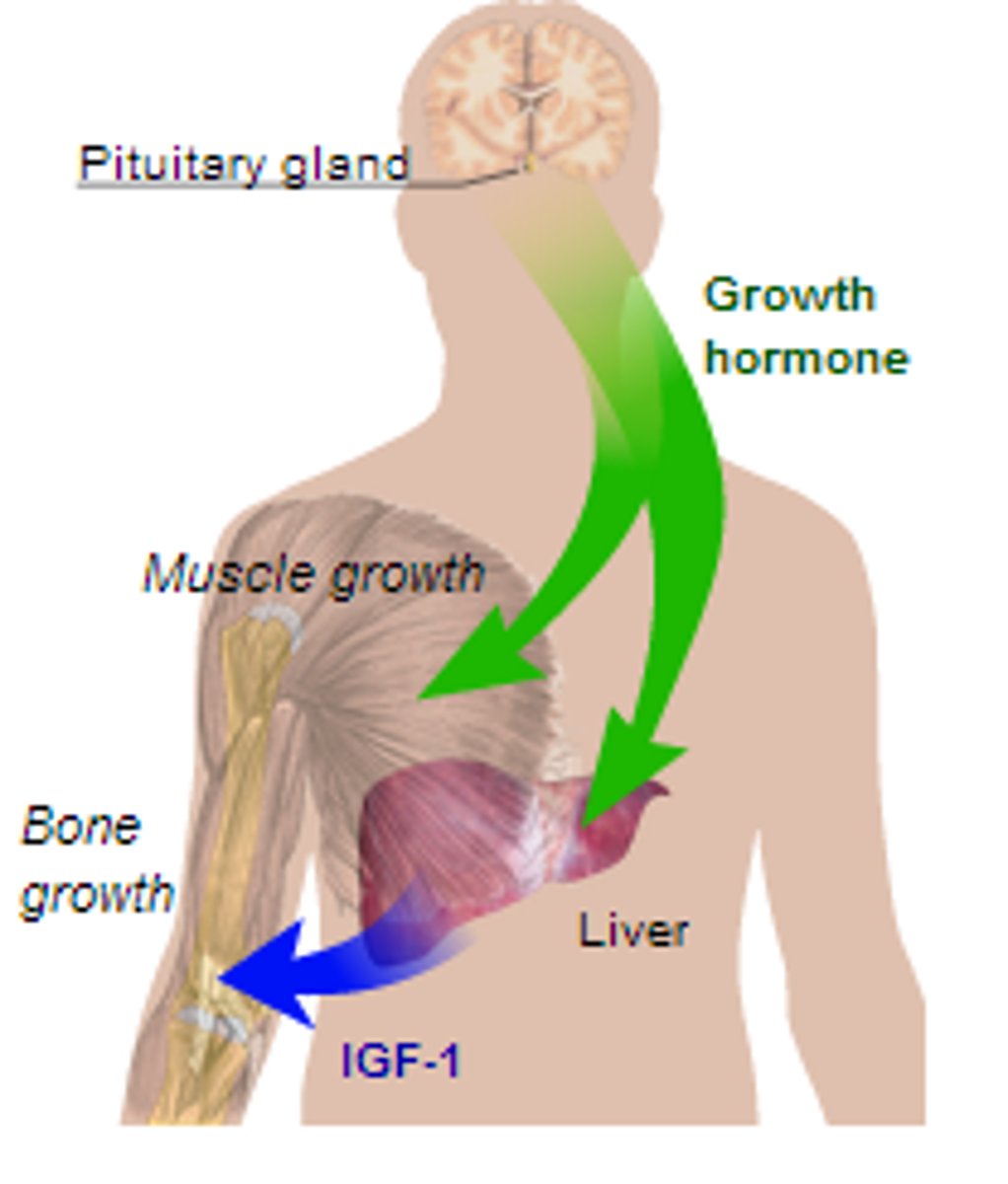
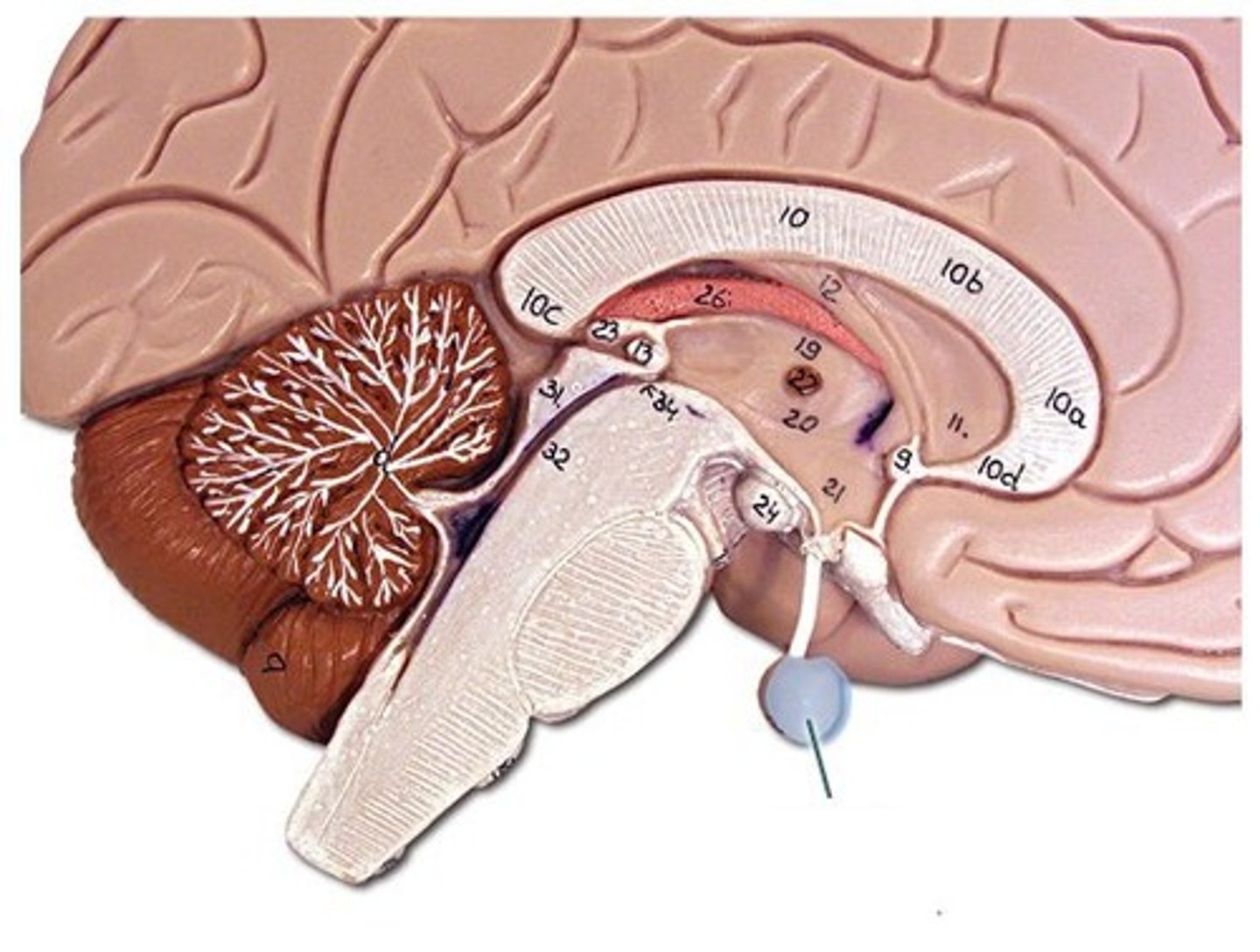
Pituitary Gland
master gland that, under the control of the
hypothalamus, directs the other glands of
the body
Lesion
tissue destruction; A brain lesion is a naturally or experimentally caused destruction of brain tissue
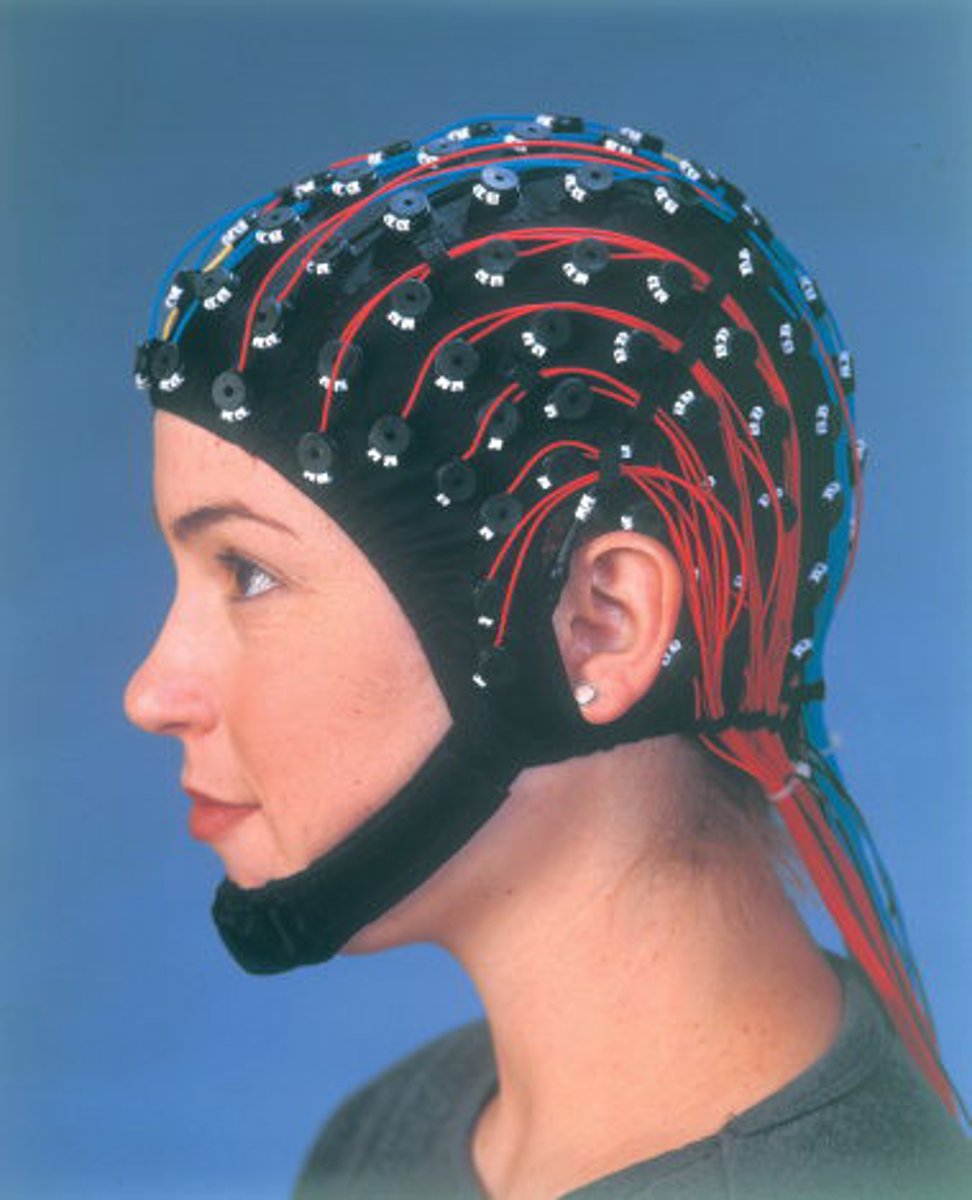
Electroencephalogram (EEG)
recording of brain's electrical activity at the
surface of the skull
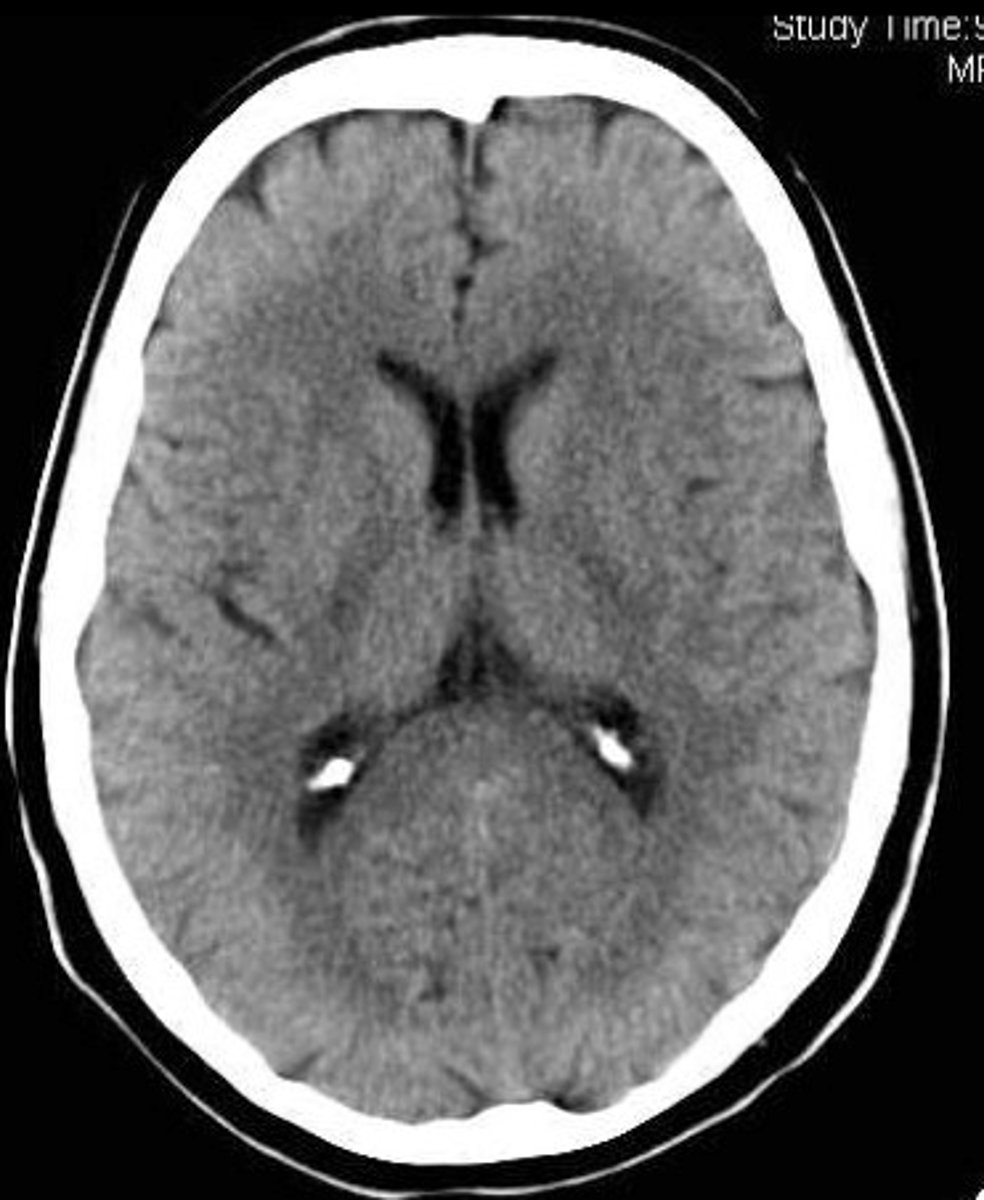
computed tomography (CT) scan
(CAT scan) a scanning technique using multiple X-rays to construct three-dimensional images
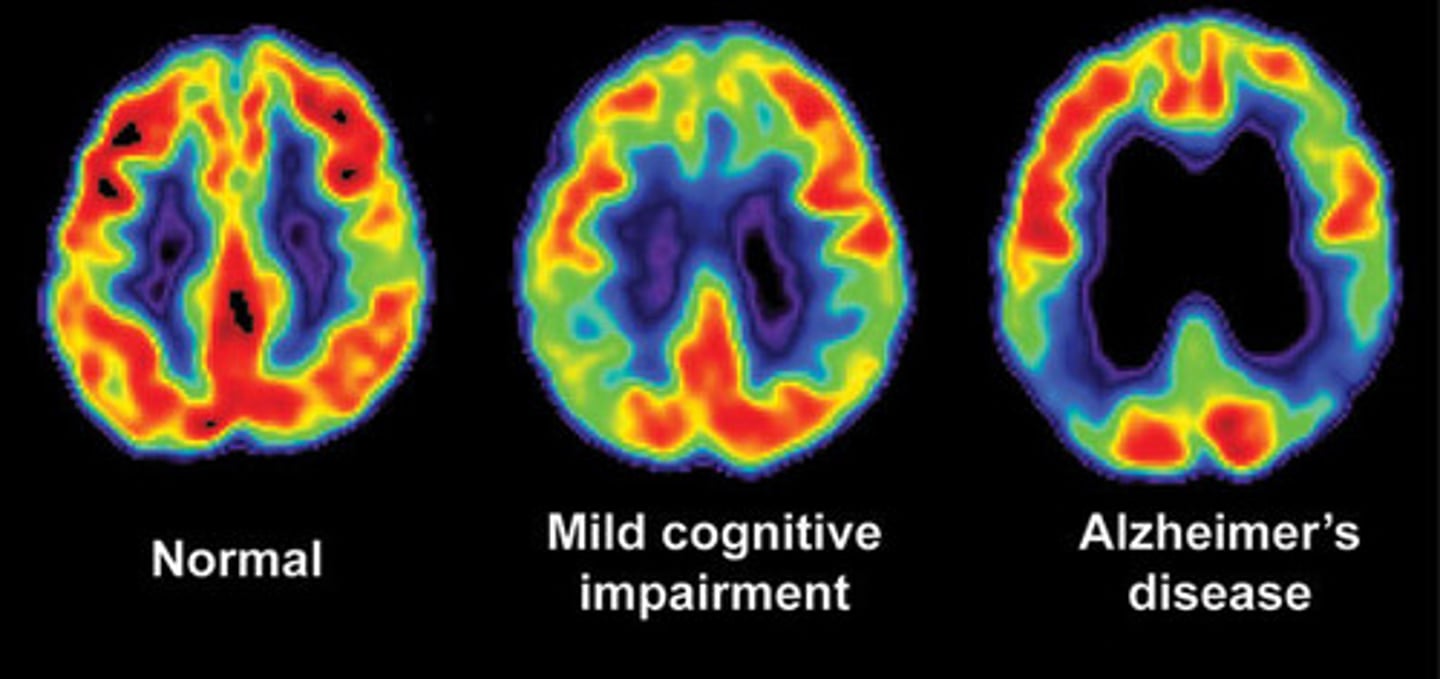
positron emission tomography (PET) scan
imaging technique that measures consumption of glucose-like molecules, yielding a picture of neural activity in different regions of the brain
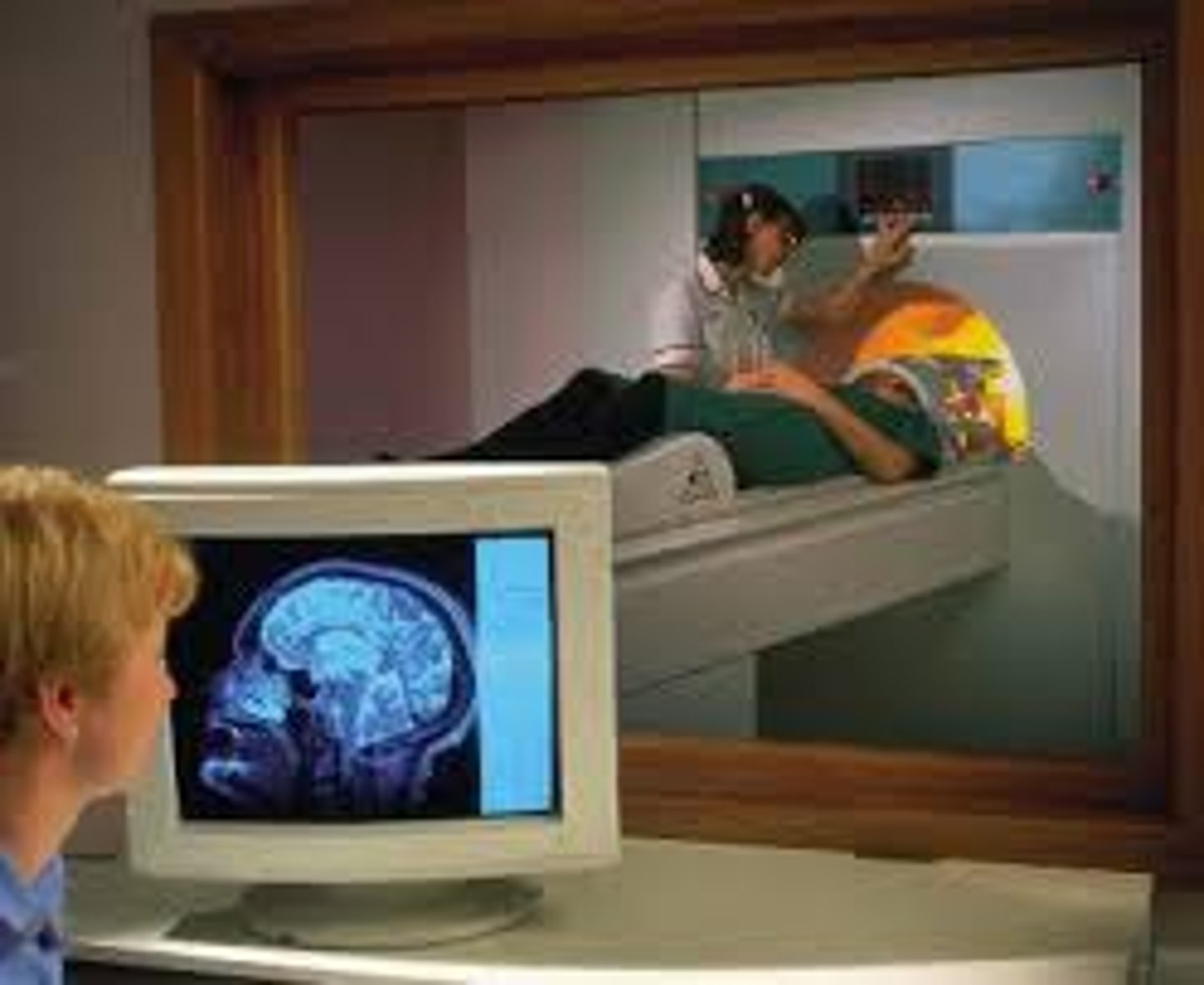
magnetic resonance imaging (MRI)
technique that uses magnetic fields to
indirectly visualize brain structure
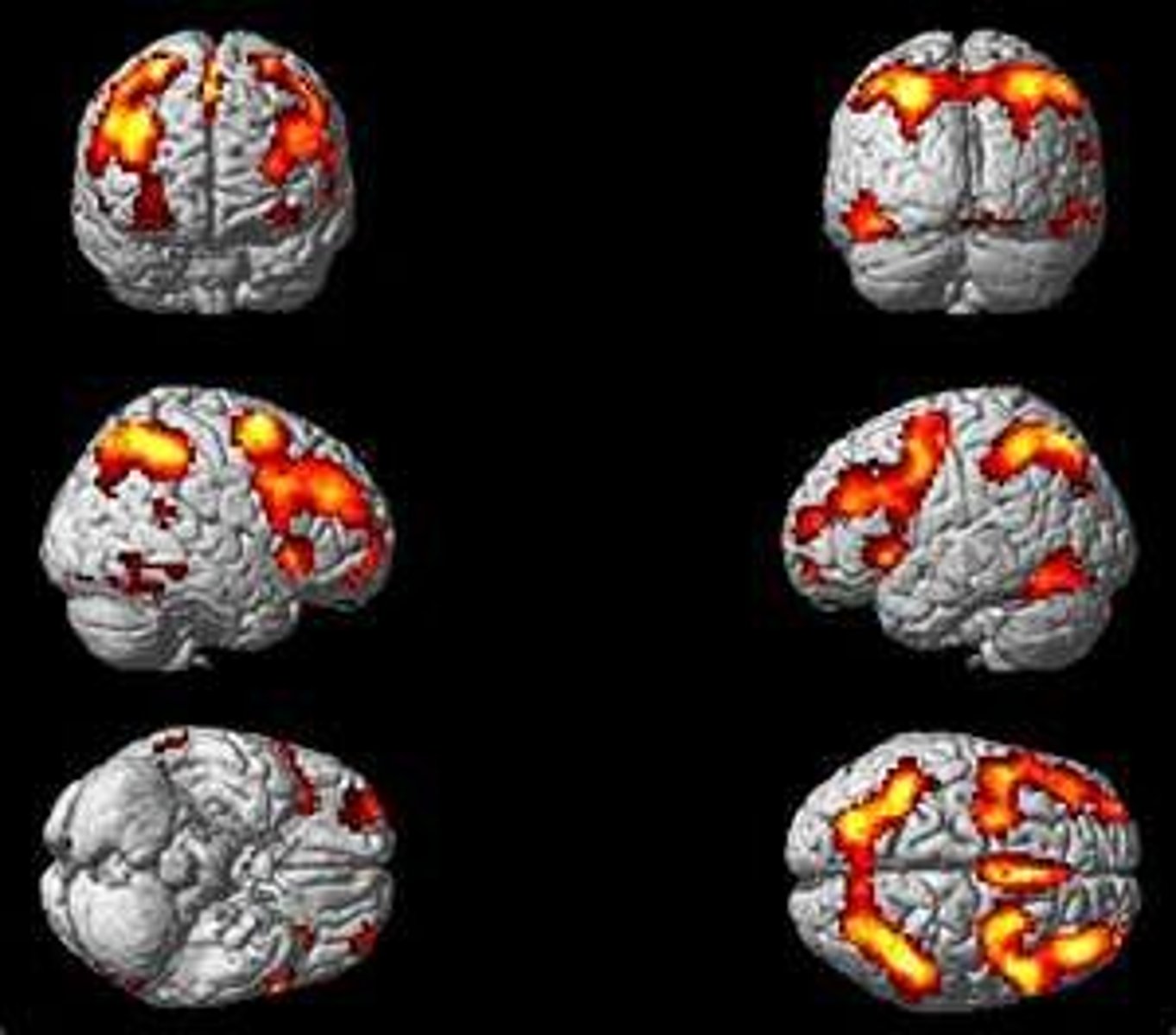
functional MRI (fMRI)
technique that uses magnetic fields to visualize brain activity using changes in blood oxygen level
Brain Stem
part of the brain between the spinal cord and cerebral cortex that contains the midbrain, pons, and medulla
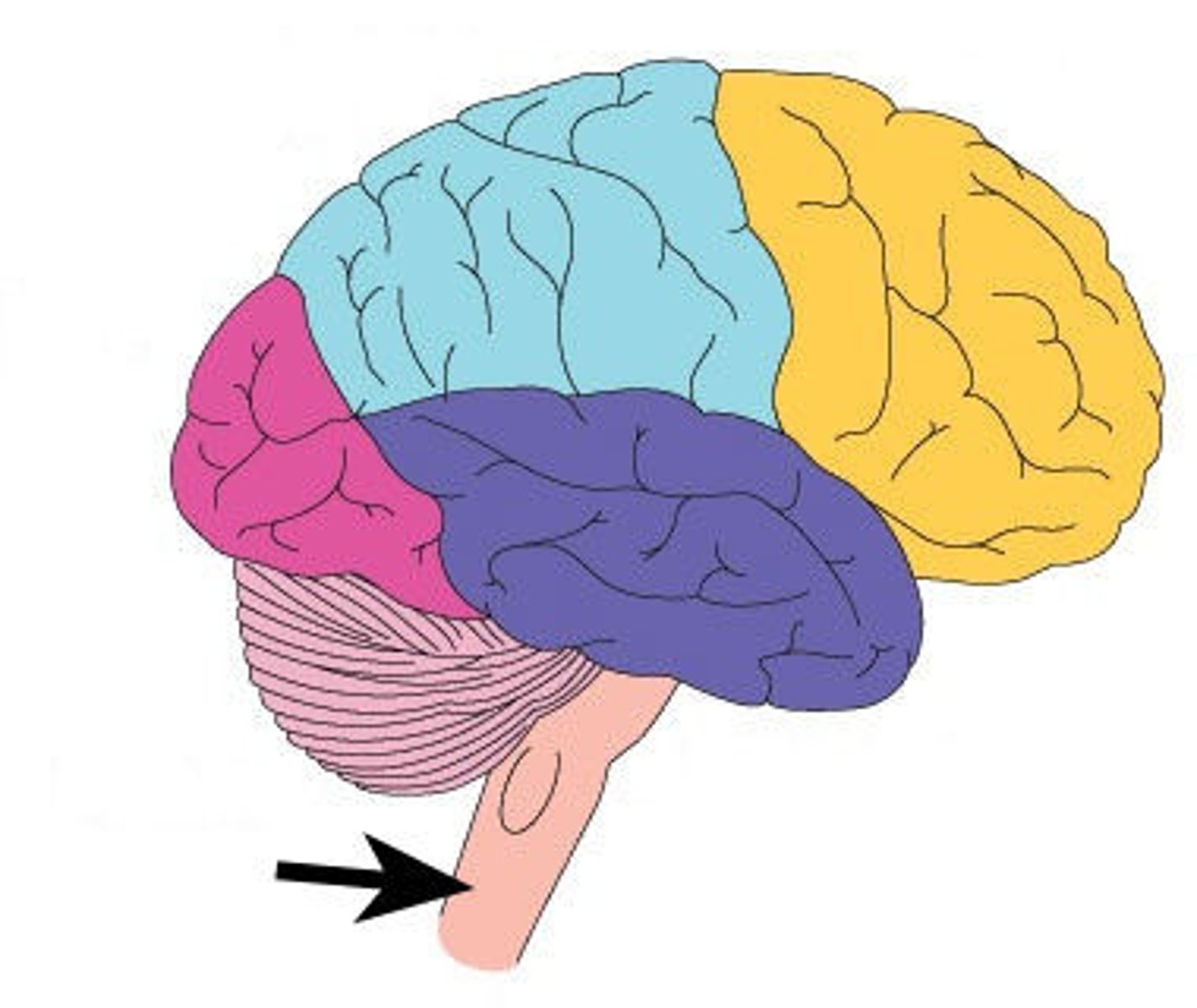
Medulla
part of brain stem involved in basic functions, such as heartbeat and breathing
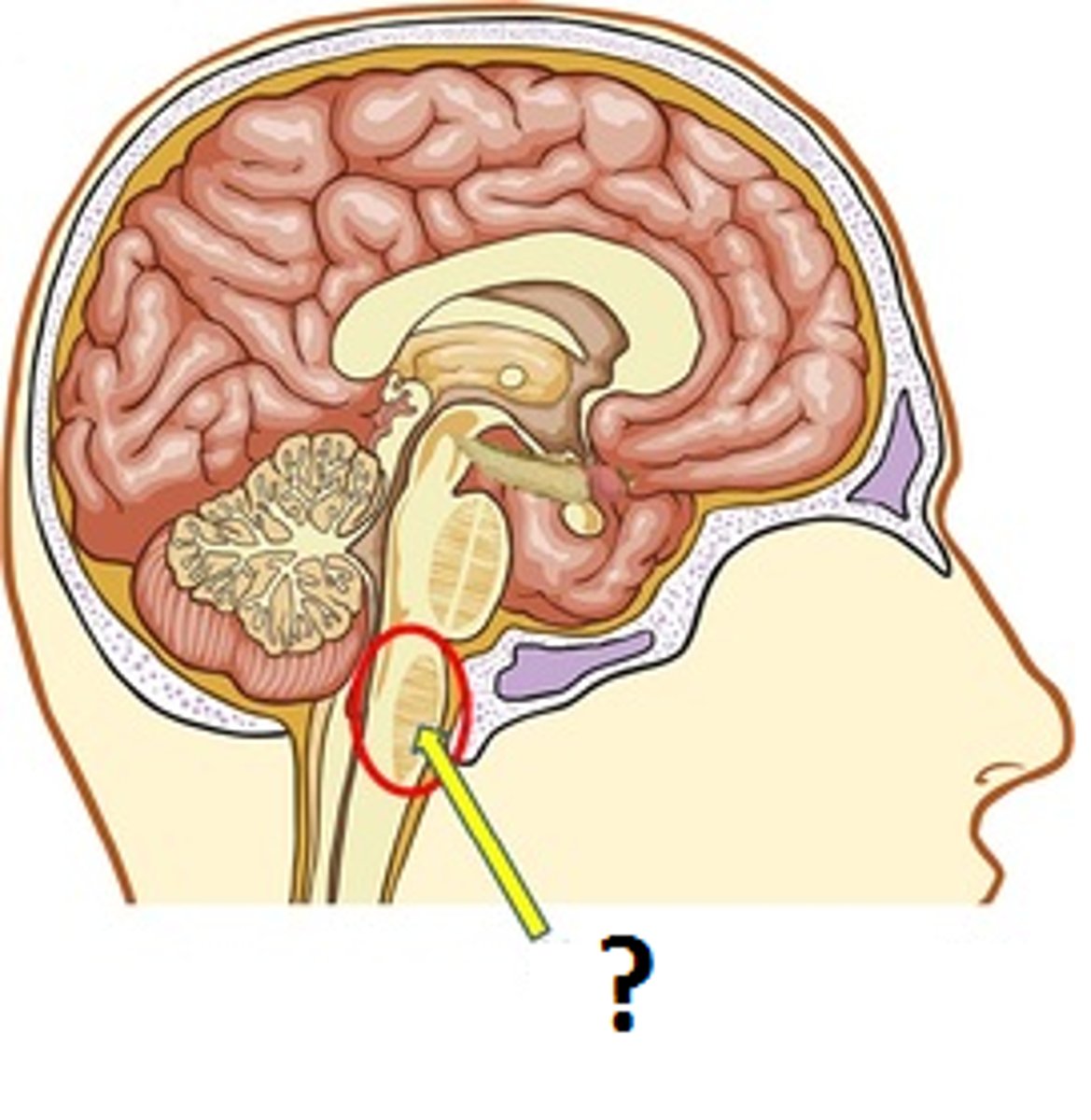
Thalamus
A forebrain structure that processes sensory information for all senses, except smell, and relays it to the cerebral cortex.
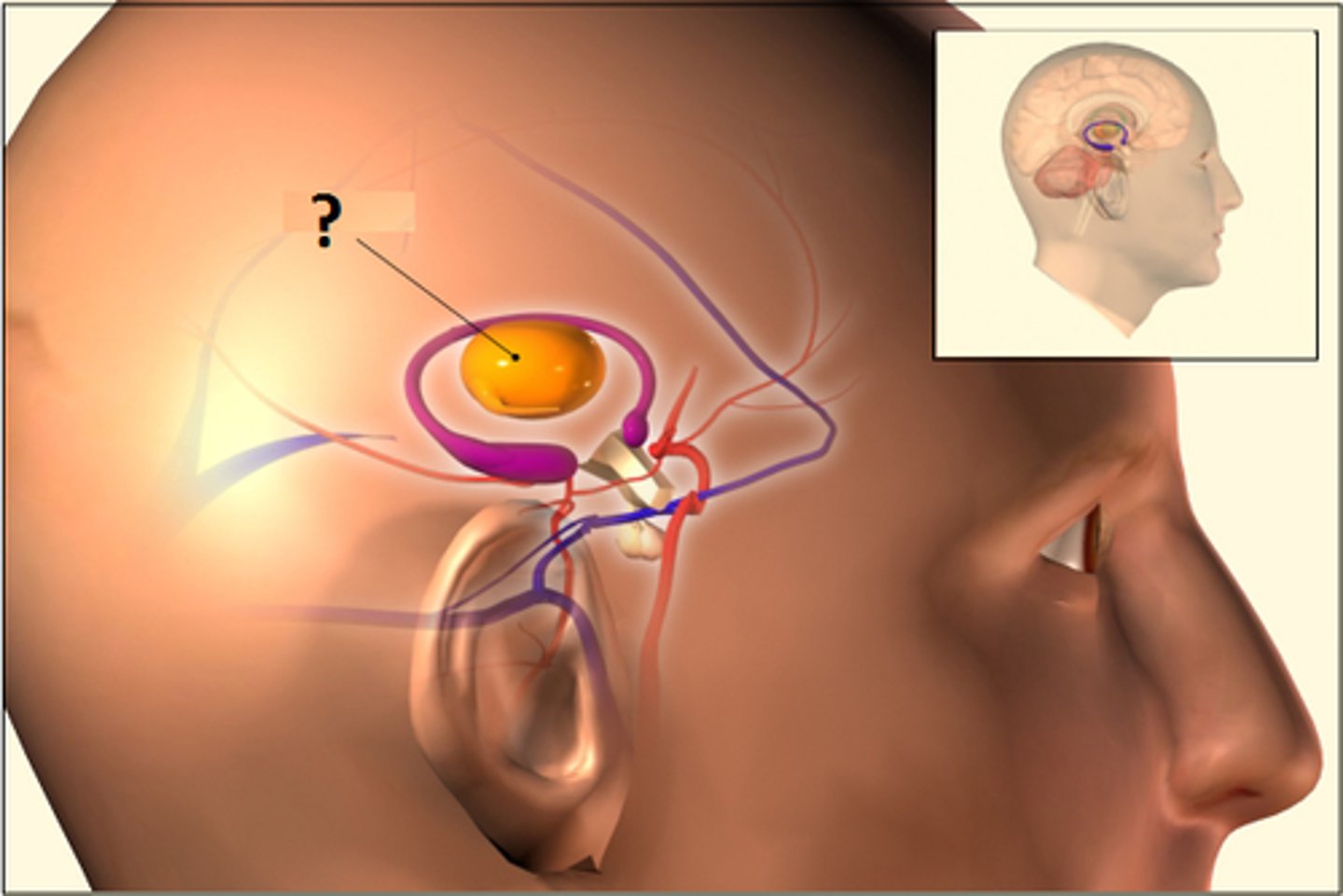
reticular formation
brain area that plays a key role in arousal; nerve network that travels through brainstem & thalamus; plays important role in controlling arousal; "netlike"
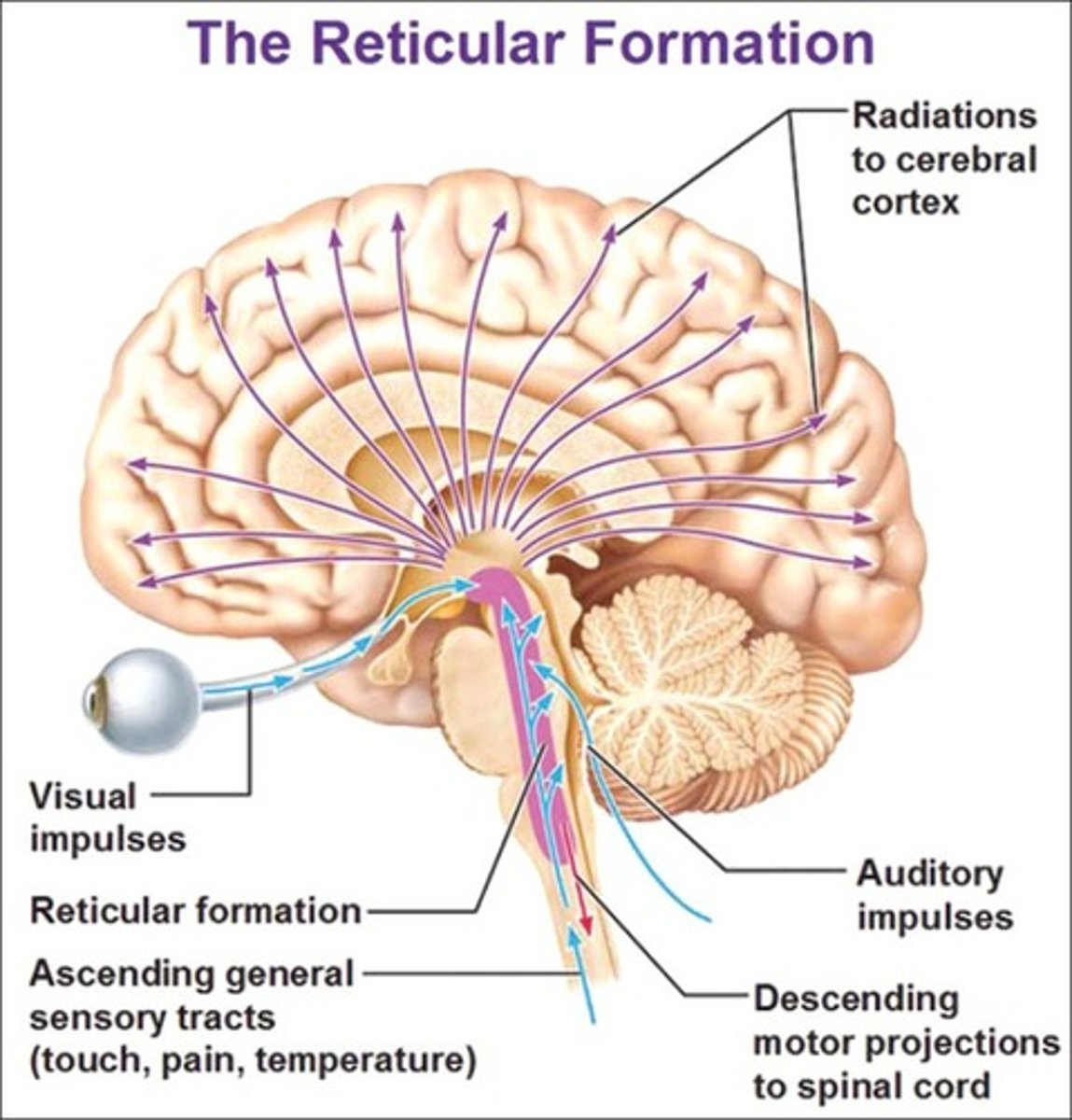
Cerebellum
Balance and coordination; "little brain"; @ rear of brainstem; nonverbal learning & memory.
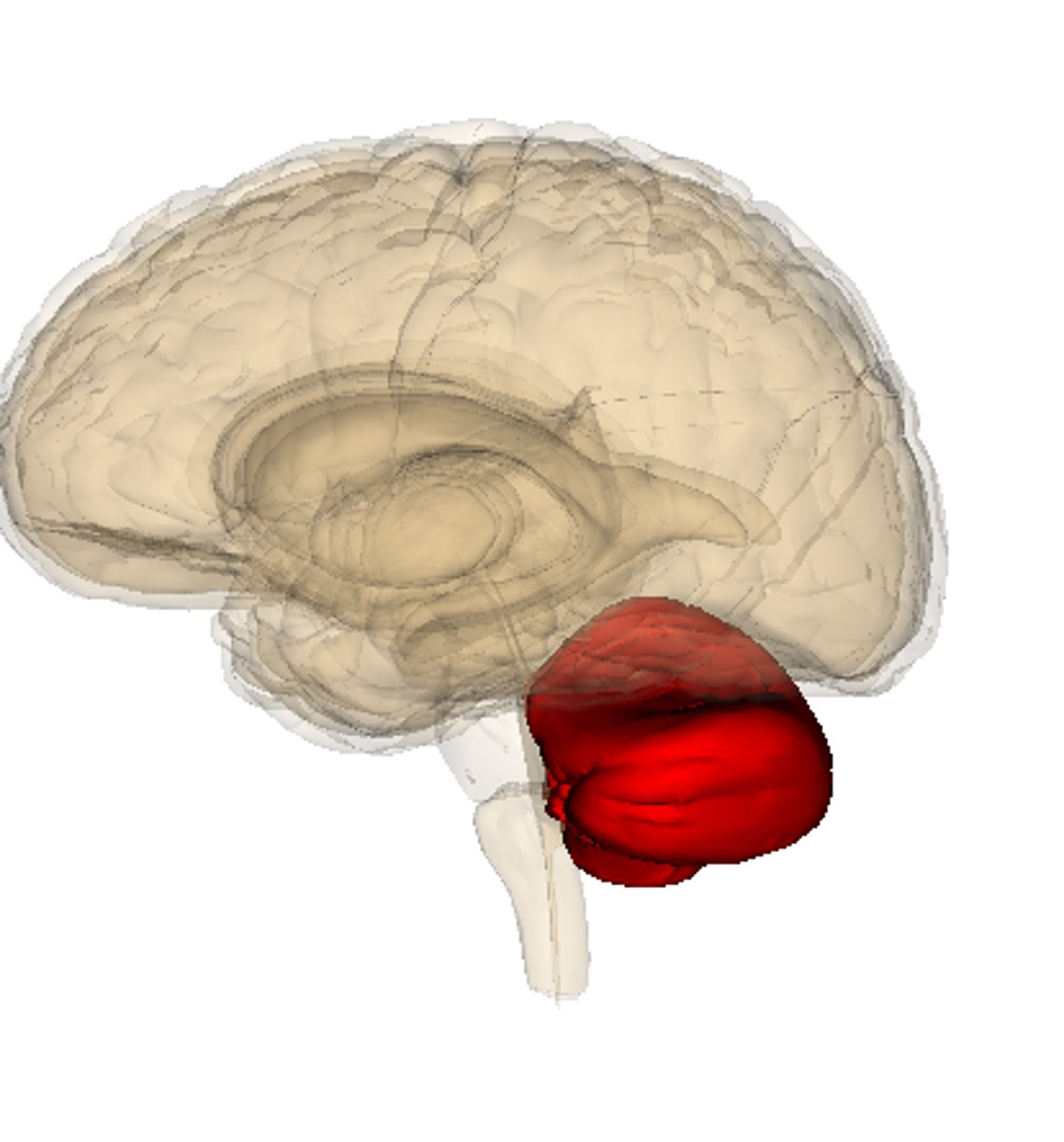
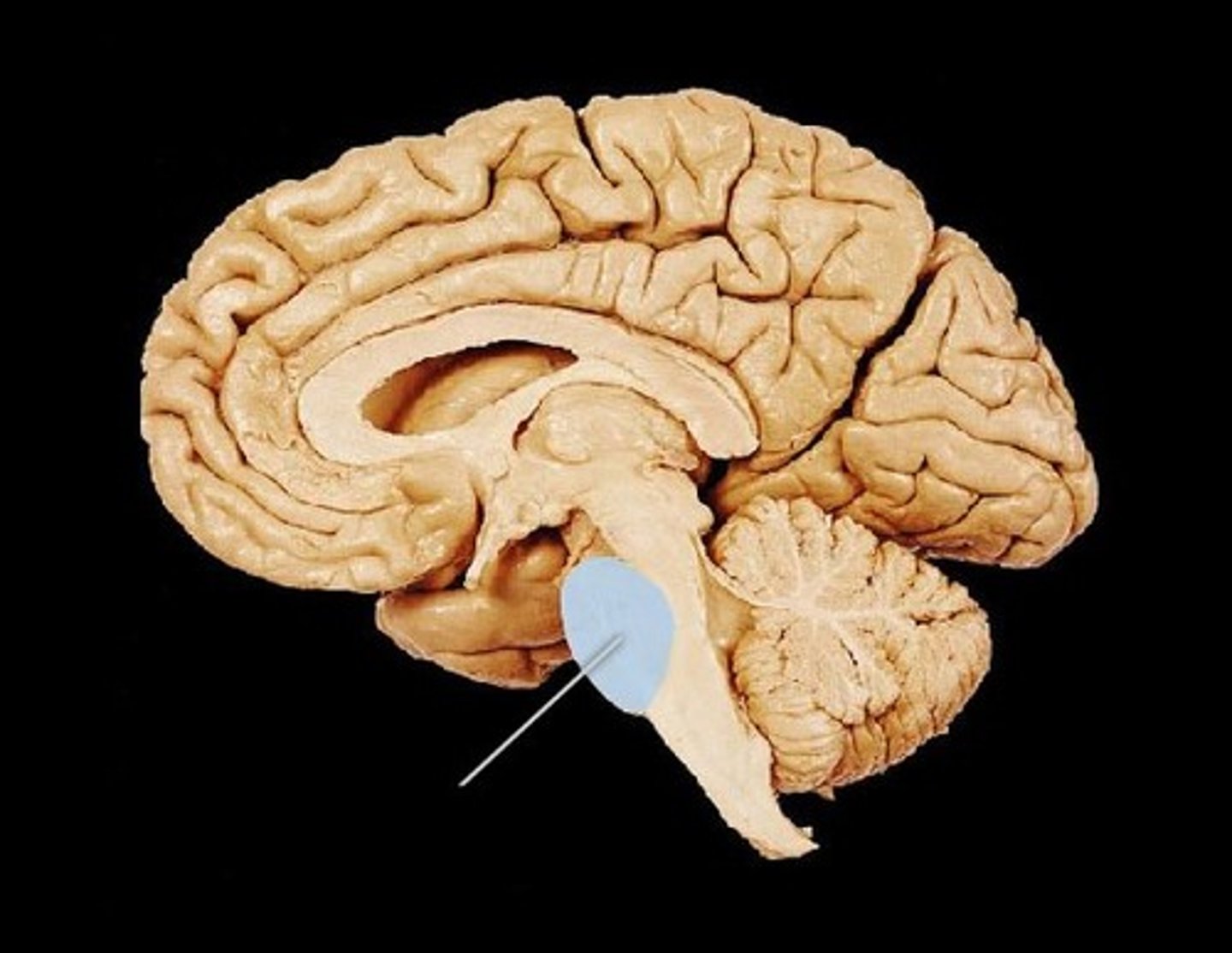
Pons
part of the brain stem that connects the
cortex with the cerebellum. "Message station". Also sleep
Limbic System
emotional center of brain that also plays roles in smell, motivation, and memory
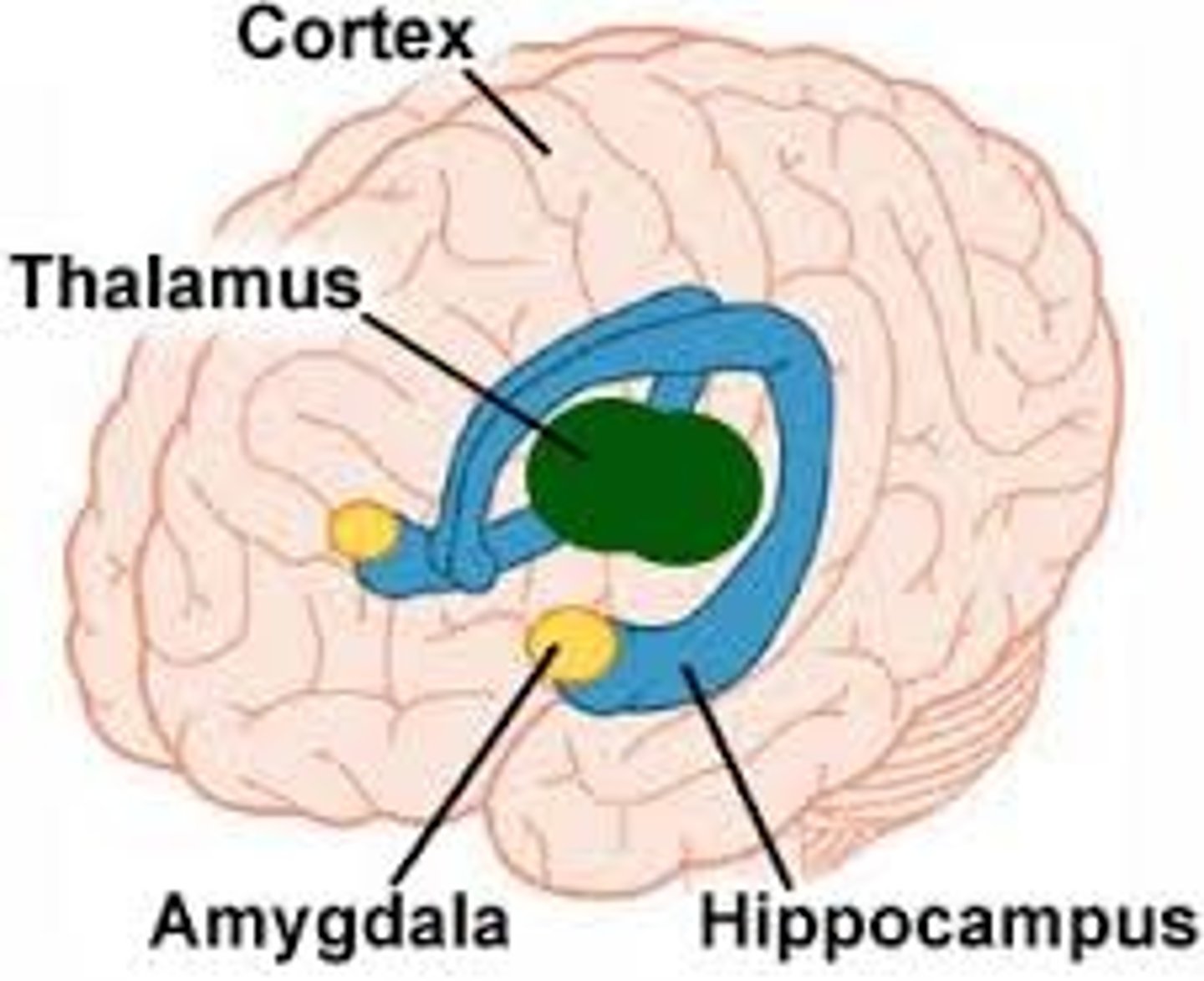
Amyglada
part of limbic system that plays key roles in
fear, excitement, and arousal
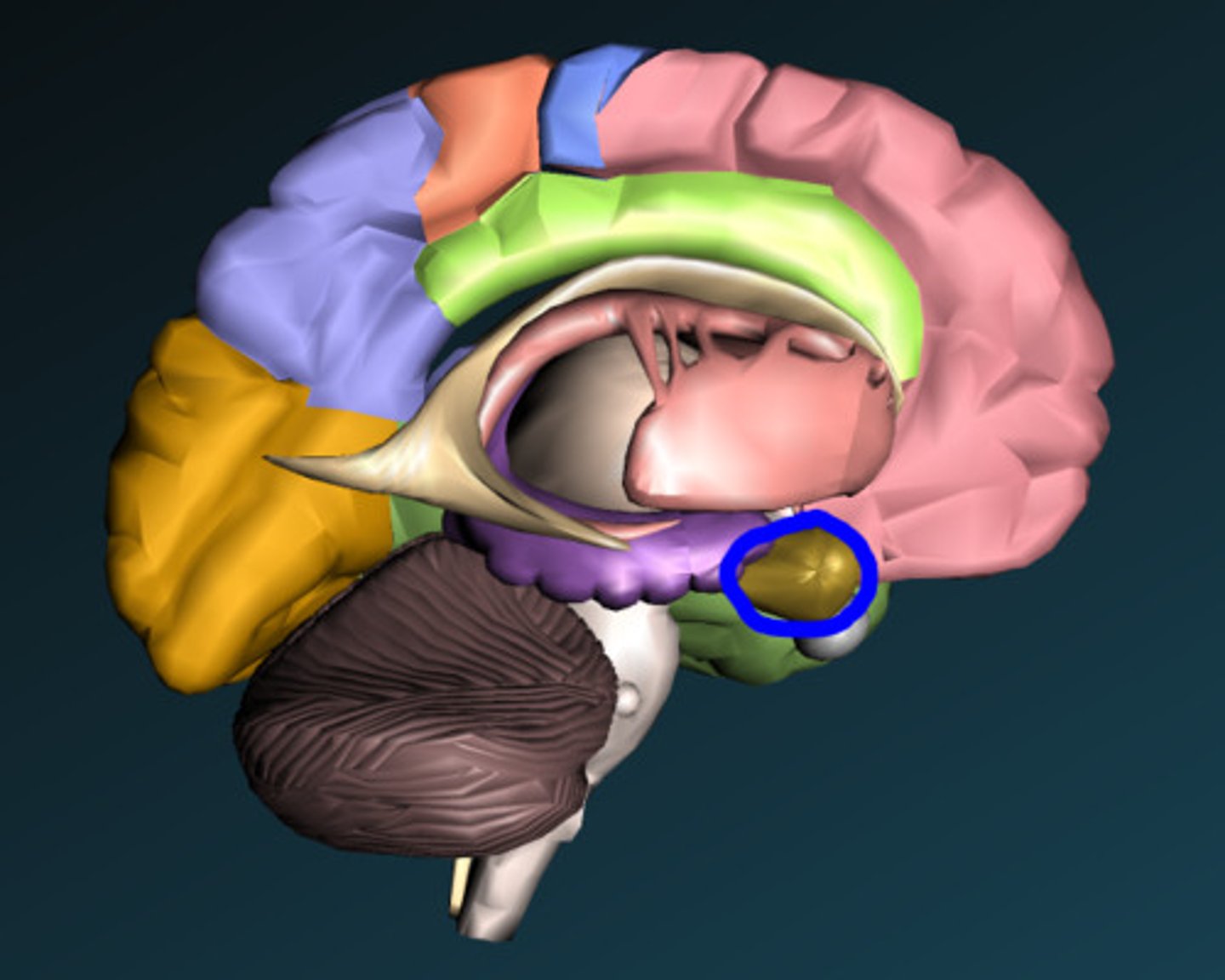
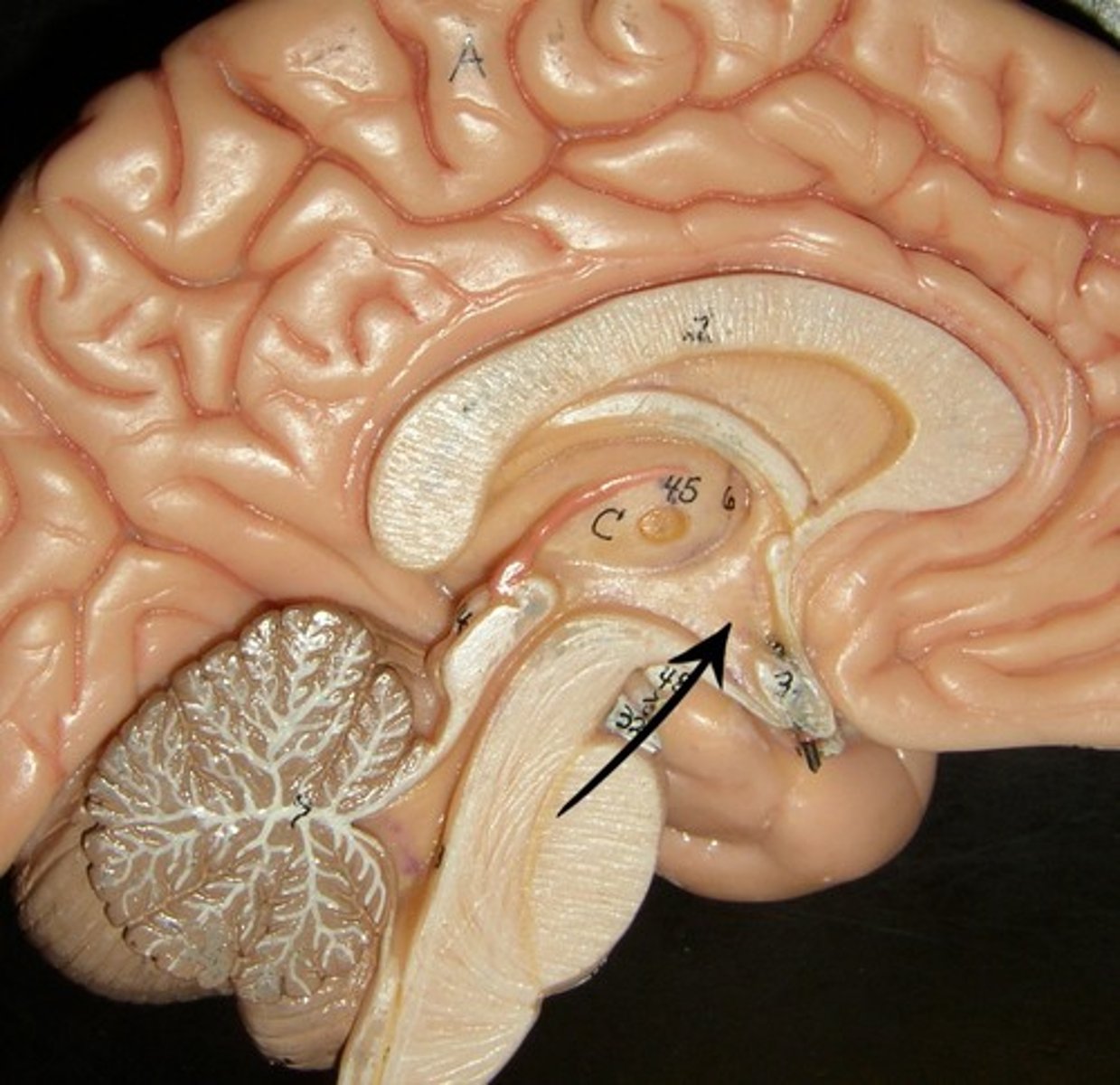
Hypothalamus
Structure below the thalamus, responsible for maintaining a constant internal state
Cerebrum
forward part of the brain that allows advanced intellectual abilities
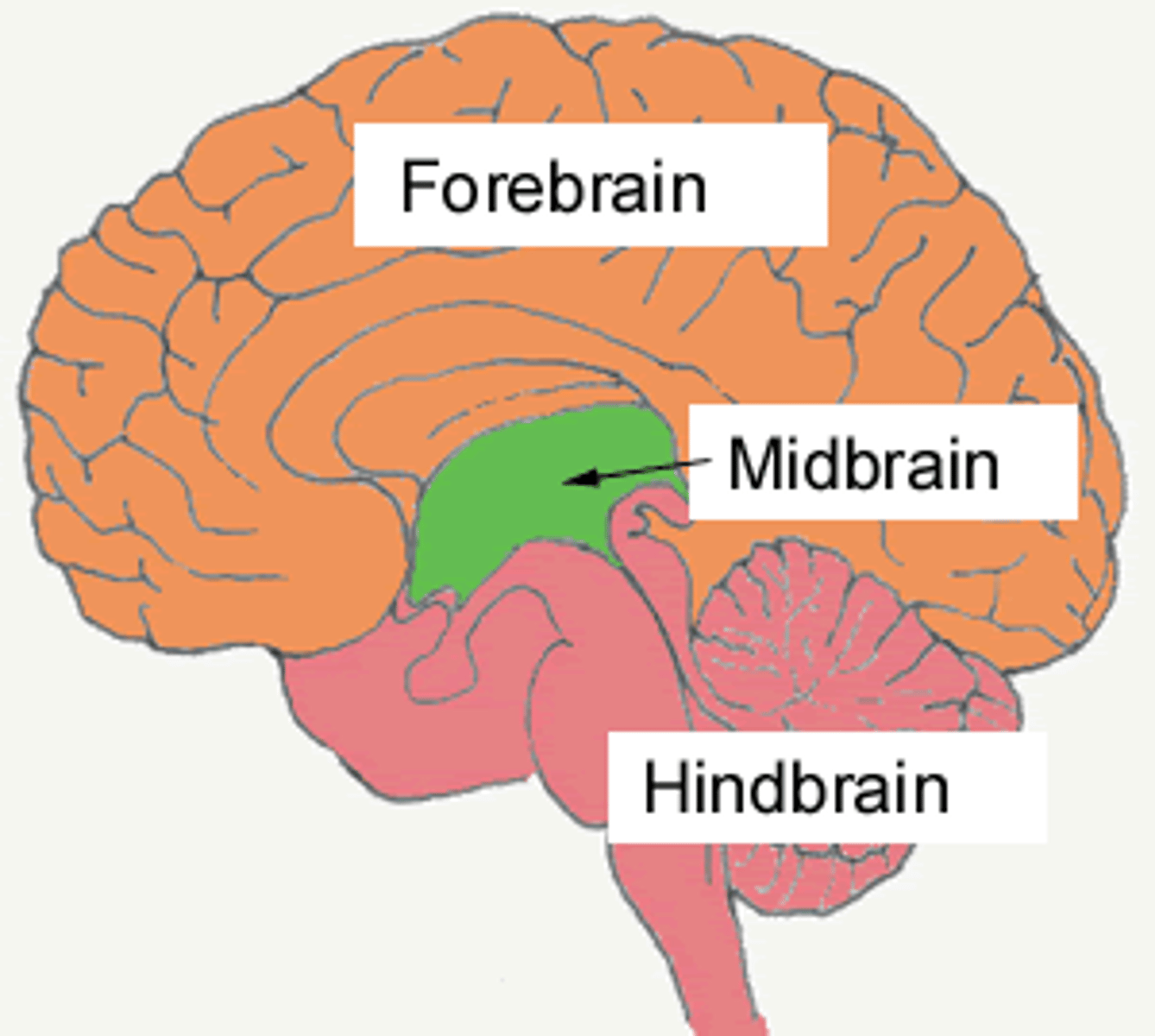
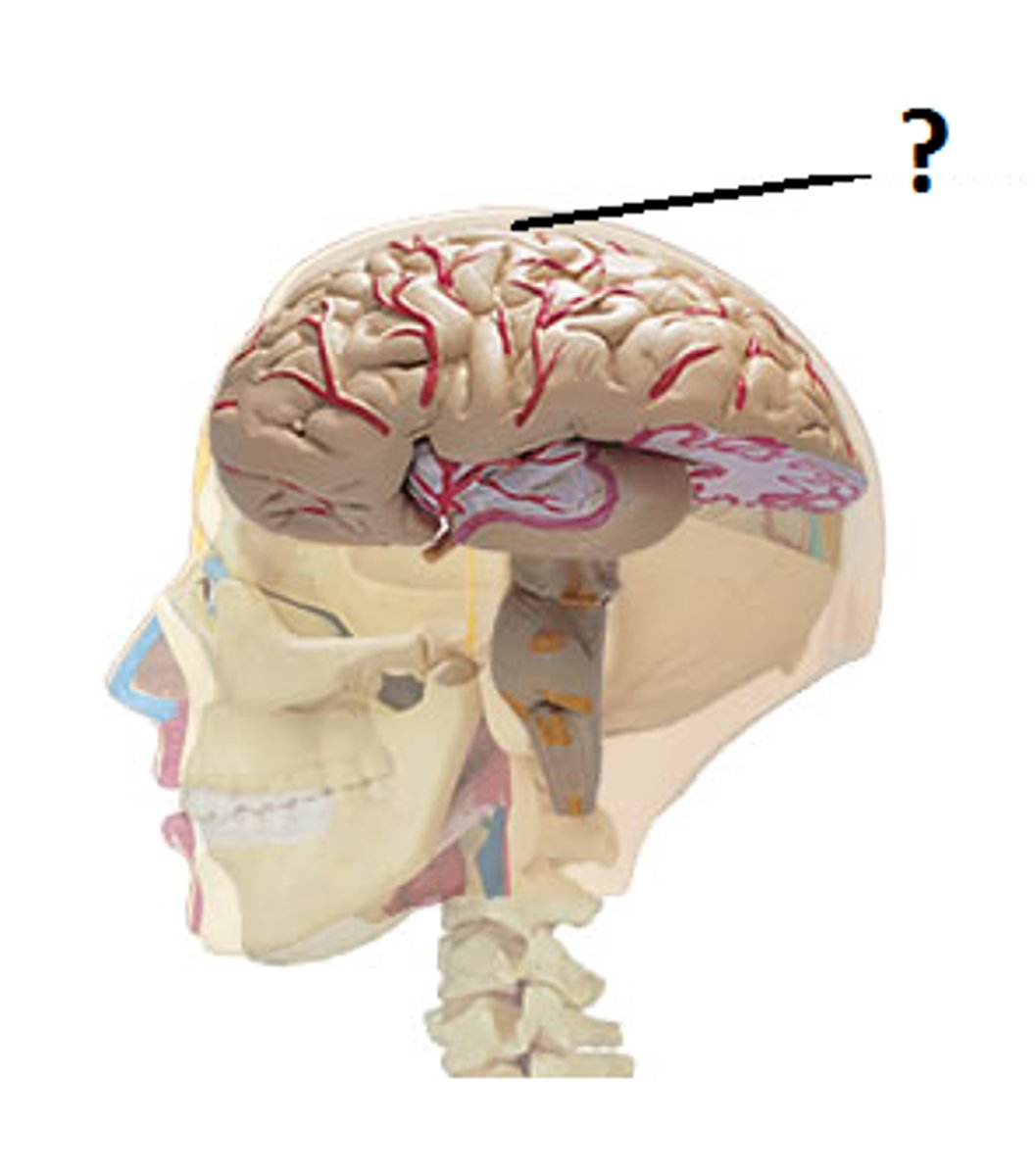
Cerebral Cortex
outermost part of forebrain, responsible for
analyzing sensory processing and higher brain functions
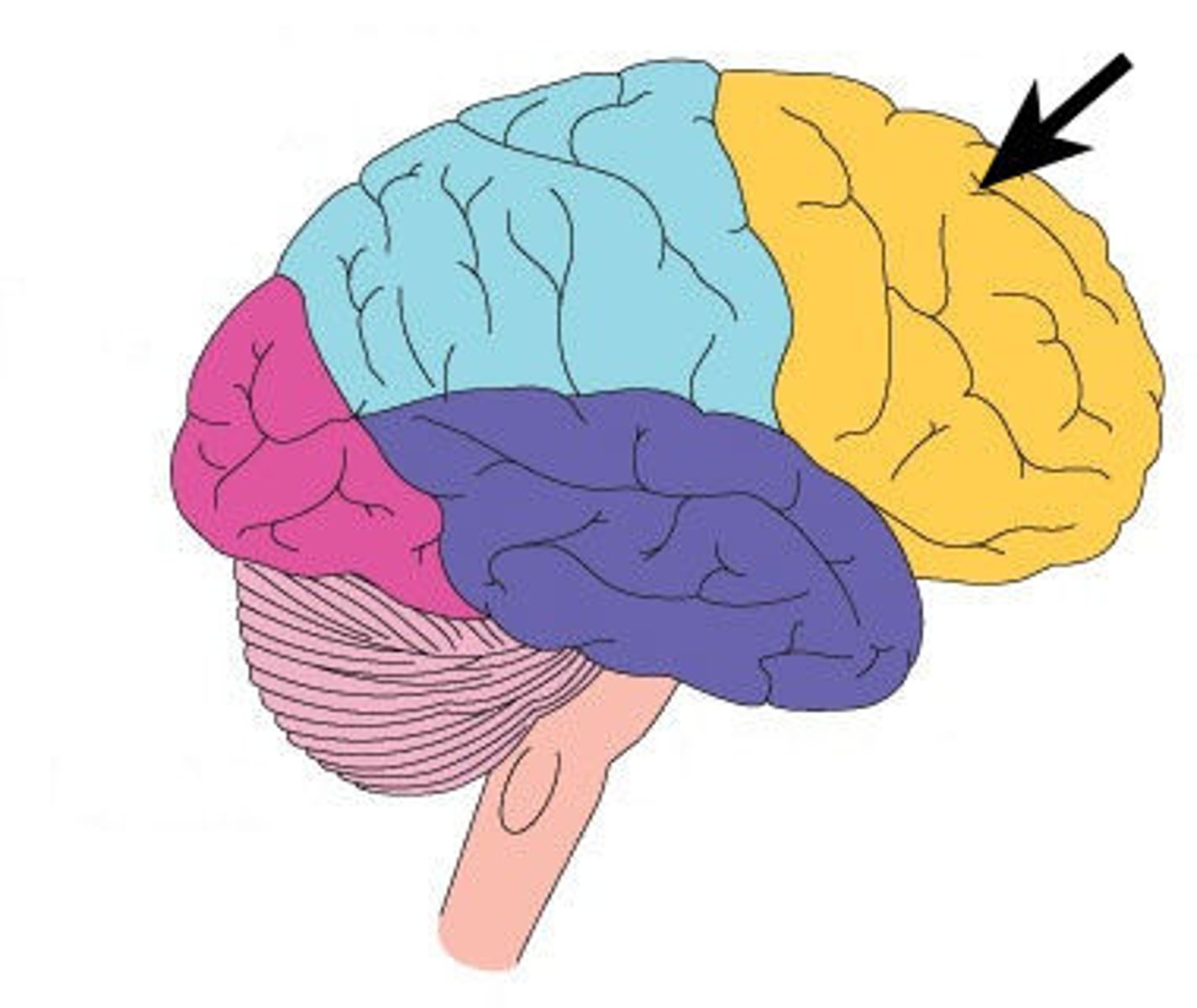
Frontal Lobe
A region of the cerebral cortex that has specialized areas for movement, abstract thinking, planning, memory, and judgement
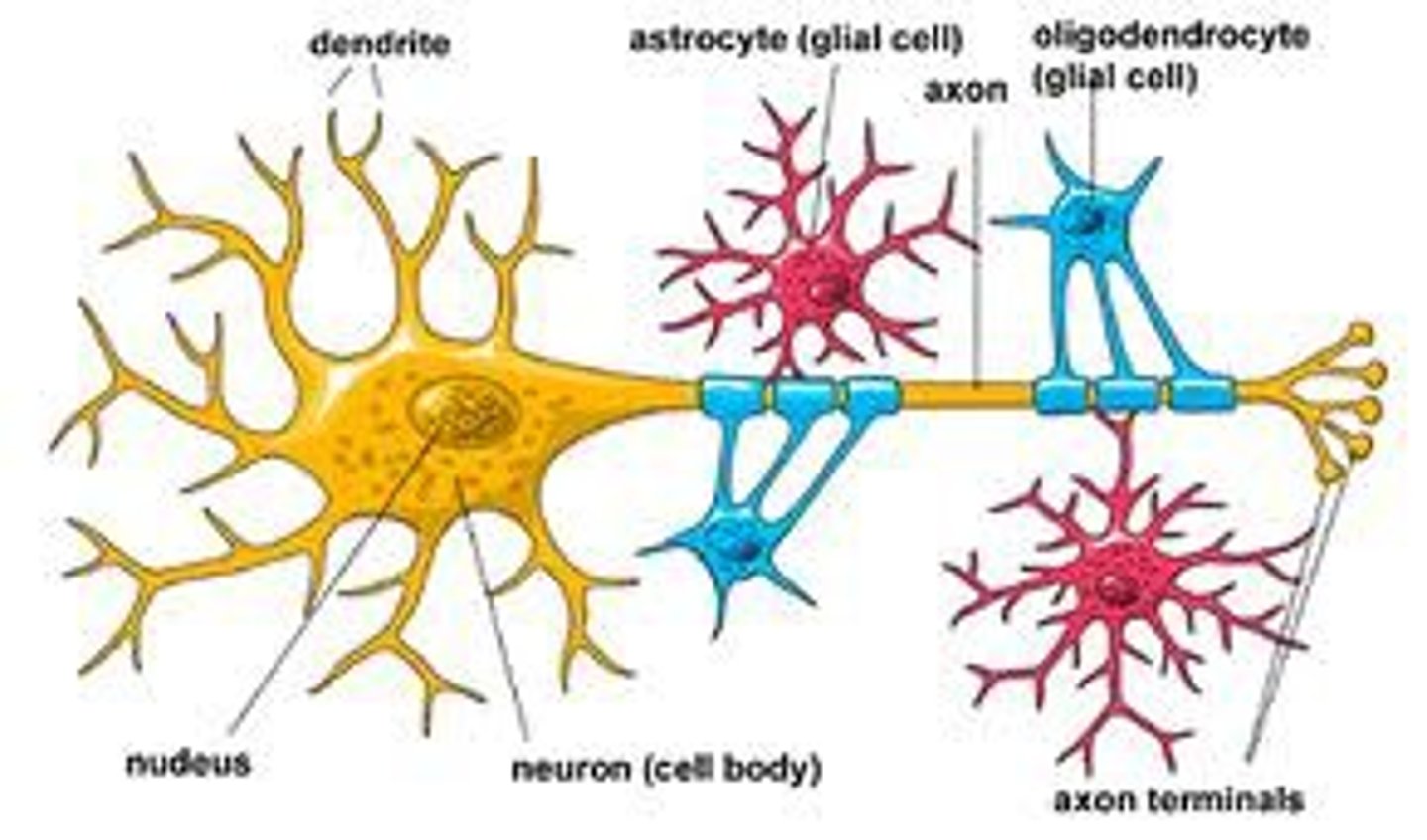
Glial cell
Cell in nervous system that plays a role in the formation of myelin and the blood-brain barrier, responds to injury, removes debris, and enhances learning and memory
Parietal Lobe
upper middle part of the cerebral cortex lying behind the frontal lobe that is specialized for touch and perception
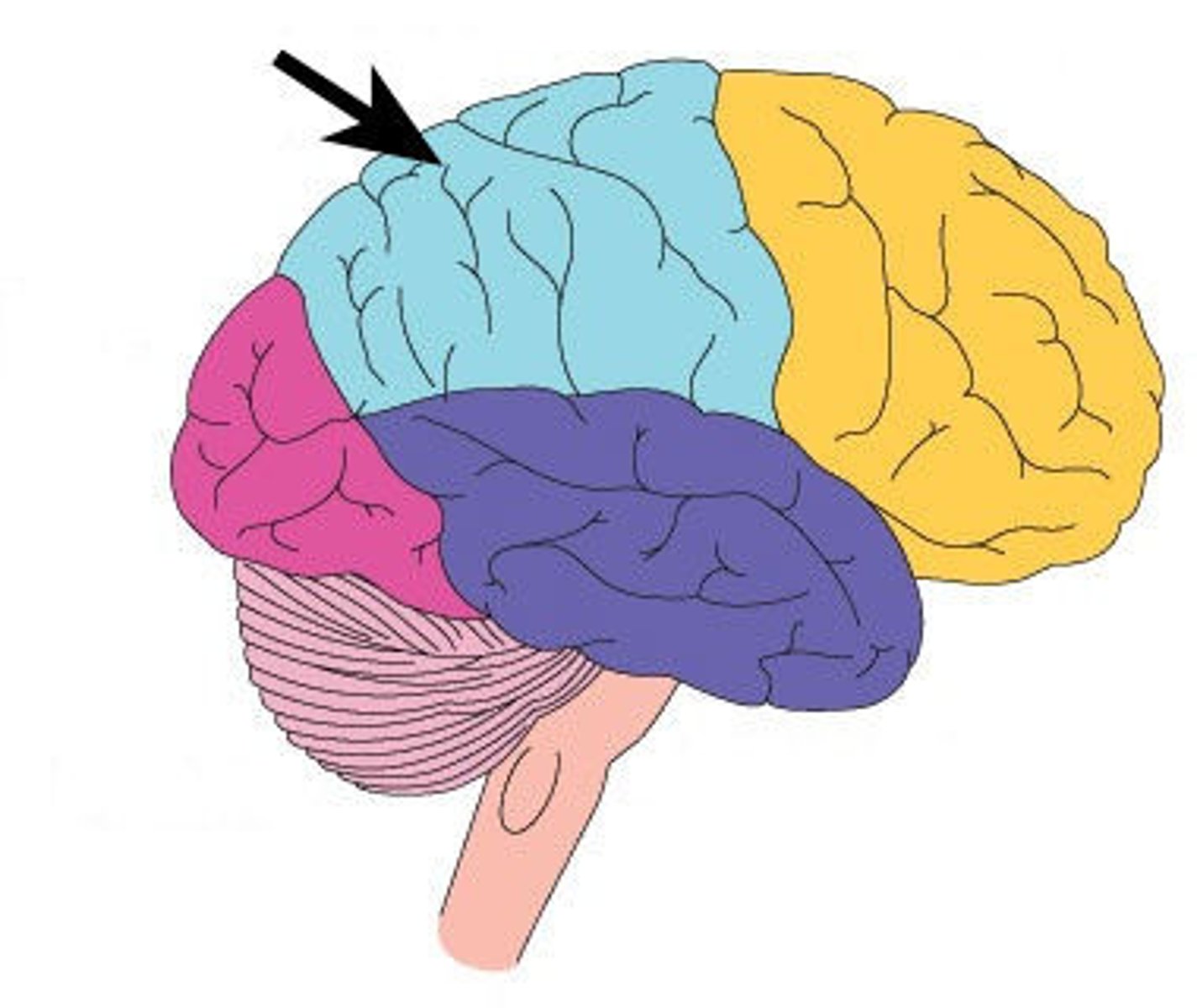
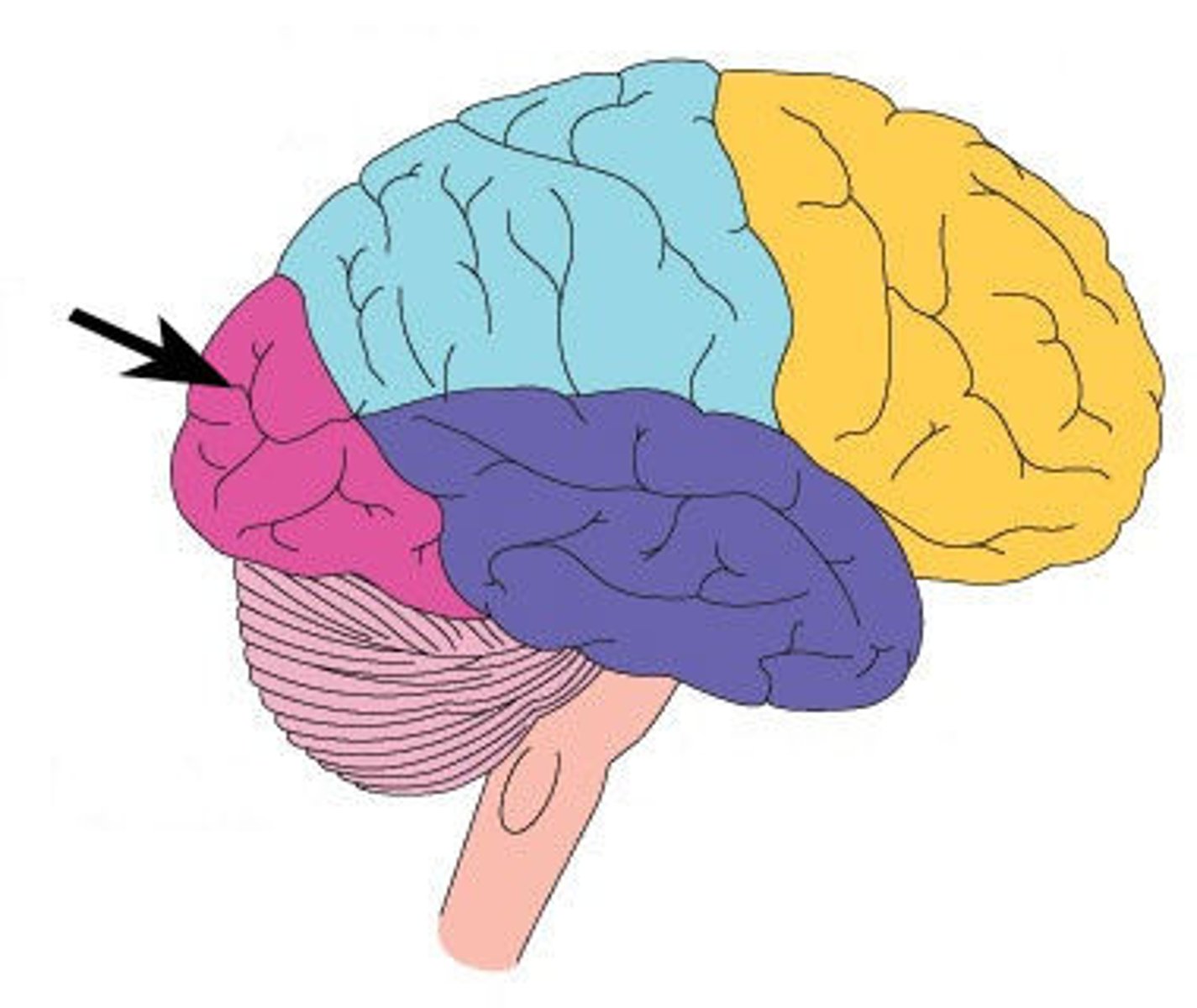
Occipital Lobe
back part of cerebral cortex specialized
for vision
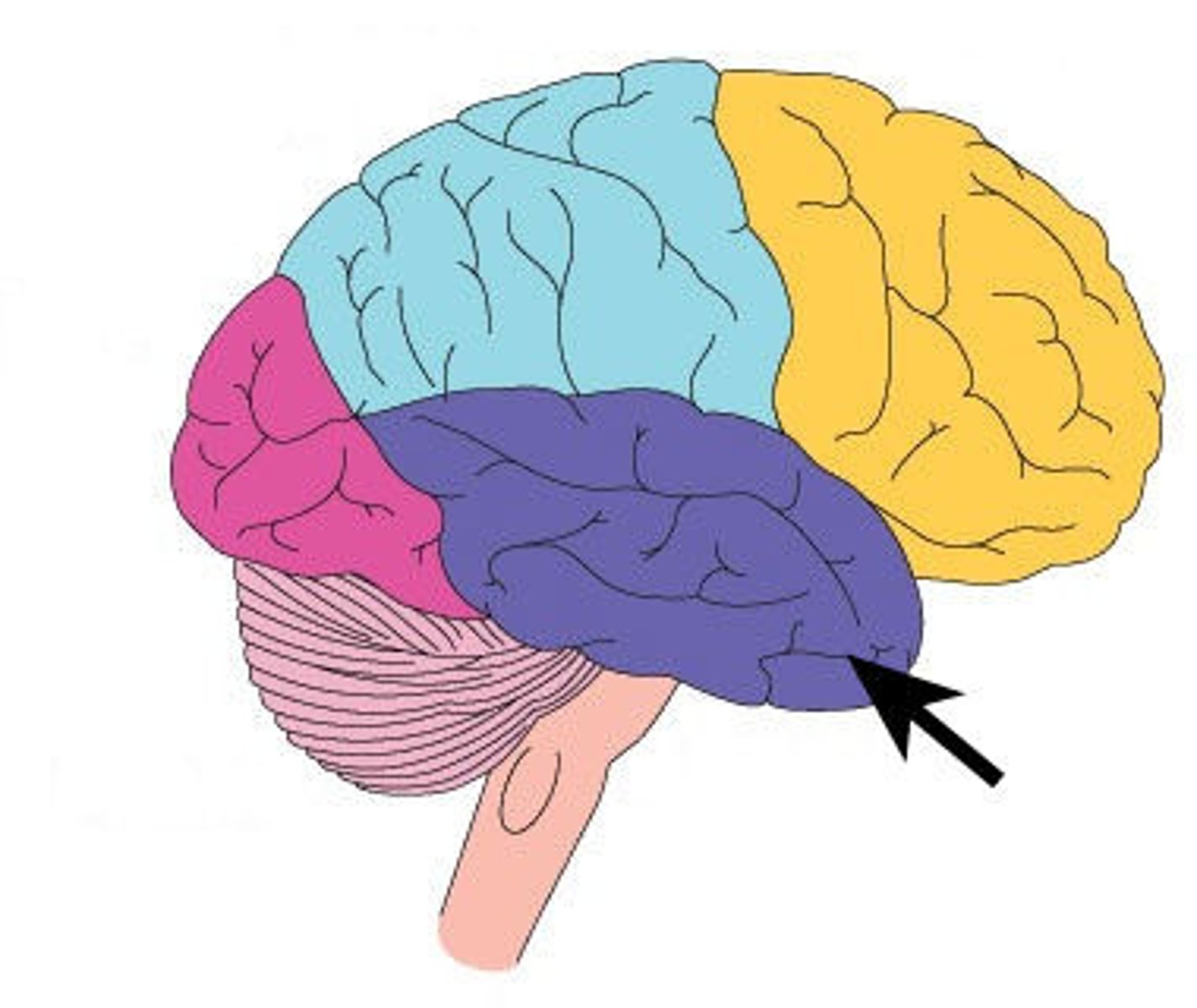
Temporal lobe
lower part of cerebral cortex that plays roles in hearing, understanding language, and memory
Motor Cortex
an area at the rear of the frontal lobes that controls voluntary movements; stimulate right or left hemisphere causes movement on opposite side of body.
somatosensory cortex
area at the front of the parietal lobes that registers and processes body touch and movement sensations
Association area
connects sensory and motor areas, and that is thought to be concerned with higher mental activities.
Plasticity
Ability of brain tissue to modify itself and take on new functions.

Neurogenesis
Creation of new neurons in the adult brain
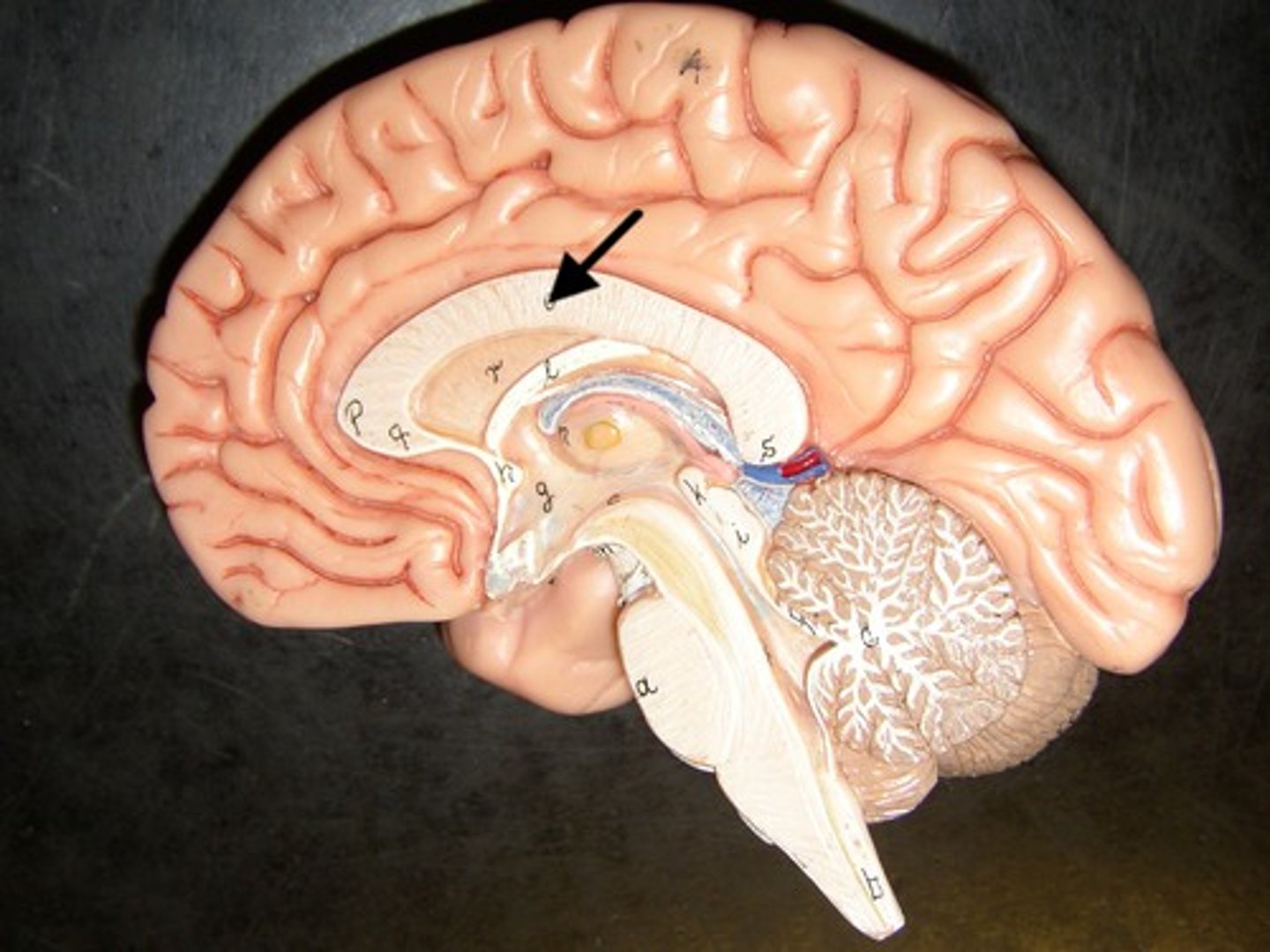
Corpus Callosum
A thick band of nerve fibers that connects large areas of the cerebral cortex on each side of the brain and supports communication of information across the hemispheres.
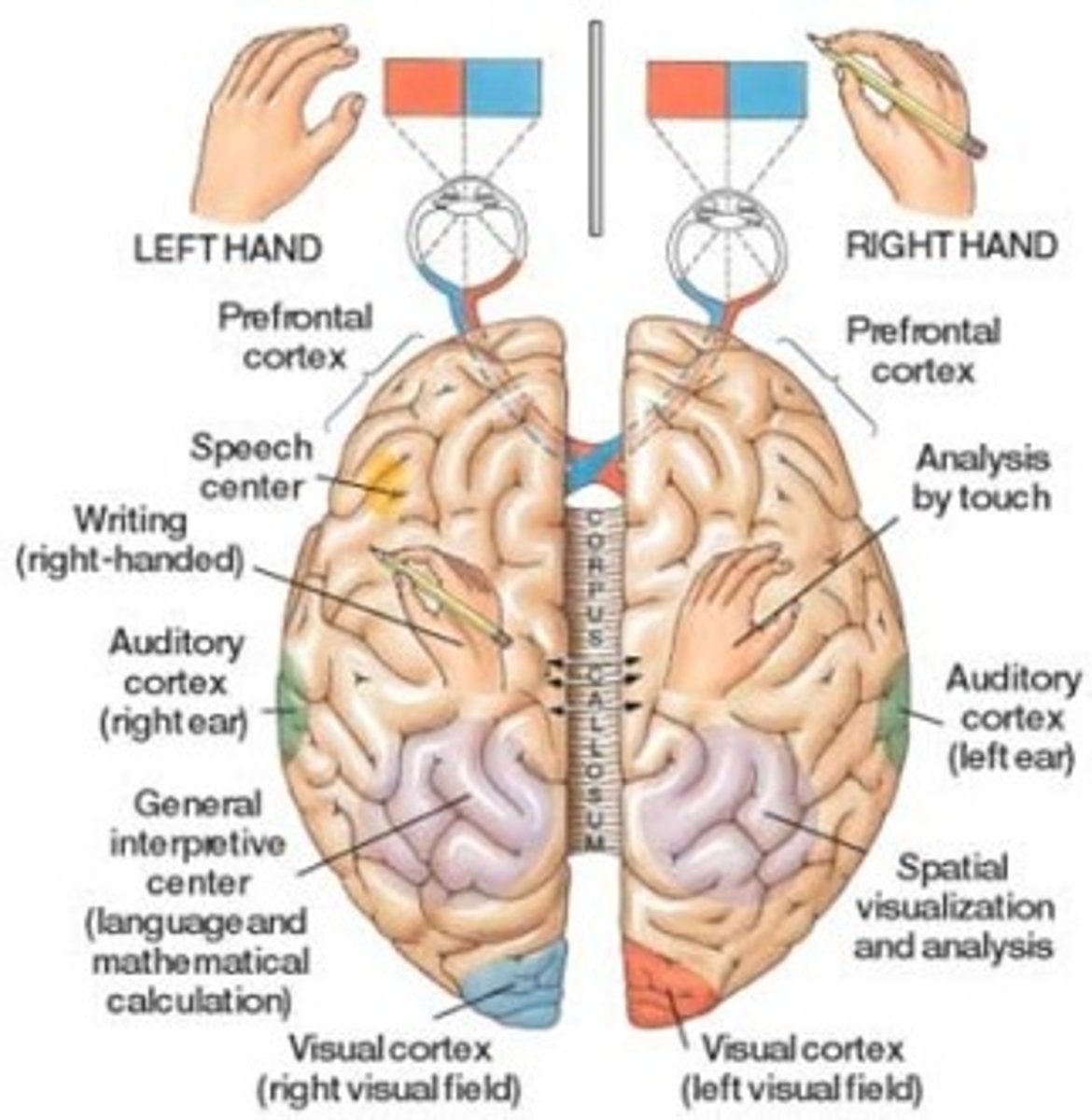
split-brain surgery
procedure that involves severing the corpus callosum to reduce the spread of epileptic seizures
consciousness
our awareness of ourselves and our environment
Cognitive Neuroscience
specific focus on the neural connections in the brain which are involved in mental processes.
Dual processing
two processes consist of an implicit (automatic), unconscious process and an explicit (controlled), conscious process.
Behavior genetics
study of genetic and environmental influences on behaviors. By examining genetic influence, more information can be gleaned about how the environment operates to affect behavior
Environment
every external influence, from prenatal nutrition to the people and things around us
Chromosomes
threadlike structures made of DNA molecules that contain the genes
DNA(deoxyribonucleic acid)
A complex molecule containing the genetic information that makes up the chromosomes.
Genes
the biochemical units of heredity that make up the chromosomes; a segment of DNA capable of synthesizing a protein
Genome
complete set of genetic information for an organism
identical twins (monozygotic twins)
twins who develop from a single fertilized egg that splits in two, creating two genetically identical organisms
fraternal twins (dizygotic twins)
twins who develop from separate fertilized eggs. They are genetically no closer than brothers and sisters, but they share a fetal environment.
molecular genetics
the subfield of biology that studies the molecular structure and function of genes
Heritability
statistic used in breeding and genetics works that estimates how much variation in a phenotypic trait in a population is due to genetic variation between individuals in that population
Interaction
Two independent variables interact if the effect of one of the variables differs depending on the level of the other variable.
evolutionary psychology
the study of the evolution of behavior and the mind, using principles of natural selection
natural selection
the principle that, among the range of inherited trait variations, those contributing to reproduction and survival will most likely be passed on to succeeding generations
Mutations
a random error in gene replication that leads to a change
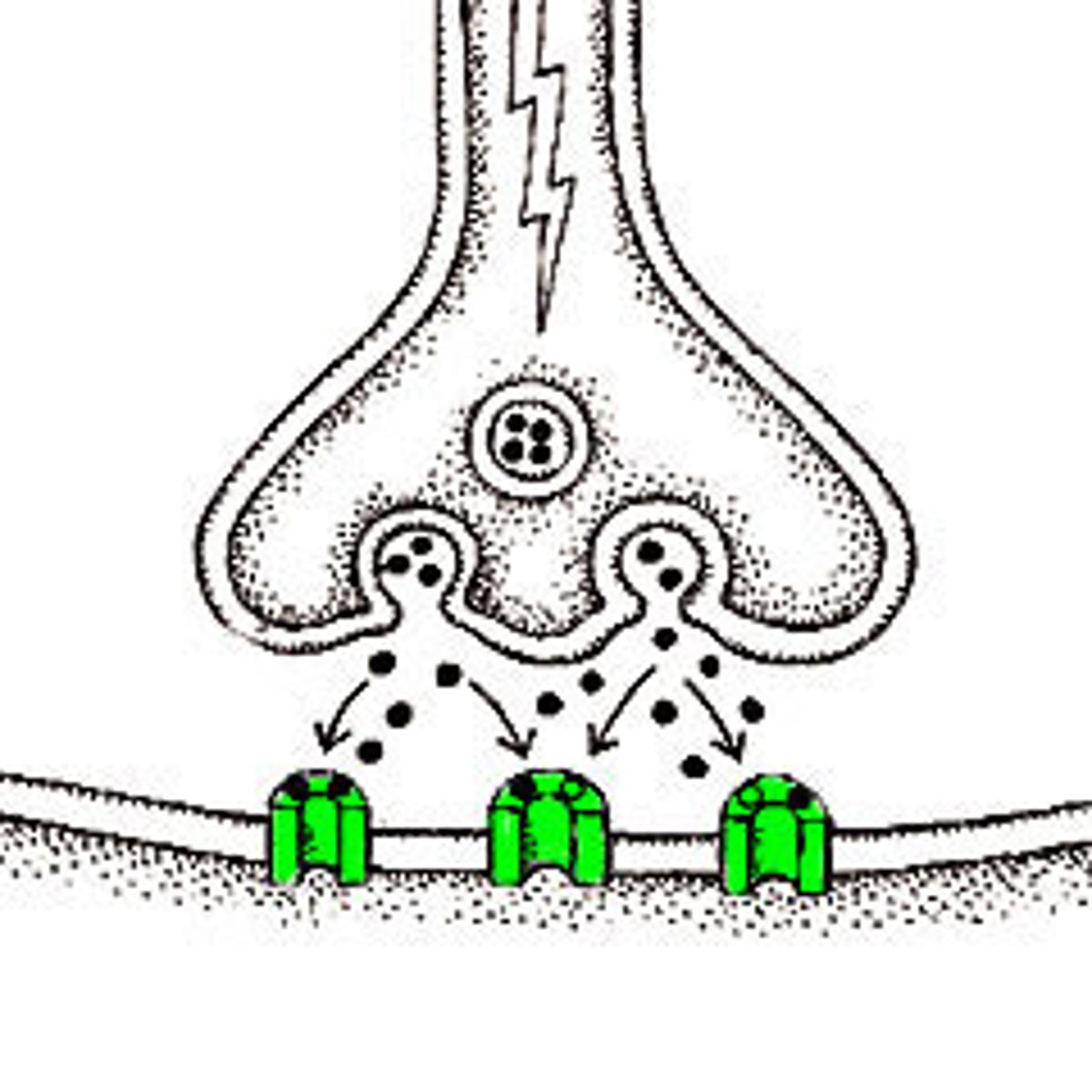
Receptor site
Locations on a receptor neuron into which a specific neurotransmitter fits like a key into a lock.
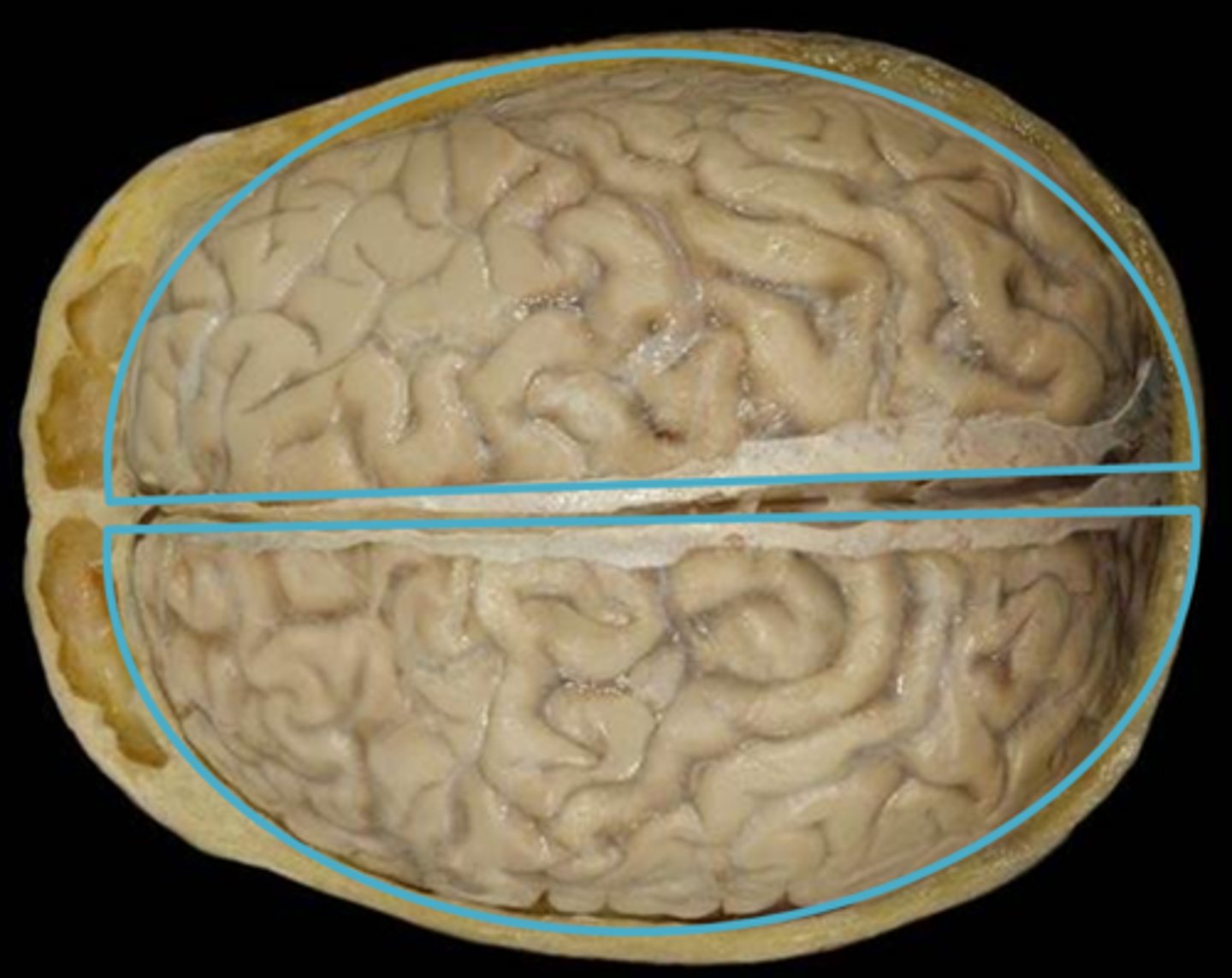
Cerebral Hemispheres
Divided into right and left by the cerebrum.
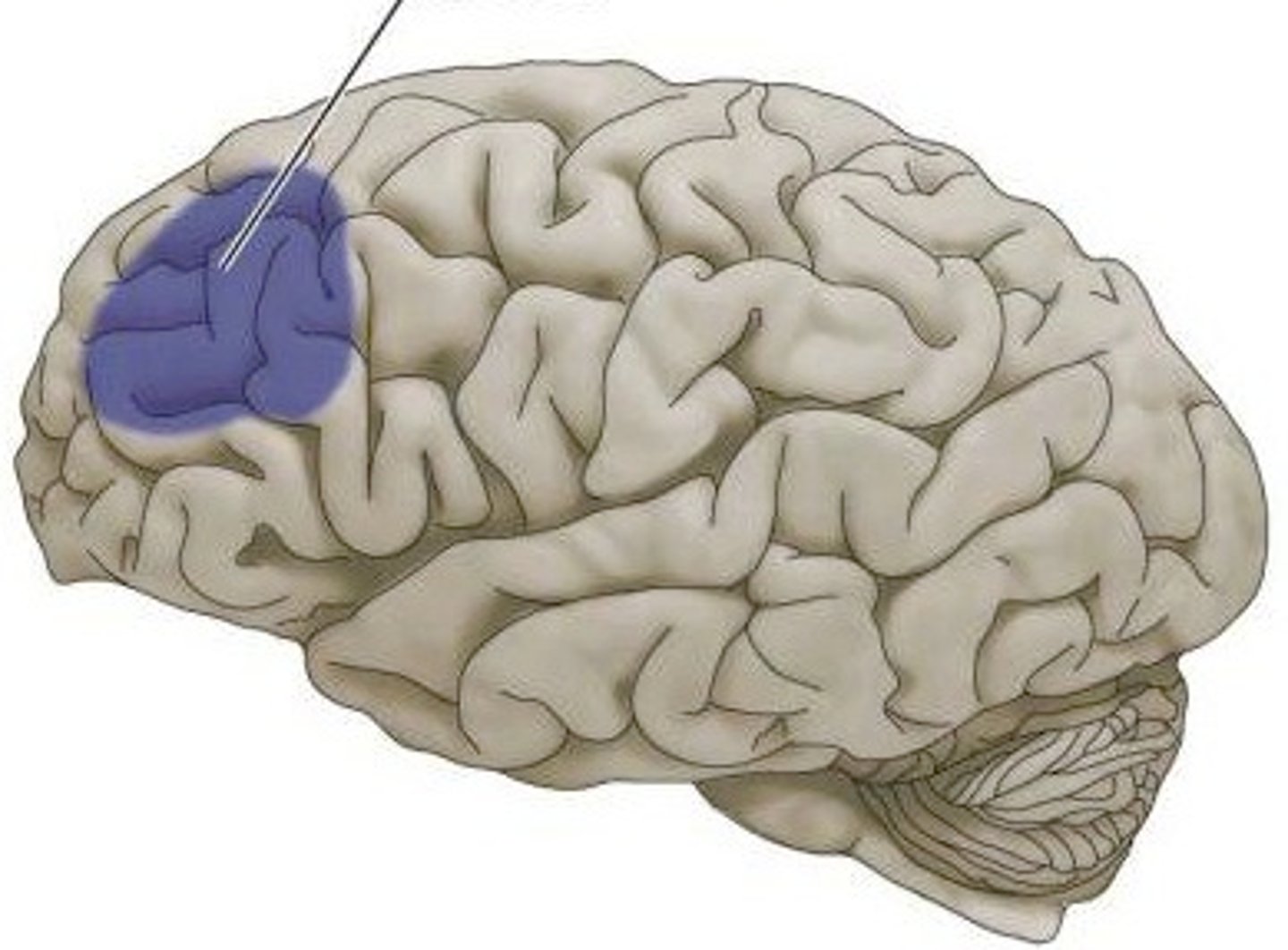
Prefrontal cortex
part of frontal lobe responsible for thinking, planning, and language
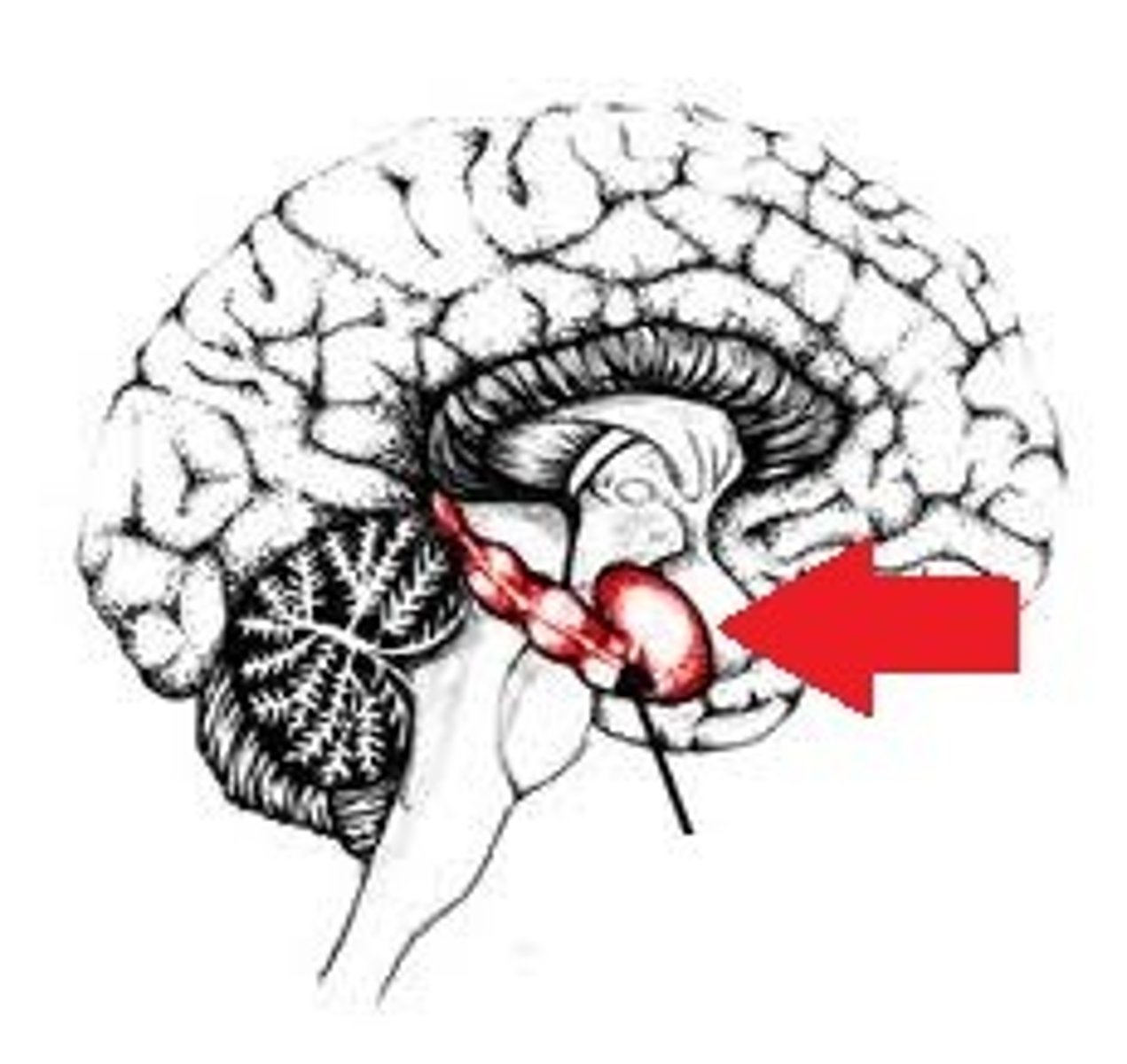
Hippocampus
part of the brain that plays a role in spatial
memory
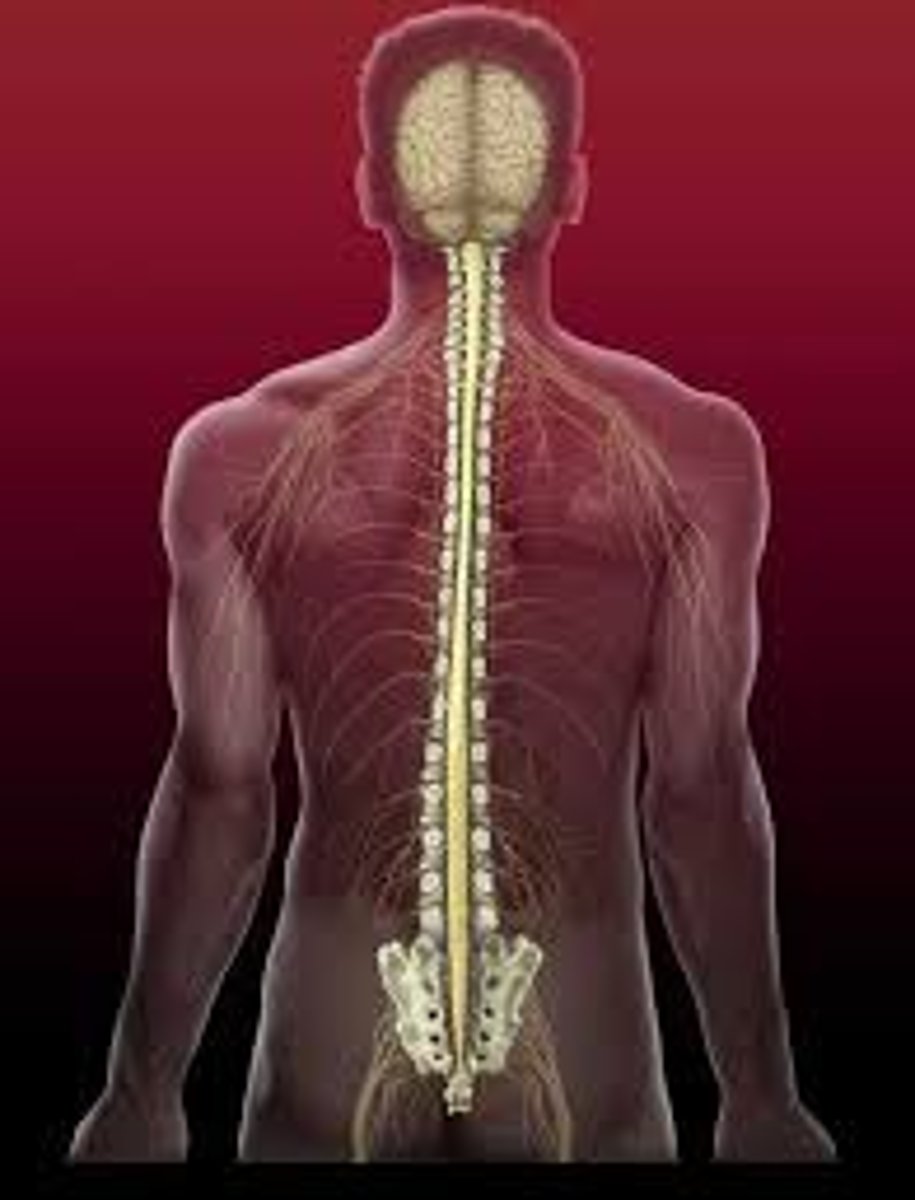
Spinal Cord
thick bundle of nerves that conveys signals
between the brain and the body
Antagonist
locks into a receptor site like the neurotransmitter it mimics
Afferent Neurons
neurons that send signals to the brain
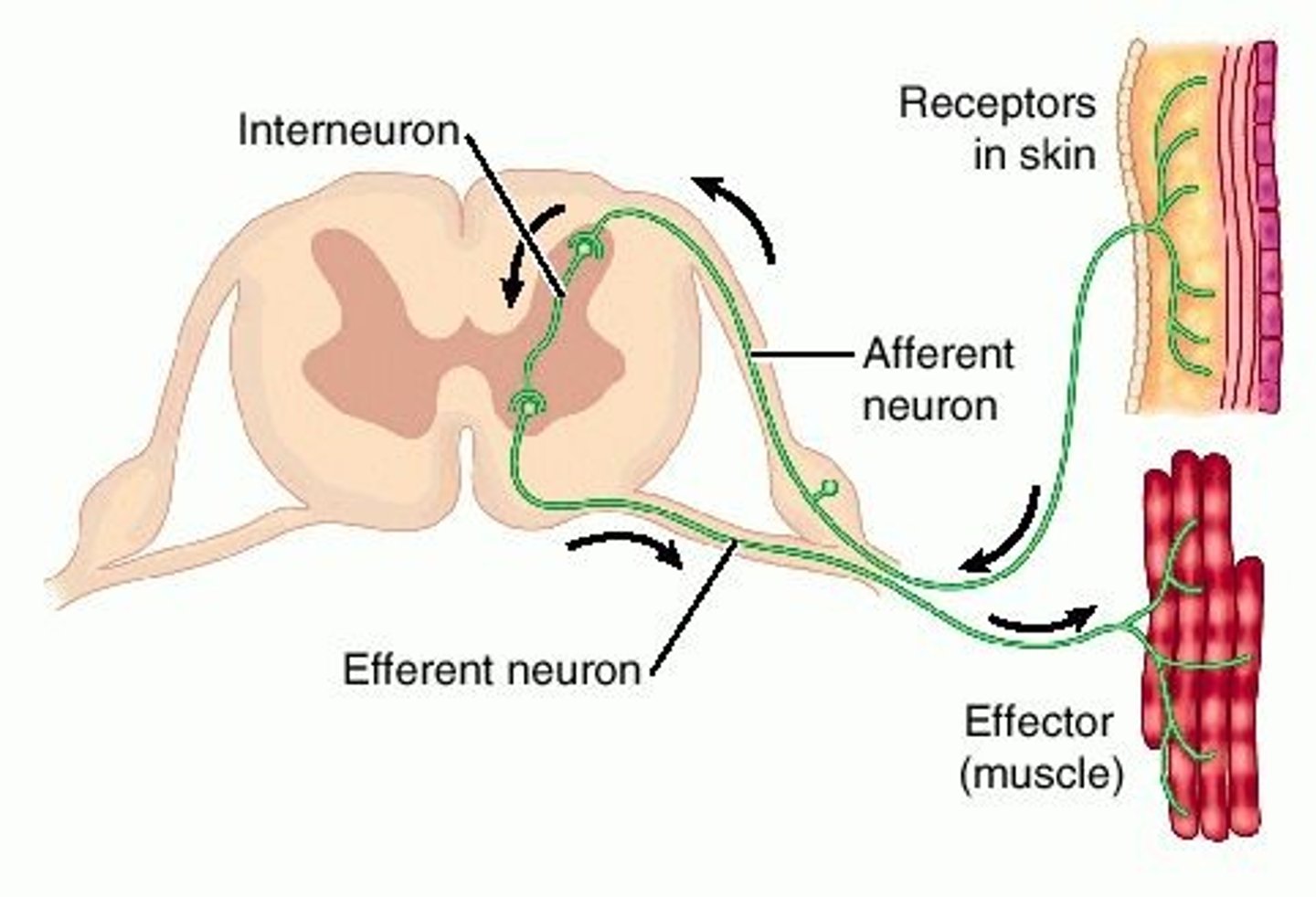
Efferent Neurons
neurons that send signals away from the brain
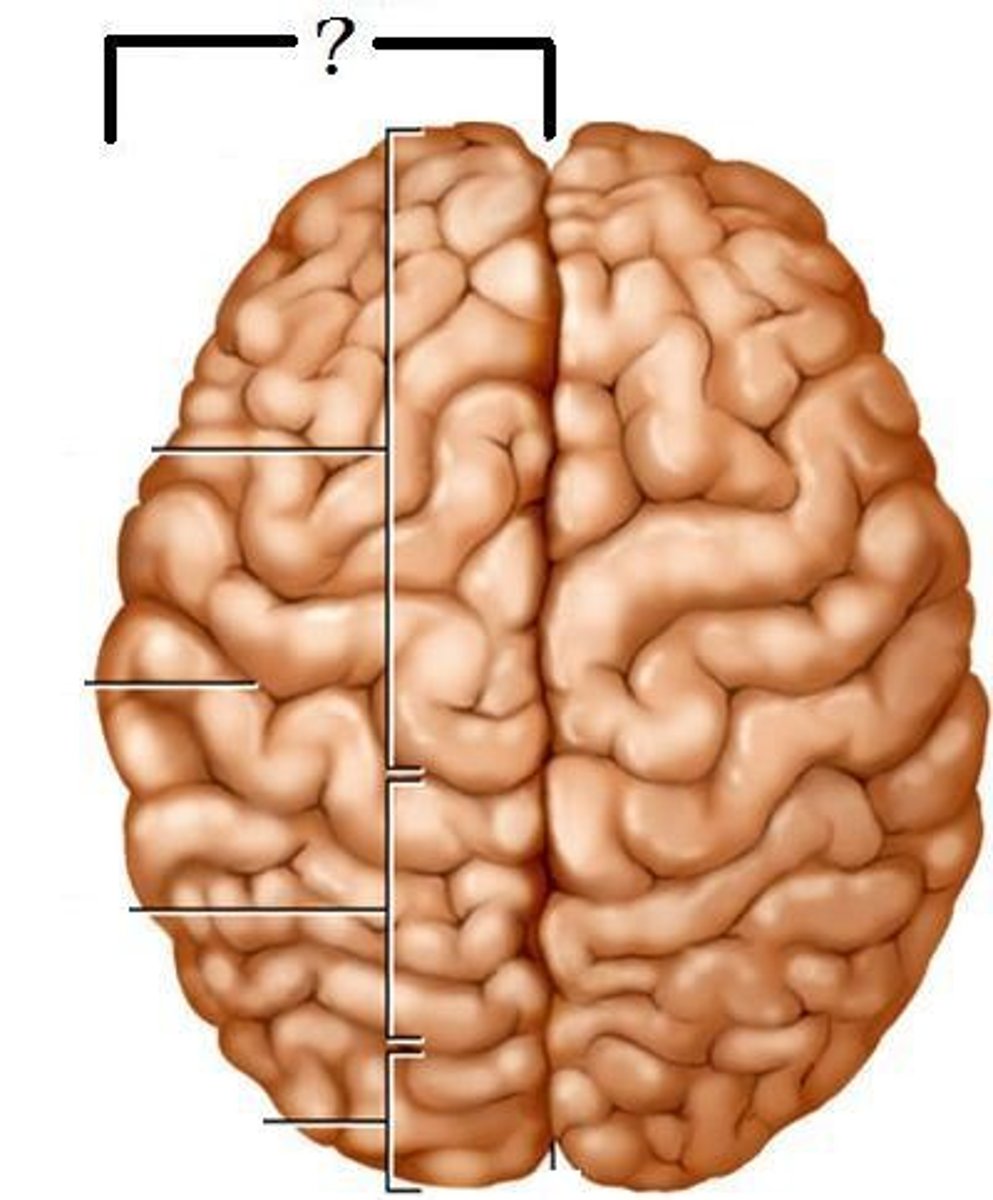
Right Hemisphere
Intuition facial recognition, visual arts, emotional processing
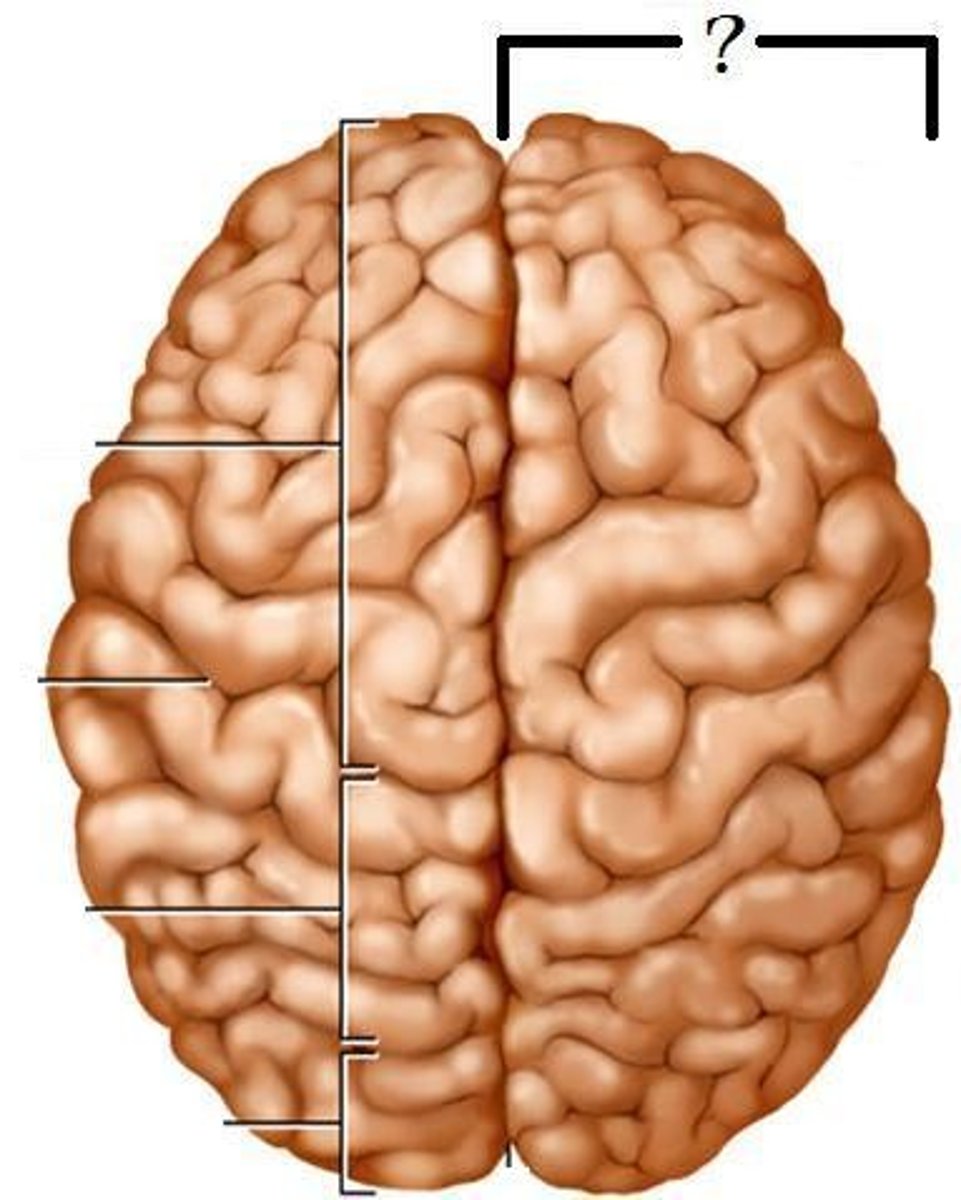
Left Hemisphere
Language, syntax, computation, word recognition, logical, reason
Roger Sperry
work with split-brain research