Arts of Africa Exam Three

0.0(0)
Studied by 0 people
call kaiCall Kai
learnLearn
examPractice Test
spaced repetitionSpaced Repetition
heart puzzleMatch
flashcardsFlashcards
GameKnowt Play
Card Sorting

1/23

flashcard set

Earn XP

Description and Tags

Term with definiton

Last updated 10:48 PM on 5/9/26
Name
Mastery
Learn
Test
Matching
Spaced
Call with Kai

No analytics yet

Send a link to your students to track their progress

24 Terms

1
New cards

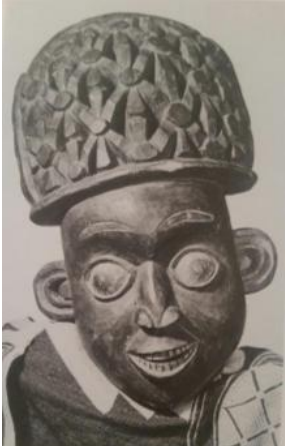
Kwifo Mask

  • Context: Men’s society that acts on behalf of the king; acts as a police force. Men’s societies typically perfomed masquerades at royal festivals. Membership is through status or achievement and is highly regulated. Each society has its own house, masks, costumes, dances, and secret language. Societies act on behalf of the king to establish order and to preserve social and religious structure of the kingdom.

  • Content: Spider motif; night society (kwifo means night). Kwifo means “night”, and acts as a police force.

  • Form: Wood mask. Exaggerated features, big eyes and smile, to scare people. Spider motifs on hat.

  • Function: Performed at royal festivals; maintains social order. The person wearing the mask parades/walks through the city encouraging good behavior. They DONT dance, it is too serious because it is a police force.
<ul><li><p>Context: Men’s society that acts on behalf of the king; acts as a police force. Men’s societies typically perfomed masquerades at royal festivals. Membership is through status or achievement and is highly regulated. Each society has its own house, masks, costumes, dances, and secret language. Societies act on behalf of the king to establish order and to preserve social and religious structure of the kingdom. </p></li><li><p>Content: Spider motif; night society (kwifo means night). Kwifo means “night”, and acts as a police force. </p></li><li><p>Form: Wood mask. Exaggerated features, big eyes and smile, to scare people. Spider motifs on hat. </p></li><li><p>Function: Performed at royal festivals; maintains social order. The person wearing the mask parades/walks through the city encouraging good behavior. They DONT dance, it is too serious because it is a police force.</p></li></ul><p></p>
2
New cards

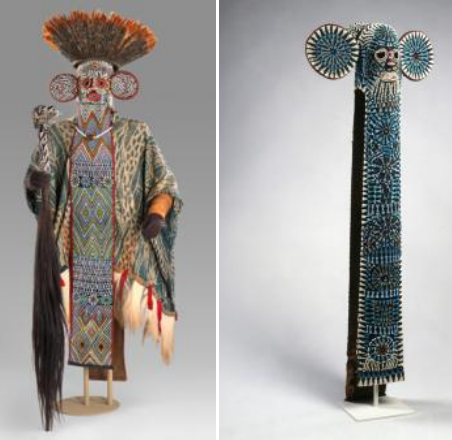
Kuosi Society elephant mask

  • Men’s societies typically performed masquerades at royal festivals

  • Membership was through status or achievement and is highly regulated

  • Each society has its own house, masks, costumes, dances, and secret language

  • Societies act on behalf of the king to establish order and to preserve the social and religious structure of the kingdom.
<ul><li><p>Men’s societies typically performed masquerades at royal festivals</p></li><li><p>Membership was through status or achievement and is highly regulated</p></li><li><p>Each society has its own house, masks, costumes, dances, and secret language</p></li><li><p>Societies act on behalf of the king to establish order and to preserve the social and religious structure of the kingdom.</p></li></ul><p></p>
3
New cards

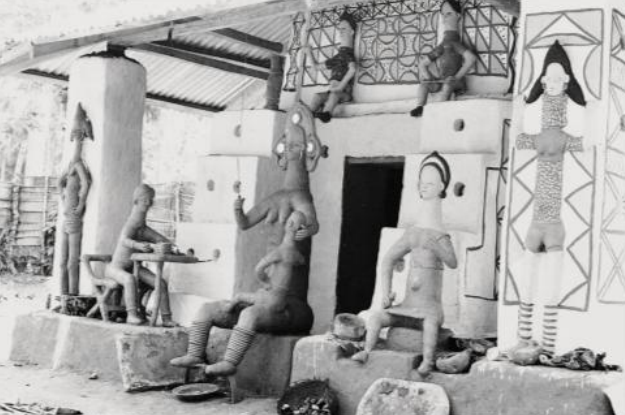
Igbo mbari house/shrine

  • Uli

  • Ala (Earth goddess) most common goddess for a mbari to be made for

    • she is the most powerful goddess of plants/animals/moral law

  • Spirit workers

  • a structure built in response to poor weather, a bad harvest, illness, or any other bad event of catastrophe within the village

  • powerful deities will ask for a sacrifice in the form of an mbari

  • vital part of Igbo culture, although it is becoming extinct because most of the Igbo are Christians now: the Nigerian war displaced many people, thus removing the culture

  • three professionals are involved:

    • a priest of the diety demanding the mbari

    • a diviner who consults the god about their desires

    • artist/master builder who designs the building and models structures

  • two main groups of builders:

    • a small group of hired/paid laborers

    • “spirit workers”: representatives of major families who work for free

      • they “lose their life” for the portion of time that it takes to build the mbari; it is hard, it is a sacrafice

  • central shrine: the space for the goddess

  • two stages to the reveal

    • midnight ritual

    • spirit workers reassemble at mbari, then lead the cow to the market
<ul><li><p>Uli</p></li><li><p>Ala (Earth goddess) most common goddess for a mbari to be made for</p><ul><li><p>she is the most powerful goddess of plants/animals/moral law</p></li></ul></li><li><p>Spirit workers</p></li><li><p>a structure built in response to poor weather, a bad harvest, illness, or any other bad event of catastrophe within the village</p></li><li><p>powerful deities will ask for a sacrifice in the form of an mbari</p></li><li><p>vital part of Igbo culture, although it is becoming extinct because most of the Igbo are Christians now: the Nigerian war displaced many people, thus removing the culture</p></li><li><p>three professionals are involved: </p><ul><li><p>a priest of the diety demanding the mbari</p></li><li><p>a diviner who consults the god about their desires</p></li><li><p>artist/master builder who designs the building and models structures</p></li></ul></li><li><p>two main groups of builders:</p><ul><li><p>a small group of hired/paid laborers</p></li><li><p>“spirit workers”: representatives of major families who work for free</p><ul><li><p>they “lose their life” for the portion of time that it takes to build the mbari; it is hard, it is a sacrafice</p></li></ul></li></ul></li><li><p>central shrine: the space for the goddess</p></li><li><p>two stages to the reveal</p><ul><li><p>midnight ritual</p></li><li><p>spirit workers reassemble at mbari, then lead the cow to the market</p></li></ul></li></ul><p></p>
4
New cards

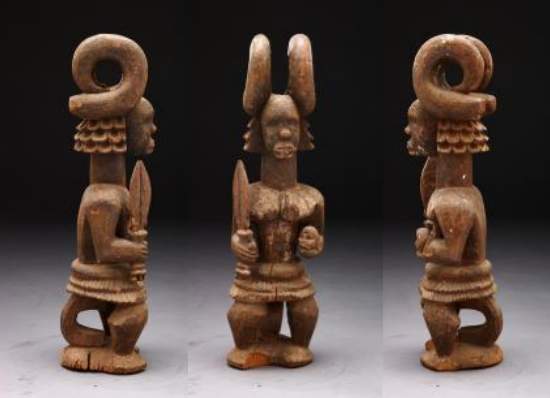
Ikenga

  • Ikenga are personal shrines, kept in a bedroom, or altars for men

  • means place of strength

  • Every man may have on

  • The object embodies his chi (personal spirit), his ndichie (ancestors), and ike (power)

  • dedicated to the strength of the right arm

  • spirit double, soul: abstraction for soul/chi part

  • yearly ikenga festivals, honoring it to bring success, it is a personal object, not village-owned

  • physical representation, not a portrait

    • it is a symbolic representation of soul, spirit, achievements, personalities

  • if your ikenga is not working for you, you can get a new one:

    • if you rank up, gain a new position, you can get a new ikenga that is more powerful and has new symbolism to represent your new self

  • wood

<ul><li><p>Ikenga are personal shrines, kept in a bedroom, or altars for men</p></li><li><p>means place of strength</p></li><li><p>Every man may have on</p></li><li><p>The object embodies his chi (personal spirit), his ndichie (ancestors), and ike (power)</p></li><li><p>dedicated to the strength of the right arm</p></li><li><p>spirit double, soul: abstraction for soul/chi part</p></li><li><p>yearly ikenga festivals, honoring it to bring success, it is a personal object, not village-owned</p></li><li><p>physical representation, not a portrait</p><ul><li><p>it is a symbolic representation of soul, spirit, achievements, personalities</p></li></ul></li><li><p>if your ikenga is not working for you, you can get a new one:</p><ul><li><p>if you rank up, gain a new position, you can get a new ikenga that is more powerful and has new symbolism to represent your new self</p></li></ul></li></ul><ul><li><p>wood</p></li></ul><p></p>
5
New cards

Maiden spirit mask

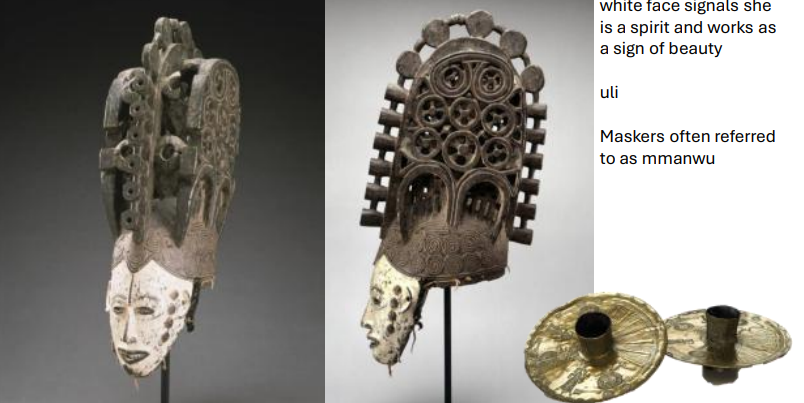
  • white face signals she is a spirit and works as a sign of beauty

  • Uli: the dots on the face, spirals on the hair

    • women designed, uli plant is painted on skin (or on houses), and causes skin to rise due to an allergic reaction

  • Maskers often referred to as mmanwu

  • hair is elaborate, looks like carved cones

  • delicate and thin facial features, emphasizing feminity

  • worn with the anklets and often with the entire costume

  • Wood, kaolin, paint, wire, cotton string, and trade cloth
<ul><li><p>white face signals she is a spirit and works as a sign of beauty</p></li><li><p>Uli: the dots on the face, spirals on the hair</p><ul><li><p>women designed, uli plant is painted on skin (or on houses), and causes skin to rise due to an allergic reaction</p></li></ul></li><li><p>Maskers often referred to as mmanwu</p></li><li><p>hair is elaborate, looks like carved cones</p></li><li><p>delicate and thin facial features, emphasizing feminity</p></li><li><p>worn with the anklets and often with the entire costume</p></li><li><p>Wood, kaolin, paint, wire, cotton string, and trade cloth</p></li></ul><p></p>
6
New cards

Time of the Brave Mask (mgbedike)

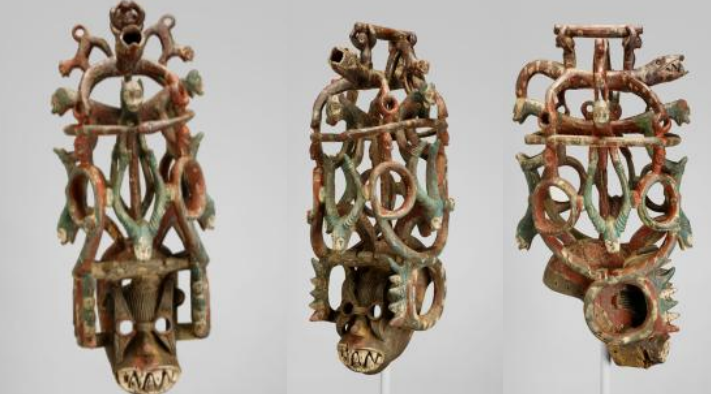
  • cats, monkeys, animals that represent the wild

  • powerful aggressive mask

  • competing spirit, joining societies/initiations
<ul><li><p>cats, monkeys, animals that represent the wild</p></li><li><p>powerful aggressive mask</p></li><li><p>competing spirit, joining societies/initiations</p></li></ul><p></p>
7
New cards

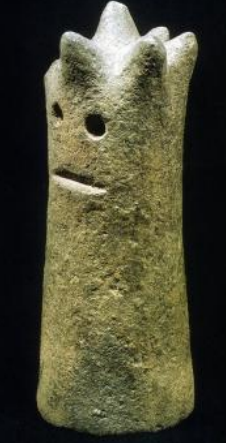
Head from Jemaa

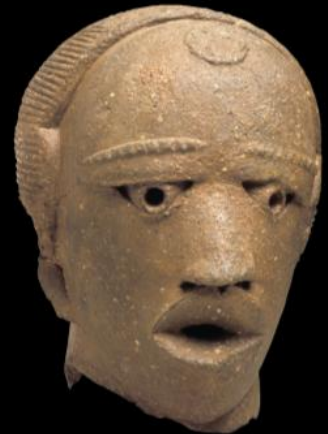
  • Nok terracotta head

  • texture is rough because the slip (water/clay mixture), which makes it smooth, was not fired, thus not permanent and gets rubbed off

  • features:

    • cylindrical, spherical, or conical heads

    • bold, simplified, and stylized features

    • eyes are deep, round holes (perforated pupils) with inverted triangular or circular eyelids

    • wide perforated nostrils

    • open mouth rarely show teeth

    • open areas worked as vents during the firing process

    • smooth round lines

    • elaborate hair

    • ears placed in unusual positions at the side of the head

  • heads were part of a full or partial figure:

    • head is important: seat of the spirit or soul

    • originally though they represent and or sit on an altar

    • theories include ancestor portrayal, grave markers, and charms to prevent crop failure, infertility, and illness
<ul><li><p>Nok terracotta head</p></li><li><p>texture is rough because the slip (water/clay mixture), which makes it smooth, was not fired, thus not permanent and gets rubbed off</p></li><li><p>features:</p><ul><li><p>cylindrical, spherical, or conical heads</p></li><li><p>bold, simplified, and stylized features</p></li><li><p>eyes are deep, round holes (perforated pupils) with inverted triangular or circular eyelids</p></li><li><p>wide perforated nostrils</p></li><li><p>open mouth rarely show teeth</p></li><li><p>open areas worked as vents during the firing process</p></li><li><p>smooth round lines</p></li><li><p>elaborate hair</p></li><li><p>ears placed in unusual positions at the side of the head</p></li></ul></li><li><p>heads were part of a full or partial figure:</p><ul><li><p>head is important: seat of the spirit or soul</p></li><li><p>originally though they represent and or sit on an altar</p></li><li><p>theories include ancestor portrayal, grave markers, and charms to prevent crop failure, infertility, and illness</p></li></ul></li></ul><p></p>
8
New cards

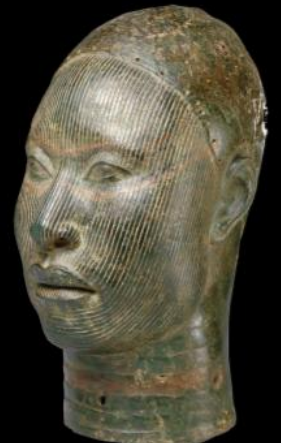
Head of a queen

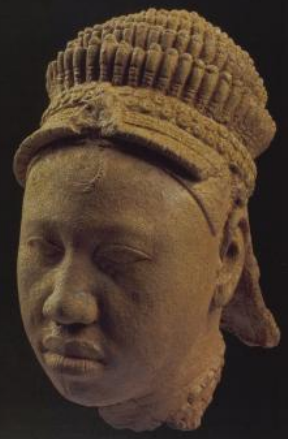
  • terracotta

  • heads are “portrait-like” (varied in appearance) but also idealized

  • features: neck rings, facial striations, symmetry, neutral emotion

  • Many heads found at Ife are complete works, probably meant for altars

  • This head was maybe part of a complete figure; the neck is broken

  • interest in naturalism and idealism

    • different than what we have seen in a lot of cultures

  • Historians have a hard time believing that both styles can exist at the same time. They represent two different thoughts:

    • the outer head (ori ode): physical reality

    • the inner head (ori inu): a person’s true being
<ul><li><p>terracotta</p></li><li><p>heads are “portrait-like” (varied in appearance) but also idealized</p></li><li><p>features: neck rings, facial striations, symmetry, neutral emotion</p></li><li><p>Many heads found at Ife are complete works, probably meant for altars</p></li><li><p>This head was maybe part of a complete figure; the neck is broken</p></li><li><p>interest in naturalism and idealism</p><ul><li><p>different than what we have seen in a lot of cultures</p></li></ul></li><li><p>Historians have a hard time believing that both styles can exist at the same time. They represent two different thoughts:</p><ul><li><p>the outer head (ori ode): physical reality</p></li><li><p>the inner head (ori inu): a person’s true being</p></li></ul></li></ul><p></p>
9
New cards

Ritual vessel, from Ile-Ife

  • ritually buried

  • usually, one vessel in center of courtyard

  • bottom of the pot is broken to pour libations into, so they penetrate the earth
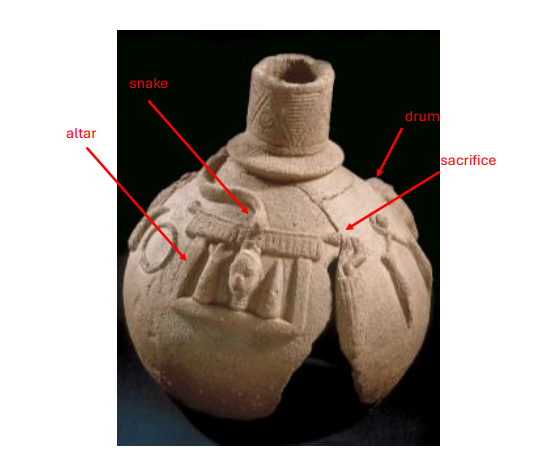
<ul><li><p>ritually buried</p></li><li><p>usually, one vessel in center of courtyard</p></li><li><p>bottom of the pot is broken to pour libations into, so they penetrate the earth</p></li></ul><p></p>
10
New cards

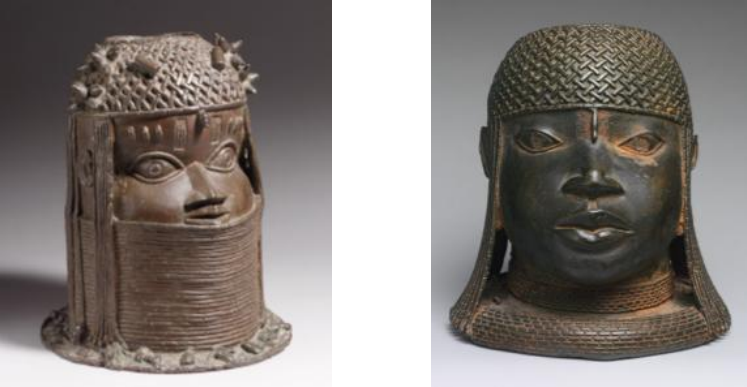
Ori Inu (inner head)

  • cylindrical head

  • terracotta

  • represent inner spirit, soul, abstracted version of self, true being

  • idealism > naturalism

<ul><li><p>cylindrical head</p></li><li><p>terracotta</p></li><li><p>represent inner spirit, soul, abstracted version of self, true being</p></li><li><p>idealism &gt; naturalism</p></li></ul><p></p>
11
New cards

Ori Ode (outer head)

  • lost-wax method

  • zinc brass

  • represents physical and literal reality

  • naturalism > idealism

<ul><li><p>lost-wax method</p></li></ul><ul><li><p>zinc brass</p></li><li><p>represents physical and literal reality</p></li><li><p>naturalism &gt; idealism</p><p></p><p></p><p></p><p></p><p></p><p></p><p></p><p></p></li></ul><p></p>
12
New cards

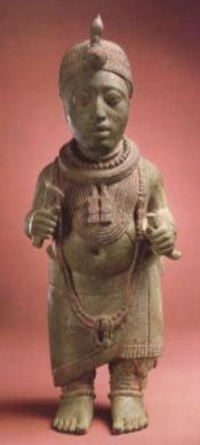
Figure of an oni

  • copper alloy

<ul><li><p>copper alloy</p></li></ul><p></p>
13
New cards

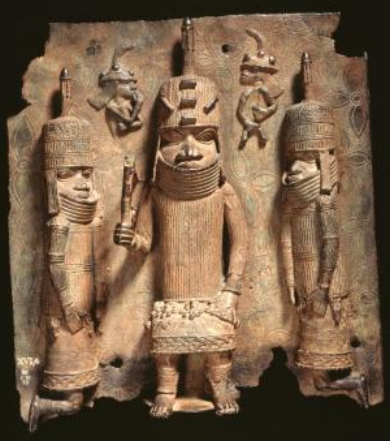
Benin Plaque (Oba with Europeans)

  • hierarchy scale

    • the oba is larger and taller; the oba also has more regalis (clothes, accessories)

  • The Portuguese introduced red Mediterranean coral in the late 15th century; its color fit pre-existing tastes and symbolism: red is power, blood, and danger

    • coral: wealth, sign of leadership, connection to ancestral realms of the sea and to Olokun

  • River leaf symbolism in the background

    • References Olokun, a deity associated with wealth

  • lost wax casting

  • punitive expedition

    • The British looting and mass destruction of culture and life

  • manilla, coral, brass

<ul><li><p>hierarchy scale</p><ul><li><p>the oba is larger and taller; the oba also has more regalis (clothes, accessories)</p></li></ul></li><li><p>The Portuguese introduced red Mediterranean coral in the late 15th century; its color fit pre-existing tastes and symbolism: red is power, blood, and danger</p><ul><li><p>coral: wealth, sign of leadership, connection to ancestral realms of the sea and to Olokun</p></li></ul></li><li><p>River leaf symbolism in the background</p><ul><li><p>References Olokun, a deity associated with wealth</p></li></ul></li></ul><ul><li><p>lost wax casting</p></li><li><p>punitive expedition</p><ul><li><p>The British looting and mass destruction of culture and life</p></li></ul></li><li><p>manilla, coral, brass</p></li></ul><p></p>
14
New cards

Benin Royal ancestral altar of King Eweka II

  • Ukhurhe

  • Lost wax casting

  • Kaolin

  • Punitive Expedition

  • clay, copper alloy, wood, and ivory

  • dedicated to Oba Ovanramwen

  • brass casting knowledge is credited to the Oranmyian

  • brass is associated with power (color and value of material) as well as permanence (it does not rust)

  • commemorative heads are created for each Oba, placed on a platform located in the ancestral shrine

  • heads created in both brass and terracotta: the later now used by the brass caster’s guild in ancestral worship
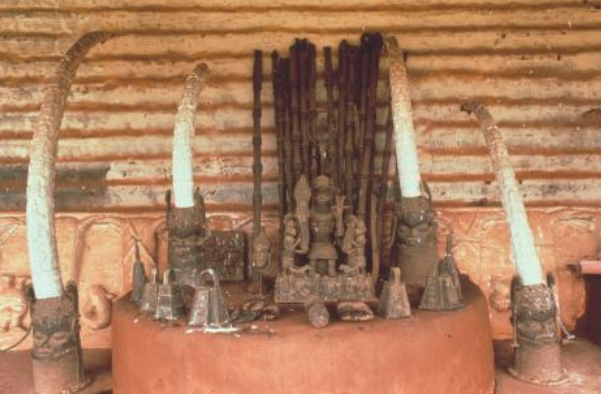
<ul><li><p>Ukhurhe</p></li><li><p>Lost wax casting</p></li><li><p>Kaolin</p></li><li><p>Punitive Expedition</p></li><li><p>clay, copper alloy, wood, and ivory</p></li><li><p>dedicated to Oba Ovanramwen</p></li><li><p>brass casting knowledge is credited to the Oranmyian</p></li><li><p>brass is associated with power (color and value of material) as well as permanence (it does not rust)</p></li><li><p>commemorative heads are created for each Oba, placed on a platform located in the ancestral shrine</p></li><li><p>heads created in both brass and terracotta: the later now used by the brass caster’s guild in ancestral worship</p></li></ul><p></p>
15
New cards

Head of oba

knowt flashcard image
16
New cards

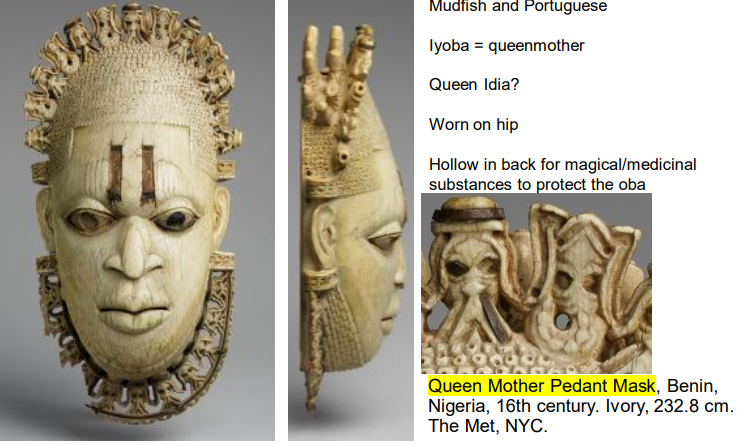
Queen Mother Pedant Mask

  • Mudfish and Portuguese

  • Iyoba = queenmother

  • Queen Idia?

  • Worn on hip

  • Hollow in back for magical/medicinal substances to protect the oba

  • Ivory

<ul><li><p>Mudfish and Portuguese</p></li><li><p>Iyoba = queenmother</p></li><li><p>Queen Idia?</p></li><li><p>Worn on hip</p></li><li><p>Hollow in back for magical/medicinal substances to protect the oba</p></li><li><p>Ivory</p></li></ul><p></p>
17
New cards

Ariwajoye I

  • beaded veil coming down from the crown

    • hides the features of the oba, protects him from spiritual attacks and from the gaze of people

    • covered in regalia

    • beadwork is a mark of power

      • the amount, the cost, the time, etc.

    • bird symbolism on the crown (creature that can be in sky and ground, representing heavens and earth, the crossroads)

    • oba relies on ancestors and ogboni society

  • ashe (life force)

  • Oba (king or ruler)

  • Ogboni (secret society with mystical and political power)
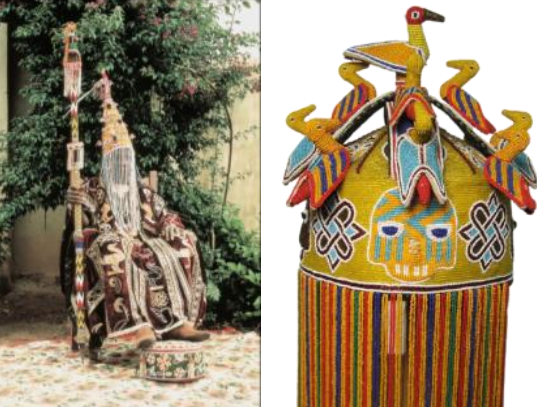
<ul><li><p>beaded veil coming down from the crown</p><ul><li><p>hides the features of the oba, protects him from spiritual attacks and from the gaze of people</p></li><li><p>covered in regalia</p></li><li><p>beadwork is a mark of power</p><ul><li><p>the amount, the cost, the time, etc.</p></li></ul></li><li><p>bird symbolism on the crown (creature that can be in sky and ground, representing heavens and earth, the crossroads)</p></li><li><p>oba relies on ancestors and ogboni society</p></li></ul></li><li><p>ashe (life force)</p></li><li><p>Oba (king or ruler)</p></li><li><p>Ogboni (secret society with mystical and political power)</p></li></ul><p></p>
18
New cards

Ogboni society edan (staff figures)

  • Ashe

  • Edan (public symbols of the power and presence of Ogboni)

  • male and female working together, always has one male and one female

  • represent the Onlie, the earth’s owner, made out of brass because brass does not rust, thus has longevity

  • female figure is holding an edan: male is doing the Ogboni salute

  • balance of power between the sexes = balance of power between the king and his people

  • The duality of nature = the duality of man and woman

  • Onlie ensures human survival, thus we must honor them

  • The edan is filled with ashe (like a spiritual substance)

  • edan is used in religious rituals, judicial rituals, as a badge of honor

    • The (protecting owner but is also an indicator of status and membership in the Ogboni society.
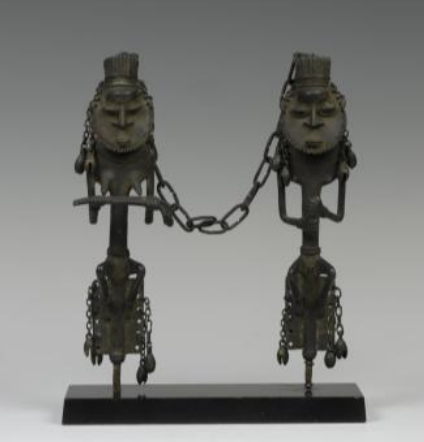
<ul><li><p>Ashe</p></li><li><p>Edan (public symbols of the power and presence of Ogboni)</p></li><li><p>male and female working together, always has one male and one female</p></li><li><p>represent the Onlie, the earth’s owner, made out of brass because brass does not rust, thus has longevity</p></li><li><p>female figure is holding an edan: male is doing the Ogboni salute</p></li><li><p>balance of power between the sexes = balance of power between the king and his people</p></li><li><p>The duality of nature = the duality of man and woman</p></li><li><p>Onlie ensures human survival, thus we must honor them</p></li><li><p>The edan is filled with ashe (like a spiritual substance)</p></li><li><p>edan is used in religious rituals, judicial rituals, as a badge of honor</p><ul><li><p>The (protecting owner but is also an indicator of status and membership in the Ogboni society.</p></li></ul></li></ul><p></p>
19
New cards

Efe Headdress

  • covered in images of physical and spiritual power

  • scarification of face

  • snake on headdress: traditional symbol of power

  • bird: symbol of “our mother”

    • spiritual power, most likely some sort of parrot, a talking smart bird

      • according to myth parrots would act as watch dogs for the spiritual world

  • a proverb about birds fighting snakes

    • the bird attracted snake through song and then ate the snake

    • meaning: sometimes beautiful things are just traps

  • knives on the sides, evoking the god of iron and war

  • worn on top of head, called a helmet mask
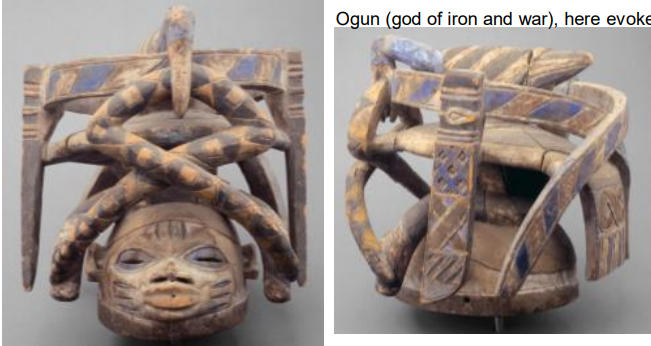
<ul><li><p>covered in images of physical and spiritual power</p></li><li><p>scarification of face</p></li><li><p>snake on headdress: traditional symbol of power</p></li><li><p>bird: symbol of “our mother”</p><ul><li><p>spiritual power, most likely some sort of parrot, a talking smart bird</p><ul><li><p>according to myth parrots would act as watch dogs for the spiritual world</p></li></ul></li></ul></li><li><p>a proverb about birds fighting snakes</p><ul><li><p>the bird attracted snake through song and then ate the snake</p></li><li><p>meaning: sometimes beautiful things are just traps</p></li></ul></li><li><p>knives on the sides, evoking the god of iron and war</p></li><li><p>worn on top of head, called a helmet mask</p></li></ul><p></p>
20
New cards

Ere Ibjeji (twin figures)

  • twins are very common in the Yoruba

    • although not every twin survives, if it dies during child birth:

      • a diviner (babalawo) is consulted, he will find someone to do a carved figure

  • in the past, twins were seen as an embarassment, a bad omen, so they were left in the forests, killed, etc.

    • a change: the community realized that killing the twins was causing the community bad fortune, and so they realized that twins are actually meant to be honored

  • shango: associated with thunder and lightning

    • protective deity of twins

    • twins are sometimes called children of thunder

      • as they are strong and erratic

  • when twin(s) dies, figure(s) will be made:

    • symbolism: the figure helps keep the twin who died less lonely in the spirit world and keeps them from trying to bring the living twin with them into the spirit world

    • the figure gets taken care of as if it is a real person, first by the mother, then once old enough, the living twin will take care of the figure

    • they are not carved to look like babies/children, they are like young adults

      • this exemplifies the potential they never reached

    • plastic figures are becoming common, they are more toy-like, more accessible, something a child would enjoy more
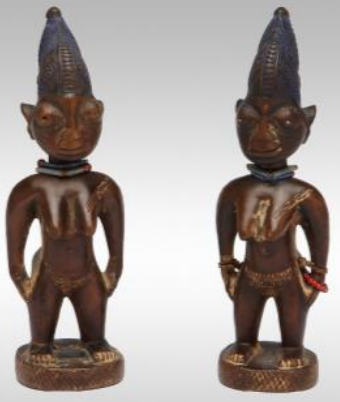
<ul><li><p>twins are very common in the Yoruba</p><ul><li><p>although not every twin survives, if it dies during child birth:</p><ul><li><p>a diviner (babalawo) is consulted, he will find someone to do a carved figure</p></li></ul></li></ul></li><li><p>in the past, twins were seen as an embarassment, a bad omen, so they were left in the forests, killed, etc.</p><ul><li><p>a change: the community realized that killing the twins was causing the community bad fortune, and so they realized that twins are actually meant to be honored</p></li></ul></li><li><p>shango: associated with thunder and lightning</p><ul><li><p>protective deity of twins</p></li><li><p>twins are sometimes called children of thunder</p><ul><li><p>as they are strong and erratic</p></li></ul></li></ul></li><li><p>when twin(s) dies, figure(s) will be made:</p><ul><li><p>symbolism: the figure helps keep the twin who died less lonely in the spirit world and keeps them from trying to bring the living twin with them into the spirit world</p></li><li><p>the figure gets taken care of as if it is a real person, first by the mother, then once old enough, the living twin will take care of the figure</p></li><li><p>they are not carved to look like babies/children, they are like young adults</p><ul><li><p>this exemplifies the potential they never reached</p></li></ul></li><li><p>plastic figures are becoming common, they are more toy-like, more accessible, something a child would enjoy more</p></li></ul></li></ul><p></p>
21
New cards

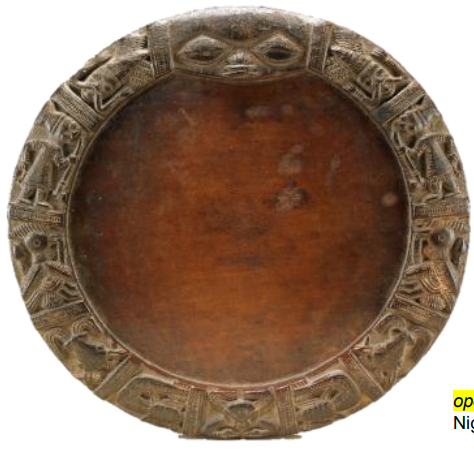
Opon ifa (divination board)

  • diviner (babalawo) holding an iroke (divination tapper during ifa (divination process). An open ifa (divination tray) is in front of the diviner, and an agere ifa (divination cup) to hold the palm nuts is to the diviner’s left.

  • diviner mediates between humans and spirits

    • uses the plate like tray

    • images in low relief around the border, figures, patterns, animals from oroba myth

    • covered with a dust from a sacred wood, after the dust is pressed on the tray, palm nuts are put onto the tray, then the diviner interprets the patterns

  • main orisha associated with Ifa: eshu

    • pipes are closely linked to Eshu

  • rooster with a snack on its beak

  • crabs: live on both land and water (crossroads), they do not walk in straight lines, but move sideways: idea of chance and crossroads

  • rams (power) with mudfish

<ul><li><p>diviner (babalawo) holding an <em>iroke</em> (divination tapper during <em>ifa</em> (divination process). An open ifa (divination tray) is in front of the diviner, and an agere ifa (divination cup) to hold the palm nuts is to the diviner’s left.</p></li><li><p>diviner mediates between humans and spirits</p><ul><li><p>uses the plate like tray </p></li><li><p>images in low relief around the border, figures, patterns, animals from oroba myth</p></li><li><p>covered with a dust from a sacred wood, after the dust is pressed on the tray, palm nuts are put onto the tray, then the diviner interprets the patterns</p></li></ul></li><li><p>main orisha associated with Ifa: eshu</p><ul><li><p>pipes are closely linked to Eshu</p></li></ul></li><li><p>rooster with a snack on its beak</p></li><li><p>crabs: live on both land and water (crossroads), they do not walk in straight lines, but move sideways: idea of chance and crossroads</p></li><li><p>rams (power) with mudfish</p></li></ul><p></p>
22
New cards

Iroke (divination tapper)

  • ashe (life force)

  • Olorun (supreme god)

  • Kneeling woman: pose suggests worship and supplication

    • the idea that women have more magical power when they are nude, in a pure state

  • hornbill: sacred bird, messengers between humans and the spirit world

  • ivory with dark wood inlay

  • tapped at the beginning of the ritual to get the attention of Eshu
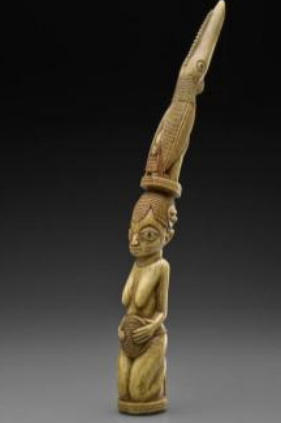
<ul><li><p>ashe (life force)</p></li><li><p>Olorun (supreme god)</p></li><li><p>Kneeling woman: pose suggests worship and supplication</p><ul><li><p>the idea that women have more magical power when they are nude, in a pure state</p></li></ul></li><li><p>hornbill: sacred bird, messengers between humans and the spirit world</p></li><li><p>ivory with dark wood inlay</p></li><li><p>tapped at the beginning of the ritual to get the attention of Eshu</p></li></ul><p></p>
23
New cards

Asante stool with woman’s pattern

  • EVERYYYYBODYYYY has a stool

  • carved from one piece of wood, rectangle base, a column in middle for support, and a curved seat

  • when you use the stool a lot it absorbs your sunsum (force or energy, your spirit)

    • it is so personal that when you leave it you turn it over so no one else can sit on it

    • when you die, it is never used again

    • if you’re an important person, the stool will be “blackened” and attended to, and will be placed in a “stool room”; where people will pray over them and attend/take care of them
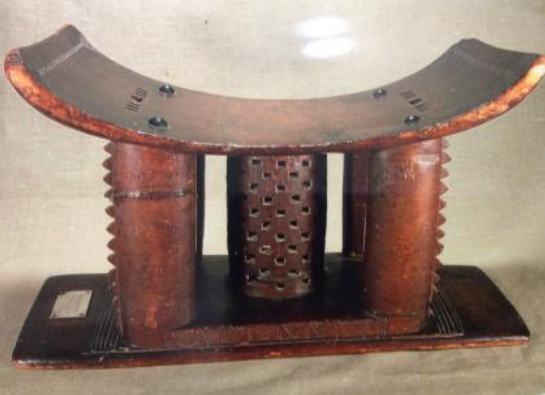
<ul><li><p>EVERYYYYBODYYYY has a stool</p></li><li><p>carved from one piece of wood, rectangle base, a column in middle for support, and a curved seat</p></li><li><p>when you use the stool a lot it absorbs your <em>sunsum</em> (force or energy, your spirit)</p><ul><li><p>it is so personal that when you leave it you turn it over so no one else can sit on it</p></li><li><p>when you die, it is never used again</p></li><li><p>if you’re an important person, the stool will be “blackened” and attended to, and will be placed in a “stool room”; where people will pray over them and attend/take care of them</p></li></ul></li></ul><p></p>
24
New cards

Golden Stool

  • Asantehene

  • sunsum (force or energy; also spirit)

  • osei tutu

  • okumfo anokye

  • contains the essence, spirit, and history of the whole of the Asante nation

  • the most important thing in the asante nation

  • symbol of power and authority

  • functional seats, but also symbols

  • the golden stool manifested into society, supposedly ascending from the heavens, and not man-made

    • the priests prayed, and from the gift of the gods, the stool lands in Osei Tutu’s lap

  • unlike regular stools, it contains the essence, spirit, and history of the whole of the Asante nation

    • the strength of the Asante nation

  • made of wood, covered in gold

  • the golden stool itself has its own throne to sit on next the the king

    • the stool sits higher than the king

  • no one EVER sits on the stool, nobody

<ul><li><p>Asantehene</p></li><li><p>sunsum (force or energy; also spirit)</p></li><li><p>osei tutu</p></li><li><p>okumfo anokye</p></li><li><p>contains the essence, spirit, and history of the whole of the Asante nation</p></li><li><p>the most important thing in the asante nation</p></li><li><p>symbol of power and authority</p></li><li><p>functional seats, but also symbols</p></li><li><p>the golden stool manifested into society, supposedly ascending from the heavens, and not man-made</p><ul><li><p>the priests prayed, and from the gift of the gods, the stool lands in Osei Tutu’s lap</p></li></ul></li><li><p>unlike regular stools, it contains the essence, spirit, and history of the whole of the Asante nation</p><ul><li><p>the strength of the Asante nation</p></li></ul></li><li><p>made of wood, covered in gold</p></li><li><p>the golden stool itself has its own throne to sit on next the the king</p><ul><li><p>the stool sits higher than the king</p></li></ul></li><li><p>no one EVER sits on the stool, nobody</p></li></ul><p></p>