Week 11 Muscles of the Head, Neck, and Torso
 Call Kai
 Learn
Learn Practice Test
 Spaced Repetition
 Match
Match Flashcards
 Knowt Play
1/67

There's no tags or description
Looks like no tags are added yet.
Name | Mastery | Learn | Test | Matching | Spaced | Call with Kai |
|---|
No analytics yet
Send a link to your students to track their progress
68 Terms
agonist
the muscle responsible for facilitating a specified movement (prime mover)
antagonist
the muscle responsible for performing the opposing action to the agonist
maintains balance of joint by resisting the agonist
synergist
aids the agonist to produce a movement
support system to actions
fixators: stabilizers
fulcrum
pivot of a lever joint
first class lever system
EFL
muscle effort (force) and load (resistance) act on opposite sides of the fulcrum
neck flexion and extension: effort- posterior neck muscles, fulcrum- C1 and skull, load- head
second class lever system
FLE
load is between the fulcrum and effort
mechanically advantaged b/c of longer distance btwn. fulcrum and effort - fatigue resistant
calf raises: fulcrum- ball of foot, load- body weight, effort- gastrocnemius
third class lever system
FEL
effort is between the fulcrum and load
mechanically disadvantaged bc of shorter distance btwn. fulcrum and effort
bicep curls: fulcrum- elbow, effort- bicep, load- weight in hands
origin
proximal attachment site, fixed to a bone
does not move during contraction
during contraction muscle moves towards the origin
insertion
distal attachment site, moveable bone
attaches across a joint that the muscle acts on
insertion moves toward origin
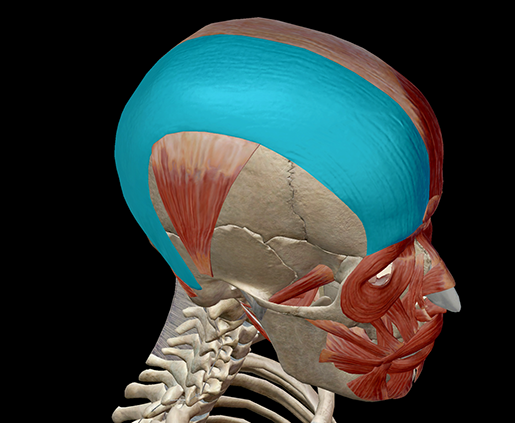
occipotofrontalis/epicranius
draws the scalp posteriorly
raises the eyebrows and wrinkles the forehead horizontally
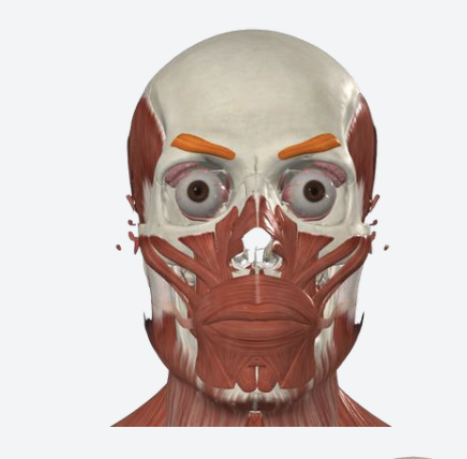
corrugator supercilii
draws the eyebrows downward and medially
makes angry eyebows and wrinkles the forehead vertically
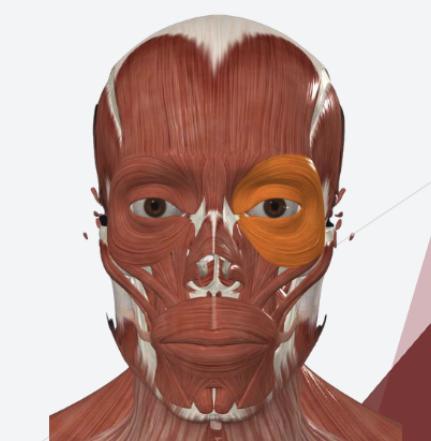
orbicularis oculi
closes the eyelids
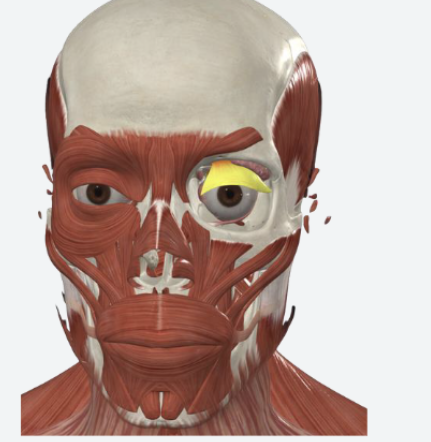
levator palpebrae superioris
elevates and retracts the eyelids
keeps the eyelids open
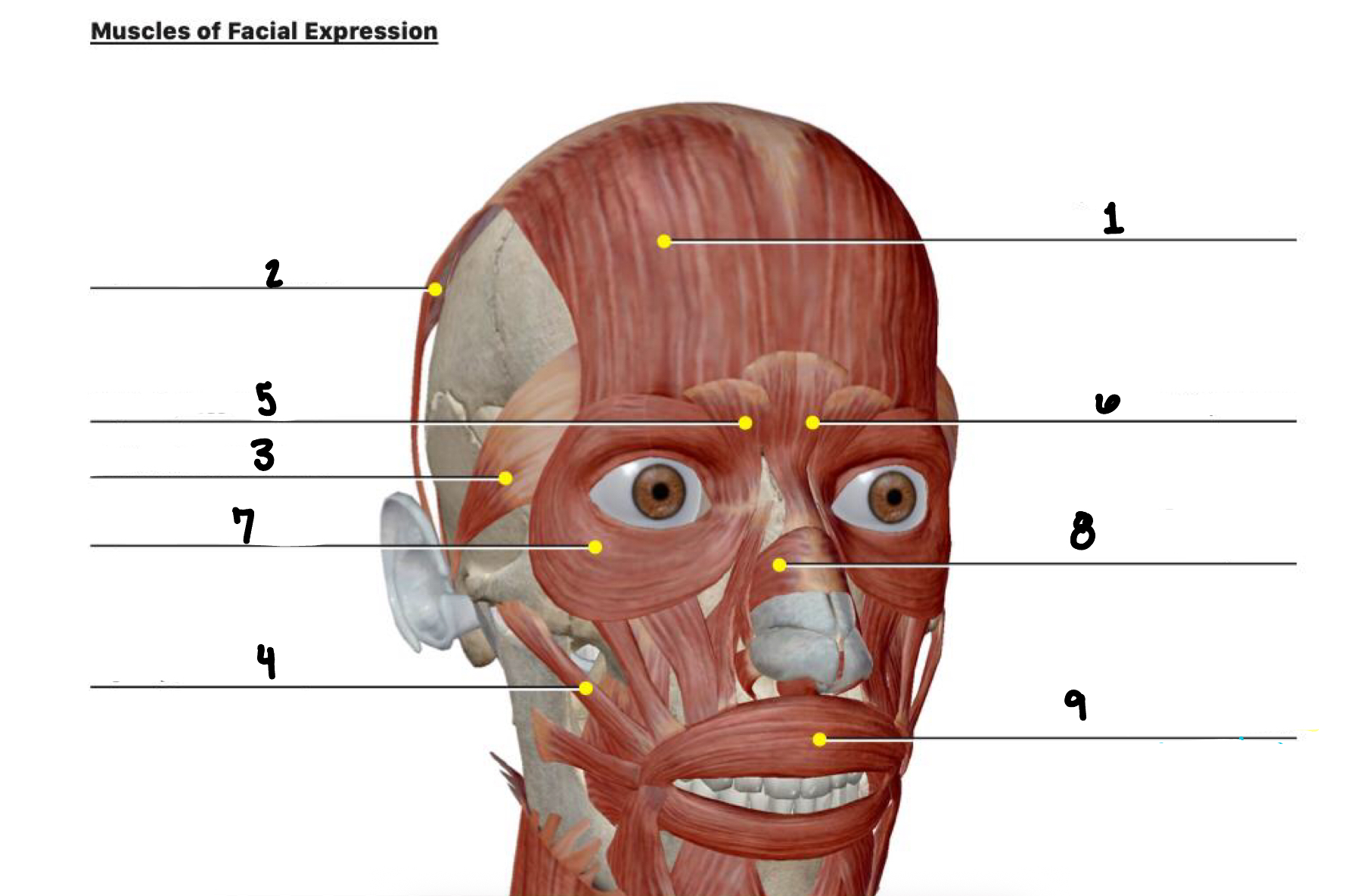
Label numbers 1-4 Muscles of Facal Expression in order
right occipitofrontalis, right auricularis superior, right auricularis anterior, right zygomaticus major
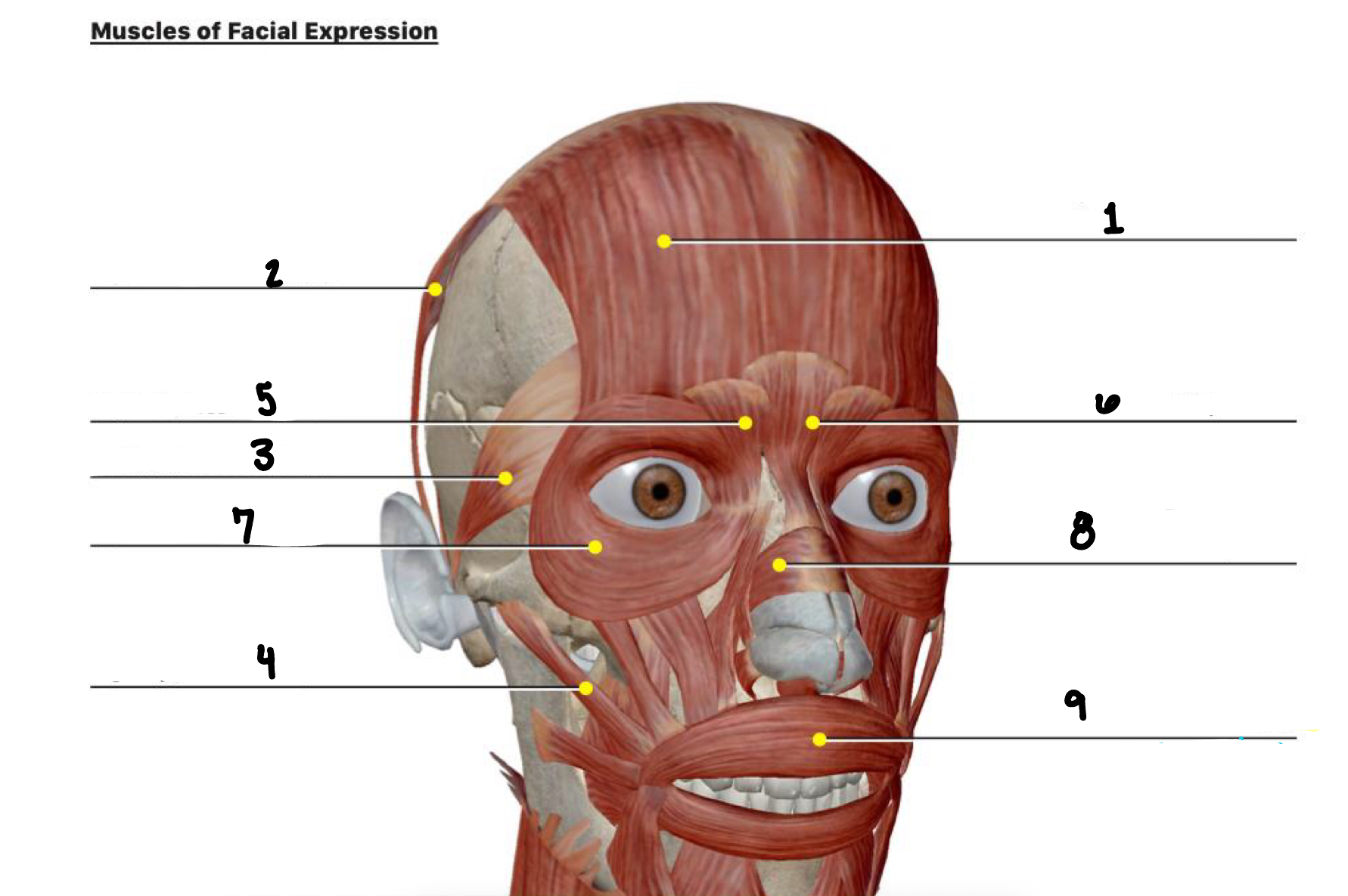
Label 5-9 Muscles of Facal Expression in order
right depressor supercilli, left procerus, right orbicularis oculi, right nasalis transverse portion, and orbicularis oris
what is the function of the superficial portion of the orbicularis oris?
closes and protrudes lips
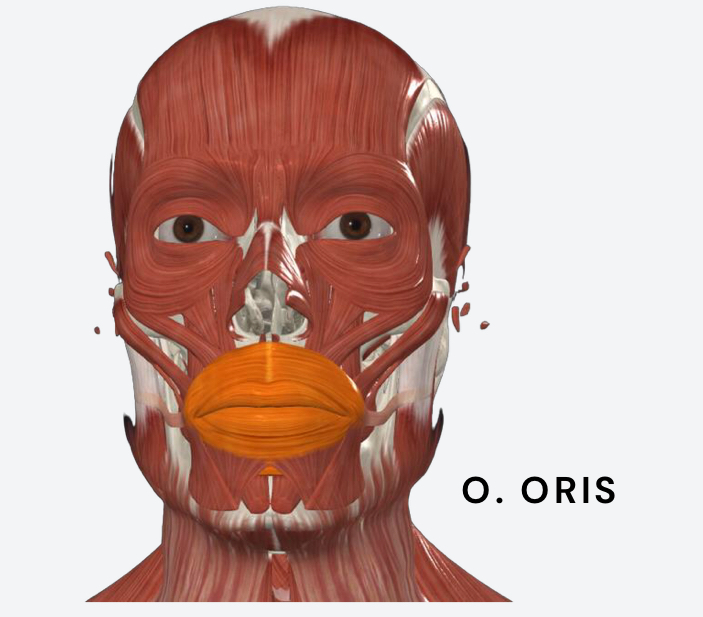
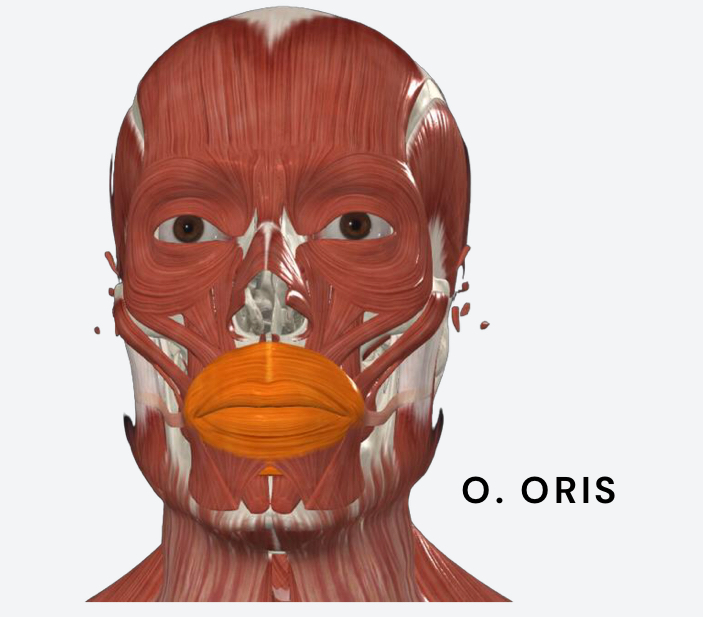
what is the function of the deep portion of the orbicularis oris?
presses lips against teeth and is important for speech production
levator labii superioris
raises upper lip inferiorly and laterally
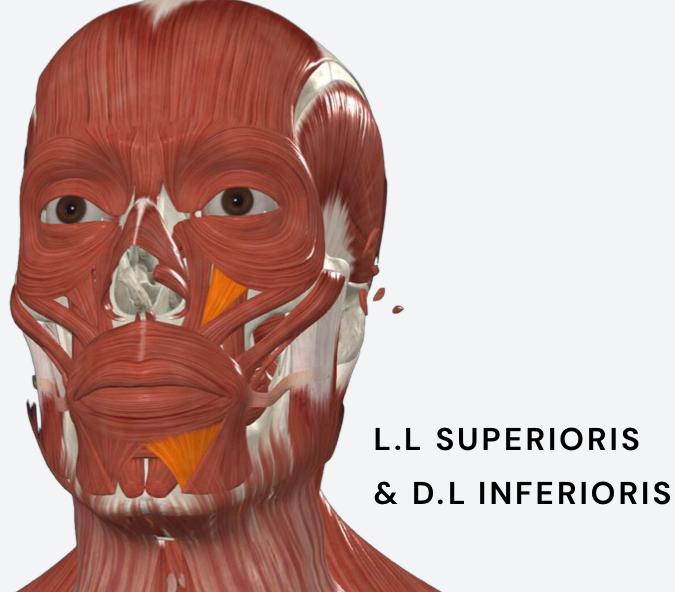
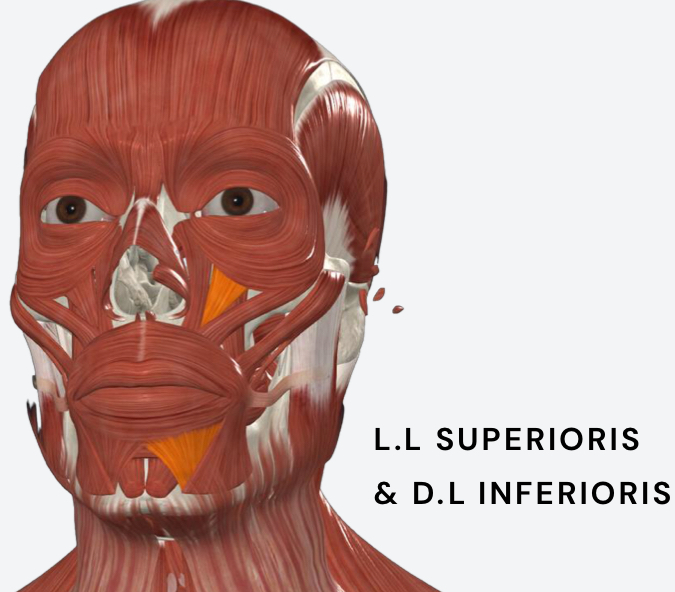
depressor labii inferioris
draws lower lip inferiorly and laterally
exposes lower teeth while smiling
leavator anguli oris
raises the angle of the mouth
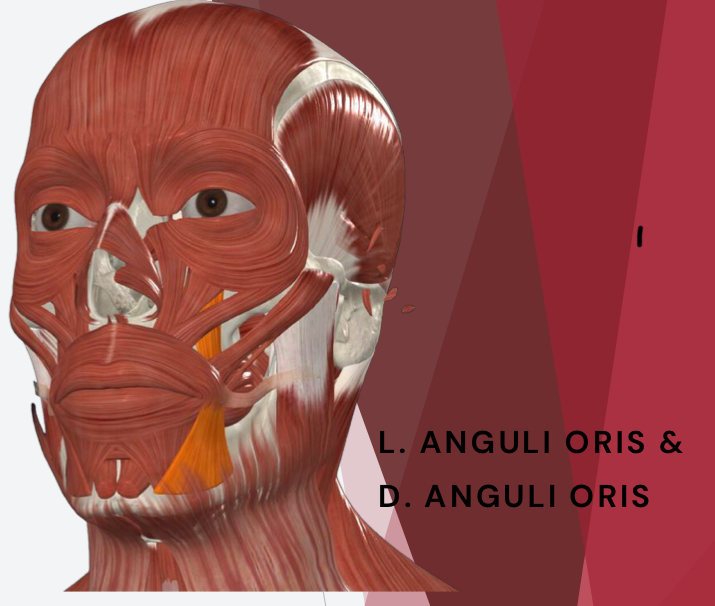
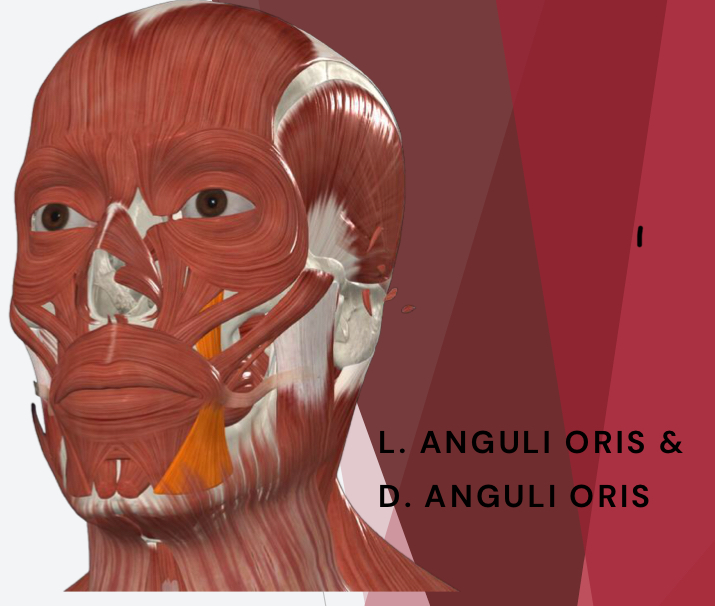
depressor anguli oris
draws angle of the mouth laterally and downward
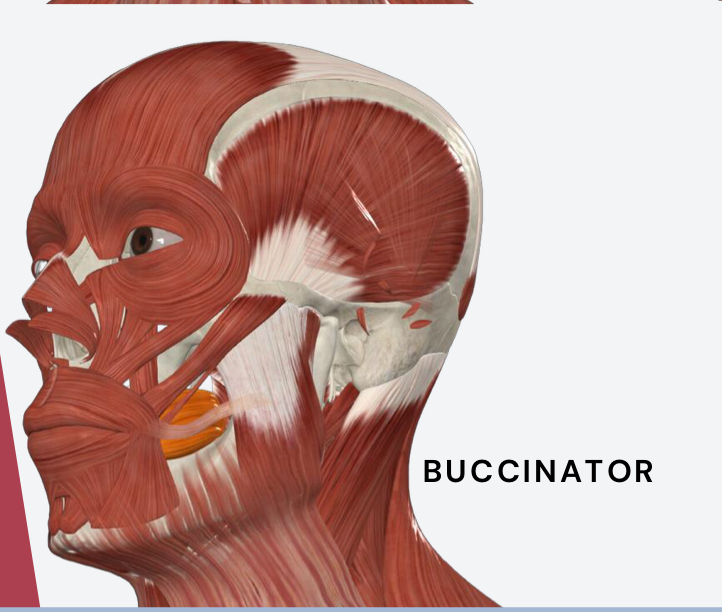
buccinator
compresses cheeks during the chewing process
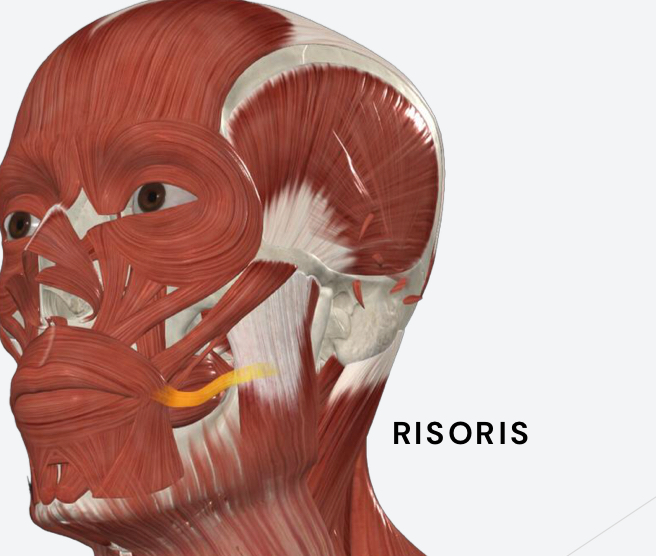
risorius
retracts the angle of the mouth
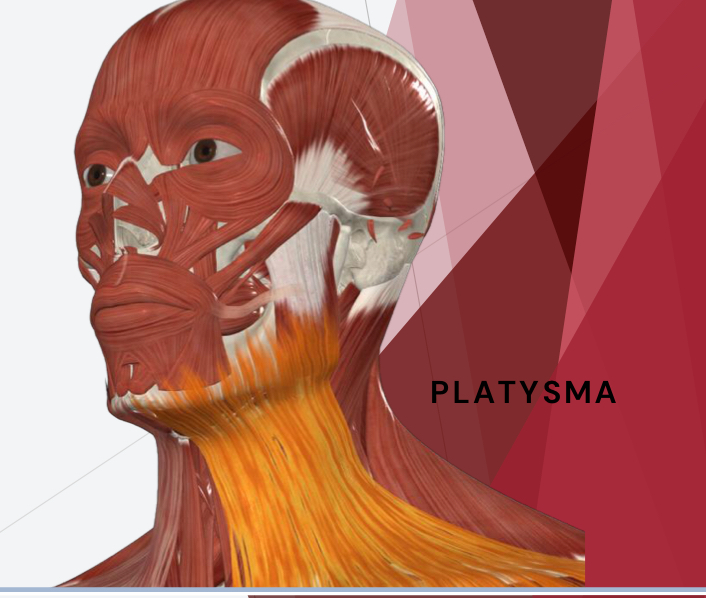
platysma
depresses the lower jaw (mandible)
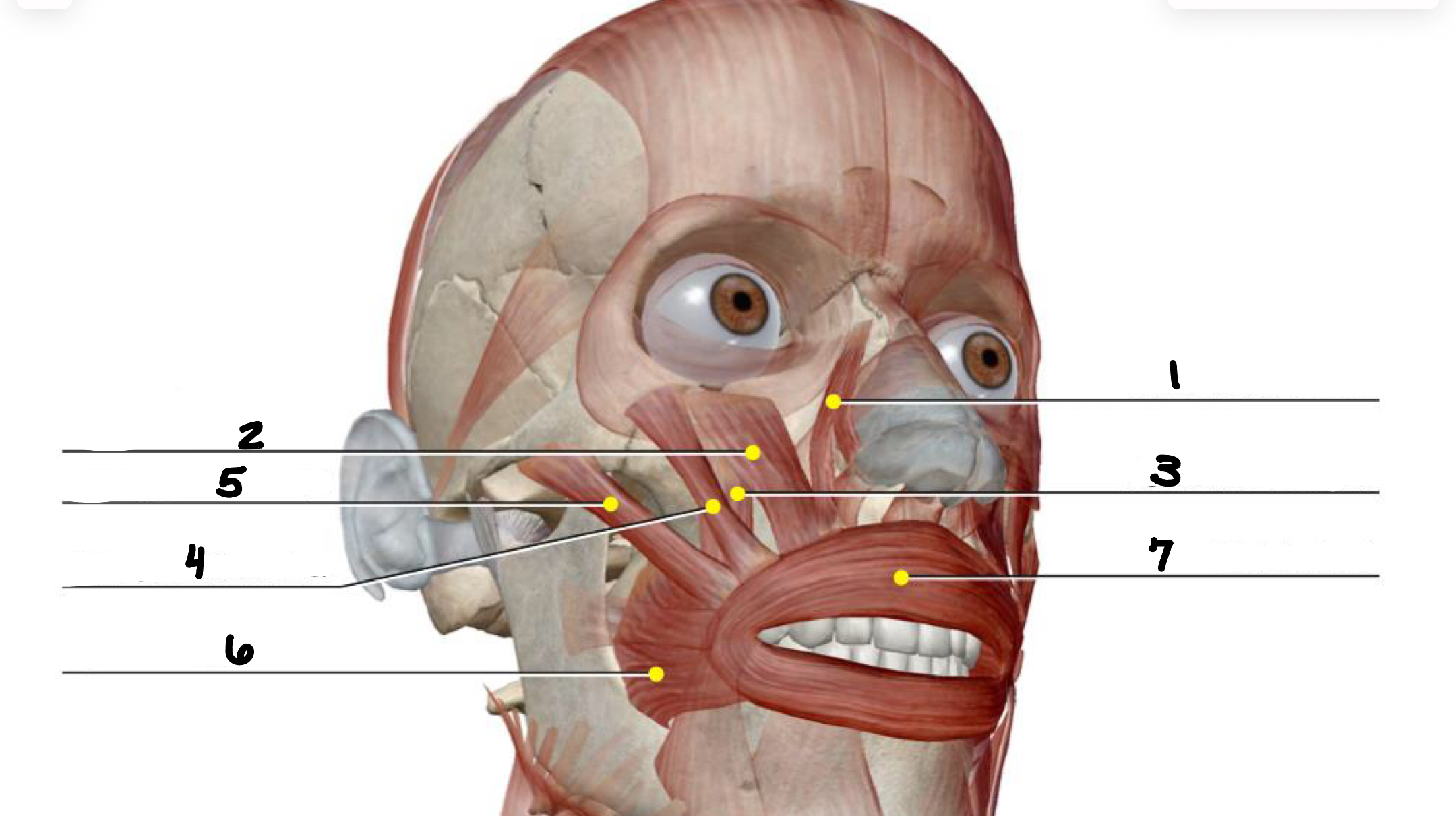
Label the seven muscles of the upper mouth
right levator labii superioris alaeque nasi, right labii superioris, right levator anguli oris, right zygomaticus minor, right zygomaticus major, right buccinator, orbicularis oris
superior rectus
adducts, elevates, and internally rotates the eye
inferior rectus
depresses and adducts the eyeball
medial rectus
adducts and moves the eye medially
lateral rectus
abducts and moves the eye laterally
superior oblique
medially rotates the eye (intorsion)
inferior oblique
laterally rotates the eye (extorsion)
deep masseter
raises the mandible against the maxilla with great force
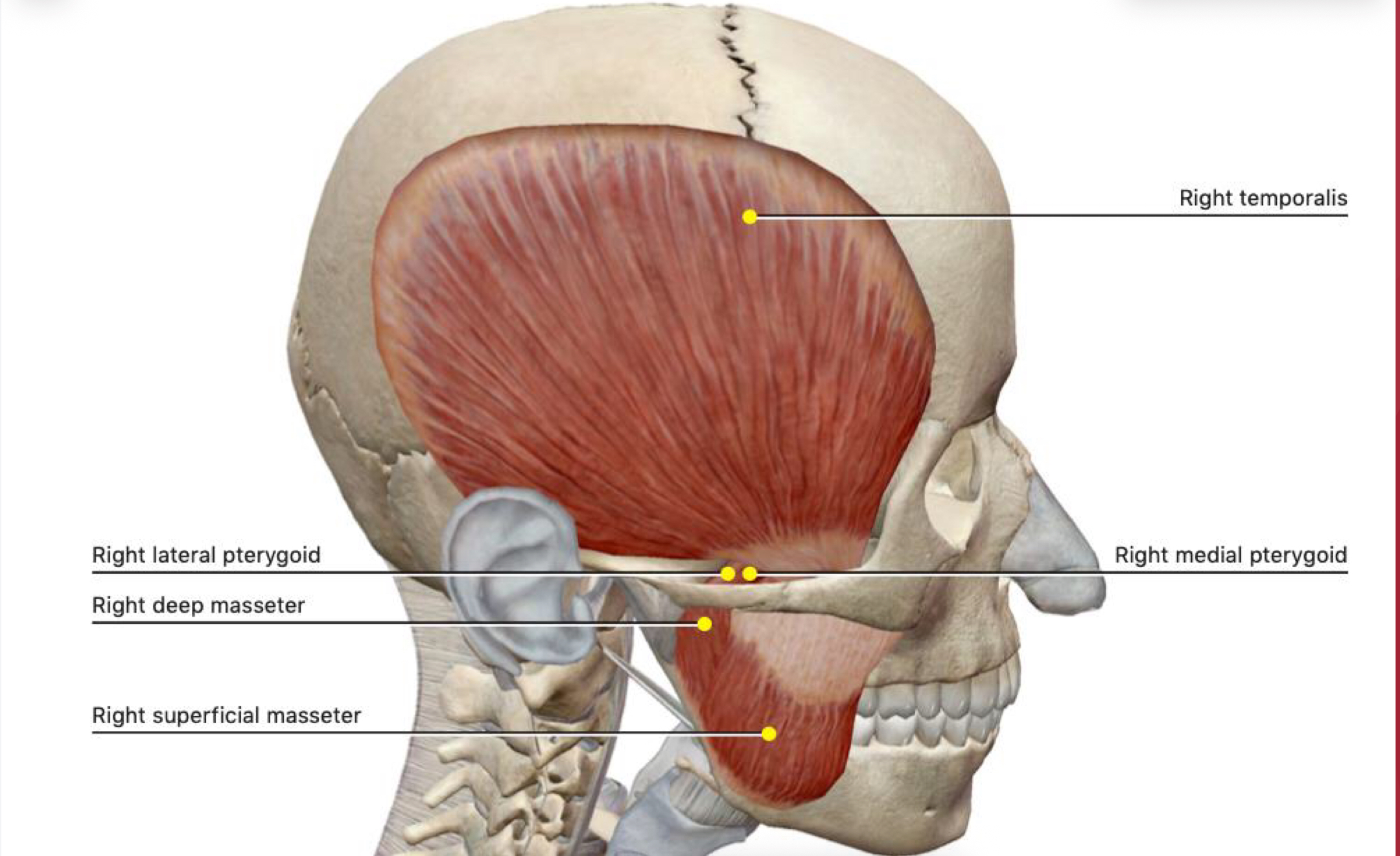
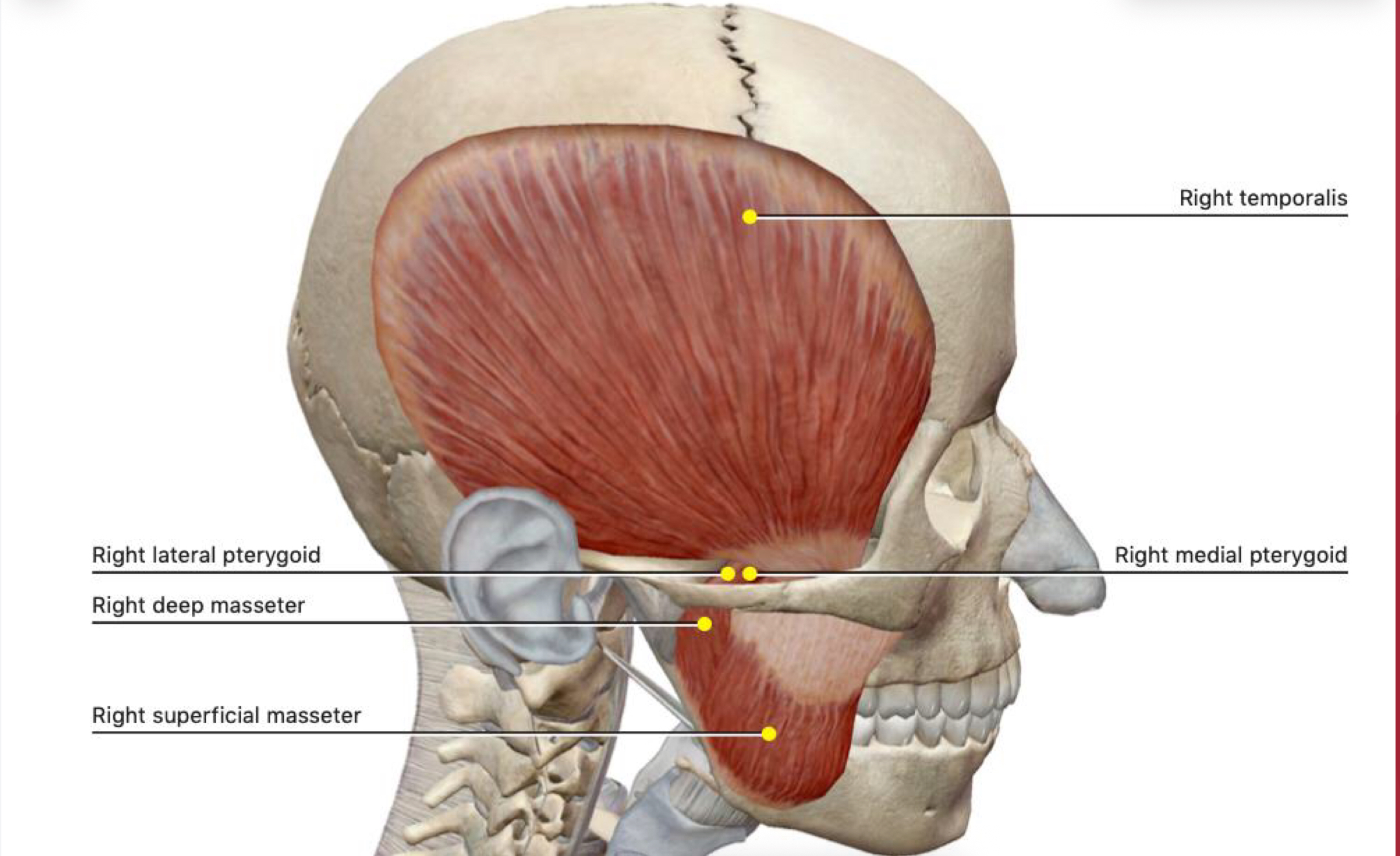
temporalis
elevates and retracts the mandible against the maxilla with great force
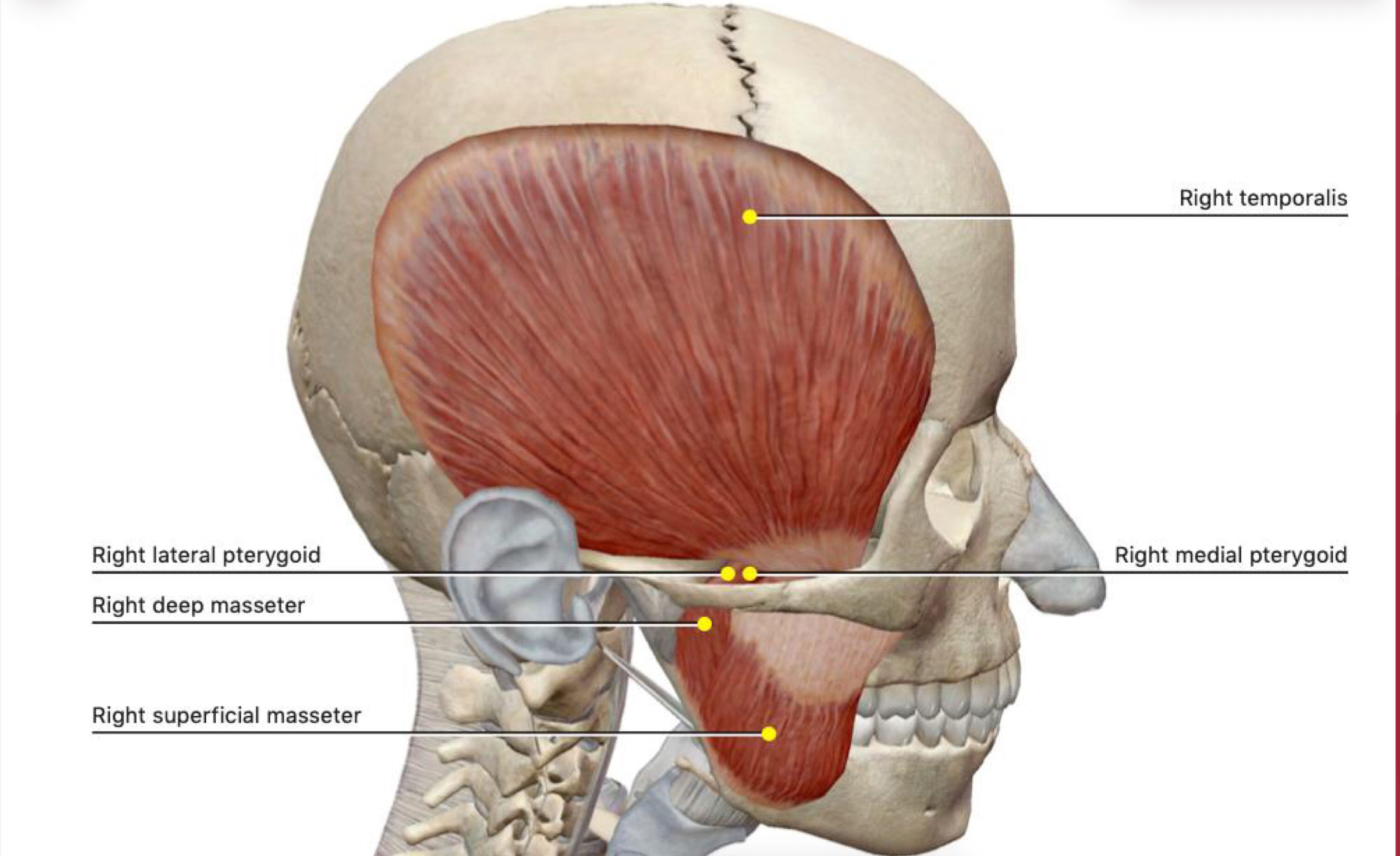
medial pterygoid
elevate mandible
lateral pterygoid
depresses mandible
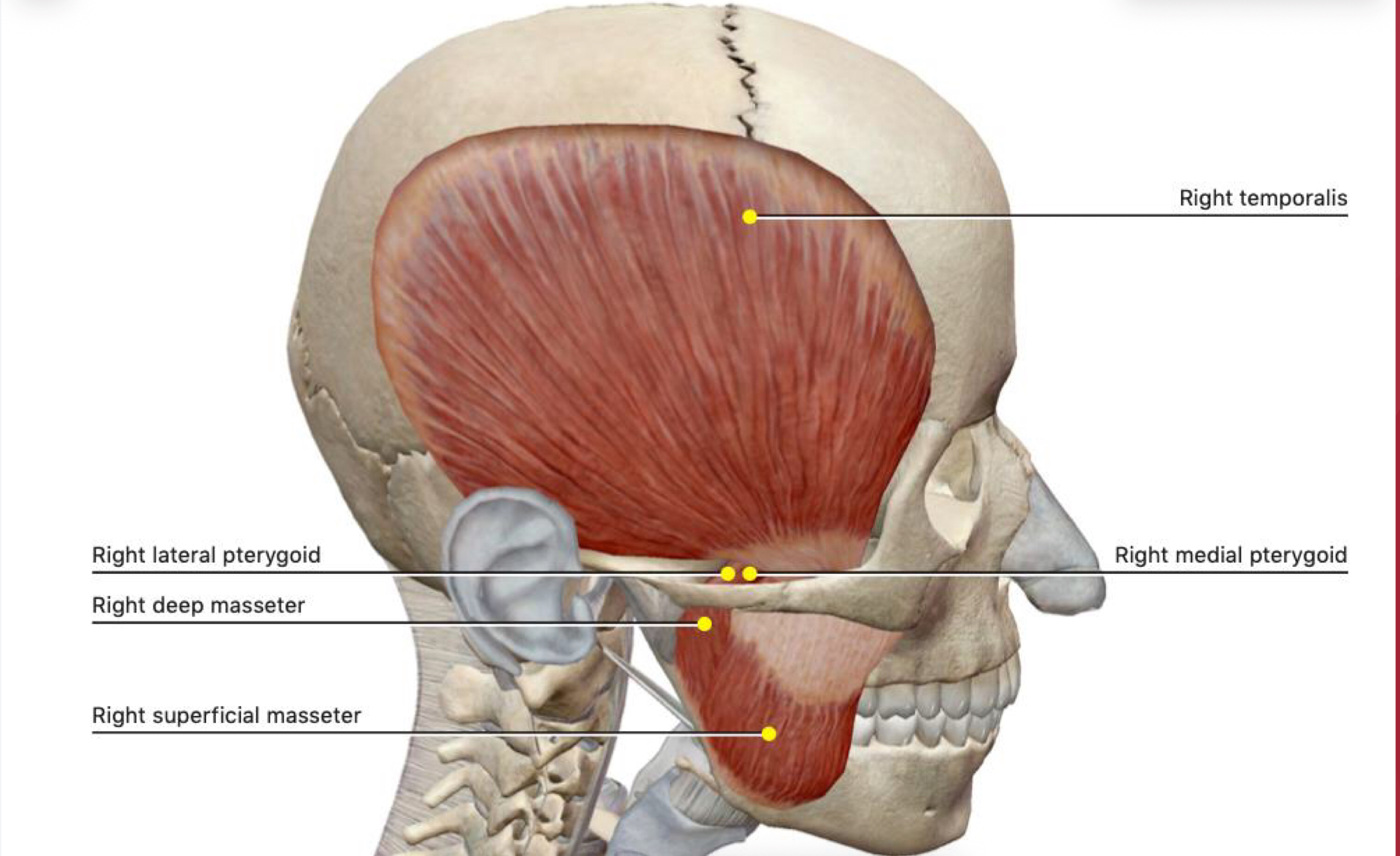
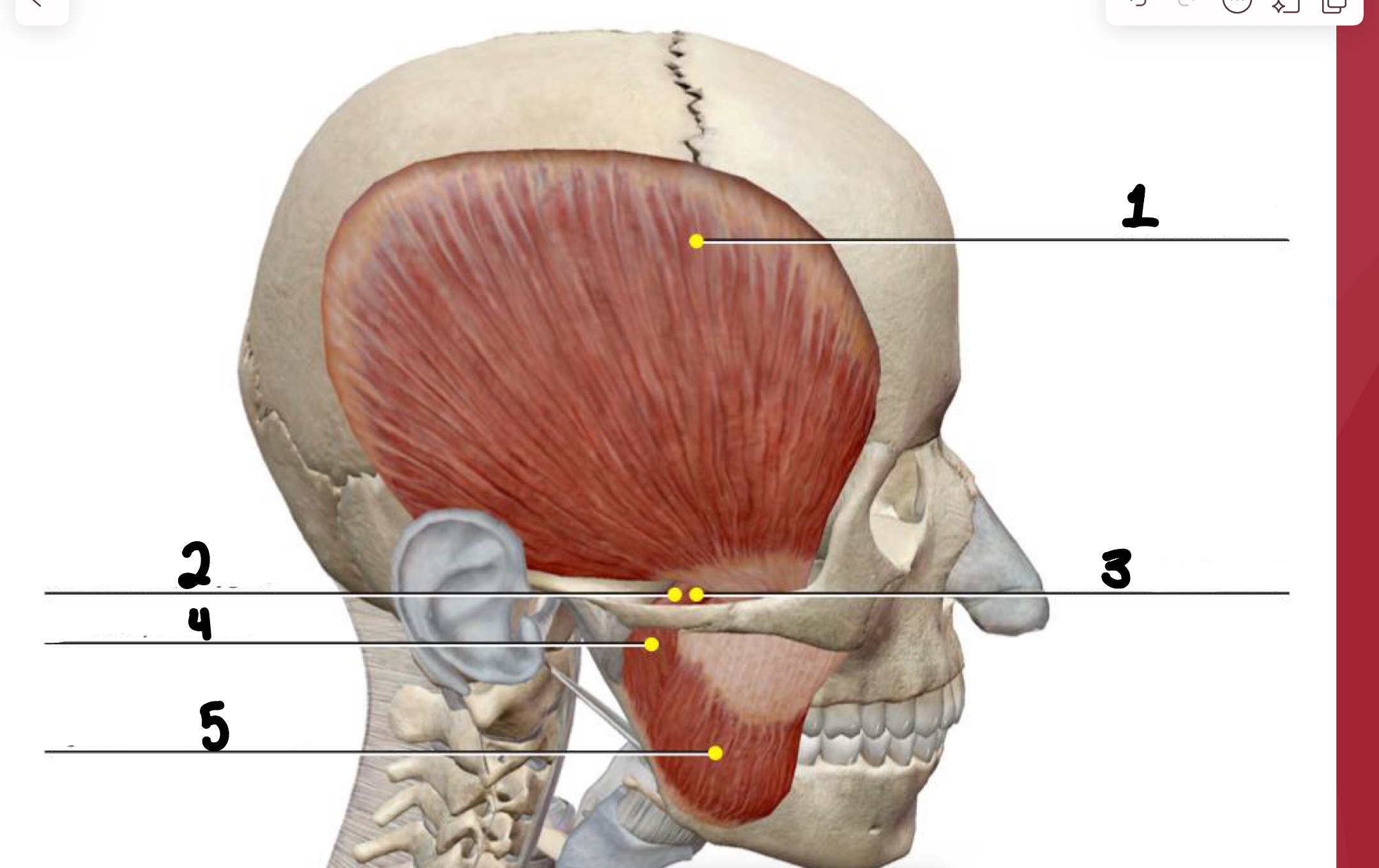
label the five muscles of mastication
right temporalis, right lateral pterygoid, right medial pterygoid, right deep masseter, and right superficial masseter
what are the three tongue muscles?
tongue, styloglossus, and the hyoglossus
tongue
manipulates food
assists in swallowing and speech production
styloglossus
draws the sides of the tongue upward
retracts the tongue (roll your tongue like a hot dog)
hyglossus
depresses and retracts the tongue (down and flat)
what are the three neck muscles?
sternocleidomastiod, splenius cervicis, and the scalenes
sternocleidomastoid
draws head toward shoulder of same side
rotates head to the opposite side
flexes the cervical spine
assists in elevating the thorax
scalenes
elevates the 1st and 2nd rib
tilts the neck to the same side
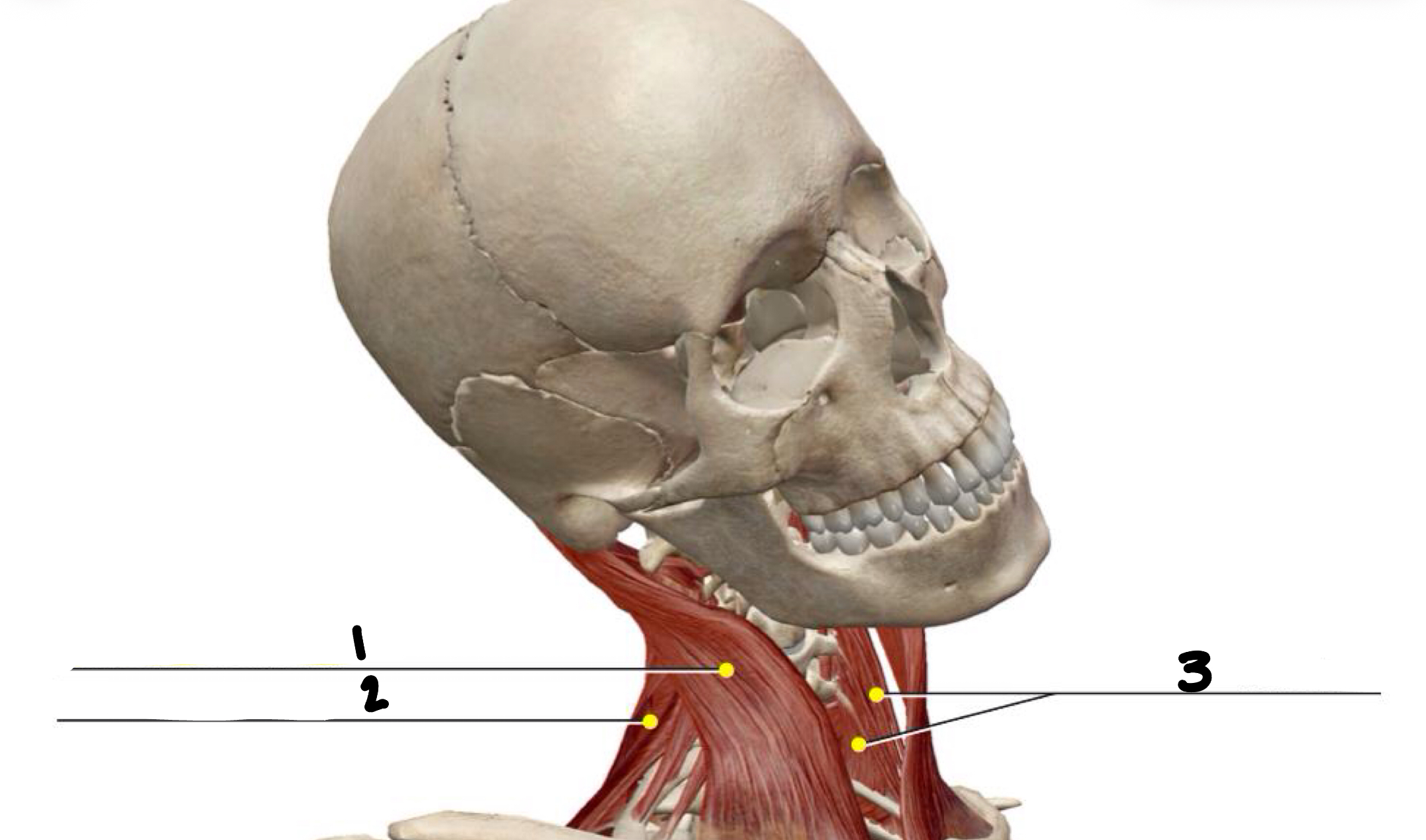
Label 1-3
right sternocleidomastoid, right splenius cervicis, left scalenes
diaphragm
expands the thoracic cavity
compresses the abdominal cavity
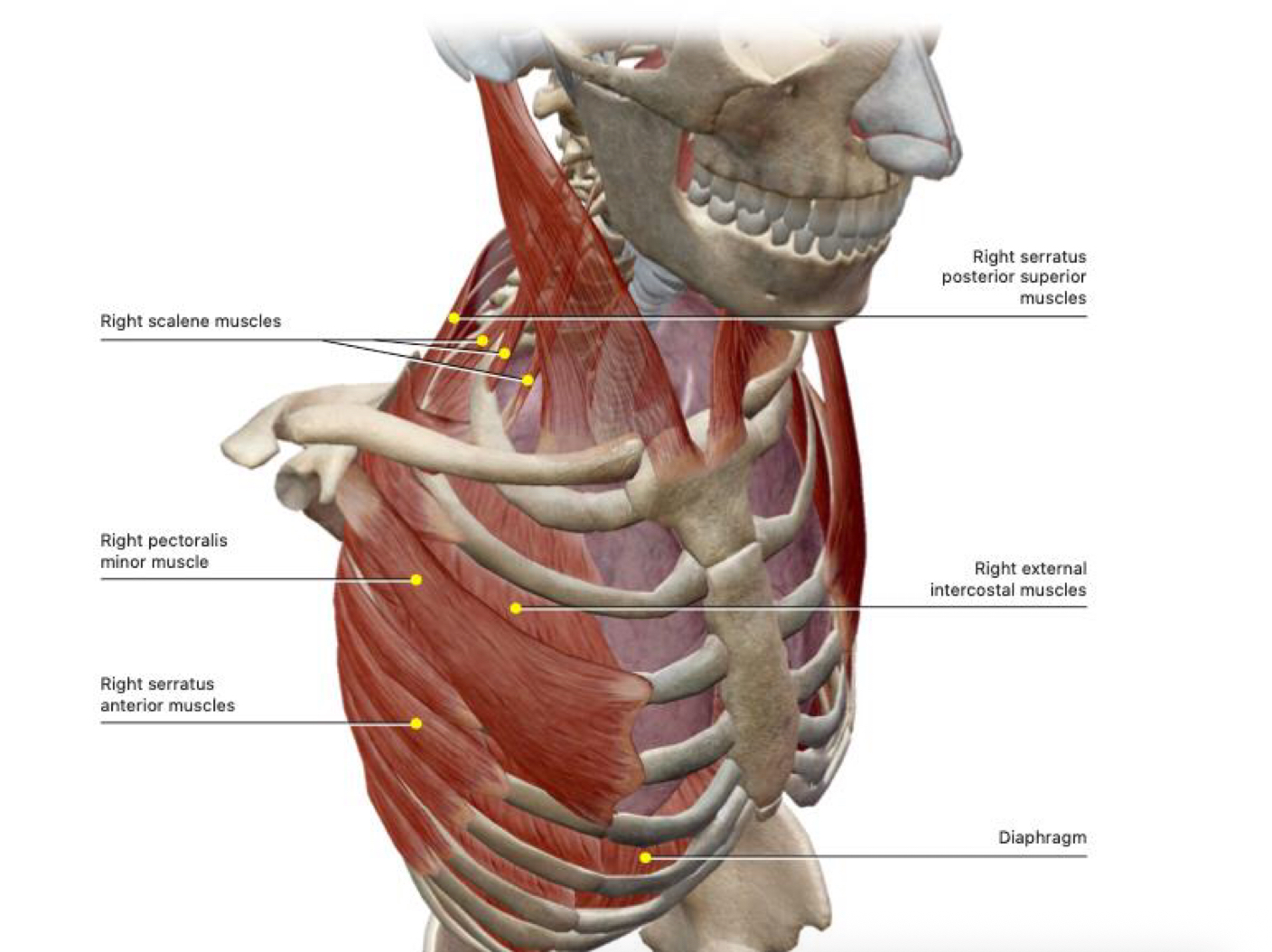
external intercostals
elevates the ribs
aids in normal inspiration
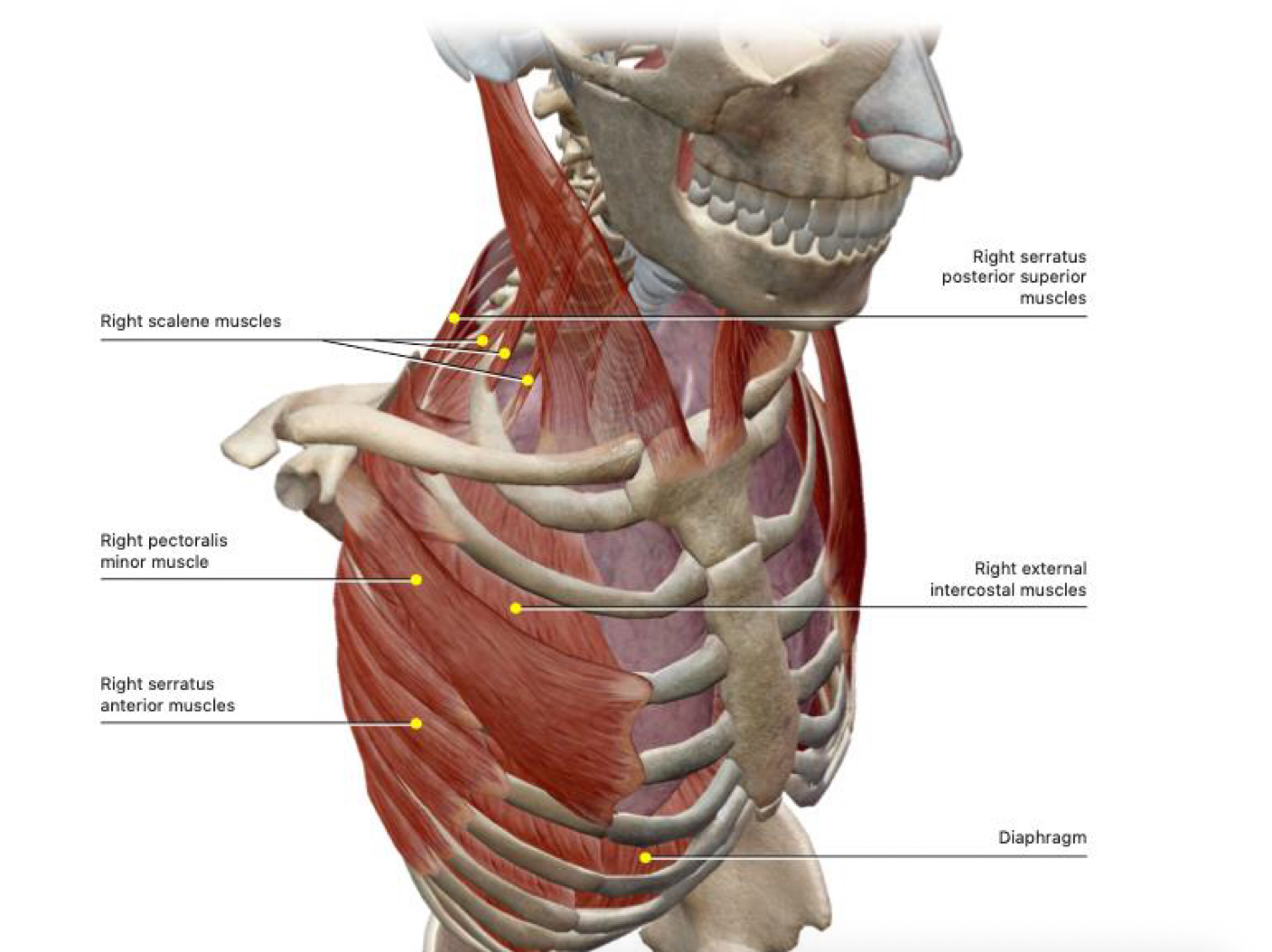
internal intercostals
depresses the ribs
aids in forced expiration
pectoralis minor
elevates ribs
draws scapula down and medially
serratus anterior
protracts scapulae (upward rotation where the glenoid cavity moves superiorly)
holds scapula close to thoracic wall
elevates ribs
trapezius
rotation, retraction, elevation, and depression of scalpula
extends neck
aids in shoulder stabilization
levator scapulae
elevates scalpula medially and upward
rhomboid major
steadies the scapula
retracts the scapula
rotates scapula to depress the glenoid cavity
moves the inferior angle of the scapula posteriorly and superiorly
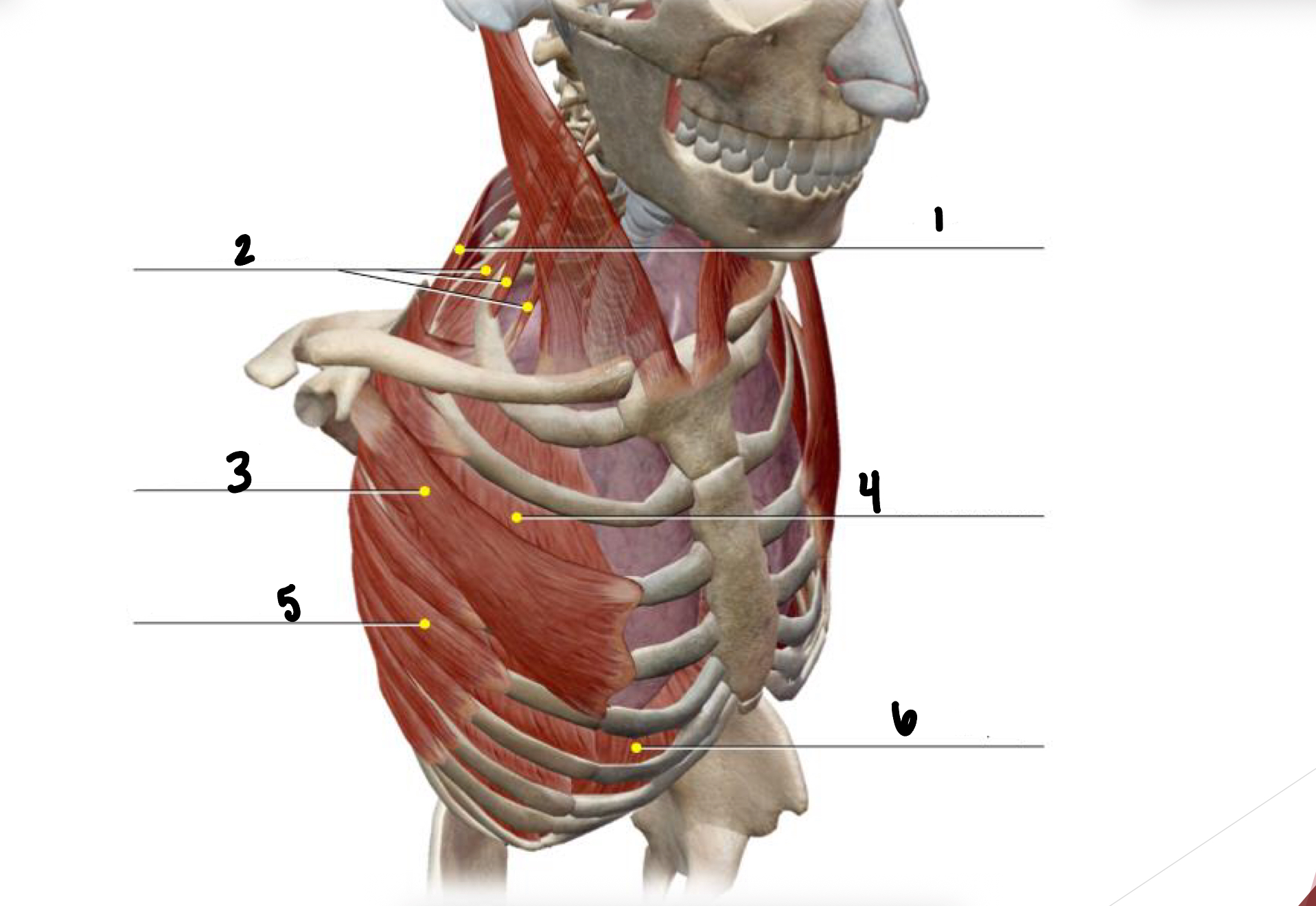
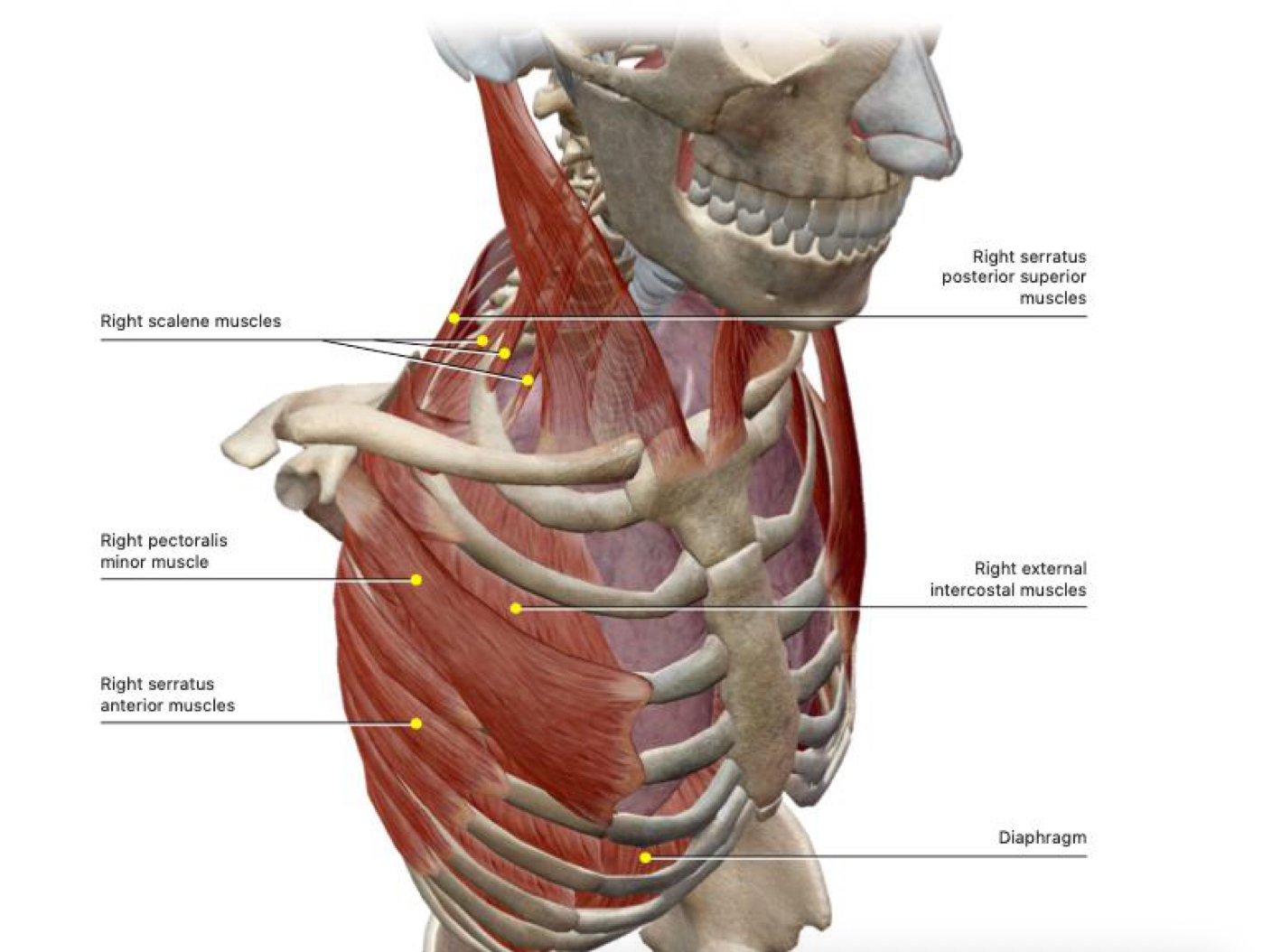
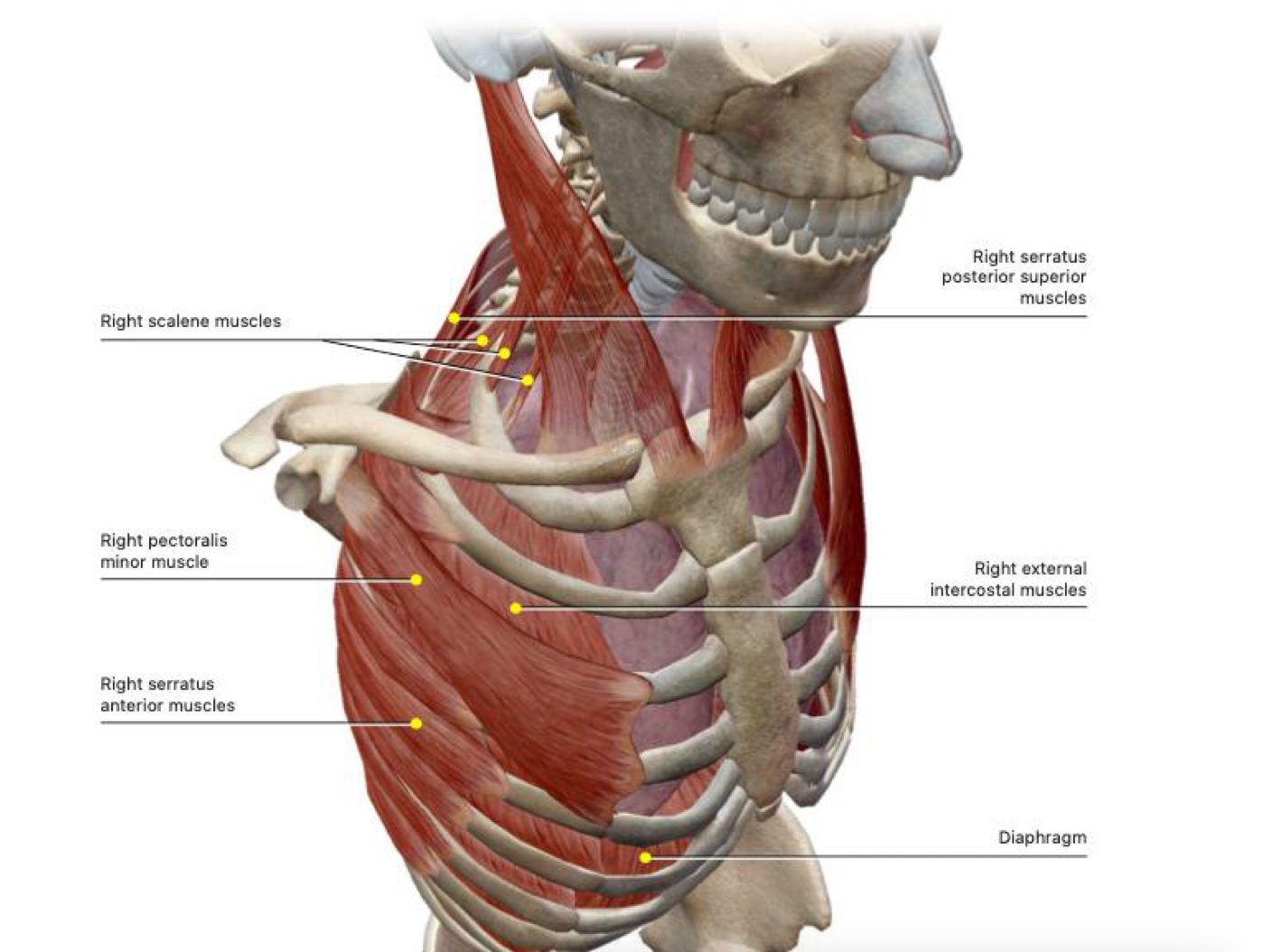
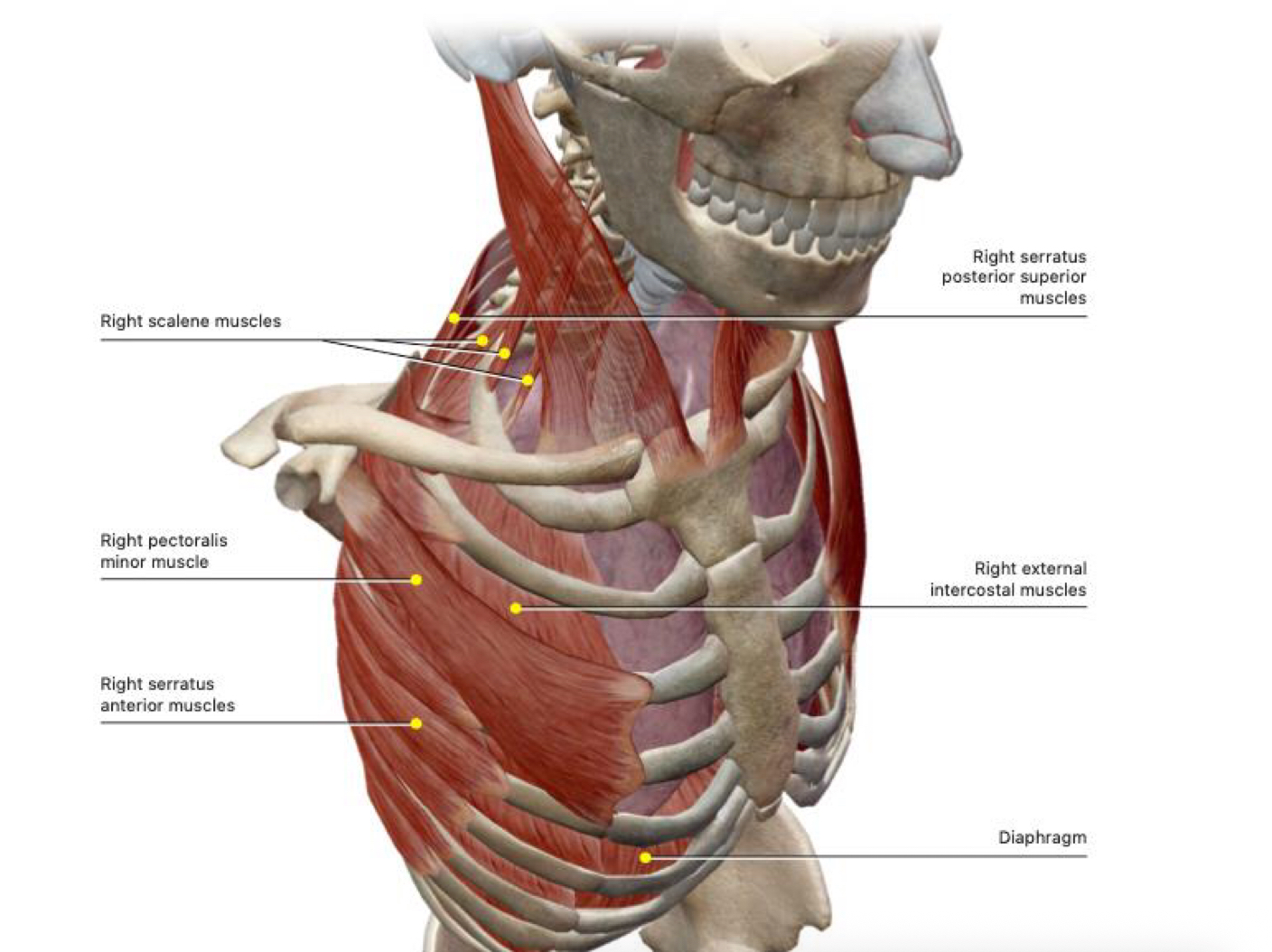
label 1-6
right serratus posterior superior, right scalene, right pectoralis minor, right external intercostal, right serratus anterior, diaphragm
what are the four abdominal muscles?
rectus abdominis, external oblique, internal oblique, and transverse abdominis
rectus abdominis
vertebral column
tenses abdominal wall
compresses abdominal viscera
6 pack muscles
external oblique
bilaterally- compresses the abdomen and flexes the spine
unilaterally- laterally flexes trunk to same side and rotates trunk to the opposite side
internal oblique
bilaterally- compresses abdominal viscera and flexes the spine
unilaterally- laterally flexes and rotates spine to same side
transverse abdominis
compresses abdominal viscera
tenses abdominal wall
deepest layer or abdominal muscle
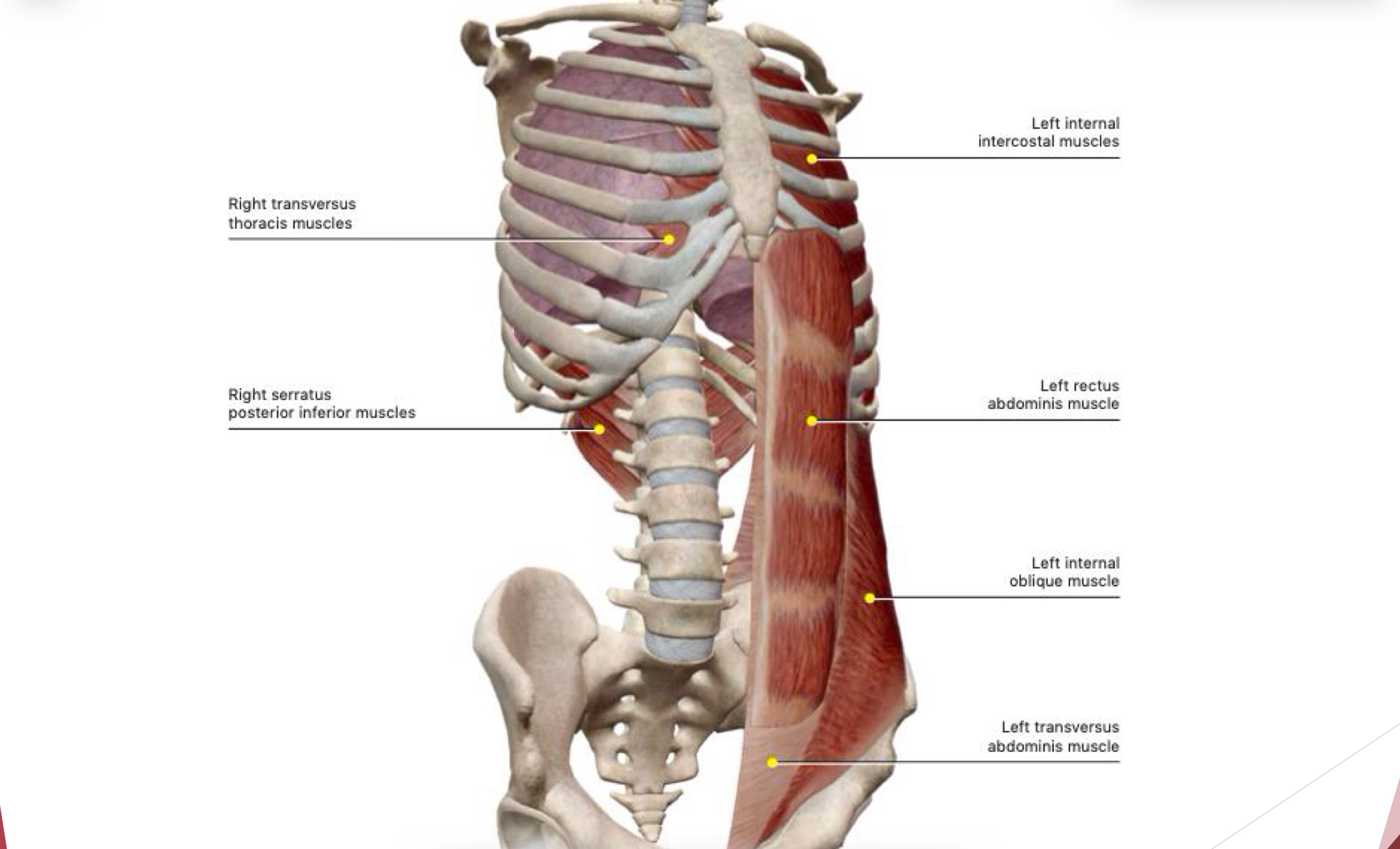
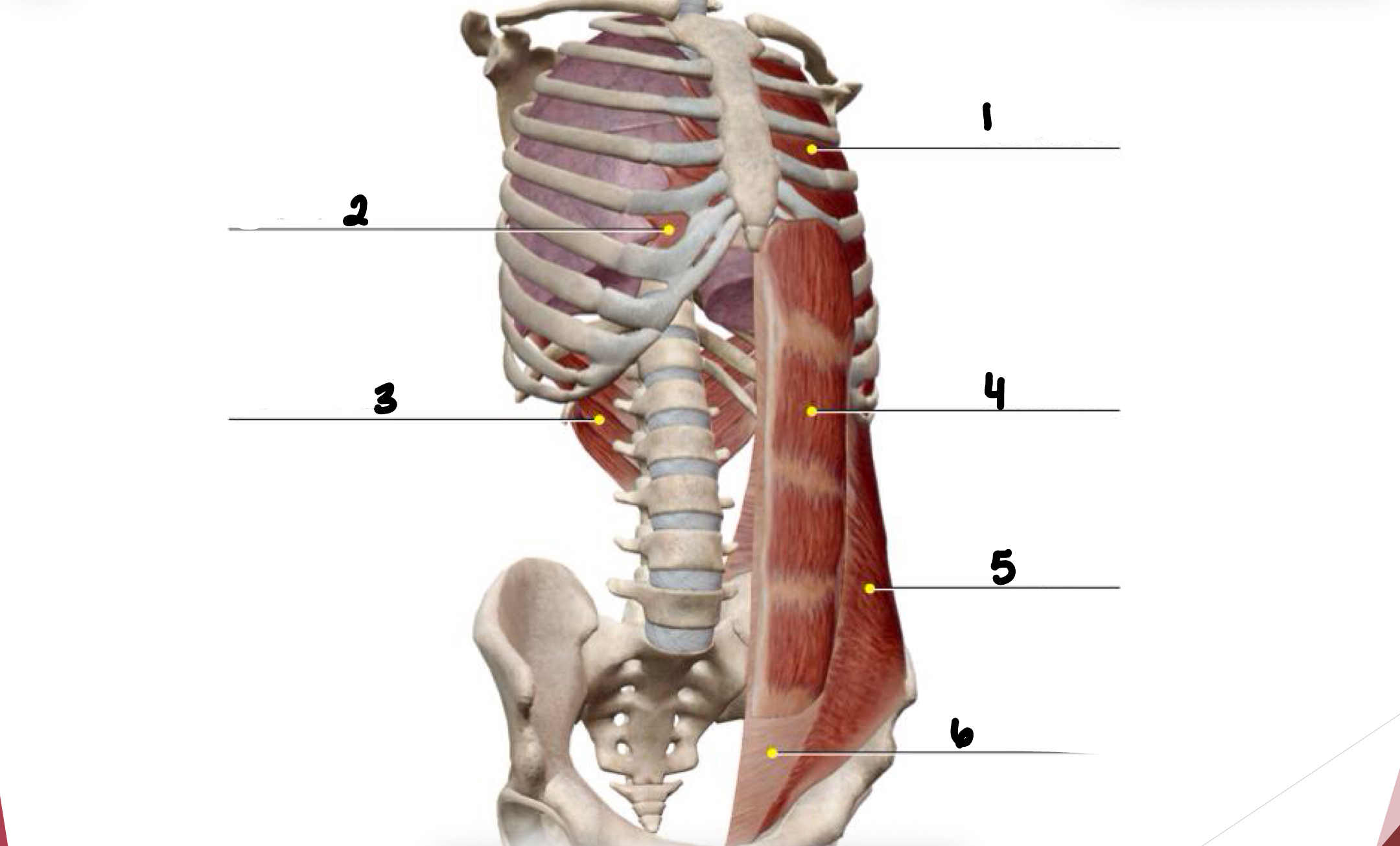
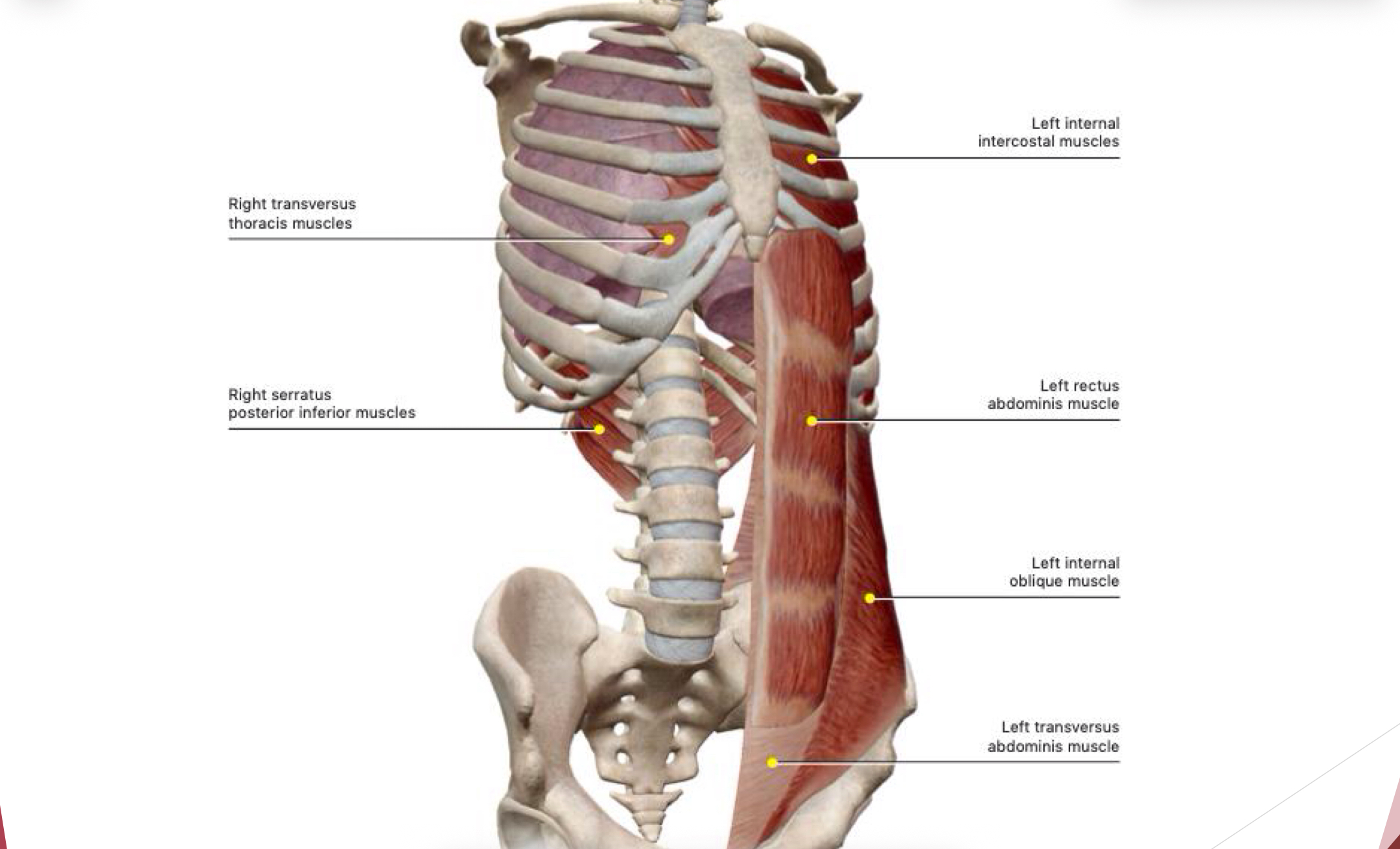
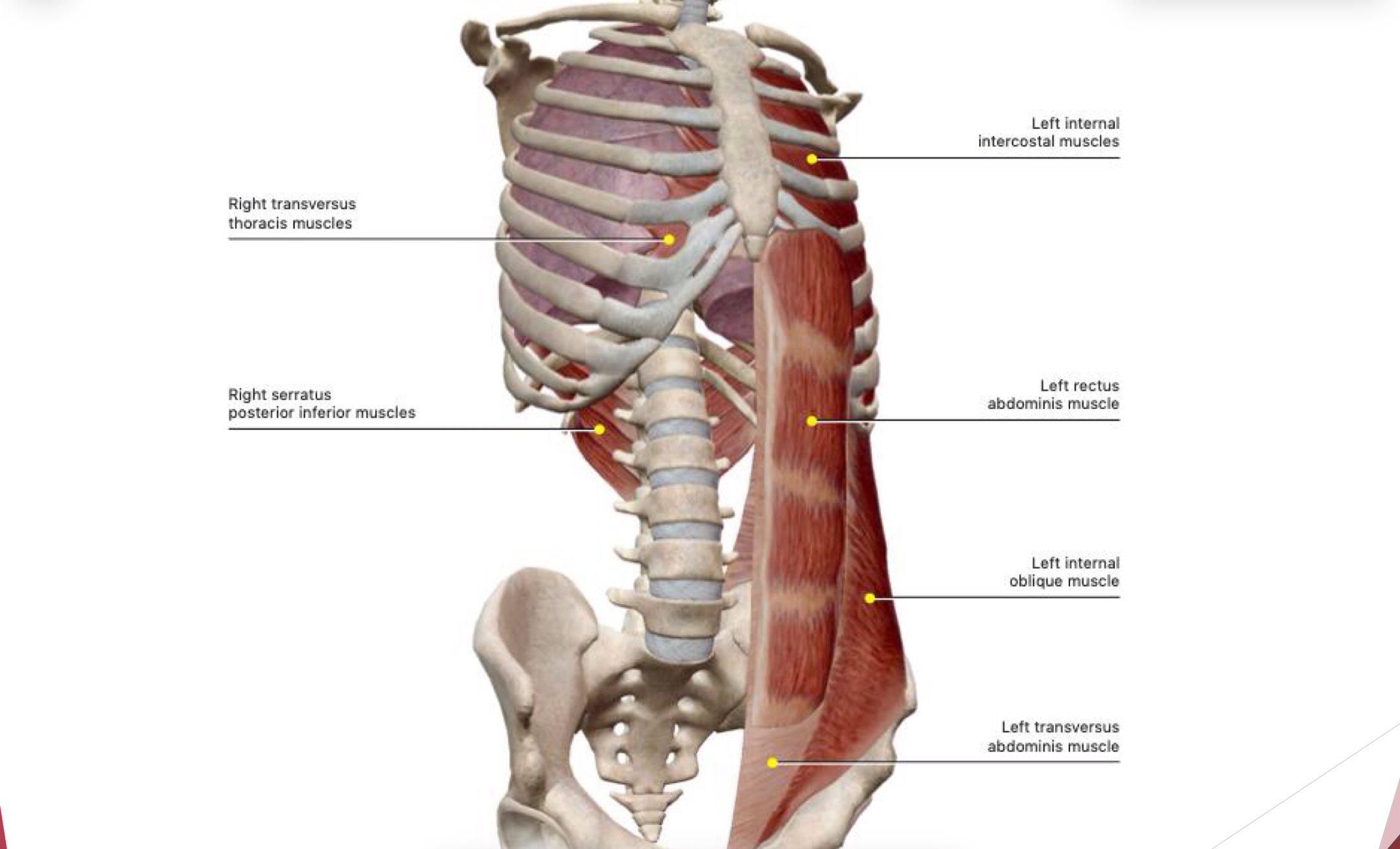
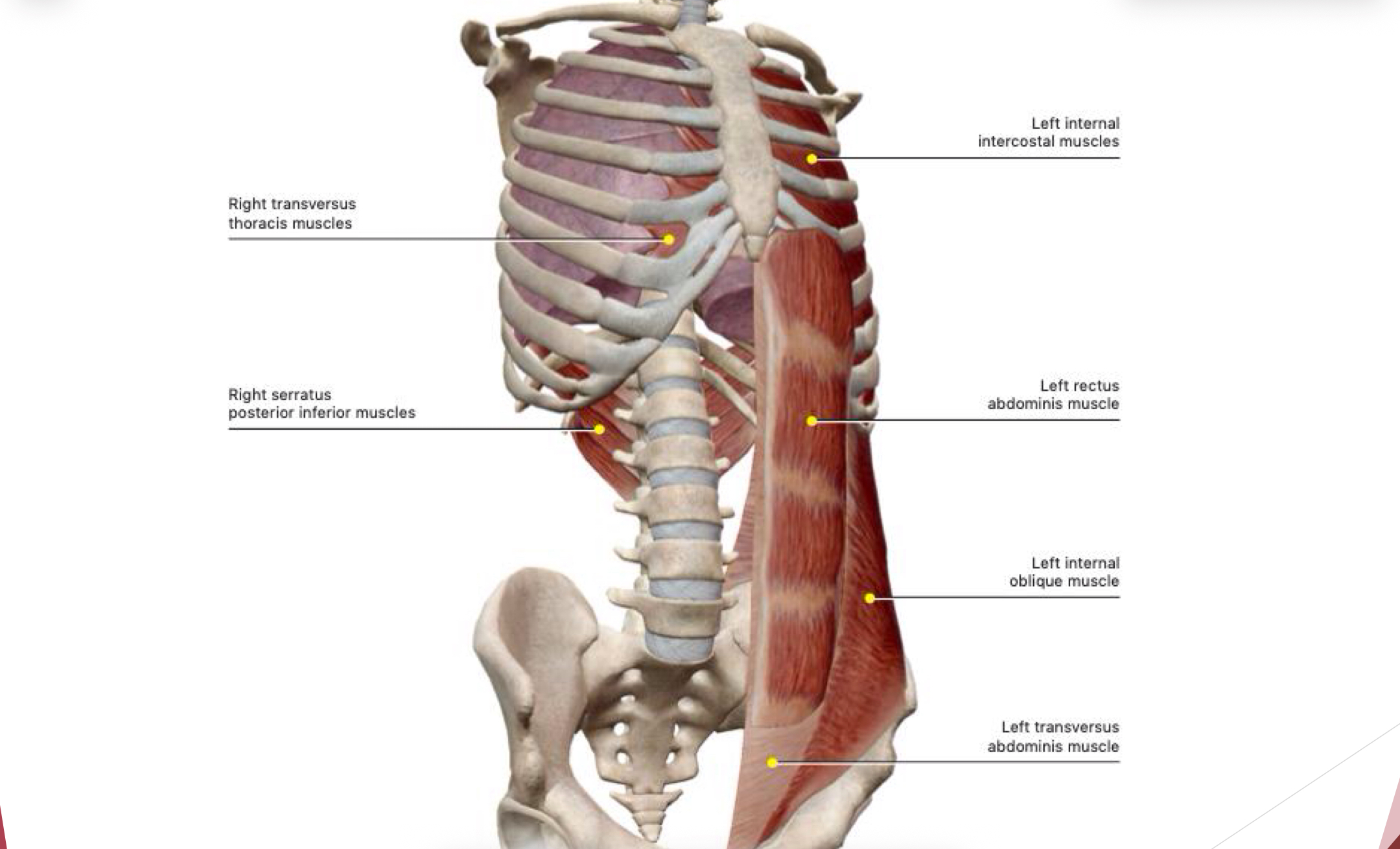
Label 1-6
left internal intercostal, right transversus thoracis, right serratus posterior inferior, left rectus abdominis, left internal oblique, left transversus abdominis
splenius
supports the head while erect
moves head backwards
draws head to one side and slightly rotates it
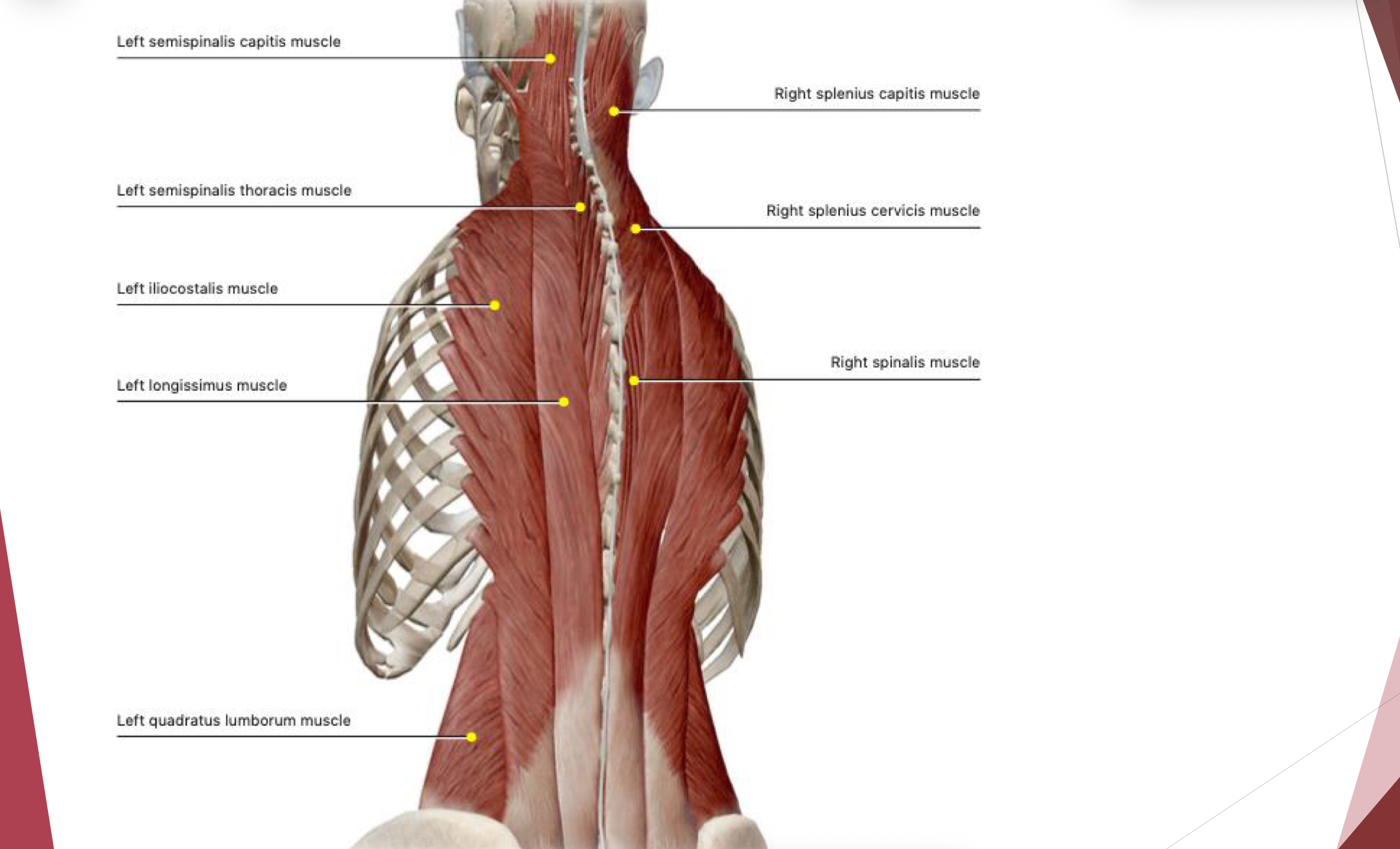
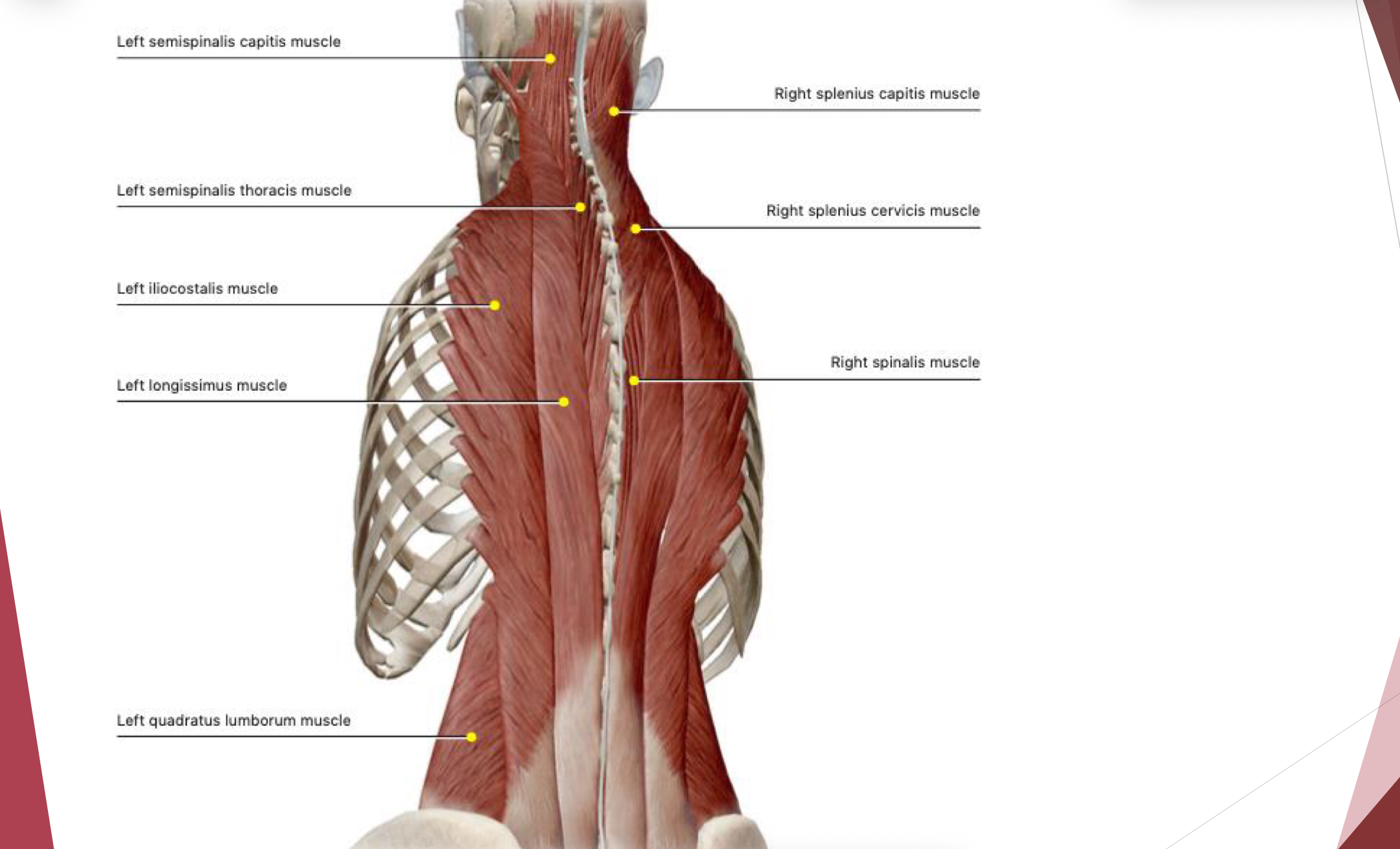
erector spinae
longissimus, spinalis, semispinalis
longissimus - dorsi (thoracis), cervicis (colli), capitis
dorsi - extends and laterally flexes spine, aids in rib compression
cervicis - extends and laterally flexes spine
capitis - extends head (bilaterally), flexes head, and turns to the same side (unilaterally)
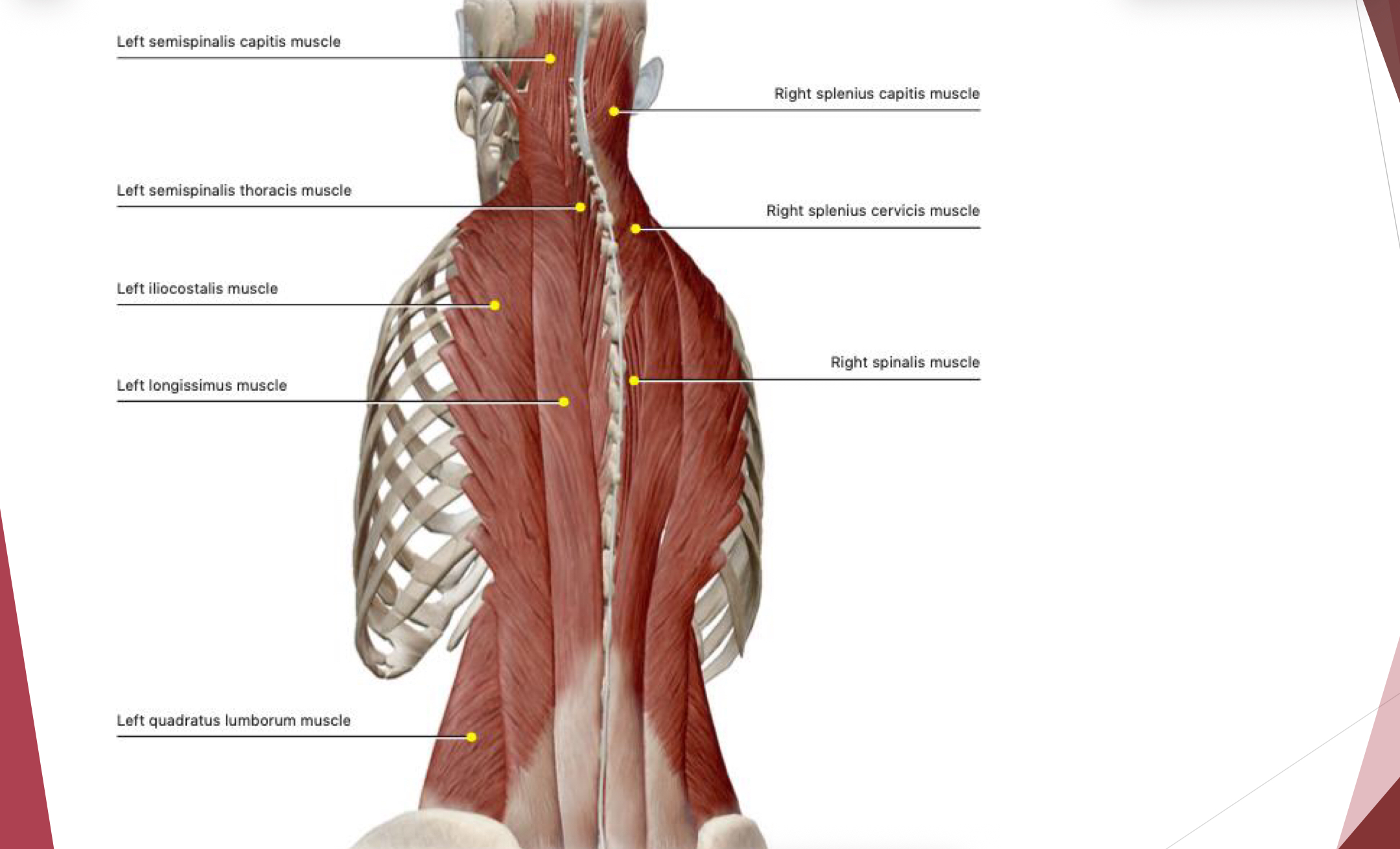
spinalis - theoracis, cervicis (colli)
thoracis- extends spine
cervicis- extends head
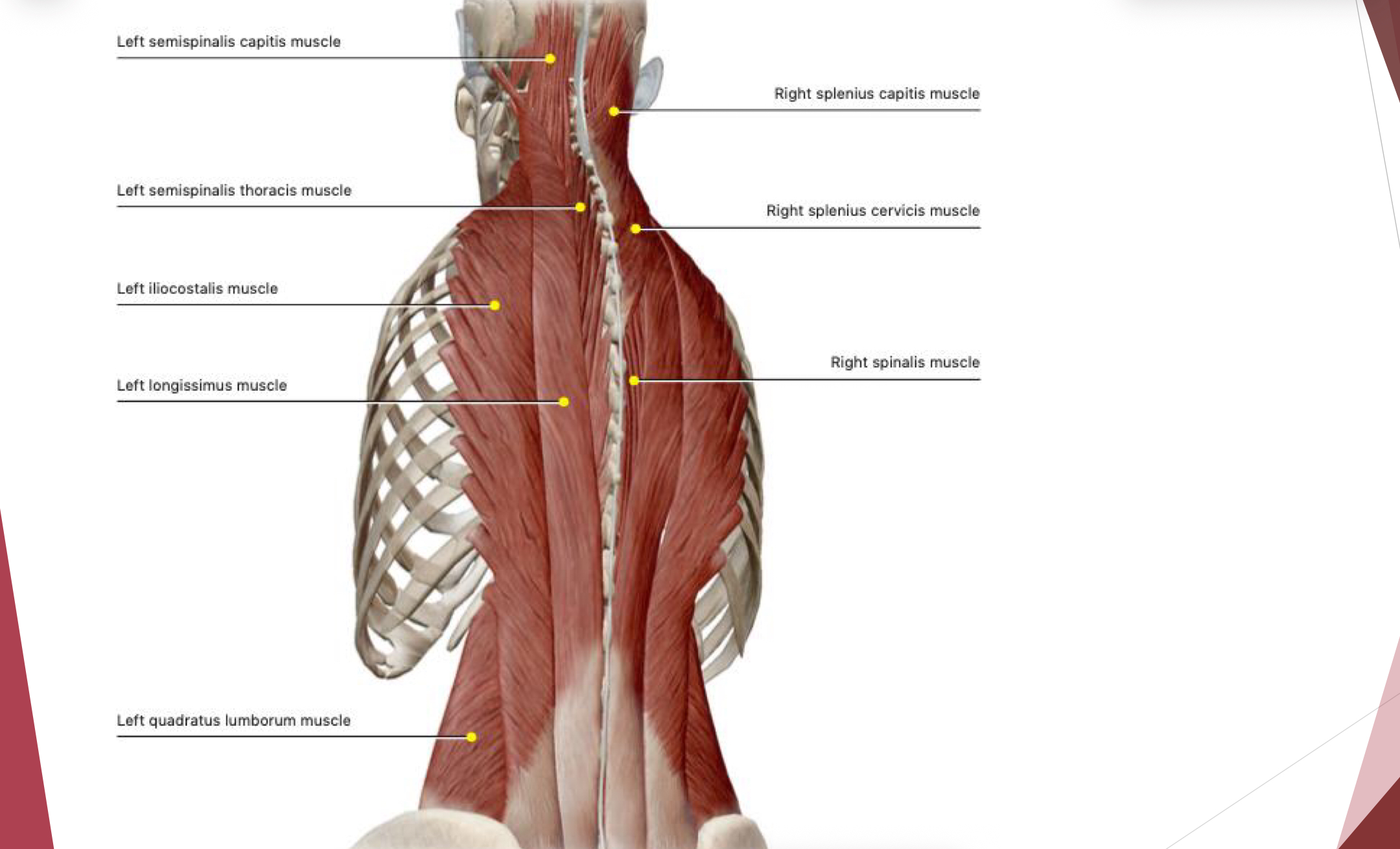
semispinalis - capitis, cervicis (colli), thoracic
together they extend the head
independently they laterally flex and rotate the head
multifidus
stabilizes vertebral in localized movements of vertebral column
rotatores
extend and rotate vertebral column
quadratus lumborum
depresses 12th rib
unilaterally raises the pelvis
aids in lumbar spine lateral flexion
major stabilizer of lumbar spine
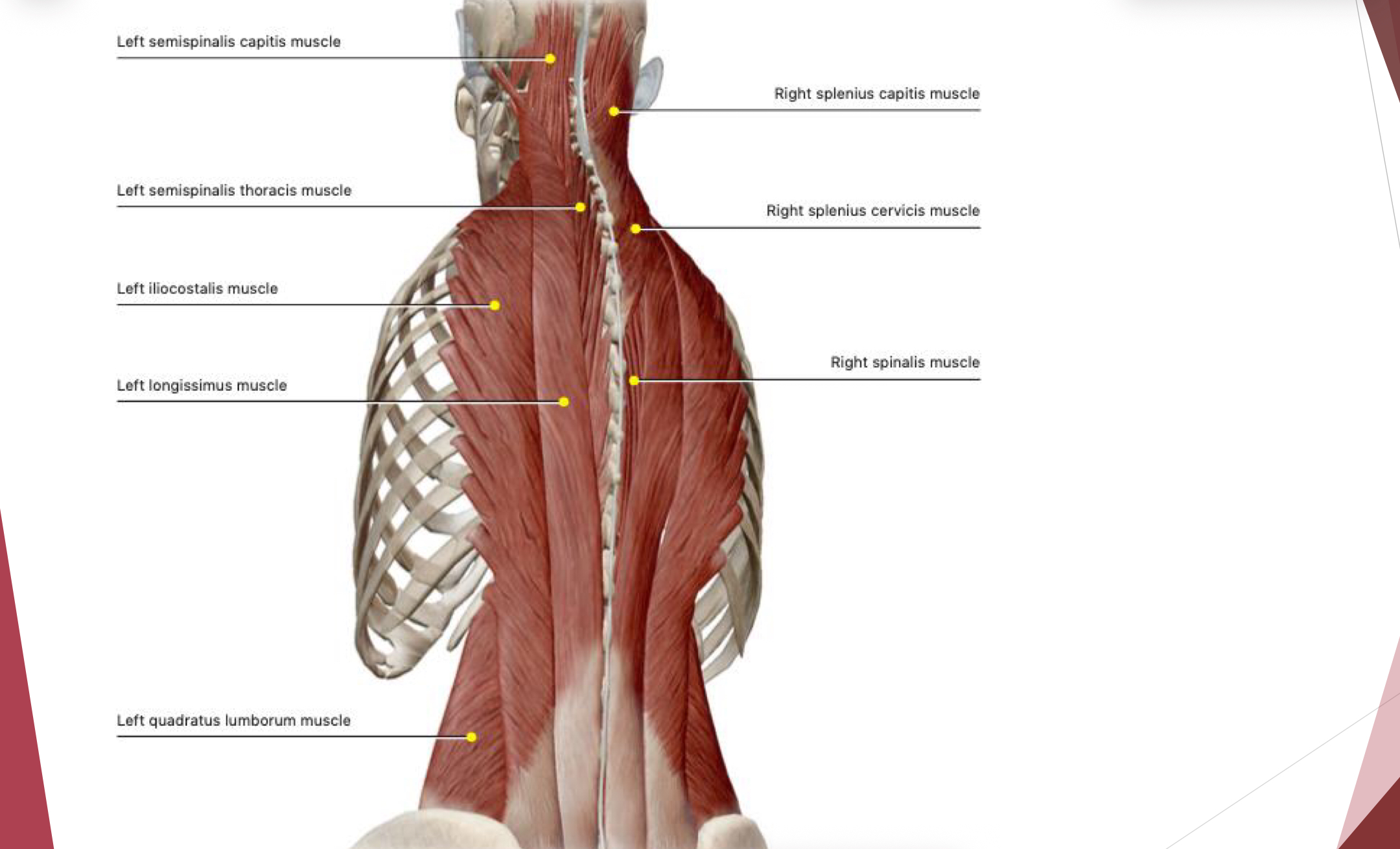
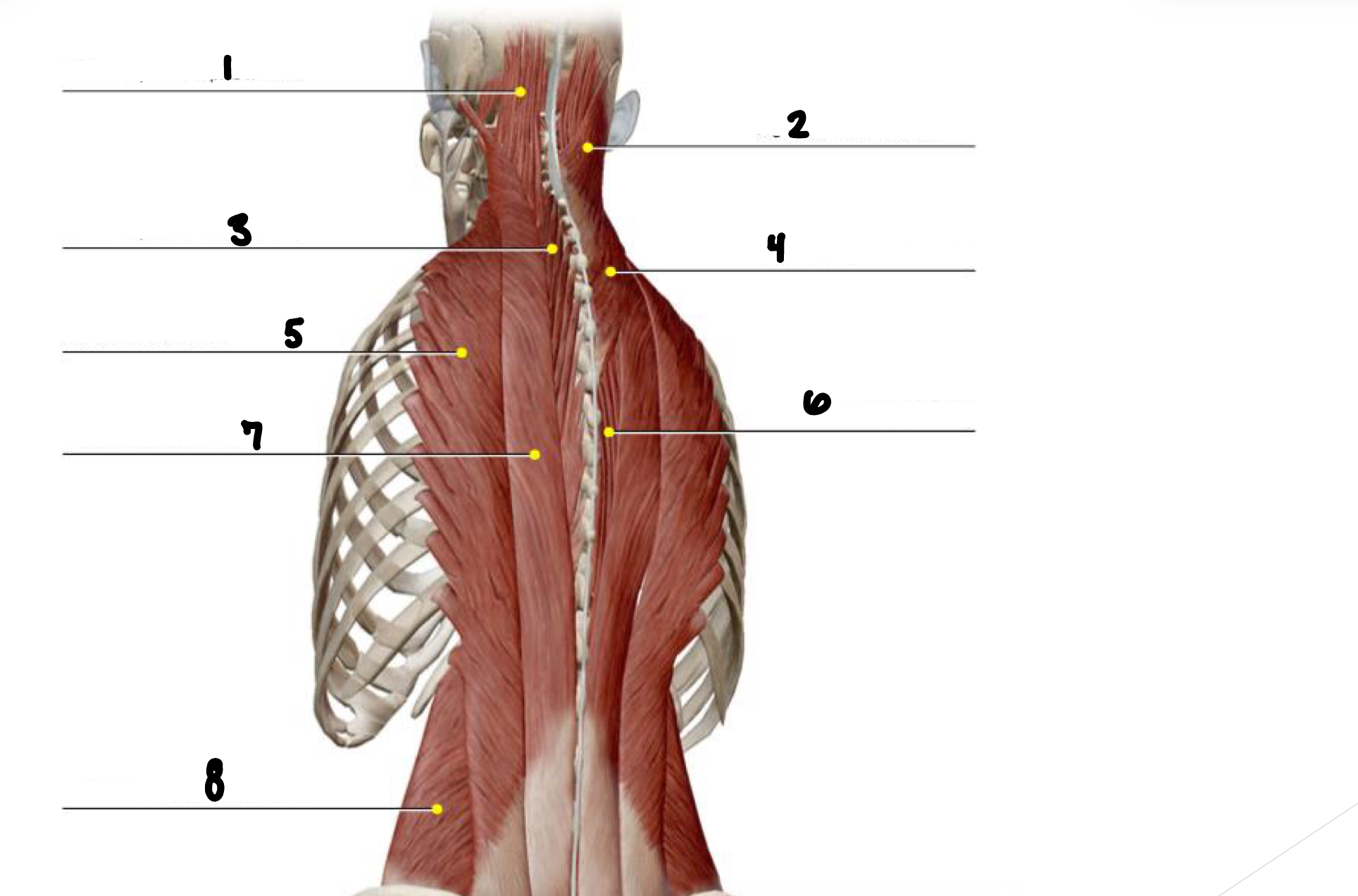
Label muscles 1-8 of the vertebral column
left semispinalis capitis, right splenius capitis, left semispinalis thoracis, right spenlius cervicis, left iliocostalis, right spinalis, left longissimus, and left quadratus lumborum