Chapter 9: Cellular Respiration and Fermentation
 Call Kai
 Learn
Learn Practice Test
 Spaced Repetition
 Match
Match Flashcards
 Knowt Play
1/23

There's no tags or description
Looks like no tags are added yet.
Name | Mastery | Learn | Test | Matching | Spaced | Call with Kai |
|---|
No analytics yet
Send a link to your students to track their progress
24 Terms
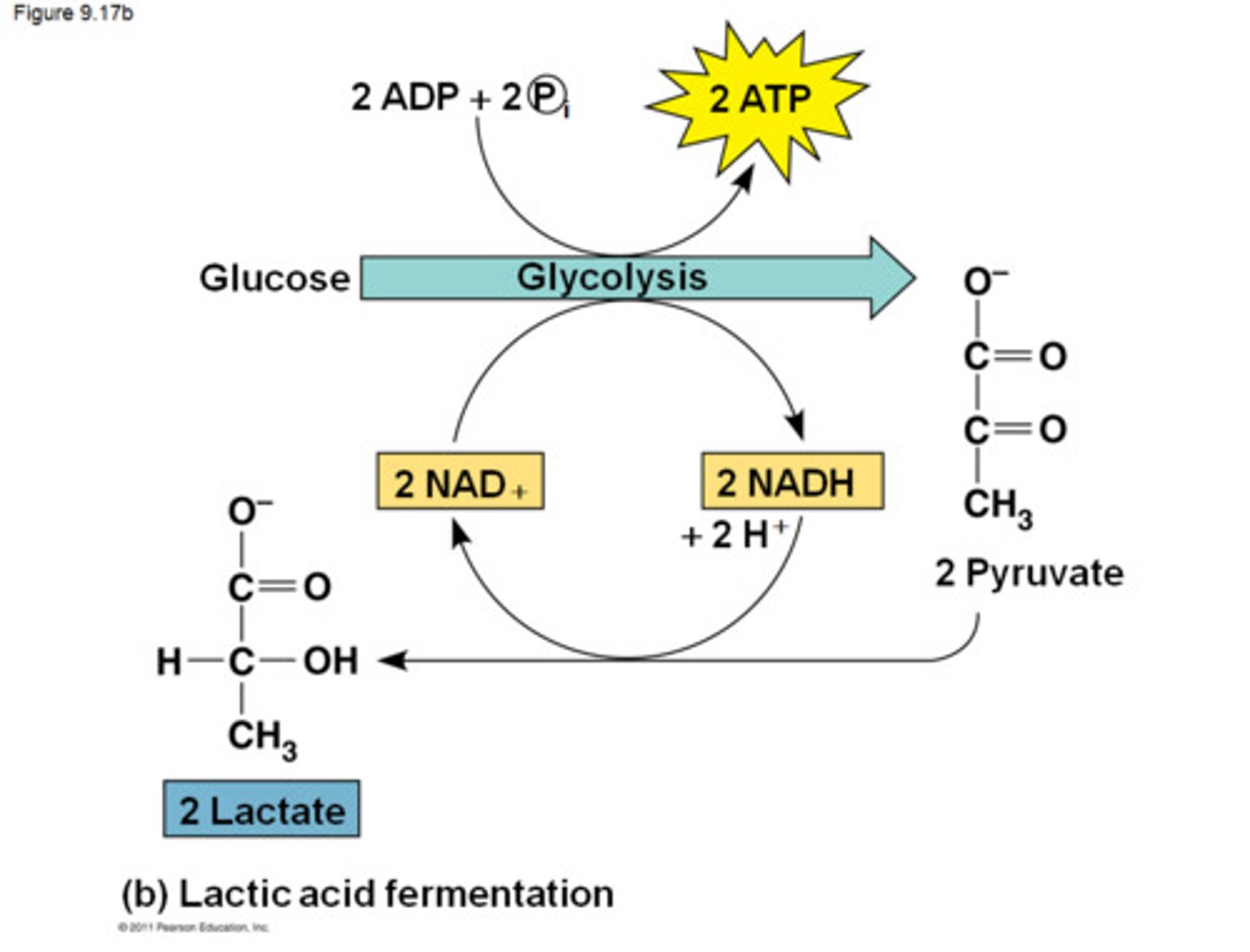
fermentation
a catabolic process that makes a limited amount of ATP from glucose without an electron transport chain and that produces a characteristic end product, such as ethyl alcohol or lactic acid
aerobic respiration
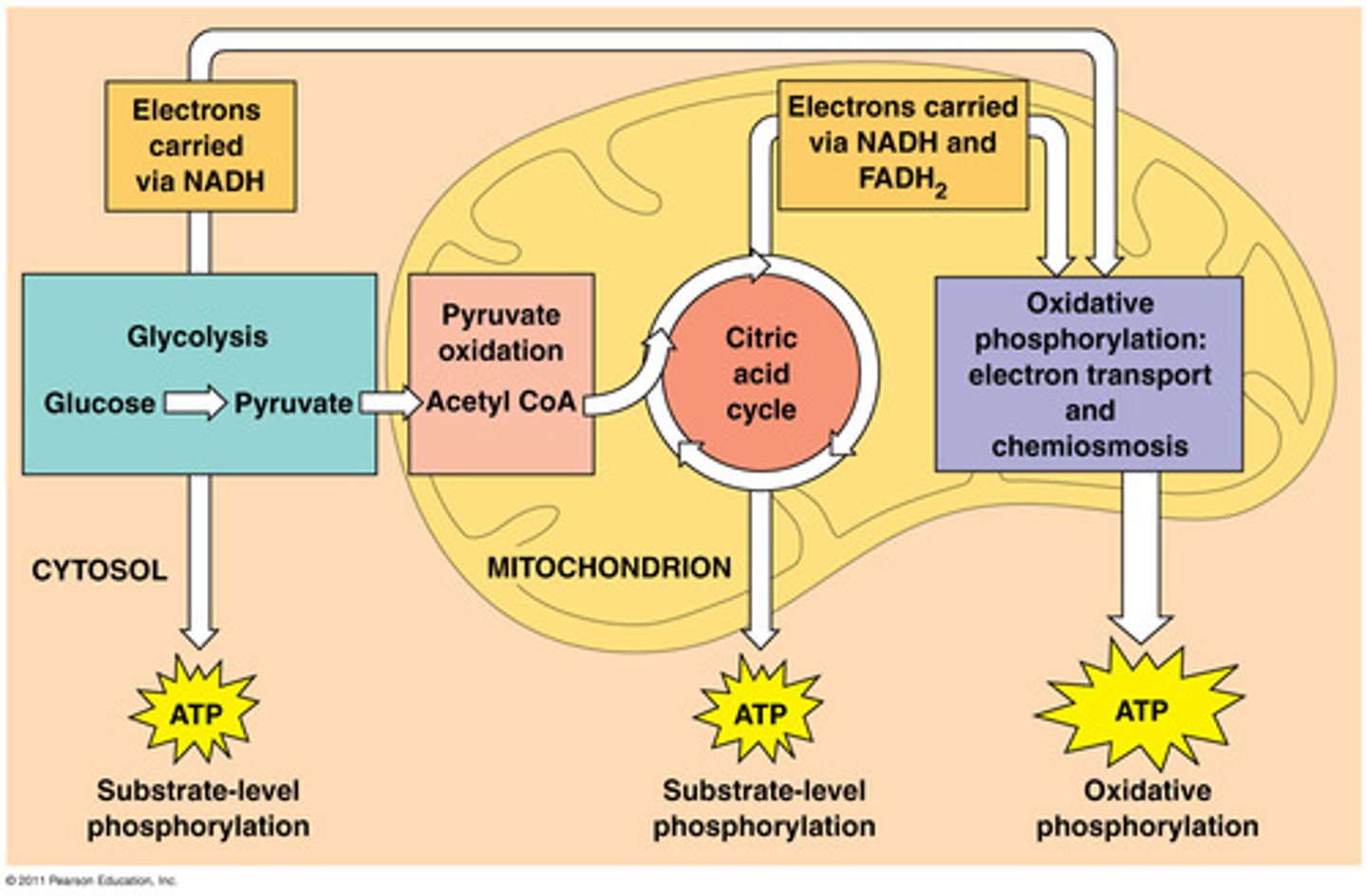
a catabolic pathway that consumes oxygen gas and organic molecules, producing ATP
cellular respiration
the catabolic pathways of aerobic and anaerobic respiration, which break down organic molecules for the production of ATP
redox reaction
a chemical reaction involving the complete or partial transfer of one or more electrons from one reactant to another
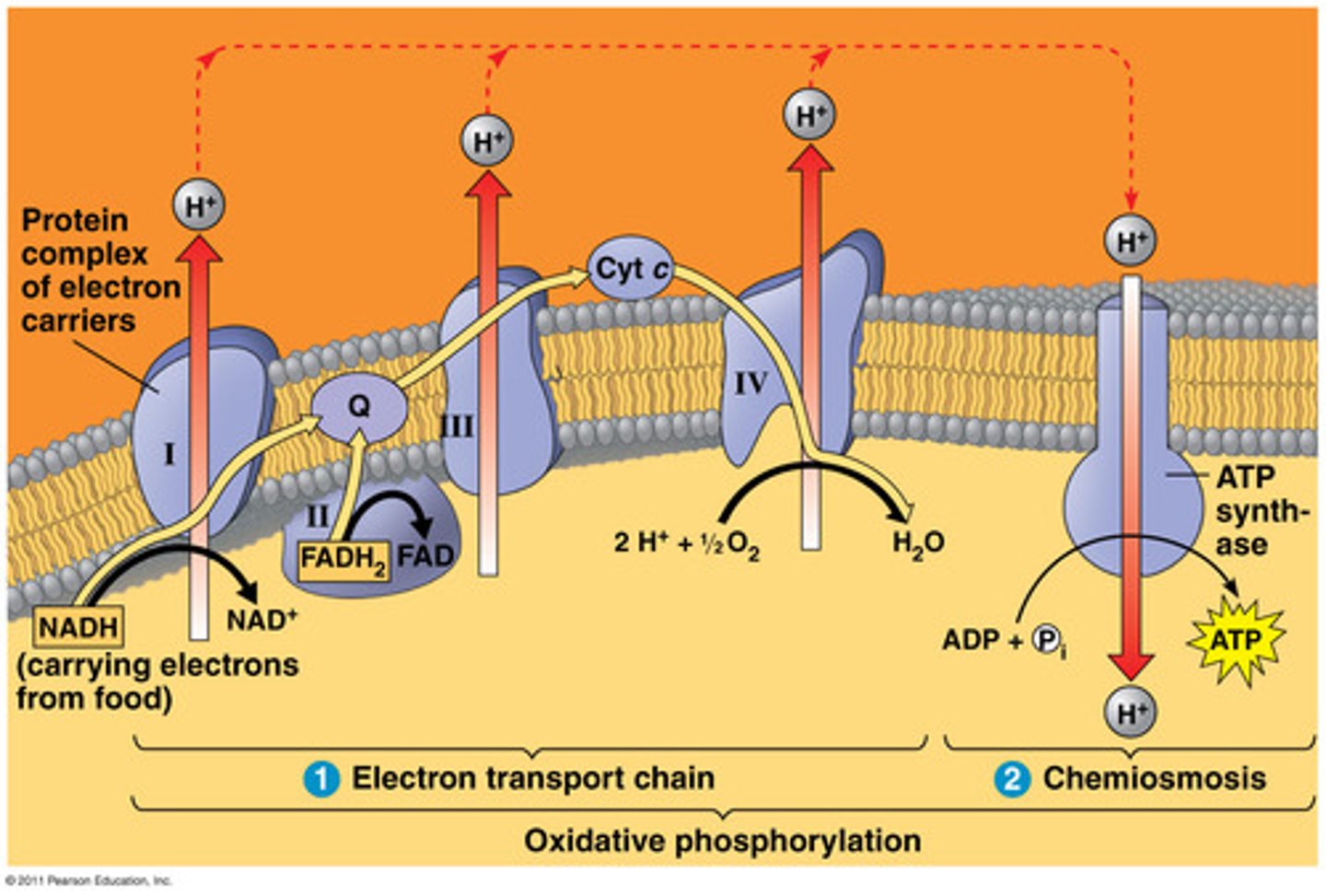
oxidation
the loss of electrons from a substance involved in a redox reaction
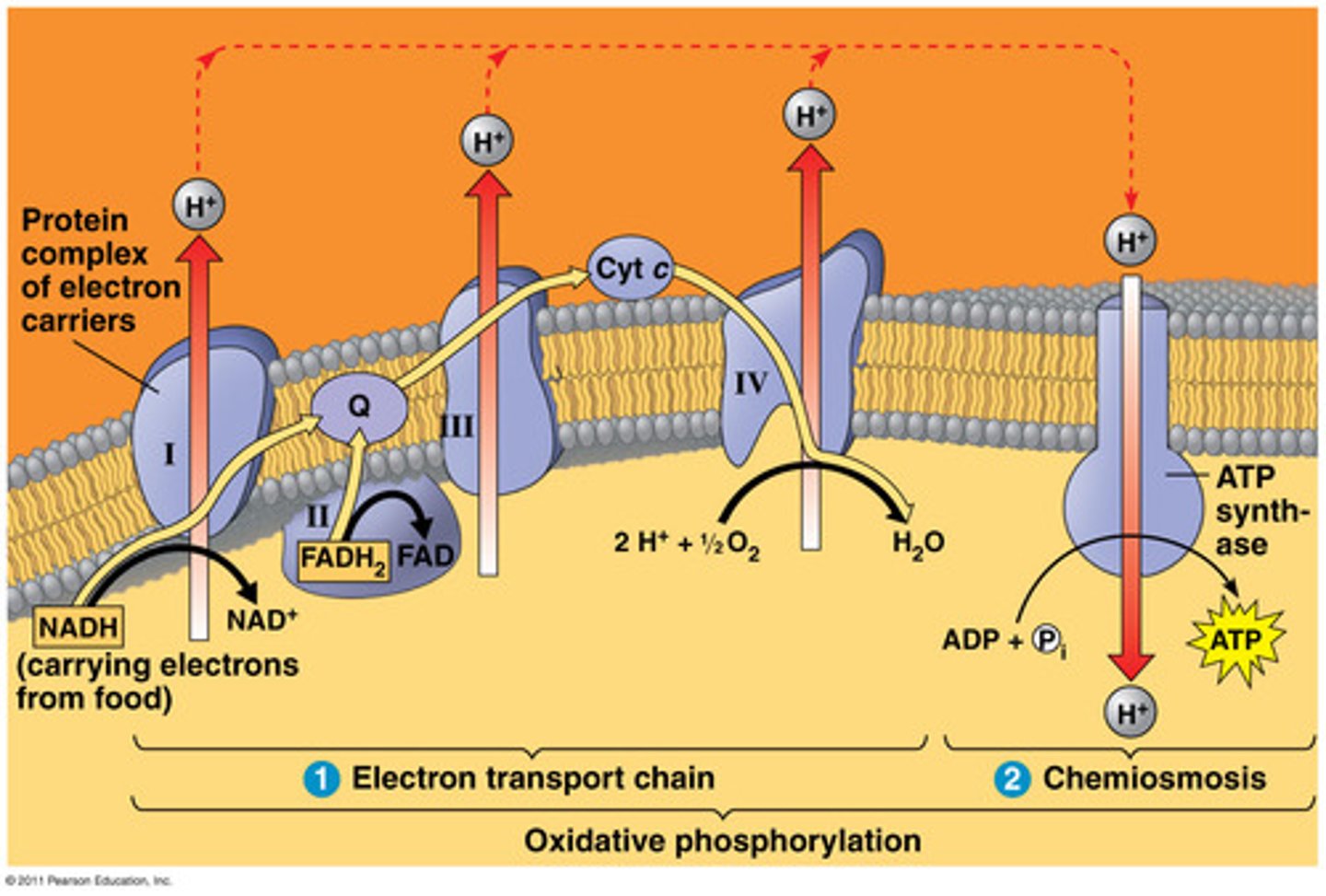
reduction
the addition of electrons to a substance involved in a redox reaction
reducing agent
the electron donor in a redox reaction
oxidizing agent
the electron acceptor in a redox reaction
NAD+
a coenzyme that can accept an electron and acts as an electron carrier in the electron transport chain
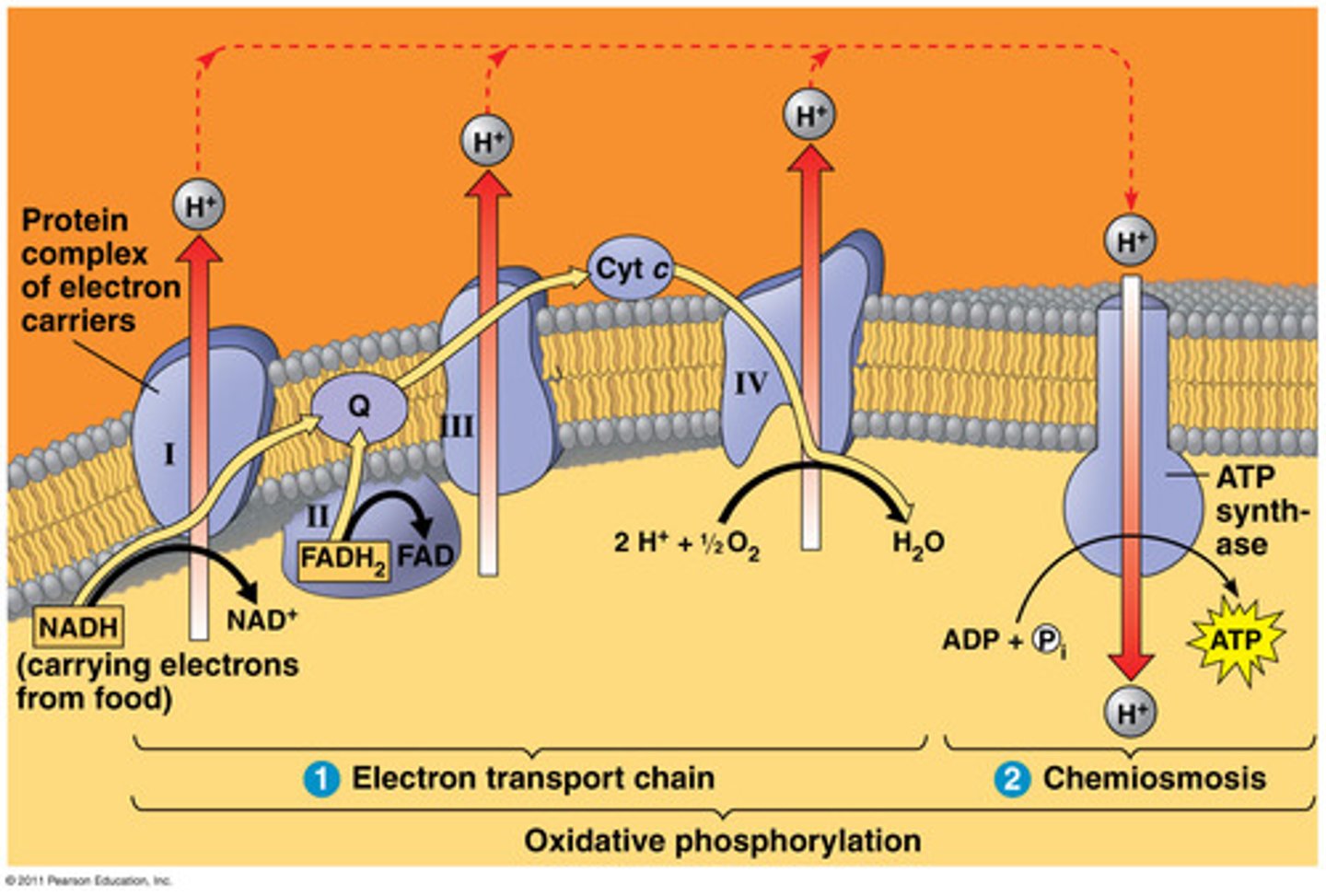
electron transport chain
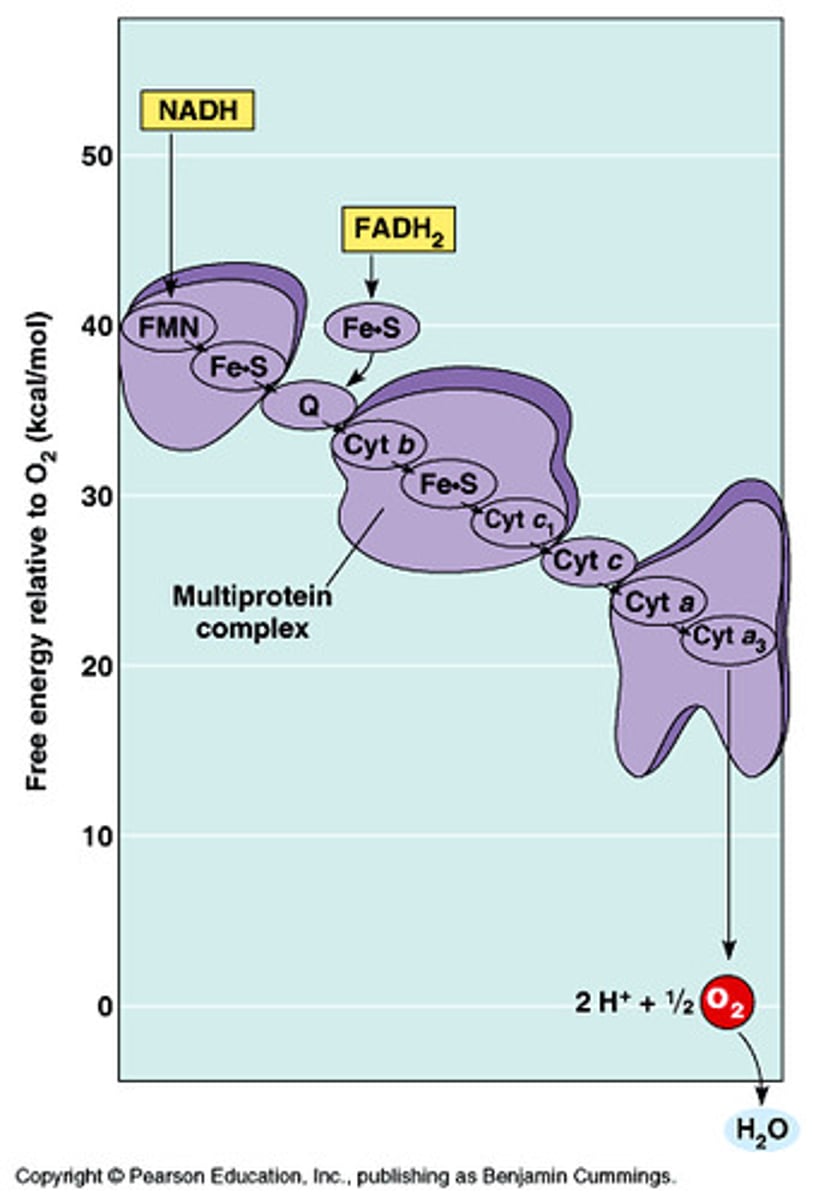
a sequence of electron carrier molecules (membrane proteins) that shuttle electrons during the redox reactions that release energy used to make ATP
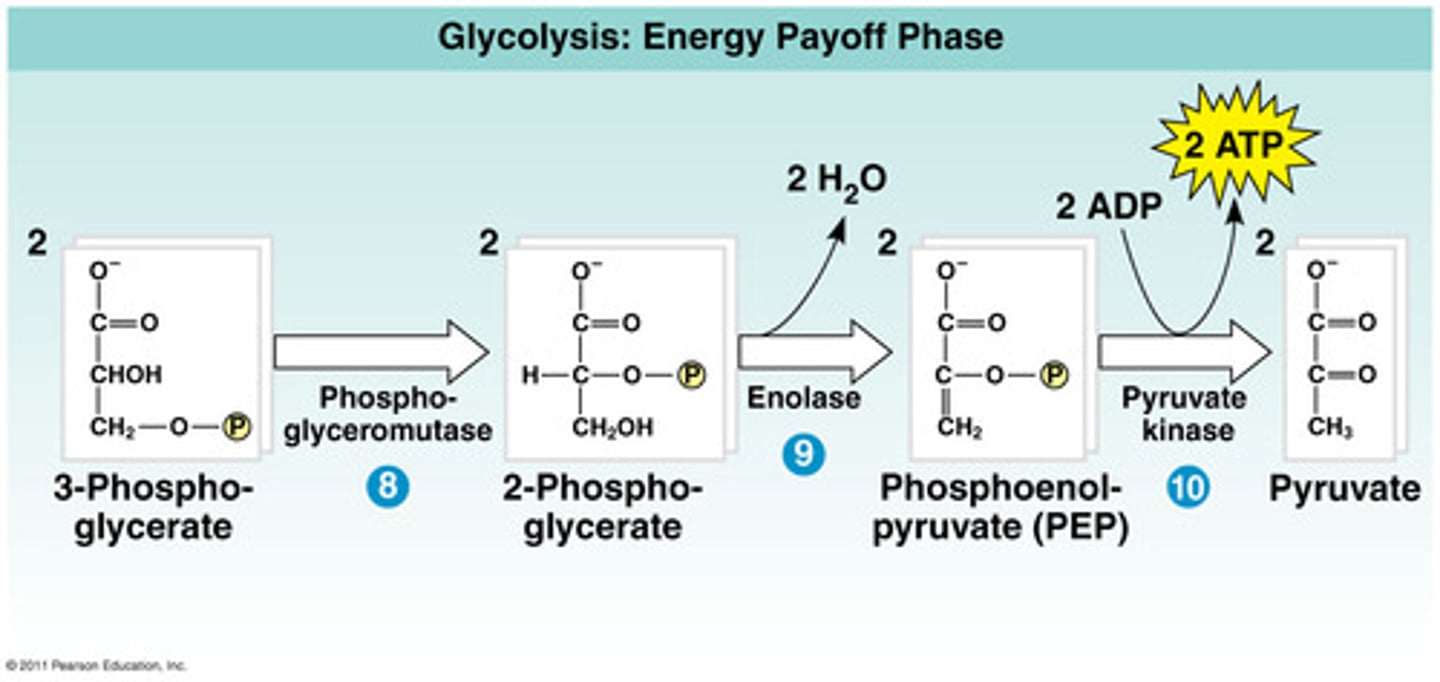
glycolysis
the splitting of glucose into pyruvate; serves as the starting point for fermentation or cellular respiration
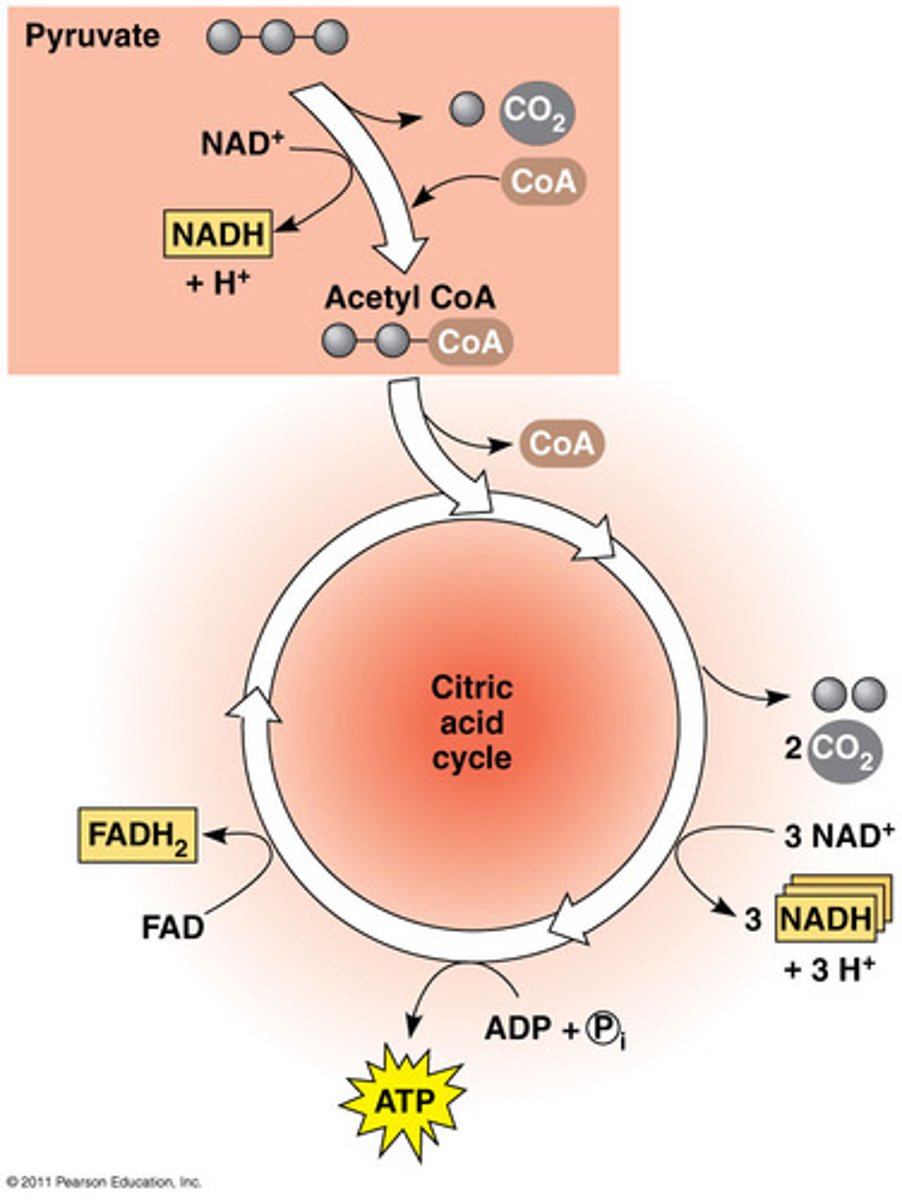
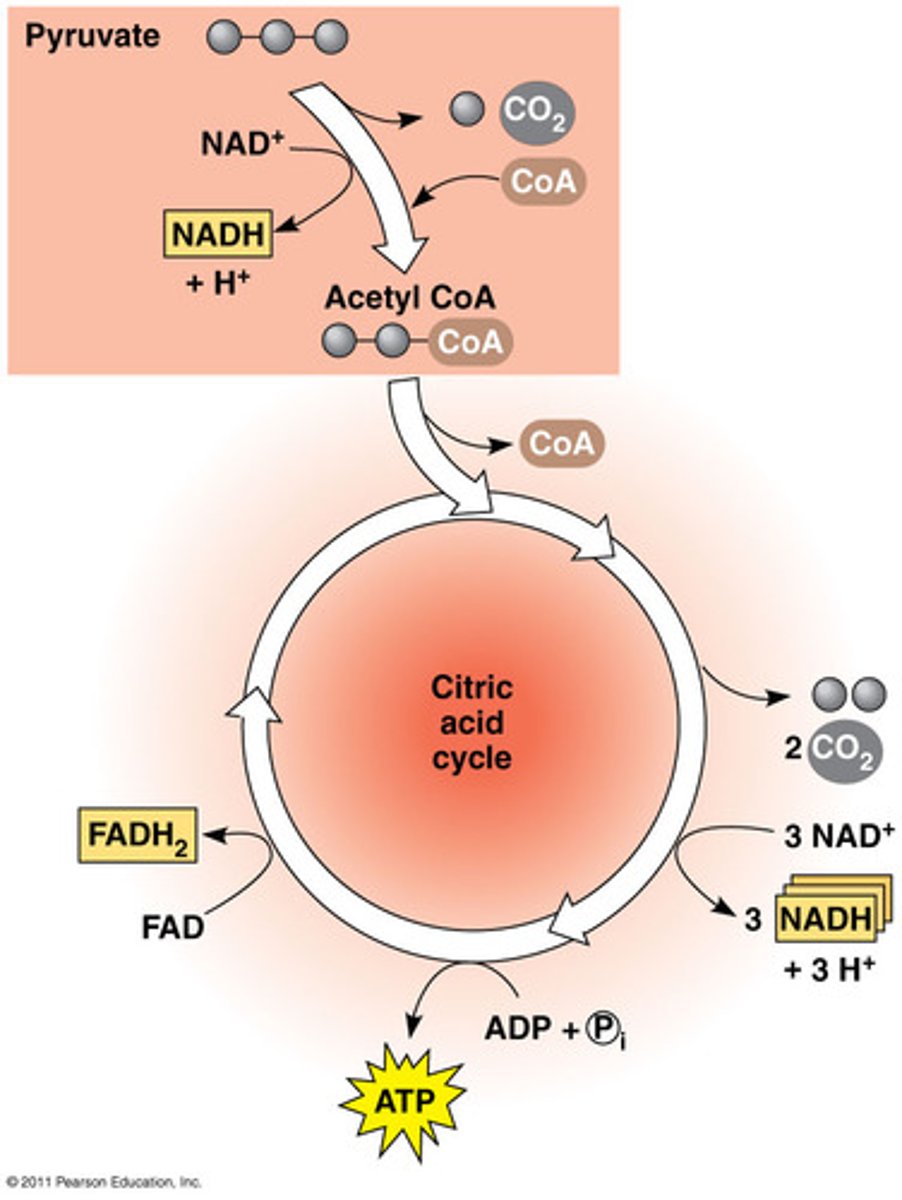
citric acid cycle
an eight-step series of reactions that completes the metabolic breakdown of glucose molecules by oxidizing pyruvate to carbon dioxide
oxidative phosphorylation
the production of ATP using energy derived from the redox reactions of an electron transport chain
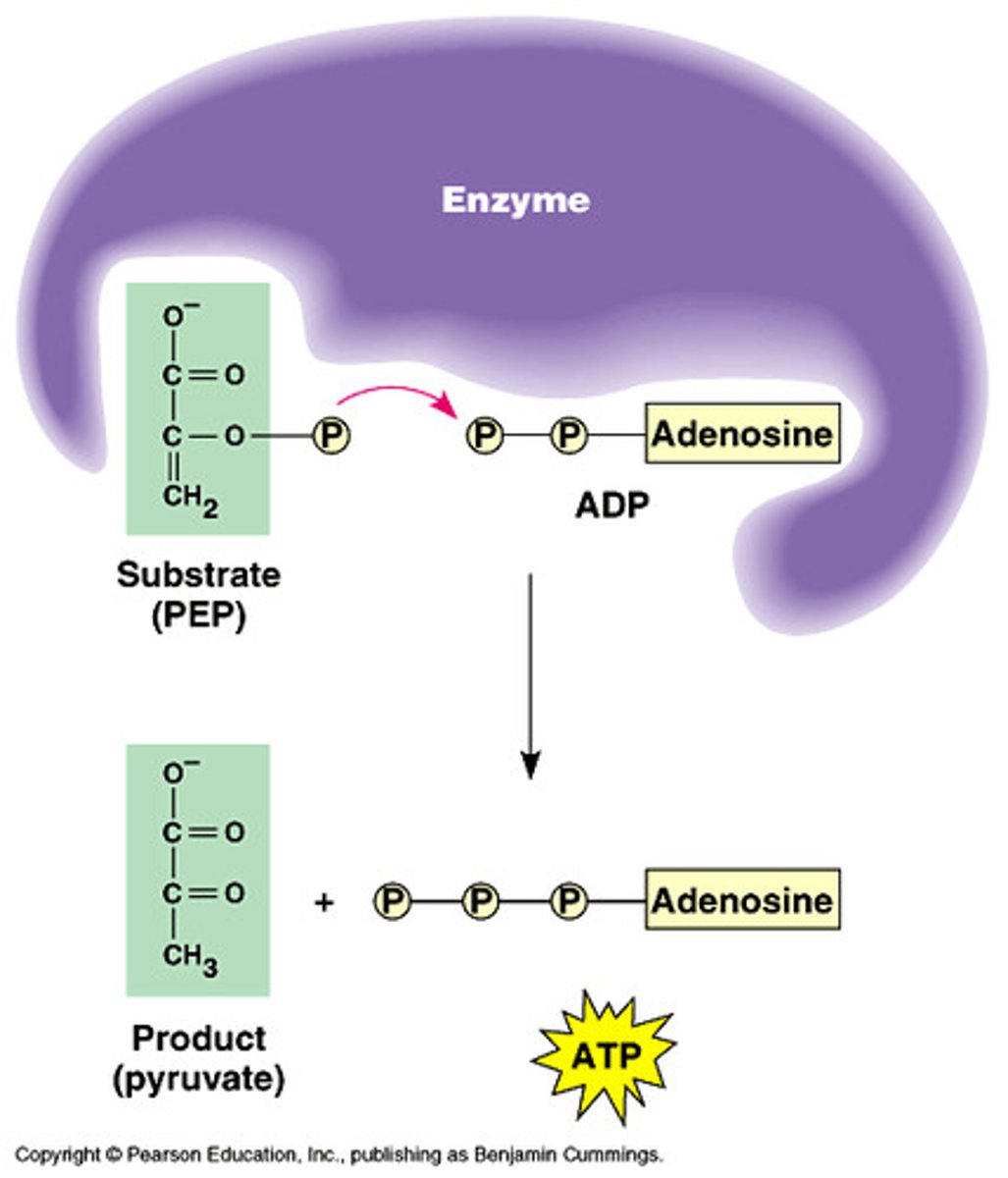
substrate-level phosphorylation
the formation of ATP by an enzyme directly transferring a phosphate group to ADP from an intermediate substrate in catabolism
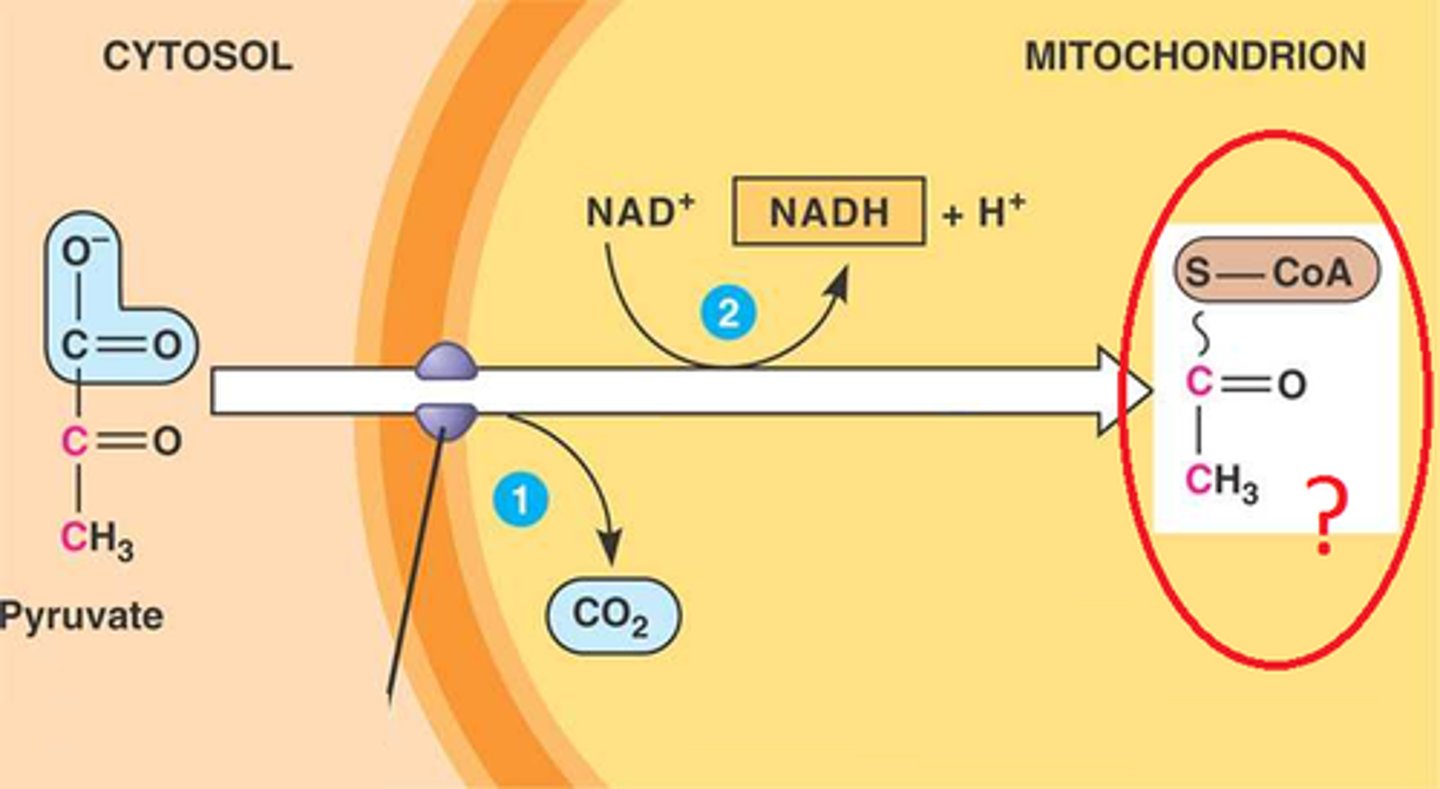
acetyl CoA
the entry compound for the citric acid cycle in cellular respiration, formed from a fragment of pyruvate attached to a coenzyme
cytochrome
an iron-containing protein that is a component of of electron transport chains in the mitochondria and chlorplasts of eukaryotic cells
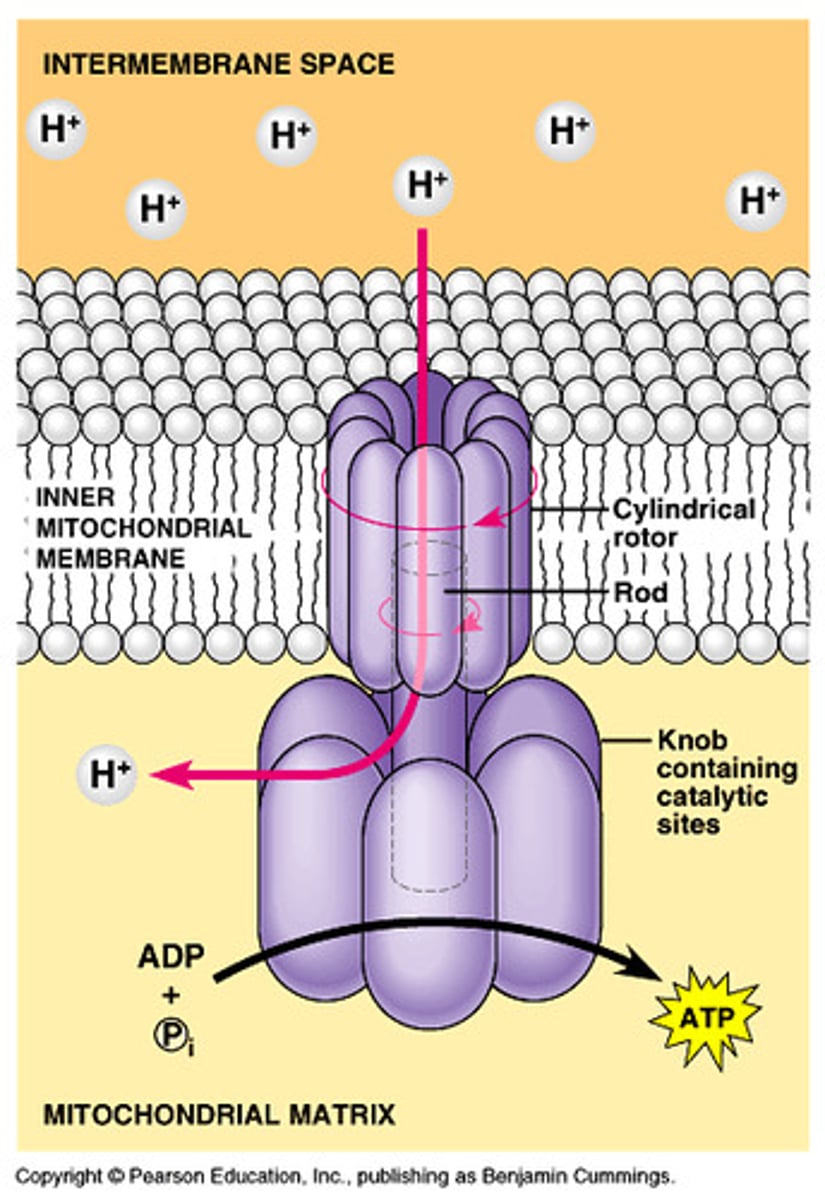
ATP synthase
a complex of several membrane proteins that provide a port through which protons diffuse; uses the energy of a hydrogen ion (proton) concentration gradient to make ATP
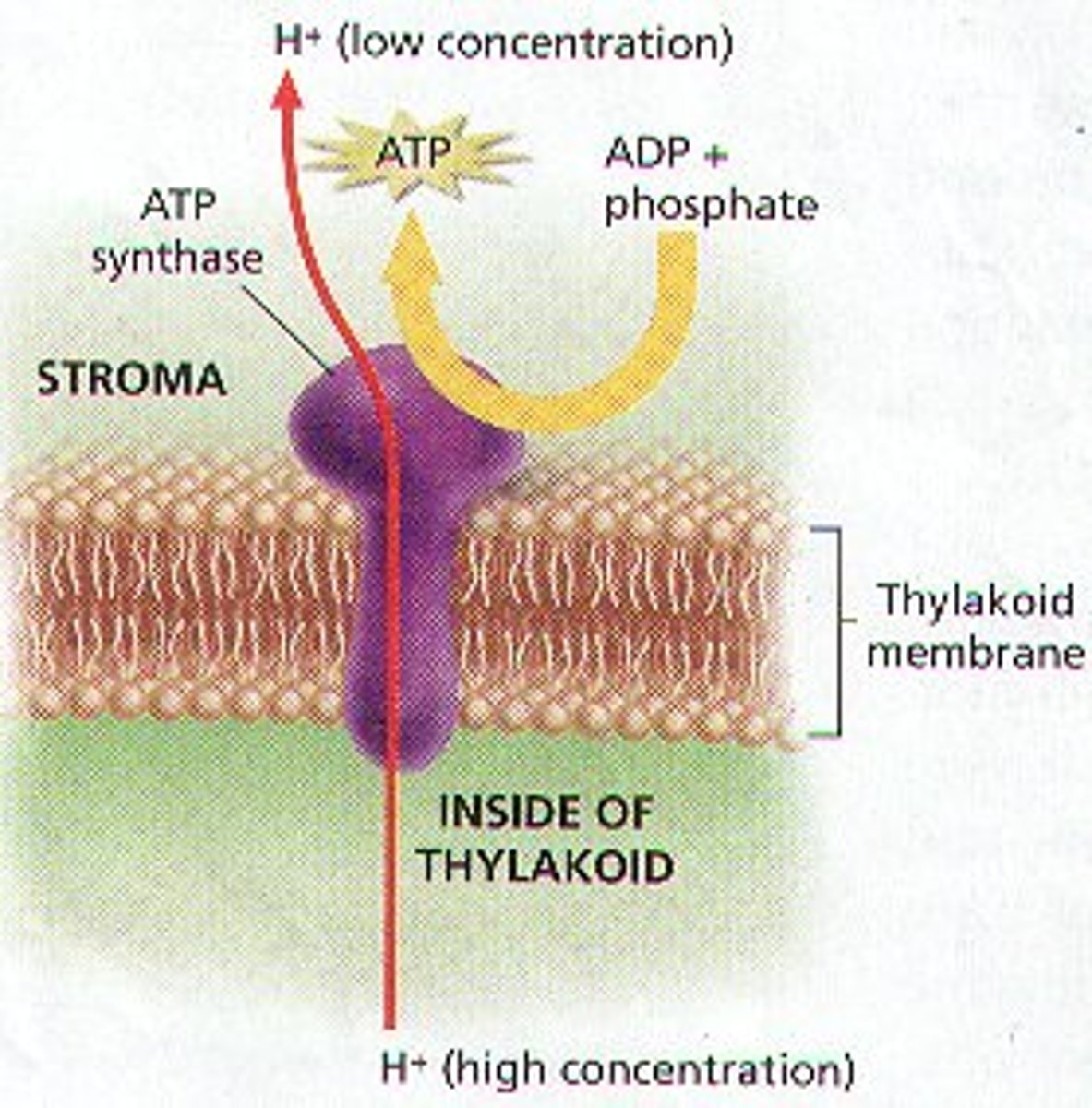
chemiosmosis
an energy-coupling mechanism that uses energy stored in the form of a hydrogen ion gradient across a membrane to drive cellular work, such as the synthesis of ATP
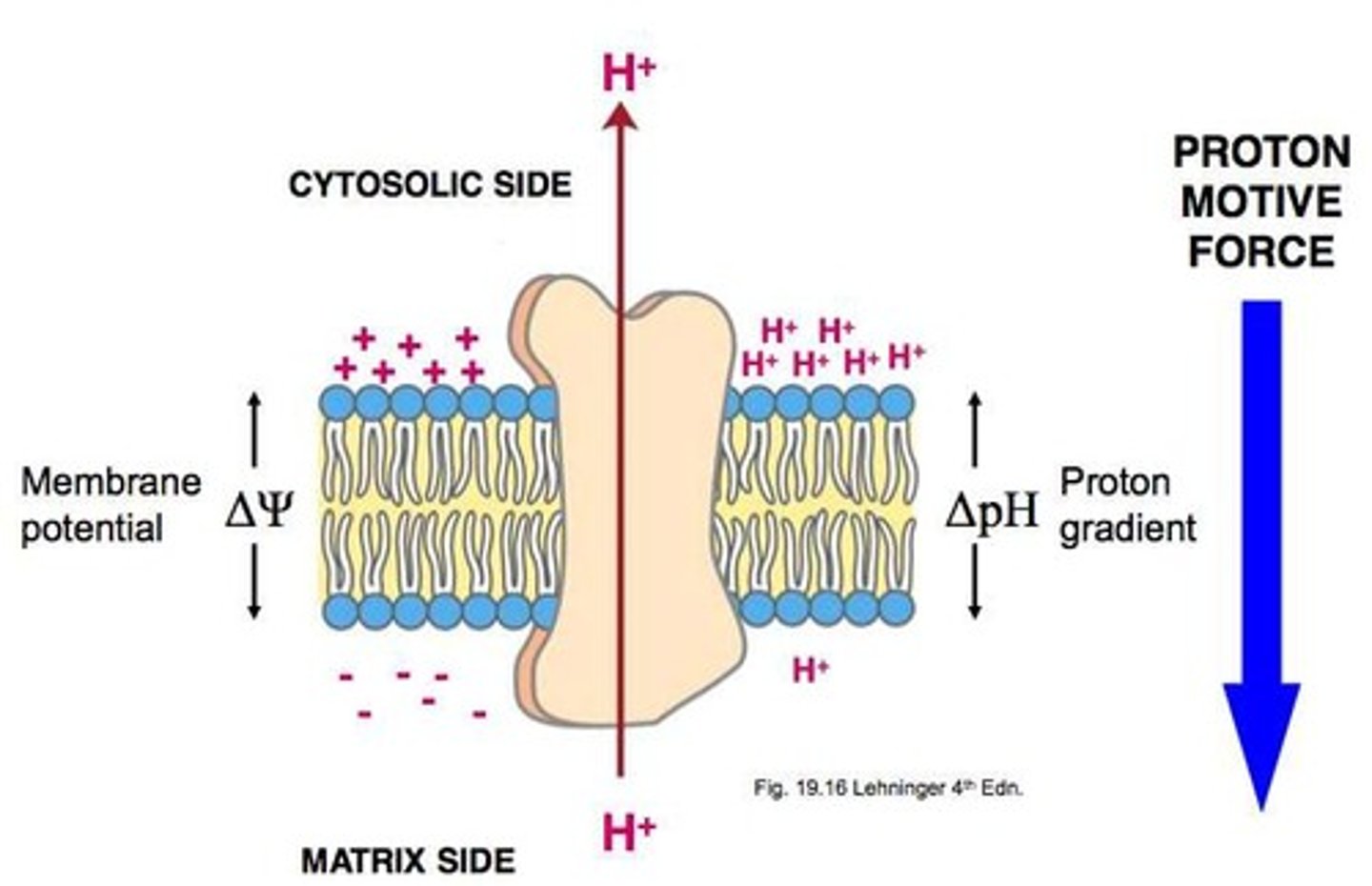
proton-motive force
the potential energy stored in the form of an electrochemical gradient, generated by the pumping of hydrogen ions across biological membranes during chemiosmosis
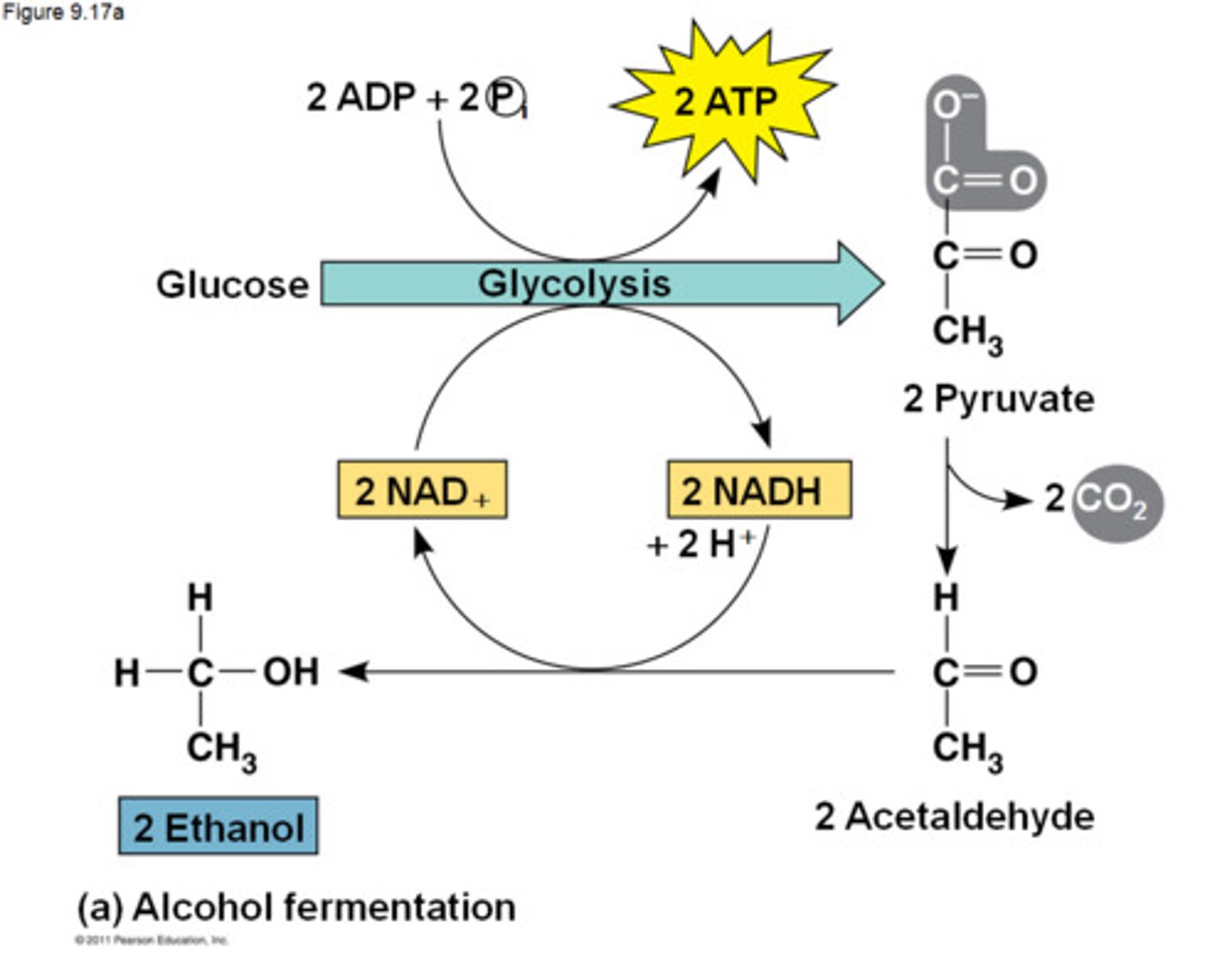
alcohol fermentation
glycolysis followed by the conversion of pyruvate to carbon dioxide and ethyl alcohol
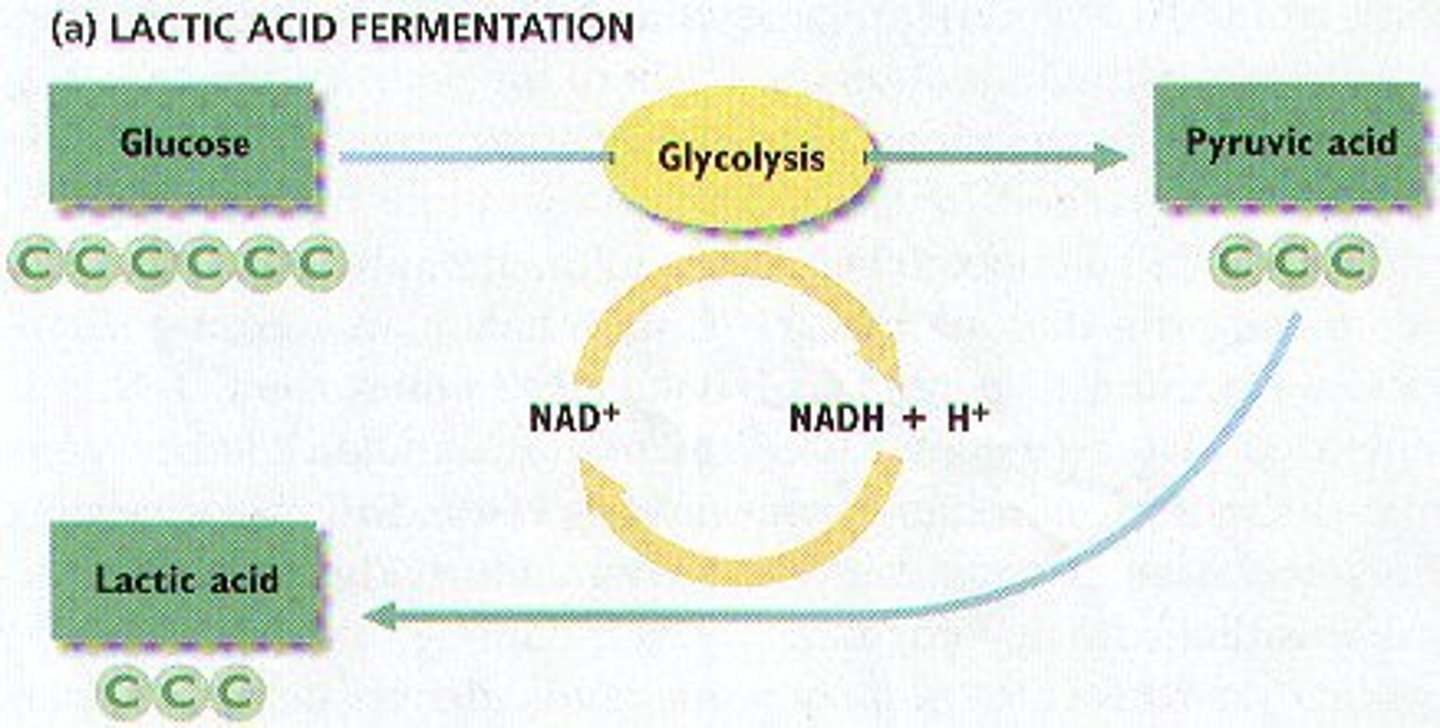
lactic acid fermentation
glycolysis followed by the conversion of pyruvate to lactate, with no release of carbon dioxide
obligate anaerobes
an organism that only carries out fermentation or anaerobic respiration; cannot use oxygen and in fact may be poisoned by it
facultative anaerobes
an organism that makes ATP by aerobic respiration if oxygen is present but that switches to anaerobic respiration or fermentation if oxygen is not present
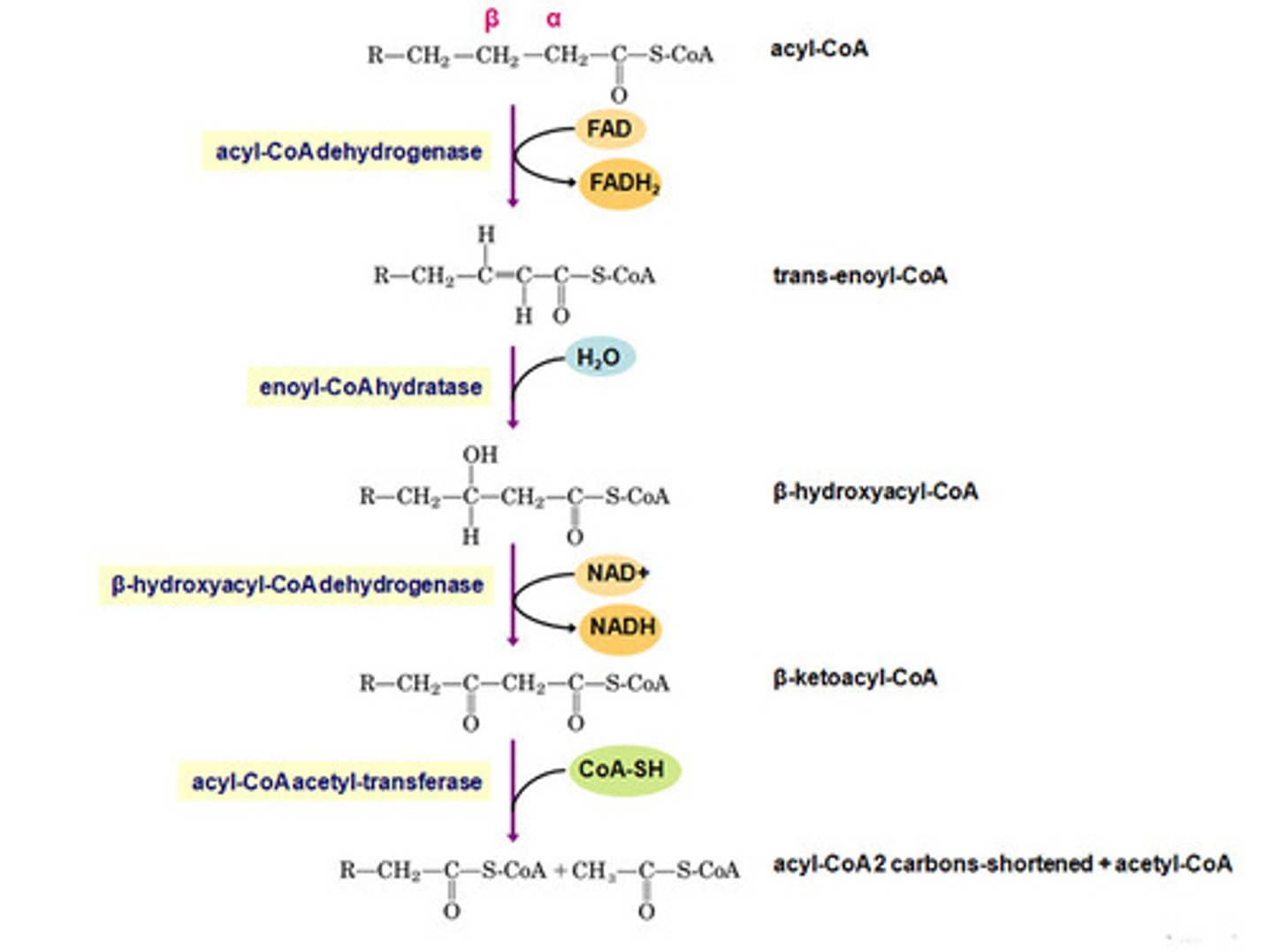
beta oxidation
a metabolic sequence that fatty acids down to two-carbon fragments that enter the citric acid cycle as acetyl CoA