ARTH 109 Midterm Review
 Call Kai
 Learn
Learn Practice Test
 Spaced Repetition
 Match
Match Flashcards
 Knowt Play
1/44

There's no tags or description
Looks like no tags are added yet.
Name | Mastery | Learn | Test | Matching | Spaced | Call with Kai |
|---|
No analytics yet
Send a link to your students to track their progress
45 Terms

Sericulture
attributed to liangkai, illustrates the silk-making process, Production is costly and lengthy, 12-13 century, hand scroll with ink and color on silk
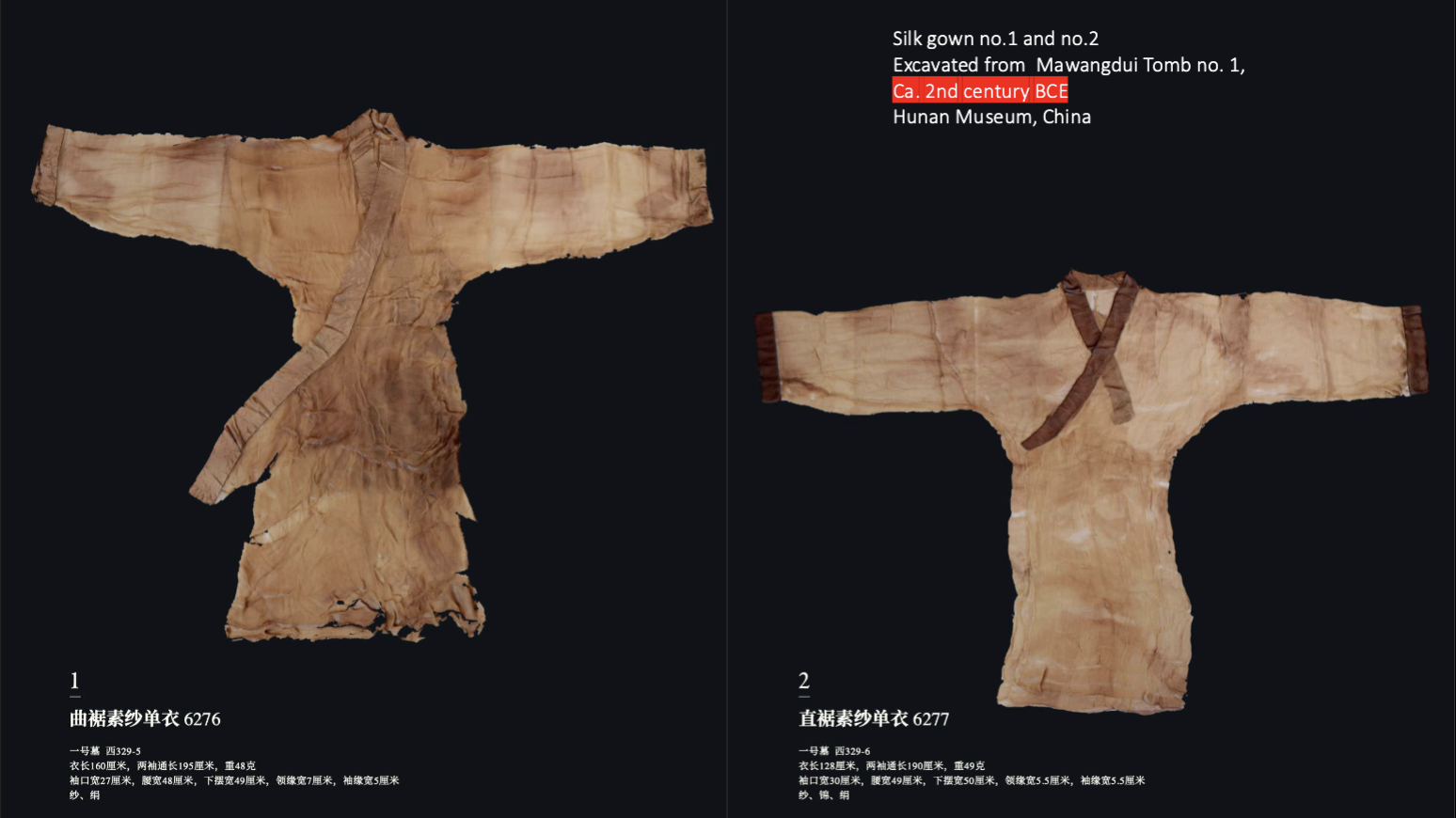
Silk gown 1 + 2:
demonstrates how light silk was and why it was so desirable and valuable, excavated from Mawangdui Tomb no.1 tomb, 2nd century
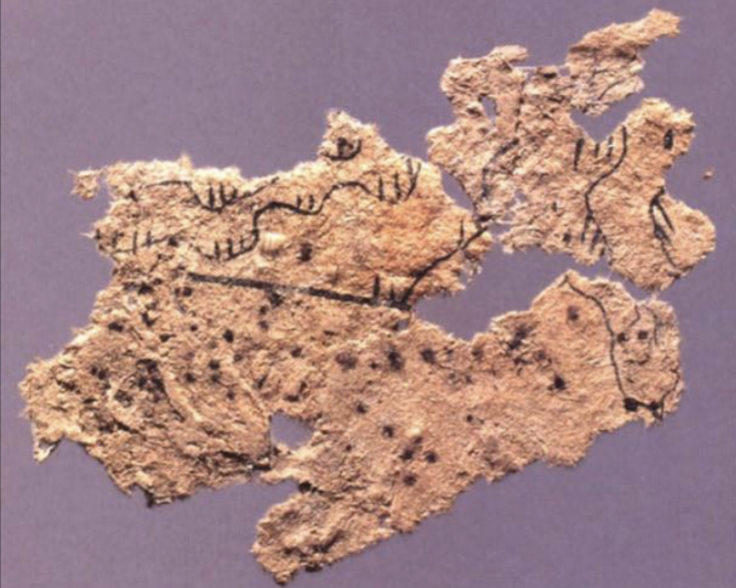
Earliest paper fragment hemp pulp:
discovered in tomb 5 in gansu, china
Shows roads of a map
Important item that traveled along silk road because they recorded ideas
Religion, culture, etc.
different production process than papyrus, and cheaper than bamboo and silk
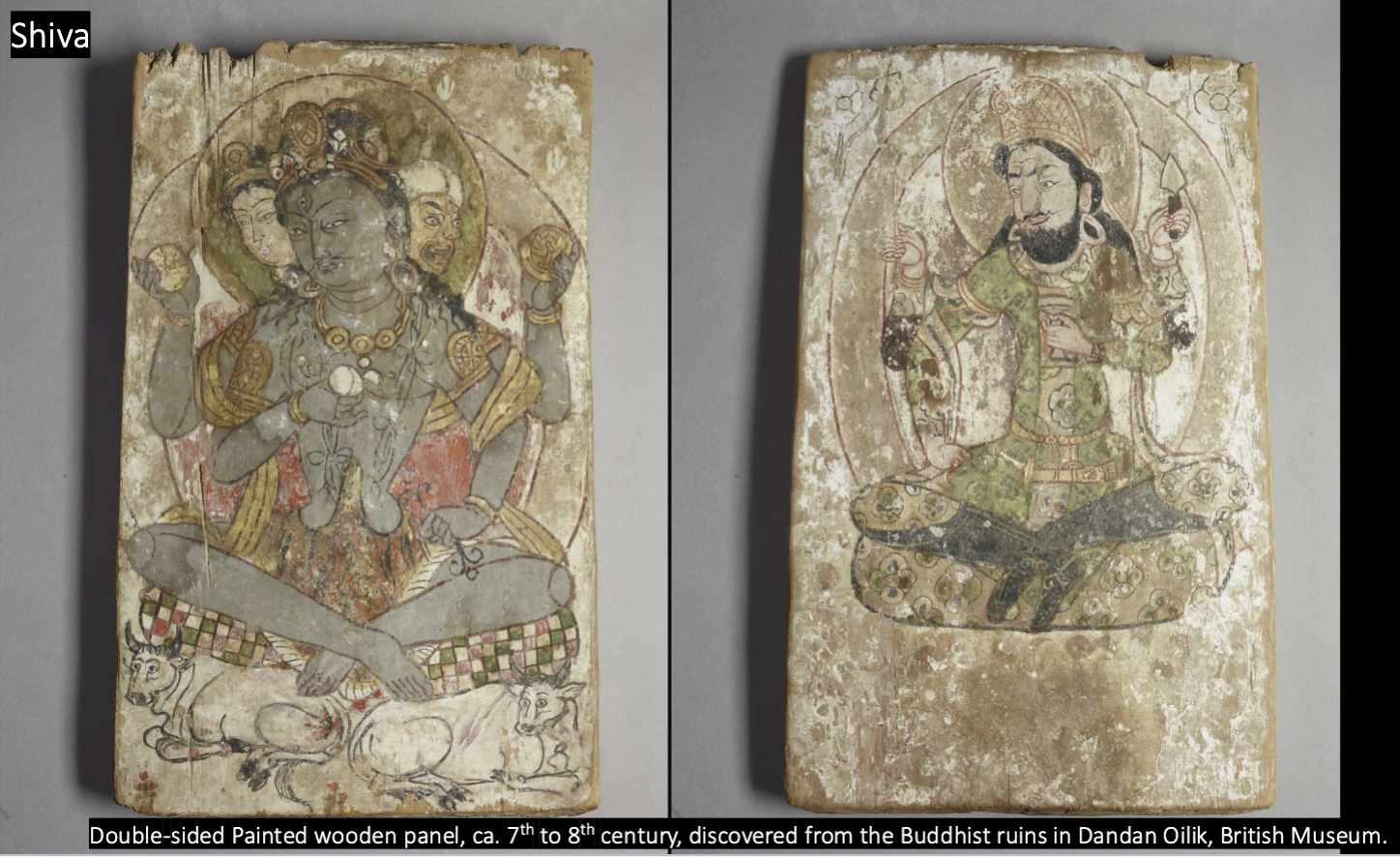
Double-sided painted wooden panel
Dandan Oilik
Historic oasis town and Buddhist site discovered by Hedin in Taklamakan Desert
Khotan Kingdom
Contained Hindu deity Shiva (hindu god)
Showed silk cocoons, and silk stretching, ultimately demonstrating the introduction of sericulture and how it traveled westward from china
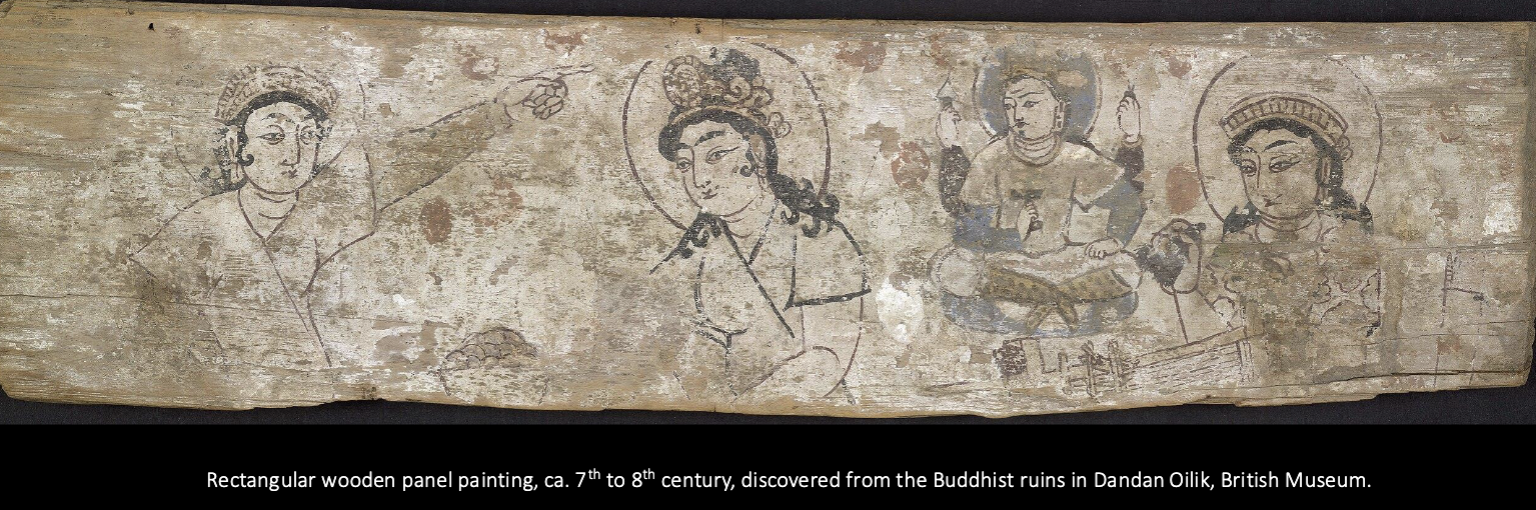
Rectangular wooden panel painting
7-8 century, Dandan Oilik
Khotan Kingdom
Not a religious painting
Emphasis on the princess, gaze is towards the silk, showing the high value of silk
Importance of sericulture and material items traveling westward
blue halo deity=silk god

The Diamond Sutra (printed buddhist book)
“world’s earliest dated printed book”
Dunhuang (important site on the Silk Road, buddhist site)
Discovered in the Mogao Cave’s library cave, where stein went to manuscripts and paintings
The figures are facing left, their gaze directs to where to start reading the text
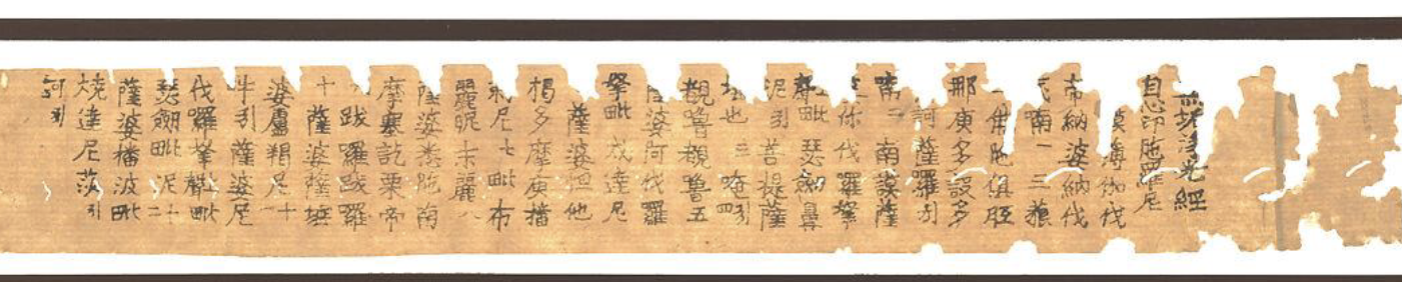
One of one million pagodas
Compared to the diamond sutra
actually an earlier “text”- one of the “One Million Pagodas” of Japan, Empress Koken patronized the creation of these pagodas and promoted Buddhist ideals (764-770 CE)
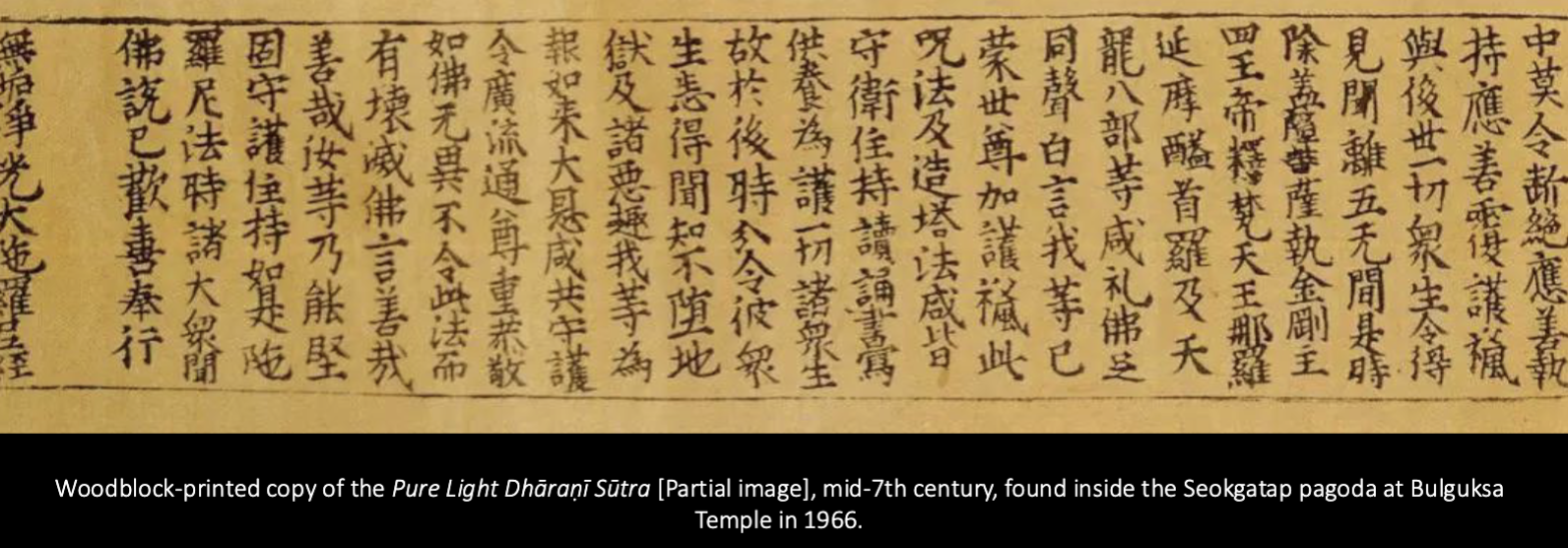
Wood printed copy of pure light dharani sutra
Actually, the earliest wood printed text (compared to diamond sutra and 1 million pagodas)
751, Korea
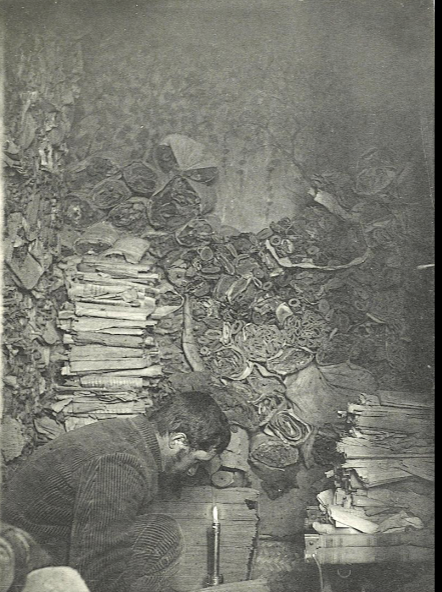
Paul Pelliot
Knew Chinese, didn’t need a translator, and was able to communicate directly with Abbot Wang, and he was allowed to enter the library cave
Went to Mogao Caves 2 months after Stein
examined all manuscripts, and organized them into “essential” and “desirable,” and brought them back to France
Able to take items back bc Qing dynasty was weak
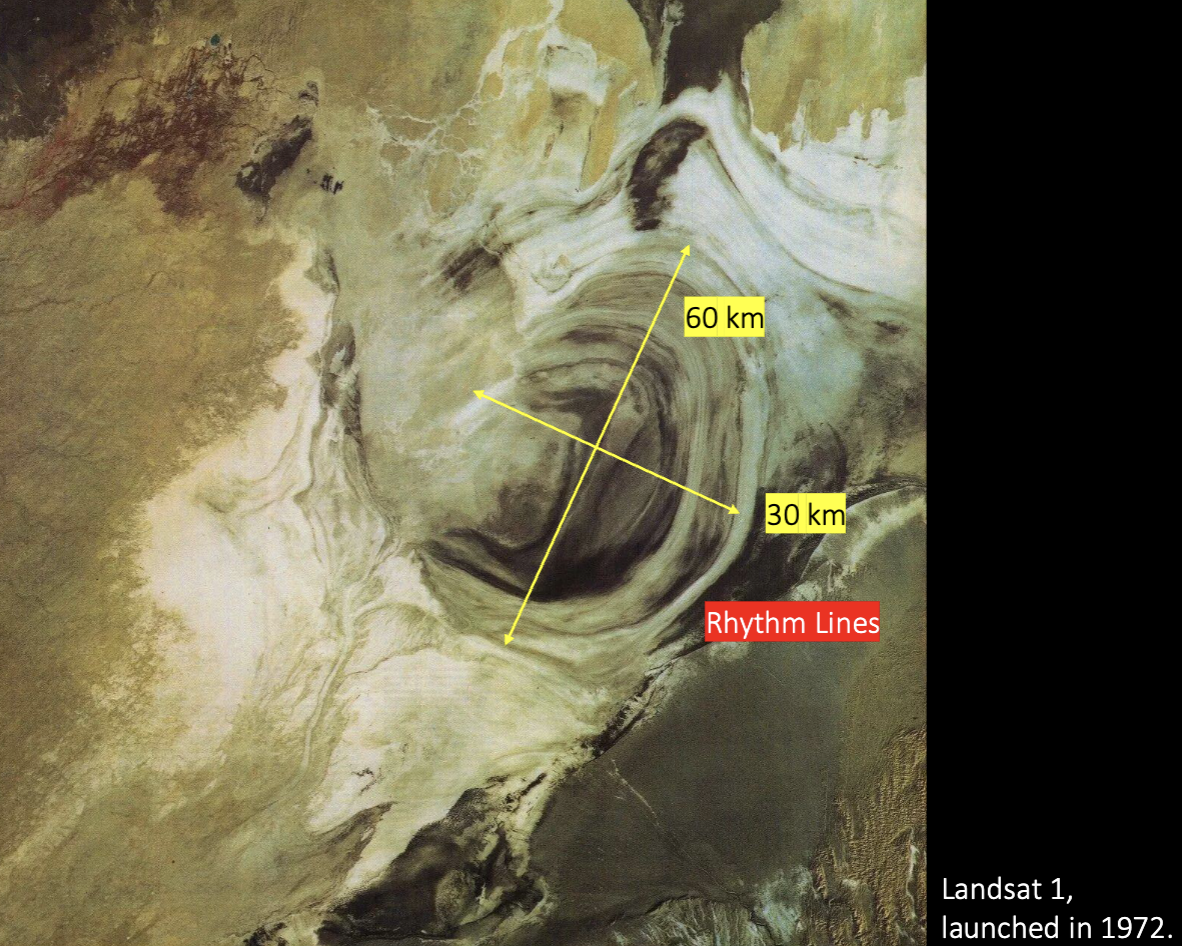
Lopnur Lake (photo taken in 1972) “The Big Ear”
Shows the shoreline of previous lake which has dried out many times (completely dried out in 1972)
“sea of death” bc its a terminal lake for rivers
Tarim Basin
Discovered by Sven Hedin, still had water when he was there (1920s)
Loulan kingdom where Tarim mummies were found in Xinjiang
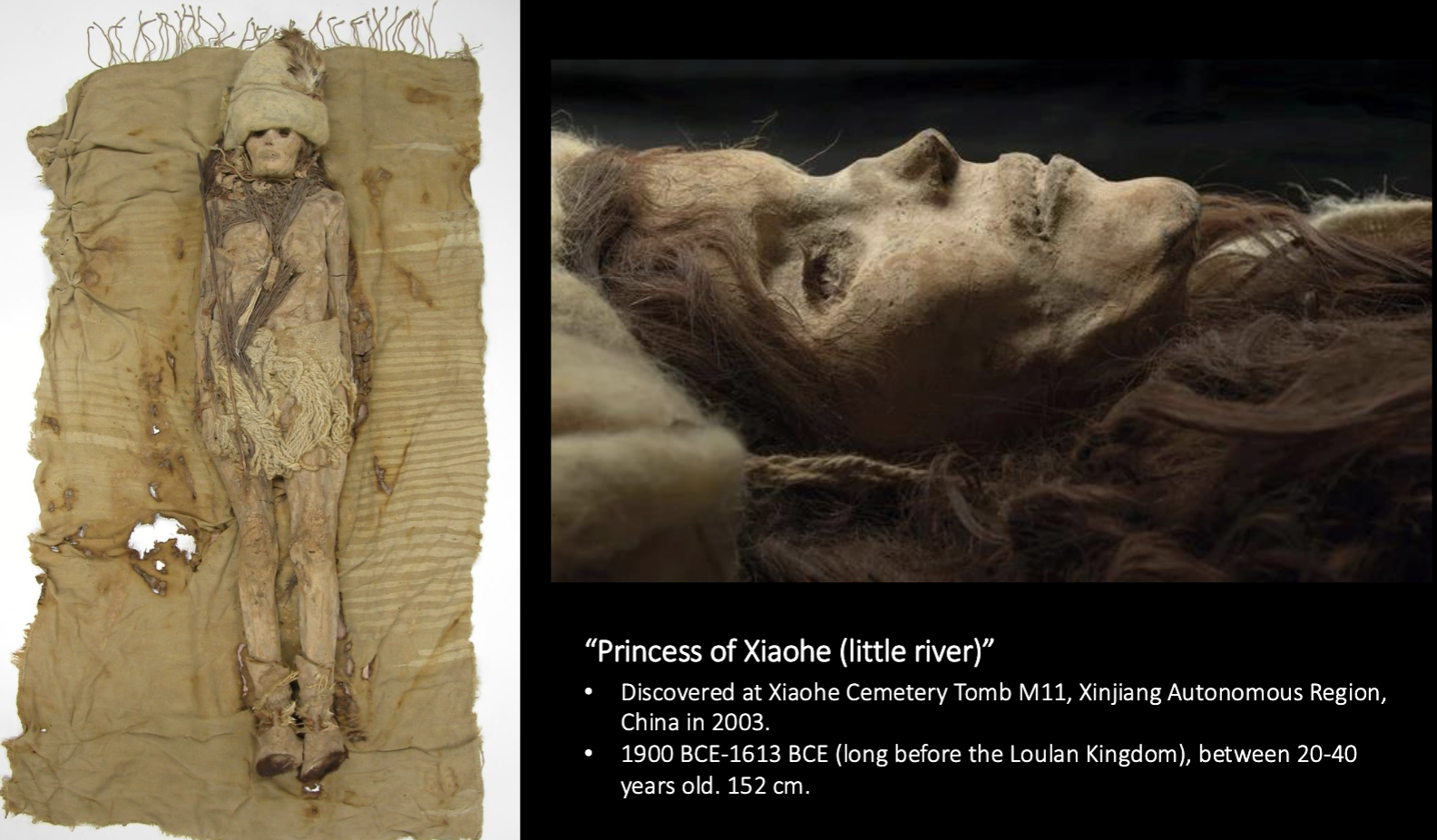
Princess of Xiaohe
Discovered in 2003
1900 BCE-1613 BCE long before the Loulan Kingdom
Tarim mummy
20-40 years old,152 cm
Found in Xiaohe Cemetery in desert, sand hill with vertical wooden panels
Discovered with baskets and other articles of clothing that indicated agriculture was present there at that time
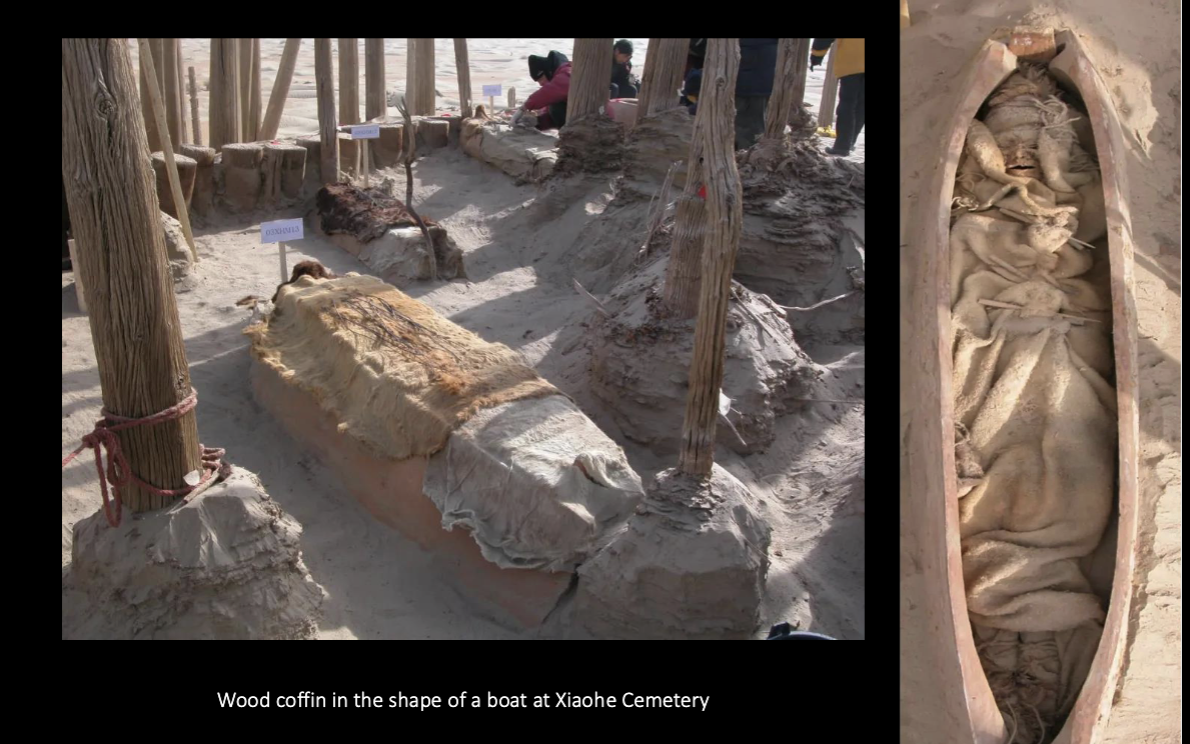
Wooden coffin in the shape of a boat
Found in Xiaohe Cemetery
Indicates a structure of religion that was discovered
Concept of the afterlife because they would put themselves in a boat and potentially believed they could travel to the afterlife via the river
Water is the primary source of their life (maybe because they need it since they live in the desert)
Grains and wheat are common agricultural products
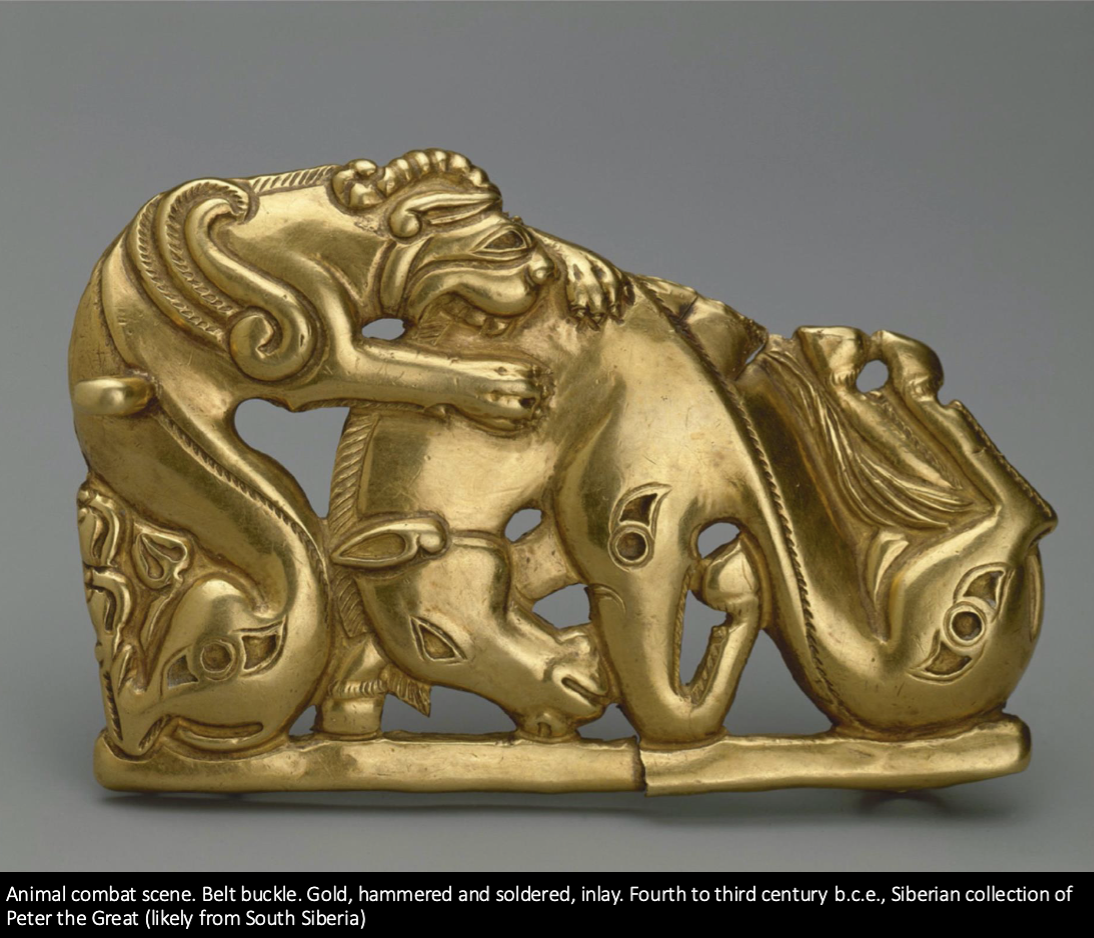
Belt buckle of animal combat
Scythians, 4th to 3rd century BCE.
Gold, hammered and soldered with inlay. Siberian collection of Peter the Great
Nomadic people from the steppe region
Tension and stress of the attack
Popular for the steppe people, Xiongnu
When Emperor Wu of Han launched full scale attack
zoomorphic design/animal style
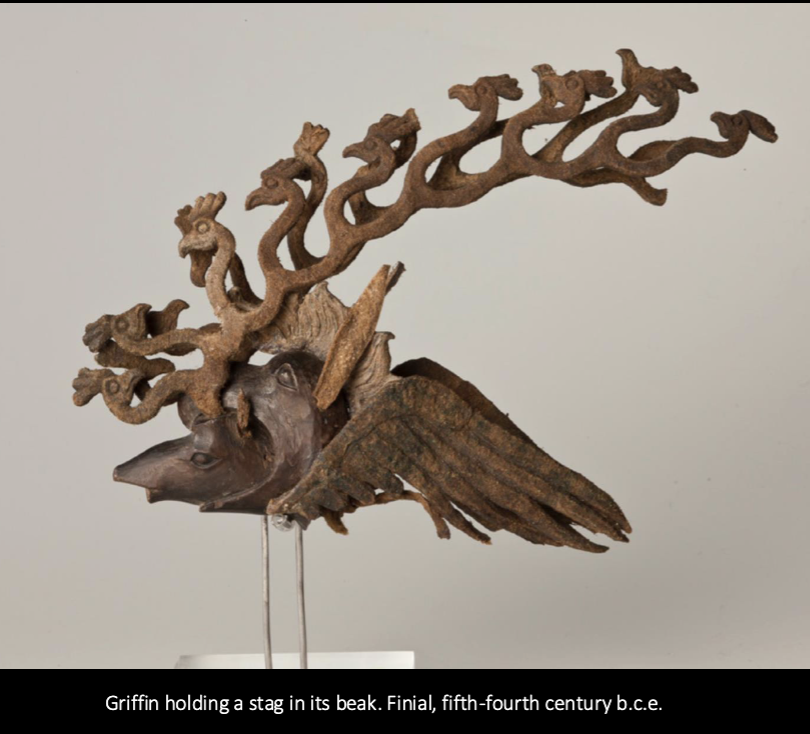
Griffin holding a wooden stag in its beak
5th century BCE.
Visual synecdoche: Combine parts of animals to make one image. Griffin head, bird heads combined with the antler of a deer
Story-telling + metaphoric
This image is also seen with other Xiongnu art
Griffyns have been seen in Chinese art
Shows that the gryffin traveled from the Mediterranean to East China because of the Xiongnu
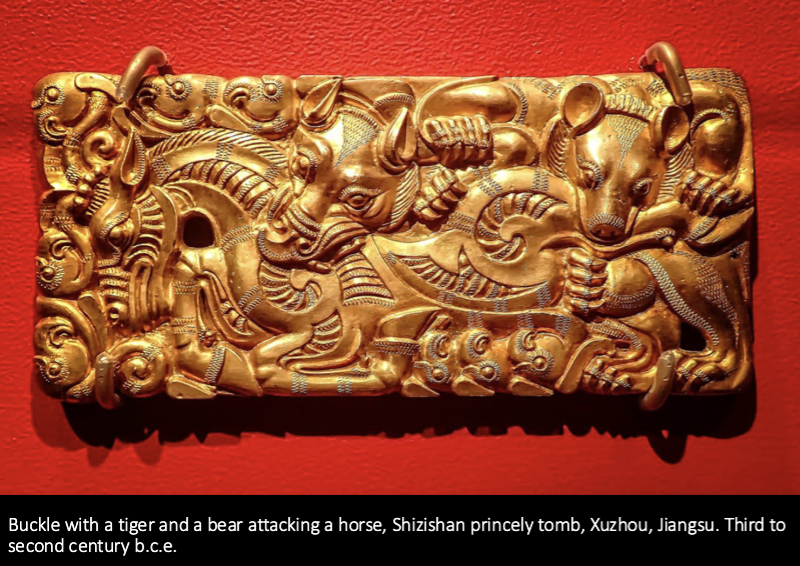
Buckle with a tiger and a bear attacking a horse
3rd to 2nd century BCE.
Excavated from the princely tomb of the King of Chu in Xuzhou, Jiangsu Province, China.
Demonstrates steppe Xiongnu art influence in Chinese tombs
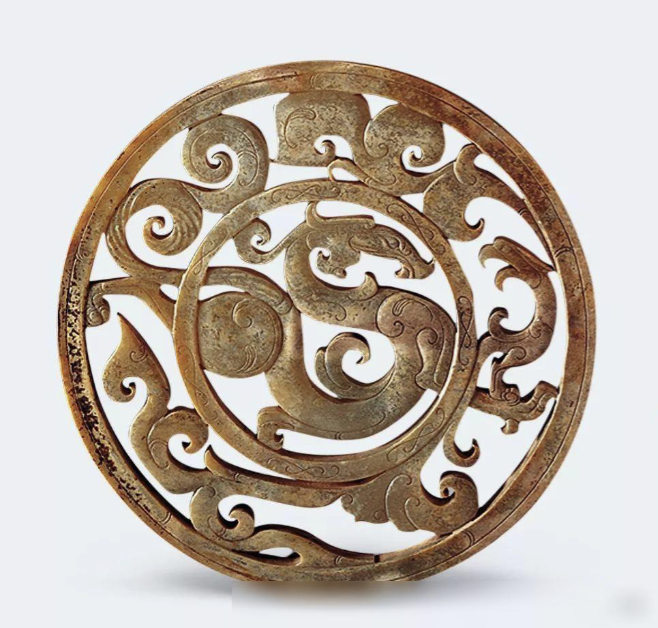
Jade disc with phoenix and dragon designs
2nd century BCE. Excavated from the princely tomb of King of Nanyue, Guangzhou, China
Demonstrates steppe Xiongnu art influence in Chinese tombs
Trans-eurasian visual language, how zoomorphic images traveled from the Mediterranean and went east
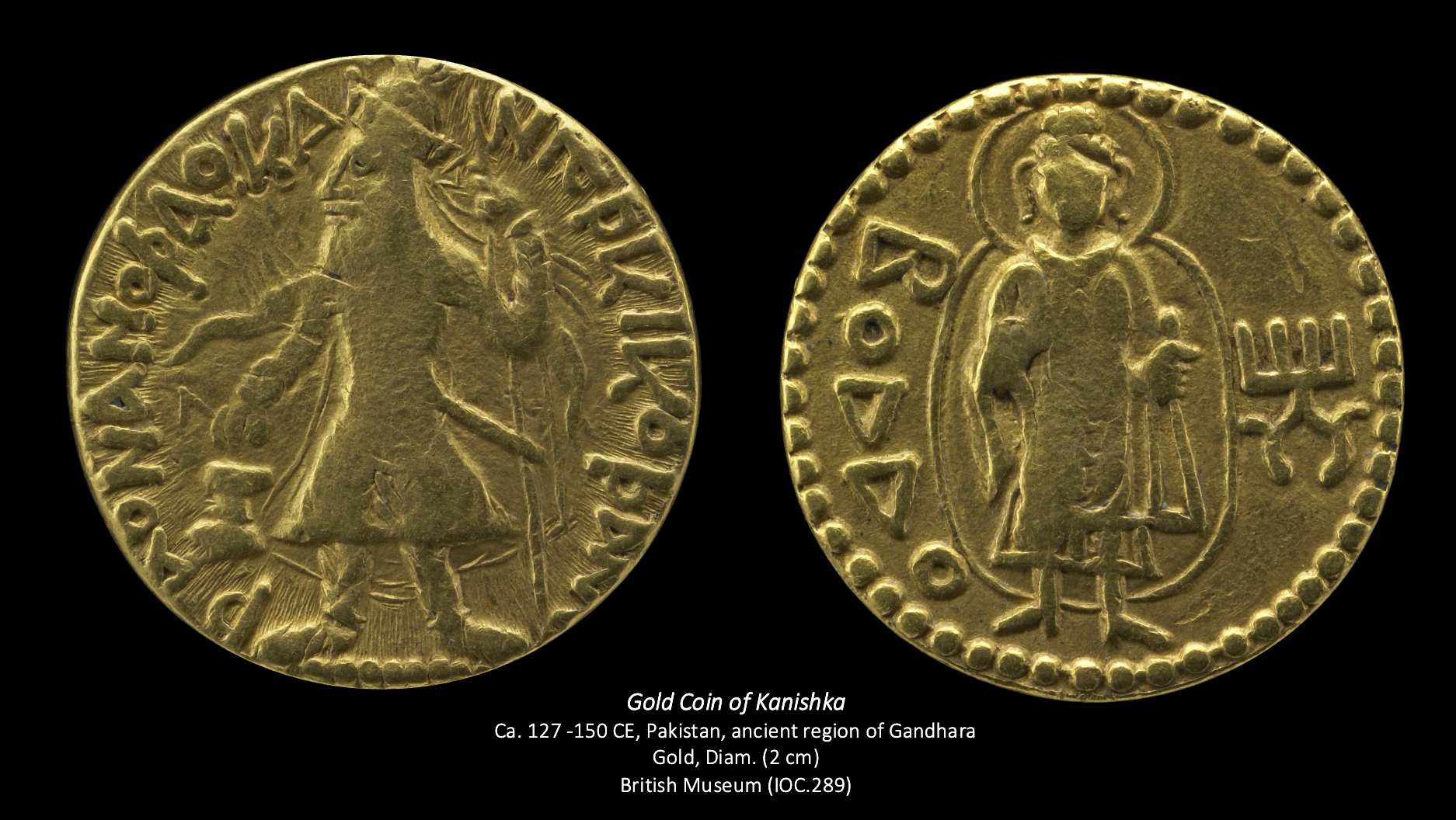
Gold Coin of Kanishka
Kushan Empire (predecessors are Yuezhi, had influence from Mediterranean art, NW china, Yuezhi defeated by Xiongnu and forced to leave)
This coin is significant because it has the earliest securely-dated image of Buddha (127-150 CE)
follow the Greek-Roman way of creating coins
Tamga seal- signature of the emperor or authority
Shakyamini Buddha, from Nepal, protrusion on top of his head
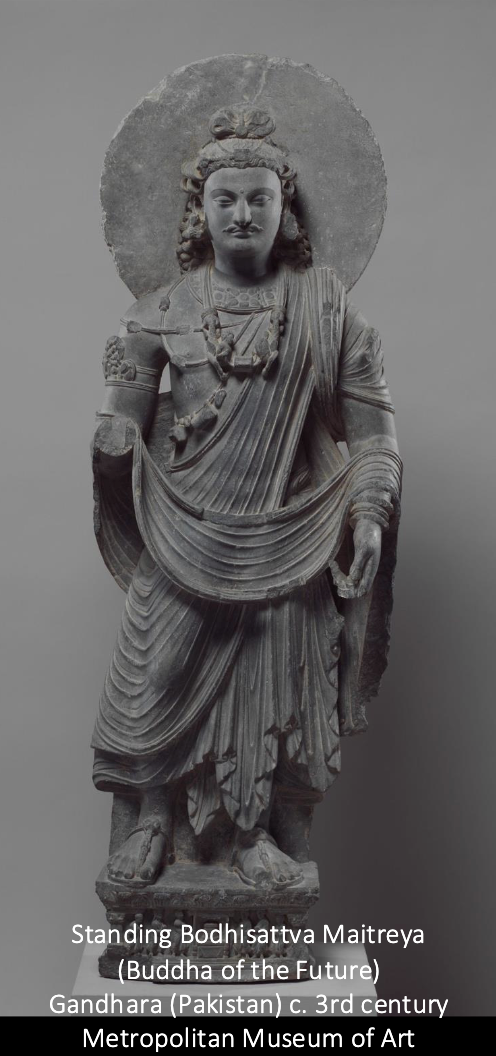
Standing Bodhisattva Maitreya (buddha of the future, not called buddha)
Resembles Roman clothing with draped robes
They are very realistic, which is different from later Buddhist art
Standing posture
Kushan Empire first major attempt to depict buddha in human form
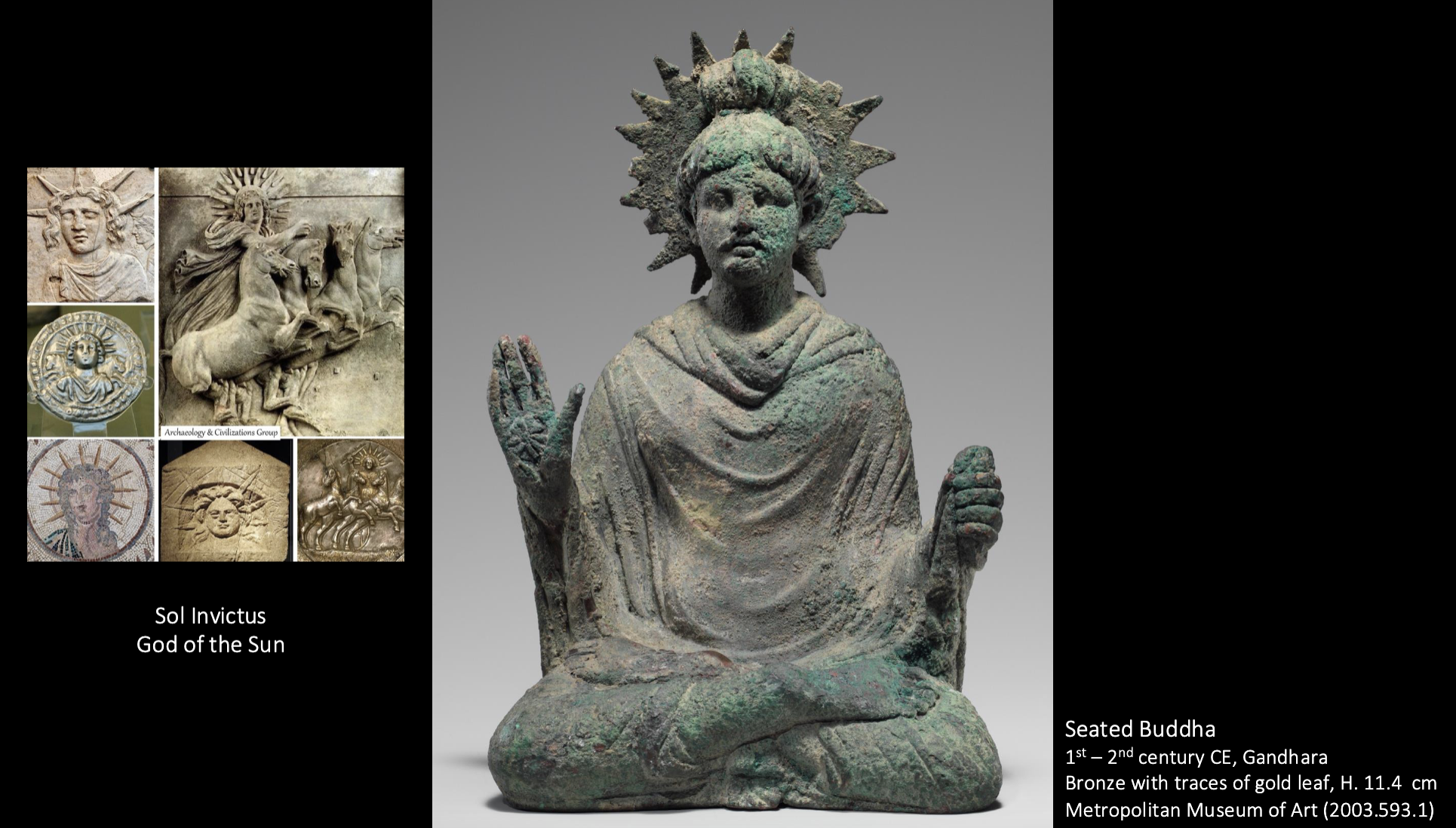
Seated Buddha
1-2nd century CE
Draped robe
Halo→ god of the sun, which was commonly depicted in classical art in Greco-Roman culture
Influence of romans on buddhist art
Kushan Empire first major attempt to depict buddha in human form
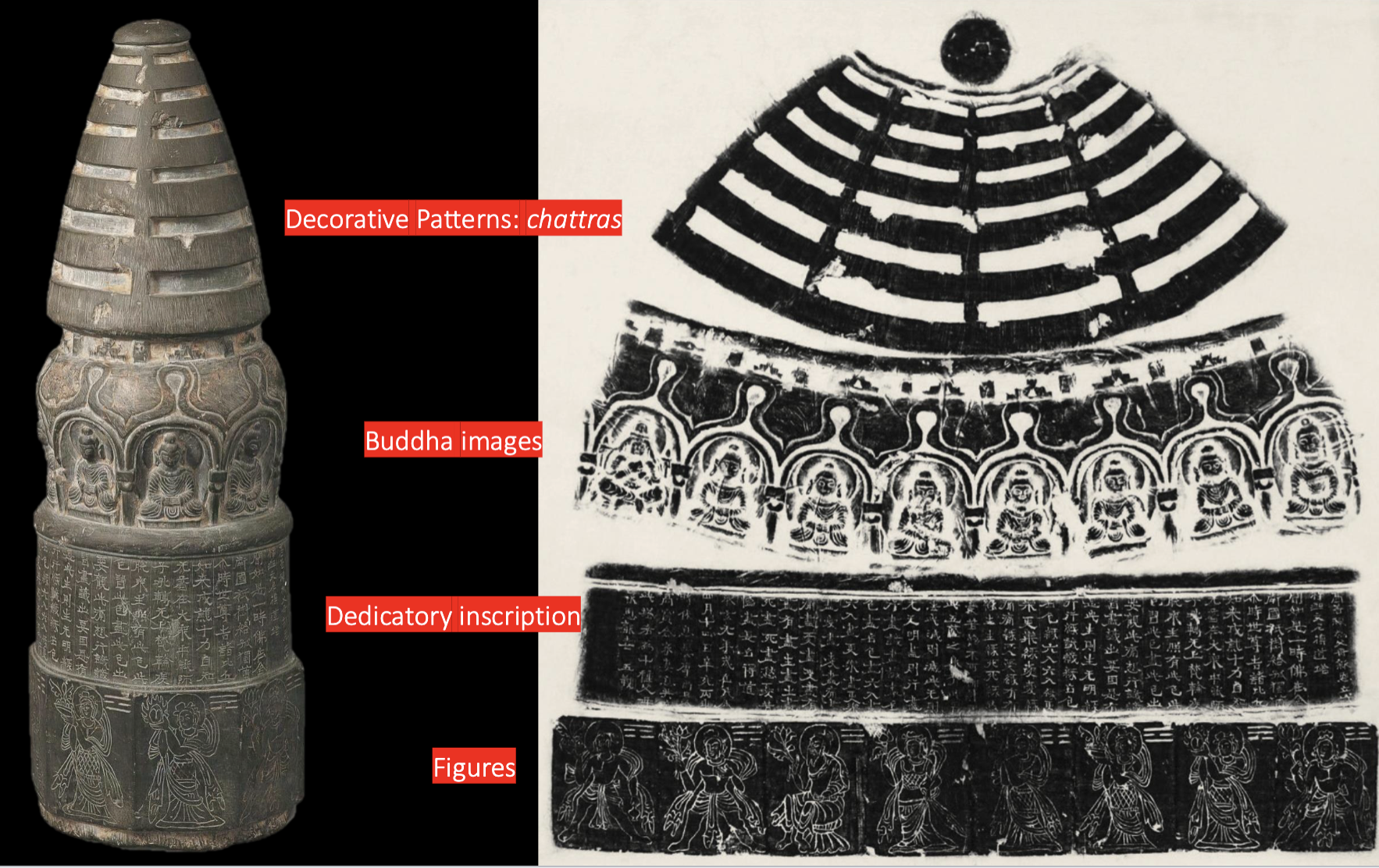
Northern Liang Stone Stupa
Commissioned by Gao Shanmu 428 CE
Similar top part of the stupa (called the chattra)
First stupa in asia, not steppe region?
Stupa (buddhism)
Top part: chattra
2nd layer: seated buddhas
3rd layer: inscription
Bottom layer: figures
Eight trigrams (indigenous belief)
Originates from yinyang
Split up into seasons and then 8 different weather types
Encoded by gender, age, and kinship
Ex. buddha of the future with 7 buddhas of the past (2nd layer), the figure below the buddha of future is the gen trigram which means stopping, the ghost gate through which spirits enter and exit
Death is the stop, but also the rebirth (the promise)
Incorporated Chinese culture with their northern liang culture
14 other similar stupas found in northern liang region
demonstrates cultural hybridity
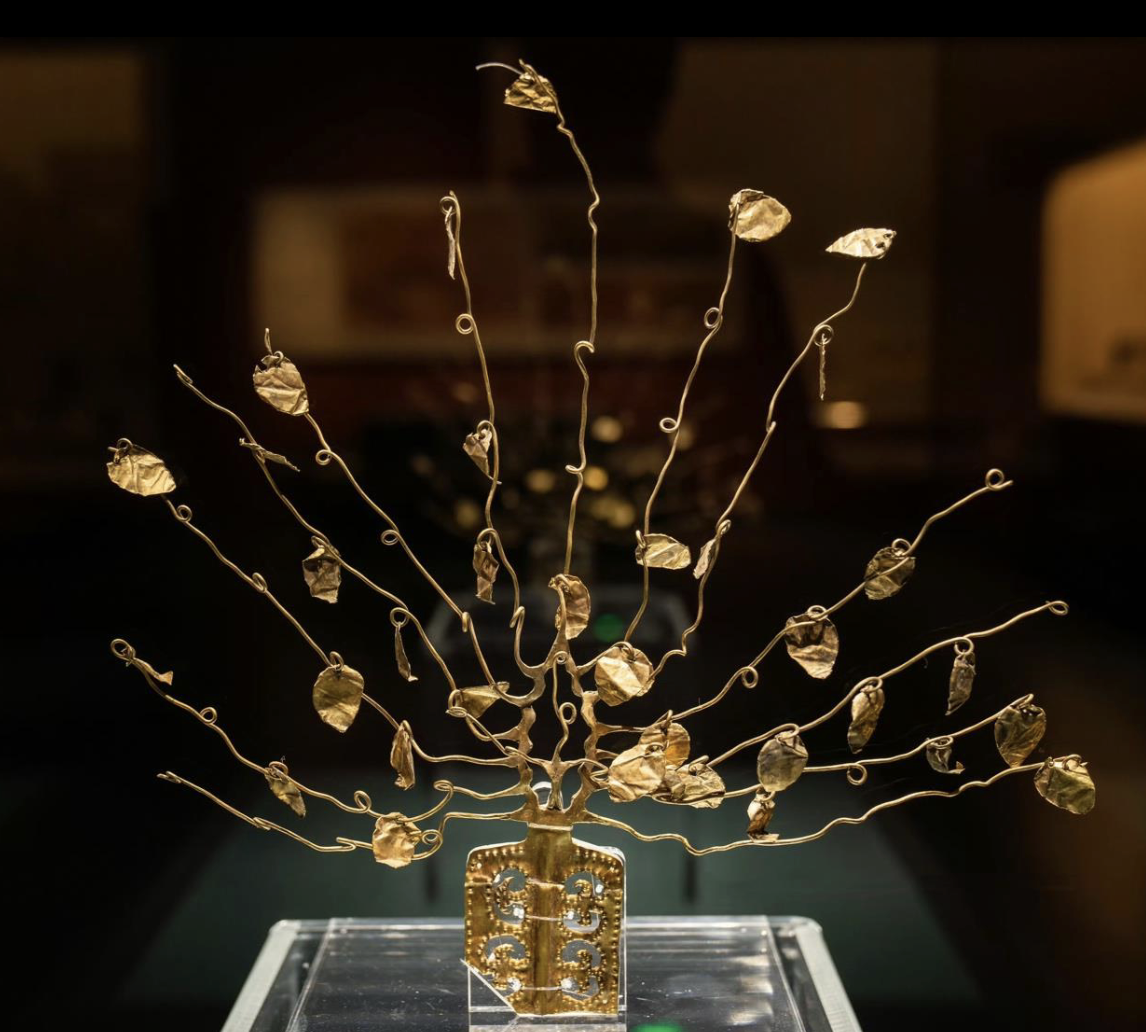
Hat Ornament
Former Yan (after northern liang)
Excavated from tomb no.2 of Tiancaoguo, Chaoyang
Braided into the hair via flat metal piece
Golden leaves w/ branches
Signature features from other cultures
Similar leaves in afghan crowns
Similar hat ornament in mongolia/steppe region
Similar queen’s crown in korea
Gilt bronze crown similar leaves in Japan
With golden art pieces also can see buddhist features
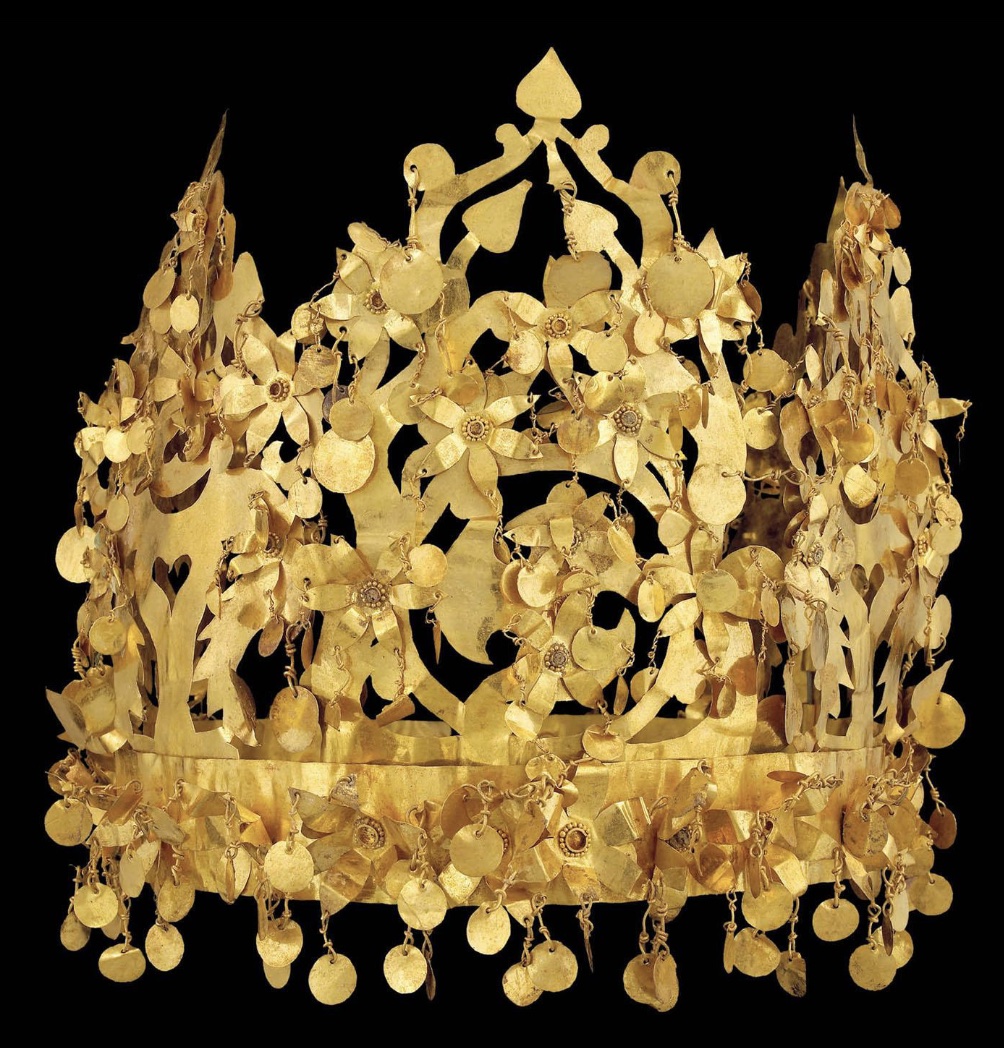
Gold Crown w/ disk ornament
Afghan Crown
similar to buyao hat ornament
Signature features from other culture
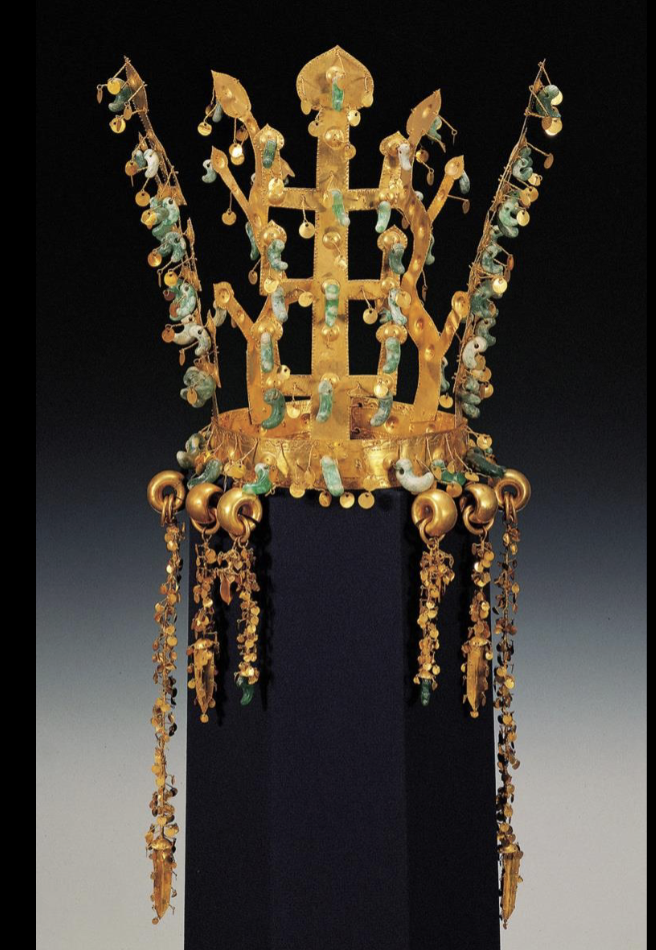
Silla Queen’s gold crown
queen’s crown in korea
Excavated from the Hwangnamdaechong Tomb, 5th
similar to buyao hat ornament
Signature features from other culture
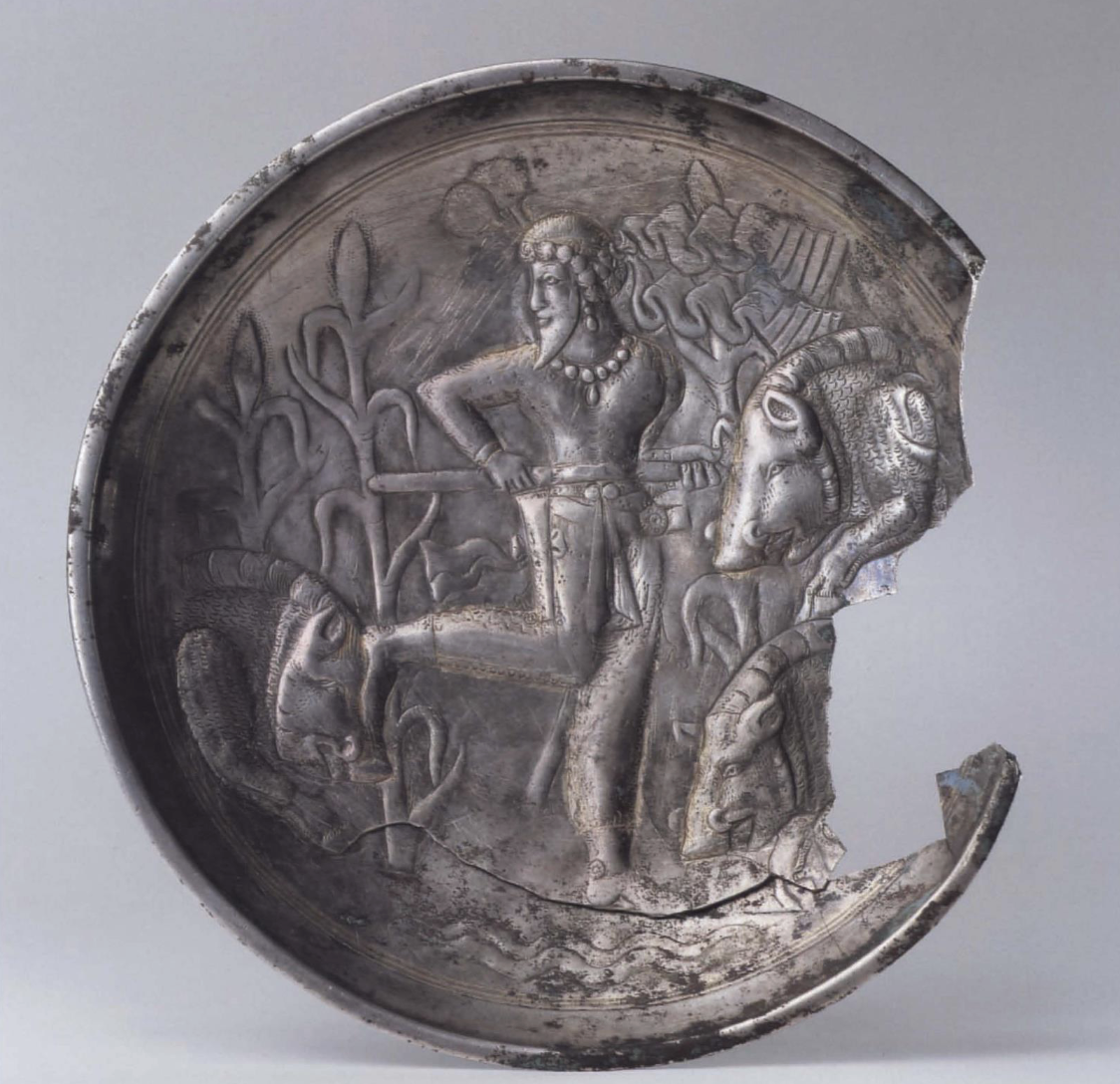
Plate with hunting scene
Pingcheng Age in Northern Wei
Imported metal work from Sasanian empire
kingdom/culture between the west and east
Known for making luxury objects
silver, found tombs in pingcheng, boars, spear, plants in background
Created before sasanian gold ones
excavated from tomb of Feng Hetu
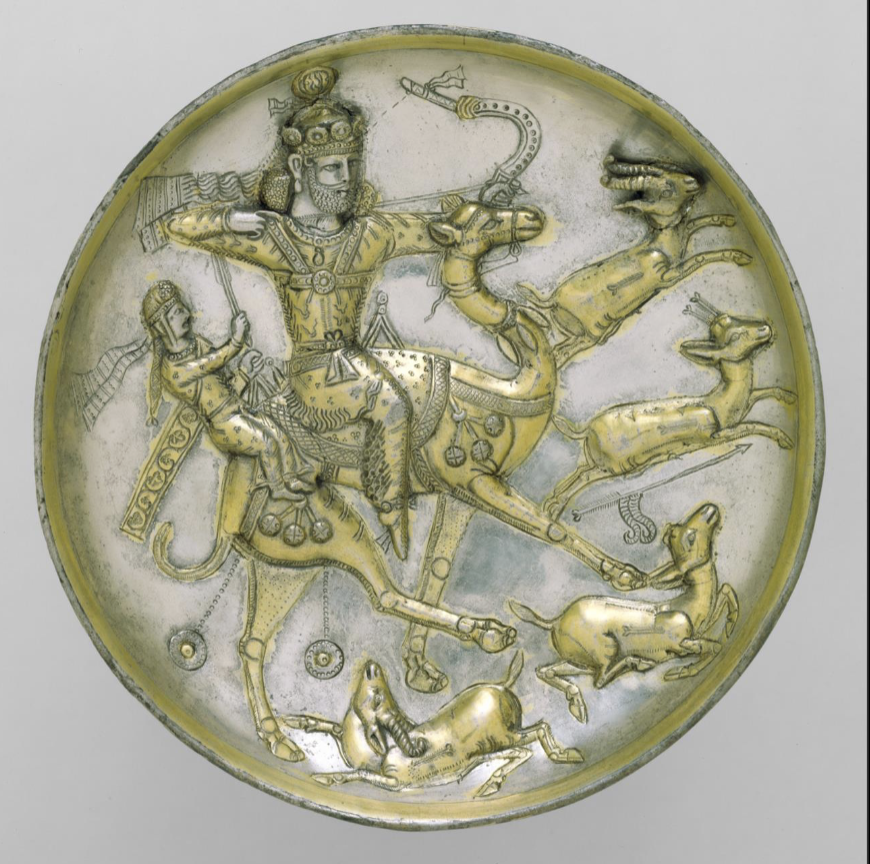
Silver plate with hunting scene (silver, mercury gilding)
man riding a horse, shooting arrows at deer, depicting a person hunting, aspects of royal figure
similar plate found in sassanian empire in iran
5th century
Pingcheng Age in Northern Wei
Imported metal work from Sasanian empire
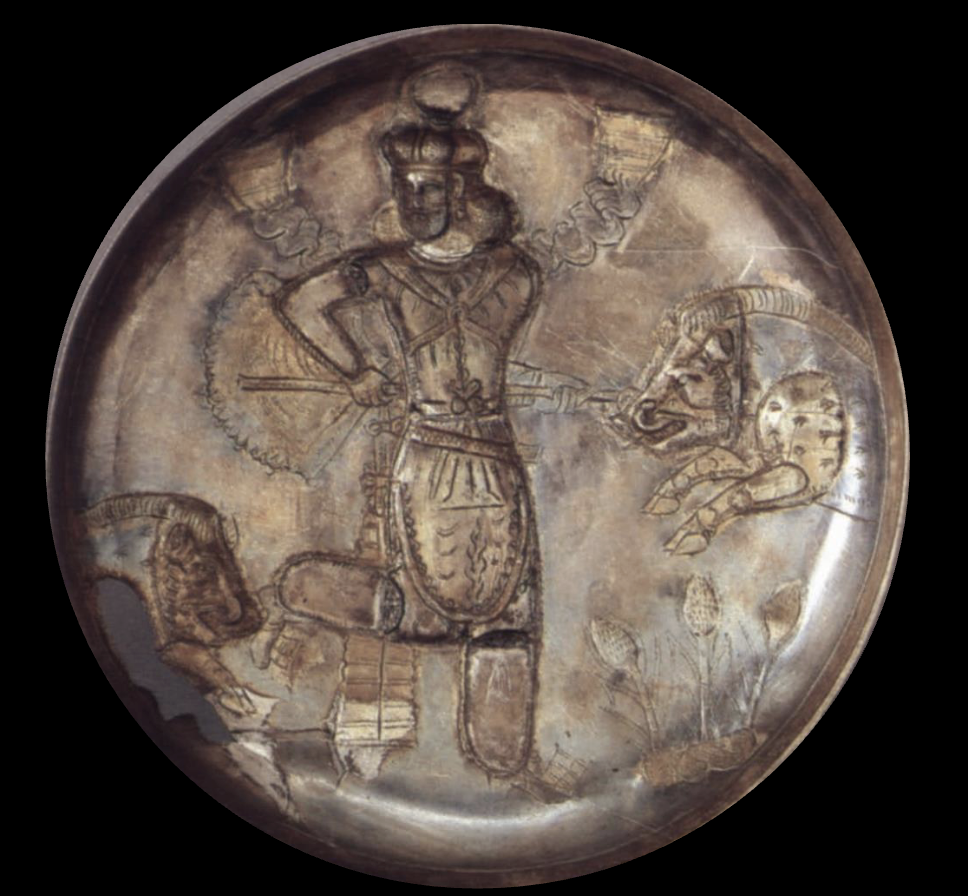
Silver plate with hunting scene (gilt silver, Afghanistan)
similar to northern wei/pingcheng plate (late 4th century)
provincial sasanian Afghanistan
shows how it traveled
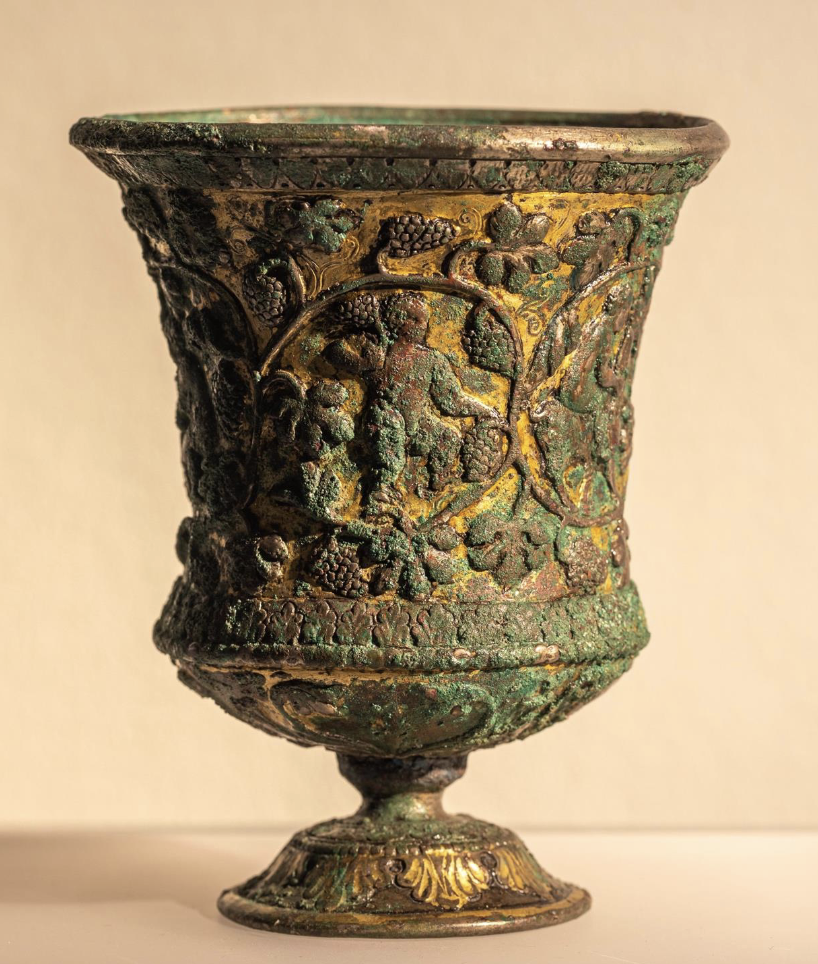
Stem cup with figures and grapevine
not common form of drinking wine in china (lacquered ear cup is), motifs show birds on grapevines which form a circle with a boy picking the grapes in the center, leaf and beaded decorations, found in pingcheng
Also a stem cup with animal and humans in Sassanian empire
With both these cups, only background was gilded (can see with gold) not the decorations
excavated at datong, shanxi
imported metalwork from sassanian empire
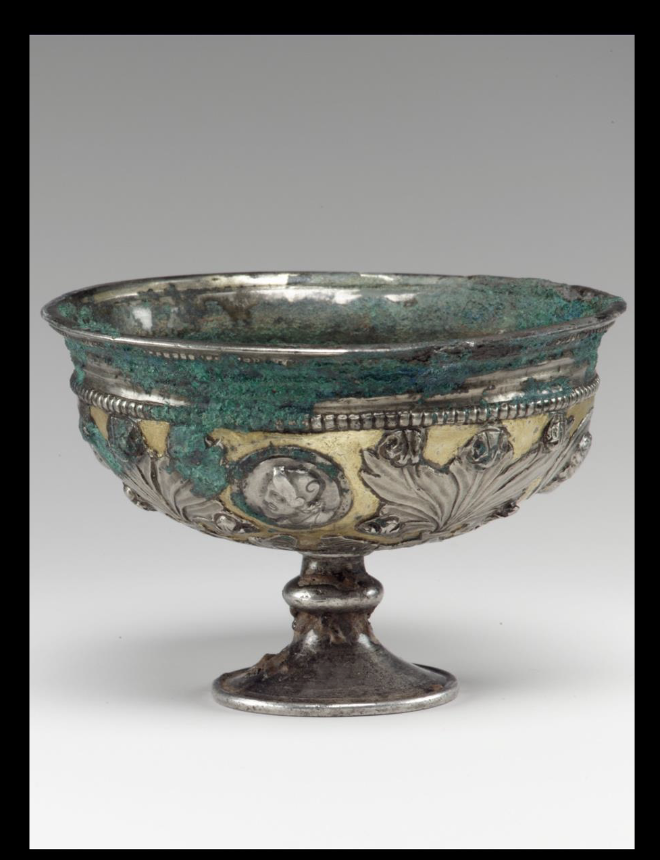
Stem Bowl
gilded silver, from sassanian
chinese didn’t gild decorations, so it shows how the ones above in China came from the Sassanians via the Silk Road
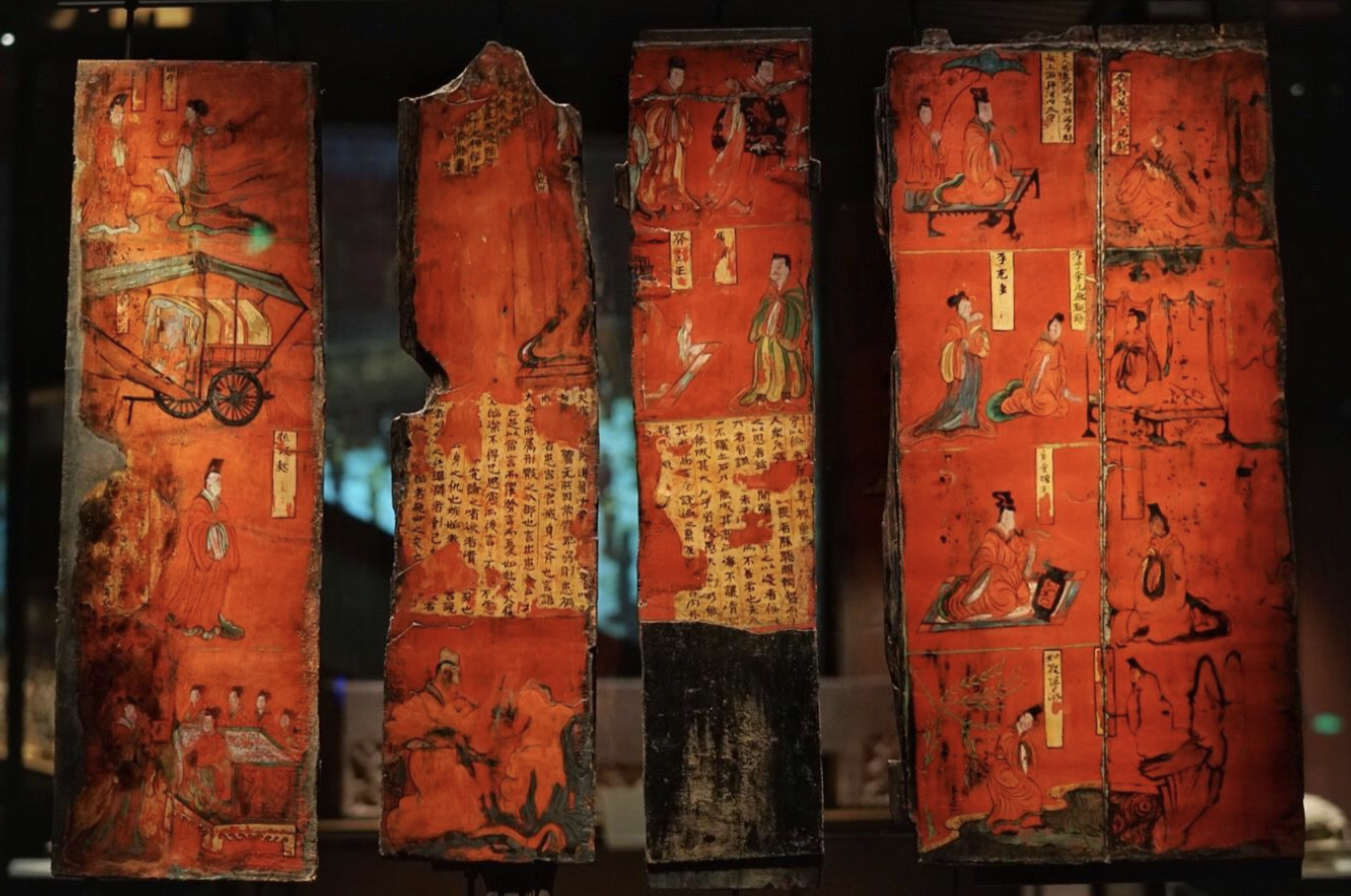
Section of a painted screen (in Sima Jinlong tomb)
northern wei/han, wife xiongnu
tomb im pingcheng
Screen placed behind an important person in their tomb
Several stories recorded on this screen that portrayed virtuous women and sons that had good morals, also had written annotations of the stories
Emperor cheng (riding in chair) of western han dynasty deeply in love with consort ban (woman behind him), she politely rejected him bc she said he focus on government bc she would be a distracted, shows a virtuous woman
There was also a painting of emperor cheng and consort ban made in the south by hu kaizhi, portraying the same story
Differences between south and north portrayals: south has more men carrying emperor, more color in north bc its a screen, emperor cheng appears more creepy bc he is peeking outside to consort and the men are watching him (in the south) and more normal (in the north)
More emotion in south painting
fusion of northern xianbei and southern han culture
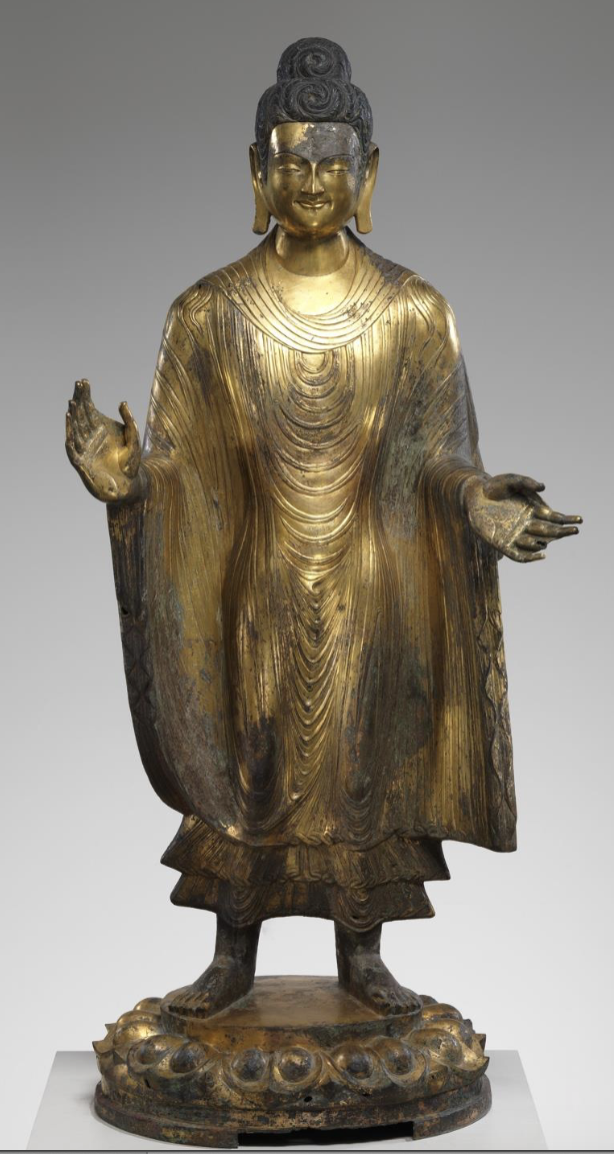
Maitreya Buddha (pingcheng)
gilt bronze with traces of pigment
Emphasis on body shape, tighter fitting robe
486m pingcheng era
ghandara style, represents how xianbei/northernwei used to be more like xiongnu before moving south to the Han
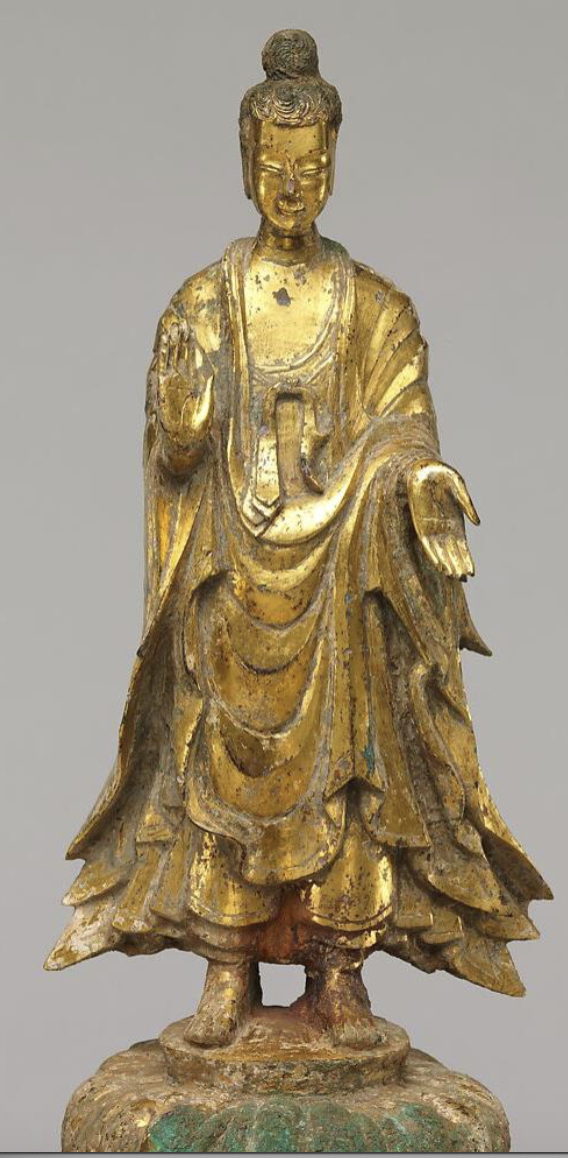
Maitreya Buddha (Luoyang)
Gilt bronze
Flowy robe, less tight (Han chinese robe, not found in central asia)
Face is narrower than Pingcheng, han chinese aesthetics
525, Luoyang age
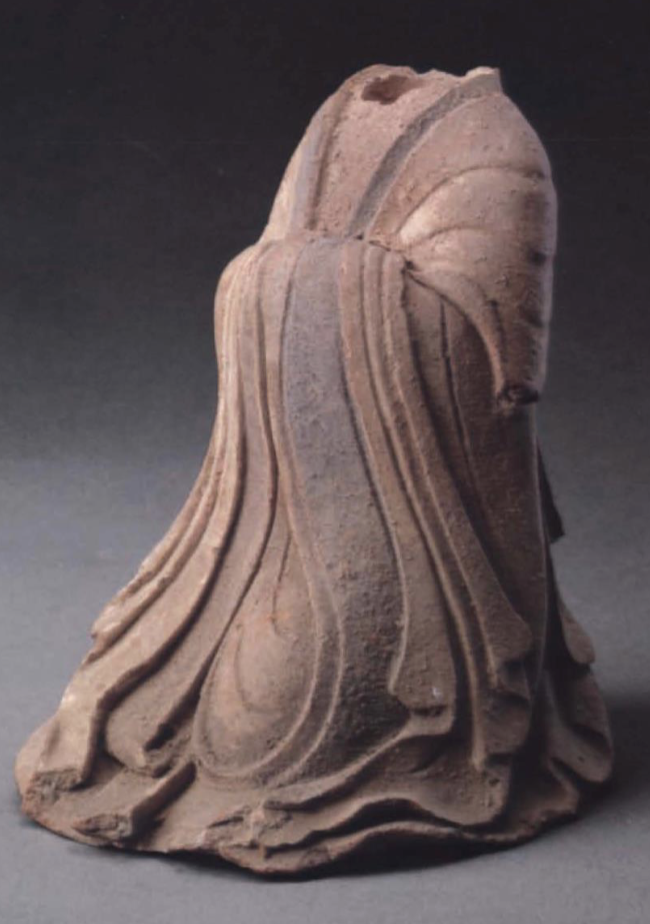
Headless standing figure
Terracota woman wearing head covering in song shaozu tomb
Significance: Artist had no interest in depicting the body, beauty does not come from body like ghandara and greco roman structures
Clothes becomes the body, body depicted through clothes
Compared in female figurine in SimaLong tomb
Simalong had traditional xianbei clothes
This figure had han clothes
excavated from yongning monastery, luoyang (Perpetual Tranquility, smile of the northern wei, functioned like buddha stuppa)
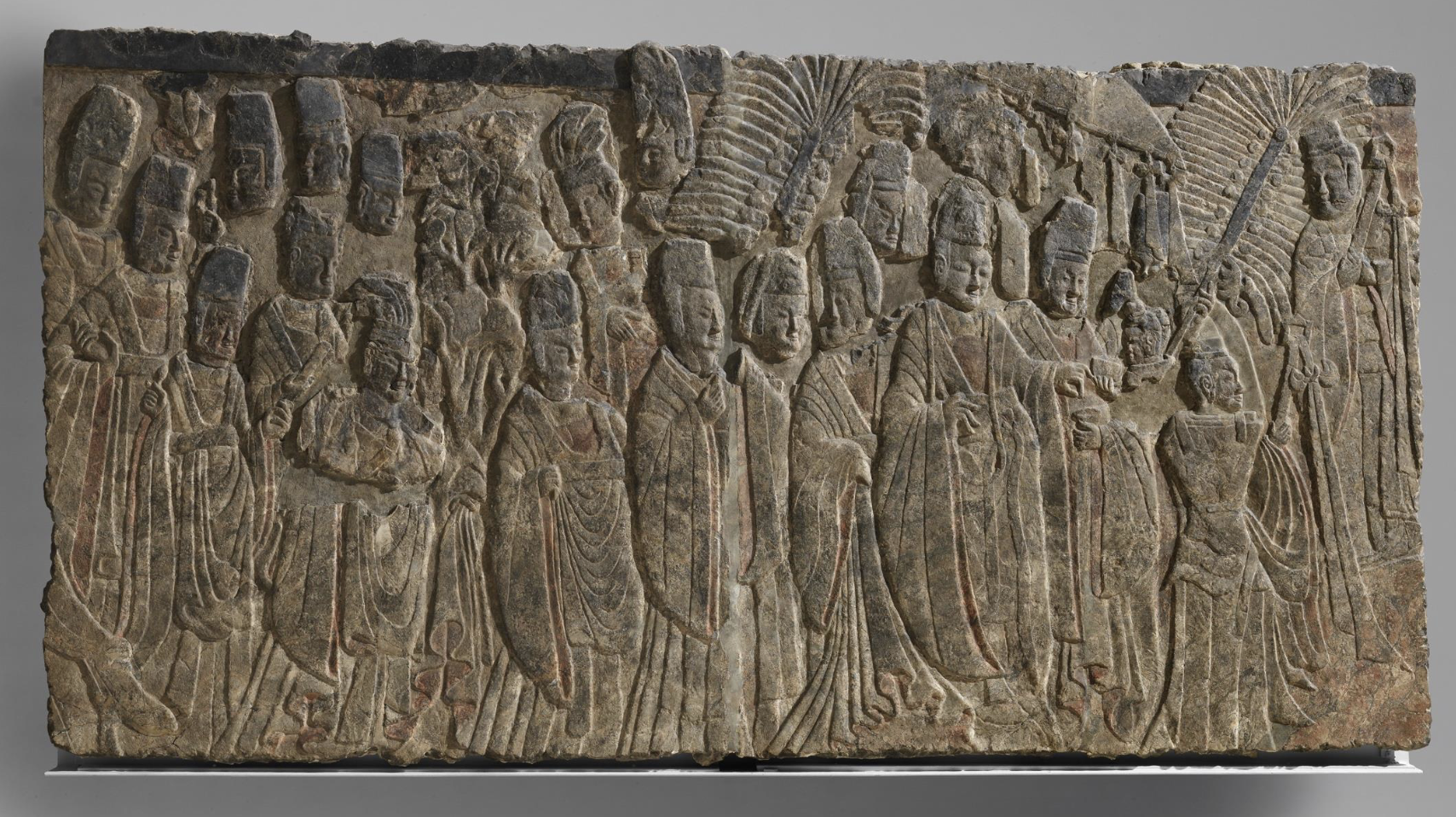
Emperor Xiaowen and His Court
Dress in a long robe (Han Chinese traditions)
Shows imperial family in Luoyang
From Longmen grottoes
Binyang Central Cave commisioned by northern wei emperor
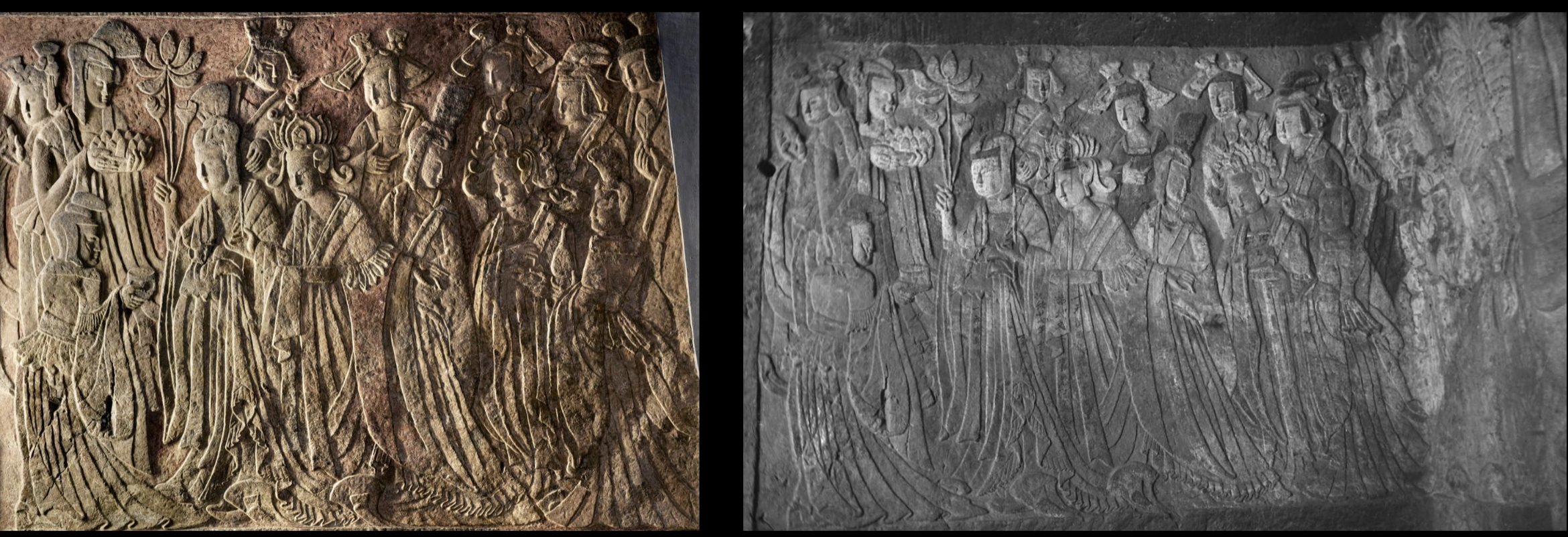
Empress Wenzhao and her Court
Longmen Grottoes
Binyang Central Cave commissioned by northern wei emperor
Recreated but does have some differences: more relief in originals’ faces more upper class, recreated version does not recreate this effect
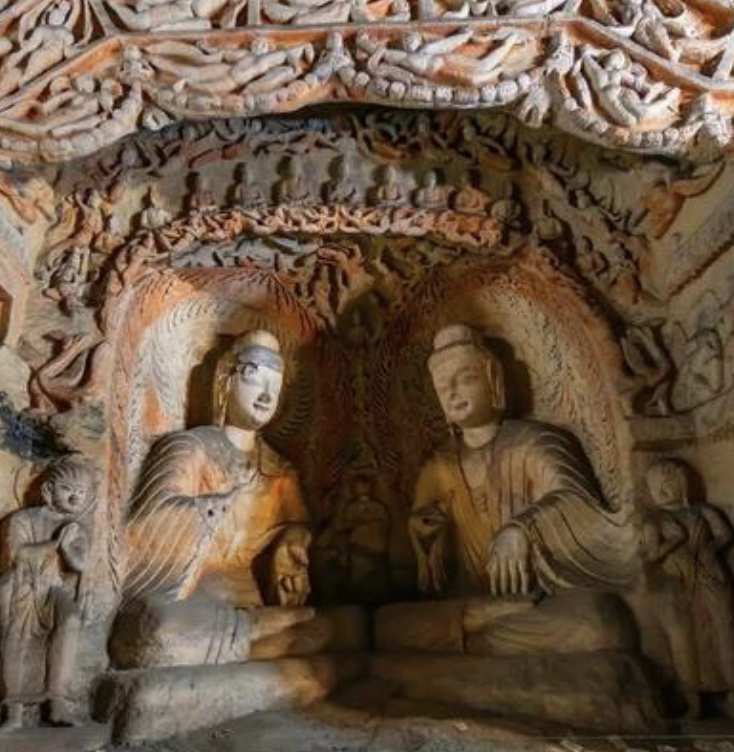
Twin Buddha Niche (cave 3 Yungang Grottoes in Pingcheng)
twin buddha motif: the historical Buddha and one of the past Buddhas seated together
intertwine w/ patrinage of elite women in northern wei bc it symbolized equality between the 2 buddhas
Having 2 people side-by-side reflects equal power
coincided with peak of elite women influence in northern wei court
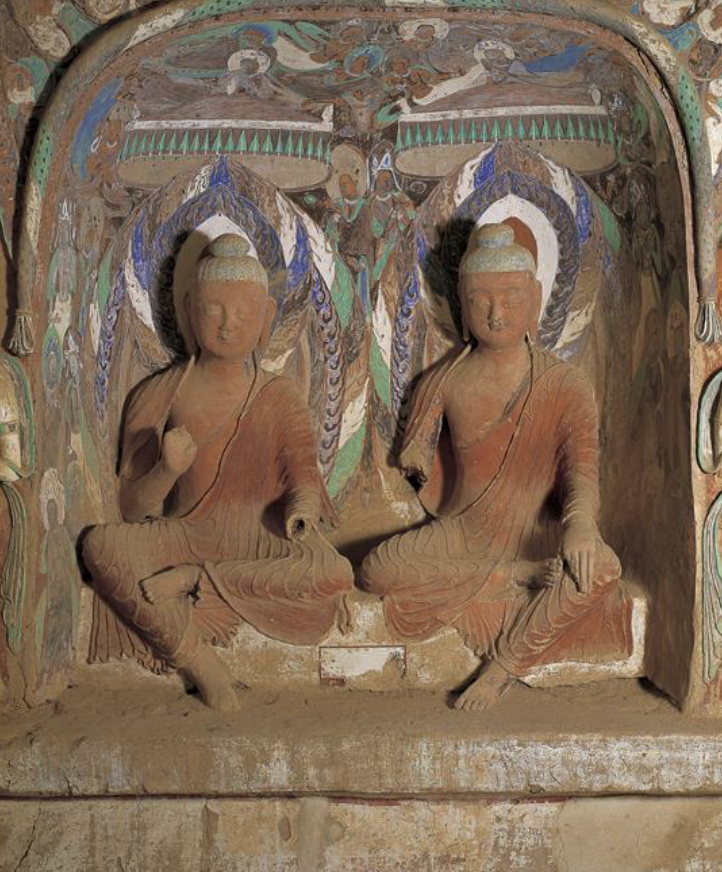
Twin Buddha Niche (Mogao Cave, dunhuang)
twin buddha motif: the historical Buddha and one of the past Buddhas seated together
intertwine w/ patrinage of elite women in northern wei bc it symbolized equality between the 2 buddhas
coincided with the peak of elite women influence in northern wei court
Having 2 people side-by-side reflects equal power
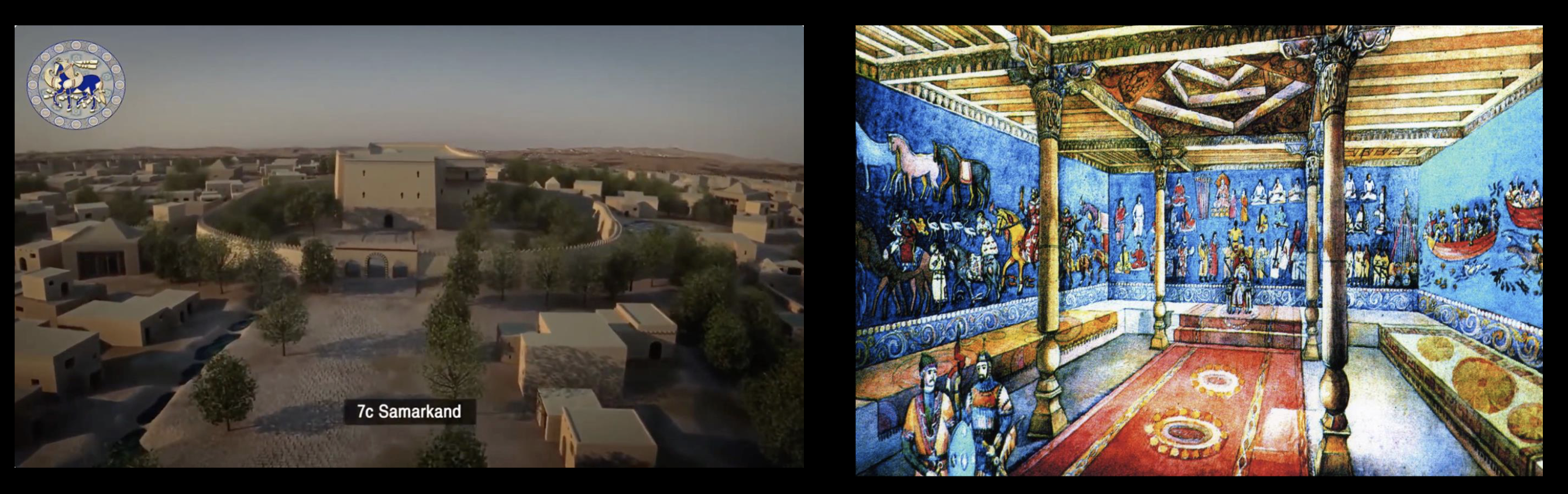
“Hall of Ambassadors”
Afrasiab (Sogdiana), Sogdians
contained wall paintings
west, east, north, south wall murals
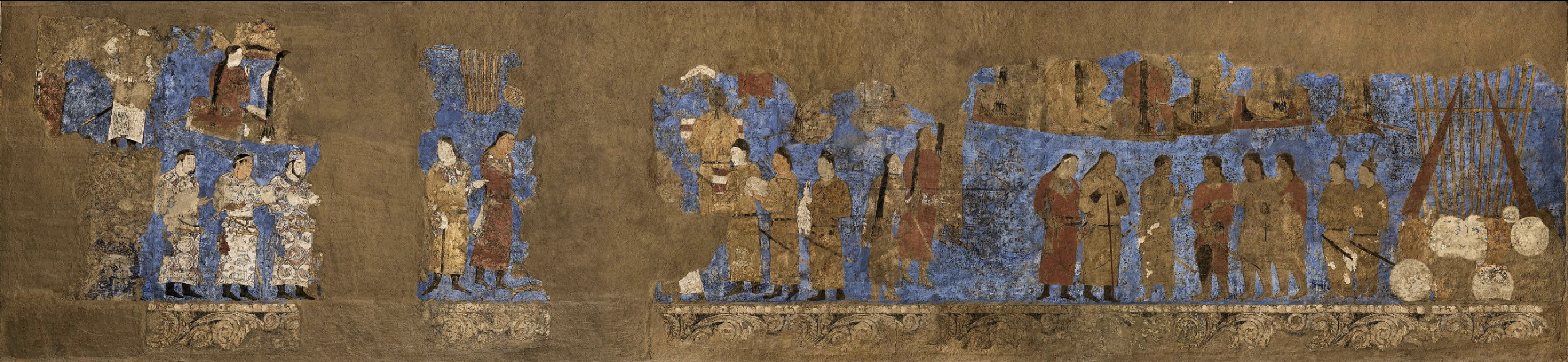
Murals of the West Wall
found in the Hall of Ambassadors
1st group of people holding silk, textiles, threads, and cocoons→ chinese embassy
2nd group has 2 people from with swords/weapons→ korean diplomats
3rd group dressed in robe with beaded pattern and circular motif→ central asia diplomats
Inscription alludes to 2 central asian states→ Chaganian, Cach
These states are sending people to Samarkand to present gifts
This can be confirmed by chinese historical scripts
Top part ruined, reconstructions made
Assumption 1: Varkhuman Unash is at the top, and they are giving items to the governor
Other possibilities: there are 2 sogdian deities at the top representing the heaven, and the lower part represents earth, no governors
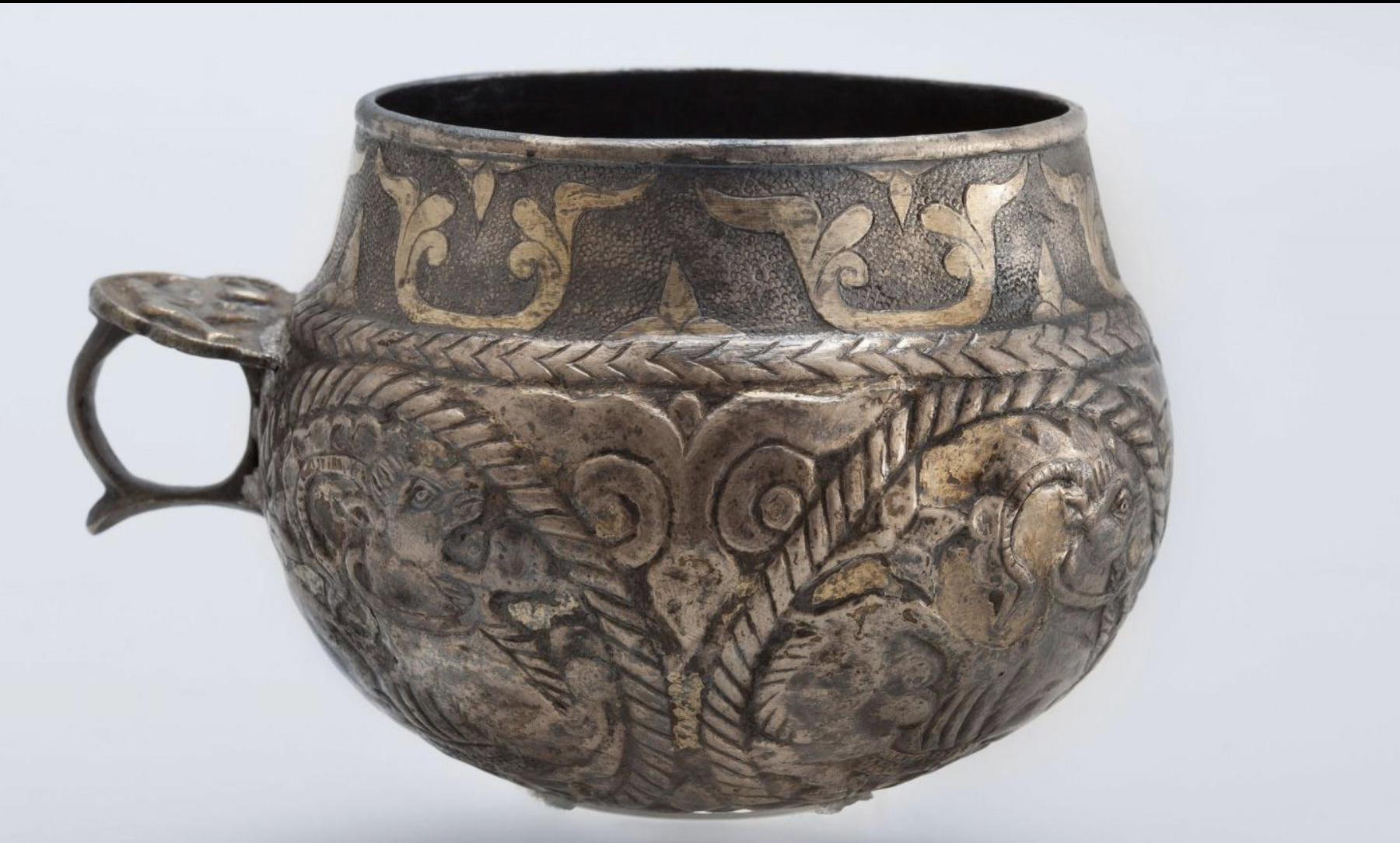
Cup (Sogdian Metalwork)
ancient Sogdiana, found in the Don River in Russia
Mountain goat depicted, enclosed in a roundel
Thumb rest with two wrestlers grappling with each other
This is seen with other Sogdian metal work
Sogdian Painting shows a man putting his thumbs on the thumb rest
Because Sogdians drink a lot, you can observe this a lot, several drinking vessels are depicted in art pieces
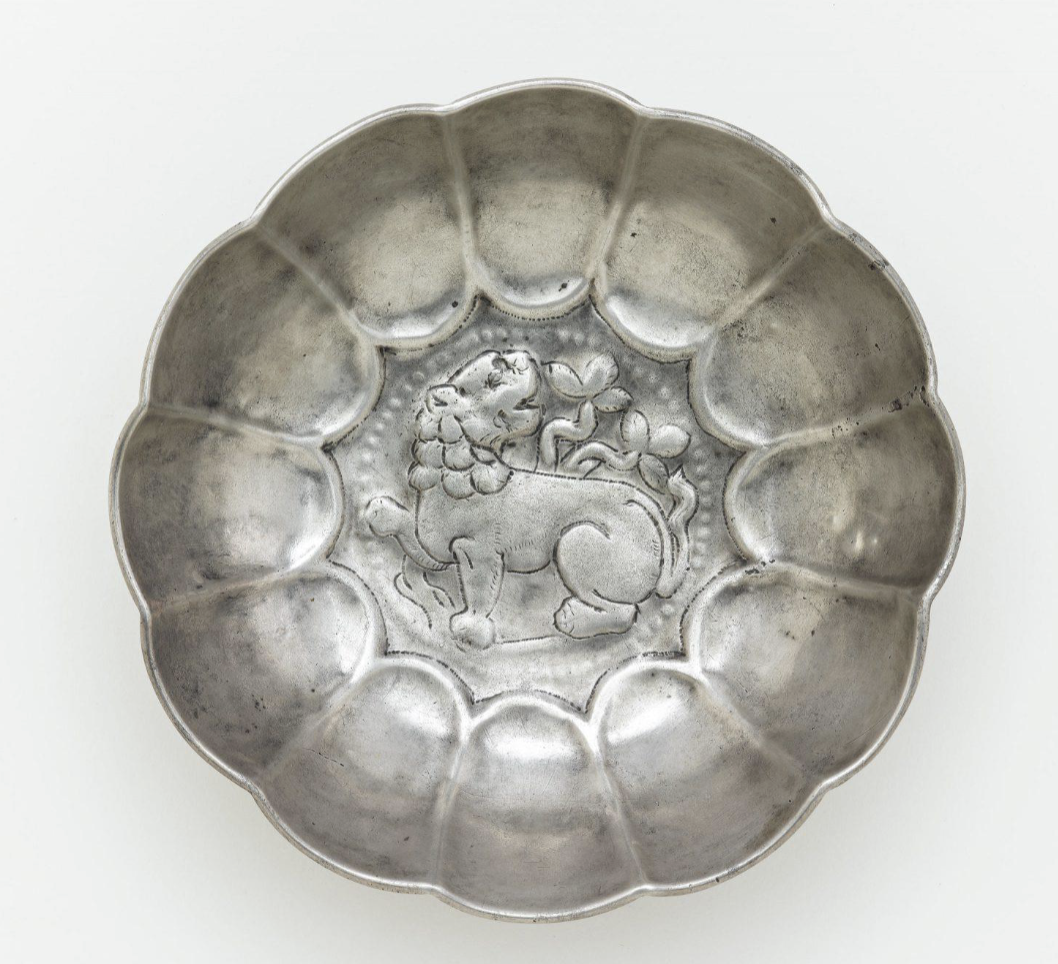
Lobed bowl (Sogdian metalwork)
pearl/beaded roundel, with a lion and foliage in the center
If you see an animal in a roundel→ sogdian ppl
Sogdian work smaller and has animal themes
Sassanina is bigger and has royalty hunting themes
acutally a wine cup, because Sogdians liked to drink
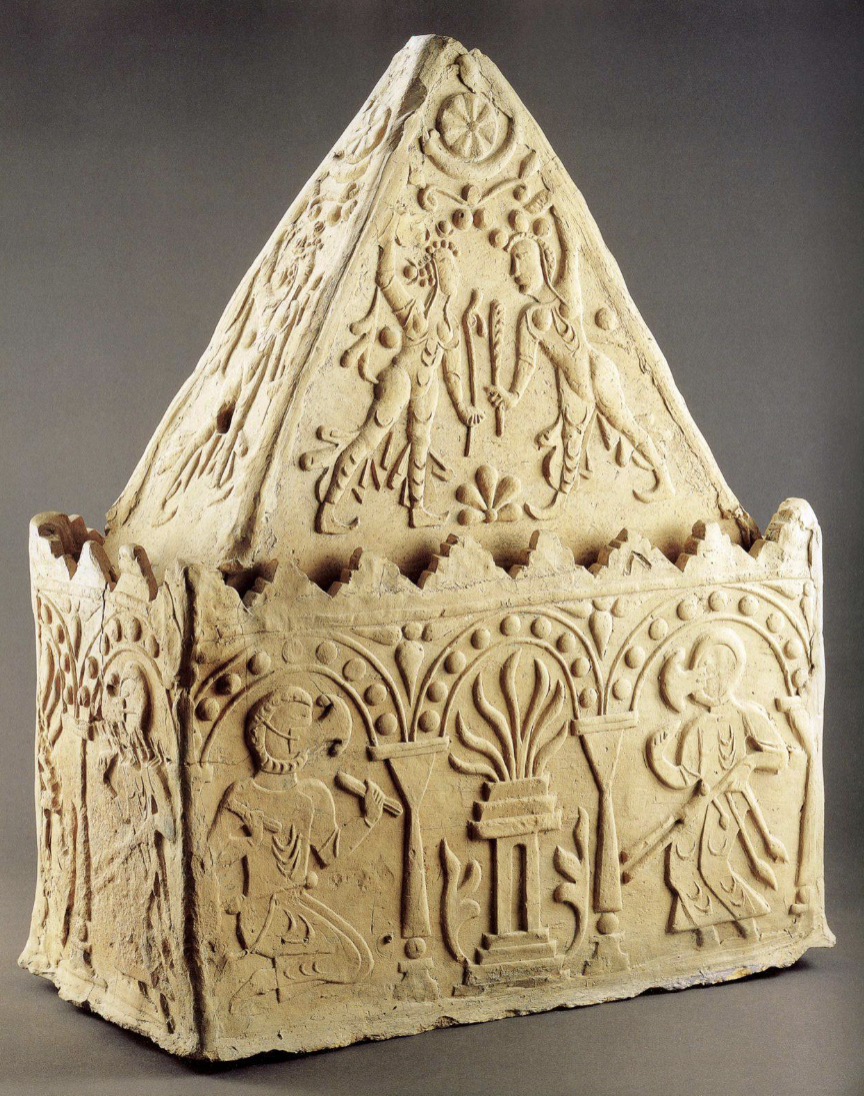
Ossuary
Mazdaism/Zoroastrianism funerary box that priests put the burned remains/bones into after the birds eat the body
terracota
There is an image on the ossuary of priests conducting the fire rituals because it is considered one of the most sacred elements
The priests are wearing masks because they were worried their own impure breath may contaminate the fire (which is sacred)
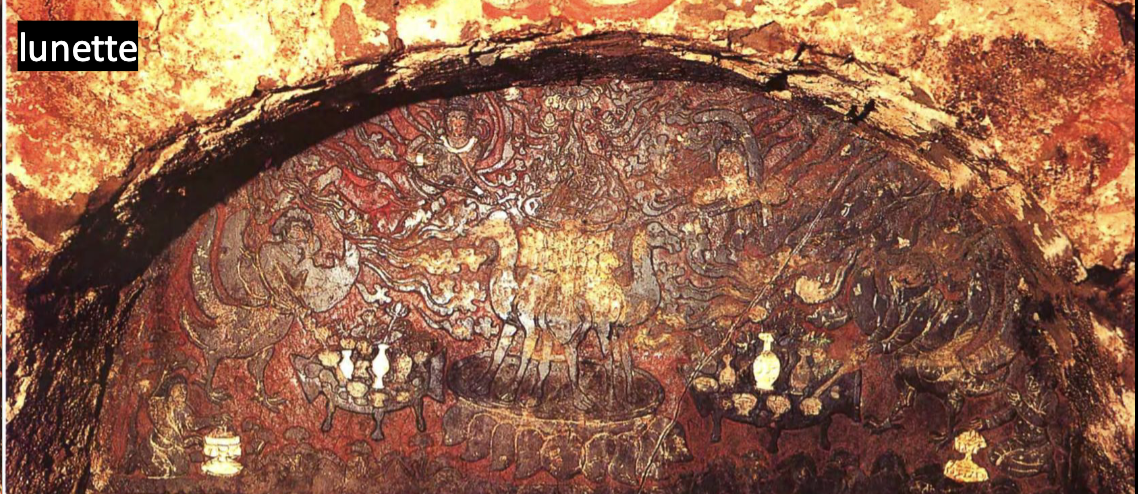
Lunette on the Gateway of An Jia’s tomb
Tomb: stone gateway, stone epitaph, stone funerary bed/couch
Gateway: lunette which was gilded and painted, this image depicts mazda priest wearing masks doing the fire ritual after the death of someone, also two female goddesses in heaven/paradise playing music
Priests depicted with bird body and human head, which is also seen in Buddhism (exquisite sounding bird)
Female goddesses are also similar to celestial deities in Buddhism (apsara)
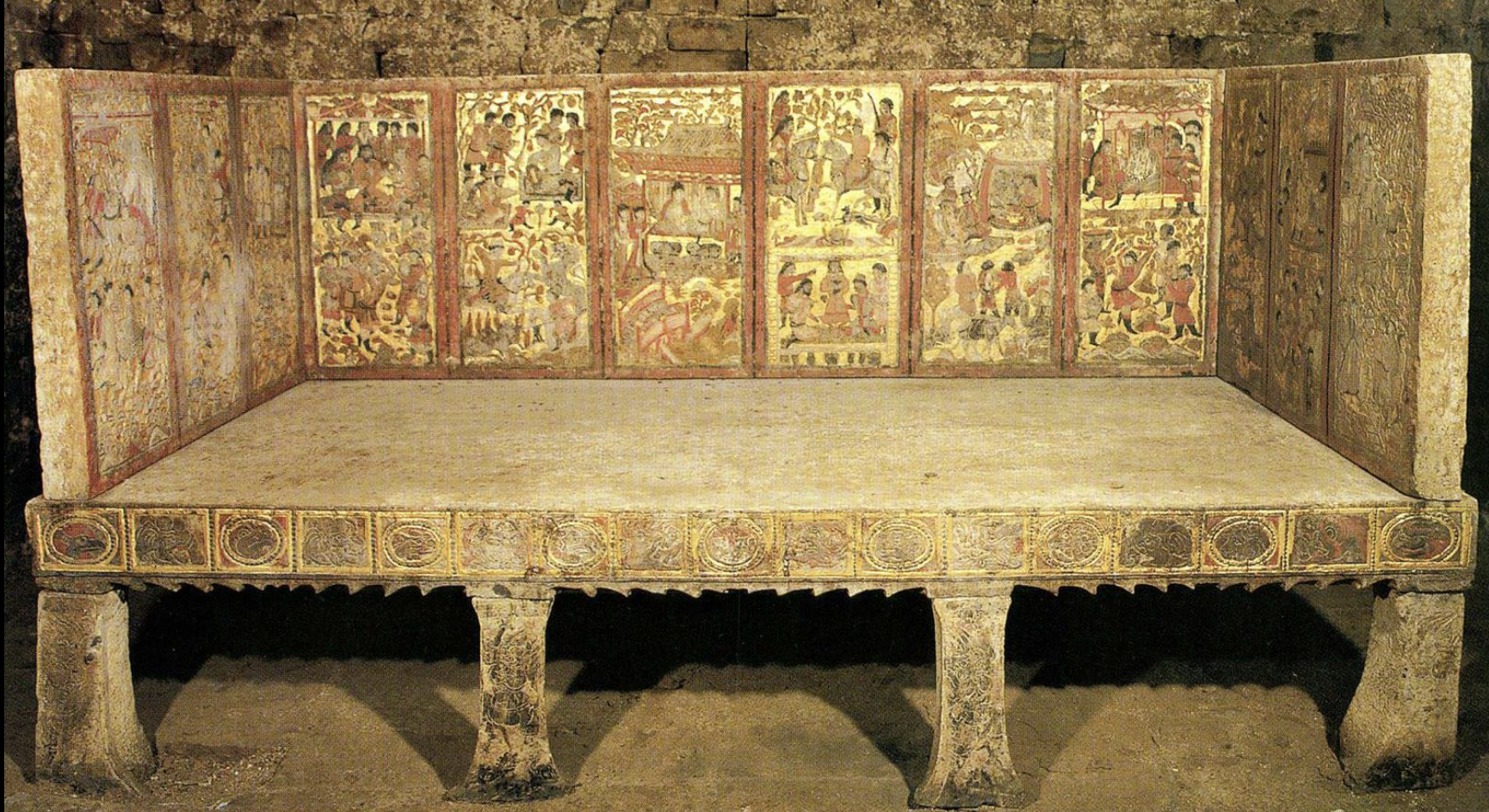
Funerary Bed of An Jia
a person lay on stone bed; shared practice amongst nomadic ppl at that time, there are also gilded panels with painted figures
Similar to Sasanian metalwork where only the background is gilded and the figures are painted (shows commonalities)
12 panels, one shows An Jia and his wife drinking inside a Chinese pavilion, wife is not sogdian bc she is Chinese (dressed in han robe), which is maybe why she is not in the tomb
other panels show hunting scenes, banquets/parties and music scenes, departing scenes (his wife and some cross bridge to return to real life, and he remains in paradise/afterlife)
Panels show him and his wife in different stages in life
579
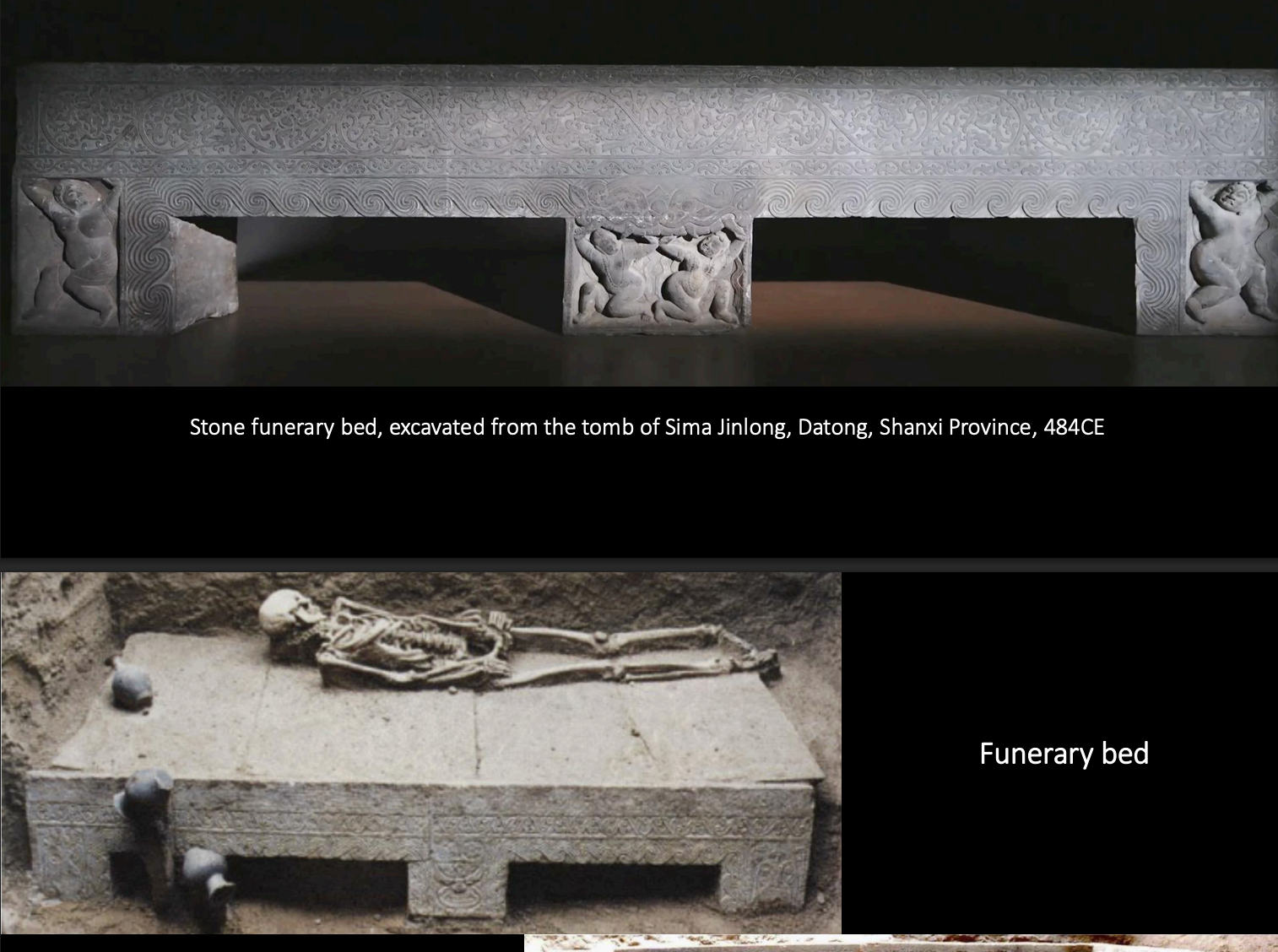
sima jinlong funerary bed
not the same as the nesting coffins of Lady Dai
aspect of northern way culture that was different from the emperor cheng/Han aspect
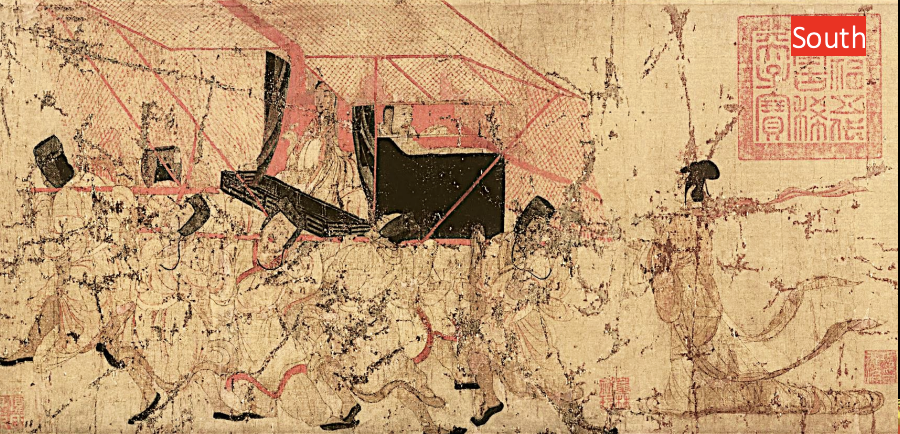
emperor Cheng of Han and Consort ban
attributed to Gu Kaizhi
Han aspect of sima jinlong’s northern wei tomb