C959: Discrete Mathematics 1 latest updated version with 100% correct answers 2026-2027
 Call Kai
 Learn
Learn Practice Test
 Spaced Repetition
 Match
Match Flashcards
1/32

There's no tags or description
Looks like no tags are added yet.
Name | Mastery | Learn | Test | Matching | Spaced | Call with Kai |
|---|
No analytics yet
Send a link to your students to track their progress
33 Terms
proposition
a statement that is either true or false
truth value
a value indicating whether the proposition is actually true or false
truth table
A table used as a convenient method for organizing the truth values of statements
compound proposition
created by connecting individual propositions with logical operations
logical operation
combines propositions using a particular composition rule
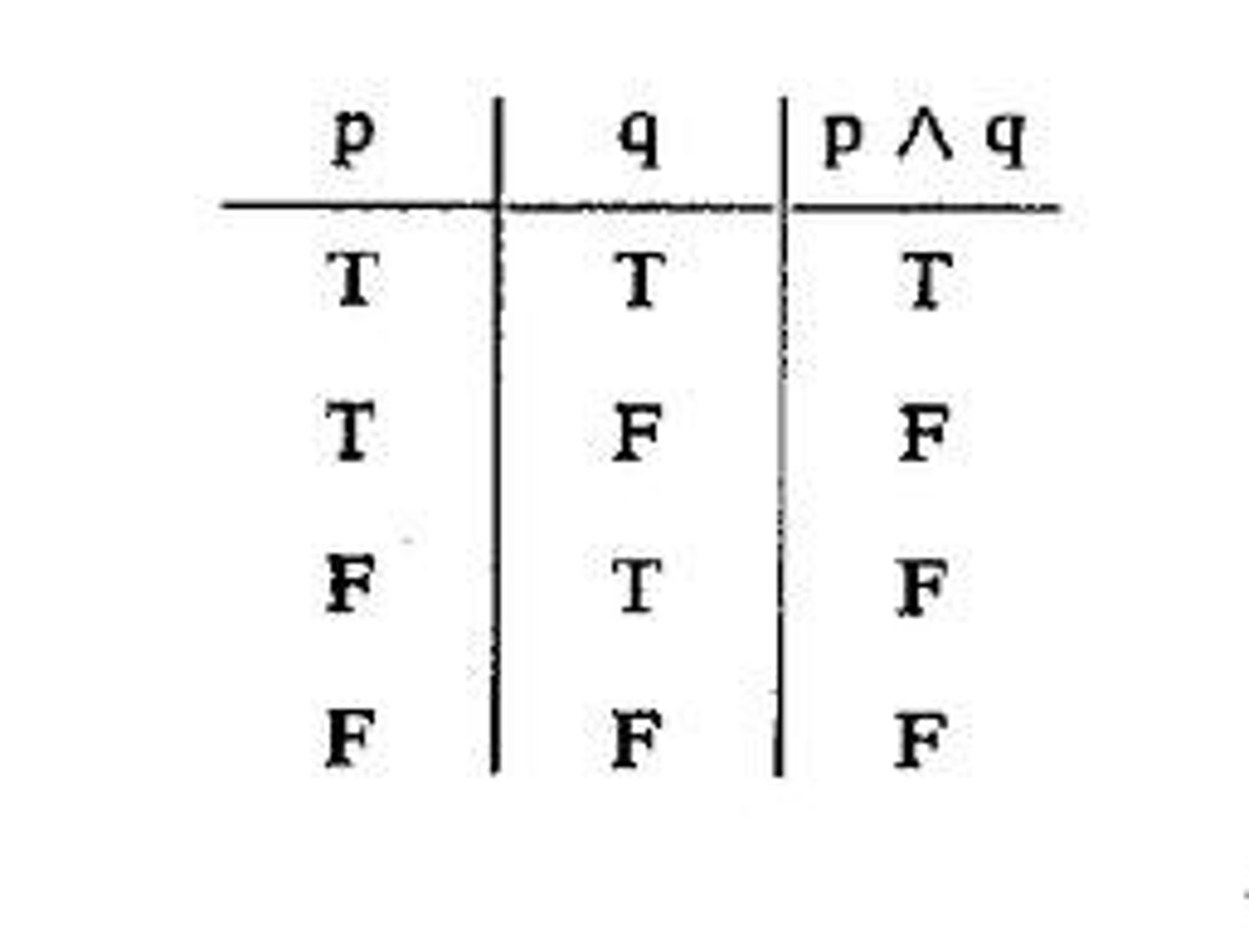
conjunction (^, and)
- p ∧ q is true if both p is true and q is true
- p ∧ q is false if p is false, q is false, or both are false
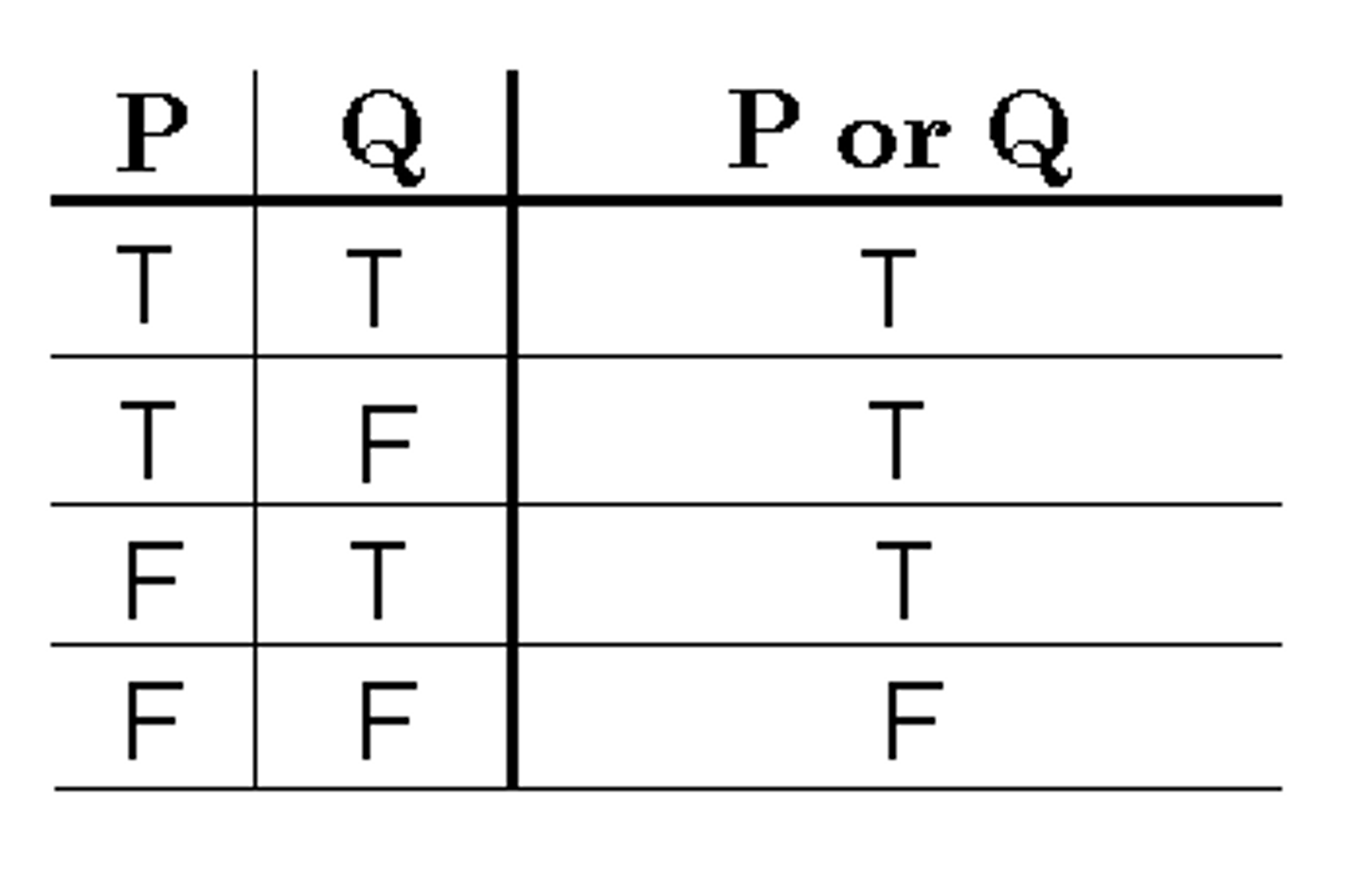
disjunction (v, inclusive or)
- p ∨ q is true if either one of p or q is true, or
- p V q is true if both are true
exclusive or (⊕)
p and q evaluate to true when p is true and q is false or when q is true and p is false.
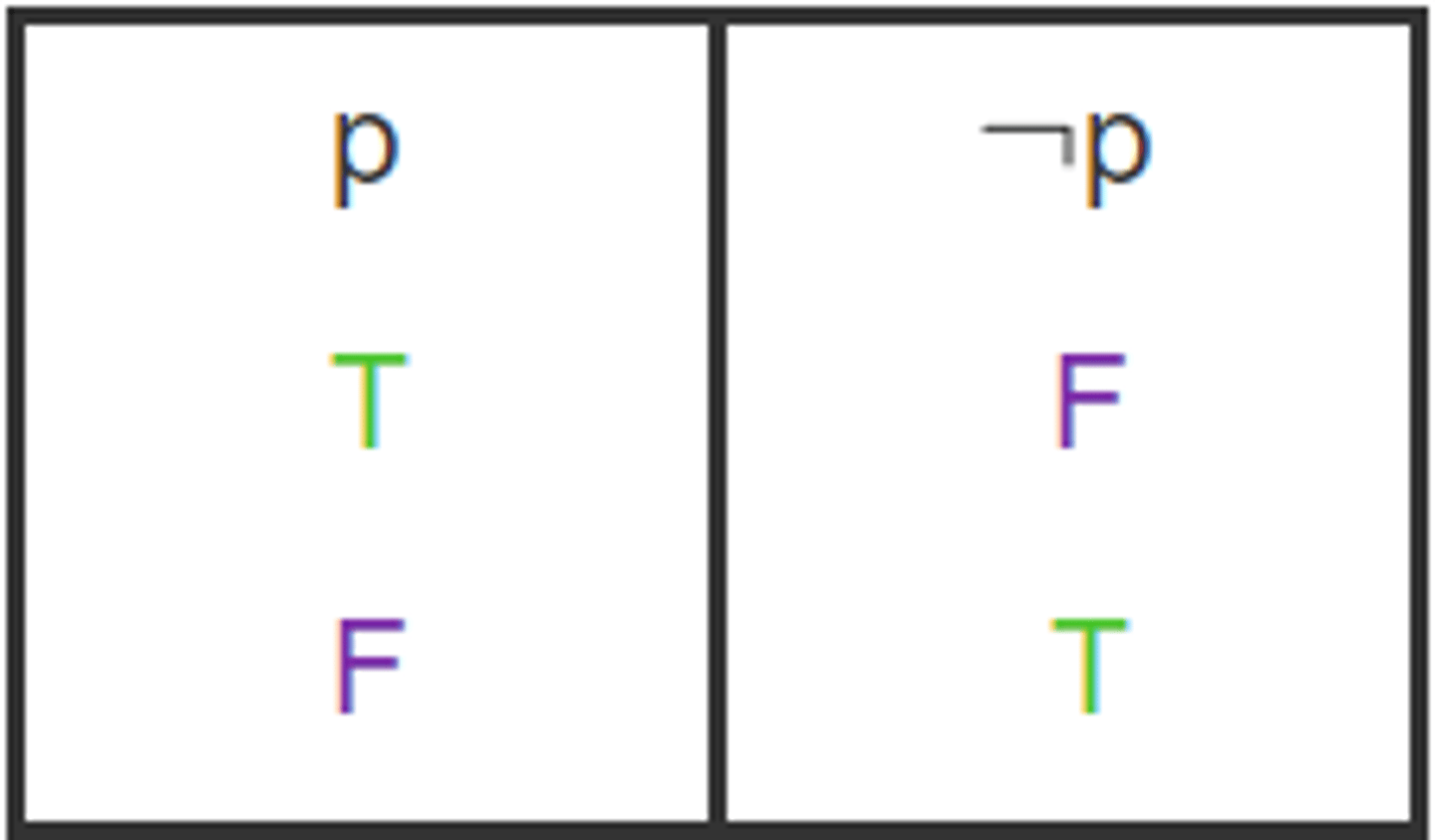
negation operation (¬)
reverses the truth value of a proposition
order of operations (no parenthesis)
negation, conjunction (and), disjunction (or)
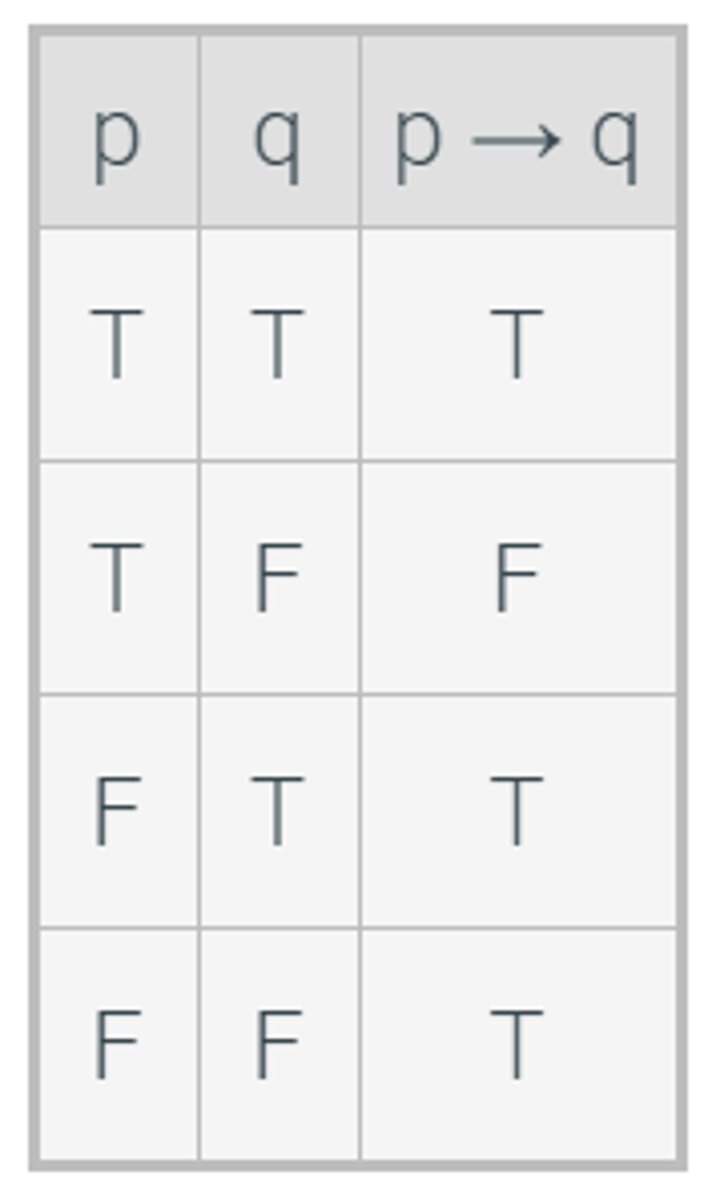
conditional operation (→)
The proposition p → q is false if p is true and q is false; otherwise, p → q is true.
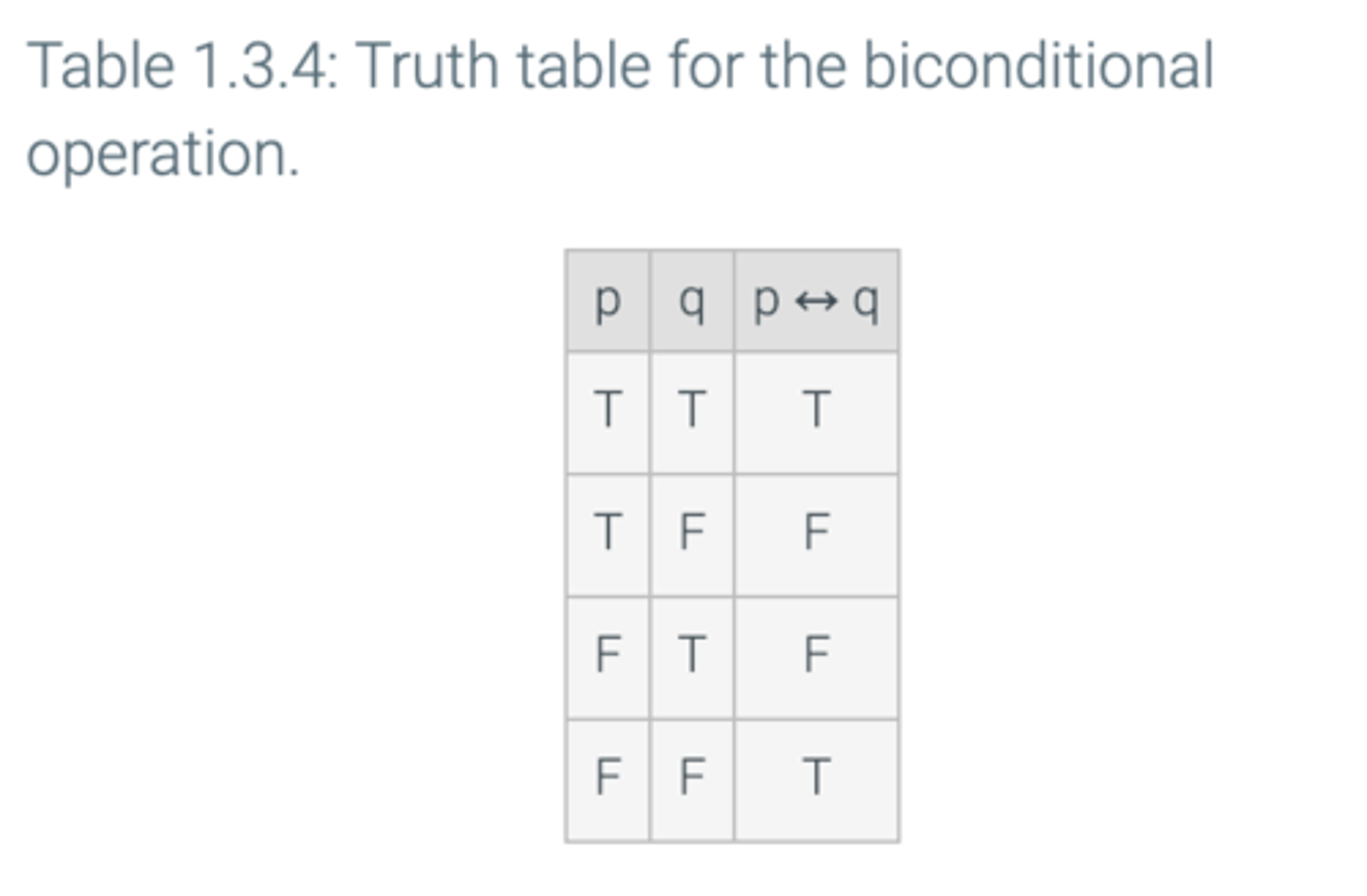
biconditional operation (↔)
The proposition p ↔ q is true when p and q have the same truth value and is false when p and q have different truth values.
Converse Statement
q → p
the opposite of the conditional statement
inverse statement
¬p → ¬q
the negation of the conditional statement
contrapositive statement
¬q → ¬p
the opposite and negative of the conditional statement
tautology (t)
a statement that is always true
contradiction (c)
a statement that is always false
logical equivalence
Sentences p and q are logically equivalent if and only if it is not possible for one of these sentences to be true while the other sentence is false.
DeMorgan's Law
logical equivalences that show how to correctly distribute a negation operation inside a parenthesized expression
¬(p ∨ q) ≡ (¬p ∧ ¬q)
¬(p ∧ q) ≡ (¬p ∨ ¬q)
Idempotent Laws
p ∨ p ≡ p
p ∧ p ≡ p
Associative Laws
(p ∨ q) ∨ r ≡ p ∨ (q ∨ r)
(p ∧ q) ∧ r ≡ p ∧ (q ∧ r)
Commutative Laws
p ∨ q ≡ q ∨ p
p ∧ q ≡ q ∧ p
Distributive Laws
p ∨ (q ∧ r) ≡ (p ∨ q) ∧ (p ∨ r)
p ∧ (q ∨ r) ≡ (p ∧ q) ∨ (p ∧ r)
Identity Laws
p ∧ T ≡ p
p ∨ F ≡ p
Domination Laws
p ∨ T ≡ T
p ∧ F ≡ F
Double Negation Laws
¬(¬p) ≡ p
Complement Laws
p ∧ ¬p ≡ F
¬T ≡ F
p ∨ ¬p ≡ T
¬F ≡ T
Absorption Laws
p ∨ (p ∧ q) ≡ p
p ∧ (p ∨ q) ≡ p
Conditional Identities
p → q ≡ ¬p ∨ q
p ↔ q ≡ ( p → q ) ∧ ( q → p )
predicate P(x)
A logical statement whose truth value is a function of one or more variables
domain
the set of all possible values for the variable of a predicate
universal quantifier ∀x P(x)
asserts that P(x) is true for every possible value for x in its domain
existential quantifier ∃x P(x)
asserts that P(x) is true for at least one possible value for x in its domain