Contested Lands and Bodies: American Art
 Call Kai
 Learn
Learn Practice Test
 Spaced Repetition
 Match
Match Flashcards
 Knowt Play
1/25

There's no tags or description
Looks like no tags are added yet.
Name | Mastery | Learn | Test | Matching | Spaced | Call with Kai |
|---|
No analytics yet
Send a link to your students to track their progress
26 Terms
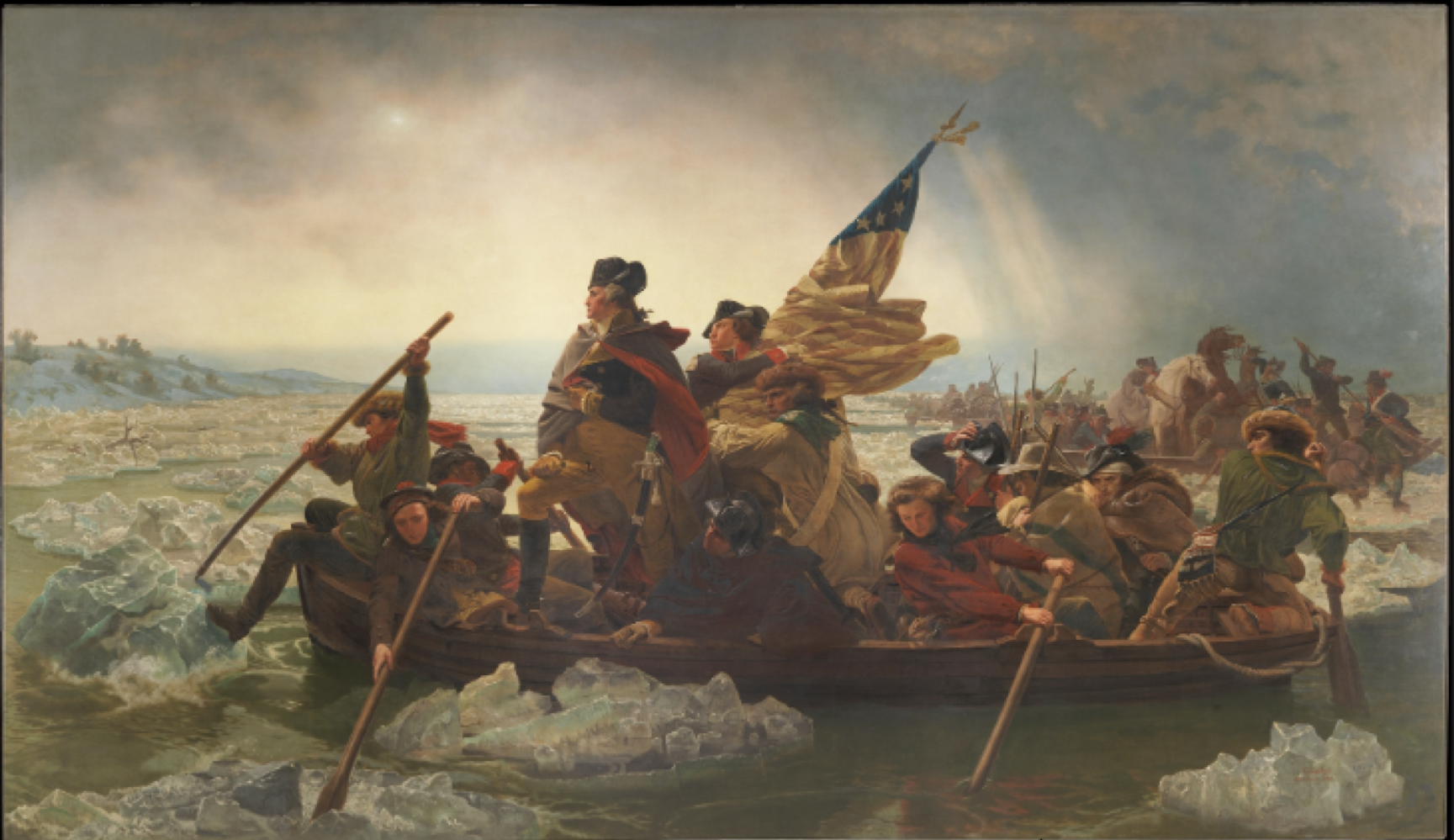
Emmanuel Leutze (1816-1868)
Washington Crossing the Delaware,1851
describe the context of Washington Crossing the Delaware
made by german American years after the event depicted, prints made after for different consumers but central iconic figures remain, for German audience during populace revolution to honor and stoke german revolutionary efforts
Describe the overall composition of the crossing and its significance
war effort dismal before this but won battle after the crossing, inaccurate but persuasive, 13 soldiers: the colonies and people of different backgrounds, 2 tallest figure at the peaks=George Washington and George Monroe, light leads the way and anoints their cause, monument to collective origin
Describe the context of the Hudson River school
brotherhood, paint on sight, Thomas Cole=founding father: pure American landscape, english immigrant to US, saw US as new world and reject US exceptionalism: made the course of Empire=series of paintings emphasizing insignificance of mankind
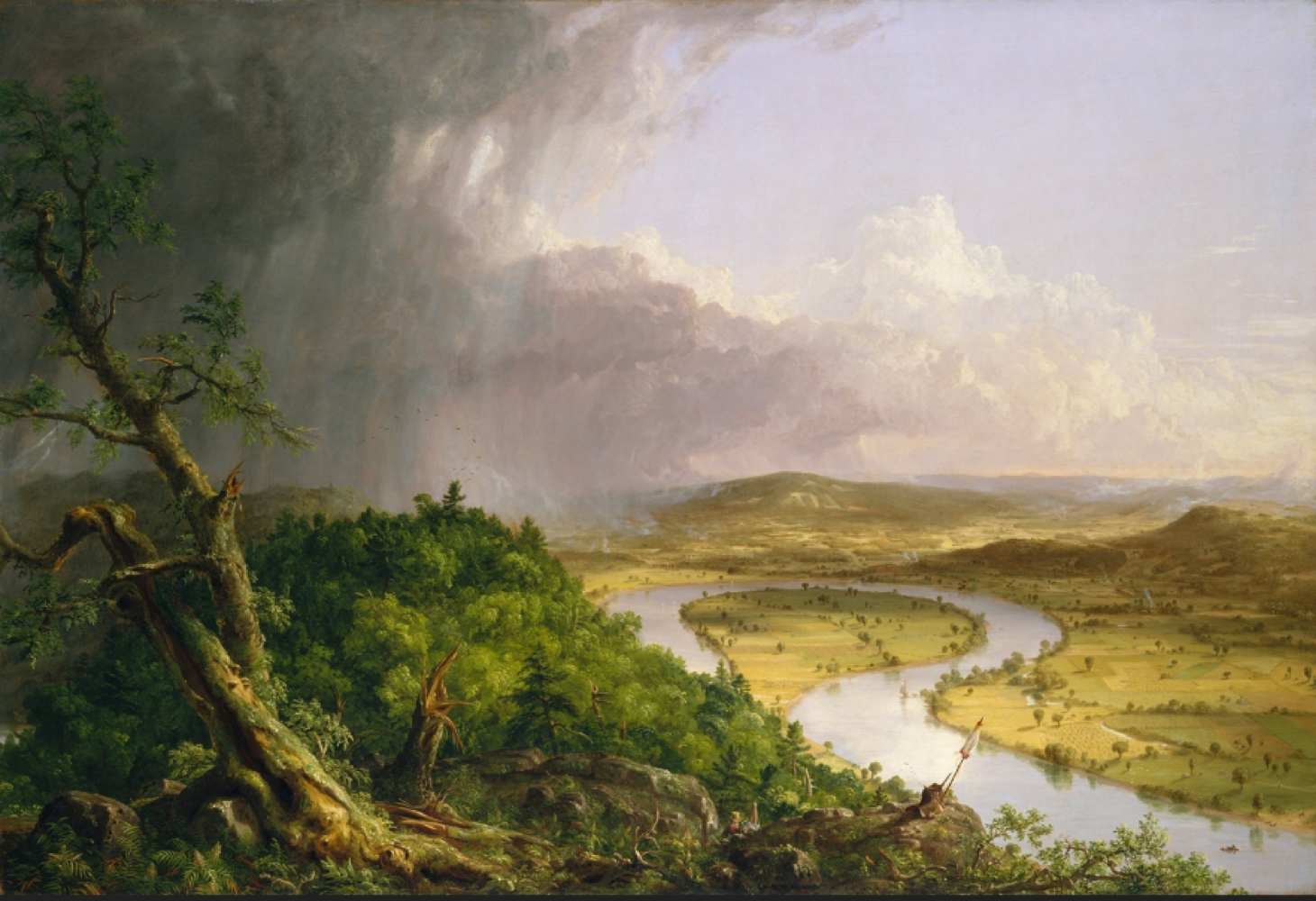
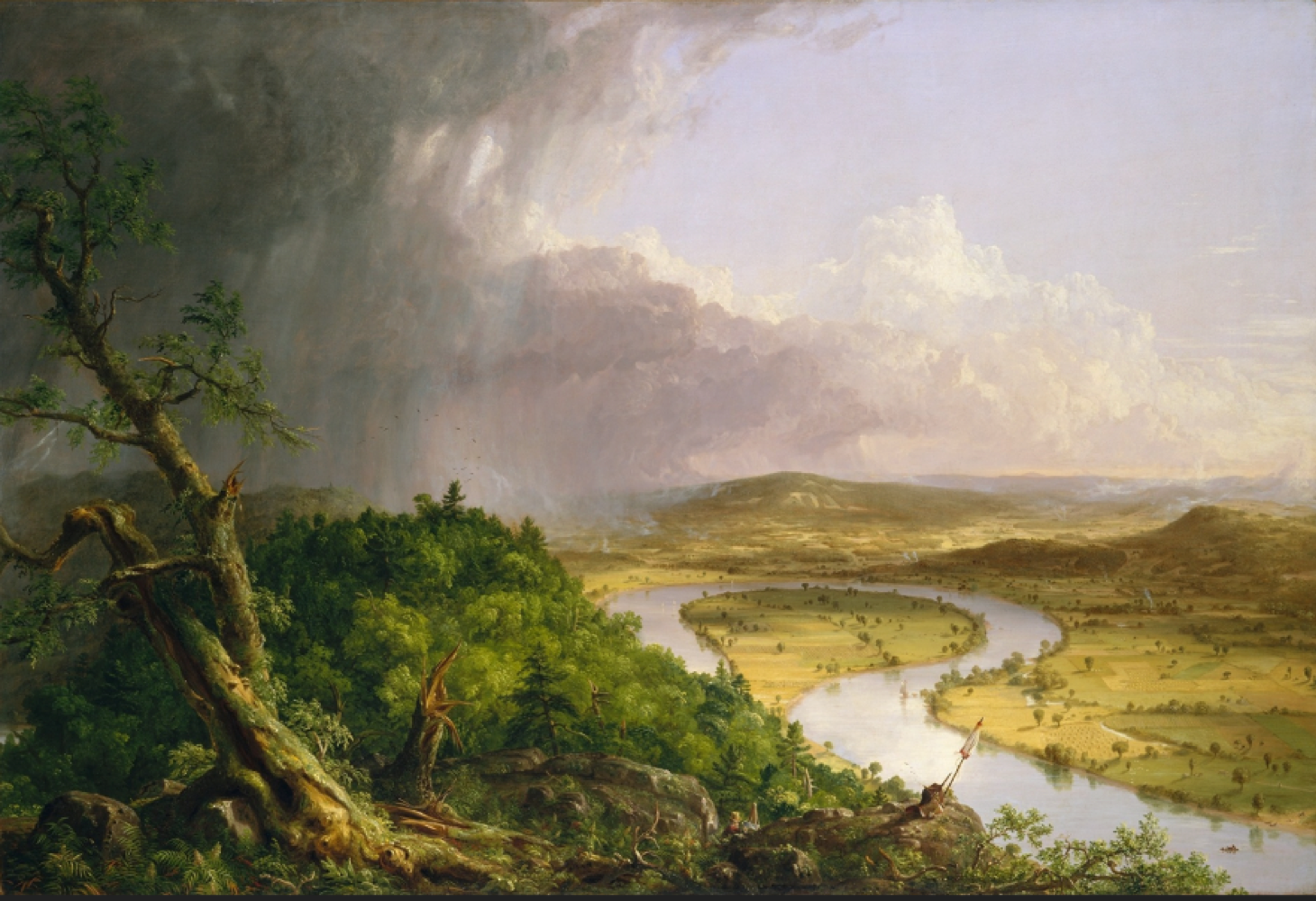
Thomas Cole (1801-1848)
View from Mount Holyoke, Northampton, Massachusetts, after a Thunderstorm (The Oxbow)
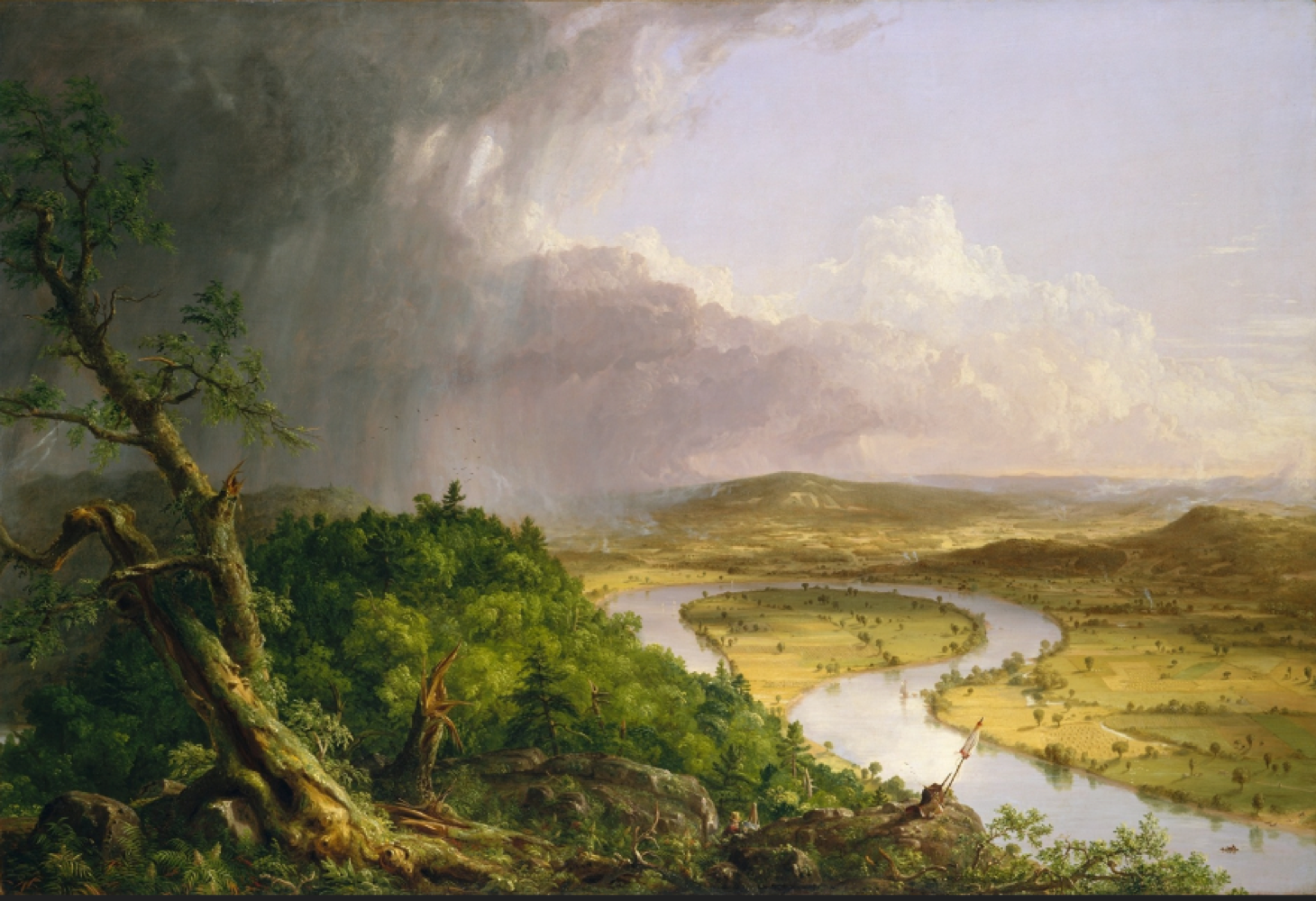
Describe the overall composition of the View painting and its significance
the Course of Empire in a single view, allegory of empire into US geography: re-creates narrative cycle, trees pull eyes down through the landscape, into the water, land in human settlement, through the water to the mountain=it will outlast is/sublime, circularity, clouds swirl: storm ambiguous, question of civilization ambiguous- around the time of Trail of Tears
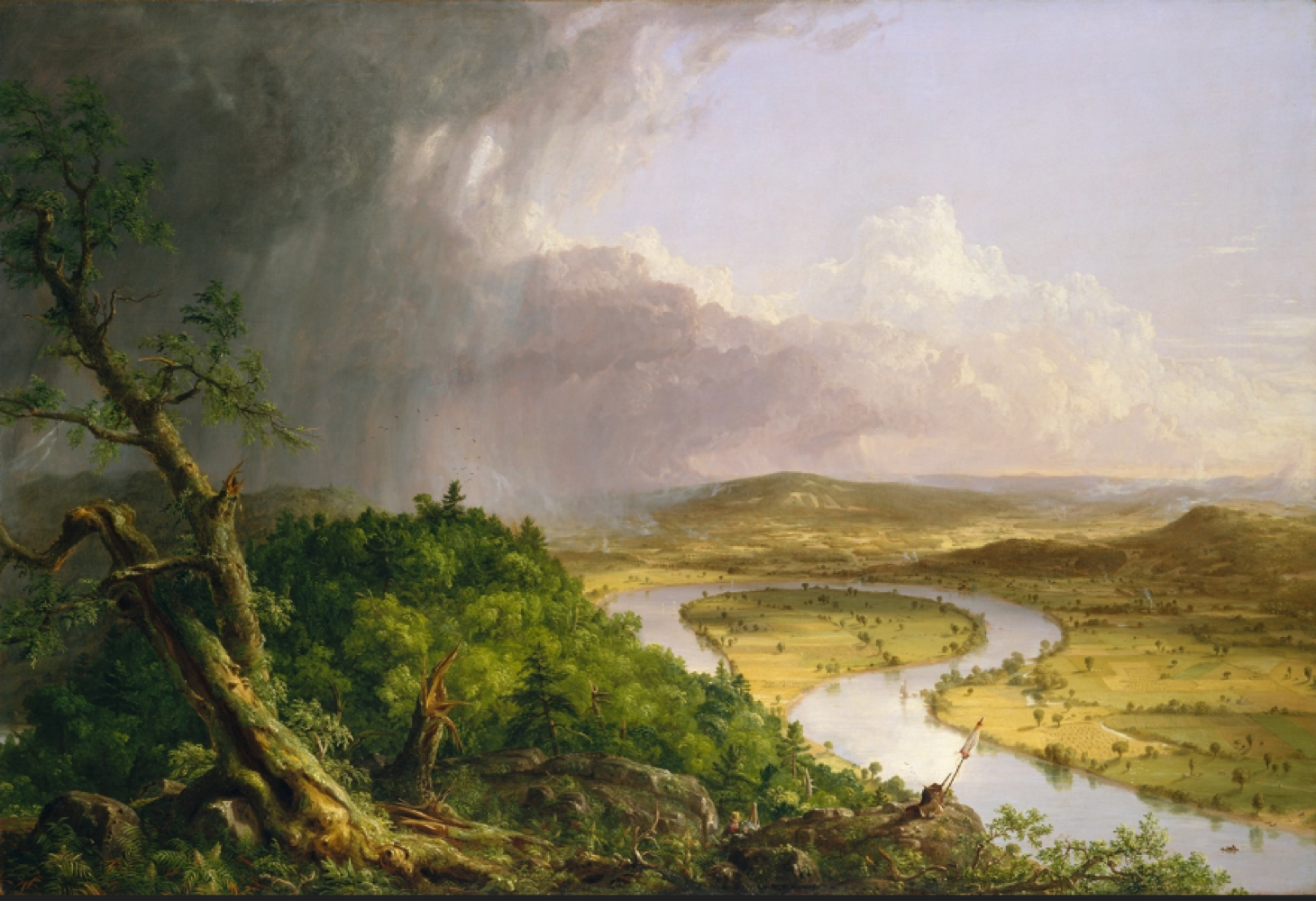
Describe the foreground of the view painting
foreground=curtain, small self portrait: more on nature side but between nature and civilization
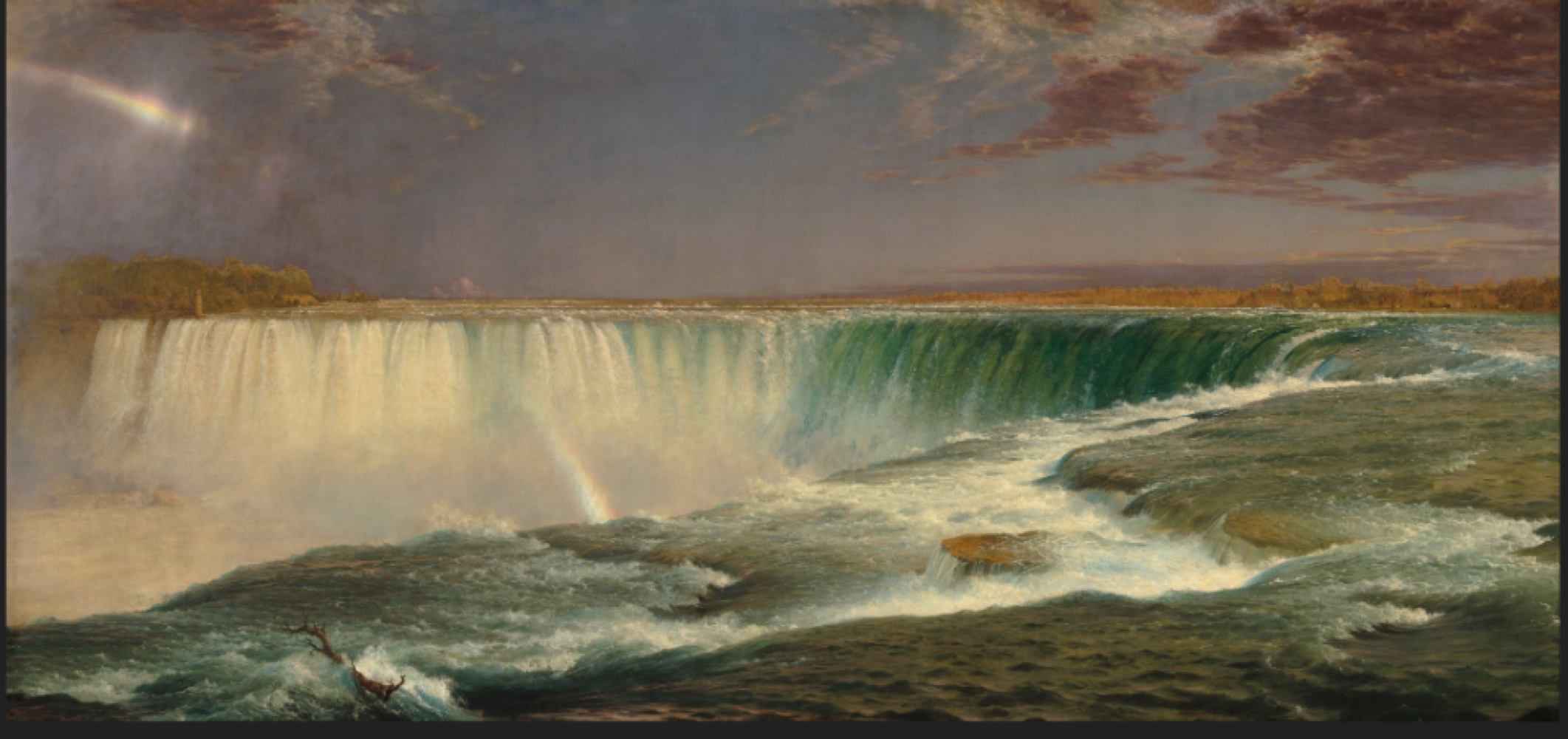
Frederic Edwin Church (1826-1900)
Niagara, 1857
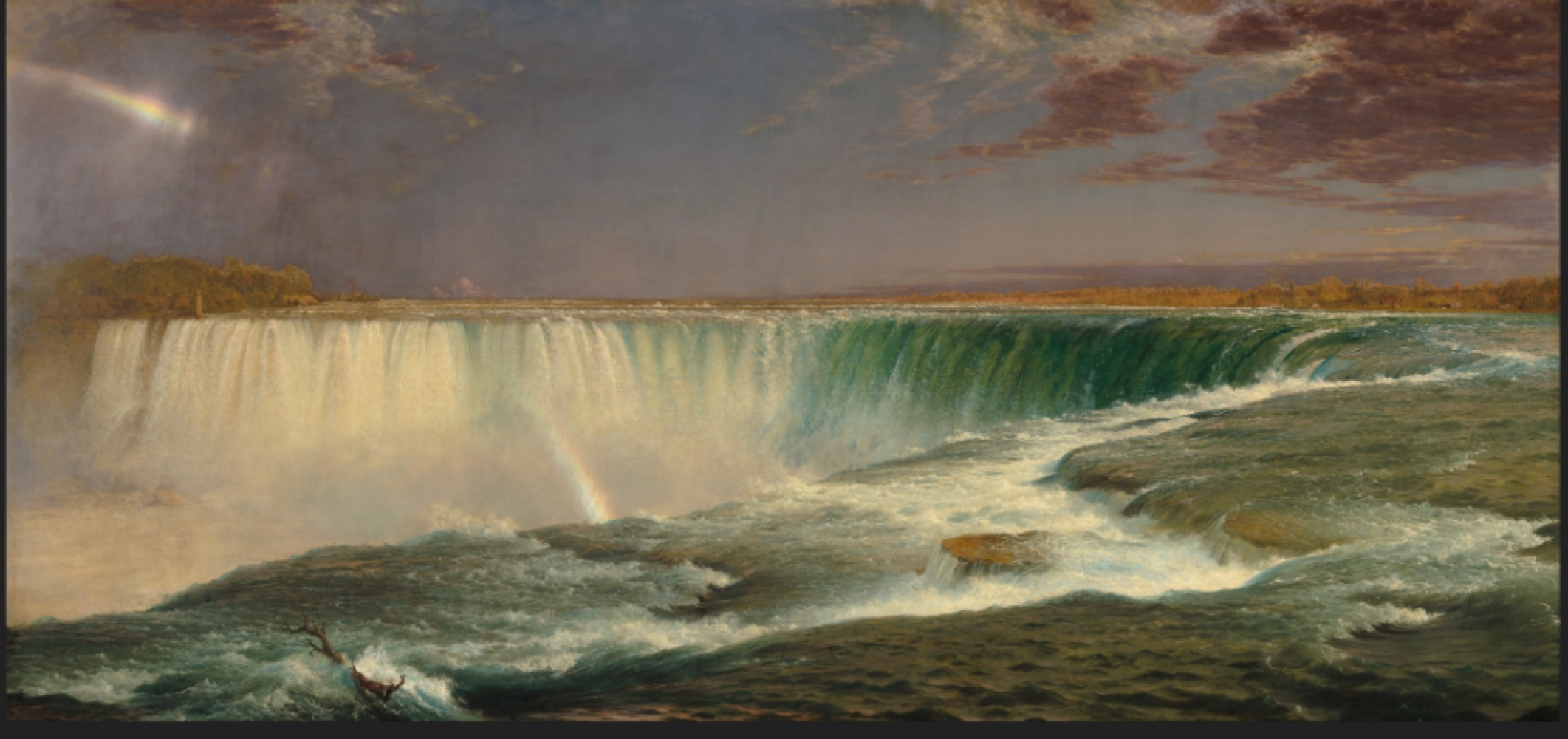
Describe the overall format of the Niagara painting and its significance
unfathomable wealth of natural resources, panoramic and exceeds field of vision, viewer placed without foothold: dangle over waterfall near edge, suspended above scenery=privileged view, grant viewers better visual access and dropped foreground to add more water rush and background
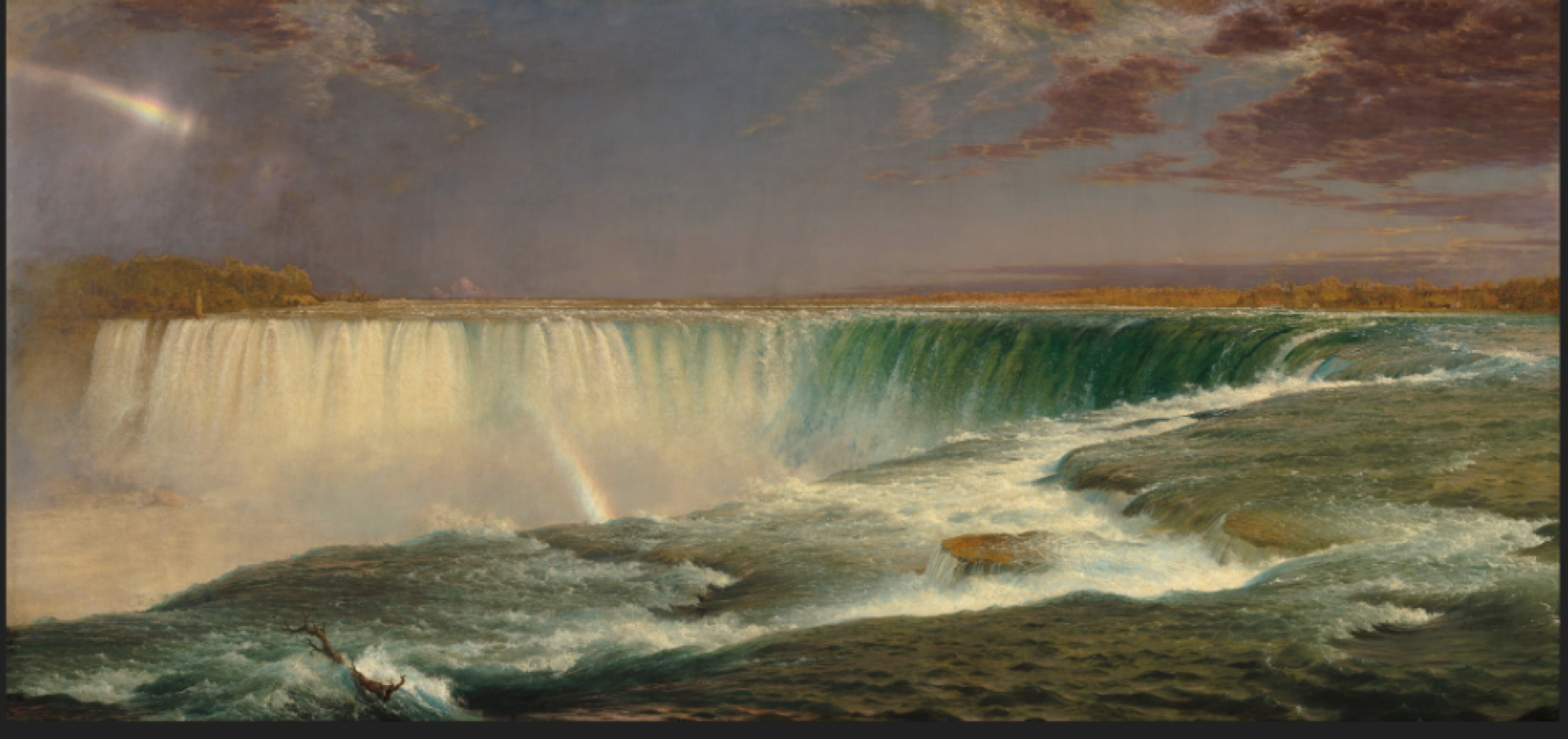
Where was the Niagara painted and its significance
Shows the American side of the falls= he sat on the Canadian side=where the viewer is and they could afford it and the travel
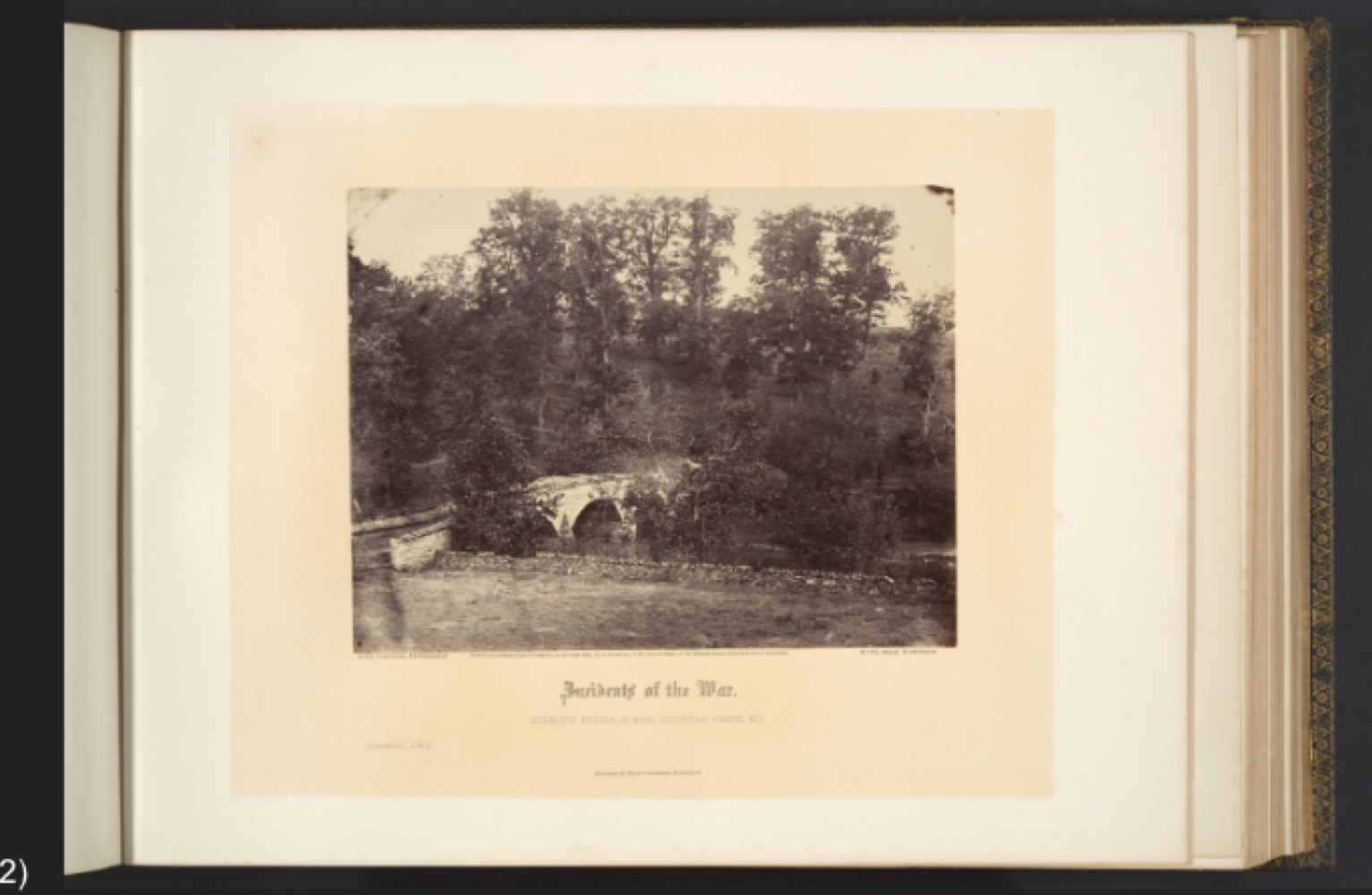
Alexander Gardner et al. (1821-1882)
“Incidents of the War: Burnside Bridge, Across Antietam Creek”
Gardner’s Photographic Sketchbook, 1863
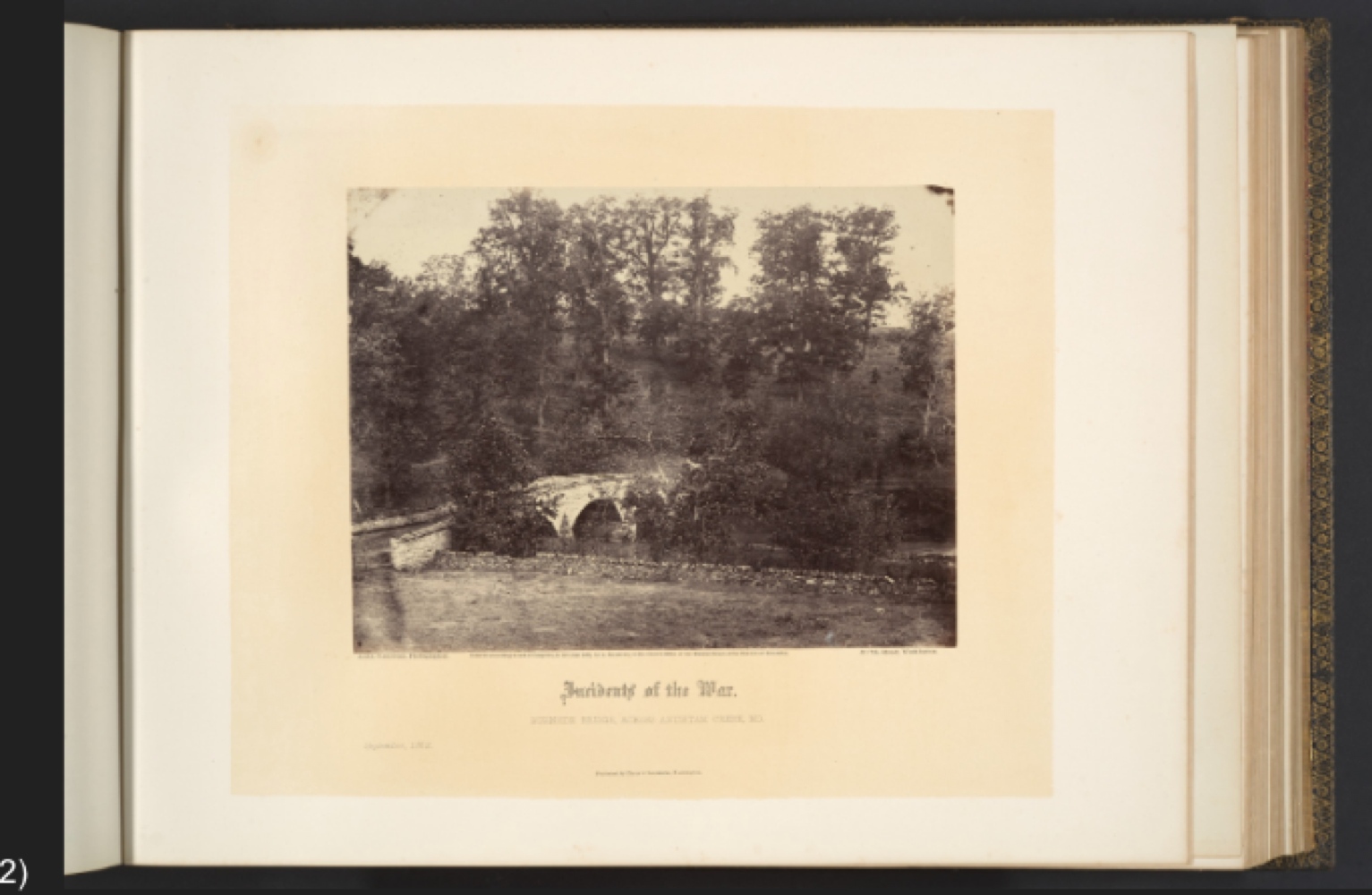
What does the image depict/describe the context and its signficance
widely known because of industrial print technology and mobile photography, refers to the battle of Antietam (bloodiest battle)
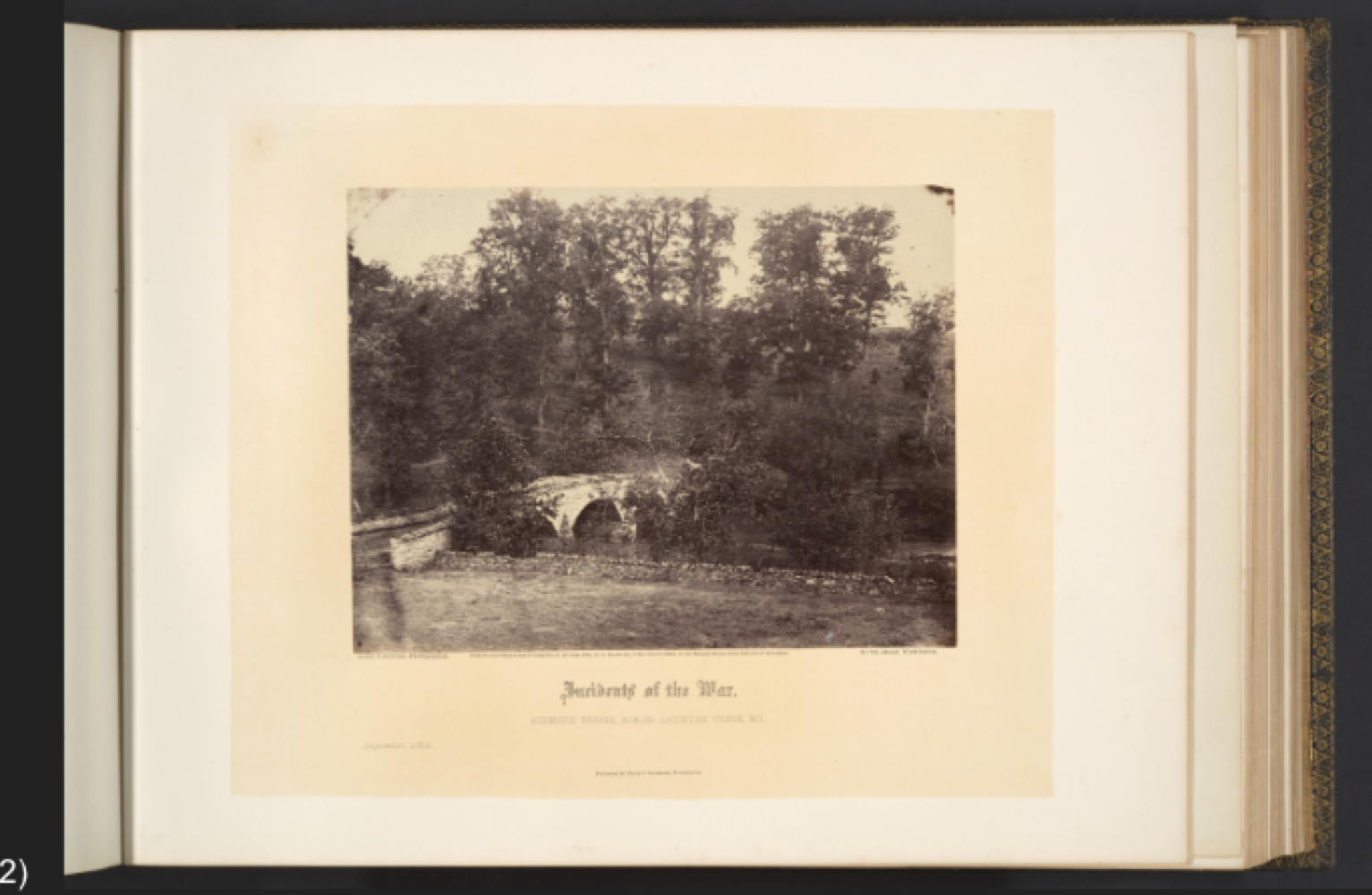
Describe the overall composition of the picture and its significance
no soldiers, battle over=devoid of action, long exposure time: new technique (coat glass plate then add plate to camera…), in darkroom in wagon, crisp exposure, many prints from one image, with lengthy text=active participation of audience
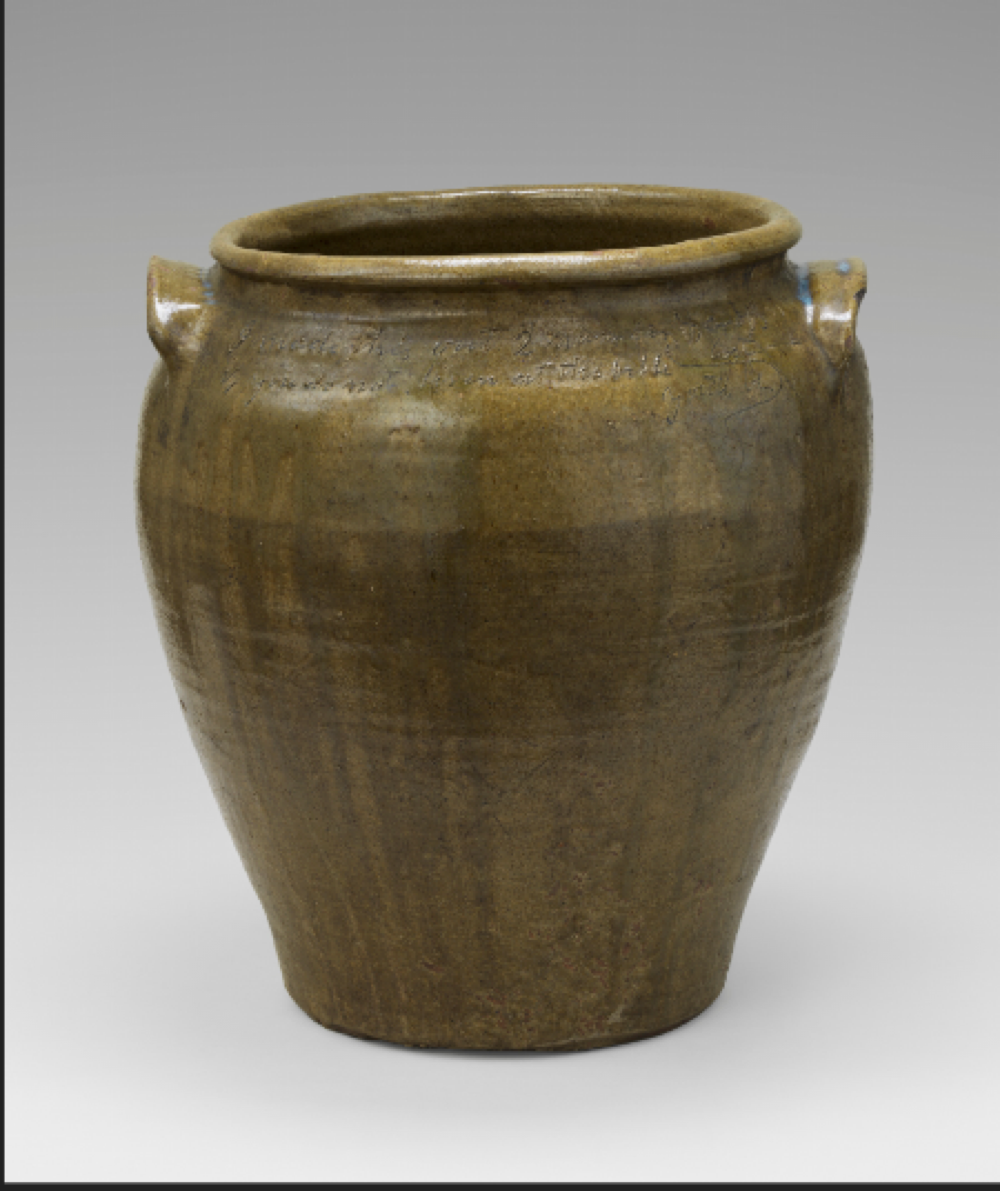
David Drake (ca. 1800-c. 1870s)
Storage Jar, 1859
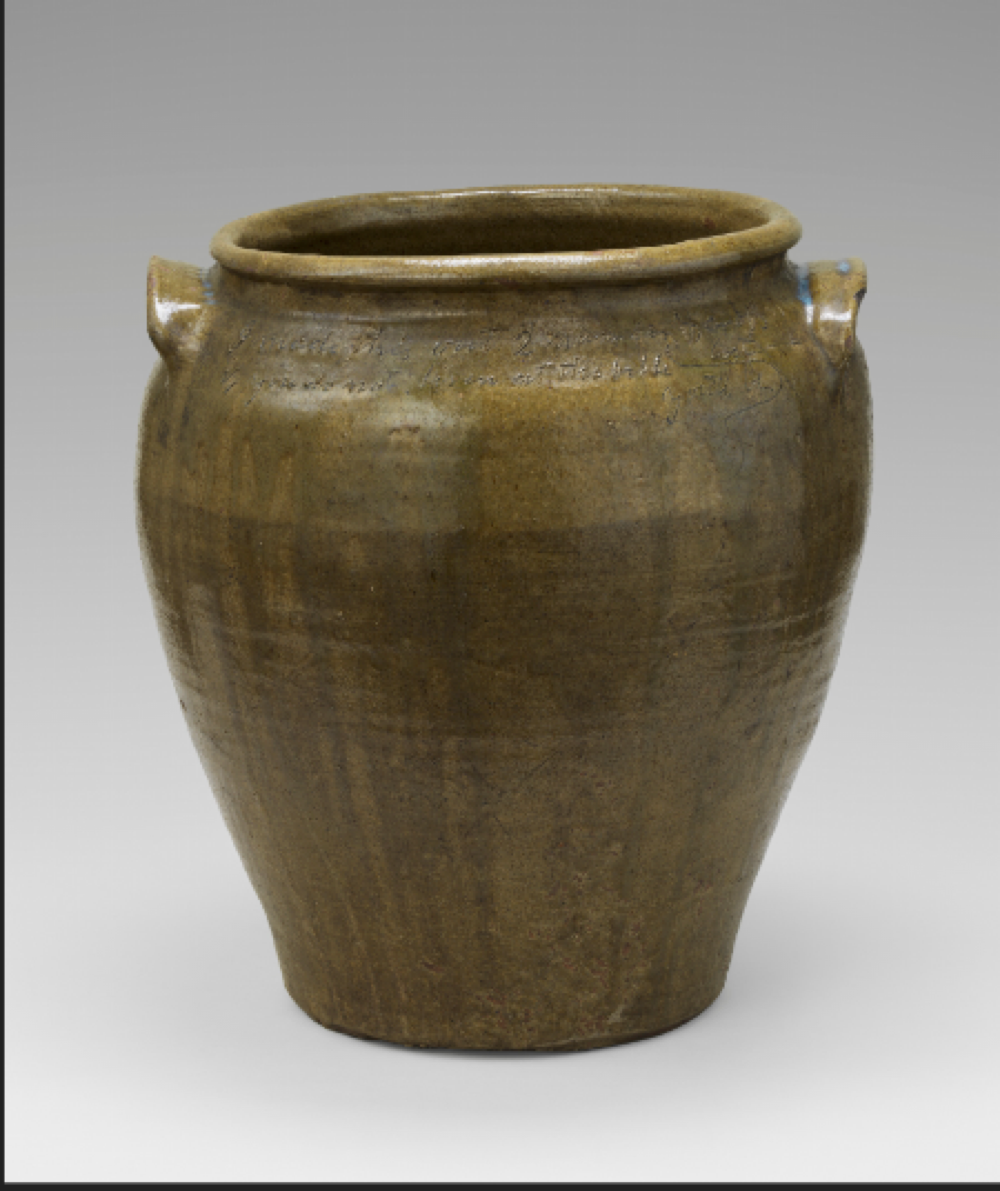
Describe the context of David Drake
born into slavery, produced stoneware
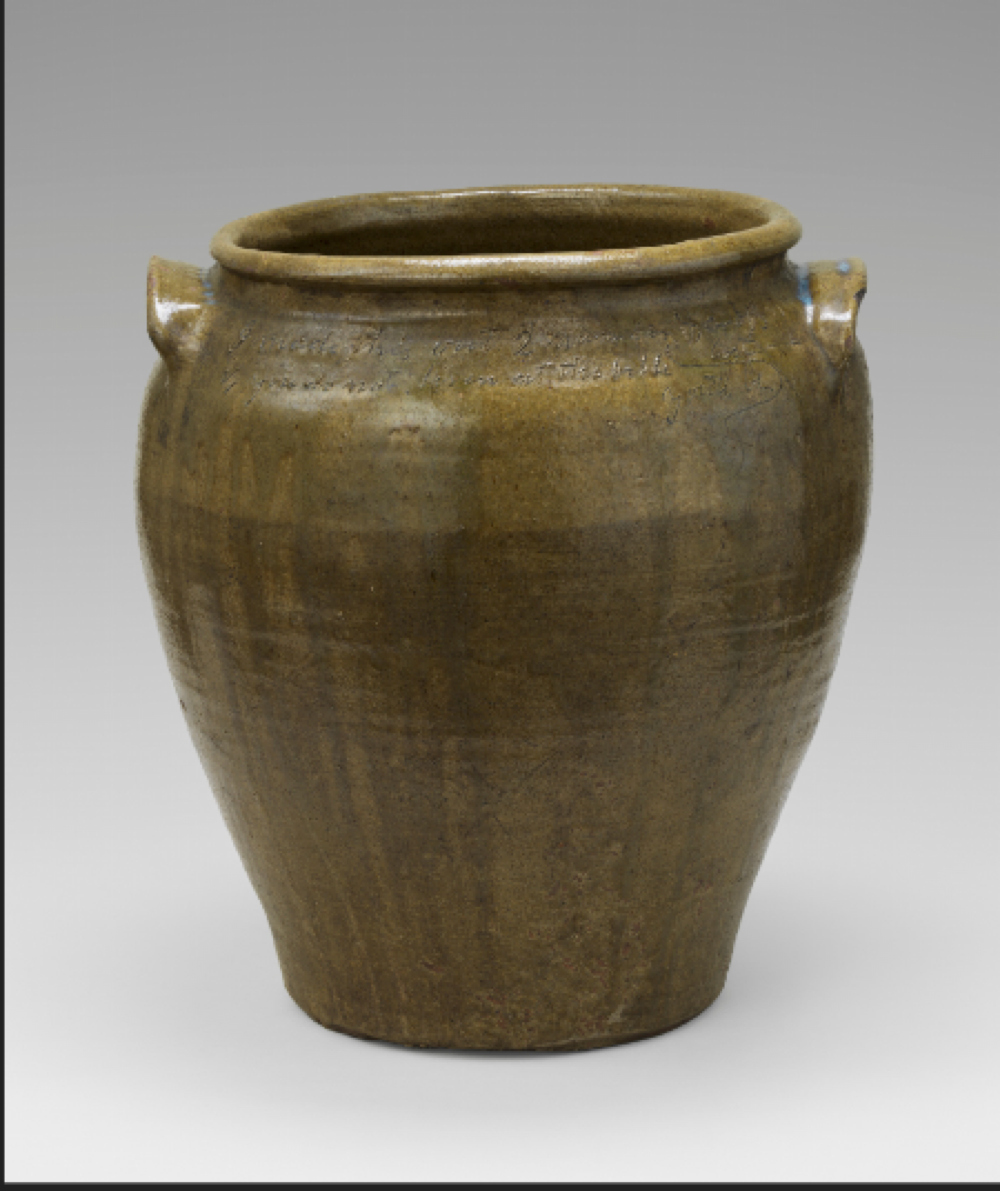
Describe the structure of the jar and its significance
one of the largest: store meat or lard, rounded body, wide shoulders, glaze of olive and green, signed below rim: act of resistance, shows he can read and write, included poem which alludes to cross stitching
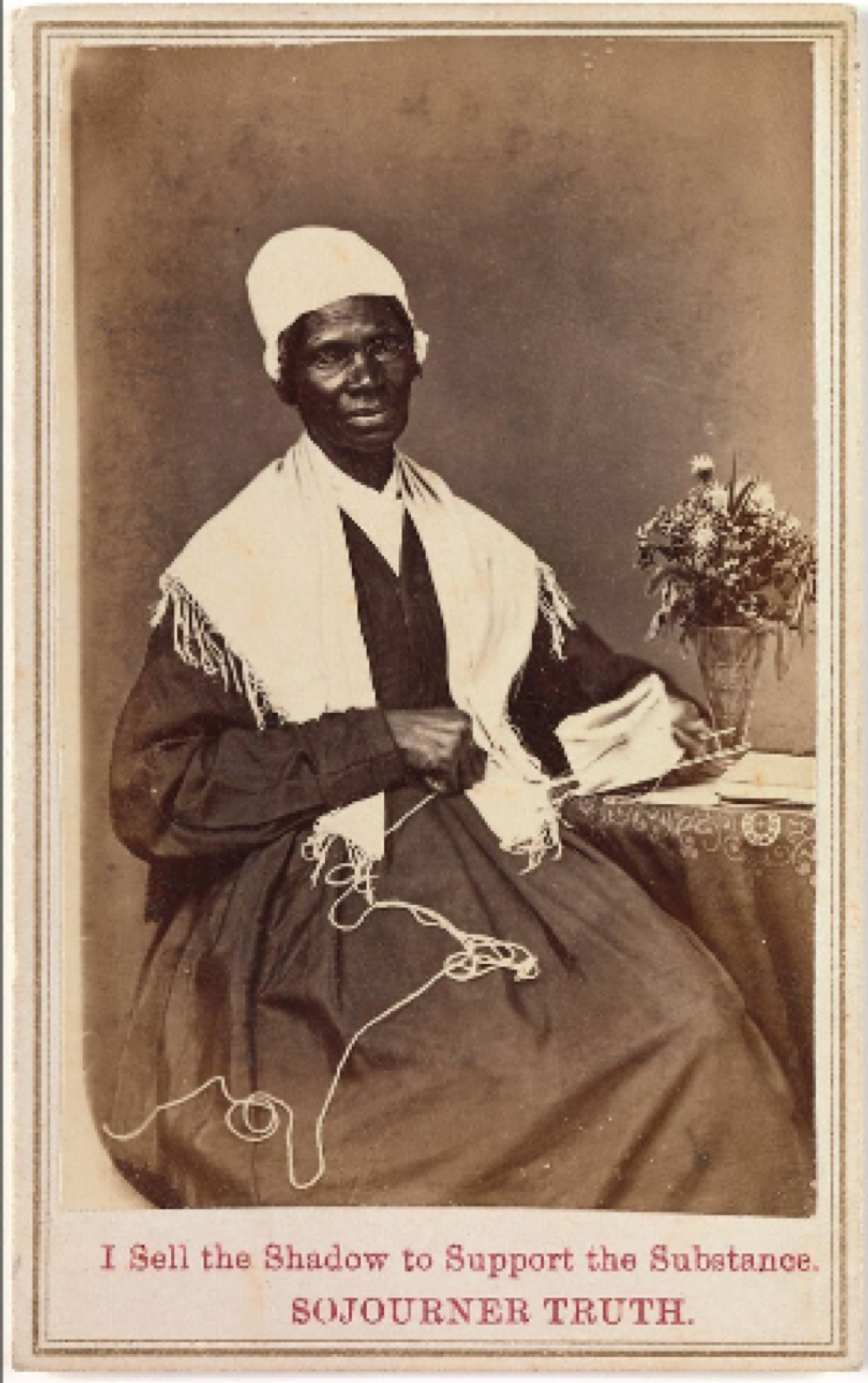
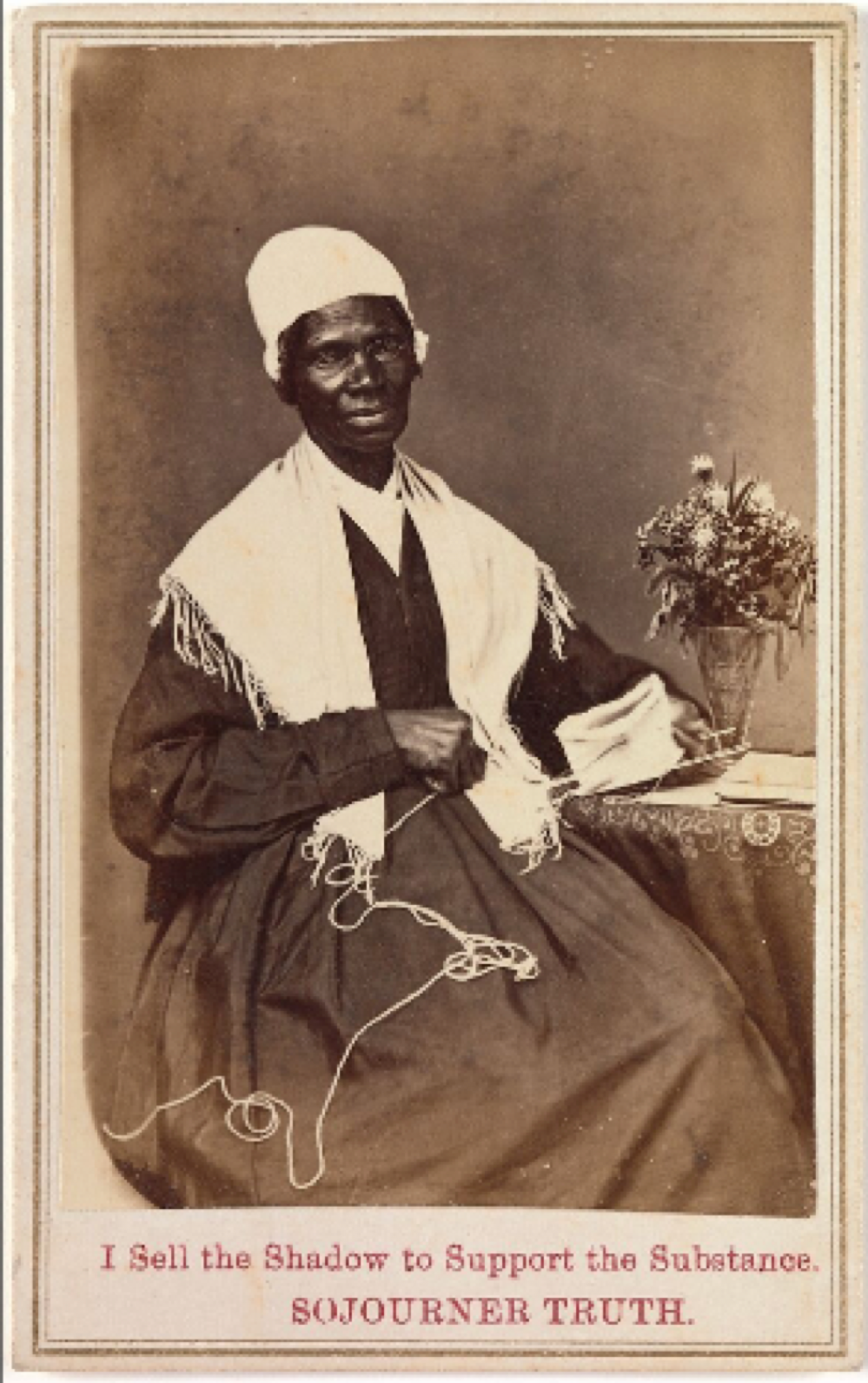
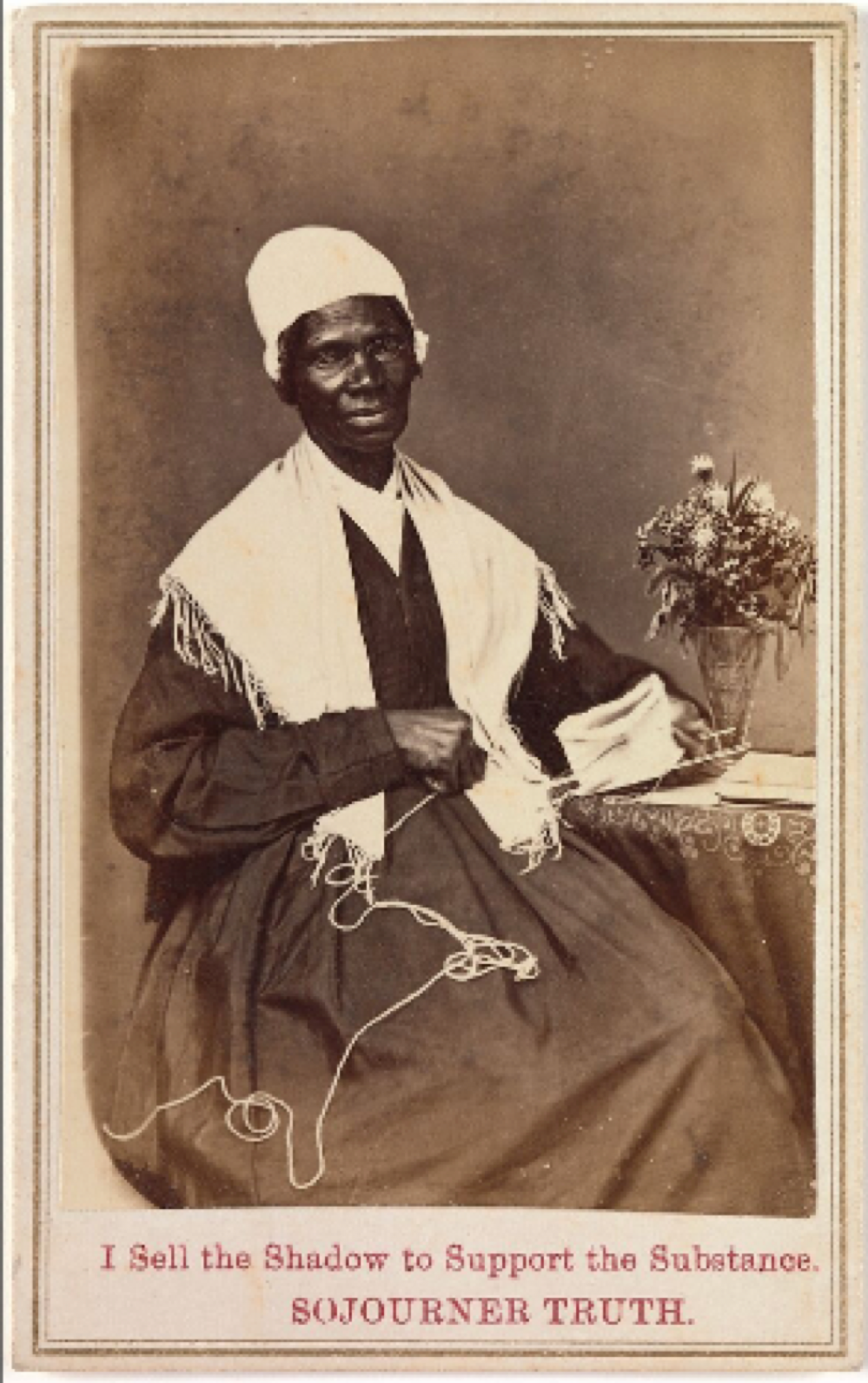
Unnamed photographer and Sojourner Truth (ca. 1797-1883)
[Portrait] I sell the shadow to support the substance, 1864
Describe the context before the photograph
fugitive slave act advertising for capture, pro slavery legislation, enslaved body as generalized imagery
Describe the context of the photograph
born into slavery but freed herself and re-named herself, activist for anti-slavery and suffrage movement
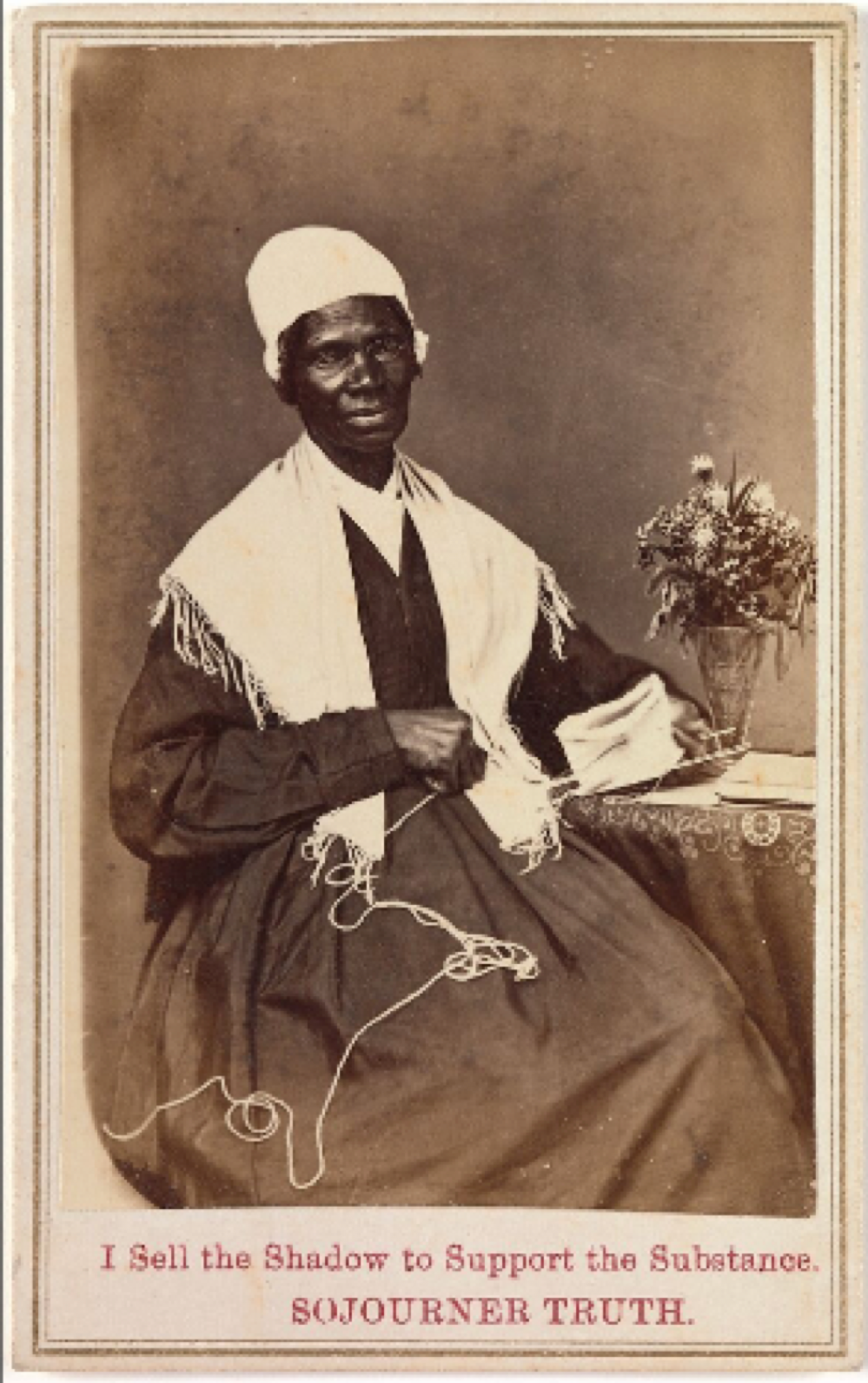
Describe the photograph and its significance
visual entangling: knitting and shawl=self-sufficiency, addresses viewer in 1st person words, photos sold at her behest= sold for her own benefit, photo copyright on the back=legal ownership of her representation, shows literacy and law
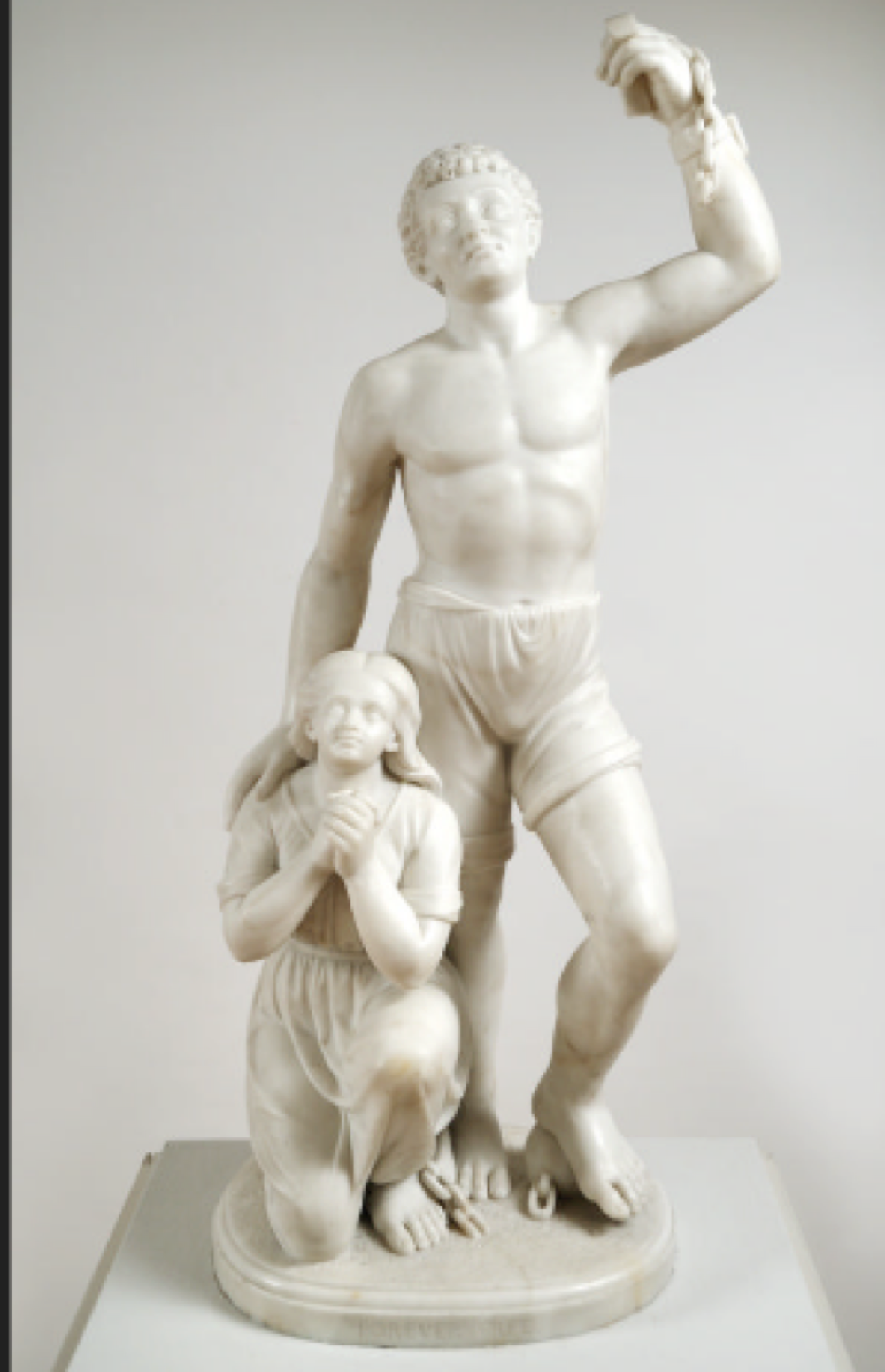
Edmonia Lewis (1844-1907)
Forever Free, 1867
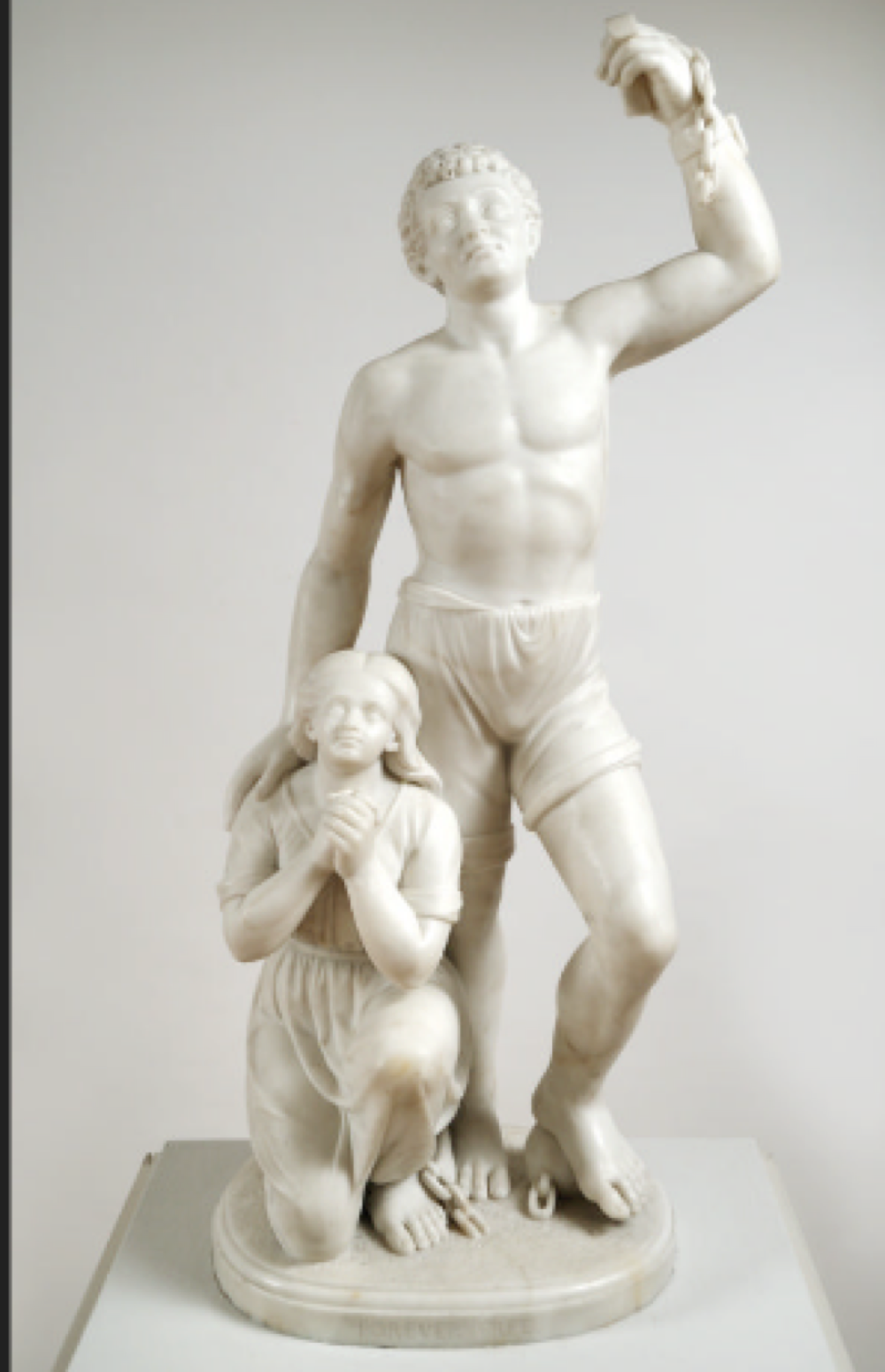
Describe the context of forever free
sculptor enrolled in college, was assaulted=left school, study sculpture abroad in Rome
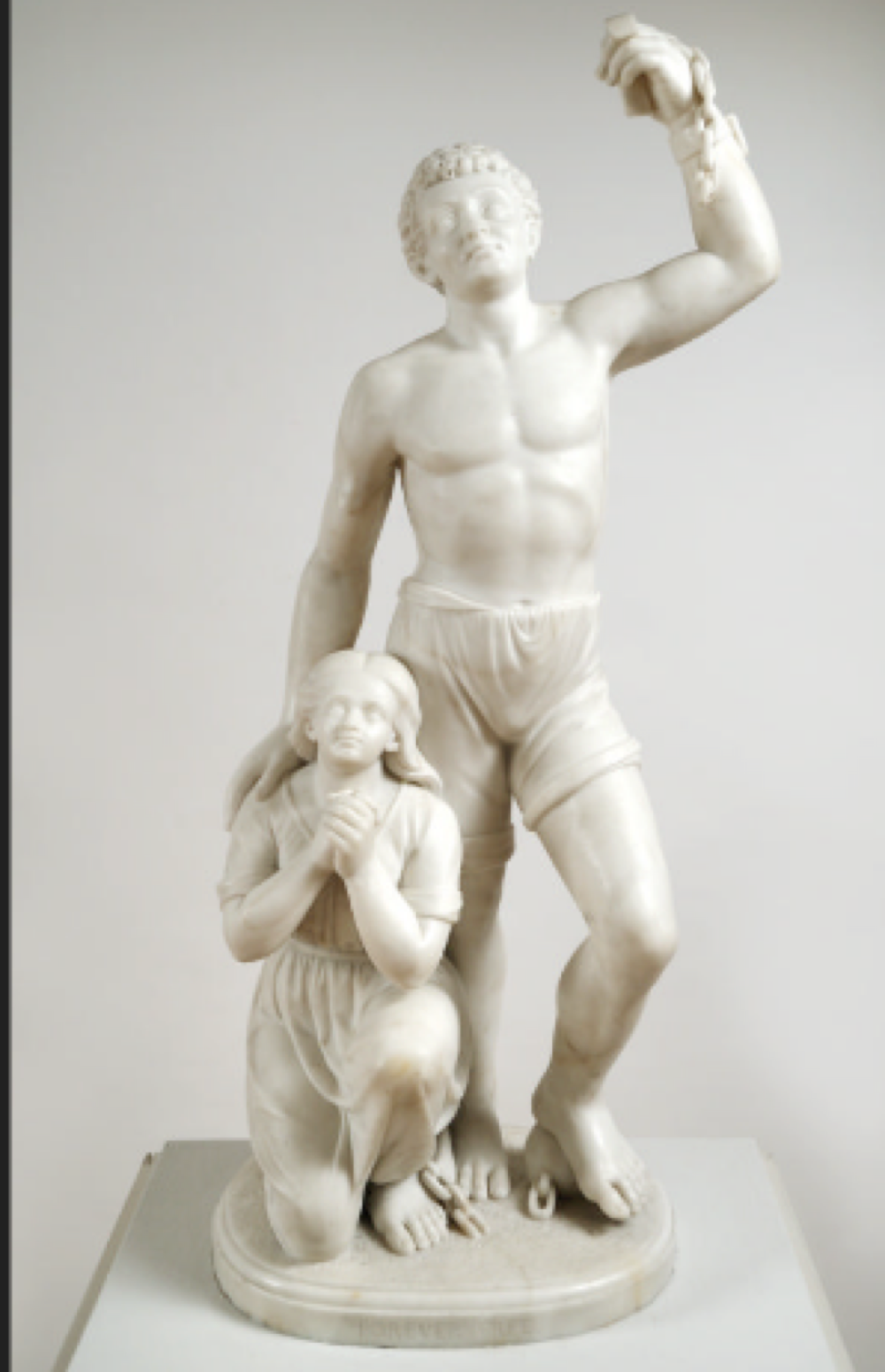
Describe the Forever Free sculpture and its significance
emancipated man standing: shackles weightless, undressed: connection between antiquity (contrapposto) and previous imagery of slaves, inscription, emancipated woman: verge of standing, gendered difference, more racially ambiguous
Henry Ossawa Tanner (1859-1937)
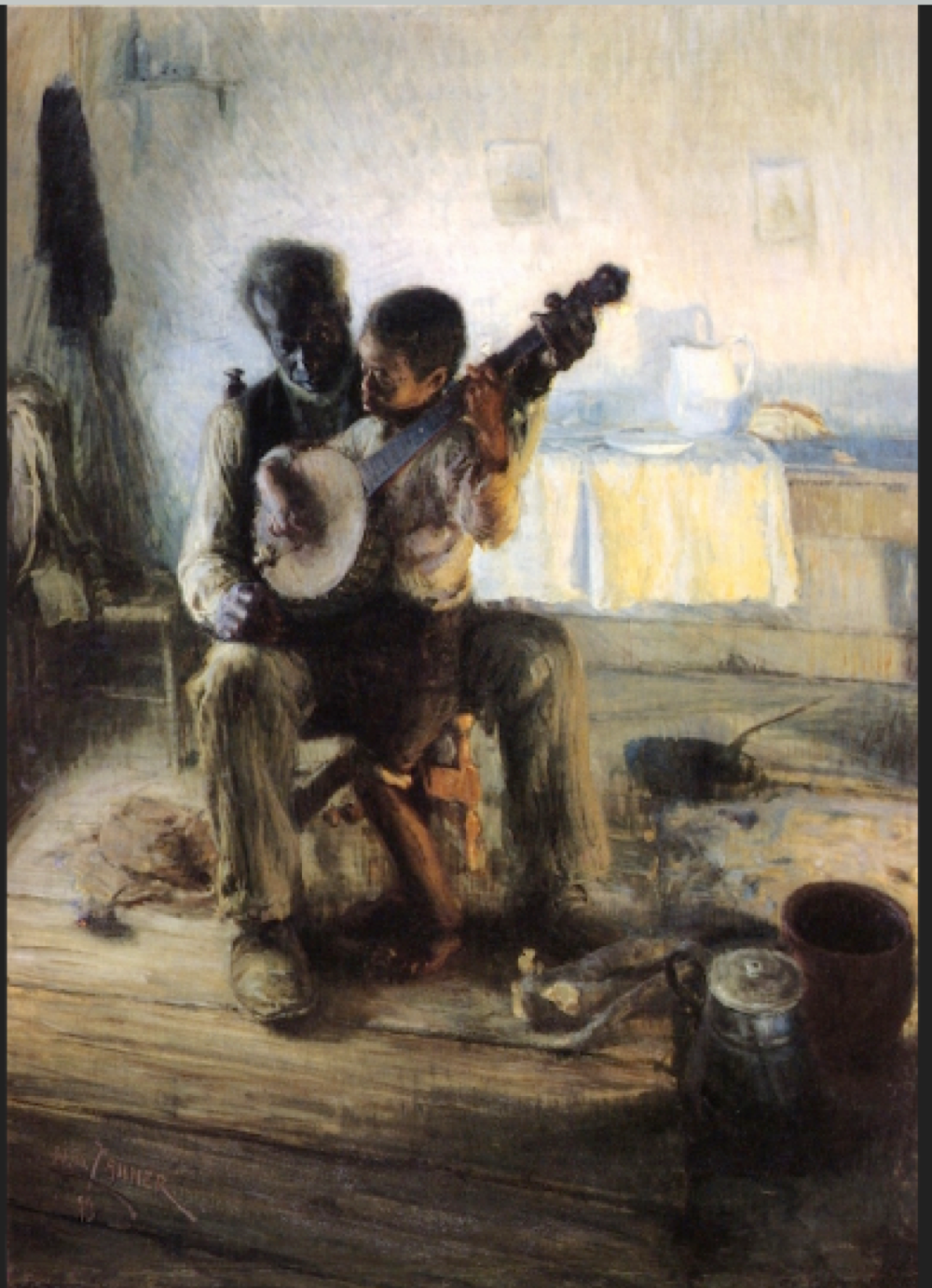
The Banjo Lesson, 1893
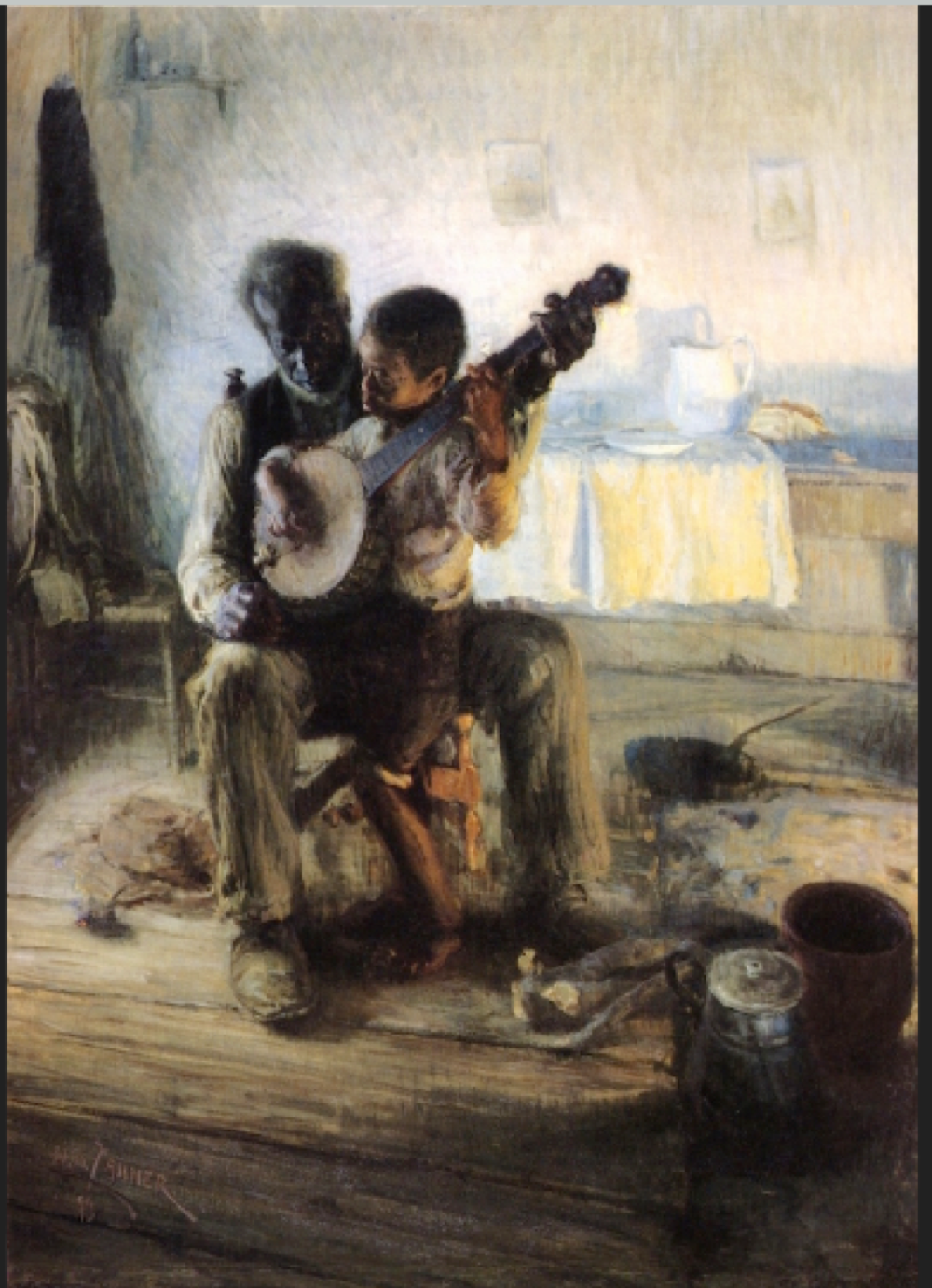
Describe the context of the Banjo lesson
after civil war, Jim Crow era, his mom escaped slavery, dad was a minister, he attended school: survived harassment and attended school in Paris, taught in North Carolina, painted scenes of everyday life
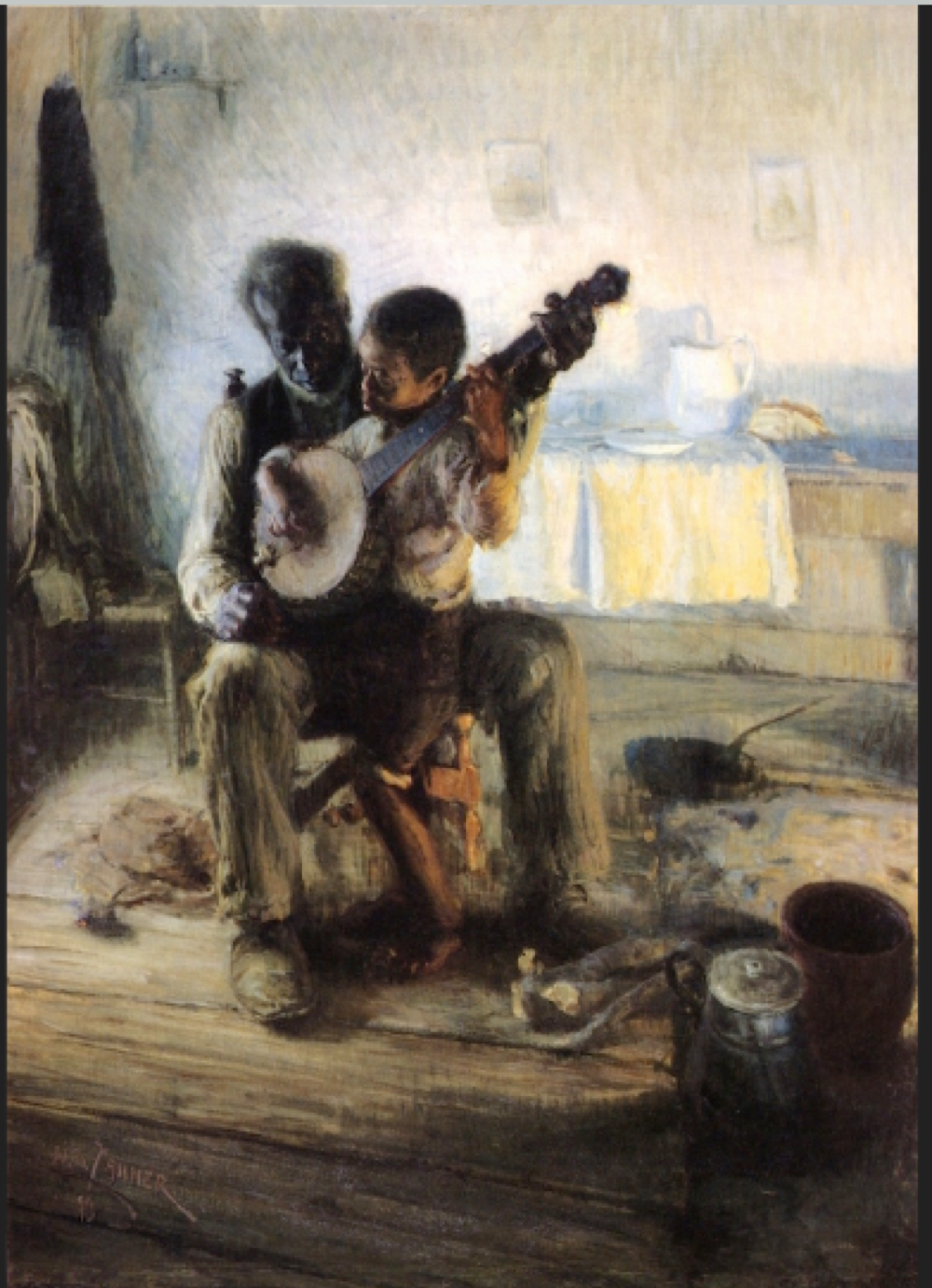
Describe the overall composition of the Banjo lesson and its significance
before integrated schools=fear mongering, older man giving a boy a banjo lesson: based on gourd instruments from Africa, intimacy and solemnity: old man shelter and pass down knowledge to generations, cast in halo, tender absorption in task, not perform for anyone, soft palette and humble surroundings