Ch. 46 Pt. 1-2 (animal reproduction)
 Call Kai
 Learn
Learn Practice Test
 Spaced Repetition
 Match
Match Flashcards
 Knowt Play
1/30

Earn XP
Description and Tags
asexual/sexual reproduction + male reproduction
Name | Mastery | Learn | Test | Matching | Spaced | Call with Kai |
|---|
No analytics yet
Send a link to your students to track their progress
31 Terms
advantages & disadvantages of asexual reproduction
advantages→less dangerous, less energy, faster
disadvantages→offspring prone to environmental changes bc low genetic diversity
advantages & disadvantages of sexual reproduction
advantages→more genetic diversity, can thrive in diff environments
disadvantages→more energy, more time
what are the types of asexual reproduction?
1) fission
2) budding
3) fragmentation
4) parthenogenesis
describe fission & its animal groups
when individual divides into 2
ex//sea anemone
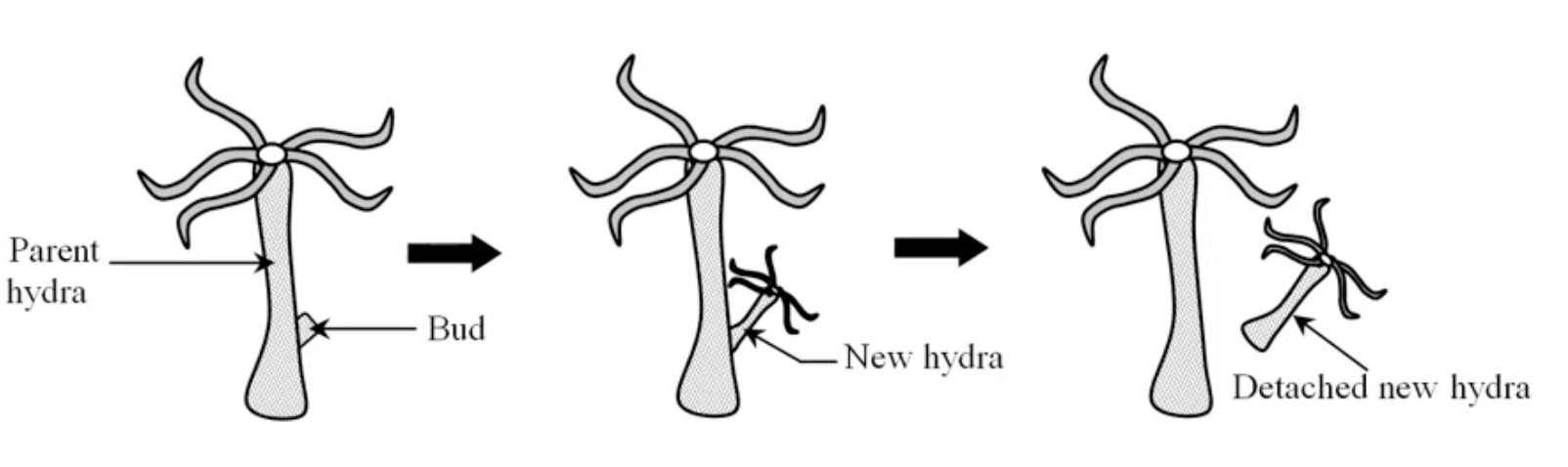
describe budding & its animal groups
bud forms AND matures→then breaks off=new animal
ex//hydra
describe fragmentation & its animal groups
piece of animal breaks off & regenerates into new animal (only matures after it breaks off)
ex//sea star arm & flatworm
describe parthenogenesis & its animal groups
creation of offspring without fertilization(egg becomes offspring without sperm)
ex// bee, whiptail lizard, hammerhead sharks
reproductive cycles & patterns are influenced by…
water, light, temperature affect energy reserves & reproductive hormones
what are the types of sexual reproduction
1) standard
2) hermaphroditism
3) sequential hermaphroditism
describe standard sexual reproduction & its animal groups
male→sperm
female→egg
ex//salmon
describe hermaphroditism & its animal groups
animal has both gonads within their body
ex// tapeworms & sea slugs
describe sequential hermaphroditism & its animal groups
animal may be born a certain sex but can switch to opposite sex (maybe bc of larger energy reserves)
ex// oysters & clownfish
example of animal that can do both sexual & asexual reproduction
Daphnia(sea flea)
Internal fertilization: description, fertilization requirements, # offspring, parent investment
-egg & sperm unite within the body
ex//tortoises, bees, invertebrates
-requires cooperative behavior & sophisticated reproductive systems
-few offpsring
-high level of parent investment=increase offspring survival
External fertilization: description, fertilization requirements, # offspring, parent investment
egg & sperm unite outside body
ex//amphibians & aquatic animals(except marine animals)
-requires favorable environment(WATER) for zygote development & synchronized release time and area/courtship behavior
-many offspring
-low parental investment= less offspring survival
what structures make up the testes?
1) seminiferous tubules
2) leydig cells
3) scrotum
what structures make up the ducts of the penis?
1) epididymis
2) vas deferens
3) urethra
what are the accessory glands of the penis
1) seminal vesicle
2) prostate gland
3) bulbourethral gland
accessory glands do what?
add to the semen(sperm+seminal fluid)
where is the seminal fluid housed & how is it produced?
-housed in the accessory glands
seminal vesicle→prostate gland→bulbourethral gland
contents of the seminal vesicle
-60% of semen
-alkaline, mucus, fructose, coagulating enzymes, absorbic acid, prostaglandins
contents of prostate gland
1) anticoagulant enzymes & citrate
—enhances motility of sperm
contents of bulbourethral gland
neutralizing mucus
structures of the penis
1) glans(head)
2) prepuce(foreskin)
3) corpus cavernosa & spongiosum(erectile tissue)
sequences of events for spermatogenesis(occurs in testes)
seminiferous tubules(testis)→epididymis→vas deferens→urethra→penis
explain the creation of sperm starting at spermatogonium
spermatogonium→undergoes mitosis to become primary spermatocyte→divides by Meiosis I to become secondary spermatocyte→divides by Meiosis II to become spermatids→matures to become sperm
(occurs in the testes)
what is capacitation
process of sperm becoming mature as they travel thru 6m long epididymis & thru the female reproductive tract
purpose of acrosome of sperm?
carries enzymes that eats thru covering of the egg
why are testes outside the abdominal cavity?
body temperature too high for normal sperm development
mammalian sperm is not immediately functional so it requires?
capacitation
how many sperm are generally required for successful fertilization?
100 million