Nutrition in humans
 Call Kai
 Learn
Learn Practice Test
 Spaced Repetition
 Match
Match Flashcards
 Knowt Play
1/40

There's no tags or description
Looks like no tags are added yet.
Name | Mastery | Learn | Test | Matching | Spaced | Call with Kai |
|---|
No analytics yet
Send a link to your students to track their progress
41 Terms
What is a balanced diet?
A balanced diet includes all appropriate proportions of carbohydrates, proteins, lipids, vitamins, minerals, water and fibre
Name some sources of carbohydrates
Pasta, bread, potatoes
What is the function of carbs?
Supplies quick-release energy for reactions in the body
Name some sources of protein
Fish, meat, eggs, pulses, milk
What is the function of proteins?
Growth and repair, making enzymes, making some hormones
Name some sources of lipids
Olive oil, butter, cream, cheese, nuts, oily fish
What is the function of lipids?
Source of energy, makes cell membranes, found in some hormones
Name some sources of vitamin A
Cheese, eggs, oily fish, spinach, carrots
What is vitamin A important?
Keeps healthy vision in dim light, keeps skin healthy, helps immune system work
Name some sources of vitamin C
Oranges, red peppers, broccoli, potatoes
Why is vitamin C important?
Helps the body make red blood cells and release energy from food
Name some sources of vitamin D
Oily fish, red meat, eggs, sunlight
Why is vitamin D important?
Keeps cell healthy, allows wounds to heal, maintains healthy skin and tissues
Name some sources of calcium
Milk, cheese, broccoli, tofu, nuts
Why is calcium important?
Builds strong bones and teeth, regulates muscle contractions and blood clotting
Name some sources of iron
Meat, beans, nuts, leafy green veg
Why is iron important?
Important in making red blood cells which carry oxygen
Why is water important?
Keeps cells working effectively, regulates body temperature, dissolves nutrients
Why is fibre important?
Reduces risk of bowel caner and constipation, provides bulk for intestine to push food through, allows waste through
What is malnutrition?
Not having a balanced diet
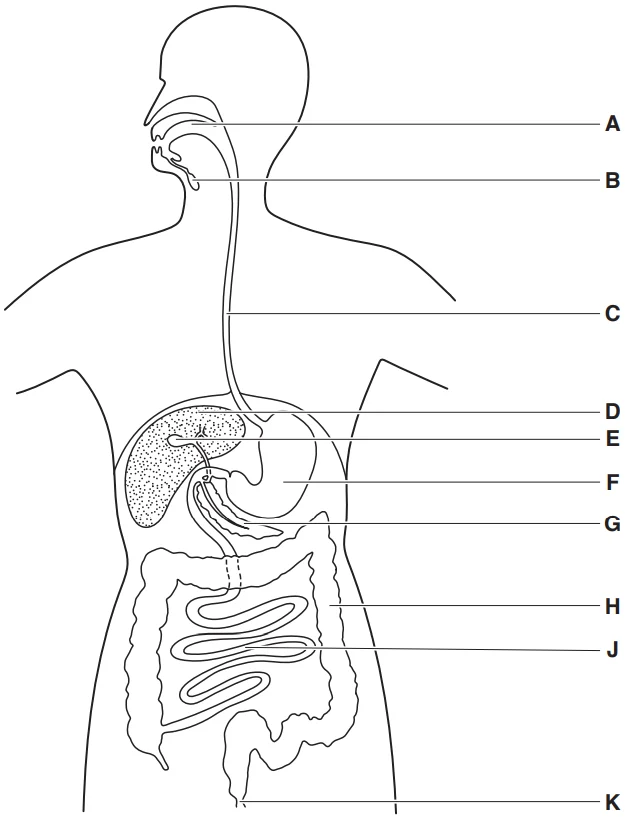
What is part A?
The mouth
What is the function of the mouth in the digestive system?
To rip, chew and grind food
Salivary glands produce saliva
Contains amylase which breaks down starch
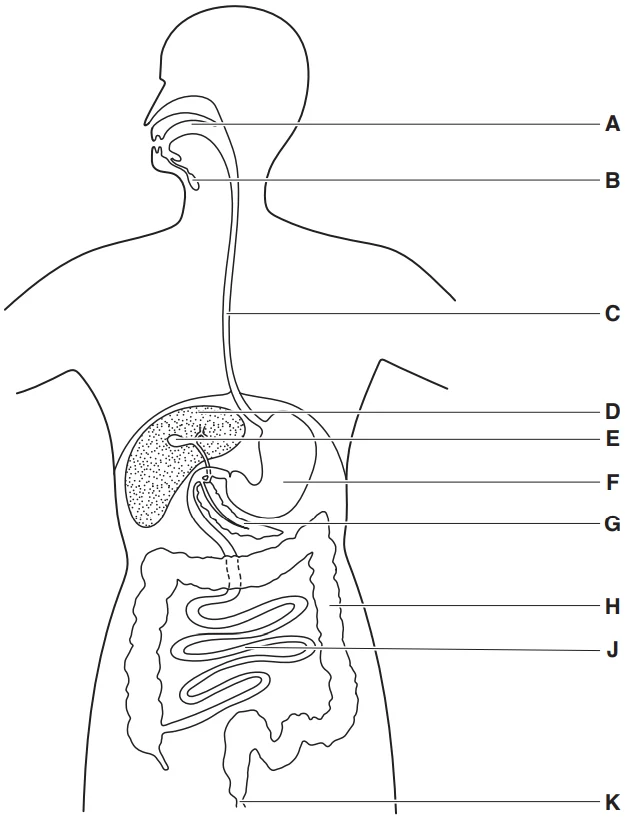
What is part C?
The oesophagus
What is the function of the oesophagus in the digestive system?
Links throat to stomach
Ring of muscles contract and relax to push food to stomach (peristalsis)
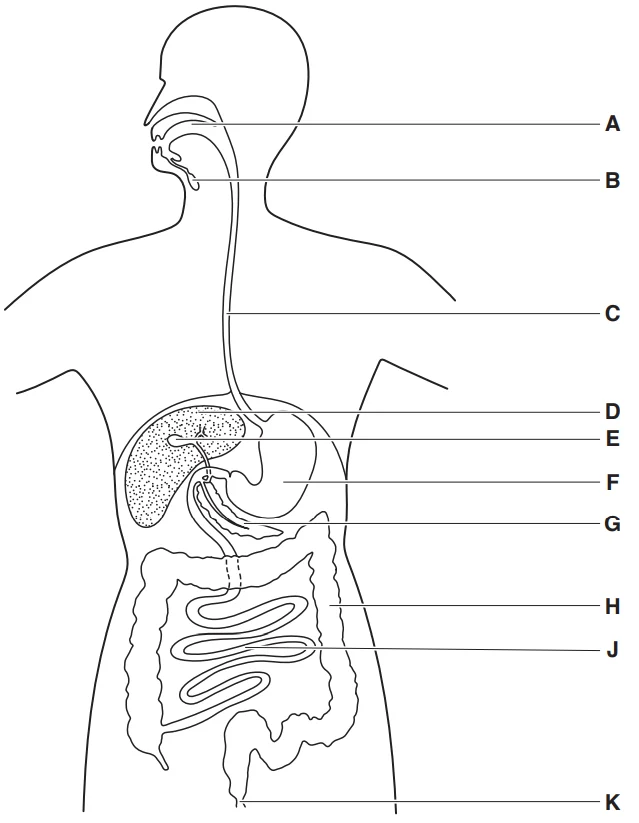
What is part D?
The liver
What is the function of the liver in the digestive system?
Secretes bile, which neutralises stomach acids and emulsifies fats
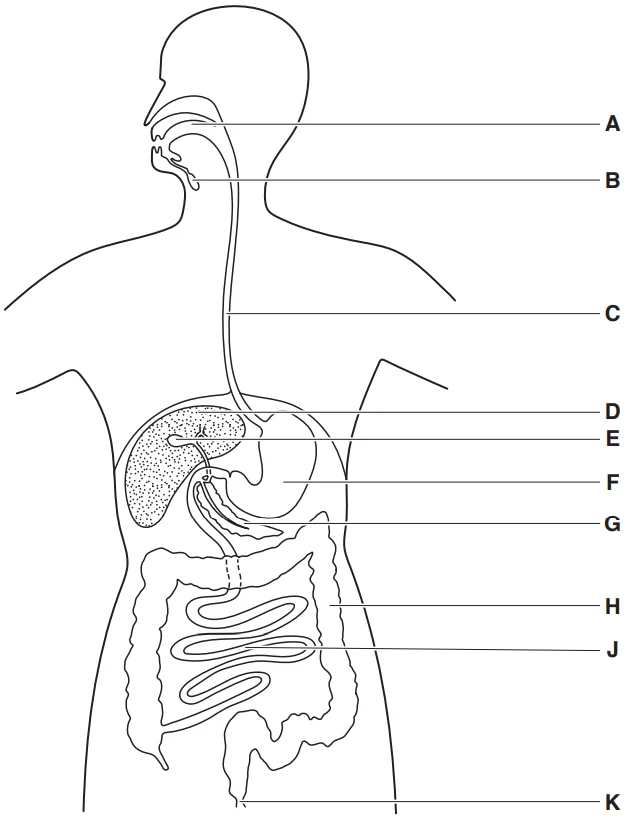
What is part F?
The stomach
What is the function of the stomach in the digestive system?
Food stays in the stomach for 4-5 hours
Muscular walls pummel the food
Mixed with enzymes (such as pepsin)
Stomach secretes hydrochloric acid
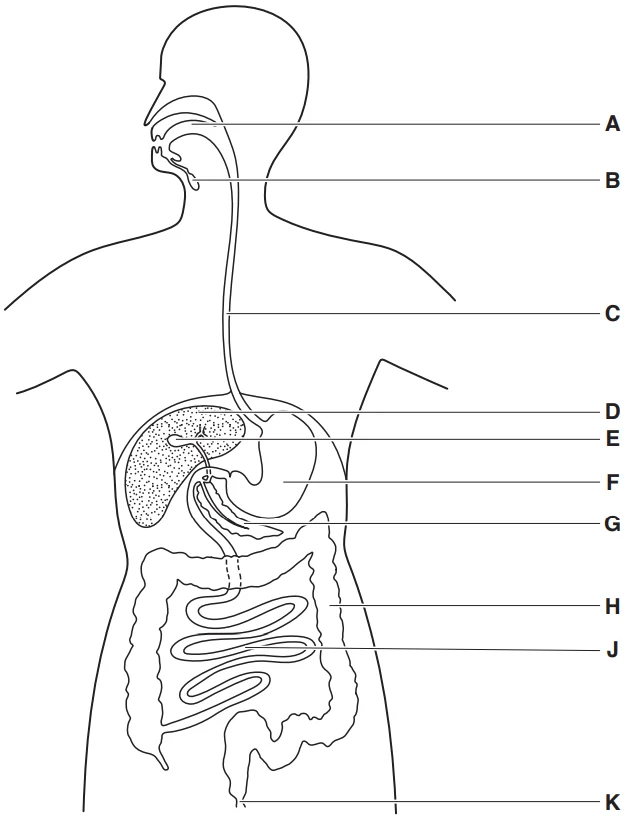
What is part G?
The pancreas
What is the function of the pancreas in the digestive system?
Produces protease, lipase and amylase which are released into the small intestine
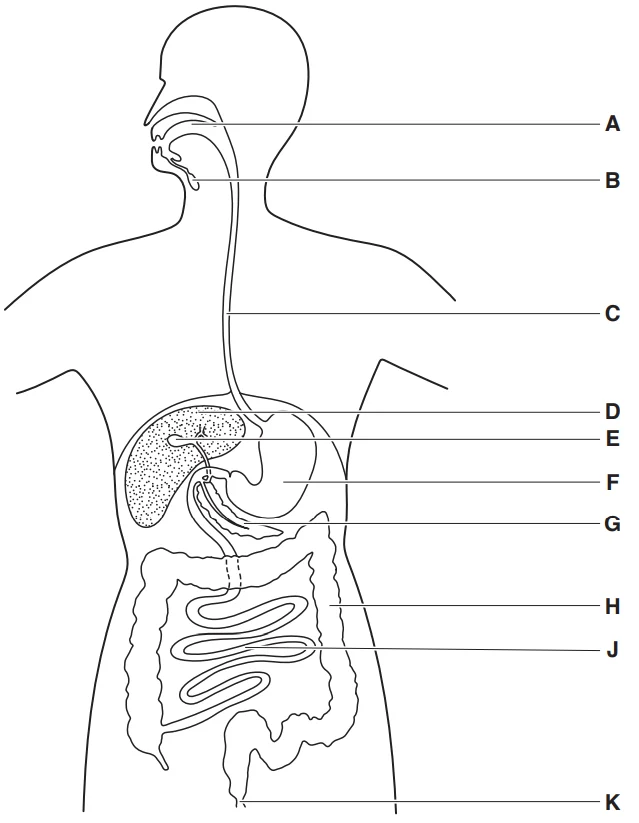
What is part H?
The large intestine
What is the function of the large intestine in the digestive system?
Contains undigested food, e.g. fibre
Excess water is absorbed from food
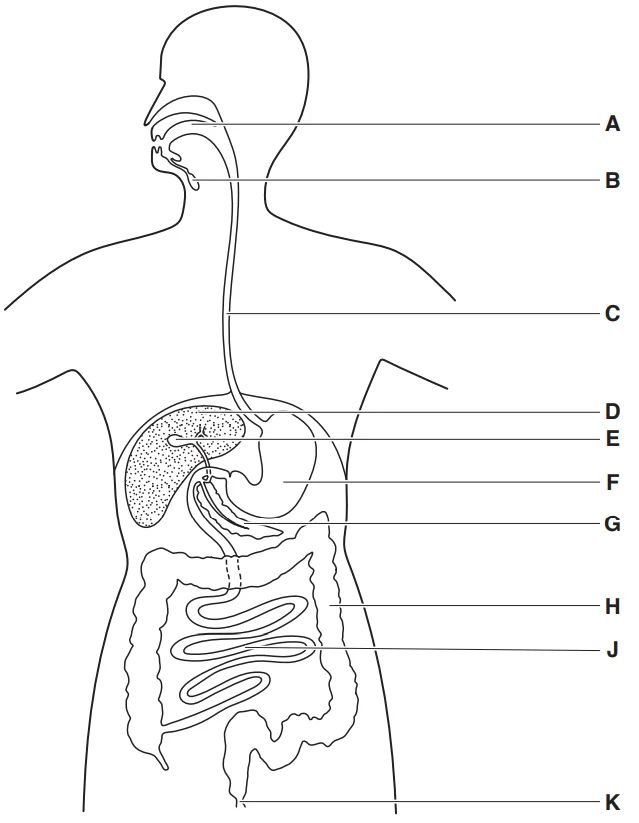
What is part J?
The small intestine
What is the function of the small intestine in the digestive system?
Where protease, amylase and lipase act on food
Villi absorb food into the bloodstream
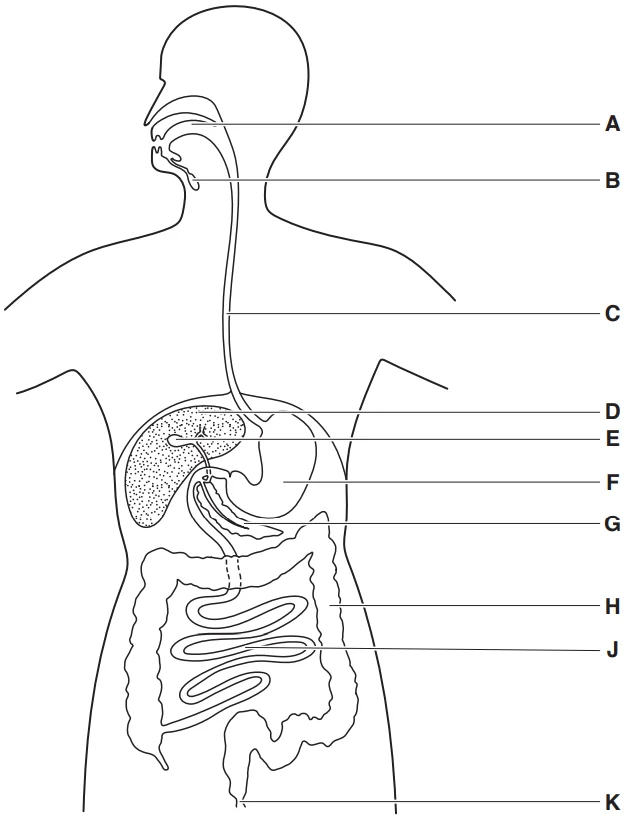
What is part K?
The anus/rectum
What is the function of the anus/rectum in the digestive system?
Faeces are stored in the rectum before being egested in the anus
Where is bile stored?
In the gallbladder: bile is produced in the liver
What is a biological catalyst?
An enzyme that speeds up specific chemical reactions in living organisms without being used up or changed
Describe how the small intestine is highly adapted for absorption
Very long
Highly folded surface with millions of villi
Each villus has a highly folded surface with millions of microvilli
Walls of each villus only one cell thick
Villi well-supplied with a network of blood capillaries
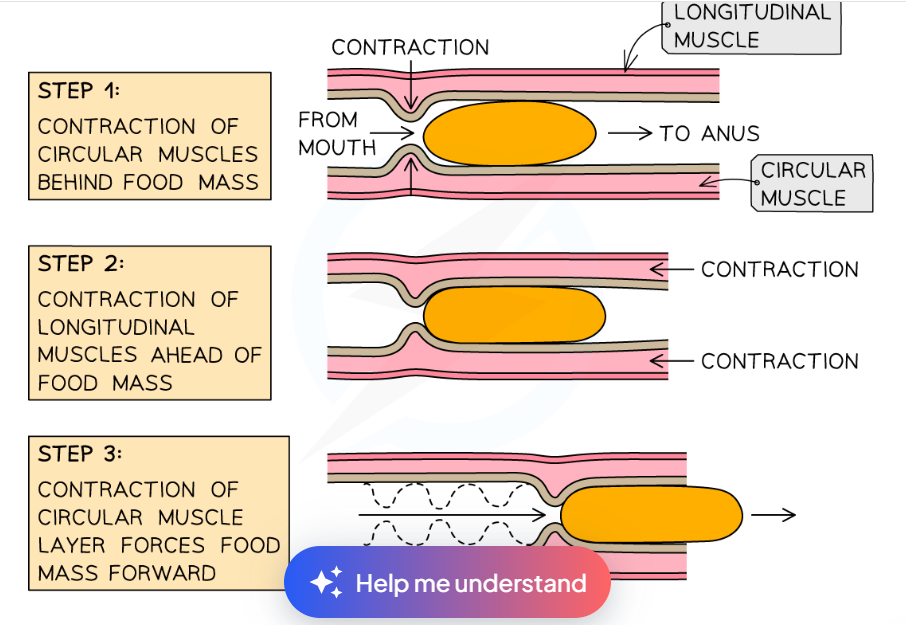
What is peristalsis?
Peristalsis is the involuntary, wave-like contraction of circular and longitudinal muscles in the wall of the gut that pushes the bolus (food) through the alimentary canal
Formula for calculating energy content in a food sample?
Energy (J) = Mass of water (g) × 4.2 J/g°C × Temperature rise (°C)