170 Final Exam master set
 Call Kai
 Learn
Learn Practice Test
 Spaced Repetition
 Match
Match Flashcards
 Knowt Play
1/337

There's no tags or description
Looks like no tags are added yet.
Name | Mastery | Learn | Test | Matching | Spaced | Call with Kai |
|---|
No analytics yet
Send a link to your students to track their progress
338 Terms
Osmosis
Movement of water from lower solute concentration to higher solute concentration across semipermeable membrane.
Diffusion
Movement of particles from high concentration to low concentration until equilibrium is reached.
Filtration
Movement of water/solutes from high pressure to low pressure; driven by hydrostatic pressure.
Active Transport
Movement of molecules against concentration gradient requiring ATP; example sodium-potassium pump.
Intracellular Fluid
Fluid inside cells; about two-thirds of total body fluid; potassium major cation.
Extracellular Fluid
Fluid outside cells including interstitial, plasma, transcellular; sodium major cation.
Isotonic Solution
Same osmolality as plasma; no fluid shift. Examples NS and LR.
Hypotonic Solution
Lower osmolality than plasma; water moves into cells causing swelling. Example 0.45 NS.
Hypertonic Solution
Higher osmolality than plasma; pulls water out of cells. Example 3 percent saline.
Fluid Volume Deficit
Loss of water and electrolytes causing dehydration, hypotension, tachycardia, poor skin turgor.
Fluid Volume Overload
Excess fluid causing edema, crackles, JVD, hypertension, weight gain.
Third Spacing
Fluid shifts into interstitial spaces and is unavailable for circulation.
Hyponatremia
Na less than 135; confusion, seizures, headache, muscle cramps.
Hypernatremia
Na greater than 145; thirst, agitation, dry mucosa, neuro changes.
Hypokalemia
K less than 3.5; weakness, ileus, flattened T waves, arrhythmias.
Hyperkalemia
K greater than 5; peaked T waves, dysrhythmias, muscle weakness.
Hypocalcemia
Tetany, Chvostek sign, Trousseau sign, seizures.
Hypercalcemia
Stones bones groans psychiatric overtones.
Hypomagnesemia
Tremors, increased reflexes, torsades risk (prolonged QT intervals)
Hypermagnesemia
Hyporeflexia, respiratory depression, hypotension.
Hypophosphatemia
Weakness, respiratory muscle failure.
Hyperphosphatemia
Common in renal failure; often inverse with calcium.
Basic Metabolic Panel
Measures sodium potassium chloride CO2 glucose BUN creatinine calcium.
24 Hour Urine
Measures kidney function and protein excretion.
Insulin
Lowers blood glucose by moving glucose into cells.
Glucagon
Raises blood glucose by stimulating glycogen breakdown.
Cortisol
Stress hormone increases blood glucose.
Aerobic Metabolism
ATP production with oxygen.
Anaerobic Metabolism
ATP without oxygen; produces lactic acid.
Type 1 Diabetes
Autoimmune destruction of beta cells; no insulin production.
Type 2 Diabetes
Insulin resistance with impaired secretion.
DKA
Hyperglycemia ketosis metabolic acidosis; mostly type 1.
HHS (Hyperosmolar Hyperglycemic State)
Extreme hyperglycemia dehydration without significant ketosis; Mostly type 2.
Hemoglobin A1C
Reflects average glucose over 3 months; goal >7%
Venous Thromboembolism
Includes DVT and pulmonary embolism.
Deep Vein Thrombosis
Clot in deep vein; unilateral swelling pain warmth.
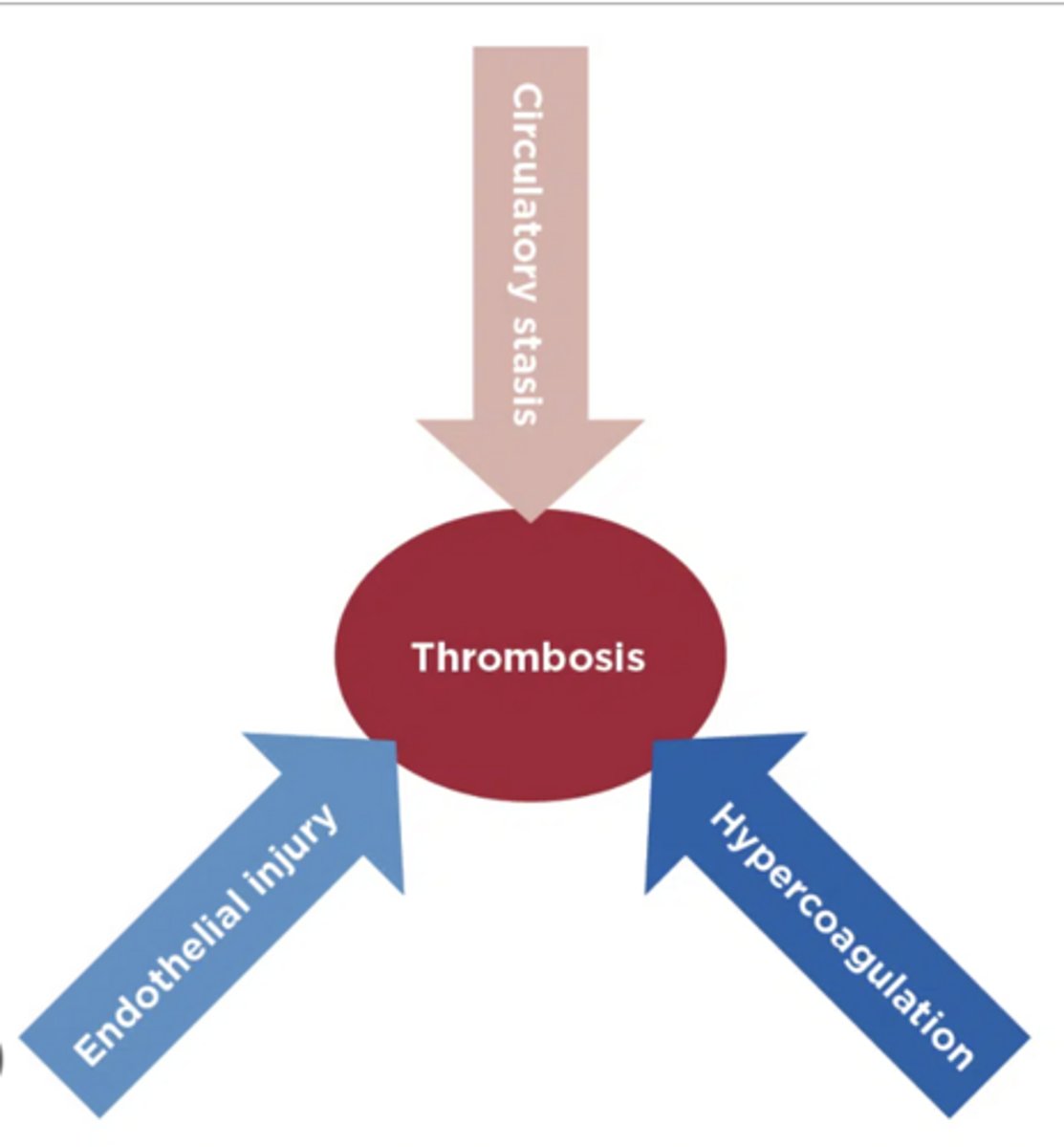
Virchow Triad
The cornerstone mechanism for thrombosis: venous stasis, endothelial injury, hypercoagulability.
Pulmonary Embolism
Clot in lung causing sudden dyspnea chest pain tachycardia.
Arteriosclerosis (-io)
Hardening/thickening of arteries.
Atherosclerosis (-o)
Plaque buildup in arteries causing narrowed blood flow.
Intermittent Claudication
Leg pain with exercise relieved by rest; PAD sign.
Ischemia
Inadequate tissue perfusion and oxygenation.
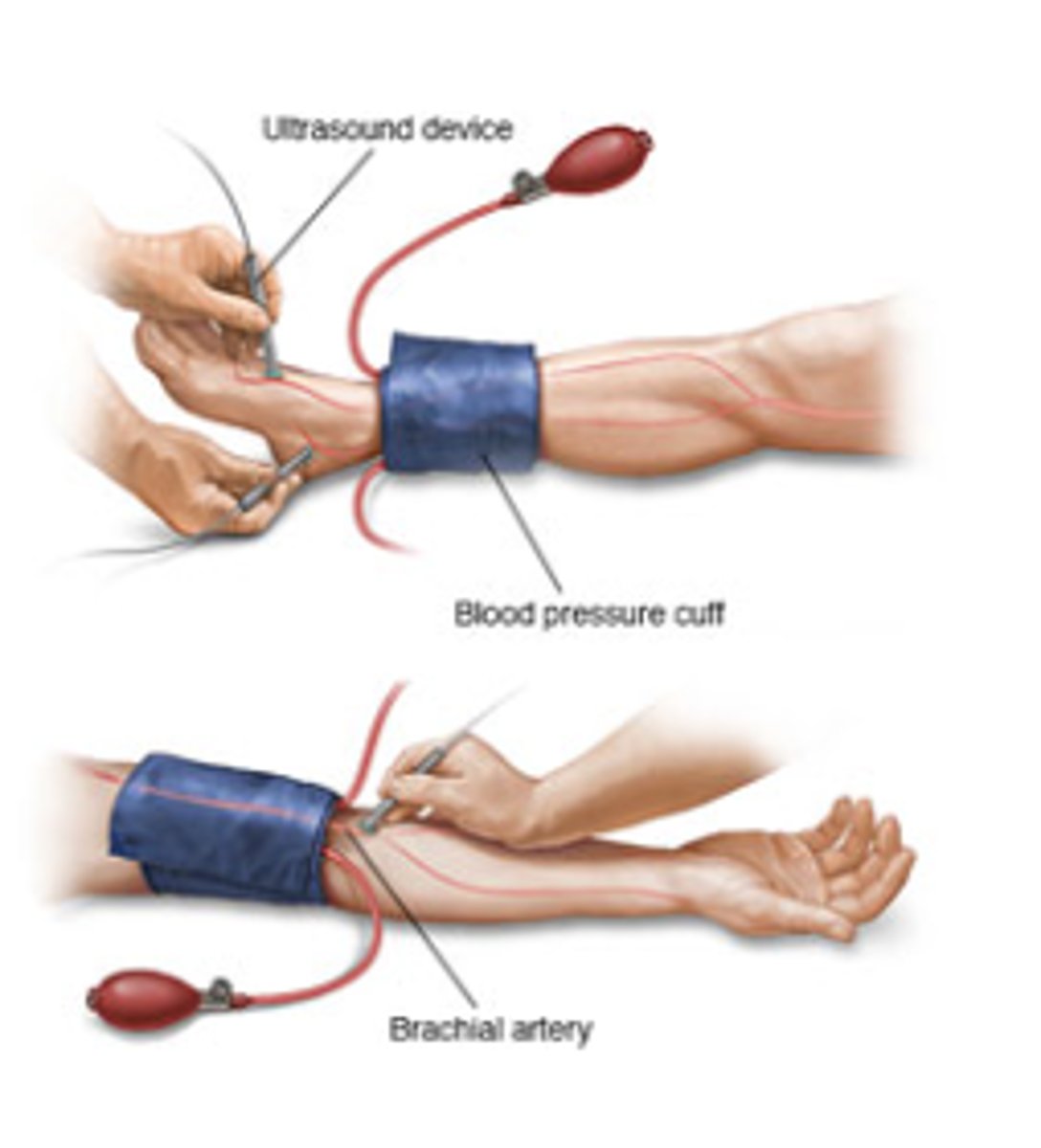
Ankle-Brachial Index (ABI) Test
Quick non-invasive procedure that compares BP in ankle w/ BP in arm — used to dx Peripheral Arterial Disease (PAD)
Ankle-Brachial Index (ABI) normal result
1.0-1.3
Cardiac Output
HR x SV
Preload
Volume filling ventricle before contraction.
Afterload
Resistance heart pumps against.
Stroke Volume
Amount ejected per beat.
Renin Angiotensin Aldosterone System (RAAS)
System that increases blood pressure and fluid retention.
Primary Hypertension
Elevated BP without identifiable cause.
Preeclampsia
HTN in pregnancy with proteinuria and organ involvement.
Hypoxemia
Low oxygen in arterial blood.
Hypercapnia
Elevated CO2.
ABG Normal Values: pH
pH 7.35-7.45
ABG Normal Values: PaCO2
PaCO2 35-45
ABG Normal Values: HCO3
HCO3 22-26
ABG Normal Values: PaO2
PaO2 80-100
Respiratory Acidosis
Low pH high CO2; hypoventilation.
Respiratory Alkalosis
High pH low CO2; hyperventilation.
Metabolic Acidosis
Low pH low HCO3; DKA renal failure.
Metabolic Alkalosis
High pH high HCO3; vomiting diuretics.
COPD
Chronic airflow limitation; emphysema and chronic bronchitis.
Asthma
Reversible airway inflammation and bronchoconstriction.
Benign Neoplasm
Localized noninvasive growth.
Malignant Neoplasm
Cancerous invasive growth with metastasis.
Differentiation
How mature and specialized a cell is.
Metastasis
Spread of cancer to distant sites.
Neutropenia
Low neutrophils increases infection risk.
Thrombocytopenia
Low platelets increases bleeding risk.
Leukemia
Cancer of blood forming tissues.
Chemotherapy
Kills rapidly dividing cells; causes marrow suppression.
Radiation
Uses ionizing energy to destroy cancer cells.
Bone Marrow Transplant
Replaces diseased marrow.
HPV Vaccine
Prevents HPV related cancers.
Pap Smear
Screening for cervical cancer.
PSA
Test associated with prostate screening.
Menopause
Permanent cessation of menses due to ovarian decline.
Erectile Dysfunction
Inability to achieve or maintain erection.
Peaked T waves
Hyperkalemia
Muscle cramps confusion seizures
Check sodium imbalance
Unilateral calf warmth swelling
Suspect DVT
Sudden dyspnea pleuritic chest pain
Suspect PE
Crackles JVD edema
Fluid overload
Polyuria polydipsia polyphagia
Diabetes
Kussmaul respirations fruity breath
DKA
Positive Chvostek sign
Hypocalcemia
Leg pain relieved by rest
PAD
Pregnant patient HTN proteinuria
Preeclampsia
Hypertension Pathophysiology
Chronic elevated arterial pressure increases afterload and damages vessels, heart, kidneys, brain, and eyes.
Hypertension Risk Factors
Age, family history, obesity, smoking, diabetes, high sodium diet, sedentary lifestyle, stress.
Hypertension Signs and Symptoms
Often silent; may include headache, vision changes, dizziness; severe HTN can cause organ damage.
Hypertension Diagnostics
Repeated BP readings, BMP, urinalysis, renal labs, lipid panel, ECG.
Hypertension Nursing Interventions
Monitor BP, low sodium diet, administer antihypertensives, teach adherence, monitor for end organ damage.
Hypertension NCLEX Clues
Hypertensive emergency with neuro changes/chest pain requires immediate treatment.
Peripheral Arterial Disease Pathophysiology
Atherosclerotic narrowing decreases arterial blood flow causing ischemia.
Peripheral Arterial Disease Risk Factors
Smoking, diabetes, HTN, hyperlipidemia, age.
Peripheral Arterial Disease Signs
Intermittent claudication, cool extremity, diminished pulses, pallor, ulcers on toes.
Peripheral Arterial Disease Diagnostics
ABI, Doppler studies, angiography.
Peripheral Arterial Disease Nursing Care
Promote walking, foot care, smoking cessation, avoid crossing legs, monitor circulation.
Peripheral Arterial Disease NCLEX Clues
Pain relieved by dangling legs and diminished pulses suggests arterial disease.