6. Rise of American Power: Imperialism, Spanish American War, WWI
 Call Kai
 Learn
Learn Practice Test
 Spaced Repetition
 Match
Match Flashcards
 Knowt Play
1/26

There's no tags or description
Looks like no tags are added yet.
Name | Mastery | Learn | Test | Matching | Spaced | Call with Kai |
|---|
No analytics yet
Send a link to your students to track their progress
27 Terms
imperialism
A policy of extending a country's power and influence through diplomacy or military force.
extractive economies
When a country extracts/removes raw materials from the colony they rule and ships them to the home country
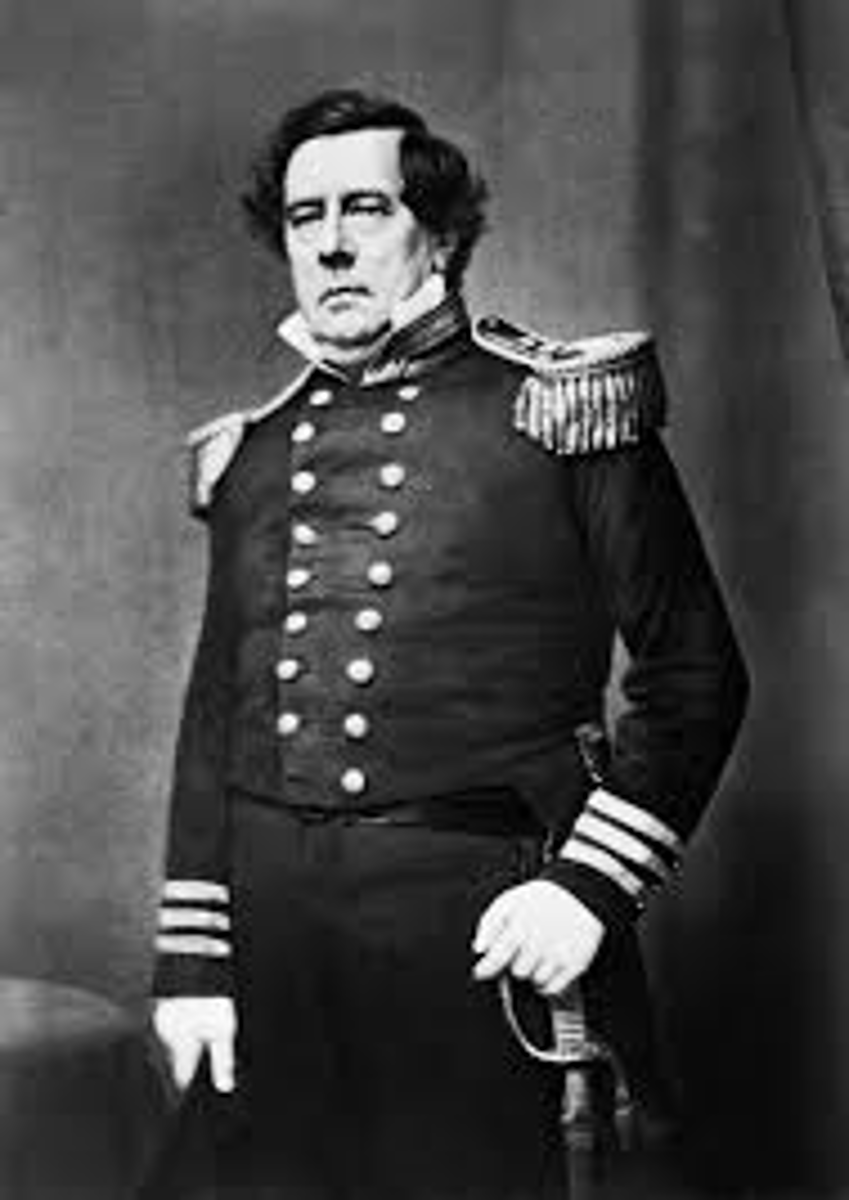
Matthew Perry
Commodore of the US Navy who opened up Japan to the US with the Treaty of Kanagawa
Social Darwinism
The application of ideas about evolution and "survival of the fittest" to human societies - particularly as a justification for their imperialist expansion.
"Seward's Folly"
The acquisition of the Alaska territory by the U.S. from Russia in 1867 by Secretary of State Seward. This area was twice as large as Texas and contained oil and gold. Also known as "Seward's Icebox."
White Man's Burden
Poem by Rudyard Kipling that preaches that it is the duty of the white man to civilize the native.
Yellow Journalism
Journalism that exploits, distorts, or exaggerates the news to create sensations and attract readers
jingoism
Extreme patriotism
USS Maine
Ship that exploded off the coast of Cuba in Havana harbor and helped contribute to the start of the Spanish-American War
Spanish American War
In 1898, a conflict between the United States and Spain. The U.S. victory led to more involvement in world affairs for the U.S.
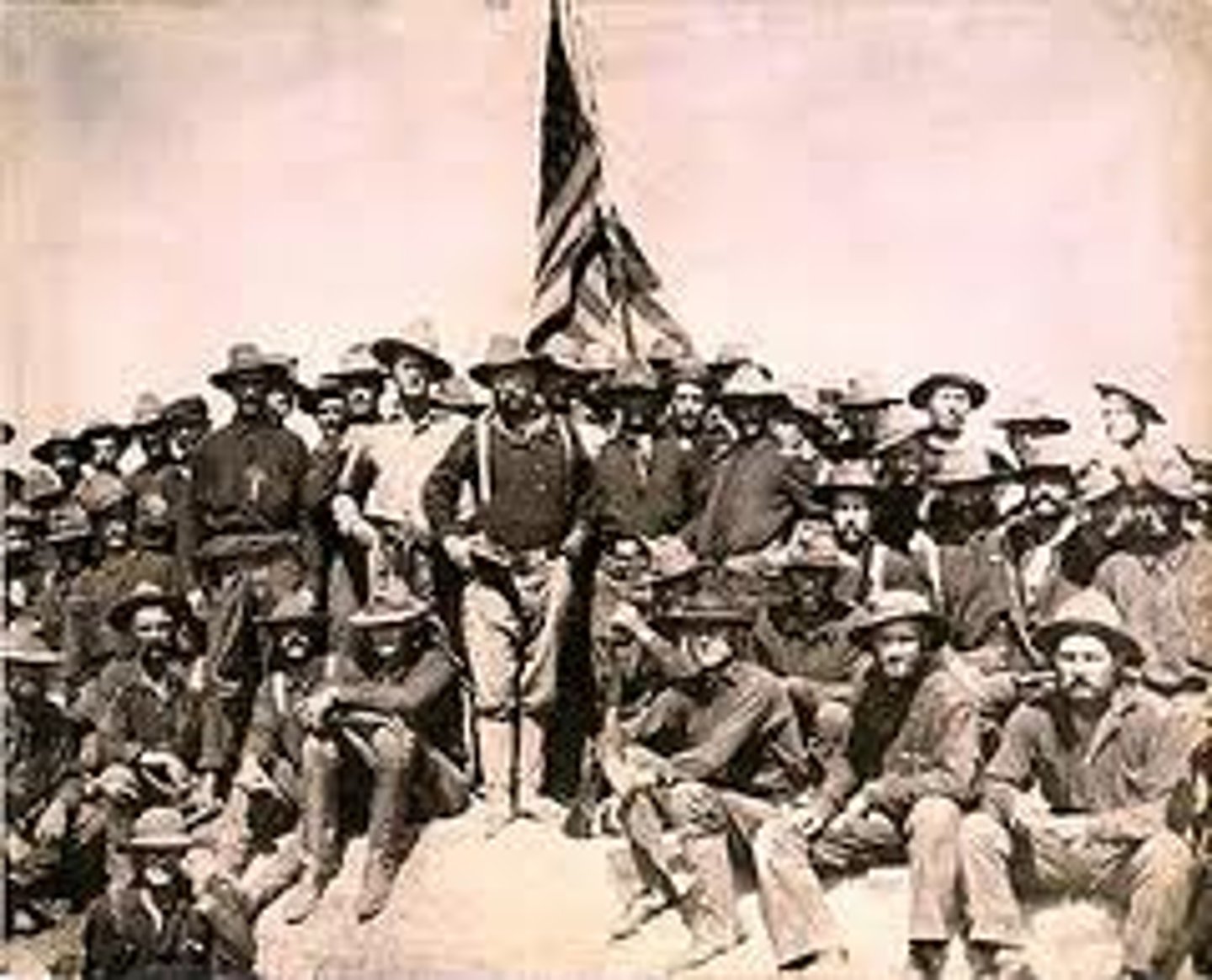
Rough Riders
Volunteer regiment of US Cavalry led by Teddy Roosevelt during the Spanish American War
Treaty of Paris (1898)
The treaty that concluded the Spanish American War. The US received Cuba, Puerto Rico, Guam, and the Philippines.
Open Door Policy
A policy proposed by the US in 1899, under which ALL nations would have equal opportunities to trade in China.
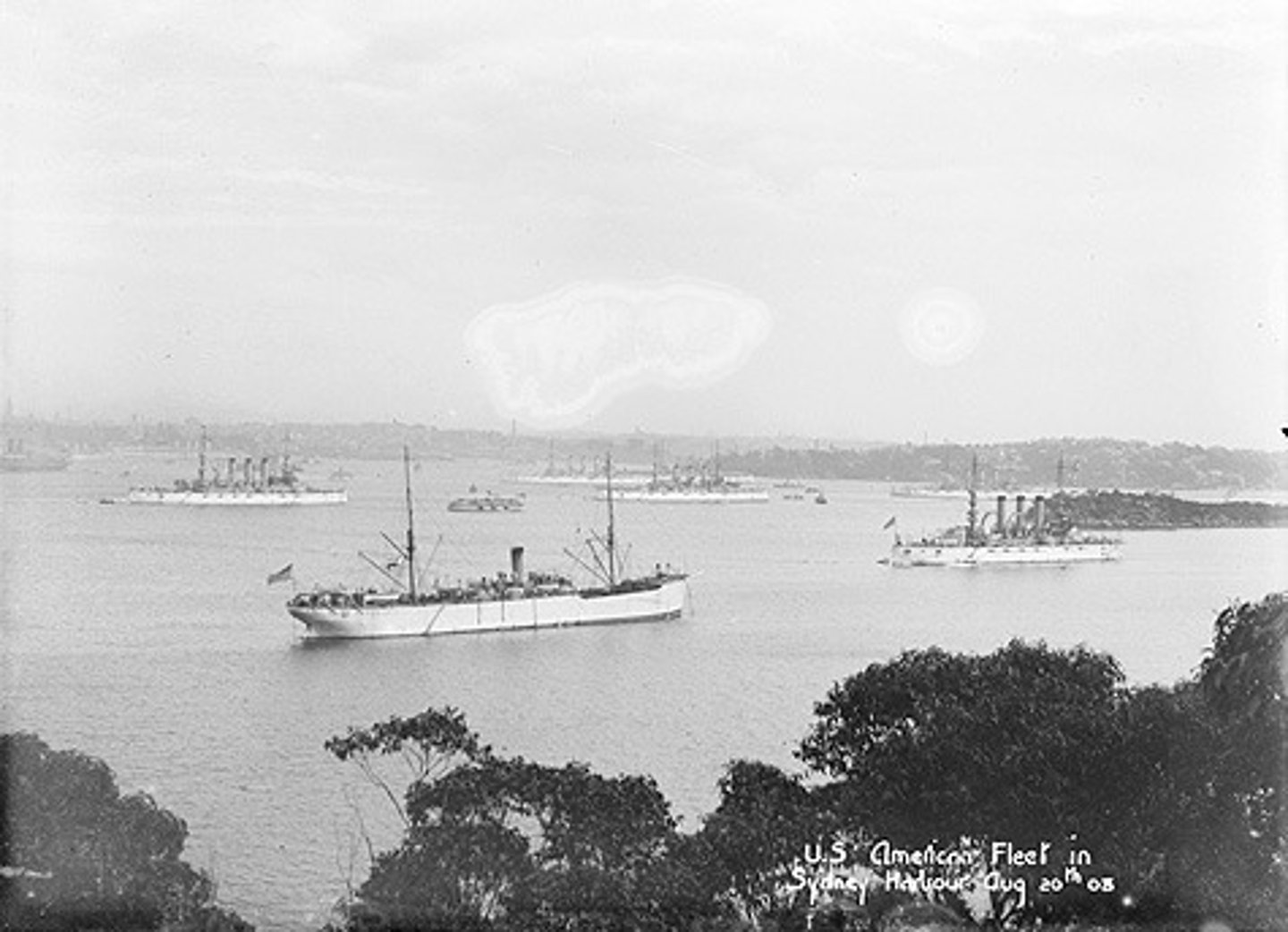
Great White Fleet
1907-1909 - Roosevelt sent the Navy on a world tour to show the world the U.S. naval power.
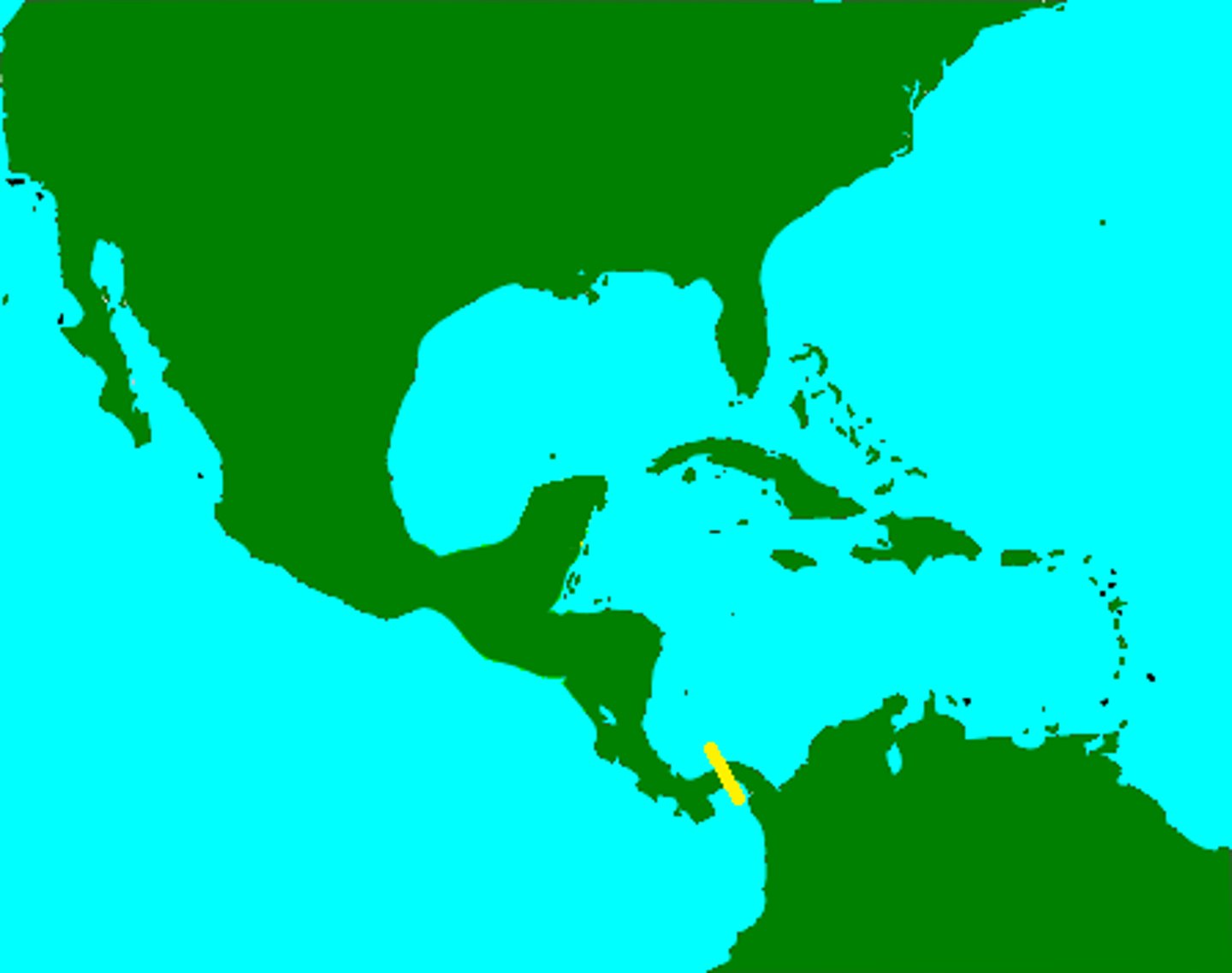
Panama Canal
The United States built the Panama Canal to have a quicker passage to the Pacific from the Atlantic and vice versa.
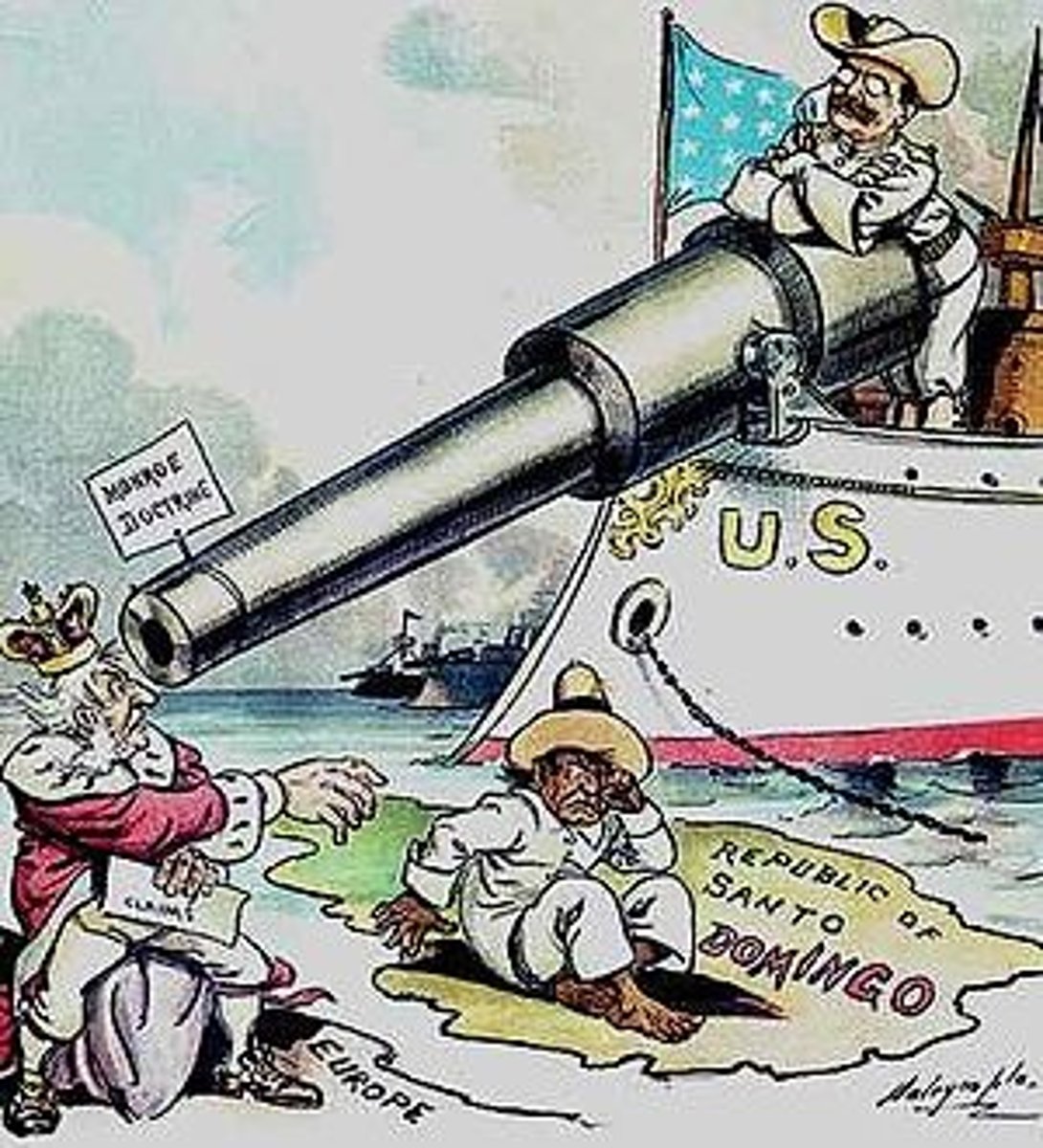
Roosevelt Corollary
Roosevelt's 1904 extension of the Monroe Doctrine, stating that the United States has the right to protect its economic interests in South And Central America by using military force, first put into effect in Dominican Republic. U.S. viewed itself as the "police" of the Western Hemisphere.
Deadly technology of WWI
machine guns, artillery field guns, poison gas, submarines, tanks and armored cars, airplanes
Committee on Public Information
government organization that produced propaganda to build support for WWI.
Espionage Act
This law, passed after the United States entered WWI, imposed sentences of up to twenty years on anyone found guilty of aiding the enemy, obstructing recruitment of soldiers, or encouraging disloyalty. It allowed the postmaster general to remove from the mail any materials that incited treason or insurrection.
Great Migration
Movement of over 300,000 African American from the rural south into Northern cities between 1914 and 1920
Doughboy
A nickname for the inexperienced but fresh American soldiers during WWI
Fourteen Points
A series of proposals in which U.S. president Woodrow Wilson outlined a plan for achieving a lasting peace after World War I.
League of Nations
A world organization established in 1920 to promote international cooperation and peace. It was first proposed in 1918 by President Woodrow Wilson, although the United States never joined the League. Essentially powerless, it was officially dissolved in 1946.
Harlem Hell Fighters
The African American infantry unit that fought with the French Army in World War I
Treaty of Versailles
Ended WWI.
Zimmerman Telegram
A telegram Germany Sent to Mexico to convince Mexico to attack the U.S during WWI. Germany promised to reward Mexico with land lost during the Mexican American War. Intercepted by England.
Anti Imperialist League
A group that objected the annexation of the Philippines and the building of an American empire. Reasons that motivated them: violation of democratic principles, fear of more wars, financial burden, and there should be a focus on issues at home.