OChem 8C Lab Final
 Call Kai
 Learn
Learn Practice Test
 Spaced Repetition
 Match
Match Flashcards
 Knowt Play
1/79

There's no tags or description
Looks like no tags are added yet.
Name | Mastery | Learn | Test | Matching | Spaced | Call with Kai |
|---|
No analytics yet
Send a link to your students to track their progress
80 Terms
A Wittig reaction mechanism is shown below. Which of the intermediates is the YLIDE?
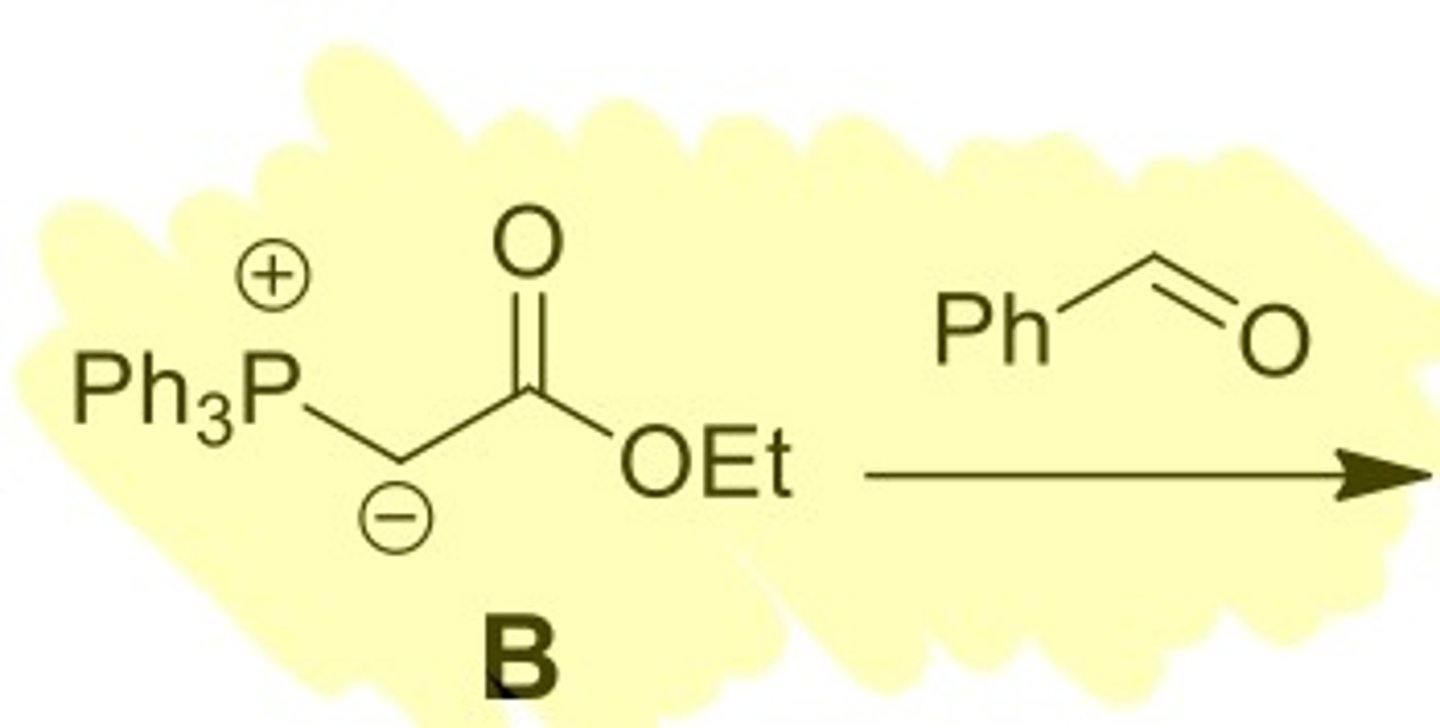
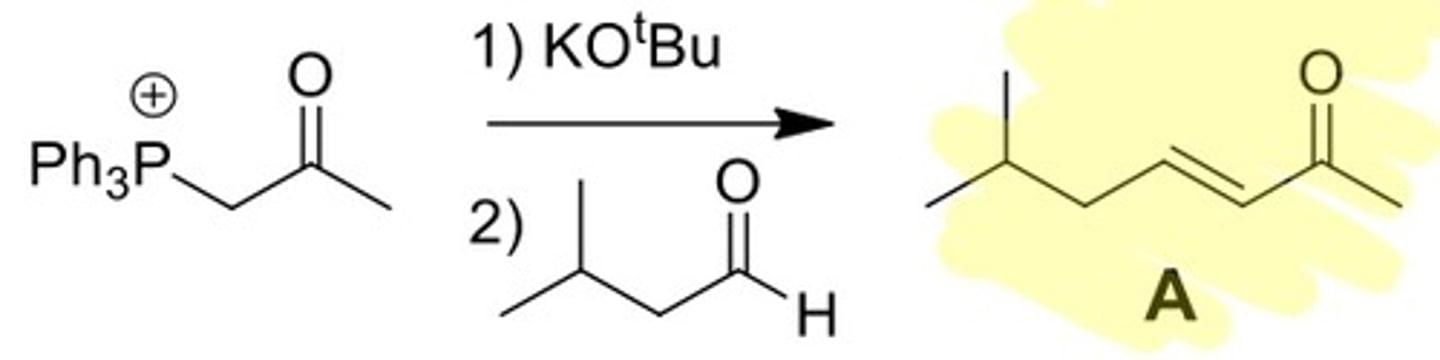
Which is the correct product of this Wittig reaction?
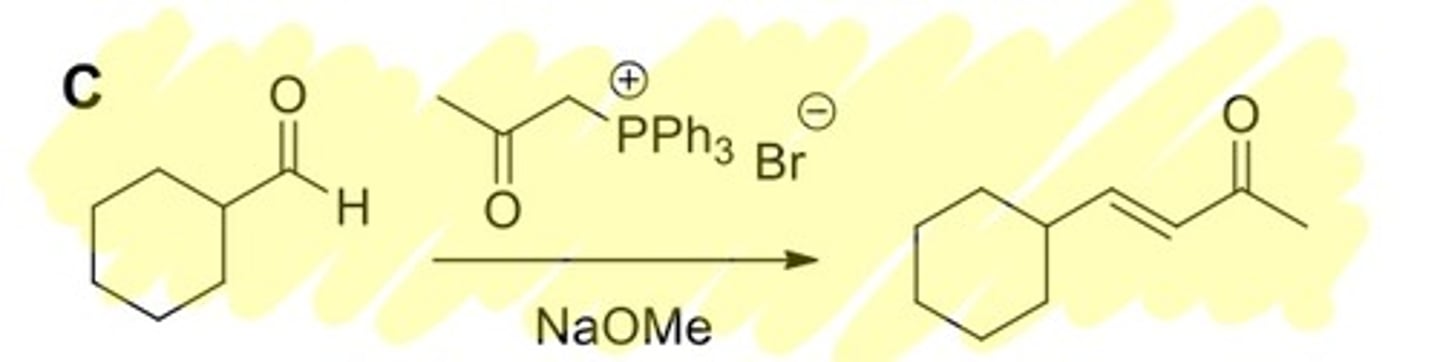
Here are four possible Wittig reactions. Only one of the products is correct - which one?
How did you remove the majority of the triphenylphosphine oxide byproduct of the Wittig reaction from your desired alkene?
Filtration- triphenylphosphine oxide is poorly soluble in ether
What byproducts were removed from your Wittig reaction product by the column chromatography and recrystallization steps?
Triphenylphosphine oxide
Why did you use potassium tert-butoxide as the base, as opposed to the "usual" Wittig base n- butyllithium?
ALL OF THE ABOVE
n-butylithium is nucleophilic
n-butylithium is pyrophoric
The phosphonium salt is activated
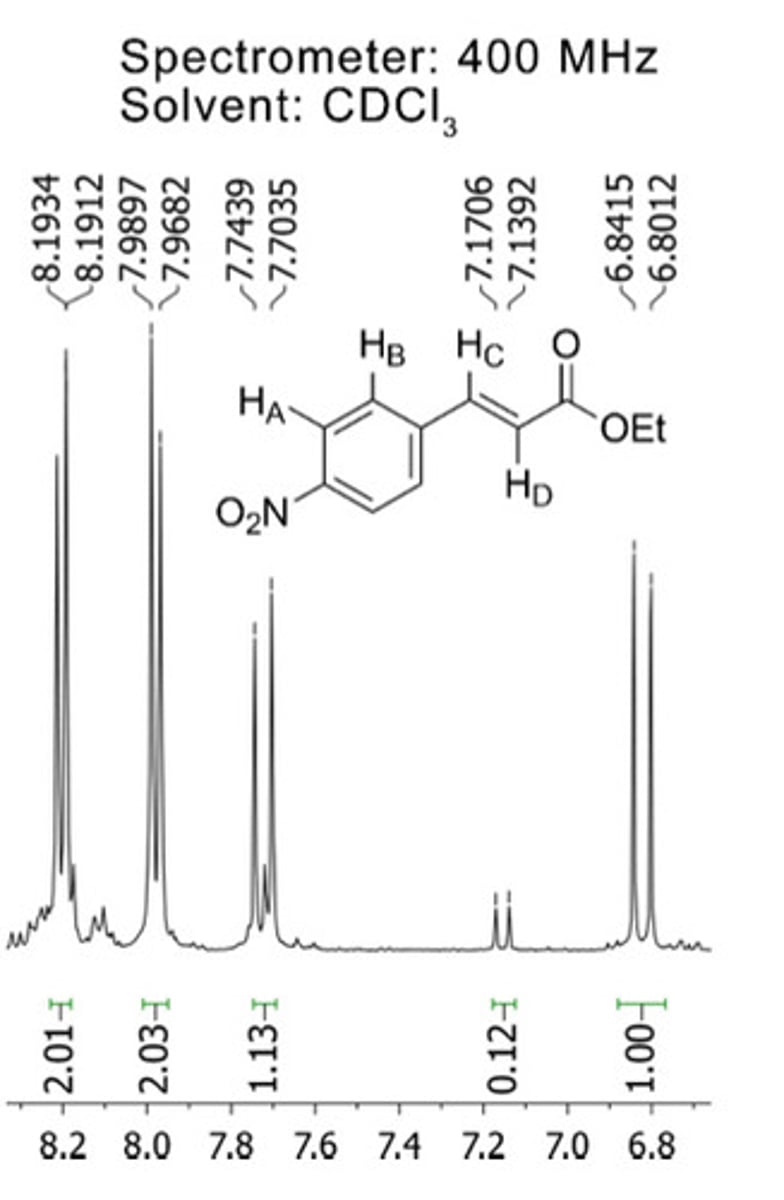
The NMR spectrum of the product from the Wittig reaction is given to the right. Use it to answer the following questions:
Measure the coupling constant between Hc and Hd
16.2 Hz
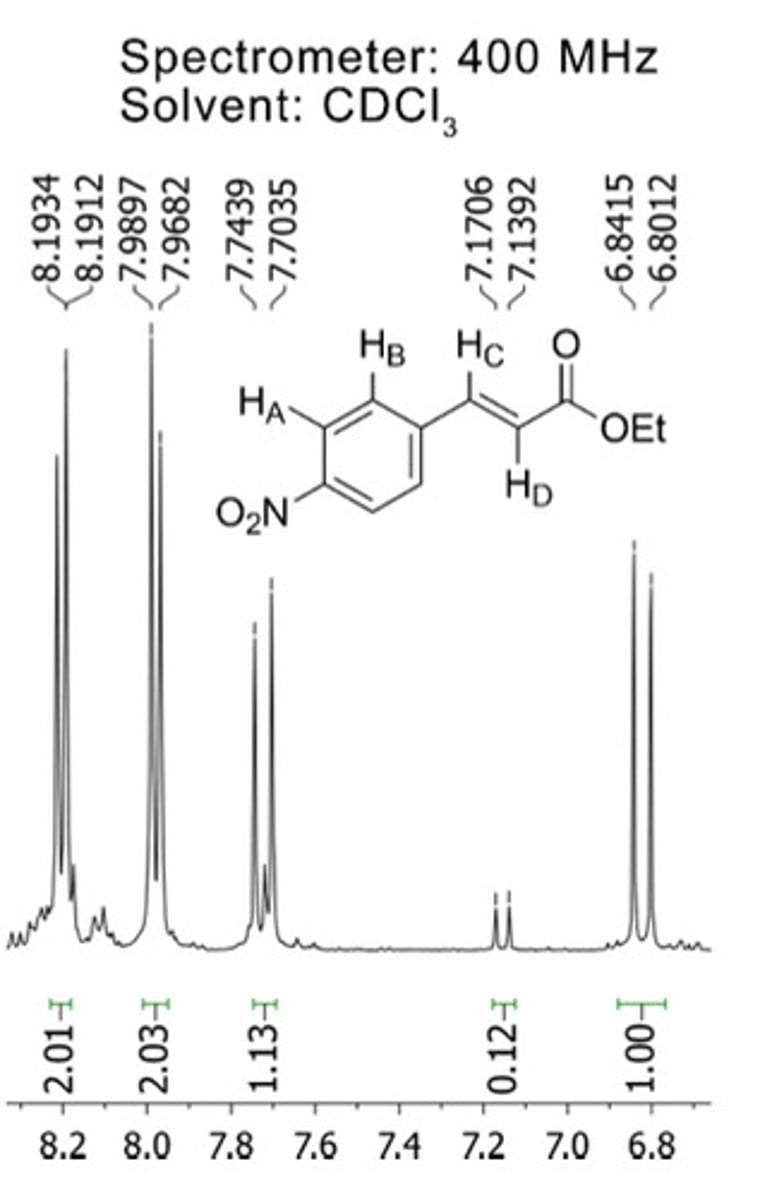
The NMR spectrum of the product from the Wittig reaction is given to the right. Use it to answer the following questions:
Which proton signal has the farthest downfield chemical shift
Ha
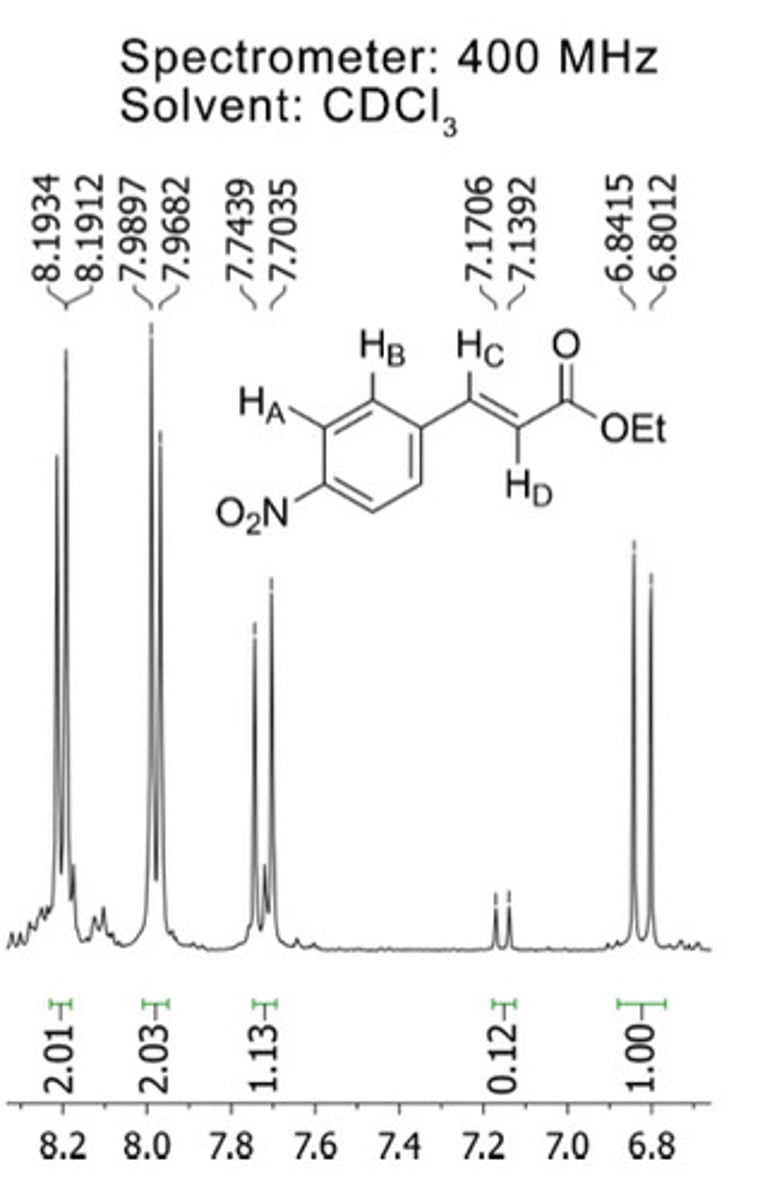
The NMR spectrum of the product from the Wittig reaction is given to the right. Use it to answer the following questions:
There is a small peak at ö7.15 To what does it correspond?
A small amount of cis isomer as byproduct
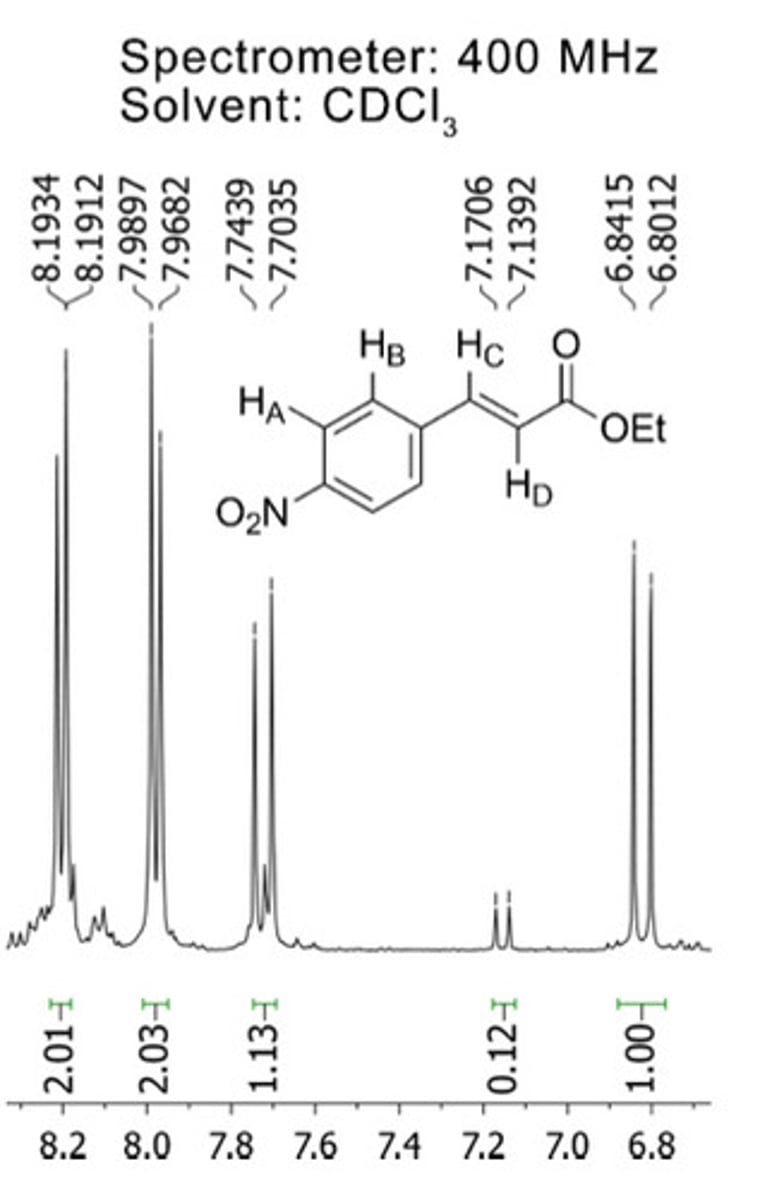
The NMR spectrum of the product from the Wittig reaction is given to the right. Use it to answer the following questions:
Which frequency corresponds to the C-O stretch in the ethyl-4-nitrocinnamate IR spectrum?
1711 cm-1
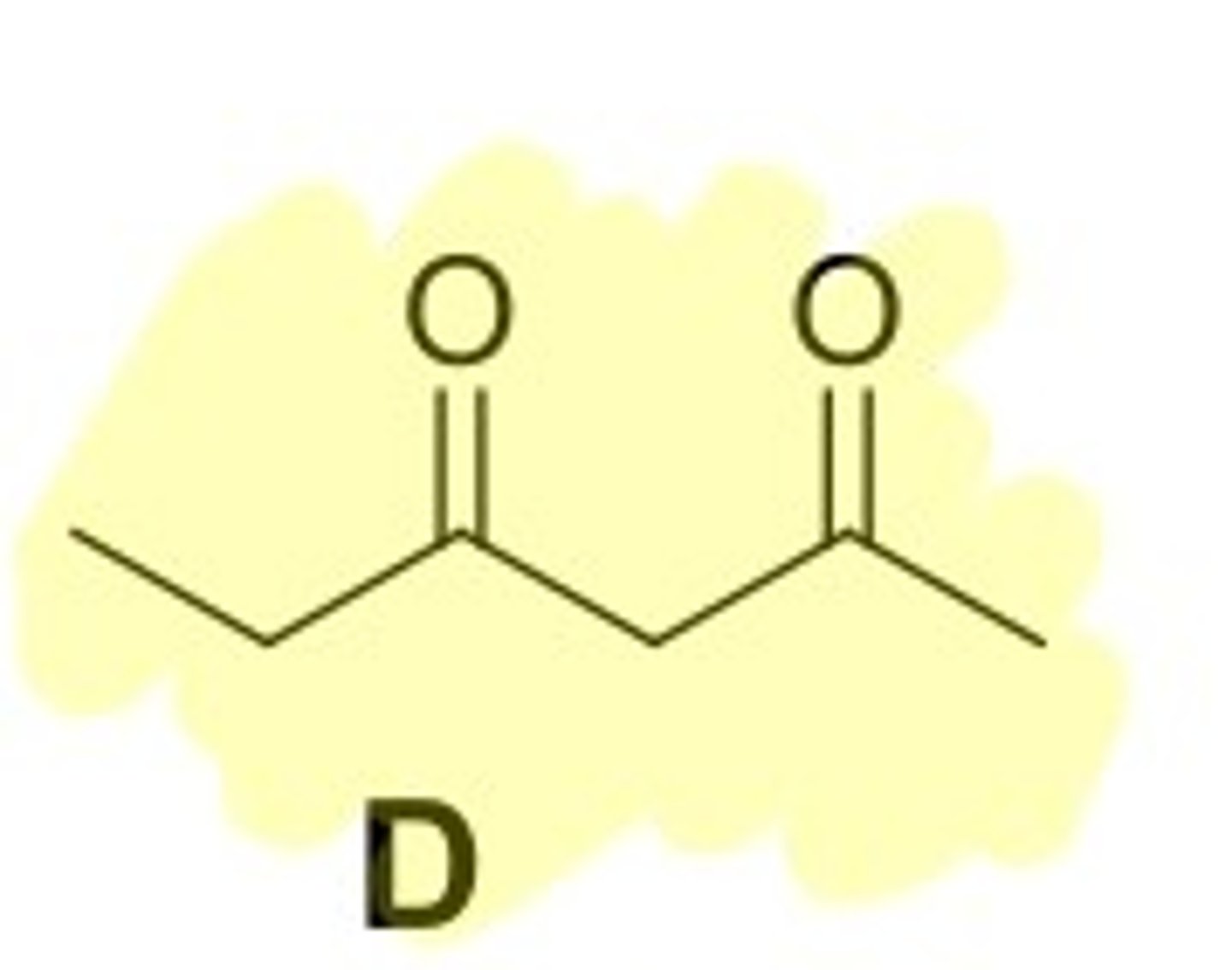
Which of the ketones drawn below is the most acidic?
Which of the products shown is NOT a possible product from the Aldo's concentration below?
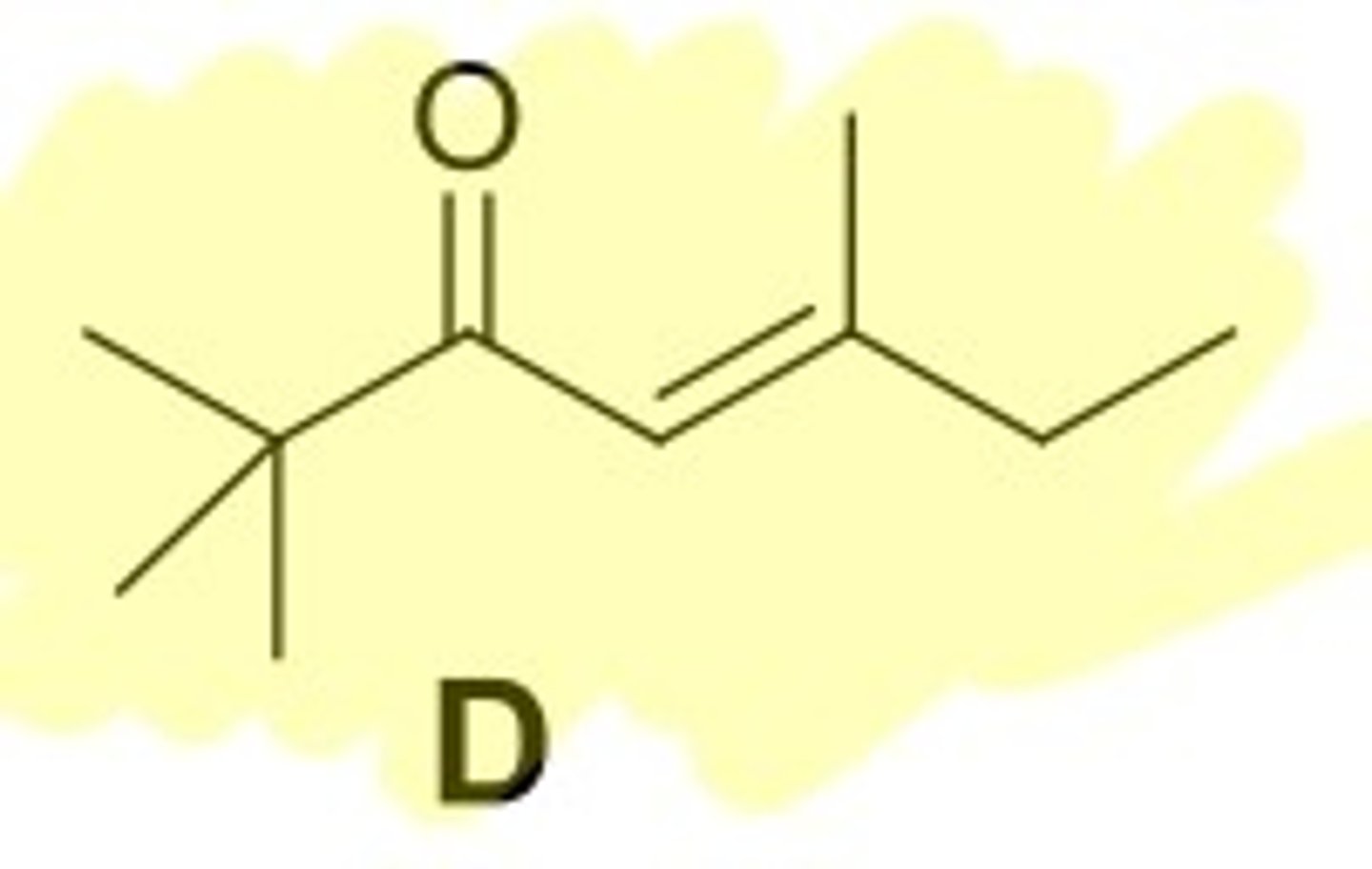
Four possible intermediates in the Aldo's condensation below are shown. Which one is correct
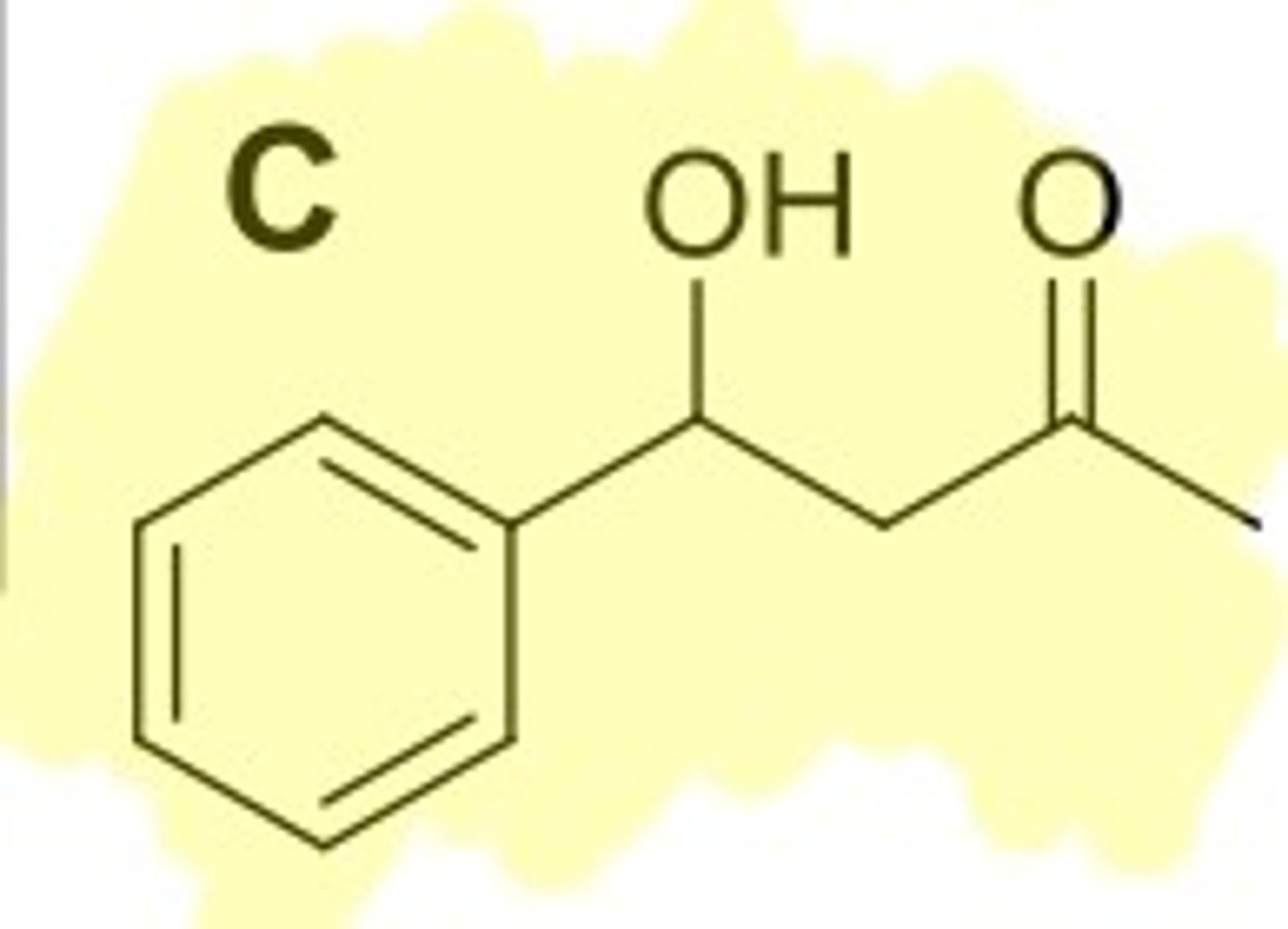
Vanillin has an acidic OH and an electrophilic aldehyde group that could conceivably react with sodium hydroxide. However, in the aldol reaction, you added the NaOH directly to the solution of vanillin and acetone, rather than pre-treating acetone with base. Why could you do this successfully?
The reaction of NaOH with phenol OH groups and aromatic aldehydes is reversible, and the reaction is driven to the most stable product
Your aldol condensation procedure calls for refluxing vanillin in acetone and NaOH for an hour. What might happen if you didn't heat the reaction, or heated it for too short a time?
A mixture of aldol products and hydroxyketone intermediates would form
You used a 1:1 mixture of hexane and ethyl acetate for your aldol TLC, which allowed you to separate the vanillin from the product. What would happen if you used hexane as elution solvent?
The polar vanillin and product would stay at the baseline of the plate
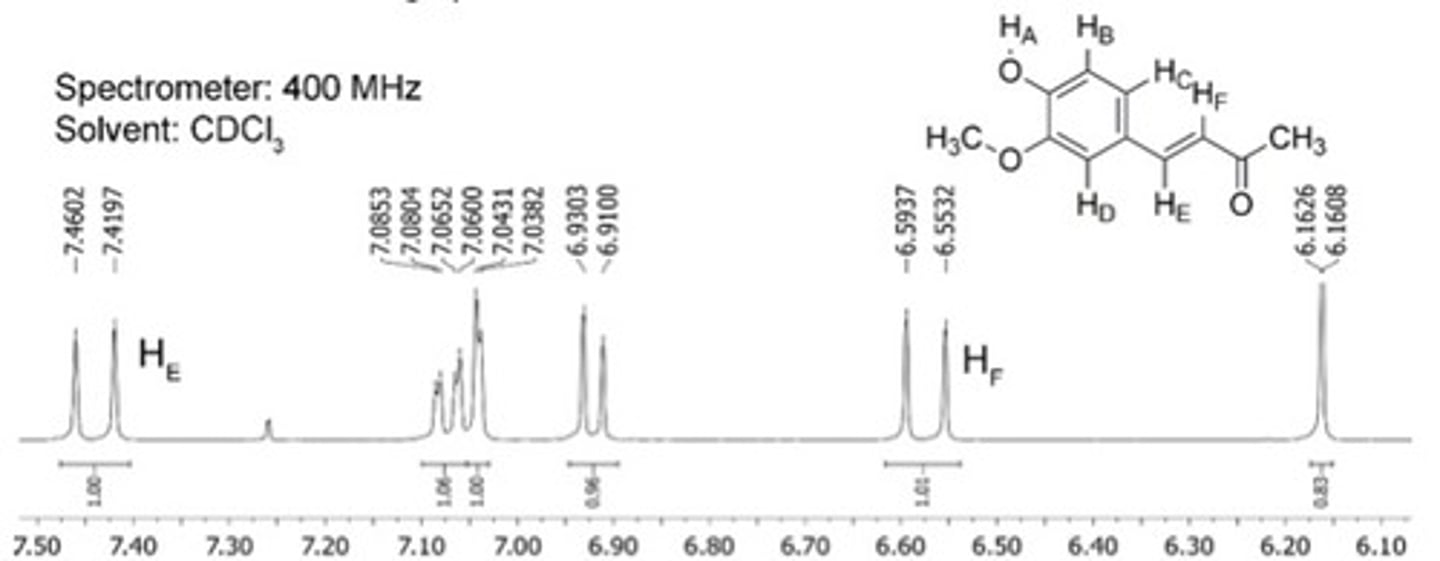
Measure the coupling constant between HE and Hr (labelled on the spectrum).
16.2 Hz
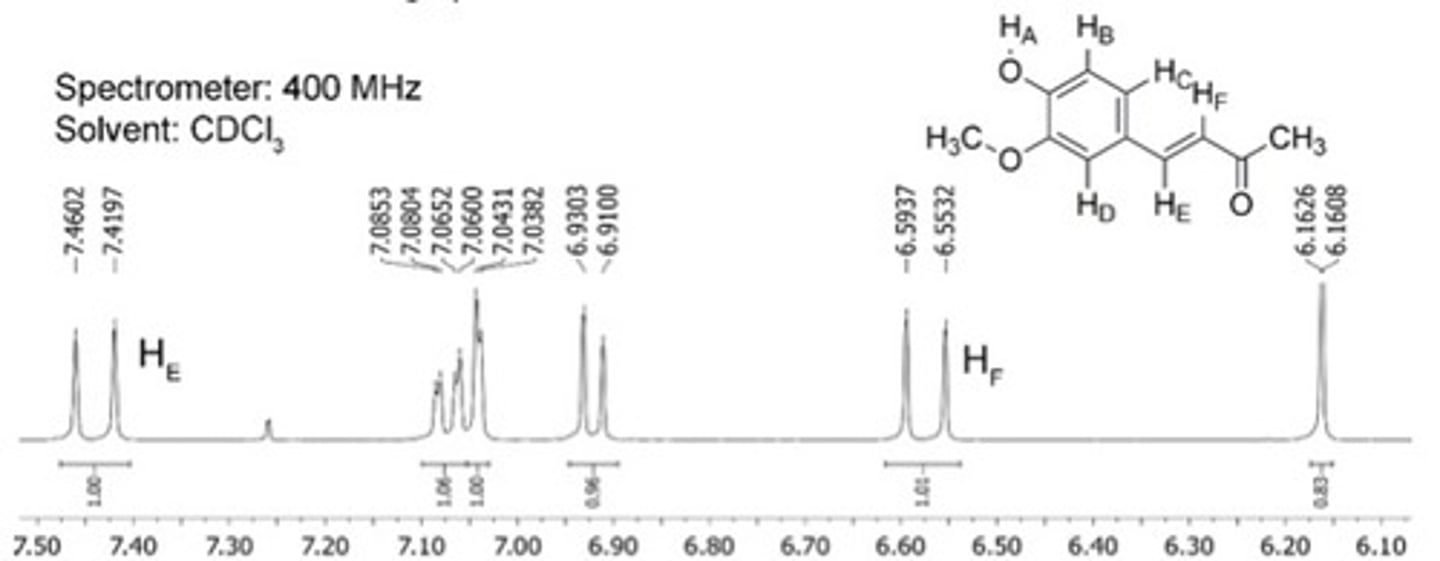
The downfield (double bond) region of the NMR spectrum of the product from the aldol reaction is given below. Use it to answer the following questions:
Which proton has a chemical shift of 8 6.92?
Hb
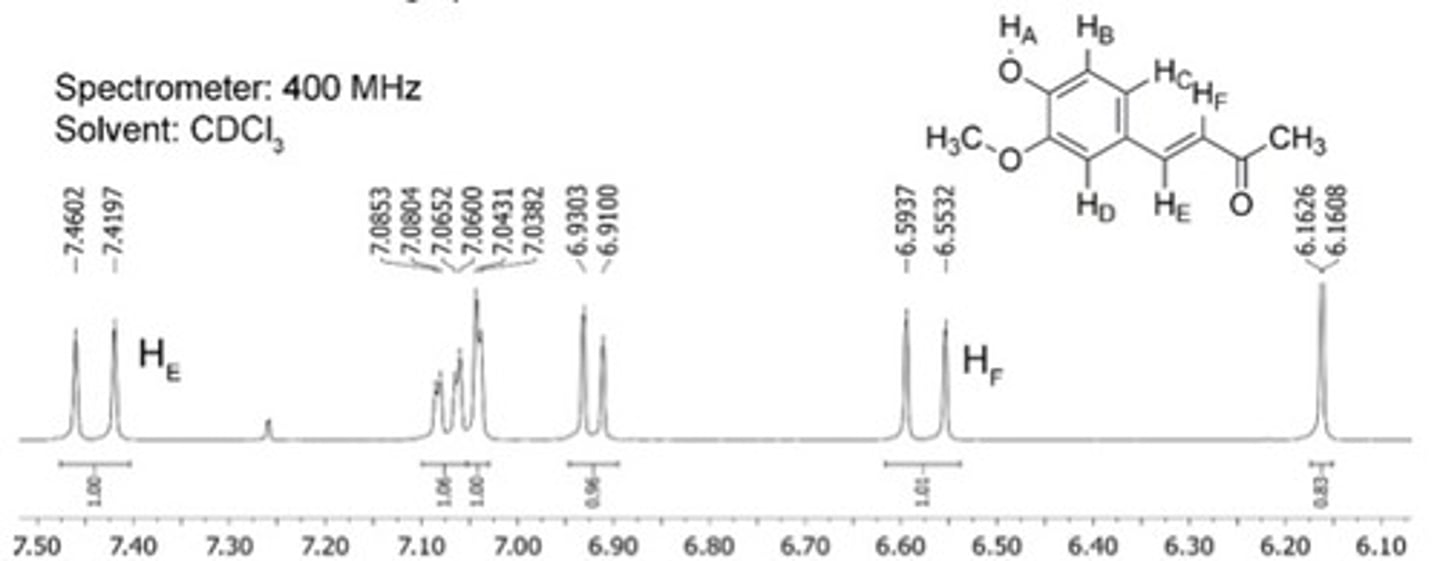
The downfield (double bond) region of the NMR spectrum of the product from the aldol reaction is given below. Use it to answer the following questions:
What is the expected coupling pattern for Hc, and where can its peak be found on the NMR spectrum?
Doublet of doublets, 7.07 ppm
What would be the major difference between the IR spectrum of your aldol product and an IR spectrum of a mixture of vanillin and acetone?
Both a) there would be two C=O stretches in the starting mixture , but not in the product
and b) the C=O stretch in the product would be at lower frequency than acetone, as it is a highly conjugated ketone
Which of the following esters would be produced from the alcohol provided under your standard esterification conditions?
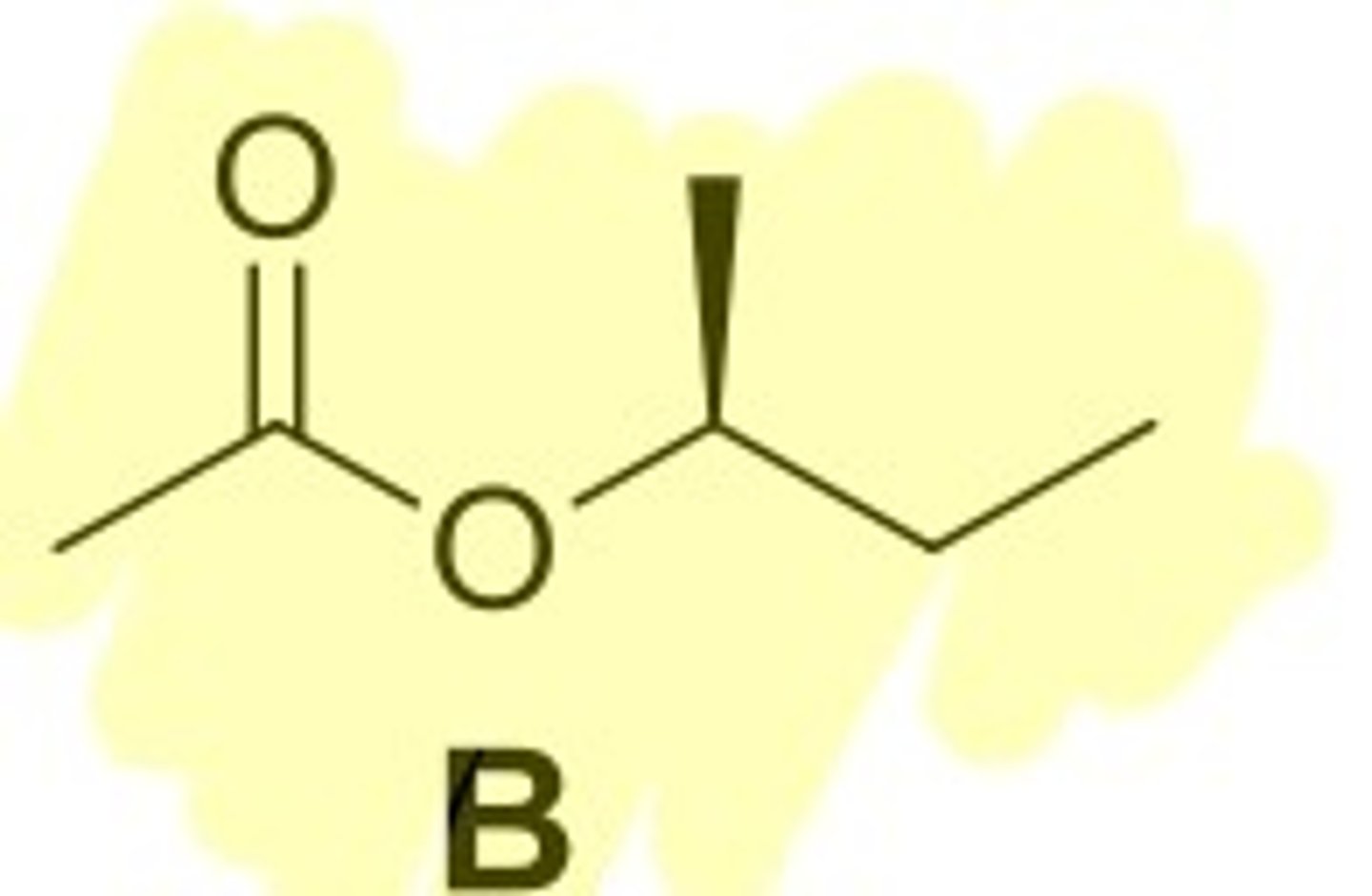
You perform the esterification of an unknown alcohol with acetic acid, and obtain an El mass spectrum that gives you an M peak at m/z 116. Which of the alcohols below must correspond to yours?
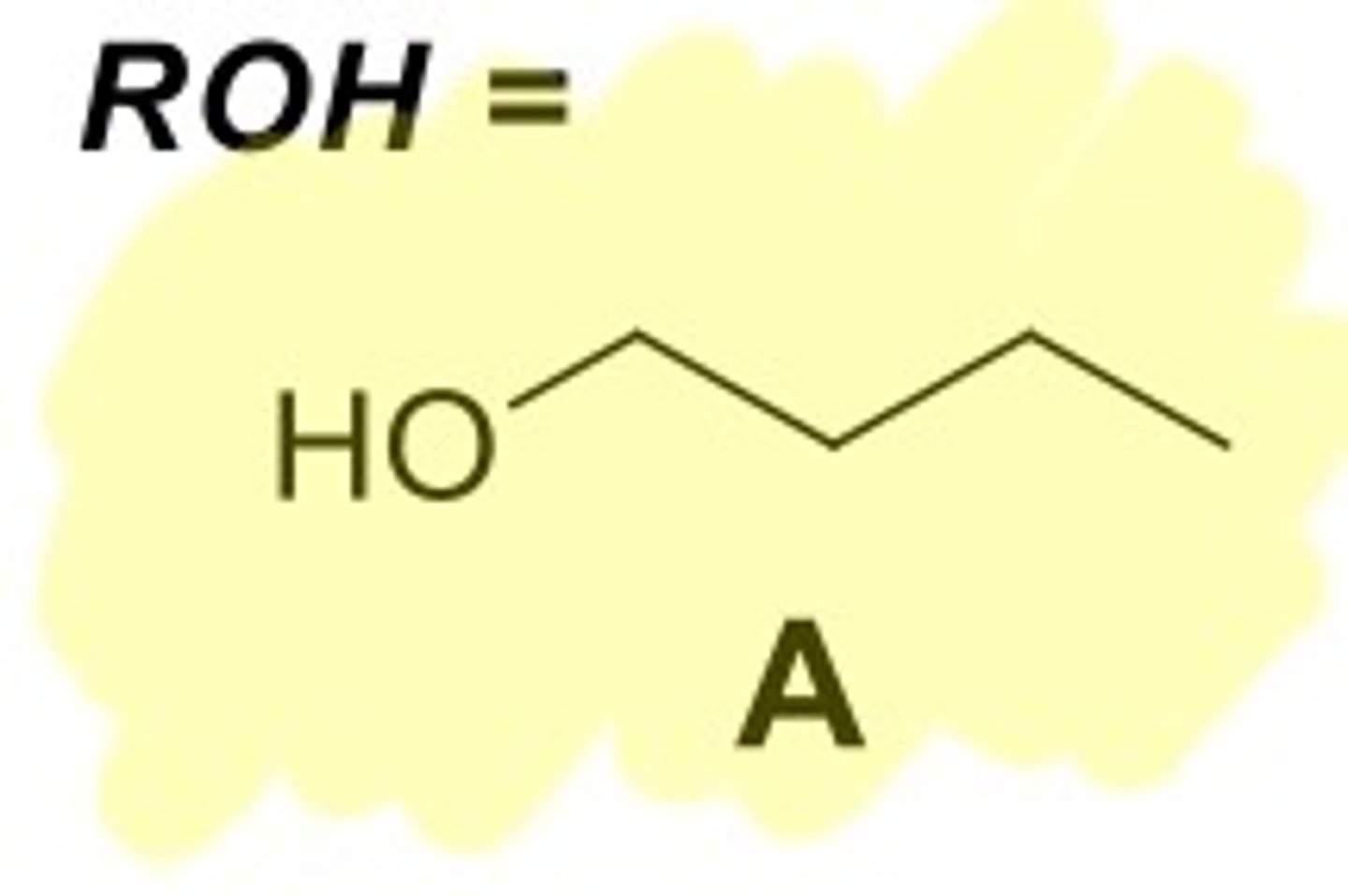
You perform the esterification of an unknown alcohol with acetic acid, and obtain a 'H NMR spectrum of the ester product that contains a 1H septet at 4.93 ppm. Which of the alcohols below must correspond to yours?
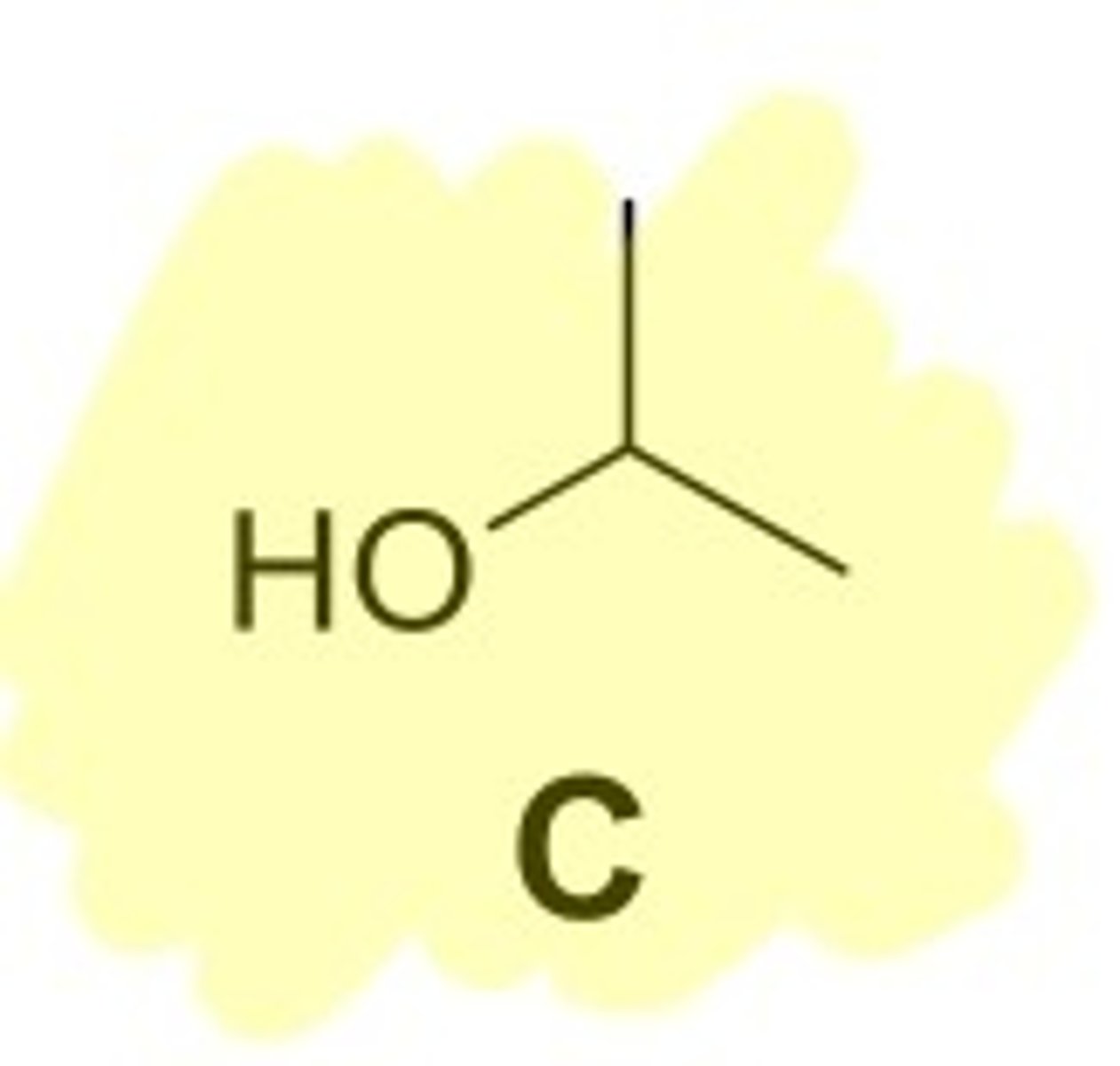
You perform the esterification of an unknown alcohol with acetic acid, and obtain an IR spectrum that has peaks at 1620, 3055 and 3090 cm1 (as well as the ester peak). Which of the alcohols below must correspond to yours?
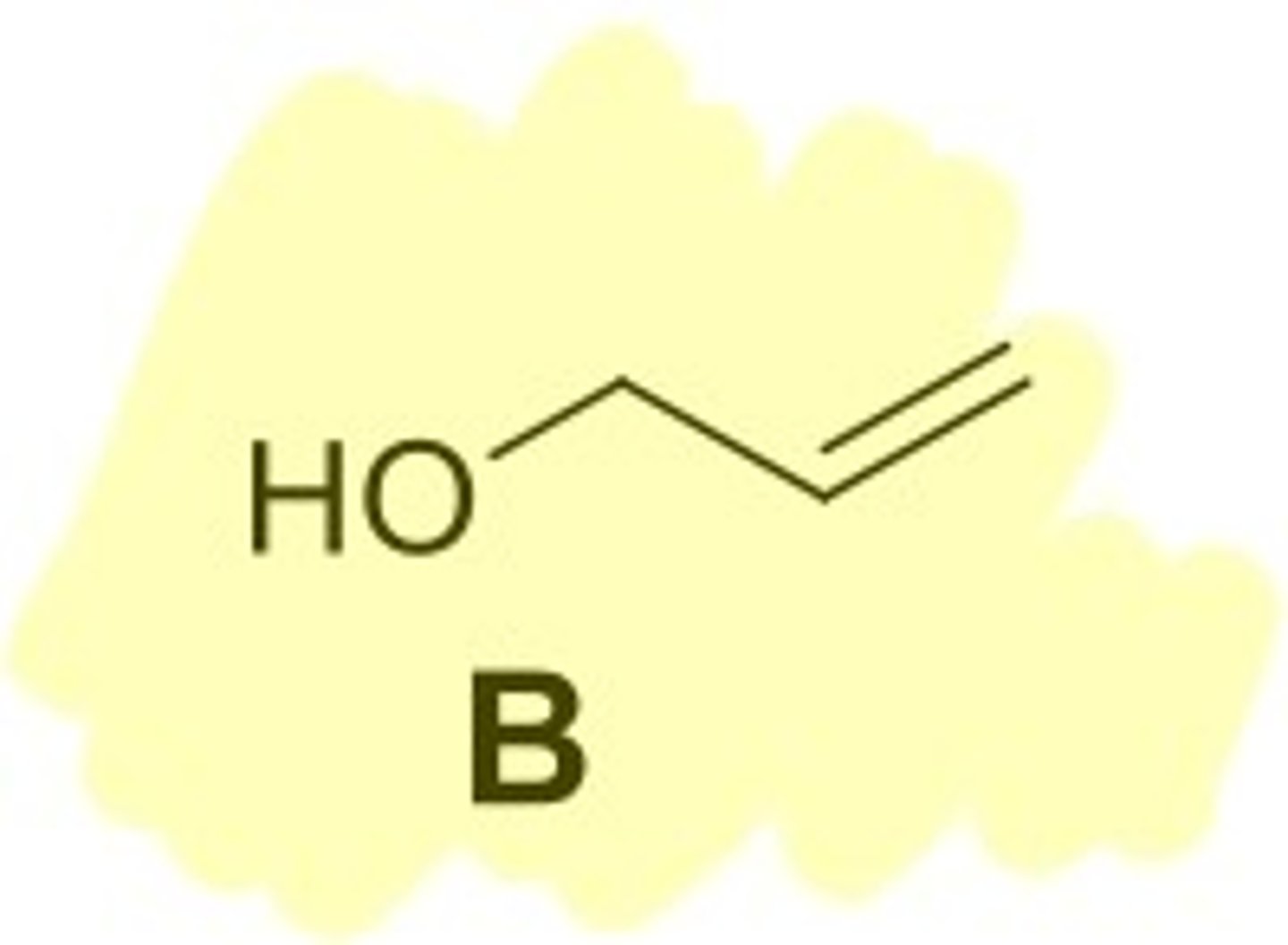
You perform the esterification of an unknown alcohol with acetic acid, and obtain a 13C NMR spectrum of the ester product that contains SIX peaks for the product. Which of the alcohols below must be yours?
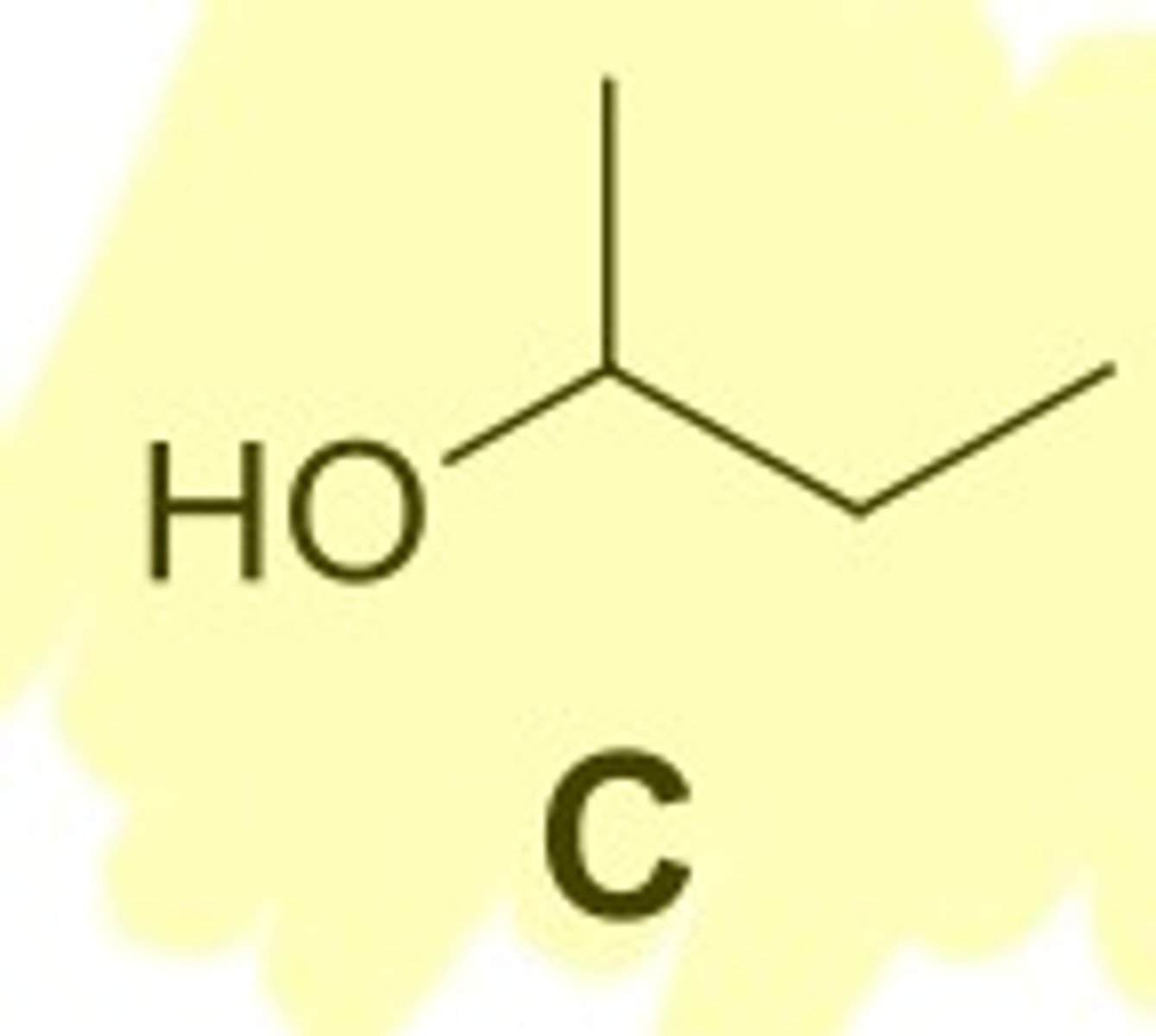
You're performing your esterification, and you lose your strip of Nafion. What could you use as a substitute that would still give good ester yield?
conc. H2SO4
In the esterification experiment, the organic phase of diethyl ether is washed with 2 portions of 5% NaOH. Where would you discard these washings?
Aqueous waste container.
In the esterification experiment, the organic phase of diethyl ether is washed with 2 portions of 5 % NaOH. Why did you wash with aqueous base?
To remove unreacted acetic acid from the mixture.
Glacial acetic acid is (as the name suggests) an acid. Why did you need the Nafion strip to perform the esterification reaction?
AcOH isn't a sufficiently strong acid to drive the equilibrium forward.
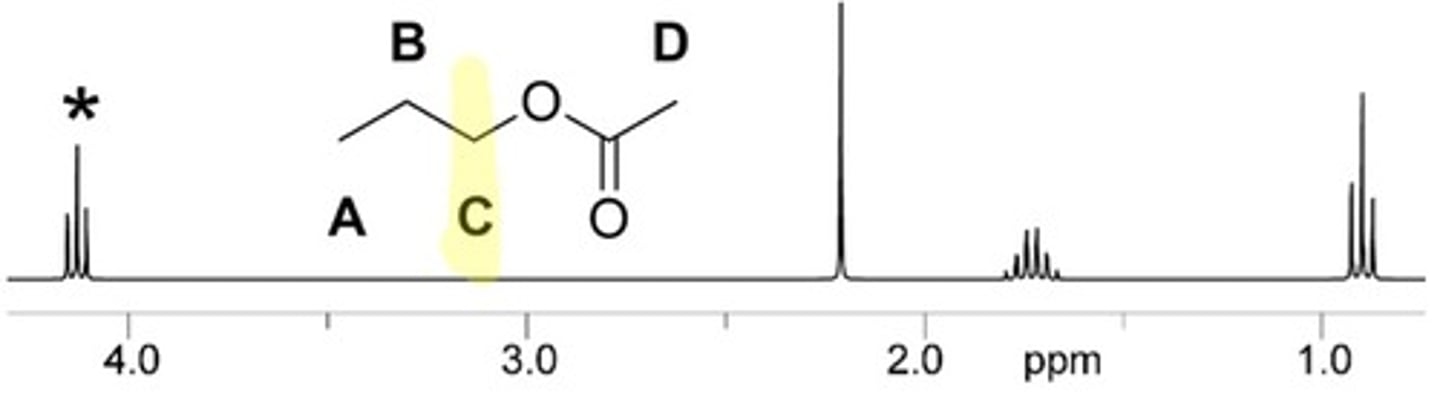
The NMR spectrum of a possible ester product, n-propylacetate, is given below. Which set of protons (A-D) corresponds to the peak labeled*, at 5 4.1?
You're performing a reductive amination between propylamine and butyraldehyde, and you misplace your bottle of NaBH(OAc)3. You use NaBH4, but the reaction doesn't work what product would you get instead?
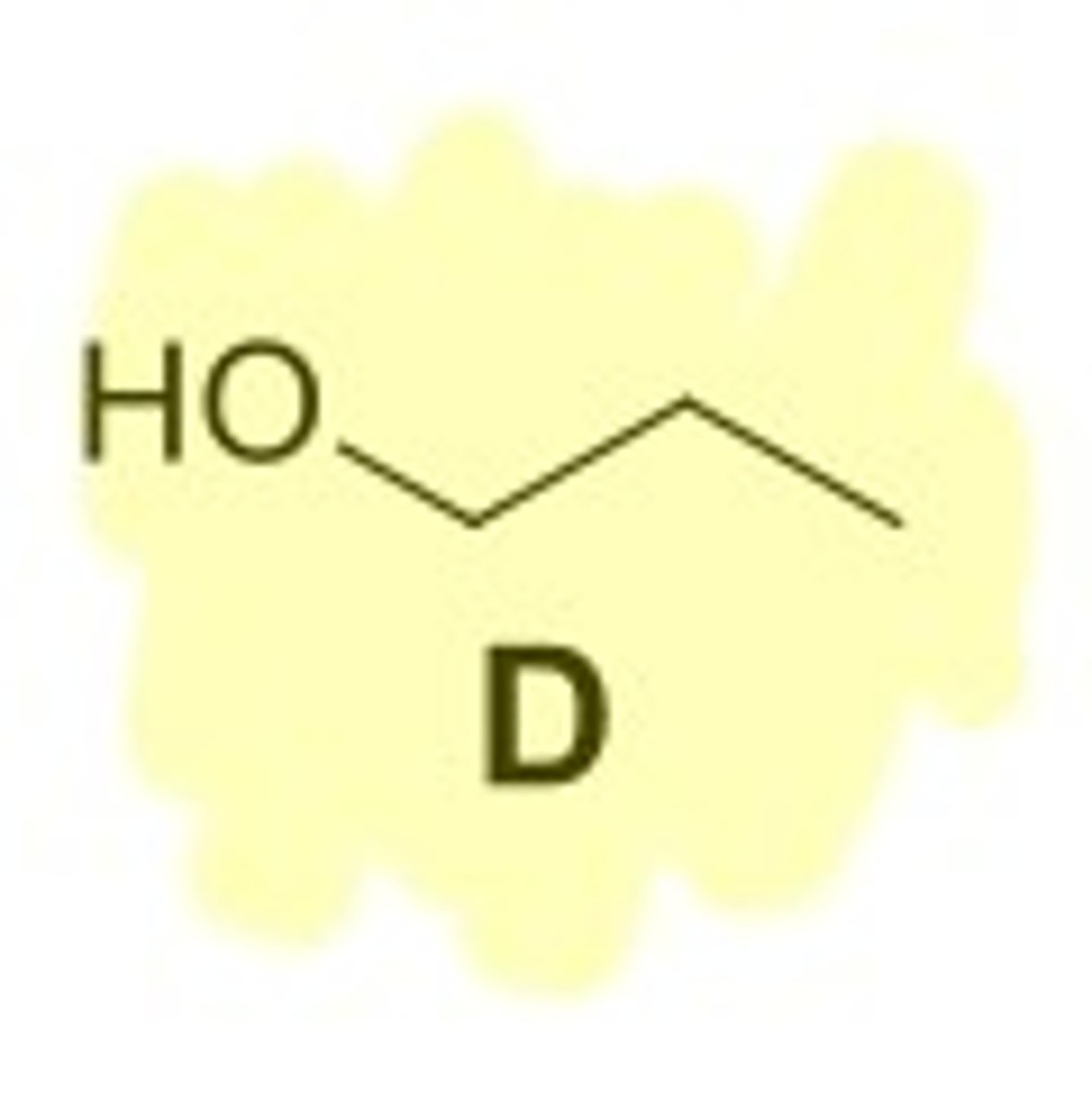
Why can you not use this reaction to make a secondary amine?
The secondary amine product is more nucleophilic than the primary amine reactant, so over-reaction will occur.

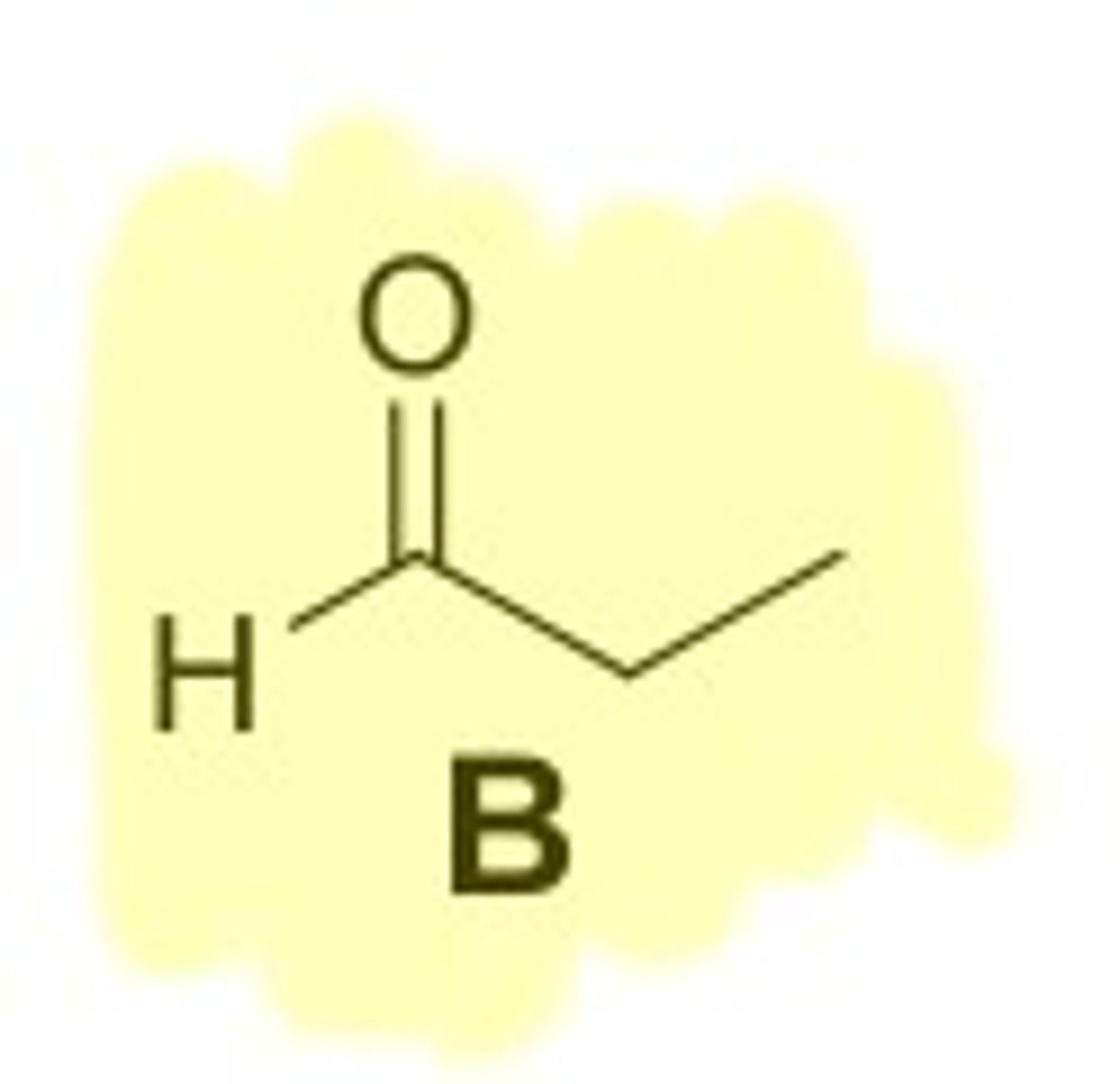
You perform a reductive amination of an unknown aldehyde with n-propylamine, and obtain an El mass spectrum that gives you an M peak at m/z 101 . Which of the aldehydes below must correspond to yours?
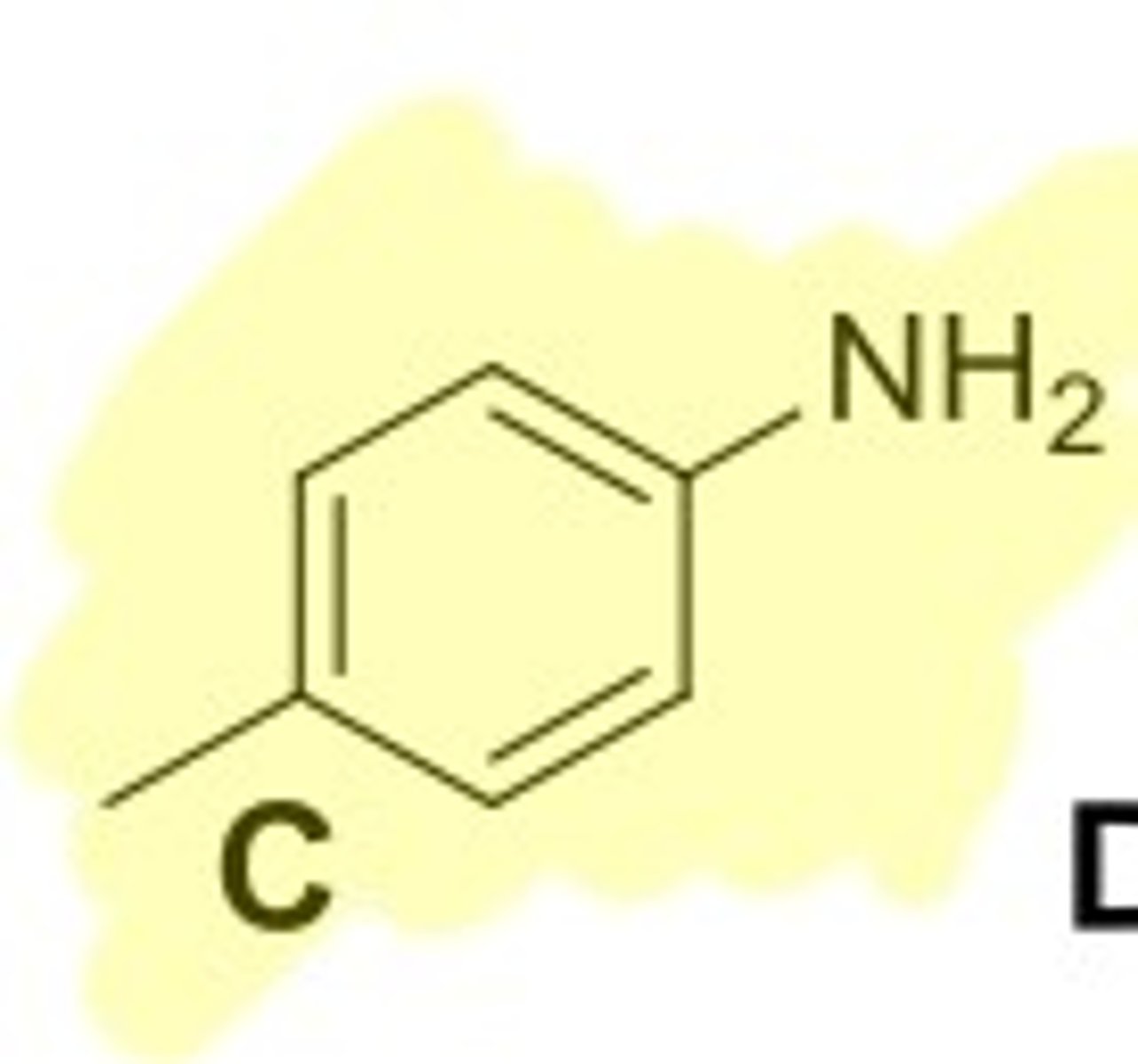
You perform a reductive amination of an unknown amine with propionaldehyde, and obtain a 'H NMR spectrum of the product that contains two 2H doublets at ö= 6.50 and 6.95 ppm. Which of the amines below must correspond to your reactant?
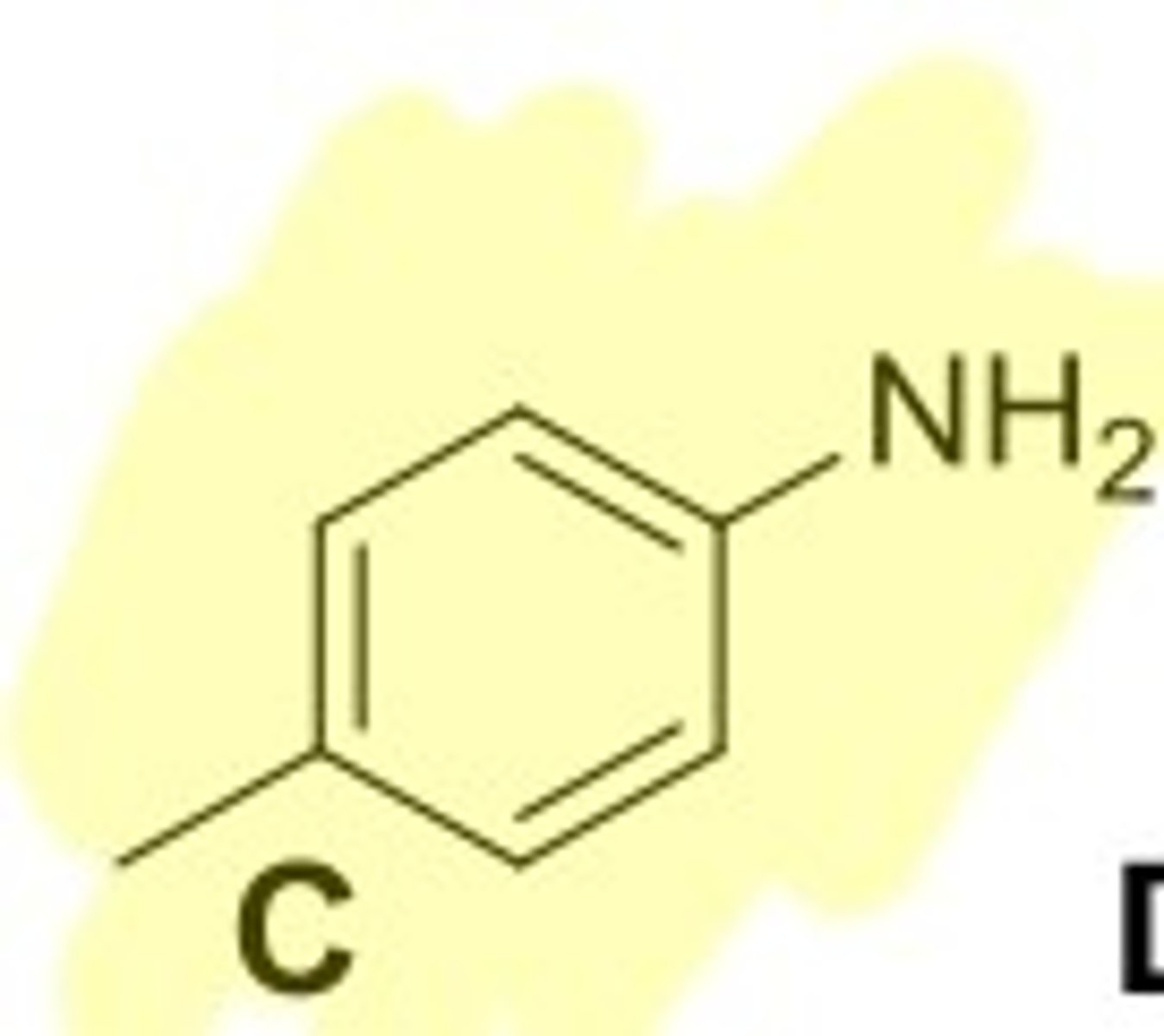
You perform a reductive amination of an unknown amine with propionaldehyde, and obtain a1C NMR spectrum of the amine product that contains EIGHT peaks for the product. Which of the amines below must correspond to your reactant?
Why do you wash the dichloromethane solution of your reductive amination product with sodium bicarbonate, rather than dilute aqueous HCI?
The amine product will be protonated by acid and remain in the aqueous layer as a salt.
In the reductive amination mechanism, what is the name of the intermediate that NaBH(OAc)s reacts with?
Iminium
Which of these amine will react fastest in a reductive amination reaction?
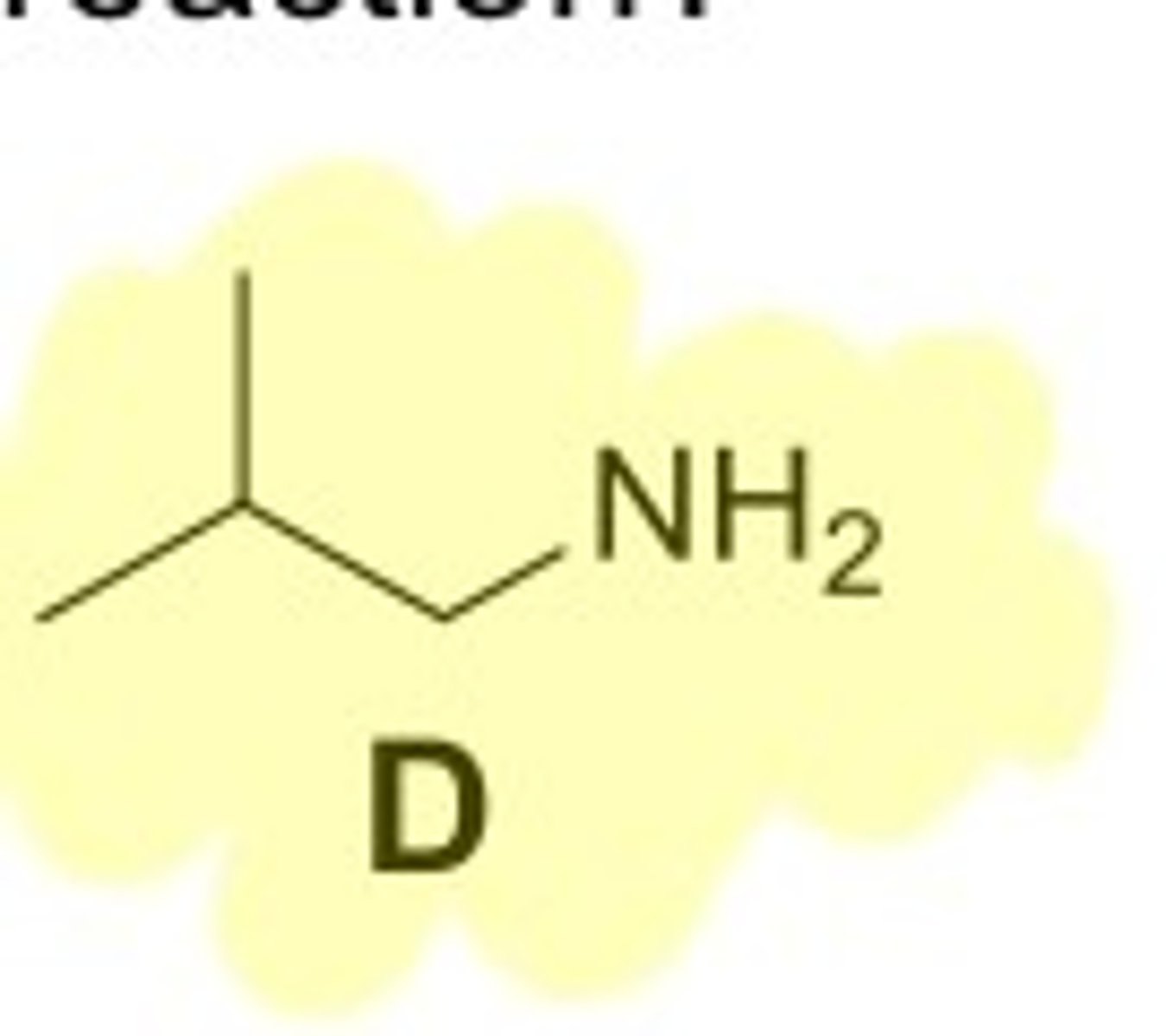
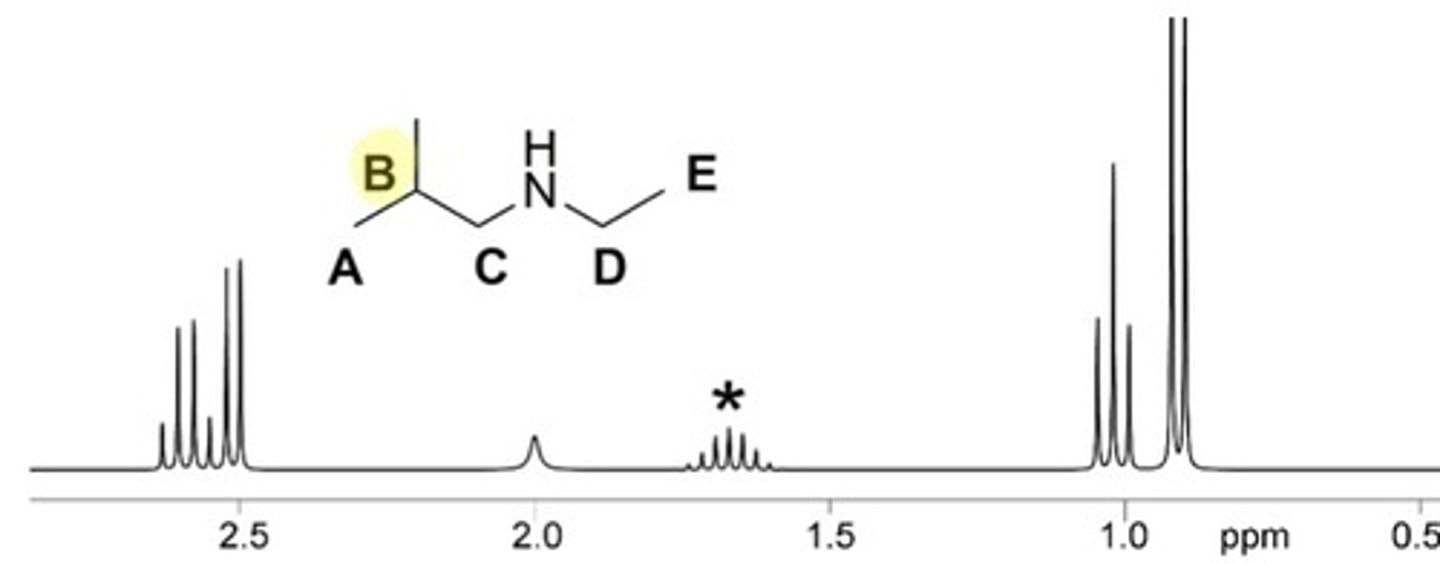
The NMR spectrum of a possible reductive amination product, isobutylethylamine, is given below. Which set of protons (A-E) corresponds to the peak labeled, at ö1.7?
If you are handling an unknown molecule, what precautions should you take to minimize risk and hazard?
All of the above
Handle the chemical in a fumehood to minimize inhalation risk
Always wear gloves, to prevent contact with skin
Treat all unknown chemicals ad hazardous and toxic at all times
Always wear goggles to prevent contact with the eyes
A multistep synthesis of aniline from toluene is shown below, with reagents missing. Use it to answer the following questions.
Which reagents would you use to perform reaction A?
KMnO4

A multistep synthesis of aniline from toluene is shown below, with reagents missing. Use it to answer the following questions.
Which reagents would you use to perform reaction B?
SOCl2

A multistep synthesis of aniline from toluene is shown below, with reagents missing. Use it to answer the following questions.
Which reagents would you use to perform reaction D?
Br2 KOH

You're performing your Hofmann rearrangement, and you misplace your bottle of bleach. What could you use as a substitute that would still give good yield?
Bromine
Why did you add NaHSOs at the end of your Hofmann rearrangement?
To destroy any leftover bleach in the reaction
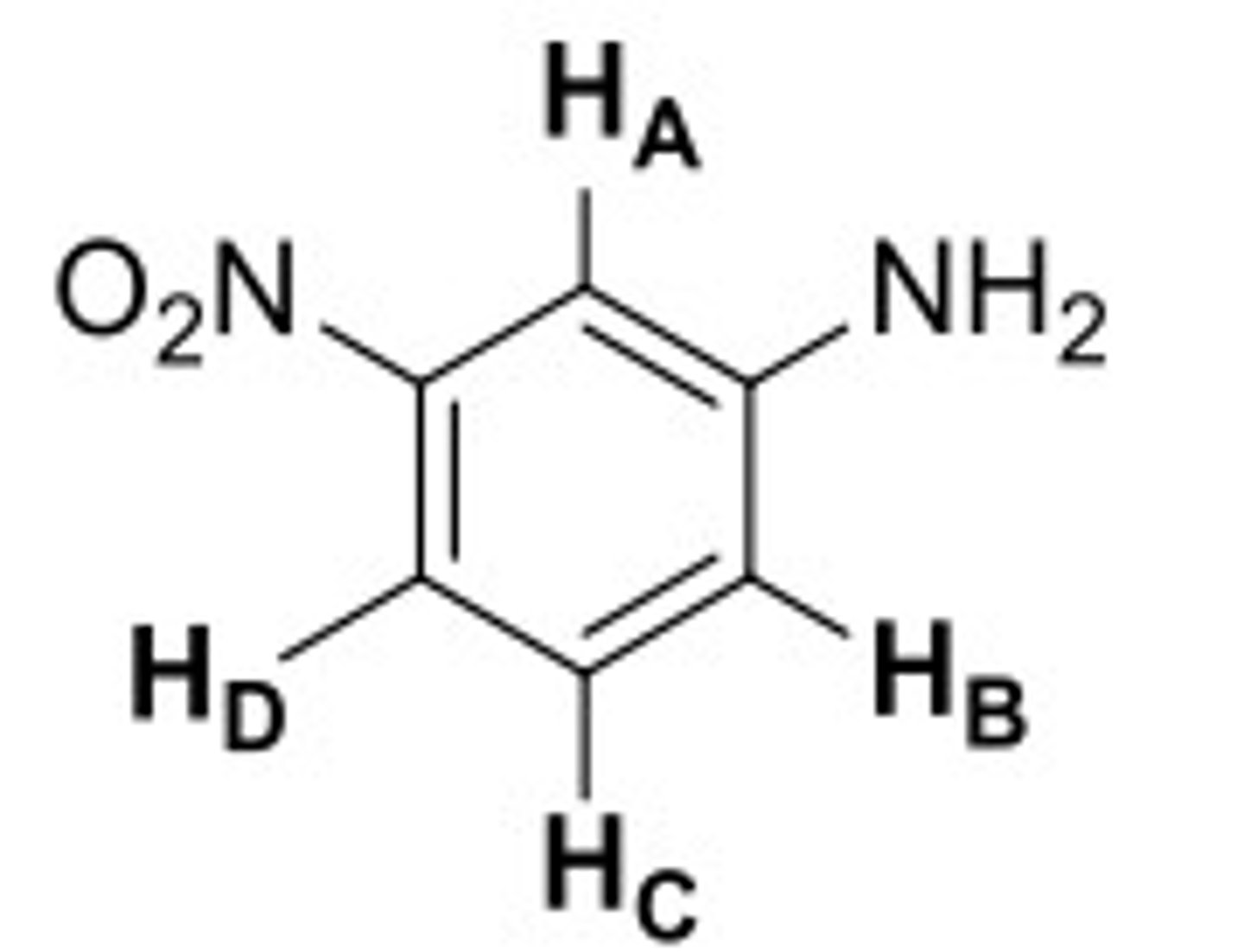
The NMR spectrum of 3-nitroaniline was taken in deuterated dimethylsulfoxide (DMSO), not CDCl3 Why?
3-Nitroaniline is not soluble in CDCI3
What will be the coupling pattern shown by the peak for Ha?
Doublet of Triplets
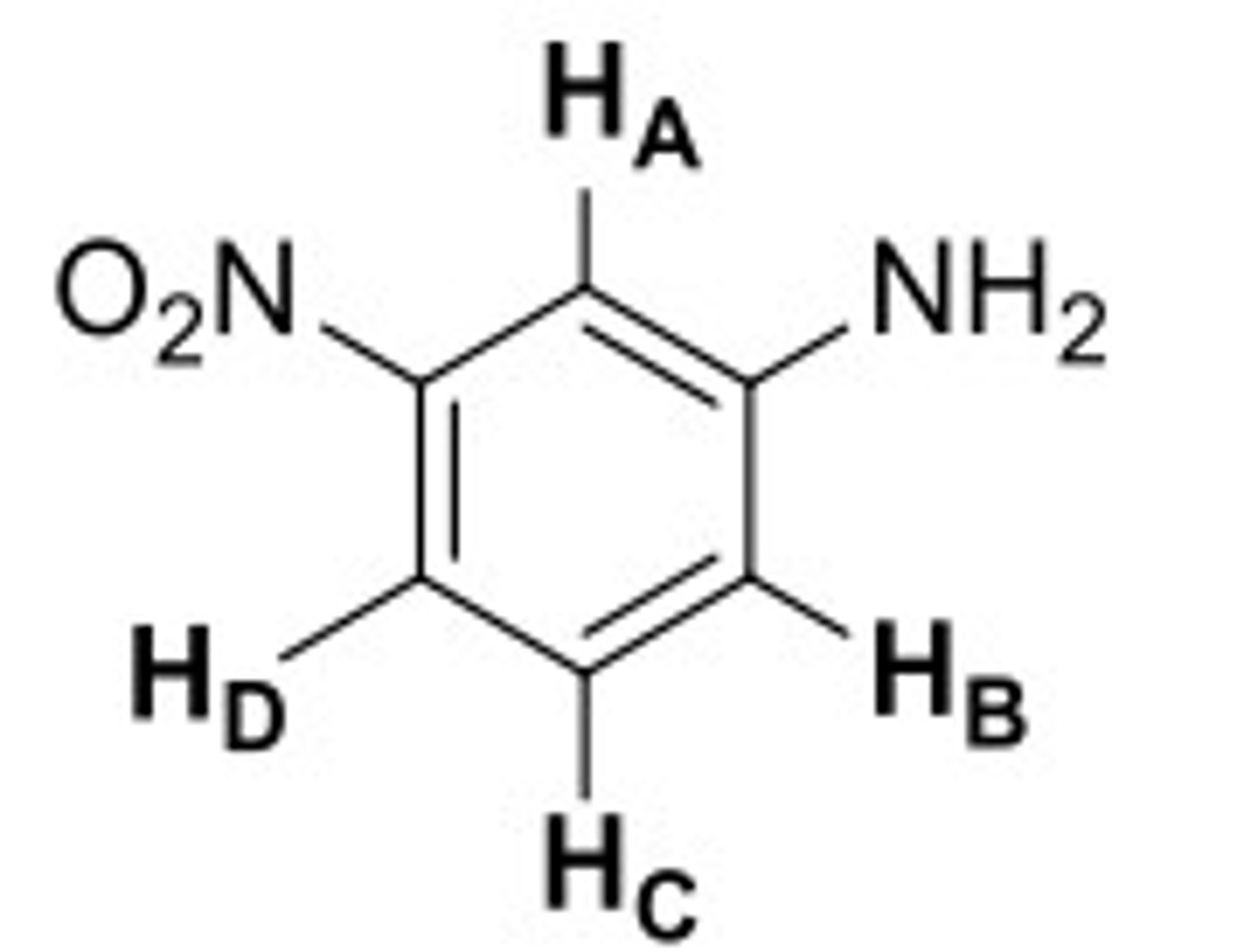
What will be the coupling pattern shown by the peak for Hc?
Triplet
What is one quick, qualitative change in the NMR spectrum that you can use to tell that your Hofmann rearrangement was successful?
The peaks in the 'H NMR spectrum are shifted up field, as the carboxamide group (an EWG) has been converted to an amine (an EDG).
Your product of the Hofmann rearrangement is a nitroaniline, which has a similar structure to other species that have been shown to be carcinogenic. What precautions should you take?
All of the above.
Handle the chemical in a fumehood to minimize inhalation risk
Always wear gloves, to prevent contact with skin
Always wear a lab coat o prevent contact with the skin
Check the MDMS form of the product, to see if there are any unknown risks
Only one stereoisomer of product is observed in the reaction below. Why?
An axial phenyl group is less favorable than an equatorial one.

Why was benzaldehyde dimethyl acetal used in the sugar protection experiment instead of benzaldehyde?
The dimethyl acetal releases methanol in the reaction, which can be more easily boiled off than water, to drive the equilibrium to the right.
You're performing the sugar protection experiment, and you misplace the bottle of tosic acid. What could you use as a substitute that would still give good yield of the product?
Trifluoroacetic acid.
What might happen if you used benzaldehyde diethyl acetal in the sugar protection experiment instead of benzaldehyde dimethyl acetal?
As well as the protection, the methoxy group in the glucopyranoside product would exchange for an ethoxy group.
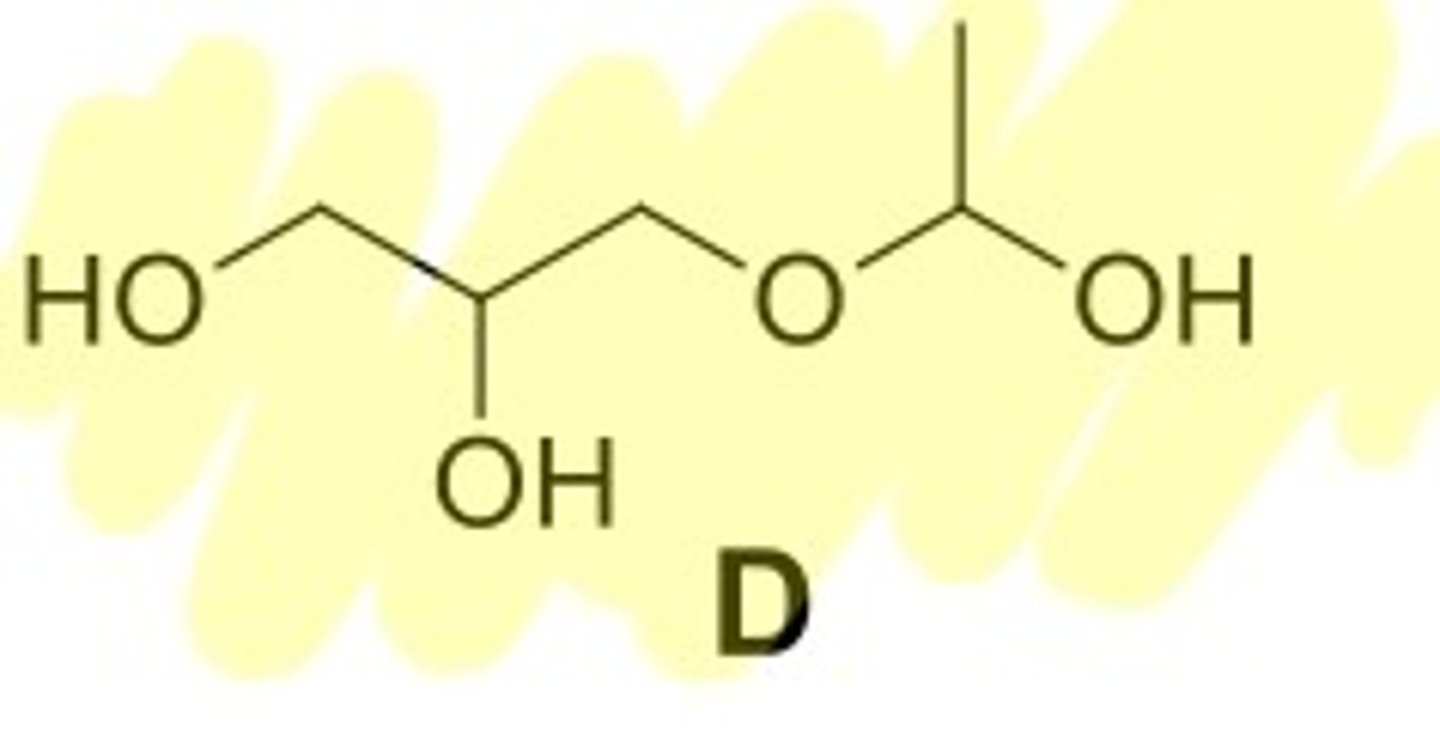
Which of the products shown is NOT a possible product from the acetal reaction below?
Why is the sugar protection experiment performed in the absence of water, using an anhydrous acid (as opposed to HCI, etc)?
Water will prevent the reaction from going to completion.
The NMR spectrum of the product from the sugar protection experiment is given to the right. Use it to answer the following questions:
The peak marked 2 is a doublet what is its coupling constant?
5.1 Hz
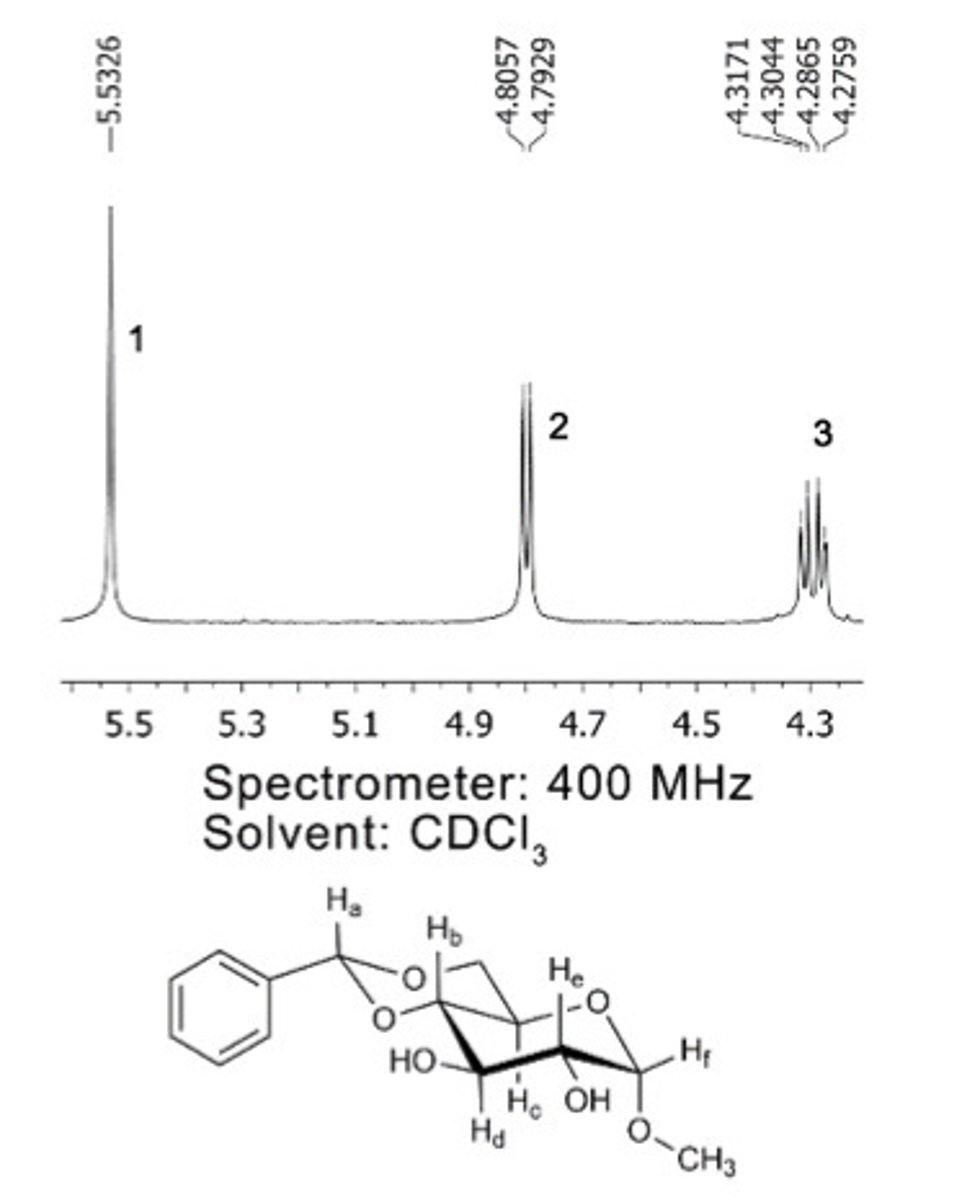
The NMR spectrum of the product from the sugar protection experiment is given to the right. Use it to answer the following questions: Which hydrogen corresponds to the peak labeled 1?
Ha
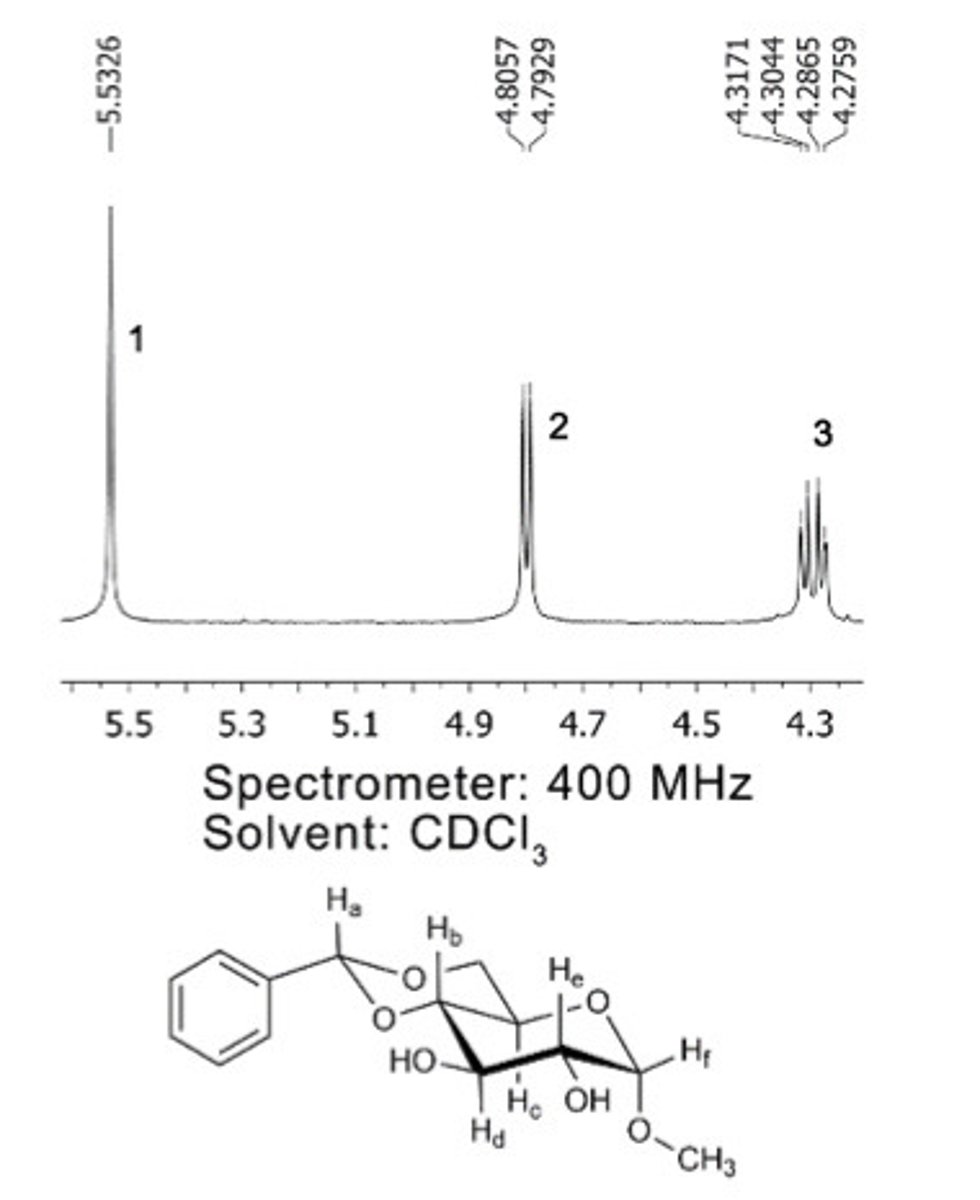
The NMR spectrum of the product from the sugar protection experiment is given to the right. Use it to answer the following questions: What is the coupling pattern shown by peak 3, and to which hydrogen does it correspond?
Doublet of Doublets, He
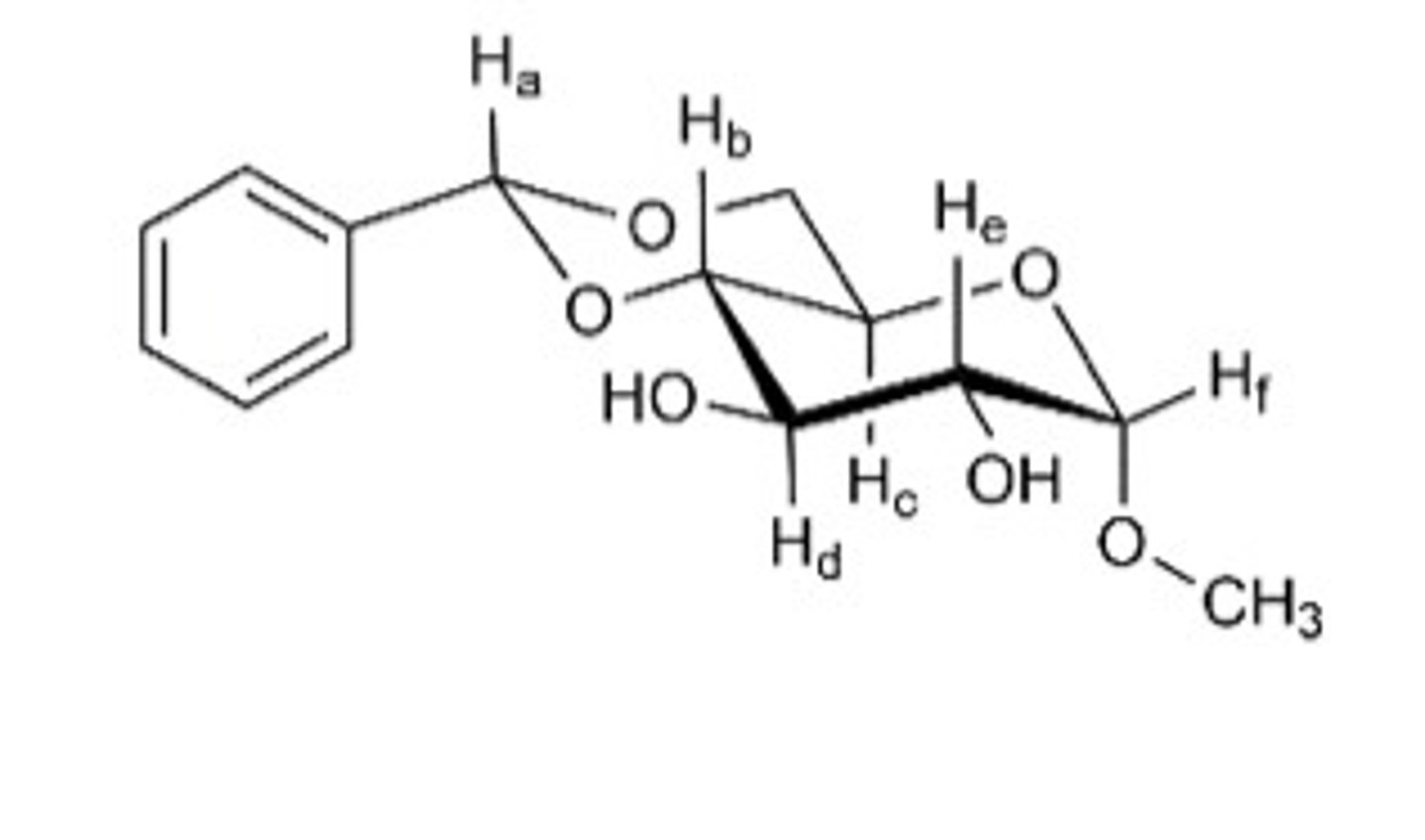
What is the name of this sugar?
Alpha-galactopyranose
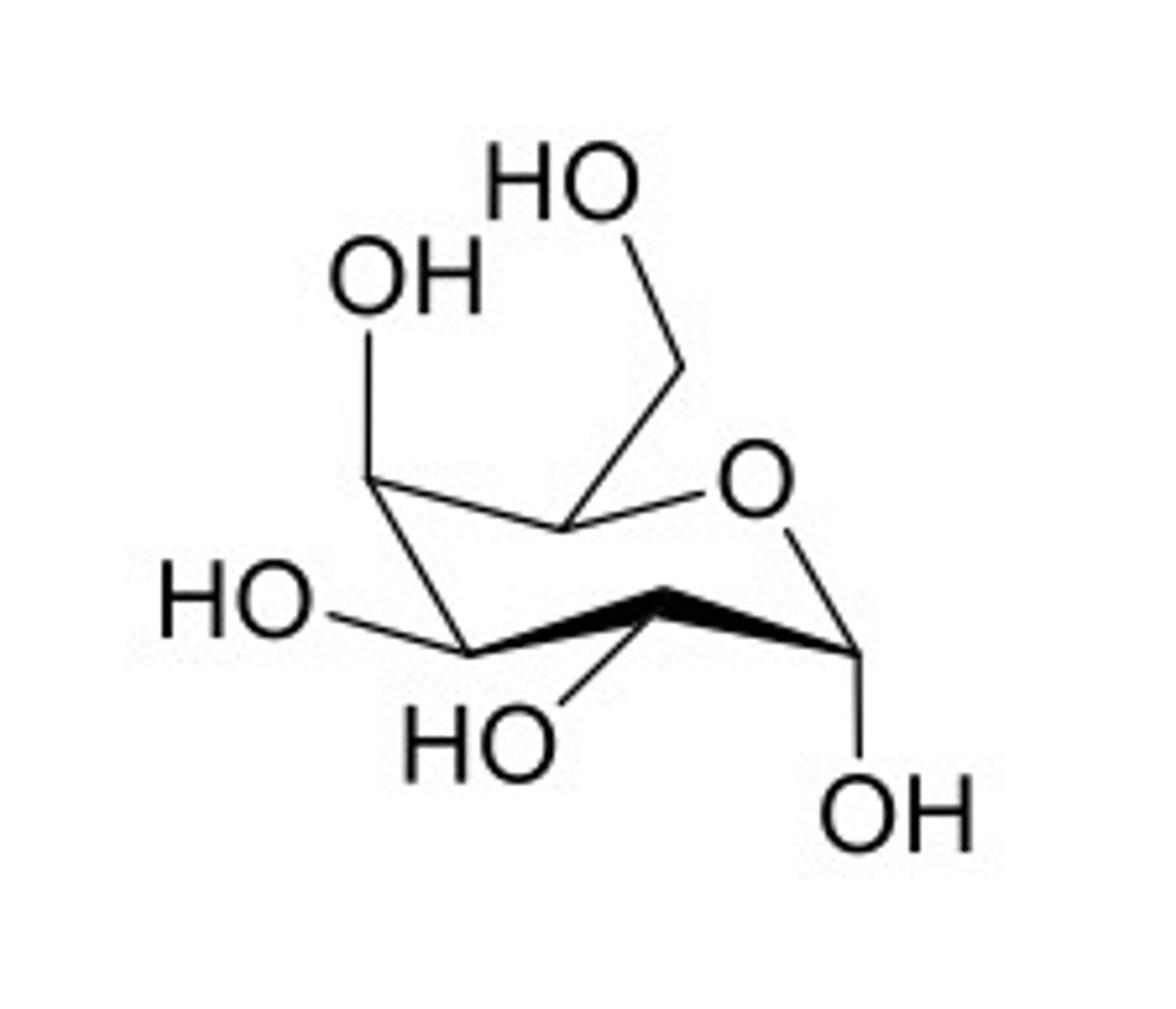
What is the name of the product of the reaction between sodium nitrite and hydrochloric acid?
Nitrous acid.
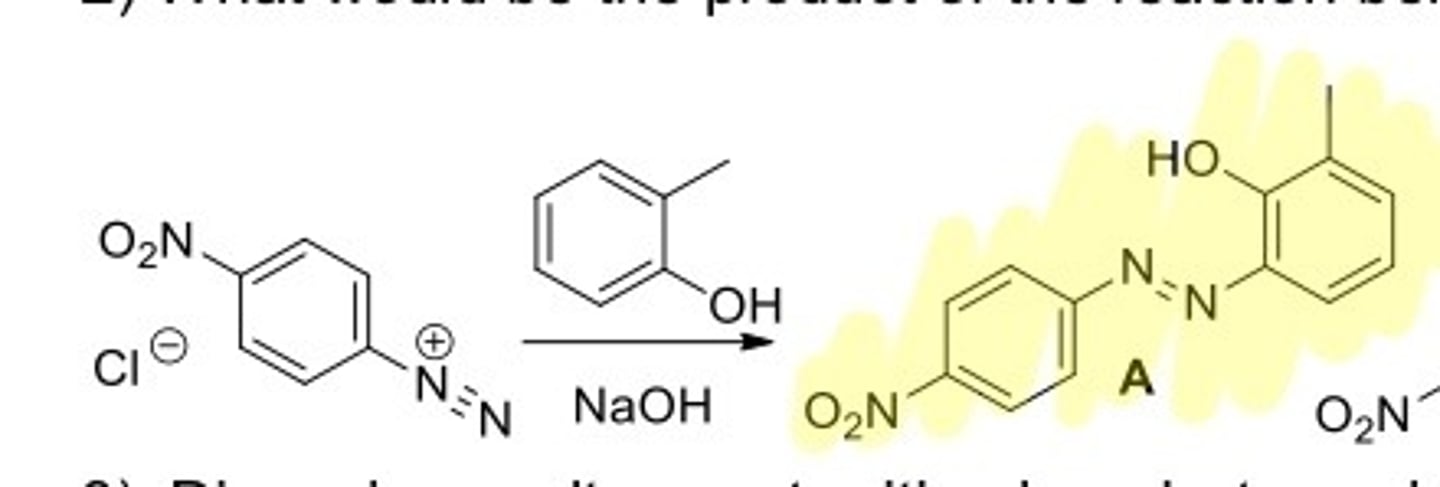
What would be the product of the reaction below?
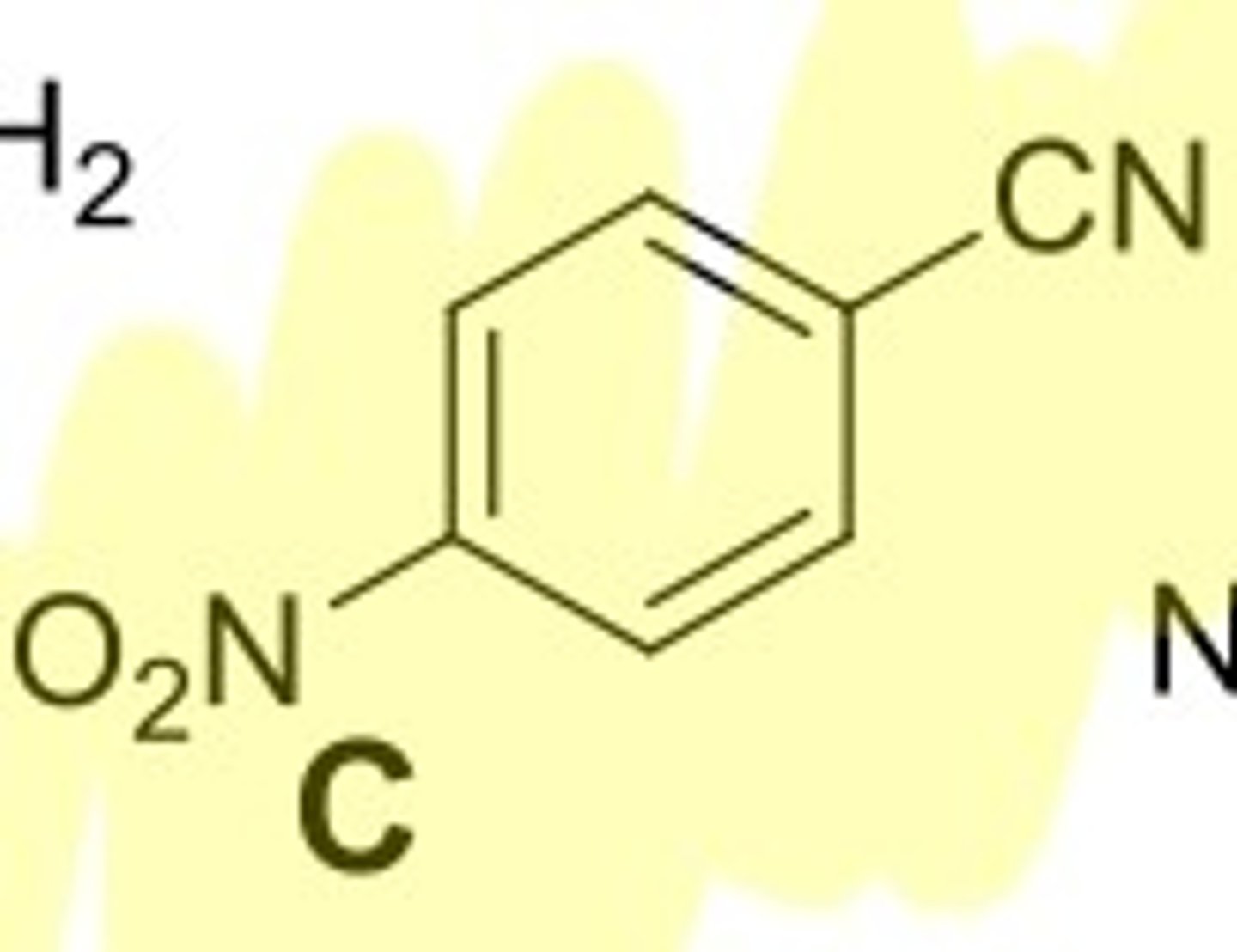
Diazonium salts react with phenols to make dyes, but react with copper salts differently, in the Sandmeyer reaction. Which of the molecules shown is the product from this Sandmeyer reaction?
Why are diazonium salts dangerous?
They can release nitrogen gas, making them shock sensitive and potentially explosive.
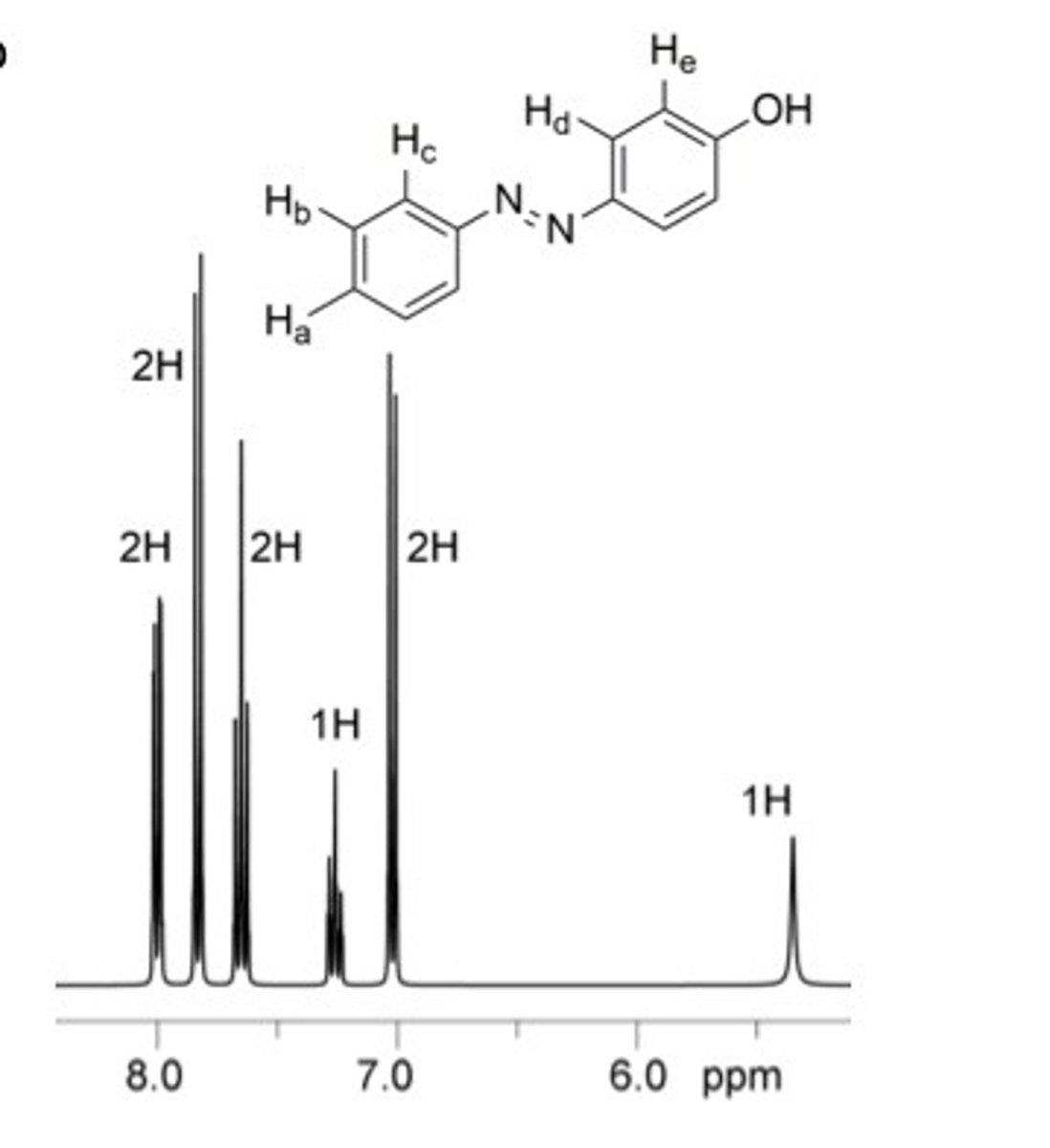
The NMR spectrum a simple azo dye is given to the right. Use it to answer the following questions: Which hydrogen corresponds to the peak at ö7.00?
He
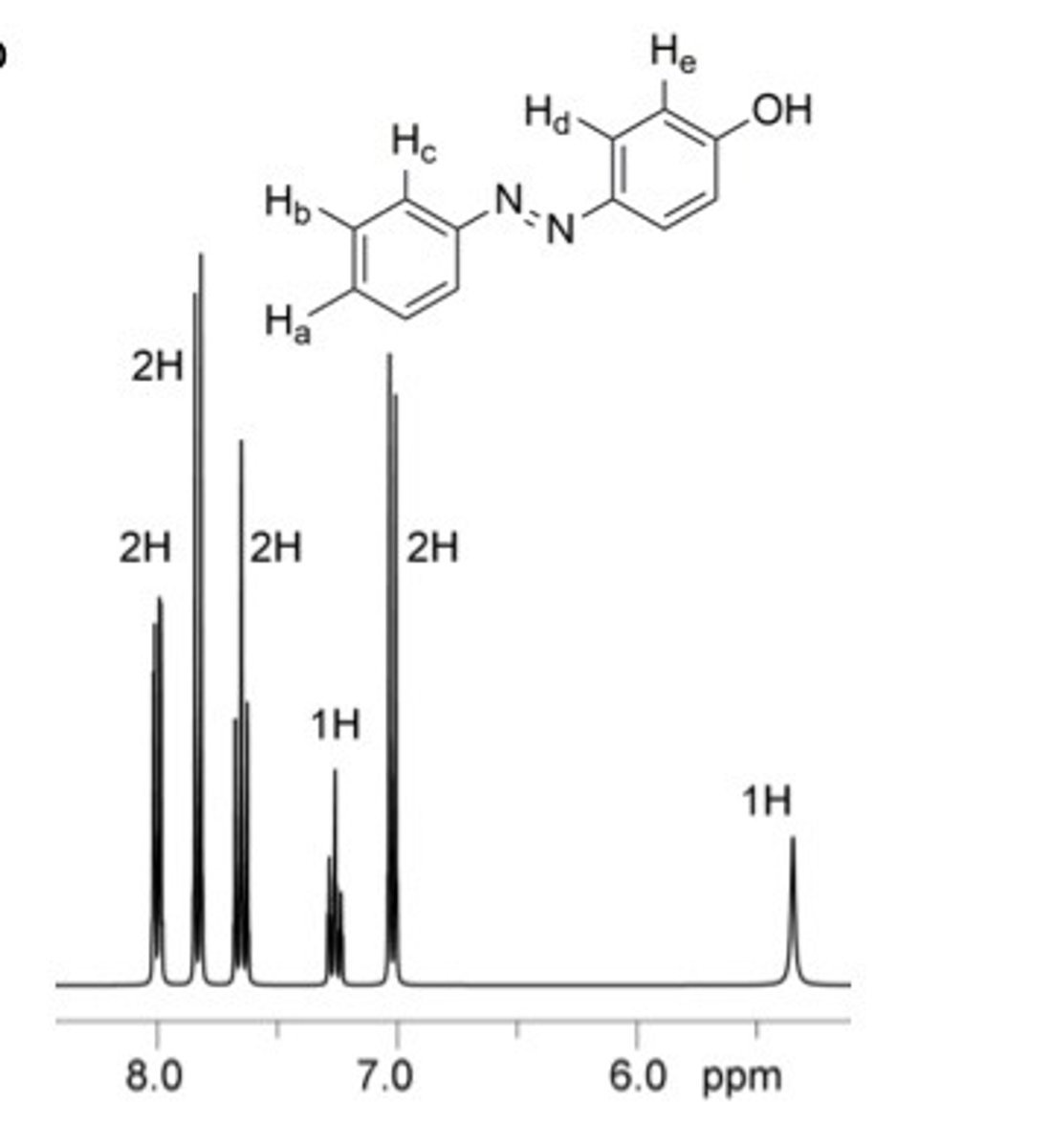
The NMR spectrum a simple azo dye is given to the right. Use it to answer the following questions: Which hydrogen corresponds to the peak at ö 7.25?
Ha
Which of these molecules can be seen on a TLC plate with no stain or UV light?
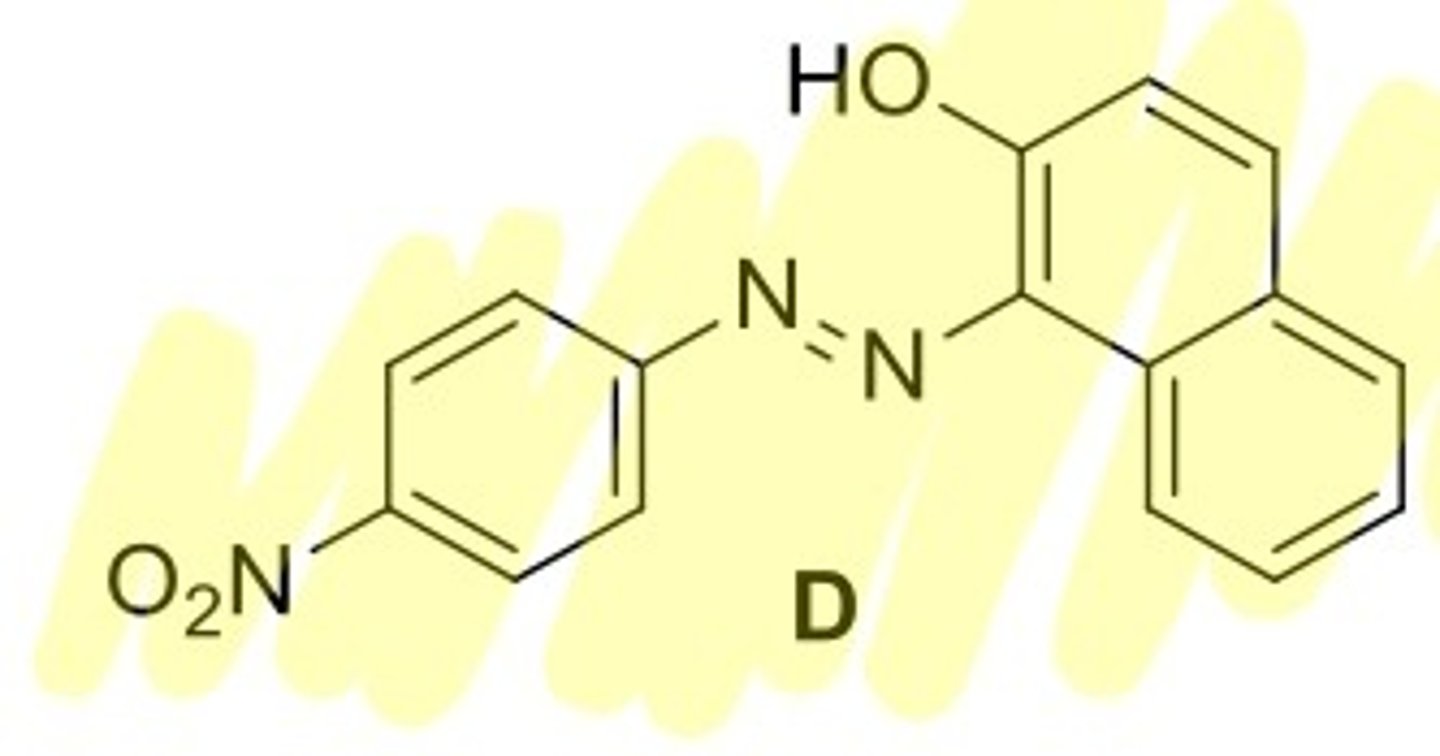
Which of these molecules absorbs at the longest wavelength?
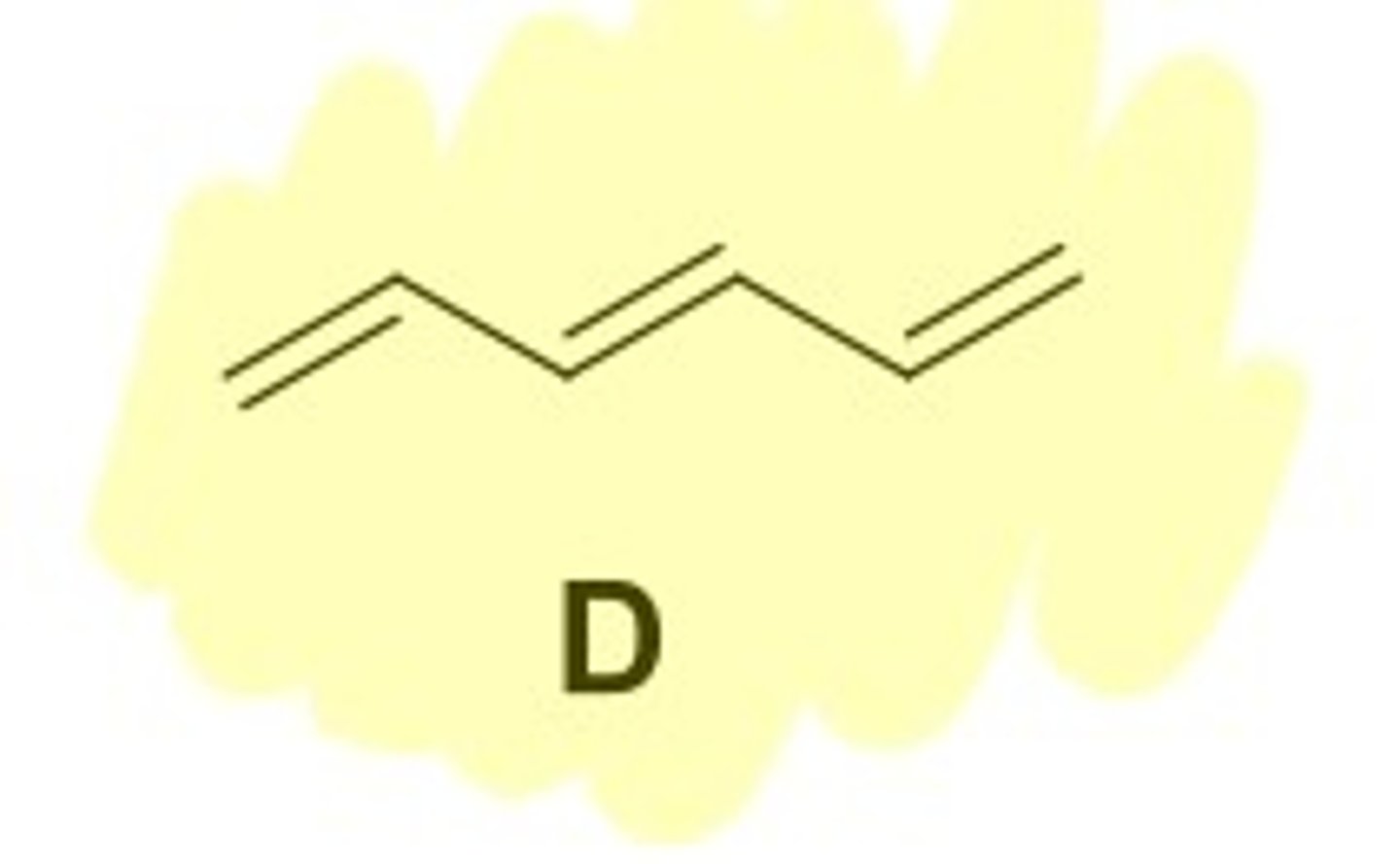
Which of these molecules absorbs at the longest wavelength?
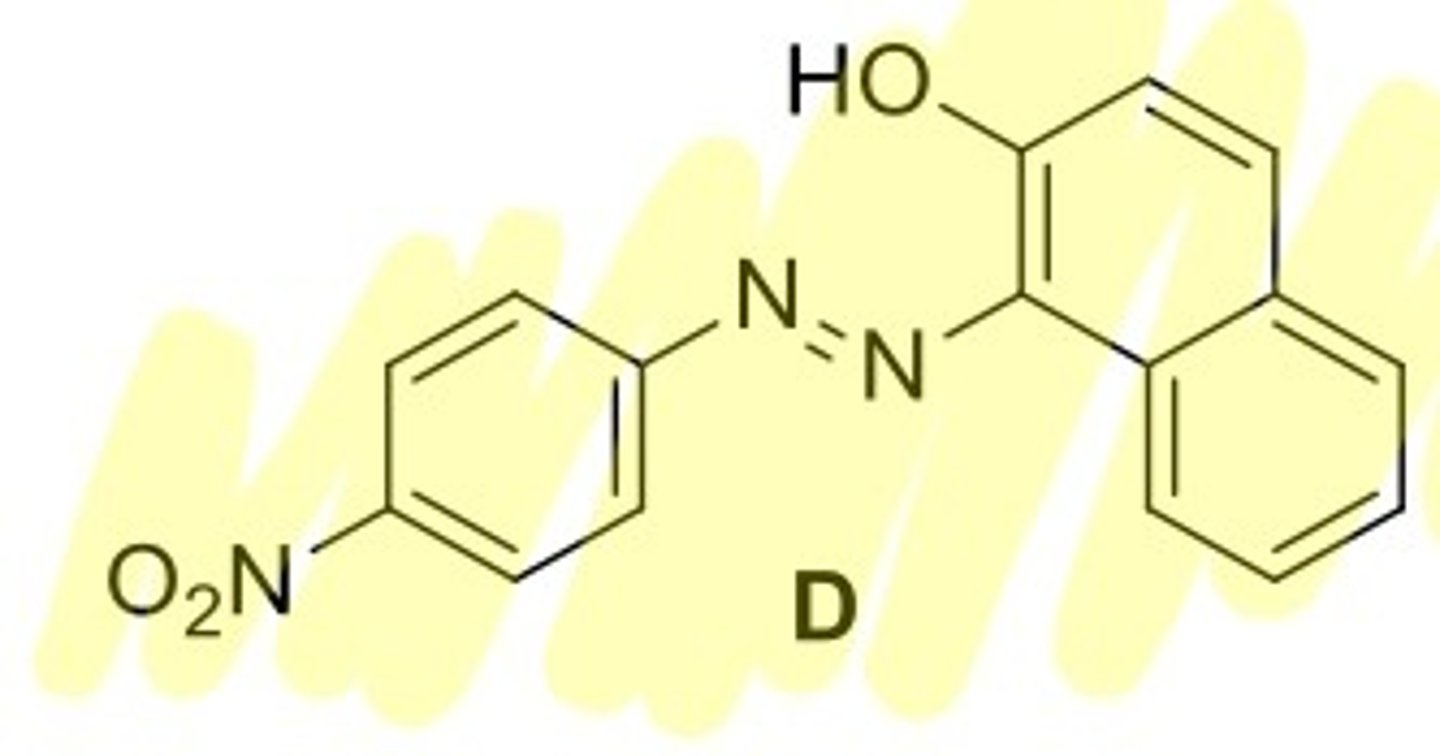
Nitroaniline is a known carcinogen. What precautions should you take to minimize risk and hazard?
All of the above.
Handle the chemical in a fumehood to minimize inhalation risk.
Always wear gloves, to prevent contact with skin
Always wear a lab coat to prevent contact with skin
Always wear goggles to prevent contact with the eyes
In the proline-catalyzed condensation reaction, dimedone acts as a carbon nucleophile, but you don't need to add a strong base to deprotonate it. Why is the reaction successful?
The diketone exists in equilibrium with the enol form, which is nucleophilic.
Which of the following amines would also be a successful catalyst for the proline-catalyzed condensation reaction?
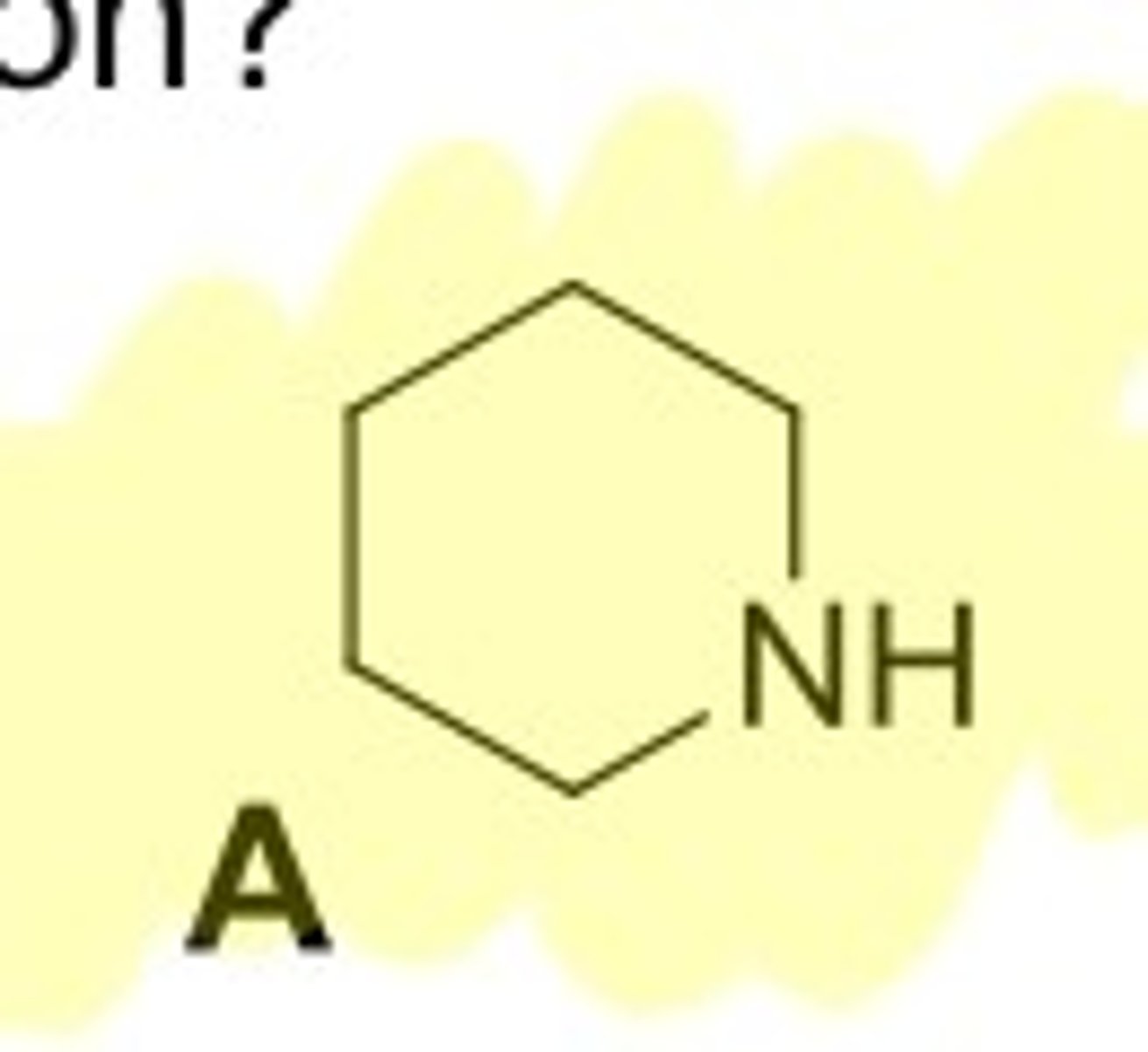
Which of the following dicarbonyl species would also be successful nucleophiles in the proline- catalyzed condensation reaction?
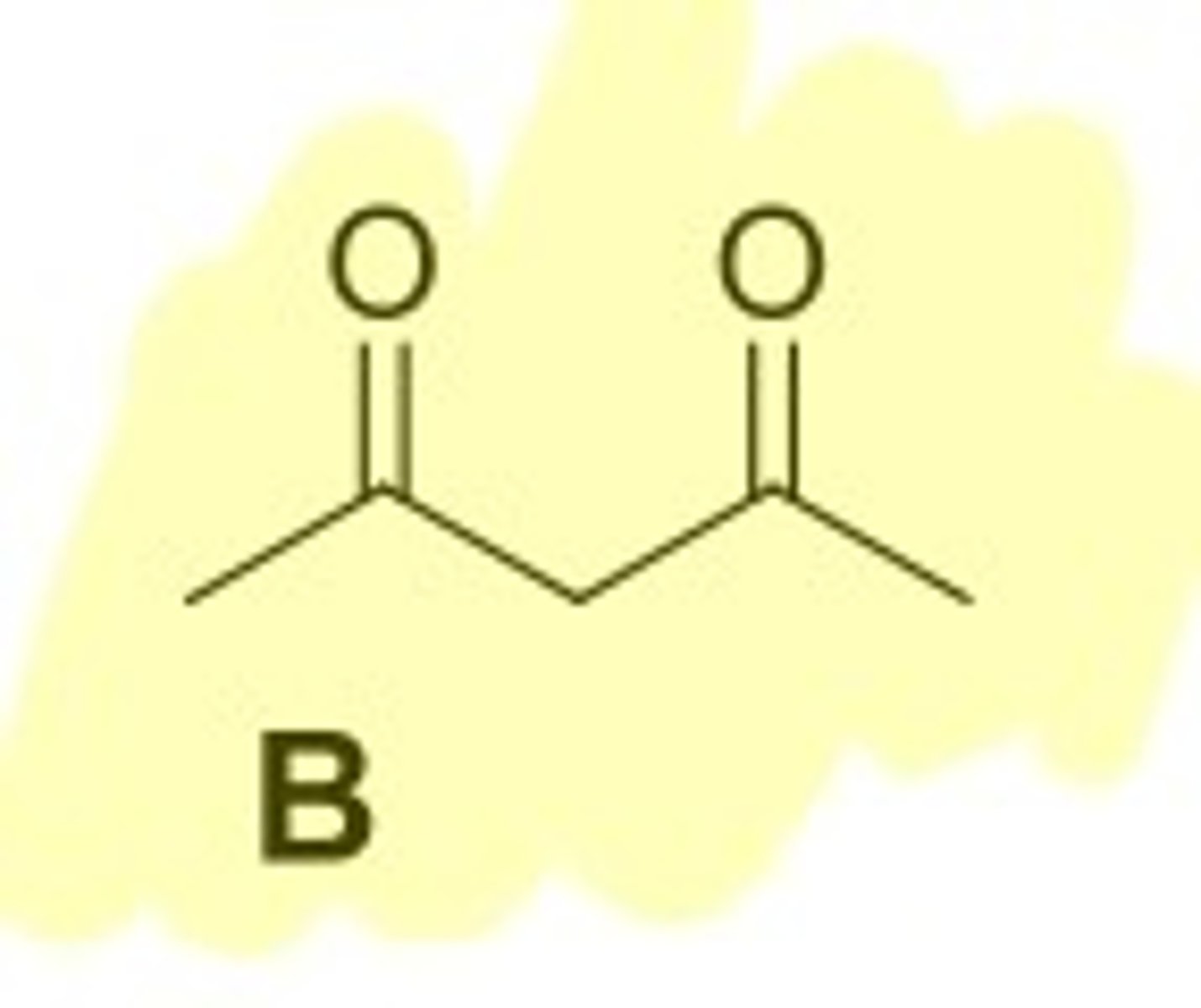
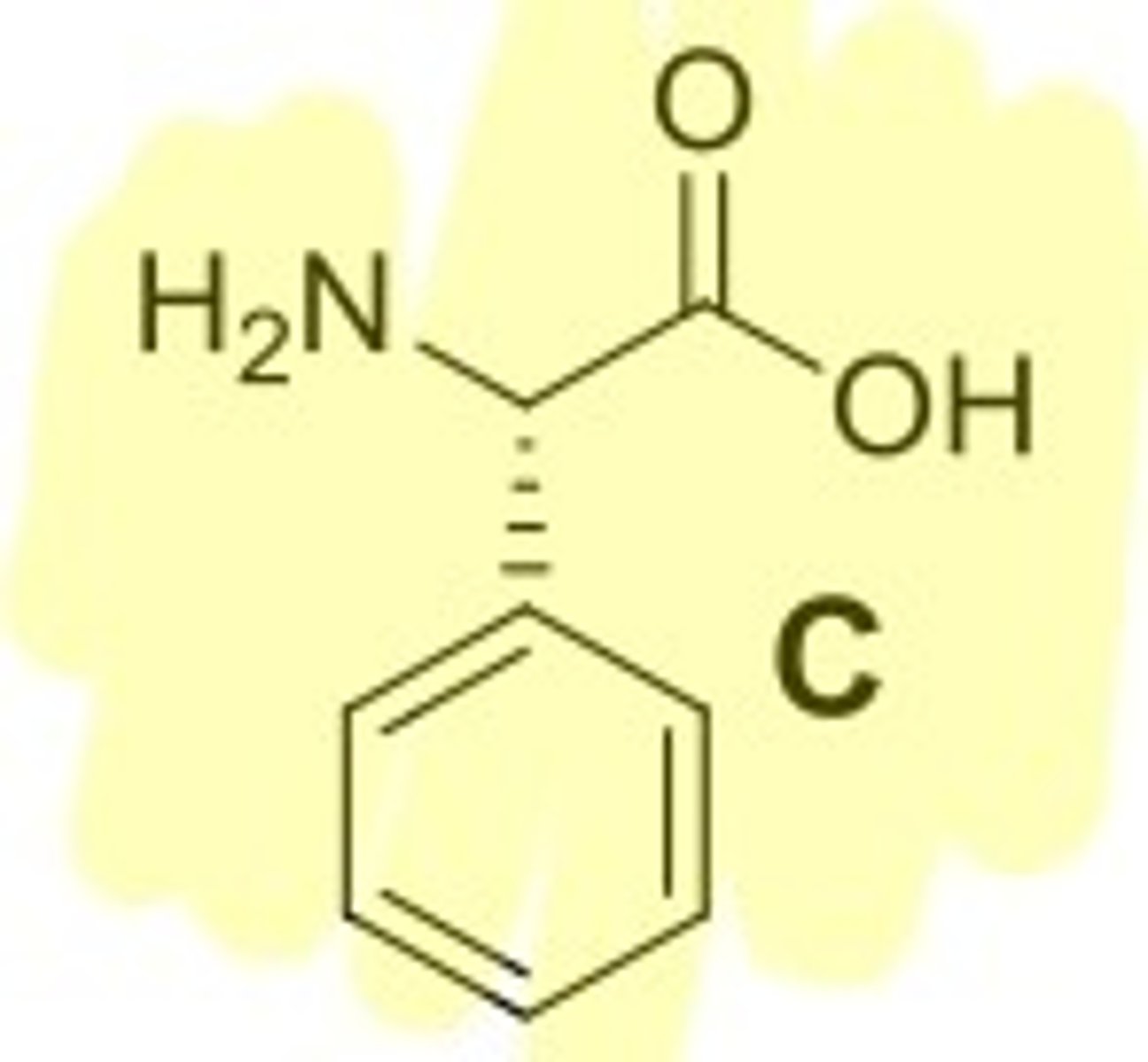
Which of these molecules is not a natural amino acid?
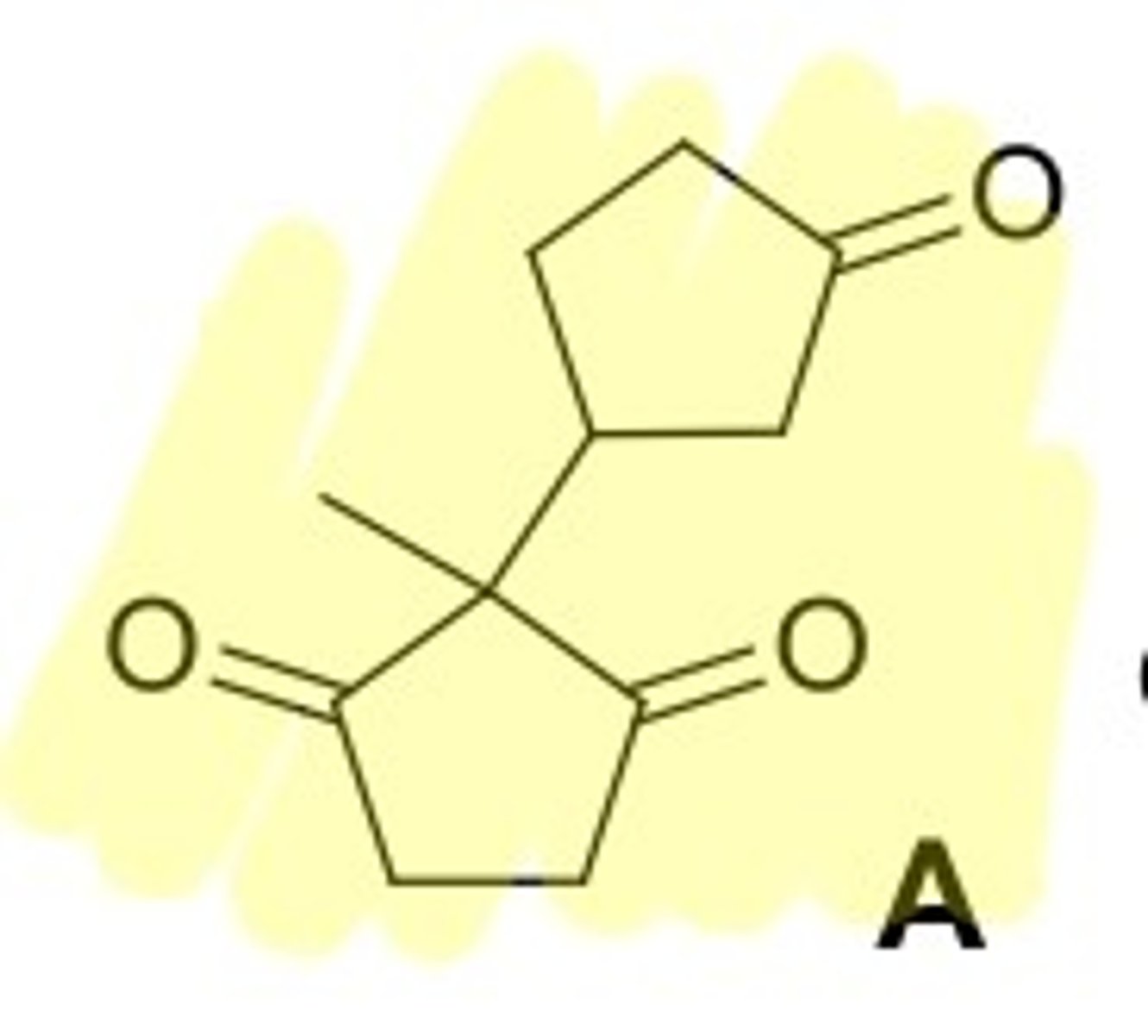
The first step of the dimedone reaction involves an aldol reaction. Here is a simpler version - which of the molecules shown is the product from this aldol reaction?
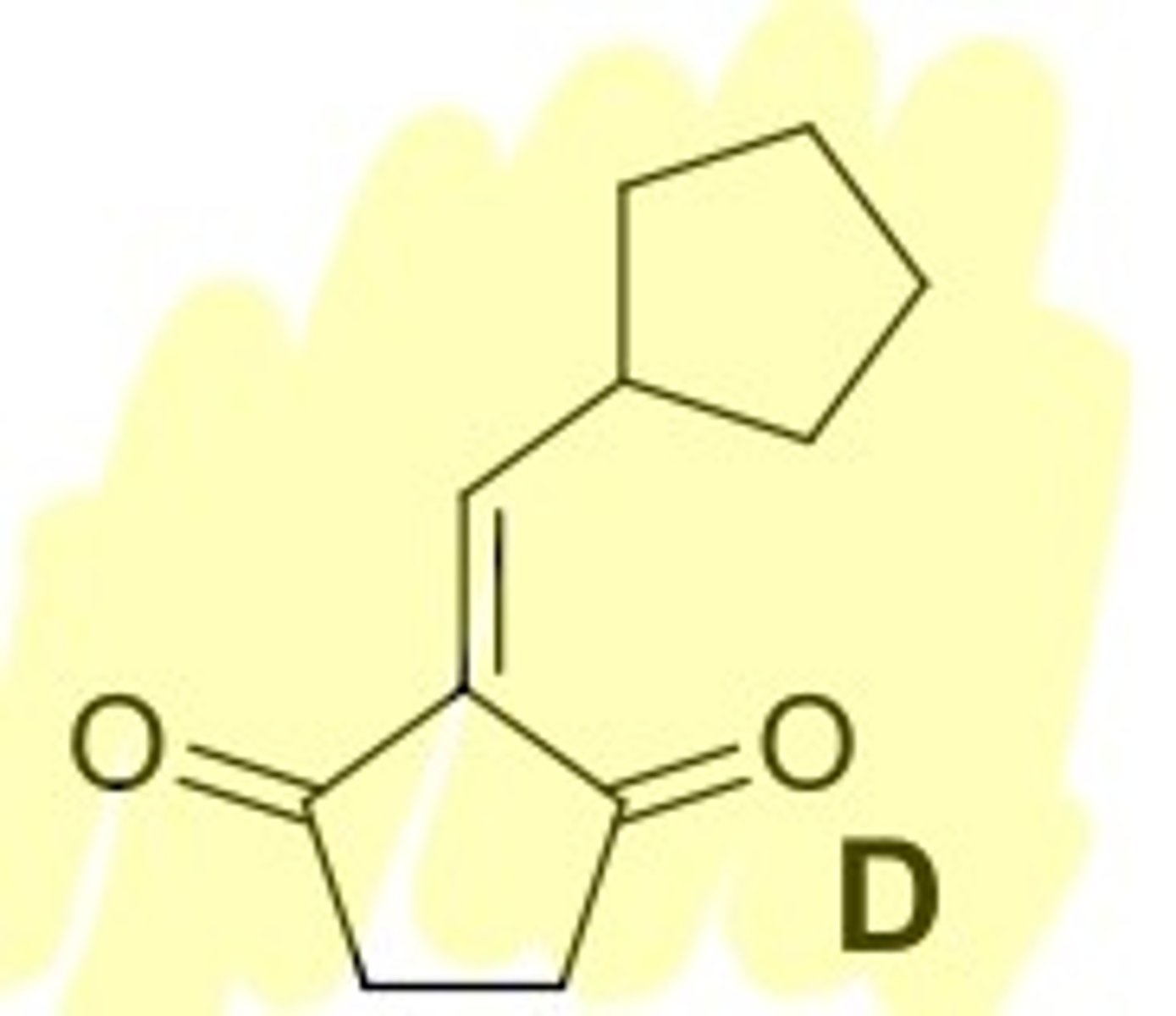
The last step of the dimedone reaction involves a conjugate addition (or Michael) reaction. Here is a simpler version-which of the molecules shown is the product from this Michael reaction?
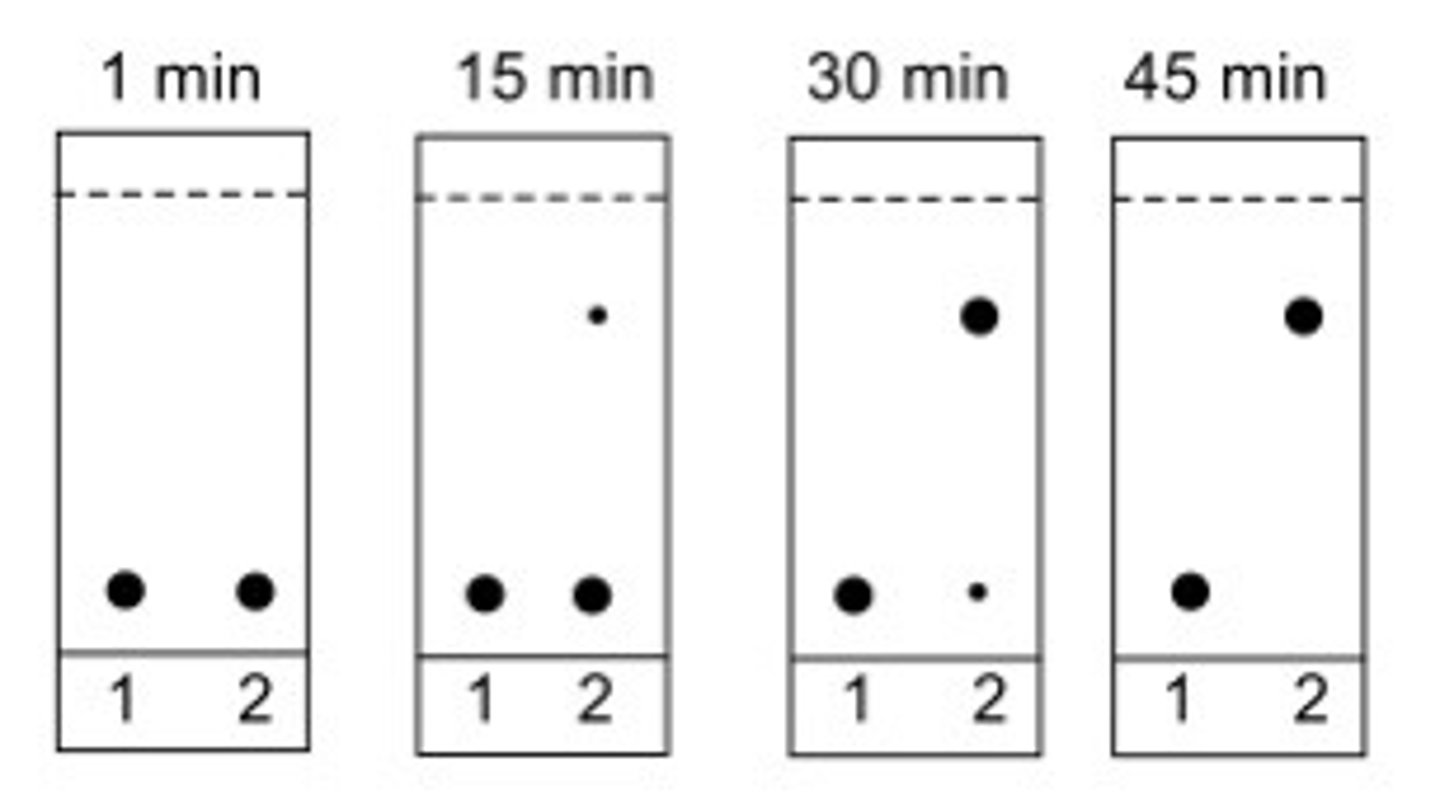
To the right is a series of TLC plates monitoring an unknown reaction. Position 1 is the pure reactant, position 2 is the reaction mixture. When is the reaction complete?
45 mins
In the dimedone condensation reaction, what is the name of the intermediate that proline forms when it reacts with nitrobenzaldehyde?
Iminium
We use PEG-400 as a recoverable, "environmentally friendly" solvent. Water is environmentally friendly, but we don't use that for the amino acid catalyzed condensation. Why?
The reactants aren't soluble in water.
PEG-400 is an "environmentally friendly" solvent. What does that mean for your safety precautions when performing an experiment?
None of the above all the other chemicals in the experiment are hazardous.