megastudy hdfs 310 second exam
 Call Kai
 Learn
Learn Practice Test
 Spaced Repetition
 Match
Match Flashcards
 Knowt Play
1/95

There's no tags or description
Looks like no tags are added yet.
Name | Mastery | Learn | Test | Matching | Spaced | Call with Kai | Chat |
|---|
No analytics yet
Send a link to your students to track their progress
96 Terms
What has happened to the maternal average age at first birth in the US? Why? Is this the same the world over?
U.S. women become moms sooner than in most countries, at the average age of 26.4. This is because we have more teen moms and not everyone goes into higher education
How do maternal age at first birth vary across the US (general patterns)?
Women in the South tend to become moms sooner than in other regions, especially the northeast
…
…
…
…
Why has teen pregnancy in the US declined?
more teens abstaining from sex, more teens using contraceptive, more teens using effective contraceptives, and more pregnancy prevention programs
What is Matrescence? What field developed this idea originally? Why is this an important field of study? Understand what some of the major issues in this transition to mother are.
Matresence is the term for the physical, emotional, hormonal, and social changes that occur during the transition to becoming a mother.
Anthropology (doula Dana Raphael)
Issues:
-postpartum depression
-fantasy vs. reality in the transition to motherhood
-perfection vs. good enough parenting
-ambivalence
What is Postpartum Depression? How is it different than “Baby Blues”? How is it different than postpartum psychosis?
Postpartum depression involves sadness, difficulty concentrating, trouble sleeping, loss of pleasure, thoughts of hurting oneself and/or the baby, experiencing anxiety about being left alone with the newborn, anxiety about not being a good mom, irritability, and not being able to sleep when the baby sleeps.
PPMD is different from “baby blues” because it interferes with the mom’s ability to care for herself and her family. it lasts for months or years without treatment.
Postpartum depression is a nonpsychotic depressive episode, while postpartum psychosis is a severe psychotic episode that can occur after childbirth
know at least 5 symptoms of PPMD
sadness
irritability
thoughts of hurting oneself
thoughts of hurting the child
anxiety about being left alone with the child
anxiety about not being a good mom
trouble sleeping
loss of pleasure
not able to sleep when the baby sleeps
What are effective treatments for PPMD?
therapy
medication (many antidepressants can be taken while breastfeeding)
finding support systems
sleep
exercise
Can men experience anything equivalent to PPMD?
stressful transition to fatherhood:
-pregnancy most stressful time of parental transition
-large decreases in sexual functioning in early pregnancy
-expectation to return to pre-pregnancy sexual functioning
-fathers often surprised about impact of parenthood on their lives
In what ways is father-infant bonding similar to mother-infant bonding? What physiological changes do new fathers often undergo?
oxytocin (cuddle chemical) rises in new fathers
helps men bond with their new babies
correlation between hormone levels and playing with their children
,,,
…
can men lactate?
NO
What is paternal engagement? Why is it important for children?
paternal engagement is a father's direct involvement with their child, which can include caring for them, nurturing them, and participating in other activities. It can also refer to a father's sense of responsibility for their child and their behavior towards them
research shows that a father's engagement significantly contributes to a child's healthy development, impacting their social, emotional, and cognitive well-being, often leading to better academic performance and reduced behavioral issues.
What is likely to happen to marriages when they have kids? Why?
some studies found that marital satisfaction is higher among childless couples
the presence of children in the family has been linked to decreased marital satisfaction
decreases through middle childhood and then improves through adolescence and early adulthood
arrival of a child will not likely destroy relationships, but will not save a troubled one, either
What helps prevent low levels of marital satisfaction? When does marital satisfaction go back up? Why?
those who were older when they had children and had strong support system reported positive outcomes
increase in marital satisfaction in early adulthood, because parents are able to focus on their marital relaitonship
planning status & pre-pregnancy marital satisfaction are protective factors
couples should have strong, committed relationship before having children because they will have less time to work on their marriage after children
What is coparenting?
a unique component of the marital relationship in which parents work together, or alternatively, struggle against each other when it comes to child rearing
In what context was coparenting first developed/used? How has that changed over time? Who “counts” as coparents?
first discussed in the context of postdivorce couples continuing to coordinate their parenting
more recently it has been recognized as also playing a prominent role in intact two-parent family systems
coparenting can refer to how a married couple works together in parenting children, but it can also refer to
divorced or separated parents
unmarried people who have a child together
cohabiting or otherwise
any two or more people who are working together to raise a child
Marriage, parenting, and coparenting: In what ways are they similar? How do they differ?
coparenting is the process of working together as adults, but parenting is the action of guiding children towards the internalization of appropriate behaviors and morals. Marriage is the union of the two adults who may become parents in the future. the foundation of the children’s life can be found in the health of the marriage.
be familiar with the process model for marriage, coparenting, and parenting
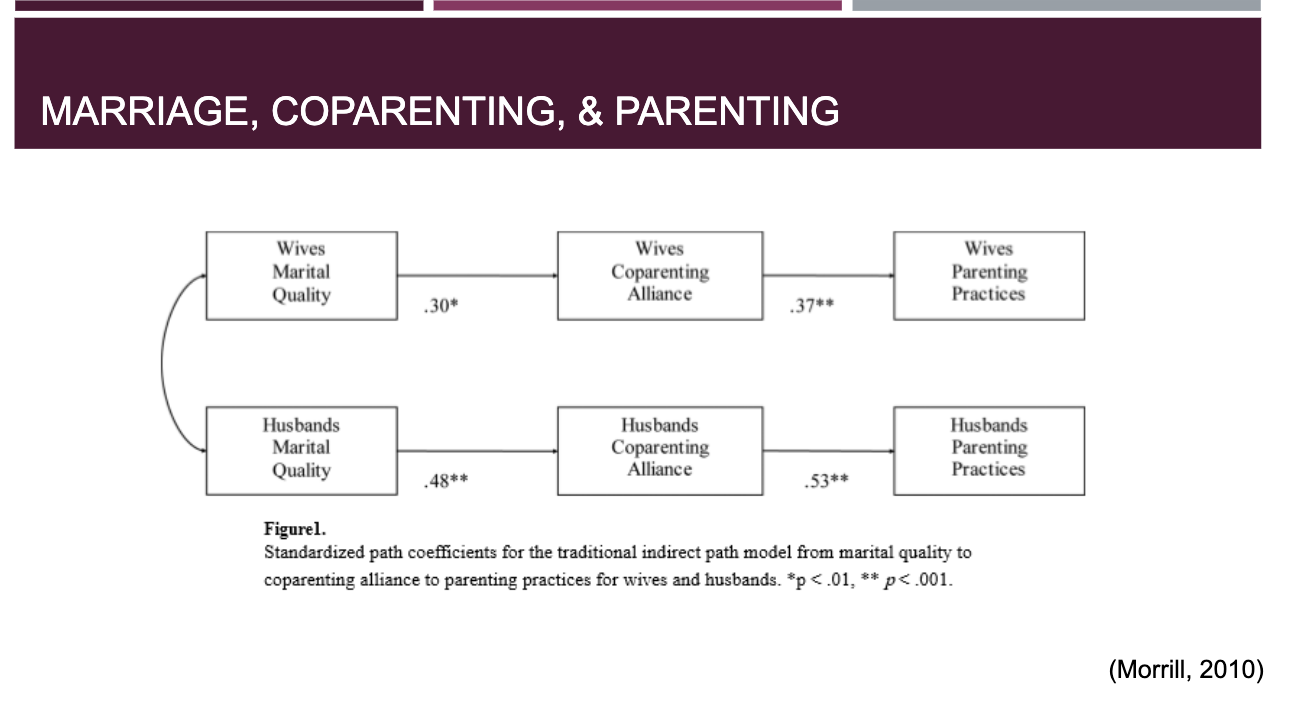
know the standardized path for the indirect path model from marital quality to coparenting alliance to parenting practices for wives and husbands
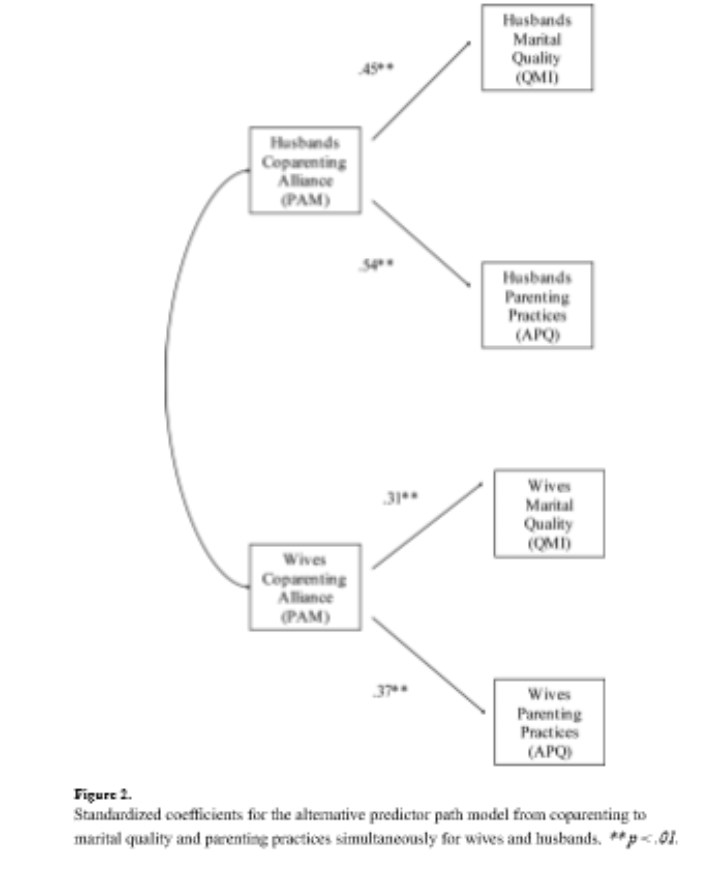
how are skills/deficits in one area of marriage, parenting, and coparenting likely to impact the other areas?
Couples with poor coparenting are more vulnerable to
hostility and competition which can lead to
Divergent expectations for their children
Disagreement about their children's caretaking
Tension when assisting their children
Four characteristics of a sound coparenting alliance:
1. Both parents’ investment in the child;
2. Valuing each other's involvement with the child;
3. Respect for each other's judgment about child rearing;
and
4. Having a desire to communicate child related information.
never undermining the other parent, having healthy communication, compromise, cohesion, and conflict resolution are central to all three main areas
consequences of poor (or no) coparenting: for parents, kids, for the family
Couples with poor coparenting are more vulnerable to
hostility and competition which can lead to
Divergent expectations for their children
Disagreement about their children's caretaking
Tension when assisting their children
When does coparenting begin? Why is this important?
Although the coparenting relationship doesn’t officially begin until
the birth of a child, it is important to plan ahead.
Research suggests link between envisioning future coparenting
relationships and successful alliance early on
Evidence also suggests that early coparenting sets the stage
for later on
why is it advantageous to target the transition to parenthood for coparenting programs?
Research suggests link between envisioning future coparenting
relationships and successful alliance early on
According to lecture (Margolin et al, 2001 and McHale, 2007), what five factors make up the broad construct of coparenting? (What they are, what they mean)
parenting alliance and support
antagonism and undermining between parents
division of childcare labor
the extent to which each partner is engaged in the day-to-day organizing of the lives of their children
triangulation
characteristics of a sound coparenting alliance
both parents’ investment in the child
valuing each others’ judgment about child rearing;
respect for each other’s judgment about child rearing;
having a desire to communicate child-related information
Each of these elements demonstrates the connections between coparenting, marriage, and each partner’s parenting.
communication (parent-parent, parent-child)
Give each other room to express ideas and feelings
Actively listen to what the other has to say
Find someone else other than your child to hear the frustrations you have with your co-parent
Keep conflict away from the kids and always come back as a team (unified front) when dealing with the kids
Never criticize the other parent in front of the kids (or over the phone) - kids hear everything
When your child sees you disagree, also let them see you make up
Focus on solutions instead of the problem
Give your child some AGE APPROPRIATE information about what is going on (It will help them feel safer; the unknown is
always scarier)
Negotiation and compromise are always important
Reach out for help from a professional therapist, either individually or as co-parents if you are having a hard time
communicating in a healthy way
coparenting rules
Do NOT ask your child to spy on the other parent , keep secrets from the other parent, or pry
information out of your child regarding time with their other parent
Do NOT pass along verbal or written messages to the other parent through your child
Do NOT blame the other parent for the divorce or bad things happening in your life
Do NOT ignore the other parent at school or activities
Do NOT make your child choose who to hug first (or be upset if they hug the other parent first)
No talking about money or child support in front of the kids
Do NOT make the child feel bad for enjoying time with the other parent or the other side of the family
Do NOT block visits for the child to see the other parent
Do NOT interrupt the other parent’s time with too many phone calls or many extracurricular activities
Do NOT argue with one another in person or on the phone (when child can overhear)
No talking negatively about the other parent.
No talking negatively about co-parent’s family or friends
No talking about the divorce or legal matters in front of the kids
Do NOT treat your child like an adult or friend, or put too much pressure on them to listen to your
problems
Do NOT guilt your child into choosing who they want to live with or make them choose who they love
more
Let your child create a home for themselves at both parents’ homes
Allow them to take important things back and forth as well
Realize that your child has two loving homes and one giant family
Let them talk on the phone with the other parent
Let your child love both of you
Be understanding if they look forward to seeing the other parent
coparenting differences: why it happens, impact on children (positive or negative)
If parents are not able to resolve coparenting disagreements, one
of two things typically occurs:
1. Each parent continues to parent how they see fit, even if their rules and
expectations violate what their partner is trying to do
2. One parent withdraws, becoming detached and leaving most of the
decision-making, discipline, and follow-through to the other parent.
happens because of a lack of communication, cohesion, or undermining the other parent
what is the best way to resolve differences in coparenting?
never undermine or criticize the other parrent
come back in a unified front
cohesion
communication
compromise
focus of coparenting
Always remember the most important goal: raising your children and seeing them grow as healthy and happy kids
ask yourself questions, such as:
What do I give to my child?
What does my co-parent give to my child?
What do I currently do or say that may be affecting my child negatively?
What can I do or say differently to help protect my child?
Why should we focus on preventing problems before we have to discipline them?
discipline involves promotion of positive behaviors and prohibiting negative behaviors, with an overall emphasis on encouraging the child to internalize morals. however, if we do not focus on positive behaviors but only punish negative behaviors, we use psychological control, harsh punishment, and other ineffective discipline practices
,,,
…
What does the phrase “Children do well if they can” mean?
when a child exhibits challenging behavior, it's often because they lack the necessary skills to behave appropriately, and that if they had those skills, they would naturally choose to behave well
What should the chief goal of parenting be in this approach? (Children do well if they can)
What are the methods for fostering self-esteem in this approach (Children do well if they can)
high nurture
high structure
parental warmth and autonomy
….
….
Which parenting style is best? Why? Are there any exceptions?
authoritative, because it has the best outcomes (emotional regulation, good behaviors, high self-esteem). the only exception is in high risk situations
What is the difference between natural vs. logical consequences? Which one is better?
natural consequence occur when the environment responds to the child’s behavior, and logical consequences ties a parental punishment to a child’s actions to discourage the action. natural consequences are better because they follow into adulthood
Is authoritarian/punitive parenting a good idea? What are the negative consequences of too much punishment?
no. results in low self-esteem, obedience, but anxiety and potential aggression
psychological definition of discipline
parental discipline is intended to provide clear and consistent communication of expectations to facilitate children’s internalization of such expectations and values
authoritative parenting characteristics and outcomes
characteristics
-high nurture
-high structure
-parental warmth and autonomy
outcomes
-high self-esteem
-better social skills
-good emotional regulation
authoritarian parenting characteristics and outcomes
characteristics
-low nurture
-high structure
-strict rules, less parental warmth
outcomes
-obedient
-lower self-esteem
-possible anxiety or aggression
permissive parenting characteristics and outcomes
characteristics
-high nurture
-low structure
-lenient, few rules
outcomes
-lack of self-discipline
-behavioral problems
-socially independent
uninvolved parenting
characteristics
-low nurture
-low structure
-disengaged, emotionally absent
outcomes
-impulsive
-behavioral problems
-mental health problems
know the spectrum from rigidity to abandonment
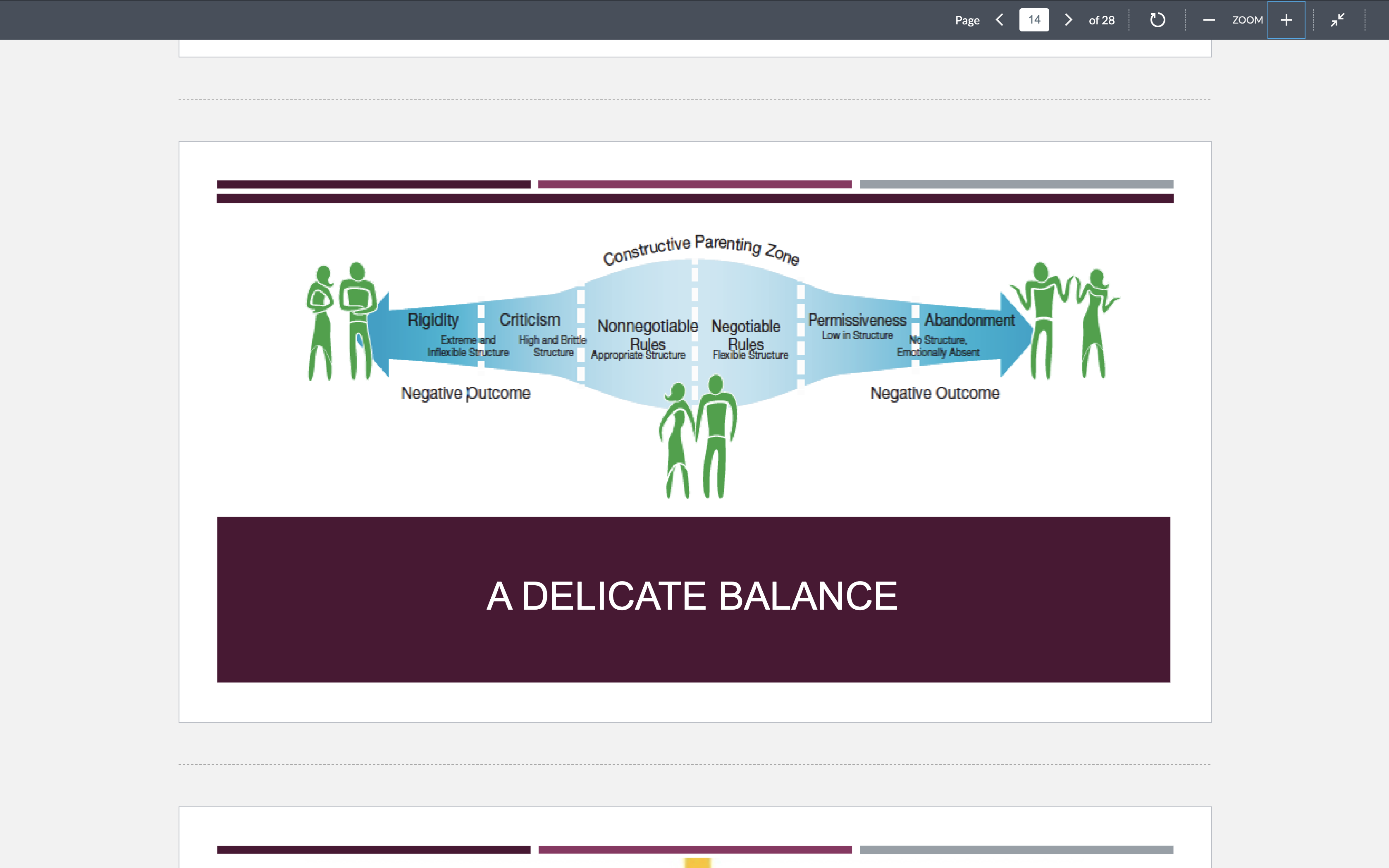
in what context are all discipline scenarios bound to fail?
not loving the child
keys to effective discipline
clear communication of boundaries and expectations
children need to understand which behaviors are acceptable and unacceptable
timing discipline
flexibility within limits
consistency and follow-through are key
parental monitoring
awareness and responsiveness
knowledge of children’s whereabouts, what they are doing, and with whom they are doing it
helps ensure safety and prevent problems before they occur
effective discipline practices
use natural consequences
explain reasoning behind rules and consequences
promote positive behaviors
ineffective discipline practices (punishments)
corporal punishments
psychological control
harsh punishment
piaget’s stage of development
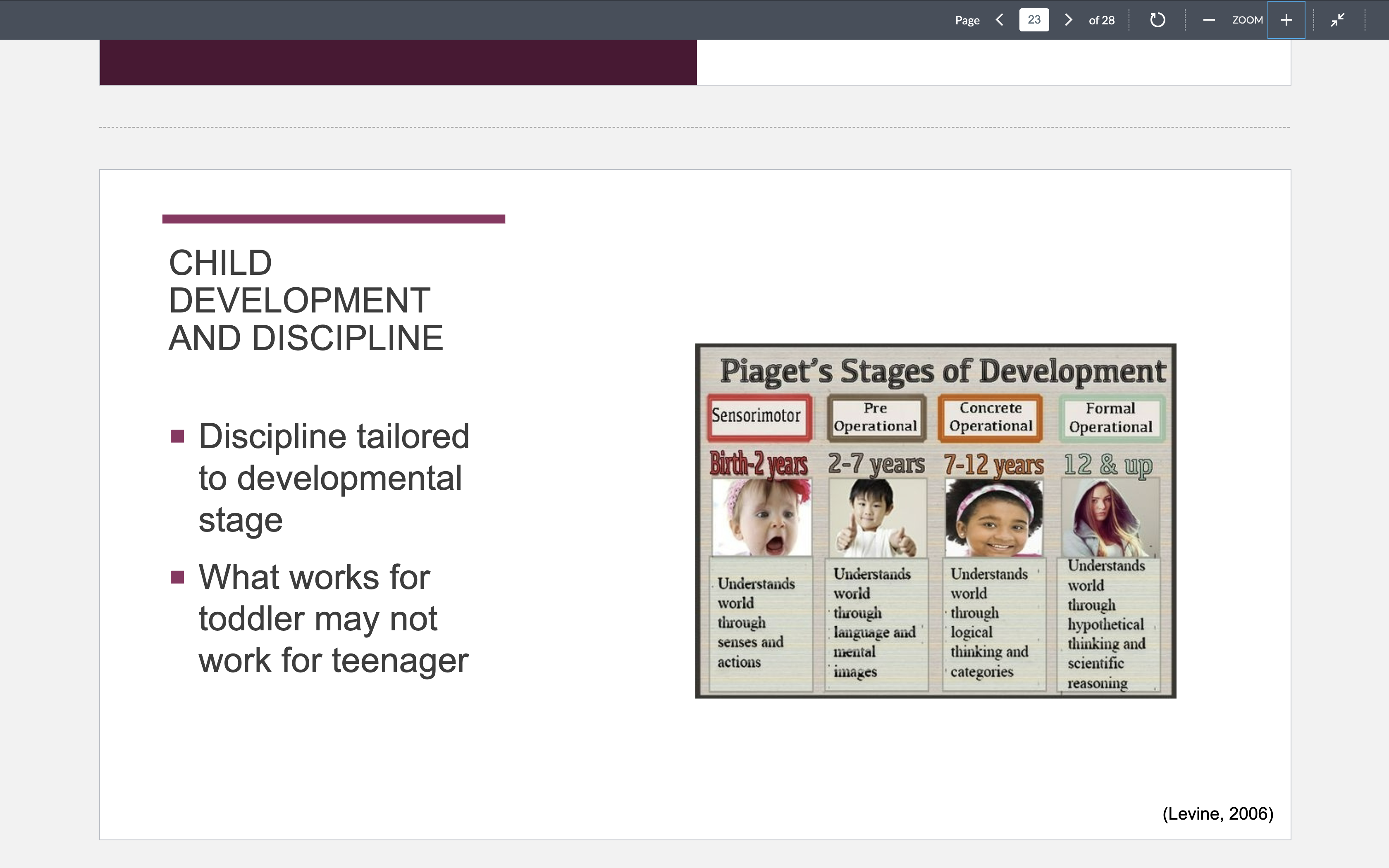
What is coparenting
Coparenting has been defined
as a unique component of the
marital relationship in which
parents work together, or,
alternatively, struggle against
each other when it comes to
child rearing (McHale, 2007).
When was coparenting first discussed
First discussed in the context of
postdivorce couples continuing to
coordinate their parenting (Ahrons,
1981)
What have recent discussions of coparenting recognized?
More recently it has been recognized as
also playing a prominent role in intact
two-parent family systems (Margolin,
Gordis, & John, 2001)
Who coparents?
Coparenting can refer to how a
married couple works together in
parenting children, but it can also refer
to:
Divorced or separated parents
Unmarried people who have a
child together
• Cohabiting or otherwise
Any two or more people who are
working together to raise a child
Positive association between ___ ___ and ____ ___
marital health, coparenting quality
What 3 aspects of the marital relationship seem to be particularly influential on coparenting relationships?
collaboration, team-work, and family warmth
Coparenting is hypothesized to influence…
the marital relationship through actions like spousal social support, which is strongly associated with marital health
Coparenting cohesion is thought to…
equip parents with resources to parent effectively and to coordinate their parenting roles in ways that benefit their children
Couples with poor coparenting are more vulnerable to
hostility and competition which can lead to
Divergent expectations for their children
Disagreement about their children's caretaking
Tension when assisting their children
early coparenting
Although the coparenting relationship doesn’t officially begin until
the birth of a child, it is important to plan ahead.
Research suggests link between envisioning future coparenting
relationships and successful alliance early on
Evidence also suggests that early coparenting sets the stage
for later on
What compromises coparenting?
Parenting alliance and support
• Antagonism and undermining between
parents
• Division of childcare labor
• The extent to which each partner is
engaged in the day-to-day organizing of the
lives of their children
• Triangulation
coparenting alliance four characteristics
Both parents’ investment in the child;
2. Valuing each other's involvement with the child;
3. Respect for each other's judgment about child rearing;
and
4. Having a desire to communicate child related information.
Each of these elements demonstrates the connections between
coparenting, marriage, and each partner's parenting
what are some keys to coparenting?
never undermine or criticize the other parent
establishing healthy communication habits
compromise
build cohesion
conflict resolution
what are some keys to healthy communication
give each other room
actively listen to what the other has to say
find someone else other than your child to hear the frustrations you have with you co-parent
keep conflict away from the kids and always come back as a team (unified front) when dealing with the kids
never criticize the other parent in front of the kids (or over the phone) - kids hear everything
when you child sees you disagree, also let them see you make up
focus on solutions instead of the problem
give your child some AGE APPROPRIATE information about what is going on (it will help them feel safer; the unknown is always scarier)
negotiation and compromise are always important
reach out to help from a professional therapist, either individually or as co-parents if you are having a hard time communicating in a healthy way
resolving coparenting disagreements
If parents are not able to resolve coparenting disagreements, one of two things typically occurs:
each parent continues to parent how they see fit, even if their rules and expectations violate what their partner is trying to do
one parent withdraws, becoming detached and leaving most of the decision-making, discipline, and follow-through to the other parent.
how is coparenting not written in stone?
remember that parenting is an ongoing process
parenting plans should be revised over time as needed
coparenting self-assessment
do you and your child’s other caregiver work to communicate jointly agreed-upon rules and standards to the child?
do either of you badmouth, undermine and/or put down your child’s other caregivers?
are you (whether you live together or apart) generally on the same page regarding your expectations, values, and goals for the child?
are you able to identify, talk about, and compromise on areas in which you differ? or are you unable or unwilling to discuss your differences?
when you cannot agree, do you each simply parent as you believe best, even if doing so provides an inconsistent, confusing, and/or disruptive environment for the child?
focus of coparenting
always remember the most important goal: raising your children and seeing them grow as healthy and happy kids
ask yourself questions, such as:
-what do i give to my child?
-what does my co-parent give to my child?
-what do I currently do or say that may be affecting my child negatively?
-what can I do or say differently to help protect my child?
On average, people giving birth were ____ years old in 2022, about ___ years older than in 1970.
29.5, 5
Why is the average age of the US birthing parent rising?
Child mortality rates are lower and lifespan is longer.
Do U.S. women become moms later or sooner than other developed nations
sooner
why is the average age of first time mothers younger in the US (in comparison to other developed countries)
we have more teen moms and not everyone goes to higher education
First time moms are older or younger in the south
younger
Do U.S. women have larger or smaller families than most?
larger
Are U.S. women more or less likely to be moms in comparison to European women?
Just as likely
More education is correlated with higher or lower first birth age
higher
Teen/unintended pregnancy rates in the U.S. are declining or increasing over the past decade?
declining
Why do you think we are seeing a decline in teen pregnancy?
more parents are having their children a bit ___ than they used to
later
It is now less likely that the children are (planned or unplanned?) than it used to be
unplanned
Since there are recent trends of later parenthood, does this mean that we have more “ready” parents?
Since there are recent trends of later parenthood, can a person ever be “ready”?
Since there are recent trends of later parenthood, what are the cost/benefits to these patterns?
What three types of factors impact whether a person wants to become a parent? (bigner & gerhardt, 2014)
psychosocial, economic, and structural factors
implications for couples based on parental studies
some studies have found marital satisfaction higher among childless couples than couples who are parents
others have found that those who were older when they have children and had strong support system reported positive outcomes
the presence of children in the family has been linked to decreased marital satisfaction
decreases through middle childhood and then improves through adolescence and early adulthood
role strain
being pulled in all directions
trying to be successful in several competing roles (marital partner, parenting, work)
performance in all these roles suffers
takeaways for transition to parenthood
planning status & pre-pregnancy marital satisfaction are protective factors
couples should have strong, committed relationship before having children since they will not be able to focus as much attention on their marriage after children are born
arrival of child will not likely destroy relationship, but won’t save a troubled one, either
motherhood issues
transition to motherhood - fantasy vs. reality
perfection vs. good enough parenting
ambivalence
symptoms of postpartum depression
sadness
difficulty concentrating
trouble sleeping
loss of pleasure
thoughts of hurting oneself
experiencing anxiety about not being a good mom
thoughts about hurting the baby
irritability
not being able to sleep when the baby sleeps
treatment for postpartum depression
therapy
medication (many antidepressants or antianxiety meds can be taken while breastfeeding)
finding support systems
sleep
exercise
fatherhood difficulties
pregnancy most stressful time of parental transition
large decreases in sexual functioning in early pregnancy
expectation to return to pre-pregnancy sexual functioning
fathers often surprised about impact of parenthood on their lives
oxytocin in the fatherhood relationship
cuddle chemical
rises in new fathers
helps men bond with their new babies
correlation between hormone levels and playing with their children