2.3 Plant tissues, organs and organ systems
 Call Kai
 Learn
Learn Practice Test
 Spaced Repetition
 Match
Match Flashcards
 Knowt Play
1/34

There's no tags or description
Looks like no tags are added yet.
Name | Mastery | Learn | Test | Matching | Spaced | Call with Kai |
|---|
No analytics yet
Send a link to your students to track their progress
35 Terms
Why do large plants require a transport system?
-Water and mineral ions are absorbed in the roots, but need to be transported to the leaves for photosynthesis
-Sugars are made during photosynthesis in the leaves, but are used in the rest of the plant for either respiration (for energy) or storing as starch
-Trees have a small surface area to volume ratio so diffusion wouldn’t be efficient as the substances have too far to travel
What is the function of the upper epidermis?
-Covers the surfaces and protects them
-Secretes a waxy substance that waterproofs the leaf
What is the function of the palisade mesophyll?
-Contains chloroplasts for photosynthesis (main site of photosynthesis)
-Top layer of cells under upper epidermis
What is the function of the spongy mesophyll?
-Contains some chloroplasts
-Has big air spaces and large surface area for easier diffusion of gases
What is the function of the lower epidermis?
Contains guard cells and stomata
What is the function of the guard cells?
Open and close the stomata
What is the function of the stomata?
-Pores to allow gas exchange in leaves
-Open in light
What is the function of the meristem tissue?
-Found at growing tips of roots and shoots, and between xylem/phloem vessels
-Contains rapidly dividing (mitosis) plant cells that grow and differentiate into all the other cell types
What is the function of root hair cells?
-Uptake of water by osmosis
-Uptake of mineral ions by active transport
What are the adaptations of root hair cells?
-Large permanent vacuole that speeds up the movement of water by osmosis from the soil across the root hair cell
-Many mitochondria that transfer the energy needed for the active transport of mineral ions into the root hair cells
-Large surface area to increase the rate of osmosis and active transport
-Transport proteins for active transport
What is the function of the xylem?
Transports water and dissolved mineral ions from roots to leaves
-Water used for photosynthesis, support for plant by keeping cells turgid and cooling plant by evaporation
-Minerals used for healthy growth (e.g nitrate required to make amino acids)
What are the adaptations of xylem?
-Mature xylem cells are dead so the cell contents don’t interfere with the movement of water
-Lignin builds up in the cells which forms hollow tubes and strengthens the cells
What is the function of phloem?
-Transport sugars produced in photosynthesis to the rest of the plant (translocation)
-It is transported to:
• Growing shoots and roots - used to provide energy to grow new cells
• Storage organs (e.g tubers)
• Converted to starch as an energy store for the winter
What are the adaptations of phloem?
-Living tissue as translocation requires energy
-Cell sap moves from one phloem cell to the next through pores in the end walls
What are the organs in plants and what is their function?
-Flowers: sexual reproduction
-Stem: supports leaves and flowers, and transport
-Leaves: site of photosynthesis
-Roots: absorb water and minerals from soil, and anchors plant to the ground
Why do plants need to transport minerals?
-Glucose + nitrate →amino acids (to make protein)
-Magnesium + glucose → chlorophyll
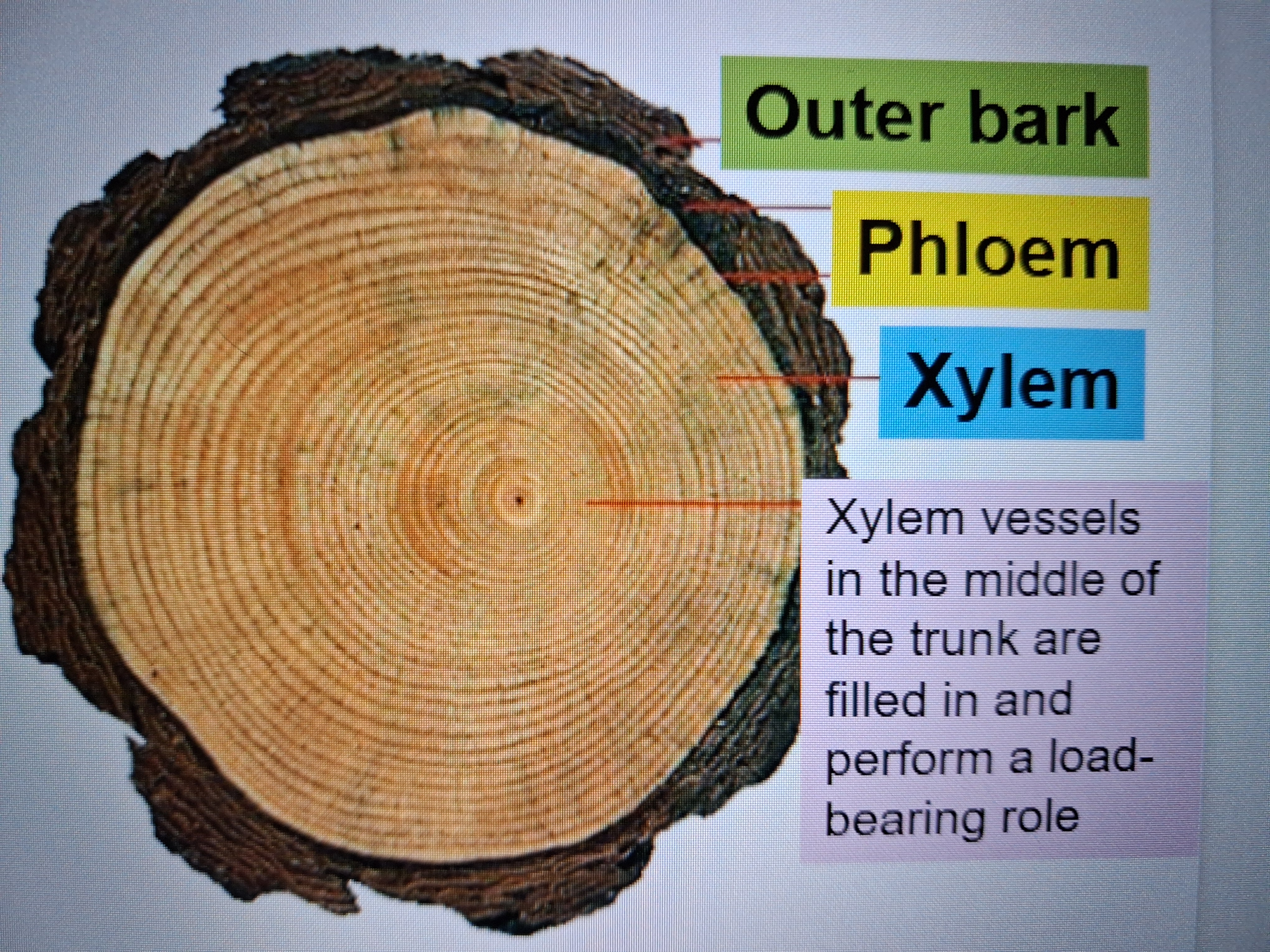
How are xylem and phloem arranged in tree trunks?
In mature trees, the xylem are located in the woody part of the trunk, and the phloem are found in a thin ring just under the bark
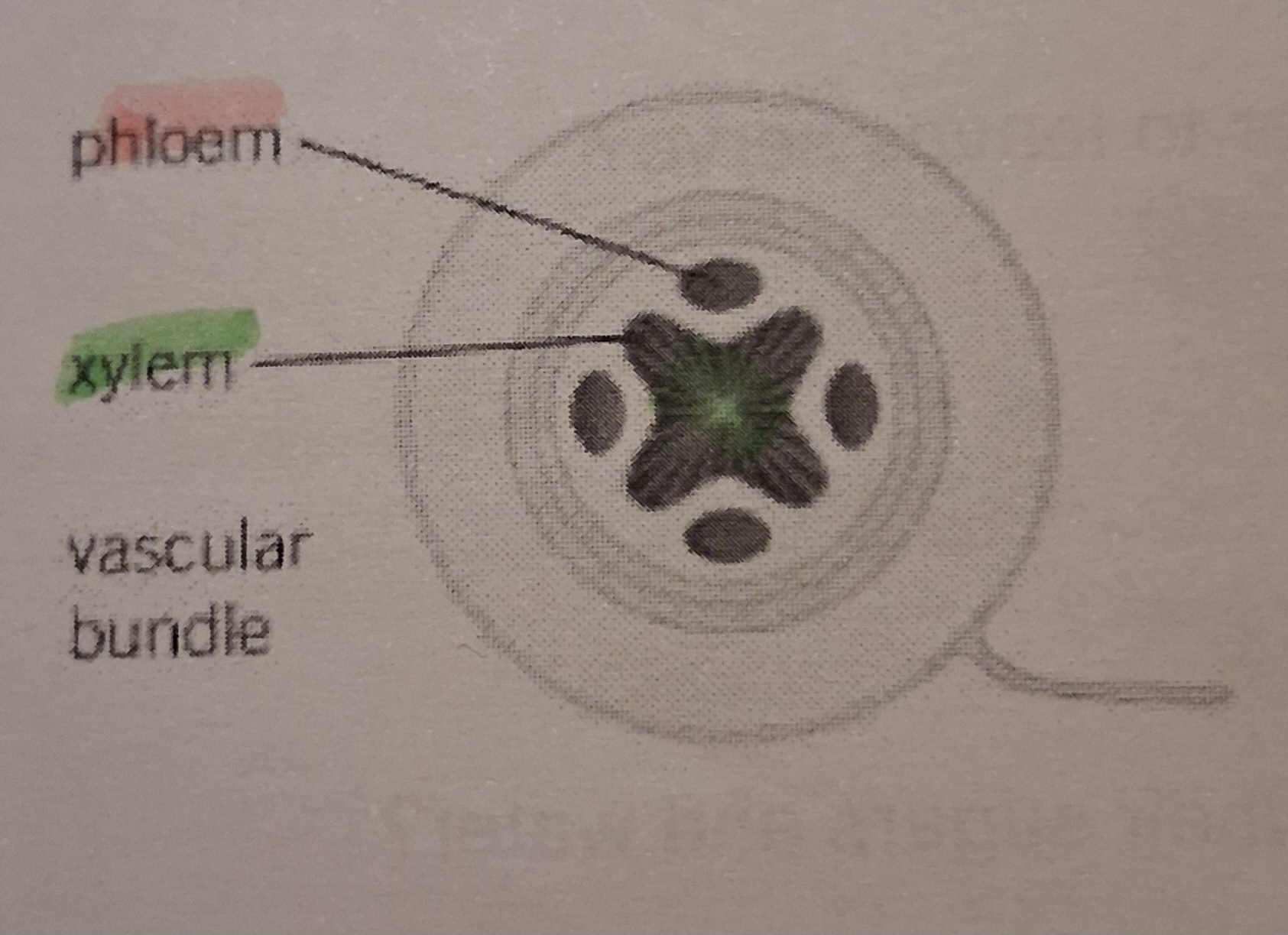
How are the xylem and phloem arranged in the roots?
-Xylem: cross shape in the centre of the root
-Phloem: between the arms of the xylem
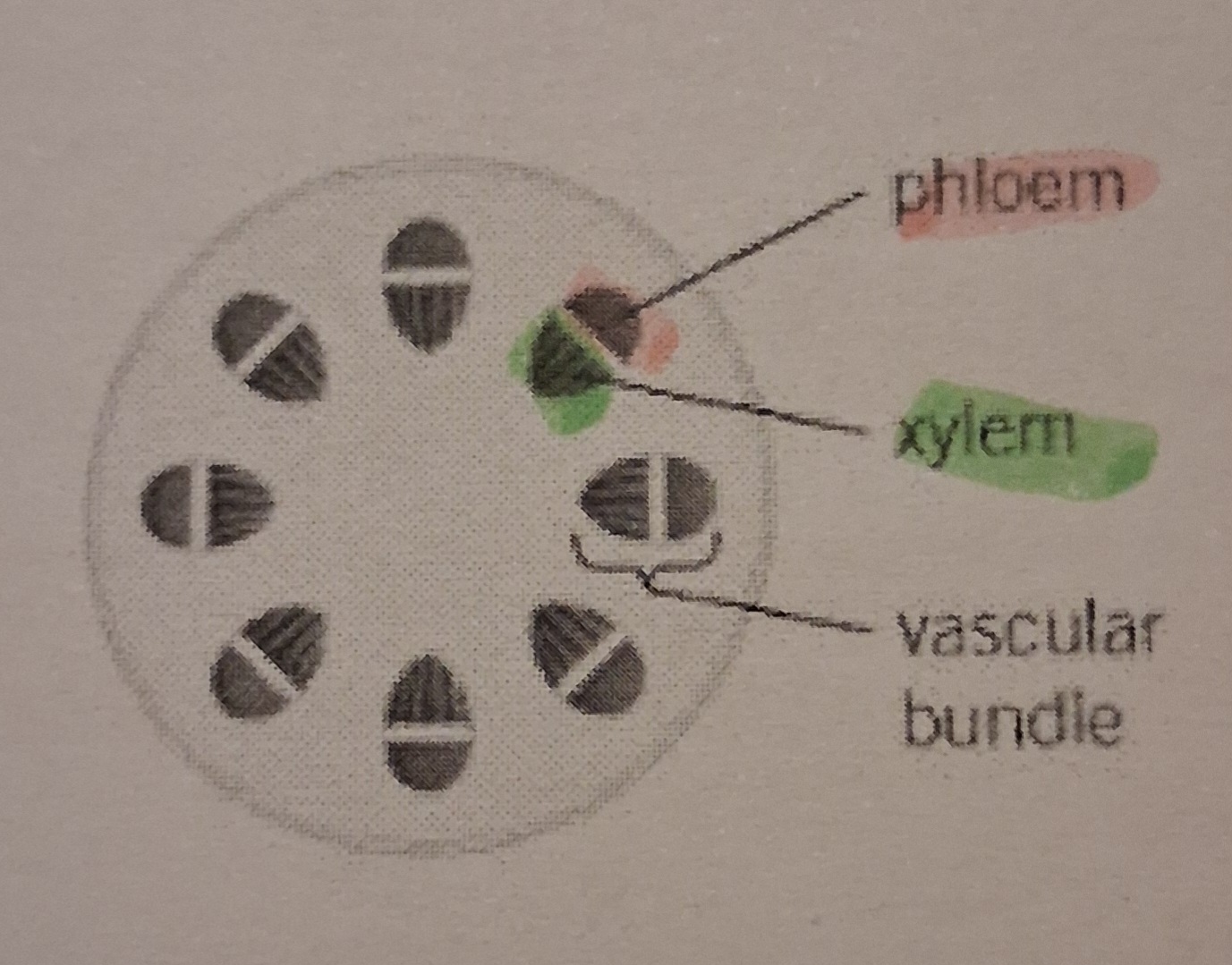
How are the xylem and phloem arranged in the stem?
-Xylem: inside edge of each vascular bundle
-Phloem: outside edge of each vascular bundle
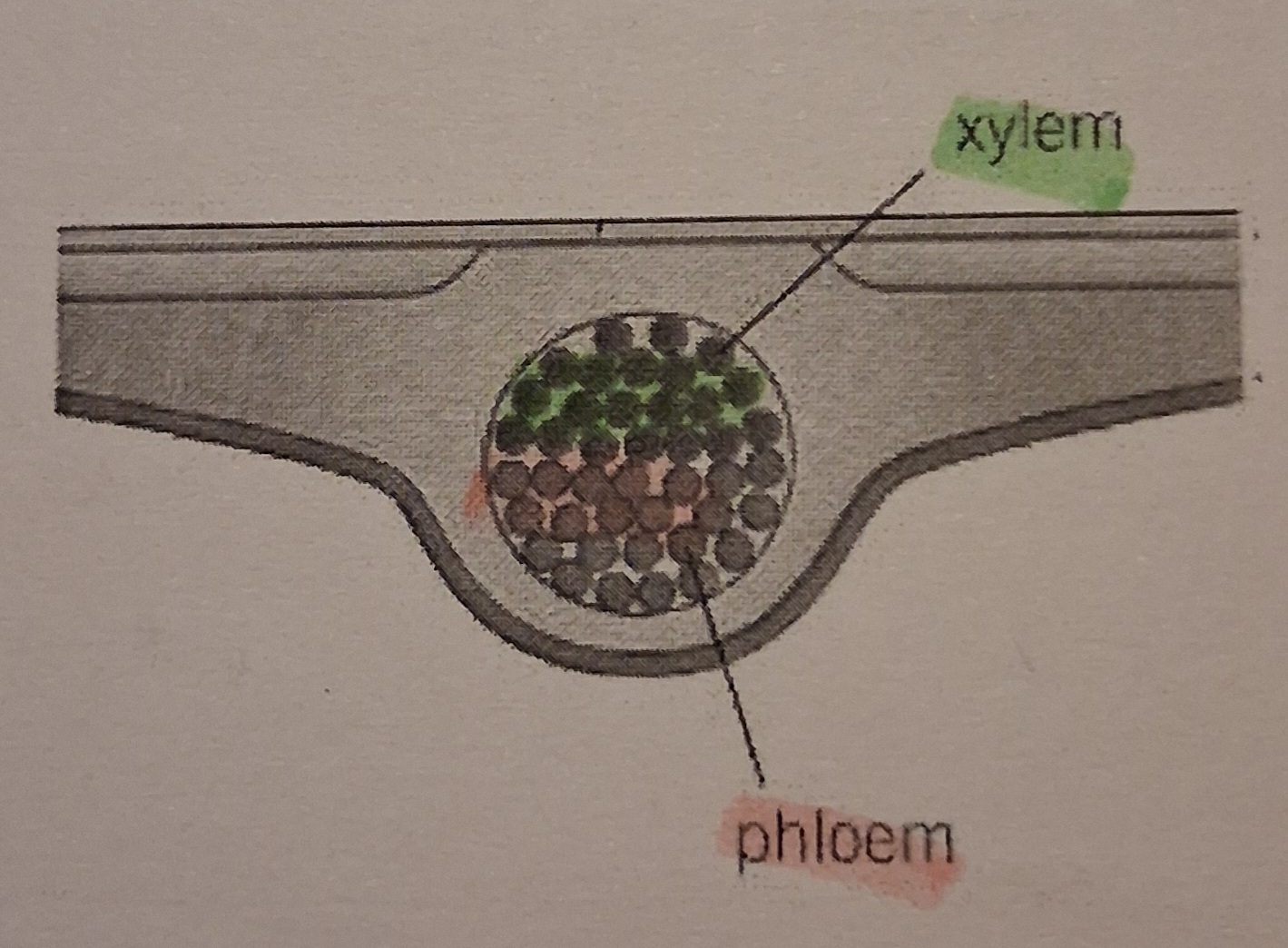
How are the xylem and phloem arranged in the leaves?
-Xylem: upper side of leaf vein
-Phloem: lower side of leaf vein
What is the aphids experiment?
-They use their mouthparts to feed on the sugars found in the phloem
-Shows phloem are located just under the surface of the stem
-Phloem are found on the outer edge of a vascular bundle
What is the celery experiment?
-Food dye is transported up the xylem and stains them therefore making them visible
-Shows xylem are found in vascular bundles as shown by the stained circular areas
-Having vascular bundles rather than a complete ring of xylem gives the stem more flexibility
What is the tree ringing experiment?
-Removing a complete ring of bark (called tree ringing or girdling) will kill a mature tree
-Shows phloem are located just under the surface of bark whereas xylem are found in the woody part of the trunk
-Cutting the phloem stops sugars from reaching the roots so they can’t respire and the whole tree eventually dies
Define transpiration
The loss of water vapour by diffusion from the leaves of plants through the stomata when they arr opened to allow gas exchange for photosynthesis
Define transpiration stream
The movement of water through a plant from the roots to the leaves as a result of the loss of water by evaporation from the surface of the leaves
What is the process of transpiration?
-Water absorbed in the roots by osmosis into the root hair cells
-Water moves from root hair cell to xylem by osmosis
-Water moves up xylem driven by evaporation of water from surface of the leaves
-Water moves into leaves from xylem
-Water evaporates from spongy mesopyll cells. Water lost from spongy cells is replaced by more water from xylem
-Air spaces in leaf become full of water vapour
-Water vapour diffuses through stomata into outside air
What factors increase the rate of transpiration?
-Higher light intensity and CO2 concentration: more stomata open for photosynthesis to occur so more water can evaporate through stomata
-Higher temperature: particles have greater kinetic energy so more water evaporates
-Dry conditions (low humidity) - steeper diffusion gradient so water diffuses out of leaves faste
-Windy conditions: removes the evaporated water maintaining diffusion gradient
-More leaves: larger surface area
How does the waxy cuticle reduce water loss?
Waterproof layer - creates an impermeable barrier
How does the location of stomata reduce water loss?
-Most of the stomata are found on underside of leaves - protects them from the direct light and energy from sun
-All over the surface, allows air to go into the leaves when the stomata are open
How do guard cells reduce water loss?
Controls the size and their opening and closing of the stomata
How does wilting reduce water loss?
All leaves collapse and hang down - reduces surface area for water loss
How does the stress response reduce water loss?
Stomata close which stops photosynthesis and risks overheating. Prevents most water loss and any further wilting
How do hairy leaves reduce water loss?
Traps a layer of moist air next to the leaf surface which reduces the water concentration gradient between the inside and outside of the leaf
How do rolled leaves reduce water loss?
Decreases the exposed surface area and shelters stomata from wind and traps moist air inside
When would guard cells close the stomata?
-lack of water
-dark
-low concentration of carbon dioxide