Lecture 23
 Call Kai
 Learn
Learn Practice Test
 Spaced Repetition
 Match
Match Flashcards
 Knowt Play
1/25

There's no tags or description
Looks like no tags are added yet.
Name | Mastery | Learn | Test | Matching | Spaced | Call with Kai |
|---|
No analytics yet
Send a link to your students to track their progress
26 Terms
common food allergies
soy, wheat, eggs, milk, tree nuts, peanuts, fish, shellfish
90% of allergic responses are to these
hundreds of others make up the remaining 10%
food allergen labels
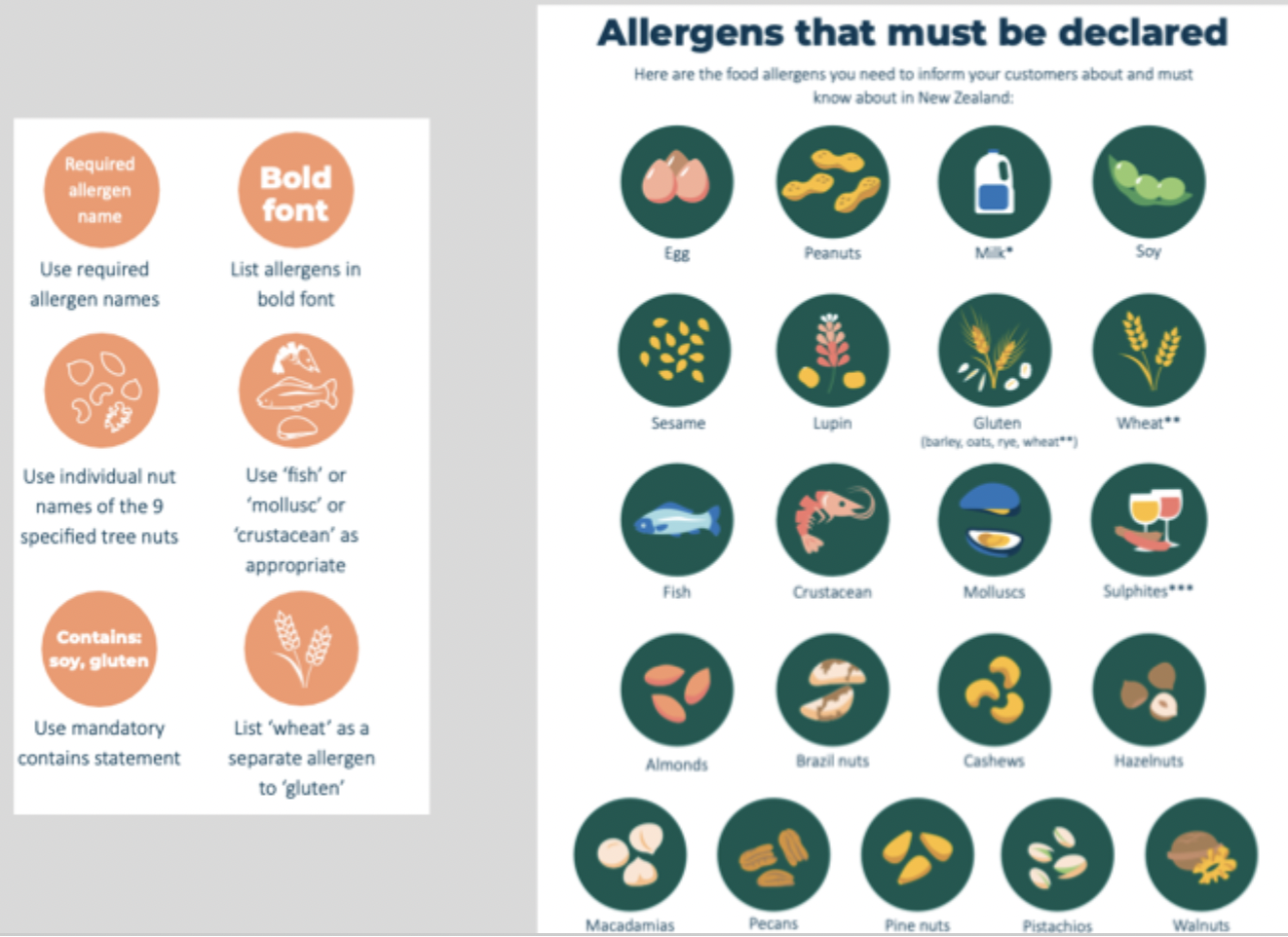
cross contact allergens
occurs during processing
residues or trace amounts of an allergenic food
unintentionally incorporated into another food
need to label these too
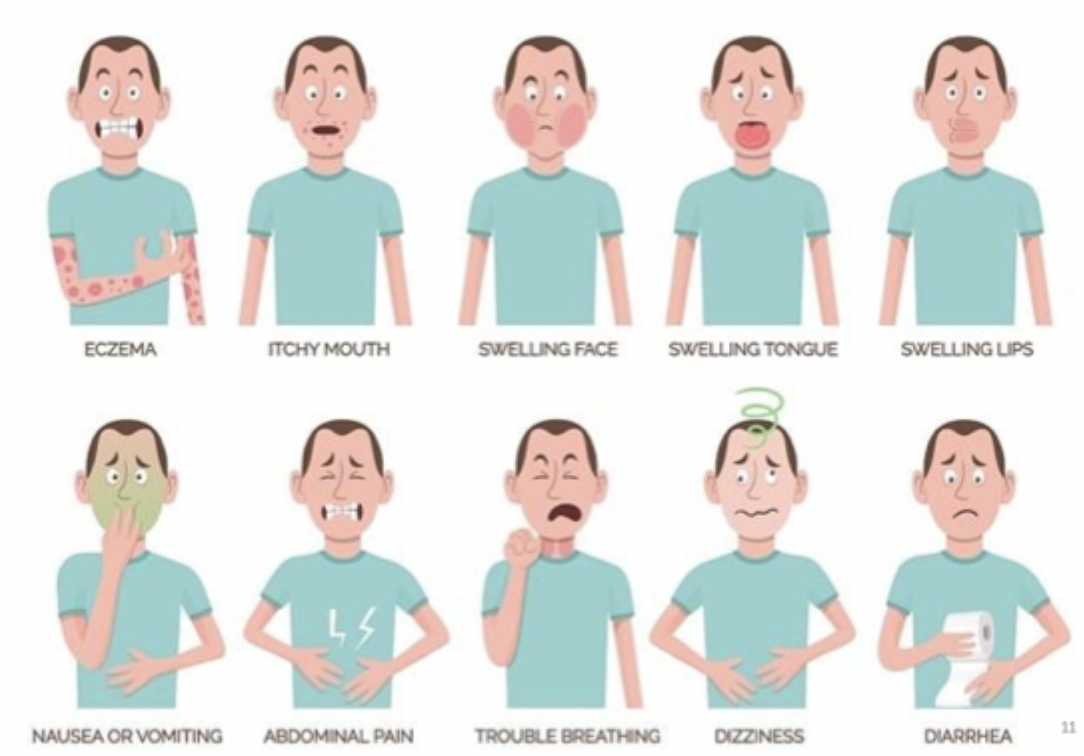
food allergy signs and symptoms
incidence of food allergy
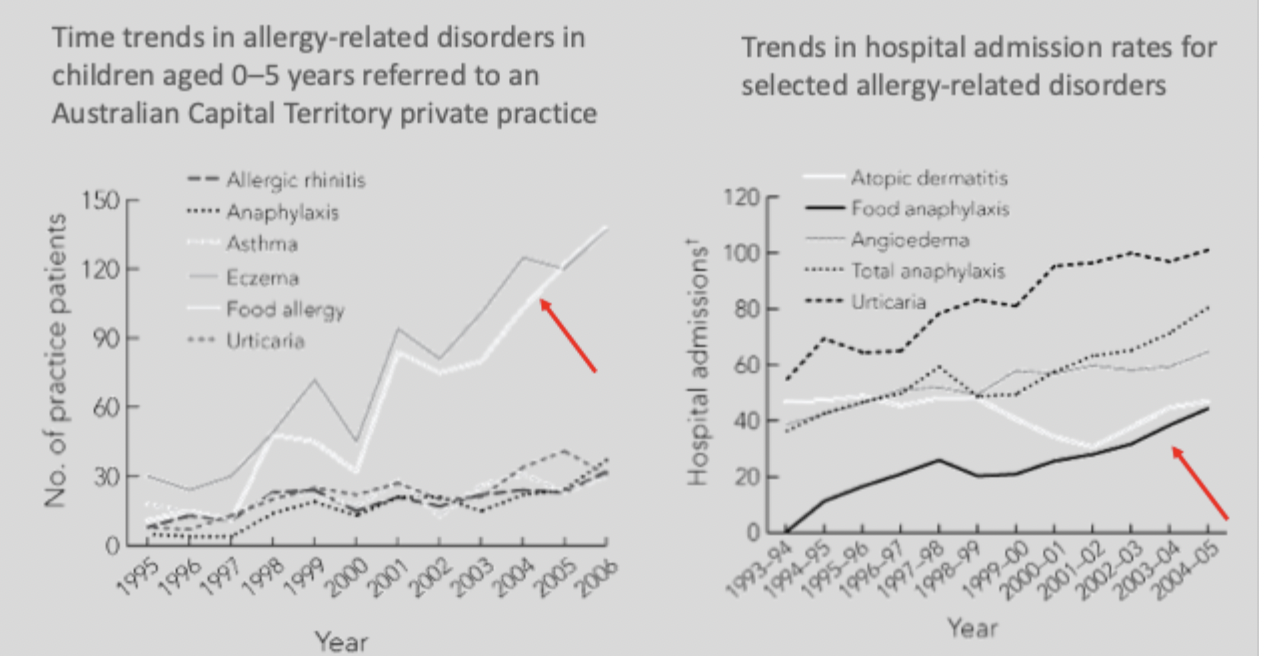
in NZ have food allergy in 10% of infants, 4-8% of children, 2% of adults - lots of people grow out of it as the immune system matures
Genuine increase - we still don’t really know why
Increase number of people being diagnosed and people being hospitalised (more serious responses)
Why are we becoming more allergic to stuff? We don’t know
the allergic march
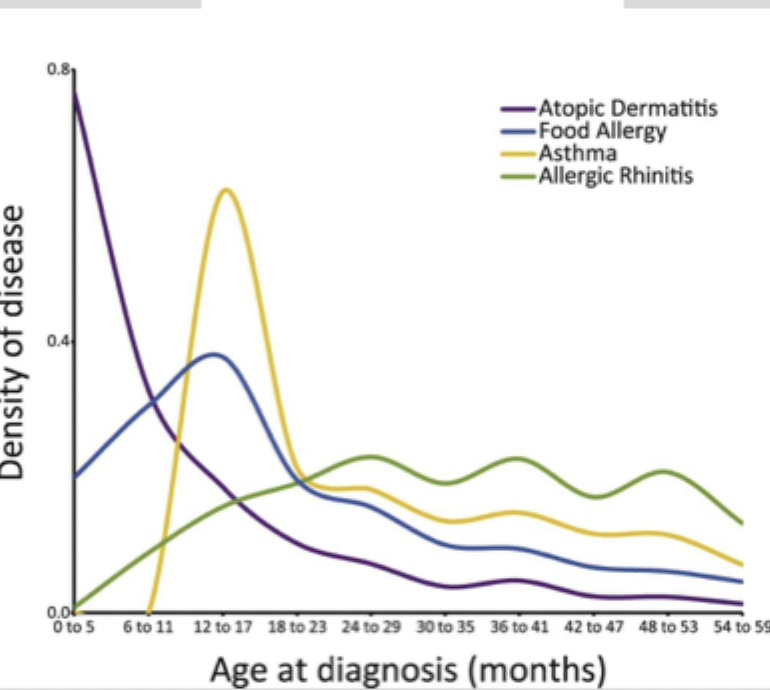
kids with food allergies often develop other atopic conditions too
effective treatment for food allergy - reduction in other conditions?
definitions of food allergy
inappropriate immune response to food ingestion
immune response to protein antigens in food
note that most people arent allergic but the body doesnt just ignore food allergens it just deals with them properly - Gut is always testing food that is coming in and produces a regulatory immune response - appropriate immune response through generation of Tregs
If you have an allergy this response is inflammatory rather than regulatory - dendritic cells signal to T cells to become activated
predominant in early age - many people grow out of it as the immune system develops
mechanisms of food allergy
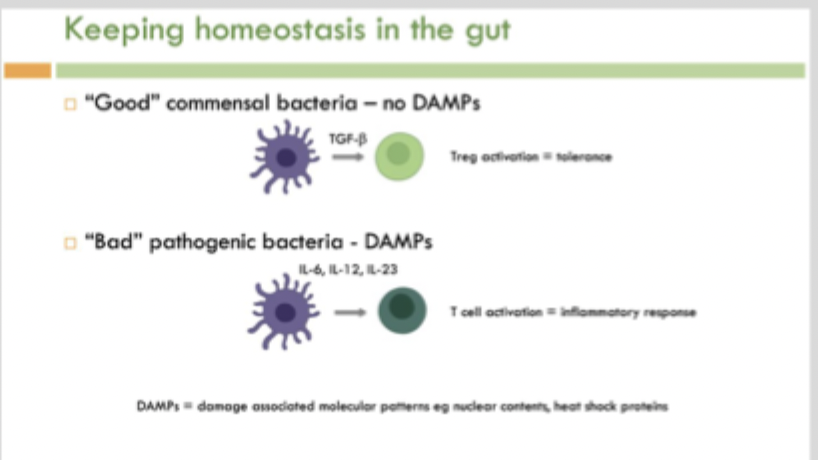
allergic response - Th1-parasite response = IgE mediated
healthy respnse - Tregs, tells the immune response to ignore the antigen
two mechanisms of food allergy
IgE mediated (most)
not IgE (complex)
IgE
most bound to IgE receptors on granulocytes - eosinophils and mast cells
binding to IgE bound to mast cells triggers degranulation and immediate type hypersensitivities
eosinophil degranulation
IgE binds to eosinophils and basophils and to the surface antigens of the parasite
Crosslinking triggers degranulation - toxic chemicals released to destroy the parasite
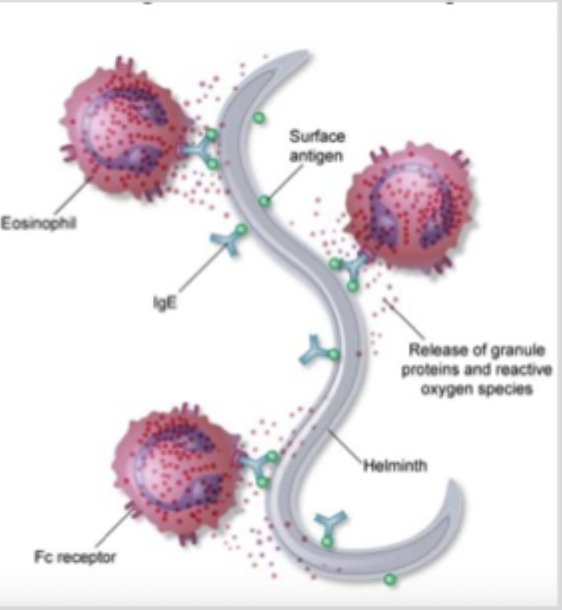
summary of immune response to parasites
immune reponse takes signals from pathogens and prgrammes trhe entire immune response to be best for destroying that antigen
T cells make cytokines to activate other cells and kill stuff
B cells make antibodies that bind to stuff
allergy responses are a hypersensitivity immune response
IgE is the type of antibody most commonly mediating allergic responses (there are other types)
IgE was designed for parasite infections
IgE degranulated eosinophls and mast cells
the granules activate lots of pathways that help to expel a parasite
the granules are responsible for the allergy symptoms
IgE mediated food allergy - 1
food specific IgE binds to cells wearing high affinity Fc receptors including mast cells and basophils and eosinophils
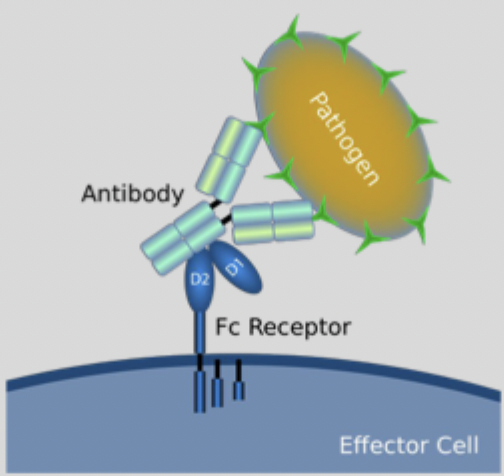
IgE mediated food allergy - 2
mast cells have large preformed grnaules contatinign proinflammatory and vasoactive mediators
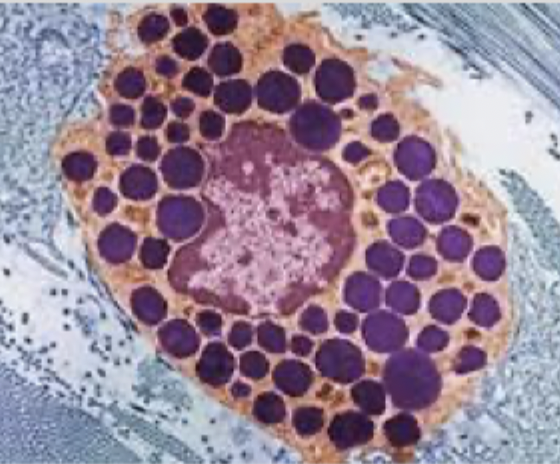
IgE mediated allergy - where do masyt cells live
in skin and mucus
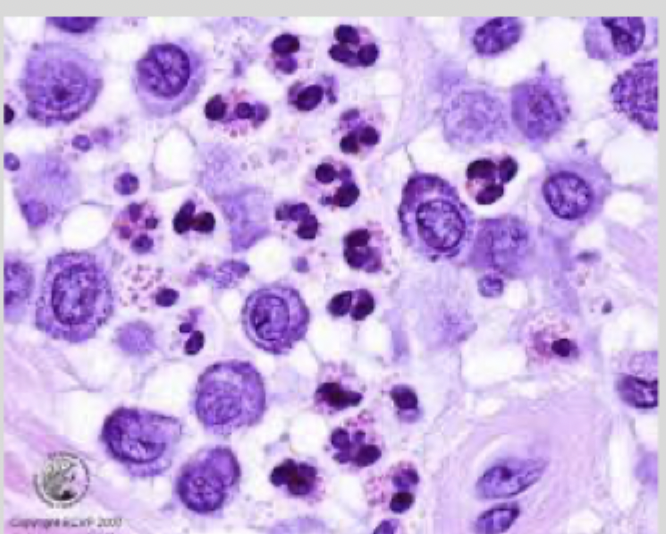
IgE mediated antibody - 4
binding of allergen cross links IgE bound to mast cell FcR → rapid degranulation
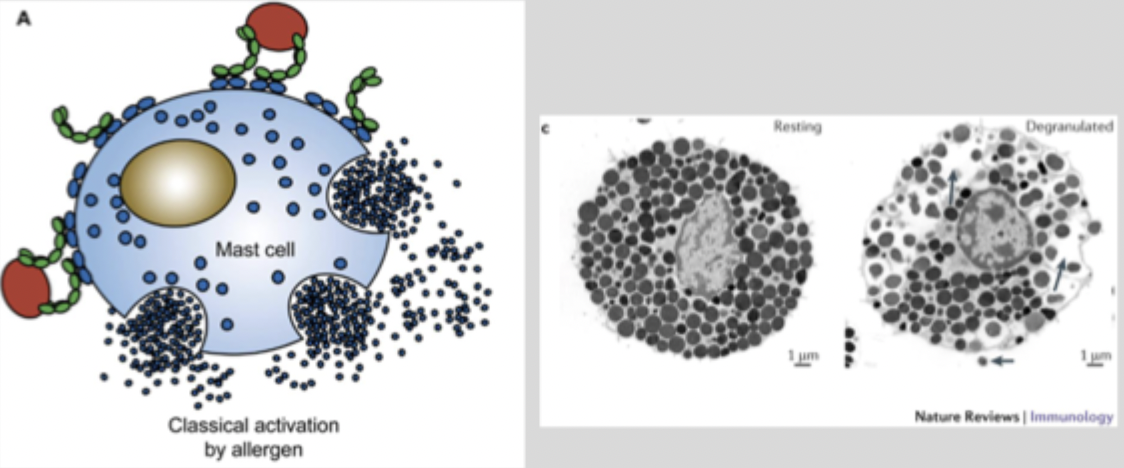
IgE mediated food allergy - pathology (5-9)
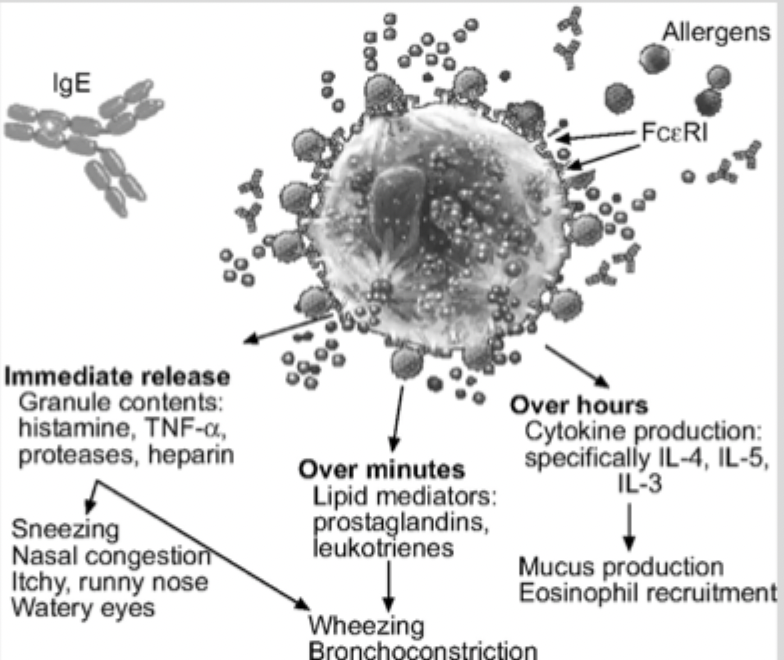
release of histamine leads to contraction of smooth muscles and induces vmiting; transepithelial fluid loss into gut lumen leads to diarrhea
allergne absorbed into blood stream or gut mucus reaches connective tissue mast cells associated with blood vessle, degranulation here leads to uticaria (hives)
widespread degranulation can result in systemic anaphylaxis and shock and death
histamine increase in vascular permeability results in drastic loss of blood pressure and airway constriction
swelling of epiglottis blocks breathing
epinephrine injection inhibits smooth muscle contraction and vasodilation
IgE mediated food allergy - summry diagram
detail not needed
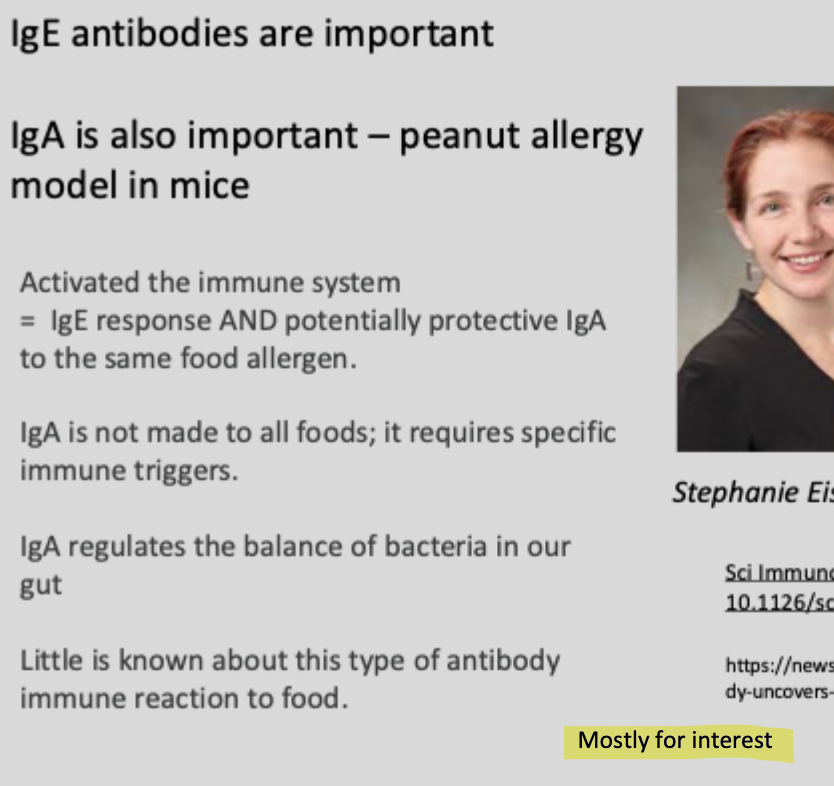
IgA mediated food allergy
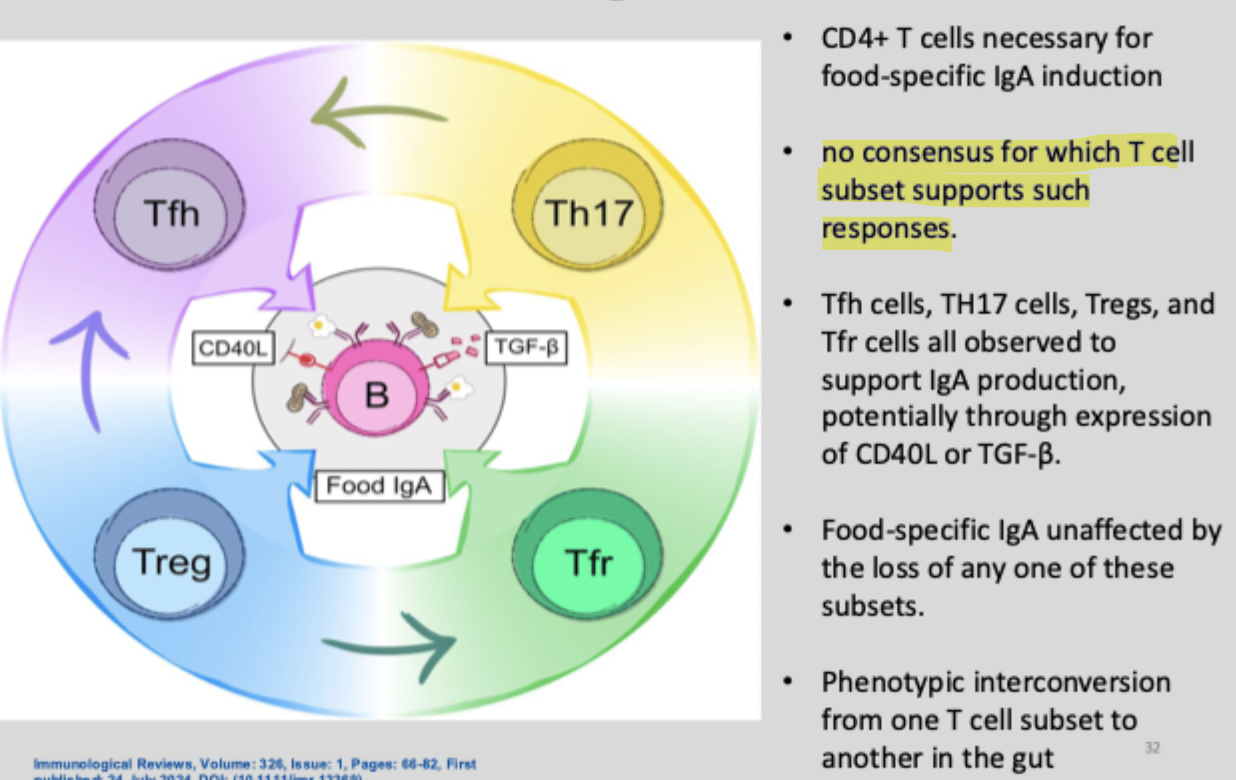
T cell plasticity and redundancy in food specific IgA production
exposure to allergens - immune memory
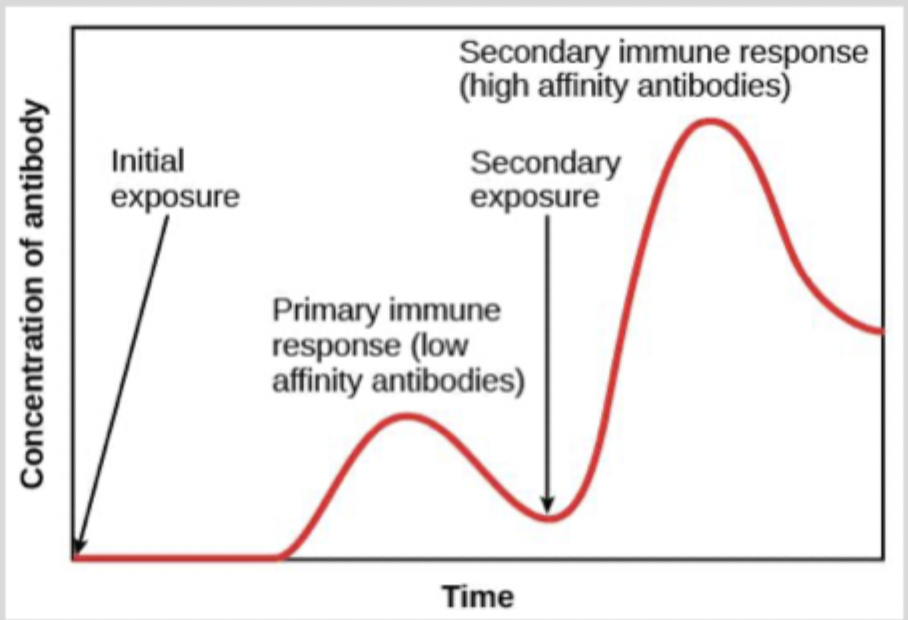
second exposure generates a much bigger and better immune response than first exposure
allergy - first exposure probably mild reaction (not noticed)
second exposure is serious
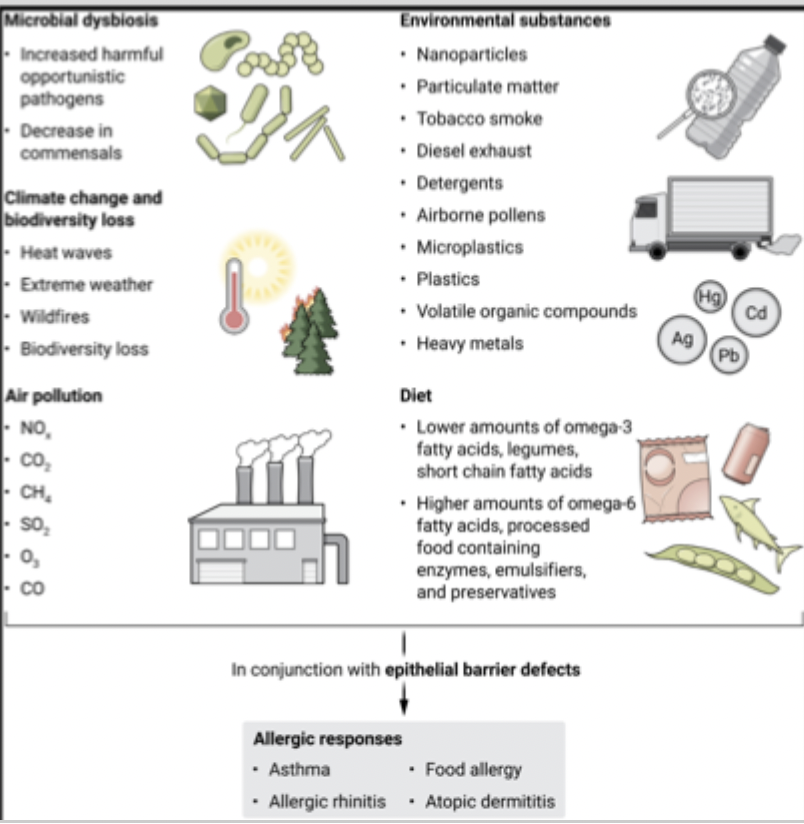
why are people allergic
genetic basis
breakdown in oral tolerance (the ability to eat food and not generate an immune response)
sensitisation to food allergens
environment
genetic basis of allergy
heritability of predisposition to allergic diseases siggest a genetic basis - up to 82% of food allergy
no candidate susceptibility genes identified
breakdown in oral tolerance
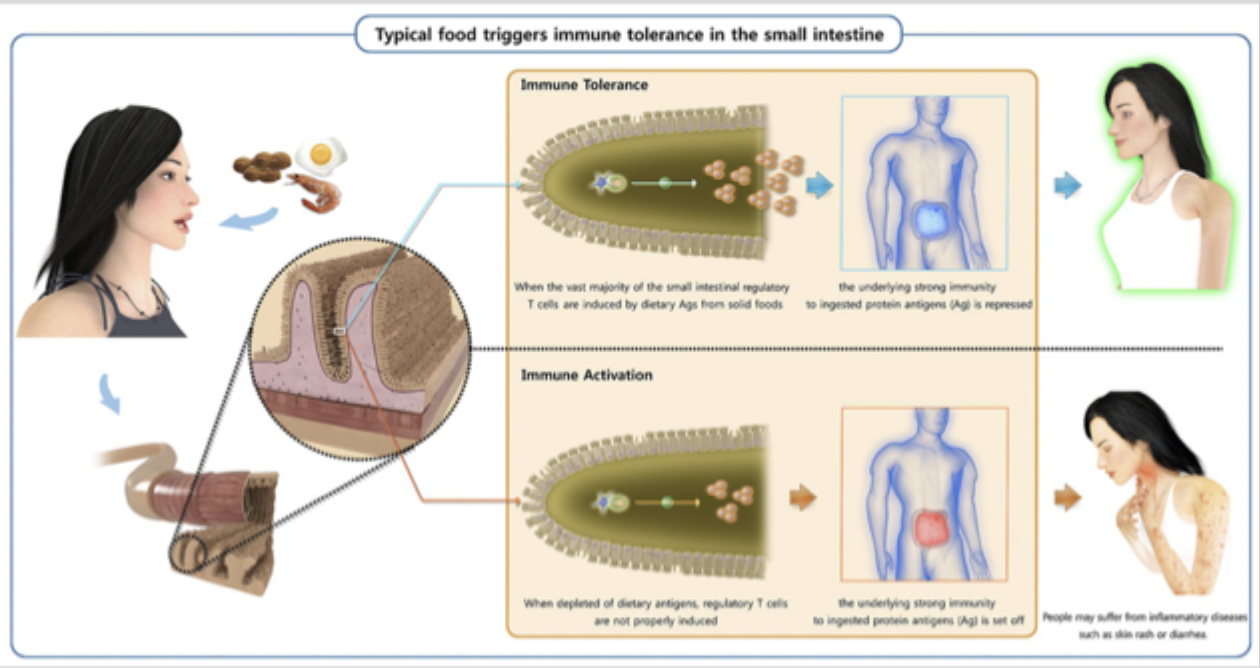
oral tolerance means that ingested food proteins do not elicit a specific immune response - mechanisms still unclear, difficult to study in vivo because studying absence of effect
APCs - specialised DCs pick up food antigens and take them to lymph nodes and activate Tregs
Tregs - activated by food antigens = suppressed immune response (still allergen specific)
sensitisation to food allergens
majority of peanut allergic children experience their first allergic reaction to peanut on first known ingestion
must have a non-oral exposure somehow to generate immune memory
in utero
household non oral
via skin
external factors that enhance sensitisation (vitamins, folate, AHR ligands), microbiota
environmental factors