Chem Exam
 Call Kai
 Learn
Learn Practice Test
 Spaced Repetition
 Match
Match Flashcards
 Knowt Play
1/38

There's no tags or description
Looks like no tags are added yet.
Name | Mastery | Learn | Test | Matching | Spaced | Call with Kai |
|---|
No analytics yet
Send a link to your students to track their progress
39 Terms
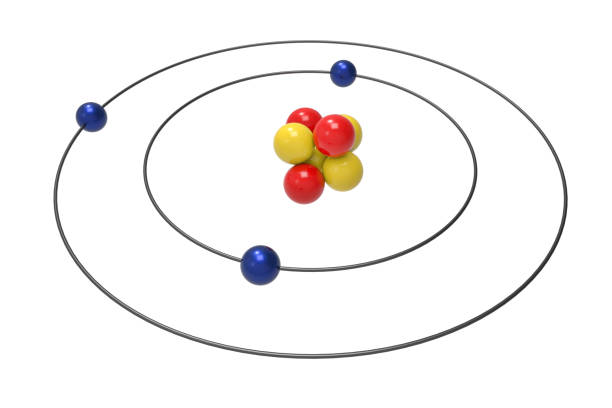
List the parts of the atom
Blue = electrons
Yellow = protons
Red = neutrons
All atomic masses on the periodic table are based upon what isotope of which element
Carbon 12
What are the formula’s for Calcium Bromide and Palladium (II) Sulfate
CaBr2, Pd(SO4)
What is the name for P2Cl5, CoO, and NH4NO3
Diphosphorus pentachloride, Cobalt (II) Oxide, Ammonia Nitrate
The average atomic mass of the following Silicon Isotopes (Silicon 28 (27.977)[92.21%], Silicon 29 (28.976)[4.70%], and Silicon 30 (29.77)[3.09%]) is 28.0792μ and the non weighted avg is 28.9757μ, whereas on the periodic table Silicon is listed with a 28.086μ. What is the difference?
The numbers are different because the table would use the weighted avg of all isotope options (which is why the weighted avg is closer) but that’s also why you get a different number than just a straight avg. And the reason why my weighted avg was slightly different was because I had a different sample size than what the table used
What does the idea of a mole represent
The mole is kind of like a dozen, it is a term we use to relate atoms and moles. A mole is Avogadro’s number (6.022 × 10^23) of atoms in 12 grams of carbon (with 6p+ and 6n0)
How is an atom different than a molecule
An atom is one singular particle of a pure element, whereas a molecule can be multiple atoms bonded together. For example you could have one molecule of water (H2O) but it has three atoms
44 amu is the mass of a single molecule of CO2. Avogadro’s number of molecules of CO2 has a mass of ____ grams
44.0
What is the difference between formula mass and molar mass?
Formula mass is the sum of the atomic masses in one molecule of that substance measured in amu/μ
Molar mass is the mass of one mole of a substance measured in g
What is the molar ratio for H2S to HCl
1H2S : 2HCl
What is the chemical equation of lithium sulfide dissolves in water (NOTE: DO NOT INCLUDE H2O)
Li2S(solid) —> 2Li(aqueous) + S(aqueous)
What is the difference between a saturated and unsaturated solution
A saturated solution is a solution that contains the maximum amount of solute at a certain temperature and if you add more at that temperature it wouldn’t dissolve. Whereas an unsaturated solution is a solution that can still dissolve more solute at a certain temperature
Explain how you would prepare 150 mL of a 0.750mol/L Na2SO4 solution (16 grams of NaSO4)
Grab a 150 mL flask
Measure out 16g of Na2SO4
Add the 16 grams of Na2SO4 to the flask
Fill a graduated cylinder with water, add to the flask until the bulb at the bottom is ½ full
Stopper the flask and invert a few times
Remove the stopper and using the graduated cylinder fill the flask until the water reaches the neck
Using a squeeze bottle fill the flask until the bottom of the meniscus reaches the line on the neck
Make sure it’s instructor approved (if not full enough repeat step 7 until approved, if too full restart the whole process)
Once approved give three second salute
Clean up
What is the difference between a physical and chemical property
Physical properties can be measured by observing and not changing the identity of the substance, but chemical properties generally end up changing the identity and you have to perform experiments to see them
What is the difference between a chemical change and a physical change
Physical changes are generally like changes of state, or things that can be easily reversed
Chemical changes cannot be easily reversed and you generally change the atom formation
What are the parts of the Kinetic theory of gasses
The distance between the molecules in the gas is larger than the molecules themselves
The molecules have essentially zero attractive or repulsive forces
Particles move in continuous, rapid, straight line, random motion
Molecules have perfectly elastic collisions with each other and the walls of the container creating an increase in pressure
The average kinetic energy of a gas depends on temperature (higher temp=more energy, lower temp=less energy
Why would spraying crops with water protect them from frost?
When the water freezes it releases heat (because freezing is just a loss of heat) which keeps the crops warmer
What is the definition of vapour pressure?
The pressure exerted by the gas above a liquid
What is dynamic equilibrium?
The point where you have condensation and evaporation at the same time
What is volatility?
The tendency to evaporate. (lower temp = higher volatility)
What is the relationship between IMF’s and vapour pressure?
Stronger the IMF’s lower the pressure, Weaker the IMF’s higher the pressure
What is the definition of a boiling point?
the temp. at which your vapour pressure = the atmospheric pressure and water molecules can escape in gas form
Why does water boil at a lower temperature on a mountain
Because the atmospheric pressure is lower and so it takes less heat for the water molecules to reach that boiling point
What is an isotope?
Atoms that have the same number of protons but have different amounts of neutrons
What does the plateau on a heating and cooling graph represent
The phase change
What is the difference between polar and non-polar?
Polar - electrons are not evenly shared (one atom has more)
Non-polar - electrons are shared equally
What’s the difference between saturated, unsaturated, and supersaturated
Saturated - holding max amount of solute at a certain temperature, if you add more it just sits undissolved
Unsaturated - Can hold more solute at a certain temperature
Supersaturated - holds more than it normally can at a certain temperature (gets heated then cooled), when you add more it causes the excess solute to precipate
Why does the solubility of a gas decrease as temperature increases
The gas molecules gain energy and are able to escape the solution easier
Which compound bond is drawn with a line connecting the individual atoms?
Covalent
What is the law of conservation of mass
Matter cannot be created or destroyed
What is an amalgam
An alloy containing mercury
What is a tincture
A solution with alcohol as the solvent
What is an alloy
A substance made of two or more metals
What is a colloid
A mixture where microscopically insoluble particles are suspended in a substance
What is the trend of electronegativity across the periodic table?
As you go across&up the table towards Fluorine you increase in electronegativity
What is the bond angle for water?
It has a bent shape and is exactly 104.5 degrees
What is the dissolving process
The solvent particles have to spread out to make space for the solute particles. (endothermic)
The solute particles must separate from each other. (endothermic)
The solute particles move between the solvent particles and snap back together with an excess of energy (exothermic
What factors affect solubility?
Temperature - an increase in temperature increases the rate of dissolving
Particle size - smaller the particles, faster they dissolve
Agitation - Moves the particles around and exposes the solute to more solvent
Nature of the solute - Some solutes just dissolve faster