Lecture 11 - Nematodes of ruminant GI tract
 Call Kai
 Learn
Learn Practice Test
 Spaced Repetition
 Match
Match Flashcards
 Knowt Play
1/20

There's no tags or description
Looks like no tags are added yet.
Name | Mastery | Learn | Test | Matching | Spaced | Call with Kai |
|---|
No analytics yet
Send a link to your students to track their progress
21 Terms
What is the HOT complex for abomasal parasites?
H: Haemonchus contortus
O: Ostertagia ostertagi (Teladorsagia)
T: Trichostrongylus axei
What is the general life cycle of nematodes?
-Adult nematodes inhibit GIT
-Eggs produced by females and are passed in feces
-Eggs → L1 → L2 → L3 (7-10 days)
-Ruminants ingest L3
Which nematodes have a direct life cycle?
Trichostrongyles, Oesophagostomum, and Bunostomum
What does L3 penetrate in Haemonchus and Trichostrongylus?
Mucous membrane
What does Ostertagia L3 penetrate? What does it cause?
Gastric glands causing abomasal lesions (moroccan leather)
What is the parasitic part of the life cycle of Oesophagostomum?
-Infective L3 penetrate lamina propria of intestinal wall
-Inflammatory response causes fibrous nodules
-Larvae emerge into intestinal lumen and mature
How does L3 of Bunostomum cause infection?
Skin penetration → venous blood → heart and lungs → coughed and swallowed → small intestine
What clinical signs may you see with the HOT complex in larval stages?
-Reduced appetite
-Reduced digestive capability of abomasum
What is hypobiosis?
Dormant stage of parasites
What clinical signs may you see with Haemonchus, bunostomum, and oesophagostomum infections?
-bottle jaw (submandibular edema)
-anemia
Which nematodes are blood sucking?
-Haemonchus
-Bunostomum
-Oesophagostomum
Where are Strongyloides papillosus adults found? What animals are they an issue in?
-Wall of small intestine
-Issue in ruminants less than 4-5mo
What can heavy infections of Strongyloides papillosus cause?
Catarrhal enteritis and severe diarrhea
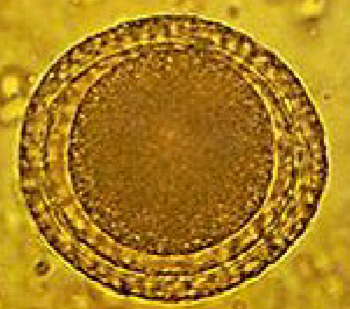
What eggs are these?
Toxocara vitulorum
What is the life cycle of Toxocara vitulorum in calves? In cows?
-Calves: eggs swallowed and hatch in intestine OR L3 ingested in colostrum/milk → Eggs migrate through tissues to lungs/trachea → coughed and ingested → Mature in small intestines → Released in feces
-Cows: eggs swallowed and hatch in intestine → tissue migration → infect fetus (if pregnant) → mammary gland → colostrum/milk
What is the pathogenesis of Toxocara infections?
-Migrating larvae may cause damage to liver and lungs
-Potential intestinal lumen obstruction with heavy worm burden
-Diarrhea and reduced weight gain
-Parasites expelled by 5 months
How are Toxocara infections diagnosed and controlled?
-Eggs in feces
-Increased sanitation
Where in the GIT are Trichuris ovis and Trichuris discolor found? In what species?
-Cecum and upper colon (not pathogenic but common)
-Cattle, sheep and goats
How are trichuris ovis and trichuris discolor diagnosed?
Eggs in feces
Where is Gongylonema pulchrum (gullet worm) found?
Mucosa of esophagus or in lumen of rumen
Where is Gongylonema verrucosum found? What is the intermediate host?
-Found in rumen, reticulum or omasum
-Intermediate host: coprophagous beetle