Module 7: Brain Damage and Neuroplasticity
 Call Kai
 Learn
Learn Practice Test
 Spaced Repetition
 Match
Match Flashcards
 Knowt Play
1/61

There's no tags or description
Looks like no tags are added yet.
Name | Mastery | Learn | Test | Matching | Spaced | Call with Kai |
|---|
No analytics yet
Send a link to your students to track their progress
62 Terms
Brain Damage
Damage to a part of the brain
Causes of Brain Damage
Tumors, Strokes, Physical Injury, External Agents: Infections & Neurotoxins, Neurodevelopmental Disorders
Tumor
Any form of cellular growth that develops and spreads in an uncontrolled manner
Benign Tumor
Noncancerous, slow-growing, and localized, rarely spreading to other body parts
Malignant Tumor
Cancerous, grow rapidly, and can invade nearby tissue or metastasize through blood/lymph systems
-oma
Suffix for describing which tumor
Neuroma
A normally benign tumor that grown from a PNS nerve
Meningioma
A tumor that grows on one of the meninges of the brain—dura mater, arachnoid mater or pia mater
Infiltrating Tumors
A malignant tumor that enters and replaces the healthy tissue of an organ
Metastatic Tumors
A tumor that originates from another location on the body and starts in other organs due to the circulatory system
Strokes
A cardiovascular disorder that causes death of the surrounding brain tissue
Cerebral Hemorrhage
A stroke caused by a ruptured blood vessel, leading to tissue damage
Cerebral Ischemia
A stroke caused by a blockage in the blood vessels, depriving the brain section of nutrients
Concussions
A disturbance of consciousness following a blow to the head
Punch-Drunk Syndrome
A dementia and cerebral scarring observed in boxers and other individuals who experience repeated concussions
Encephalitis
Infections in the brain
-itis
Suffix for infection
Meningitis
Inflammation of the meninges usually caused by bacterial infection
Rabies
An extremely deadly but preventable viral infection with a special affinity for attacking the nervous system and the brain
Mumps
A viral infection that manifests normally with lumps on the throat area, but may transfer and attack the brain in some causes
Toxic Psychosis
Chronic insanity or psychiatric disturbance that is caused by exposure to toxic chemicals
Tardive Dyskinesia
A motor disorder that results from chronic use of certain antipsychotic drugs.
Tardive Dyskinesia Symptoms
Its symptoms include involuntary smacking, sucking movements of the lips, thrusting and rolling of the tongue, lateral jaw movements and puffing of the cheeks
Neurodevelopmental Disorders
Down’s Syndrome, Parkinson’s Disease, Alzheimer’s Disease, Huntington’s Disease, Multiple Sclerosis
Down’s Syndrome
A developmental disorder caused by an extra copy of chromosome 21; intellectual disability, characteristic physical features (flat face, upward eyes), and potential health complications like congenital heart defects
Parkinson’s Disease
A movement disorder that is associated with degeneration to the substantia nigra (loss of dopamine), leading tremors and rigidity
Substantia Nigra
Produces dopamine that is essential for smooth movement, and plays a major role in Parkinson's disease, where neuron death causes motor symptoms
Alzheimer’s Disease
A progressive illness characterized by cognitive and memory decline caused by plaques in the neural fibers, neuron loss, and loss of myelin sheaths.
Huntington’s Disease
Fatal, inherited neurodegenerative terminal disorder that causes progressive breakdown of nerve cells in the brain, impacting movement, cognition, and mental health
Multiple Sclerosis
A progressive disease where the immune system mistakenly attacks and destroys myelin sheaths and associated axons. Neurons develop hard scar tissue and lose the ability to conduct signals properly.
Effects of Brain Damage
Seizures, Agnosia, Aphasia, Apraxia
Seizures
A symptom that often involves tremors, rigidity and loss of both balance and consciousness
Epilepsy
Chronic disorder of seizures
Generalized Seizure
Involve the entire brain. Some begin as focal discharges that gradually spread through the entire brain.
Types of Generalized Seizures
Grand mal and Petit mal
Grand mal seizure
Symptoms are loss of consciousness, loss of equilibrium and violent tonic-clonic convulsion, tongue-biting and cyanosis (bluish discoloration)
Petit mal seizure
Characterized by disturbances in consciousness like cessation of ongoing behavior, a vacant look, and sometimes fluttering eyes
Partial/Focal Seizure
Does not involve the entire brain and is not usually accompanied by a total loss of consciousness or equilibrium.
Agnosia
The inability to consciously recognize sensory stimuli of a particular class that is not attributable to a sensory deficit or to verbal or intellectual impairment. Brain cannot recognize or interpret sensory information (objects, faces, sounds, smells) despite intact senses
Aphasia
A disturbance in the ability to use or comprehend language
Types of Aphasia
Broca’s Aphasia and Wernicke’s Aphasia
Broca’s Aphasia
Difficulty in speech production caused by damage to the inferior prefrontal cortex/inferior frontal gyrus
Wernicke’s Aphasia
Difficulty in language comprehension caused by damage to the posterior end of the superior temporal gyrus
Broca’s Aphasia Damage
Damage in inferior prefrontal cortex/inferior frontal gyrus
Wernicke’s Aphasia Damage
Damage in posterior end of the superior temporal gyrus
Apraxia
Neurological motor planning disorder where the brain cannot properly sequence movements, despite the person having the desire and physical ability to perform them caused by damage to the posterior parietal cortex
Apraxia Cause of Damage
Damage in posterior parietal cortex
Specialized Parts of the Brain with Certain Functions (Lateralization)
Optic Chiasm & Wernicke's and Broca’s Area
Optic Chiasm
Left eye goes to right size of brain and vice-versa
Wernicke’s and Broca’s Area
Only of the left hemisphere that comprehends and produces speech and language
Right Hemisphere of the Brain
Seems to have a stronger spatial ability, but not totally exclusive
Effect of a Damaged Corpus Callosum
Inability of left hemispheres and right hemispheres to communicate.
Brain Function with a Damaged Corpus Callosum
With a damaged corpus callosum, sometimes the left hemisphere tries to “correct: the right hemisphere, and vice-versa.
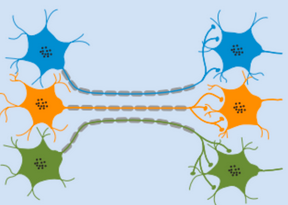
Nerve damage without severing the Schwann cells (ex: crushing)
Individual axons regenerate to their correct targets
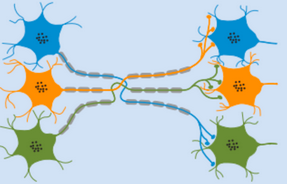
Severed ends of the Schwann cell sheaths are slightly separated
Individual axons often regenerate up incorrect sheaths and reach incorrect targets
Severed ends of the Schwann cells are widely separated
Typically no functional regeneration
New Studies on Neuron Regeneration
Areas in the temporal lobe show consistent generation of new brain cells
Neuroplasticity
The ability of the brain to repurpose and change by re-organizing how neurons are wired; “Nerves that fire together, wire together.”
Apoptosis
Planned cell death of unused nervous pathways
Apoptosis Process
Regular neural connection → Pathway sees less use due to lack of practice (connection gets weaker) → Pathways shut down. Full apoptosis may occur
Creation of Neural Pathways
Regular neural connection → Pathway shuts down due to damage or apoptosis. → Signal travels through alternate pathways due to re-acquisition or rehabilitation.
Neural Healing Through Rehab
Healing or regenerated neural connections must reinforce their connections in order to regain lost function