PrereqEcon W1 Elasticity
 Call Kai
 Learn
Learn Practice Test
 Spaced Repetition
 Match
Match Flashcards
 Knowt Play
1/32

Earn XP
Description and Tags
Talking about Elasticity
Name | Mastery | Learn | Test | Matching | Spaced | Call with Kai |
|---|
No analytics yet
Send a link to your students to track their progress
33 Terms
Elasticity
Measures the magnitude of responsiveness of a certain variable.
Important to remember about elasticity
although price is the dependent variable, higher elasticity will mean a smaller change in price, so it acts as an independent one.
Price Elasticity of demand
measures how sensitive quantity demanded is to a change in price
Formula for Price Elasticity in demand
PED= (percent change in quantity demanded)/(percent change in price)

Elastic ( 3things)
good is sensitive to price changes
PED>|1|
curve is relatively flat, people will buy at a certain price
Inelastic (3)
Good is not sensitive to price
PED is between 0 and 1
curve is steep, ppl will buy no matter the price
Unit Elasticity (3)
Any change in price is equal to the change in demand
PED=1
Curve is -1 or 1
Perfectly Inelastic (3)
Demand doesn’t change regardless of price
PED=0
curve is vertical
Income elasticity of demand
measures how demand changes when income changes
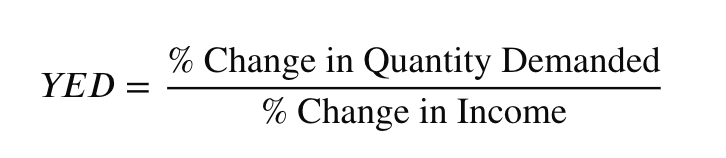
Income elasticity of demand formula
YED= (%change in Quantity demanded)/(%change in income)
Normal Good
when income elasticity of demand is >0
Inferior Good
when income elasticity of demand is <0
Cross-price elasticity
How quantity demanded changes when the price of a related good changes
Cross price elasticity formula
XED= %change quantdemand B/ %change price A`

If cross price elasticity is positive….
goods are substitutes
If cross price elasticity is negative…
goods are compliments
Price Elasticity of Supply
measures how sensitive supply is to a change in price
Price Elasticity of Supply formula
PES= %change in quantity supplied/%change in price

Draw the 5 curves of elasticity (perf elastic, elastic, unit elastic, inelastic, perf inelastic)
Go do it on a sheet of paper you lil freak.
Perfectly Elastic
Any change in price results in a complete loss of demand
Elasticity= infinity
Curve is a flat line at given price
When demand is inelastic, demand…
Who wins?
will not change too much based on price change
producers win
When demand is elastic, demand …
Who wins?
changes a lot based on price
consumers win
Supply curve shifts, demand is elastic
equilibrium price and quantity don’t change much
Supply curve shifts; demand is inelastic
Equilibrium price and quantity change by a lot
Tax: demand is more inelastic than supply…
tax and incurrent cost is passed to consumers
Tax: demand is more elastic than supply…
tax and incurred cost is passed to producers
Elasticity in the short run (2)
why?
More inelastic, market is less sensitive to prices
Not easy to make immediate price changes and purchasing decisions.
Elasticity in the long run
why?
1.Elasticity is higher, market is more sensitive to prices.
2.It is easier to make different purchasing options, market has time to recover.
tax incidence
manner in which the tax burden is divided between buyers and sellers
Why is the demand curve with constant unitary elasticity concave?
the absolute value of declines in price are not identical. The left side of the curve starts with high prices, and then price falls by smaller amounts as it goes down toward the right side. This results in a slope of demand that is steeper on the left but flatter on the right, creating a curved, concave shape.
Why is the supply curve with constant unitary elasticity a straight line?
the curve slopes upward and both price and quantity are increasing proportionally.
when there is unit elasticity, a company should…
maintain it’s price because this means revenue is already maximized