1 - eye movements
 Call Kai
 Learn
Learn Practice Test
 Spaced Repetition
 Match
Match Flashcards
 Knowt Play
1/94

There's no tags or description
Looks like no tags are added yet.
Name | Mastery | Learn | Test | Matching | Spaced | Call with Kai |
|---|
No analytics yet
Send a link to your students to track their progress
95 Terms
What are fixation eye movements?
occurs when attempting to hold gaze steady on a stationary object
What is considered an abnormal fixational eye movement?
nystagmus
What is gaze-holding or vestibulo-ocular reflex (VOR) eye movements?
eye movements to keep target steady on retina while head moves
when does visual system perform best?
when images are held steady on the retina → head movements causes images to slip on the retina
What are gaze-holding (VOR) eye movements controlled by?
inner ear
What are examples of gaze shifting eye movements?
1. saccades
2. pursuits
3. vergence
What is a saccade?
purposeful shift in gaze angle to bring image of object of regards onto the fovea
What is a pursuit?
eye movements to maintain image on fovea of moving target
where is vision the best?
foveola → subtends ~70 mins of arc
What is (gaze shifting) vergence movements?
eye movement developed to change gaze for different distances → to image the object of regard on both foveas
What are the advantages to using the two eyes in tandem?
1. increased ability to detect objects in low light
2. improved depth perception (stereo)
How many degrees are in 60 minutes of arc?
1 degree
How many minutes of arc are in 1 degree?
60 minutes of arc
How many seconds of arc are in a minute of arc?
60 seconds of arc
How many degrees are in π(rad)? 2π(rad)?
π(rad)=180º
2π(rad)=360°
How many seconds of arc are in a rad?
206,000 sec/rad
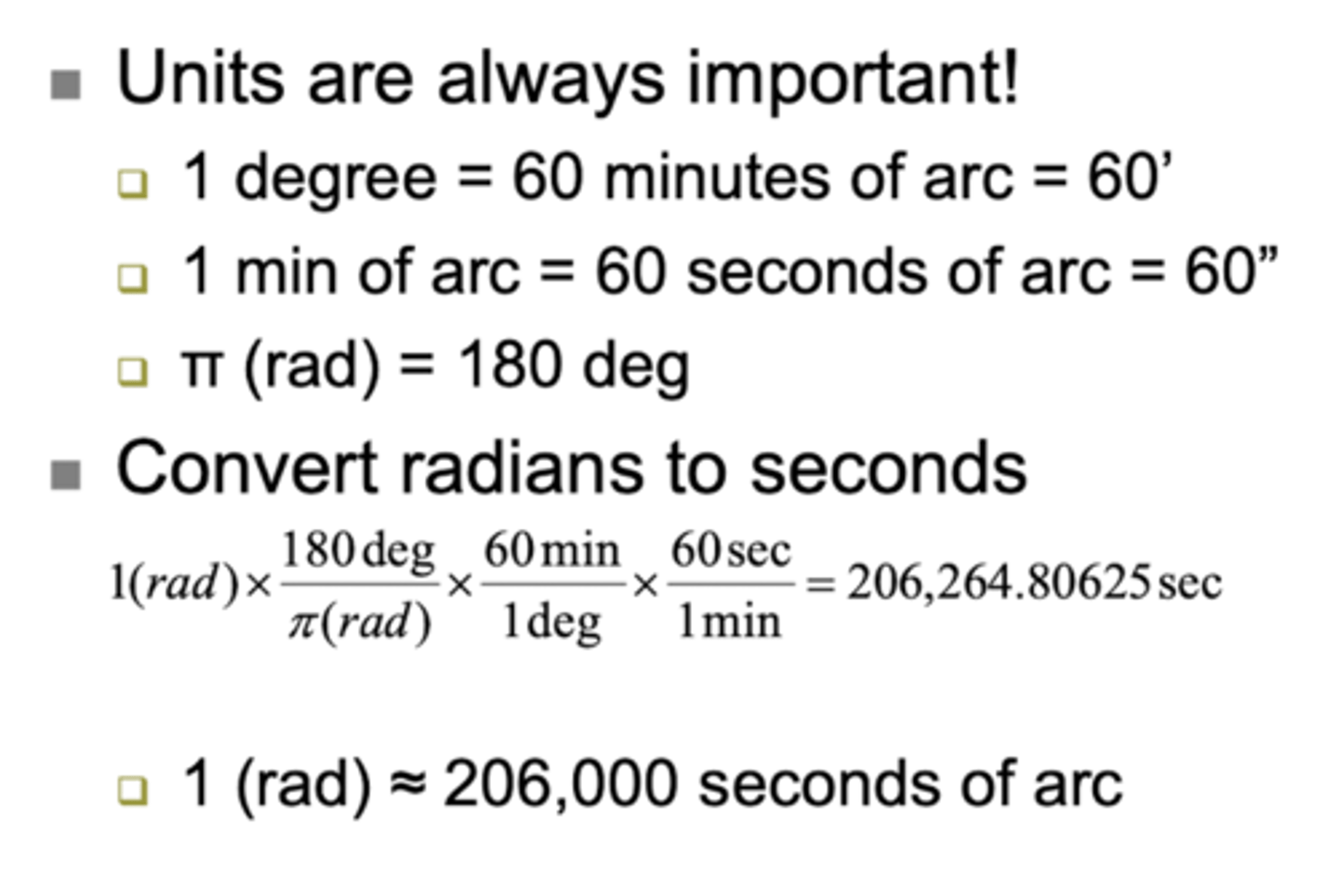
What is the small angle approximation for θ(rad)?
θ(rad) x r = chord length or arc length
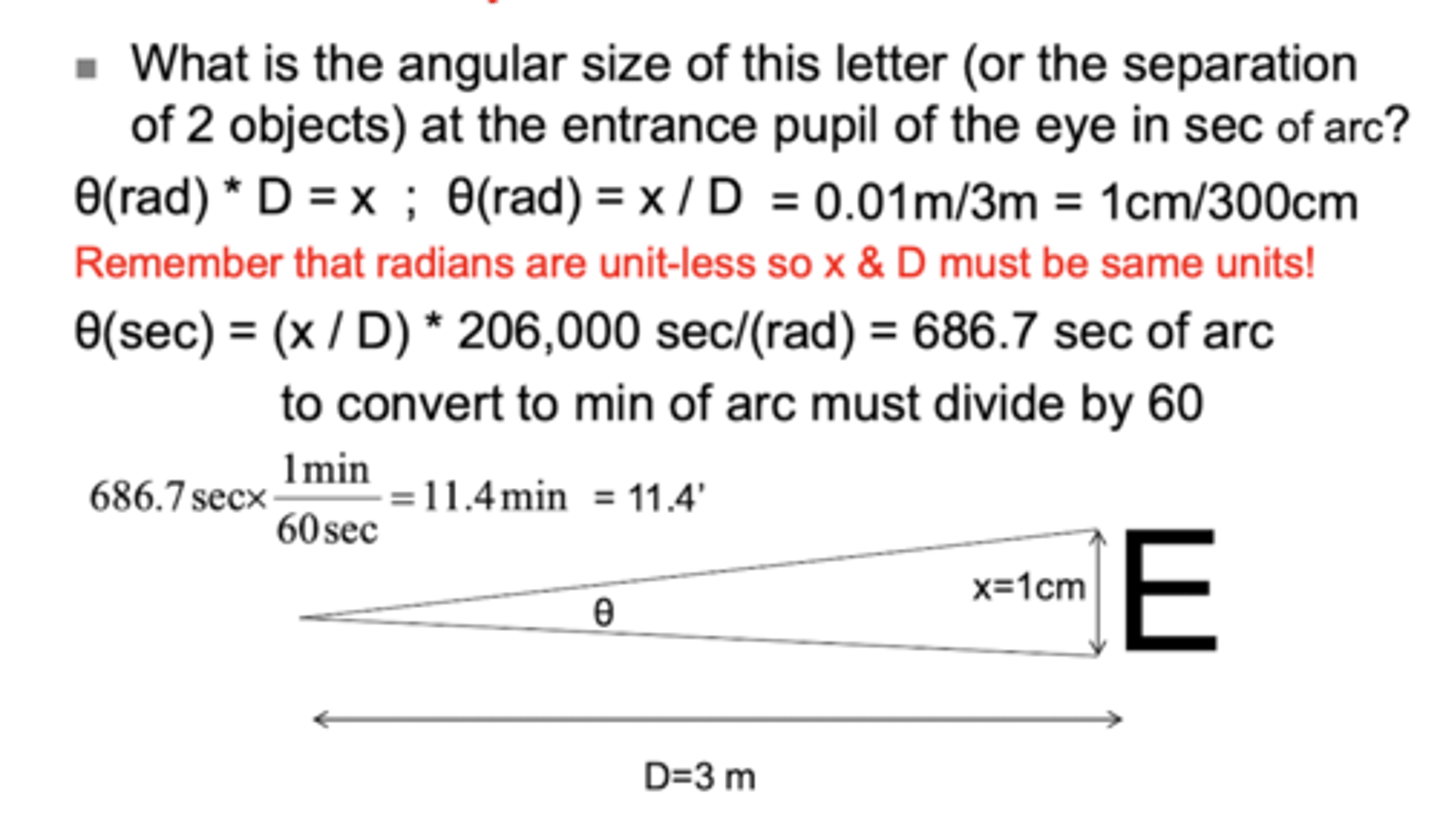
How do you calculate the angular size of a letter on a chart (from rad)?
1. rad θ = x/D
2. rad θ * 206,000 sec/rad = secs of arc
convert to minutes of arc by dividing by 60
When does accommodative ability decrease?
starts in childhood → ends around 60
what is accommodation?
changes in the shape of the crystalline lens brought about by contraction of the CB → changing focal power of eye
interacts with eye movements
what is the equation for expected amplitude of accommodation?
18.5 D - (0.3 D/year * age)
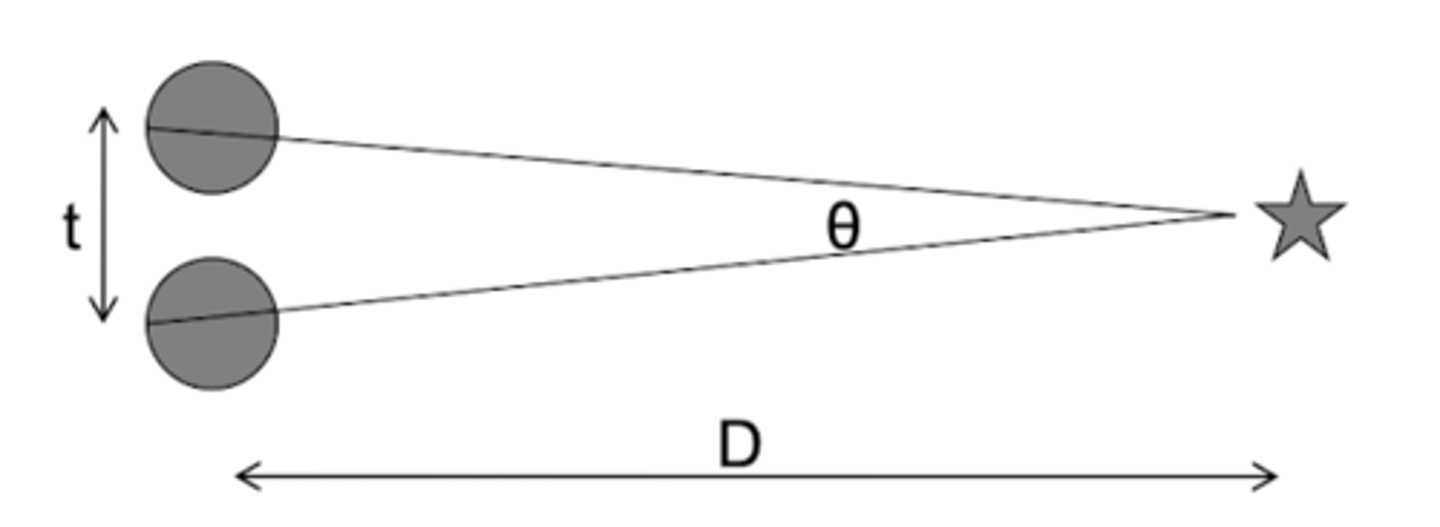
What are translations?
linear motions of the eye whose effect on the eye rotations required to fixate an object decreases, as object distance from eye increases
i.e. translations have a minimal effect on fixation when distance is big and have an effect when distance is small
What is the formula for translation and ocular rotations?
θ = t/d
t = translation (Small)
d = distance
θ = ocular rotation
what are ductions?
describe monocular movements
What are examples of duction rotations along the vertical axis?
1. abduction: rotate temporally
2. adduction: rotate nasally
What are examples of duction rotations along the horizontal axis
1. sursumduction (supraduction): rotate upward
2. deorsumduction (infraduction): rotate downward
What are examples of duction rotations along the anterior-posterior axis?
1. intorsion: 12 o'clock position rotates nose
2. extorsion: 12 o'clock position rotates away from nose
what are versions?
both eyes go in same direction
what are conjugate eye movements?
versions
What are examples of version eye movements along the vertical axis?
1. dextroversion: rightward conjugate eye movement
2. levoversion: leftward conjugate eye movement
relative to the patient
What are examples of version eye movements along the horizontal axis?
1. sursumversion: upward conjugate eye movement
2. deorsumversion: downward conjugate eye movement
What are examples of version eye movements along the ant-post axis?
1. dextrocycloversion: 12 o'clock position of both eyes rotating to right
2. levocycloversion: 12 o'clock position of both eyes rotating to left
relative to the patient
When does dextrocycloversion and levocycloversion occur?
dextrocycloversion - right head tilt
levocycloversion - left head tilt
relatie to the patient
what are vergences?
eyes go in opposite direction
what are disjunctive eye movements?
vergences
What are examples of vergence eye movements along the vertical axis?
1. convergence: inward rotations
2. divergence: outward rotations
What are examples of vergence eye movements along the horizontal axis?
1. hypervergence: one eye goes up
2. hypovergence: one eye goes down
What are examples of vergence eye movements along the ant-post axis?
1. incyclovergence: 12 o'clock position both eyes rotates in towards nose
2. excyclovergence: 12 o'clock position both eyes rotates out away from nose
what is the vergence angle?
angle between lines of sight
what is the vergence angle formula?
= PD/d
if same units → rad
if cm/m → pd
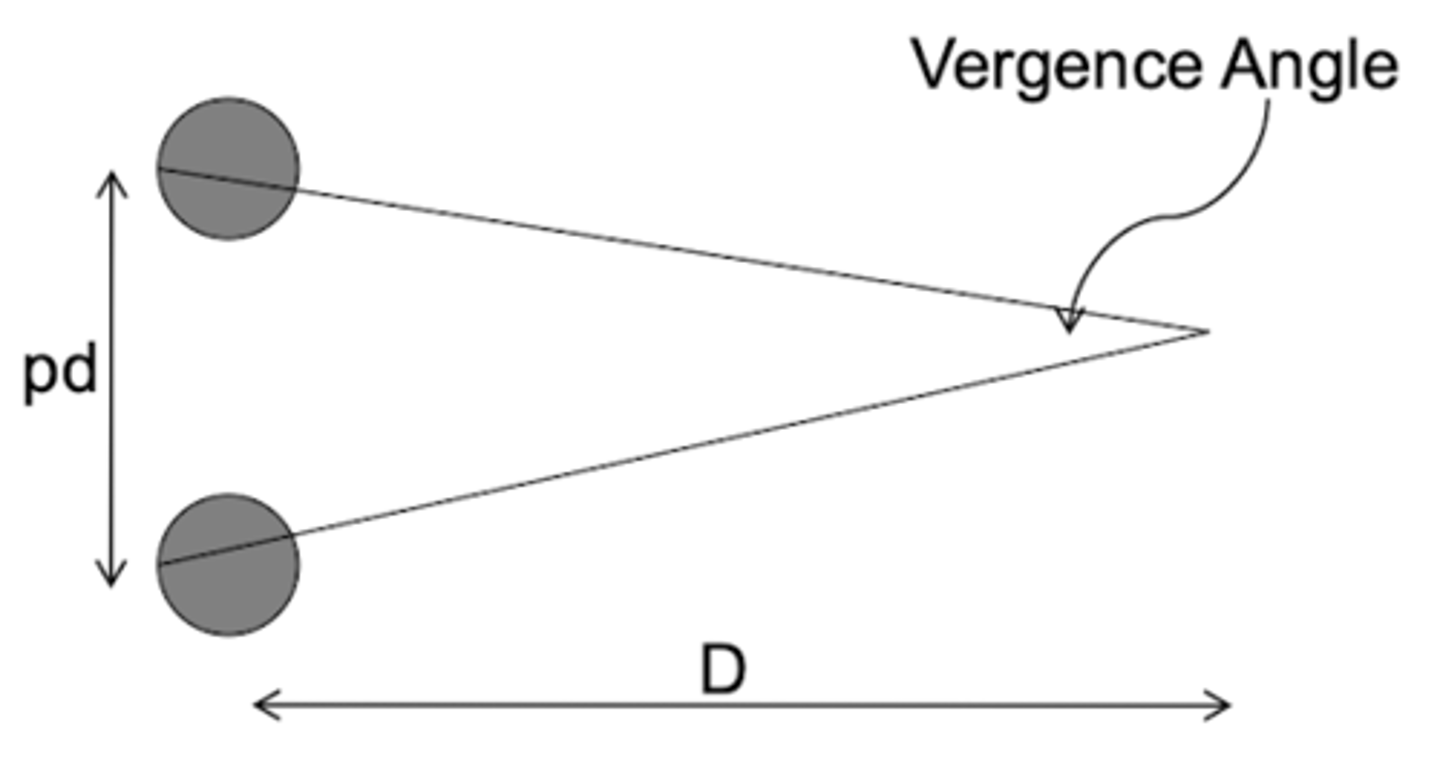
What is a zero vergence angle?
lines of sight are parallel → viewing at infinity
What is Hering's Law of Equal Innervation?
equal innervation of yoked muscles → magnitude of rotation of two eyes are equal
When is Hering's law obeyed?
in health, all eye movements (except fixational) follow Herrings law
What is the line of sight?
line from fixation point to center of entrance pupil and center of exit pupil to fovea → aka chief ray of eye
What is the line of fixation?
line from fixation point to COR of eye (stops here)
What is the COR of the eye?
point within the eye that has zero velocity during an eye movement
What did Mueller think about the COR of the eye?
the eye was a ball and socket → the COR is at the center of the eye
What did Volkmann say about the COR of the eye?
'COR' is 13.5 mm behind cornea → aka the sighting center (NOT THE COR)
What did Park & Park say about the COR of the eye?
there was no single COR → COR was moving in the eye and in the orbit
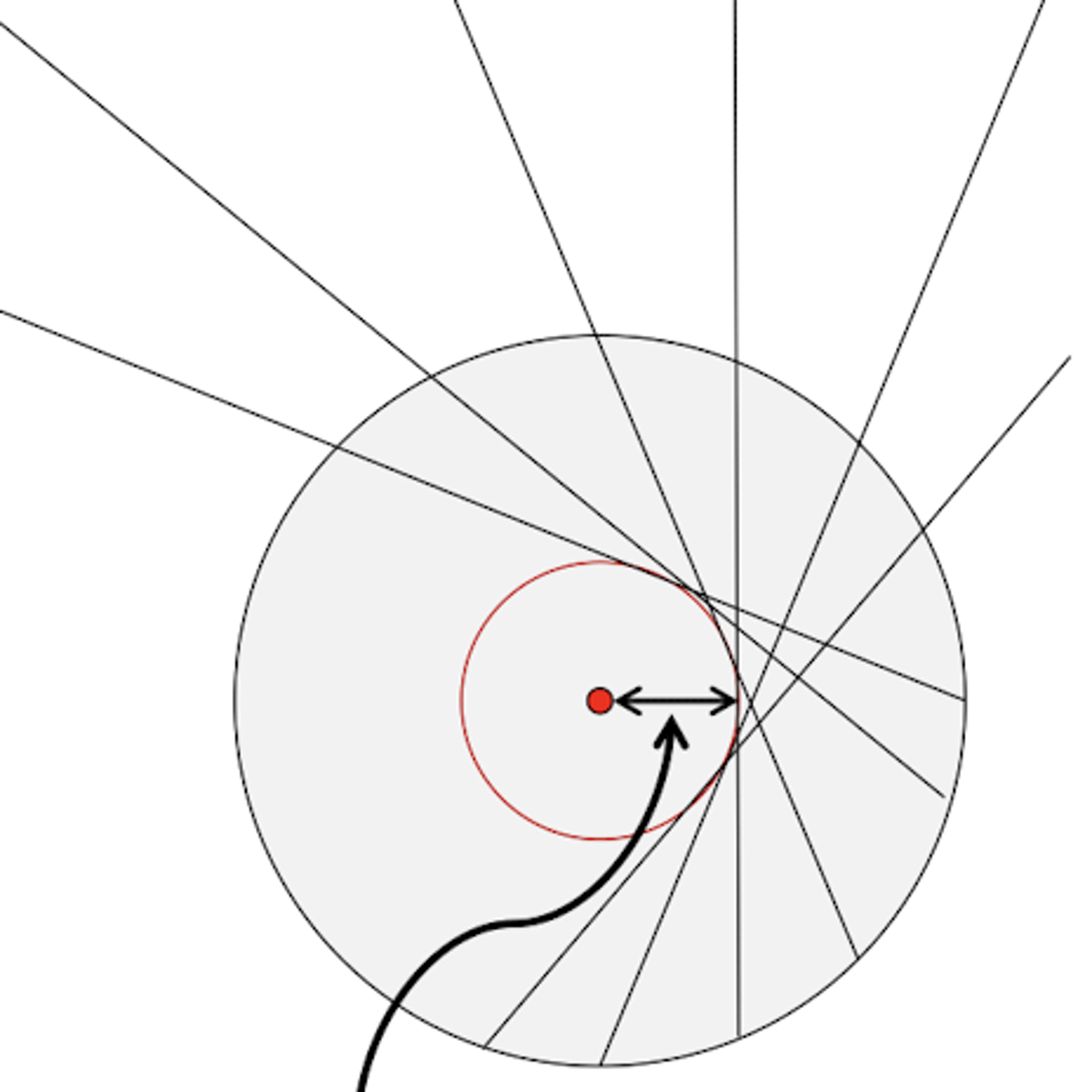
What do the lines of sight form in the eye?
a caustic curve
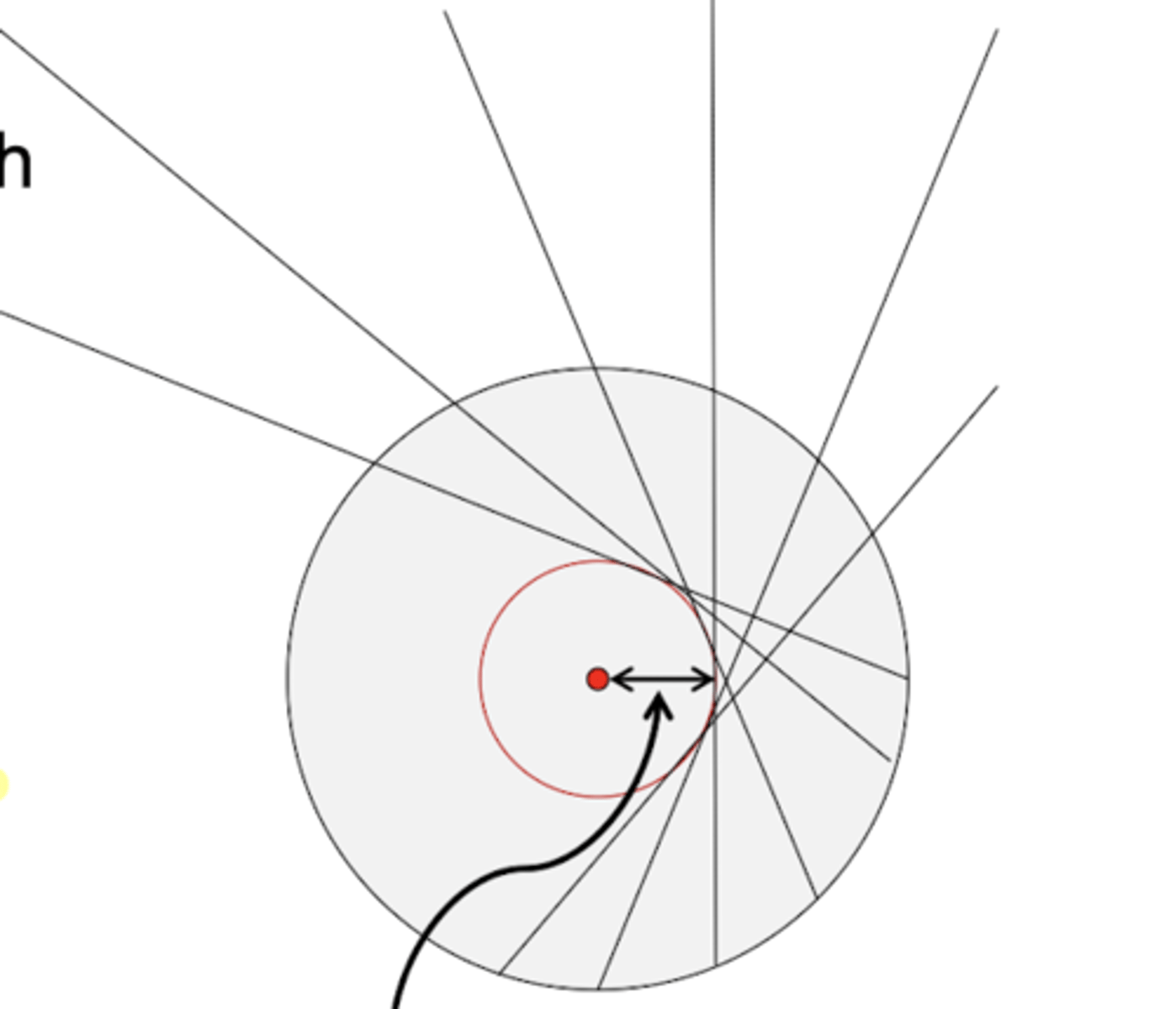
What did Fry say about the COR of the eye?
eye is a ball and socket with a unique center of rotation
Fry was able to to measure the caustic curve, Park & Park said the COR was moving relative to the eye
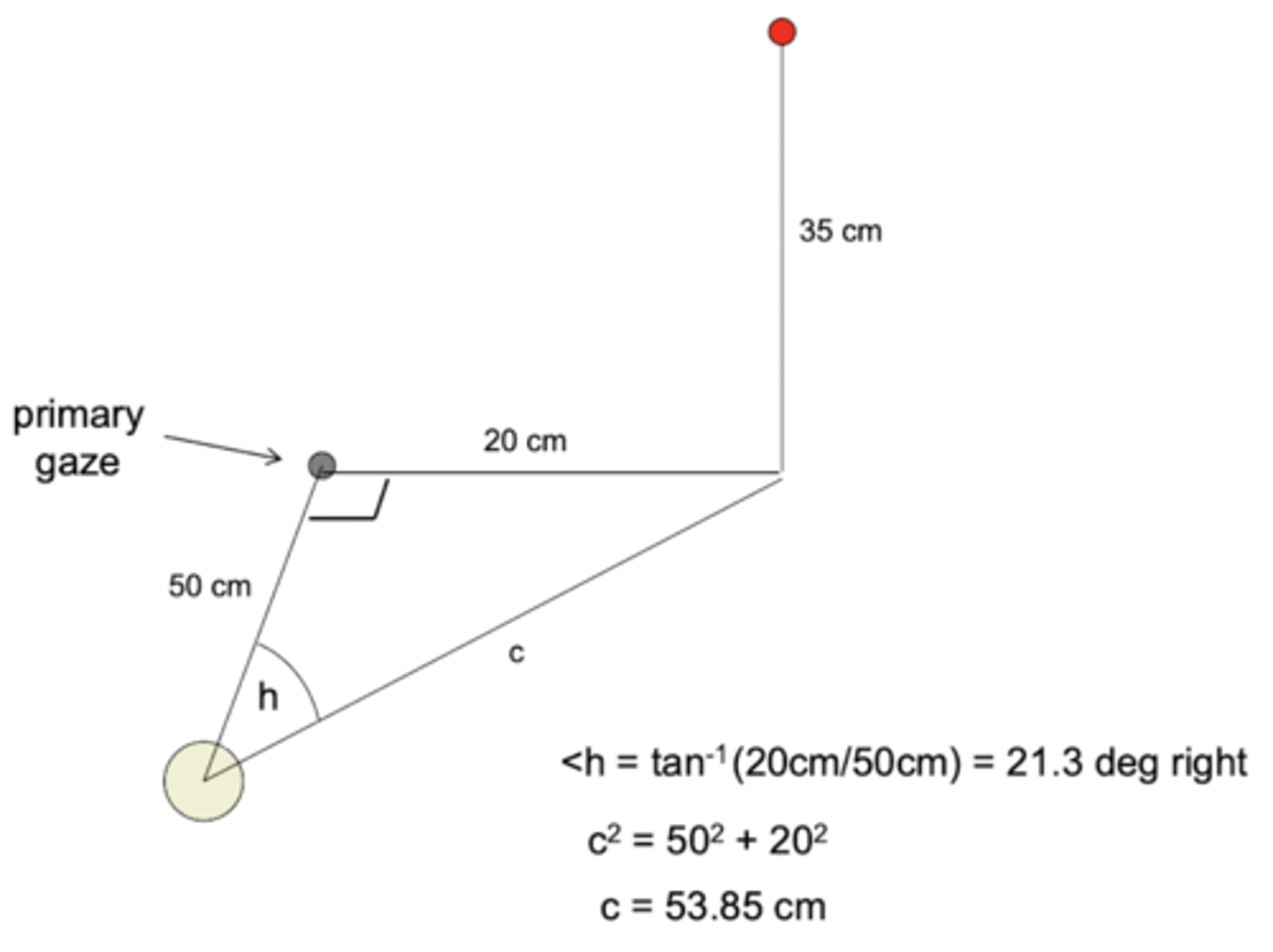
What is primary gaze?
straight ahead position
What is secondary gaze?
along the horizontal or vertical axes from primary position
what is the tertiary gaze?
all other positions
What are the three reference systems for gaze position of the eye?
1. Fick
2. Helmholtz
3. Polar Coordinate/Listing
indicate eye position, not the path the eye took to get there
What does 'head-fixed" mean?
axis does NOT move with eye movements
What does "eye-fixed" mean?
axis DOES move with eye movements
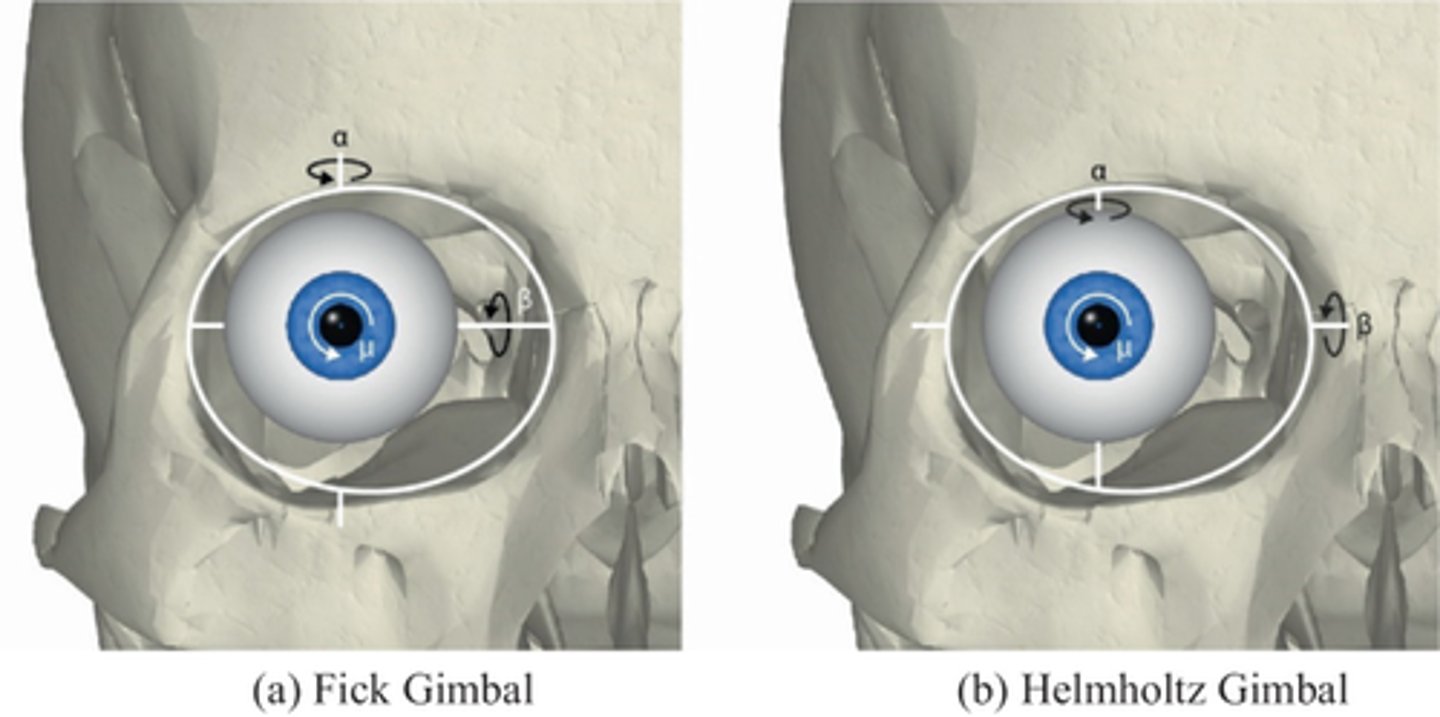
What is the Fick coordinate system?
horizontal is the primary direction (first)
vertical is the secondary direction (second)
What is the primary axis in the Fick coordinate system?
vertical axis
i.e. what does the primary direction rotate around
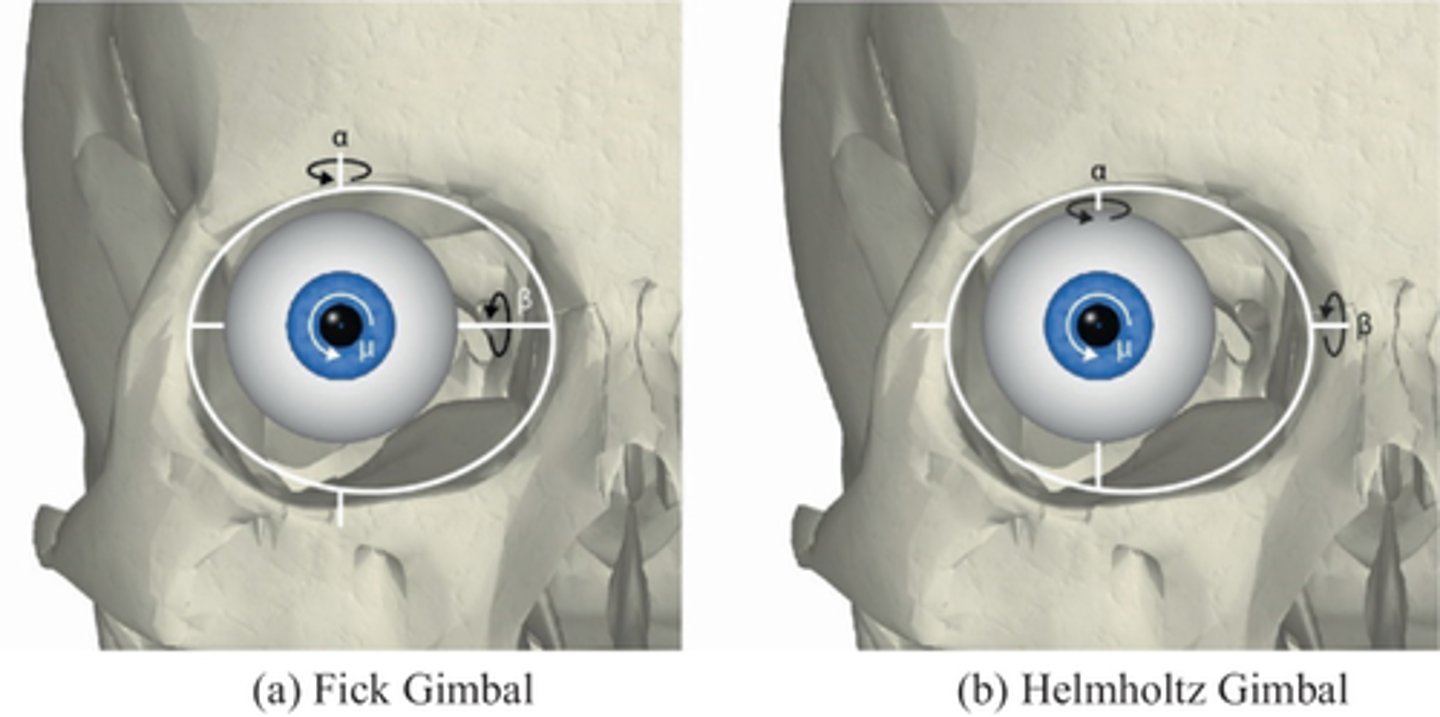
Which axis is head fixed in the Fick coordinate system?
vertical axis
i.e. the vertical axis doesn't move with eye movements
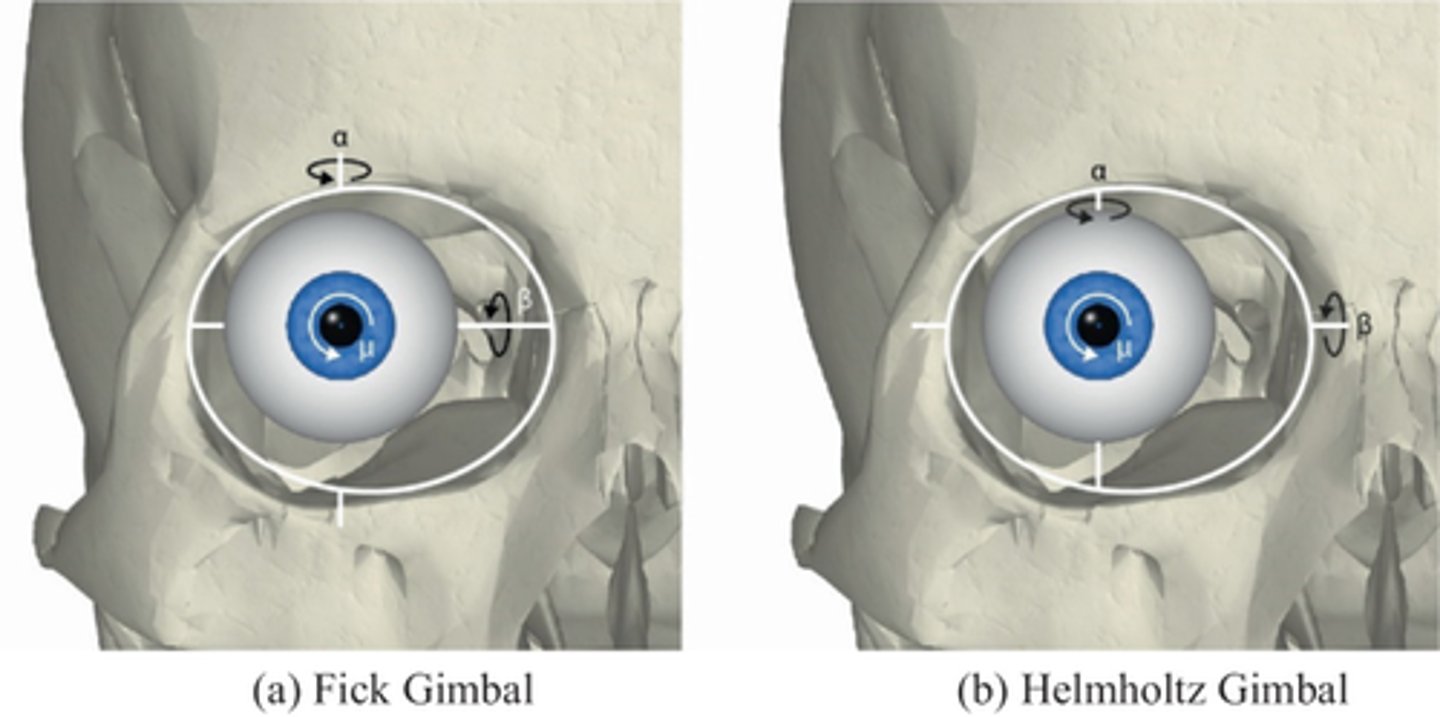
Which axis is eye fixed in the Fick coordinate system?
horizontal axis
i.e. the horizontal axis does move with eye movements
What is the secondary axis in the Fick coordinate system?
horizontal axis
Which body part closely follows Fick coordinate system?
our head
Summarize Fick movement
head is primary to move vision horizontally (head fixed vertical axis)
eyes are secondary and vision vertically (eye fixed horizontal axis)
What is the Fick coordinate system term for horizontal movement (along vertical axis)?
longitude
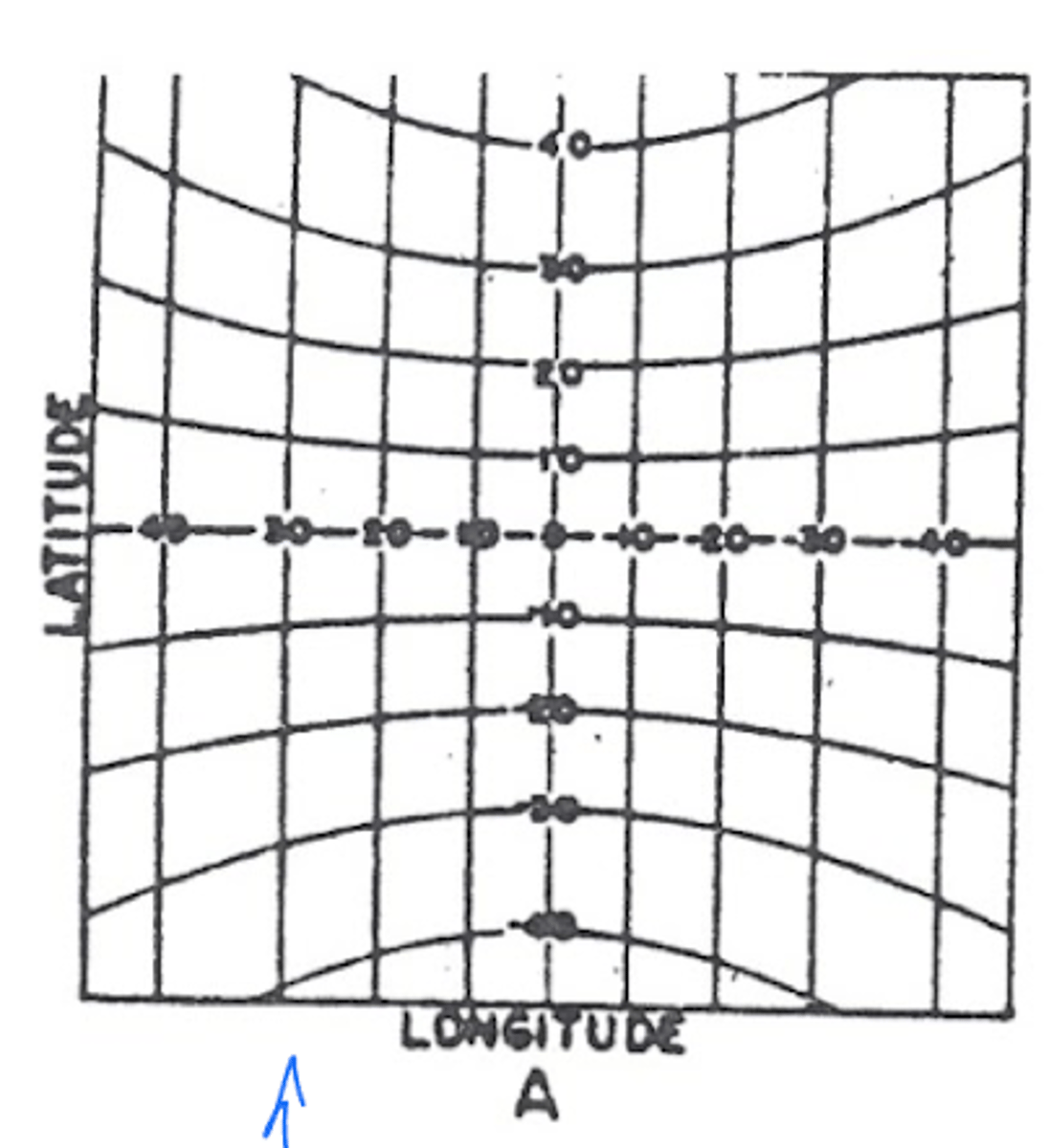
What is the Fick coordinate system term for vertical movement (along horizontal axis)?
latitude
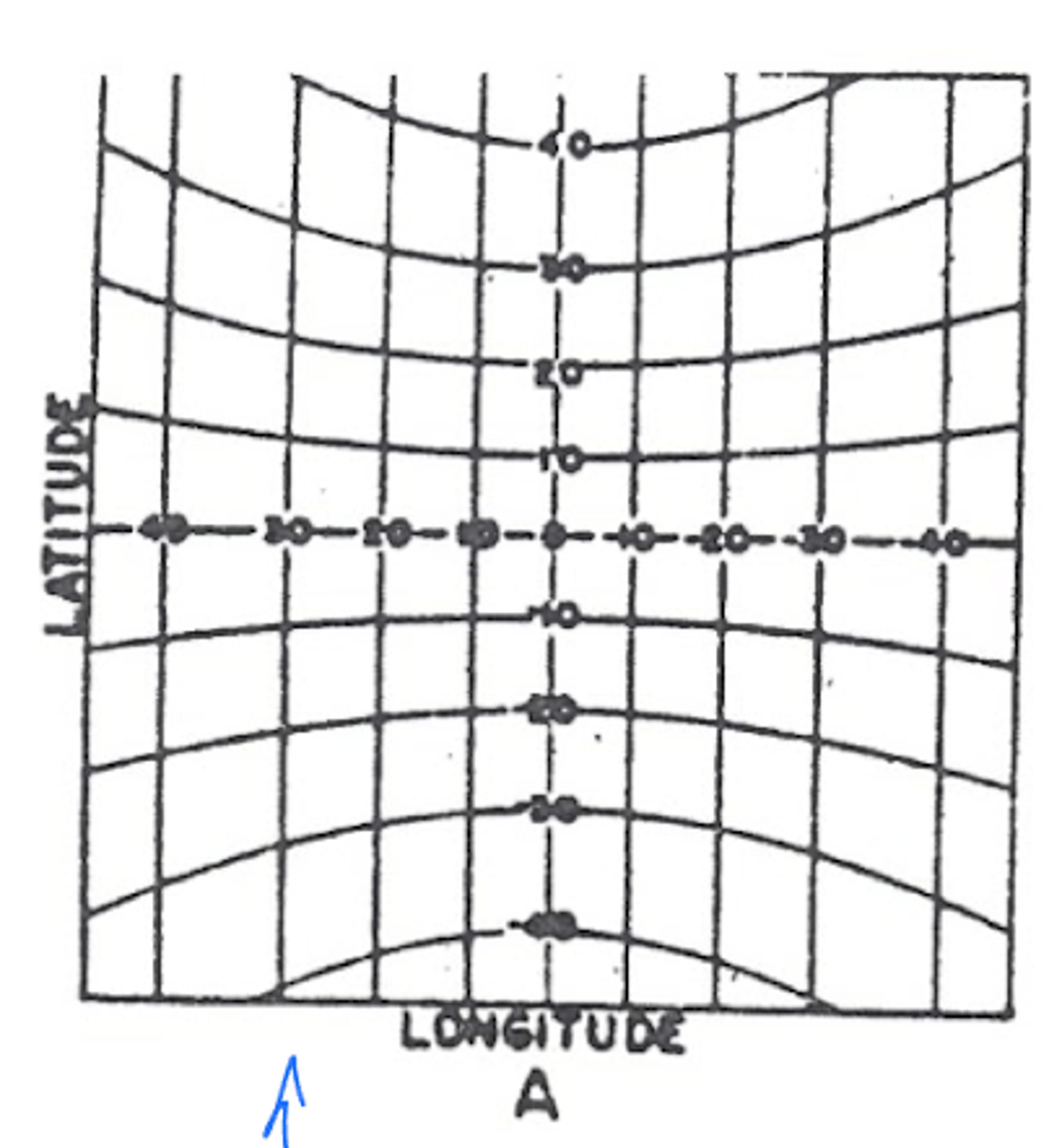
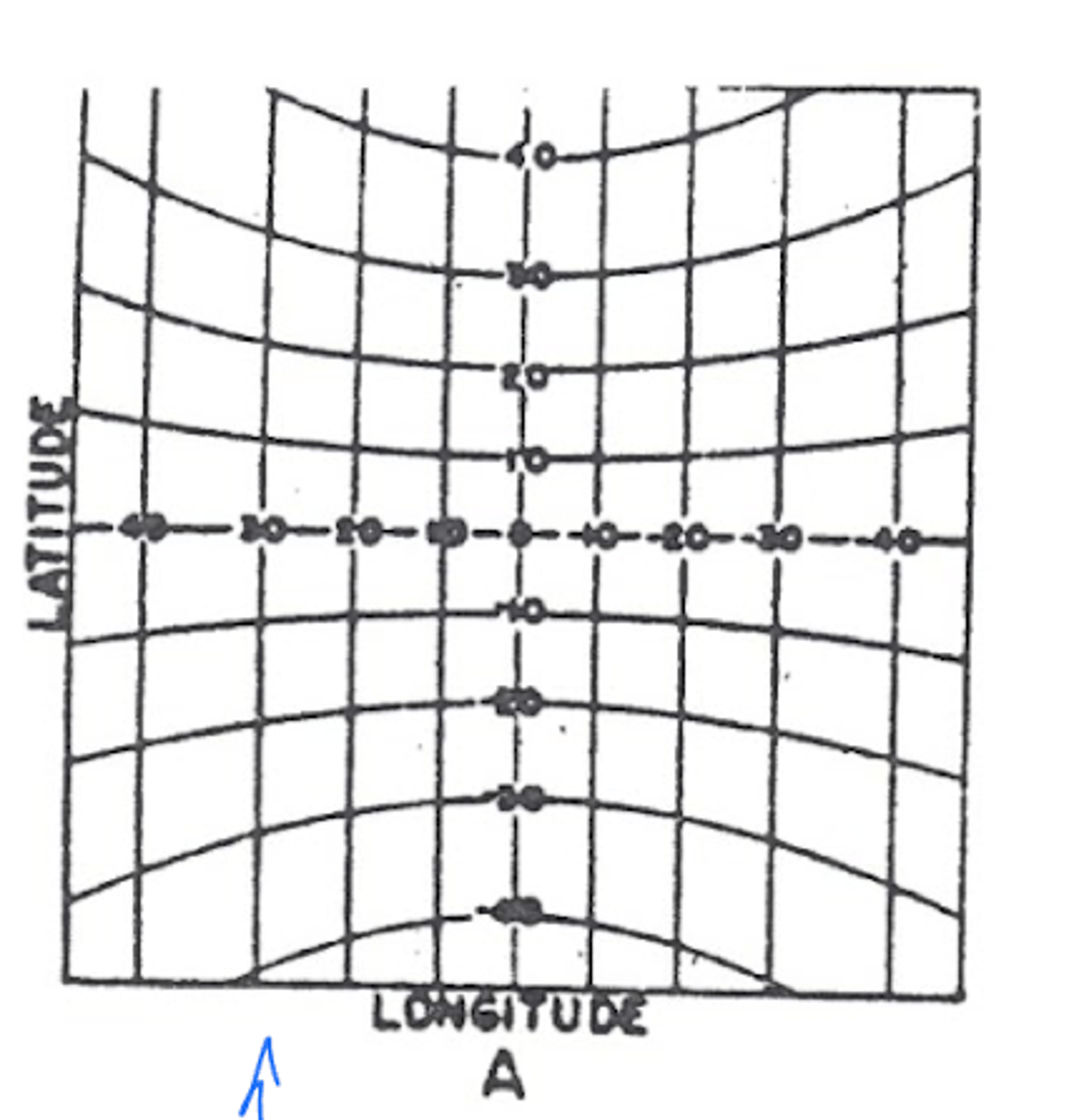
Which lines are curved on a tangent screen in the Fick coordinate system?
latitude lines are curved
eye fixed horizontal axis causes iso-latitude lines (horizontal lines) to be curved
i.e. up and down (vertical) movement on the horizontal axis causes warping of latitudinal axis
What is the Helmholtz coordinate system?
vertical is the primary movement
horizontal is secondary
What is the primary axis in the Helmholtz coordinate system?
horizontal axis
i.e. what does the primary direction rotate around
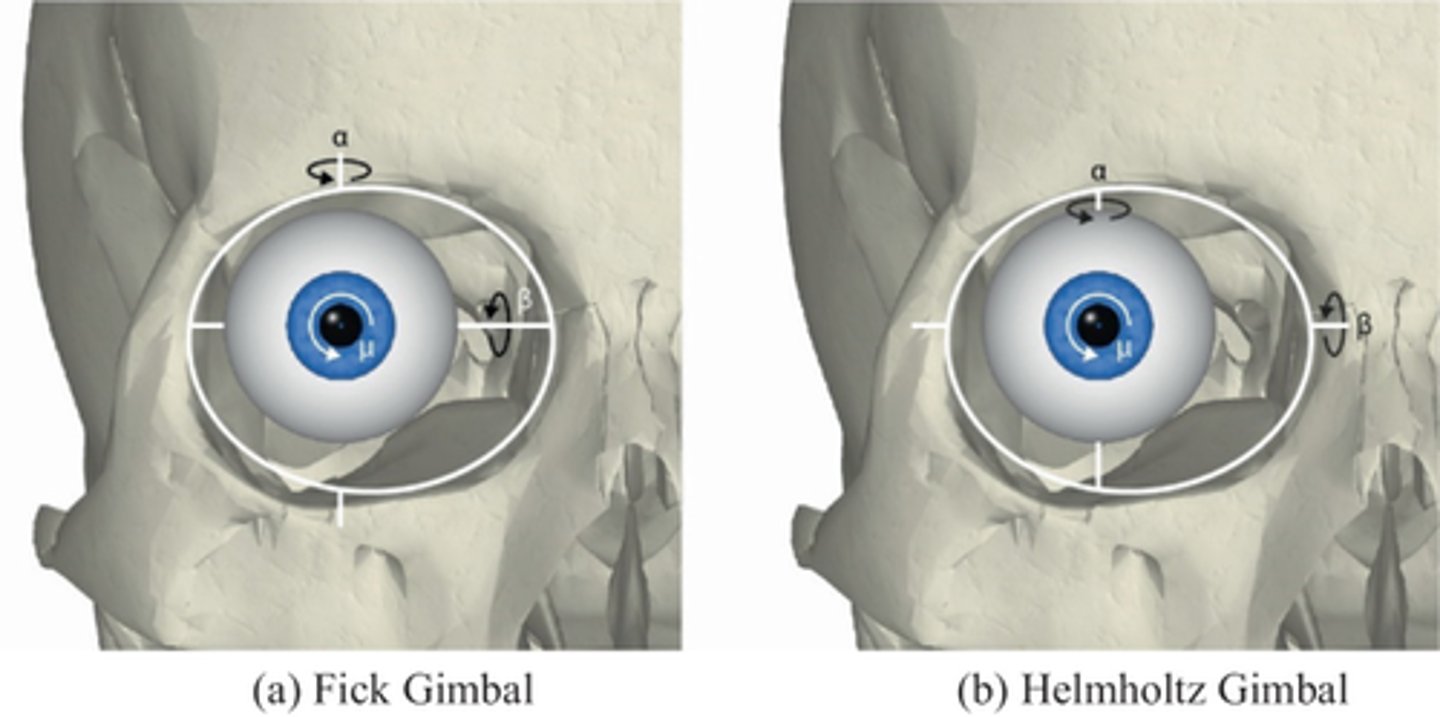
Which axis is head fixed in the Helmholtz coordinate system?
horizontal axis
i.e. the horizontal axis doesn't move with eye movements
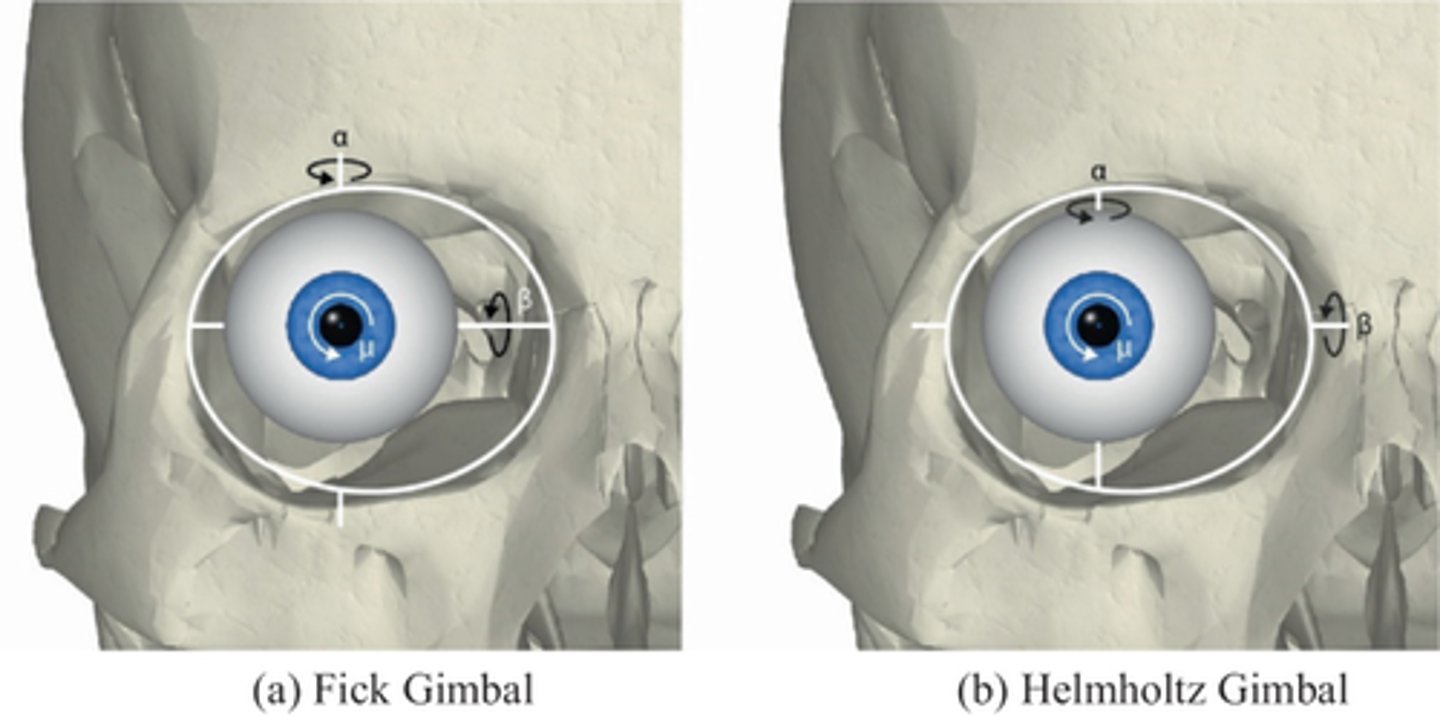
Which axis is the secondary axis in the the Helmholtz coordinate system?
vertical axis
i.e. vertical axis does move with eye movements
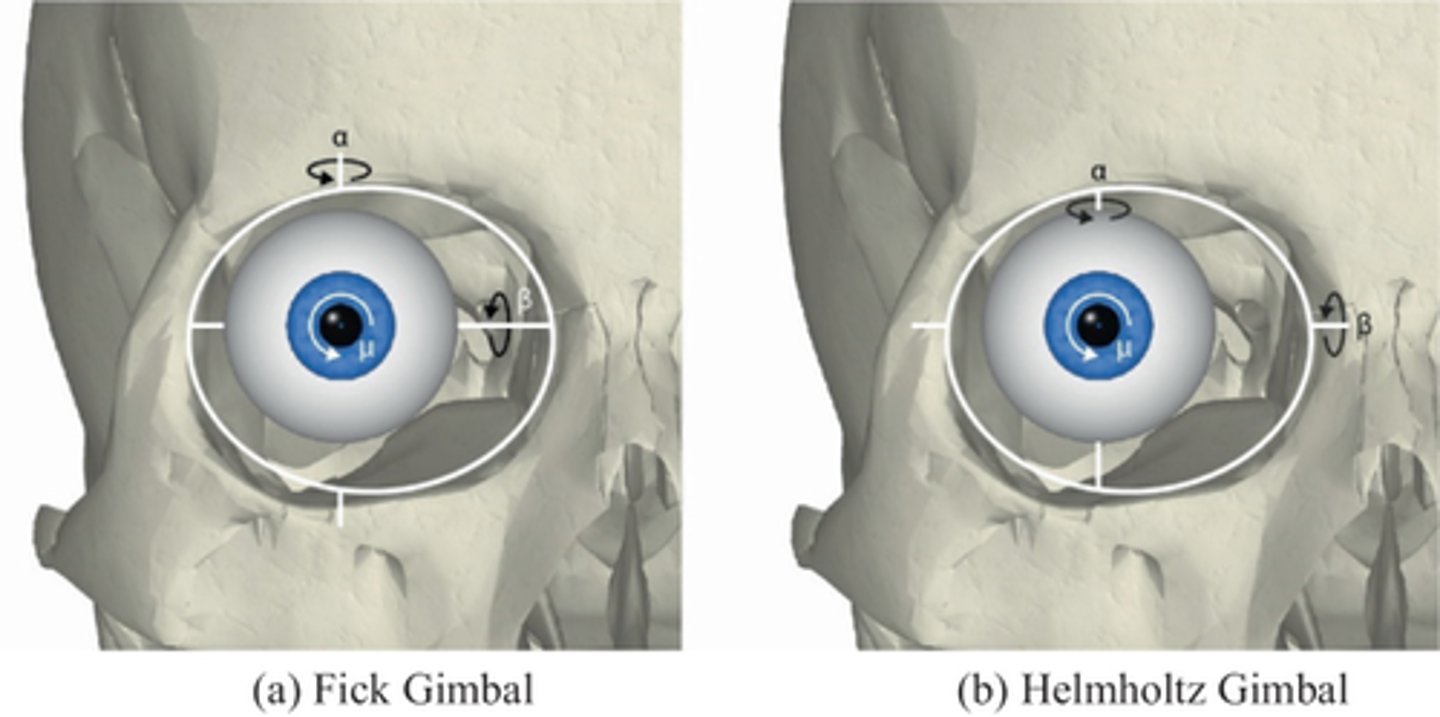
Which axis is eye fixed in the Helmholtz coordinate system?
vertical axis
What is the Helmholtz coordinate system term for horizontal movement (around vertical axis)?
azimuth
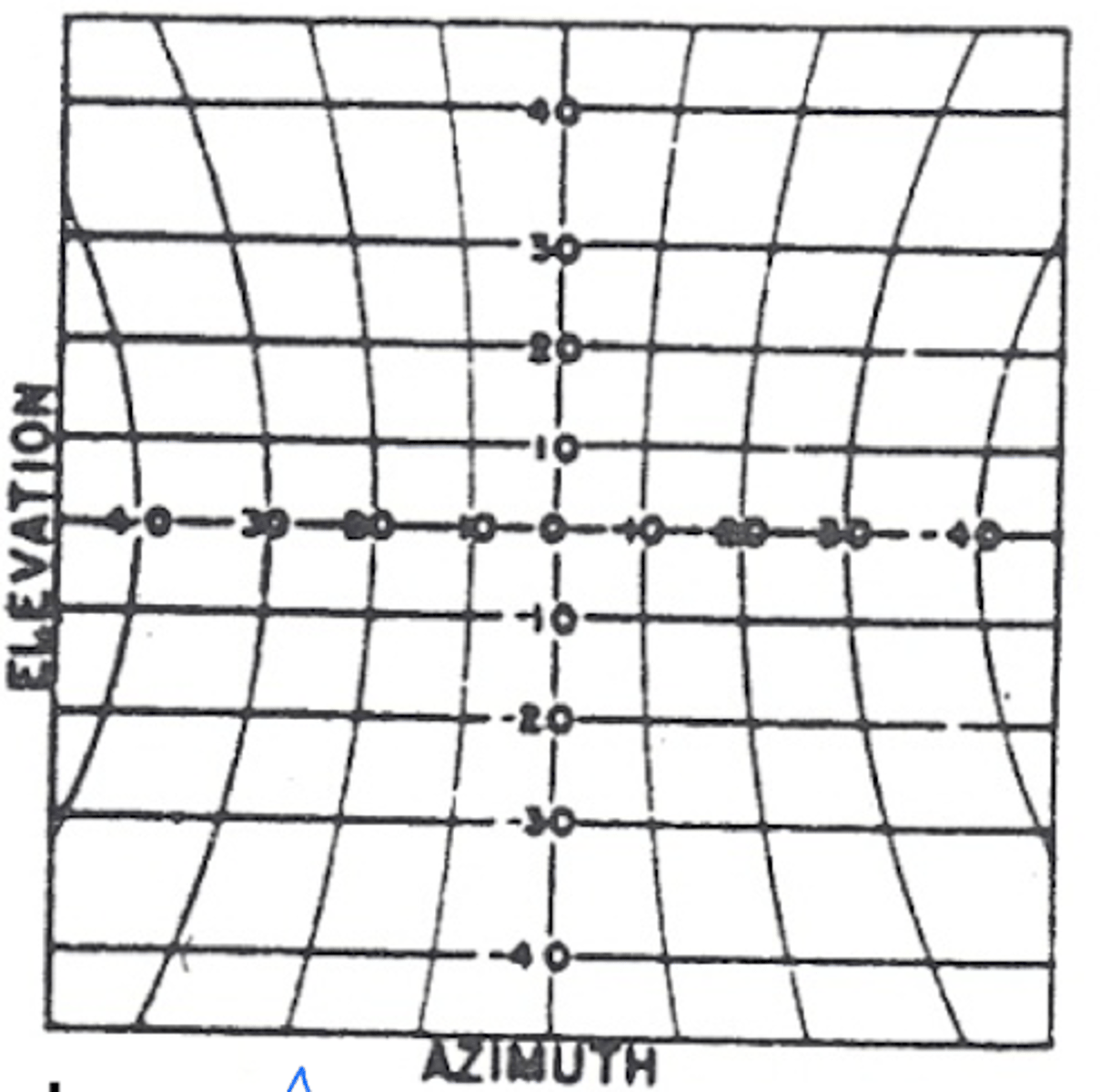
What is the Helmholtz coordinate system term for vertical movement (along the horizontal axis)?
elevation
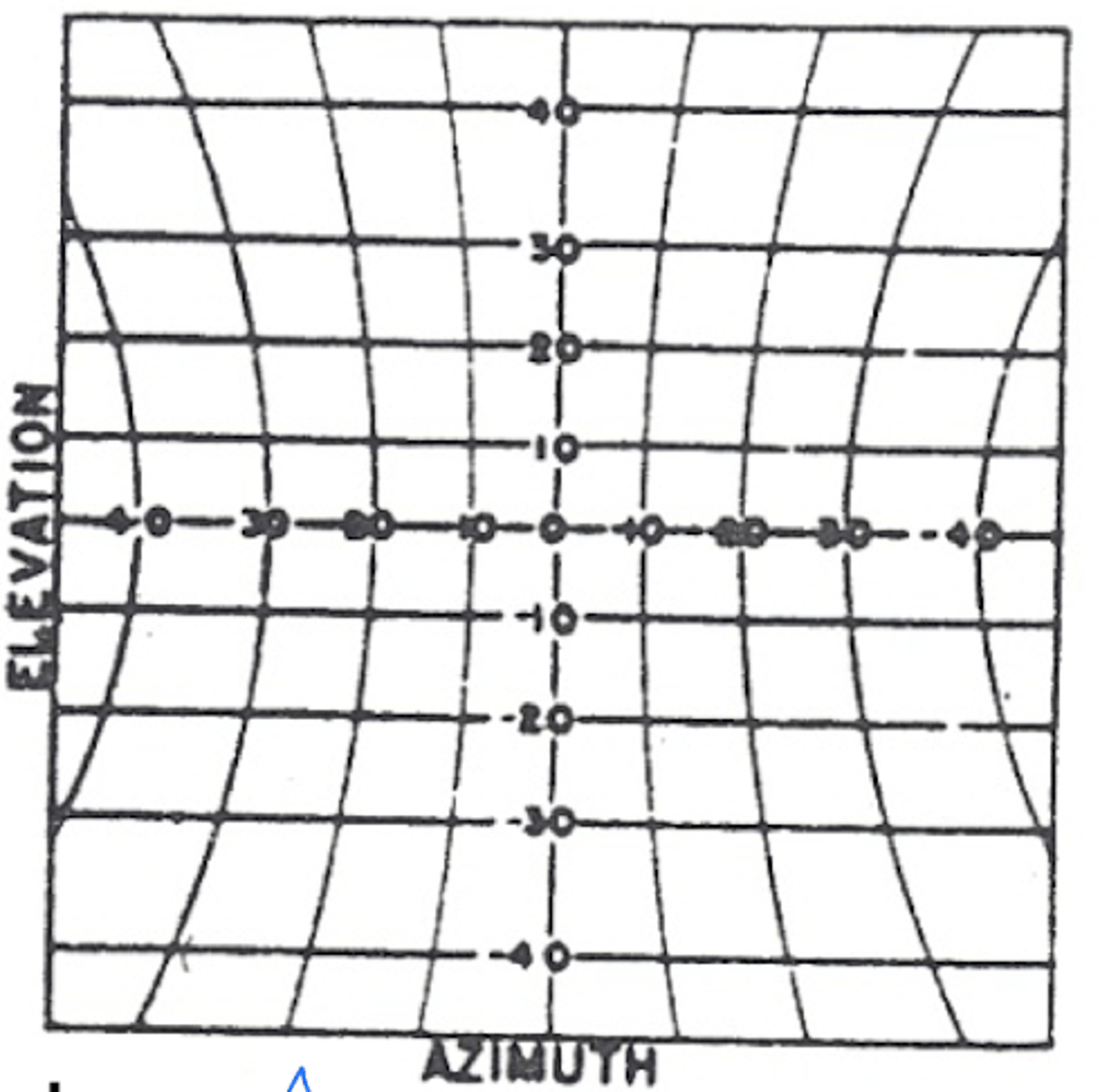
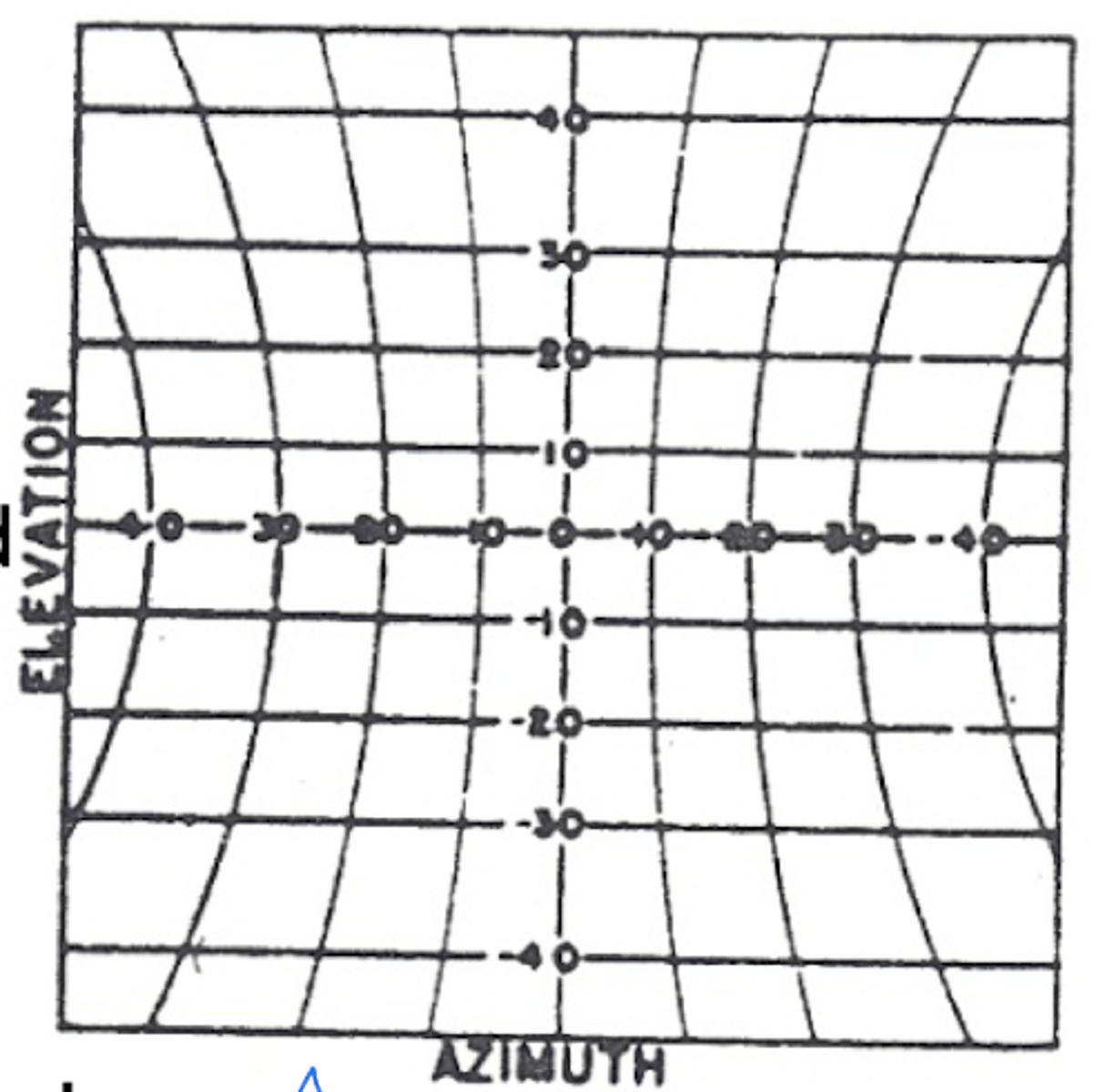
Which lines are curved on the tangent screen in the Helmholtz coordinate system?
azimuth (vertical lines) are curved
eye fixed vertical axis causes iso-latitude lines (horizontal lines) to be curved
i.e. side to side (horizontal) movement on the vertical axis causes warping of aximuth (vertical lines)
What are the coordinates in the polar coordinate (listing) system?
meridian (degree to which the axis of rotation is tilted from 0)
eccentricity (angle between primary gaze and final position)
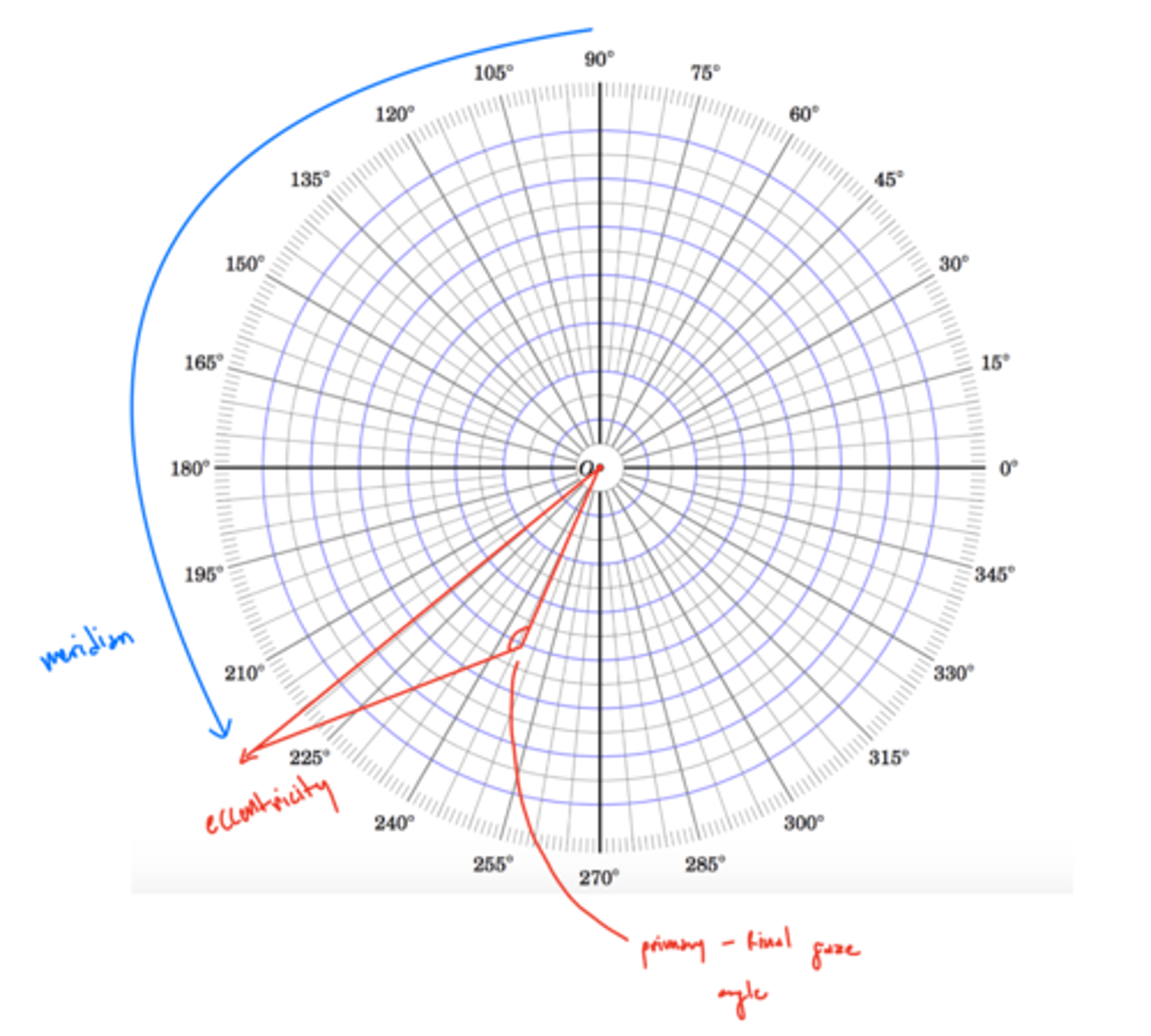
What is the meridian in the polar coordinate system?
axis angle (how far the axis of rotation is tilted from zero)
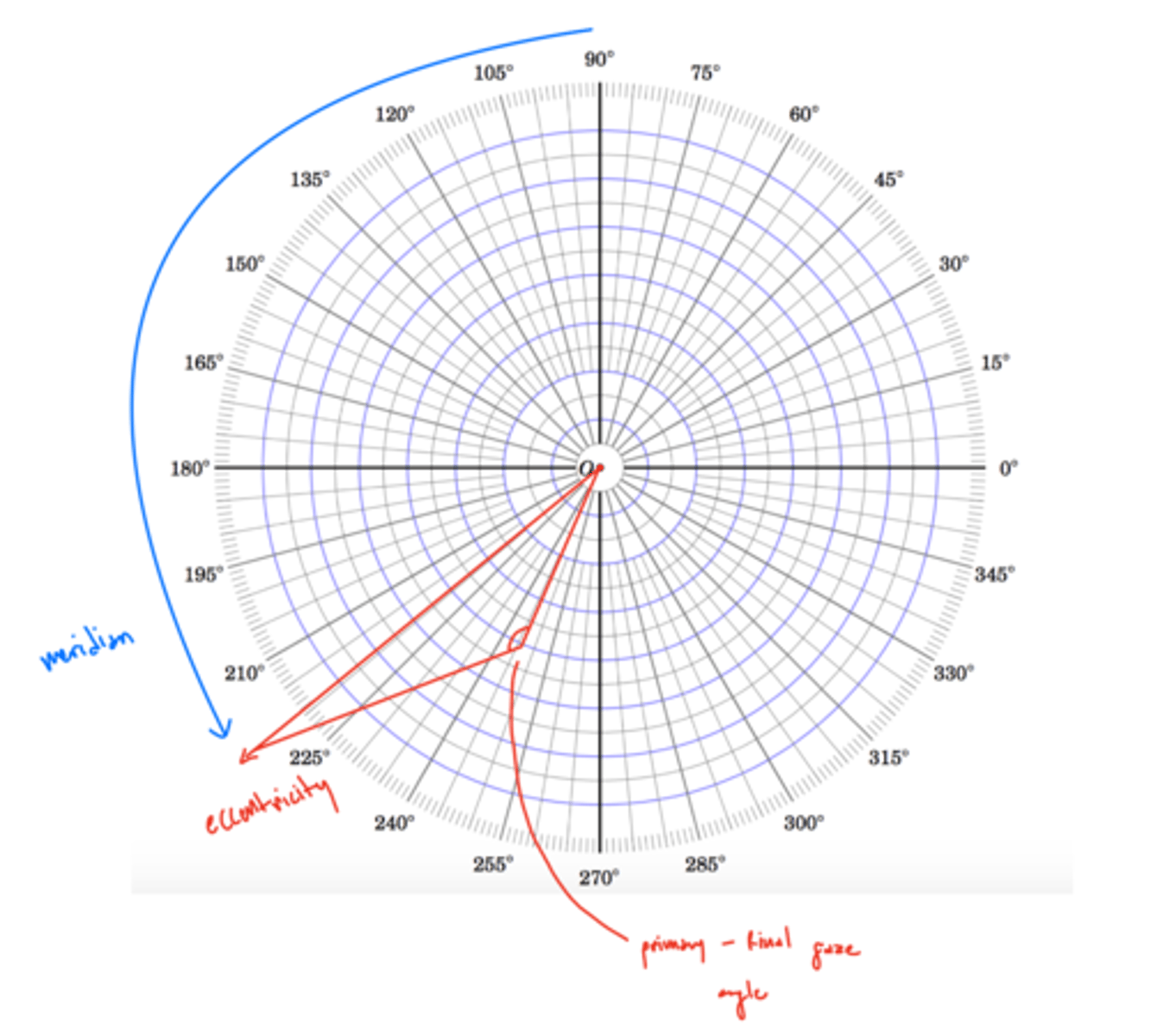
What is eccentricity in the polar coordinate system?
angle between primary gaze and final position
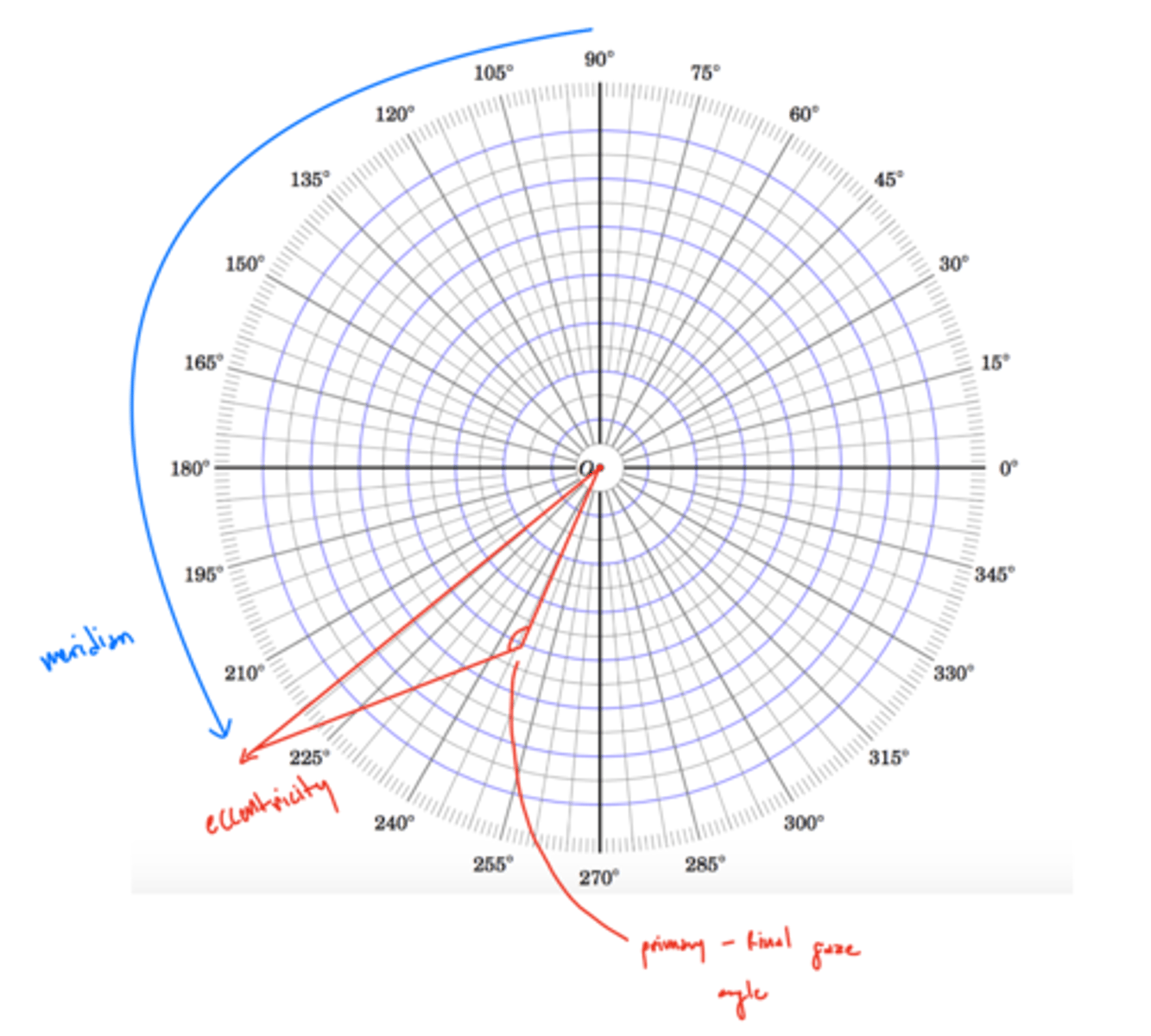
Which reference system matches the most to how our eye travels to arrive at tertiary positions?
polar coordinate system/listing
What is true torsion?
torsion that occurs due to ocular rotation around an anterior-posterior axis (i.e. around the line of sight)
What is false torsion?
torsion that occurs due to rotating the eye to a tertiary position → not along the ant-post axis
When does false torsion occur?
whenever the eye is in a tertiary position
what is the movement of false torsion?
the vertical meridian of the eye is tilted relative to objective vertical → occurs in absence of rotation around line of sight
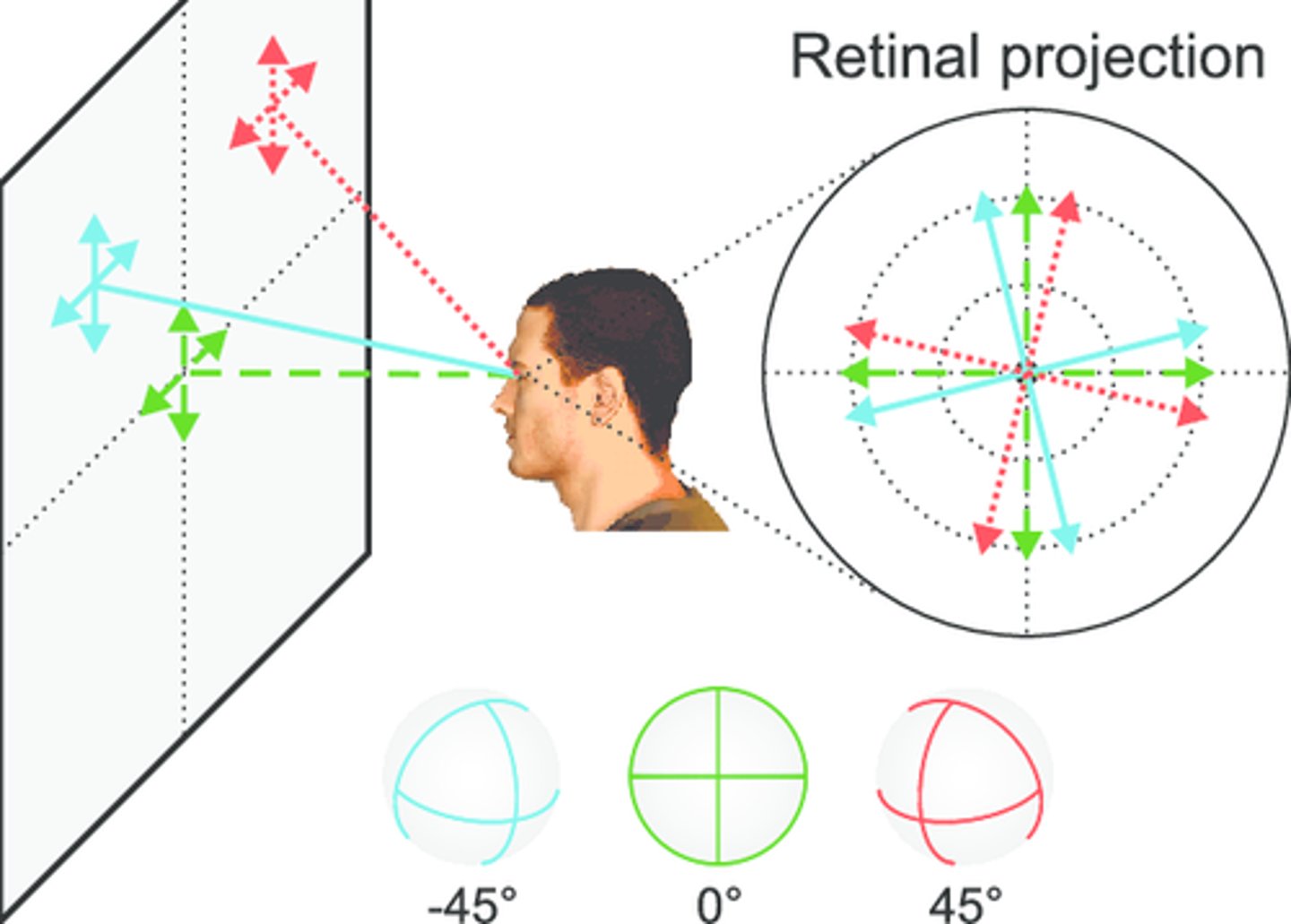
Which system correctly predicts false torsion?
Listing/polar coordinate system
How does Fick's coordinate system predict torsion?
predicts no false torsion
How does Helmholtz coordinate system predict torsion?
predicts too much
Can false torsion occur in primary, secondary, or tertiary positions?
primary & secondary - no, the ocular position from which a pure vertical or horizontal rotation can occur in the absence of false torsion
(false torsion only occurs in tertiary positions)
how is torsion measured?
with afterimages → fixed relative to the retina
How is torsion perceived in terms of after images?
afterimage will be perceived as tilted relative to the rest of the world
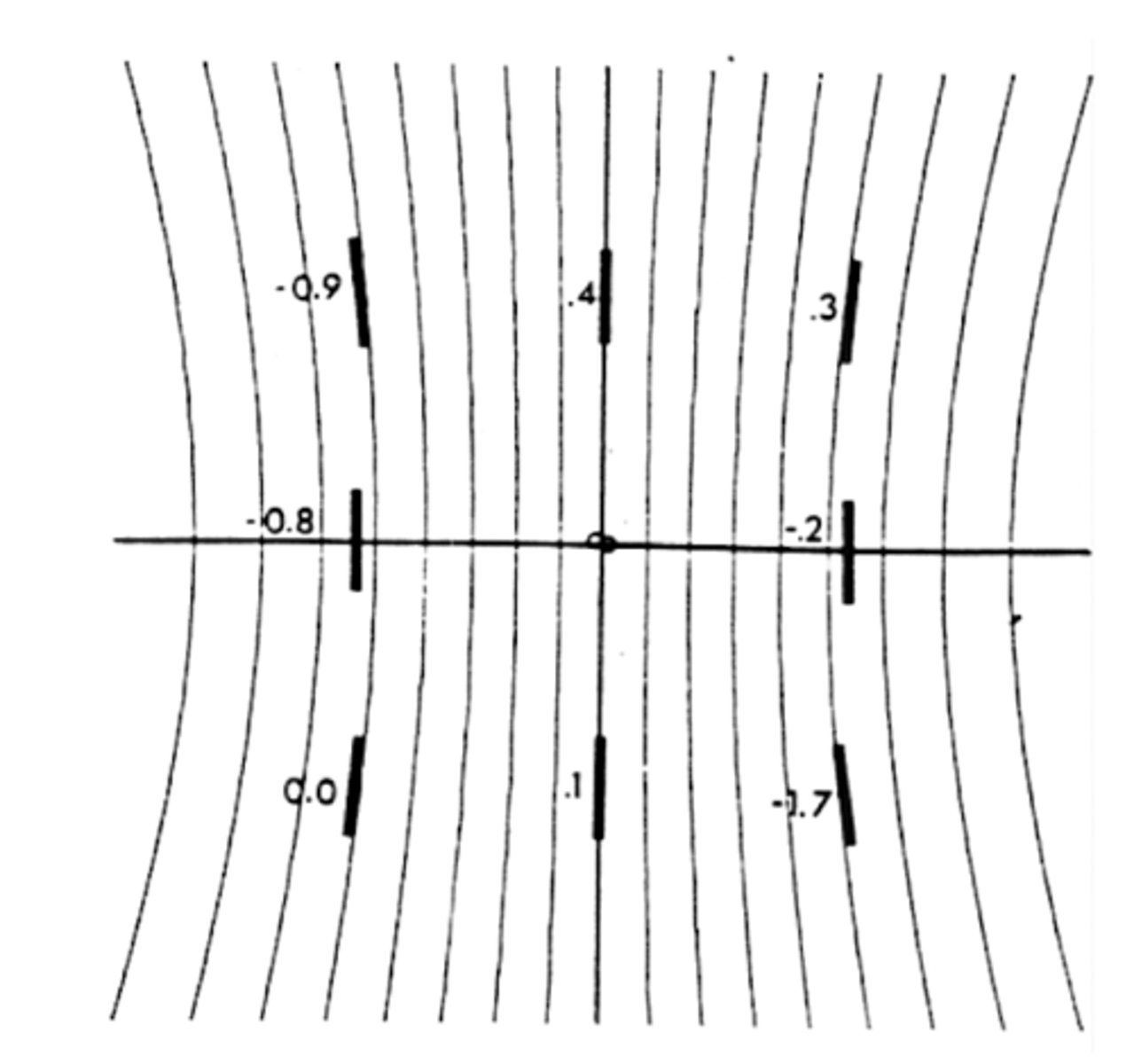
what is necessary to fully describe eye position and orientation of both true and false torsion?
a third parameter (listing's law)
what are the 3 degrees of freedom to fully describe eye position and orientation?
Fick/Helmholtz: horizontal, vertical, torsion
Listing: meridian, eccentricity, torsion
What is Listing's law?
any eye movement is equivalent to a single rotation about an axis in listing's plane
english - every eye movement has a predicted false torsion via listing's plane
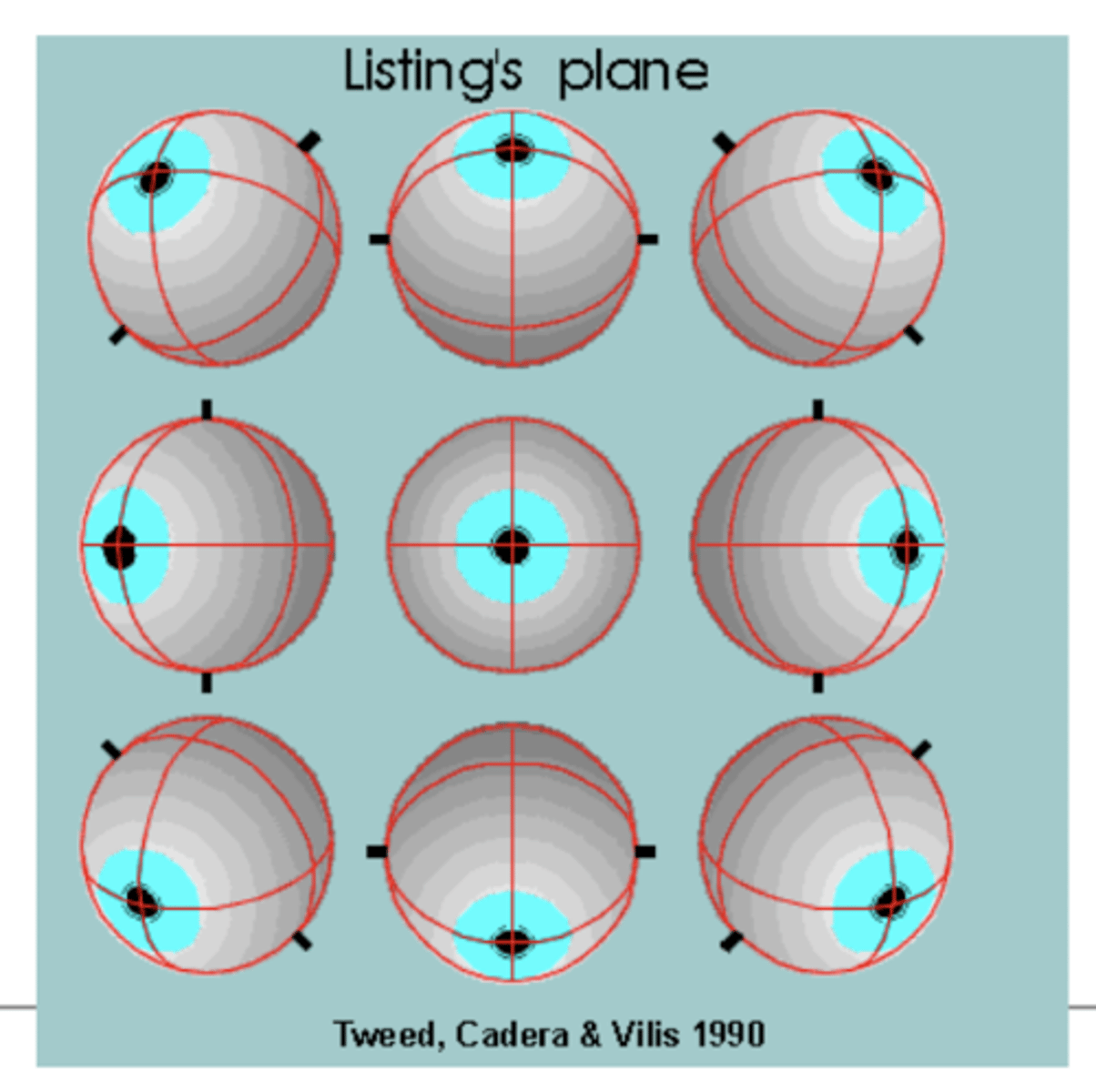
What is Listing's plane?
a plane passing through the head and the center of rotation of the eyes that is perpendicular to the line of sight when the eyes are in primary position
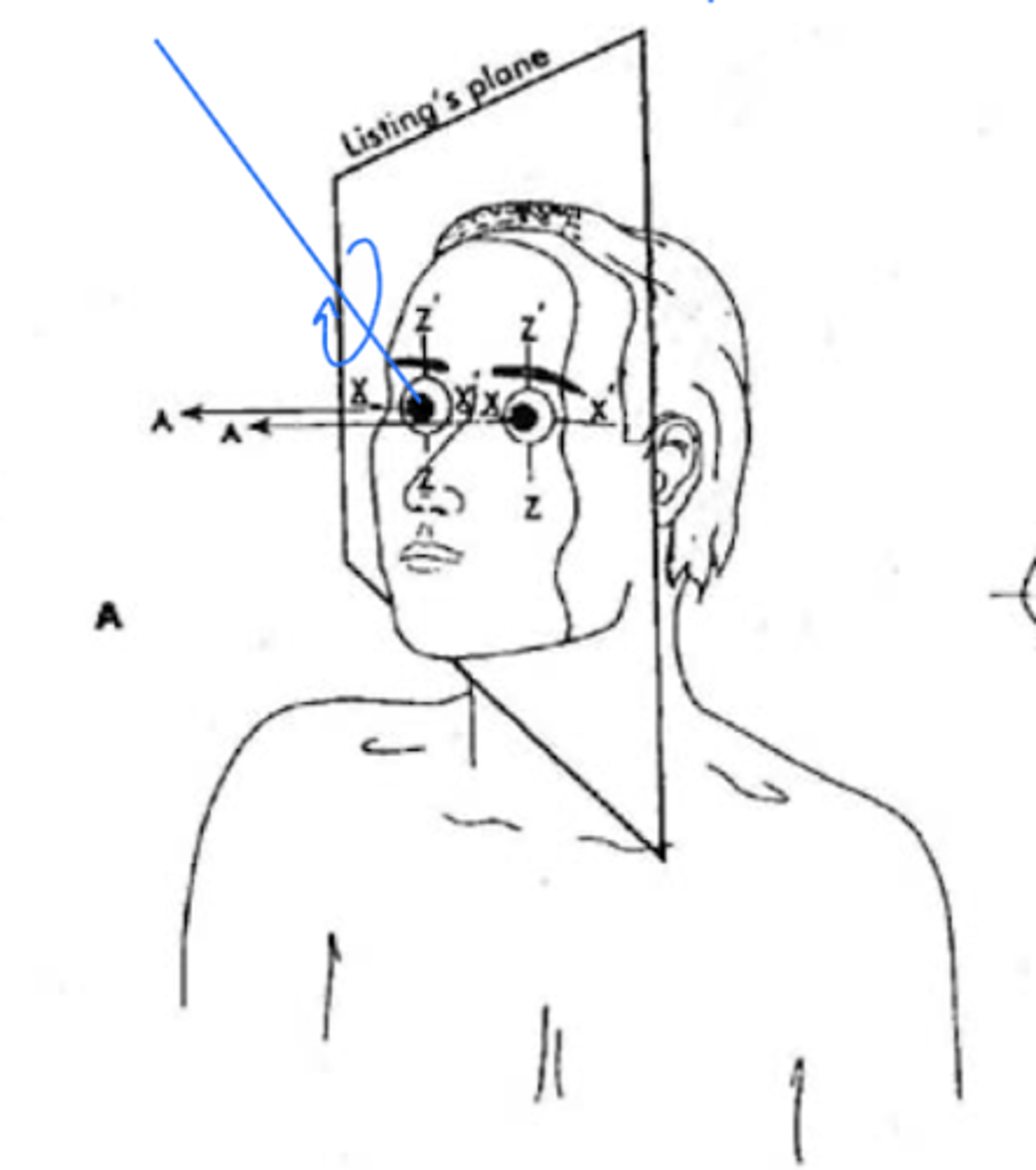
Listing's law predicts _______, but does not account for _______.
predict false torsion
does not account for true torsion → true torsion is not a rotation around an axis in Listing's plane
What is Donder's law?
the orientation of the eye for a given gaze position is always the same independent of the path taken to this location