Exam 4 (Chapter 13)
 Call Kai
 Learn
Learn Practice Test
 Spaced Repetition
 Match
Match Flashcards
 Knowt Play
1/20

Earn XP
Description and Tags
Death & Dying
Name | Mastery | Learn | Test | Matching | Spaced | Call with Kai |
|---|
No analytics yet
Send a link to your students to track their progress
21 Terms
what forms of cancer did Sarah have?
lung and thyroid
was Sarah’s cancer due to genetics or environmental factors?
genetic mutation (she never smoked, healthy)
what period was Sarah’s pregnacy when she received the diagnosis?
fetal period (39 weeks)
what teratogens should we be concerned about during this period?
environmental influences
timing of exposure (flu virus, vaccine)
LBW
exposure to treatment (chemotherapy)
what describes the influence of Sarah’s death on her husband’s development?
non-normative: doesn’t track with age or history
Marshmellow Experiment (Walter Michelle)
Instant Gratification; delayed gratification are kids who are oriented towards the future
socioeconomic selectivity
older people perceive their time as limited so they prioritize certain goals and relationships (ex. hospice care and spending time with family)
what do 5-7 year olds understand about death?
finality/cessation of functions
irreversibility
universality
what do 10+ year olds understand about death?
finality/cessation of functions
irreversibility
universality
biological causality
what should we avoid to tell children about death
euphemisms (abstract language and metaphors)
ex. putting the dog to sleep
why was there a flatline in life expectancy in 2010 for Africa?
AIDS
what was the leading cause of death among people ages 1 to 44?
accidents
what was the leading cause of death among people ages 10 to 44?
suicides
what was the leading cause of death among people ages 15 to 34?
homicides
what was the leading cause of death among people ages 64+?
cancers/chronic disease (ex. heart disease, Alzheimer’s disease)
compression of morbidity
shortening the period of illness measured by the prevalence of death
mortality
death
Stages of Dying (Elizabeth Ross)
common emotional responses to dying:
denial
isolation
anger
bargaining
depression
acceptance
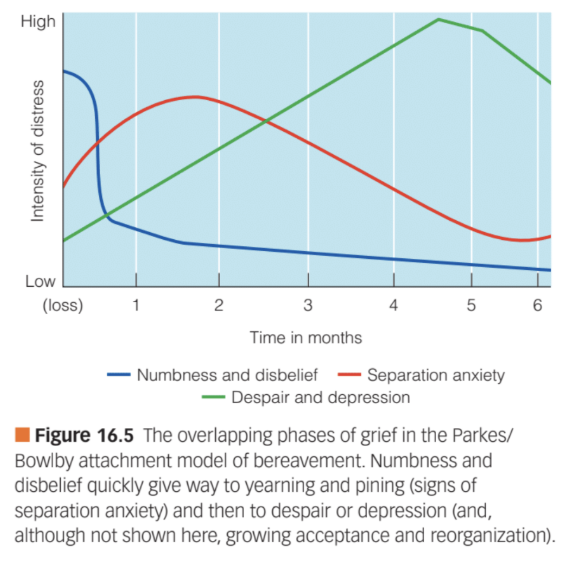
Model of Grief (Parkes-Bowlby)
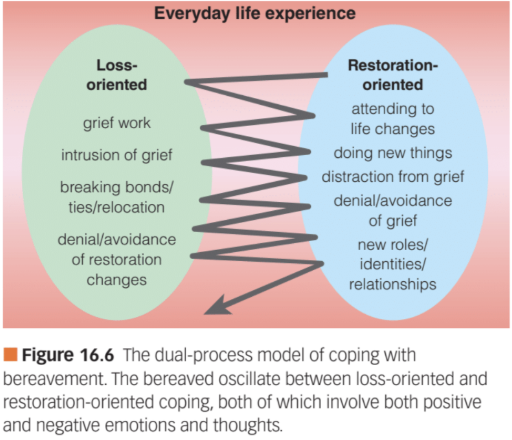
Dual Process of Coping and Bereavement
a person oscillates b/t loss and restoration when coping a death
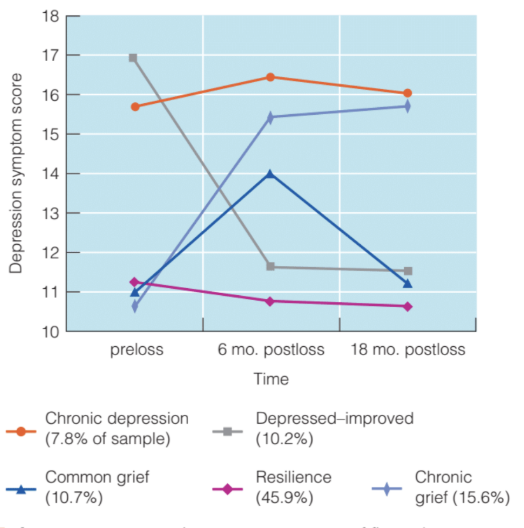
trajectories of death
most people were resilient during the death of a loved one; counters the belief that bereaved people must go through a period of significant stress
equifinality and multifinality