Ch 26 Process Auxiliries
 Call Kai
 Learn
Learn Practice Test
 Spaced Repetition
 Match
Match Flashcards
 Knowt Play
1/49

There's no tags or description
Looks like no tags are added yet.
Name | Mastery | Learn | Test | Matching | Spaced | Call with Kai |
|---|
No analytics yet
Send a link to your students to track their progress
50 Terms
Flare system
A connected system of individual lines, pressure control valves, and relief/safety valves used in overpressure and purging situations to eliminate volatile process gases by combustion before they are released into the atmosphere
Flare header
A pipe system that connects several area/unit vents to the flare stack
Knockout drum
A vessel located between the flare header and the flare stack that separates liquid substances from vapors being sent into the flare stack
Flare stack
The riser section or body of the flare system that supports the steam ring and pilot burner
Pilot burner
A continuous ignition source at the flare tip that ignites gases as they are released from the system
Steam ring
A component at the tip of the flare that distributes steam to create draft, reduce smoke, and protect the flare tip from heat
Continuous purge gas
Gas constantly flowing through the flare stack to prevent oxygen from migrating in and causing flashback
Hot-service flare
A flare system that collects fluids above 32°F (0°C)
Cold-service flare
A flare system that collects fluids below 32°F (0°C)
Refrigerant
A fluid with a low boiling point that is circulated throughout a refrigeration system to transfer heat
Evaporator
A heat exchanger in a refrigeration system where the refrigerant absorbs heat from the process stream, causing the refrigerant to evaporate (cold side)
Compressor
A device that increases the pressure of the refrigerant in the gas phase
Condenser
A device that cools the gas phase refrigerant from the compressor so it condenses back into a liquid (hot side)
Receiver
A tank that stores liquid phase refrigerant after it leaves the condenser
Expansion valve
A valve that reduces the pressure of liquid refrigerant, causing it to vaporize and produce a cooling effect
Mechanical refrigeration system
A closed loop refrigeration system that uses a refrigerant cycled through an evaporator, compressor, condenser, receiver, and expansion valve
Absorption refrigeration system
A refrigeration system that cycles water and a heat absorbent material (typically lithium bromide) through a closed loop with an evaporator, condenser, absorber, and generator
Lubricant
A substance used to reduce friction between two contact surfaces; common types are oil and grease
Lubrication system
A system that supplies oil or grease to rotating equipment parts such as bearings, gearboxes, sleeve bearings, and seals
Lube oil reservoir tank
A vessel that contains lubricating oil for a lubrication system
Pressure differential across filter
The difference in pressure before and after a filter; a rising differential indicates the filter is getting clogged and restricting flow
Grease gun
A handheld device used to manually apply grease to equipment components such as bearings
Automatic grease lubricator
A device (also called a grease cup) that slowly forces grease from a reservoir into a part to keep it lubricated
Hot oil system
A system that uses an organic or synthetic oil as a heat transfer fluid; used to heat jacketed reactors, tanks, heat exchangers, and pipeline tracing to prevent freezing of heavy oil products
Hot oil system components
Storage tank, oil heating system (heater/furnace), oil circulation system (piping), and oil pump
Amine system
A system used to remove CO2 or other acid gases from a gas stream using a countercurrent flow of amine solution in a contactor vessel
Contactor (absorber)
The vessel in an amine system where sour gas flows upward through trays while amine flows downward, absorbing acid gases
Rich amine
Amine that is saturated with acid gases (CO2 or H2S) after passing through the contactor
Lean amine
Amine that has had acid gases stripped out in the regenerator and is ready to be recycled back to the contactor
Regenerator (stripper)
The vessel in an amine system where rich amine is heated to boil out entrained acid gases, producing lean amine
Sweet gas
Process gas that has had acid gases removed by the amine system; the clean output from the contactor
Fluidized bed system
A system that uses a motive gas flowing up through small holes in a bed floor to make solid particulate substances move and behave like a fluid
Nitrogen header system
A system used to purge oxygen before introducing combustible gases (startup) or to purge combustibles before opening equipment to atmosphere (shutdown)
Why nitrogen is used for purging
Nitrogen is inert — it does not react with oxygen or combustible gases, making it safe to use as a purge medium
Flare hazard — pilot not lit
Possible exposure to toxic fumes, fire or explosion risk, process upset, potential environmental release
Flare hazard — knockout drum overfills
Burning liquid ejected from flare tip; back pressure on flare header creating dangerous system pressure buildup; potential environmental spill or fire
Refrigeration hazard — refrigerant leak
Exposure to toxic fumes or chemical burns, fire or explosion risk, process upset, environmental release
Refrigeration hazard — cooling water failure to condenser
Refrigerant cannot condense back to liquid, cycle breaks down, equipment damage, process upset
Lubrication hazard — loss of lubrication
Bearing failure, excess heat, equipment seizure, process upset
Hot oil hazard — drain valve left open
Burns and injury to personnel, equipment failure, process upset, environmental spill and fire risk
Flare monitoring tasks
Maintain knockout drum level, check knockout drum pump, check pilot gas regulator flow, verify pilot is lit, check purge gas flow
Refrigeration monitoring tasks
Check cooling water to condenser, check compressor operation, check expansion valve, check system temperature profile
Lubrication monitoring tasks
Maintain proper oil levels, check bearing lubrication, check grease fittings, check inlet/outlet temperatures, check lubrication flow, check pressure differential across filter, check pump operation
Hot oil monitoring tasks
Check pump operation, check tank temperature, check oil circulating temperature, check oil tank level, check circulating valve alignment
Refrigeration cycle order
Evaporator → Compressor → Condenser → Receiver → Expansion valve → back to Evaporator
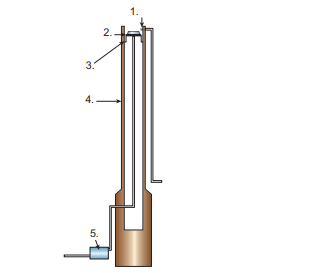
1
flare tip The final exit point where gas is burned; designed for stable combustion.
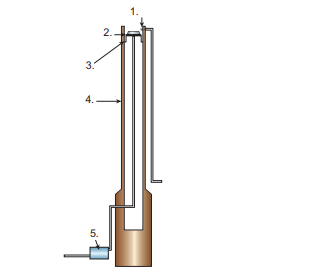
5
knockout drum or sump system Separates any liquids from the gas stream before it enters the stack.
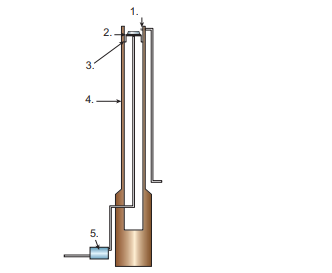
2
pilot A small, continuous flame used to ignite the waste gases.
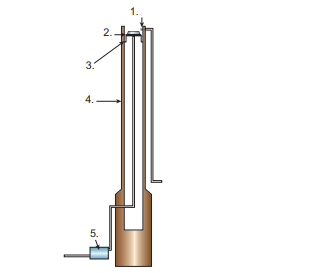
4
flare stack The vertical pipe that elevates the flame away from ground-level personnel.
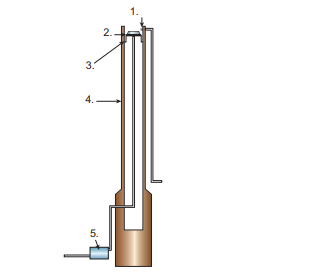
3
steam ring Injects steam into the flame to improve turbulence and ensure smokeless burning.