Science exam (questions from review booklet)
 Call Kai
 Learn
Learn Practice Test
 Spaced Repetition
 Match
Match Flashcards
 Knowt Play
1/82

There's no tags or description
Looks like no tags are added yet.
Name | Mastery | Learn | Test | Matching | Spaced | Call with Kai |
|---|
No analytics yet
Send a link to your students to track their progress
83 Terms
What are the 3 parts of the cell theory?
1) All living things are made of cells 2) Cells are the basic unit of life 3) All cells come from pre-existing cells
What are pluripotent cells?
Embryonic cells after 5 days, (also found in umbilical cord and placenta, which is why cord blood is so valuable) can make most cell types.
What are multipotent cells?
Adult cells (after birth), can only make a few cell types.
What are totipotent cells?
Cells from an early embryo (first 4 days) can make ALL cell types
What is cell differentiation?
The series of events when stem cells become specialized.
What is cell specialization?
Cells have different structures and functions to help them perform their jobs.
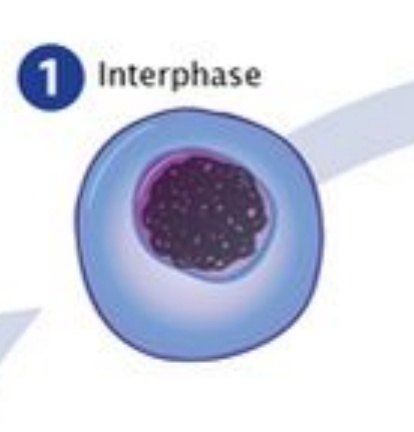
What does interphase look like and what is the cell doing?
Most of the cell’s life is spent in interphase, just doing normal cell jobs.
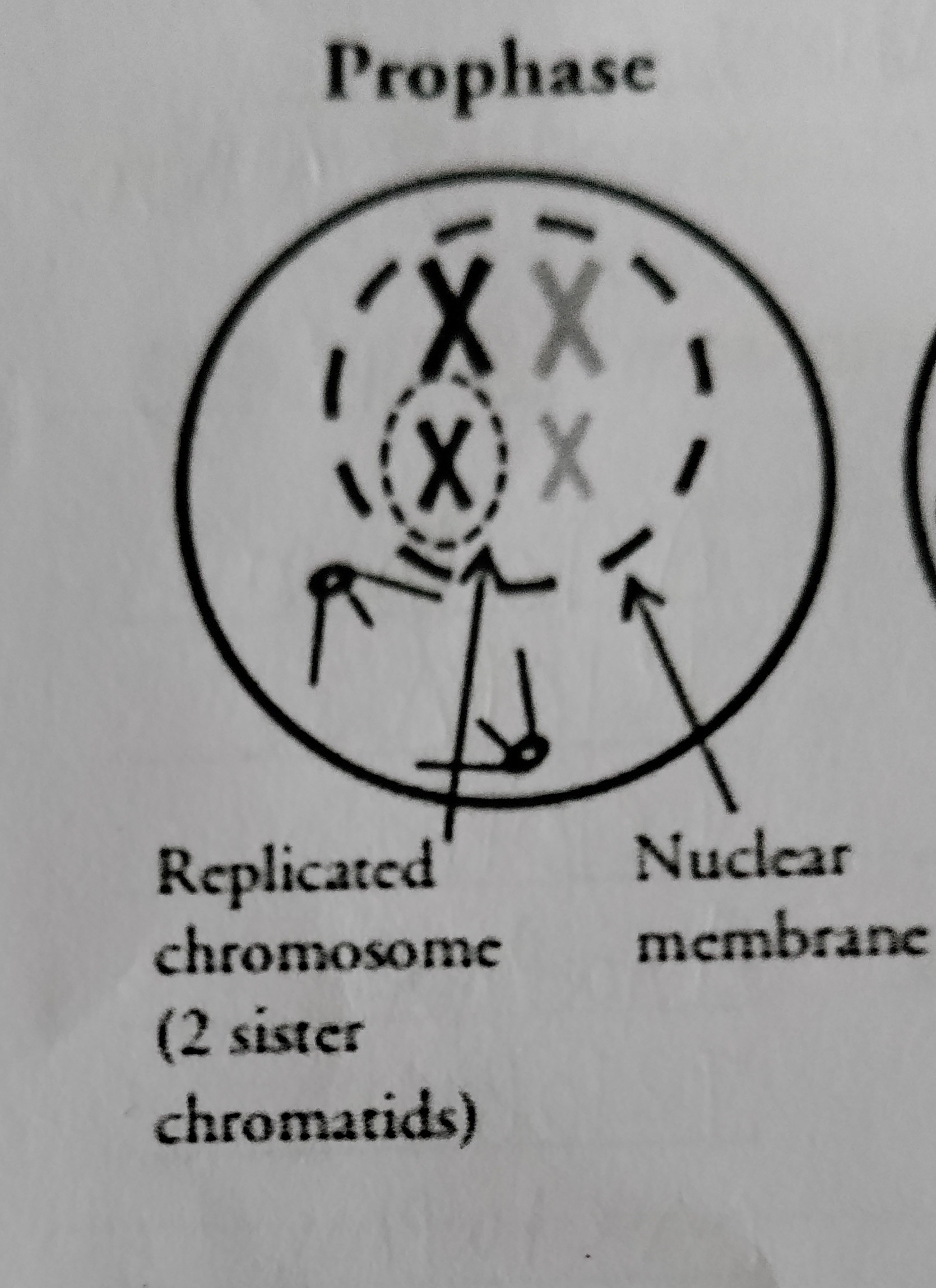
What does prophase look like?
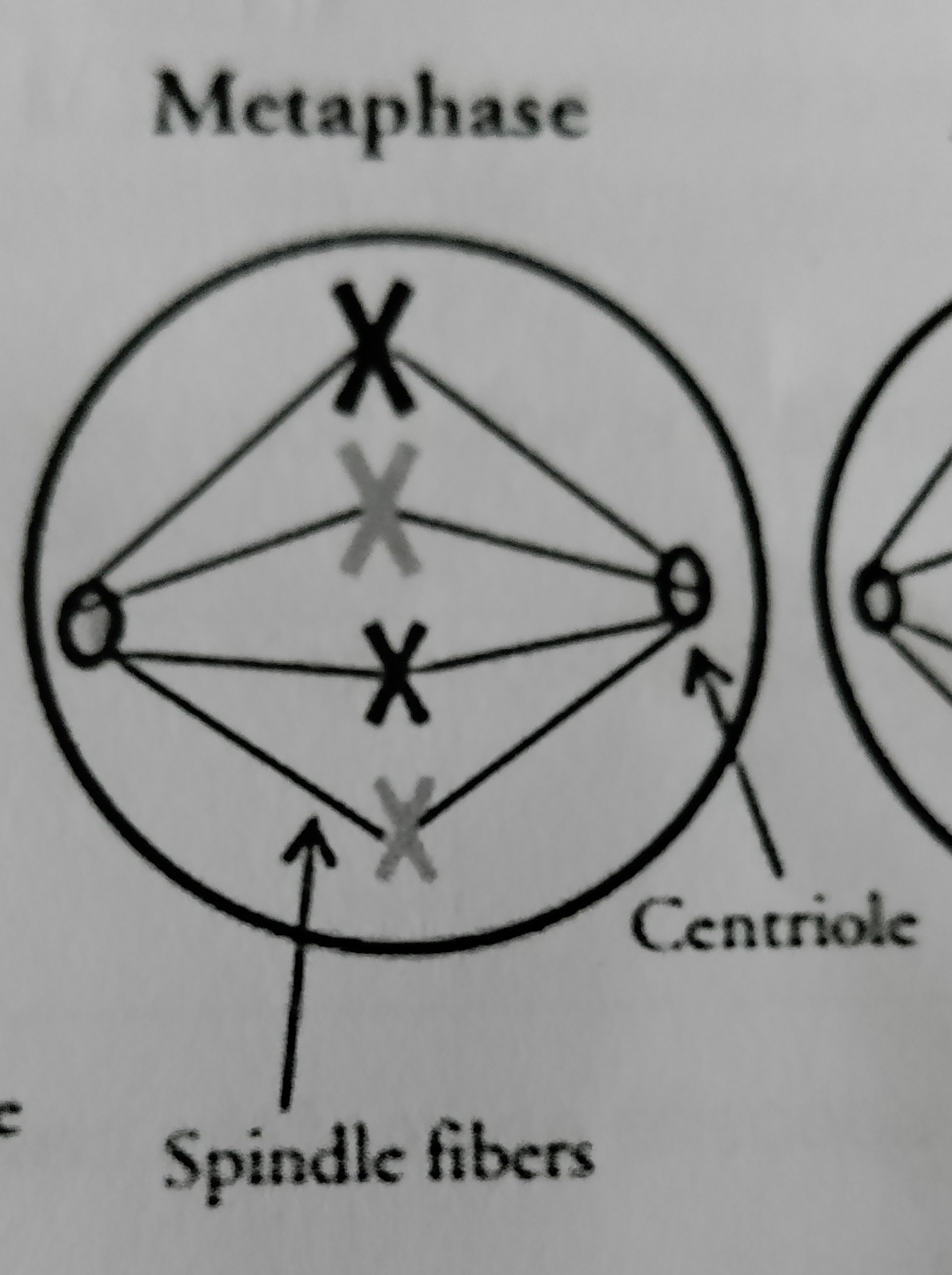
What does metaphase look like?
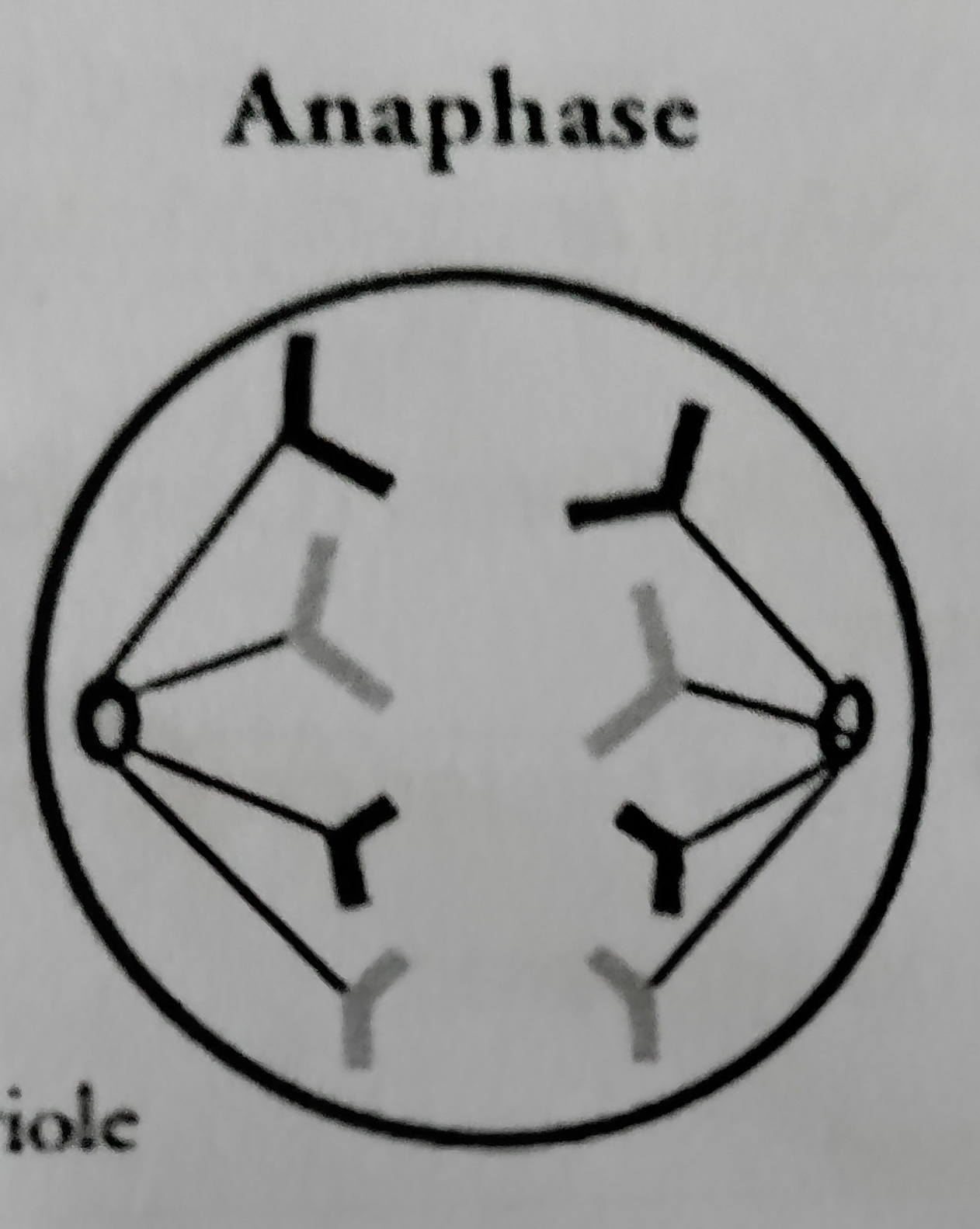
What does anaphase look like?
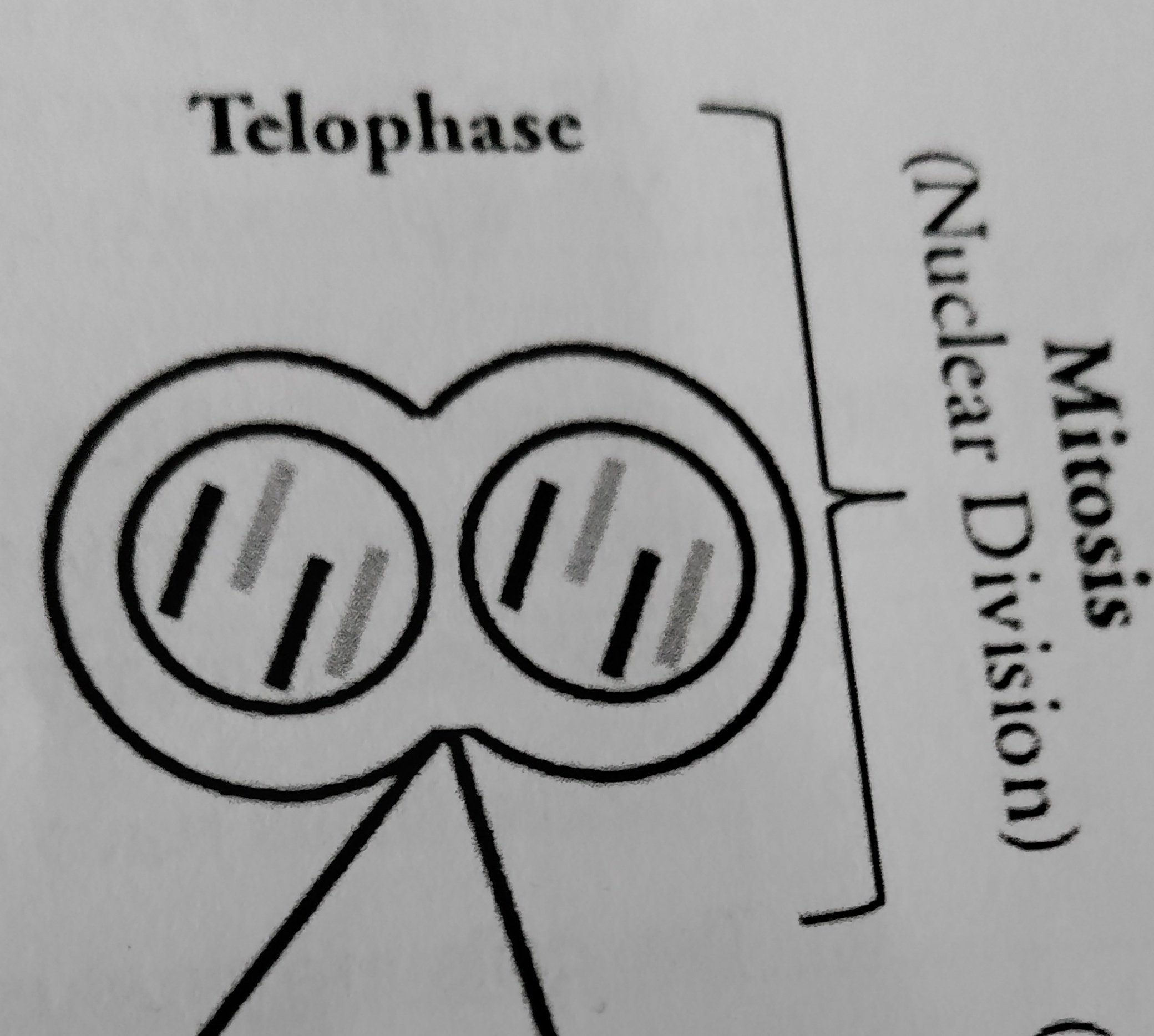
What does telophase look like?
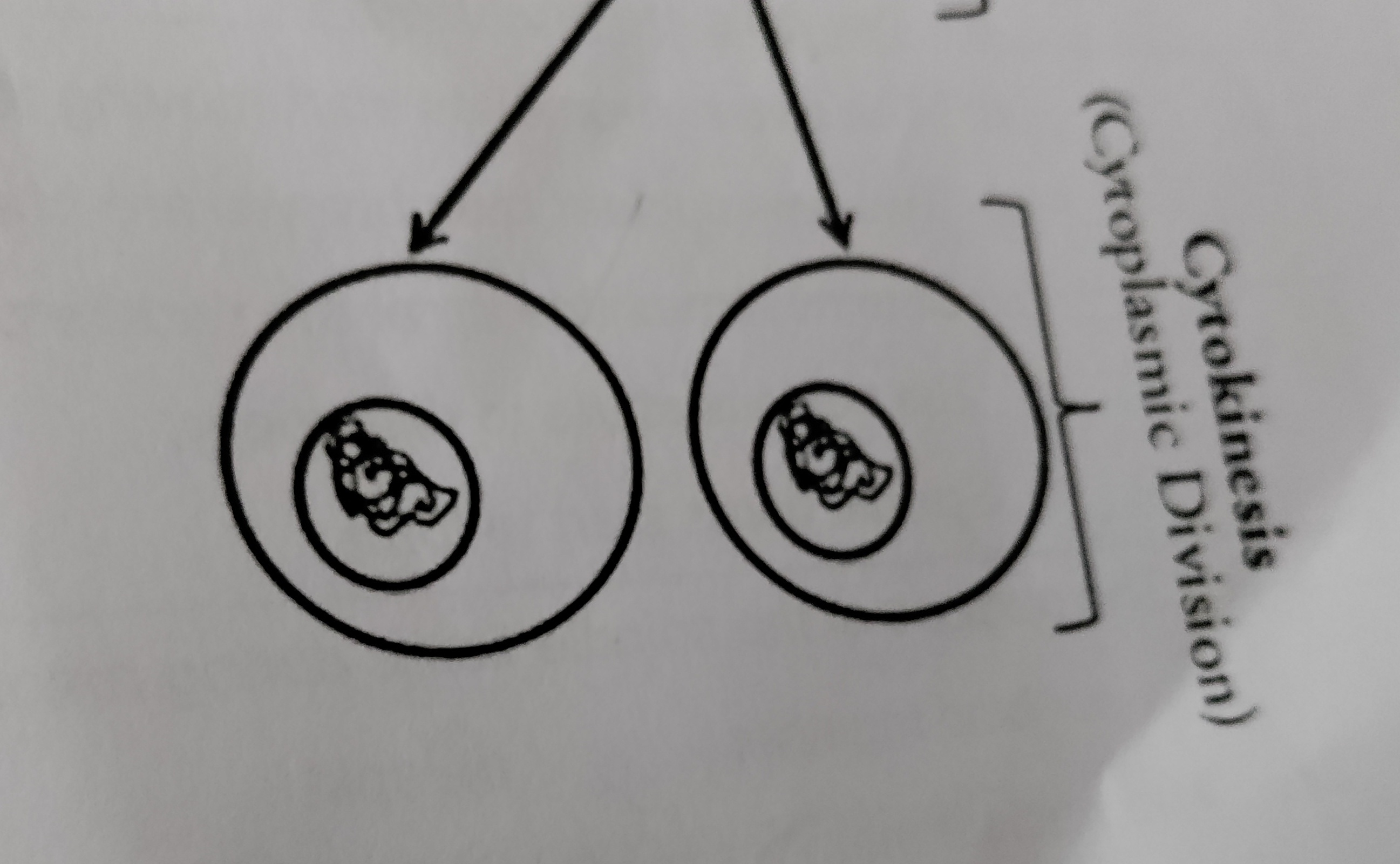
What does cytokinesis look like?
What are the characteristics of normal cells vs cancerous cells?
Normal cells: -divide slowly - cells communicate - stay in the proper area - chemical signals start and stop the cell cycle - DNA is replicated properly
Cancerous cells: -divide very quickly -cells don't communicate -cells spread out (metastasis) -cell cycle is ignored -damage and destroy normal cells -interfere with the functions of other cells -mutations occur in the DNA when it is replicated
What are the diatomic elements and what does it mean?
HoFBrINCl, when there are by themselves they are always in a pair.
What is a polyatomic?
A charged particle made of more than 1 atom.
What is a multivalent atom?
An atom with 2+ possible charges.
What are the layers of the atmosphere?
Troposphere, Stratosphere, Mesosphere, Thermosphere, Exosphere
What are the features of the Troposphere?
-Lowest layer -Contains 75-80% of atmosphere’s total mass -Contains nearly all the water vapor in the atmosphere -Where we live -Where majority of weather occurs
What is some information about the Stratosphere?
It contains the ozone layer, which absorbs UV radiation. The UV radiation makes it warm.
What are some features of the Mesosphere?
The temperature drops with altitude reaching as low as -90°C. This makes it the coldest part of the atmosphere.
What are some features of the Thermosphere?
Temperatures become higher here because gas molecules absorb solar radiation. Auroras happen here when charged particles interact with atmospheric gases.
What about the Exosphere?
It is the transitional zone between Earth's atmosphere and space.
What does the law of the conservation of mass state?
In a chemical reaction, matter cannot be created or destroyed, therefore the mass of the product(s) is equal to the mass of the reactant(s).
What is the taste of acids vs bases?
Acids taste sour while bases taste bitter/soapy.
How do acids vs bases feel?
Acids feel irritating or corrosive while bases feel slippery.
What color do acids vs bases make litmus paper turn?
Acids make litmus paper turn red while bases make litmus paper turn blue.
What ion do acids vs bases produce in water?
Acids: Produce H ions
Bases: Produce OH- ions
What color does BTB (pH indicator) turn for acids vs bases?
Acids: Yellow
Bases: Blue
How are acids/bases identified in a formula?
Acids: Start with H
Bases: Start with metal ion/ammonium, ends with OH
What are some everyday uses of concave mirrors?
-Flashlight
-Telescope
-Cosmetic mirror
-Car headlights
What are some everyday uses of convex mirrors?
-Security mirror
-Side mirrors
-Garage/road mirrors
-Reflector in street light
What are the LOST characteristics of a plane mirror?
Location: Behind the mirror
Orientation: Upright and laterally inverted
Size: Same size
Type: Virtual
What are the LOST characteristics of a convex mirrors?
Location: Behind the mirror
Orientation: Upright and laterally inverted
Size: Smaller
Type: Virtual
Where do rays of light bend when going from a less dense medium to a more dense medium?
Towards the normal, the speed of light will be slower
Where does the ray of light bend when going from a more dense medium to a less dense medium?
Away from the normal, the light travels faster
How does phosphorescence work and what are some examples?
Absorbs and stores UV rays that are emitted as visible light overtime. Examples: Glow in the dark items
How does chemiluminescence work and what are some examples?
Light produced from chemical reactions. Examples: Glow sticks
How does incandescence work and what are some examples?
Light produced by an object that heats up. Examples: Fire, incandescent light bulbs
How does fluorescence work and what are some examples?
Emits light during exposure to UV rays. Examples: Florescent light bulbs
How does bioluminescence work and what are some examples?
Organisms create chemical reactions in their cells. Examples: Jellyfish, fireflies
Explain how the index of refraction is related to the speed of light in that medium:
The higher the n value the SLOWER the speed of light
The lower the n value the FASTER the speed of light
What is the function of the lens in your eye?
It focuses the images onto the back of the eye (retina).
What is the function of the iris?
It controls the amount of light entering the eye, closing when light is bright and opens when light is dim using circular muscles.
What does the cornea do?
It's a tough transparent front layer that allows light to enter the eye.
What does the pupil do?
Light enters the eye through this small hole.
What does the retina do?
It's the back of the eye where images are focused.
What does the optic nerve do?
It transmits images formed on the retina to the brain.
What percentage of gases are found in our atmosphere?
79% nitrogen and 20% oxygen.
What is the greenhouse effect?
Sunlight passes through Earth’s atmosphere and warms the surface. The Earth then releases some of that energy back as heat (infrared radiation). Greenhouse gases (like carbon dioxide, methane, and water vapour) trap part of this heat and send it back toward Earth, keeping the planet warm enough for life. When there are too many greenhouse gases, more heat gets trapped, causing global warming.
How does thermal energy from the sun result in the greenhouse effect?
The energy from the sun gets trapped in the atmosphere as heat, making the Earth warmer.
What is the difference between weather and climate?
Weather is day to day conditions, climate is the average weather conditions of a specific place over a long period of time.
What is total internal reflection and what are some applications of it?
When light is going from a slow to fast medium it refracts so much it can't escape. Examples: Fiber optic cables, mirages, rainbows, binoculars, prisms.
What are the different types of human tissues?
Epithelial tissue, muscle tissue, connective tissue and nervous tissue.
What does epithelial tissue do?
It covers the internal and external body surfaces.
What does muscle tissue do?
It enables the body to move, exert force, and change shape.
What does connective tissue do?
It strengthens, supports, protects and connects cells and tissues.
What does nervous tissue do?
It sends messages and senses feelings.
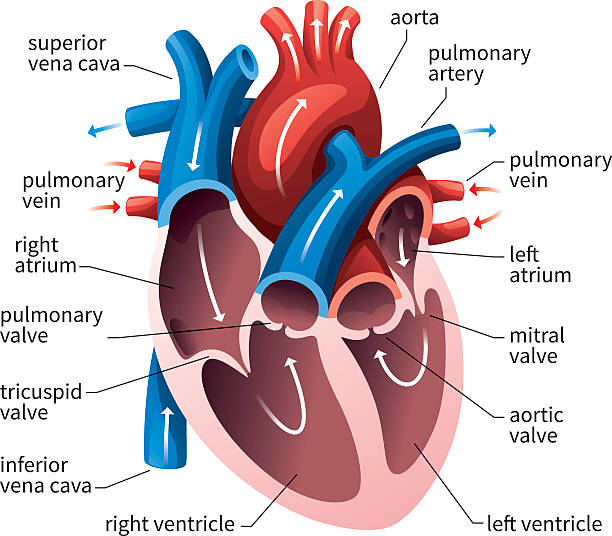
Diagram of the heart:
(Don't need to know the specific valve names)
What are the rules for writing ionic compound names?
1 Write the positive element (metal) first 2 Write the negative element (non metal) next, changing the ending to ide 3 Subscripts are ignored in naming
What are the rules for naming molecular/covalent compounds?
1 Prefixes based on subscripts (no mono for the first element) 2 Second element ends in “ide”.
What are the rules of writing ionic formulas?
1 Write down the symbol of each element 2 Write the charges of the elements 3 Crisscross charges 4 Cancel out numbers and remove 1s
What are the rules of writing molecular formulas?
1 Subscripts based on prefixes 2 No crisscross 3 No ones 4 No reducing or cancelling
List 5 effects climate change has on Earth:
Melting sea ice, warmer oceans, new deserts, migratory birds dying, increased flooding.
What are 5 things you can do to help reduce climate change?
Cutting back on eating meat, shorter showers, ride your bike/public transit more, plant more trees, use renewable energy.
How does cancer occur?
Mutated cells fail to perform apoptosis and divide rapidly.
How can you diagnose skin cancer? (ABCDE)
Asymmetrical mole, irregular border, uneven colour, large diameter, evolving shape
Comparison between benign and malignant tumours:
Benign: Divide slowly, stay in one area, small normal mole, non-cancerous
Malignant: Divide very quickly, spread out (metastasis), large unusual appearance, cancerous
What is the balanced equation for photosynthesis?
6CO2 + 6H2O + Light energy —> C6H12O6 + 6O2
What is the balanced equation for cellular respiration?
C6H12O6 + 6O2 —> 6CO2 + 6H2O + 36 ATP
What happens during G1?
The cell grows and makes a new set of organelles and proteins for the daughter cells.
What happens during synthesis (S phase)?
The cellular DNA is replicated and the two daughter cells each get one set of DNA. Genetic material is checked.
What happens in G2?
Cell growth continues and there is synthesis of special proteins in preparation for mitosis.
What happens in mitosis?
The cell splits its DNA and organelles into 2 identical daughter cells.
What happens during cytokinesis?
The cell completely divides into 2 daughter cells (cytoplasm is divided).
What is the Law of Reflection?
The angle of incidence is equal to the angle of reflection.
What is a vacuum (in terms of a medium)?
A space that has no matter, where light travels fastest.
What are the two formulas to calculate magnification?
M=hi/ho and M=di/do
Synthesis
A + B —> AB “The Marriage”
Decomposition
AB —> A+B “The Divorce”
Single displacement
AB + C —> A + BC “Cutting in”
Double displacement
AC+BD —> AD + BC “Switching Partners”
Combustion
CxHy + O2 —> H2O + CO2
Neutralization
acid + base —> water + salt