Lecture 5 Part 2: Developing new products, product development process, idea generation
 Call Kai
 Learn
Learn Practice Test
 Spaced Repetition
 Match
Match Flashcards
 Knowt Play
1/19

There's no tags or description
Looks like no tags are added yet.
Name | Mastery | Learn | Test | Matching | Spaced | Call with Kai |
|---|
No analytics yet
Send a link to your students to track their progress
20 Terms
Why do firms create new products?
Innovation → ideas are transformed into new offerings: products, services, processes, branding concepts
Reasons to innovate:
changing customer needs
market saturation
managing risk through diversity
fashion cycles
improving business relationships
What is diffusion of innovation?
Time people try a new product → process where the use of innovation spreads throughout a market group over time & across categories
pioneers/breakthroughs are new products that are first movers to establish new market
influencer consumer preferences
change rules of competition (phone z flip/fold)
What is the diffusion of innovation curve?
Innovators
early adopters
early majority
late majority
laggards
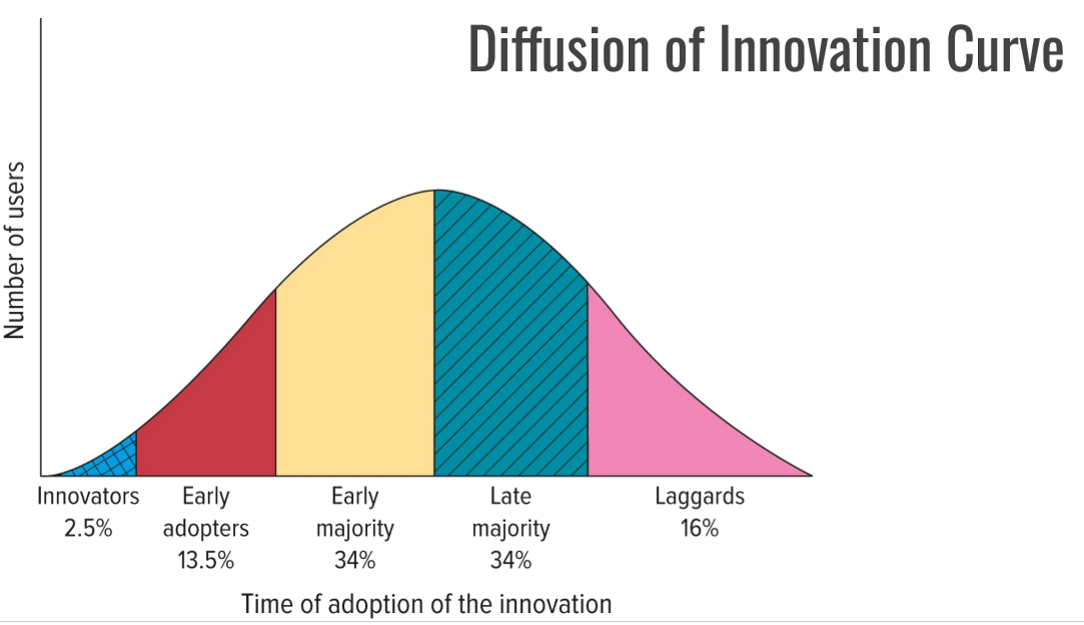
How can you use the diffusion of innovation theory?
Factors affecting product diffusion:
relative advantage
compatility
observability
complexity & trialability
What is the product development process (6 stages)?
Not usually linear → go back & redraft
Idea generation - develop new product ideas
Concept testing - test new ideas among potential customers
Product development - develop prototypes/product
Market testing - test actual products in test markets
Product launch - full-scale commercialization
Evaluation of results - analyze performance of new product & modify

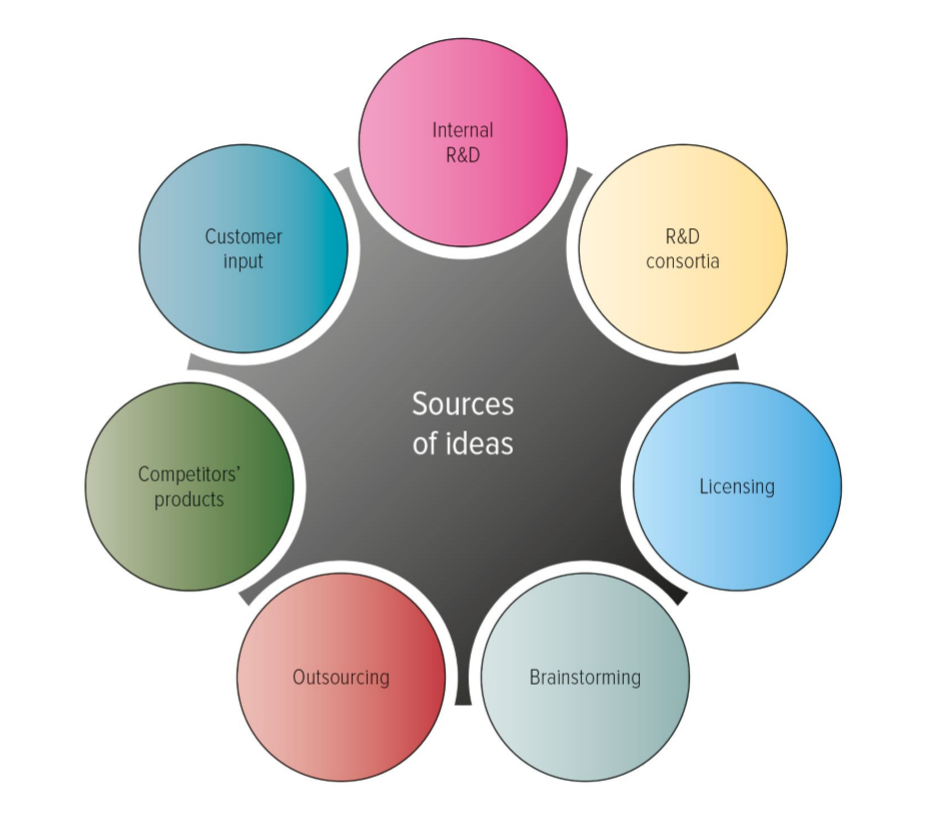
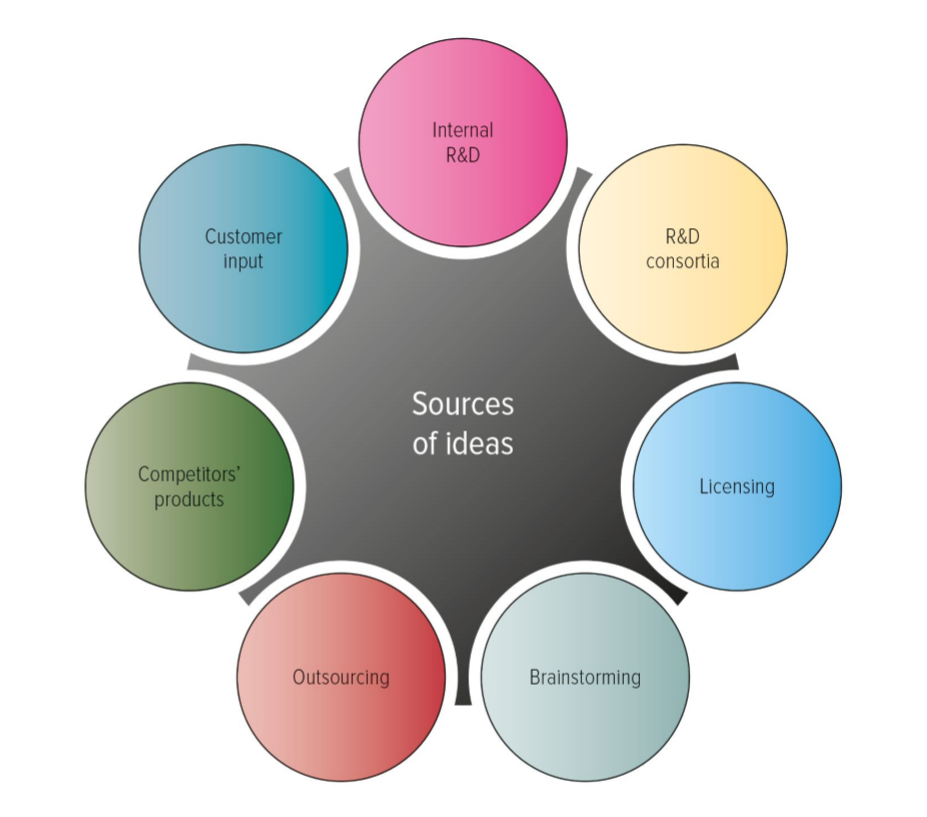
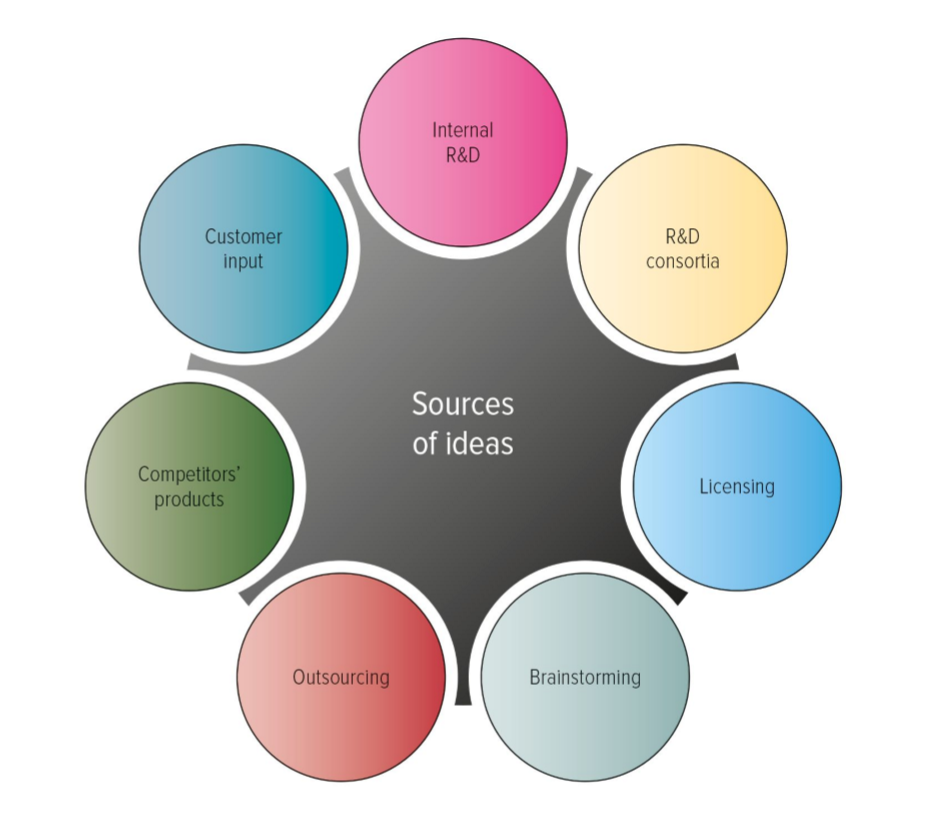
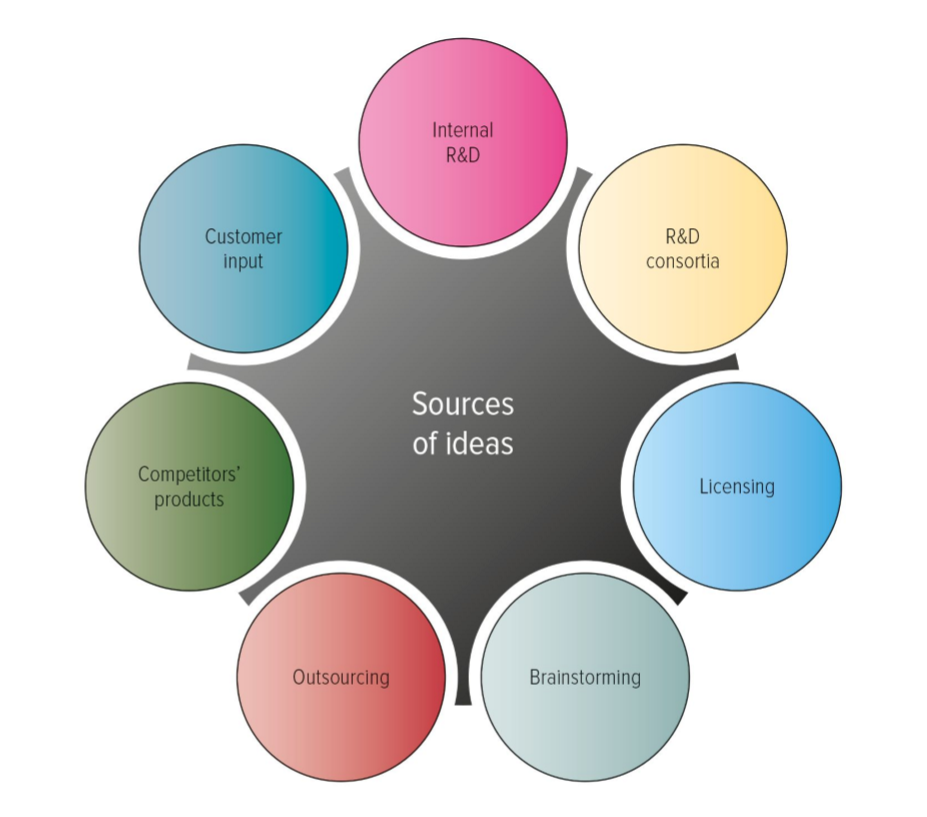
What are the 7 sources of new product ideas?
Internal R&D
R&D consortia
Licensing
Brainstorming
Outsourcing
Competitors’ products
Consumer input
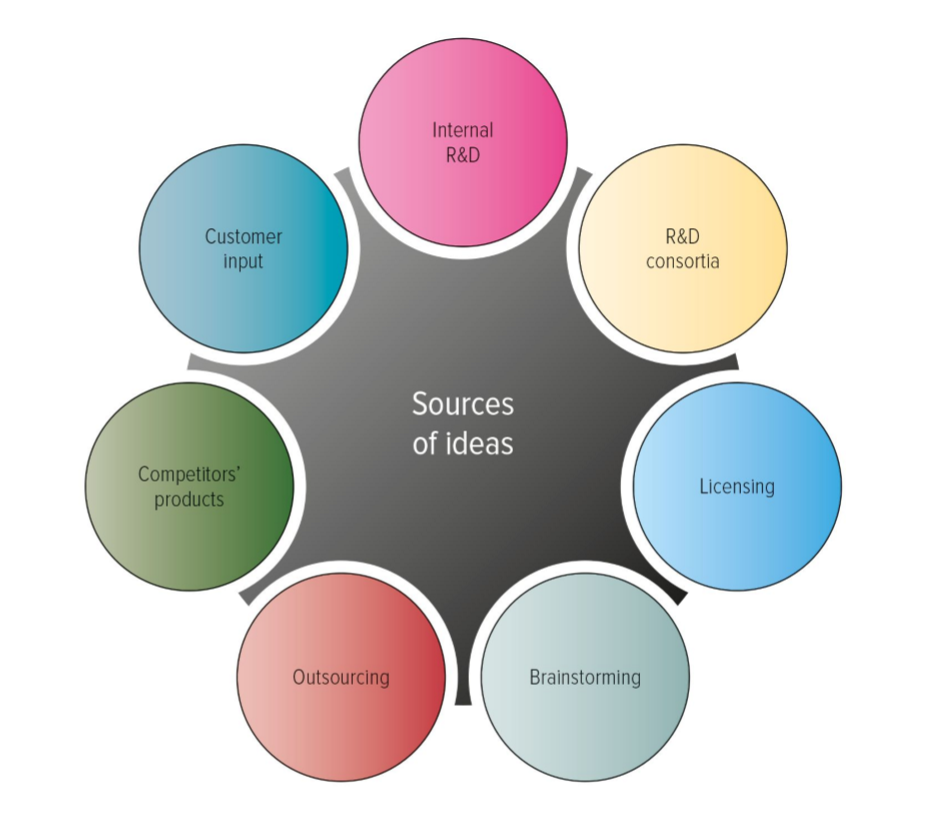
What is idea generation: 1. Internal R&D?
Internal scientists & engineers work to solve complex problems & develop new ideas
often source of technological & breakthrough products
What is idea generation: 2. R&D consortia
Companies that collaborate → firms join to form research consortiums:
lower costs & risks
benefits spread to all firms
ex. pharmaceutical industry research
What is idea generation: 3. licensing?
Firms purchase the rights to technology or ideas from other research-intensive firms
university research centers provide these licenses
What is idea generation: 4. Brainstorming
Groups work together to generate ideas:
no idea immediately accepted rejected
moderators may channel attention to specific product features, performance expectations, packaging
members vote on best idea/combination of ideas
What is idea generation: 5. Outsourcing?
Hiring an outside firm to help generate ideas & develop new products & services
design firms can help clients generate new product & service ideas in industries (health care, toys, computers)
What is idea generation: 6. Competitors’ products?
Firms can draw inspiration from competitors’ product through process of reserve engineering:
taking apart product
analyzing product
creating improved product that doesn’t infringe on patents
copycat product-development is a widespread practice
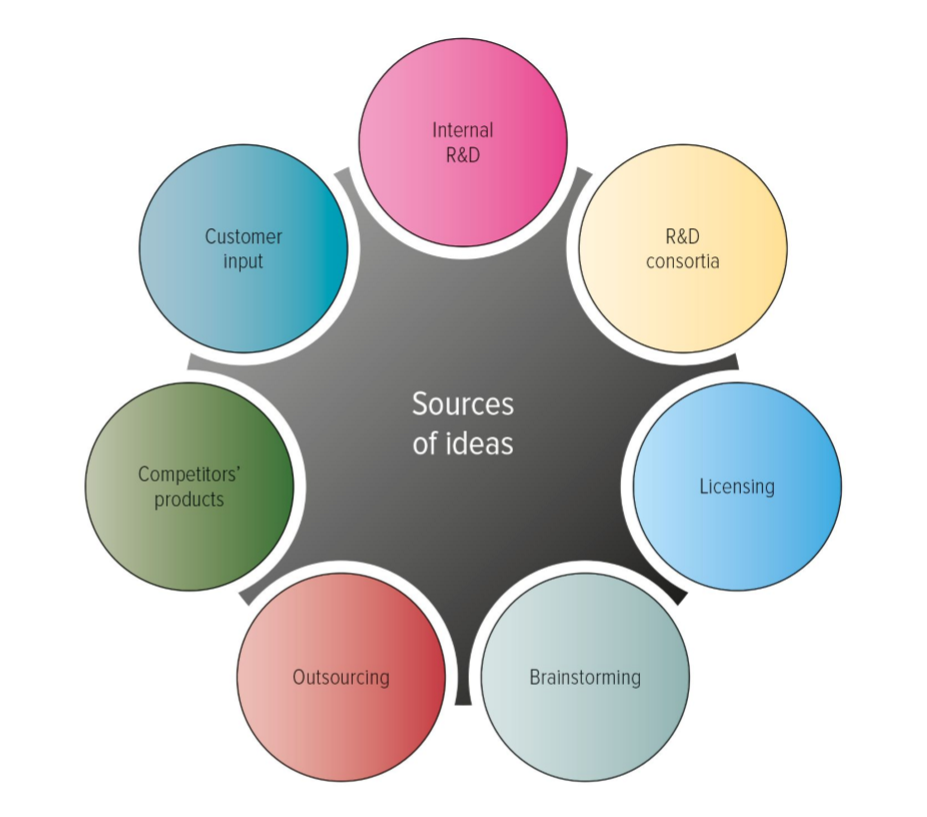
What is idea generation: 7. customer input?
Listening to the customer → especially lead users in both B2B & B2C markets can lead to successful idea generation
What is concept testing?
A concept is a brief written description of the product
the process where the concept is presented to potential buyers/users to obtain their reactions
What is product development?
Balancing various engineering, manufacturing, marketing, economic considerations to develop a product’s form & features
Prototype:
alpha testing - firm attempts to determine whether product will perform according to design & if it satisfies the need
beta testing - uses potential consumers who examine the prototype in real use setting to determine functionality, performance, potential problems, other issues
What is market testing?
Premarket tests
customers exposed → surveyed → firm makes decision
Test marketing
mini product launch → more expensive → estimated demand
What is a product launch?
Require a lot of financial resources & extensive coordination of all marketing mix aspects
firm confirms target market, decides how product will be positioned, finalizes remaining marketing mix variables, & marketing budget
Timing of launch can be critical
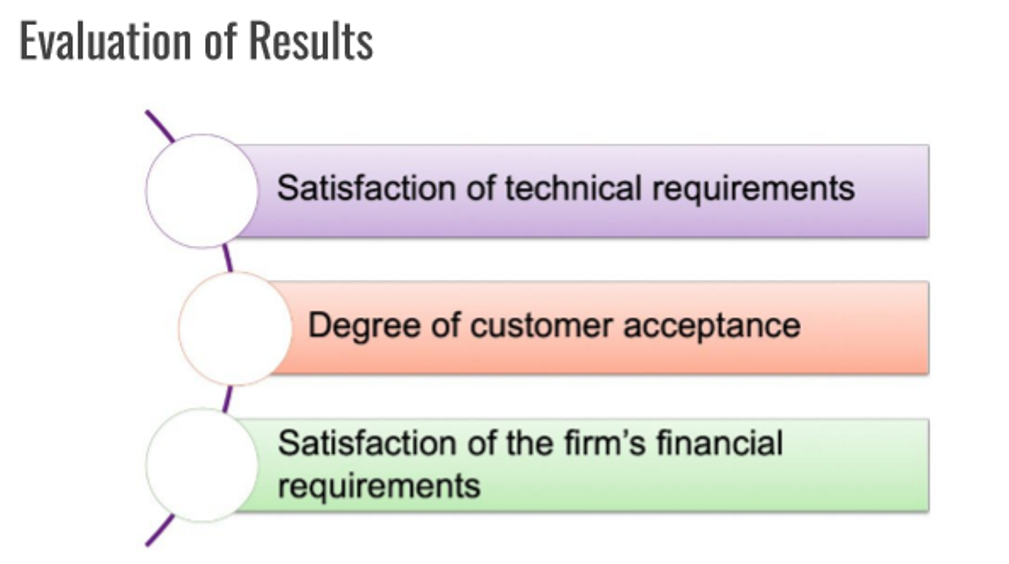
What is the evaluation of results (3 stages)?
Satisfaction of technical requirements
Degree of customer acceptance
Satisfaction of firm’s financial requirements
What is the product life cycle?
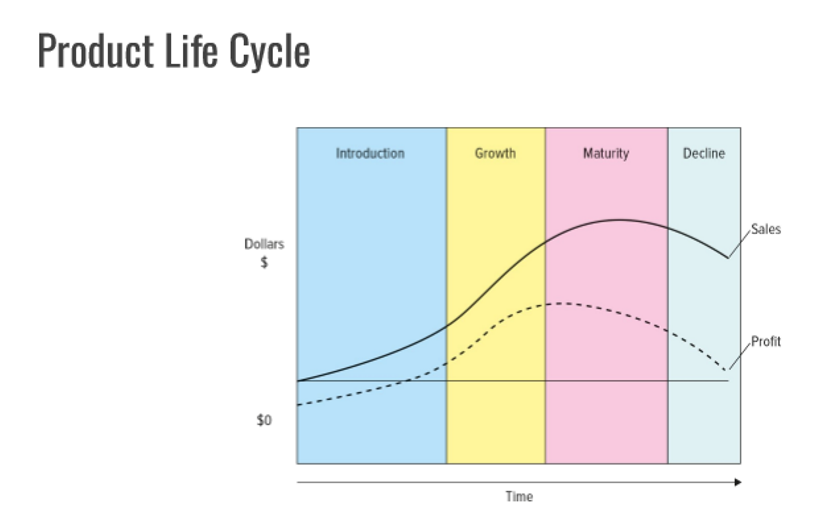
Defines stages that products move through as they enter, get established in, & leave the marketplace
reflects marketplace trends
Shape: curve is bell-shaped, products move through cycle at different rates, some move more rapidly
What are the 4 stages of the product life cycle?
Introduction - firm takes initial losses due to high start-up costs & low sales
Growth - growth in product adopters, industry sales, competitors, available product versions
Maturity - adoption of product by late majority & intense competition for market share, entry into new markets/segments, new products
Decline - laggards have not tried the product/service enter the market here