Ch. 9 AP Microeconomics (International Trade)
0.0(0)
Studied by 4 people Call Kai
 Learn
Learn Practice Test
 Spaced Repetition
 Match
Match Flashcards
 Knowt Play
Card Sorting
1/19

Earn XP
Description and Tags
Last updated 7:00 PM on 9/16/22
Name | Mastery | Learn | Test | Matching | Spaced | Call with Kai | Chat |
|---|
No analytics yet
Send a link to your students to track their progress
20 Terms
1
New cards
Import
commodities (goods or services) bought from a foreign country

2
New cards
World Price
The international market price of a good or service, determined by world demand and supply. If higher than domestic price country will export if not it will import.
3
New cards
Price takers
Buyers and sellers in a competitive market that must accept the price that the market determines (Usually small)
4
New cards
Export
to sell goods to another country
5
New cards
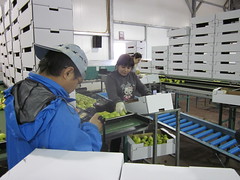
Exporter
When a country allows trade and becomes an _______ of a good, domestic producers of the good are better off, but domestic consumers of the good are worse of, however trade still raises economic well being in the way that winners exceed losers.
6
New cards
Importer
When a country allows trade and becomes an _______ of a good, domestic producers of the good are worse off, but domestic consumers of the good are better off, however trade still raises economic well being in the way that winners exceed losers.

7
New cards
Tariff
A tax on goods produced abroad and sold domestically. Reduces the quantity of imports and create a deadweight loss.
8
New cards
Import Quotas
A limit imposed by a nation on the quantity (or total value) of a good that may be imported during some period of time.
9
New cards
Increase
International trade can lead to an _________ in the variety of goods. German Beer is not the same as American Beer.

10
New cards
Economies of scale
A phenomenon that describes as a company produces larger numbers of a particular product, the cost of each of these products goes down, can be tied to international trade.
11
New cards
Outsourcing
The procuring of services or products, such as the parts used in manufacturing a motor vehicle, from an outside supplier or manufacturer in order to cut costs, actually economically efficient and mutually beneficial.
12
New cards
competition
Opening up international trade can reduce market power(a type of market failure), by increasing _________. The firm will no longer be shielded.

13
New cards
Infant industry argument
Proposed by Alexander Hamilton in 1792, this oldest economic argument for government intervention states that developing countries have a comparative advantage in manufacturing, proposes that new industries should be protected from foreign competition until they are large enough to compete in international markets
14
New cards
Unfair competition argument
A common argument that free trade is desirable only if all countries play by same rules otherwise it is unfair 2 expect the firms to compete in the international marketplace. (WRONG), because ultimately it will be that other country that will bear the brunt of the costs for having favorable laws.
15
New cards
Bargaining chip argument
The argument that a threat of a trade restriction can help remove a trade restriction already imposed by a foreign government,HOWEVER in the REAL world countries most often retaliate with more trade restrictions
16
New cards
NAFTA
A trade agreement between Canada, the United States and Mexico that encourages free trade between these North American countries.
17
New cards
GATT
General Agreement on Tariffs and Trade; international trade organization that encourages free trade by lowering tariffs and other trade restrictions
18
New cards
WTO
The World Trade Organization - an international body that enforces agreements that reduce barriers to international trade; successor to the GATT, now has 151 member states. Headquarters in Geneva, Switzerland of course.

19
New cards
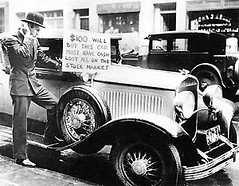
Great Depression
A depression starting with collapse of the US stock market in 1929, period of worldwide economic stagnation and depression. Heavy borrowing by European nations from USA during WW1 contributed to instability in European economies. Sharp declines in income and production as buying and selling slowed down. Widespread unemployment, countries raised tariffs to protect their industries. America stopped investing in Europe. Lead to loss of confidence that economies were self adjusting, HH was blamed for it, led to more international multilateral trade agreements.
20
New cards
Smoot-Hawley Tariff
This tariff was one of Herbert Hoover's early efforts to protect the nation's farmers at the onset of the Great Depression. Raised price of foreign imports so they couldn't compete with American goods. It didn't work and hurt international trade further deepening the Great Depression.