BENZENE
 Call Kai
 Learn
Learn Practice Test
 Spaced Repetition
 Match
Match Flashcards
 Knowt Play
1/44

Earn XP
Description and Tags
CHEM 40 | Basic Organic Chemistry
Name | Mastery | Learn | Test | Matching | Spaced | Call with Kai |
|---|
No analytics yet
Send a link to your students to track their progress
45 Terms
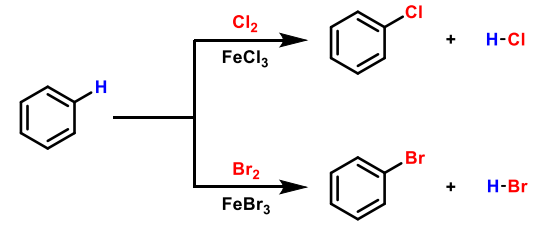
Halogenation
A halogen atom X (X = CI or Br) replaces an H atom of the aromatic ring
Halogenation
- Reagent: _____
CI2 and Br2
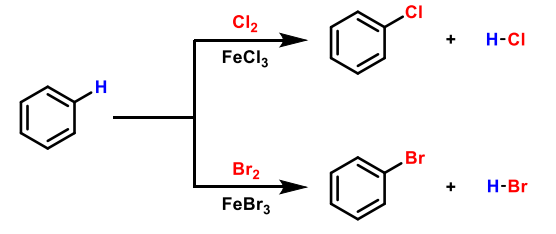
Halogenation
less reactive than alkenes
Halogenation
- Electrophile: _____
Halonium ion (X+)
Halogenation
- Catakysts: _____
FeBr3 or FeCI3
Halogenation
- Product: _____
Aryl Halides
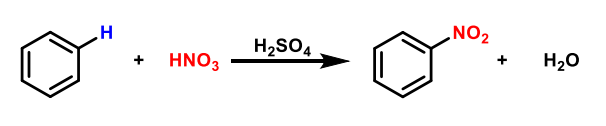
Nitration
A nitro group (-NO2) replaces an H atom of the aromatic ring
Nitration
- Reagent: _____
H2SO4
Nitration
- Electrophile: _____
Nitronium ion (NO2+)
Sulfonation
A sulfo group (-SO3H) replaces an H atom of the aromatic ring
Sulfonation
- Electrophile: _____
Sulfur trioxide (SO3) or HSO3+
Sulfonation
- Reagent: _____
fuming H2SO4
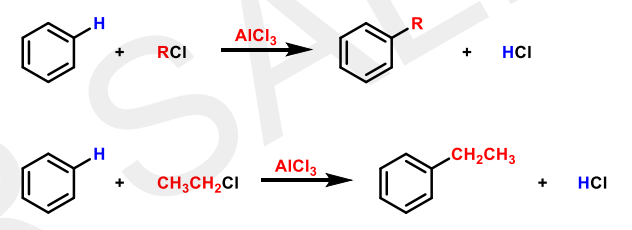
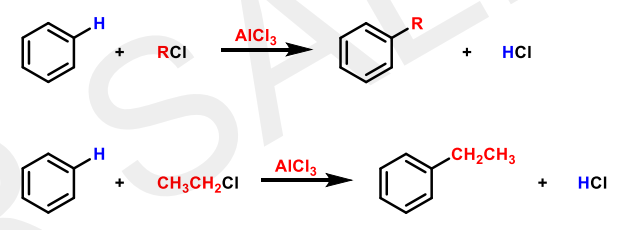
Friedel-Crafts Alkylation
ALKYLATION | Charles Friedel and James Crafts (1877)
Friedel-Crafts Alkylation
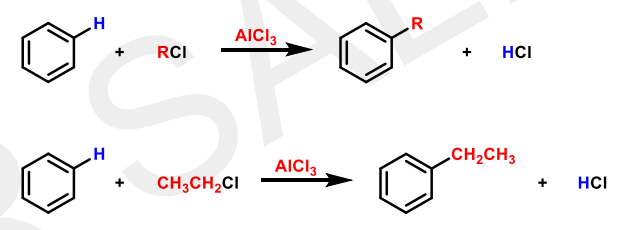
Transfer of an alkyl group R from one atom to another atom (alkylation)
Friedel-Crafts Alkylation
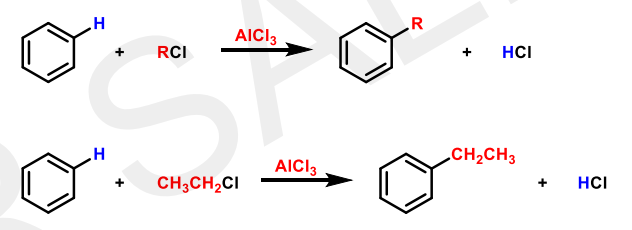
Treatment of benzene with anlkyl halide and lewis acid (AICI3)
Friedel-Crafts Alkylation
forms a new C-C bond
Friedel-Crafts Alkylation
- Electrophile: _____
carbocation
Friedel-Crafts Alkylation
- Reagent: _____
two moles of AICI3 per mole of benzene
Friedel-Crafts Acylation
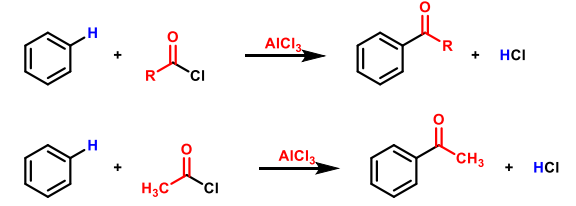
ACYLATION | Charles Friedel and James Crafts (1877)
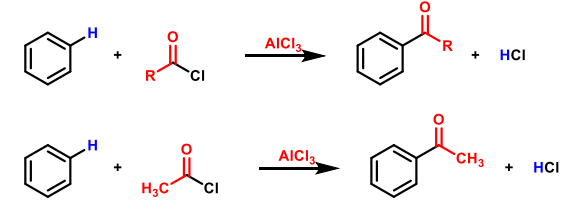
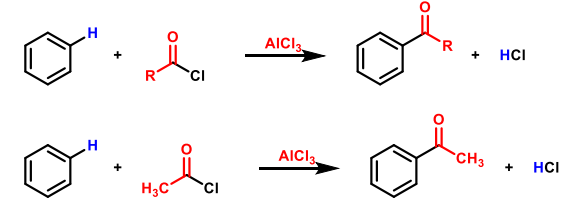
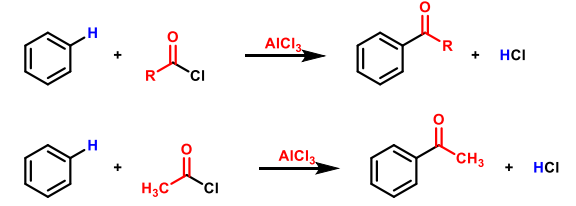
Friedel-Crafts Acylation
transfer of an acyl group from one atom to another atom (acylation)
Friedel-Crafts Acylation
treatment of benzene with an acid chloride and a lewis acid (AICI3) to form a ketone
Friedel-Crafts Acylation
forms a new C-C bond
Friedel-Crafts Acylation
- Reagent: _____
two moles of AICI3 per mole of benzene
Friedel-Crafts Acylation
- Electrophile: _____
acylium ion (R-C+=O)
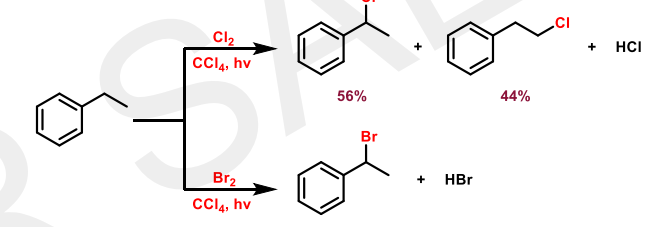
Free-radical halogenation
The preferred site is the sp3-hybridized C atom right next to the benzene ring (known as the benzylic carbon)
Free-radical halogenation
- Reagent: _____
CI2 | CCI4, hv | Br2 | CCI4, hv
Free-radical halogenation
- Intermediate: _____
the resonance-stabilized benzylic free-radical
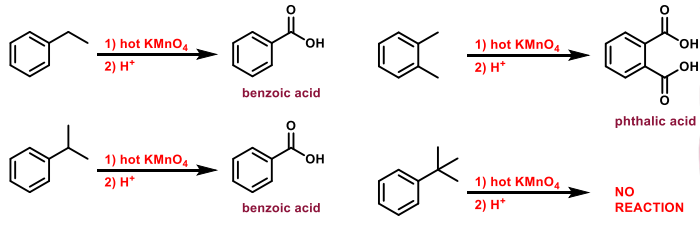
Oxidation
Arenes containing at least one benzylic H are oxidized with4 to benzoic acid
Oxidation
- Reagent: _____
hot KMnO4 and H+
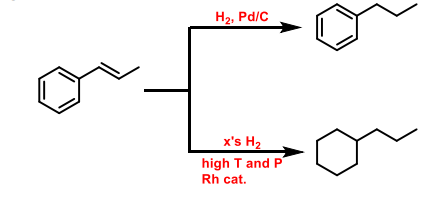
Hydrogenation
Occurs rapidly in the side chain in the presence of ordinary catalysts
Hydrogenation
- Reagent: _____
H2, Pd/C | x’s H2 | high T and P Rh cat
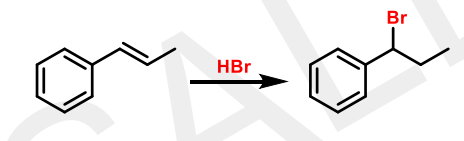
Electrophilic Addition (Alkenylbenzene): Hydrohalogenation
- Reagent: _____
HBr
Electrophilic Addition (Alkenylbenzene): Hydrohalogenation
Electrophilic Addition (Alkenylbenzene): Hydration
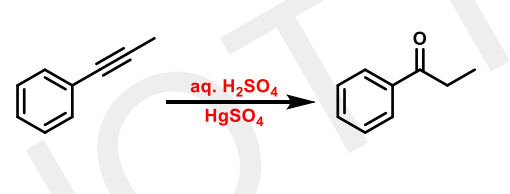
Electrophilic Addition (Alkenylbenzene): Hydration
- Reagent: _____
aq. H2SO4 | HgSO4
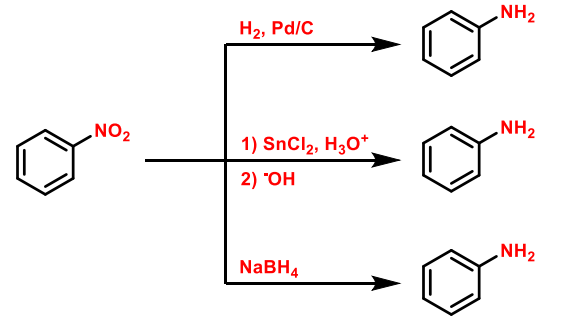
Reduction
The -NO2 (nitro) group is converted to -NH2 (amino) group using hydrogen and a metal catalyst
Reduction
- Reagent: _____
H2, Pd/C | SmCI2, H3O+ and -OH | NaBH4
Reduction
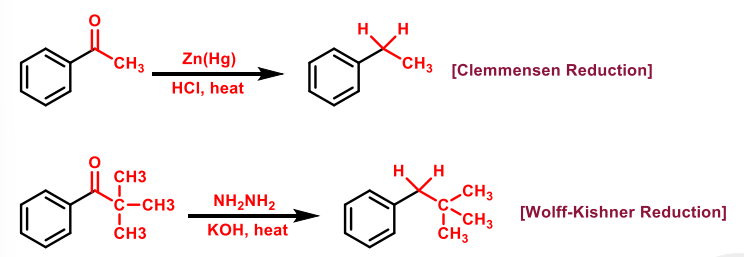
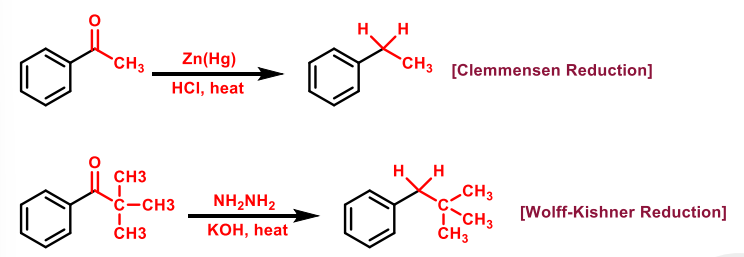
Reduction
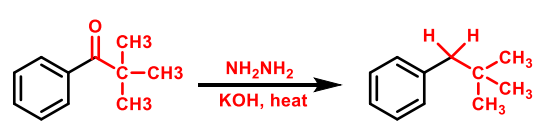
Conversion of acylbenzes to alkybenzenes
Clemmensen Reduction
- Reagent: _____
Zn(Hg) | HCI, heat
Wolff-Kishner Reduction
- Reagent: _____
NH2NH2 | KOH, heat
Clemmensen Reduction
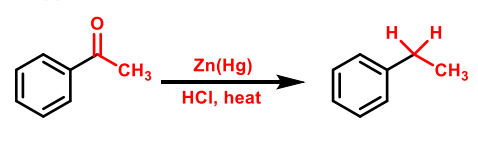
Wolff-Kishner Reduction
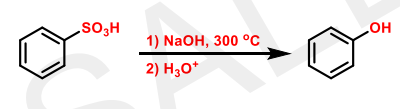
Alkali-fusion
conversion of benzenesulfonic acids to phenols
Alkali-fusion
- Reagent: _____
NaOH, 300 °C
H3O+