Energy Metabolism & Nutrients: Biochemistry and Exercise Types
 Call Kai
 Learn
Learn Practice Test
 Spaced Repetition
 Match
Match Flashcards
 Knowt Play
1/53

There's no tags or description
Looks like no tags are added yet.
Name | Mastery | Learn | Test | Matching | Spaced | Call with Kai |
|---|
No analytics yet
Send a link to your students to track their progress
54 Terms
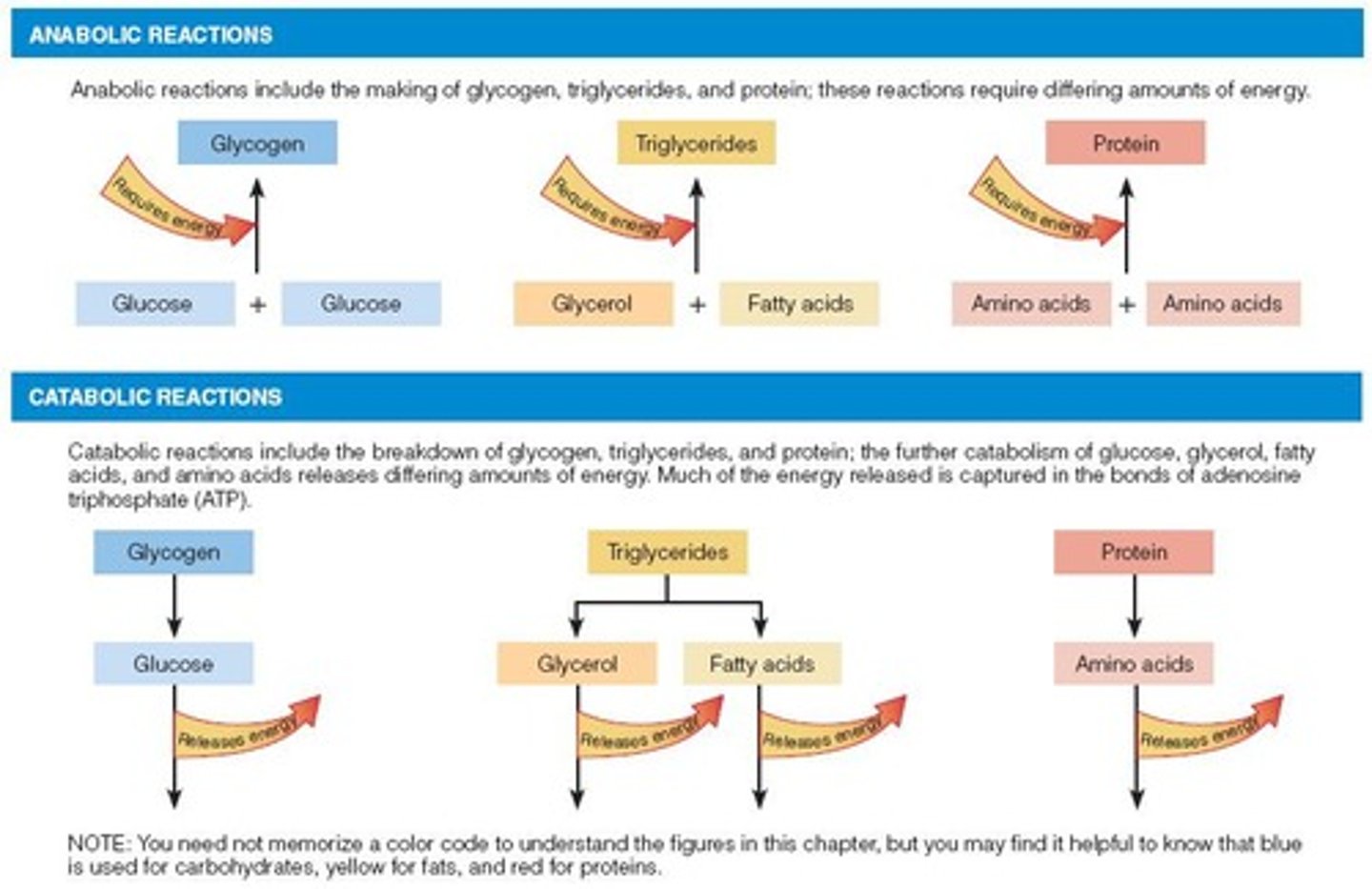
What is metabolism?
The sum of the body's chemical reactions and all other reactions that happen in living cells, including how we get energy from food.
Where do metabolic reactions occur?
In cells.
What are the two main types of metabolism?
Anabolism (building) and Catabolism (breaking).
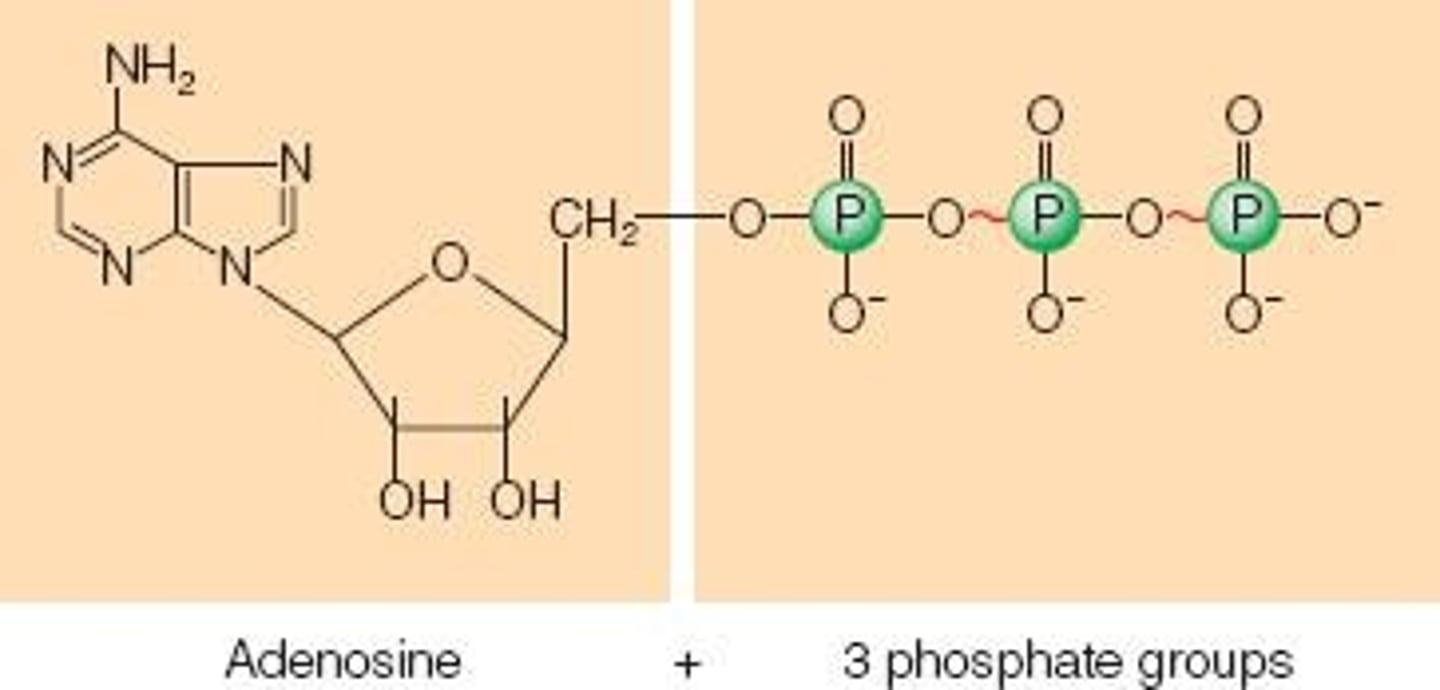
What is ATP?
Adenosine Triphosphate, the body's high-energy compound.
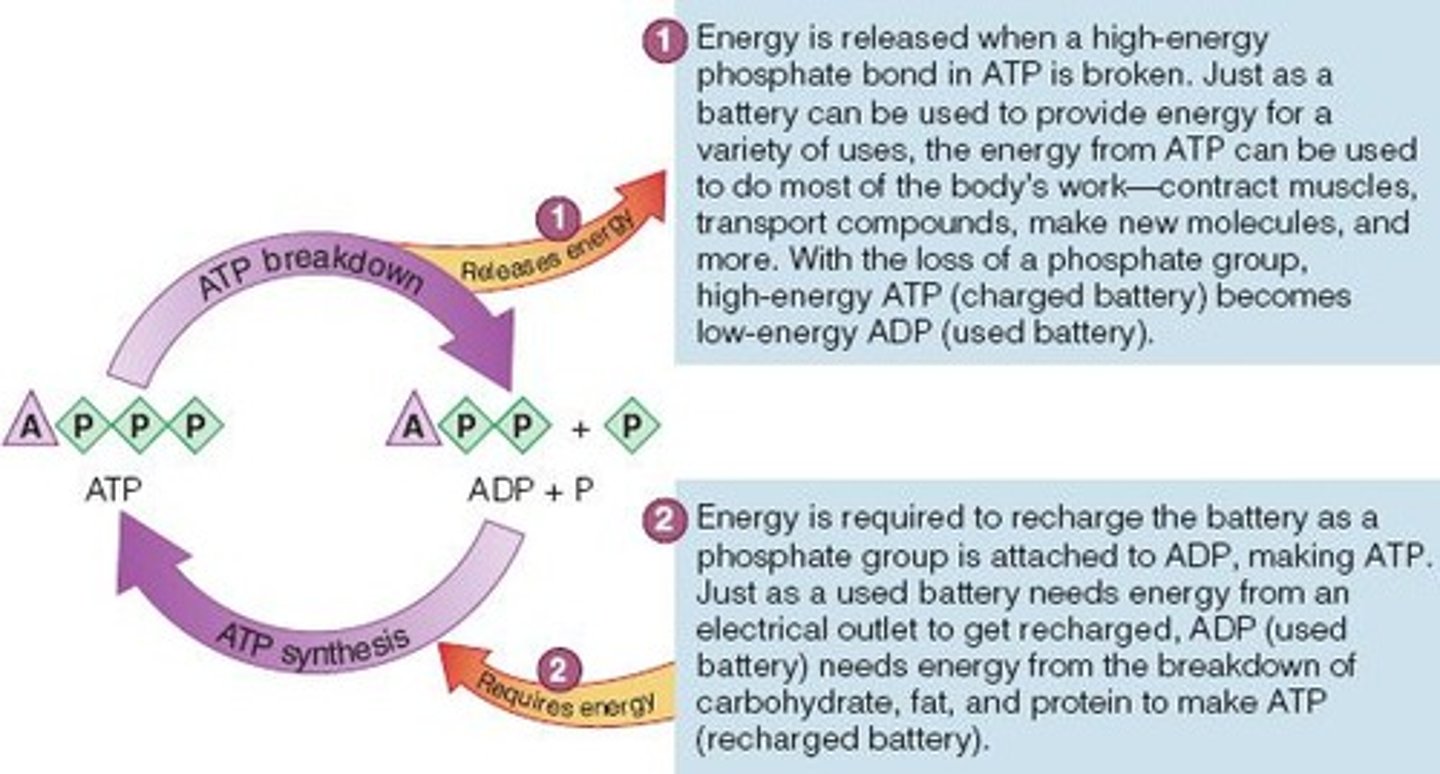
What happens during ATP hydrolysis?
Phosphates are split off, releasing energy.
What role do enzymes play in metabolic reactions?
They speed up metabolic reactions.
What are coenzymes?
Helpers that assist enzymes in metabolic reactions.
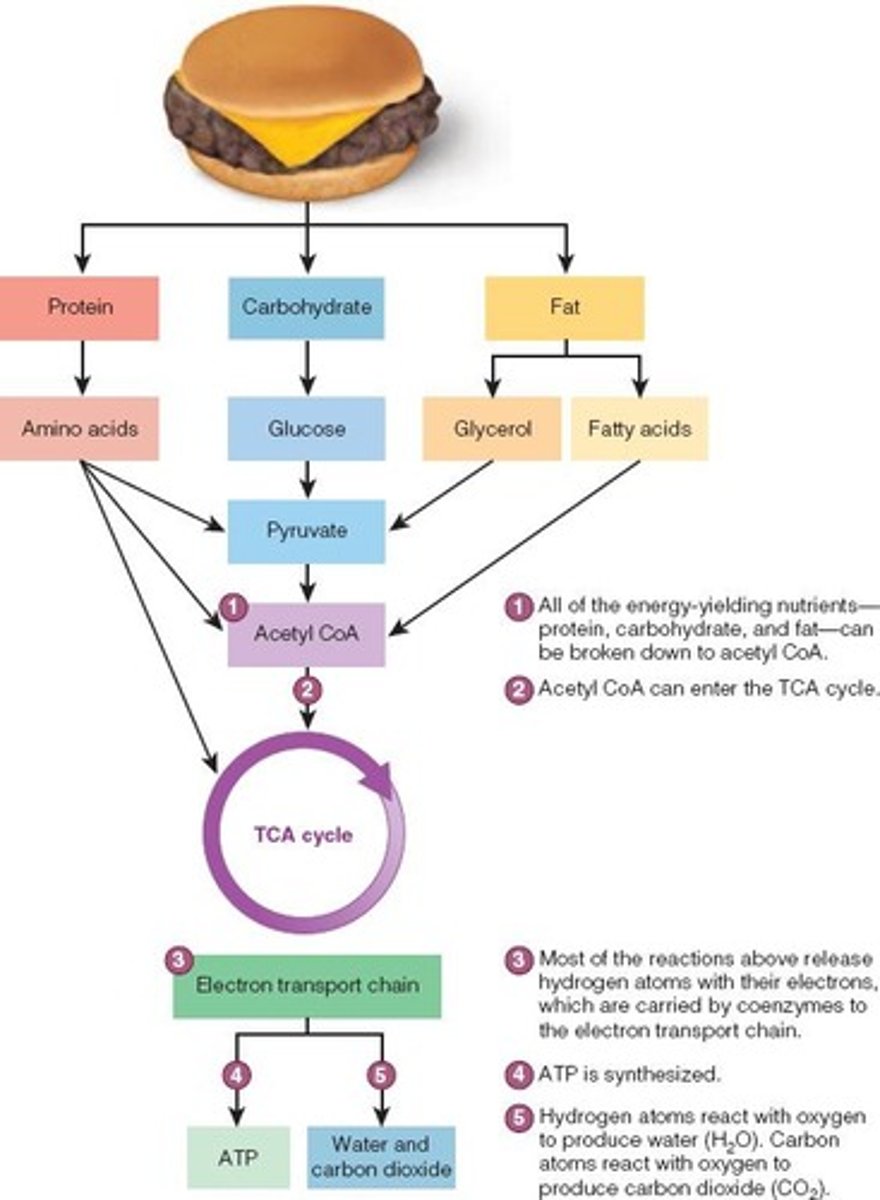
What nutrients break down into glucose?
Carbohydrates.
What do fats break down into?
Glycerol and fatty acids.
What do proteins break down into?
Amino acids.
What is aerobic activity?
Exercise that uses oxygen, involving large muscle groups moving rhythmically for sustained periods.
Give examples of aerobic exercises.
Brisk walking, running, bicycling, jumping rope, swimming.
What is anaerobic activity?
Exercise that does not necessarily use oxygen and often involves resistance training.
What is the anaerobic energy system?
Also known as the Lactic Acid System or Glycolysis, it occurs in the cytoplasm and generates lactate.
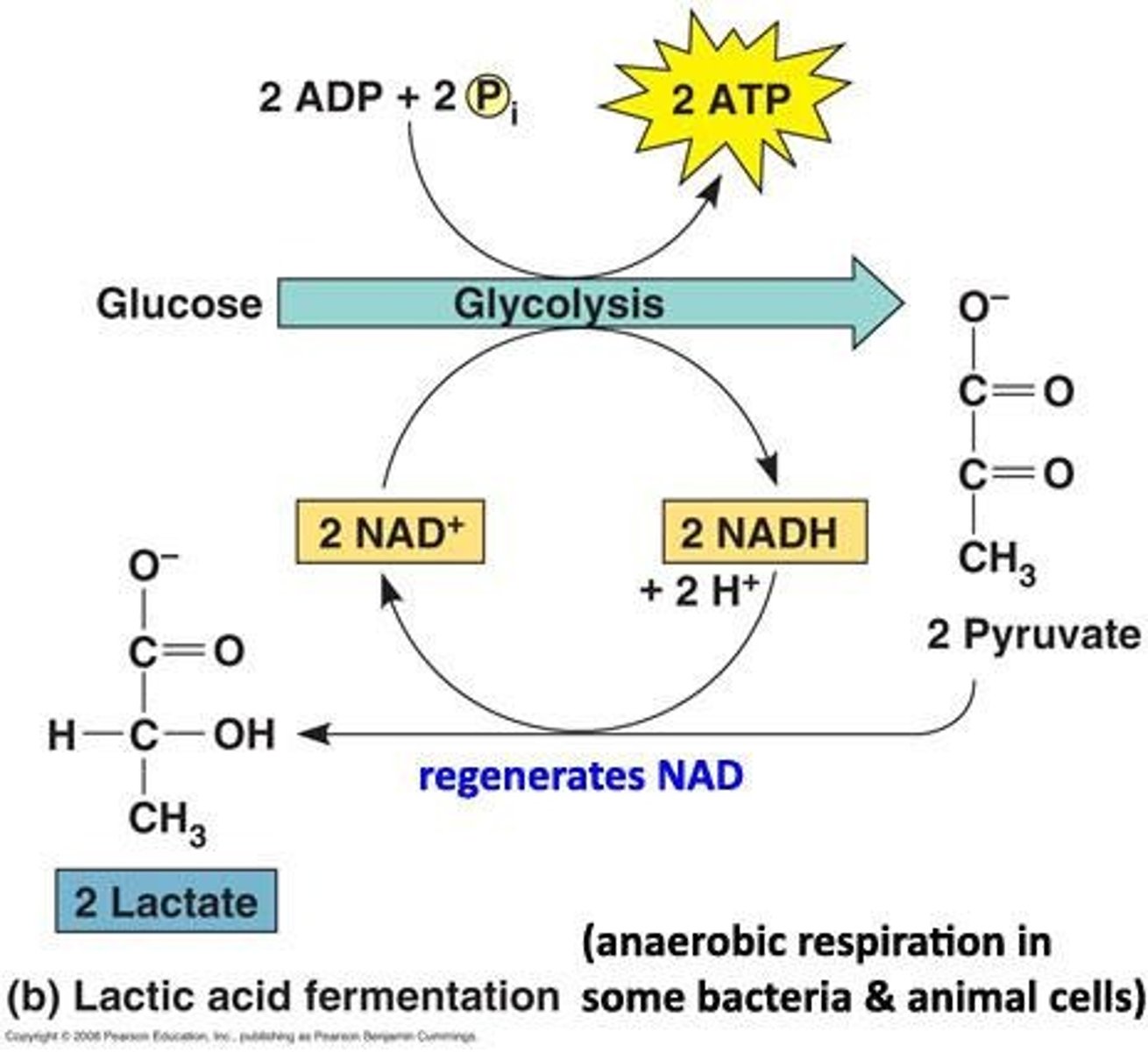
What is the end product of the anaerobic energy system?
ATP.
What is the Cori Cycle?
The process that recycles lactate produced during anaerobic metabolism.
What is the aerobic energy system?
An oxygen-dependent system that efficiently extracts energy from glucose, fatty acids, and certain amino acids.
How much ATP does 1 glucose yield?
30-32 ATP.
How much ATP does a 16-carbon fatty acid yield?
129 ATP.
What is the Tricarboxylic Acid (TCA) Cycle?
A cycle that processes Acetyl CoA to generate energy and produce CO2.
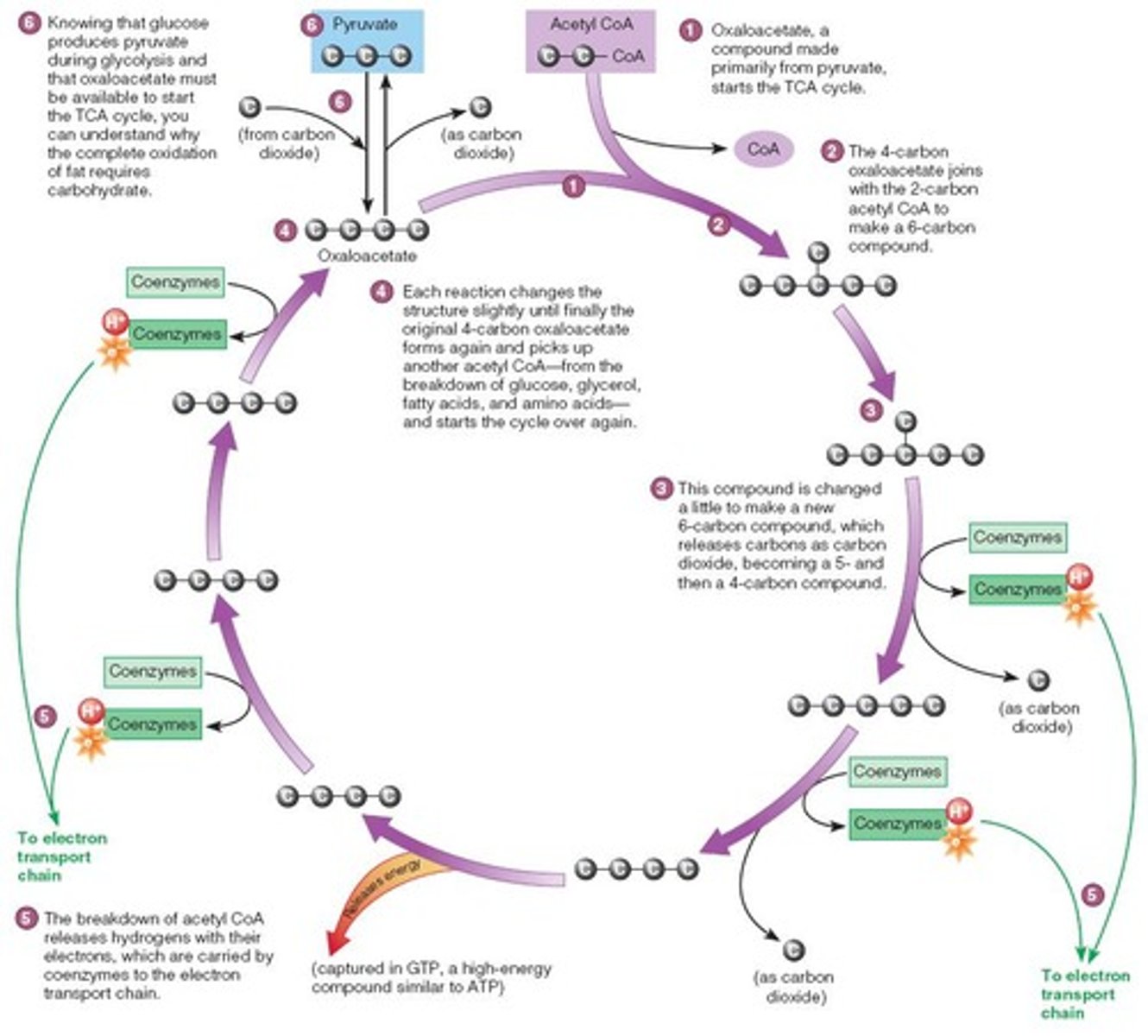
What is the role of the Electron Transport Chain?
It shuttles electrons and produces ATP by creating a gradient across the mitochondrial membrane.
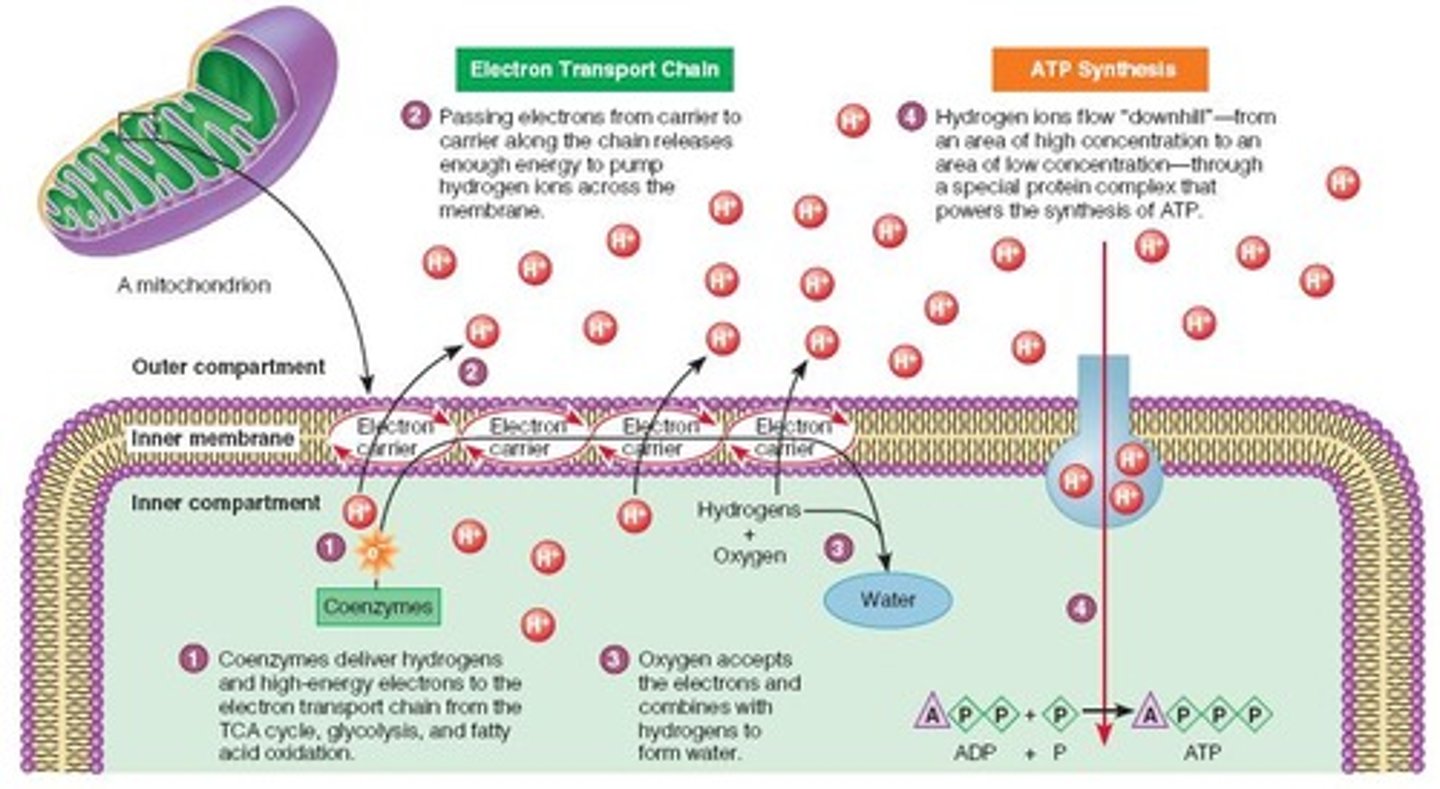
What happens to hydrogen ions in the Electron Transport Chain?
They flow through ATP Synthase to produce ATP.
What is the caloric value of fat per gram?
9 kcal/g.
What is the caloric value of glucose per gram?
4 kcal/g.
What is the significance of oxaloacetate in the TCA cycle?
It is needed to replenish the cycle and is synthesized from pyruvate.
Can fatty acids be converted into glucose?
No, fatty acids cannot be used to make glucose.
What is the primary function of Acetyl CoA?
To enter the TCA cycle or be used to synthesize fats.
What happens when someone consistently overeats?
It can upset normal energy metabolism and stress the mitochondria, leading to metabolic disorders.
What happens to excess protein in the body?
It is oxidized, deaminated (producing urea), and converted into ketones or stored as fat.
How are excess carbohydrates processed in the body?
They are first stored as glycogen, then oxidized, and finally converted to fat.
What is the metabolic efficiency of converting food fat into body fat?
It is more metabolically efficient than converting carbohydrates or glucose into fat.
What energy sources does the body utilize during fasting?
The body uses liver glycogen and fatty acids from adipose tissue.
What process begins after about 10 days of fasting?
The body starts to create ketone bodies from fat.
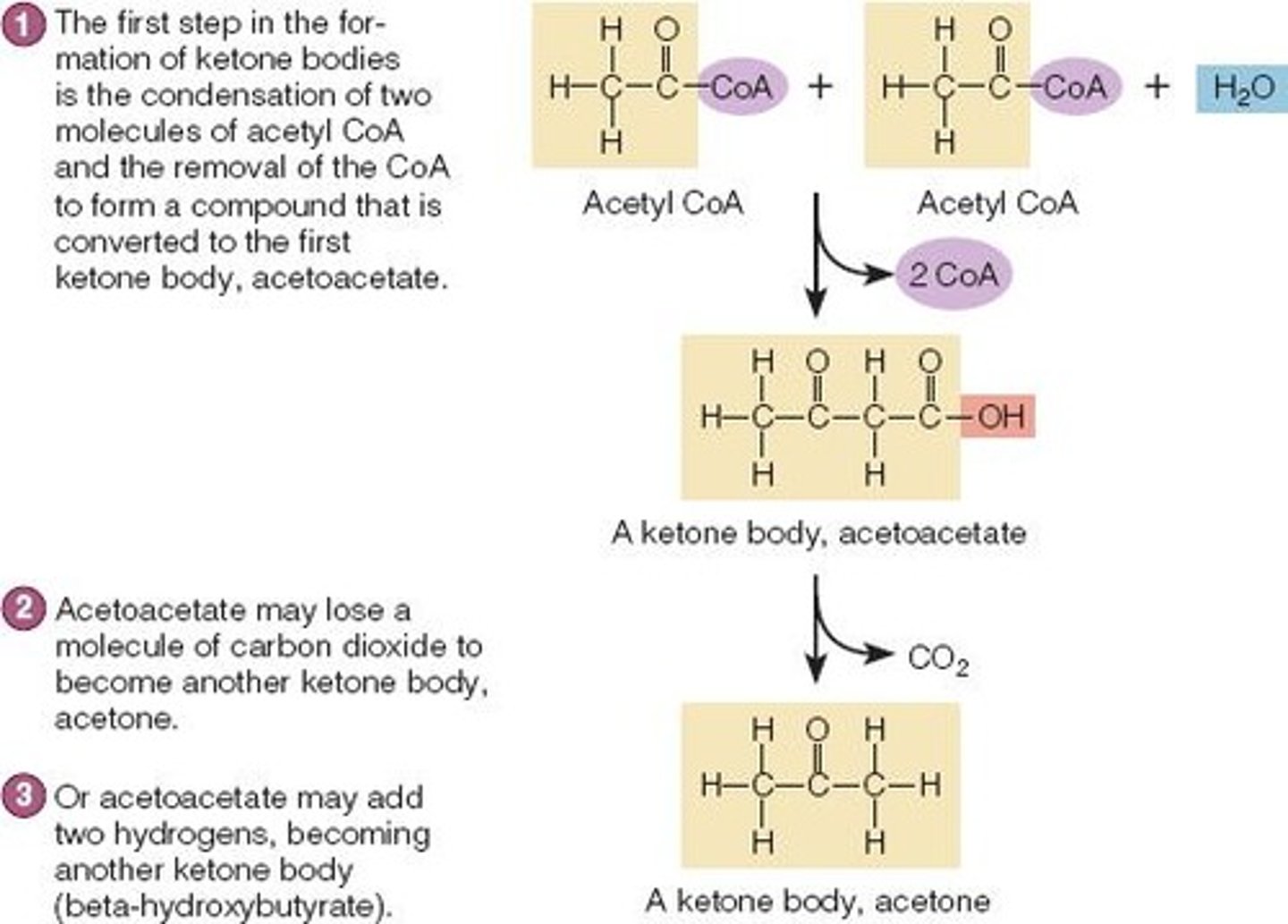
What is ketosis?
A metabolic state where the body uses ketone bodies for energy instead of glucose.
What are some effects of ketosis on appetite and body composition?
It induces a loss of appetite, increases blood acidity, and may cause muscle wasting while sparing fat.
What is intermittent fasting?
A dietary pattern that involves cycles of eating and fasting, often 8 hours of eating followed by 16 hours of fasting.
What are some potential health benefits of intermittent fasting?
Improved GI health, body weight reduction, lower inflammation, better sleep, and improved glucose and blood lipids.
Do low-carb diets show more promise for weight loss compared to other diets?
No, low-carb diets do not show more promise in weight loss than other diets.
What is the primary component of alcohol?
Ethanol.
How is the alcohol content in liquor expressed?
As proof; for example, 100 proof equals 50% alcohol.
Where is alcohol primarily absorbed in the body?
In the small intestine.
What enzyme does the stomach use to break down alcohol?
Alcohol dehydrogenase.
How does alcohol affect nutrient absorption?
It can impair nutrient absorption and lead to deficiencies, such as Wernicke-Korsakoff syndrome.
What is the liver's capacity to process ethanol?
The liver can process approximately ½ oz of ethanol per hour.
What happens to niacin during alcohol metabolism?
Niacin is used as a coenzyme, which can lead to deficiencies in other metabolic processes.
What are the effects of increasing blood alcohol concentration (BAC)?
Higher BAC leads to impaired judgment, coordination, and can result in confusion and potential blackouts.
What is a lethal dose of alcohol in terms of BAC?
A BAC of .40 can be lethal due to slowed heartbeat and respiration.
What are some health risks associated with alcohol consumption?
Increased risk of cardiovascular disease, cancer, hypertension, and other health issues.
What is cardiomyopathy?
A condition that affects the heart muscle's ability to pump blood, potentially leading to arrhythmias.
What is a common myth about different types of alcohol?
That liquors like rum and vodka are worse than beer and wine; harm depends on the amount consumed, not the type.
Is alcohol classified as a drug?
Yes, alcohol is classified as a depressant that alters brain function.
What is a common misconception about alcohol's warming effect?
Alcohol moves blood to the skin, creating a warm feeling, but actually lowers core body temperature.
What is the relationship between alcohol and hangovers?
Hangovers result from excessive alcohol consumption, not the type or order of drinks.
What is the impact of alcohol on bone health?
Alcohol decreases bone mass and strength.