Examining the Eyes
 Call Kai
 Learn
Learn Practice Test
 Spaced Repetition
 Match
Match Flashcards
 Knowt Play
1/20

Earn XP
Description and Tags
Head and Neck Assessment
Name | Mastery | Learn | Test | Matching | Spaced | Call with Kai | Chat |
|---|
No analytics yet
Send a link to your students to track their progress
21 Terms
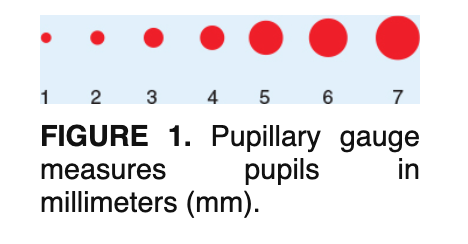
What are the pupil sizes you can chart in the EHR?
1 mm to 7 mm
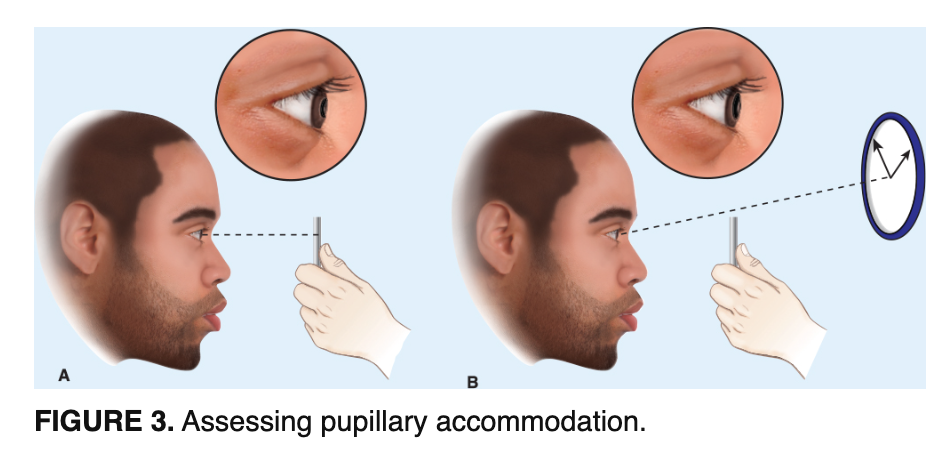
How do you test for pupillary accommodation?
Hold your forefinger, a pencil, other straight objects about 4 to 6 inches from the bridge of the nose
Ask the patient to first look at the object then at a distant object then back at the object being held
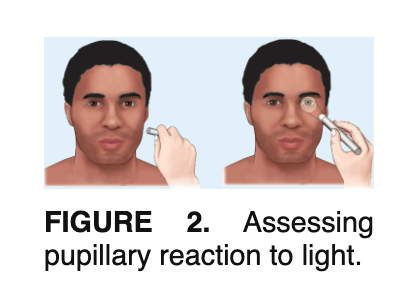
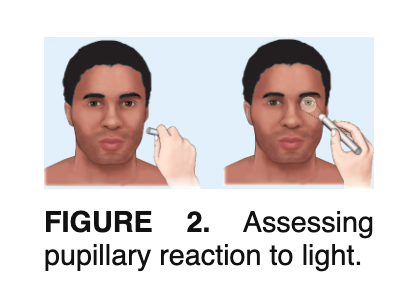
How do you test for pupillary size and pupillary response to light?
Darken the room
Ask the patient to look straight ahead
Bring the penlight from the side of the patient’s face AND briefly shine the light on the pupil
Observe the pupil’s reaction; it normally constricts rapidly (direct response). Note pupil size.
Repeat the procedure and observe the other eye; it too normally will constrict*** (Consensual Reflex)
Repeat the procedure with the other eye
What is direct response?
Pupil’s reaction to light should normally constrict RAPIDLY
What is consensual reflex?
The pupil of the eye you shine a light on will constrict BUT also the other eye (no light on it) should constrict as well
What is pupillary accommodation?
The pupil’s ability to constrict when looking at near object and dilate when looking at distant objects
What cranial nerve is being tested when you test for pupillary response to light (consensual reflex)?
Cranial Nerve III (Oculomotor Nerve)
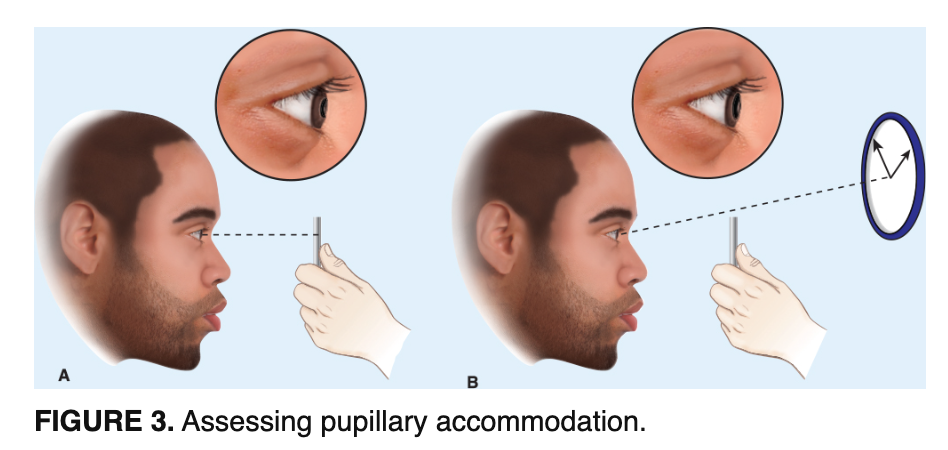
What cranial nerve is being tested when you test for accommodation?
Cranial Nerve III (Oculomotor Nerve)
What cranial nerve(s) are being tested when you assess for extraocular movements (EOMs, Six Cardinal Fields)?
Cranial Nerve III (Oculomotor Nerve)
Cranial Nerve IV (Trochlear Nerve)
Cranial Nerve VI (Abducens Nerves)
What nerve are you testing when you test for cranial nerve III?
Oculomotor Nerves
What nerve are you testing when you test for cranial nerve IV?
Trochlear Nerves
What nerve are you testing when you test for cranial nerve VI?
Abducens Nerves
How do you test for convergence?
Hold your finger about 6 to 8 inches from the bridge of the patient’s nose
Move your finger toward the patient’s nose
The patient’s eyes should normally converge (assume a cross-eyed appearance)
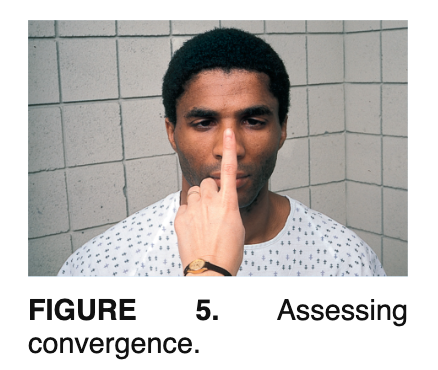
What is convergence?
The eyes should follow an object to within 5 cm of the nose (appear cross-eyed appearance)
What does PERRLA stand for?
Pupils equal, round, reactive to light, accommodating
If you examined the patient’s pupils, tested for consensual reflex, and tested for accommodation; how would you chart that everything was normal?
Pupils are equal, round, reactive to life with accommodation
PERRLA
What does it mean when you chart that “pupils are equal”?
BOTH pupils are the same size
What does the P in PERRLA mean? Or what are you charting?
P = Pupils Size (1mm to 7mm) + note if the pupils are dilated, pinpoint, or normal
What does the L in PERRLA stand for?
L = Light
Check if the pupils respond briskly OR sluggishly to light
Charting “reactive to light”
When you test for PERRLA, what cranial nerve are you testing?
CN III (Oculomotor Nerve)
When you exam EOMs (six cardinal fields, extraocular muscles) what cranial nerve(s) are you testing?
CN III (Oculomotor Nerve)
CN IV (Trochlea Nerve)
CN VI (Abducens Nerve)