Micro
 Call Kai
 Learn
Learn Practice Test
 Spaced Repetition
 Match
Match Flashcards
 Knowt Play
1/90

There's no tags or description
Looks like no tags are added yet.
Name | Mastery | Learn | Test | Matching | Spaced | Call with Kai |
|---|
No analytics yet
Send a link to your students to track their progress
91 Terms
What is the relationship between economic and accounting profit
Economic profit is always smaller because they take opportunity costs into account
How should a farmer in a perfectly competitive market maximize profit
By producing quantity where marginal cost is equal to the market place
Which of the following does NOT increase the elasticity of demand
Many loyal customers
What is the primary way that monopolist affect welfare in their markets
Monopolists reduce total welfare because they reduce quantity of production compared to production in a perfectly competitive market
Markets organize economic activity primarily through
prices
Which of the following markets is the closest to a perfectly competitive market?
the market for soybeans grown by farmers across the U.S
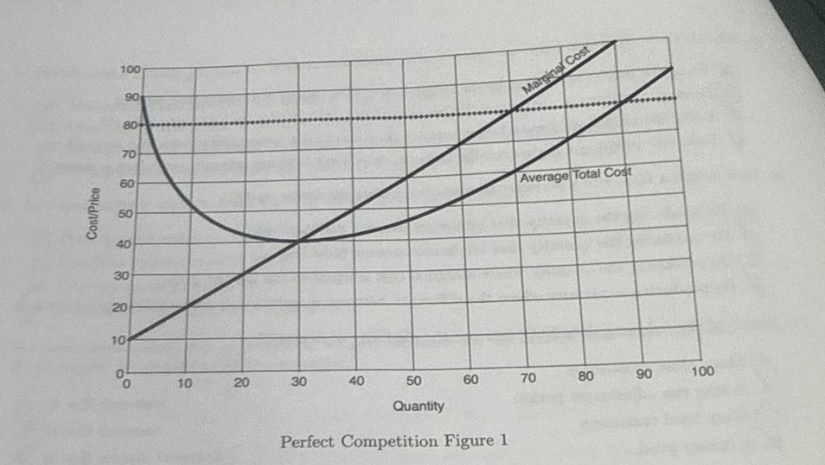
Refer to the Perfect Competition Figure 1. Suppose this is a perfectly competitive market and the market price is equal to $80. What is the profit-maximizing quantity for the firm?
$70
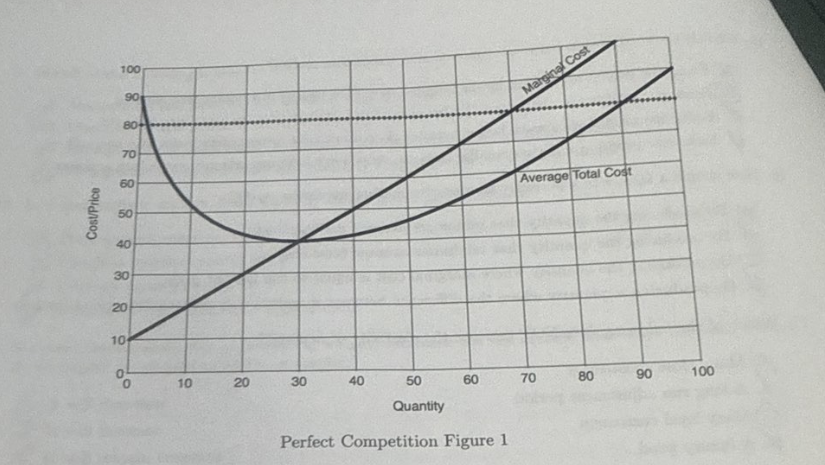
Refer to the Perfect Competition Figure 1. Suppose this a perfectly competitive market and the market price is equal to $80. What is the firms total profit?
1400
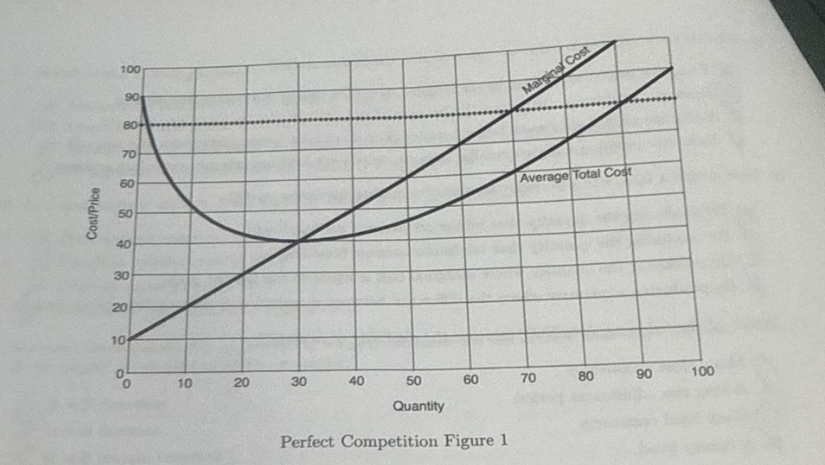
Refer to Perfect Competition Figure 1. Suppose this is a perfectly competitive market. We know that if the price is too low, the firm will exit in the long run. What is the lowest price that the firm will tolerate in the long run without exiting the market.
$40
A market failure happens when
Markets left to themselves produce an inefficient outcome
What does the price elasticity of demand measure
The responsiveness of quantity demanded to a change in price
The production possibilities frontier shows
Feasible output combinations
Which of the following is NOT a characteristic of a perfectly competitive market?
A firms production quantity affects the market place
The law of supply states that, everything else held constant, when the price of a good increase
Quantity supplied increases
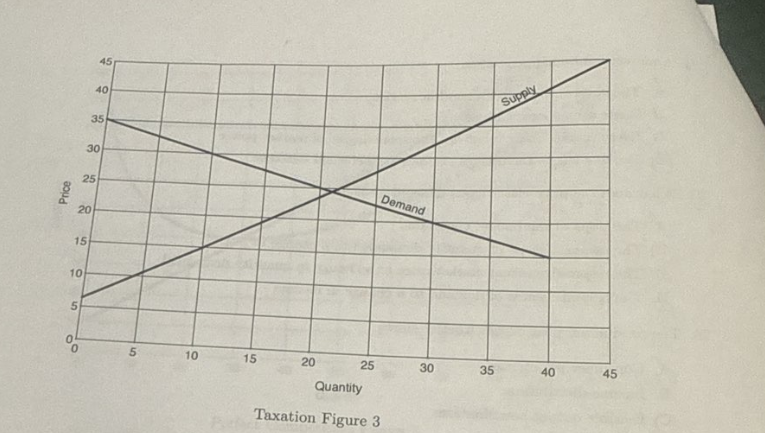
Refer to Taxation Figure 3. If the government imposes a per-unit tax equal to $15, what will the total tax revenue be
$150
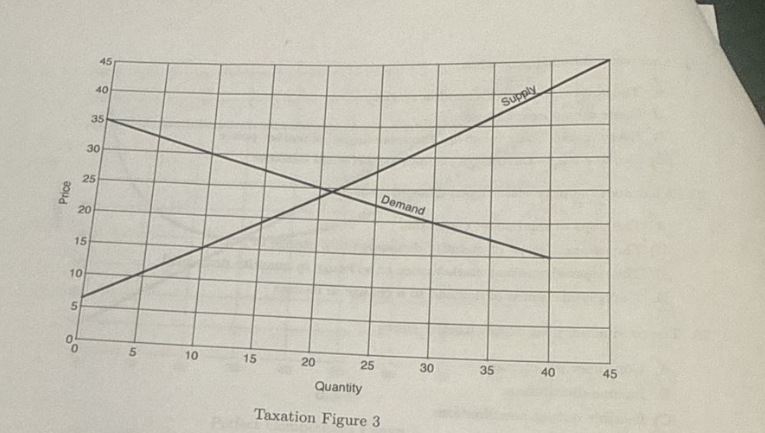
Refer to taxation figure 3. If the government imposes a per-unit tax of $15, what is the post tax consumer surplus
25
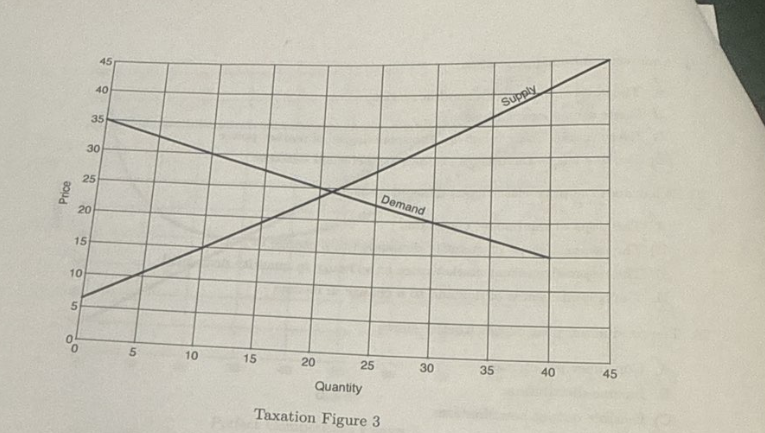
Refer to Taxation Figure 3. Suppose that the government increases the per-unit tax from $15 to $30. Which of the following is true about tax revenue?
Tax revenue will fall. This is the Laffer Curve
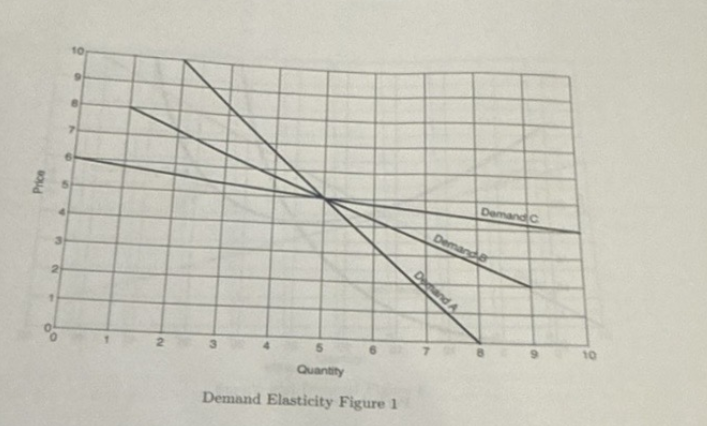
Refer to the Demand Elasticity Figure 1. Which of the following demand curves is the most elastic
C (flattest)
Tradeoffs arise in an economic decision because:
Resources are scarce
Demand for which of the following is most likely to be inelastic?
Life saving insulin for diabetics
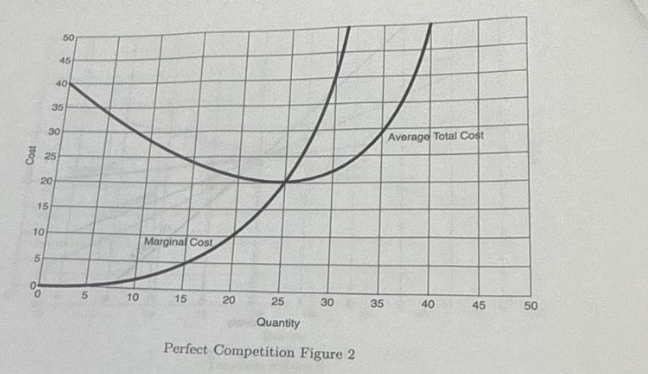
Refer to the Perfect Competition Figure 2. Suppose that the market is perfectly competitive and all of the firms share the same average total cost and marginal cost curves as displayed. What do we expect to happen to the market price in the long-run?
Competition will drive market down to $20
Which of the following supply curve for milk to shift out (i.e to the right)?
An improvement in milk bottling technology
If rent control sets a binding price ceiling on the market, then which of the following is true?
The price ceiling is below the equilibrium rent price and creates a shortage in the market
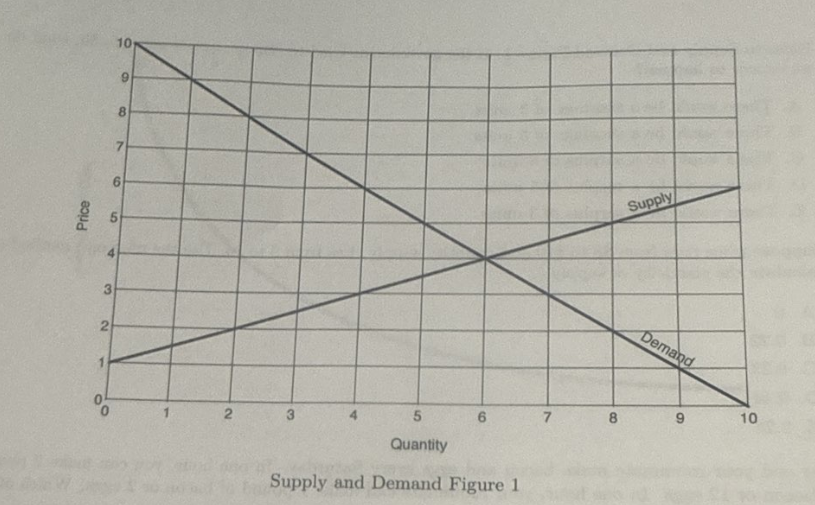
Consider the Supply and Demand Figure 1. What is the marginal consumer’s willingness to pay for the item
$4
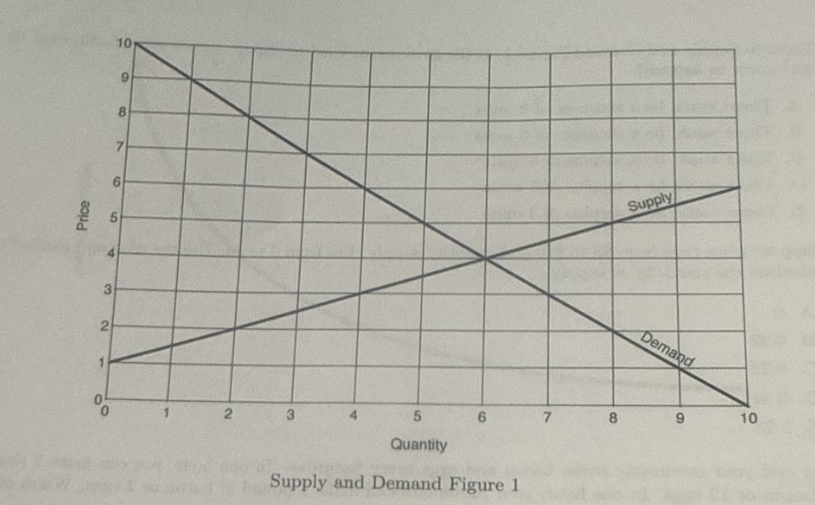
Refer to the Supply and Demand Figure 1. What is the market equilibrium quantity
6
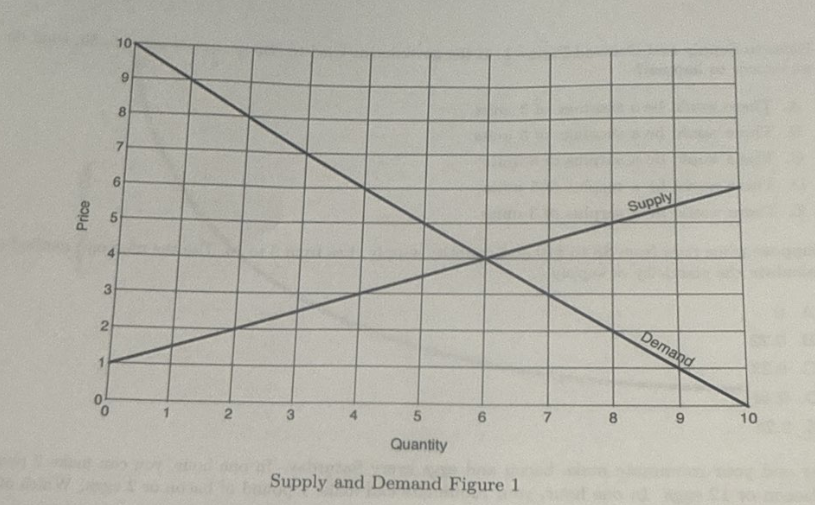
Consider the Supply and Demand Figure 1. What is the total surplus in the market
27
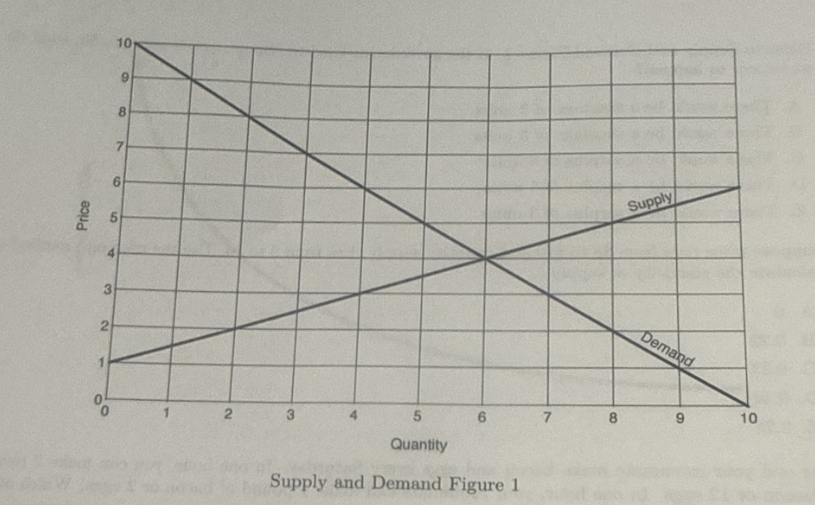
Refer to the Figure Supply and Demand 1. If the government tried to impose a price equal to $5, what do we expect to happen
There would be a surplus of 3 units
Suppose price rises from $8 to $10 and quantity supplied rises from 9 to 15 units. Use midpoint method to calculate elasticity of supply.
2.25
You and your roommate make bacon and eggs every Saturday. In one hour, you can make 2 pounds of bacon or 12 eggs. In one hour, your roommate can make 1 pound of bacon or 2 eggs. Which of the following is true?
You have absolute advantage in both bacon and eggs,
You and your roommate make bacon and eggs every Saturday. In one hour, you can make 2 pounds of bacon or 12 eggs. In one hour, your roommate can make 1 pound of bacon or 2 eggs. Which of the following is true?
Your roommate has the comparative advantage in eggs, but you have the comparative advantage in bacom
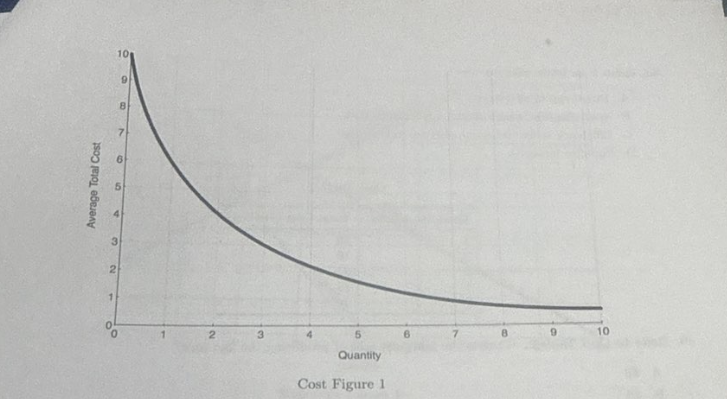
Refer to the average total cost displayed in Cost Figure 1. How would we characterize this cost function?
Economies of Scale
If the government set a binding minimum wage above the market wage, we expect to see
Low demand for labor, resulting in unemployment
Which of the following is NOT a potential barrier to entry that may produce a monopolist?
High profits
Gains from trade arise because
Specialization lowers overall opportunity cost
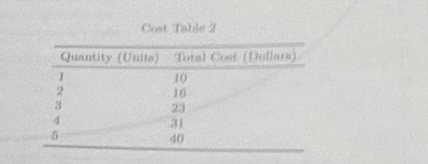
Refer to Cost Table 2. What is the marginal cost of producing the 2nd unit?
$6
Refer to Cost Table 2. If the firm is operating in a perfectly competitive market with the market price of $8, how many units should the firm produce to maximize profit
3 units
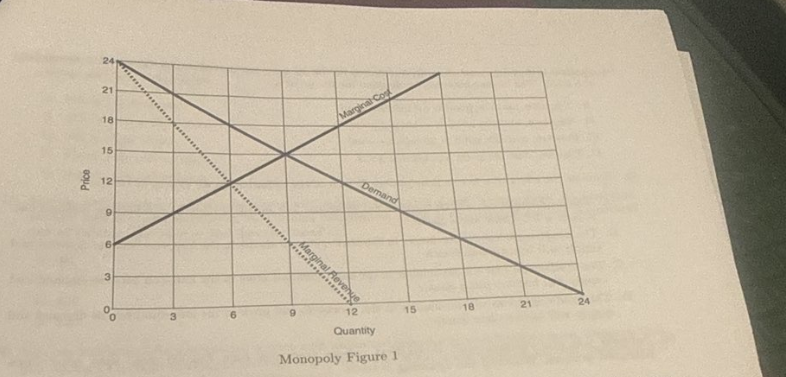
For this problem, refer to Monopoly Figure 1. Given the monopolist marginal costs and the market demand, what is the profit-maximizing quantity of production.
Q*=6 (MC = MR)
For this problem, refer to the Monopoly Figure 1. Given the monopolist profit-maximizing quantity of production, what is the deadweight loss relative to a perfectly competitive market?
9
Which best describes equity (or equality)
Fair distribution of outcomes
Assume that a 4 percent decrease in income results in a 6 percent increase in the quantity demanded of a good. The income elasticity of demand for the good is:
negative, and the good in an inferior good
Consider the effect of a tax as time passes. Which of the following do we expect to be true?
The deadweight loss will be smaller in the short-run and grow in the long-run because demand and supply will become more elastic
Suppose you find research that shows college graduates can earn $20,000 more than non-college educated workers. Which of the following is true?
The higher wage of college-educated in an incentive to finish college
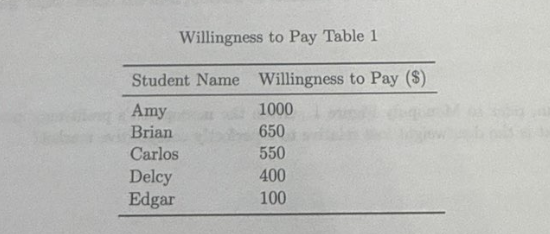
Refer to the Willingness to Pay Table 1, which presents the willingness to pay for a flight to Paris for five different students. If price is equal to $400, what is the total consumer surplus for the students?
$1000
Suppose a firm is in a perfectly competitive market. What is the relationship between the firm’s marginal revenue and the market price
MR is equal to price
You pay $10/month for a streaming service with unlimited episodes of your favorite show. Suppose that you can earn $20/hour working at Outback steakhouse. What is the marginal explicit (monetary) cost of watching one hour of your favorite show.
$0
Which of the following is true?
For monopolist, marginal revenue is less than market price. For perfectly competitive firms, marginal revenue equals market price
What is the difference between positive and normative statements
Positive is fact based, and normative are opinions
The law of demand states that, everything else held constant, when price of a good increase
Quantity demanded decreases
Demand for normal goods increase when which of the following happens
income rises
Which of the following may shift the demand curve for the red meat out (i.e to the right)
Research showing that red meat consumption decreases the risk of Alzheimer’s disease
In the short-run, a firm may continue to operate even with negative profits if which of the following is true
The market price exceeds average variable cost
Efficiency means
Maximizing output from scarce resources
Which best illustrates tradeoff
Studying over sleeping
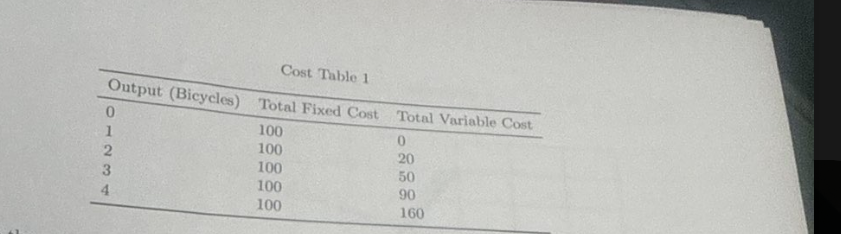
Refer to the cost table listed in Cost Table 1. what is the average total cost when producing 2 bicycles?
$75
Refer to the cost listed in Cost Table 1. What is the efficient scale of production?
Q=3
Suppose that the price rises from $8 to $10 and quantity supply rises from 9 to 15. Use midpoint method to calculate the elasticity of supply
2.25
what best illustrates a trade off
Studying instead of sleeping
Suppose demand and supply both decrease (shift in) at the same time. What do we expect to happen
Equilibrium quantity falls, but the effect on price is unclear
Gains from trade arise because
specialization lowers overall opportunity cost
You pay $10 a month for a streaming service with unlimited episodes of your favorite show. Suppose that you can earn $20/hour working at Outback steakhouse. What is the marginal explicit (monetary) cost of watching one hour of your favorite show?
$0
You pay $10 a month for a streaming service with unlimited episodes of your favorite show. Suppose that you can earn $20/hour working at Outback steakhouse. What is the marginal implicit (opportunity cost) cost of watching one hour of your favorite show?
$20
You and your roommate make bacon and eggs every Saturday. In one hour you can make 2 pounds of bacon and 12 eggs. In one hour, your roommate can make 1 pound of bacon and 2 eggs. Which of the following is true.
You have absolute advantage in both bacon and eggs
You and your roommate make bacon and eggs every Saturday. In one hour you can make 2 pounds of bacon and 12 eggs. In one hour, your roommate can make 1 pound of bacon and 2 eggs. Which of the following is true.
Your roommate has the comparative advantage in bacon, but you have the comparative advantage in eggs
The law of demand states, everything else held constant, when the price of a good increases:
Quantity demanded decreases
Suppose the marginal cost of producing widgets increases but the market price stays the same. What do we expect to happen to producer surplus
It will decrease
If bread and cheese are compliments, which of the following will be true
When the price of bread rises, quantity demanded for cheese will fall
Which of the following is NOT a potential barrier to entry that may produce a monopolist
High Profits
Efficiency means
Maximizing output from scarce resources
Which of the following would cause the supply curve for milk to shift out (i.e to the right)?
An improvement in milk bottling technology
Suppose you find research that shows college graduates earn $20,000 more than non-college education workers. Which of the following is true?
The higher wage of college-educated workers is an incentive to finish college
Which best describes equity (or equality)
Fair distribution of outcomes
Which of the following markets is closest to a perfectly competitive market?
The market for soybeans grown by farmers across the U.S
How should a farmer in a perfectly competitive market maximize profits?
By producing the quantity where marginal cost is equal to market price
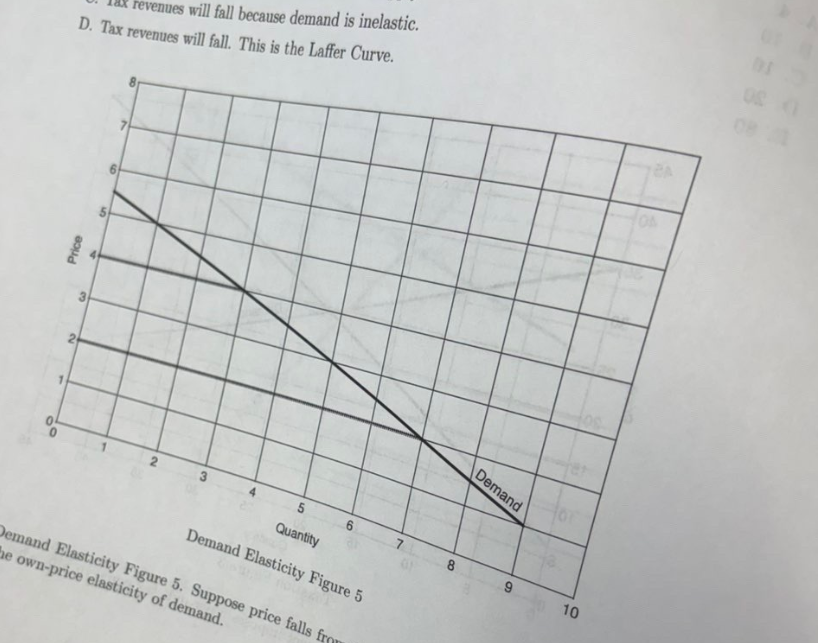
Refer to the Demand Elasticity Figure 5. Suppose price falls from $4 to $2. Use the midpoint method to calculate the own-price elasticity of demand
1.2
Refer to Taxation Figure 3. Suppose to government increases per unit tax from $15 to $30. Which of the following is true about tax revenues
Tax revenue will fall. This is the Laffer Curve
What is the difference between a positive and normative statement
Positive statements are fact based and normative are opinions
Consider the effect of tax as time passes. Which of the following do we expect to be true
Deadweight loss is smaller in the short run and grows in the long run because supply and demand become more elastic over time
Demand for normal good increases when which of the following happens
Income rise
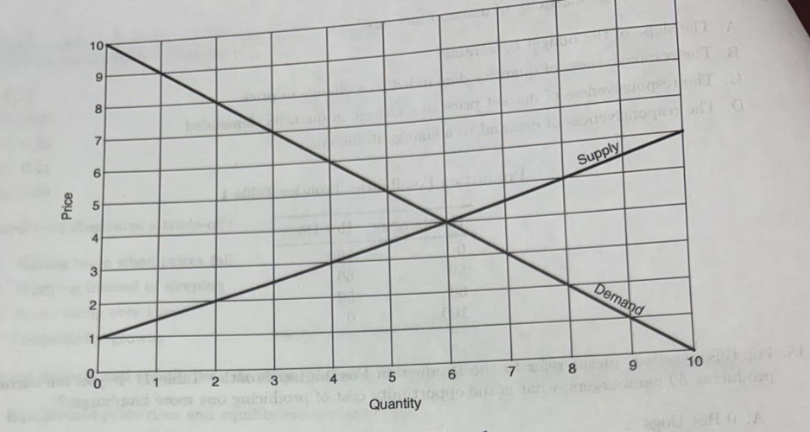
Consider Supply and Demand Figure 1. What is total surplus in the market
27
What is the primary way that monopolist affect welfare in their markets
Monopolists reduce total welfare because they reduce quantity of production compared to production in a perfectly competitive market
Which of the following is true
For monopolist, marginal revenue is less than market price. For perfectly competitive firms, marginal revenue is equal to market price
In the short run, a firm may continue to operate even with negative profits if which of the following is true
The market price exceeds average variable costs
If rent control sets a binding price ceiling on the market, then which of the following is true
The price ceiling is below the equilibrium rent price and creates a shortage of apartments
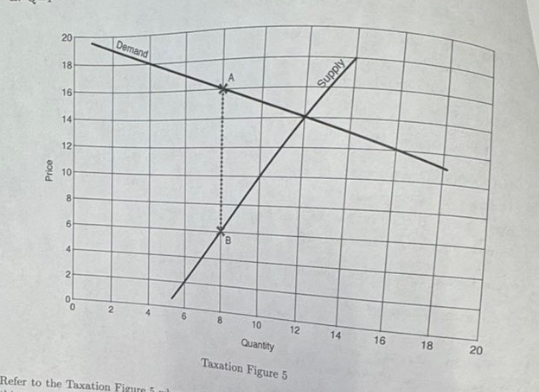
Refer to Taxation figure 5. where there is a per-unit tax imposed on the market. How does the tax reduce the quantity sold in the market
$8
Refer to Taxation Figure 5 where there is a pre tax unit imposed on the market. How do the relative elasticities of demand and supply affect the tax burden
Demand is more elastic, so the sellers bear more of the tax burden
Which of the following is true
Monopolists are price setters and perfectly competitive firms are price takers
Markets organize economic activity primarily through
Prices
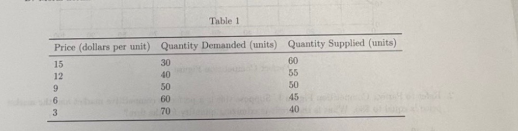
For Table 1. If price were $6, which of the following would be expect
A shortage of 15 units, causing price to rise
Tradeoffs arise in economic decisions because
resources are scarce
A natural monopoly occurs when
the production process exhibits strong economies of scale
In a monopolist market, firms typically can earn positive profits because
price exceeds marginal costs