OT 543 Unit 1 - Kinesiology
 Call Kai
 Learn
Learn Practice Test
 Spaced Repetition
 Match
Match Flashcards
 Knowt Play
1/178

There's no tags or description
Looks like no tags are added yet.
Name | Mastery | Learn | Test | Matching | Spaced | Call with Kai |
|---|
No analytics yet
Send a link to your students to track their progress
179 Terms
Occupational Functioning Model (OFM)
- Guides assessment and treatment of persons with physical dysfunction leading to competence in occupational performance and subsequent feelings of self-empowerment
- Derived from clinical practice with persons with physical impairments
- Made by Catherine Trombly Vining
Self-esteem (OFM)
General belief in person's ability to perform well (overall)
Self-efficacy (OFM)
The perceived capability to perform a behavior. It is the belief in personal competence.
- ex. dressing
Satisfaction (OFM)
Research indirectly supports the idea that competency is related to satisfaction or a positive quality of life. Successful performance strengthens personal efficacy beliefs.
- satisfaction through life roles of self-maintenance, self-advancement, and self-enhancement
self-maintenance roles
roles maintain self, family, pets, and home, including all BADLs and IADLs associated with self-care; all IADLs associated with care of family; and all IADLs associated with care of home, and other possessions
self-advancement roles
These roles add to the person's skills, possessions, or other betterment
- education
- work
self-enhancement roles
These roles contribute to personal accomplishment and enjoyment or a sense of well-being and happiness
- play
- leisure
- social participation
Competence (OFM)
Competency in tasks of life roles (occupations). Tasks and roles are different for each person, can not make assumptions
Roles (OFM)
self-maintenance, self-advancement, and self-enhancement
Activities and habits (OFM)
Occupations and performance patterns
- Activities: smaller units of goal-directed behavior that comprise tasks
- Habits: Chains of action sequences acquired by frequent repetition that can be carried out with minimal attention. Therapy aims to sustain useful habits, release useless habits, and develop new habits.
- performance patterns of habits, routines, and rituals
Abilities and skills (OFM)
Abilities and skills that are basic to interaction with objects and physical and social environments including:
- Motor—Adequate strength, coordination, range of motion, dexterity, and muscular endurance
- Sensory—Abilities to adequately receive and interpret sensory stimuli to enable occupational performance
- Cardiorespiratory—Adequate cardiac and pulmonary function to sustain performance
- Visual-perception—Adequate visual acuity and ability to perceive and interpret sensory stimuli and to perceive self and objects in space to enable occupational performance
- Cognitive—Abilities and skills that are basic to interaction with the environment, to organizing life tasks, and to solving occupational problems; abilities include attention, memory, and problem solving
- Socioemotional—Abilities and skills that enable occupational performance in a social context or environment
- performance skills: motor skills, process skills, and social interaction skills
Developed capacities (OPM)
Voluntary responses that have developed from first-level capacities.
- Client factors like body functions: includes mental functions; sensory functions; neuromusculoskeletal and movement-related functions.
- ex. ROM and strength
First-level capacities (OFM)
The reflexive subroutines of voluntary movement and behavior. These functional foundations for movement and behavior include sensorimotor, cognitive-perceptual, and socioemotional capacities.
- client factors of body functions
Organic substrate (OFM)
Structural and physiological foundation for movement, cognition, perception, and emotions. The substrate includes central nervous system organization and the integrity of the skeleton, muscles, peripheral nerves, heart, lungs, and skin
- client factors of body structures: those anatomical parts of the body that correspond to body functions
Environment and context (OFM)
- Physical—Including the natural and built environments, objects and utensils, and the requirements that tools and utensils pose for use
- Personal—Including age, gender, activity history, sense of competency, and spirituality
- Cultural—including norms, values, beliefs, and routines or rituals of the family, ethnic group, community, or religious group
- Social—Including therapeutic interaction and relationships with family members, peers and friends, and community
- Temporal—Including temporal demands of role tasks, activities, and habits; balance of activity types; and balance of activity and rest
- Situational—Including circumstances related to the setting or surroundings at a given moment
OFM assumptions
Life role competency results in self-efficacy, self-esteem, and life satisfaction
- Independence in roles is dependent on basic abilities and capacities
- Satisfying occupational engagement requires enabling contexts and environments
OFM hierarchy (bottom to top)
1. organic substrate
2. first-level capacities
3. Developed capacities
4. abilities and skills
5. activities and habits
6. Competence with tasks and life roles
7. Satisfaction with life roles
8. Sense of self-efficacy and self-esteem
occupation-as-end
occupation that is the functional goal (activity, task) to be learned or accomplished. Through repeated carrying out of an occupation ("task-specific training"), the patient will relearn the actions and routine of an activity, or through adaptation, the activity will be made possible for the person, given his or her current capacities and abilities.
occupation-as-means
the therapeutic change agent to remediate impaired abilities or capacities.
treatment goal of the OFM
Enable competent engagement in valued roles, whether by restored self-performance or directing others
OT process
1. identify the problem (i.e. assessment)
2. plan intervention (what level will intervention occur?)
3. implement the intervention
4. evaluate the result
5. outcomes
assessment
- top-down approach
- multiple subjective and objective assessment measures available
- one core component in assessment is activity analysis
- consider the environment and context
activity analysis
the basic process used by occupational therapists to identify the properties inherent in a given occupation, task, or activity, as well as the skills, abilities, and capacities required to complete it. Activity analysis is used to analyze performance; to select occupations to remediate deficient capacities and abilities, or, knowing the person's skills, abilities, and capacities, to modify an activity or environment to ensure successful completion of the activity.
intervention (OFM)
- usually starts bottom-up, but can start at the top or bottom based on safety precautions (DEPENDENT ON THE CLIENT'S NEEDS, ROLES, WANTS, ETC.)
- optimize abilities and capabilities
- restore competence
- understand the role of environment
OFM limitations
- Is for individuals, not organizations or society
- includes environment in description, but the environment and specific tasks are not detailed or specific (not as much effort given to the environmental components)
Core constructs EHP
- Person: abilities, skills, past interests, and experiences
- Tasks: An objective set of behaviors necessary to accomplish a goal
- Context: Temporal, physical, social, and cultural
- Performance range: person-context-task transaction (want to maximize this!!)
EHP assessment guidelines
- Identify and prioritize the person's wants and needs
- Do a task analysis of the designated tasks to understand the skill requirements and demands
- observe and evaluate the client's present functional degree of performance while engaged in these tasks
- Identify the desired contexts (natural and contrived contexts) naturally sought by the client. Analyze the context from the client's perspective and evluate the external demands that are inherent within the context variables. Look at all variables including physical, social, cultural, and temporal
- asses the person variables and their abilities
- Assess the person/task/context match to select reasonable goals and intervention strategies
EHP therapeutic intervention
- INTERDISCIPLINARY
- goal-support performance needs and interests
- collaboration among the person, the family, and the OT practitioner
- OT practice involves promoting self-determination
- OT practice includes making changes in systems so that people with disabilities receive the full rights and privileges they are due
Intervention strategies (EHP)
- establish/restore
- alter
- adapt/modify
- prevent
- create
establish/restore
Focuses on person factors and aims to improve the person's skills. The therapist may want to "establish" a new skill, as in the case of a young child who is learning to recognize colors, or the therapist may want to "restore" skills that have been lost.
alter
The therapist focuses on the context in which the person performs. The therapist finds the best match between the person's current abilities and the available context options
- changing the environment, moving to a whole new space
adapt/modify
OTs change the aspects of the context or make adjustments to task features.
prevent
preclude the development of performance problems. Therapists using this approach influence the course of events by changing the person, context, or task variables to prevent negative outcomes
create
Focuses on creating circumstances that support optimal performance for all persons and populations. This approach does not assume that a problem exists or is likely to occur, nor does not assume disability.
EHP conclusion
- OT provides interventions that make tasks more available to the person
- Person, context, and task features receive equal consideration
benefits of EHP
- facilitates full participation of all people in their communities
- reduction in disability/non-disability distinction
- promotes consumer empowerment
- supports interdisciplinary collaboration
Model vs. Frame of Reference
Model
- guides thinking
- applies to many areas - lifespan, condition
- may have associated assessments but probably not specific intervention techniques
Frames of reference
- guides clinical reasoning
- usually a more specific application
- will often have specific assessment procedures and intervention approaches.
Biomechanical approach
the study of mechanical laws in relation to how the body moves using principles of physics (how forces impact the body) through kinetics and kinematics
Biomechanical Frame of Reference
A frame of reference derived from theories in kinetics and kinematics; used with individuals who have deficits in the peripheral nervous, musculoskeletal, integumentary, or cardiopulmonary system, or limitations in moving freely (ROM), with adequate strength in motion over sustained time (endurance)
range of motion (ROM), strength, endurance
capacity of movement requires 3 things:
Assessment (biomechanical FOR)
- Range of motion: measured through goniometry, if edema through circumferential or volumetric measurements, if pain, use pain scales
- Strength: manual muscle testing (MMT), grip strength, pinch strength, use of BTE work simulator
- Endurance: Talk test or perceived endurance scale, or measure the length of time they can perform. You have to be able to measure it.
prevention interventions (biomechanical FOR)
- Range of motion: Use of orthosis and teach how to perform passive ROM and stretching, educate on joint protection principles
- Strength: strength training for later years in life to prevent problems
- Endurance: encourage them to continue doing their activities
Remediation interventions (biomechanical FOR)
- Range of motion: identify swelling and treat something for edema. Notice joint limitations and stretch.
- Strength: strength using occupation as means and physical exercise
- Endurance: number of reps and standing to help endurance
What if the limitation cannot be remedied for occupational engagement?
Application of a different frame of reference (rehabilitative FOR) to adapt/modify/compensate in consideration with biomechanical FOR
Advantages of Biomechanical FOR
- Helps OTs design intervention to reduce or improve underlying impairments: ROM, strength, and edurance
- Helps define musculoskeletal problems; allows for a common language with other professionals
- assist in assistive device/orthotic design and appropriate recommendation
- uses measurement to document client initial impairment and progress
Limitations of Biomechanical FOR
- intervention is reductionistic (i.e. focus on the client factors)
- focus on the physical - limited consideration of environment and lack of consideration for motivation, context, and roles
biomechanics
The application of engineering and physical science to the movement of living organisms
kinesiology
the study of muscles and body movement
- study of active and passive structures involved
elements of human motion
- joint motion: passive or active continuum. Measured via goniometry
- muscle strength: a continuum from none to normal. Measures via manual muscle testing, etc.
- open and closed chains: changing the function of one joint will change another joint in the chain
- loose-packed position: joint is positioned so that there is laxity in the connective tissue
- close-packed position: joint is positioned so that the connective tissue is. taut
- others: muscle tone, motor planning, coordination, and dexterity
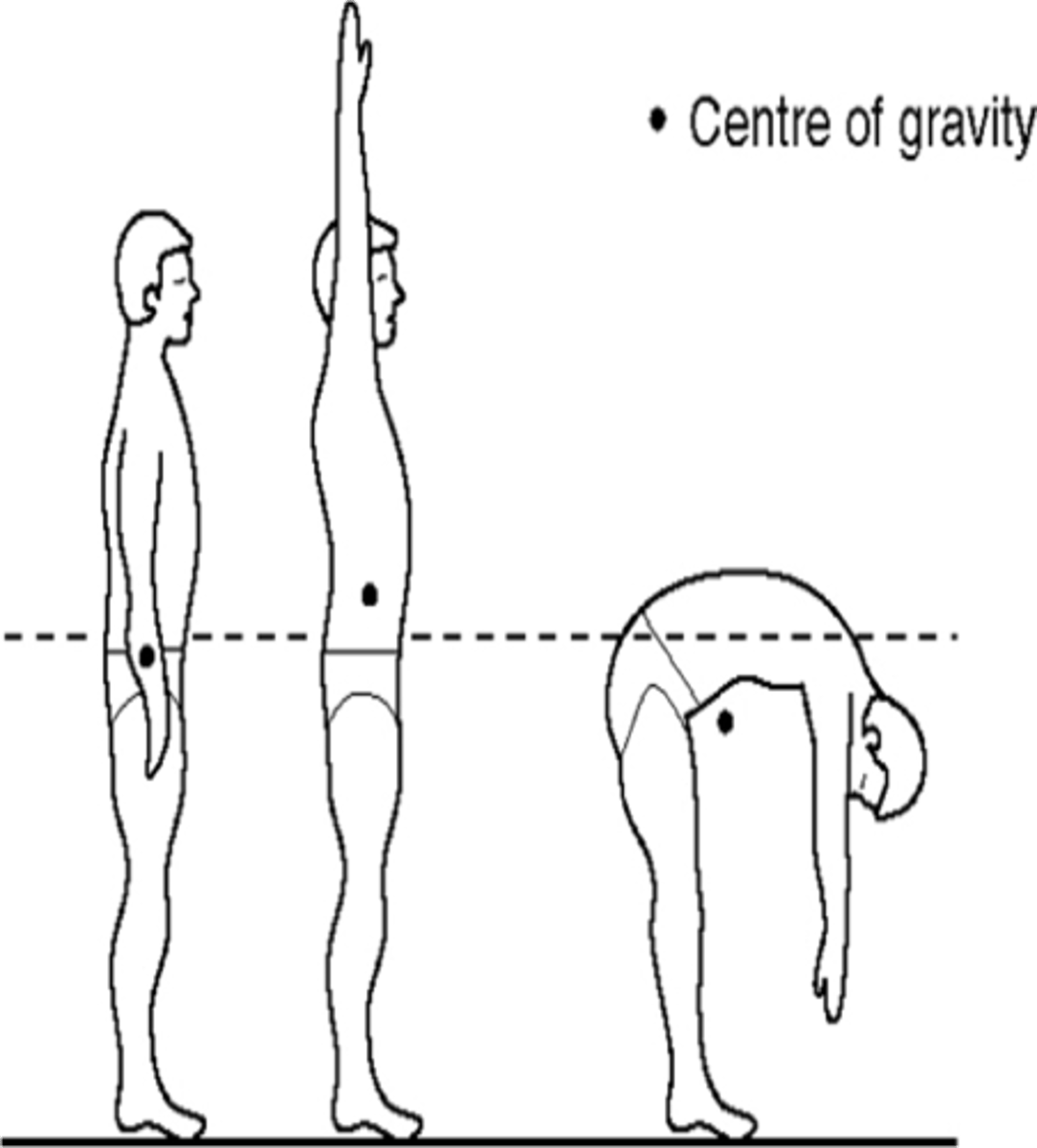
Center of Gravity (COG)
- the point at which the mass of a body or object is centered
- Balance point of an object at which the torque on all sides is equal
- location: 6 in. superior to pubic symphysis (right below the belly button)
- changes with body position and movement
- Connection with balance in motion
- When sitting, your center of gravity is higher
- Head above pelvis for wheelchair seating and know where the wheels are lined up
kinematics
A set of ideas to understand the change in position over time without regard for the forces that cause the movement
- 5 major variables: type of displacement, location of motion in space, direction of motion, magnitude of motion, and velocity or acceleration of change in motion
type of displacement (motion)
translatory, rotary, and general
Translatory motion (linear)
- ex. slide across table
- Along or parallel to an axis
- Travel the same distance, same direction, same
velocity
rotary motion (angular)
- in a circle around an axis (moves @ different velocities)
- All joints usually have this motion
general motion
occurs when the translation and rotation movements are combined
general motion example
rotary and translatory displacement of the humerus
- Rotary movements refer to the humerus rotating around its long axis, while translatory movements involve the humeral head shifting along the surface of the glenoid fossa (the socket on the scapula).
Location of displacement in space
- axes of motion and planes
- plane is the space that the movement happens in
- X-axis, Y-axis, and Z-axis
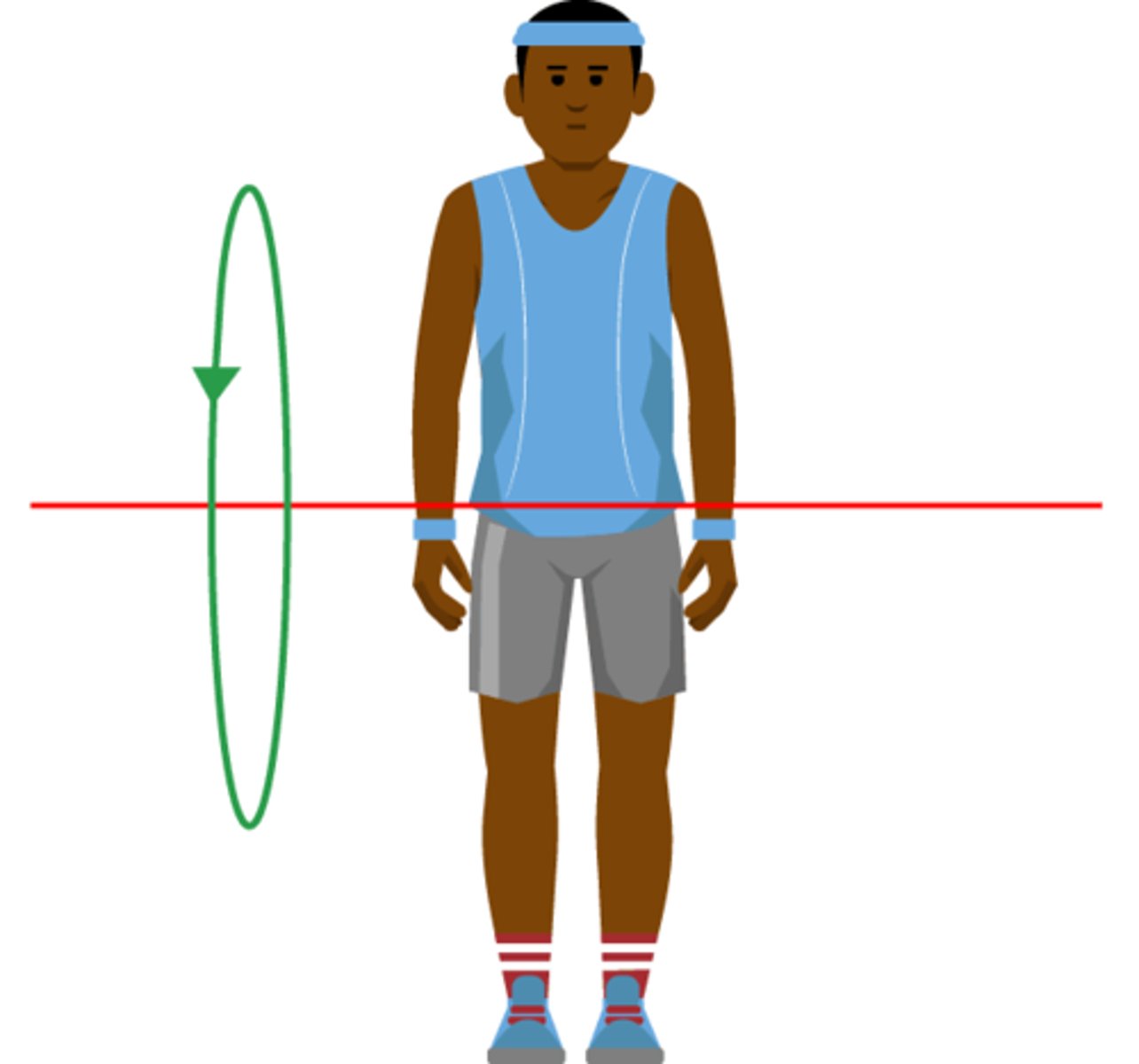
X-axis
- Also called coronal axis or frontal axis
- side to side
- Movements occur in the sagittal plane (perpendicular to it)
- motions: flexion, extension, dorsiflexion, plantar flexion, and thumb abduction
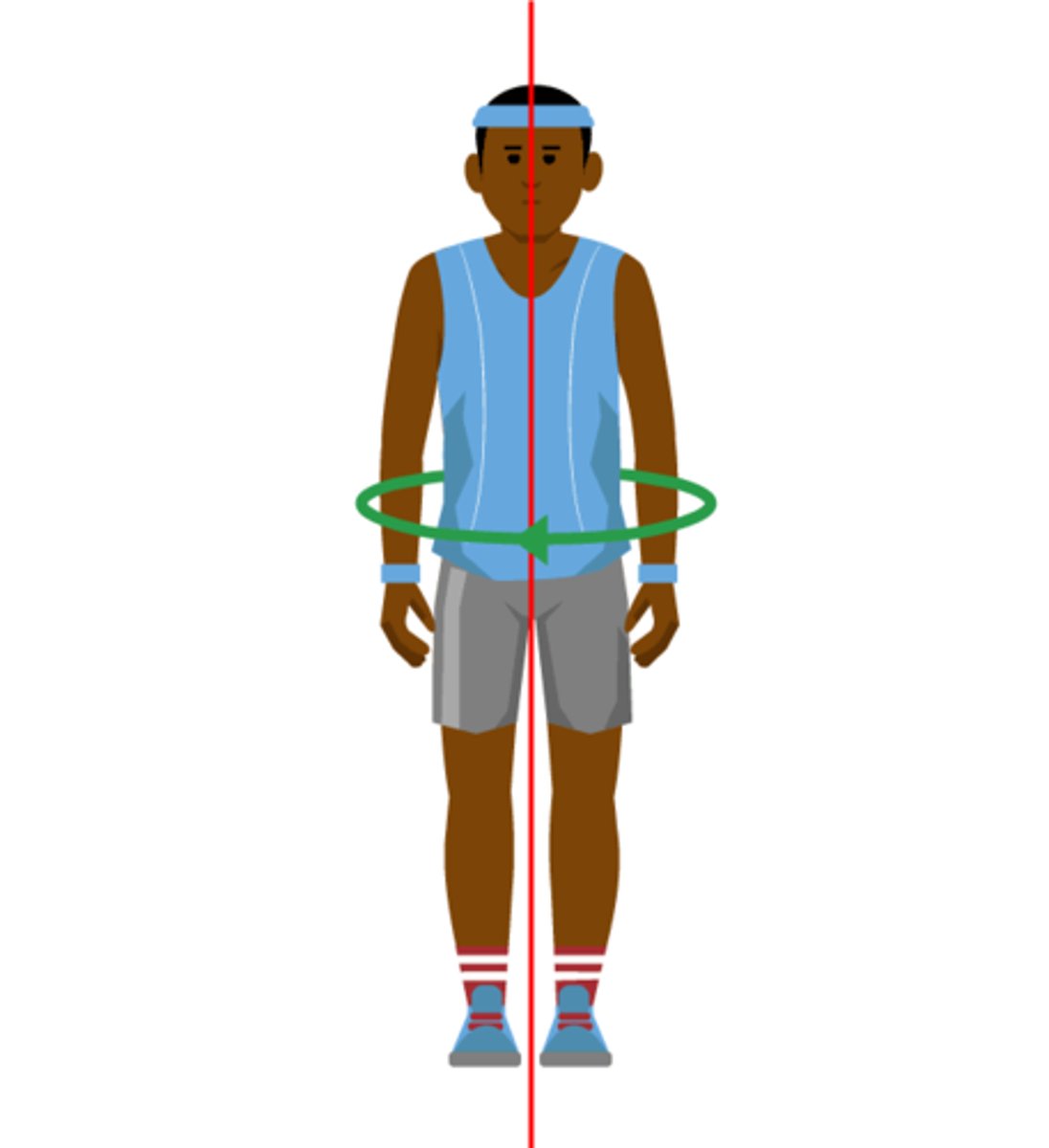
Y-axis
- also called the vertical axis, longitudinal axis, and long axis
- up and down
- movements occur in the transverse plane (perpendicular to it)
- Motions: neck/trunk- rotation. shoulder/hip- medial (internal) rotation, lateral (external) rotation, and horizontal abduction and adduction. forearm- pronation and supination.
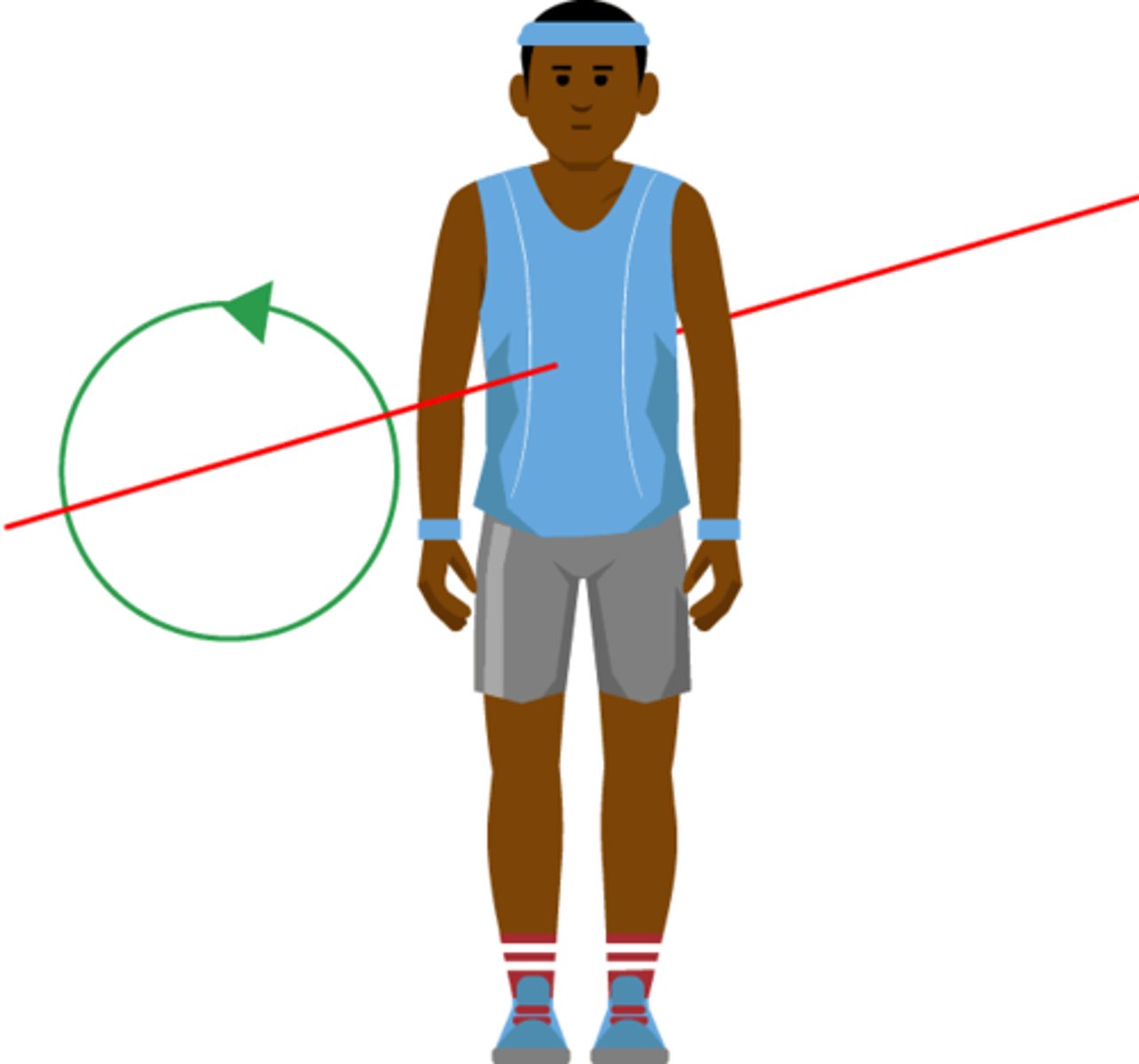
Z-axis
- also called the anteroposterior (A-P) axis and sagittal axis
- front to back
- movements occur in the frontal plane (perpendicular to it)
- motions: shoulder/hip- abduction/adduction. spine/trunk- lateral flexion. wrist- radial deviation (toward thumb), ulnar deviation (toward pinky). Ankle- inversion (sole turns inward) and eversion (sole turns outward)
direction of displacement
- two directions: clockwise (negative) and counterclockwise (positive). Those are not clinically useful.
- Instead, use 3 pairs of anatomic rotations - flexion/extension, abduction/adduction, and medial (internal)/lateral (external) rotation
magnitude of displacement
- rotary motion: expressed in degrees with a goniometer (ROM)
- translatory motion: linear displacement measurement expressed in millimeters, centimeters, feet, and inches
Rate of displacement
- speed: displacement per unit time, regardless of time (how fast it goes from point A to B)
- velocity: displacement per unit time in a given direction. Ex. linear velocity: meters/sec (glide) and angular (rotary) velocity: degrees/sec (circular movement)
- acceleration: velocity changes over time
kinetics
- forces acting in and on the body that produce stability or mobility
- includes: a defining of the forces involved (ex. gravity as an external force), a description of the forces (ex. the source and/or the recipient), and involves knowledge of some physics (ex. action-reaction, friction, and knowledge of the body's center of gravity)
force
- determines whether an object is at rest or in motion
- = (mass)(acceleration)
- units = newtons or pounds
- mass of the objects = kilograms or slug
types of forces
external:
- gravity (most consistent)
- compressive (or approximation of joints): joint compression forces create contact between joint surfaces
- tensile (or traction in the case of joints): always equal in magnitude, opposite in direction, and applied parallel to the long axis of the object. Pulling a part.
- shear (or tangential): parallel to the surface
Internal:
- muscle, bone, and ligament: everything inside you presses on each other
primary rules of forces
- all forces on a segment must come from something that is contacting that segment
- anything that contacts a segment must create a force on that segment (although the magnitude may be small enough to disregard)
- gravity can be considered to be "touching" all objects
Force Magnitude
- the quantity of a force; amount. (AKA: scalar)
- examples: mass, time, and length
- often measured in newtons (N)
force vectors
- arrows that visually illustrate force, both direction and "point of application"
- the longer the arrow, the more magnitude of force
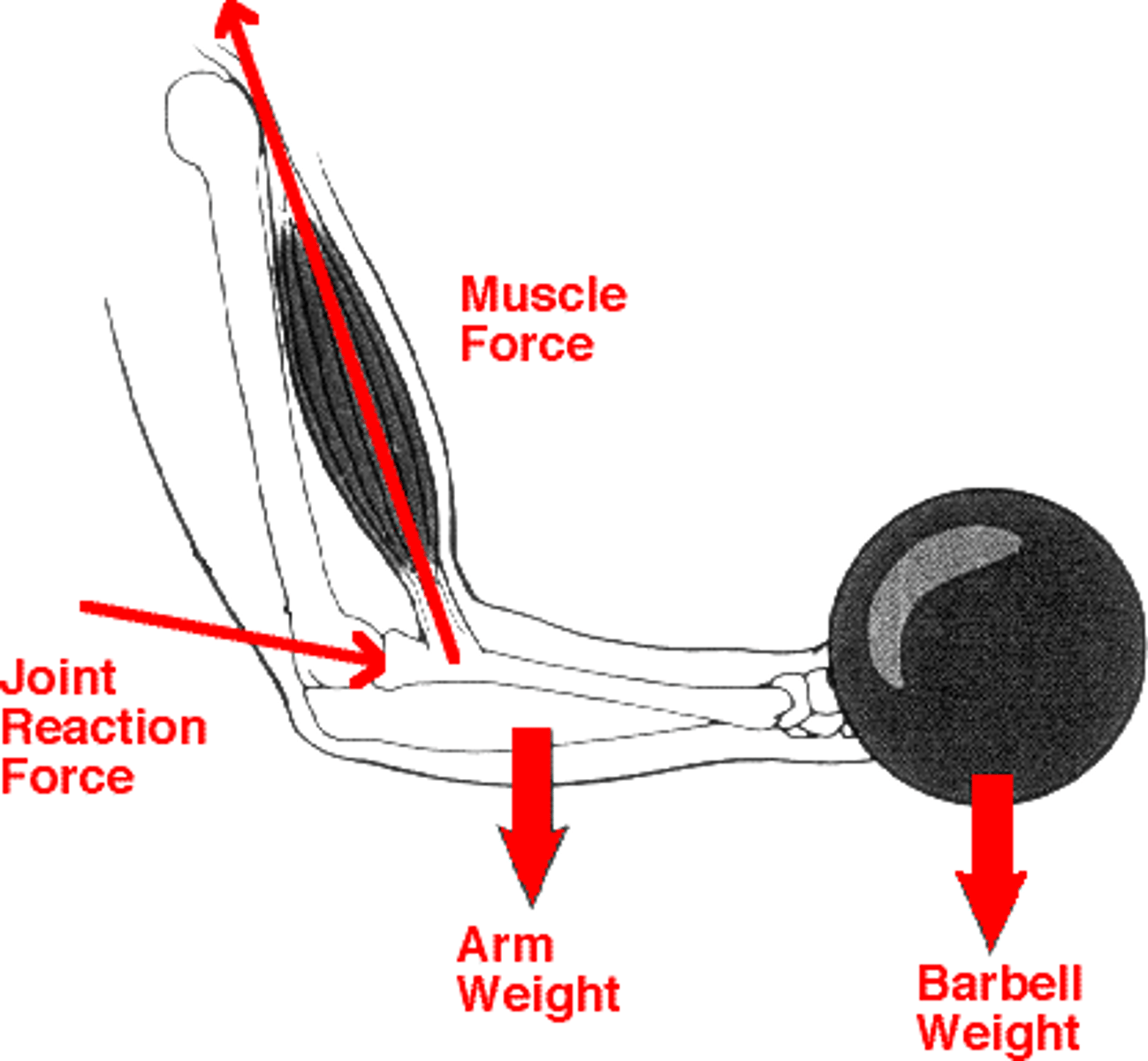
composition of forces
Two or more forces combined into one force
- gravity always involved
center of mass (COG)
- when segments or mass are altered- the ______ ___ _____ may change
- The line of gravity is always vertically downward (like a plum line)
- base of support: wide = less likely to displace the line of gravity; the object is more stable
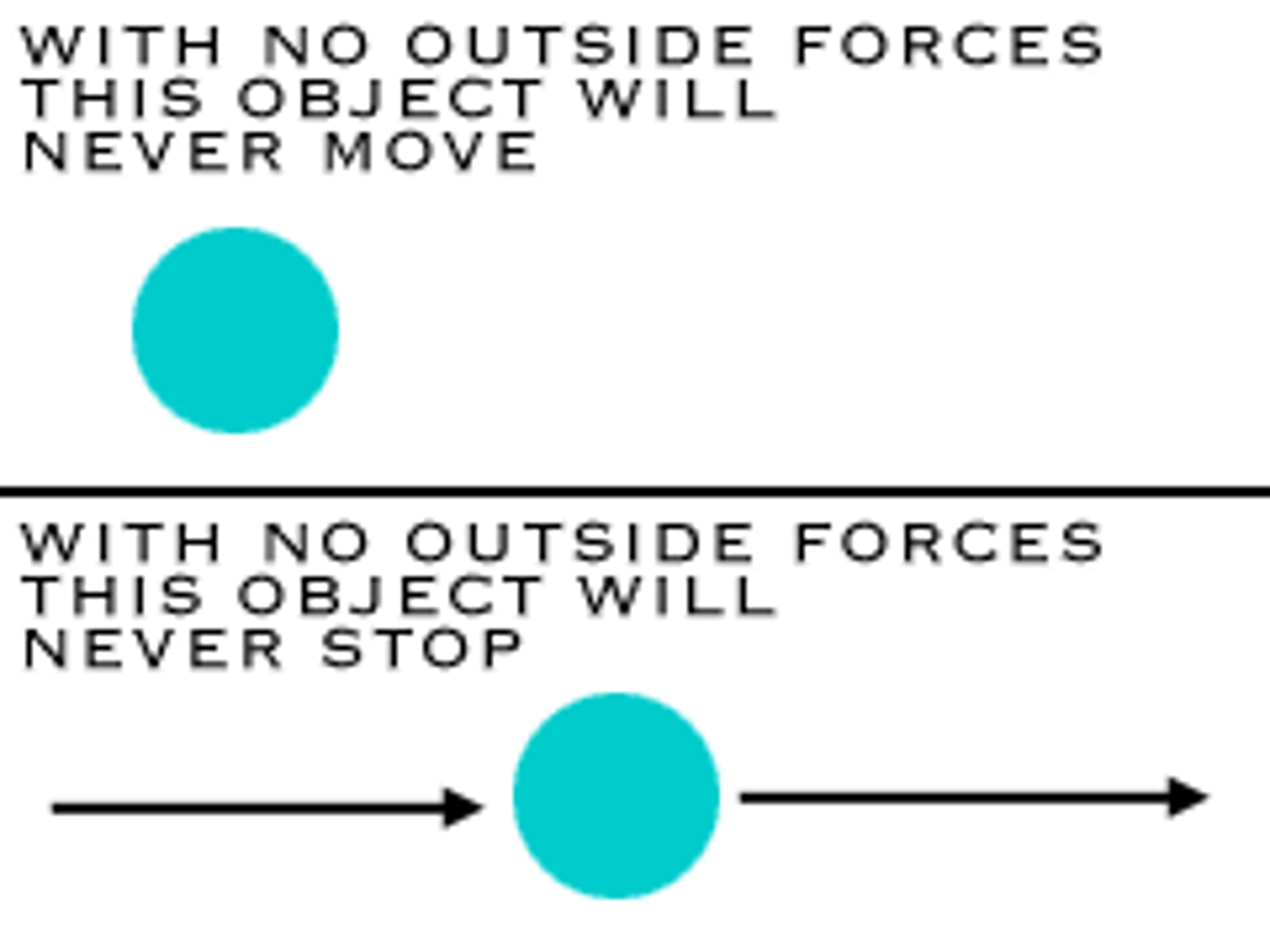
Newton's First Law (Law of Inertia)
An object in motion (or at rest) will tend to stay in motion (or at rest) until it is acted upon by an outside force.
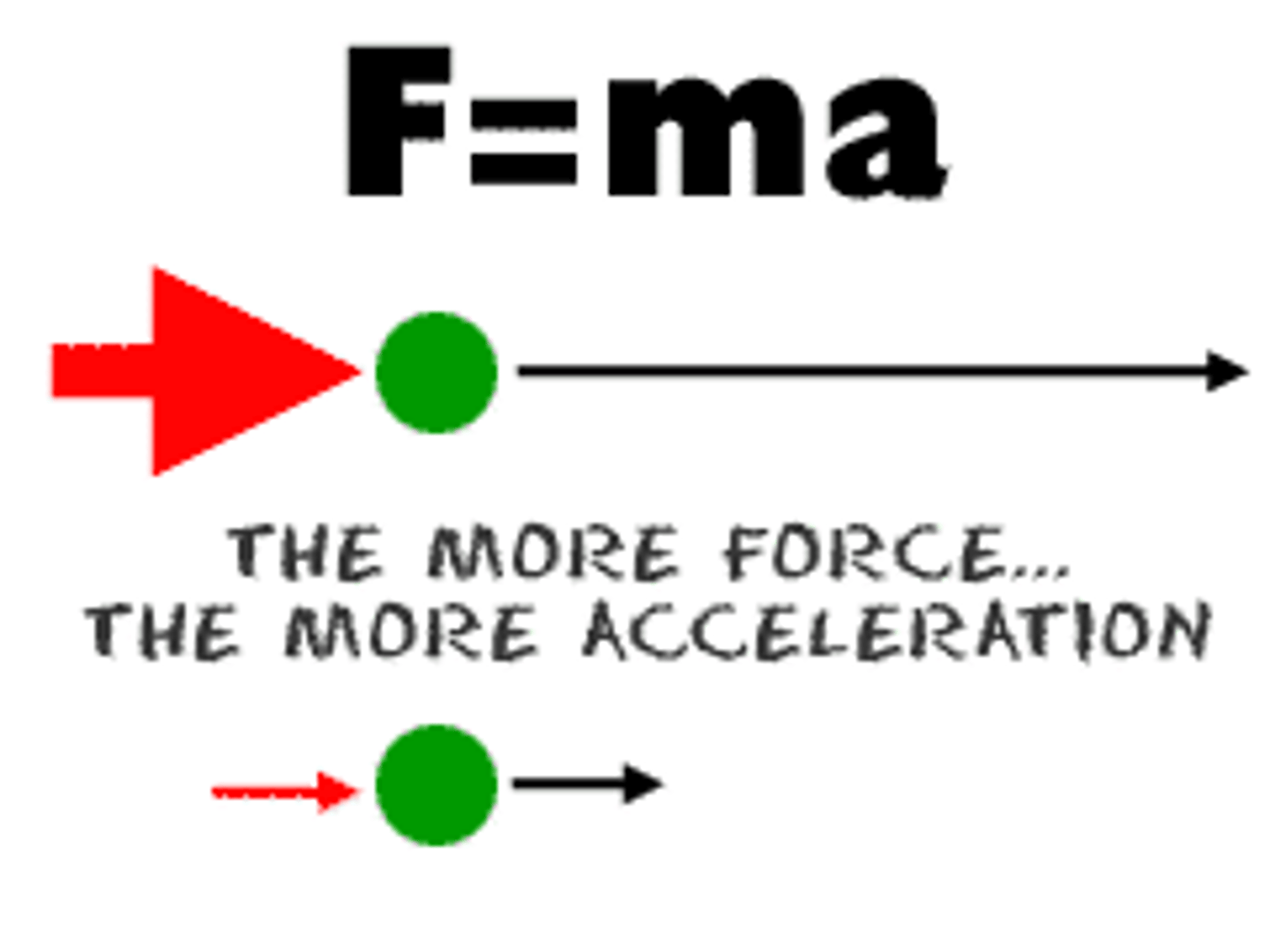
Newton's Second Law (Law of Acceleration)
A force applied to a body causes an acceleration of that body of a magnitude proportional to the force, in the direction of the force, and inversely proportional to the body's mass
Newton's Third Law (Law of Action-Reaction)
For every force exerted on a system by its surroundings, the system exerts an equal but opposite force on its surroundings
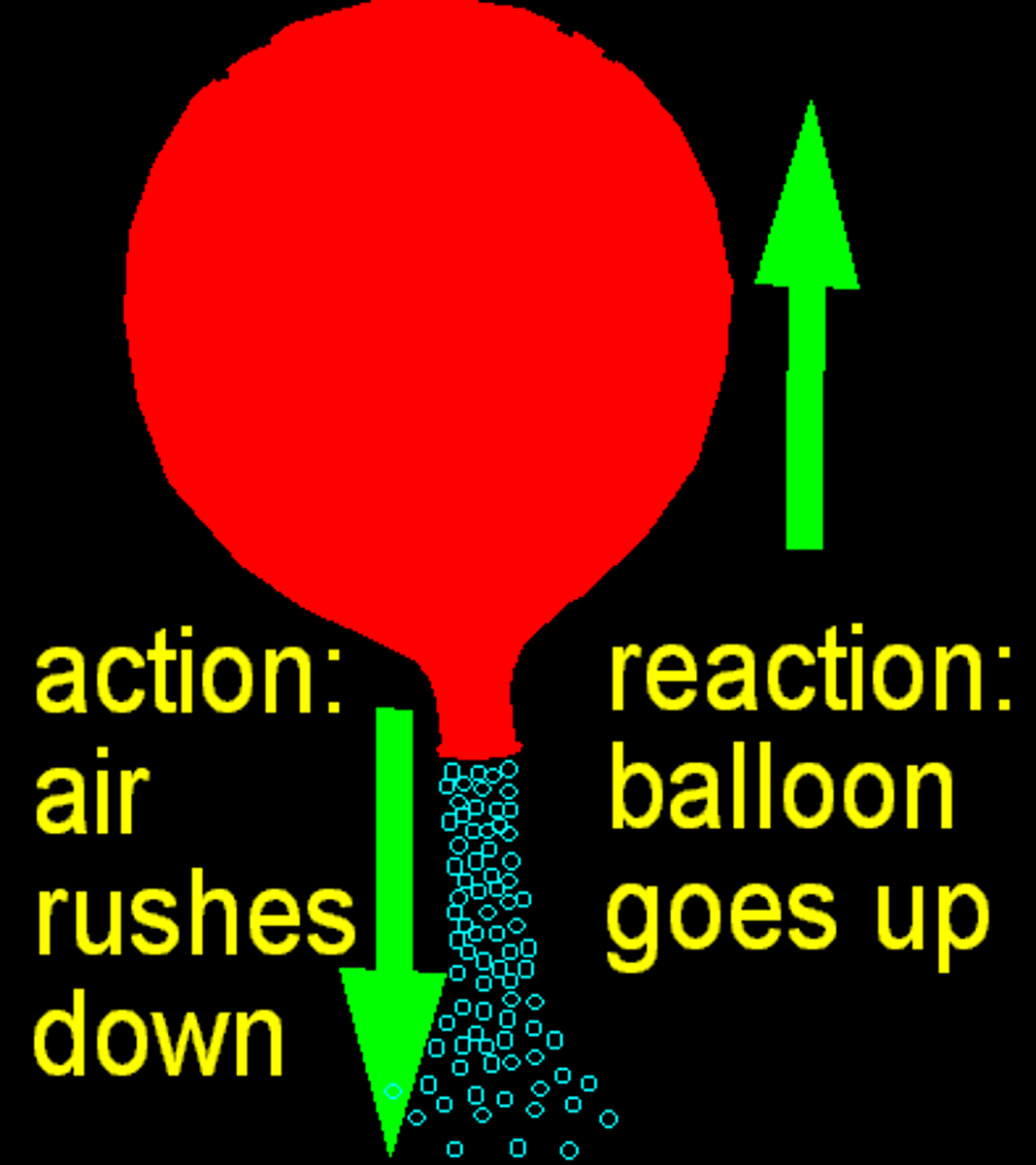
force considerations
- linear vs. concurrent force systems
- gravitational and contact force
- joint tensile forces
- joint compression/joint reaction forces & distraction forces
friction forces
type of shear force
- magnitude: depends on the objects ad slipperiness or roughness of surface
- static
- kinetic
static force of friction
Frictional force acting when there is no motion along the surface
kinetic force of friction
the frictional force between two objects sliding at the point of contact of their surfaces
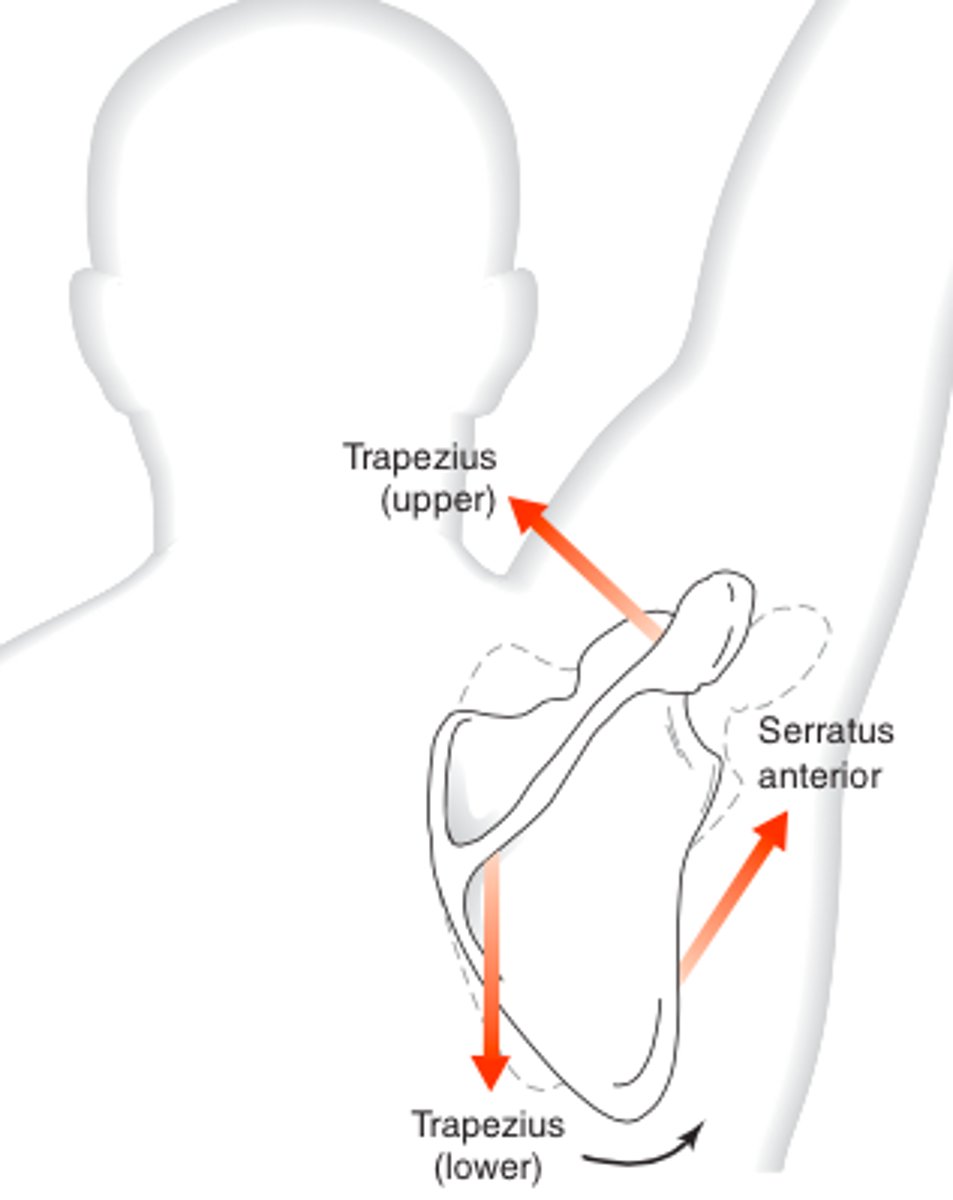
force couple
- two forces that are equal in magnitude, opposite in direction, parallel, and applied to the same object at different points
- unopposed: will result in rotary movement
- the strength of this motion = torque
- think of steering wheel
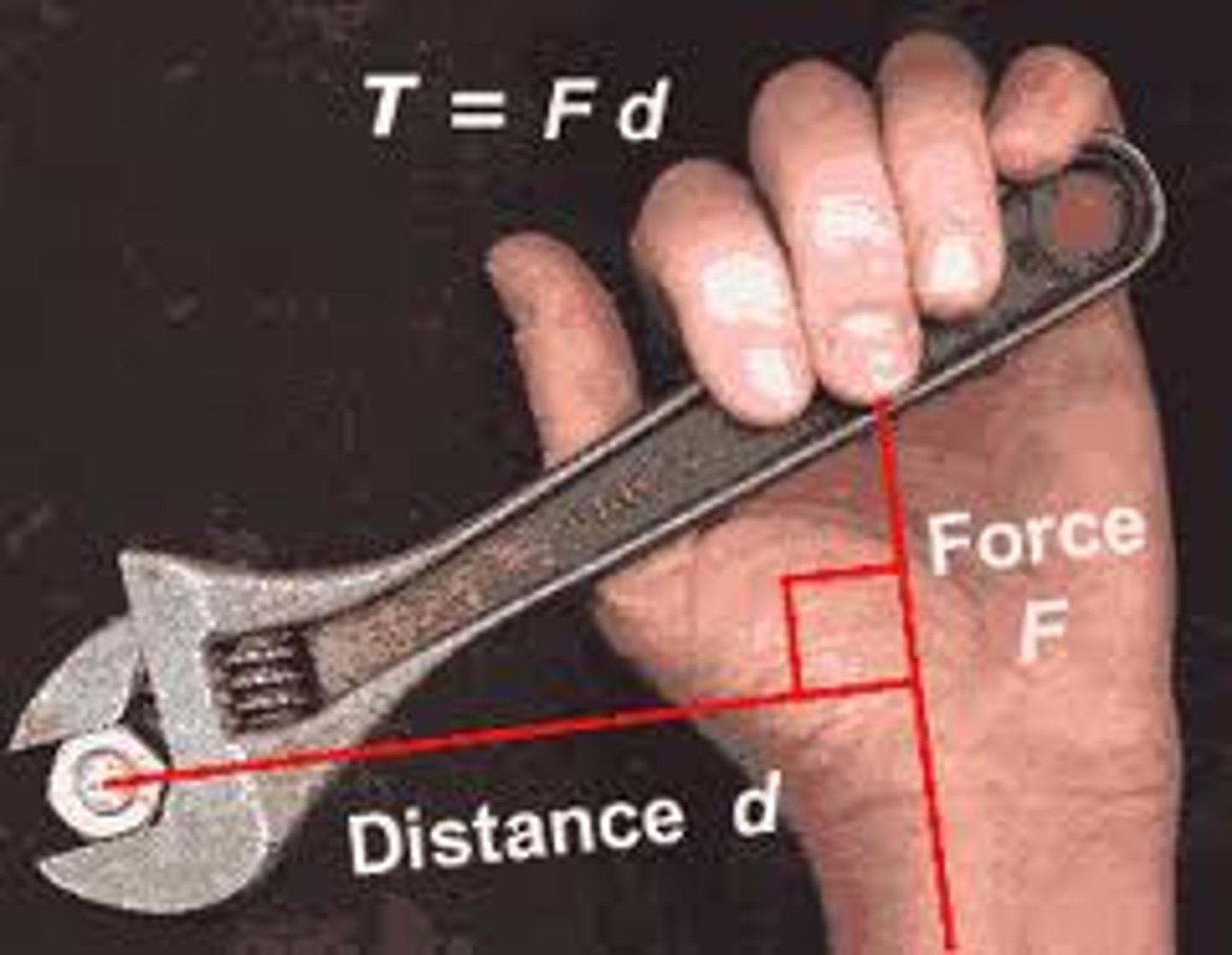
torque or moment of force
- the turning effect of force exerted at a distance to an axis
- application of force at a distance from the center of rotation
- torque = (f)(d). measured in foot-pound
moment arm
- the perpendicular distance between forces that produce a torque
- the distance that is perpendicular from the joint axis to the force vector
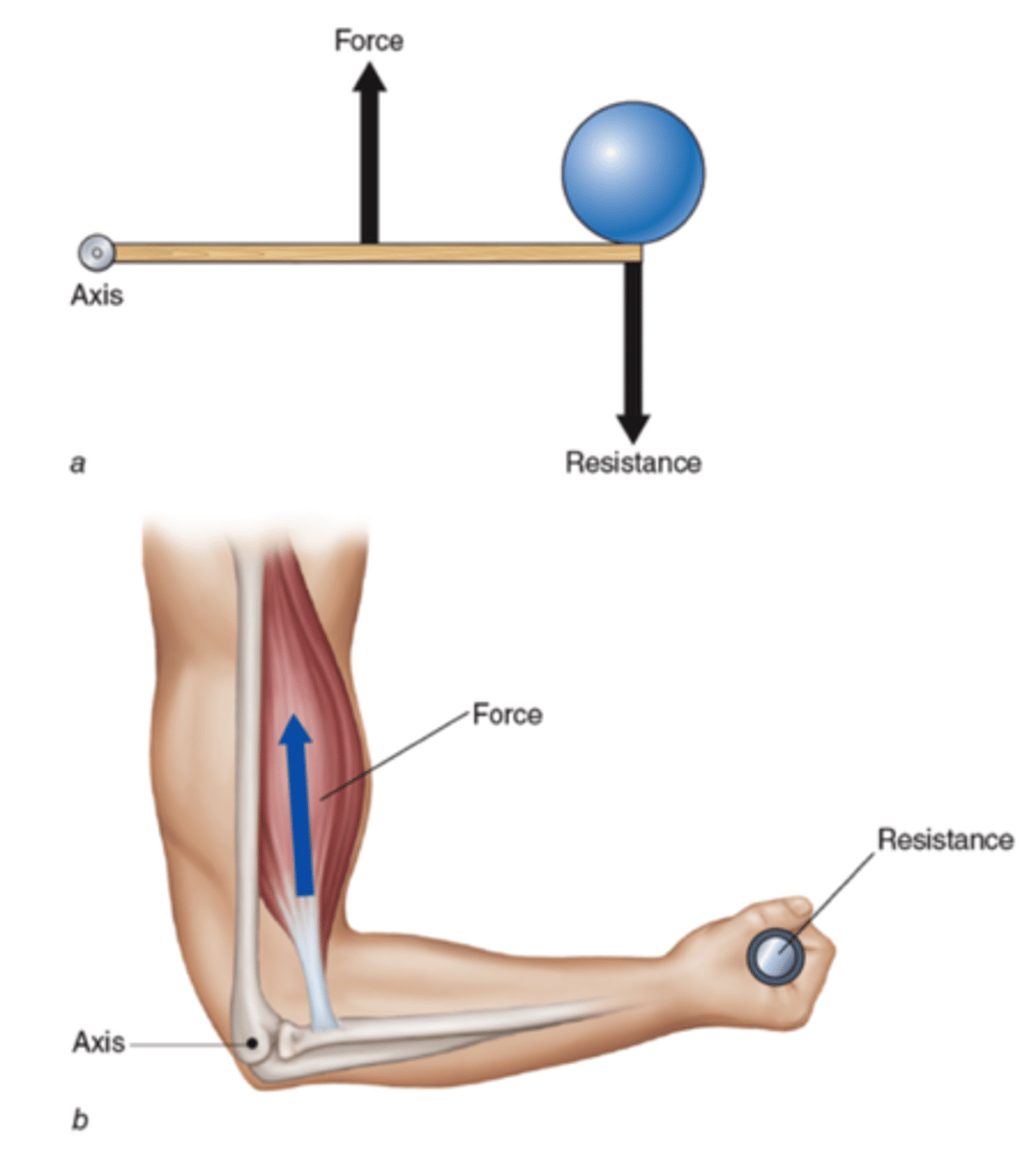
torque movement outcomes
rotary movement: occurs from force couples that are unopposed- has to have elongation of opposite side (musculature) to get fluid rotation
total muscle force vector
- A concurrent force system that cumulatively applies force to a bone
- direction of pull = always toward the center of a muscle -> where the tendon forms
- determined by the lengths and magnitudes of vectors
- the longer the muscle, the vector is stronger and producing more force
anatomical pulleys
- change the direction of the force
- add mechanical advantage to produce more torque
- ex. in hands and fingers for intricate movements
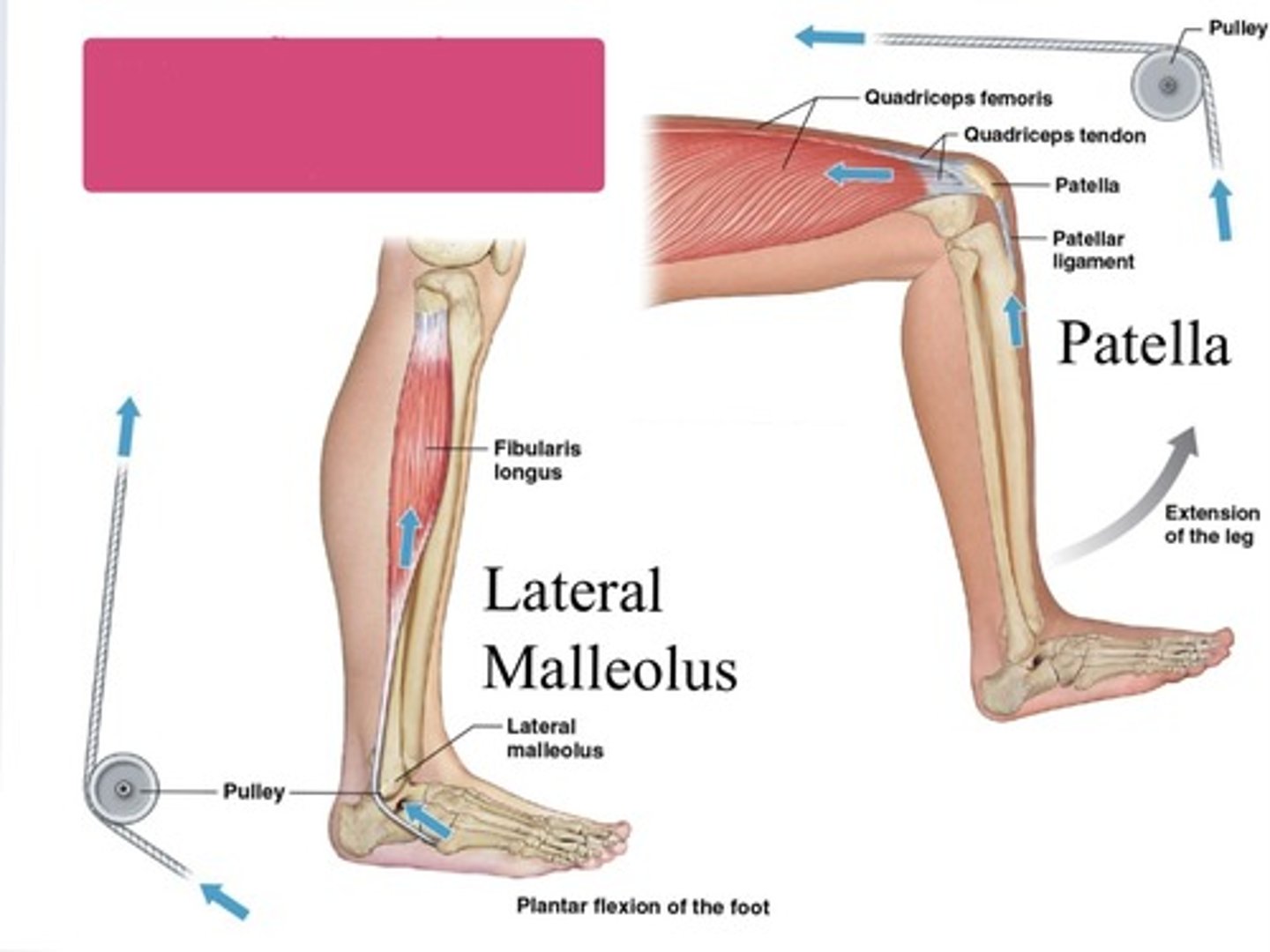
third-class levers
- axis-force-resistance
- effort force has a point of application between the axis and the point of application of the resistance force - the resistance arm larger than the effort arm
- HOW MUSCLES ARE PREDOMINATELY SET UP
- concentric contraction
second-class levers
- axis-resistance-force
- resistant force is between the axis and the point of application of the force (effort arm always bigger than the resistance arm)
- ex. Pulling a wheelbarrow. A lot of resistance is able to move with little effort
- eccentric contraction
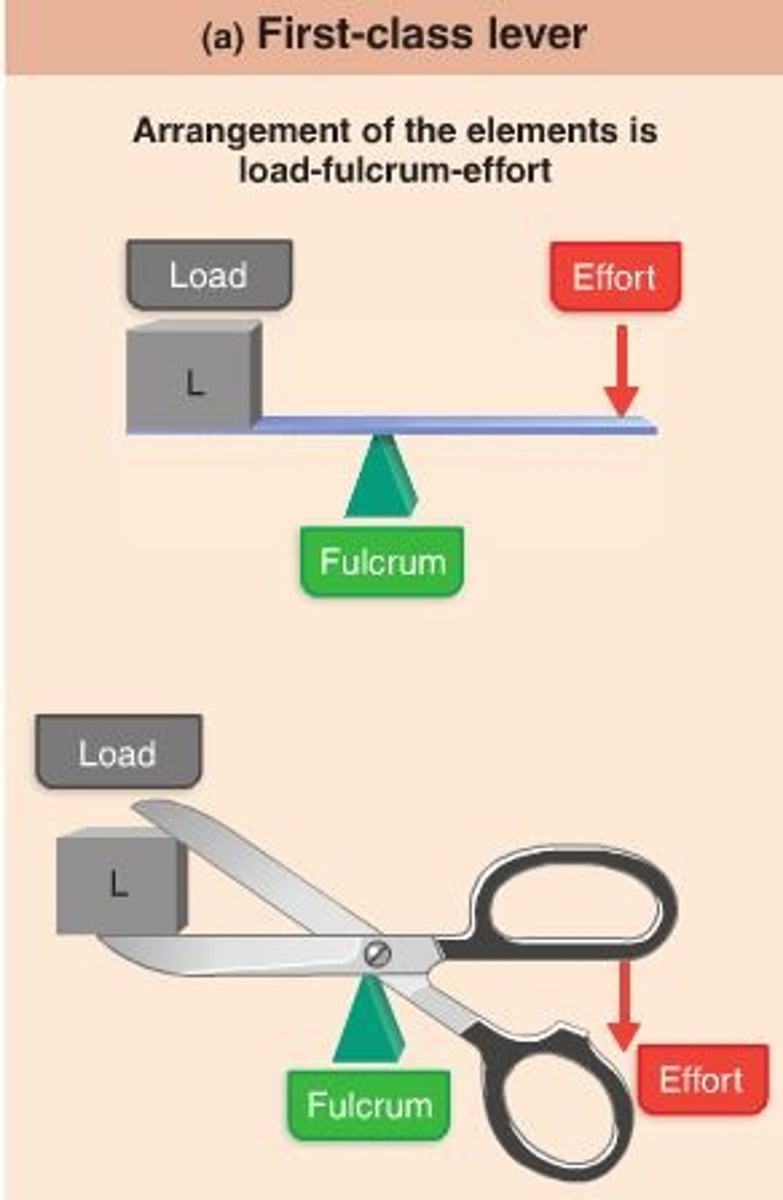
first-class levers
- resistance-axis-force
- axis between the point of application of effort and the point of application of resistance
- ex. teeter-toter or scissors
- isometric contraction
mechanical advantage
- a measure of the mechanical efficiency of the lever system
- ratio of the moment arm of the effort force to the moment arm of the resistance force
- third class levers are mechanically disadvantaged so how do we move?: the space between the axis and application of force is small. Ex. of a door.
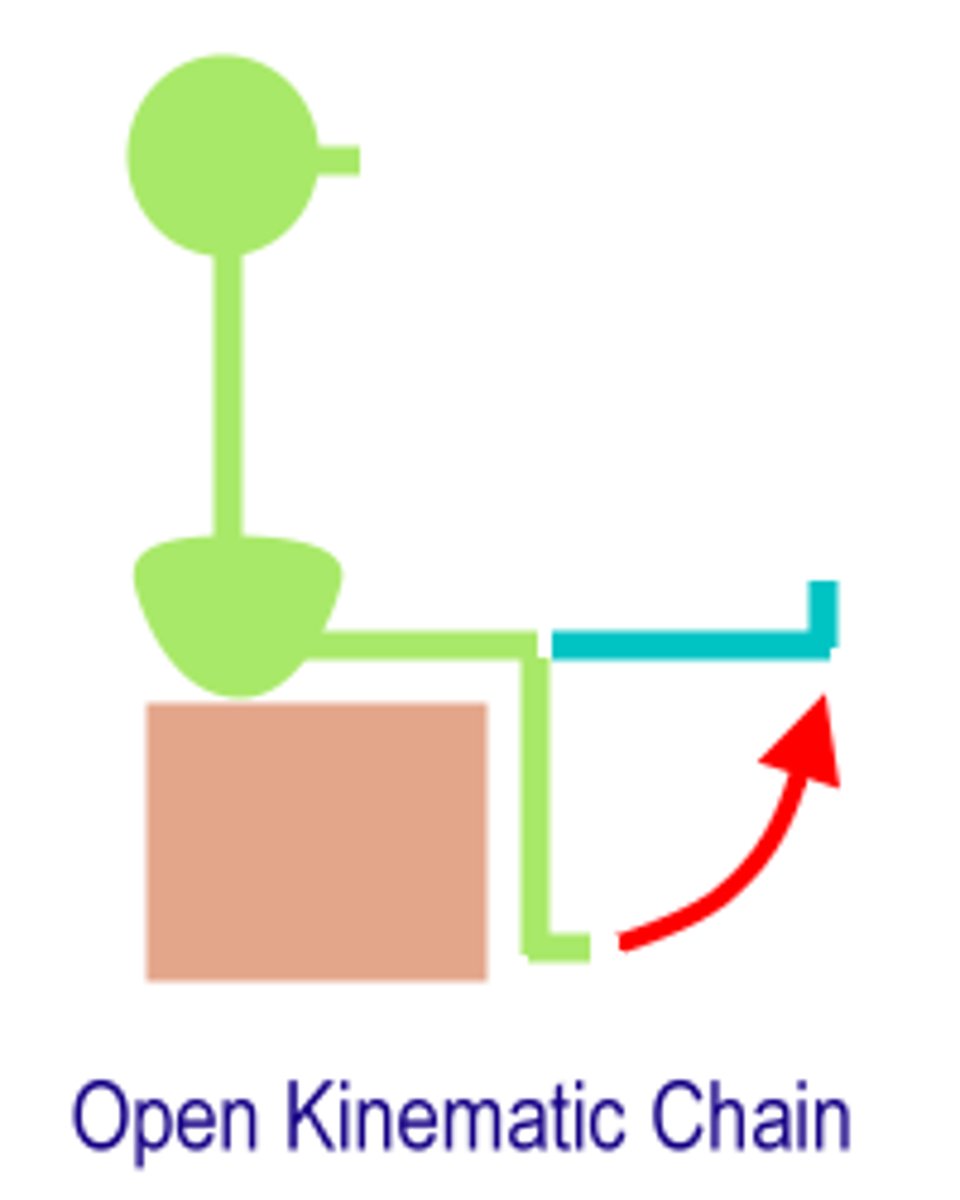
open chain
when one end of a segment or set of segments is free to move in space
- examples of exercises: leg extension, leg curl, hip extension, biceps curl, and bench press
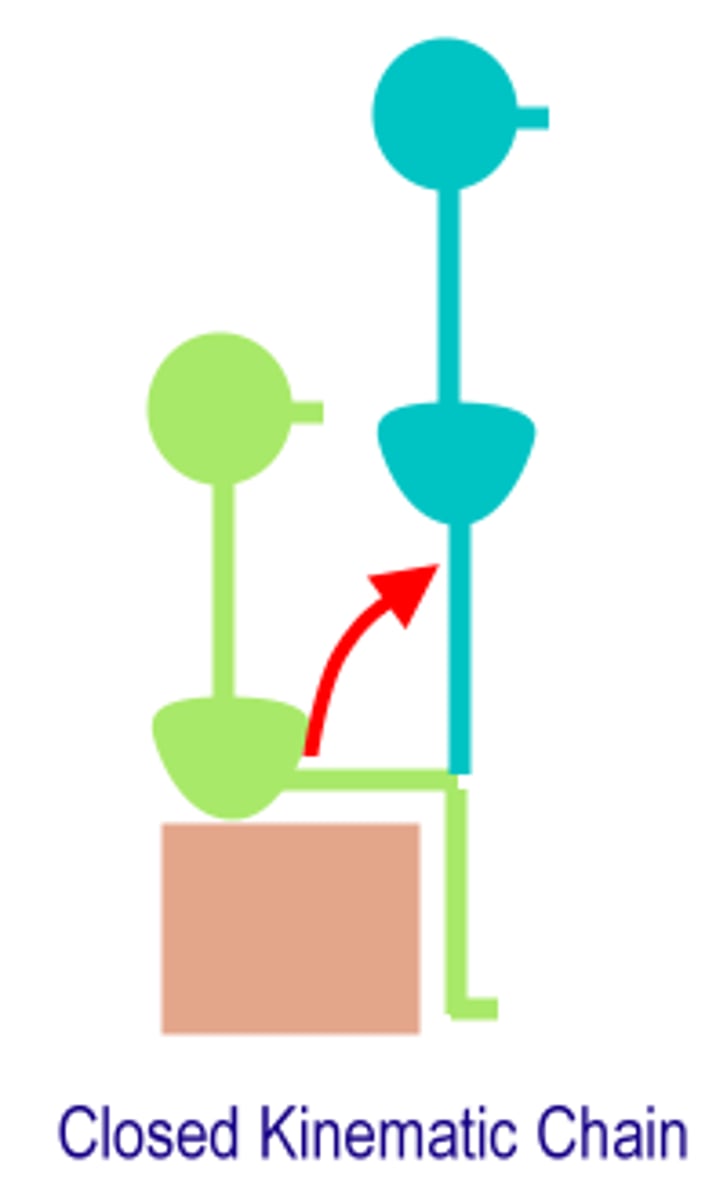
closed chain
When BOTH ends of a segment or set of segments are constrained in some way and not free to move in space
- Examples of exercises: squats, leg press, lunges, push-ups, and pull-ups
load
the amount of force applied (weight-bearing)
creep
tendency of the tissue to elongate over time with consistent force applied (sustained, long-term traction)
joint types
synarthroses, diarthroses
synarthrodial joint
nonsynovial, no or little movement
- synchondrosis: a cartilaginous connection. Allows little motion.
- syndesmosis: a fibrous joint. Allows very little motion.
- synostosis: bone on bone. No motion.
diarthrodial joint
A freely movable joint containing a joint capsule, synovium, synovial fluid, articular cartilage, ligaments, and muscles crossing the joint.
- include uniaxial, biaxial, and triaxial
uniaxial joints
in one plane around a single axis
- hinge joint
- pivot joint
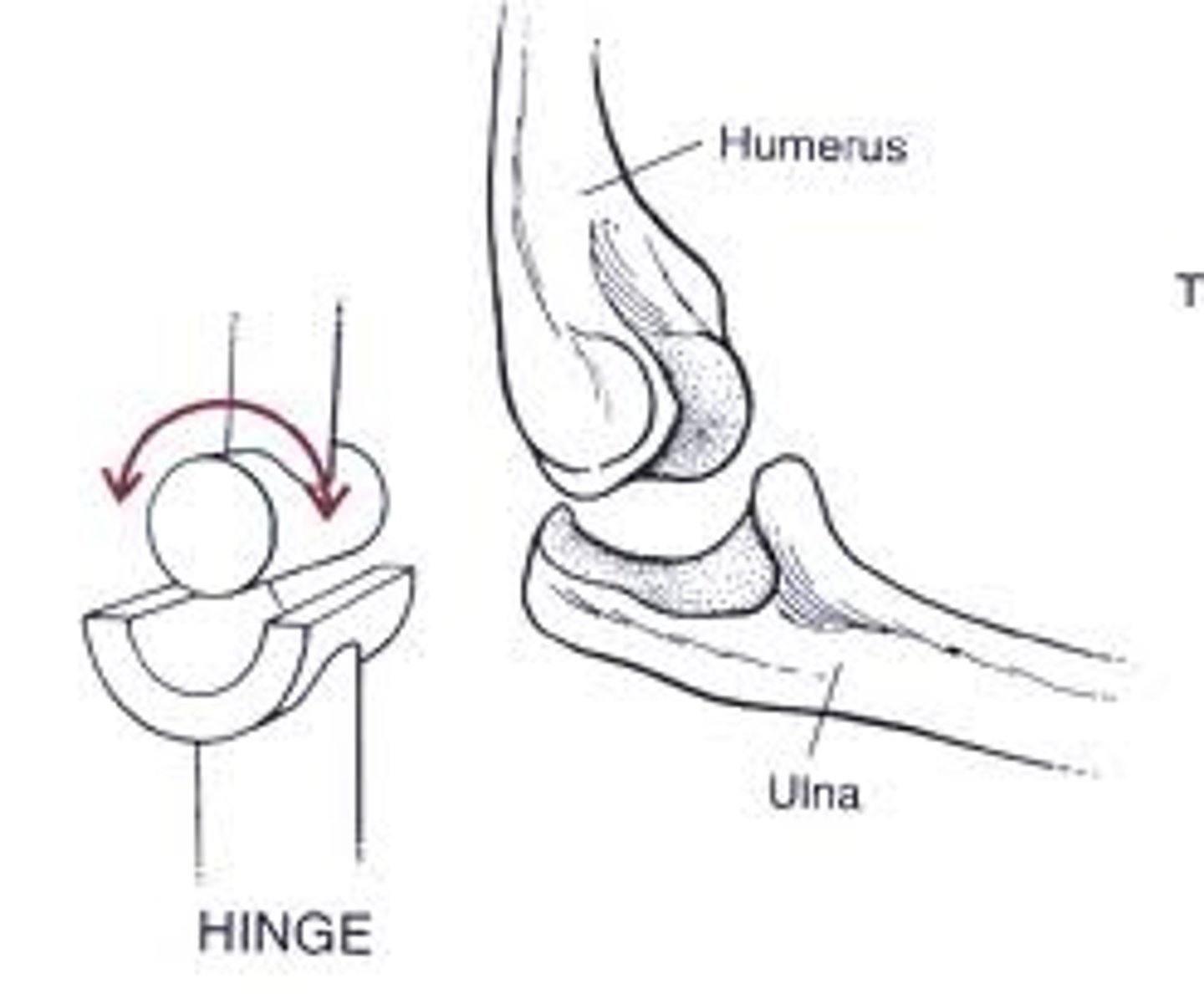
hinge joint
permits movement primarily in one plane—flexion and extension. The articulating surfaces are typically a convex surface fitting into a concave surface
- ex. humeroulnar joint at the elbow, where the trochlea of the humerus articulates with the trochlear notch of the ulna
pivot joint
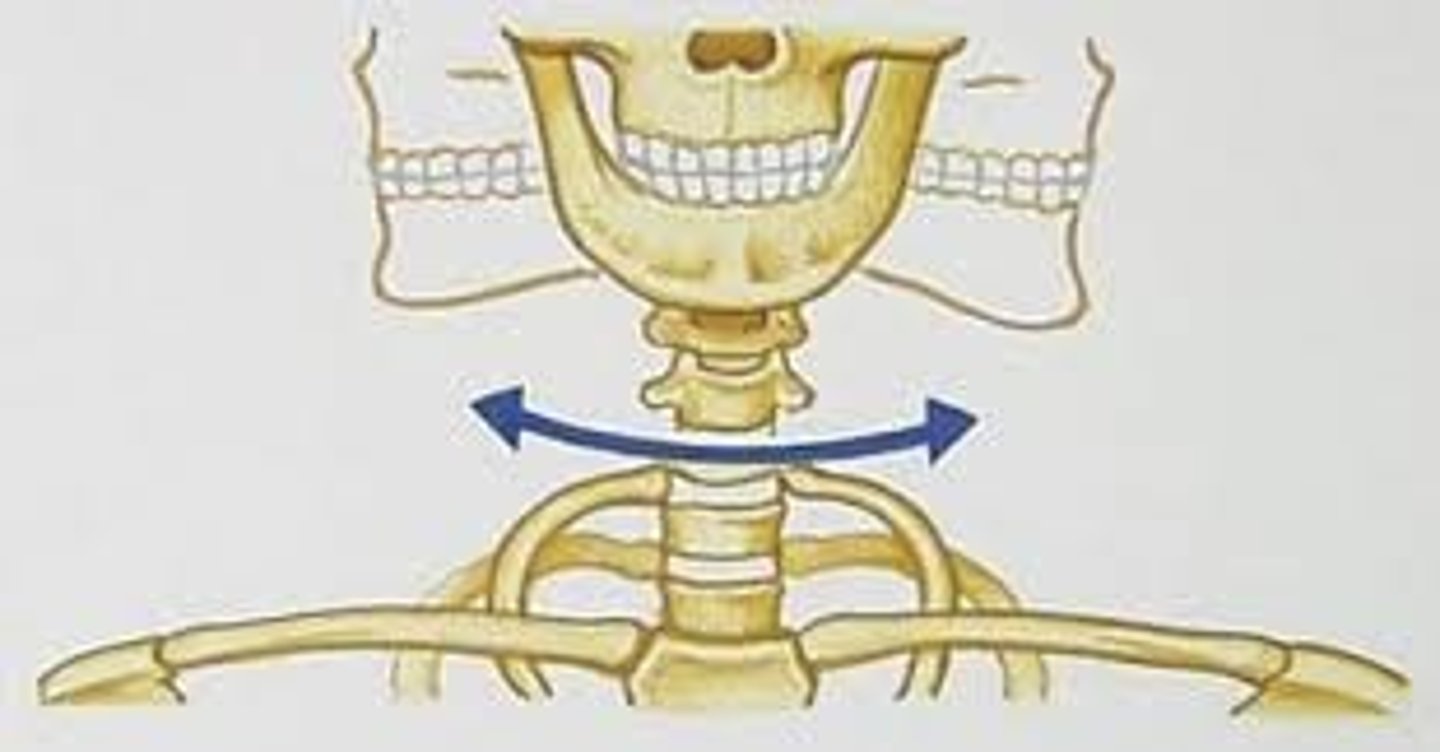
A type of synovial joint that allows for rotational movement around a single longitudinal axis. In this joint, a rounded or pointed bone surface rotates within a ring formed partially by bone and partially by ligament
- ex. atlantoaxial joint, located between the first and second cervical vertebrae (the atlas and axis). This joint allows the head to rotate from side to side
biaxial joints
visible rotation of the bony components in two planes around 3 axes.
- condyloid joint
- saddle joint
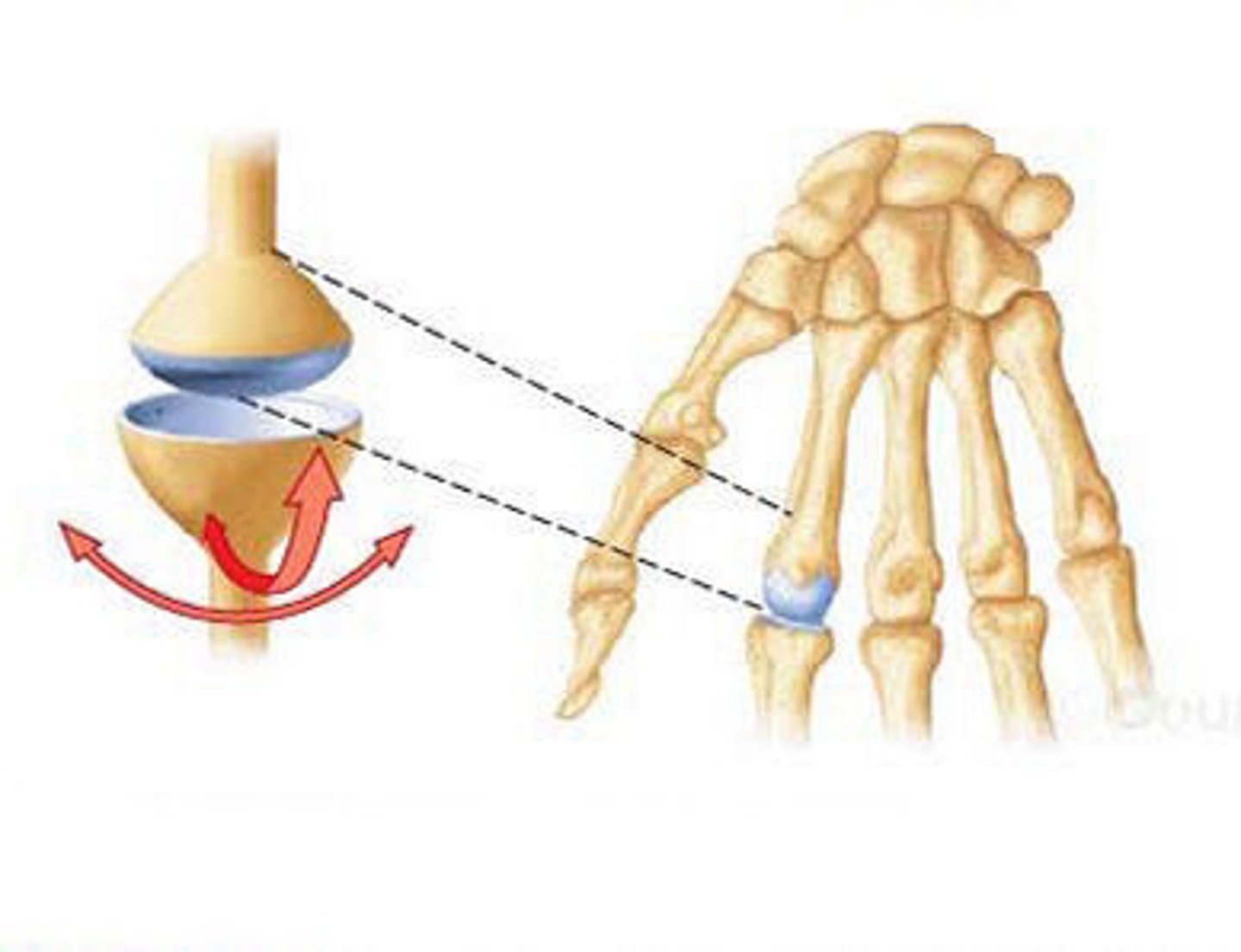
condyloid joint
type of synovial joint that allows movement in two planes: flexion/extension and abduction/adduction, with some circumduction. It consists of an oval-shaped condyle of one bone fitting into an elliptical cavity of another
- ex. metacarpophalangeal joints (knuckles) of the fingers.