hubi 2001
 Call Kai
 Learn
Learn Practice Test
 Spaced Repetition
 Match
Match Flashcards
 Knowt Play
1/31

There's no tags or description
Looks like no tags are added yet.
Name | Mastery | Learn | Test | Matching | Spaced | Call with Kai |
|---|
No analytics yet
Send a link to your students to track their progress
32 Terms
Purines (Adenine, Guanine)
Adenine
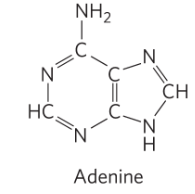
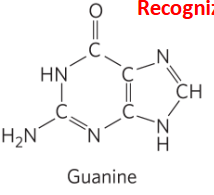
Purines (Adenine, Guanine)
Guanine
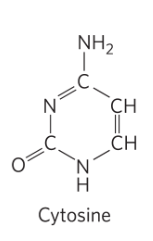
Pyrimidines (Cytosine, Thymine, Uracil)
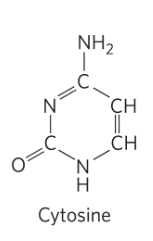
Cytosine
Pyrimidines (Cytosine, Thymine, Uracil)
Thymine (DNA)
Pyrimidines (Cytosine, Thymine, Uracil)
Uracil (RNA)
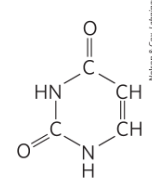
Adenine
Nucleoside = (Adenosine Deoxyadenosine), Nucleotide = (Adenylate Deoxyadenylate), Nucleic Acid (RNA, DNA).
Guanine
Nucleoside (Guanisoine Deoxyguanosine), Nucelotide (Gunaylate Deoxyguanylate) (RNA,DNA)
Cytosine
Cytidine Deoxyacytidine, Cytidylate Deoxycytidylate (RNA,DNA)
Thymine
Thymidine or deoxythymidine, Thymidylate or deoxythymidlate (DNA)
Uracil
Uridine, Uridylate, RNA
what linkage form the backbone of DNA and RNA?
Phosphodiester
dNTP
N in dNTP means any base.
dNTP
is the form of the nucleotide with 3 phosphate groups
Bond formation enabled by
DNA or RNA polymerase
oligonucleotide
<50 bases
polynucleotide
>50 bases
under basic conditions (alkaline) RNA is
rapidly hydrolyzed. RNA is very unstable because of the hydroxide group.
Strands of DNA interact through hydrogen bonds to form
double helix.
chargaff rule:
does not vary between species #A=#T,#G=#C
rosalind franklin and wilkins
helical, 2 periodicites -3.4A and 34 A.
complementary nature of 2 strands allows for faithful replication of DNA by
DNA polymerase
proteins are made in the
cytosol
RNA carries genetic information from the
nucleus to the cytosol
In eukaryotes, most messenger RNAs (mRNA) code
for 1 protein monocistronic
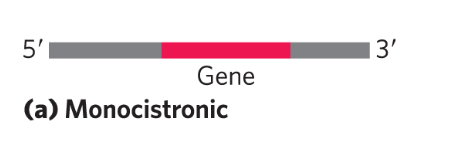
In prokaryotes each mRNA can code for
many proteins = polycistronic
protein coding sequnces are flanked by
non coding regulatory sequnces
base stacking interactions stabilize
helix (along the axis).
2 purines interact more strongly than
pyrimidine or 2 pyrimidines. can even “push out” an intervening pyrimidine.
RNA can form complex 3-dimensional structures due to its
single stranded nature. secondary structure.
Ribozyme (called intron)
catalyzes its one excision from an mRNA strand in protozoan Tetrahymena thermophila.
double stranded DNA and RNA can be denatured to
to make single stranded nucleic acid
If pH or temperature is adjusted to optimal range
DNA/RNA will spontaneously anneal.