Introduction to serious mental illness
 View linked note
 Call Kai
 Learn
Learn Practice Test
 Spaced Repetition
 Match
Match Flashcards
 Knowt Play
1/18

There's no tags or description
Looks like no tags are added yet.
Name | Mastery | Learn | Test | Matching | Spaced | Call with Kai |
|---|
No analytics yet
Send a link to your students to track their progress
19 Terms
Diagnosis Method of serious mental illness
Clinical interview process that involves history taking and Mental State Examination (MSE).
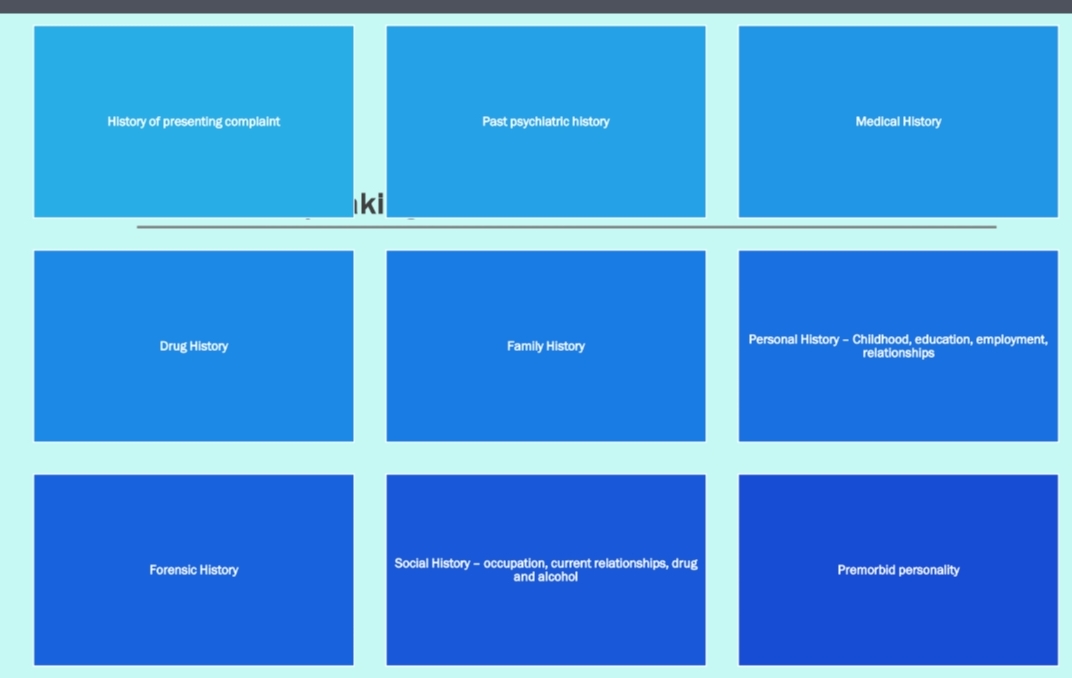
Components of History Taking in mental illness
presenting complaint
past psychiatric history
medical history
drug history
family history
personal history
forensic history
social history
premorbid personality
Mental State Examination (MSE)
Mental observations exam that assses:
appearance
behavior
speech
mood
perception
thought
cognition
insight.
Diagnostic Manuals
ICD-11 and DSM V used for diagnosing mental health disorders.
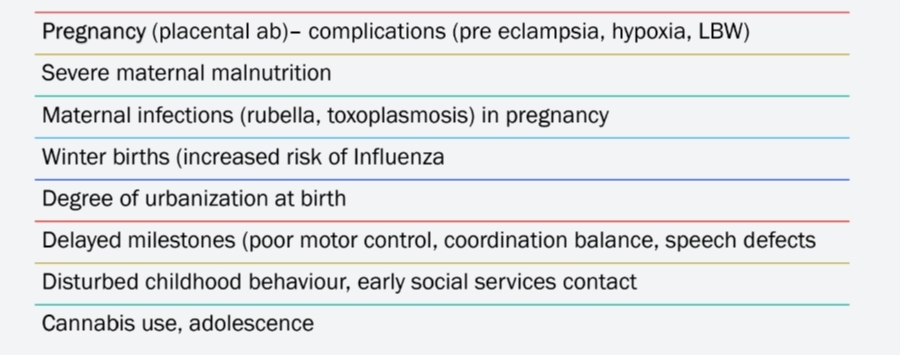
Environmental Risk Factors of psychosis
Examples include maternal malnutrition and infections during pregnancy.
Positive Symptoms of Psychosis
Core symptoms include delusions, disorganized thinking, and hallucinations.
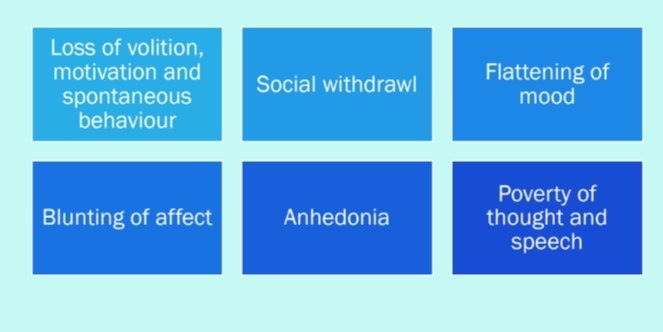
Negative Symptoms of Psychosis
Symptoms such as social withdrawal, flattening of mood, and loss of motivation.
Bio-Psycho-Social Approach
Integrates biological, psychological, and social dimensions in treatment.
Dopaminergic overactivity
Thought to contribute to the development of positive symptoms in psychosis, such as hallucinations and delusions
Cocaine, amphetamines, levodopa, bromocriptine induce psychosis
DA metabolite, HVA Homovanillic acid correlates to severity of psychotic symptoms
Serotonergic overactivity
Thought to be associated with mood disorders and may contribute to symptoms such as anxiety and depression
LSD is partial 5HT agonist – sensory distortions and hallucinations
Glutaminergic hypoactivity
Thought to be linked to cognitive deficits and negative symptoms in schizophrenia. It may involve reduced NMDA receptor function, contributing to symptoms like apathy and social withdrawal
Eg social ketamine use
GABA hypoactivity
Thought to be associated with increased anxiety and seizures, reflecting an imbalance in the neurotransmitter system that can contribute to symptoms of various mental disorders.
Disconnection hypothesis
A theory suggesting that disruptions in the brain's connectivity contribute to the symptoms of schizophrenia, leading to impaired cognition and perception.
Less grey matter – particularly temporal lobe
Less blood flow between frontal and temporal lobes on specific cognitive tasks
Less white matter in tracks connecting frontal and temporal lobes
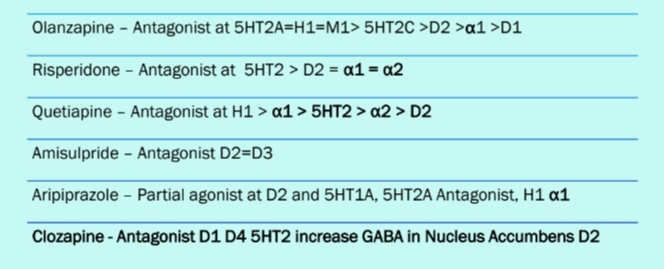
SGA
Atypical antipsychotic medications used to treat schizophrenia and other mental disorders, often with a lower risk of extrapyramidal side effects compared to typical antipsychotics.
EPSE
Extrapyramidal side effects, which are drug-induced movement disorders that can occur with antipsychotic treatment.
Acute dystonia – Abnormal posture oculogyric crisis, torticollis
Parkinsonism - R B T
Akathesia – restlessness
Tardive Dyskinesia – orofacial
Anticholinergic SE
Side effects caused by medications that block acetylcholine, often leading to symptoms such as dry mouth, constipation, urinary retention, and blurred vision.
Anti adrenergic SE
Side effects resulting from medications that block adrenergic receptors, potentially causing symptoms like postural hypotension,tachycardia and erectile dysfunction
Section 117 meeting
A meeting held to discuss aftercare needs for individuals with mental health issues who are eligible for support under Section 117 of the Mental Health Act.
Diabetes in schizophrenia
Typical antipsychotics - i.e. chlorpromazine and haloperidol cause hyperglycaemia
Atypical antipsychotics: weight gain, and clozapine, olanzapine may cause Diabetic Ketoacidosis in people without any history of diabetes