GCSE Biology: B11 - Hormonal coordination
 Call Kai
 Learn
Learn Practice Test
 Spaced Repetition
 Match
Match Flashcards
 Knowt Play
1/104

There's no tags or description
Looks like no tags are added yet.
Name | Mastery | Learn | Test | Matching | Spaced | Call with Kai |
|---|
No analytics yet
Send a link to your students to track their progress
105 Terms
Describe some features of the nervous system
- the nervous system is extremely fast
- but the effects of the nervous system are usually short-lived
What is the endocrine system?
the system that controls the body using chemicals called hormones
What does the endocrine system consist of?
- the endocrine system consists of glands that secrete hormones directly into the bloodstream
- the blood then carries the hormones all around the body
Where do hormones that are part of the endocrine system act in the body?
- each hormone only acts on specific target organs, where it produces an effect
Describe some differences between the nervous system and the endocrine system
- nervous system uses electrical impulses which travel down neurones, the endocrine system uses hormones, which are chemicals, that are carried in the bloodstream
- the nervous system is extremely fast, but the endocrine system tends to produce a much slower effect that is long-lasting
Interpret a diagram showing the endocrine system in males and the endocrine system in females
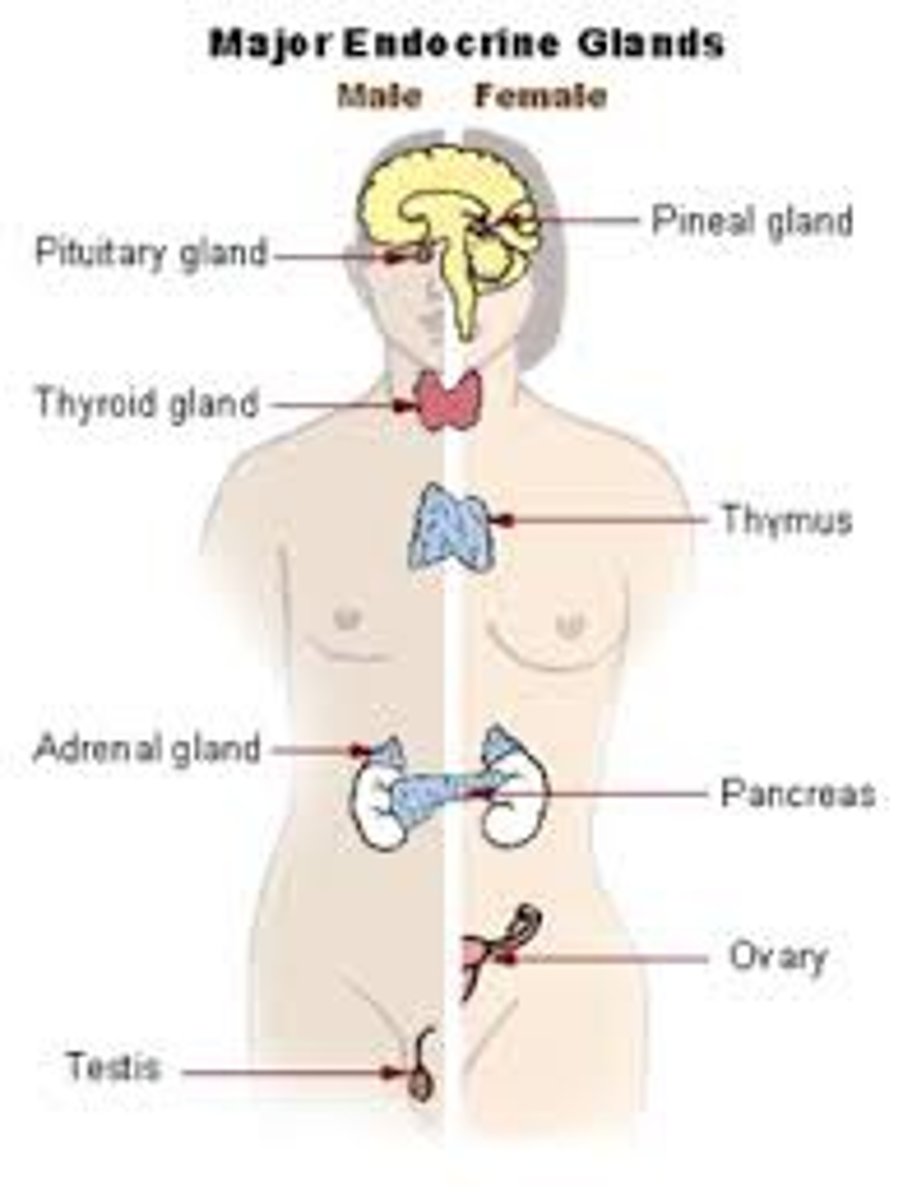
Describe the function of the pancreas in the endocrine system
- the pancreas releases hormones involved in controlling the concentration of glucose in the blood
Describe the functions of the ovaries and testes
- the ovaries and testes release hormones involved in puberty and in reproduction
Describe the function of the thyroid gland
- the thyroid gland produces hormones involved in growth and regulating the body's basic metabolic rate
Describe the function of the adrenal glands
- adrenal glands release the hormone adrenaline, which is produced in times of fear or stress
Describe the function of the pituitary gland
- the pituitary gland releases different hormones into the blood depending on the conditions
Why is the pituitary gland known as 'the master gland' and how does the pituitary gland interact with other glands?
- the pituitary gland is known as 'the master gland'
- it can act on other glands to release other hormones for a range of different effects in the body
Why is it important to keep blood glucose concentration in the body constant?
- glucose is needed by every cell in the body to release energy for respiration
- this means it is very important that blood glucose concentration is kept as constant as possible
Which part of the endocrine system monitors blood glucose concentration?
- the pancreas monitors the body's blood glucose concentration
How does consuming carbohydrates effect blood glucose concentration?
- carbohydrates can increase concentration of glucose in the blood
Name the hormone produced by the pancreas to reduce blood glucose concentration in the body
insulin
Describe how the hormone insulin controls blood glucose concentration
- carbohydrates can increase blood glucose concentration
- this is detected by the pancreas, which produces the hormone insulin
- insulin travels in bloodstream and triggers body cells to take up glucose from the blood
- insulin triggers liver and muscle cells to store excess glucose as a storage molecule glycogen
- this causes blood glucose concentration to return to normal level
What is the control of blood glucose concentration an example of?
homeostasis
What is the storage form of glucose?
glycogen
Describe type 1 diabetes
- in type 1 diabetes, the pancreas does not produce enough insulin
- this means when blood glucose concentration rises, it stays at a high level
Describe how type 1 diabetes is treated
- people with type 1 diabetes must monitor their blood glucose concentration and inject themselves with insulin if blood glucose concentration increases too much
Explain why type 1 diabetes is dangerous
- type 1 diabetes means that a person's pancreas does not produce enough insulin
- this causes their blood glucose concentration to rise to a high level that could kill them
Describe type 2 diabetes
- in type 2 diabetes, body cells stop responding to insulin produced by pancreas
- this causes blood glucose concentration to increase too much to a dangerous level for the person
Describe how type 2 diabetes can be treated
- type 2 diabetes can be treated with a diet with a controlled amount of carbohydrates
- taking exercise is also another recommended treatment
Name a risk factor for type 2 diabetes.
- obesity
Explain why the number of cases of type 2 diabetes is increasing in the UK
- number of cases of type 2 diabetes has increased as obesity levels in the UK have increased
- this is because obesity is a risk factor for type 2 diabetes
What is the function of the hormone insulin?
- insulin triggers a decrease in blood glucose concentration in the body if it becomes too high
What is the function of the hormone glucagon?
- glucagon triggers an increase in blood glucose concentration in the body if it becomes too low
Name three conditions that must be kept constant in the body by homeostasis
- the body's temperature
- the body's water balance
- the body's blood glucose concentration
Describe how glucagon controls blood glucose concentration in the body
- if blood glucose concentration becomes too low, the pancreas releases the hormone glucagon into the bloodstream
- glucagon triggers liver cells to convert glycogen stores back to glucose, which is then released in the blood
- this restores blood glucose concentration to a normal level
Describe the blood glucose concentration of a person without diabetes
- blood glucose concentration will rise and fall slightly over course of the day
- because blood glucose concentration is controlled by a balance between insulin and glucagon
- opposite effects of pancreas' release of insulin and glucagon forms a negative feedback cycle
State examples of negative feedback cycles
- the control of blood glucose concentration through the balance between insulin and glucagon
- the control of thyroxine levels in the blood
- the role of the hormone ADH in maintaining the body's water balance
Which system in the body has an important role in human reproduction?
- the endocrine system plays an important role in human reproduction
Name the hormone produced by the testes in men
- in men, the testes produces the hormone testosterone
Describe the function of the testes in human reproduction
- in men, the testes produces the hormone testosterone
- which stimulates the testes to produce sperm
Name the hormone produced by the ovaries in women
- in women, the ovaries produce the hormone oestrogen
What is meant by ovulation?
- eggs in the ovaries start to mature once puberty begins
- every 28 days, an egg is released from an ovary
- this is called ovulation
Describe the roles of hormones in the menstrual cycle
- every 28 days, ovulation takes place
- before this, the uterus lining becomes thick and spongy
- the egg then makes its way down the uterus
- if sperm is present, then the egg is fertilised
- this can implant into the uterus wall and develop into a baby
- if egg remains unfertilised, both the egg and uterus lining are released
- this is known as a period
Name the four key hormones involved in the menstrual cycle
- FSH
- LH
- Oestrogen
- Progesterone
Describe the function of Follicle stimulating hormone (FSH) in the menstrual cycle
- FSH causes an egg to mature in the ovary
Describe the function of Luteinising hormone (LH) in the menstrual cycle
- LH causes the egg to be released
- this is known as ovulation
Describe the functions of oestrogen and progesterone in the menstrual cycle
- oestrogen and progesterone are involved in maintaining the uterus lining, in case the egg is fertilised and implants
Describe the menstrual cycle and how the hormones interact
- FSH released by pituitary gland and it travels in the blood to the ovaries to cause an egg to mature
- FSH also triggers ovaries to make oestrogen
- oestrogen stops pituitary gland from releasing anymore FSH
- pituitary gland now releases LH instead, which triggers ovulation
- once ovary has released egg, ovary produces hormone progesterone
- progesterone stops pituitary gland from releasing FSH and LH to prevent more eggs from maturing or being released
- progesterone also keeps uterus lining thick in case fertilised egg implants
- level of progesterone falls if fertilisation does not take place
- uterus lining and egg then released and the women has a period
Briefly state the order of the hormones interacting in the menstrual cycle
FSH ------> oestrogen -------> LH -------> progesterone
Explain how to answer a question where you need to interpret graphs of the hormones involved in the menstrual cycle
- you must describe how the hormones interact with each other in the correct order
- whilst also referring to data from the graph
Where is FSH produced?
the pituitary gland
Where is LH produced?
the pituitary gland
Where is oestrogen produced?
ovaries
Where is progesterone produced?
ovaries
What is contraception?
the methods used to prevent fertilisation
Name the types of contraception
- oral contraceptives
- an implant, a skin patch or an injection
- barrier methods
- IUD/the coil
- sterilisation
- abstaining from sexual intercourse
Name an example of an oral contraceptive
the pill
Describe how oral contraceptives, such as the pill, prevent fertilisation
- oral contraceptives contain hormones that prevent the body from producing the hormone FSH that causes an egg to mature
- if a woman takes the contraceptive pill, this prevents any eggs from maturing
Describe some advantages of oral contraceptives
- oral contraceptives are highly effective if taken correctly
Describe some disadvantages of oral contraceptives
- oral contraceptives must be taken every day so the woman could become pregnant if she forgets to take it
- oral contraceptives can have side effects such as increasing risk of breast cancer or blood clots
- oral contraceptives provide no protection from STIs
Describe how an implant, a skin patch or an injection prevents fertilisation
- an implant, a skin patch or an injection all contain progesterone
- this progesterone stops eggs from maturing or being released
Describe some advantages of an implant, a skin patch or an injection
- an implant, a skin patch or an injection can be more convenient than an oral contraceptive such as the pill
- E.g. an implant lasts for 3 years
Describe some disadvantages of an implant, a skin patch or an injection
- there are possible side effects of an implant, a skin patch or an injection
- there is no protection from STIs
Name some examples of barrier methods
- condoms
- diaphragms
Describe how barrier methods prevent fertilisation
- barrier methods prevent sperm from reaching an egg
- some barrier methods contain spermicides, which are more effective as they kill the sperm
Describe some advantages of barrier methods
- barrier methods are effective if used correctly
- barrier methods do not involve hormones so there are no side effects
- barrier methods reduce risk of STIs
Describe some disadvantages of barrier methods
- barrier methods can break or slip off
Describe how IUD/the coil prevents fertilisation
- IUD/the coil prevents embryo from implanting
- it can release hormones to reduce the risk of fertilisation
Describe some advantages of IUD/the coil
- IUD/the coil are highly effective and can prevent pregnancy for up to 10 years
- there are very few side effects
Describe some disadvantages of IUD/the coil
- IUD/the coil does not protect against STIs
Describe how sterilisation prevents fertilisation
- in women, sterilisation prevents egg from reaching the uterus
- in men, sterilisation prevents sperm from leaving the penis
Describe some advantages of sterilisation
- sterilisation is highly effective at preventing fertilisation
Describe some disadvantages of sterilisation
- sterilisation is very difficult to reverse
- it does not protects against STIs
Describe how abstaining from sexual intercourse prevents fertilisation
- abstaining from sexual intercourse involves not having sexual intercourse during the time after ovulation
Describe some advantages of abstaining from sexual intercourse
- it is a natural form of contraception
Describe some disadvantages of abstaining from sexual intercourse
- it can be hard to tell when a woman has ovulated
- it does not protect against STIs
Explain why issues on contraception can not be answered by science alone
- issues surrounding contraception can not be answered by science alone
- E.g. the Catholic Church teaches that all contraception is unethical, apart from natural methods
Name two treatments for infertility
- fertility drug
- in-vitro fertilisation (IVF)
Describe how the fertility drug uses hormones to treat infertility
Fertility drug:
- a treatment where FSH and LH are given to a women
- it causes woman to ovulate more than usual
- this increases her chances of becoming pregnant through sexual intercourse
Describe how in-vitro fertilisation (IVF) uses hormones to treat infertility
- during IVF, mother is treated with FSH and LH at first
- this causes several eggs to mature and these eggs are collected and purified
- sperm from father is collected and used to fertilise eggs in the laboratory
- fertilised eggs developed into embryo
- once embryos tiny balls of cells, they are inserted into mother's uterus
- embryos then develop inside the mother
Describe some advantages of IVF
- IVF gives a woman the chance to have a baby of her own
Describe some problems with IVF
- success rates of IVF are not high
- IVF is emotionally traumatic for both parents
- it is physically demanding for the mother
- IVF can lead to multiple births, which is risky for the babies and the mother
- not all embryos created are transferred into the mother, so some people find it unethical when these embryos are destroyed
- IVF is expensive and some people think the money should be spent on other medical issues
Name the hormone produced by the adrenal glands
- the adrenal glands produce the hormone adrenaline
Describe the role of adrenaline in the body
- adrenal glands produce the hormone adrenaline in times of fear or stress
- adrenaline is released into the blood and causes an increase in heart rate
- as heart beats faster, more oxygen and glucose are delivered in the blood to brain and the muscles
- oxygen and glucose are needed for aerobic respiration, this prepares body for fight or flight situation
Name the hormone produced by the thyroid gland
- the thyroid gland produces the hormone thyroxine
Describe the role of thyroxine in the body
- thyroid gland releases the hormone thyroxine from the base of the neck
- thyroxine stimulates body's basal metabolic rate, so increases rate of the body's chemical reactions taking place
- thyroxine is important in growth and in development
Describe how thyroxine levels in the blood are controlled by negative feedback
- level of thyroxine in the blood is monitored by the brain
- when thyroxine levels fall, pituitary gland releases hormone TSH into bloodstream
- TSH triggers thyroid gland to release more thyroxine into the blood
- increased level of thyroxine detected by the brain
- this prevents pituitary gland from releasing TSH
- as TSH level falls, thyroid gland releases less thyroxine
Describe what is meant by a negative feedback cycle
- if the level of a hormone decreases/increases, events are triggered to increase/decrease the level of the hormone to a normal level
- scientists call this a negative feedback cycle
What is phototropism?
when plants shoots grow towards light
Name three plant hormones
- auxin
- gibberellins
- ethene
Describe how scientists carried out experiments to investigate whether hormones in plant shoots cause them to grow towards light
- firstly, they removed tips of shoots and found shoots no longer grew towards light
- scientists concluded that shoot tips produce a plant hormone, known now as auxin
- scientists then covered tips of shoots with foil to block out light
- shoots did not grow towards the light so scientists concluded that shoot tips are sensitive to light
- scientists covered lower parts of shoots with foil, and found the shoots grew towards light as normal
- scientists concluded that lower parts of shoots are not sensitive to light
Describe how the plant hormone auxin allows shoots of plants to grow towards light
- auxin is produced as the very tip of the shoot
- in shoots, auxin triggers cell growth
- light causes auxin to concentrate on darker side of the shoot tip
- auxin then spreads down the shoot so cells on darker side grow faster than cells on lighter side
- this causes the shoot to grow towards the light
What is gravitropism/geotropism?
when plant roots grow towards the force of gravity
Where is auxin produced?
tips of shoots and roots in a plant
How does auxin affect cell growth in shoots?
- in shoots, auxin triggers cell growth
How does auxin affect cell growth in roots?
- in roots, auxin inhibits cell growth
Describe how the plant hormone auxin allows roots of plants to grow towards the force of gravity
- auxin is also produced in the root
- gravity causes auxin to concentrate on the lower side
- in roots, auxin inhibits cell growth so lower side grows more slowly than the upper side
- this causes roots to grow towards the direction of gravity
What are gibberellins?
- gibberellins are a type of plant hormone important in starting the germination of seeds
What is ethene?
- ethene is a type of plant hormone that controls cell division and ripening of fruits
What is agriculture?
growing food crops
What is horticulture?
growing plants for gardens
Describe the uses of auxin
- auxin is used as weedkillers
- auxin is used as rooting powders
- auxin is used for promoting growth in tissue culture
Describe the uses of gibberelins
- gibberellins are used to end seed dormancy
- gibberellins are used to encourage plants to flower
- gibberellins are used to make fruit grow larger
Describe the uses of ethene
- ethene is used in the food industry
- fruits are harvested, transported and stored before they are ripe
- ethene is then used to trigger the fruit to ripen before it is sold in the UK
Required Practical 8: Plant Responses
Describe a practical investigating the effect of light intensity on the height of newly germinated seedlings
1) Place cotton wool in 3 petri dishes and soak them with equal volumes of water
2) Place 10 mustard seeds in each dish and leave them in a warm place to allow them to germinate
3) Water seeds every day with same volume of water so that seeds germinate after a few days
4) Ensure each dish has same no. of seedlings
5) Use ruler to measure height of each seedling while holding stems to ensure they are straight but avoid damaging seedlings
6) Place 3 dishes in different conditions: 1 dish in full sunlight, 1 dish in partial sunlight and 1 dish in darkness
7) Measure height of seedlings every day for 5 consecutive days
8) Record results in a table and calculate mean seedling height for each day, draw diagrams to show effects of different light intensities on seedlings