Biology - Meiosis
 Call Kai
 Learn
Learn Practice Test
 Spaced Repetition
 Match
Match Flashcards
 Knowt Play
1/19

There's no tags or description
Looks like no tags are added yet.
Name | Mastery | Learn | Test | Matching | Spaced | Call with Kai |
|---|
No analytics yet
Send a link to your students to track their progress
20 Terms
Meiosis (definition)
the division of the nucleus to produce 4 non-identical daughter nuclei
cells produced through meiosis are genetically diverse
Mitosis vs. Meiosis
Mitosis → produces somatic cells
cell divison for asexual reproduction, growth, and repair uses mitosis
cells produced are genetically identical
Meiosis → gametes are produced
cell division for sexual reproduction uses meiosis
the division of the nucleus to produce 4 non-identical daughter nuclei
cells produced through meiosis are genetically diverse
Chromosome Terminology (Chromosome: Condensed)
good for transport
Present in Prophase I, Metaphase I, Anaphase I, Telophase I, Cytokinesis I, Prophase II, Metaphase II, and Anaphase II
Chromosome Terminology (Chromatin)
good for reading
uncondensed
Present in G1, S, G2, Telophase II, Cytokinesis II
Locus (pl. loci)
specific location of a gene within a chromosome
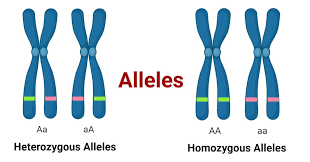
Alleles
one of two or more alternative version of a gene at a locus (variants of a gene)
autosome
a chromosome that does not determine biological sex (22 pairs)
sex chromosome
a chromosome that determines biological sex; humans have one pair (XX or XY).
Male → one X and one Y
Female → two X chromosomes
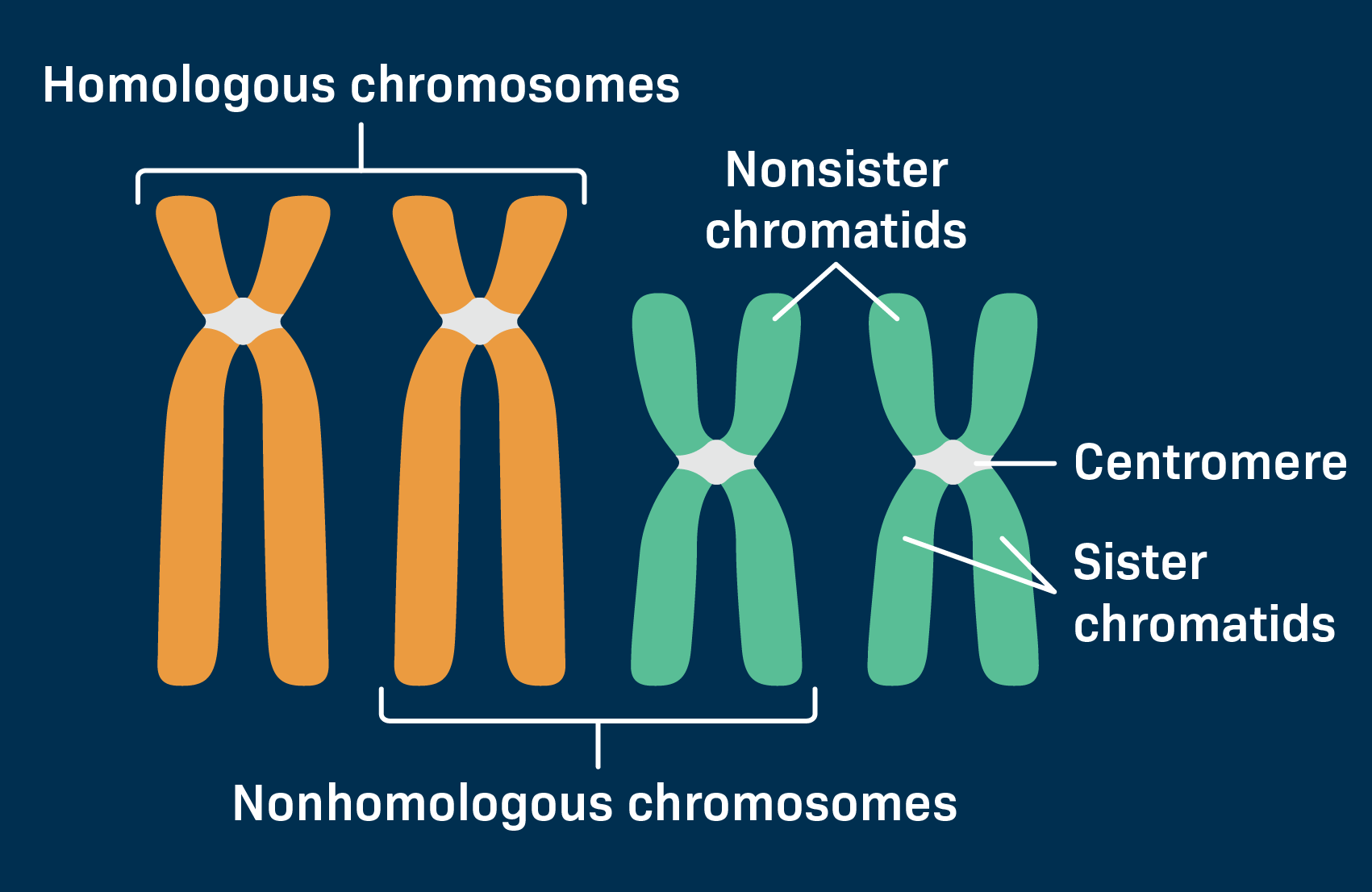
homologous pair of chromosomes
two chromosome with the same size, shape, position of the centromere, and types of genes
Tetrad
4 homologous sister chromatids
sister chromatids
identical copies of a single chromosome joined together by a centromere (region w/ proteins in it)
Daughter chromosomes → when sister chromatids split at the centromere, forming two independent and identical chromosomes
Karyotype
an ordered display of magnified images of an individual’s chromosomes arranged in pairs
types of cells (somatic, gamete, zygote, ploidy)
somatic cell → body cell (46 chromosomes)
sex cell/gamete → cell w/ only 23 chromosomes
zygote → fertilized egg w/ 46 chromosomes (23 from egg and 23 from sperm)
Ploidy → refers to the number of sets of chromosomes in a cell. For example, haploid (n) cells have one set, while diploid (2n) cells have two sets.
gonads
glands responsible for making gametes
in ovaries, meiosis produces “egg” cells
in testes, meiosis produces sperm cells
Meiosis Phases (take this card to practice diagrams)
Practice Diagrams
Genetic Variation (Crossing Over)
a physical exchange of genetic material between sister chromatids on homologous chromosomes occurring in prophase I of meiosis
Synapsis → homologs line up to form a tetrad
Breakage of nonsister chromatids
Nonsister chromatids joined by a chiasma (physical cross-over point btw homologs)
Separation of homologs at anaphase I
sister chromatids are separated at anaphase II, completing meosis
parental type chromosome → contains original allele combinations prior to crossing over
recombinant chromosome → contains a new combination of alleles bc crossing over
Genetic Variation (Independent Orientation of Tetrads)
all the tetrads line up on the metaphase plate during metaphase I
different possibilities for how they can be arranged on the metaphase plate
because different cells have different orientations of tetrads → different cells produce different allele combinations in resulting gametes = genetic variation
Random Fertilization
random sperm fertilizes with a random egg
Chromosomal Anomalies (Nondisjunction)
error in meiosis, in which chromosomes fail to separate properly
can occur in Meiosis I or Meiosis II
If it’s in Meiosis I, then the gamete is (n+1, n+1, n-1, n-1)
If it’s in Meiosis II, then the gamete is (n+1, n-1, n, n)
Typically, an abnormal number of autosomes is lethal except for Trisomy 21 (3 copies of #21), which causes Down syndrome
Typically, an abnormal number of sex chromosomes is not lethal
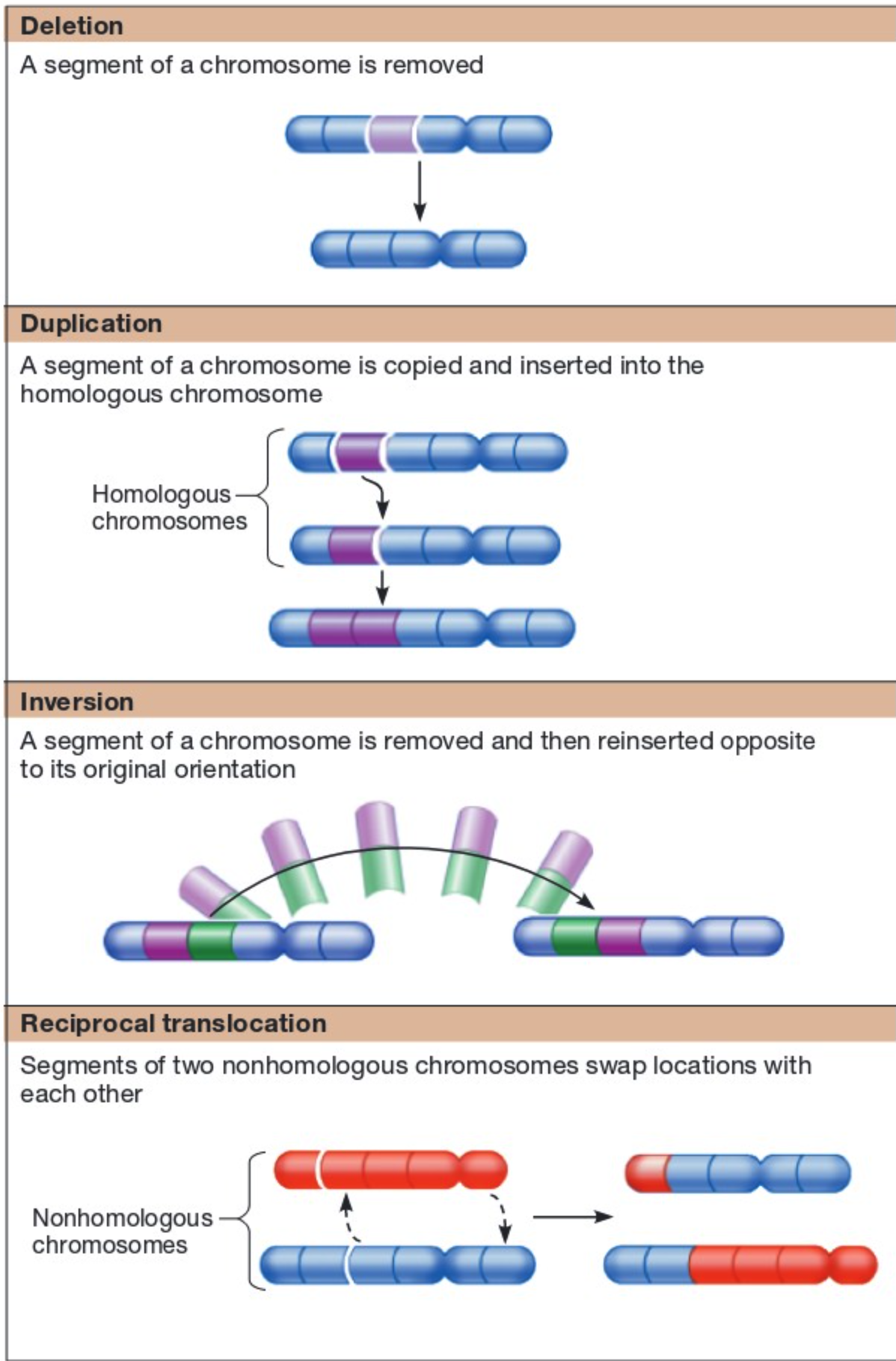
Chromosomal Anomalies (Mutations)
chromosomal deletion → loss of a piece of a chromosome
chromosomal duplication → a piece of a chromosome can be deleted from one homolog and inserted in the other
chromosomal inversion → a broken piece of a chromosome can flip and reinsert itself back into the broken chromosome
chromosomal translocation →a piece of a chromosome can be deleted from one chromosome and inserted into a non-homologous chromosome
reciprocal translocation → the breaking of two non-homologous chromosomes and reinsertion in the other