plant form & function
 Call Kai
 Learn
Learn Practice Test
 Spaced Repetition
 Match
Match Flashcards
 Knowt Play
1/57

There's no tags or description
Looks like no tags are added yet.
Name | Mastery | Learn | Test | Matching | Spaced | Call with Kai |
|---|
No analytics yet
Send a link to your students to track their progress
58 Terms
autotrophs
ultimate source of all biological energy
three main groups of plants
nonvascular plants, seedless vascular plants, seed plants
plants left the water because there was more … on land
more light (more photosynthesis potential) and more CO2 (easier CO2 uptake for photosynthesis)
challenges in plant transition from water to land
1. Protection from UV radiation
2. Staying upright
3. Retaining moisture (avoiding
desiccation)
4. Transporting water and
nutrients
5. Reproduction without water
to avoid UV damage
plants accumulated flavonoids that protect plant tissue from constant UV exposure
to stay upright
plants evolved rhizoids (underground stems), roots, lignin/cellulose (compounds that harden cell walls),
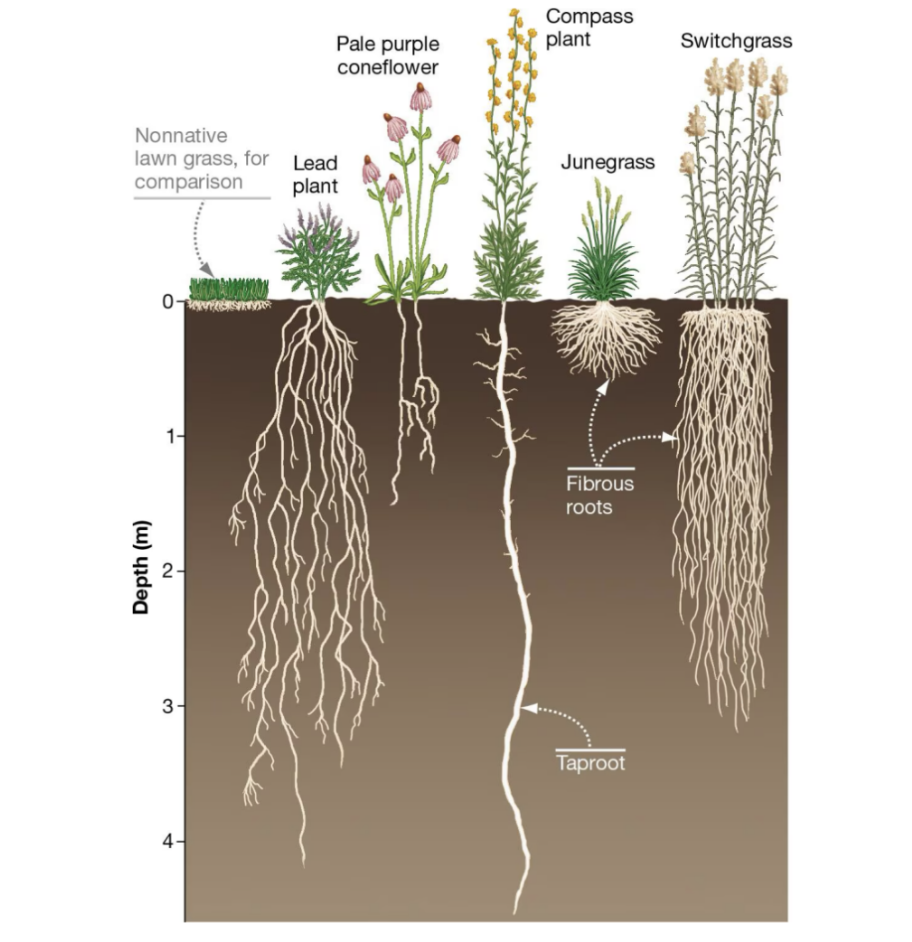
tap-root system
root system good for a deep water table, infrequent/low amounts of precipitation, extended periods of drought
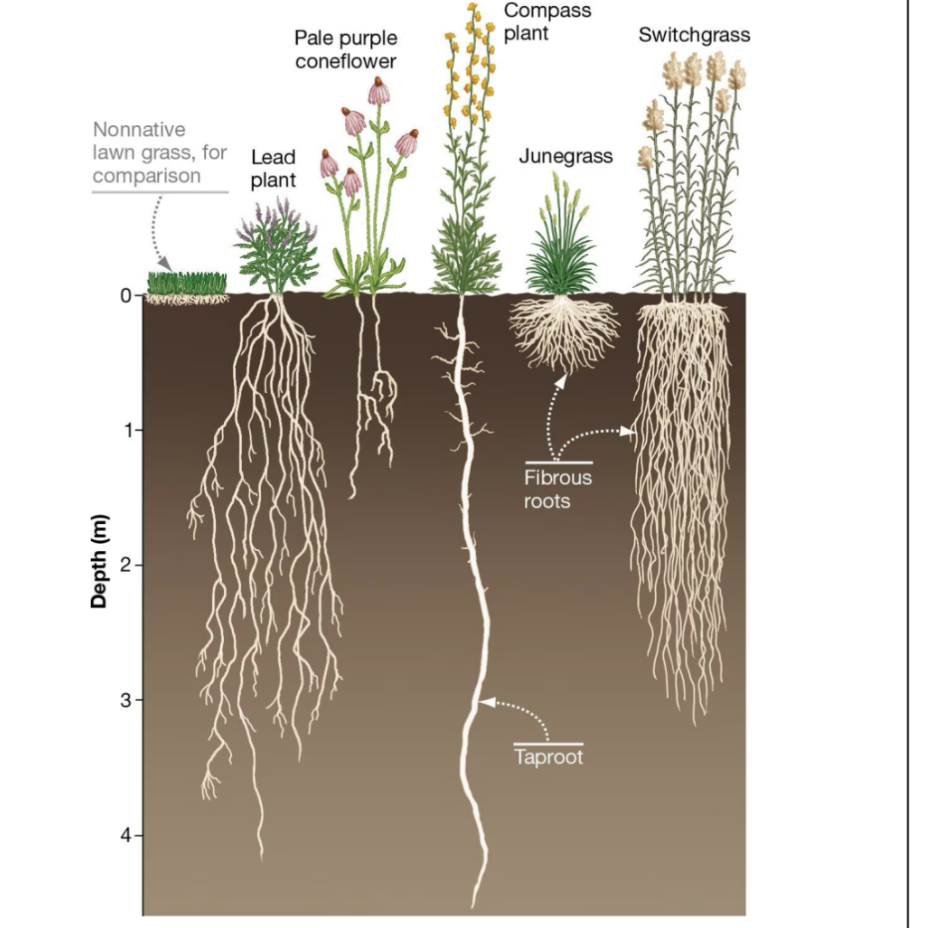
fibrous root system
root system that is shallow and fast absorbing
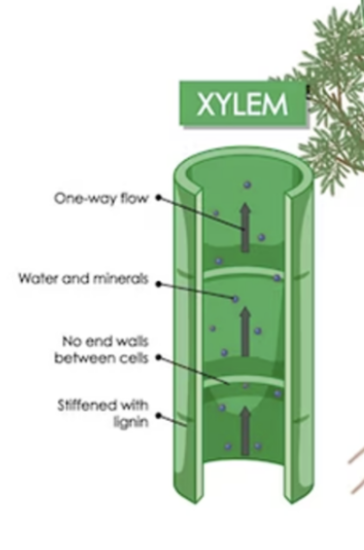
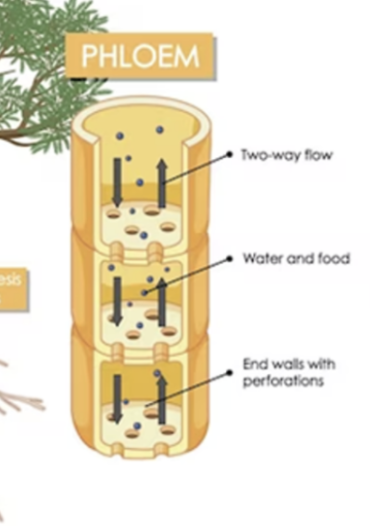
xylem
vascular tissue that conducts water and dissolved nutrients upwards from roots via capillary action
phloem
vascular tissue that primarily conducts sugar downwards from leaves
to prevent water loss from tissues
waxy cuticle layer formed & stomata
waxy cuticle layer
Watertight sealant that covers the aboveground parts of the plant to protect from desiccation the extreme drying out of an organism or tissue due to loss of water)
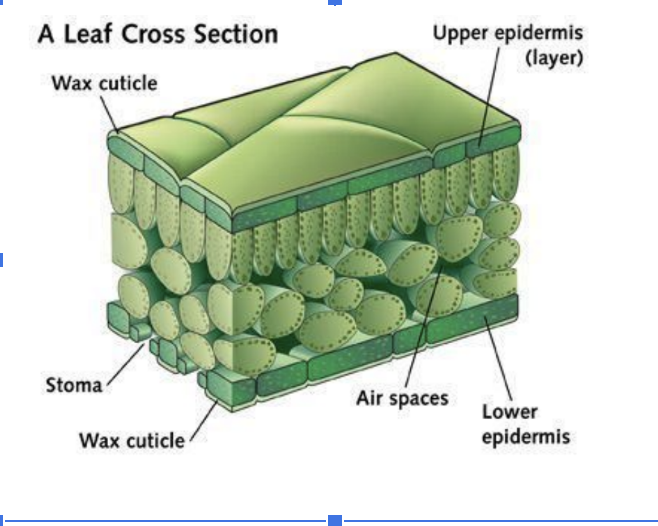
stomata/stoma
used for gas exchange; the stomatal opening (pore) opens and closes as guard cells change shape to control gas flow
stomata are found on
the bottom surface of leaves (to reduce H2O loss from evaporation, while still allowing gas exchange)
trade-off between gas exchange in stomata
Plants need to balance CO2 uptake with H2O loss
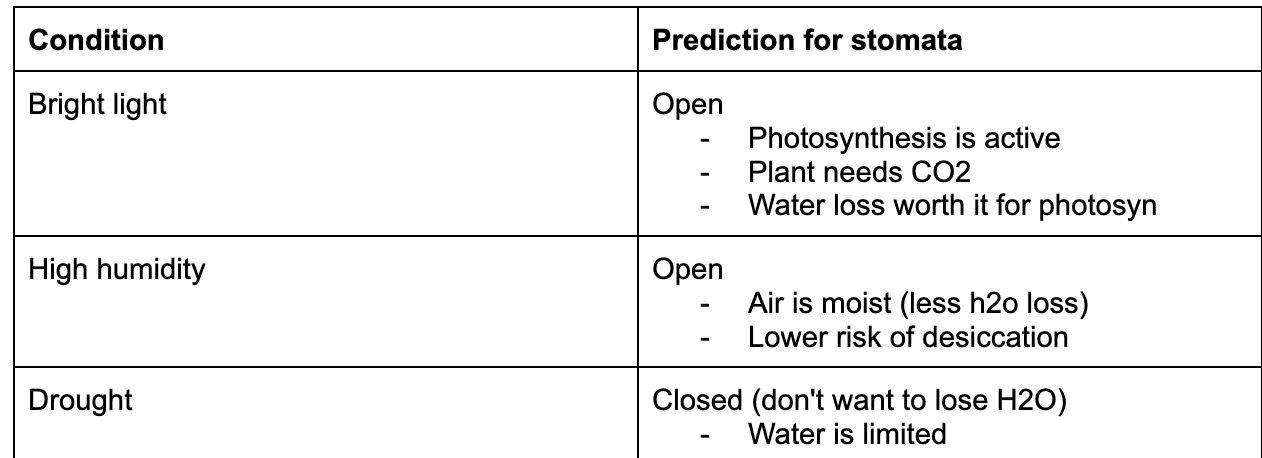
conditions for when stomata opens
stomatal density
# stomata per unit area on a leaf
Stomata in a high CO2 environment:
less stomata, CO2 is easier to get, avoid unneeded water loss
stoma in low CO2 environment
more stomata, co2 is harder to get & plants need to maximize intake
for plant reproduction on land
spores, protective tissues, seeds, flowers
spores
resist drying because they are encased in a tough coat (sporopollenin)
Protective tissues:
nourish embryos
seeds
Fertilized ovules that contain an embryonic plant, stored nutrition for the embryo, and protective coatings
seeds can facilitate dispersal and allow for dormancy (gene flow)
Can increase fitness by preventing germination until conditions are favorable
two main groups of seed plants
Gymnosperms & Angiosperms
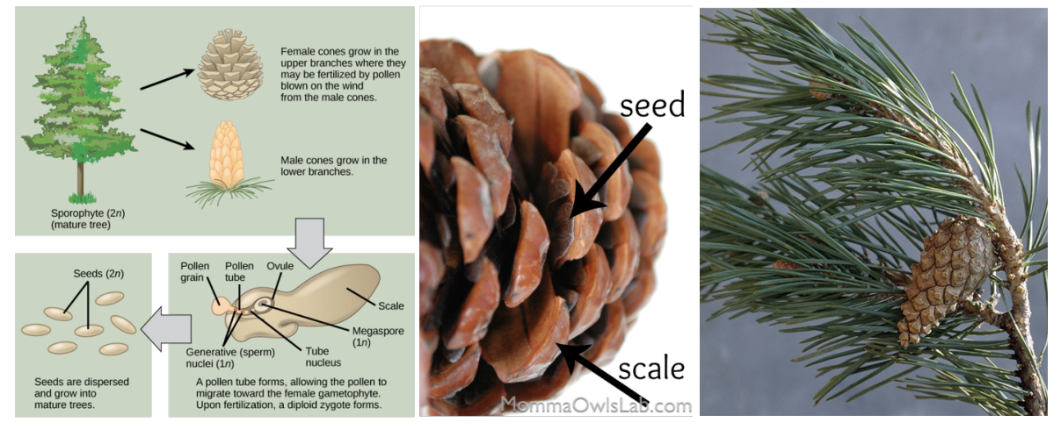
gymnosperms
do not produce flowers or fruit, found in drier environments, narrower tracheids (xylem tubes) (ex: confers, produce cones rather than fruits, have modified, drought-resistant leaves)
narrower tracheids (xylem tubes)
less efficient at transport, BUT are resistant to freezing & drought
fruit
structure that houses the seed during development
develops from ovary or surrounding tissue
Provides protection and aids dispersal
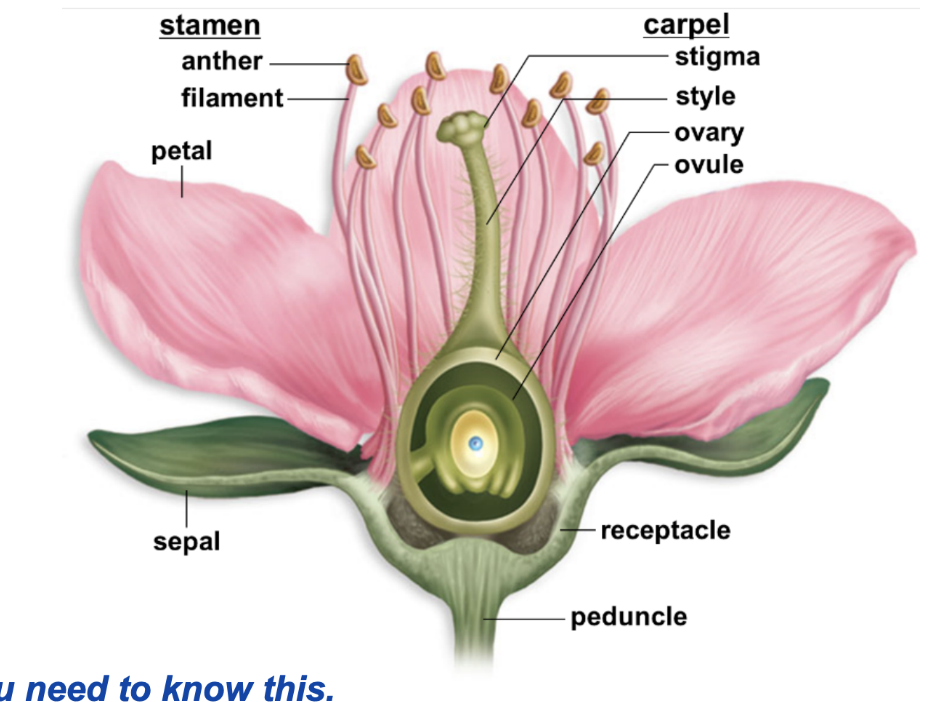
angiosperm structure
angiosperms
flowering plants, seeds enclosed in an ovary/fruit, categorized based on morphological structure
types of angiosperms
monocots, dicots
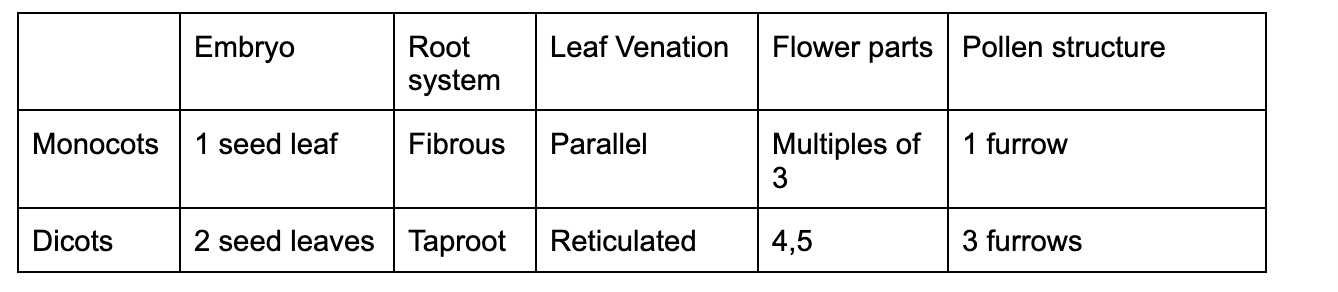
monocots
Primarily tropical distribution, but also found in coastal marine environments, deserts, streams & ponds, and the arctic tundra
Most large floating & submerged aquatic plants
includes epiphytes (plants that grow on other plants (usually on branches or trunks) without harming them.)
dicots
All of the non-conifer woody plants are dicots
Widely distributed across habitats
not a monophyletic group!
structural differences of monocots and dicots
major innovations in plants
Chloroplasts containing chlorophyll
Multicellularity
Embryo protection
Cuticle (stomata, vascular tissue, roots)
Seeds
Flowers
root and shoot systems
acquire resources for photosynthesis
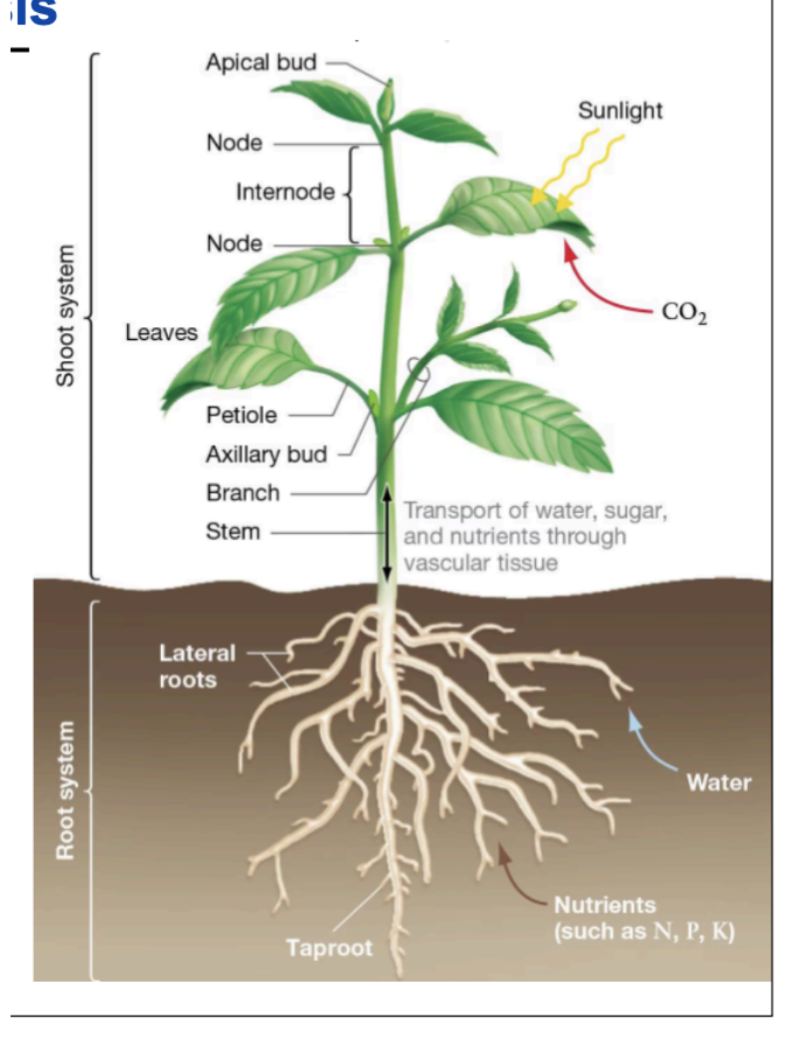
shoot systems
Harvest light and CO2 from the atmosphere for sugar production
Vascular tissue provides the connection for the transport
root systems
Anchors the individual in palace
Uptake water and nutrients
limiting resources for photosynthesis
Water (deserts)
CO2 (when stomata is closed)
Light (shady forests/cloudy/alpine areas)
environmental factors that affect photosynthesis
Temperature
Nutrient availability
Water availability/humidity
Wind/gas exchange
Soil conditions
plant adaptations to deal with diff environments
Dry Environments
Close stomata more, thick cuticle, CAM
Low light environments
Larger, thinner leaves
More chlorophyll
Cold environments
Slower metabolism
Short growing seasons
Specialized enzymes
photosynthesis
process that is used to store light energy in C-C bonds as carbohydrates (sugars)
Multistep process to gather CO2 and water & use particular wavelengths of light to create sugar and O2
Performed by autotrophs
3 Main Photosynthetic Strategies
C3, C4, CAM
C3
all purpose photosynthesis
Not good in hot & dry conditions (too much water loss)
C4
takes more energy, but more efficient than C3 photosynthesis
Works well in hot & dry climates
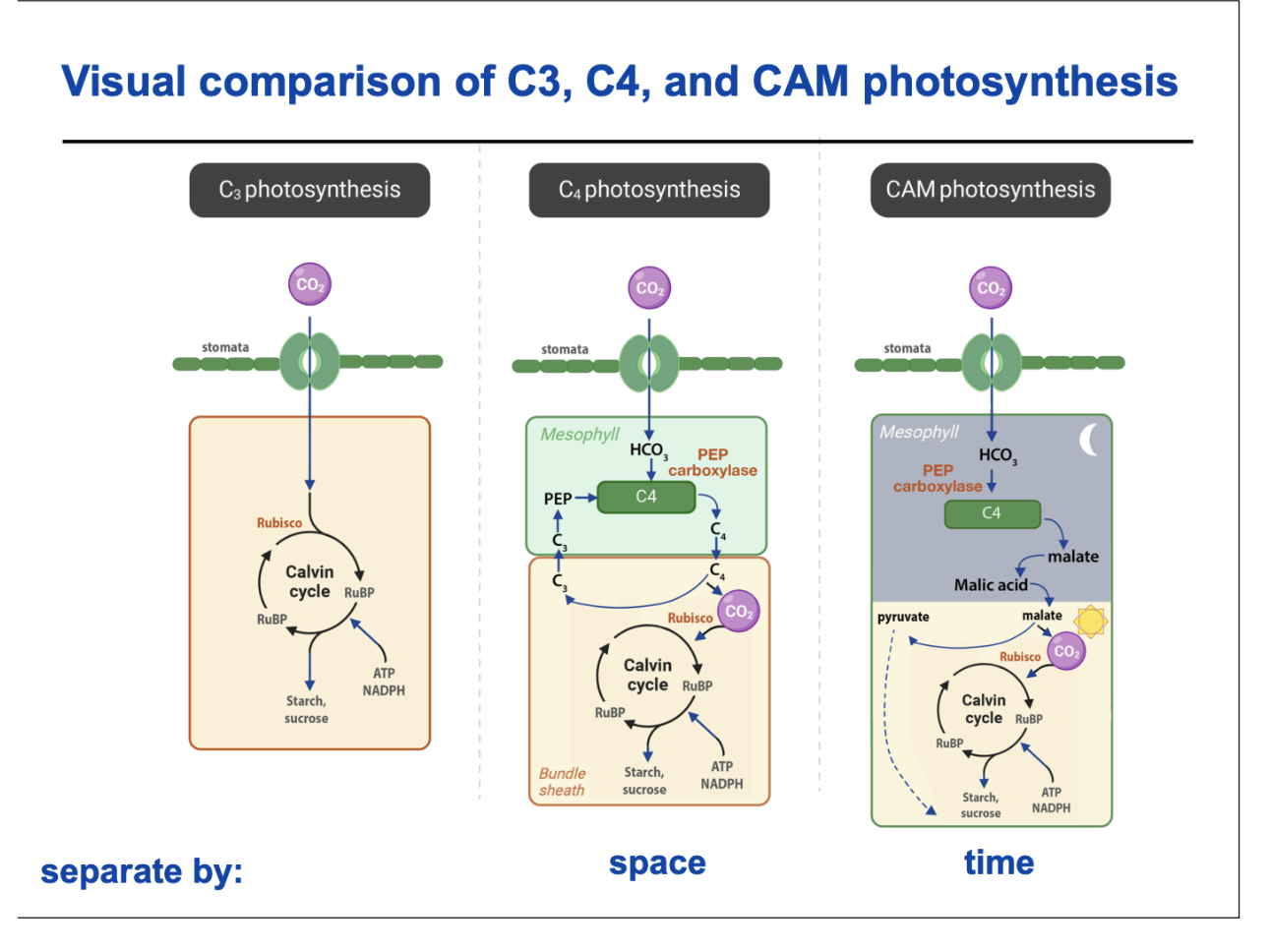
CO2 is fixed by PEP carboxylase (instead of rubisco)
CAM
similar to C4 photosynthesis but saves even more water
Found in desert plants with extremely limited water
opens stomata at night
time restriction reduced total primary productivity
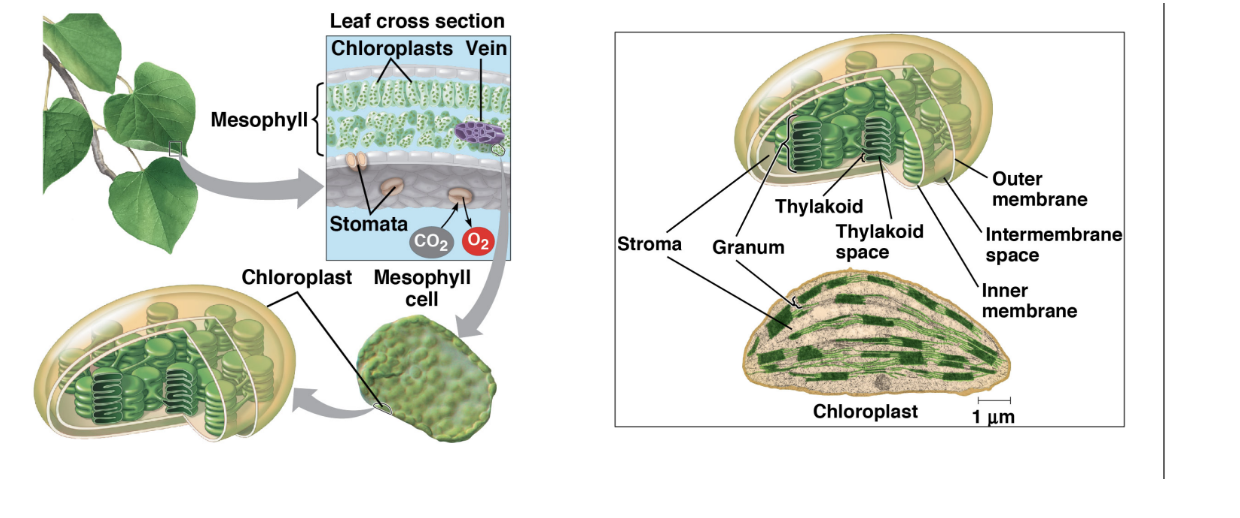
photosynthesis occurs in leaf tissue
mesophyll
mesophyll
internal tissue between the two epidermal cell layers of the leaf
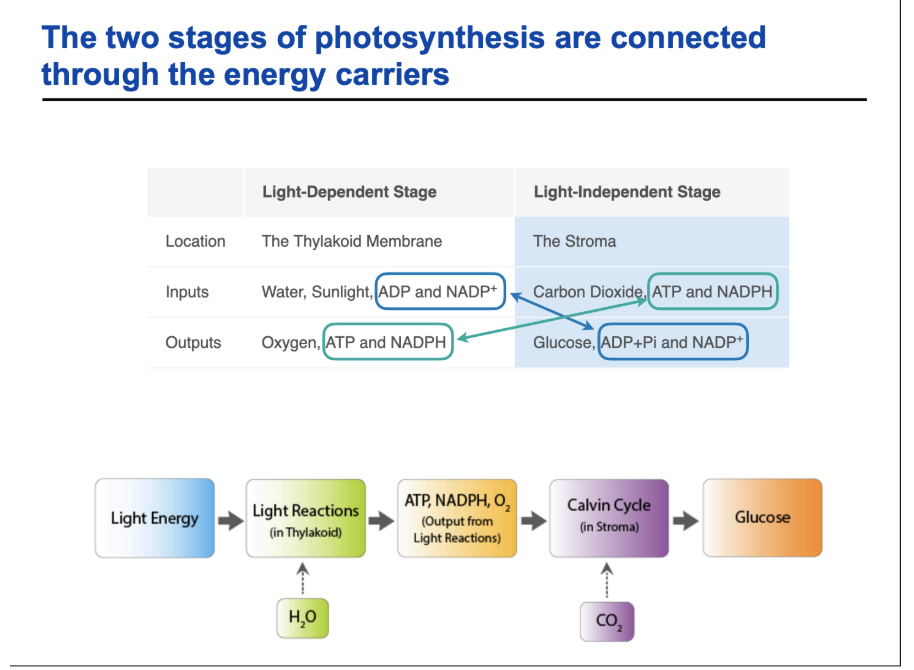
light-dependent reactions
harvest solar energy & create ATP and reduced electron carriers (occurs in thylakoid)
calvin cycle
use stored chemical energy (ATP) to generate G3P (occurs in stroma)
two stages of photosynthesis
photosynthesis is most efficient in these wavelengths
✅ Blue light (~400–500 nm)
✅ Red light (~650–700 nm)
❌ Green light (~500–600 nm): mostly reflected → why plants look green
in hot temperatures Rubisco can react with
O2 instead of CO2 leading to photorespiration
key differences in C3, C4, CAM
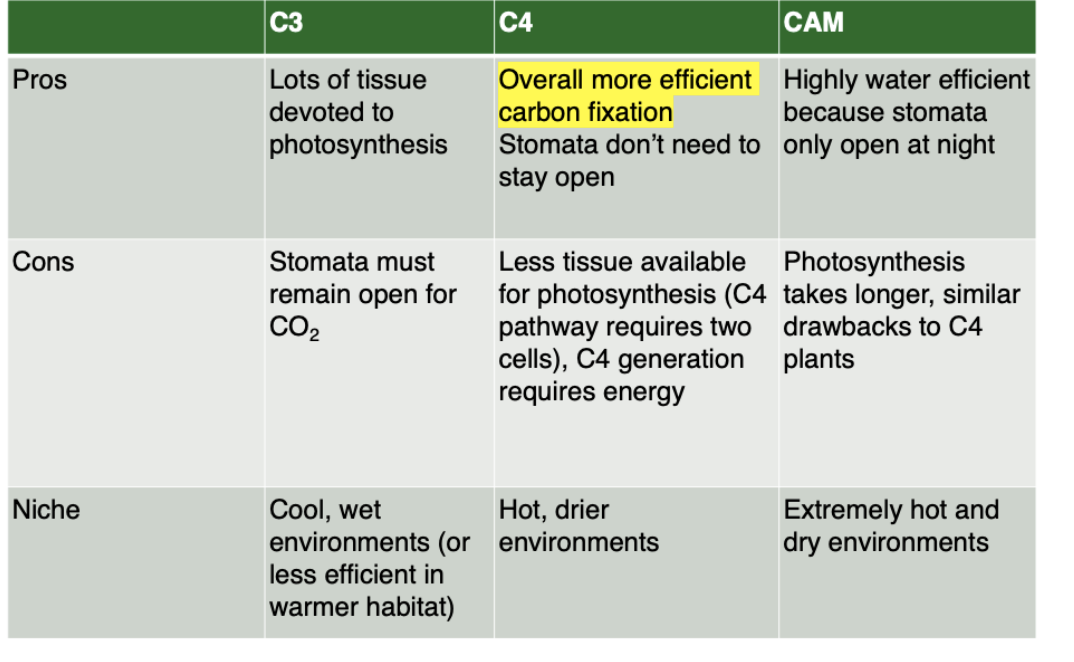
visual comparison of C3, C4, CAM
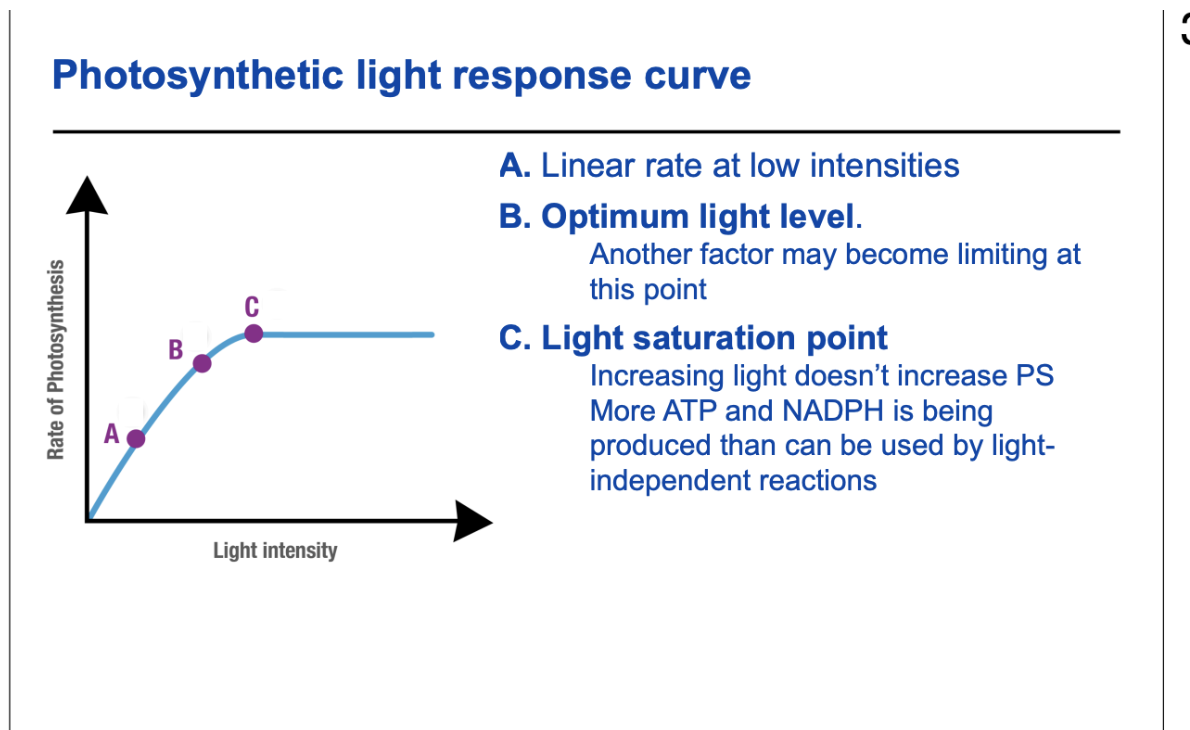
photosynthetic light response curve
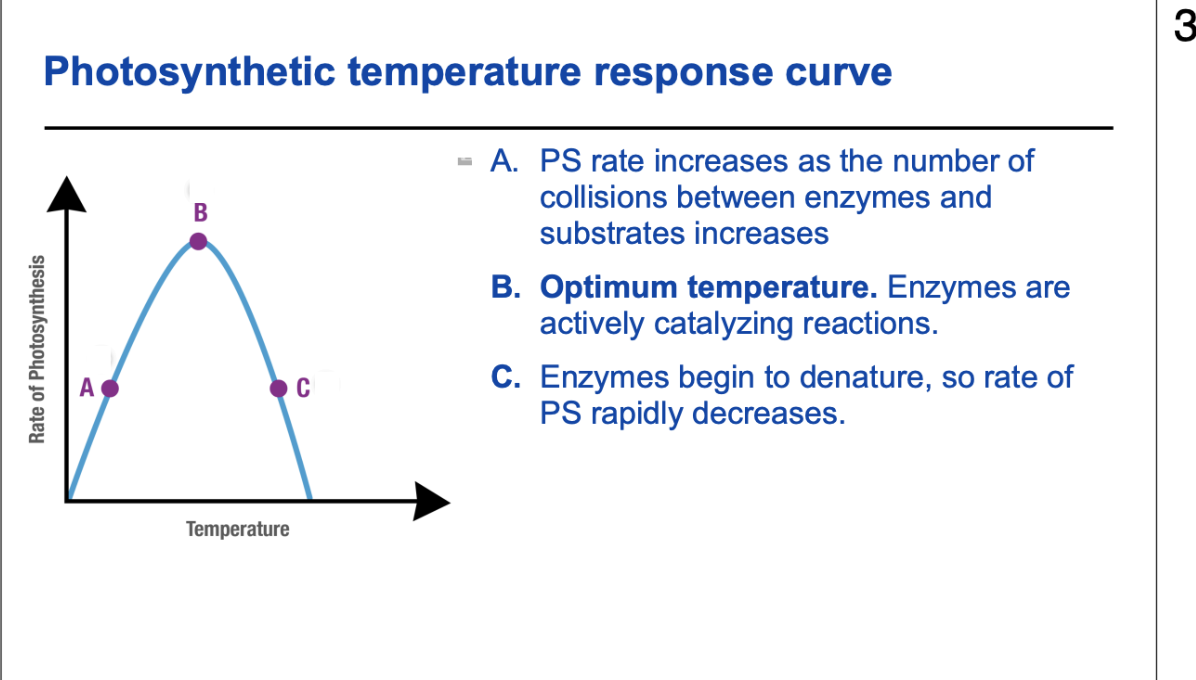
photosynthetic temperature response curve
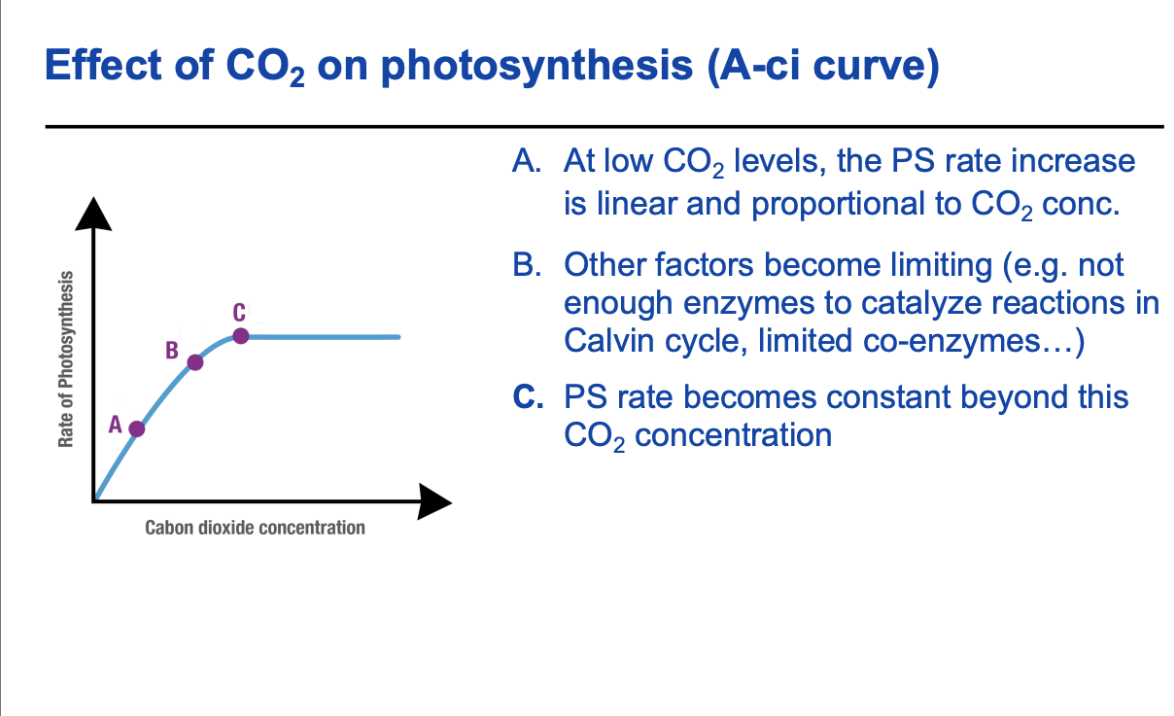
effect of CO2 photosynthesis