Biology - Diseases
 Call Kai
 Learn
Learn Practice Test
 Spaced Repetition
 Match
Match Flashcards
 Knowt Play
1/22

Earn XP
Name | Mastery | Learn | Test | Matching | Spaced | Call with Kai | Chat |
|---|
No analytics yet
Send a link to your students to track their progress
23 Terms
What is a Pathogen
A micro-organism that causes disease. Includes micro-organisms such as bacteria, viruses, protists, and fungi
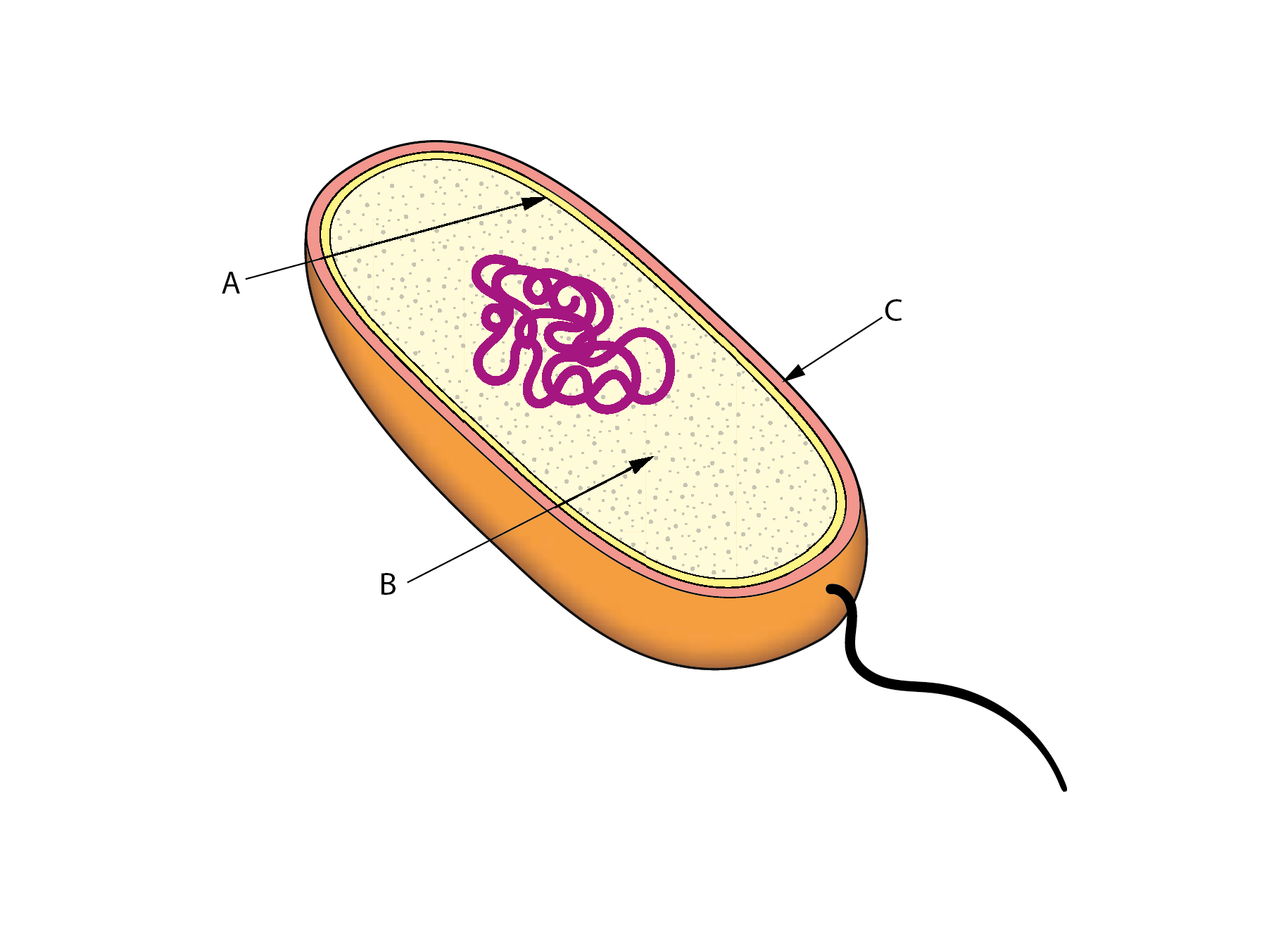
A - Cell membrane
B - Cytoplasm
C - Cell wall
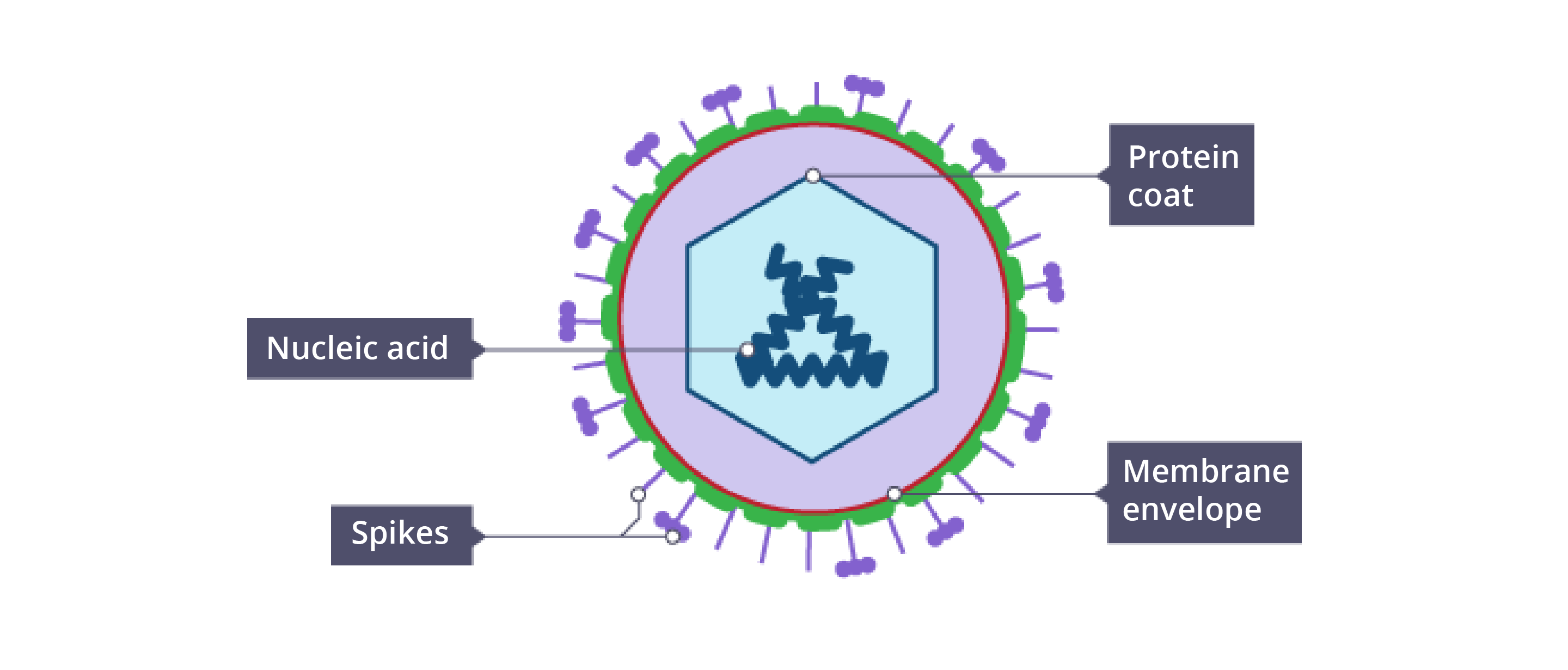
Virus
How are Pathogens transferred?
By contact, aerosol, body fluids, water, insects and contaminated foods
Blood, saliva and semen
How to prevent AIDS
Condoms, disposable gloves when in contact with contaminated blood
Antiviral agents
Disadvantage of antiviral agents
Only prevent the multiplication of the virus inside cells
Must be taken throughout life
What is Chlamydia caused by?
Bacteria that is spread during sexual intercourse via the vagina or urethra
What happens if Chlamydia is untreated?
Cause infertility in adults
Could cause conjunctivitis in babies if the mother is infected
Could spread to the babies lung
How to prevent Chlamydia or the spread?
Condoms
Antibiotics
How is Malaria spread?
Single-celled organism called Plasmodium
Spread via female mosquitoes
Bite humans and goes into the bloodstream
Why and how does Malaria affect humans?
Causes a fever when it destroys red blood cells in humans
Prevention methods of Malaria
Killing plasmodium with anti-malarial drugs
Vaccines
Killing mosquitoes with Insecticides
Releasing infertile male mosquitoes
Biological control of mosquitoes
How does our body prevent the entry of microbes? (2 in detail)
Intact Skin
Physical barrier
Tough outer layer has little water, which microbes need for growth
Natural bacteria living take up nutrients, so pathogens can’t grow
Blood Clotting
Seals wounds and stops microbes from entering when skin is cut
White cells in the blood help to defend the body against microbes by:
Ingesting bacteria
producing antibodies which inactivate particular bacteria or viruses
producing antitoxins which counteract the toxins released by bacteria.
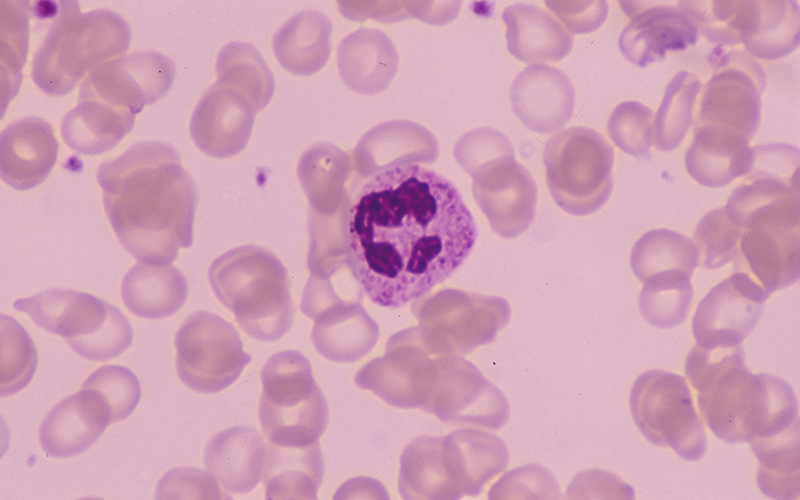
Phagocytosis
Ingest the microbe and then break it down when its inside the cell
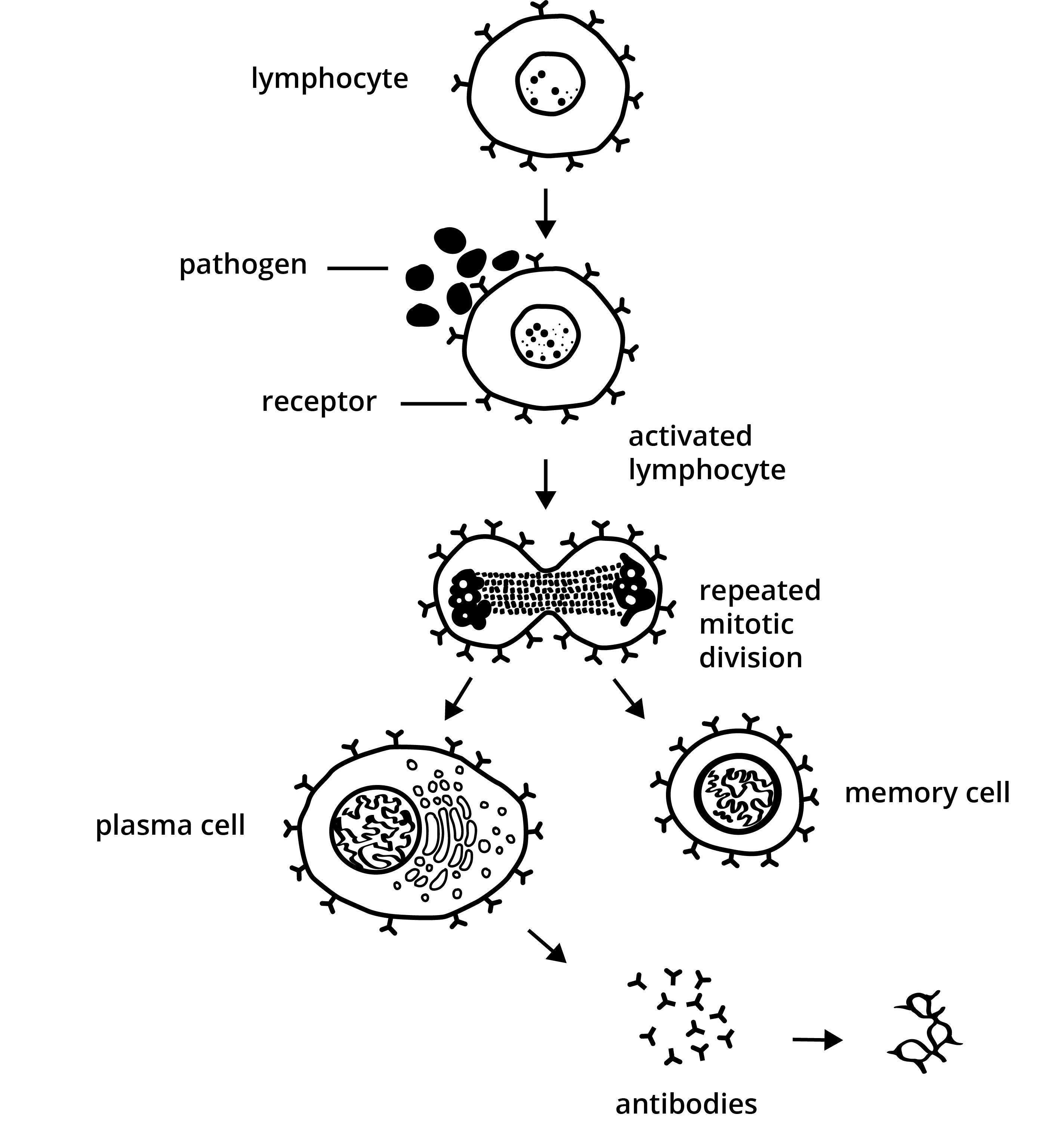
What happens when there’s a foreign antigen?
White blood cells called Lymphocytes will secrete antibodies against it
Release specific antibodies against it
Swells and divides repeatedly by mitosis to produce a huge clone of cells
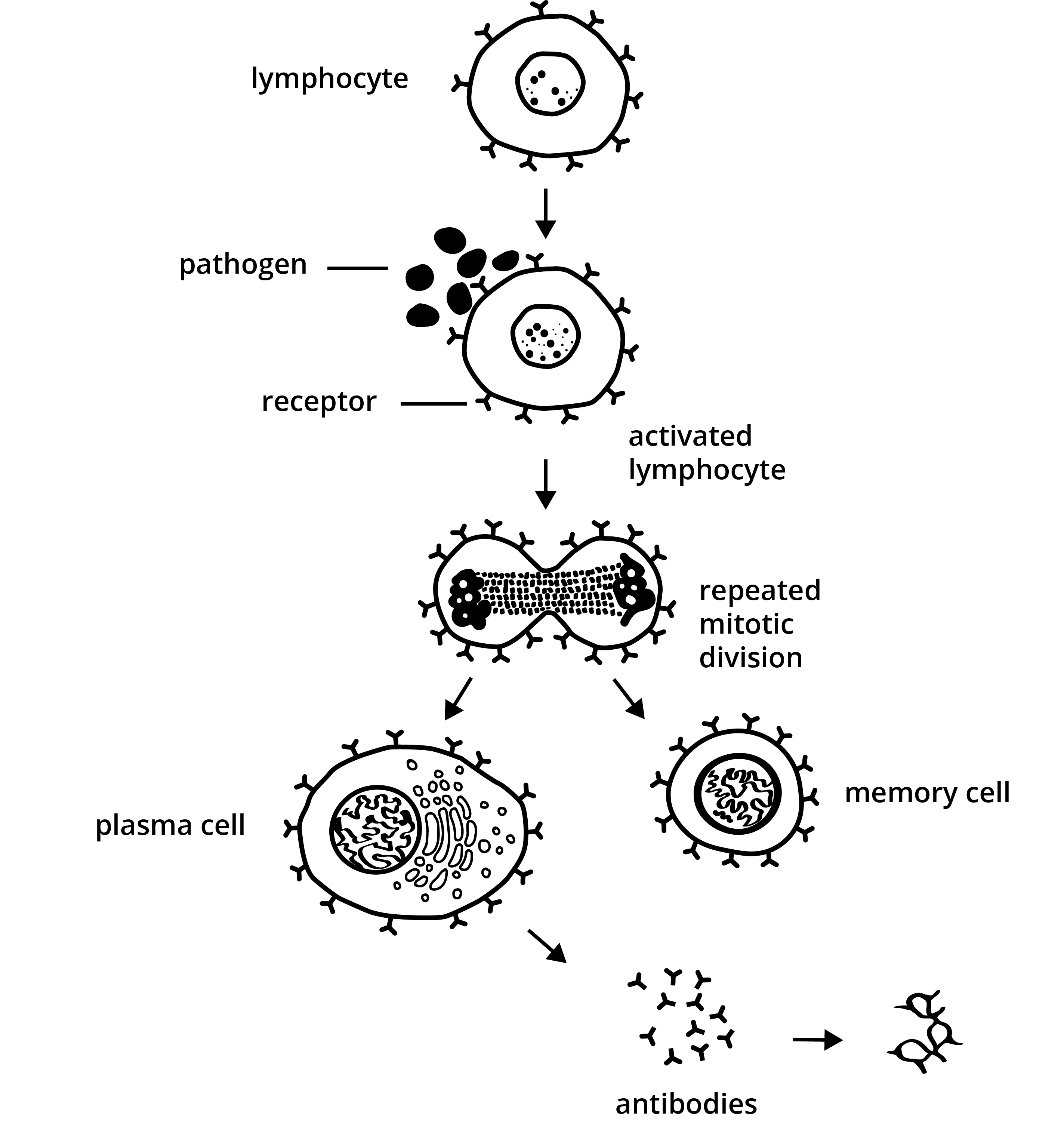
What cells are made from White blood cells?
Most become plasma cells - produce antibodies
Some form clones of smaller, long-living memory cells
Primary Immune Response
Response that takes place the first time an individual encounters an antigen
Secondary Immune Response
Response that takes place the second time an individual encounters an antigen
What is different in Secondary Immune Response?
Response of lymphocytes is faster
More antibodies are produced
Response lasts for longer
This is due to memory cells that can multiply rapidly and produce antibodies very quickly following the second invasion
Why can people get the flu multiple times?
Antigens on the surface of the flu virus mutate and change rapidly
Memory cells produced from before are no use
Antigen
A protein found on the outside surface of a pathogen with a specific shape
Memory cells
Lymphocytes are produced in response to the specific antigens on a pathogen.
After pathogen is removed, some cells remain
These are called memory cells. If the same pathogen enters the immune system for a second time, the response is much more rapid