Adrenal function
 Call Kai
 Learn
Learn Practice Test
 Spaced Repetition
 Match
Match Flashcards
 Knowt Play
1/54

There's no tags or description
Looks like no tags are added yet.
Name | Mastery | Learn | Test | Matching | Spaced | Call with Kai |
|---|
No analytics yet
Send a link to your students to track their progress
55 Terms
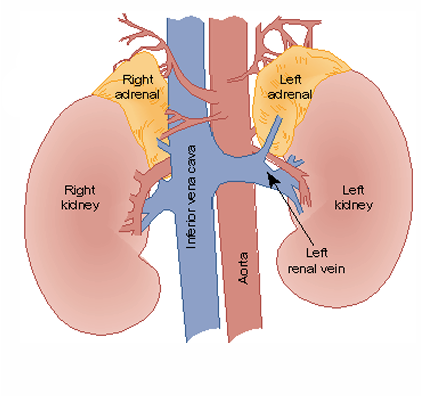
where are the adrenal glands located?
superior to (above) the kidneys — also called suprarenal glands
how many adrenal glands are there?
two — one above each kidney
what are the two main regions of the adrenal gland?
the cortex (outer) and the medulla (inner)
what does the adrenal cortex secrete?
steroid hormones, including glucocorticoids and mineralocorticoids
what does the adrenal medulla secrete?
catecholamines: adrenaline, noradrenaline, and dopamine
what is the adrenal medulla an extension of?
the sympathetic nervous system
what are the three zones of the adrenal cortex?
zona glomerulosa, zona fasciculata, zona reticularis
what percentage of the cortex does the zona glomerulosa make up?
5–10% — small, close-packed cells
what percentage of the cortex does the zona fasciculata make up?
75% — larger cells arranged in cords
what is the zona reticularis described as?
short cords of cells
what hormone does the zona glomerulosa produce?
aldosterone
what hormones do the zona fasciculata and zona reticularis produce?
glucocorticoids (cortisol and corticosterone) and androgens (dhea and androstenedione)
what do cells in the cortex do over time?
they migrate inward and their morphology and function changes
what is the precursor for all steroid hormones?
cholesterol
steps in the synthesis of steroid hormones
cholesterol (c27) → progesterone/corticoids (c21) → androgens (c19) → oestrogens (c18)
where is cholesterol stored in cortical cells?
in lipid droplets
where does the initial conversion of cholesterol to pregnenolone occur?
in the mitochondria
where do subsequent steroid conversions occur?
in the smooth endoplasmic reticulum
what is the precursor for adrenaline?
tyrosine
how is adrenaline released from chromaffin cells?
by exocytosis from membrane-bound storage granules
what type of cells are chromaffin cells?
modified nerve cells
how does cortisol exert its effects at the cellular level?
-binds to a cytosolic receptor
-then translocates to the nucleus
-binds glucocorticoid response elements on dna
-regulates mrna transcription and protein expression
what happens to hsp90 when cortisol binds its receptor?
it dissociates from the receptor
what is the major role of mineralocorticoids?
control of electrolyte homeostasis
what does aldosterone do in the kidney?
increases sodium reabsorption and potassium excretion
what effect does aldosterone have on blood volume and pressure?
increases both
what system regulates aldosterone secretion?
the renin-angiotensin system
what triggers renin release?
reduced plasma volume, detected by kidney nephrons
what does renin do?
converts angiotensinogen into angiotensin i
what does angiotensin ii (atii) do?
acts on zona glomerulosa cells to stimulate aldosterone production
what does aldosterone do to restore plasma volume?
increases na⁺ reabsorption, which increases plasma volume
what is the major role of glucocorticoids?
response to stress
what are the metabolic effects of cortisol?
-increases protein catabolism (muscle)
-increases gluconeogenesis (liver)
-raises plasma glucose
-stimulates caloric intake
-favours fat deposition in selected sites
what are the cardiovascular effects of cortisol?
influences blood flow and pressure
what are the anti-inflammatory effects of cortisol?
-inhibits recruitment of neutrophils
-inhibits prostaglandin release
-suppresses proliferation of thymus-derived lymphocytes
what is the role of adrenal androgens?
-may contribute to secondary sexual characteristics at puberty and may help prevent degenerative changes in ageing
what stimulates cortisol production from the adrenal cortex?
-acth
-released from the anterior pituitary in response to stress
where does acth bind in the adrenal cortex?
-to receptors on fasciculata and reticularis cells
what is the negative feedback loop for cortisol?
-cortisol feeds back on the pituitary to inhibit acth release
-on the hypothalamus to inhibit crh release
what stimulates acth release from the anterior pituitary?
crh (corticotropin-releasing hormone) from the hypothalamus
what is congenital adrenal hyperplasia (cah)?
a condition caused by enzyme deficiencies in steroid synthesis, resulting in absent or abnormal hormone production
what is the most severe form of cah?
complete absence of cholesterol conversion — leads to no sexual differentiation
what are features of cah due to 11β-hydroxylase deficiency?
salt loss, hypertension, and absent or precocious puberty
what can cah cause in terms of sexual development?
ambiguous genitalia and "males" with ovaries (46,xx individuals raised as male)
what is addison's disease?
acquired adrenal insufficiency, usually due to tuberculosis or autoimmune destruction of the adrenal cortex
what are the symptoms of addison's disease?
severe illness with hypotension, tiredness, weakness, anorexia, and vomiting
how is addison's disease treated?
steroid replacement therapy
what is the historical significance of addison's disease?
it was the first identified endocrine disorder — thomas addison was considered the founder of clinical endocrinology
what is cushing's syndrome?
a disorder caused by excess cortisol, due to excess crh/acth, a pituitary or adrenal tumour, or clinical steroid administration
what are the clinical features of cushing's syndrome?
weight gain, fat redistribution (abdomen, face, posterior neck), gluconeogenesis, peripheral insulin resistance, muscle and bone catabolism, thinning skin, dyslipidaemia, reduced wound healing, increased bruising, and hirsutism
why does dyslipidaemia occur in cushing's syndrome?
cortisol increases lipolysis, vldl synthesis, and fatty acid accumulation in the liver
how is cushing's syndrome treated?
surgery for tumours or pharmacological agents targeting enzyme activity
what condition results from excess aldosterone?
hypertension, presenting with headaches and blurred vision
how is excess aldosterone treated?
with the aldosterone antagonist spironolacton