History - Renaissance
 Call Kai
 Learn
Learn Practice Test
 Spaced Repetition
 Match
Match Flashcards
 Knowt Play
1/82

There's no tags or description
Looks like no tags are added yet.
Name | Mastery | Learn | Test | Matching | Spaced | Call with Kai |
|---|
No analytics yet
Send a link to your students to track their progress
83 Terms
Renaissance
The rebirth and revival of interest in neoclassical art and architecture
What did the Italian poet Petrarch say on the Middle Ages
The world is about to break out of darkness... and return to the pure brightness of Ancient Greece and Rome.
List 5 reasons why the Renaissance began in Italy
Ruins of Ancient Rome
Competition between City States
Fall of Constantinople
Invention of the printing press
Wealth and Patronage
Explain how the Ruins of Ancient Rome contributed to the reason the Renaissance started in Italy
The ruins were studied and copied by European artists, it inspired them to create equal or even better artworks and architecture
Explain how Competition between City States contributed to the reason the Renaissance started in Italy
Cities such as Rome, Florence and Milan tried to outclass each other by producing better works of art and architecture than one another
Explain how the fall of Constantinople contributed to the reason the Renaissance started in Italy
Many educated scholars brought over their learnings of the ancient Greeks and Romans to Italy before the fall of Constantinople
Explain how the invention of the printing press contributed to the reason the Renaissance started in Italy
The invention of the printing press was able to spread the words of the Greeks and Romans throughout Italy and wider Europe
Explain how Wealth and Patronage contributed to the reason the Renaissance started in Italy
As Italy was a country that made a lot of overseas trade, the Italian merchants grew very rich and were able to sponsor some of the greatest artworks
Secular
Non-Religious
Tempera
Medieval paints that used egg yolk and powdered colours which meant changes couldn’t be made
Features of Medieval Paintings
Near to all artworks had a religious message
Lifeless people, similar faces
Limited variety in colour
No depth or perspective
Uses Tempera
Painted on wooden panels
Perspective
The use of perspective creates an illusion. It makes you think that there is depth in the painting and makes you see three-dimensions
Fresco
A painting done on wet or damp plaster
Features of Renaissance art
Mostly painted on canvas
Classical-Architecture in background
Realistic people (thanks to the study of anatomy)
Variety of colour
Mostly secular subject
Uses oil paints that dried slower so changes could be made
Features of Medieval sculpture
Religious themes
Lacking in feeling
Part of a church or cathedral
Features of Renaissance sculpture
People were more realistic and lifelike
Stand-alone sculptures
More than religious themes
Features of Medieval Architecture (Gothic style)
Buttresses
Pointed arches
Rose windows
Spires
Gloomy feel
Features of Renaissance architecture (Classical architecture)
Domes
Rounded Arches
Pediments
Columns
Where and when was Da Vinci born?
He was born in Florence in 1452
Who apprenticed Da Vinci in Florence?
Master Verrocchio
Who did Da Vinci work for and what did he paint in Milan?
He worked for Ludovico Sforza and he painted the Last Supper
What did portrait did Da Vinci paint up until his death?
The Mona Lisa
Where and when did Da Vinci die?
He died in France in 1519
Sfumato
A technique that creates a fine shading using blurring/smokiness
Virgin of the Rocks (1485)
It depicts the Virgin Mary and Jesus on a background of trees and rocks, showing Da Vinci’s interest in nature
The Last Supper (1498)
It depicts Jesus and the Twelve Apostles around the table for Jesus’s last meal. It uses lines of perspective to make Jesus the focal point of the whole painting
What helped Da Vinci paint realistic and lifelike human subjects?
Da Vinci dissected around 30 bodies of men and women to get a better understanding of the human body
What subjects was Da Vinci interested in?
Biology, Botany, Engineering, Geology and Mathematics
List 3 of Da Vinci’s sketches that inspired modern-day machines
Helicopter
Tank
Parachute
Where and when was Michelangelo born?
He was born in 1475
What did Michelangelo say about sculpting
He said, 'Every block of stone has a statue inside it and it is the job of the sculptor to discover it.'
How many sculptures did Michelangelo create?
42
How many buildings did Michelangelo design?
5
How many paintings did Michelangelo create
9
How many paintings did Da Vinci create
15-25
Where did Michelangelo carve David?
He carved David in Florence
Where did Michelangelo carve Pietà?
He carved the Pietà in Rome
Where did Michelangelo study sculpture
He studied sculpture in Lorenzo de Medici’s sculpture school
Who was he apprenticed to and where was it
He was apprenticed to Master Ghirlandaio in Florence
Where and when was Michelangelo born?
He was born in 1475, near Florence
Pietà (1499)
Pietà depicted the idealised human in the form of Mary, and she was holding the deceased Jesus in her hands, Michelangelo sculpted it out of Carrara marble in St.Peter’s Basilica in Rome. The dead Jesus was very realistic as Michelangelo had studied anatomy like Da Vinci
David (1504)
The sculpture depicted David standing after defeating the Goliath from the Old Testament story “David and the Goliath”. Michelangelo sculpted David from a block of marble in Florence that had been damaged by another sculptor
Name 2 buildings Michelangelo designed
Capitoline Hill and the Dome of St.Peter’s Basilica
When and where did Michelangelo die?
He died in Rome in 1564
What was life like for women during the Renaissance
They were treated like second-class citizens
They were legally subject to their husbands
They were expected to do housework
What did upper-class women do during the Renaissance
They had a choice of marriage or joining a convent
What did middle-class women do during the Renaissance
They could work in shops (although this was rare)
What did lower-class women do during the Renaissance
They worked in the fields or as servants to royalty on-top of running the household
Where and when was Sofonisba Anguissola born?
She was born in Cremona in 1532 to a nobleman
Who was Anguissola apprenticed to?
She was apprenticed to a local master
Where did Anguissola go to study works of art?
She went to Rome
Who noticed Anguissola’s talent?
Michelangelo noticed her talent and gave her advice on her sketches
What did Anguissola mainly paint?
Self-Portraits and Portraits
Who encouraged Anguissola to become an artist?
Her parents
Who invited her to become a court painter?
The King of Spain
When did Anguissola die?
1625
Anguissola was the first (…)
She was the first female painter to achieve international fame and inspired many other women to become artists
What was Anguissola not allowed to study?
She wasn’t allowed to study Anatomy
When, where and who invented the printing press?
Johannes Gutenberg invented the printing press in Mainz, Germany in 1450
What skill helped Gutenberg make the printing press?
He was a goldsmith so he was able to easily craft the individual letters
In simple terms, describe how the printing press works
Firstly, individual metal letters are set up on a frame
Then, you use a big ink roller to ink the letters
And finally, when all the letters are inked, you press down the frame onto paper, you repeat for all pages.
What was the first book printed by Gutenberg?
The Bible was the first book printed and it sold for 1/10 of the price of a similar manuscript of the Bible
When did Italy get its first printing press?
Italy got one 5 years after the invention and by 1500 there were over 100 all over Europe
Self-Portrait at the Easel (1556)
Depicts Anguissola painting, features dark and muted greens and blues
The Chess Game (1555)
Depicts Anguissola playing chess with her sisters on a vibrant and colourful background
Where and when was William Shakespeare born?
He was born in Stratford-upon-Avon in 1564
Where did Shakespeare work?
In his 20s he got a job at King’s Men, a theatre company in London and worked as an Actor and Playwright
Vernacular
Language of the people (similar to modern-day slang), such as eyeball, lonely
How did Shakespeare contribute to the English Language?
He contributed to the local vernacular
As his plays became widespread, they helped standardise grammar and punctuation
He created new phrases such as “in a pickle” and “with bated breath”
How many plays and sonnets did Shakespeare create?
38 plays and 154 sonnets
Where did Shakespeare perform?
He performed in the Globe Theatre in London and he attracted the masses
List some of his plays
Romeo and Juliet, Hamlet, A Midsummer Night’s Dream and Macbeth on top of many others
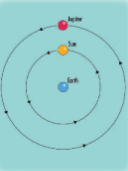
What did Ptolemy say about the Solar System?
He said that the Earth was the centre of the Solar System (geocentric) and the sun and all the other planets orbited around it, the Catholic Church supported this view
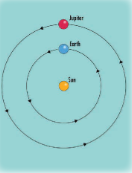
What did Nicolaus Copernicus say about the Solar System?
Copernicus said that the Sun was the centre of the Solar System (heliocentric), and he challenged the views of the Catholic Church, he published his findings the year he died
What did Johannes Kepler say about the planet’s orbits
He disproved Copernicus’s theory that the planets orbited in circular motion by using mathematics to prove that they move in elliptical orbits
Where and when was Galileo born?
He was born in Pisa in 1564
What did Galileo study and where did he work?
Galileo studied maths and physics and became Professor of Mathematics in the University of Pisa in 1589 and in the University of Padua in 1592
List 5 significant contributions that Galileo made to Renaissance science
The Scientific method
The Law of Falling bodies
The pendulum clock
The telescope
Astronomy
The Scientific Method
Galileo said that scientists must base their results on evidence,“Measure what is measurable, and make measurable what is not so.”
The Law of Falling Bodies
Aristotle claimed that heavier objects fall faster but Galileo proved that all object fall to the ground at the same speed regardless of their weight
The pendulum clock
Aristotle claimed that long pendulum swings take longer than short swings, Galileo proved through experiments that this was not true and this led to the development of pendulum clocks
The telescope
Galileo heard of a telescope being developed in Belgium, he invented his own version through trial and error and was able to discover four of Jupiter’s moons
Astronomy
Galileo used the telescope to support Copernicus’s views on the solar system, he published his findings in a book he wrote. This got him in trouble with the Catholic Church who charged him with Heresy and sentenced him to house arrest for the rest of his life, his book was also banned for 200 years.