BIO 168 - Unit 3 - Bone Tissue
 Call Kai
 Learn
Learn Practice Test
 Spaced Repetition
 Match
Match Flashcards
 Knowt Play
1/44

There's no tags or description
Looks like no tags are added yet.
Name | Mastery | Learn | Test | Matching | Spaced | Call with Kai |
|---|
No analytics yet
Send a link to your students to track their progress
45 Terms
What are the 6 functions of the skeletal system?
provides support
protects internal organs
assists body movements
stores and releases sodium and calcium salts
participates in blood cell production (hemopoiesis)
stores triglycerides in adipose cells of yellow marrow
What are the 5 main types of bones? (based on shape)
long
short
flat
irregular
sesamoid
Describe lone bones.
greater seed length than width
Describe short bones.
cube shaped
Describe flat bones.
thin layers of parallel plates
Describe irregular bones.
complex shapes
Describe sesamoid bones.
shaped like a sesame seed
What is the diaphysis?
bone shaft of long bone
What are the epiphyses?
both ends of long bones at the joints
What are the metaphyses?
area between diaphysis and epiphysis
What covers both epiphyses?
articular cartilage
What is the medullary cavity?
hollow space within diaphysis
What is the periosteum of long bones?
connective tissue surrounding the diaphysis
What is the endosteum?
thin membrane lining the medullary cavity
What are osteoprogenitor cells?
bone stem cells able to differentiate into other types of cells
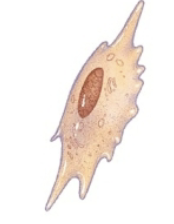
What are osteoblasts?
bone-building cells that secrete matrix
forms bone ECM
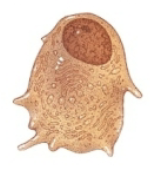
What are osteocytes?
mature bone cells
maintains bone tissue
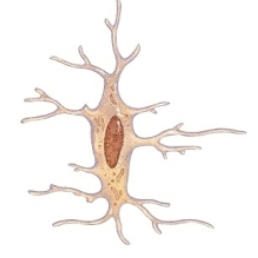
What are osteoclasts?
cells that remodel bones and cause them to release calcium
break-down of bone ECM
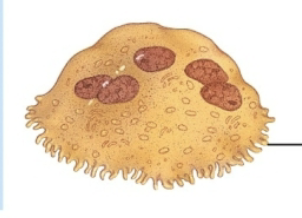
Describe compact bone.
good at providing support and protection
Describe spongy bone.
lightweight and provides tissue support
What are periosteal arteries?
enter the diaphysis through Volkmann’s canals
accompanied by periosteal veins and nerves
What are nutrient arteries?
enters the center of the diaphysis through a nutrient foramen
nutrient veins exit via same canal
What parts of bones have their own veins?
metaphyses and epiphyses
Describe red bone marrow.
loose areolar connective tissue
predominant in infants and young children
Describe yellow bone marrow.
for fat storage
bone marrow transplants
What are the organic components in bone?
bone cells and osteoids
What are the inorganic compounds in bone?
mineral salts
What is ossification?
osteogenesis
process of bone formation
What are the 4 situations where bones form?
embryological and fetal development
when bones grow before adulthood
when bones remodel
when fractures heal
What are the 2 forms of ossification?
intramembranous
endochondrual
When does intramembranous ossification?
occurs in flat bones when connective tissue membrane is replaced by bone
What is endochondral ossification?
replaces cartilage with bone in developing embryo and fetus
also occurs in epiphyseal plates of long bones as they grow in length
What cells help bones thicken?
cooperative action of osteoblasts and osteoclasts
What are the 3 phases of bone healing?
reactive phase
reparative phase
bone remodeling phase
What is the reactive phase of bone healing?
early inflammatory phase
What is the reparative phase of bone healing?
includes formation of a fibrocartilaginous callus first and bony callus second
What is the bone remodeling phase of bone healing?
last step as the bony callus is remodeled
What is an open (compound) fracture?
fracture where broken bone pierces the skin or an open wound exposes the bone
What is a comminuted fracture?
bone shatters into 3 or more pieces or fragments
What is a greenstick fracture?
incomplete break where a bone bends and cracks on one side without completely snapping in half
What is an impacted fracture?
occurs when a bone breaks, and the force of the injury drives the broken ends into each other
What is a pott fracture?
a severe break in the ankle that involves one or both of the bony protrusions (malleoli)
What is a colles fracture?
a specific type of broken wrist in which the distal radius (the larger forearm bone near the thumb) breaks and shifts upward toward the back of the hand
What is bones’ role in calcium homeostasis?
Bones store 99% of the body’s calcium.
The parathyroid gland secretes Parathyroid hormone (PTH) when calcium levels drop.
Osteoclasts are stimulated to increase bone resorption and calcium is released.
PTH also stimulates the production of calcitriol by the kidneys to increase calcium absorption in the intestines.
Describe aging and bone tissue.
From birth through adolescence, more bone is produced than is lost during remodeling
In adults, the rates are the same.
Older individuals, especially post-menopausal women, experience a decrease in bone mass when resorption outpaces deposition.