Hell World Term 2 Week 1: The Hellenistic City
 Call Kai
 Learn
Learn Practice Test
 Spaced Repetition
 Match
Match Flashcards
 Knowt Play
1/60

There's no tags or description
Looks like no tags are added yet.
Name | Mastery | Learn | Test | Matching | Spaced | Call with Kai |
|---|
No analytics yet
Send a link to your students to track their progress
61 Terms
Who was the model for the building and expansion of cities in the Hellenistic World?
Alexander the great was the model for the building and expansion of cities, he founded over 70 cities in ‘barbarian tribes’ (this may be a big exaggeration though. He did have new city foundations in his empire.
What was the reason given by Plutarch for the expansion of cities by Alexander?
He sprinkled Greek institutions allthroughout Asia to ‘tame the barbarians’- xenophobia. This is what Plutarch writes about in Moralia, 328d
What was the main reason for the foundation of the cities?
This is a social justification for the Greeks for the foundation of the cities, but its likely not the main reason why these cities were founded, they had a big military and the soldiers needed to be given land as a reward for their service, other cities were settled because they needed to act as the ‘police force’ for that region.
What did Diodorus state occurred after Alexanders death?
Diod. 18.7.1 stated that after Alexanders death nearly 20,000 Greeks attempted to return to the Aegen owing to ‘longign for Greek culture and life’
Who were the Antigonids?
The Antigonid dynasty (/ænˈtɪɡoʊnɪd/; Ancient Greek: Ἀντιγονίδαι) was a Macedonian Greek royal house which ruled the kingdom of Macedon during the Hellenistic period
What happened to the city the Antigonids founded?
Antigonous had an interest in founding cities, founded one called Antigonia in North West Syria, it didn’t last for long as they lost Syria due to Seleucid the first who took the populations and moved them to another site named Antioch. The city was called Antiogneia and then was renamed to Nicaea by Lysimachus (after wife)
What did Dio of Prusa, Orationes 39.1 write about Nicaea?
‘[Nicaea] is inferior to no city of distinction anywhere, whether in nobility of lineage or in composition of population, comprising, as it does, the most illustrious families, not small groups of sorry specimens who came together from this place and from that, but the leaders among both Greeks and Macedonians, and, what is most significant, having had as founders both heroes and gods
Who was the most important founder of cities?
Seleucus the first and his son Antiochus the first
What does Appian write about Seleucus?
Appian writes how he ‘founded cities throughout the whole length of his empire’ and how they were often named after Seleucus’ family members or places in Greece/Macedon
What would happen to older cities like Babylon?
Older cities like Babylon would get a Macedonian population, but it still held its older original population.
What happened to these cities populations?
Some of these cities became very large and developed relationships with other Greek cities, they established links amongst each other
Some of them also send colonists (people who permanently settle in a new area)
Give an inscription on the expansion of cities
‘The people of Magnesia on the Maeander are kinsmen and friends of our people and have performed many distinguished services for the Greeks which relate to glory. Formerly when Antiochus I Soter was eager to increase our city, as it was called after him, and sent an embassy to them about the sending of a colony, they..sent a sufficient number of men of great personal excellence.
Magnesia on the Maeander is referring to West Turkey.
What happened to the idea of a Greek city in the Hellenistic World?
So the Hellenistic period is one in which the idea of a Greek city, expands
Identify this plan:
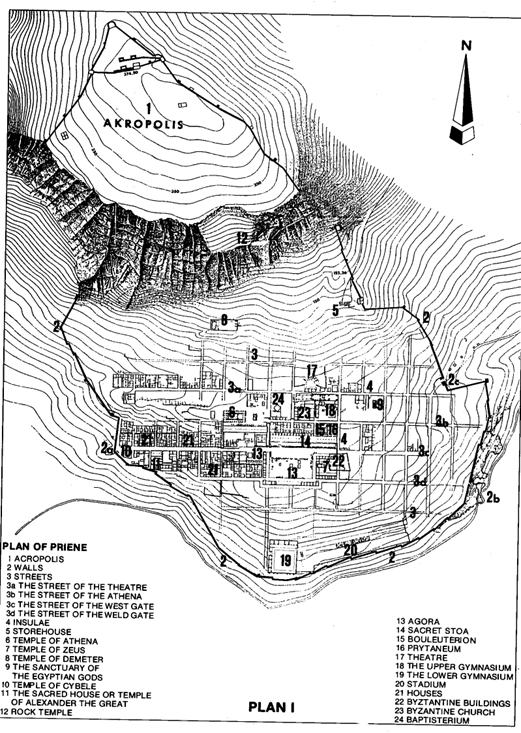
Priene (Asia Minor) Older settlement but organised in a way that shows Hellenistic ideas:
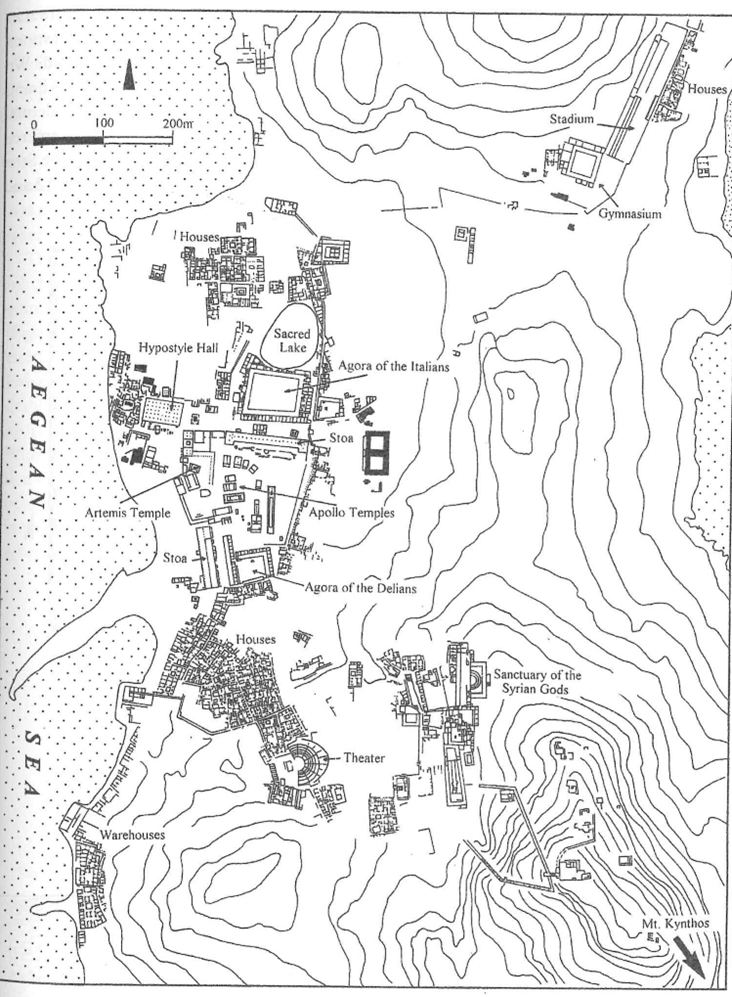
Identify this plan:
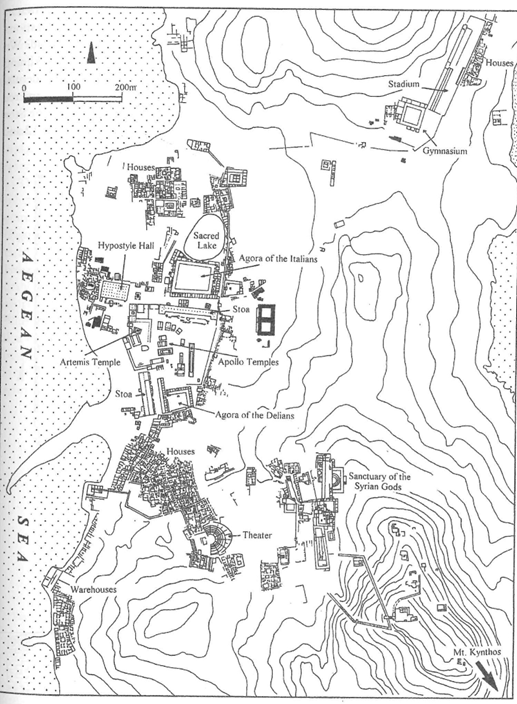
Delos- in the Hellenistic period it became an emporium where Roman merchants came to trade
Identify this plan:
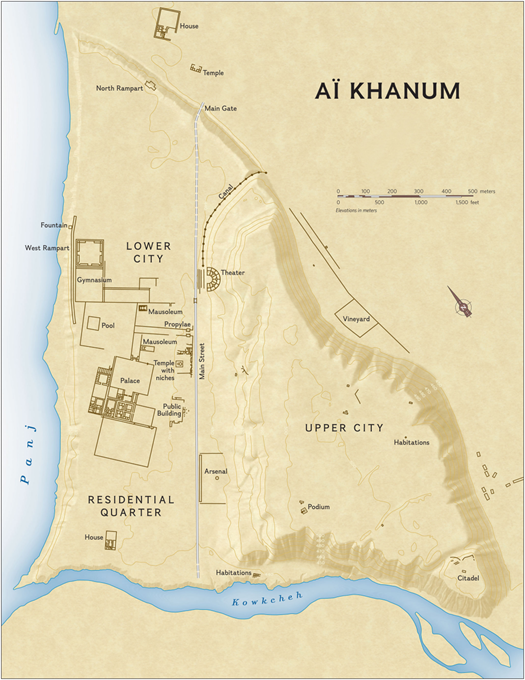
Ai Kahnum (we don’t know its classical name)- archetypal site for an eastern Hellenistic city:
Identify this plan:
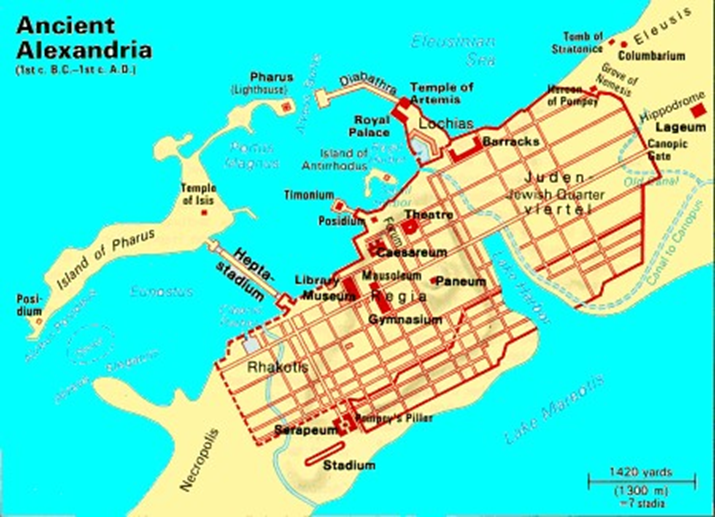
Alexandria- new foundation:
What does Pausanias list as the things he believes are necessary to make a city a city?
Pausanias 10.1.4:
‘Panopeus, a city of the Phocians, if one can give the name of city to those who possess no government offices, no gymnasium, no theatre, no market-place, no water descending to a fountain …’-
What must we consider as this is Pausanias stating this?
seems to be discussing what he would expect from a Polis, wont be a carbon copy for every city around the Hellenistic world but often elements from this description are present in cities. Pausanias is not a Hellenistic person and he would have expectations from his own time.
What happened to the original city of Alexandria?
A lot of the ancient city is covered by the modern city of Alexandria and earthquakes have sunk some of the topography of the shoreline.
Give analysis on this writing about the foundation of Alexander:
Arrian Anab. 3.1. ‘Alexander came to Kanobos, sailed round Lake Mareotis, and landed on the site of the present city of Alexandria, which is called after himself. The site seemed to him to be a most favourable one for the foundation of a city, and he thought that it would be prosperous. He was therefore seized with a longing for the task, and marked out himself the main parts of the city, the location of the agora, how many sanctuaries there should be and of which gods, those of Greek gods and of Egyptian Isis, and the course of the city-wall. He offered sacrifice over the plan, and the omens appeared favourable.’
He offered sacrifices over the plan and the omens appeared favourable. This was a key moment in the foundation of the city was to offer To make sure that the gods approved
How does Strabo describe the layout of Alexandria?
Strabo discusses that the whole city is ‘criss-crossed’ with very wide streets that intersect each other at right angels. The tomb of Alexander was part of the royal palaces.
Give Strabos entire description of the city
The whole city is criss-crossed with streets suitable for the traffic of horses and carriages, and by two that are very wide, being more than 1 plethron (30 m) in breadth; these intersect each other at right angles. The city has magnificent public precincts and the royal palaces, which cover one-quarter or even one-third of the entire city area. For just as each of the kings would, from a love of splendour, add some ornament to the public monuments, so he would provide himself at his own expense with a residence in addition to those already standing…All, however, are connected with each other and with the harbour, even those that lie outside it. The Museum also forms part of the royal palaces; it has a covered walk, an arcade with recesses and seats (exedra) and a large house, in which is the dining-hall of the learned members of the Museum….. The so-called Sema (tomb) is also part of the royal palaces; this was an enclosure in which were the tombs of the kings and of Alexander. For Ptolemy son of Lagus got in ahead of Perdiccas and took the body from him when he was bringing it down from Babylon.He gave it burial in Alexandria, where it now lies, though not in the same sarcophagus. The present one is made of glass, while Ptolemy placed it in one made of gold.
In the Great Harbour at the entrance on the right there is the island and the tower Pharos, and on the other side are the rocks and the promontory Lochias with the royal palace. As one sails into the harbour there are on the left the inner royal palaces, which are joined to those on Lochias and have groves and many colourful lodges. Below these lies the artificially dug harbour which is not visible and is the private property of the kings, and Antirrhodos, a small island in front of the dug harbour which has both a royal palace and a small harbour. They gave it this name as being a rival of Rhodes. Above it lies the theatre, then the Posideum, a kind of headland jutting out from the so-called Emporium, with a sanctuary of Poseidon. [ ...] Then come the Caesareum, the Emporium and the storehouses; after them the shipyards as far as the Heptastadium. So much for the Great Harbour …
Identify this plan of a city:
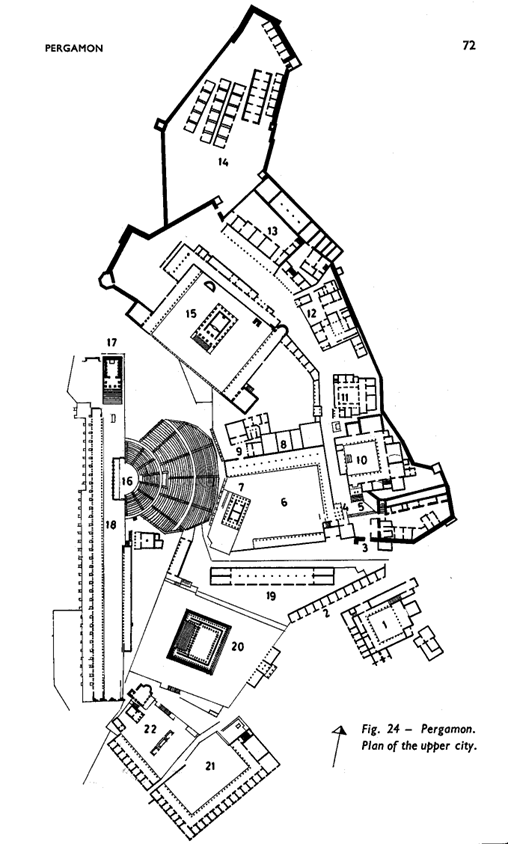
Pergamum: Capital of the Attalids:
What was the layout of the city constrained by?
The layout of this city was constrained by the site, many of the main monuments were all grouped on a tall hill, and the lower city extended down a sloap.
What were the Attalids trying to invite a comparison with with this layout?
The Attalids like to invite a comparison with the Athenian Acropolis, they were clearly trying to remind people of it.
What similarities did Athens have with a Hellenistic city?
The layout of the Acropolis was nothing like Alexandria, but there were Hellenistic building, large theatre to Dionysus (just like the one in Athens), there was the agora (market place), there were some religious monuments- temple to Athena and an altar to Zeus (their most famous monument there)
Who was Pergamum in rivalry with?
They were also in rivalry with Alexandria, so they also had a library, (they were in competition for Greek books and texts). The library still survives today. Sending out a message, when they copied books when they couldn’t get originals they would use parchment (not papyrus)
Give some pictures of Pergamum:
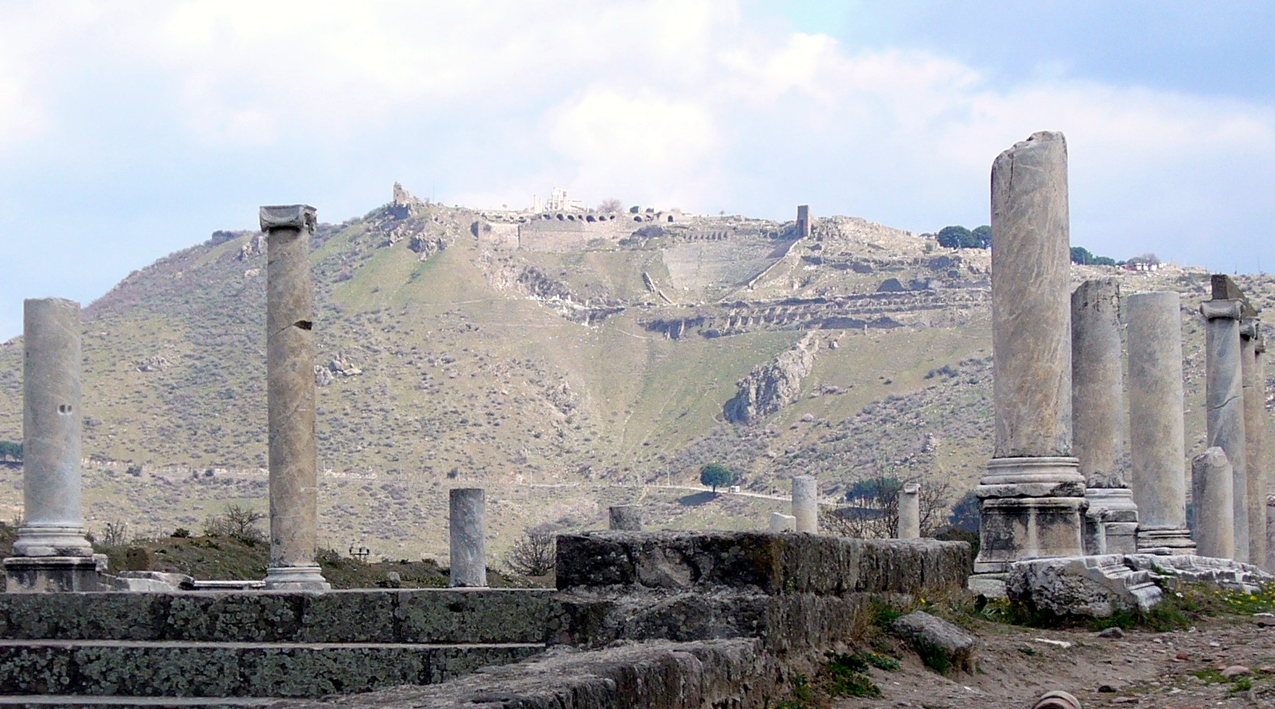
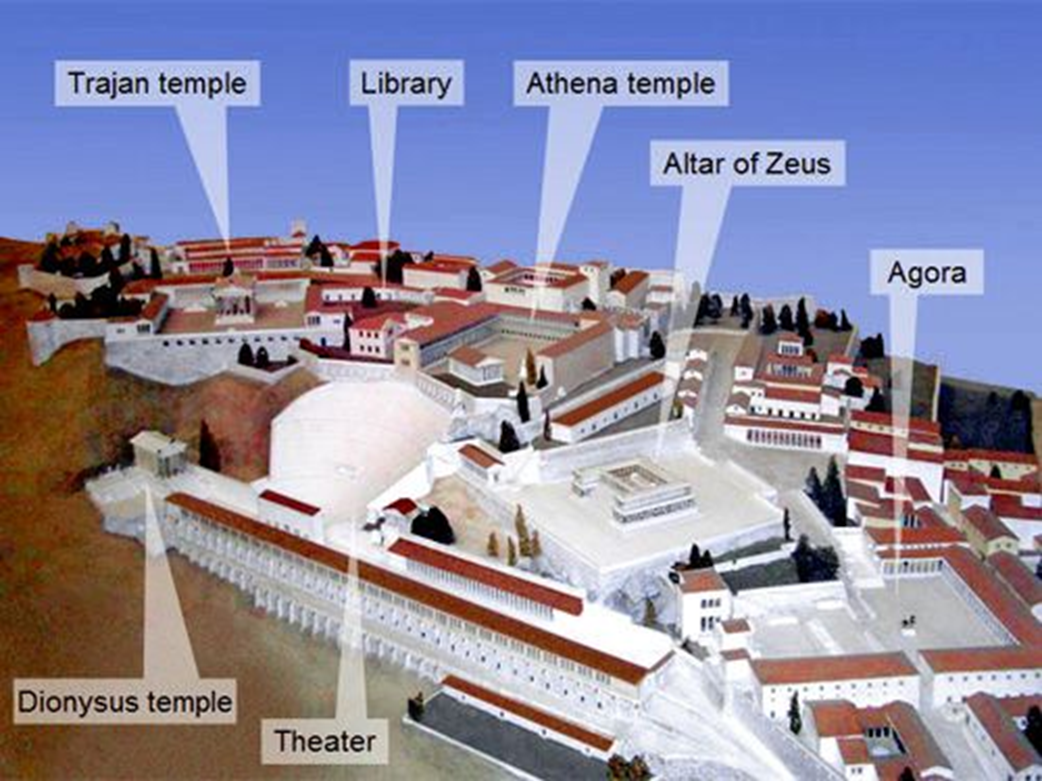
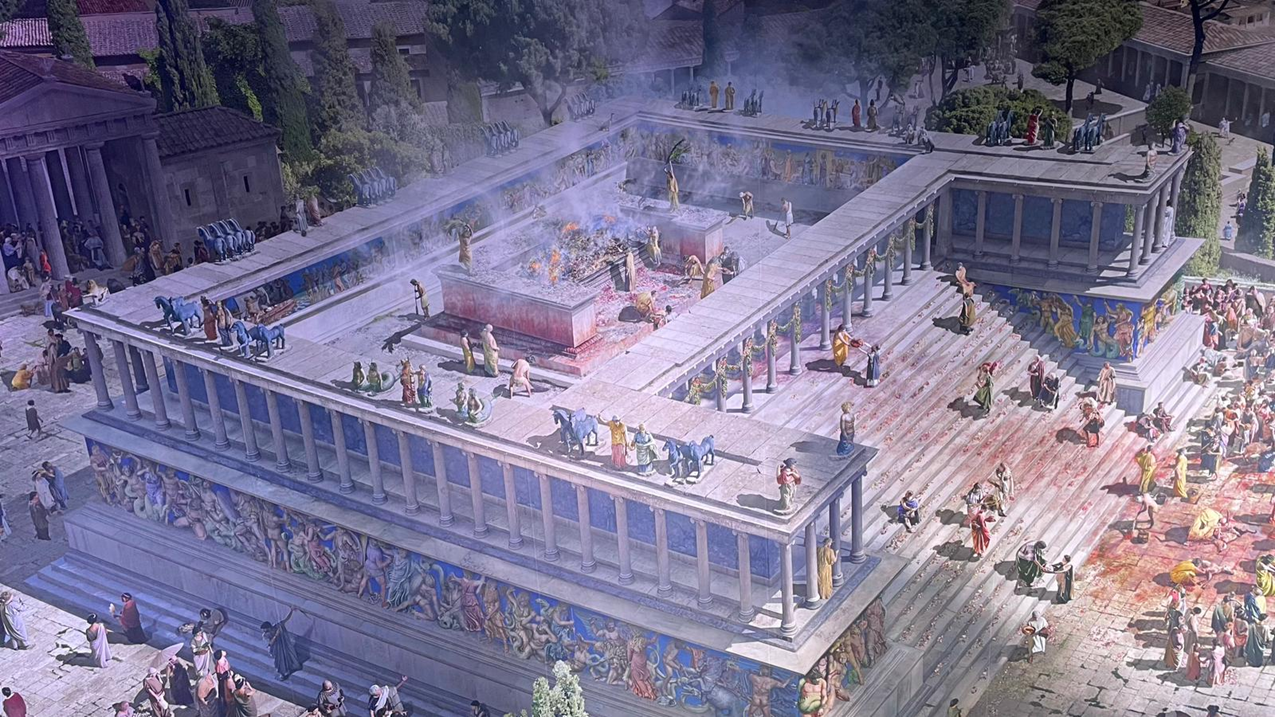
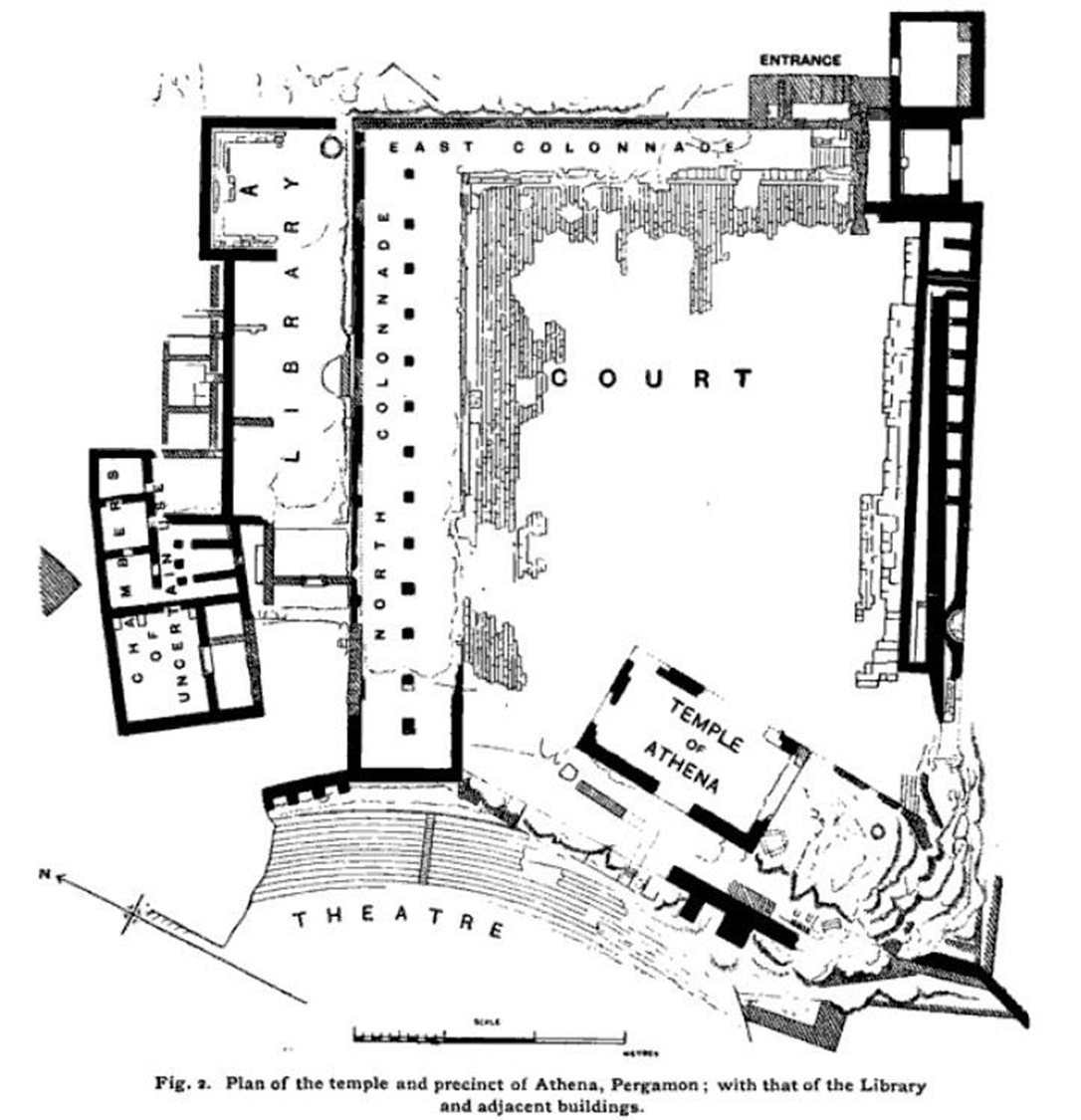
Identify this city:
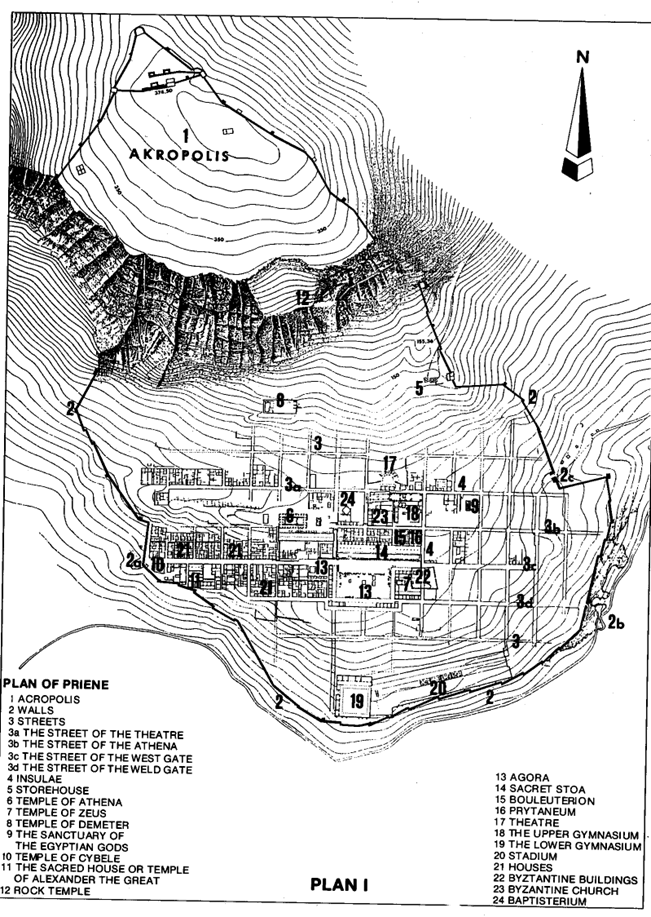
Priene
What is it often used as an exemplar of and what arrangement is it in?
Often used as an exemplar of a Hellenistic city, laid out in a grid arrangement (thought to be a healthy arrangement)
Why did the city lose importance?
Laid out in a grid under a rocky Acropolis, it overlooked the sea, in those days it was a harbour town but during the Roman period the harbour silted up and became landlocked, it survived as a city but became less and less important- this is why it is well preserved as a Hellenistic city, because the Romans largely left it alone
Does priene have large streets?
It doesn’t have very large streets
What does it have that we would expect from a Greek city?
It had a number of things we would expect from a Greek city, its own theatre, agora, temple and it has a council chamber, and a gymnasium
What was Prienes key monument?
Its key monument was the temple of Athena Polias- King Alexander the great supposedly dedicated this temple (inscription of this on slide 26). This city benefits from donations from certain rulers
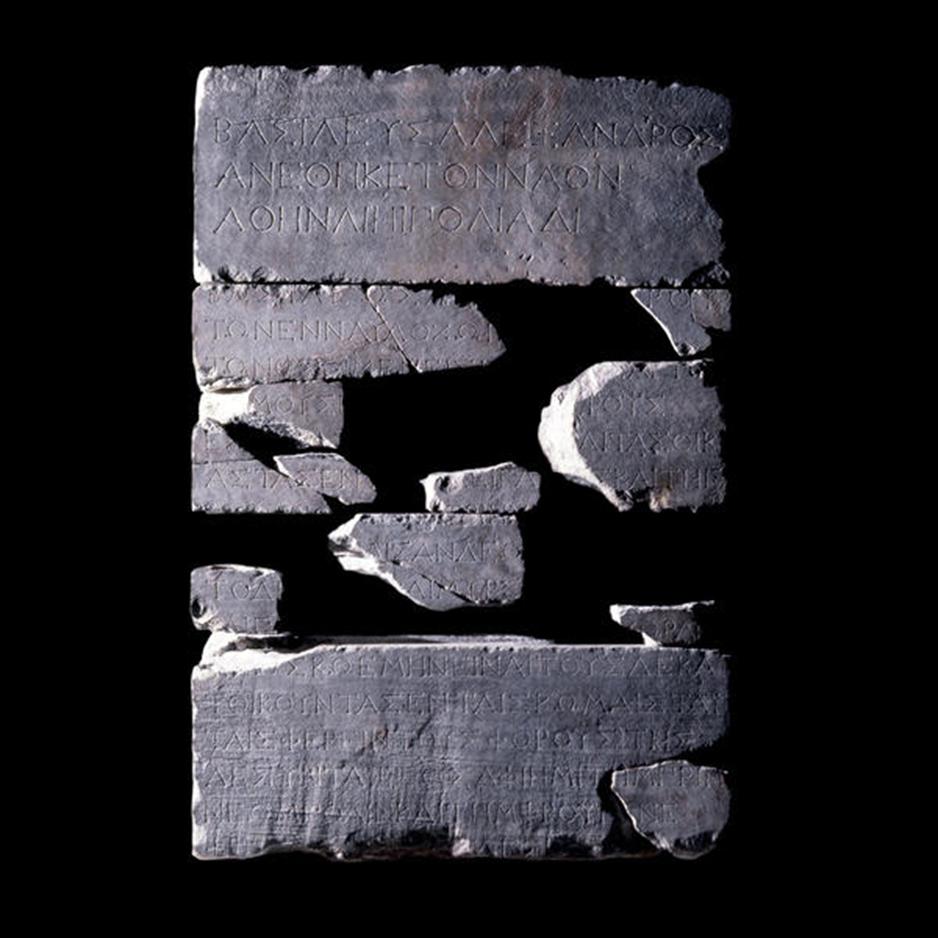
'King Alexander dedicated the Temple to Athena Polias'
What was the market place?
The market place was often where you were supposed to sell and buy goods, the goods would also often be regulated (officials who were responsible for regulation of the markets)
What did most agoras in the Hellenistic period have?
Most agoras int he Hellenistic period had stoas built around them- stoas are essentially multi purpose buildings- some had rooms at the back that you could hire out, others had shops, but they all have a colonnade covered with a roof
What did Priene have?
Had a council chamber (separate structure from the theatre), the magistrate would meet int he council chamber, the city would meet in the theatre
What were most Hellenistic cities run by?
Most cities tended to be run by a small number of elite families
Where was the gymnasium in Priene?
The gymnasium was on a lower terrace, so it was overlooking the sea- very impressive structure in its day, large flat area used for running (stadion) and then the gymnasium- this was an essential aspect of a city, you had to give the Greek young men an education so a gymnasium would be expected.
Give some pictures of Priene
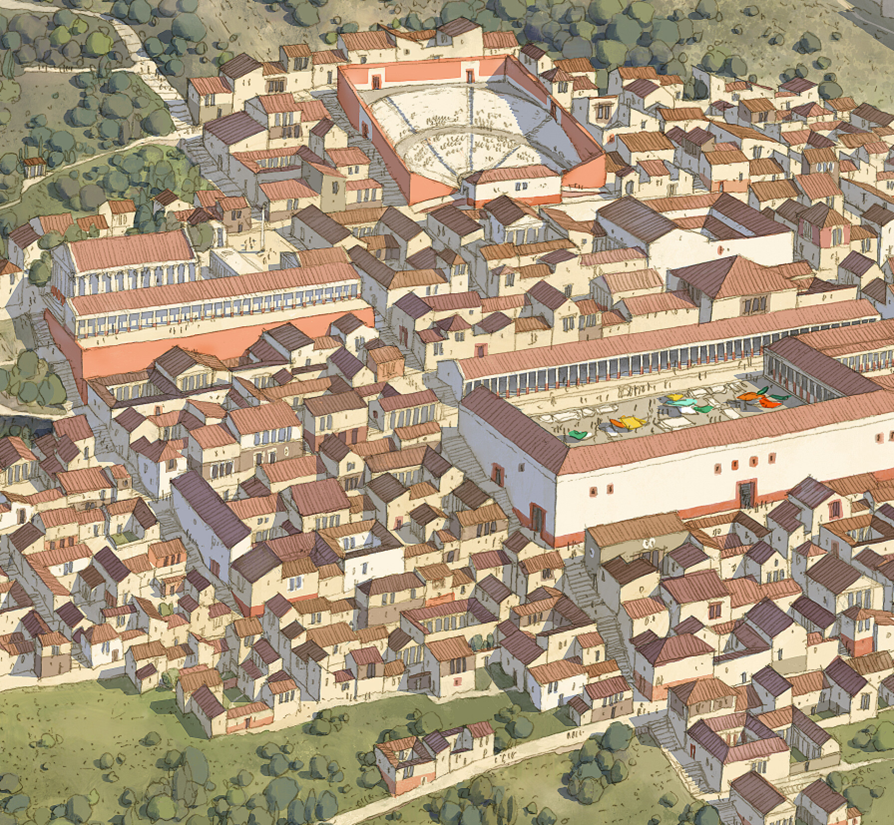
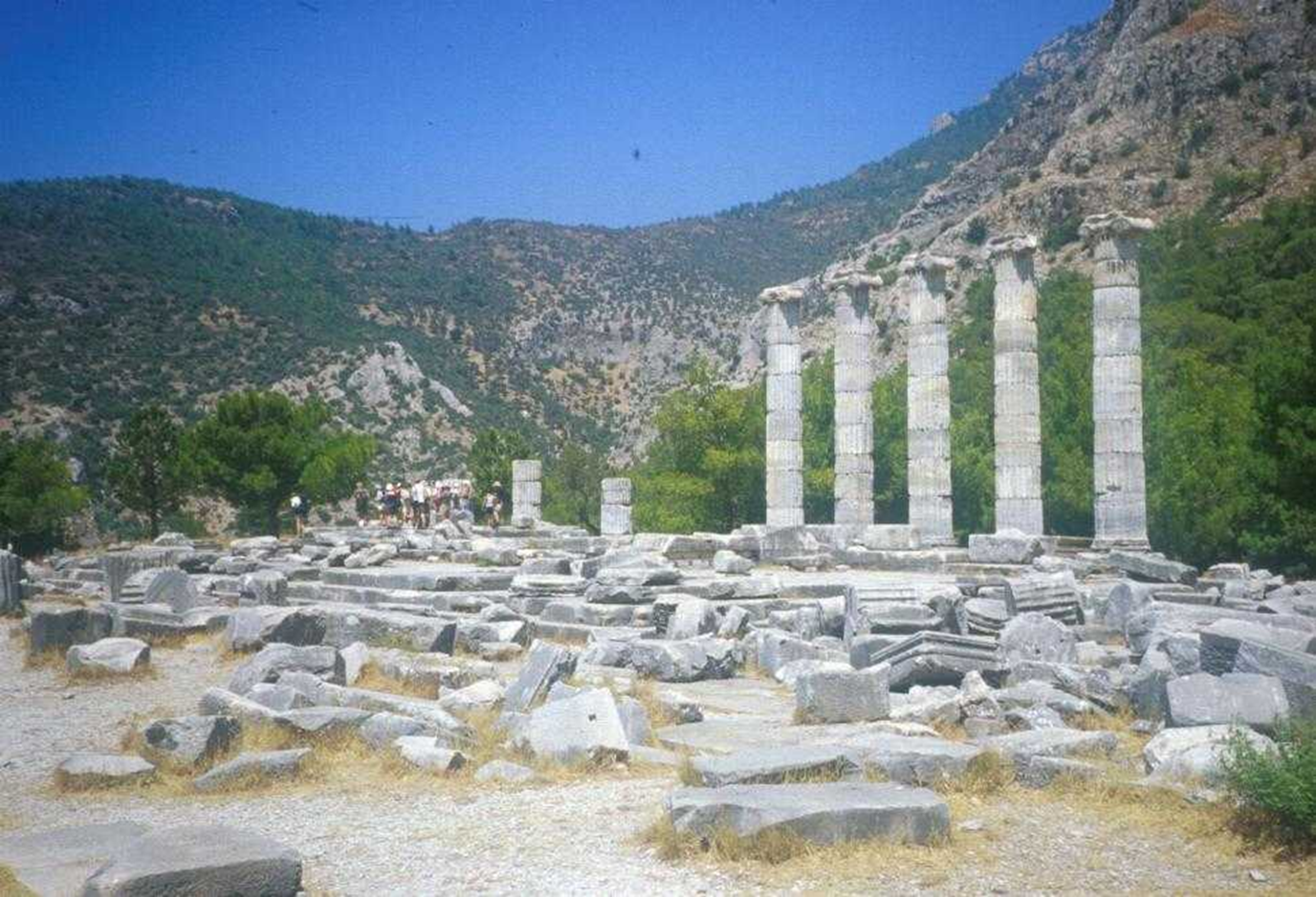
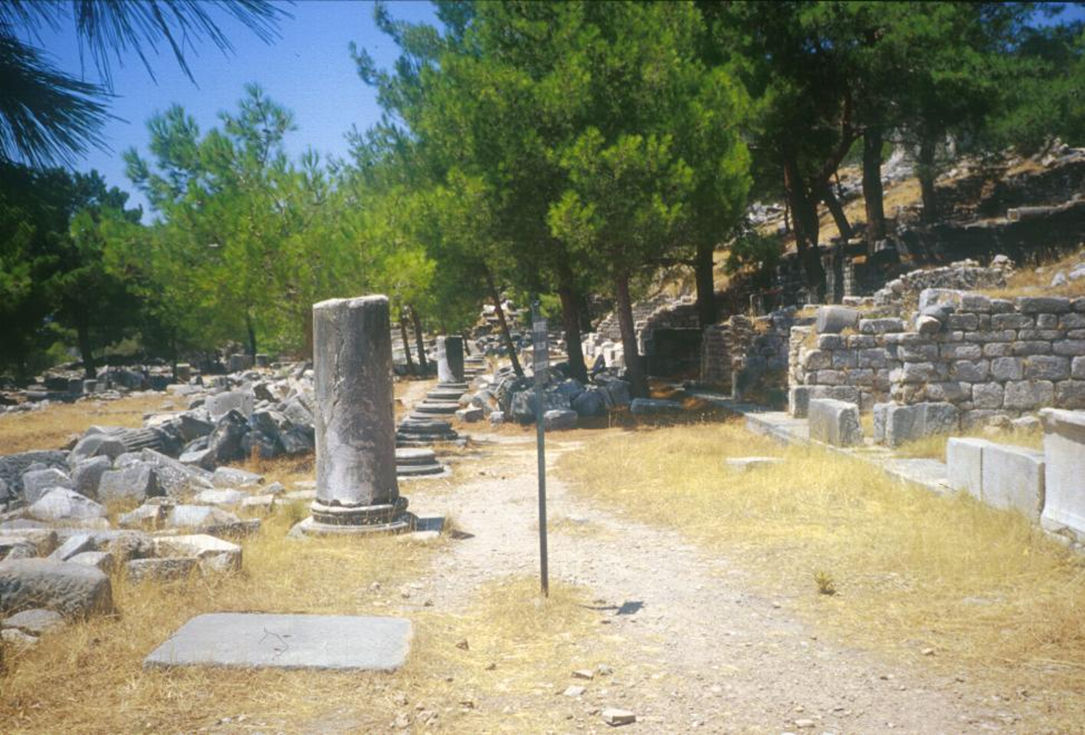
Sacred Stoa – dedicated in 130-112BC by King Ariarathes V of Cappadocia
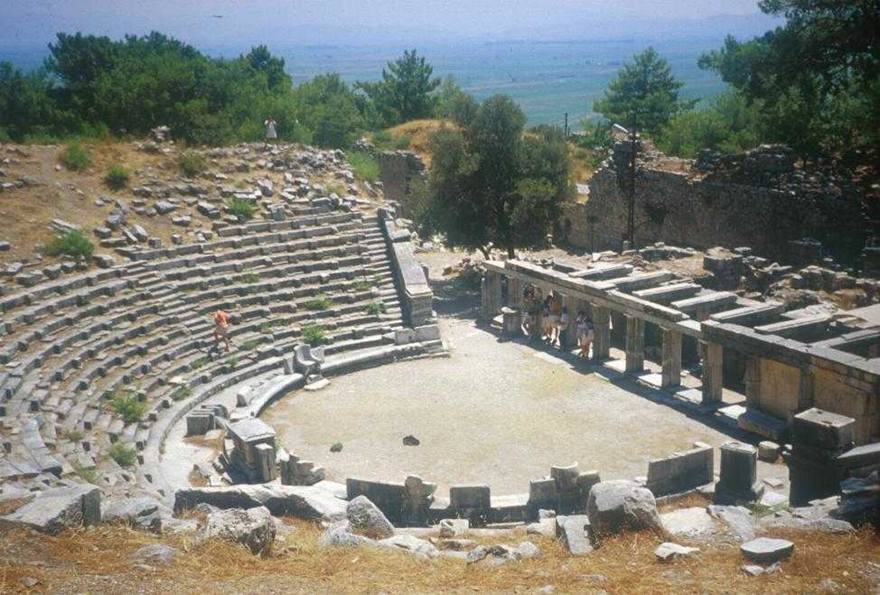
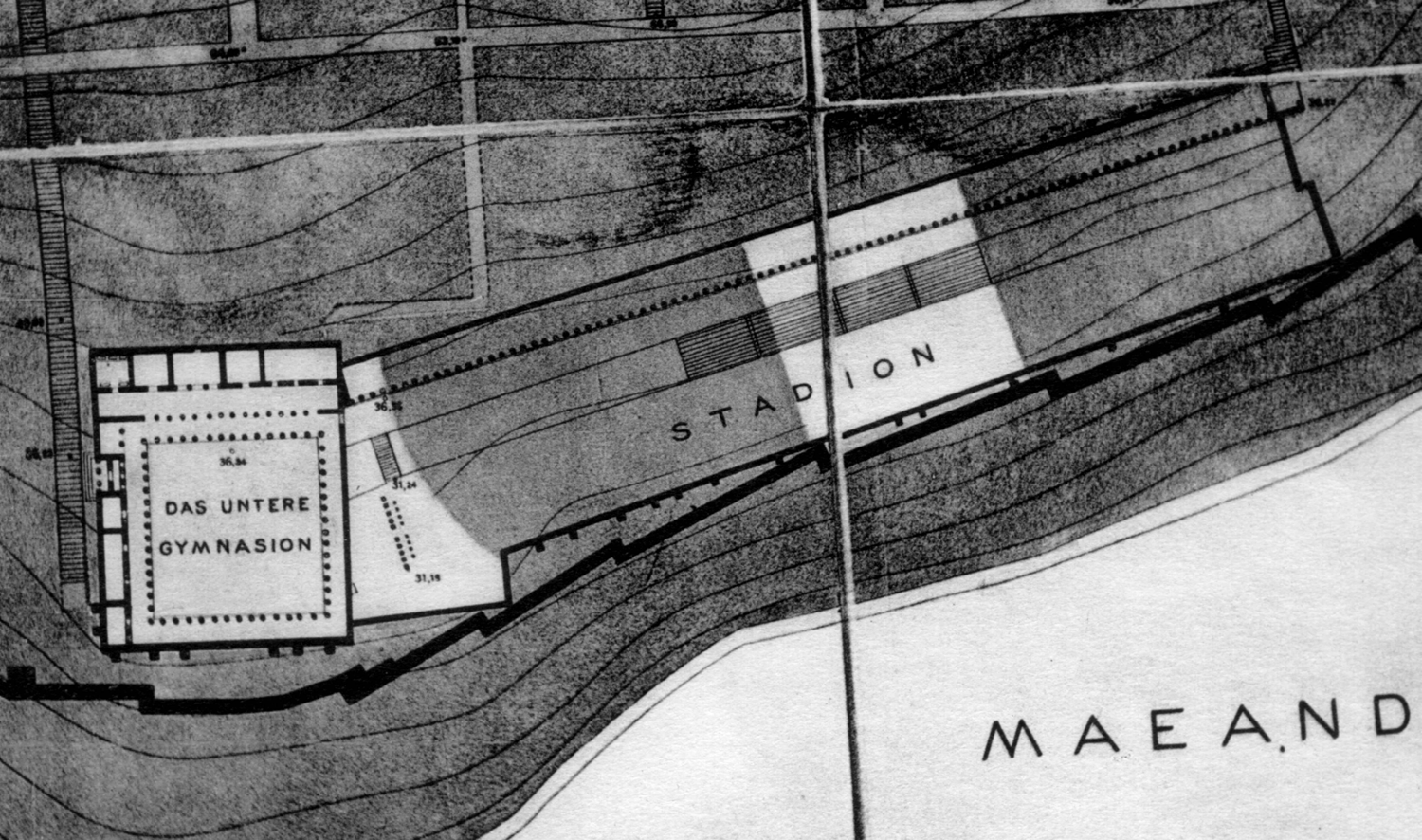
Priene, Lower gymnasium, built c. 130-11 BC with funds from Moschion and Athenopolis (according to inscription in north stoa).
Identify this city:
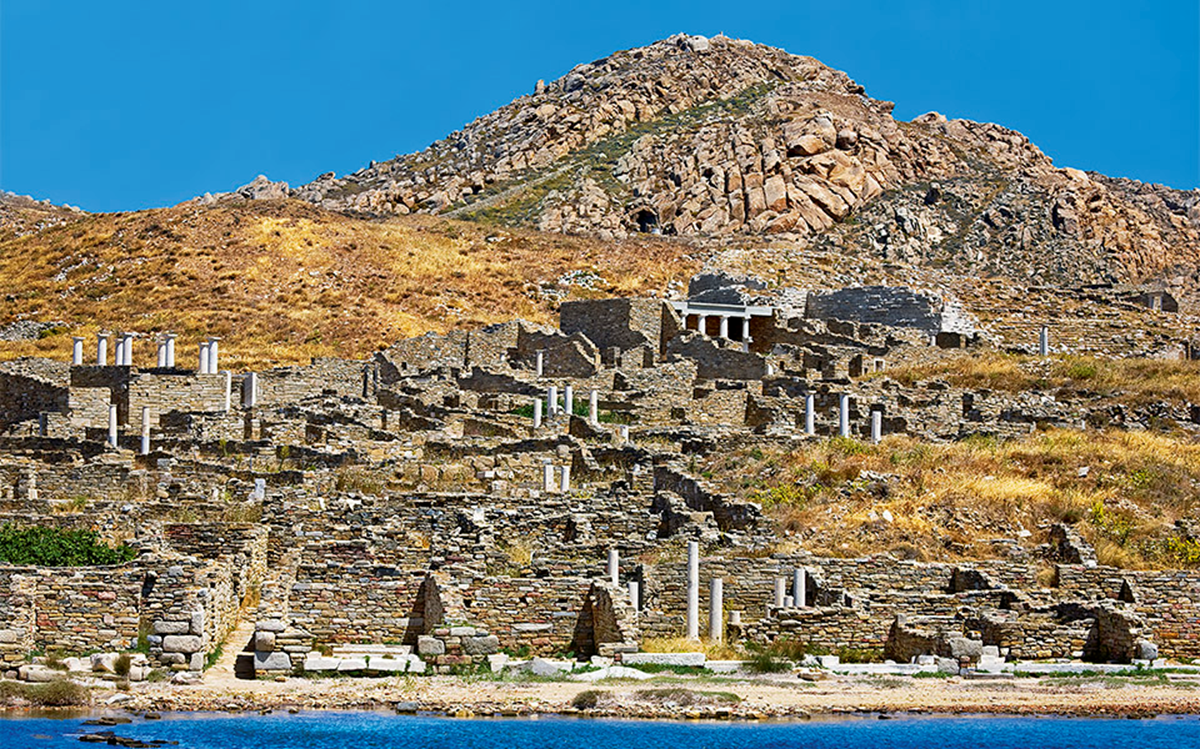
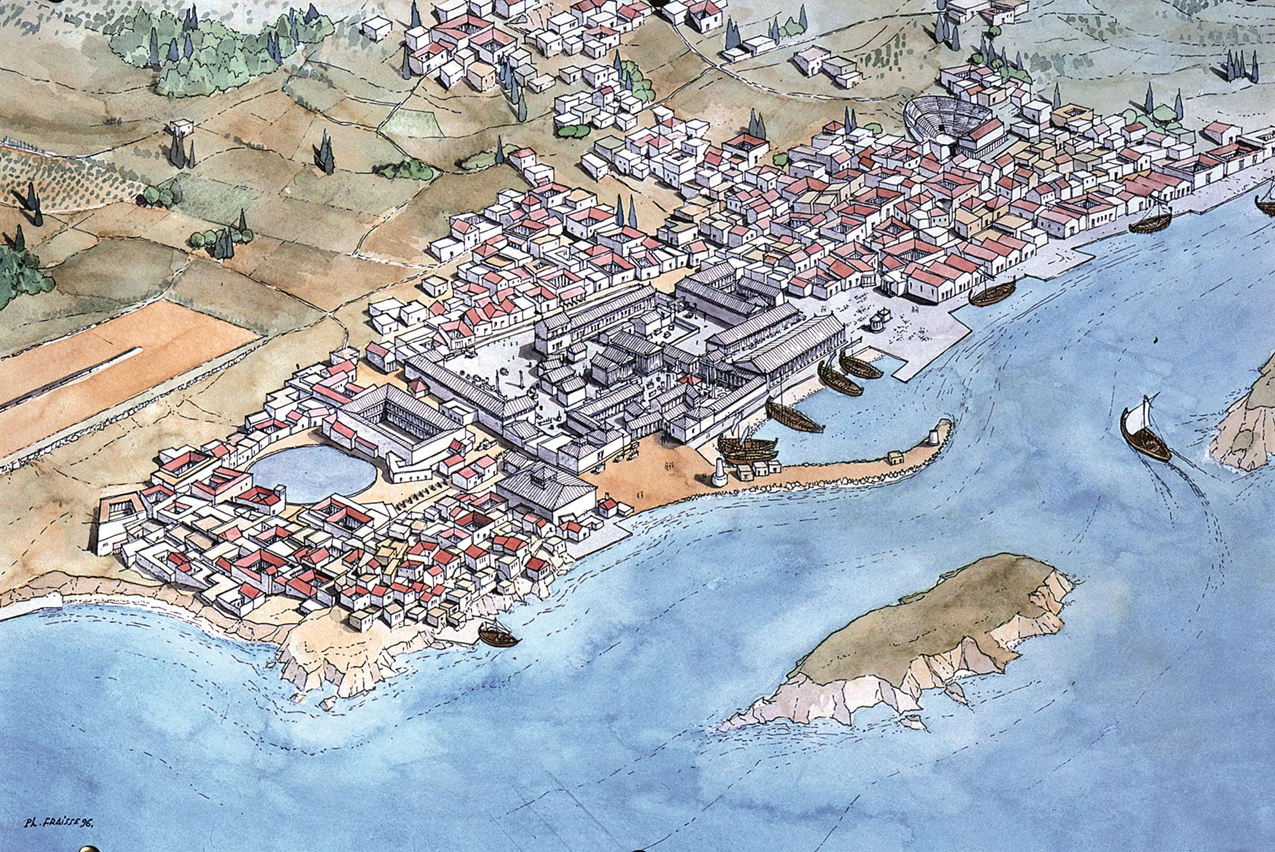
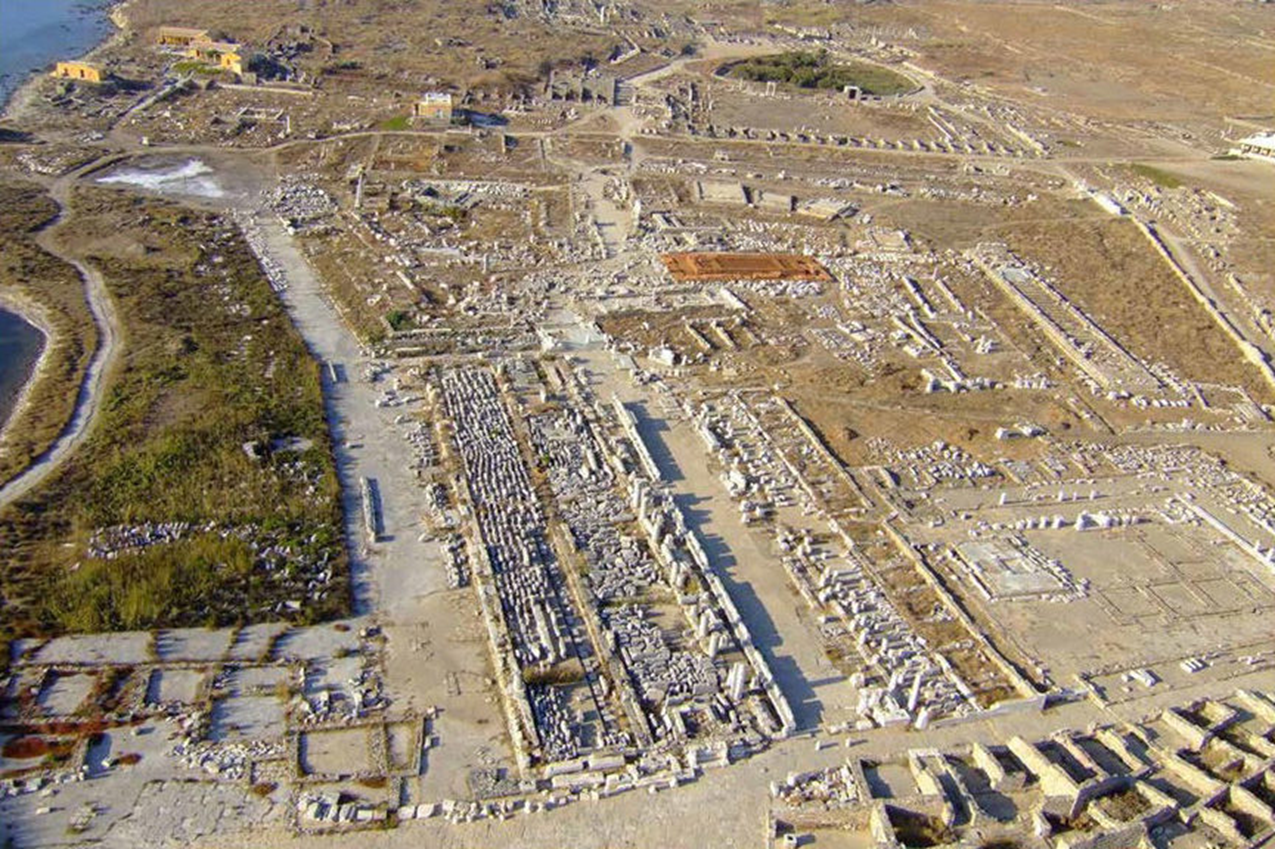
Delos
What are the houses like in Delos?
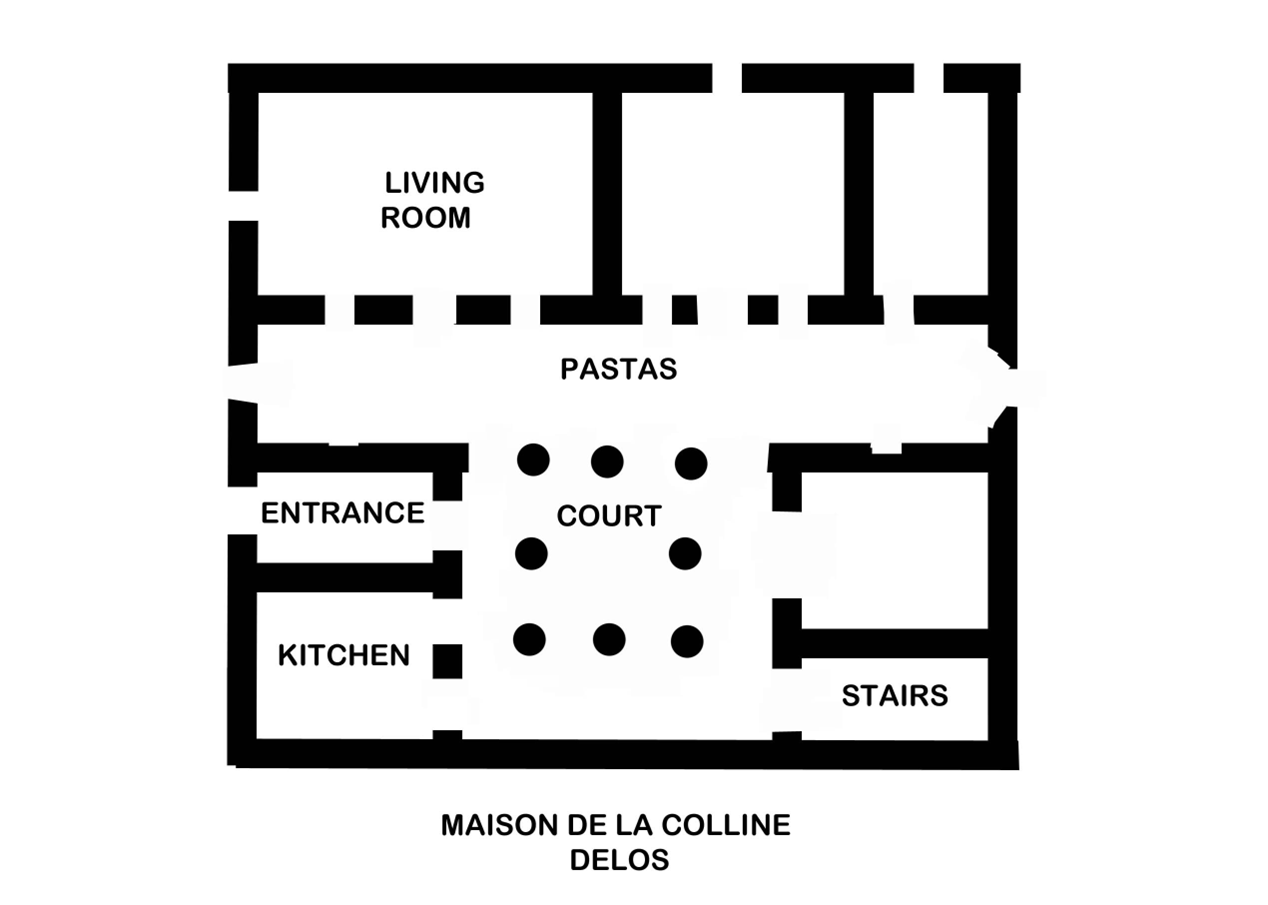
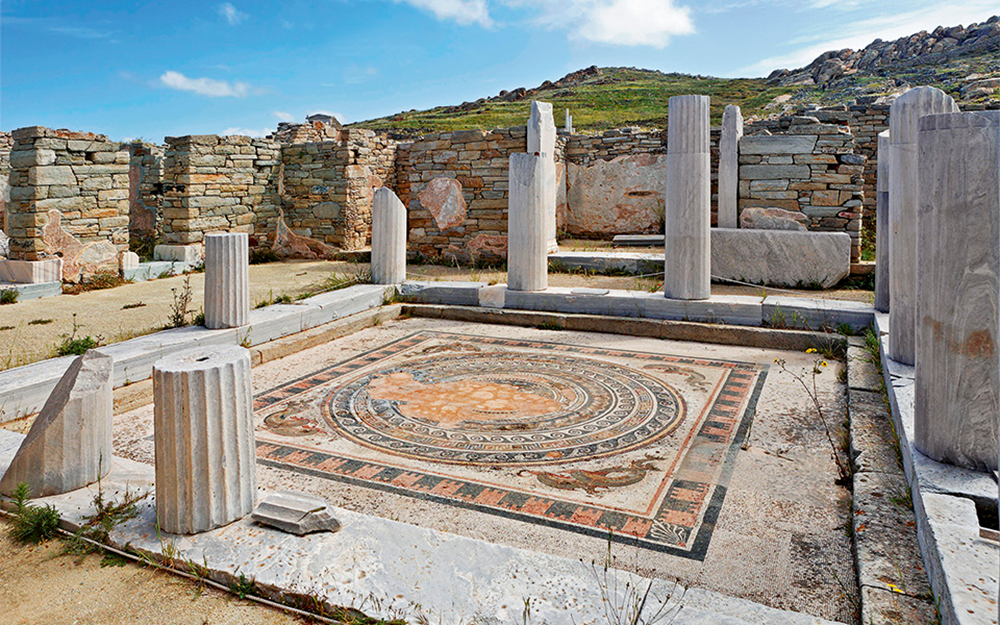
The houses on Delos are quite typical Hellenistic houses, small courtyard, covered walkway (pastas its called- i think?)
Spectacular examples of Hellenistic mosaics put in these houses (likely very wealthy people).
Give some pictures of Delos
What is Ai-Kahnoum and where was it located?
Modern name, its Greek name is lost
Located in Afghanistan, far front he other locations we have been looking at
Along a road leading to a fertile plain
What sort of people lived in Ai-Kahnoum?
Had local native elite, farmers and Greek colonists
What information do we know from knowing the names of those who lived there?
Greek names dominate the highest civil positions, but native people in lesser positions (have to be careful when just using names as information, as quite often native people also take on Greek names)
What is Ai-Khanoum a good example of?
Good example of a Hellenistic city that wasn’t subsequently destroyed (the city has now been ransacked)
What did Ai-Kahnoum have a mix of?
Mix of eastern structures mixed with things expected of a typical Greek city
Where is the city located?
Northern Afghanistan - Could be the city of Alexandria-on-the-Oxus, founded by Seleucus
What Greek and non-greek aspects does it have?
A Greek-looking city (temples, a hero shrine, gymnasium and a theatre), but with distinctive non-Greek elements (a palace and huge mudbrick walls, Greek cities tended to build their cities out of stone).
What does this inscriptions from the shrine of Kineas show about Ai-Kahnoum?: ‘These wise sayings of men of former times, the words of famous men, are consecrated at Holy Pytho (Delphi); from there Clearchus copied them carefully, to set them up, shining from afar, in the precinct of Cineas. When a child, show yourself well behaved; when a young man, self-controlled; in middle age, just; as an old man, a good counsellor; at the end of your life, free from sorrow.’
This reference suggests that someone travelled from the city to Delphi for an oracle and then brought it back to Ai-Khanoum (long way)
What typical Hellenistic aspects were found in the city?
Other typically Hellenistic stuff was found there- pebble mosaic, Greek style statue, Greek style columns
What suggests that there was Greek education in Ai kahnoum?
There was a royal palace and gymnasium located there (suggestion of Greek education)
Was Ai-Kahnoum removed from the rest of the Hellenistic world?
In this site (we don’t know who founded it), we have the elements of a Hellenistic city, but it wasn’t exactly the same as distinct local areas it was largely removed
What was the impact of external powers?
Dedications e.g. in Priene Alexander the great sets up a temple
Ptolemaic building works at Samothrace, sanctuary of Great Gods, in this sanctuary there was a large round structure (function unknown) but it was the largest circular roofed building in the Greek world, deviated by Arsione II
List the dedications to Athens?
Lesser Attalid Dedication, Acropolis
Eumenes II – stoa on south slope of Acropolis
Antiochus IV (175-164) contributions to Olympieion.
Attalus II (159-138) stoa in Agora
Identify these statues:
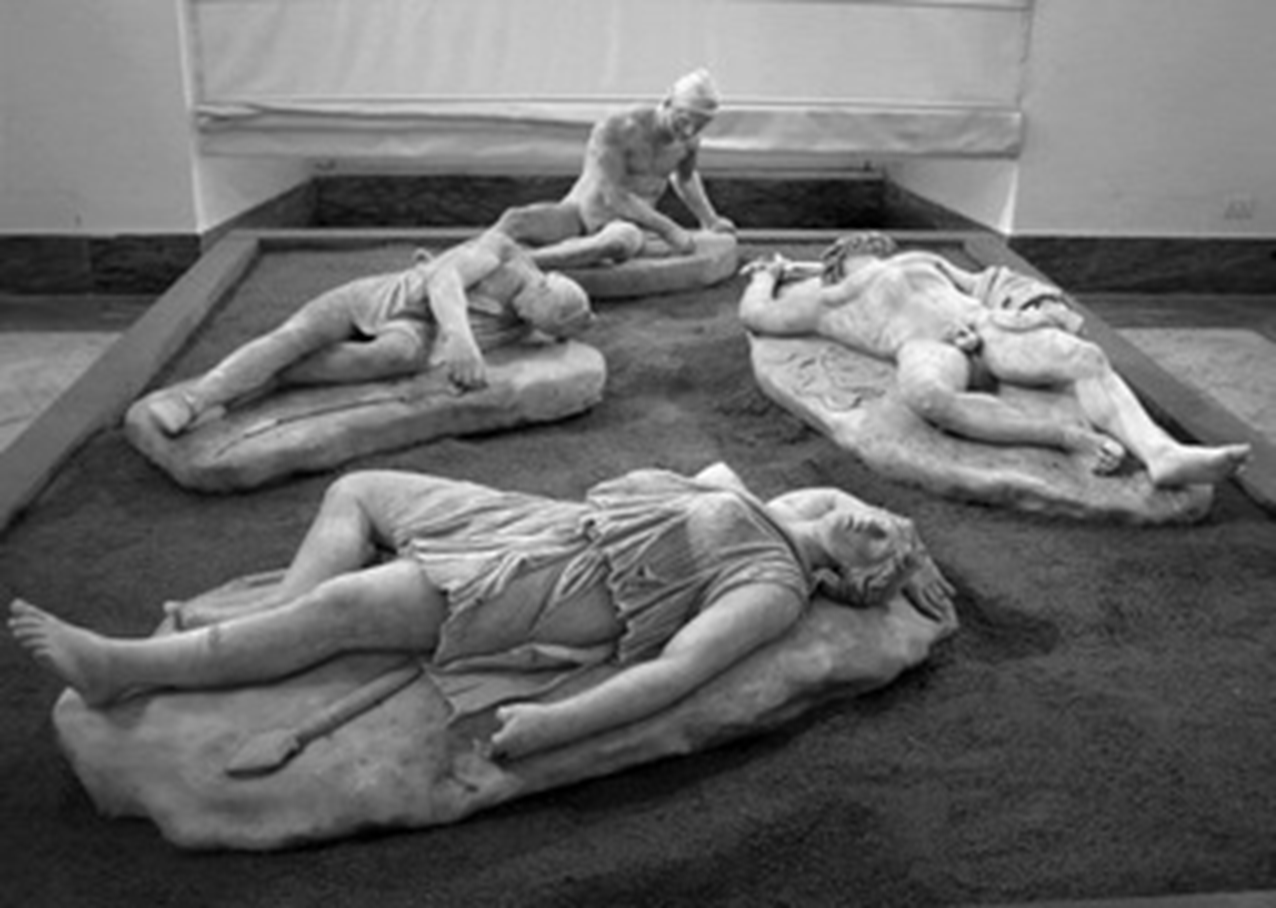
The ‘Small Gauls’
What did the small gauls commemorate?
Commemorated an attalid victory, the large gauls were in an Acropolis at Pergamum and the small ones were at the Acropolis at Athens
Give examples of civil benefactors
Priene: Phile of Priene ‘dedicated at her own expense a receptacle for water and the water-pipes of the city’ (Burstein 45)
Moschion and Athenopolis completed lower gymnasium (late 2nd C BC)
Miletus: Timarchus and Herakleides of Miletus dedicated/built bouleuterion to/at command of King Antiochus IV (175-164BC)
Explain what honorific statues were and give examples of where they were set up in the cities
These were a feature in Hellenistic cities that speak to civic benefactors
If someone gives or does something good for the city a statue of them may be set up in thanks
Priene: esp in the Agora
Pergamon: many in the gymnasium
‘epiphanestatos topos’ – the most visible place
See further John Ma, Statues and Cities (2013).