PIC W7 L2 landscape
 Call Kai
 Learn
Learn Practice Test
 Spaced Repetition
 Match
Match Flashcards
 Knowt Play
1/23

There's no tags or description
Looks like no tags are added yet.
Name | Mastery | Learn | Test | Matching | Spaced | Call with Kai |
|---|
No analytics yet
Send a link to your students to track their progress
24 Terms
The complexity of ‘nature’: 1
- ‘Nature is perhaps the most complex word in the language’
- (Raymond Williams, 1988. Keywords)
- Dictionary definitions of Nature:
o The essence of something (that’s human nature, it’s only natural, it’s in her nature to act that way etc)
o Areas untouched by human settlement, civilisation etc.
o The physical universe in its entirety, from the most microscopic bacteria through to the farthest galaxies.
The complexity of ‘nature’: 2
- Human activity on the earth has so transformed all manner of ecosystems, environmental relationships that ist troubled the idea. That there’s any space of nature and that pure wild and external sense left
- Is there anywhere natural left in the world
o Penguins have traces of DDT in Arctic – from pesticides in farming
Carl sauer and the ‘morphology’ of landscape:
- ‘The cultural landscape is fashioned from a natural landscape by a culture group. Culture is the agent, the natural area is the medium, the cultural landscape the result.’
o sauer, 1925 ‘The morphology of landscape’.
Landscape after the cultural turn:
- period of time in 1980s/90s where disciplines engaged with new way so thinking about text and representation
o maps as something more than an objective record of whtas out there
o read them as artefacts that can be investigated on the basis of ideas, th ideologies that o up behind them, who made them purposes, symbols and meanings they try to express
- Landscapes as spatial representations of cultural identity
- Cultural practices of landscape, eg ‘codes of conduct’
- ‘Old’ cultural geographies
o Landscape = region or area, as in ‘Peak District Landscape’, ‘East Anglian Landscape’ etc.
- ‘New’ cultural geographies (1990 - )
o Artistic and literary landscapes as ‘imaginative geographies’, reflecting and communicating shared cultural values & meanings
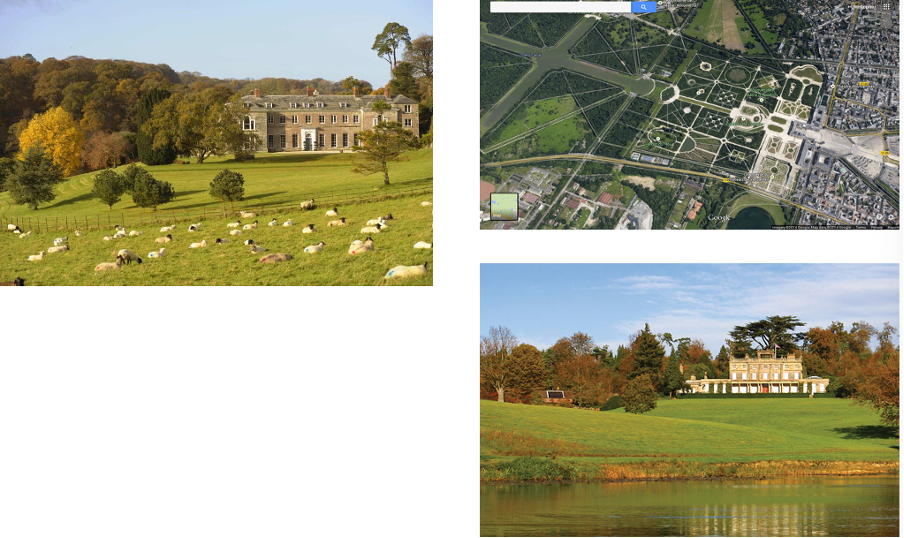
- British landscapes advertised to public both national and international
- Types of landscape which themselves are historically fashioned in a particular time and place where there’s an idea of landscape that had to be formed according to aesthetic criteria
- 1700s – colonia geography money spent to create colonial centre aesthetic places in rural Britain
- Individuals would pay for landscape architects to produce gardens/ perspectives to reflect social values- aristocracy, elite society
- Many were designed on artistic formats that were expressed into paintings – turning land into paintings
- Ideas on how landscape should look
Introducing landscape:
- Key Points
- Landscape art/photography studied not in terms of the individual artist.
- Instead: landscapes help to reveal something of the world-view of different nations in different historical periods (social relations, property, relations between culture and nature)
- A cultural text to be read (is what the landscape is)
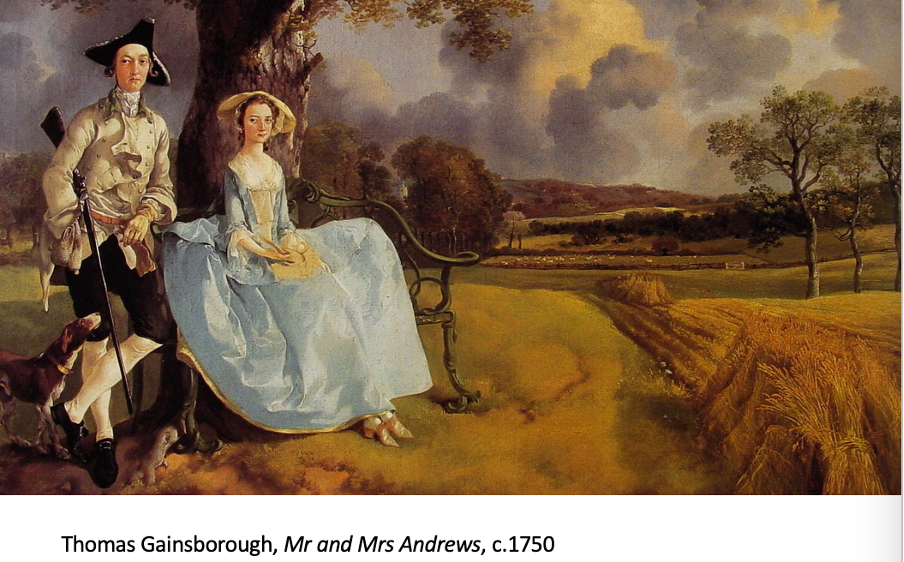
- Located in national gallery, London
- National gallery – primarily repository for most significant artwork by British painters
- Lots of representations of landscape in this gallery
- Lots of romanticist landscapes
- This painting:
o How does the image represent things associated with gender – lady is seated Infront of tree – genealogy of family
o Man – mobile. And hunting – aristocracy
o Economic relationships – depicting land owned by particular people. Associated explicitly with belonging of named family
o Land has been worked by undisclosed labouring of people. – crops and sheep. Walled private property
Introducing landscape – summary points:
- Landscape art as a Western artistic genre, 15th cent to present day
- Landscape as a ‘way of seeing’ the world – not what we see but how we look at things, how we frame the world around us
- Landscape art as a way of picturing relationships between human cultures and the natural world
- Landscape art as a way of picturing national identities
Picturing nations and national identities:
- Landscape art as a means through which ‘nature’ and national identity are linked.
- Identity made to seem ‘natural’, ‘timeless’
o Particular national identities
- But such visual representations will always include some groups – and exclude others.
- (a) England
o England as ‘green and pleasant land’
o Rural idyll as essence or heart of Englishness
§ Idealized harmonized environmental space – quaint space sheltered from rest of world/ modernity
o English landscape as ‘timeless’ harmony of culture & nature
- Quality of the image reflect back upon and communicated to the cultural and political identity that is being depicted
- The nation itself is as timeless as the nature depicted in the landscapes
-
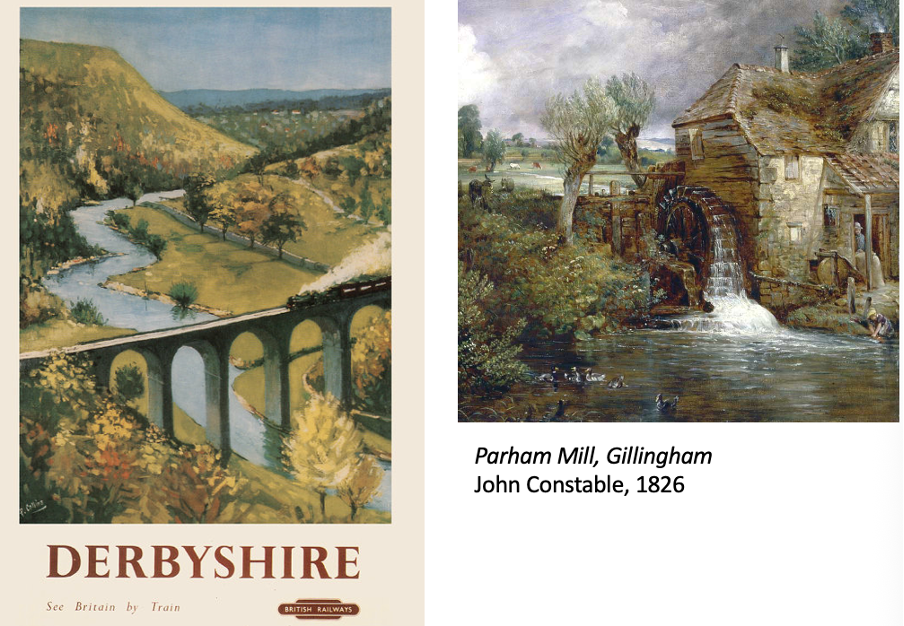
- Advertising campaign for railway to make sue of rest of uk
o Make use of the value and romantic landscape genre to incite people to experience aesthetic qualities of countryside
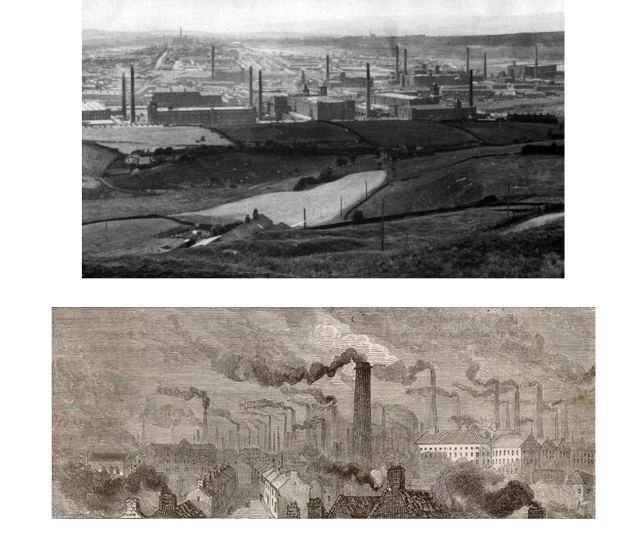
- Industrial uk – mass industrial production – midlands
- Not recognised as part of the same national identity – landscape
- Might be more significant than the other for the nation
Picturing nations and national identities: - USA
o Expansion: pushing back the frontier
o American nature as sublime, as ‘promised land’
o American nature as vast as potential of American people
o Technology matching and overcoming natural world
o America as ‘new world’: separating past from present
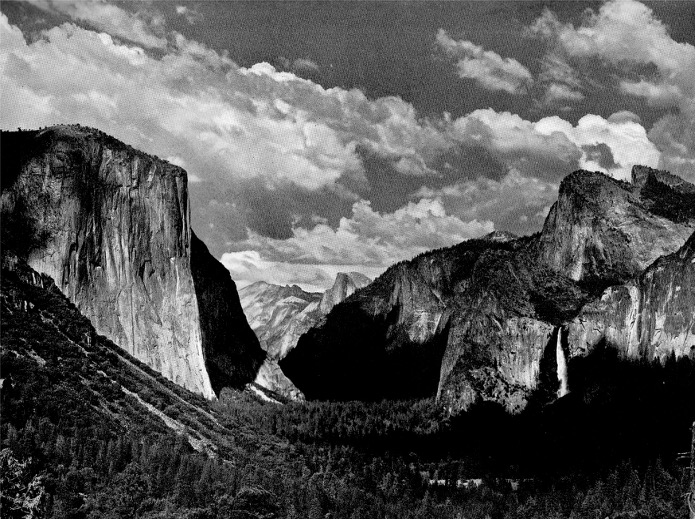
- Early 20th C usa gov commissioned a photographer (ansel adams) to take photos of the national parks of the USA to create a book
- Nature can embody something to do with national identity – national parks
- Book mass produced across country to disseminate into wider domestic spher e- wider usa public feel part of this wider cultural event
- New tech to communicate ideas about nationhood and identity
- In his imagery – sublime, eternal nature – no trace of human action. Pure, external natural space
- But can’t see that the creation of natural parks had to take place on the basis of the removal of existing native American tribes
- The pure nature in the photos is a product of a certain type of social political violence, removing already existing communities from these spaces
- Power of images can decontextualise things