Food hygiene del 1: poultry, egg, game, honey (q.15-29)
 Call Kai
 Learn
Learn Practice Test
 Spaced Repetition
 Match
Match Flashcards
 Knowt Play
1/13

There's no tags or description
Looks like no tags are added yet.
Name | Mastery | Learn | Test | Matching | Spaced | Call with Kai |
|---|
No analytics yet
Send a link to your students to track their progress
14 Terms
15. The composition and importance of poultry and fish meat in human nutrition.
🐔 POULTRY
Definition = Domestic fowls (🐔 Chickens, 🦃 Turkeys,🪿 Geese, 🦆 Ducks)
Raised for:
Meat production and Egg production
⭐ Importance in human nutrition
✅ High nutritional value
✅ Popular with consumers
✅ Low price
✅ Efficient production
✅ Low calorie content
✅ Good source of fatty acids and amino acids
Lean meat content
🐔 Breast muscles: 71% lean meat
🐔 Thigh muscles: 65% lean meat
Sensory properties
👃 Mild flavour
🧂 Blends well with seasonings
⚙ Composition of poultry meat
💧 Water 75%
🥩 Protein: Excellent source, Contains essential amino acids ⭐
Examples:
🦃 Turkey: 23.7 g/100 g
🐔 Chicken: 22.5 g/100 g
🧈 Lipids
Mainly: Triglycerides
Unsaturated fatty acids (USFA)
Examples: Palmitic acid, Stearic acid
⭐ USFA make meat less firm
⭐ Less cholesterol → healthier meat
Polyunsaturated fatty acids (PUFA)
Examples:
Linoleic acid, Arachidonic acid
Main PUFA in broiler light muscles
🍞 Carbohydrates
Stored as: ⭐ Glycogen
Amount: Less than 1%
Important for post-mortem changes
💊 Vitamins and minerals
Minerals
❌ Low:
Calcium, Magnesium
🦆 Waterfowl:
High sodium, High chloride
🪿 Geese:
High iron
Vitamins
Not major source
⭐ More vitamin A than pork
⭐ Good source of vitamin E
🐟 FISH
Importance in human nutrition:
⭐ Important source of:
Protein and Nutrients
Characteristics
👃 Fishy odour
🎨 Meat colour depends on species
⭐ Lack elastic connective tissue fibres
Y-shaped connective tissue!
Other edible products:
🐟 Liver,🥚 Fish roe (caviar)
Factors affecting quality
Wild fish
Affected by: Season, Migration, Sexual cycle, Feeding
Farmed fish
Affected by: Feed composition, Environment, Size, Genetics
⚙ Composition of fish meat
💧 Water 50–80%
Results: More prone to decomposition, No elastin
🥩 Protein: High lysine, High methionine
Light and dark meat
Dark meat:
⭐ Higher protein contentBest quality:
⭐ Meat closest to the head
🧈 Fat
Most concentrated: Around head, In liver
Can reduce shelf life
Classification by fat content:
Lean fish: ⭐ <2%
→ Examples: Pike, Cod
Medium fatty fish: ⭐ 2–10%
→ Examples: Carp, Salmon
Fatty fish: ⭐ >10%
→ Examples: Herring, Mackerel, Eel
Important PUFAs ⭐
EPA, DHA
Benefits: ❤ Prevention of cardiovascular disease
Especially abundant in oily fish
💊 Vitamins
Fat-soluble vitamins
Increase with fat content
Vitamin A
→ Examples: Tuna liver, Carp, Trout
Vitamin D
→ Examples: Herring, Mackerel, Tuna, Salmon
Vitamin E
→ Example: Cod liver
Water-soluble vitamins
B vitamins
Vitamin C
Located in: Muscle, Skin, Liver, Roe
⭐ B vitamins highest in dark muscles
🧂 Minerals
❌ Low sodium
✅ High calcium
✅ High phosphorus
🌊 Saltwater fish: Rich in iodine
⚠ Health standards
Histamine ⭐
Some fish contain high free histidine
Can cause: ⚠ Allergic-like reactions
Regulation
Regulation (EC) No. 2073/2005 → limits for fish and fishery products
Regulation (EU) 1019/2013: Maximum histamine levels ⭐
Fresh fish:
⭐ 200 mg/kg
Enzyme-matured fish products in brine:
⭐ 400 mg/kg
Fish with high histidine
🐟 Mackerel, Herring
Testing
⭐ 9-sample batch
Acceptable range: 100–200 mg/kg
TVB-N and TMA-N ⭐
Indicators of freshness
Regulation (EC) No. 2074/2005 → limits for TVB-N
TVB-N = Total volatile basic nitrogen
TMA-N = Trimethylamine nitrogen
⭐ Responsible for fishy smell
🪱 Parasites
Regulation (EU) No. 1276/2011
Fish intended for raw consumption: ❄ −20°C for 24 h OR −35°C for 15 h ⭐
☠ Environmental contamination
Poisonous fish must not be marketed
Examples:
🐡 Tetraodontidae
🐡 Molidae
🐡 Diodontidae
🐡 Canthigasteridae
Regulation (EC) No. 853/2004
Biotoxins prohibited:
☠ Ciguatoxin and Paralytic shellfish toxins
⭐ Committee High-Yield Points
🐔 Poultry:
Water 75%
Turkey protein 23.7 g/100 g
Chicken protein 22.5 g/100 g
Breast lean meat 71%
Thigh lean meat 65%
🐟 Fish:
Water 50–80%
High lysine and methionine
EPA and DHA important (essential omega-3 FA)
Best meat closest to head
🐟 Fat classes:
Lean <2%
Medium 2–10%
Fatty >10%
⚠ Histamine:
Fresh fish 200 mg/kg
Brined fish products 400 mg/kg
❄ Parasite destruction:
−20°C / 24 h
−35°C / 15 h
Common oral questions
❓ Why is fish considered healthy?
✅ High-quality protein, EPA, DHA, low sodium, rich in iodine (marine fish).
❓ Which fish are high in histidine?
✅ Mackerel and herring.
❓ Which fatty acids are important in fish?
✅ EPA and DHA. ⭐
❓ Which amino acids are especially abundant in fish?
✅ Lysine and methionine. ⭐
⭐ Committee questions frequently asked for Question 15
❓ Important dangerous amino acid in fish?
✅ Histidine ⭐
Certain fish contain high amounts of free histidine.
Examples:
🐟 Mackerel
🐟 Herring
If bacteria grow:
Histidine
➡ Histamine
⚠ Histamine poisoning (scombroid poisoning)
Symptoms:
Flushing
Headache
Rash
Vomiting
Diarrhoea
❓ Are all poultry equally healthy?
❌ No.
⭐ Waterfowl (ducks and geese) are generally fattier than chickens and turkeys.
Comparison:
🐔 Chicken breast
Leanest
🦃 Turkey
Very lean
High protein
🦆 Duck
Higher fat
🪿 Goose
Highest fat
Therefore chicken and turkey are usually considered healthier from a nutritional perspective.
❓ Which part of fish is most nutritious and contains less water?
⭐ Meat closest to the head.
Contains:
More protein
More nutrients
Less water
Therefore considered highest quality meat.
❓ Difference between dark and white muscles in poultry?🤍 White muscle (breast)
🐔 Breast muscles
Less myoglobin
Paler colour
Leaner
Lower fat
Fast activity muscles
🖤 Dark muscle (thigh, drumstick)
More myoglobin ⭐
Darker colour
More fat
More blood supply
More iron
More B vitamins ⭐
❓ Difference in mineral distribution in fish?
Not all minerals are distributed equally.
⭐ Phosphorus is concentrated particularly in:
Skin
Bones
⭐ Calcium:
Bones
Skin
⭐ Iodine:
Marine fish
❓ Difference between freshwater and seawater fish?
🌊 Seawater fish
⭐ Higher iodine content
Examples:
Cod
Herring
Mackerel
Tuna
🏞 Freshwater fish
Lower iodine content
Examples:
Carp
Pike
Trout
❓ Examples of lean, medium-fat and fatty fish?
16. Hygiene and technology of poultry slaughter.
Regulations
📖 Regulation (EC) No. 1099/2009
Protection of animals at time of killing, ⭐ Slaughter only after stunning!
📖 Regulation (EU) No. 1169/2011 Labelling of foodstuffs
📖 Regulation (EC) No. 543/2008
Marketing standards for poultry, Class A and Class B grading
📖 Regulation (EC) No. 853/2004
Hygiene requirements - Poultry cutting and boning
⚫ FIRST PLANT CIRCUIT – BLACK ZONE
1⃣ Receiving section
Includes:
Receiving area for AM
Holding area
Area for sick or isolated birds
Area for unloading
⭐ Birds unloaded as quickly as possible
⭐ Lifted by legs and shackled manually
💡 Room: Dim blue light
⏱ Max 1 minute alive on shackle
2⃣ Stunning ⭐
Purpose:
Loss of consciousness before killing
Easier plucking
Improved bleeding
Electrical stunning
Head-only stunning
Current:🐔 Chicken: 240 mA minimum, 🦃 Turkey: 400 mA minimum
Water-bath stunning ⭐
Most common method
Head dipped in water, Minimum 4 seconds
Current depends on frequency (Hz)
Gas stunning
Uses:
CO₂, Inert gases, Mixtures
Two phases:
1⃣ 40% CO₂, 2⃣ Higher concentration CO₂
Backup stunning
If equipment fails:
🐔 Birds <3 kg: Cervical dislocation
🔨 Blow to head: Maximum 70 birds/day
3⃣ Killing and bleeding ⭐
Immediately after stunning
Performed by:
Mechanical cutter
External cut (most common)
⭐ Opening carotid artery and vein
Between:
Head and C1 vertebra
Internal cut
Opening carotid artery and vein internally
Bleeding
⭐ Birds die after 1–2 min
⭐ Bleeding lasts 2–3 min
Insufficient bleeding:
❌ Dark carcass, ❌ Red spots in meat
4⃣ Scalding ⭐
Purpose: Feather removal, Avoid skin damage
Hot water (most common)
🌡 50–80°C, ⏱ 10–90 sec
Steam scalding - Mainly waterfowl
More effective
🦆 Ducks:
🌡 85–90°C
⏱ 90–130 sec
🪿 Geese:
🌡 92–100°C
⏱ 90–130 sec
5⃣ Plucking ⭐
Performed ASAP after scalding , ⏱ Within 15–20 min
Dry plucking
By hand, Households, Ostriches
Wet plucking
Most common industrial method
Hanging carcasses
Rubber-finger pickers
Water spray removes feathers
⚠ Hygiene problem: Cross contamination
6⃣ Decapitation and removal of shanks
⭐ Automatic rotary knives, Performed ASAP after plucking
⚫ SECOND PLANT CIRCUIT – BLACK ZONE
1⃣ Evisceration ⭐
Removal of: Head, Neck, Viscera
Methods: Manual, Mechanical
⭐ Viscera kept with carcass until PM inspection
2⃣ Post-mortem inspection
➡ Question 18
3⃣ Cleaning and spray washing
Removal of:
Remaining viscera, Remaining tissues
⭐ Kidneys may remain (optional)
Lung removal, Using: Vacuum extractor
Final washing
🚿 Internal and External
4⃣ Giblet removal ⭐
Separate edible giblets: ❤ Heart, Neck, Gizzard, Liver from Inedible parts
⚪ THIRD PLANT CIRCUIT – WHITE ZONE
1⃣ Chilling ⭐
Final carcass temperature:🌡 About 30°C
Must be chilled to:⭐ Maximum 4°C ASAP
Water chilling
Advantages: More efficient
Disadvantages:Less hygienic
Air chilling ⭐
Standard in Europe
Advantages: Better shelf life, Less contamination
Disadvantages: Weight loss by desiccation
Spray chilling
Combination method
2. Grading, batching and dressing
Grading
📖 Regulation 543/2008
Classes:
⭐ Class A
A1, A2
⭐ Class B
Based on: Flesh development, Fat coverage, Damage
Dressing
Example:🐔 Tying legs together in whole chilled poultry
3. Cutting and boning
📖 Regulation 853/2004
⭐ FBO must ensure max 4°C
📖 Regulation 543/2008 → Poultry cuts
4. Wrapping and packaging
Usually: Plastic bags
5. Labelling ⭐
Regulation 1169/2011
Purpose: Inform consumer, Allow informed choice, Ensure free movement of foodstuffs in EU
⭐ EASY EXAM FLOW
🐔 Receiving
⬇
⚡ Stunning
⬇
🩸 Killing & bleeding
⬇
🔥 Scalding
⬇
🪶 Plucking
⬇
✂ Decapitation & shank removal
⬇
🫀 Evisceration
⬇
🔍 PM inspection
⬇
🚿 Washing
⬇
🍗 Giblet separation
⬇
❄ Chilling to 4°C
⬇
🏷 Grading
⬇
🔪 Cutting & boning
⬇
📦 Packaging
⬇
🏷 Labelling
⭐ Committee High-Yield Points
⚡ Stunning before slaughter (1099/2009)
🐔 Head-only stunning:
240 mA chicken, 400 mA turkey
💧 Water-bath stunning:
Most common, Minimum 4 sec
🩸 Bleeding:
Death after 1–2 min, Bleeding 2–3 min
🔥 Scalding:
50–80°C, 10–90 sec
🪶 Plucking:
Within 15–20 min
❄ Chilling:
Carcass to max 4°C
🌬 Air chilling:
Standard in Europe
🍗 Edible giblets:
Heart, Liver, Neck, Gizzard
🏷 Grading:
Class A (A1/A2), Class B
⭐ Additional committee notes for Question 16 (Poultry slaughter)
❓ What is Magret?
🦆 Magret = breast fillet of a duck (or goose) raised for foie gras production.
Characteristics:
Breast muscle with skin attached
Contains a thick layer of subcutaneous fat
Obtained from force-fed ducks/geese (high-energy diet for foie gras)
⭐ Exam answer:
"Magret is the breast fillet of a foie-gras duck or goose, sold with the skin and subcutaneous fat attached."
⭐ Committee 2 (2025) – Pipová
Good strategy:
Explain the 3 plant circuits
⚫ First black zone
⚫ Second black zone
⚪ Third white zone
Briefly mention each step:
Receiving
Stunning
Killing/bleeding
Scalding
Plucking
Decapitation
Evisceration
PM inspection
Washing
Chilling
Grading
Packaging
Labelling
Mention regulations during the answer:
📖 1099/2009 → welfare and stunning
📖 543/2008 → grading and marketing standards
📖 1169/2011 → labelling
📖 853/2004 → hygiene and poultry meat production
❓ Methods of chilling?
Just name them:
❄ Immersion (water chilling)
❄ Air chilling
❄ Combined/spray chilling
❓ Disadvantage of immersion chilling?
⭐ Most common committee question.
Answer:
💧 Water uptake by carcass
⚠ Increased carcass weight
⚠ Possible cross-contamination
❓ How much weight can be gained?
Approximately:
⭐ Up to 5% increase in carcass weight
Reason:
Water absorbed during immersion chilling
❓ Why is this a problem?
⚠ Consumer pays for water instead of meat.
The carcass becomes heavier due to absorbed water, which affects product value when sold by weight.
🚀 Super-short oral answer
"There are three chilling methods: immersion chilling, air chilling and combined chilling. Immersion chilling is very effective but may increase carcass weight by up to 5% because of water absorption and may increase cross-contamination risk. Air chilling is the standard method in Europe because it improves shelf life and hygiene." ⭐
17. Chilling and freezing of poultry meat – methods and changes of poultry meat during frozen storage.
❄ CHILLING OF POULTRY MEAT
⭐ After evisceration and PM inspection:
Carcass must be:
✅ Cleaned
✅ Chilled to ≤ 4°C (unless cut while warm)
1⃣ IMMERSION (WATER) CHILLING ⭐
Most effective chilling method
Used for:
Frozen poultry and Quick-frozen poultry
Process:
💧 Carcass passes through tanks with:
Water at 0–2°C
Water + ice
Pre-chilling tank
🌡 About 16°C
Purpose: Reduce cross-contamination
Processing time
⏱ About 20 min
Advantages
✅ Very efficient cooling
Disadvantages ⭐
⚠ Cross-contamination
⚠ Carcass weight increases
⭐ Up to 5% weight gain
Consumer may pay for absorbed water
Hygiene
⭐ Tanks cleaned at least once daily
2⃣ AIR CHILLING ⭐
Standard method in Europe
Cooling time:
⏱ 80–360 min
In-line chilling
Carcass remains on shackle line
Passes through air coolers
Chamber chilling
🌡 0–2°C
💧 RH = 85%
💨 Air velocity = 2.5 m/s
Advantages
✅ Better shelf life
✅ Less cross-contamination
Disadvantages
⚠ Weight loss by desiccation
⭐ 0.5–0.88% weight loss
⚠ Dark discoloration possible
3⃣ COMBINED / SPRAY CHILLING ⭐
Cold air + water mist
Methods:
💦 Fine ice-water spray
Purpose: Prevent weight loss
💦 Water film evaporation
Purpose: Improve cooling
Advantages
✅ High yield
✅ Less freezing damage
✅ Less drip loss
✅ Fewer aerosols
❄ FREEZING OF POULTRY MEAT
Purpose
⭐ Preserve meat quality
⭐ Long-term storage
Functions
❄ Slow fat oxidation
❄ Slow enzyme activity
❄ Slow microbial growth
❄ Reduce moisture loss
Requirements ⭐
✅ Appropriate freezing rate
✅ Freezing medium must not damage meat
✅ Stable temperature
✅ Stable humidity
✅ Economically practical
Three freezing phases
⭐Phase 1
🌡 +1°C to −2.5°C
⭐ About 60% water frozen
Phase 2
🌡 −2.5°C to −25°C
⭐ About 90% water frozen
Phase 3
🌡 −25°C to −65°C
⭐ All water frozen
❌ Not used in practice
Reason: Protein denaturation begins
FREEZING METHODS
1⃣ Air freezing
⭐Blast freezing (most common)
🌡 Air:
−35 to −40°C
💨 Air velocity:
3–4 m/s
Product:
Wrapped, Pre-chilled
Passes through freezing tunnel
Spiral freezing
Belt around rotating drum
Used for:
Longer freezing times
Delicate products
2⃣ Immersion freezing
Liquid freezing
Medium:
🌡 Ethylene glycol, −20°C
Advantages
✅ Faster freezing
✅ Less tissue damage
Requirement
📦 Heat-shrink plastic packaging
3⃣ Combined freezing
Step 1: Immersion freezing🌡 −15 to −20°C, ⏱ 30–60 min
Produces:
⭐ White uniform colour
Step 2: Blast freezing
4⃣ Plate freezing
Uses: Refrigerated metal plates
Only for: 📦 Packed portions
Thickness:
⭐ Max 50 mm
5⃣ Cryogenic freezing ⭐
Uses: ❄ Liquid nitrogen
🌡 −196°C
❄ Liquid/subliming CO₂
🌡 −78°C
Process:
Product on conveyor belt
Passes through freezing chamber
Final equilibration
⭐ Final temperature = −18°C
6⃣ IQF – Individual Quick Freezing ⭐
⭐ Best quality preservation
Ultra-rapid freezing: 🌡 −30°C to −40°C
Two-belt system: 1⃣ Shell freezing, 2⃣ Final freezing
Air movement: 💨 High velocity air, 🌡 −30°C
Final product
⭐ Individually frozen
⭐ Final temperature: −18°C
Time comparison
IQF:
⭐ ~10 min
Blast freezing:
⭐ 3–4 h
CHANGES DURING FROZEN STORAGE
Temperature
⭐ Quick-frozen poultry must remain:🌡 Below −18°C
Biochemical changes:
Low temperature slows:
Enzymes
Chemical reactions
⚠ Enzymes may still function even at −60°C
Organoleptic changes
Fat undergoes:
Hydrolysis and Oxidation
Results:
⚠ Off odours
⚠ Off flavours
Microbiological changes
⚠ Freezing does NOT sterilise meat
Microbes survive
Can multiply after thawing
Freezer burn ⭐
Caused by:
❄ Surface dehydration
Results:
Dry surface
Colour changes
Flavour changes
Odour changes
Texture changes
Often irreversible
Control measures ⭐
📖 Directive 92/2/EEC
Random checks of:
Temperature
Frozen poultry products
Previously frozen poultry
⚠ Thawed frozen poultry → ❌ Cannot be marketed as fresh chilled poultry!
Detection method
⭐ HADH activity measurement
→ Used to determine previous freezing
⭐ Committee High-Yield Questions
❓ Name the chilling methods
✅ Immersion chilling
✅ Air chilling
✅ Combined/spray chilling
❓ Disadvantage of immersion chilling?
✅ Cross-contamination
✅ Weight gain
⭐ Up to 5%
❓ Standard chilling method in Europe?
✅ Air chilling ⭐
❓ What is the final temperature of quick-frozen poultry?
✅ −18°C
❓ Fastest freezing method?
✅ Cryogenic freezing
(−196°C liquid nitrogen)
❓ Best quality preservation?
✅ IQF (Individual Quick Freezing) ⭐
❓ What is freezer burn?
✅ Surface dehydration during frozen storage causing irreversible quality defects.
🚀 Super oral-exam summary
Chilling: Immersion (effective, +5% weight), Air (European standard, less contamination), Combined/Spray (high yield).
Freezing: Blast, Spiral, Immersion, Combined, Plate, Cryogenic, IQF.
Storage changes: Fat oxidation, freezer burn, enzyme activity, surviving microbes.
Legal storage temperature: ⭐ Below −18°C.
⭐ Committee 2 additions (very exam relevant)
❓ Negative effects of water immersion chilling
✅ Cross-contamination ⭐
Many carcasses share the same chilling water
Bacteria can spread between carcasses
✅ Water absorption ⭐
Carcass gains weight
Maximum approximately 5.2%
⚠ Consumer pays for water because poultry is sold by weight.
❓ Combined chilling
⭐ Committee answer:
Water first → Air second
Sequence:
💧 Immersion chilling
⬇
🌬 Air chilling
Benefits:
Faster chilling
Less weight loss
Better product quality
❓ Why is alcohol used in immersion freezing?
Water alone freezes at:
🌡 0°C
But poultry must reach:
🌡 −18°C
Therefore water alone cannot be used.
✅ Add substances with lower freezing points:
Ethylene glycol
Alcohols
This keeps the freezing medium liquid below 0°C and allows rapid freezing.
❓ Cryogenic freezing
Uses:
❄ Liquid nitrogen
🌡 −196°C ⭐
This is usually the temperature they want.
❓ What about the "smoke" around liquid nitrogen?
The visible cloud is not nitrogen itself.
It is mainly:
Water vapour
Condensed moisture from the air
Temperature approximately:
🌡 −80°C
Therefore:
⭐ Liquid nitrogen = −196°C
⭐ Visible cloud/fog = about −80°C
18. Ante-mortem and post-mortem inspection of poultry.
Legislation
📖 Commission Implementing Regulation (EU) 2019/627
⭐ Article 11 → Ante-mortem inspection
⭐ Articles 12, 13, 14, 25 → Post-mortem inspection
🐔 ANTE-MORTEM INSPECTION (AM)
📖 Definition = Inspection of poultry before slaughter.
⭐ Performed by the Official Veterinarian (OV)
Includes
📄 Documentation check:
Records
Identification
FCI (Food Chain Information) ⭐
🐔 Flock inspection
Requirements ⭐
✅ Representative sample from each flock
✅ Within 24 h after arrival
✅ Less than 24 h before slaughter
Purpose is to determine whether:
⚠ Health is compromised
⚠ Welfare is compromised
⚠ Disease or abnormalities are present
⚠ Prohibited or unauthorised substances have been used
Verification of FBO compliance
OV checks that:⭐ Birds are clean
Purpose: Prevent contamination during slaughter
Clinical inspection
Performed on: ⭐ Birds separated by FBO or OA (OA = Official Auxiliary)
For a more detailed examination
🐔 POST-MORTEM INSPECTION (PM)
Responsibility
⭐ Primary responsibility = FBO
Official controls = OV and OA
Timing
⭐ Without delay after slaughter
Inspection
Competent authority checks:
✅ External surfaces, ✅ Internal surfaces
Presentation
Carcasses presented:
⭐ Opened
⭐ With organs attached
Methods
👀 Inspection, ✋ Palpation, 🔪 Incision
Purpose ⭐
Detect:
⚠ Pathological changes, ⚠ Organoleptic abnormalities, ⚠ Technological defects
PM requirements
⭐ ALL poultry undergo PM inspection
OV and OA must perform
Daily inspection of 🫀viscera, and body cavities with representative sample from each flock
Detailed inspection
Random sample of parts and whole birds declared unfit after PM from each flock
Reduced PM inspection
Competent authority may allow only representative sampling if:
✅ FBO system effectively identifies abnormal birds
✅ Slaughterhouse has long history of compliance
✅ No abnormalities found during:
AM inspection
FCI verification
Laboratory testing ⭐
OV ensures sampling for:
🦠 Zoonoses monitoring
🧪 Detection of: Unauthorised substances, Prohibited substances, Regulated substances
Marking
⭐ Poultry receives an Identification Mark (NOT a health mark)
Other red meats:
➡ Health mark
Poultry:
➡ Identification mark ⭐
⭐ AM vs PM (Easy comparison)
AM Inspection | PM Inspection |
|---|---|
Before slaughter | After slaughter |
Official Veterinarian | OV + OA + FBO responsibility |
Documentation + flock inspection | Carcass and organ inspection |
Health, welfare, drugs | Disease lesions, organ changes, defects |
Representative sample | All poultry (or representative sample under conditions) |
⭐ Committee High-Yield Questions
❓ Who performs AM inspection?
✅ Official Veterinarian
❓ When is AM inspection performed?
✅ Within 24 h of arrival, Less than 24 h before slaughter
❓ What is checked during AM?
✅ FCI, ✅ Health, ✅ Welfare, ✅ Prohibited substances
❓ What methods are used during PM?
✅ Inspection, ✅ Palpation, ✅ Incision
❓ Purpose of PM?
✅ Detect pathological changes
✅ Detect organoleptic changes
✅ Detect technological defects
❓ Are all birds inspected?
✅ Yes, PM applies to all poultry.
However, under certain conditions only a representative sample may undergo detailed PM inspection.
❓ What mark does poultry receive?
⭐ Identification mark
🚀 20-second oral answer
"Ante-mortem inspection is performed by the Official Veterinarian within 24 hours of arrival and less than 24 hours before slaughter. It includes FCI verification, flock inspection and assessment of health, welfare and prohibited substances. Post-mortem inspection is performed after slaughter on carcasses and organs using inspection, palpation and incision to detect pathological, organoleptic and technological defects. Poultry meat receives an identification mark." ⭐
⭐ Additional Committee Notes – Question 18
❓ Where is Ante-Mortem (AM) inspection performed?
⭐ At the holding of provenance (farm of origin)
However, for slaughterhouse inspection under Regulation 2019/627:
✅ AM inspection is also performed at the slaughterhouse after arrival.
Committee often wants to hear:
"Ante-mortem inspection can be performed at the holding of provenance before transport and verified at the slaughterhouse."
❓ Who can perform Post-Mortem (PM) inspection?
⭐ Official Veterinarian (OV)
⭐ Official Auxiliary (OA)
In some tasks, trained slaughterhouse personnel/FBO staff may assist in certain activities under the official control system.
⚠ Important exam point:
The Official Veterinarian always remains responsible and supervises the process.
❓ What is the mark on poultry carcasses called?
⭐ Identification Mark
❌ Not a Health Mark
Reason:
Poultry meat receives an identification mark
Health marks are typically applied to carcasses of other slaughter animals (cattle, pigs, sheep, goats)
This is a common trick question.
19. Assortment of poultry meat products and requirements for mechanically separated poultry meat (MSPM).
⭐ Poultry meat products = products resulting from the processing of meat so that it no longer has the characteristics of fresh meat.
🍖 ASSORTMENT OF POULTRY MEAT PRODUCTS
1⃣ Soft meat products
⭐ Produced from homogenous meat emulsion, with or without large meat particles.
Types
🌭 Soft sausages
MSPM, Spices, Flour, Egg, Milk powder
🌭 Poultry salami
MSPM, Large meat particles, Bacon
2⃣ Long-lasting meat products
Thermally treated
🔥 Minced meat emulsion of different sizes
🔥 Thermally treated and dried
Example: Chicken jerky
Raw fermented products
Fermented and Dried
⭐ Preservation based on pH reduction and drying
3⃣ Cooked meat products
🍖 Meat emulsion composed of:
Liver, Blood, Bacon, MSPM
⭐ Must be heat treated
4⃣ Baked meat products
🥧 Meat emulsion
⭐ Surface resembles baked product
5⃣ Salt-cured meat / salted meat
🧂 Produced from salted meat pieces
🔥 Subsequently thermally treated
Example:
🍖 Ham
Types of ham
🥇 Special ham
⭐ Minimum 16% protein
🥈 Selective ham
⭐ Minimum 13% protein
🥉 Standard ham
⭐ Minimum 10% protein
6⃣ Meat preserves
📦 Pasteurised meat product
⭐ In sealed package
7⃣ Canned meat
🥫 Meat in sealed package
⭐ Thermosterilised
(F₀ > 3)
⚙ MSPM – Mechanically Separated Poultry Meat
Definition
⭐ Obtained by removing meat from flesh-bearing bones after boning by mechanical means.
📖 Regulation (EC) No. 853/2004
Types of MSPM:
High-pressure MSPM
⚠ Bone structure altered
⚠ Higher contamination risk
⭐ Must be thermally processed
⭐ Calcium content < 0.1%
Low-pressure MSPM
✅ Bone structure remains intact
✅ Better quality
Deboning systems
⚙ Belt-drum system
⚙ Auger type
⚙ Hydraulic press batch system
Raw material requirements
⭐ Meat must comply with fresh meat requirements
NOT permitted:
❌ Feet, Neck, Skin, Head
Storage recommendation
❄ Frozen raw material
⭐ −18°C recommended
Reason: Mechanical process increases temperature
Result
⭐ Paste-like product
⭐ Approximately 4% of poultry meat production in EU
📖 Regulation (EC) No. 853/2004 – Section V
Chapter I – Production establishment requirements
Must prevent contamination through:
✅ Separate batches
✅ Separate storage of packed and unpacked meat
✅ Correct room temperatures
✅ Hand washing
✅ Tool disinfection
Chapter II – Raw material requirements
Allowed:
✅ Fresh meat
✅ Meat for heat treatment
✅ Meat for mincing
Not allowed: Feet, Neck, Skin, Head
Chapter III – Hygiene during and after production
Storage temperatures ⭐
🐔 Poultry meat: ≤ 4°C
🫀 Offal: ≤ 3°C
🥩 Other meat: ≤ 7°C
Additional requirements
⭐ Poultry must be boned before freezing
⭐ MSPM processed within 3 days after slaughter!
Storage after production
🥩 Minced meat: ≤ 2°C
🍖 Meat preparations: ≤ 4°C
❄ Frozen products: ≤ −18°C
Chapter IV – Labelling
⭐ Product must indicate: "Cook before consumption"
⭐ Committee Questions
❓ What is MSPM?
➡ Meat mechanically removed from bones after boning.
❓ Types of MSPM?
➡ High-pressure and low-pressure.
❓ Which MSPM has better quality?
➡ Low-pressure MSPM.
❓ Which MSPM must be heat treated?
➡ High-pressure MSPM.
❓ What is the main problem with MSPM?
➡ Higher contamination risk and paste-like consistency.
❓ Which parts cannot be used?
➡ Feet, neck, skin, head.
❓ Storage temperatures?
🐔 Poultry = 4°C
🫀 Offal = 3°C
🥩 Other meat = 7°C
❄ Frozen = −18°C
❓ Why use frozen raw material (−18°C)?
➡ Mechanical separation generates heat and increases product temperature.
🚀 20-second Oral Answer
"MSPM is mechanically separated poultry meat obtained from flesh-bearing bones after boning. There are high-pressure and low-pressure types. High-pressure MSPM alters bone structure and must be thermally processed, while low-pressure MSPM preserves bone structure and has better quality. Raw materials must comply with fresh meat requirements, and feet, neck, skin and head cannot be used. Poultry meat is stored at 4°C, offal at 3°C, and frozen products at −18°C. MSPM products must be labelled as requiring cooking before consumption." ⭐
20. Wrapping, packaging and labelling of poultry meat, requirements for wrapping materials
🐔📦 WRAPPING AND PACKING
⭐ Wrapping and packaging must not be a source of contamination at any stage.
Requirements:
✅ Room of sufficient size
✅ Hygienic design and construction
✅ Clean packaging materials
✅ Clean working area
Packaging process:
Usually: poultry is wrapped in plastic bags and sealed
Automatic machines:
1⃣ Open bag
2⃣ Insert poultry
3⃣ Pull legs toward body
4⃣ Seal bag
5⃣ Cut bag
Packing methods
Standard packaging: normal packaging with no atmosphere modification
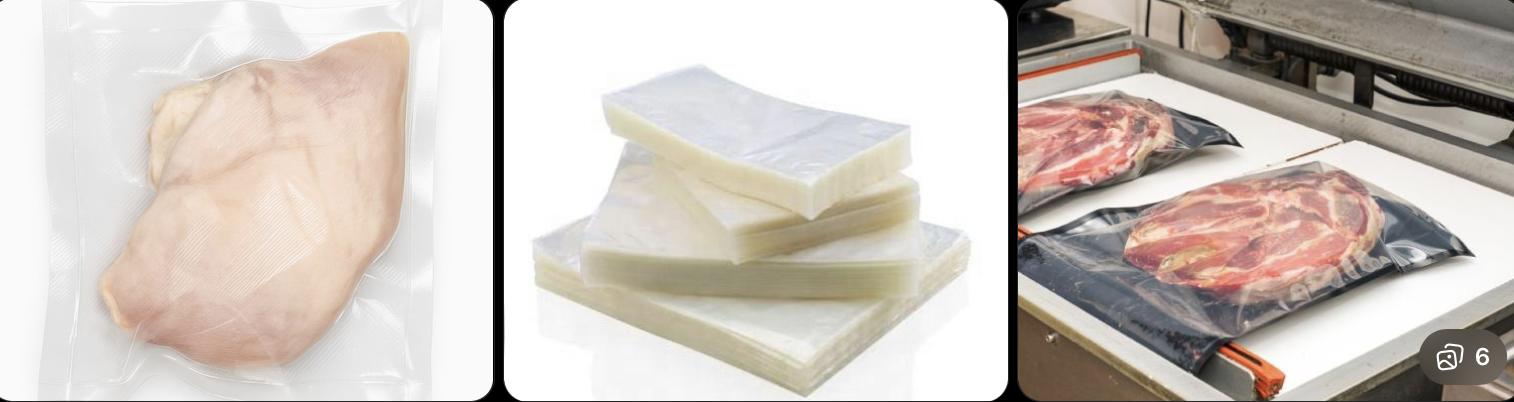
Vacuum packaging: Air removed
Advantages: Less oxygen, Reduced oxidation, Longer shelf life
Modified Atmosphere Packaging (MAP): 🌬 Modified gas composition
Advantages: Longer shelf life, Reduced microbial growth
Heat-shrinkable plastic bags:🔥 Shrink tightly around carcass
Advantages: Reduced oxygen exposure, Better appearance
🧪 TYPES OF PACKAGING MATERIALS
Cellulose
Characteristics: Clear, High water permeability, Low gas permeability
❌ Fragile when dry
Think: Cardboard/paper-based material
High-density polyethylene (HDPE)
Characteristics: Clear, Water resistant, Gas permeable
❌ Does not shrink
Think: Hard plastic
3. Low-density polyethylene (LDPE)
Characteristics: Low gas permeability, Low water permeability
❌ Does not shrink
think: Soft plastic bags

4. Polyvinyl chloride (PVC)
Characteristics: 🟡 Slightly yellow, Strong, Fat resistant
🔥 Shrinks at 95°C
Think: Plastic wrap
Polyester films
Characteristics: Strong, Heat resistant, Partially permeable to gas and water
6. Hydrochloride films
Characteristics: Low gas permeability, Low water permeability, Highly stretchable
7. Polyester–polyamide foils ⭐
Characteristics: Water impermeable, Gas impermeable, Suitable for heating, Suitable for vacuum packaging
Think: Vacuum-packed products / freeze-dried products
🏷 LABELLING
Legal background
Regulation (EU) No. 1169/2011
➡ Food information and labelling
Regulation (EC) No. 543/2008
➡ Poultry marketing standards
➡ Storage temperature labelling
Regulation (EU) No. 1337/2013
➡ Country of origin
➡ Traceability
Purpose
⭐ Consumer must receive sufficient information to make an informed choice.
Timing
⭐ Mark applied BEFORE poultry leaves establishment.
Mandatory label information ⭐
✅ Product name
✅ Ingredients
✅ Weight
✅ Price
✅ Date of minimum durability
✅ Grade (A or B)
✅ Condition:
Fresh, Frozen, Quick-frozen
✅ Recommended storage conditions
✅ Name and address of manufacturer
✅ Instructions for use
✅ Heating instructions
✅ "Do not refreeze after defrosting"
Additional information
Whole carcass may indicate:
🐔 Partially eviscerated
🐔 With giblets
🐔 Quick-frozen
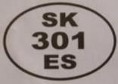
🥚 IDENTIFICATION MARK ⭐
(Regulation 853/2004)
Shape
⭕ Oval
Dimensions:
⭐ Width = 6.5 cm
⭐ Height = 4.5 cm
Contents
🇸🇰 Country code
🏭 Establishment number
📖 Abbreviation:
CE
EC
EF
EG
EK
EY
🔍 TRACEABILITY
(Regulation 1337/2013)
Must include:
✅ Country of origin
(EU or non-EU)
✅ Batch code
Additional labels
☢ Ionising radiation treatment
❄ Quick-frozen
⚠ Do not refreeze
📅 Minimum durability date
🐔 Age at slaughter
❄ Chilling method
🏡 Type of farming
Examples: Barn, Free-range
📦 REQUIREMENTS FOR WRAPPING MATERIALS ⭐
Packaging material must ensure:
💧 Minimum water permeability
➡ Reduce weight loss
🌬 Minimum gas permeability
➡ Reduce oxidation
⚗ No chemical reaction with product
❄ Maximum resistance to chilling and freezing
🦠 Microbial sterility
🛡 Hygienic safety
💪 Stability and durability
📦 Resistance to handling
✨ Attractive appearance
💰 Reasonable price and availability
⭐ Committee High-Yield Questions
❓ Which packaging methods are used?
✅ Standard packaging
✅ Vacuum packaging
✅ Modified atmosphere packaging (MAP)
❓ Why use vacuum packaging?
➡ Removes oxygen
➡ Reduces oxidation
➡ Extends shelf life
❓ Which material is best for vacuum packaging?
➡ Polyester–polyamide foils ⭐
❓ What regulation covers food labelling?
➡ Regulation (EU) 1169/2011
❓ What regulation covers country of origin?
➡ Regulation (EU) 1337/2013
❓ What mark is on poultry products?
➡ Identification mark ⭐
(Not health mark)
❓ Main requirements for packaging material?
➡ Low water permeability
➡ Low gas permeability
➡ No chemical reaction
➡ Resistant to freezing/chilling
➡ Sterile and hygienic
🚀 20-second Oral Answer
"Poultry meat is packaged using standard packaging, vacuum packaging or modified atmosphere packaging. Packaging materials include cellulose, polyethylene, PVC, polyester and polyester-polyamide foils. Materials must have low water and gas permeability, be chemically inert, resistant to freezing and hygienic. Labelling is regulated by Regulations 1169/2011, 543/2008 and 1337/2013 and includes product name, weight, grade, storage conditions, origin and traceability information. Poultry products receive an identification mark." ⭐
⭐ Committee version of Question 20 (what they actually wanted)
📦 General requirements of packaging
Packaging must:
✅ Protect the product from contamination
✅ Protect against physical damage during transport and storage
✅ Reduce moisture loss (prevent weight loss)
✅ Reduce oxidation
✅ Maintain shelf life and quality
✅ Be hygienic and safe
✅ Not react chemically with the meat
📦 Three packaging methods
1⃣ Simple packaging
Poultry packed in bags/trays
No air removed
No atmosphere modification
✅ Protects against contamination
❌ Does not significantly extend shelf life
2⃣ Vacuum packaging ⭐
Air removed from package
Advantages:
✅ Less oxygen
✅ Less oxidation
✅ Longer shelf life
✅ Less microbial growth
3⃣ MAP (Modified Atmosphere Packaging) ⭐
Air replaced by gas mixture
Advantages:
✅ Longer shelf life
✅ Better colour preservation
✅ Reduced microbial growth
Common gases:
CO₂
O₂
N₂
🏷 What must be on the label?
This is what examiners often wanted listed:
✅ Product name
✅ Weight
✅ Price
✅ Ingredients
✅ Date of minimum durability / expiry date
✅ Category / Grade (Class A or B)
✅ Condition:
Fresh
Frozen
Quick-frozen
✅ Storage conditions
✅ Manufacturer name and address
✅ Country of origin
✅ Batch code (traceability)
✅ Instructions for use / cooking instructions
✅ "Do not refreeze after thawing"
For whole carcasses, can also state:
With giblets
Partially eviscerated
🚀 30-second oral answer
"Packaging must protect poultry meat from contamination, damage, moisture loss and oxidation. The three packaging methods are simple packaging, vacuum packaging and modified atmosphere packaging (MAP). Vacuum packaging removes air, while MAP replaces air with gases such as CO₂, O₂ and N₂ to extend shelf life. The label should contain the product name, weight, price, ingredients, expiry date, grade, storage conditions, manufacturer, country of origin, batch code and instructions such as 'do not refreeze after thawing'." ⭐
21. Importance of eggs in human nutrition, chemical composition of eggs.
Importance of Eggs in Human Nutrition
🥚 One of the most important foods of animal origin
✅ Economical
✅ Quick to prepare
✅ Convenient
✅ Easy to prepare
✅ Highly digestible
✅ Low calorie
🥩 Proteins
⭐ High biological value
⭐ Contain ALL essential amino acids
🧈 Lipids
⭐ Polyunsaturated fatty acids (PUFA)
⭐ Omega-3 fatty acids
💊 Vitamins
⭐ Contain ALL vitamins except:
❌ Vitamin C (ascorbic acid)
Rich in:
✅ B vitamins
🧂 Minerals
✅ Copper (Cu)
✅ Zinc (Zn)
✅ Iron (Fe)
✅ Selenium (Se)
✅ Calcium (Ca)
✅ Iodine (I)
✅ Phosphorus (P)
🥚 Chemical Composition of Eggs
Nutrient | Egg White | Egg Yolk |
|---|---|---|
💧 Water | 88% | 48% |
🥩 Protein | 11% | 16% |
🧈 Fat | 0.2% | 33% |
🍞 Carbohydrates | 0.9% | <1% |
🔥 Calories | 20 | 80 |
🧂 Minerals | 0.8% | 2% |
Whole Egg Composition
💧 Water:
⭐ 65.6%
🥩 Protein:
⭐ 12.1%
🧈 Fat:
⭐ 10.5%
🍞 Carbohydrates:
⭐ 0.9%
🧂 Minerals:
⭐ 10.9%
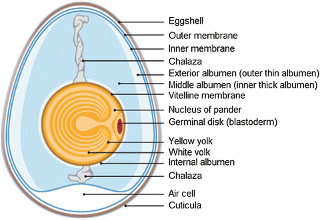
🥚 Egg Shell
Function:
🛡 Hard protective coating
🌬 Contains pores allowing:
Gas exchange
Moisture exchange
Main components:
⭐ Calcium carbonate (CaCO3)
⭐ Magnesium carbonate (MgCO3)
⭐ Phosphates
🤍 Egg White (Albumen)
💧 Water:
⭐ 88%
🍞 Carbohydrates:
⭐ Less than 1%
🧈 Fat:
⭐ Very little
Proteins
⭐ About 40 different proteins
⭐ Several have antibacterial activity
Vitamins
✅ Vitamin B2, Vitamin B6, Vitamin B12
Minerals
✅ Selenium, Zinc, Iron, Copper
Easy memory
🏋 Egg white = protein + water
💧 88% water
🥩 11% protein
🧈 Almost no fat
🟡 Egg Yolk
⭐ Most nutritionally valuable part
⭐ Contains nutrients for embryo development
💧 Water:
⭐ 48%
🥩 Protein:
⭐ 16%
🧈 Fat:
⭐ 33%
Lipids
⭐ 62% triglycerides
⭐ 33% phospholipids
⭐ 5% cholesterol
Vitamins
⭐ Contains about 70% of daily vitamin D requirement
⭐ Rich in vitamin K
Easy memory
🟡 Egg yolk = fat, vitamins and minerals
🤍 Egg white = water and protein
⭐ Committee High-Yield Questions
❓ Which part contains most protein?
✅ Egg yolk (16% vs 11%)
❓ Which part contains most fat?
✅ Egg yolk
⭐ 33% vs 0.2%
❓ Which part contains most water?
✅ Egg white
⭐ 88%
❓ Which vitamins are absent from eggs?
❌ Vitamin C
❓ Main shell component?
✅ Calcium carbonate
❓ Main lipid fractions of yolk?
✅ 62% triglycerides
✅ 33% phospholipids
✅ 5% cholesterol
🚀 20-second Oral Answer
"Eggs are an economical, highly digestible food with high-quality protein containing all essential amino acids. They are rich in PUFA, omega-3 fatty acids, vitamins except vitamin C, and minerals such as iron, selenium and iodine. The egg white contains mainly water (88%) and protein, while the yolk is the most nutritious part, containing 33% fat, 16% protein, vitamins and minerals necessary for embryo development." ⭐
⭐ Committee Questions – Eggs
❓ Which type of egg contains the most immunoglobulins?
✅ Quail egg ⭐
Quail eggs are known for having a relatively high concentration of immunoglobulins (especially IgY).
❓ What important lipid is found in egg yolk besides cholesterol?
✅ Lecithin ⭐
Lecithin is a phospholipid.
Functions:
Natural emulsifier
Important for cell membranes
Used in food industry (mayonnaise, chocolate, bakery products)
❓ Name 4 egg proteins
You can mention:
✅ Ovalbumin (major egg white protein, ~54%)
✅ Ovotransferrin (Conalbumin) (binds iron → antibacterial effect)
✅ Ovomucoid (protease inhibitor)
✅ Lysozyme ⭐ (antibacterial enzyme)
Other acceptable proteins:
Ovomucin
Avidin
Ovoglobulins
Cystatin
22. Collecting, grading, packing and labelling of eggs, evaluation of egg quality.
🥚 Collection of Eggs
⭐ Once a high-quality egg is laid, it must be handled carefully to minimize quality loss.
Methods of collection
👨🌾 Manual collection
Deep litter systems
Collect in morning
Then every 2 hours
⚙ Automatic collection
Enriched cages
Eggs roll onto conveyor belts
After collection:
⭐ Eggs must not be stored below 5°C
🥚 Grading of Eggs
⭐ Class A (Fresh Eggs)
Must NOT be washed or cleaned.
→ Reason: ⚠ Washing damages: Cuticle and Shell protective barrier
Requirements:
✅ Shell and cuticle are normal and undamaged
✅ Air cell ≤ 6 mm (Extra fresh eggs ≤ 4 mm)
✅ Egg white is clear and translucent
✅ Yolk visible only as a shadow during candling
✅ Yolk mobile but returns to center
✅ Not fertilized
✅ No foreign matter
✅ No abnormal smell
Class B Eggs
⭐ Do not meet Class A requirements
Can still taste good but have lower external quality.
Marking:
⭕ Letter B inside a circle
📦 Packing of Eggs
⭐ Only approved packing centers may:
Grade
Pack
Label eggs
Must be done within: ⭐ 10 days after laying
Packing center requirements
✅ Clean premises
✅ Good hygienic condition
✅ Stable temperature
✅ Equipment for:
Candling, Weight grading, Air cell evaluation
Information on transport packaging
(Regulation 178/2002 Article 18)
Includes:
✅ Producer name
✅ Producer address
✅ Producer code
✅ Number of eggs
✅ Weight
✅ Laying date
✅ Dispatch date
Class A package information
✅ Packing center code
✅ Quality grade
✅ Weight grade
✅ Minimum durability date ⭐ 28 days
✅ "Washed eggs" (if applicable)
Class B package information
✅ Packing center code
✅ Quality grade
✅ Packing date
🏷 Labelling of Eggs
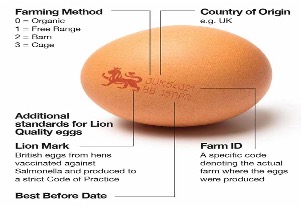
Class A producer code ⭐
Format: A-BB-CCCCCC
Example:
0-SK-123456
First number = farming method
0⃣ Organic
1⃣ Free range
2⃣ Barn
3⃣ Cage
BB: Country code
Example:🇸🇰 SK, 🇳🇴 NO
CCCCCC: Identification of establishment

Class B marking
⭕ Letter B
Dimensions:
⭐ 5 mm height
⭐ 12 mm diameter
🔬 Evaluation of Egg Quality
⭐ Highest quality immediately after laying
Factors affecting quality
🥚 Nutrition
🥚 Breed
🥚 Flock management
🥚 Post-lay handling
🌡 Temperature
💧 Relative humidity
🥚 Exterior Egg Quality
Egg weight ⭐
Most common 55–60 g (M)
Range: 30–80 g
Shape index
Formula: SI = Width / Length × 100
Other exterior parameters
✅ Cleanliness
✅ Integrity
✅ Shell thickness
✅ Shell firmness
✅ Shell colour
✅ Odour
✅ Flavour
🟡 Interior Egg Quality
Egg Yolk Parameters
✅ Shape
✅ Yolk index
⭐ Older eggs = flatter yolk
Coagulation
Starts:🌡 65°C
Complete:🌡 70°C
Freezing point: ⭐ −0.58°C
pH: ⭐ 5.8–6.2
Colour: Affected by diet
🤍 Egg White (Albumen)
Albumen index ⭐ 3–13
Haugh Units ⭐Range: 0–100
Class A: ⭐ Minimum 60
Higher value = fresher egg
Foam characteristics
Foam index: Lower in older eggs
Foam stability: Higher in older eggs
Coagulation
Starts:🌡 57°C
Complete:🌡 80°C
Freezing point⭐ −0.45°C
pH:⭐ 7.6, ⬆ Increases with age
💨 Air Cell
⭐ Air cell height is an important indicator of freshness
Smaller air cell = fresher egg
Larger air cell = older egg
⭐ Committee High-Yield Questions
❓ Why should Class A eggs not be washed?
➡ Damages cuticle and shell barrier.
❓ Air cell size for Class A eggs?
➡ ≤ 6 mm
➡ Extra fresh ≤ 4 mm
❓ What does 0-1-2-3 mean on the egg?
0 = Organic
1 = Free range
2 = Barn
3 = Cage
⭐ Very commonly asked.
❓ What is the minimum durability of eggs?
➡ 28 days
❓ What indicates egg freshness?
➡ Air cell height
➡ Haugh units
➡ Yolk index
❓ Minimum Haugh Unit for Class A?
➡ 60
❓ Shape index formula?
➡ Width / Length × 100
🚀 20-second Oral Answer
"Eggs are collected manually or automatically and should not be stored below 5°C after collection. Class A eggs must not be washed and must have an intact shell, clear albumen and an air cell not exceeding 6 mm. Eggs are packed in approved packing centres within 10 days after laying. Class A eggs are labelled with the producer code showing farming method, country and establishment. Egg quality is evaluated using exterior parameters such as weight and shell quality and interior parameters such as yolk index, Haugh units and air cell height." ⭐
⭐ Extra committee questions
❓ Which farming system corresponds to code 0, 1, 2, 3?
0 = Organic
1 = Free range
2 = Barn
3 = Cage
❓ Most important freshness indicator?
➡ Air cell height and Haugh units.
❓ Why does egg quality decrease during storage?
➡ Water and CO₂ escape through shell pores → larger air cell, higher albumen pH, flatter yolk.
⭐ Committee Questions – Eggs
❓ How long is the shelf life of eggs?
There are two numbers commonly asked:
🥚 Class A table eggs
➡ 28 days after laying (date of minimum durability)
🥚 Chilled/cold-stored eggs
➡ Can be stored for up to about 4 months under appropriate refrigeration conditions (industry storage).
For the exam, if asked about consumer eggs, answer:
⭐ 28 days
❓ Is there another way to classify Class A eggs besides weight?
✅ Yes — freshness.
Special category:
🥚 Extra Fresh Eggs
⭐ Air cell must be ≤ 4 mm
Normal Class A:
⭐ Air cell ≤ 6 mm
❓ Weight grades of Class A eggs
Grade | Weight |
|---|---|
XL | ≥ 73 g |
L | 63–73 g |
M | 53–63 g |
S | < 53 g |
🚀 High-yield oral answer
"Eggs are normally marketed as Class A eggs and have a minimum durability of 28 days after laying. Besides grading by weight (XL, L, M, S), eggs can also be graded by freshness. Extra fresh eggs must have an air cell of no more than 4 mm, while ordinary Class A eggs may have an air cell up to 6 mm." ⭐
23. Technology of production, assortment of egg products and quality requirements
🥚 Technology of Production
⭐ Must be produced in an approved establishment under strict hygienic conditions with separation of work areas.
General production steps
1⃣ Washing, drying, disinfecting
⚠ Not allowed in Slovakia (damages shell and cuticle)
2⃣ Egg breaking
➡ Collect egg contents
➡ Remove shell for disposal
3⃣ Filtration → Homogenisation → Pasteurisation
⭐ Main aim: destroy Salmonella
4⃣ Chilling
SHELL EGGS
↓
🥚 Breaking
↓
🧹 Filtration
↓
🔄 Homogenisation
↓
🔥 Pasteurisation
↓
❄ Chilling
↓
───────────────────────
│ │ │
🥛 Liquid ❄ Frozen 🌬 Dried
(8°C) (-38°C) (spray drying)
🥛 Liquid Egg Products
Use: Further food processing
Manufacturing process:
1⃣ Egg breaking
Eggs fixed upright
Shell cracked
Contents collected
2⃣ Chilling (4°C)
➡ Filtration (remove shell fragments and chalazae)
➡ Homogenisation
3⃣ Pasteurisation ⭐
🤍 Egg white = 56°C
🟡 Egg yolk = 65°C
4⃣ Chilling
⭐ Final storage temperature = 8°C
❄ Frozen Egg Products
Use: 🥐 Pastry, 🍰 Bakery industry
Manufacturing process:
1⃣ Start with liquid egg products
2⃣ Freezing
⭐ −38°C to −40°C
⭐ 8–10 hours
3⃣ Transportation
⭐ Temperature variation not more than ±3°C
4⃣ Defrosting
⭐ 15–20°C
⭐ Product maintained around −1°C after thawing

🌬 Dried Egg Products Use
Use: 🥮 Baking mixes, 🥣 Instant foods, 🍫 Brownie mixes (toro brownies)
Manufacturing methods:
Spray Drying in towers ⭐ (most common)
Drying towers
Steam evaporation
liquid egg is sprayed into hot air → egg powder
🤍 Egg white = 150°C
🟡 Egg yolk = 180°C
Packaging:
📦 Paper bags with polyethylene
Pan Drying in chamber
Production of crystalline egg white
Chamber drying
⭐ 30–45 hours
⭐ Filtered air
Freeze Drying
❄ −25°C to −28°C
⭐ High vacuum
📦 Airtight porous packaging

Assortment of Egg Products
Types:
✅ Liquid
✅ Concentrated
✅ Dried
✅ Frozen
✅ Quick-frozen
✅ Coagulated
Composition
🥚 Whole egg products
➡ Egg yolk + egg white
🥚 Separated products
➡ Yolk only or white only
⭐ Longer shelf life
✅ Advantages of Egg Products
💰 Cheaper storage
📦 Require less space than shell eggs
🚚 Lower transport costs
🧼 Easier hygienic handling
🦠 Less susceptible to bacterial growth during storage
⏳ Long shelf life
🔬 Quality Requirements
Microbiological criteria
⭐ Salmonella spp.
➡ Absent in 25 g (or 25 ml)
⭐ Enterobacteriaceae
➡ ≤ 10² CFU/g (ml)
Physical contamination
⭐ Eggshell fragments + membranes + foreign material ➡ Must not exceed 100 mg/kg!
⭐ Possible committee questions
❓ Why are egg products pasteurised?
➡ To destroy Salmonella
❓ Pasteurisation temperature of egg white?
➡ 56°C
❓ Pasteurisation temperature of egg yolk?
➡ 65°C
❓ Which dried egg method is most common?
➡ Spray drying
❓ Freezing temperature of frozen egg products?
➡ −38°C to −40°C
❓ Main advantage of egg products compared with shell eggs?
➡ Easier storage, transport and hygienic handling with longer shelf life.
🚀 20-second Oral Answer
"Egg products are produced in approved establishments by egg breaking, filtration, homogenisation, pasteurisation and chilling. Liquid egg products are pasteurised at 56°C for egg white and 65°C for egg yolk. Frozen egg products are frozen at −38 to −40°C, while dried egg products are produced mainly by spray drying. Egg products can be liquid, frozen, dried or concentrated and have advantages such as easier storage, lower transport costs and longer shelf life. Salmonella must be absent in 25 g of product." ⭐
24.Catching, transportation, and processing of live freshwater fish, evaluation of fish freshness
🐟 Catching and Transportation of Live Freshwater Fish
Welfare requirements:
Fish must not be exposed to unnecessary stress!
Important parameters:
💧 Oxygen:
⭐ Minimum 5 mg/L
🌡 Water temperature:
⭐ 5–10°C during transport
🐟 Salmonids:
⭐ 3–20°C
⚗ pH:
⭐ 7–8
📦 Stocking density:
⭐ Maximum 200 kg fish/m³
Transport
🚛 Special transport tanks
Must have:
✅ Aeration system, Cooling system, Filtration system
Main risks
⚠ Suffocation
⚠ Overcrowding
⚠ Poor water exchange
⚠ Physical injury from fishing gear

🏭 Processing of Freshwater Fish
Mechanically separated fishery products (MSFP) = product from removing flesh from fishery product
Fresh fishery product = unprocessed fishery – no gutting, heading etc.
1⃣ Grading
By: Species and Size
Methods:
Mechanical grading
6–10× faster
👨🔧 Manual grading
Species sorting
Detection of injuries
2⃣ Stunning and Killing ⭐
Aim: ➡ Immediate and irreversible loss of consciousness
Signs:
✅ Loss of body movement
✅ Loss of respiratory movement
✅ Loss of visual responses
✅ Eye rolling
Mechanical methods:
🔨 Percussive stunning
📍 Spiking
🔫 Shooting
Electrical stunning
⚡ 0.1–0.2 A/dm³
⭐ 2–5 min
Depends on species and size
Other methods:
❄ Chilling, 💨 CO₂, 🧂 Salt, 🚫 Asphyxiation
⚠ Poor welfare!
3⃣ Removal of Slime and Scales
Slime
🛡 Protective mechanism
⚠ Excellent medium for microbial growth
➡ Removed by washing
Scaling
Removed before: Heading and Gutting
Methods: Scrapers and Scaling machines
4⃣ Evisceration
Usually:
👨🔧 Manual
Procedure:
✂ Open abdomen
🫀 Remove viscera
💦 Wash body cavity
Useful by-products:
🥚 Roe, 🥛 Milt
Waste:
❌ Intestines, ❌ Kidneys
5⃣ Removal of Head and Fins
🐟 Small fish:
🔪 Knife
🐟 Large fish:
⚙ Rotary disc knife
⚙ Mechanical cutters
6⃣ Filleting and Slicing
Fillet consists of:
✅ Dorsal muscles
✅ Abdominal muscles
⚠ Labour intensive
More common in marine fish
7⃣ Chilling ⭐
Immediately after processing
🌡 Around 0°C
Methods:
🧊 Ice, 💧 Chilled water
Purpose:
✅ Slow microbial growth
✅ Slow decomposition
8⃣ Freezing ⭐
❄ Rapid freezing
Minimum storage temperature: ⭐ −18°C
Thawing:
Air thawing: 25C, initially temp < 7C
Water immersion: circulating water bath 21C, initially temp < 7C.
🔬 Evaluation of Fish Freshness
Organoleptic Evaluation
Parameters:
👀 Appearance, 🐟 Condition,👃 Smell
Extra category
⭐ No pressure marks, ⭐ No injuries, ⭐ No blemishes, ⭐ No discoloration
Category A
⭐ No blemishes, ⭐ No discoloration
Category B
Small proportion may have ⚠ Minor injuries
But:
✅ No blemishes
✅ No bad discoloration
🧪 Chemical Tests of Freshness
1⃣ TVB-N ⭐ = Total Volatile Basic Nitrogen
Most important freshness test.
Normal:
⭐ 25–35 mg N /100 g flesh
→ Higher values = spoilage
2⃣ Iodine Consumption Test
Procedure:
🐟 10 g fish
💧 50 ml water
⏱ 30 min
➕ 5ml Starch
➕ Iodine titration
Results:
✅ Fresh fish: 30ml iodine
❌ Spoiled fish: < 15 ml iodine
⭐ Lower iodine consumption = less fresh fish
3⃣ Kreis Test
Detects:
🧈 Fat oxidation
🧪 Epihydrine aldehydes
Result:
🔴 Red-violet colour = deterioration
☠ Histamine and Biotoxins
Histamine can cause:
🤧 Allergy-like reactions
🤢 Food poisoning
Legal limits
🐟 Fresh fish: Max 200 mg/kg
🐟 Enzyme-treated fish products: Max 400 mg/kg
Fish commonly associated with histamine:
🐟 Mackerel, Herring, Tuna
⭐ Possible Committee Questions
❓ Minimum oxygen concentration during transport?
➡ 5 mg/L
❓ Maximum stocking density?
➡ 200 kg/m³
❓ Best stunning methods?
➡ Mechanical or electrical
❓ Why remove slime?
➡ Excellent environment for microbial growth.
❓ Chilling temperature?
➡ 0°C
❓ Freezing temperature?
➡ −18°C minimum
❓ Most important chemical freshness test?
➡ TVB-N
⭐ 25–35 mg N/100 g flesh
❓ Histamine limit in fresh fish?
➡ 200 mg/kg
❓ Which fish commonly contain high histamine?
➡ Mackerel, herring, tuna.
🚀 20-second Oral Answer
"Live freshwater fish must be transported with sufficient oxygen, appropriate temperature and minimal stress. Processing includes grading, stunning, killing, slime removal, scaling, evisceration, filleting, chilling and freezing. Freshness is evaluated organoleptically by appearance and smell and chemically using TVB-N, iodine consumption and Kreis tests. Histamine is an important food safety hazard and must not exceed 200 mg/kg in fresh fish." ⭐
⭐ Committee 2 (2025) – Important Extra Questions for Fish
❓ How are fish transported to the processing plant?
🐟 Live fish are transported in special tanks/batches with:
✅ Aeration system
✅ Filtration system
✅ Cooling system
Important values to remember:
🌡 Temperature: 5–10°C (depends on species)
💧 Oxygen: minimum 5 mg/L
📦 Stocking density: maximum 200–250 kg/m³
❓ What must be on the label of fish products?
The examiner especially wanted:
❄ "Frozen"
⚠ "Do not refreeze after thawing"
Also mention standard food labelling:
✅ Product name
✅ Weight
✅ Date of minimum durability
✅ Storage conditions
✅ Manufacturer
✅ Country of origin
✅ Batch code / traceability

❓ What is glazing?
🧊 Glazing = applying a thin layer of ice around frozen fish.
Purpose:
✅ Prevent dehydration
✅ Prevent freezer burn
✅ Reduce oxidation
✅ Preserve quality during storage
Easy memory:
🐟 + 🧊 = protective ice coat
❓ How can fish be cut?
Longitudinal cut
🐟 ➡ Fillets
Transversal cut
🐟 ➡ Steaks/slices
Examples:
🐟 Salmon steaks
🐟 Tuna steaks
25. Assortment of fishery products and their characteristics.
🧂 Salted Fishery Products
🐟 Produced from fresh or frozen fish
⭐ Frozen fish must be thawed before salting
⭐ Product must be labelled:
"Salted" or "Salty"
🌡 Storage: < 15°C
Classification according to salt content:
🧂 Heavily salted:
➡ >14% salt
🧂 Moderately salted:
➡ 10–14% salt
🧂 Lightly salted:
➡ 6–10% salt
🧂 Anchovy paste:
➡ >25% salt
Types of salted products:
🌊 Brine (Salt dissolved in water)
➡ Enhances flavour
(Norwegian: lake)
🥒 Pickle
Brine + vinegar + spices
(Norwegian: syltet)
🌬 Dry salting
Fish covered with salt and hung up
➡ Salt removes moisture
Example: 🐟 Stockfish / tørrfisk
💧 Wet salting
Lean fish mixed with salt
Stored in containers with brine
🥚 Caviar
Salt-cured fish eggs
🌫 Smoked Fishery Products
Fish are exposed to smoke from wood or plant material.
Usually combines:
✅ Salting
✅ Drying
✅ Heating
✅ Smoking
Smoking process ⭐
1⃣ Drying 🌡 40–50°C, ⏱ 1 hour
2⃣ Smoking (colouring)
🌡 85–110°C, ⏱ 1–1.5 h
⭐ Internal temperature > 65–70°C
3⃣ Smoking (cooking)
🌡 80–90°C
⏱ 1.5–2 h
Cooling: ❄ Cool ASAP →🌡 Max 18°C
Storage →🌡 Max 10°C
Types of smoking:
🔥 Hot smoking ⭐
✅ Complete protein coagulation
✅ Kills parasites
✅ Destroys non-sporulated bacteria
❄ Cold smoking ⭐ (e.g., smoked salmon)
❌ No protein coagulation
⚠ Must freeze: −20°C for ≥24 h ➡ Kill parasites
Regenerated smoke: Smoke produced from smoke condensates
Smoke condensates: Produced by pyrolysis: ➡ Thermal degradation of wood with limited oxygen

🥒 Marinated Fishery Products
= Fish preserved in a pickling solution
Cold marinades
🌡 10–15°C, ⏱ 3–4 days
Then: ⏱ Cure for 6 days
Warm marinades
🧂 Salt 4–8%
🍶 Vinegar 4–12%
Hot marinades
🔥 Boiled or fried
🌡 80–90°C, ⏱ 10–20 min
Pickled cold-marinated products
🧂 Salt 8–12%
🍶 Vinegar 4–8%
🌬 Dried Fishery Products
Natural or artificial removal of water
Purpose:
✅ Extended shelf life
Requirement
💧 Maximum water content: ⭐ 18%
🍥 Semi-Finished Fishery Products
Surimi ⭐
🐟 Fish meat
➡ Ground into paste
➡ Washed
➡ Salt + flavourings added
➡ Shaped into products
Fish sticks, portions and fillets
❄ Quick-frozen
May be: Coated, Raw or Partially cooked
🥫 Preserved and Semi-Preserved Fishery Products
Canned fish
⭐ Commercially sterile
⭐ Hermetically sealed container
Semi-preserved fish:
Shelf life extended by: Pasteurisation or Chemical preservatives
⭐ Committee High-Yield Questions
❓ Salt content of heavily salted fish?
➡ >14%
❓ Salt content of anchovy paste?
➡ >25%
❓ Difference between hot and cold smoking?
🔥 Hot smoking:
Protein coagulation, Kills parasites, Destroys bacteria
❄ Cold smoking:
No protein coagulation, Must freeze at −20°C for 24 h
❓ What is surimi?
➡ Washed fish paste mixed with salt/flavourings and shaped into products.
❓ Maximum water content in dried fish?
➡ 18%
❓ What is caviar?
➡ Salt-cured fish eggs.
❓ Storage temperature of salted fish?
➡ Below 15°C.
🚀 20-second Oral Answer
"Fishery products include salted, smoked, marinated, dried, semi-finished and preserved products. Salted products are classified as lightly, moderately or heavily salted according to salt content. Smoked fish may be hot-smoked or cold-smoked, with cold-smoked fish requiring freezing at −20°C for 24 hours to destroy parasites. Semi-finished products include surimi and fish sticks, while preserved products include canned and semi-preserved fish." ⭐
26. Handling, official control and post-mortem inspection of wild and farmed game.
27. Hygiene requirements for the production of rabbit and ostrich meat, composition and properties.
28. Chemical composition, properties and types of honey.