Chapter 2 Scientific Measurement & Numbers
 Call Kai
 Learn
Learn Practice Test
 Spaced Repetition
 Match
Match Flashcards
 Knowt Play
1/30

Earn XP
Description and Tags
Name | Mastery | Learn | Test | Matching | Spaced | Call with Kai |
|---|
No analytics yet
Send a link to your students to track their progress
31 Terms
Types of measurements used in Chem (there’s 4)
weight (g), volume(L), length(m), temp °C
Two types of values are
measured or exact (aka constant) numbers
Scientific notation is
simplified way to write a large, standard number
Example of scientific number
5,090,000,000 → 5.09 × 10(negative) 8
Considerations for quality of measurements are
accuracy v precision (accuracy is most specific)
In measurements the last number is
the “uncertain”
For knowing if something is accurat
need to know the “value” or the thing you’re measuring for (target example. know the average)
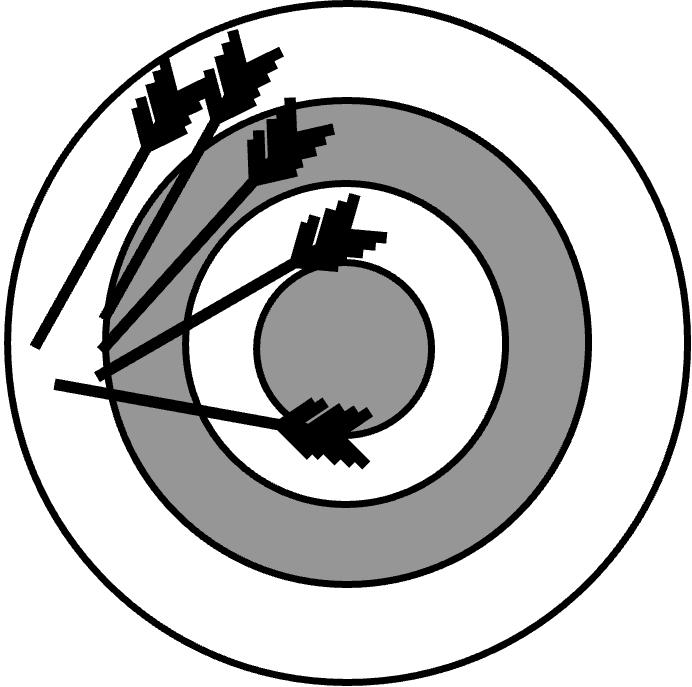
Fair Precision, Fair Accuracy
Meniscus is
the “bubble” that forms w/liquid. Measure at the bottom of the bubble
Significant Figures (SigFigs) are
the qantity of numbers in a measurement (ie in the measurement 3.15, there are 3sigfigs). Know the variations between sig and non-sig figures)
mL is typically used to measure liquids and
is by 10s
Sandwich zero’s are
a zero in between 2 integers (ie 40.4)
Preceeding zero’s
come before the integer and NOT significant (040.4)
Example of NON sig figs are
zeros that preceed integers (in 040.0, there are only 3 sig figs)
Rules of SigFigs
The : (aka “report to”) means
where to look within a number to place the decimal based on sig figs
Sig figs only apply when
doing multiplication or division
Calculations are only as precise as
the least precise measurement (the least amount of numers after a decimal. If no decimial, then the whole number is least precise)
Unit Conversians are
expresses the same property as a different unit of measurement. For instance, time can be expressed in minutes instead of hours, while distance can be converted from miles to kilometers, or feet, or any other measure of length.
Water has a density measurement of
1 g for every 1ml
Liquid in Cylinders are measured with
pie r 2
Law of Conservation of Energy
In a chemical reaction, energy is neither created or destroyed
Law of Conservation of Matter
In a chemical reaction, mass is neither created or destroyed
1 mL equals
1 cubic cm
Density is
the mass/volume ratio. convert between units of weight and units of volume
Conversion example
12”÷1’ or 1’÷12”
Q: how many inches in 3.2’? (keep in mind sig figs)
A:
Know the basic conversions such as:
12'“ = 1’
3m = 1 yard
16oz = 1 pound
4 qt = 1 gal
4 c = 1 qt
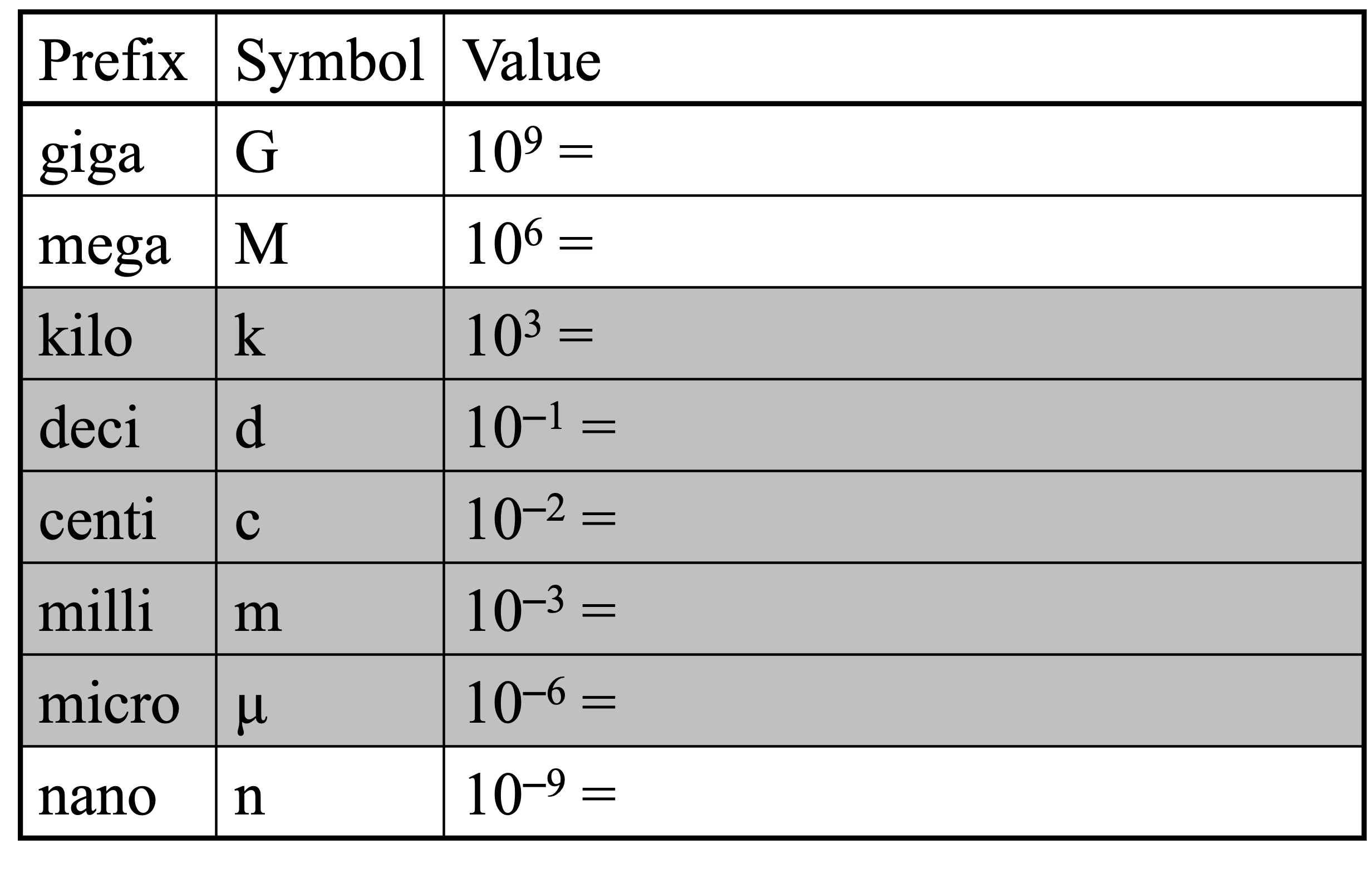
Basic Units of Measurement (prefix multipliers)
giga=billion or 10 to the 9th
mega=million or 10 to the 6th
kilo=thousand or 10 to the 3rd
deci=tenth or 10 to the -1
centi=ondreth or 10 to the
milli
micro
nano
Density is
mass per unit volume. important to measure weight per volume
Density of water equals
1.0g per mL