Introduction to Fungi: Characteristics, Reproduction, and Classification
 Call Kai
 Learn
Learn Practice Test
 Spaced Repetition
 Match
Match Flashcards
 Knowt Play
1/25

There's no tags or description
Looks like no tags are added yet.
Name | Mastery | Learn | Test | Matching | Spaced | Call with Kai |
|---|
No analytics yet
Send a link to your students to track their progress
26 Terms
What is the study of fungi called?
Mycology
What are the two main forms of fungi?
Unicellular yeast and multicellular mold
What is mycelium?
A collective mass of hyphae
What polysaccharide is found in the cell walls of fungi?
Chitin
How do fungi differ from plants?
Fungi do not contain chlorophyll and do not use photosynthesis.
What are the two types of reproduction in fungi?
Asexual and sexual reproduction
What is a defining characteristic of yeast?
Yeast are single cells that reproduce by budding.
What are hyphae?
Filaments that make up the structure of fungi.
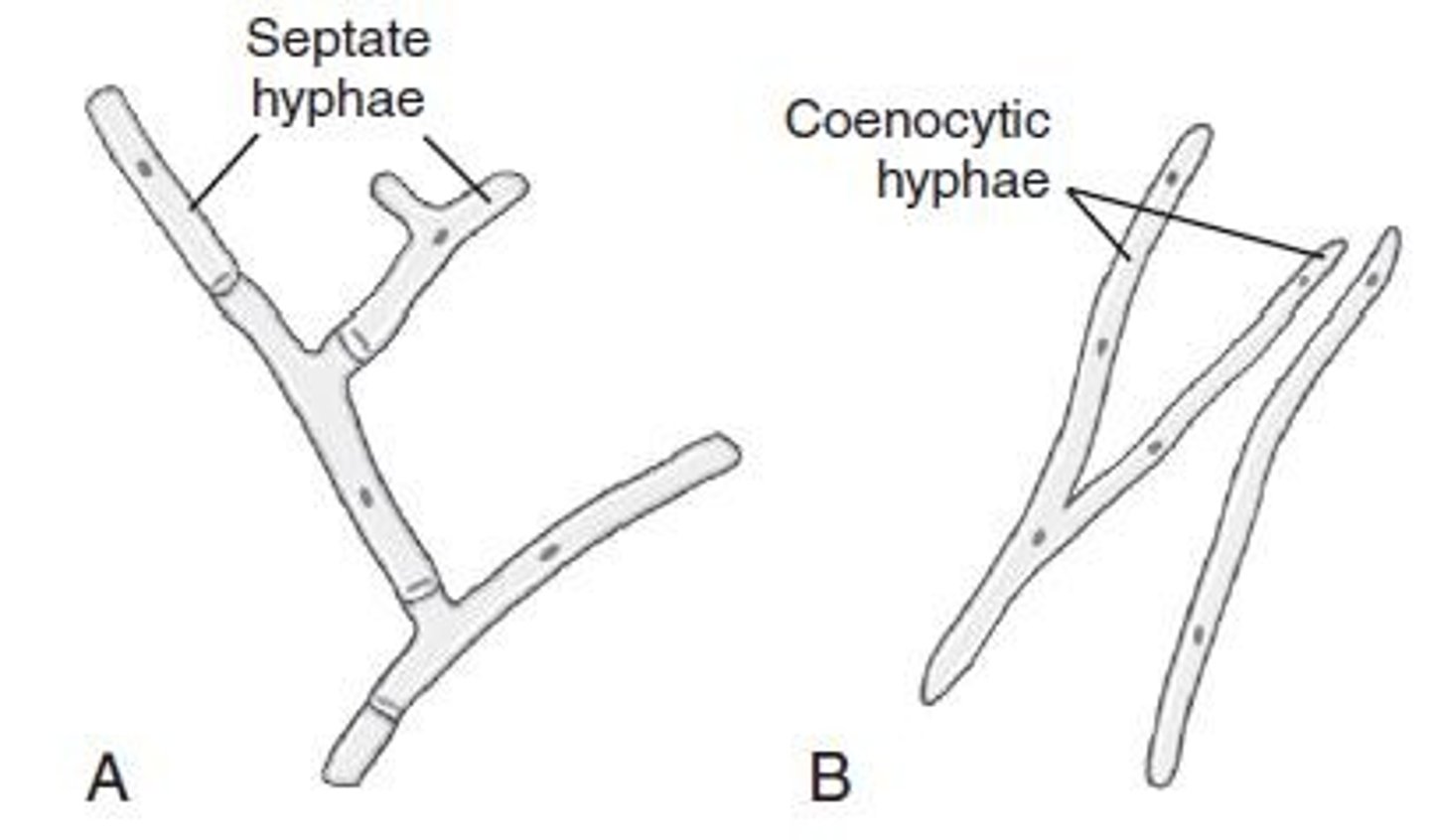
What is the difference between septate and coenocytic hyphae?
Septate hyphae have cross walls, while coenocytic hyphae do not.
What is a dimorphic fungus?
A fungus that can grow in both yeast and mold forms depending on environmental conditions.
What is the role of asexual reproduction in fungi?
It allows for rapid population growth and colonization of environments.
What are sporangiospores?
Spores that form inside a sac called a sporangium and are released when it ruptures.
What are conidia?
Asexual spores produced at the tips or sides of hyphae, not enclosed by a sac.
What triggers sexual reproduction in fungi?
Nutrient limitation or unfavorable environmental conditions.
What are the four main classifications of fungi?
Zygomycota, Ascomycota, Basidiomycota, and Deuteromycota.
What is the significance of Penicillium?
It is a mold responsible for the production of penicillin.
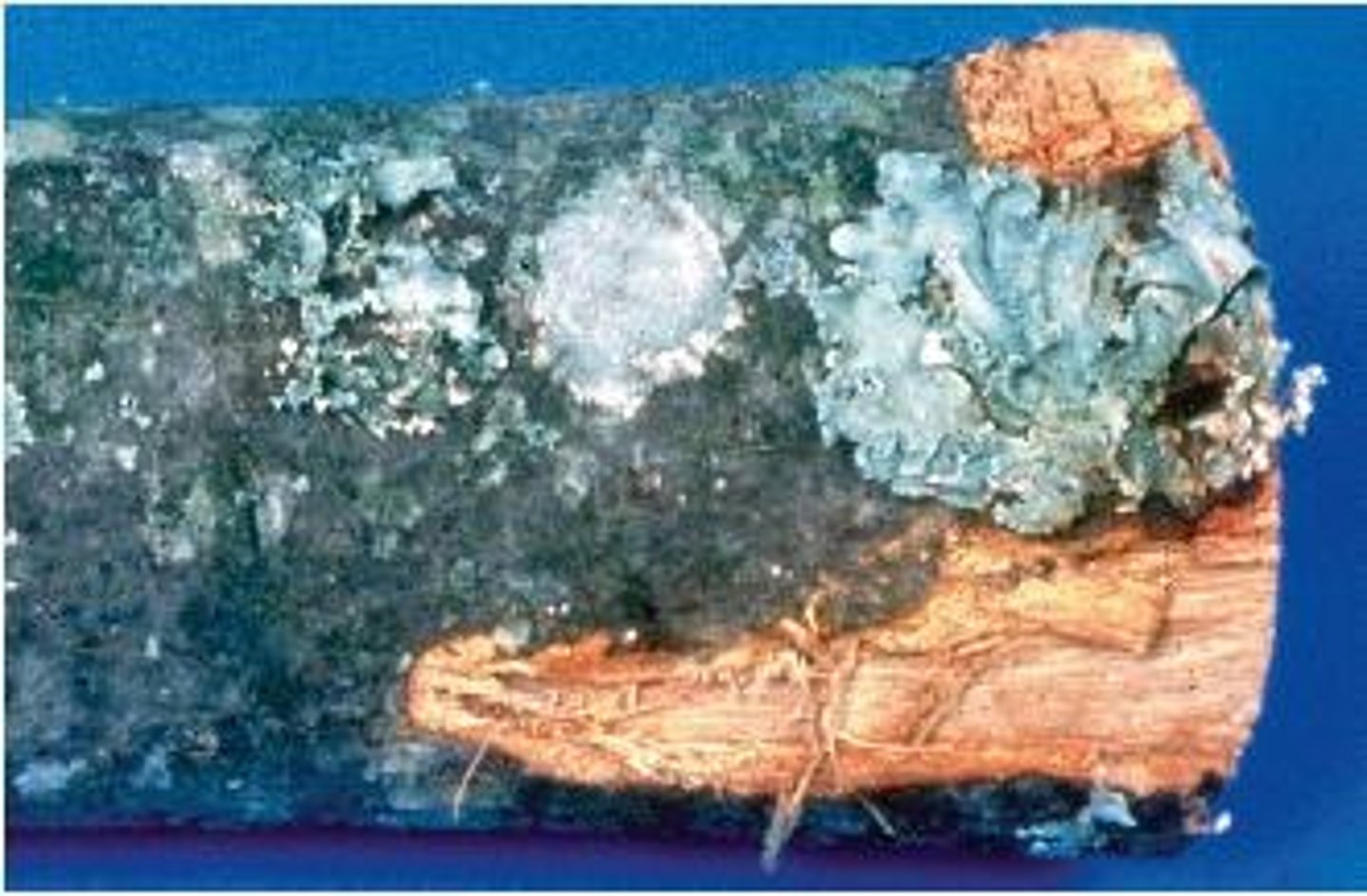
What are lichens?
Symbiotic associations between fungi and cyanobacteria or green algae.
What is the role of fungi in ecosystems?
They play a major role in decomposition and nutrient cycling.
What is the function of mycorrhizae?
Fungi that form symbiotic relationships with plant roots, aiding in nutrient absorption.
What are some examples of toxins produced by fungi?
Ergot alkaloids, psychotropic agents, and aflatoxins.
How do filamentous fungi reproduce asexually?
By fragmentation of their hyphae and by spore formation.
What happens to fungal spores when they reach a favorable environment?
They germinate and grow into new fungal organisms.
What is the significance of genetic variation in fungi?
It allows for adaptation and survival in changing environments.
What is the typical temperature for yeast growth in laboratory conditions?
37º C
What is the typical temperature for mold growth in laboratory conditions?
25º C
What is the primary role of fungi in food spoilage?
Ascomycota are primary fungi causing food spoilage.